Archive for the ‘ Pakistan ’ Category

The Pakistan America Peace Through Music Project

A Musical Journey to Peace, Freedom and Understanding
(A Collaboration of The Sonic Peace Makers and SHINE HUMANITY)

The following informationĀ in this articleĀ is taken from theĀ Peace Through MusicĀ webpage on Global Giving at:Ā  http://www.globalgiving.org/projects/peace-through-music/Ā Ā 

Peace Through Music (#5719)

Mention Pakistan today and what comes to the minds of most Americans is terrorism, poverty, and hopelessness. That’s all they see in the news. But Pakistan also has one of the world’s most diverse and rich cultures, equaled only by its spectacular natural beauty as home to part of Kashmir, the Khyber Pass and high mountain peaks like K2. Once upon a time in the not so distant past, Texan gun enthusiasts brought their prized antique revolvers to Peshawar’s gun smiths to make copies, actor Robert DeNiro posed for pictures with restaurant owners while vacationing in Chitral, and Mick Jagger tested his dance skills with Lahore’s most well-known Mujra dancers. And many of Pakistan’s greatest musicians and singers like Nusrat Fateh Ali Khan regularly collaborated with their counterparts in Europe and America such as Peter Gabriel and Pearl Jam’s Eddie Vedder.

Two decades ago,Ā we failed to uphold our principles and fulfill a moral obligation to help rebuild Afghanistan and assist Pakistan with the painful aftermath of the Soviet-Afghan war, which included millions of Afghan refugees who still reside in Pakistan. In stark contrast, we helped rebuild our enemies Germany and Japan after WWII, but inexplicably abandoned our friends after the war in Afghanistan, a key factor in allowing extremists to begin their destructive swarm across Afghanistan and Pakistan’s western frontier and become a grave threat to the security and stability of the entire world. But today, while the wounds are deep and the challenges are great, the forces of light and sonic harmony are again on the ascendance. Pakistan today is home not just to 11 music video channels and has one of the most innovative and vibrant music scenes anywhere in the world. A country that has produced some of the greatest sitar and tabla players is today home of some of the finest singers, guitar shredders and drummers. Music pioneers like Junoon, the godfathers of “Sufi Rock,ā€ are joined by Qawwali rockers like Mekaal Hasan and Aaroh, indie projects like Peshawar’s Sajid and Zeeshan, and Heavy Metal innovators like Akash and Karavan. In recent years Atif Aslam has become the most successful Pop singer in all of South Asia with a growing following world-wide.

The Pakistan America Peace Through Music Project was inspired by the work of Greg Mortenson (author of the bestseller ā€œThree Cups of Teaā€ and ā€œStones Into Schoolsā€) and is based, among other things, on world music pioneer Manu Dibango’s declaration that musicians are “all from the same tribe” regardless of their race, nationality or religion and John Coltrane’s belief in the power of music to spread peace and harmony. Building on the millennia-long tradition of musical and cultural exchange in Pakistan and South and Central Asia more broadly, we will bring a group of leading musicians from the U.S. to Pakistan led by guitarist/producer Lanny Cordola (House of Lords, Giuffria, The Beach Boys), drummer/producer Matt Sorum (Guns ā€˜n’ Roses, Velvet Revolver), singer/guitarist Todd Shea and many others for a month long musical caravan throughout the country, creating and performing with some of Pakistan’s most well known, talented and innovative artists such as Atif Aslam, Shehzad Roy, Strings, Arieb Azhar, Abda Parveen, Ustad Fateh Ali Khan, Rustam Fateh Ali Khan, Beo Rana Zafar and celebrated record producer Rohail Hyatt (Vital Signs, Coke Studio). The inspiring poetry of Allama Iqbal and other revered poets will be prominently featured as an artistic and cultural base for the musical collaboration. Later on in the year, the Pakistani musicians will come to the U.S. for performances and events joined by their American comrades (including members of Guns ā€˜n’ Roses, Velvet Revolver, Red Hot Chili Peppers, etc.), which will also include time for more song writing and recording. Both the Pakistani and American “legs” of the gathering will be filmed for a documentary. The music and film will then be completed and released for sale on CDs & DVDs.

Goals
The project’s goals will be to bring Americans and Pakistanis closer together by erasing misconceptions and raising awareness of the diversity and beauty of Pakistan and its people, ultimately revealing the commonalities between Pakistani/Muslim and American cultures, to show Americans the Pakistan they never see in the mainstream media and to support Pakistan’s courageous artistic community, as well as raise funds and awareness to help establish and equip music schools and fund innovative health and education projects across Pakistan and Afghanistan. Once the initial project has been released, the music will continue with a series of collaborations with musicians and artists from all over the world to bring people together and help people in need.

Help bring people from all over the world closer together through a musical journey designed to erase misconceptions and build bridges of Peace and understanding between Human Beings.
Go to http://www.globalgiving.org/projects/peace-through-music and donate to the project.

More Information About this Project
Project Needs and Beneficiaries
SHINE Humanity and The Sonic Peacemakers need your support to help raise the funding needed to produce, record, film and document musical collaborations between singers and musicians from all over the world to promote peace and support humanitarian aid projects.

Activities
Musical fusion and celebration of diverse cultures will erase misconceptions and raise funding which will lead to a lasting positive effect on vulnerable children in developing nations, and help create a better, safer world for all Humanity

Funding Information
Total Funding Received to Date: $9,620
Remaining Goal to be Funded: $490,380
Total Funding Goal: $500,000

Why this Project is Important
Potential Long Term Impact

Project Message
“Music has incredible power to inspire and energize Human Beings to bridge divides and create a better world”
– Todd Shea, Chief Operating Officer

Who is Running This Project
Contact
Todd Shea
Executive Director
8020 N. Nob Hill Road
#201
Tamarac, FL 33321
Pakistan
Email: toddshea@cdrspakistan.org

Project Sponsor
GlobalGiving
Organization
Comprehensive Disaster Response Services
Chikar Rural Health Center
Chikar, Dist. Muzaffarabad 131000
Pakistan
011-92-300-502-9705
http://www.ShineHumanity.org

Additional organizations worthy of your donations
http://www.penniesforpeace.org/
http://www.ikat.org/

Arab Guilty of Rape After Consensual Sex with Jew

By Jo Adetunji and Harriet Sherwood for The Guardian

A Palestinian man has been convicted of rape after having consensual sex with a woman who had believed him to be a fellow Jew.

Sabbar Kashur, 30, was sentenced to 18 months in prison on Monday after the court ruled that he was guilty of rape by deception. According to the complaint filed by the woman with the Jerusalem district court, the two met in downtown Jerusalem in September 2008 where Kashur, an Arab from East Jerusalem, introduced himself as a Jewish bachelor seeking a serious relationship. The two then had consensual sex in a nearby building before Kashur left.

When she later found out that he was not Jewish but an Arab, she filed a criminal complaint for rape and indecent assault.

Although Kashur was initially charged with rape and indecent assault, this was changed to a charge of rape by deception as part of a plea bargain arrangement.

Handing down the verdict, Tzvi Segal, one of three judges on the case, acknowledged that sex had been consensual but said that although not “a classical rape by force,” the woman would not have consented if she had not believed Kashur was Jewish.

The sex therefore was obtained under false pretences, the judges said. “If she hadn’t thought the accused was a Jewish bachelor interested in a serious romantic relationship, she would not have cooperated,” they added.

The court ruled that Kashur should receive a jail term and rejected the option of a six-month community service order. He was said to be seeking to appeal.

Segal said: “The court is obliged to protect the public interest from sophisticated, smooth-tongued criminals who can deceive innocent victims at an unbearable price – the sanctity of their bodies and souls. When the very basis of trust between human beings drops, especially when the matters at hand are so intimate, sensitive and fateful, the court is required to stand firmly at the side of the victims – actual and potential – to protect their wellbeing. Otherwise, they will be used, manipulated and misled, while paying only a tolerable and symbolic price.”

Gideon Levy, a liberal Israeli commentator, was quoted as saying: “I would like to raise only one question with the judge. What if this guy had been a Jew who pretended to be a Muslim and had sex with a Muslim woman?

“Would he have been convicted of rape? The answer is: of course not.”

Arabs constitute about 20% of Israel’s population, but relationships between Jews and Arabs are rare. There are few mixed neighbourhoods or towns, and Arabs suffer routine discrimination.

Israeli MPs are considering a law requiring prospective Israeli citizens to declare loyalty to Israel as a “Jewish, democratic state”. Many Arabs would balk at swearing allegiance to a state which they see as explicitly excluding or marginalising them.

Dan Meridor, a deputy prime minister in Binyamin Netanyahu’s government, is opposed to the proposal. “Why does every bill need the word ‘Jewish’ in it – to show the Arab citizens that it doesn’t belong to them? Then we’re all shocked when they radicalise their stance.

“The majority doesn’t need to remind the minority that it is in fact a minority all the time,” he added.

Cutting Hillary Clinton Some Slack

By Mosharraf Zaidi for The News International

Poor Americans. This is the fellow that Secretary of State Hillary Clinton has to stand beside as she tries to squeeze more juice out of a Kerry-Lugar Bill that had its lifeblood squeezed out of it last year by the Pakistani establishment, when it first became US law. The frustration from that reaction still riles the Americans. So much so that Hillary Clinton, who is a role model and an inspiration, can’t seem to let go. On every trip she reproduces a Bin Laden outburst that is militarily and strategically irrelevant for the US, but that serves as an enduring cancerous tumour for America’s public diplomacy goals in Pakistan.

Still. Mrs Clinton needs to be cut some slack. Her tireless advocacy for health care around the world, and her enduring compassion for South Asians — Indians, Pakistanis, Bangladeshis, Muslims, Hindus, men, children, and most of all, women — is singularly unique among either Democrats or Republicans.

The western media seems as fabulously smitten by Mrs Clinton as I am. The wires, the newspapers and the electronic media all reported Mrs Clinton’s announcement of the allocation of $500 million worth of projects as headline news, when really, it represents the fulfilment of only one-third of Kerry-Lugar-Berman’s sacred covenant with the Pakistani people. One of the most telling things about that covenant? It was signed by the US House of Representatives and the US Senate. It was, in short, a covenant between the US government and the American people, with the US government acting as a proxy for the Pakistani people.

Perhaps now Pakistanis can better understand the frustration of the John Kerrys, the Hillary Clintons and the Richard Holbrookes of the earth. Top US policymakers have fought for over two years to win the Kerry-Lugar Bill. Since then, two things have kept that money from flowing into Pakistan. The first is Mr Holbrooke’s decision to dispense with the Clintonian (Bill, not Hill) model of US aid disbursement through large contracting firms that Americans often refer to as Beltway Bandits. That decision, while long overdue, was rushed and was made in the wrong country, at the wrong time. American development assistance, which is not routed solely through USAID, but often through half a dozen different US departments (or ministries), has been in desperate need of an overhaul for years. But to attempt to reform the instrument of aid delivery in Pakistan, at the climax of Obama’s war in Afghanistan, has been a disastrous decision. The American international aid community is so removed and so distant from the mainstream of western assistance thinking (spearheaded by the OECD and captured in the Paris Declaration) that it doesn’t quite know how to deal with large sums of money without the Beltway Bandits. This has meant that the Kerry-Lugar money has been parked in Washington DC, with a clear destination, but no vehicle to take it there.

The second thing that has kept the Kerry-Lugar money from being spent is the government of Pakistan itself. Pakistan has no clarity whatsoever about what its development priorities are. It required the intervention of the military chief back in March to summon the federal secretaries to begin to articulate a wishlist of pet projects this government would like to see come to fruition. Indecision and the absence of any coherent development strategy within Pakistan have meant that the US government has had to try to figure out what Pakistan wants, kind of on its own. This may seem like comedy noire, but it’s really not funny at all.

The problem with Pakistani government today is that it doesn’t enjoy the competent stability it once used to through the bureaucracy. Today’s Pakistan’s bureaucracy, while made up of individually brilliant officers, is a collection of inward-looking dinosaurs that cannot see beyond their GOR houses, their I-8 plots and their post-retirement benefits. Those officers, in years past, used to be the eyes and ears of oft-changing governments that would seek the guidance of senior bureaucrats in the federal ministries and at the provincial headquarters. While there’s been no discernable change in the quality of governance that democratically elected politicians can render, there has been a severe nosedive in the quality of officers available to either the federal or provincial governments.

Part of the reason for the exodus of top-tier officers during the Musharraf era was the curtailment of powers of district managers, under decentralised local governments. But the decentralisation argument is a red-herring for a much more fundamental shift in Pakistani bureaucracy. While being a CSP or DMG officer was an instrument of social mobility in the 1970s or 1980s, it is now a barrier to the personal and professional growth of officers. Many of Pakistan’s brightest officers can afford to be well-paid UN, World Bank and IMF staffers. Many others can do even better at Wall Street and on Madison Avenue. Still others can be brilliant academics. Across the board, since 1999 we have seen exactly this. An exodus of top-shelf talent that might have been able to deal with rents, with incompetence, and with the heat, but not with the disrespect that the military and political class have for educated Pakistanis in the employ of the government of Pakistan.

So how does all this relate to Mrs Clinton’s troubles in Pakistan? Simple. No matter how democratically legitimate, when the blind lead the blind, there is a problem of vision. Pakistani politicians are so disconnected from any kind of global narrative that it will be a generation before we produce a Chidambaram, a Krishna or a Mukherjee that can win elections without the help of their gaddi (see: Shah Mehmood Qureshi), or the kindness of the Arbab Ghulam Rahims of the world (see: Shaukat Aziz). The nauseating outburst of the foreign minister on Friday was a demonstration that winning an election does not enable you to win an argument. In short, Pakistan’s current political class cannot muster politically legitimate actors that are also competent at statecraft.

Enter the advisory class. This is where the Husain Haqqanis, the Shaukat Tarins and the Dr Hafeez Shaikhs enter the fray. No fake degrees here. Only pedigree. Their problem is of an entirely different nature. They don’t have any stake in Pakistani politics — they enter as unknowns at the thaana kuthchehri and galli-mohalla level, and they leave as unknowns at the thaana kuthchehri and galli-mohalla level. They can talk about all the right kinds of reform, but they can’t deliver. More worryingly, their reform-speak is often deluded, because it is devoid of any political rigour. “Let’s clip military powers by marketing bold ideas in Washington DC, instead of Rawalpindi.” Well. We’ve seen how that has turned out. “Let’s raise taxes!” Sure. Because nobody else has ever thought of that! “Let’s improve education.” Sure. Because it takes genius to figure out that education is a problem. Advice that is anchored in Rubinomics and Bretton Woods theology has been failing Pakistan for the entire duration of Pakistan’s lifetime. This should hardly be a surprise. It never works anywhere.

And that is why Shah Mehmood Qureshi is wrong, again. Perceptions won’t change. $500 million worth of pet projects is a supremely sweet gesture. But even $500 billion worth of aid, delivered through Beltway Bandits, NGOs, budget support or otherwise can’t change the lives of Pakistanis. Only organic reform can achieve such noble goals. When the strategic dialogue in October picks up where this one leaves, Pakistan will still have no CT strategy, no development strategy, an inflated defence budget, no civil service reform, and no hate-speech legislation. All the money in the world can’t change that. And that’s not Hillary Clinton’s fault. That one’s on us.

2 Pakistani Christians Killed At Courthouse

By Chris Brummitt for The Associated Press

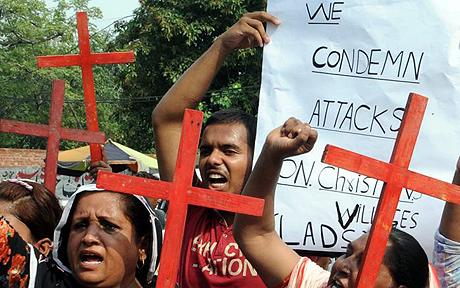
Gunmen killed two Pakistani Christian brothers accused of blasphemy against Islam as they left court on Monday, a government minister and police said.

The men were chained together when the attack took place in the eastern city of Faislabad as they were being taken back into custody after their court appearance.

They were arrested a month ago after leaflets allegedly bearing their names and featuring derogatory remarks against the Prophet Muhammad were found in the town, said Shahbaz Bhatti, the minister for minority affairs. He said mosques in Faislabad had called for the men to be attacked.

Bhatti said he suspected the men were falsely accused of blasphemy by people with a grudge against them. Their families had maintained their innocence, he said.

The brothers were killed by two gunmen as they left court, said police officer Rana Ahmed Hasan. A police officer accompanying the men was wounded, he said, adding the killers escaped.

Pakistan’s blasphemy laws have been often criticized by religious minorities and human rights activists.

In its latest report on religious freedom in Pakistan, the U.S. State Department said the laws are often abused to settle local disputes and discriminate against minorities.

Muslims make up an estimated 97 percent of Pakistan’s 180 million people, most of them Sunni.

Bhatti said he believed the brothers were innocent.

“I personally don’t think that anyone who wrote derogatory things against Muhammad would put their names on the bottom,” he said. “This was just to settle a personal issue.”

Bhatti has long campaigned against the blasphemy laws, which were introduced President Gen. Zia ul-Haq in the 1980s to win the support of hard-line religious groups.

Repealing them now would likely meet opposition from the same groups, something that could cause unrest.

Clinton Reaffirms US Commitment to Pakistan

By Ayaz Gul for The Voice of America

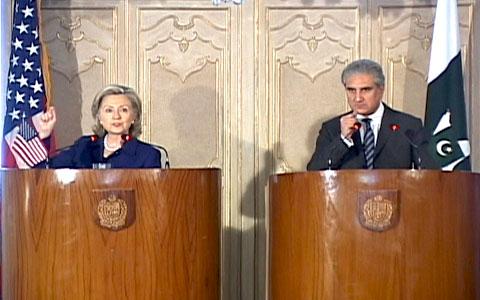
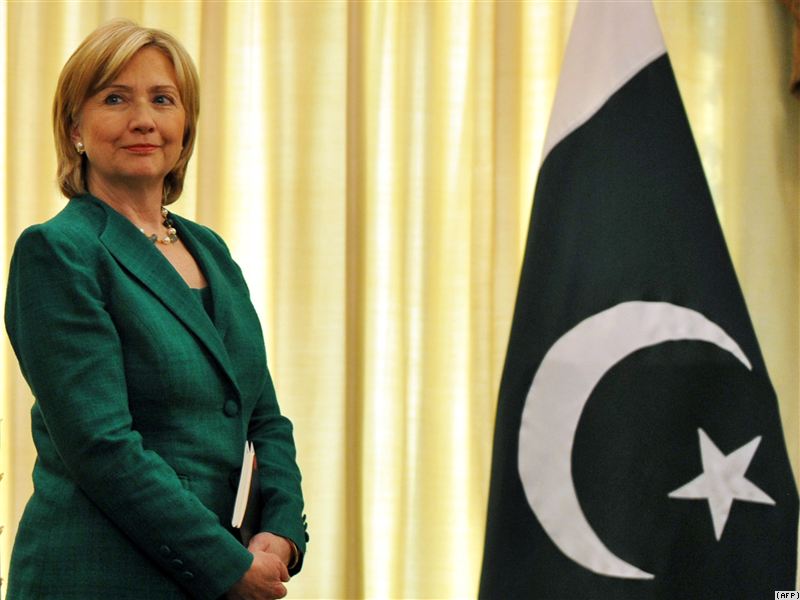
Concluding a second round of the so-called U.S.-Pakistan strategic dialogue in Islamabad, Secretary of State Hillary Clinton on Monday announced more than $500 million in several new aid programs for Pakistan.

The string of new projects unveiled by Clinton during a joint press conference with Pakistani Foreign Minister Shah Memood Qureshi are designed to help Pakistan meet its energy needs and boost power generation, health and agricultural development. The programs are the first to be launched under U.S legislation passed last year tripling civilian aid for Pakistan to $7.5 billion during the next five years.

Secretary Clinton said the United States hopes the new aid will translate into real life improvements for families and communities, describing them as long-term investments in Pakistan’s future.

“We are committed to building a partnership with Pakistan that of course strengthens security and protects the people of Pakistan, but goes far beyond security,” Clinton said. “We want to help you drive economic growth and prosperity, strengthen your democratic government institutions and expand access to the tools of opportunity.”

Pakistan is playing a key role in the international fighting against Taliban insurgents in Afghanistan. But public opinion in Pakistan still views U.S. motives with a considerable amount of suspicion. The skepticism stems from the U.S decision to abandon support for Pakistan after Soviet forces withdrew from Afghanistan.

But Secretary Clinton says she can see positive change resulting from what she called deeper and broader bilateral engagements in recent years.

“We have moved beyond a standoff of our misunderstandings that were allowed to fester and not addressed… to a position where we are engaged in the most open dialogue that I think our two countries have ever had,” she said.

Foreign minister Qureshi also agreed that the enhanced U.S cooperation in various fields such as energy, power, health, agricultural and education sector is critical for changing the public perception in Pakistan.

“The opinion of the United States will change when the people of Pakistan see that their lives have changed,” said Mr. Qureshi.

Sunday, Clinton attended the signing of a landmark trade deal reached by Pakistan and Afghanistan, after years of negotiations. The United States has been pushing Afghan and Pakistani leaders to improve bilateral relations it says will contribute to the fight against extremists.

Secretary Clinton’s next stop as part of her Asia trip will be Kabul, where she will attend an international conference on Tuesday.

At the news conference in Islamabad, she reiterated that insurgents who wish to reconcile must lay down their arms, renounce partnership with al-Qaida and accept Afghanistan’s constitution.

“It seems to us that there will be some who are willing to meet those conditions and others who are not. And we would strongly advise our friends in Afghanistan to deal with those who are committed to a peaceful future where their ideas can compete in the political arena through the ballot box, not through the force of arms.”

Taliban insurgents have stepped up attacks against Afghan and U.S-led coalition forces in recent months. More than 50 foreign troops have died in July while the previous month was the deadliest for international forces since the war against Taliban and its allies began nine years ago.

Clinton, With Initiatives in Hand, Arrives in Pakistan

By Mark Landler for The New York Times

Secretary of State Hillary Rodham Clinton arrived here Sunday for high-level deliberations with Pakistani leaders, the latest in a series of encounters that the Obama administration hopes will chip away at decades of suspicion between Pakistan and the United States.

Hillary Rodham ClintonMrs. Clinton will announce a raft of initiatives to help Pakistan in public health, water distribution and agriculture, to be funded by $500 million in American economic aid. Among other things, the United States will build a 60-bed hospital in Karachi and help farmers export their mangoes.

Yet these projects, however beneficial to this economically fragile country, do not disguise several nagging sources of friction between the two sides. American officials still question Pakistan’s commitment to root out Taliban insurgents in its frontier areas, its motives in reaching out to war-torn Afghanistan and its determination to expand its own nuclear program.

Pakistan plans to buy two nuclear reactors from China — a deal that alarms the United States because it is cloaked in secrecy and is being conducted outside the global nonproliferation regime. Administration officials said they did not know if Mrs. Clinton planned to raise the purchase.

Relations could be further tested if the Obama administration decides to place a major Pakistani insurgent group, the Haqqani network, on the State Department’s list of terrorist organizations. Islamabad maintains ties to the group through its intelligence service, and it is seeking to exploit those connections as a way to extend its influence over Afghanistan.

For all that, tensions between the two sides have ebbed since Mrs. Clinton’s last visit here in October, when she was peppered with hostile questions in public meetings and bluntly suggested that people in the Pakistani government know the whereabouts of Osama bin Laden and Mullah Omar.

ā€œWe needed to change the core of the relationship with Pakistan,ā€ said Richard C. Holbrooke, the special representative to Afghanistan and Pakistan. ā€œThe evolution of the strategic dialogue, and the fact that we are delivering, is producing a change in Pakistani attitudes.ā€

Mr. Holbrooke noted a U-turn in Pakistan’s policy on issuing visas to American diplomats. For months, Pakistani officials had held up those applications, creating a huge backlog and frustrating the United States. But Pakistan issued 450 visas in the last five days, he said.

Mr. Holbrooke conceded that public-opinion polls toward the United States had yet to show much of a change. Mrs. Clinton may receive more criticism on Monday at a town-hall meeting in Islamabad. Her visit, which was not announced due to security concerns, is being conducted under tight security.

Vali Nasr, a senior advisor to Mr. Holbrooke, said it was unrealistic to expect ā€œto change 30 years of foreign policy of Pakistan on a dime.ā€ But he said, ā€œOn foreign policy issues, we’re seeing a lot more convergence.ā€

The United States is encouraged by the burgeoning dialogue between President Hamid Karzai of Afghanistan and Pakistani leaders, including the chief of the staff of the army, Gen. Ashfaq Parvez Kayani. Any resolution of the war, Mr. Holbrooke said, must involve Pakistan.

While American officials would like to see a more aggressive Pakistani military push in North Waziristan, the stronghold of the Haqqani network, they praise the military’s campaigns in South Waziristan and the Swat Valley, where Taliban insurgents had also made gains.

Pakistan’s battle against insurgents has exacted a fearful civilian toll. Last week, a suicide bomber killed 45 people, and injured 175, in an attack on a 1,000-year-old Sufi shrine in Lahore. Many Pakistanis blame the American-led war in Afghanistan for fomenting anti-Pakistan terrorism.

A coalition of protest groups issued a statement Sunday, timed to Mrs. Clinton’s arrival, which calls for an end to the war in Afghanistan and for Americans and Pakistanis who are involved in clandestine air strikes on Pakistani targets to be tried for war crimes.

Mrs. Clinton is to meet General Kayani on Monday, after meetings on Sunday with President Asif Ali Zardari and Prime Minister Yousaf Raza Gillani. She was also scheduled to meet Pakistani business leaders and the head of the Pakistani opposition, Nawaz Sharif.

Mrs. Clinton has brought a shopping-bag full of commitments for Pakistan, drawn from the $7.5 billion in non-military aid, over five years, pledged by Congress last year. The emphasis is on basic services like electricity and water, politically-charged issues in this country, particularly during the hot summer.

ā€œOur commitment is broad and deep,ā€ said Rajiv Shah, the administrator of the United States Agency for International Development, who is with Mrs. Clinton. ā€œWe will not do what we’ve done in the past.ā€

Administration officials said the project to upgrade Pakistan’s creaky power grid, which involves building hydroelectric dams and rehabilitating power plants, had helped reduce chronic power outages. But on the day Mrs. Clinton landed, television reports here warned of further outages.

Religious Freedom in America Includes Everyone

By Alex Howard for The Pueblo Chieftain

One of the fundamental freedoms we enjoy as citizens is to worship in whatever manner we want to and wherever we want to.

There are virtually no restrictions on this freedom, even when a particular exercise of a belief might be illegal for the general public. Within the scope of religious expression, even the use of drugs can be legitimate. For example, the use of peyote, a hallucinogenic cactus, is legit for members of Native American communities but illegal for the rest of us.

Moreover, the freedom of religion principle extends well beyond what most people think of as acceptable.

While all the mainstream religions are represented within the military services, we also find niches carved out for not-so-common expressions.

Wicca, also known as witchcraft, druidism, paganism and other names, is officially recognized by the United States military as a legitimate form of religious expression.

So, what I’m saying is that the freedom of religious expression is wide-ranging and as diverse as the citizenry in America. Christians, Jews, Hindus, Muslims, Buddhists, Rastafarians, Sikhs, Scientologists, Baha’i and all the others have their places in the worldwide religious worship palette, including here in America.

And I’ve named just a few religions. There are many more, some with which our culture has no familiarity despite a large number of adherents.

So, what should we think when a group of citizens objects to the construction of a place of worship by a religious group? We’d have to wonder whether that basic freedom of religion has some kind of limits, wouldn’t we?

Yet, this is exactly a discussion that’s taking place in New York City right now. A group of Muslims that has been using a building not too far from the site of the former World Trade Center for religious and cultural purposes wants to demolish it and build a new mosque and cultural center.

Survivors and family members of victims of the terrorist attack are not happy. The general feelings they express are of anger and unresolved emotional pain over the death of family members, friends and co-workers.

They blame (accurately of course) the attack on those who flew the airplanes and their co-conspirators. Sadly, however, the anger at the attackers has been enlarged to include Muslims in general.

That being acknowledged, prejudicial and misguided as it is, the discussion is taking on the aura of denial of the freedom of religious expression. What those objecting to the construction of the mosque seem to have ignored is that the Muslims who want to build it are American citizens, some of them second- or third-generation Americans.

These are not people who are trying to establish a radical, wacko religious cult on foreign soil. They’re Americans exercising their freedoms, just as you and I are free to do.

Should the pain of those who lost loved ones in the villainous attack on the WTC hold sway over the decision to build the mosque near that site? I don’t think so. Otherwise, any group with an emotional connection to an event could claim the right to object to some other religious building. American Muslims have just as much right to freedom of worship as other Americans. To think otherwise is, well, un-American.

-Alex Howard is a retired Episcopal priest.

Pakistan Bans India Osama Bin Laden Comedy

From The BBC

Pakistan has banned an Indian comedy called Tere Bin Laden (Without You Laden), about a lookalike of Osama Bin Laden.

The country’s film censor board has objected to the way the movie portrays Bin Laden and warned that it could trigger a “terrorist attack”. The film was due to have been released in Pakistan on Friday.

Its main distributor told the BBC that an appeal has been filed against Thursday’s decision. In a statement the film board said that Tere Bin Laden was “unsuitable for public exhibition”.

They said it was a “controversial subject which depicted the character of Osama Bin Laden in a comic way… and contains vulgar and objectionable dialogue, abuses and derogatory remarks”.

The board said that the film also “portrayed a bad and negative image of law enforcing agencies of the country”. Correspondents say that it is not unprecedented for Pakistan to ban films, especially if they are linked to India – Islamabad’s longtime regional arch rival.

But the impact of such censorship is likely to be limited, correspondents say, because DVDs are the most common means of watching movies in the country and pirated ones are easily secured.

The BBC’s Syed Shoaib Hasan says that although the announcement of the ban was unexpected, it was not altogether surprising as the country’s government remains touchy on the subject of Bin Laden. His current whereabouts are unknown, with some US officials maintaining that the world’s most wanted man is hiding in Pakistan.

The main distributor for the film, Nadeem Mandviwala, told the BBC that the the ministry of culture will announce its decision against the appeal on Friday. “I find it quite disturbing that we cannot portray Osama Bin Laden and the law enforcement agencies,” Mr Mandviwala told the BBC.

“It’s acceptable that we make comedies about the president and prime minister all the time, but not Osama.” Indian films are popular in Pakistan, though only some make it to the big screens.

Tere Bin Laden is about a struggling Pakistani journalist who tries to sell an interview of a fake Bin Laden as a scoop who wants to move to the US to fulfil his American dream.

When he comes across a person who looks like Osama, he decides to sell his interview as a scoop to the international media, which results in a series of goof-ups.

Though the film is a comedy, the director says they have been careful about the authenticity of locations in Karachi, facts about Osama Bin Laden and the context of the story

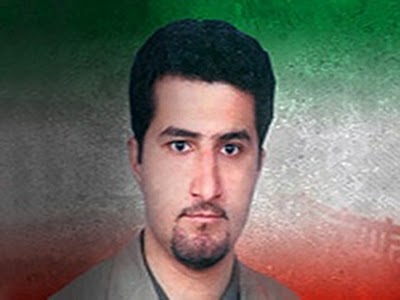
‘Abducted’ Nuclear Scientist Returns to Iran

By Nasser Karimi and Brian Murphy for The Associated Press

TEHRAN, Iran – Flashing a victory sign, an Iranian nuclear scientist who claims he was abducted and abused by U.S. agents a year ago returned Thursday to his homeland and into the heart of the latest crossfire between Washington and Tehran.

The conflicting accounts about Shahram Amiri — captive or defector who got cold feet — are unlikely to alter the Western-led pressure on Iran over its nuclear program.

But Iran’s leaders are expected to use Amiri to ring up as many propaganda points as possible against Washington — showing that relations remain in a deep freeze and hopes of breakthrough talks appear as distant as ever.

It also gives the ruling clerics a welcome distraction at a time when domestic protests are growing over Iran’s stumbling economy and worries about the fallout from international sanctions.

Amiri’s return “shows the strength of the Islamic republic,” boasted lawmaker Amir Taherkhani. Another prominent parliament member, Alaeddin Boroujerdi, called the alleged kidnapping a “terrorist act.”

But the Washington Post reported that the CIA paid Amiri $5 million to provide intelligence on Iran’s nuclear program. The Post in its online edition late Wednesday said the money came from a secret program aimed at inducing scientists and others with information on Iran’s nuclear program to defect.

U.S. officials also told the Post that Amiri should be unable to get to that money now that he’s returned to Iran, which is under financial sanctions.

It remains unclear how Iranian authorities will ultimately deal with Amiri — and the U.S. claims he cooperated with American authorities — despite his hero-style welcome.

Foreign Minister Manouchehr Mottaki called Amiri a “dear compatriot” and said Iran was keenly interested in learning more about the reasons for his alleged abduction.

Journalists were allowed to cover Amiri’s first steps back in Iran in a rare relaxation of media restrictions. The last such press gathering permitted at Tehran’s international airport was linked to another tussle with Washington: the May visit by the mothers of three jailed Americans arrested last year on the Iran-Iraq border.

Amiri’s pre-dawn arrival capped a stunning tumble of events over the past month that included leaked videos with mixed messages, Amiri surfacing at a diplomatic compound in Washington and the White House finally acknowledging his presence in the country.

The U.S. says he was a willing defector who changed his mind and decided to board a plane home from Washington. Amiri has told a very different tale, claiming he was snatched while on a pilgrimage in Saudi Arabia and bundled off to the United States to be harshly interrogated and offered millions of dollars by the CIA to speak against Iran.

Amiri was embraced by his family — including his tearful 7-year-old son — and greeted by a top envoy from Iran’s Foreign Ministry. The 32-year-old Amiri smiled and gave the V-for-victory sign.

Speaking to journalists after a flight via Qatar, Amiri repeated his earlier claims that he was snatched while in the Saudi holy city of Medina and carried off to the United States.

The first months were full of intense pressures, he alleged. “I was under the harshest mental and physical torture,” he said at the Tehran airport, with his young son sitting on his lap.

He also alleged that Israeli agents were present during the interrogations and that CIA officers offered him $50 million to remain in America. He gave no further details to back up the claims or shed any new light on his time in the United States, but promised to reveal more later.

“I have some documents proving that I’ve not been free in the United States and have always been under the control of armed agents of U.S. intelligence services,” Amiri told reporters.

Previously he claimed that CIA agents “pressured me to help with their propaganda against Iran,” he said, including offering him up to $10 million to talk to U.S. media and claim to have documents on a laptop against Iran. He said he refused to take the money.

Amiri refused to say how — if under guard — he could have escaped U.S. agents to release videos in which he alleges that he had been snatched by American and Saudi kidnap teams while on a pilgrimage in Saudi Arabia. He said that to disclose such information now could harm national security, and said he would explain everything later.

On Thursday, Amiri sought to play down his role in Iran’s nuclear program — which Washington and allies fear could be used to create atomic weapons. Iran says it only seeks energy-producing reactors.

“I am a simple researcher who was working in the university,” he said. “I’m not involved in any confidential jobs. I had no classified information.”

His case was often raised by Iranian officials in the past year, but Washington offered no public response. It took a higher profile after Iranian authorities decided to pursue charges against the three Americans arrested along the border with Iraq in July 2009.

Iran’s deputy foreign minister, Hassan Qashqavi, said there would be “no link” between Amiri’s return and the case of the three Americans, whose families say they were hiking in northern Iraq and that if they crossed the border, they did so inadvertently.

U.S. officials also have repeatedly asked Iran for information about Robert Levinson, a former FBI agent who disappeared in Iran in 2007.

Amiri was generally a footnote in the international showdown over Iran’s nuclear ambitions until last month. Iranian state TV aired a video he purportedly made from an Internet cafe in Tucson, Arizona, to claim he was taken captive by U.S. and Saudi “terror and kidnap teams.”

The video was shortly followed by another, professionally produced clip in which he said he was happily studying for a doctorate in the United States. In a third, shaky piece of video, Amiri claimed to have escaped from U.S. agents in Virginia and insisted the second video was “a complete lie” that the Americans put out.

U.S. officials never acknowledged he was on American soil until Tuesday, hours after he turned up at the Iranian interests section at the Pakistani Embassy in Washington asking to be sent home. Secretary of State Hillary Rodham Clinton said Amiri had been in the United States “of his own free will and he is free to go.”

On Thursday in Tehran, he asked American authorities to explain their secrecy.

“Why didn’t they allow me to have an open interview with the media in the United States?” he said. “Why didn’t they ever announce my presence?”

U.S. officials would say little about the circumstances of what they assert was a willing defection by Amiri and what went wrong. But there were suggestions that threats to his family in Iran pushed Amiri to first make the claims he was kidnapped. Amiri, however, claimed his family faced no problems. “My family was completely free and they were under financial support of the Iranian government,” he said.

Pakistan Oil & Gas to Spend $1 Billion on Exploration, CEO Says

By Khaliq Ahmed and Farhan Sharif for Bloomberg

Oil & Gas Development Co., Pakistan’s biggest fuels explorer, plans to spend a record $1 billion this year to drill 48 new wells and increase production, to help bridge the nation’s record energy deficit.

ā€œWe are following a very aggressive exploration policy,ā€ Chief Executive Shah Mehboob Alam said in an interview at his office in Islamabad yesterday. ā€œWe are targeting a number of discoveries.ā€

Improved domestic energy supplies may help Pakistan’s economy which has been hurt by terrorism and falling foreign investment. Demand for energy is three times supply and daily power outages have forced textile and engineering factories to close and caused riots across the country.

ā€œThere is a huge need and also huge potential to increase production by explorers,ā€ said Umer Ayaz, a research analyst at JS Global Capital Ltd. in Karachi. ā€œPakistan has unusual risks in exploration and also unusually high potential.ā€ A ā€œsizeableā€ discovery in the northwest will be announced in ā€œa couple of days,ā€ Alam said, without giving details.

Shares of Oil & Gas Development rose 2.8 percent to 149.56 rupees on the Karachi Stock Exchange yesterday, the highest since Oct. 30, 2006. The stock has gained 35 percent this year compared with an 8 percent increase in the benchmark index. Oil & Gas plans to expand exploration in the western province of Baluchistan, where attacks on pipelines and installations have disrupted gas supplies, Alam said. The province is estimated to hold more than half the country’s gas reserves.

The company expects the Zin Block in Baluchistan to generate its first gas flows within two years. The block has estimated gas reserves of 10 trillion cubic feet and drilling is scheduled to start as soon as the government approves security plans within the next two weeks, he said.

ā€œWe drilled only five out a planned 15 wells in Baluchistan last year because of security issues,ā€ he said. ā€œNow, we have submitted a plan to the Finance Ministry under which the Frontier Corp. will raise a special force of 500 to 600 people.ā€ Baluch nationalists want political autonomy and a share of the resources in the province, where the country’s largest gas fields, including Sui, are located. The Frontier Corp. is part of Pakistan’s paramilitary force.

The company is also working in fields in western Baluchistan, including the Samandar field, west of Karachi, and Shahana, which is near the border with Iran, Alam said. Oil & Gas will invite bids today for the development of Kunar Pasakhi Deep and Tando Allah Yar fields in the southern province of Sindh, Alam said. Previously awarded tenders had been canceled after being challenged in court for not complying with regulatory procedures. The two fields may produce 280 million cubic feet of gas a day, 360 metric tons of liquefied petroleum gas a day and 4,300 barrels of oil a day, Alam said.

The company drilled 26 wells and made six discoveries in the year ended June 30, including at Nashpa in the northwest, which is producing 15 million cubic feet a day of gas and 4,700 barrels of oil a day, he said. Oil & Gas Development discovers fuel in one out of every 2.3 wells drilled, compared with an industry average of one in every 3.8, he said.

Oil & Gas Development will increase production after installing new compressors to plug leaks at the Qadirpur gas field by September, Alam said. The company plans to buy two new rigs this year. The Qadirpur field in the southern province of Sindh contributes about 40 percent of the company’s total gas output.

Oil & Gas Development produces about 1 billion cubic feet of gas a day, or a quarter of the country’s total output. Its oil production is 60 percent of the nation’s total of 62,000 barrels a day. Pakistan imports 85 percent of its oil needs. The company’s profit in the 12 months ended June 30, will be ā€œhigher than last year,ā€ Alam said, without giving details. Oil & Gas reported a net profit of 55.5 billion rupees ($647 million) in the year ended June 30, 2009, according to data compiled by Bloomberg.

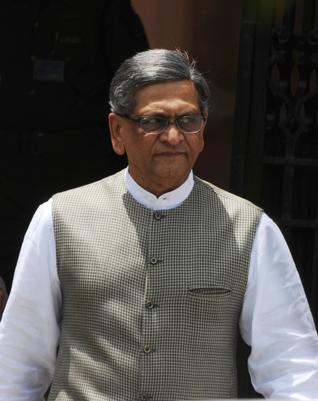
Krishna Arrives in Pakistan, Calls Visit ‘a New Beginning’

By Omer Farooq Khan for The Times of India

Indian external affairs minister S M Krishna, who arrived in Islamabad on Wednesday, said that he is on a mission to restore trust and increase confidence between the two countries.

“We hope to discuss all issues of mutual interest and concern that can contribute to restoring trust and building confidence in our bilateral relationship,” Krishna told journalists as he arrived here.

During his three-day visit, Krishna will hold talks with his Pakistani counterpart Shah Mahmood Qureshi on Thursday and will also meet President Asif Ali Zardari and PM Yusuf Raza Gillani. S M Krishna looks forward seeking progress on the issue of terrorism being raised by the Indian home minister P Chidambaram with his Pakistani counterpart Rehman Malik last month in Islamabad.

ā€œI also look forward to receiving feedback on the issues raised by our home minister (P Chidambaram) during his visit to Pakistan last month on our core concern of terrorism, particularly in the light of the discussions our home minister had in Pakistan in the context of interrogation of David Headley regarding the Mumbai terrorist attack,” he said.

Krishna described his visit as important as it marks a new beginning of journey to build a prosperous, friendly and cooperative relationship between the two countries.

India is committed to resolving all issues with Pakistan through peaceful dialogue based on mutual trust and confidence, Krishna said.

“I brought a message of peace and friendship from the people of India and we hope to undertake this voyage of peace, however long and arduous, jointly with the government and people of Pakistan,” he said.
Pakistan’s foreign minister Shah Mehmood Qureshi has said that he will raise with Krishna the issue of alleged human rights in Jammu and Kashmir.

ā€œWe are approaching the meeting with a positive mindset,ā€ Qureshi said.

The Krishna-Qureshi talks on Thursday will be the third major contact between the two countries in within a month.

Home minister Chidambaram conveyed India’s concerns and expectations on terrorism to Pakistani leadership last month when he visited Islamabad.

The Indian and Pakistani prime ministers met in April on the sidelines of a regional summit in Bhutan, which set in motion the process to revive suspended contacts at different levels of government.

Breaking Pakistan’s Sufi Heart

By Mira Sethi for The Wall Street Journal

The two suicide bombers chose midnight on July 1, when the throng of worshipers in the ancient Data Darbar shrine in Lahore, Pakistan, was at its peak, to blow themselves up. Forty-five people were killed and 175 were injured. The attack on the 1,000-year-old center of Sufi Islam—the religion’s mystical, unorthodox face—was the first Taliban attack of its kind in Punjab province, the heartland of the country’s moderate, majority Barelvi sect.

The day after the attack on the shrine, Lahore’s students, politicians, traders and housewives took to the streets in loud, visceral protest. Major commercial centers were shut down, and in a rare show of sympathy, students from religious seminaries blocked roads and burned a few tires.

Pakistanis are now asking themselves: Is this America’s war or is it ours too? How can we fight it? Why did our military nurture these warriors for three decades and why has it turned against them now? How and when are we going to be at peace with our neighbors, especially India with which the military is obsessed and for whom these non-state actors were originally spawned?

To understand why this attack is so shocking, one must first look at Pakistan’s religious history. The majority of Pakistanis are Barelvis, who respect the inclusive traditions of the Sufis who brought Islam to the Indian Subcontinent. This is completely unlike the harsh version of Islam imported from Wahabi Saudi Arabia after the petro-dollar boom in the Middle East in the 1970s.

So the bombing of the Sufi shrine has symbolic resonance: Sufism has always thrived as a reaction to the politics of the state. In modern Turkey Sufism grew as a response to Ataturk’s secularism; in the Soviet Union, it grew as resistance to the state’s official policy of promoting atheism; in Algeria, it was a reaction to French colonialism. In Pakistan, Sufism has thrived as an alternative to the state-sponsored Wahabi Islam of the Deobandi jihadi sect.

If there’s one thing that Pakistanis are proud of, it’s their Sufi heritage. The shrine attacked in Lahore housed the tomb of one of the most famous Sufis to have ever lived, Ali Hajwiri, affectionately known by Lahoris as Data—one who facilitates the fulfillment of aspirations. Hajwiri wrote a seminal text in Sufi thought, the Kashf-al-Mahjub or “Unveiling of the Hidden.” An early example of Sufi doctrine, the book’s importance has grown over the centuries.

Although not a native of Lahore, Hajwiri decided to settle in the city for the last 34 years of his life at the end of the 11th century. Even then, Lahore’s fame as a center of culture was widespread. It was known for its old fortified city, a nourishing river, and a collection of free-spirited artists, artisans, and musicians. During his 34 years of residence, Hajwiri became a revered dervish, offering an inclusive mystical path to Lahore’s non-Muslim population, many of whom were subject to a punishing caste hierarchy.

Hajwiri’s shrine remained protected through centuries of rising and falling empires in the Punjab. Even the Sikh marauder Maharaja Ranjit Singh left the shrine untouched as he plundered many of Lahore’s riches.

In attacking Hajwiri’s shrine, the Taliban have grossly miscalculated. They had hoped to provoke anger at the Pakistani government for fighting America’s war. Instead they have managed to convince more and more Pakistanis that this is now their war, not just America’s.

Pakistani Hotel Cleaner Returns $50,000 in Cash Left Behind By Forgetful Guest

By Rob Crilly for The Telegraph

Ā 

A hotel cleaner who earns minimum wage has been hailed a national hero in Pakistan after he returned $50,000 in cash left behind by an absent minded guest.

Essa Khan found the bag of notes stuffed in a safe deposit box while carrying out a routine inspection of a room vacated by a Japanese NGO worker before another guest arrived.

After years of negative publicity from terror strikes and political unrest, politicians have lauded the housekeeper’s honesty as the “real face of Pakistan”. But Mr Khan told The Daily Telegraph he was simply doing his job.

“I have a responsibility as a human being, as a Pakistani, a Muslim,” he said on Sunday. “I never thought about keeping the money.” Mr Khan, 50, has worked for the past 20 years at the Gilgit Serena Hotel, which stands amid dramatic scenery at the foot of the Karakoram mountains, in northern Pakistan.

Hotel staff managed to track down the guest, who works for the Japan International Co-operation Agency, and return the money, which was intended to fund a feasibility study into tourism projects in northern Pakistan.

Rashid Uddin, the hotel’s general manager, said the Japanese man, who has not been named, was embarrassed to learn he had lost the cash.

“Even after three days, he had no clue that he had left the money,” Mr Uddin said by telephone from Gilgit. “He came in the next day, and it was easy to see from the look on his face just how relieved he was.” The hotel has given Mr Khan a 10,000-rupee (Ā£77) reward for his honesty. But his general manager said his actions deserved wider recognition. “In these economic conditions, and in a region of poverty, we should be very, very proud of people like this,” said Mr Uddin.

The story has been taken up by politicians in a country tired of negative publicity. Years of suicide bombings mean tourist hotels have struggled to survive as foreigners stay away. Salman Taseer, the governor of Punjab province, declared Mr Khan a “national hero”. “He’s a humble housekeeper and we are really proud of him,” he said. “This is the face of Pakistan that people don’t see normally.” He telephoned Mr. Khan on Sunday to promise him another reward and to invite him to Lahore for a ceremony in his honor.

Pakistani woman appointed to Canadian Senate

By Latafat Ali Siddiqui for Dawn

Ā Salma Ataullahjan on Friday became the first Canadian woman of Pakistani origin to get into the Senate when Prime Minister Stephen Harper appointed her to fill a vacancy from the province of Ontario.

ā€œI am pleased to announce the appointment of Salma Ataullahjan to the Senate of Canada,ā€ said Prime Minister Harper in a statement on Friday evening.

ā€œA professional, artist, parent and strong activist for the South Asian community in the Greater Toronto Area, Ms Ataullahjan brings a remarkable dedication and energy to her new role as a senator for the province of Ontario,ā€ he said.

The appointment comes into effect immediately. ā€œI’m delighted to hear the good news of my appointment as a senator,ā€ said Ms Ataullahjan, who immigrated to Canada from Pakistan 31 years ago, becoming a Canadian citizen in 1989.

She pledged to support the government in its efforts to make the Senate more democratic and accountable, including bringing in legislation to limit the Senate’s tenure and to allow provinces to elect senators.

Ms Ataullahjan, who belongs to the family of the late Khan Abdul Wali Khan, has settled in Toronto and is associated with the real estate sector for 21 years.

She has served several organizations, including as founder and chairperson of the Parent Council of David Lewis Public School, as member of the South Asian Regional Council and on the executive of the Pakistani Canadian Professionals and Academics.

She has also worked for the Toronto chapter of the Citizens Foundation, a charity that builds not-for-profit schools in poor districts of Pakistan. Ms Ataullahjan is an accomplished artist and paints in watercolours. She and husband Saleem have been married for 31 years and have two daughters.

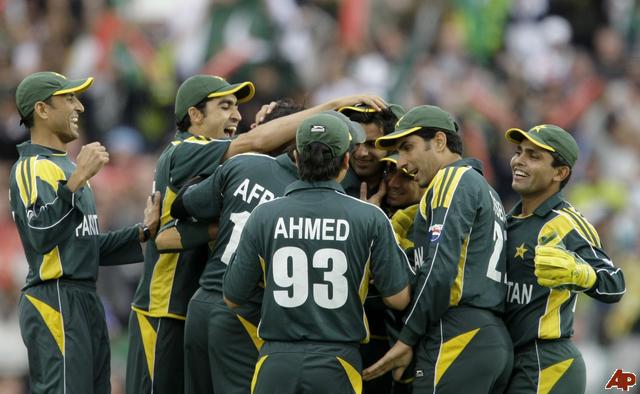
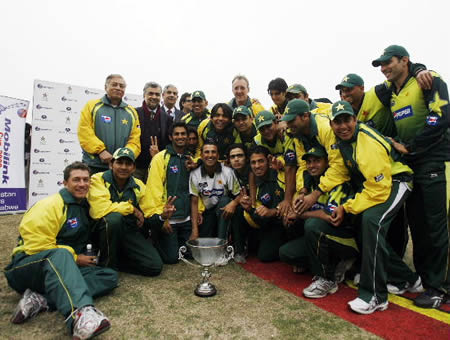
Pakistan Are Over Here But Thinking About Home

By Stephen Brenkley for The Independent

Pakistan are here to win. Anybody who thought that they were in England this summer to make up the numbers, licking their wounds, grateful to be given a temporary home, would be misguided.Ā 

They may indeed be the refugees of world cricket, unable to play in their own country because teams refuse to go there, but they will be nobody’s fools. It is the most bizarre of tours they have embarked on. Starting on Tuesday at Lord’s, they play the first of two Tests against Australia, which will be considered as home matches.

Ā They then play four Tests against England in which they will be the touring side. Such have been the ramifications of the terrorist activities at home. Pakistan have been forced to play where they can. “It’s a big tour. It’s not easy to get hold of 17 boys, a lot on their first tour here, and I don’t think we have ever played six Test matches in two months,” said Yawar Saeed, their wise, veteran manager.

Ā “We have a young side here and it was important to keep them together. There is plenty of talent in this team. The one sitting there, Umar Akmal, is just a bundle of talent, God is so kind to him. I have told him, if he doesn’t use his talent I will beat him one of these days. I see him as a future Vivian Richards. Look at his confidence at his age and look at the way he’s playing. He’s a very good kid and I’m trying to help him and the left-arm fast bowler, [Mohammad] Aamer, who’s only 18 and can also do great things.”

There is, of course, no physical intent by Yawar towards the precocious Umar, he merely makes the point to reinforce his desire not to waste his gifts. There has been precious little sign of that so far.

Yawar is on his 26th or 27th tour – he really has lost count – as manager. At 75, he thought he had unpacked for the last time but with the shifting of officials yet again in the Pakistan Cricket Board he has returned as a safe pair of hands. He is an Anglophile who was educated at Millfield, played for Somerset for three seasons in the mid-Fifties and whose father, Mohammad Saeed, was the first captain of Pakistan post-partition and pre-Tests.

At the core of the thinking of those who run cricket in Pakistan is the day when they can play at home again. Somehow, cricket is being sustained despite the lack of international competition but Yawar and the PCB hierarchy know that cannot last while understanding the virtual boycott.

The memory is still raw of the Sri Lanka team being attacked on the way to a Test in Lahore last year. Yawar and the Pakistan team were in a coach 40 yards behind. “The whole thing is dependent on the conditions and security within the country,” he said. “You have to ask: Yawar, if you were an Australian or an Englishman, would you go there? It’s very difficult, I don’t blame any of the people who are hesitant to come there. But all I can say is it’s not as bad as it looks from here. I’m not saying it’s perfect.”

Pakistan have taken a big risk by appointing as captain Shahid Afridi, who has been in regular trouble for ill-discipline. He has not so far shown diplomatic tendencies when they may be needed. In England four years ago, Pakistan’s tour was almost derailed when the Fourth Test was abandoned amid allegations of ball-tampering.

On the tour of Australia last winter, disharmony led to a whitewash and a series of disciplinary actions later on. Shahid himself was penalised for being spotted biting a ball. “We had problems about the captain,” said Yawar. “I can see in Shahid the one who can get them all together, mould them into one team. People who matter have had a chat with Shahid. I am very confident he’s going to be OK. Even this ball-biting thing, it’s just that he’s so keen, he’s keen to win like a lot of people, so he does lose control at times. I don’t think he will as captain.”

So to Australia on Tuesday. “Playing Australia you have got to be mentally tough. That’s where I’m working on them. I have seen Australia play, I have seen these boys play, I know their psyche. I can’t say that overnight we will become X, Y, Z, but you will see a graph going up by the Test match.”

But nobody in Pakistan will rest until the next touring team arrives to play this attractive, gifted young team. “It has to be reintroduced. I can’t put a date on it but I think that something should happen within the next three or four years. I would love to see cricket being played in Pakistan again. Before I say goodbye to this world, I would love to see that.”

Ā