Archive for the ‘ Pakistanis ’ Category

Pakistani Makes History as Nation’s First Winter Olympian

By Manzer Munir

Vancouver, Canada- On Tuesday February 23, 2010, Pakistan will field its very first entry into its very first Winter Olympics. While the nation has won three gold, three silver and four bronze medals in its history at the Olympics since becoming a nation in 1947, this is the first time Pakistan will field an athlete for the Vancouver Olympics in Canada. The sole member of Pakistan’s Winter Olympics team is a 24 year old Pakistani skier by the name of Mohammad Abbas. He was the first Pakistani to qualify for a Winter Olympic event and will participate in the Alpine Skiing in the Giant Slalom category.

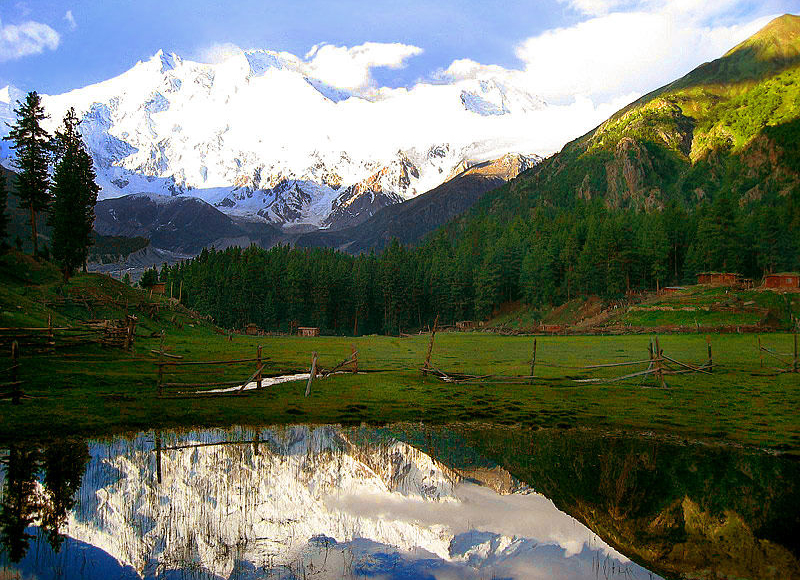
Mohammad Abbas hails from Pakistan’s northern Nalthar valley near Gilgit, Balistan and the now troubled beautiful Swat valley of Pakistan. For years very popular with the British and since with affluent Pakistanis, this picturesque and scenic area of Pakistan is nestled at the foothills of the Himalayas and receives a good amount of snow fall in the winter months. There are not many ski hills in hot weather Pakistan, but there is one in the Nalthar valley where Abbas grew up as one of the local boys. He grew up in a small village near the ski slopes.

When the idea of creating a ski team first developed, all the candidates were local children. Unfortunately out of the original 9 hopefuls, only Abbas qualified for the Vancouver games. “I started skating in 1995 using homemade wooden skates, which is how all the children in our village used to learn. We didn’t have ski boots so we tied our feet to the skis with traditional woolen foot bindings. It was pretty precarious so we had to get our balance right,” he said.

For Abbas, it has been a long and at times arduous 15 year journey since 1995 when he first took interest in skiing at the age of 9 in his village near the ski slopes of Pakistan’s Nalthar valley watching Pakistani and foreign tourists skiing spurned young Abbas and many of his cousins to take up the sport. In a cricket mad country, not very many people pick up skiing. Very few people in Pakistan can afford ski equipment and also only a very small portion of the country gets snow, so it is a surprise that the nation is even fielding an athlete at the Winter Olympics.

Sitting in the Olympics athletes village in Vancouver, Abbas admits that he does not have the camaraderie or the support of Olympic teammates that most other nations participants share, and he was concerned that he may feel a bit lonely representing his country by himself at such a big stage. But the boy from Nalthar valley was greeted with great enthusiasm and support by the rather large Pakistani Canadian community of British Columbia. “The support from my fellow countrymen has really helped me deal with the lack of teammates,” said Abbas.

Abbas said that he “achieved his ambition through hard work” and hopes he has inspired other Pakistani athletes to take up the challenge and aim for future Winter Olympic games. He also realized that his chances of bringing home Pakistan’s first Winter Olympic gold are very small but he said he wants to finish the race in an “honorable manner and make his country proud.”

Although not expected to medal, he is considered the fastest of the first time entrants to compete in the Giant Slalom that is scheduled to take place at Tuesday. It is perhaps an accomplishment to have finally fielded a Winter Olympics team, but for Pakistan it is also a moral victory to have a young man represent the country from the same troubled yet beautiful valley that has been now for months fighting for its life from Taliban insurgents. He represents not just Pakistan’s Olympic hopes, but the spirit of the people of the area to make the best of their situation and rise above the adversity of their daily struggles in a very beautiful part of the world that has also long been known as the “Switzerland of Pakistan.”
The Snub of Pakistani Cricketers by the Indian Premier League Should Come As No Surprise

By Manzer Munir

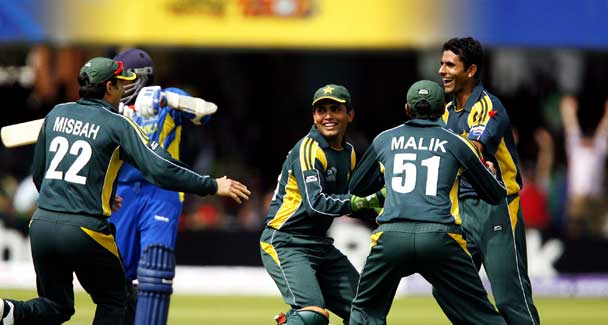
New Delhi, India- Events at an auction held earlier this month by India’s wildly popular Indian Premier League (IPL), consisting of professional cricket teams and franchises, has caused outrage amongst the cricket crazed Pakistani population. Up to seventeen top Pakistani cricketers were anticipated to be selected as top picks in the auction between the teams that saw none of the Pakistani players being selected.

Indian Union Home Minister P. Chidambaram on Monday said that the “decision of the franchisees not to select any of the 17 Pakistani cricketers, who had been given Indian visas for participation in the third edition of the Indian Premier League (IPL), was a disservice to the game of cricket.” Speaking in an interview to a television channel, Chidambaram said that the “IPL issue could have been handled in a better way” and expressed disappointment over the non-selection of the Pakistani cricketers as individuals.

He said these players were 20-20 World Champions and did not deserve to be treated this way. He said that any suggestion that the Indian Government had “nudged” the IPL not to select Pakistani players was not true and had no foundation.

The Pakistani press also had a field day with this turn of events calling for a boycott by the hockey team that is scheduled to visit India next month for Hockey’s World Cup being held in India where Pakistan is scheduled to participate.

Pakistan’s sports minister has demanded the Indian government carry out an inquiry into the snubbing of Pakistan cricketers in the Indian Premier League player auction. “We want the government of India to intervene in this issue and let us know who were responsible in keeping Pakistan cricketers away from the IPL,” Ijaz Jhakrani said Tuesday. “From day one our stance is that the IPL decision was an influenced one.”

The sports ministry has also put on hold its granting its permission for the Pakistan golf team to tour India next month. In addition, Speaker of Pakistan parliament’s lower house, Dr. Fehmida Mirza, stopped a parliamentary delegation’s proposed tour of India in protest. “We have asked both our foreign and interior ministries to let us know about the golf team’s tour to India,” sports ministry spokesman Faik Ali told the Associated Press. “We will decide on golf team’s tour to India after receiving inputs from both ministries”, she said.

Even Bollywood superstar actor Shah Rukh Khan, an owner of one of the IPL teams, the Kolkata Knight Riders, weighed on the issue saying it was “humiliating” to see none of the Pakistani players being picked and that the issue could have been handled better.

The tensions between India and Pakistan are seen as the main reason why the teams stayed away from picking the top Pakistani cricketers. There is a fear amongst the owners of the teams that should the animosities between India and Pakistan escalate, then the teams would suffer as their Pakistani players would be unable to travel or participate in games due to conflict between the two long time enemies. So in a sense it is a business reason that may have precipitated the action by the IPL. There is also a belief by many in Pakistan that perhaps the Indian government influenced the IPL into not accepting Pakistani cricketers as a way to reprimand Pakistan and punish it and its citizens for the Mumbai attacks of 2008, which is still fresh in everyone’s minds. India feels Pakistan has not done enough to rein the terrorist groups blamed for the attacks.

Nonetheless, the upset Pakistani cricket fans should also realize that there is a persistent uneasiness and suspicion on the part of India as Pakistan continues to be seen as the major threat to India’s sovereignty and security. To many in India, allowing Pakistani cricketers to play in India’s IPL would be seen as a way of rewarding a country and its citizens whom you detest and view with deep suspicion and enmity. So in a region of the world where so much tension and conflict already exists between the two neighbors and has simmered for over 60 years, one must not assume everything is peachy and just play ball!

Gandhi and King- Two Martyrs Who Will Never Die

By Manzer Munir

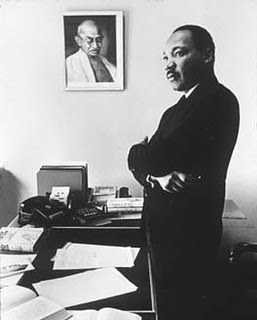
Martin Luther King Jr, who would have been 81 years old January 15, was a great believer of Mohandas K Gandhi, the leader of India’s independence movement from Brittan. King saw that Gandhi’s peaceful civil disobedience and non-violent methods of protest were very effective in bringing down the British Empire in India and as a result Pakistan after some 300 years of direct and indirect rule. Gandhi had believed that people could resist immoral government action by simply refusing to cooperate. Gandhi adopted many peaceful resistance techniques in developing his concept of Satyagraha, which was a philosophy and practice of passive nonviolent resistance.

Gandhi had earlier used this resistance technique in his struggles for freedom and equality for blacks and Indians in South Africa where both minorities were subjected to second and third class citizenry. His methods and refusal to bow down to the injustices that Indians faced in colonial South Africa inspired Nelson Mandela several years later to start his own peaceful struggle that eventually led to the end of Apartheid in South Africa in 1990.

While at Morehouse College, King learned about Gandhi and became very excited about his ideas. He wanted to further educate himself and read many books on Gandhi and his life and beliefs. In his book, Stride Toward Freedom, King states that “Gandhi was probably the first person in history to lift the love ethic of Jesus above mere interaction between individuals to a powerful and effective social force on a large scale. He further writes in his book that “It was in this Gandhian emphasis on love and nonviolence that I discovered the method for social reform that I had been seeking. I came to feel that this was the only morally and practically sound method open to oppressed people in their struggle for freedom.”

King felt that he had finally found a way to where oppressed people could successfully unlock social protest through Jesus’ teachings of love. In fact Gandhi himself had said “What does Jesus mean to me? To me, he was one of the greatest teachers humanity has ever had.” He also once mentioned Jesus as the “most active resister known perhaps to history. His was non-violence par excellence” Therefore to the Christian minister living in the pre-civil rights era in the South in America, Gandhi appeared to King as a follower of Christ, someone who preached peace and love even at the expense of suffering. Martin Luther King once said of Gandhi “It is ironic yet inescapably true that the greatest Christian of the modern world was a man who never embraced Christianity.”

In 1959, King visited India and became fully convinced that Satyagraha could be effectively applied to the struggle by blacks in the United States for racial integration. He came back to the United States where he continued the struggle for freedom and equality for all Americans. Like Gandhi, King also talked about suffering as a path to self purification and spiritual growth. He not only experienced this suffering by being jailed, beaten and harassed by the authorities of the day, but he eventually ended up paying for this cause for freedom for all with his life.

 Mohandas K Gandhi and Martin Luther King Jr arguably were two of the greatest men of the last century.  Both men believed that “injustice anywhere was a threat to justice everywhere.” They both led their people and millions of others out of slavery and servitude against seemingly insurmountable odds to freedom and salvation. On what would have been his 81st birthday, let us recognize that despite an assassin’s bullet and in the greatest democracy in the history of the world, the spirit and dream of a King still live on.

Chicago Man Is Charged in 2008 Attack on Mumbai

December 7, 2009 WASHINGTON — The Chicago man with roots in Pakistan who was arrested two months ago for planning to attack a Danish newspaper now faces the much more serious charge that he was deeply involved in planning the 2008 massacre in India that killed more than 150 people, according to court documents filed by the Justice Department.  

Court documents charge that David Coleman Headley, 49, an American citizen who is the son of a former Pakistani diplomat and a Philadelphia socialite, conducted extensive surveillance of targets in Mumbai, India, for more than two years prior to the attacks by the terrorist group called Lakshar-e-Taiba, which is based in Pakistan.  

Six Americans were among the dead in the attacks on a Mumbai train station, the Oberoi and Taj Mahal hotels and other sites.

He has been charged with conspiracy to murder and maim in a foreign country, and material support of terrorism. Federal officials said the most serious charges, conspiring to carry out bombings that resulted in deaths, carry possible sentences of death or life in prison.

The Justice Department said that Mr. Headley, who is cooperating with the government’s investigation, spent several years and considerable effort on behalf of the plotters, attended training by the group in Pakistan, videotaped targets and briefed the other conspirators on how to carry out the attack on India’s largest city.

 Mr. Headley took boat trips in and around Mumbai harbor in the spring of 2008, videotaping potential landing sites for the attackers, who would arrive by sea, the court documents charge. The attackers traveled from Karachi, Pakistan, hijacked an Indian fishing trawler, killed its captain, and then used a small boat to go ashore. The masked men used assault rifles and grenades in their deadly onslaught.

 Mr. Headley also scouted out other potential targets in Mumbai and elsewhere in India that were not attacked, including the National Defense College in Delhi.

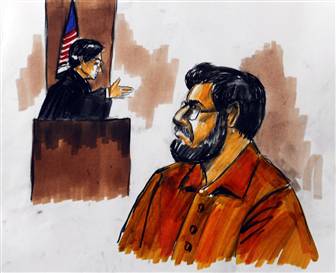
 Mr. Headley, a resident of Chicago with a criminal record for smuggling drugs to the United States from Pakistan, was arrested in October with a Pakistani-born businessman, Tahawwur Rana, 45, who runs several businesses in Chicago and Toronto. Mr. Rana and Mr. Headley, who have known each other since attending an elite Pakistani military high school, were charged with plotting an attack against Jyllands-Posten, a Danish newspaper that published a series of cartoons depicting the Prophet Muhammad.

 Mr. Rana, a citizen of Canada, was not charged in the Mumbai attacks. But officials said the two men appeared to consult closely, and Mr. Headley posed as a representative of a company owned by Mr. Rana. In a bail hearing last week, Mr. Rana argued that he was duped by Mr. Headley.

 The Justice Department also announced Monday it had filed charges against Abdur Rehman Hashim Syed, a retired major in the Pakistani army, with collaborating in the plot against the Danish newspaper.

“This investigation remains active and ongoing,” said Patrick J. Fitzgerald, the United States Attorney for the northern district of Illinois.

 David Kris, the Assistant Attorney General for National Security, said, “This case serves as a reminder that the terrorist threat is global in nature and requires constant vigilance at home and abroad.”

Arrested on Oct. 3 at O’Hare airport in Chicago as he was boarding a plane on the first leg of a trip to Pakistan, Mr. Headley was officially charged a few weeks later with plotting to attack employees of a Danish newspaper that in 2005 published cartoons of the Prophet Muhammad that offended many Muslims.

Federal authorities said at the time that Mr. Headley told F.B.I. agents that he had initially targeted a building occupied by the Danish newspaper, Morgenavisen Jyllands-Posten in Copenhagen, but later proposed killing the paper’s cartoonist and cultural editor instead.

Officials said they regarded the case as significant because Mr. Headley traveled to Pakistan and consulted closely with three Pakistani men who belonged to Harakat-ul Jihad Islami, a terrorist group affiliated with Al Qaeda. The officials said Mr. Headley reported to Ilya Kashmiri, the operational leader of the terrorist group, who is based in a tribal region of northwest Pakistan.

When he was arrested, Mr. Headley was carrying about a dozen videotapes of the Danish newspaper office and surrounding areas that he was going to deliver to other conspirators in Pakistan, federal officials said. They said he had made the videotapes during several visits to Copenhagen in 2009.

Mr. Headley (or Daood Gilani, the name he was given at birth) is a man who has been pulled in different directions almost from the moment he was born. Even his eyes — one brown, one green — seem to symbolize the contradictions in his life.

Mr. Headley was born in Washington, where his Pakistani father and American mother worked at the Pakistani Embassy, he as a diplomat and she as a secretary. Mr. Headley’s mother, Serrill, grew up in a fashionable suburb of Philadelphia, and the cultural differences between her and her husband were too vast for the marriage to survive after the family went to Pakistan.

Serrill Headley left her husband and her children and moved back to Philadelphia sometime in the early 1970s. She worked at various office jobs and borrowed enough money from a suitor to buy an old bar, which she named the Khyber Pass.

In the late 1970s, she brought her adolescent son to Philadelphia to live with her. “Daood was not immune to the pleasures of American adolescence,” a former Khyber Pass employee once recalled.

Nor, to judge from his own words, was he immune to the lure of Islamic fundamentalism. “Courage is, by and large, exclusive to the Muslim nation,” he told high school classmates in an e-mail message last February. More chilling was an e-mail message he wrote defending the beheading of a Polish engineer by the Taliban in Pakistan: “The best way for a man to die is with the sword.”

By Ginger Thompson and David Stout for The New York Times originally published Dec 7, 2009

The Mumbai Attacks, 1 Year Later

Mumbai (Bombay), India- It has been a year since November 26, 2008, when 10 Pakistani militants of the group Lakshar-e-Taiba coordinated and carried out simultaneous and deadly bombings and shootings in the heart of several important Mumbai buildings and institutions. The lone surviving gunman from that rampage, Mohammed Ajmal Amir Kasab, admitted to his role in the attacks during his trial in Mumbai and he could be executed if found guilty. No other individuals have been charged in India with the killings of over 170 people and injuries to scores of others.

In his visit to the United States this week, Prime Minister Manmohan Singh has expressed India’s concern over Pakistan’s efforts in bringing the perpetrators of the Mumbai attacks to justice. “No they haven’t done enough,” he told CNN television in an interview telecast as he landed in Washington for a four-day state visit Sunday. Manmohan Singh said when he met Pakistan Prime Minister Yousuf Raza Gilani in Sharm-el-Sheikh, Egypt, in July this year, he (Gilani) had assured that his government would do all that’s possible to bring the perpetrators to justice. “That’s not happening.”  

Then three days after that statement by Singh, seven people were indicted in a Pakistani anti-terrorism court Wednesday in connection with the attacks of last year. All have denied the charges and are planning to plead not guilty. This is the first indictment in Pakistan in a case that is closely being followed in India and in the United States. The seven men charged in Pakistan allegedly belong to the militant group Lashkar-e-Taiba which is believed to be behind the coordinated attacks carried out simultaneously at numerous locations in Mumbai that lasted up to three days when all except Ajmal Kasab were killed.

Earlier in the week Prime Minister Manmohan Singh called on world powers to put pressure on Pakistan to rein in militants amid the rise in Taliban linked violence inside Pakistan and also in neighboring Afghanistan. Britain “will work shoulder to shoulder with India and our international partners to confront this common threat”, Prime Minister Gordon Brown said Thursday, while French Foreign Minister Bernard Kouchner pledged “unreserved support” for India in the fight against terrorism.

India’s minister for external affairs, Shashi Tharoor told a vigil at the Chabad House Jewish center, where six people died, including the rabbi who ran it and his pregnant wife, that the gunmen had killed “in cold blood”.”The terrorists demonstrated that their brand of fanaticism was anchored less in the absolutism of pure faith than in the geopolitics of pure hatred,” he told the congregation, including the slain couple’s parents.

The Mumbai attacks ended the peace dialogue between India and Pakistan that has been off and on over the last 60 years, remaining unresolved over the disputed Kashmir region. The militants groups in Pakistan that were left unchecked through the 80’s and the 90’s have now gotten out of control as the level of violence and attacks inside Pakistan has reached an unprecedented level. All cities of Pakistan have been touched by attacks and violence either blamed on religious zealots like the Taliban or militant groups like Lashkar-e-Taiba, which was allegedly formed with the help of the Pakistani intelligence agency ISI to infiltrate and fight Indians in Kashmir.

Bringing the perpetrators of the Mumbai attacks to justice is not only needed for the victims of these attacks in India, but finding and punishing these individuals and prosecuting them to the full extent of the law is also in Pakistan’s best interests. With a crime and violence rate currently in Pakistan that is off the charts, the average Pakistani citizen has no sense of security inside their own country. Near daily news of attacks inside some part of the country or another has also given many civilians a siege mentality.

Pakistan’s biggest neighbor is India. It is also considered by many inside the country to be its biggest enemy. The two share a border of approximately 1800 miles. They also share over 5,000 years of common history, language, culture, and customs. India is not the biggest threat facing Pakistan as India is too big and complex to focus on just Pakistan. India is fast approaching world power status as it now competes with the likes of China, Russia and the Unites States in various fields due to its robust economy, fast growing middle class, and ever increasing influence around the world.

Pakistan’s biggest enemies are the Taliban and the various militant and extremist groups that are now causing havoc within the country and also are attempting to incite a war between India and Pakistan with attacks such as the attacks of November 26 of last year. Bringing these seven individuals to justice in front of the country and the whole world will go along ways to show its neighbor and the United States that it is serious in confronting these groups and putting an end to terror both within and outside its borders.


Reported by Manzer Munir for www.PakistanisforPeace.com, a group and website started by Pakistanis dedicated to peace between India and Pakistan and outraged by the Mumbai attacks of Nov 26, 2008.

Law and Order in Pakistan Gets Worse as Schools are Shut across the country after Attacks

PakistanIslamabad, Pakistan- Millions of children and university students across the country stayed home Wednesday and are expected to for the rest of the week following fresh bomb attacks a university in Islamabad. Children as little as first graders all the way through Phd candidates in both government as well as private schools across the country got an unexpected holiday from their studies as the law and order situation in Pakistan continues to get worse by the day.

Many schools had shut down earlier in the week and the rest of the country followed suit after two suicide bombers Tuesday blew themselves up at Islamabad’s International Islamic University, killing five people.

“All educational institutions are shut across the country,” said an education ministry spokesman.

“The closure has been ordered because of security threats received in recent days… We will assess the situation and hopefully they will reopen on Monday,” the spokesman, Atiqur Rehman, told reporters.

“We are under constant threat. Our children’s education is suffering. If they can attack an Islamic university, they can do it anywhere,” said Muhammad Irfan, whose five-year-old had to stay away from one of Islamabad’s top private schools.

“We don’t know what to do. We can’t sacrifice our children but neither can we keep them at home.”

Tuesday’s university bombing was the seventh major militant attack in just over two weeks, and the first since the military launched what officials vowed would be a knock-out blow against the Taliban in South Waziristan.

The attacks came after a raid on army headquarters left 23 people dead and five UN World Food Programme workers were killed when a suicide bomber dressed in military uniform detonated his explosives in their Islamabad office.

Authorities believe that many of the bombings in Pakistan, as well as attacks in the West, are being planned by Al-Qaeda and Taliban militants who are fiercely fighting the Pakistan army in the border regions with Afghanistan.

Law and order inside Pakistan is getting grimmer by the day as the general public does not feel secure in their daily lives knowing that many government institutions, army and police barracks, and now educational institutions are now targets. The population is becoming shell shocked as live round the clock news coverage by over a dozen Pakistani media outlets broadcasts the carnage and destruction live from the scene of the attacks. The average Pakistani who is desperately poor and trying to survive economically is now also fighting for survival of their lives by avoiding becoming targets of the Taliban and the militants by not becoming unwitting victims during the fight between the government forces and the Taliban.

It used to be that people inside the country for years cried out with pride the slogan “Pakistan Zindabad” (Long Live Pakistan). That slogan has now popularly been replaced by the younger generation as “Pakistan say Zinda Bhaag” (Run from Pakistan with your Life)

The situation inside Pakistan has gotten worse by the day and there are fears by many in the country that it is headed towards becoming a lawless and failed state like its neighbor Afghanistan, if it hasn’t already started on that path.

Reporting by Manzer Munir for www.PakistanisforPeace.com

Pakistani minister promises to revise blasphemy law despite death threats

PD*30407144

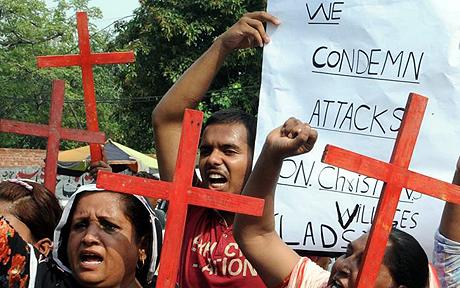
 Islamabad, Pakistan- The minister for minority affairs of Pakistan, Shahbaz Bhatti,  promised to work to amend the blasphemy laws used to target non-Muslims in Pakistan such as Christians and Hindus and said he was ready to die fighting for this cause.

A Member of Parliament and head of the All Pakistan Minorities Alliance (APMA), Shahbaz Bhatti was visiting Washington DC at the invitation of the US Commission on International Religious Freedom, which awarded him a first-of-a-kind medal for championing the rights of minorities in Islamic Pakistan.

A Catholic member of President Asif Ali Zardari’s administration as a federal minister for minority affairs, he took over the job last year when it was made a cabinet level position in Zardari’s cabinet.

Bhatti said he has received threats for his work on numerous occasions. Earlier this month, Pakistan’s religious affairs minister was wounded in an assassination attempt in Islamabad that left his driver dead.

“I personally stand for religious freedom, even if I will pay the price of my life,” Bhatti said. “I live for this principle and I want to die for this principle.”

Pakistan’s law against blaspheming Islam carries the death penalty. While no one has ever been sent to the executed for the crime, activists say the law is used to exploit others out of personal vendettas by some in the Muslim community against Christians, Hindus, Sikhs, and Buddhist minorities in Pakistan.

A 25-year-old Christian jailed on blasphemy allegations earlier this week died in prison. Authorities said he committed suicide but civil rights activists suspect that he was tortured by the police.

The death came several weeks after an angry mob killed seven Christians in an arson attack that destroyed about 40 houses in the town of Gojra in central Punjab province.

Christians and other religious minorities have a long history of persecution and discrimination in all walks of life in Pakistan by the Muslim majority. This is a sad reality and a country such as Pakistan that was founded for religious freedoms for the Muslims of India in 1947, has to do a much better job at protecting the 3 to 5% of the population that does not share the Islamic faith.

Unfair, subjective and antiquated laws such as Pakistan’s blasphemy laws need to be urgently amended so that the non-Muslim minorities in Pakistan do not live in fear of an upset neighbor calling the authorities and falsely claiming an individual blasphemed the religion of Islam. Furthermore, if an individual is indeed ever guilty of blasphemy, the death penalty is a rather harsh punishment for simply stating one’s opinions, no matter how offensive to the faithful.

Although he may face strong resistance by some of the extremist and ultra religious members of Parliament in Pakistan, many moderate and enlightened Pakistanis support the minister for minority affairs and hope that he is successful in amending this archaic law.

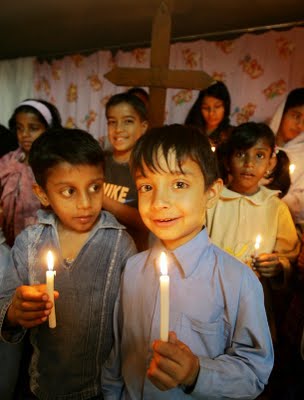
Christian Pakistani Children


Reported by Manzer Munir for www.PakistanisforPeace.com

US Intelligence Report: Pakistan in Danger of Becoming an Islamist State run by the Taliban and Warlords


Islamabad, Pakistan- There is growing concern in intelligence circles in the US that the Taliban in Pakistan are determined to make Pakistan an Islamist state controlled by warlords and terrorists and little or no central government authority or power to stop them.


Their strategy had its beginnings in the alarming success of the Taliban in gaining concessions from the authorities in the Swat valley this winter after fighting the Pakistan army to a standstill and getting the government to agree to instituting Islamic Shariah law in the valley and in parts of the NWFP province.


US intelligence officials believe that it is just a matter of time in as little as 10 years the the growing influence of the Taliban will overrun all the rural towns and communities and the government and the army will be relegated to city centers across the country with large swaths of land and power in the hands of the Taliban and other militant groups aligned with them and Al-Qaeda hell bent on instituting a new Islamic order throughout the country.


This scenario presents a very troubling outcome for Pakistanis, Pakistan’s immediate neighbors and the world at large. Pakistan is not a small undeveloped country torn by three decades of war like Afghanistan with only 3 million of its 30 million people living in Kabul and the rest spread out all over the country. Or like Iraq, another country of nearly 30 million people that also has experienced its share of turmoil the last 6 years.


Instead, Pakistan is the sixth most populous country in the world with over 170 million people living in major cities like Lahore (population 11 million) and Karachi the twentieth largest city in the world with a population of nearly 20 million people. With at least 100 nuclear weapons, several dozen highly organized and heavily armed militant groups, a weak and getting weaker by the day central government, abject poverty and high unemployment mixed in with rampant corruption and lawlessness, the country is ripe for a revolution. The Taliban have stepped into the vacuum created by the ineffectiveness of various governments who are more concerned with getting to and holding onto power and plundering the nation for their own personal wealth rather than be concerned with the future of the fragile nation with enemies of the state getting stronger from within. Many Pakistanis are more adept to believing in conspiracy theories of American involvement in various plots across the country rather than opening their eyes to the fact that the biggest threat and enemy of the nation is the Taliban and militants who use violence and terror in gaining bigger control across the country.


Furthermore, add religious violence amongst its Sunni and Shiite communities, a raging war and Al-Qaeda at its border in Afghanistan to the west. And an ever present historical feud with arch enemy India to the east who has fought three wars with Pakistan in the last 60 years makes this a country that has reached a boiling point. The disillusionment and hopelessness is very high amongst the majority of its moderate citizens who are intelligent and educated enough to know that the real enemy is the Taliban and militants that are determined to bring about Shariah law across the country but who do not see an effective partner in the government that will stand up to this growing threat. Instead the government capitulated to the Taliban in the Swat valley earlier this year and allowed Shari ah law there and agreed to a truce with the Taliban. Now their power and influence is growing in other parts of country as the Taliban are focusing on gaining strength in the populous Punjab state and other provinces across the country. The future has never looked bleaker for the country.


We at Pakistanis for Peace believe and have always believed that the biggest threat to the sovereignty and stability of Pakistan is the Taliban and Islamic militant menace that has begun to sweep the country after originating in the mountains of Afghanistan. The government of Asif Zardari has been quite ineffective in fighting the militant threat and there is not clear counterinsurgency strategy to tackle the Taliban and militant threat. Instead the government has done itself little favor by both half heartedly fighting and taking on the Taliban earlier this year and then agreeing to various truces with the militants to end the fighting. Pakistan needs to learn a lesson from the recent high drama at sea near the Somali coast involving the kidnapping of the American captain by the pirates. You do not negotiate and accept demands of the pirates, kidnappers, or terrorists. You speak to them in a firm manner to give up and surrender, if they do not do so, you bring the full force of your military and do so relentlessly until you gain victory. The country of Pakistan is too vital to regional and global peace for it to become a failed state like Afghanistan did in the 1980’s. Its possible failure and falling into the hands of the Taliban will be the greatest challenge and threat to US and world security for the next 30 years and all efforts must be made by Pakistan and its allies to ensure that never happens. Sometime to keep the peace, you have to go to war.


Reported by Manzer Munir for www.PakistanisforPeace.com


Attacks on Sri Lankan Cricket Team in Pakistan a New Low on War on Terror


Lahore, Pakistan- The already bad security situation in Pakistan got worse Tuesday when about 12 to 15 gunmen attacked the bus carrying Sri Lanka’s cricket team for a match against the Pakistani national team in Lahore Pakistan. At least 5 Pakistani policemen and a driver were killed in the attack and up to eight visiting Sri Lankan cricketers were injured.


The masked men opened fire on the Sri Lankan bus as it approached the cricket stadium for its match against Pakistan. Grenades, rocket launchers, weapons and backpacks with dry food and water were left behind by the attackers who all successfully fled the scene after the carnage.


Pakistani officials stated that the incident had similarities to the attacks in Mumbai in November of last year by the organization, weapons and the brazenness of the attacks. New Zealand immediately canceled its planned tour of Pakistan scheduled for later this year.  Australia also had previously canceled matches in Pakistan last year due to safety concerns. The attacks have also put great doubt on Pakistan’s ability to host some of the matches for the cricket World Cup scheduled for 2011 to be hosted by India, Pakistan and Sri Lanka. In fact, all international sporting events to be held in Pakistan are now in jeopardy as visiting foreign sportsmen will fear for their safety and are obvious targets by the crazed militants in Pakistan.


Pakistan has long been feared to be a country on the verge of becoming a failed state. However various events in the last 18 months have shown how true this unfortunate statement has come to reality. All the attacks that have happened in Pakistan from the Marriott bombing in Islamabad, to the murder of Benazir Bhutto, to the involvement in the Mumbai attacks in India, to the Taliban attacks in Swat valley and their win against the government in gaining Sharia Law, the continued kidnapping and beheading of foreigners and now the brazen attacks on a foreign sporting team just go to show how close to a failed state Pakistan has become.


Pakistan has for a long time been the most dangerous country in the world for its citizens with rampant crime, lawlessness, mixture of ethnic groups fighting amongst themselves, armed militants and Islamic extremists fighting in Afghanistan and India, and nuclear weapons in a country with a very weak government and constant political upheaval. The attacks on the Sri Lankan team now show the world and especially to the cricket loving Pakistanis that the enemies of the country will stop at nothing to destroy everything that is cherished in their country for their own misguided goals. No patriotic citizen of Pakistan should after these attacks have any doubt as to the immediate need to eradicate these terrorist groups from within Pakistan as they not only represent a clear and present danger to all friends and visitors to Pakistan but to the nation of Pakistan and its sovereignty. These terrorists aim to destroy Pakistan from within and hope to incite a civil war much like the one in Afghanistan with chaos and destruction through their continued attacks and then hope to put in power Islamic extremists like the Taliban who will proclaim to bring order to the country by instituting Sharia Law throughout the country.


We at Pakistanis for Peace and the majority of the good citizenry of Pakistan can not let this happen as the dissolution of the state of Pakistan into anarchy like the one in most parts of Afghanistan and Somalia will lead to a point of no return. As a nation of 170 million people, Pakistan’s population is five to six times the size of Iraq and Afghanistan. It has more ethnic groups and divisions than the two countries combined. And most importantly, it possesses a nuclear arsenal believed to be between 80 to 120 warheads. In a country with many armed militant groups that are operating in various parts of the nation and where the security and law and order situation is perhaps the worst in the world, there needs to be greater attention placed by the international community and the United States in eradicating the militant threat and in securing the weapons. Our condolences go out to the family of the dead policemen and to the injured Sri Lankan team and hope that this horrible attack helps the Pakistani people realize and understand that the true enemy of Islam and Pakistan are these extremists who are determined to destroy their nation.

 Reported by Manzer Munir for http://www.PakistanisforPeace.com

Violence in Beautiful Swat Valley of Pakistan


The Pakistani army reported killing at least 17 Taliban militants and injuring many others in an offensive in the north western Swat Valley in Pakistan. According to some local officials many more people are dead after civilian casualties are counted in as well. The recent offensives by the Pakistan army came after recent attacks by the Taliban militants on the local population and at some local girls schools in the valley.


The swat valley is in the North Western Frontier Province (NWFP) of Pakistan and is a very beautiful area long been a tourist destination for Pakistanis and foreigners. With green meadows, clear lakes, and high mountains, it is a place of great natural beauty and was known as the “Switzerland of Pakistan”.Since December of 2008 most of the area is now dangerous for tourists and locals alike as attacks have continued on anyone who defies the Taliban’s strict and medieval interpretation of Islam. Since then the militants have tightened their hold on the valley by cosing girls schools, intimidating locals, setting up their own courts and execution and beheading of people in the area.


The army started an offensive against the Taliban in the area after the government announced it was going to regain control back from the militants. Many locals are concerned that the army and the militants are not the only ones that are becoming casualties as many innocent Pakistanis in the Swat valley are dying as well due to this violence. The areas economy is also in shambles as not only foreign tourism, but the local Pakistani tourists are staying away from this once peaceful and always beautiful part of Pakistan.


Reporting  by Manzer Munir for  Http://www.PakistanisforPeace.com