Archive for the ‘ Pakistanis ’ Category

Pakistan Seeks Resolution of India Water Dispute

By Tom Wright for The Wall Street Journal
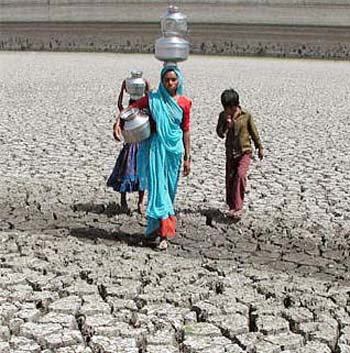
Pakistan told India it wants to begin formal arbitration proceedings over an Indian dam project in Kashmir, threatening to heighten tensions ahead of high-level bilateral talks. Pakistan says India’s planned hydropower dam on the Kishanganga River would violate a 50-year-old water-sharing treaty between the two neighbors by diverting water Pakistan needs for agriculture and power generation.

India denies its project would violate the 1960 Indus Waters Treaty. It has received Pakistan’s request for arbitration and is examining it, an Indian official said. Water disputes have become a growing point of controversy between the rivals in recent months, and could become an impediment as they seek to re-establish diplomatic ties. India cut off dialogue with Pakistan after the November 2008 Mumbai terrorist attacks, but has shown an interest in restarting talks if Pakistan cracks down on terrorists on its soil.

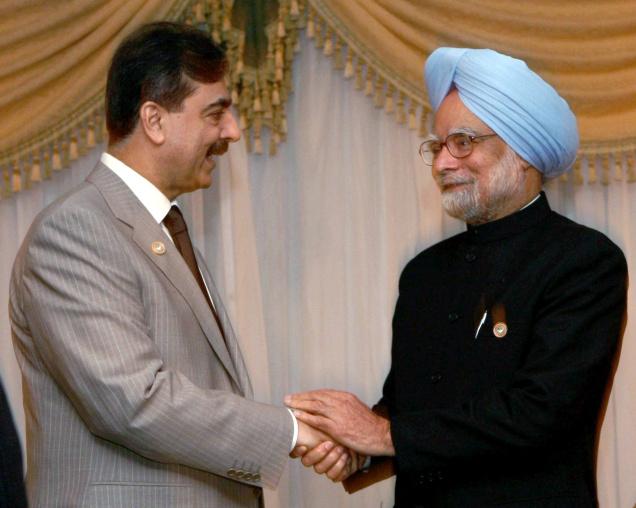
Indian Prime Minister Manmohan Singh and Pakistani Prime Minister Yousuf Raza Gilani met last month at a regional summit and agreed to move forward with dialogue. The countries’ chief foreign-policy bureaucrats will meet in late June to prepare an agenda for mid-July, when their external affairs ministers are expected to meet in Islamabad. In previous rounds of diplomacy, India and Pakistan have discussed issues ranging from trade to the fate of Kashmir, the disputed territory that is two-thirds controlled by India and over which the countries have fought two of their three wars. India has said it is open to discussing all issues in the current talks, though shutting down terrorist groups and getting Pakistan to more aggressively prosecute Mumbai suspects are its core objectives.

 India has said river-sharing disputes should be settled through the 1960 treaty, rather than in the bilateral talks. The accord split six Himalayan rivers between the countries, with the three Western ones going to Pakistan, the three Eastern ones to India, and each side retaining the right to the other side’s resources for uses such as run-of-river hydropower and irrigation. Under the treaty, the countries nominate commissioners who share data and try to resolve problems as they arise. If the commissioners can’t agree, they can seek a World Bank-appointed expert to intervene, which happened in 2005 when Pakistan objected to another big dam.

India was told to make minor changes to its design. Jamaat Ali Shah, Pakistan’s Indus waters commissioner, said the country is now seeking formal arbitration proceedings—a treaty mechanism that neither side has used before—because it feels India is stalling on the Kishanganga dispute. Pakistan on Wednesday named two members that would sit on a seven-person arbitration panel. Under the treaty, India has 30 days to name its own two members, and the countries are supposed to jointly name the three other participants. If they can’t agree, the World Bank would step in to name them.

Pakistani farmers and Islamist groups have staged protests against India’s 330-megawatt hydroelectric project on the Kishanganga, which is a tributary to one of the rivers Pakistan was allotted under the treaty. Water availability in Pakistan has fallen 70% since the early 1950s to 1,500 cubic meters per capita, according to a report last year by the Woodrow Wilson International Center for Scholars. India says Pakistan’s poor water management is responsible for the water shortages it is experiencing in some regions.

Pakistani-Americans and Police Sharing, and Trying to Spread, Trust

By Anne Barnhard for The New York Times

STRATFORD, Conn. — Last month, a resident of Avon, Conn., received a threatening letter full of religious references. The police chief there, Mark Rinaldo, wondered whether the letter implied a broader threat from a Muslim militant.

He called Dr. Atique A. Mirza, a Pakistani-born Muslim cardiologist, who studied the letter for cultural, religious and political clues. They concluded that the threat probably involved a narrow dispute between neighbors.

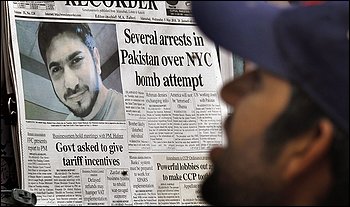
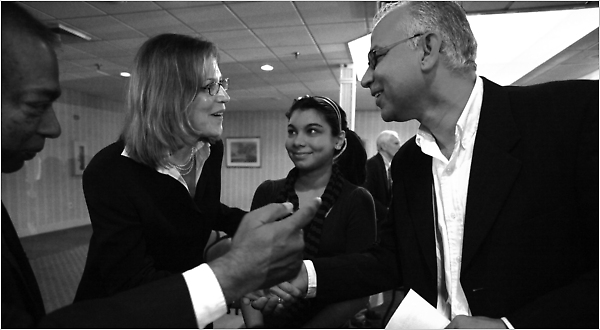
Now that a Pakistani-American man from Connecticut, Faisal Shahzad, stands accused of trying to detonate a car bomb in Times Square, setting off soul-searching and unease among the state’s thousands of residents of Pakistani descent, Mr. Rinaldo and Dr. Mirza are holding up their relationship — built over three years of meetings and cooperation between Pakistani-Americans and law enforcement — as a model for communities across the state and the nation.

The comfort level is such, said Mr. Rinaldo, that Dr. Mirza “wouldn’t be insulted and say, ‘Why are you calling me,’ “ nor would the chief doubt Dr. Mirza’s analysis. “That’s the trusting relationship we are looking for,” said Dr. Mirza, who has formally assumed the role of Avon’s police-community liaison for the Pakistani American Association of Connecticut (Paact), which has similar representatives in 13 towns and hopes to increase the number to 70.

Paact’s work makes Mr. Shahzad’s case all the more upsetting to Dr. M. Saud Anwar, a pulmonologist who founded the group. He has played a role in the investigation, acting as liaison between the authorities and a Pakistani friend of Mr. Shahzad’s who feared talking to them. The friend provided e-mail messages that may shed light on Mr. Shahzad’s views on violence.

But Dr. Anwar wishes the attempt could have been stopped before it began, something he calls possible in future cases if cooperation between his community and the authorities increases by another “order of magnitude.”

“This is not, God forbid, to spy on people, but just to live your life the way it is and if you notice something that concerns you, speak up,” he said, speaking to about 100 Connecticut residents of Pakistani descent and representatives of the F.B.I., the State Police and a dozen police departments who gathered Saturday at the Ramada Inn in Stratford. “This is someone who lived among us and under the radar without anybody in the community knowing he was radicalized.”

Paact moves beyond reminding law enforcement not to unfairly paint all Muslims as terrorists — though it still strongly takes that position. It also calls on Pakistani-Americans to acknowledge that people of Pakistani descent have been implicated in high-profile terrorist attacks, to probe the causes and in the process to remind the public that they want security as much as other Americans do.

Dr. Mirza’s wife, Faryal, an endocrinologist, took a similar approach when her son was called “terrorist” in school several years ago. She began giving annual diversity classes, in which she offered Pakistani food and talked about her culture and religion. She also goes out of her way to let patients know she is Pakistani, so they associate the country with something other than terrorism.

Although she could have argued that the burden of explaining culture should not fall on her, she said, “We have to be proactive.”

Now Paact hopes to franchise its approach to other states. On June 19, the group is holding a national conference in Hartford on radicalization and prevention, featuring the Pakistani ambassador, representatives of the National Counterterrorism Center, theologians and others.

Saturday’s meeting focused on the narrower question of how it could have been that people did not seem to remember Mr. Shahzad from a mosque or a dinner party, let alone alert the authorities about him.

Dr. Mirza said it pointed to a need to rethink the atomization of suburban culture: “Know your neighbors; say hi; help them when they need you; be attentive.”

Mr. Shahzad may have isolated himself from mosques and Pakistani organizations, but he must have had some connections; he was married to a Pakistani-American and lived in Bridgeport, where there is a relatively large Pakistani-American population, said Jaleel Rahman, a retired real estate agent.

“We have to be more vigilant,” Mr. Rahman said.

Zaheer Sharaf, Paact’s president, said that many Pakistanis were afraid of the police, because they believe that police officers in their original country are corrupt.

Add to that the post-9/11 fear that reporting a suspicion about a Muslim might lead to an overreaction by the authorities, and it made for a wide gulf between Pakistani-Americans and the police forces that Mr. Rinaldo, the police chief of Avon, said he was unaware of until he began meeting with Dr. Mirza and others.

His reaction: “Wait a minute. We’re the good guys. We have to open up to this community.”

This month, he said, he was upset to see negative reactions to Pakistani-Americans after Mr. Shahzad’s arrest.

“It seems to be one individual, yet a whole community is suffering for the crime,” Mr. Rinaldo said. “It’s not fair.”

Mateen Haider, 56, an engineer from South Windsor, said that Pakistanis, like all immigrants, simply want to fit in, so they are loath to do anything that could draw attention, including call the police.

“That is no longer enough,” he said, telling the meeting: “Today is a great day. We have spoken out. We are all united together as citizens, and we will fight this to the end.”

Amir Khan the Ambassador

By Lem Satterfield for Boxing Fanhouse

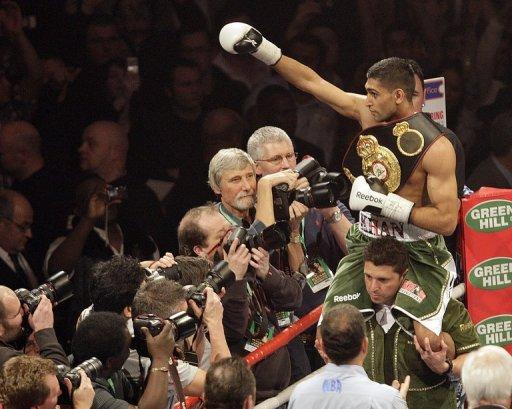
NEW YORK — WBA junior welterweight (140 pounds) champion Amir Khan had just scored Saturday night’s 11th-round knockout over Brooklyn’s Paulie Malignaggi in the biggest victory of his career.

In doing so, the 23-year-old, 2004 Olympic silver medalist not only out-boxed a pure boxer, but he mixed in an assortment of power shots — namely crisp, counter and over hand rights behind double- and triple-jabs — with a compliment of damaging left hooks and uppercuts.

When the fight was over, the English-born titlist had won the approval of the roaring crowd of more than 4,412 that filled Madison Square Garden’s 5,000 capacity WaMu Theater, and left the trash-talking Malignaggi beaten, battered and bloodied in his own hometown.

Khan had Malignaggi pinned on the ropes and was nailing him with several unanswered blows when referee Steve Smoger came to the rescue, calling a halt to the bout at 1:25 of the round.

“I was nervous, this being my first time in America. And I was walking into the theater, I could hear a lot of boos. But at the end of the fight, they started cheering for Amir Khan because I won them over with my style. I want to make all of my fights like this one,” said Khan, who rose to 23-1, with his 17th knockout and his fourth, consecutive victory.

“It’s my style. I’m explosive. I’m entertaining to watch. I’ve got speed, and I think I made a statement. I think that now there are a lot of American people who are interested in Amir Khan,” said Khan, who was coming off of a December’s first-round knockout of another Brooklyn resident, Dmitry Salita (30-1-1, 16 KOs).

“I’d love to fight some more over here. I want to save some big fights for the United Kingdom,” said Khan. “But I’ve had my American debut, and it’s the best feeling fighting in America. It’s a dream come true. I’d love to go to Las Vegas and have a big fight over there too.”

But as admirable as Khan’s in-the-ring efforts had been against Malignaggi, it is the maturity, poise and grace with which he handled the out-of-the ring distractions that may yet make Khan even more of a cross-cultural, crossover icon.

There was an irony surrounding Khan’s visa issues, which overlapped with the recent actions of alleged Times Square bombing attempt suspect Faisal Shahzad. Together, the two situations caused concern heading into Khan-Malignaggi.

Khan is a practicing Muslim who was born in England, but who is of Pakistani descent, while Shahzad is a native of Pakistan who became a U.S. citizen a year ago.

In early March, long before Shahzad’s actions on May 1, which resulted in a failed attack after he left an SUV rigged with a homemade bombing device in Times Square, Khan and his promoter, Golden Boy Promotions, became aware of the fighter’s issues concerning the obtaining of a work visa.

David Itskowitch, chief operating officer of Golden Boy Promotions, said that Khan entered America under the country’s visa waivers program “which, for all intents and purposes,” allows its holder, “a tourist visa, which is good for ‘X’-amount of days.”

“Khan’s status while he was here training was one of a tourist while not earning money,” said Itskowitch. “In order to change your status to someone who is working, you have to leave the country, get a visa, and, then, come back.”

Khan had been holding workouts at Wild Card Boxing Club, in Hollywood, Calif., owned by his trainer, Freddie Roach, a three-time Trainer Of The Year.

But Khan was forced to leave the United States, and has been preparing for his American debut against Malignaggi (27-4, five KOs), while training under Roach in Vancouver, Canada.

“I was in training camp. Then I had to go to Vancouver to get my visa. And my visa took a long time. We had to move the whole training camp there. My head was all over the place, so I had to stay mentally strong,” said Khan, who was not granted the work visa until nine days prior to the fight.

“When I finally got my visa, I had to go back to Los Angeles again, and the, fly to New York. So I was flying a lot. I was traveling all over country, and I got a visa for 23 days that it took me three weeks to get. That could have gotten to me, but I had to work very hard not to let it bother me,” said Khan.

“I have to thank Freddie for flying all over with me,” said Khan. “One thing about Freddie, he looks at his fighters like they’re his kids. He was standing beside me all of the way through, so I have to thank him for that.”

Although Khan laments the notion that suspicion may have been heightened due to the comparisons between himself and Shahzad, he also embraces the opportunity to perhaps be an ambassador.

Khan wants to use his boxing skills to influence American opinion.

“What I want to do in this game is that, you know, I know that a lot of the Pakistani people and the Muslims are getting a bad name in the United States with the bombings and the terrorism and stuff, but not all of us are like that. Look at Amir Khan. I’m an English boxer. I’m one of the faces of boxing,” said Khan.

“And I want to do the same thing that I’ve done in the United Kingdom. I want to put a new face into boxing. I want to bring the Muslim community into boxing. Whenever you’re at an Amir Khan fight, if you come to the United Kingdom and watch me fight, you look into the crowd, and you see all different colors,” said Khan.

“You see the Asian, Chinese, Pakistanis, Muslims — you see everyone. I want to do the same in the United States,” said Khan. “As more people get to know Amir Khan, you’ll see more of that. Hopefully the Americans will love my style and I can do the same here. I want to fill out the stadiums and the arenas like I do in the United Kingdom.”

Pakistani is Charged in Chile for Explosives, not Terror

From The Associated Press

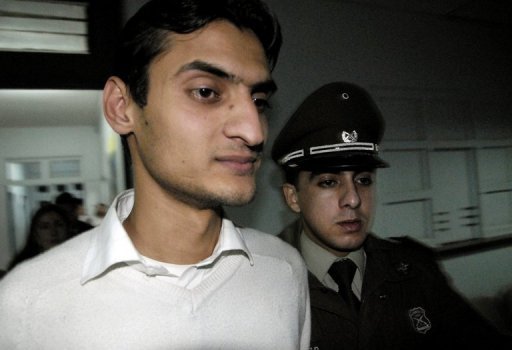
SANTIAGO, Chile — A Pakistani man detained with suspicious chemical residues at the U.S. Embassy in Chile was charged with possessing explosives on Saturday, and then set free pending further investigation.

Mohammad Saif Ur Rehman Khan was ordered to stay in Chile and check in with authorities once a week. Prosecutors have three more months to develop their case, Judge Maria Carolina Herrera ruled.

Defense attorney Gabriel Carrion said the judge declined to charge Khan with associating with terrorists for lack of evidence.

Khan, who maintains his innocence, made a victory sign with his hand and said only “Viva Chile” to a crowd of reporters as he left the courthouse with his lawyer.

Khan was called in to the embassy so that he could be told that his U.S. visa was revoked. A State Department spokesman in Washington said he had been added to a terrorism watch list after the U.S. government received information about him.

A summary of the closed hearing posted on the judiciary’s website Saturday said both TNT and tetryl – a chemical that boosts the power of explosives – were found on his cell phone and documents at the embassy, and that a police search of his room later found the same chemicals on his clothes, a suitcase and a computer bag.

But Carrion says the 28-year-old Khan is an innocent student of the tourism industry and Spanish, and that anyone can pick up traces of the chemical simply by living in a big, polluted city. Prosecutor Xavier Armendariz said the judge found that Khan’s detention was legal.

Chilean police have searched the apartment of an Egyptian man who prayed at the same mosque as Khan and continue to investigate people who associated with the suspect.

Khan’s parents were traveling to Chile to support their son, according to leftist Sen. Alejandro Navarro, who said he persuaded the interior ministry to grant them visas

Pakistan Needs Chemotherapy, Says Obama

From The Economic Times

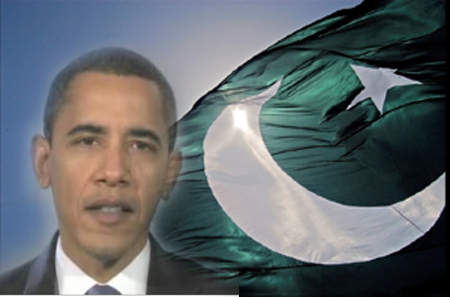
US President Barack Obama has said that there is growing recognition among Pakistani leaders that the `cancer’ of terrorism is the
primary threat to Pakistan’s sovereignty and not India.

“I think there has been in the past a view on the part of Pakistan that their primary rival, India, was their only concern. I think what you’ve seen over the last several months is a growing recognition that they have a cancer in their midst; that the extremist organisations that have been allowed to congregate and use as a base the frontier areas to then go into Afghanistan, that that now threatens Pakistan’s sovereignty,” Mr Obama said at a joint press conference with Afghan president Hamid Karzai. He further maintained that he was encouraged by what he has seen from the Pakistani government over the last several months.

“But just as it’s going to take some time for Afghanistan’s economy, for example, to fully recover from 30 years of war, it’s going to take some time for Pakistan, even where there is a will, to find a way in order to effectively deal with these extremists in areas that are fairly loosely governed from Islamabad,’’ he maintained.

His remarks follow some tough talking by US secretary of state Hillary Clinton and show Washington’s ‘dual policy’ towards Islamabad. “He is telling Pakistan we still have problems with you but you are still important to us,’’ said former Indian envoy to Pakistan G Parthasarathy. “He has gone out of his way to save Pakistan.

Though New Delhi has initiated the dialogue process with Islamabad, there is low expectation of any real outcome on the terror front. Experts believe that the Pakistani Army — which is the central figure — has not shed its anti-India policies and continues to perceive terror as a state policy.

US secretary of state Hillary Clinton issues a statement that sounded tough… but the real issue is has the military leadership in Pakistan changed its stand,’’ asked former foreign secretary Lalit Mansingh. “I don’t think there is any change in Pakistan’s approach on issue of terrorism.’’ He further noted that this kind of observation from the US on Pakistan has come earlier too.

Mr Obama maintained that the US aim is to build trust and continue working with the Pakistani government. “Our goal is to break down some of the old suspicions and the old bad habits and continue to work with the Pakistani government to see their interest in a stable Afghanistan which is free from foreign meddling — and that Afghanistan, Pakistan, the United States, the international community, should all be working to reduce the influence of extremists in those regions,’’ he said. He also said that the US is encouraged by Pakistan’s willingness to start asserting more control over some of these areas. “But it’s not going to happen overnight. And they have been taking enormous casualties; the Pakistani military has been going in fairly aggressively. But this will be a ongoing project,’’ he added.

Pressure Builds on Pakistan’s Military

By Omar Waraich for Time.com

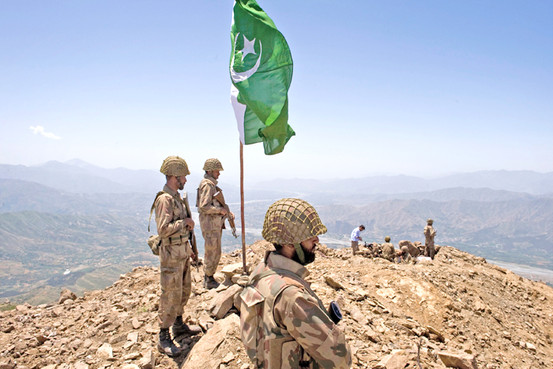
“When in doubt, do nothing” could have served as the Pakistani military’s unofficial motto until now on the tricky question of tackling militant strongholds in the tribal badlands of North Waziristan. But doing nothing may no longer be an option, now that the Obama Administration is blaming the failed Times Square bomb attack on the Pakistani Taliban, or Tehrik-e-Taliban Pakistan (TTP). Washington has long cajoled the Pakistani army to extend its campaign against militants on its own soil into North Waziristan, where the TTP leadership has set up shop amid a viper’s nest of militant groups that include al-Qaeda, but the generals have until now demurred, claiming a lack of resources. Following reports that Times Square bombing suspect Faisal Shahzad was trained by TTP elements in North Waziristan, the pressure on Pakistan from Washington has sharply increased, leaving the Pakistani military leadership in an increasingly uncomfortable position.

On May 7, the top U.S. military commander in Afghanistan, General Stanley McChrystal, met with Pakistan’s army chief, General Ashfaq Kayani, reportedly to coax Pakistan into moving into North Waziristan. And on May 9, Secretary of State Hillary Clinton sternly warned of “very severe consequences” for Pakistan if an attack similar to the one tried in Times Square were to prove successful.

Pakistanis are already embarrassed at the fact that Shahzad was not only born in Pakistan and is alleged to have been trained there, but is also the son of a retired senior military officer. More alarming still is the apparent move by the TTP, until now a domestic insurgency directed at the Pakistani state, to target a U.S. city in retaliation for drone attacks in Pakistan. That leaves Pakistan’s political and military leadership to find a response sensitive to both the needs of a key ally and the concerns of a skeptical public.

Wary of U.S. motives at the best of times, Pakistani public opinion was rankled by Clinton’s warning. Even liberal newspapers committed to fighting militancy warned of the statement’s unintended effects. “Ms. Clinton’s comments are unfortunate and will rekindle suspicions here that America is no real friend of Pakistan,” said an editorial in Dawn, Pakistan’s leading newspaper. The fear is that those who oppose the campaign against jihadist militancy will turn Pakistani ire at Clinton’s perceived bullying to their advantage in the battle for Pakistani hearts and minds.

But while an offensive launched under pressure from the U.S. could antagonize the Pakistani public, there could be an even greater backlash should the U.S. decide to take matters into its own hands. This year alone has seen at least 32 U.S. drone strikes in Pakistan, principally at targets in North Waziristan, and that program — which infuriates many Pakistanis — is set to continue. While the authorities may be able to absorb the political fallout from the increasingly accurate drone strikes, their real worry is that Washington might decide to send its own ground forces into North Waziristan. “[The presence of U.S. troops] would be truly disastrous,” says Aftab Sherpao, who served as Interior Minister under former military ruler General Pervez Musharraf. The mere presence of foreign soldiers, he believes, would inflame public opinion to dangerous proportions, weakening the hand of the civilian government and the army. In September 2008, the only known case of an American boots-on-the-ground operation triggered a chorus of outrage, led by General Kayani himself.

Even if the U.S. refrained from expanding its own actions on Pakistani soil, the generals and politicians also fear that failure to act could jeopardize the flow of hundreds of millions of dollars in civilian and military aid from Washington. Given the risks that follow from doing nothing, Pakistan will have to take action. “The army realizes that it must go into North Waziristan,” says retired Pakistani general and analyst Talat Masood. “They have been looking at this option for quite some time, but they have been hesitant, as they are overstretched.” Tens of thousands of Pakistani troops are already fanned out across the northwest and the tribal areas in an effort to consolidate gains made in recent offensives. “Washington should appreciate that we have covered a lot of area,” insists Sherpao, the former Interior Minister. “There have been operations in Swat, Bajaur, Mohmand and South Waziristan. We cannot move troops from the eastern border because there’s no comfort as far as India is concerned.” As the military’s decision to test-fire two ballistic missiles at the weekend demonstrates, India remains its principal focus.

The Pakistani military has long drawn a distinction between the Taliban, and related insurgent groups, using its soil as a base from which to attack NATO forces in Afghanistan and those waging war on the Pakistani state. The Afghanistan-oriented groups have been allowed to operate largely unmolested in keeping with Pakistan’s desire to recover lost influence in Afghanistan, while the military has gone after the TTP. But as the army pushed into the TTP’s strongholds in South Waziristan, the group moved north, into territory controlled by Hafiz Gul Bahadur — a militant leader who enjoys a fragile nonaggression pact with the Pakistan army. “It’s a very complex area,” says Masood, “particularly because there are elements there that are not so hostile to the Pakistani military.” By that he means the Haqqani network, an al-Qaeda linked Afghan Taliban group deemed one of the most dangerous confronting the U.S. in Afghanistan but viewed as a strategic asset by Pakistan’s intelligence services. “The army will prefer to take a limited operation, one that is confined to the Mehsud areas,” says Masood, referring to TTP leader Hakimullah Mehsud.

But North Waziristan is only one part of the jihadist infrastructure that enables terror attacks beyond Pakistan’s borders. As Shahzad’s alleged story — making contact with militant elements in Karachi before heading off to North Waziristan for training — demonstrates, there are jihadist groups seeded throughout the country, and they’re strengthening their cooperative ties with one another.

Dismantling that infrastructure will take years, say Pakistani analysts and politicians. “You can’t start operations against all these groups simultaneously,” says Sherpao. “You have to proceed step by step. You have to consolidate your gains first, then move on to the next target.” But the Shahzad case, says Sherpao, should serve as a wake-up call. “The political and military leadership have to sit down now and devise a serious response,” he says. “Otherwise, it will become very difficult.”

Militant Factions With Global Aims Are Spreading Roots Throughout Pakistan

By Karin Brulliard and Pamela Constable for The Washington Post

KARACHI, PAKISTAN- Terrorism suspect Faisal Shahzad’s alleged path to Times Square reflects what experts say is a militant support network that spans Pakistan and is eager to shepherd aspiring terrorists from around the globe. In this teeming southern metropolis, authorities are focusing on a domestic militant outfit that might have escorted Shahzad to distant northern peaks where U.S. investigators allege he received training with the al-Qaeda-affiliated Pakistani Taliban. In Pakistan’s heartland, extremist organizations freely build compounds and campaign with politicians, while their foot soldiers fight alongside the Taliban in the borderlands, intelligence officials say.

The overall picture is one of a jumbled scaffolding of militancy that supports al-Qaeda and the Taliban with money and safe houses, and can provide entrance tickets to mountain training camps for aspiring terrorists, one U.S. counterterrorism official said. Although the planners of most serious terror plots against the West in recent years have received direction or training from groups in the Afghanistan Pakistan border region, the reach of extremist organizations across Pakistan underscores the limits of Pakistani military offensives and of U.S. airstrikes that target the Taliban and al-Qaeda only along the frontier.

“Our cells are working everywhere,” one Pakistani Taliban fighter said in a telephone interview. New foreign recruits, among them Europeans and Americans, undergo days of isolation and “complete observation” by militants outside the tribal areas before gaining access to camps, he said.
Many such aspirants do not make it, the Taliban fighter said, because they are deemed to be spies. That happened to five Northern Virginia men, who were rebuffed by Jaish-e-Mohammed and Lashkar-i-Taiba last year despite the reference of an online recruiter, according to Pakistani authorities. However, those aspirants deemed sincere represent a “one in a million” opportunity for militants to strike in the West, said Masood Sharif Khattak, a former Pakistani Intelligence Bureau chief. Their first stop is typically not the mountains of Waziristan, where Shahzad told U.S. investigators he had trained, but 1,000 miles south in Karachi, the Taliban fighter said.

An Arabian Sea gateway of 18 million people, the city is awash in weapons and dotted with mosques where, police say, jihadist literature is freely distributed and clerics deliver vitriolic anti-American sermons. Among them is the Bath’ha mosque and seminary, an unassuming building known locally as a bastion for Jaish-e-Mohammed, a banned Kashmir-focused group. Authorities said they have arrested a man at the mosque who escorted Shahzad to the northwestern city of Peshawar.

Operatives from Pakistan’s array of jihadist groups find haven in Karachi’s multiethnic sprawl; Afghan Taliban deputy leader Mullah Abdul Ghani Baradar was arrested in the city earlier this year.

The groups form a nexus, according to recent local intelligence reports. One report, obtained by The Washington Post, warns of coordinated plans by the Pakistani Taliban — a group based in the tribal areas that has focused its attacks inside Pakistan — and the traditionally anti-India militant groups of Punjab province. The target: NATO supply convoys in Karachi.

Farther north in the expanse of Punjab, experts say the major anti-India militant groups and other radical Sunni organizations need little cover: They are tolerated and even supported by the state. Banned groups such as Lashkar-i-Taiba and Jaish-e-Mohammed have formed organizations with new names that operate freely. Some of their leaders have been arrested for alleged links to terrorist attacks, then released by the courts.
The groups have in recent years increasingly focused attacks within Punjab as provincial officials have tried to placate them, both to capitalize on their popularity and in hopes of moderating their views.

The chief provincial minister, Shahbaz Sharif, was widely criticized in March for calling on the Pakistani Taliban to “spare Punjab,” which he suggested had common cause with the militants by rejecting Western dictates. Another provincial minister visited the seminary of a banned group and campaigned for office with the leader of another. Jaish-e-Mohammed recently built a large walled compound in the southern Punjabi city of Bahawalpur.

“These groups have not been touched,” said Ahmed Rashid, a leading Pakistani expert on the Taliban and Islamist extremism. “They have been through a metamorphosis and turned their guns inward and linked up with other groups in the northwest, but no one is acknowledging it. The word is out that if you hang with them, you’re safe.”

The counterinsurgency tactics used in the tribal areas — missiles and military operations — are widely thought to be unfeasible in Pakistan’s populous mainland. But critics say Pakistani police, security agencies and officials could at least start to clamp down on extremist organizations by vocally condemning them, monitoring mosques and madrassas and denying public space and private property to militant-linked groups.

Pakistan says it is still investigating the extent of Shahzad’s militant links; some security officials have said that he definitely had ties to Jaish-e-Mohammed. Terrorism analyst Muhammad Amir Rana said that what appears to be a lack of political will to tackle militant organizations in Pakistan’s heartland is actually rooted in a problem with far greater implications for the global battle against terror: The groups’ reach and presence in cities has made them a beast that cannot easily be dismantled. “It’s very complex,” Rana said. “They have infrastructure in all different areas.”

Media Ignore The Fact That Man Who Alerted Police To Failed Times Square Bombing Is A Muslim Immigrant

By Zaid Jilani for ThinkProgress.org

The chief suspect in the case of the failed Times Square car bombing is Pakistani-American Faisal Shahzad, who has confessed to the plot. Much of the media has latched onto Shahzad’s Muslim faith and his Pakistani identity, making inflammatory remarks and suggestions about Muslims and Pakistanis:

– CNN contributor and Redstate.com blogger Erick Erickson complained that the words “muslim” and “Islam” are “not mentioned” enough in stories about Shahzad. He wrote, “It really is pathetic that you’re more likely to see the words “racist” and “Republican” together in the newspaper these days than “terrorism” and “Islam.” [5/4/2010]

– Hate radio host Neal Boortz tweeted, “OMG! The Times Square Bomber is a Muslim! Shocker! Who would have believed it?” [5/4/2010]

– The cover of today’s Washington Post-published Express features a black-and-white photo of Shahzad with the sensationalist headline “MADE IN PAKISTAN” [5/5/2010]

Yet one fact being ignored in the American media’s sensationalist narrative about the failed bombing is that the man who was responsible for police finding the bomb was Muslim. The UK’s Times Online reports that Aliou Niasse, a Senagalese Muslim immigrant who works as a photograph vendor on Times Square, was the first to bring the smoking car to the police’s attention:

Aliou Niasse, a street vendor selling framed photographs of New York, said that he was the first to spot the car containing the bomb, which pulled up right in front of his cart on the corner of 45th street and Broadway next to the Marriott hotel.

“I didn’t see the car pull up or notice the driver because I was busy with customers. But when I looked up I saw that smoke appeared to be coming from the car. This would have been around 6.30pm.”

“I thought I should call 911, but my English is not very good and I had no credit left on my phone, so I walked over to Lance, who has the T-shirt stall next to mine, and told him. He said we shouldn’t call 911. Immediately he alerted a police officer near by,” said Mr Niasse, who is originally from Senegal and who has been a vendor in Times Square for about eight years.

As the Leadership Conference on Civil Rights notes, “South Asian, and Muslim communities may yield useful information to those fighting terrorism. Arabs and Arab Americans also offer the government an important source of Arabic speakers and translators. The singling out of Arabs, South Asians, Muslims, and Sikhs for investigation regardless of whether any credible evidence links them to terrorism will simply alienate these individuals and compromise the anti-terrorism effort.”

Reflecting on Niasse’s good samaritanism Muslim-American author Sumbul Ali-Karamali writes, “It’s somewhat consoling to know that the man who first noticed the smoking Nissan Pathfinder and sought help is also Muslim, a Senegalese immigrant. 
 I grew up Muslim in this country, with Muslim friends and non-Muslim friends, and there was very little difference between the two groups. We were all American.”

As Power Shortages Spread, Pakistan Switches Off The Lights

By Saeed Shah for The Miami Herald

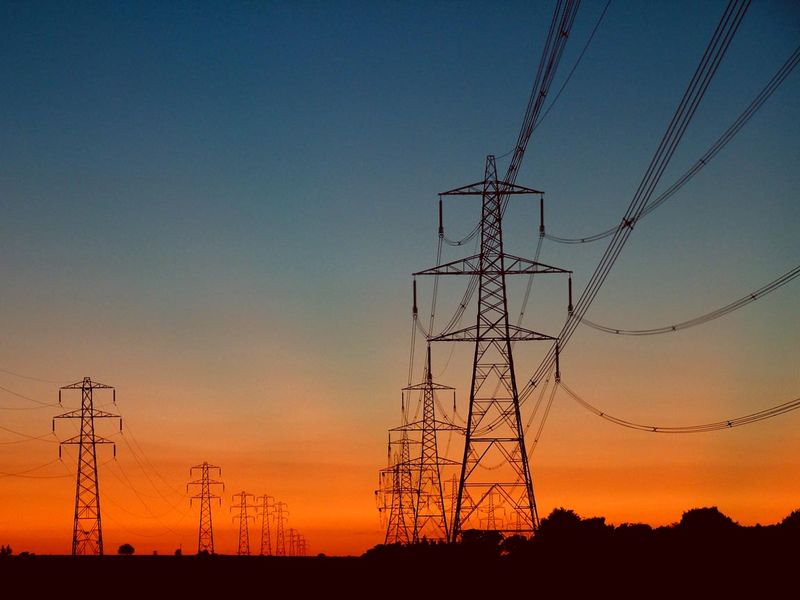
LAHORE, Pakistan — Amid fears that severe energy shortages could touch off riots, Pakistan will announce drastic measures this week to save electricity, including a shorter workweek and restrictions on nighttime wedding celebrations, government officials said Wednesday.

With power outages lasting up to 20 hours a day in cities and villages, halting industry and even farming in some places, the electricity crisis could further destabilize a vital U.S. ally. Already this year, there have been streets protests – some violent, resulting in at least one death – over the electricity stoppages.

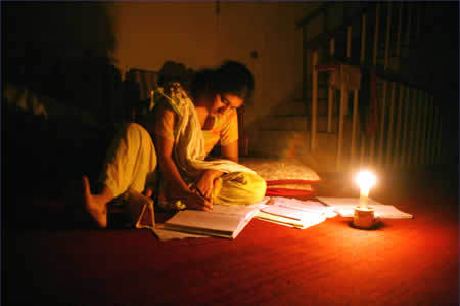
“Children can’t do their homework. Household work doesn’t get done, as washing machines and other appliances cannot work. When you go home from work, you have no idea whether there will be electricity at home. Your whole life is disturbed,” said Mahnaz Peracha of the Network for Consumer Protection, an independent Pakistani advocacy group.

The Obama administration says that helping Pakistan surmount its electricity crisis is one of the top priorities of its aid effort.

Richard Holbrooke, the U.S. special representative for Pakistan and Afghanistan, said this week that Pakistan’s electricity situation was “not acceptable” and that Washington would help to “the absolute limits of what Congress will fund. It is a big issue.”

Pakistan has been crippled by a shortfall in electricity generation, producing only about 10,000 megawatts of the required 16,000 a day. Further, some generators aren’t working at full capacity because the government owes money to power producers. The government is expected to inject around $1 billion into the system to pay its debts, but energy savings can’t make up for the shortages until new plants come online.

Industries such as the textile sector have had to shorten shifts and lay off workers, and farmers can’t use their electric pumps to irrigate fields. Some businesses, such as tailoring and printing, are telling customers it will take weeks to complete their orders.

As well as suffering from outages, consumers have been hit by a steep increase in the price of electricity, as Pakistan eliminated subsidies to meet lending terms by the International Monetary Fund, causing further resentment.

The energy-saving measures are likely to extend the country’s one-day weekend to a second day, push clocks forward by an hour and close industry for one day during the workweek, according to officials who were briefed on the plans but who spoke only on the condition of anonymity ahead of the government announcement.

Zafaryab Khan, a spokesman for Prime Minister Yousuf Raza Gilani, said the proposals were being finalized Wednesday and would be unveiled Thursday.

Street lighting also will be cut back, so that only every second or third light is on, markets will close soon after sunset and wedding receptions – huge, ostentatious events in Pakistani tradition – will be required to end by 9 or 10 p.m. Individual provinces will impose further restrictions.

In the dominant Punjab province, where more than half the country’s population lives, there will be a ban on electrical billboards, neon signs, decorative lights on buildings and the operation of fountains, and government offices won’t be permitted to run their air conditioners before 11 a.m. Analysts said enforcing the restrictions would be difficult.

India and Pakistan’s Leaders Meet

As reported by BBC.com

Pakistan PM Yousuf Raza Gilani spoke to his Indian counterpart Manmohan Singh at a reception hosted by the US President Barack Obama, reports said. The prime ministers of India and Pakistan met briefly during a nuclear summit attended by 47 world leaders in Washington DC.

A Pakistani embassy spokesman said it was “not a formal meeting”. cIt comes a day after Mr Singh told Mr Obama that Pakistan’s government lacked the will to punish those responsible for the Mumbai attacks. The November 2008 attacks left 174 people dead, including nine gunmen, and soured ties between India and Pakistan. Late last year, Pakistan charged seven people in connection with the attacks.

They include the suspected mastermind Zaki-ur-Rehman Lakhvi, who is allegedly the leader of the Pakistan-based militant group Lashkar-e-Taiba. Mr Singh and Mr Gilani spoke to each other at a reception hosted by Mr Obama, Pakistani embassy spokesman Nadeem Kiani said.

“Both leaders were present at the same place and so they shook hands and talked,” he said. A spokesman for India’s foreign ministry, Vishnu Prakash, told The Hindu newspaper that the two leaders “exchanged pleasantries”.
‘State elements’

India put peace talks on hold after the attacks, blaming them on Pakistan-based militants. Pakistan admitted they had been partly planned on its soil. India has also suggested what it calls “state elements” were involved. Both Pakistan and Lashkar-e-Taiba have denied any involvement.

In February, the two sides held their first formal talks since the 2008 attacks and agreed to “remain in touch”. Leaders from 40 states are attending the meeting in Washington which is expected to focus on how to secure nuclear material.

Hamid Karzai Is Losing All His Marbles and His Credibility

By Manzer Munir for Pakistanis for Peace

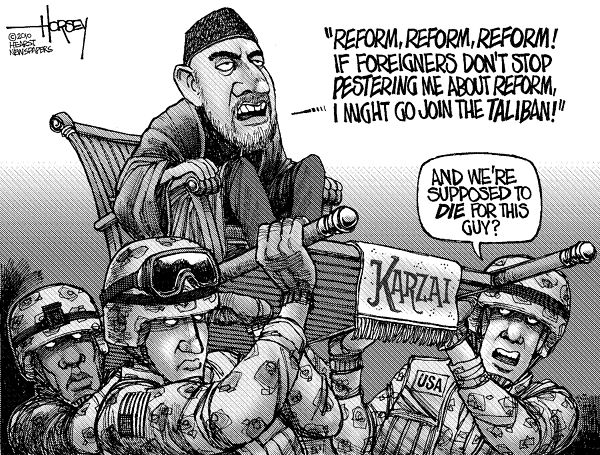
Kabul, Afghanistan- President Hamid Karzai’s troubling remarks this past Saturday that he would join the Taliban if he continues to come under pressure to reform by the United States and other “outsiders” has caused a stir in Washington DC.  Karzai’s comments came a week after President Obama’s surprise visit to Afghanistan at the end of March to pressure Karzai’s government to reform the political system, end corruption, and do a better job of fighting the Taliban.

Instead, what Karza delivered was a threat of the worse kind and quite possibly the most offensive and troubling thing one can say to a country that is risking countless soldiers lives daily to secure the country from the Taliban and other militant warlords in Afghanistan. In 8 short years, Hamid Karzai has gone from being the special guest of honor at George Bush’s State of the Union address to a leader who threatened to join our worst enemy. All because he feels that the US needs to stop badgering him to be a more responsible, fair, and an equitable leader as well as an effective partner in fighting the Taliban.

Karzai apparently made these unusual comments at a closed door meeting of lawmakers on Saturday, just days after accusing “foreigners” presumably the Unites States of being behind the fraud of the disputed elections of 2009. “He said that if I come under foreign pressure, I might join the Taliban”, said Farooq Marenai, a lawmaker from the eastern province of Nangarhar.  Mareni also stated that Karzai appeared nervous and demanded to know why parliament last week rejected legal reforms that would have strengthened Karzai’s authority over the country’s electoral institutions. Several other lawmakers confirmed that Karzai twice threatened to join the insurgency and the Taliban.

Karzai’s comments are troubling on many levels. First and foremost, he gives legitimacy and strength to the Taliban as his comments present the Taliban as an alternative option to American support or view on the situation. Karzai’s statement will no doubt have traveled the length and breadth of Afghanistan as word will spread that there is a weakness in the American-Afghan coalition that has been fighting and hunting the Taliban since October of 2001, post 9-11. The remarks by Karzai also puts every American, NATO, and Pakistani soldier at risk as instead of liberators, the foreign armies would be thought of as invaders, literally overnight. Lastly, Karzai’s remarks prove to the fact that Karzai is no longer an ally nor a credible partner for the US , NATO, and Pakistani army that have been fighting the Taliban with all their might.

There are reports of widespread nepotism, corruption, fraud, looting of the treasuries, and even drug trafficking, as Karzai’s brother, Ahmed Wali Karzai, has been alleged to be a prominent figure in Afghanistan’s world leading illegal heroin production, cultivation and its global distribution. These facts along with his inability to rule effectively and assist the United States in its exit strategy out of Afghanistan by end of 2011 has made the Obama administration weary of dealing with Karzai. Also his typically slow response in instituting political and social freedoms along with a renewed focus in fighting the Taliban, has also been a factor in displeasure from Washington.

The Obama administration has refocused on the Afghan war with 30,000 additional troops to help with the war effort and that initial surge has helped the commanders on the ground in running the Taliban out of certain areas. There have also been great recent victories by the Pakistani army to go after the Taliban militants on its side of the border and in helping cut down the bases of support for the Afghan Taliban from the Pakistani tribal areas sympathetic to their cause. So these comments come at the worst possible time when the Taliban are on the run both in Afghanistan and Pakistan and a strong coalition of US-Afghan-Pakistan resistance against them could help eliminate or destroy the militants for good. But instead, the US and its allies are left wondering what to do with Karzai and how much he could be trusted in this tenuous partnership against the Taliban.

Taliban 201- The Rise of The Pakistani Taliban

By Manzer Munir for Pakistanis for Peace

Peshawar, Pakistan- Taliban militants attacked the U.S. consulate in the Pakistani city of Peshawar on Monday, using  powerful bombs and rocket launchers in a sophisticated and daring attack killing 8 people, just hours after a suicide bomber killed 48 people elsewhere in the Swat valley. The attacks came as the United States has increased its airstrikes on targets both inside Afghanistan and Pakistan. The nearly decade long war waged against the Taliban in neighboring Afghanistan since 9-11 has created safe areas inside Pakistan for these militants to regroup and band with Pakistani militants sympathetic to their cause. Often, the militants on the Pakistani side and the Afghani Taliban share the Pashtun tribal and ethnic links among the border areas of both countries.
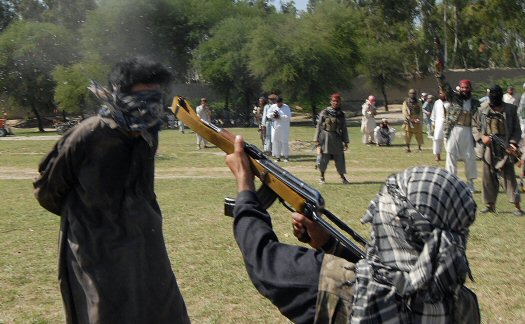
The US bombing of Afghanistan since late 2001 had pushed the Taliban and Al Qaeda militants to the mountains near the border with Pakistan. With help from sympathetic militant tribal warriors from the Pakistani side, the Taliban were able to dig in and have been able to fight the American forces for nearly a decade now. The onslaught by US and NATO forces continues in Afghanistan, but now for most of last year and certainly this year, the war has shifted to the streets and cities of Pakistan.

Now, much like Afghanistan, Pakistan too is a country that finds itself engulfed in the flames of religious extremism at the hands of determined and highly disciplined thugs. It used to be back during the Soviet-Afghan War, the only place perhaps not entirely safe inside Pakistan was Peshawar. Now, not one city or town of Pakistan has been spared from the violence by the Taliban. Back then, Peshawar was a city where attacks would happen frequently and often. During the 1980’s, the city became a haven for both jihadi militants fighting against the godless system of communism, and a base for spies as both the United States and Saudi Arabia funded a mujahedeen guerrilla war to defeat the Soviet troops from Afghanistan. President Reagan and General Zia of Pakistan used the fervor of religion to incite able bodied boys and men of Afghanistan and their distant cousins from the border area in Pakistan, along with thousands of volunteer Muslim fighters from across the Arab and Muslim world, to come and fight the Soviet Red Army. It was seen as a duty to come defend a Muslim land from occupation by a regime that would not allow the worship of Allah as communism discourages religion and encourages a sectarian society.

That strategy by General Zia ul Haq to promote the fight against the Russians as a holy war or jihad was brilliant at first. It mobilized not just every Muslim male in Afghanistan to stand and fight for his faith and their way of life, while also defending the country from invaders, but it also garnered the sympathy and enlistment of thousands upon thousands of Pakistani and Arab Muslim fighters to join the cause of these mujahedeen, as one who engages in jihad is called. The riling up of religious fervor and militant Islam was deemed necessary by both Reagan and Zia at the time as they sought to defeat the communists at all costs from succeeding in Afghanistan. It would not seem likely at the time, that this very same entity would become enemy number one of both the US and Pakistan a decade later.

It was monumental, it was historic,” retired Pakistani general Hamid Gul, who headed the ISI military spy agency from 1987-1989, said of Reagan’s role in defeating the Soviets. “We were receiving arms and logistics from the CIA, we were partners in this struggle,” Gul said, estimating the CIA spent up to $7bn in supplying arms and logistics to Islamic fighters or “jihadis.” “The jihadis he supported. It was their resistance against the forces of occupation and repression – that’s what jihad is – that Reagan identified himself with,” Gul said. “His greatest achievement was that he stood behind the Islamic world when it was arrayed against the Soviet empire.”

Pakistani analyst Hasan Askari Rivzi stated that “Al-Qaeda and the Taliban took shape later on, but they grew from this period of jihadism against the Soviets and with the initial help of Pakistan, Saudi Arabia along with the military and economic assistance from the United States to fight the Soviets during the ‘80’s. Rizvi sees the roots of the militancy that now ravages Pakistan and Afghanistan as having its beginnings from this period of war against the Soviets army.

That war with the Russians lasted almost 10 years. By the time the USSR pulled out all its troops from Afghanistan in 1989, the country had been completely destroyed. What was left of any government or authority of any sort was now held in the hands of a few militias and various warriors who commanded thousands of tribal and other ethnic fighters under them. These militias immediately started warring amongst themselves for more and more control of the country. The already weak, nonexistent central government of Afghanistan, post Soviet pullout was not able to cope and quickly capitulated. During the power vacuum that resulted, Pakistan’s spy agency, the ISI, realized the chance to wield power inside Afghanistan and threw its support behind a religious student movement based out of Kandahar. The ISI had previously assisted the cause to fight the Soviets by helping gather and organize radical Muslims from around the world to come and assist the Afghani mujahedeen in fighting the Soviets and had therefore developed good contacts with various religious groups including the young Taliban students and the fast growing movement.

The Afghani population initially welcomed the Taliban as they represented fairness and a rule of law over the notorious corruption, brutality and constant infighting of the warlord militias. Soon, with popular citizen support, along with Pakistan’s help, the Taliban became the dominant group within the country and soon held the seat of power in Kabul. Its leader Mullah Omar, was a friend of Osama Bin Laden and when the US forces came to Afghanistan in the hunt for Bin Laden, he gave the Al Qaeda leader refuge and in essence, became a fugitive of the US in the process for harboring America’s Most Wanted.

Fast forward to nearly nine years later as the war in Afghanistan continues against the Taliban and remnants of Al Qaeda responsible for the 9-11 attacks. However, the Taliban have grown and laid roots inside Pakistan also now as the nearly decade long war at the border with Afghanistan has ratcheted up sympathy by locals Pakistani Pashtun tribes for their brethren being bombed by both Pakistani and American forces. The Tehrik-i-Taliban Pakistan known as the Pakistani Taliban formed soon after the US invasion of Afghanistan and the Pakistani army’s offensive at the tribal areas near the border to combat the militants. The Pakistani Taliban led by the recently killed Baitullah Mehsud, has been largely responsible for hundreds of attacks in all major cities of Pakistan including Monday’s bombing of the American consulate in Peshawar.

The war in Afghanistan by the US against the Taliban that harbored and sheltered Bin Laden and the 9-11 killers of Al Qaeda is much the same as the war between the Pakistani army and the Pakistani Taliban in the Swat valley and the North West Frontier Province as well as in various cities of the country. This war has been brought home to the citizens of Pakistan. Over the last few months, bomb blasts in Lahore, Karachi, Islamabad and various other cities have now personalized this conflict for the average Pakistani as no longer a battle or skirmish at the border far away in the northwest of Pakistan near its border with Afghanistan.

No, the nearly daily attacks all over the country by the militants on government installations, public institutions like universities, factories and residential areas as well as markets and restaurants has made the country much less safer than at any time in its 63 year history. Many Pakistanis now are beginning to realize that the Taliban, operating with impunity all over Pakistan, pose a much bigger threat to the sovereignty and republic of Pakistan than any threat from anywhere else, including from that eternal archrival to the east, India. It is now well understood by both partners in this fight that only a sustained and vigorous fight taken to the militants inside both countries by the US and Pakistan over a long period of time can hope to defeat this disease known as the Taliban.

For an earlier report titled Taliban 101- Origins and History, Please click on this link:

https://pakistanisforpeace.wordpress.com/2009/05/25/taliban-101-origins-and-history/

U.S. Aims to Ease India-Pakistan Tension

By Peter Spiegel and Matthew Rosenberg for The Wall Street Journal

President Barack Obama issued a secret directive in December to intensify American diplomacy aimed at easing tensions between India and Pakistan, asserting that without dĂ©tente between the two rivals, the administration’s efforts to win Pakistani cooperation in Afghanistan would suffer.

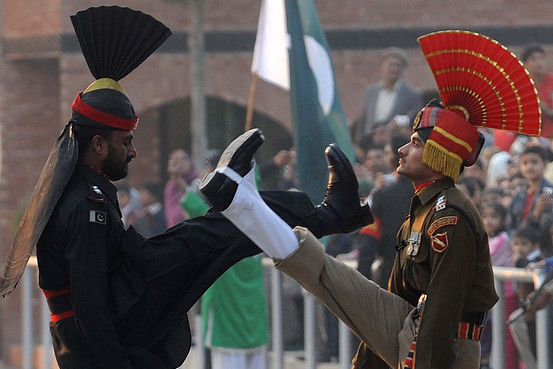
Pakistani Rangers (L) and Indian Border Security Force (BSF) personnel perform the daily retreat ceremony at the India-Pakistan Border at Wagah on December 26, 2009. The directive concluded that India must make resolving its tensions with Pakistan a priority for progress to be made on U.S. goals in the region, according to people familiar with its contents.

The U.S. has invested heavily in its own relations with Pakistan in recent months, agreeing to a $7.5 billion aid package and sending top military and diplomatic officials to Islamabad on repeated visits. The public embrace, which reached a high point last month in high-profile talks in Washington, reflects the Obama administration’s belief that Pakistan must be convinced to change its strategic calculus and take a more assertive stance against militants based in its western tribal regions over the course of the next year in order to turn the tide in Afghanistan.

A debate continues within the administration over how hard to push India, which has long resisted outside intervention in the conflict with its neighbor. The Pentagon, in particular, has sought more pressure on New Delhi, according to U.S. and Indian officials. Current and former U.S. officials said the discussion in Washington over how to approach India has intensified as Pakistan ratchets up requests that the U.S. intercede in a series of continuing disputes.

Pakistan has long regarded Afghanistan as providing “strategic depth”—essentially, a buffer zone—in a potential conflict with India. Some U.S. officials believe Islamabad will remain reluctant to wholeheartedly fight the Islamic militants based on its Afghan border unless the sense of threat from India is reduced.

Indian Prime Minister Manmohan Singh has already taken the political risk of pursuing peace talks with Pakistan, but faces significant domestic opposition to any additional outreach without Pakistani moves to further clamp down on Islamic militants who have targeted India.

U.S. and Indian officials say the Obama administration has so far made few concrete demands of New Delhi. According to U.S. officials, the only specific request has been to discourage India from getting more involved in training the Afghan military, to ease Pakistani concerns about getting squeezed by India on two borders.

“This is an administration that’s deeply divided about the wisdom of leaning on India to solve U.S. problems with Pakistan,” said Ashley Tellis, an analyst at the Carnegie Endowment for International Peace who has discussed the issue with senior officials in the U.S. and India. “There are still important constituencies within the administration that have not given up hope that India represents the answer.”

India has long resisted outside involvement in its differences with Pakistan, particularly over the disputed region of Kashmir. But, according to a U.S. government official, a 56-page dossier presented by the Pakistani government to the Obama administration ahead of high-level talks in Washington last month contained a litany of accusations against the Indian government, and suggestions the U.S. intercede on Pakistan’s behalf.

The official said the document alleges that India has never accepted Pakistan’s sovereignty as an independent state, and accuses India of diverting water from the Indus River and fomenting separatism in the southwestern Pakistani province of Baluchistan.

Secretary of State Hillary Clinton has signaled that Washington isn’t interested in mediating on water issues, which are covered by a bilateral treaty.

The White House declined to comment on Mr. Obama’s directive or on the debate within the administration over India policy. The directive to top foreign-policy and national-security officials was summarized in a memo written by National Security Adviser James Jones at the end of the White House’s three-month review of Afghan war policy in December.

An Indian government official said the U.S.’s increasing attention to Pakistani concerns hasn’t hurt bilateral relations overall. “Our relationship is mature—of course we have disagreements, but we’re trying not to have knee-jerk reactions,” the Indian official said.

According to U.S. and Indian officials, the Pentagon has emerged in internal Obama administration debates as an active lobbyist for more pressure on India, with some officials already informally pressing Indian officials to take Pakistan’s concerns more seriously. Adm. Mike Mullen, chairman of the Joint Chiefs of Staff and the U.S. government’s prime interlocutor with the powerful head of the Pakistani army, Gen. Ashfaq Kayani, has been among the more vocal advocates of a greater Indian role, according to a U.S. military official, encouraging New Delhi to be more “transparent” about its activities along the countries’ shared border and to cooperate more with Pakistan.

In interviews, U.S. military officials were circumspect about what specific moves they would like to see from New Delhi. But according to people who have discussed India policy with Pentagon officials, the ideas discussed in internal debates include reducing the number of Indian troops in Kashmir or pulling back forces along the border.

“They say, ‘The Pakistanis have this perception and you have to deal with the perception’,” said one foreign diplomat who has discussed India’s role with Pentagon officials. An Indian defense ministry spokesman said his country’s army has already moved about 30,000 troops out of Kashmir in recent years.

The State Department has resisted such moves to pressure India, according to current and former U.S. officials, insisting they could backfire. These officials have argued that the most recent promising peace effort—secret reconciliation talks several years ago between Indian Prime Minster Singh and then-Pakistani President Pervez Musharraf—occurred without U.S. involvement.

Progress, For a Price, in Pakistan

By Doyle McManus for The Los Angeles Times

In 2001, on the eve of the U.S. invasion of Afghanistan, President George W. Bush gave Pakistan’s then-leader, Gen. Pervez Musharraf, a choice: He was either with us or against us. Musharraf chose to become an ally, but the question ever since has been whether that shotgun marriage can mature into a healthy adult relationship. At times, the prospect has seemed far from reach.

The world’s second-most-populous Muslim country is caught in a brutal internal struggle between extremism and moderation. Most of its people tell pollsters they don’t like the United States and wish we’d go away. The tribesmen of its western frontier shelter Osama bin Laden and the leaders of Afghanistan’s Taliban. And the United States can’t forget how, in the 1980s, Pakistan built nuclear weapons — and then later exported nuclear technology to North Korea and Iran.

But in recent months, there has been progress in the relationship. Military and intelligence cooperation between the United States and Pakistan has increased significantly. Pakistan has allowed the CIA to increase its missile strikes against Al Qaeda and Taliban targets in Pakistani territory. Pakistani authorities have arrested several Taliban leaders and allowed U.S. intelligence officers to question them. And now Pakistan is offering to increase its own military operations in North Waziristan, the presumed lair of Bin Laden. All that cooperation came at a price, of course: a flood of U.S. military and economic aid.

And last week, the Pakistanis came to Washington to press for more. The academic criticism of the U.S.-Pakistani relationship is that it is “transactional” — nothing more than a series of bargains between buyers and sellers who don’t trust each other much. That’s still mostly true. Pakistan’s delegation arrived with a 56-page shopping list covering everything from military equipment to education and cultural exchanges. And one Pakistani official, asked during the visit whether his government was truly willing to act against the havens that allow the Taliban to maintain bases in Pakistan, replied frankly: “Yes — but at a price.”

After a series of meetings with Secretary of State Hillary Rodham Clinton, Pakistan’s ebullient foreign minister, Shah Mehmood Qureshi, declared: “I think we are going to move from a relationship to a partnership.” But he used the future tense. In the meantime, there are things to work out. Pakistan is clearly worried about what happens when the United States begins pulling troops out of Afghanistan in 2011.

Although Obama administration officials have tried to reassure Pakistan that Washington’s commitment to the region is for the long haul, uncertainty remains. “Our fear is . . . that we get into a fight with these guys [the Taliban], and you walk away, and we’re still there,” a Pakistani official said. Pakistan’s powerful army chief of staff, Gen. Ashfaq Kayani, spent part of his time in Washington visiting Congress with PowerPoint slides to show that Pakistan has committed more troops to its fight against insurgents than the United States has on the ground in Afghanistan, and that it has suffered almost 30,000 killed and wounded in the process.

According to U.S. officials, Kayani made a strong case that Pakistan can do more if it gets more modern military equipment from the United States, especially helicopters to ferry troops into the rugged badlands where Al Qaeda and the Taliban hide. The United States has helped Pakistan acquire some helicopters, but not as many and not as quickly as the Pakistanis would like. U.S. officials said they would try to speed the delivery of more. In the past, U.S. officials complained that Pakistan used much of its U.S. military aid to bolster its eastern front with India instead of its fight with internal insurgents; but since Pakistan’s 2009 offensive in the Swat Valley, that criticism has been stilled.

The delegation also added a new item to Islamabad’s wish list: a nuclear agreement under which the United States would help Pakistan develop its civilian nuclear energy industry — to mirror a similar U.S. agreement with India, Pakistan’s longtime enemy. The United States told the Pakistanis that would have to wait. The memory of having to clamp sanctions on Pakistan for its nuclear weapons program is still too fresh. But it was a sign of improving relations that the idea wasn’t rejected completely.

 In 2001, the United States sought a new relationship with Pakistan mostly because it was next to Afghanistan — and thus a country we would need for moving military supplies and basing drones. But that thinking has slowly evolved. In the long run, with its population of 170 million people — not to mention its cache of nuclear weapons — Pakistan is more important than Afghanistan.

“We’re engaging with Pakistan because we’re afraid of it,” says Christine Fair, a Pakistan expert at Georgetown University. “It’s the scariest country in the region. Because of Afghanistan, it’s been treated as if it were a subsidiary issue. But Pakistan should be the primary issue.” The Americans are working hard to convince the Pakistanis that they are interested in Pakistan’s stability for its own sake, not just because it’s next door to Afghanistan. The Pakistanis are working hard to convince the Americans that they are committed to defeating the extremists in their midst. It’s not a strategic relationship yet. If it’s a partnership, it’s still a wary one. But that’s progress.

Lahore bombing is Pakistan’s bloodiest this year

By Saeed Shah for The Guardian

A bombing in the eastern city of Lahore has killed at least 43 people – the fifth terrorist attack this week as extremists in Pakistan demonstrate their continued ability to strike.

The bloodiest terrorist strike in Pakistan this year was carried out by two attackers wearing suicide jackets who walked into a busy market in a high security military district and blew themselves up. The target appeared to be passing military vehicles but most of the victims were civilians. Shops in the market were ripped apart, with children crossing the road and people waiting at a bus stop among the victims. About 10 soldiers were killed and 100 injured, said the Lahore police chief, Parvaiz Rathore.

“There were about 10 to 15 seconds between the blasts. Both were suicide attacks,” a senior local government official, Sajjad Bhutta, said at the site. “The maximum preventative measures were being taken but these people find support from somewhere.” The bombers struck at 1pm, around the time of Friday prayers, in the cantonment area, home to the local army garrison and one of Lahore’s most upmarket residential districts.

Lahore is the bustling cultural hub of Pakistan and had enjoyed several weeks of relative peace. It is the capital of the eastern Punjab province, Pakistan’s most densely populated area and its political heartland. The suicide bombings were followed in the evening by three smaller blasts in a residential area across town. They caused panic but damage was reported to be minor. The authorities repeated their regular assertion that the Taliban and other extremist groups have been defeated. The provincial law minister, Rana Sanaullah , said: “We broke their networks. That’s why they have not been able to strike for a considerable time.”

But it was the second bombing this week in Lahore. A car bombing on Monday at a police interrogation centre killed 14 people. Other attacks this week included a gun and grenade assault on a US Christian aid agency’s office in the north-west, killing six of its staff, all Pakistani nationals. “They (the extremists) are trying to project their power, telling the government that they are still alive,” said analyst Imtiaz Gul, author of The al-Qaida Connection. “They are still far from broken. It’s going to be a long haul.”

In 2009 that Lahore was dragged into the bloody insurgency in Pakistan, which claimed around 3,000 lives last year, with a series of spectacular attacks including a gun assault on the visiting Sri Lankan cricket team. The last major attack in Lahore was in December when a market was bombed, killing at least 49 people. The launch of a military offensive in South Waziristan, on the Afghan border, the base of the Pakistani Taliban, in October last year was accompanied by a vicious spate of terrorist reprisals but the country had been relatively peaceful this year.