Archive for the ‘ Pakistanis ’ Category

Pakistan and its Image Problem

By Eric Schmidt for Google

Pakistan, a Muslim country, has spent about half of its independent life under military governments. Today, Pakistani leadership celebrates the ruling coalitions success in almost finishing the first five year term in history (previous leaders indicted by the courts, assassinated by extremists or brushed aside by the generals.) In meetings last week with the senior General, Prime Minister and the Foreign Minister, they made the case for a new and updated image of Pakistan: one of the largest democracies in the world, with a vibrant and open press, an upcoming demographic dividend of hardworking young people, and a highly educated elite leadership of the country. Islamabad and Lahore, where we visited, were relatively safe and certainly safer than Afghanistan. It was clear to us that Pakistan has an image problem.

Pakistan also has a power problem, as in electric power. Power is now off two hours out of three all day and all night. Estimates are that the country has enough generation capacity (hydro and oil based) to handle all the load, but corruption, power stealing, poor payment rates and the classic mistake of underpricing power compared to its real generation cost means that industrial production is threatened. Everyone of means has a UPS, and the air-conditioning seldom works on a 45 Celcius day. Our meetings often were literally in the dark, a common enough occurrence that people did not even remark about it.

Pakistanis are on their way to full mobile penetration with more than 110 million users, and all effective political communication programs now rely on SMS. 3G licenses are underway and the start of a real software industry can be seen.

Against this backdrop, another side of Pakistan emerges. The consensus is that the military drives the foreign policy of the country with unforeseen consequences. Alleged use of extremist groups to fight in Kashmir enables a criminal element to flourish, and the hosting of the Taliban in the autonomous regions (called FATA) to the north and west in the mountains turned an ungoverned area into a very dangerous area. The Army Generals explained the difference between fundamentalism (which they support) and extremism (which they fight), and the political leadership explained that the extremism now comes from “seminaries” where youth are indoctrinated, housed and fed in the rural areas where there are no opportunities at all.

Until recently a strong US ally, Pakistan is now on very good terms with China, and has improving relations with India (with whom they have had three wars.) The development of a nuclear stalemate between India and Pakistan seems to have forced them to pursue accommodation and trade is now increasing rapidly. The press are generally hyper-critical of the United States policies in the region and take the view that the India-US relationship is driving much of our countries behavior. The drone strikes are universally condemned as a violation of sovereignty and their constitution and are subject to much negotiation between the two countries. The bin Laden raid is viewed with strikingly different perspectives in the two countries.

The son of the chief of the Supreme Court is under investigation for corruption, and the media in turmoil after the appearance of staged interviews. In return, the Supreme Court has ruled that the Prime Minister is unable to govern after he was sentenced to a 30 second (yes, that’s right) detention for failing to investigate a corruption case against the President. The Prime Minister, so proud of the stability of the political system in his comments a week ago, is now the former-Prime Minister. The lack of trust within the society weakens both the real and perceived effectiveness of the government on security, corruption and good government matters.

We met a number of impressive Pakistanis, none more so than Masarrat Misbah of Smile Again. Every year, hundreds of young rural women have acid thrown on their faces by men as punishment for some dishonor, including being raped by the men who pour acid on her. This horrific crime, which often leads to death or blindness, requires painful rehabilitation and rebuilding of the woman’s life. Masarrat Misbah’s home in Lahore provides a temporary safe house. The perpetrators, most often direct family members, are seldom prosecuted and almost never convicted of anything. I will never forget the faces of these shy, young women so grievously injured in such an evil way.

Much of what people say and think about Pakistan is absolutely true for most of the FATA provinces (autonomous areas) and for Baluchistan. Pakistan’s image problem results from the fact that people outside the country believe the realities of North and South Waziristan and Quetta are reflective of what the larger country looks like. Islamabad and Lahore are certainly safer than people realize, unless you are a politician (many prominent politicians still suffer assassination attempts and threats inside these cities).

Pakistan’s major security challenge comes from having two many fronts. FATA represents a Haqqani network and Taliban problem, threatening the establishment in Islamabad. Baluchistan is a persistent separatist movement. Afghanistan is a threat because Pashtuns are allowed to go back and forth undocumented. All of this, including India, is simply too much for a government like Pakistan to take on right now.

We ultimately see three Pakistans: 1) The places where the security issues are true (FATA, Baluchistan, parts of SWAT Valley, and Kashmir); 2) the rest of Pakistan for the average citizen, much larger than the first and which is reasonably misunderstood and relatively safe; 3) The politician’s and military’s Pakistan, which whether in FATA or Islamabad, is turbulent, unsafe, and complex.

There is a good case for optimism about Pakistan, simply because of the large emergent middle class (#2). The country, vast, tribal and complicated, can follow the more successful model of India. Connectivity changes the rural experience completely.. illiteracy at 43% can be overcome relatively quickly, and providing information alternatives can dissuade young males from a life of terrorism. The well educated elite can decide to further reform the countries institutions to increase confidence in the government. The war in Afghanistan, destabilizing to Pakistan in many ways, winds down after 2014 and buys time for Pakistan to address its real and continuing internal terrorism threat (more than 30,000 civilian terror deaths in the decade.)

Technology can help in other ways as well. The power problem is mostly a tracking problem (tracing corruption and mis-distribution). The problem of extreme crimes (like acid, or stoning) in poorly policed regions can be mitigated with videos and exposes that shame authorities into prosecution. The corruption problem can be tracked and traced using mobile money and transparent government finances. We met with clever Pakistani entrepreneurs who will build large, new businesses in Pakistan in the next few years and global multinational will locate sales and eventually manufacturing in the country.

The emergent middle class of Pakistan won’t settle for a corrupt system with constant terrorism and will push for reforms in a burgeoning democracy. Here’s to the new civil society of Pakistan, who will use connectivity, information and the Internet, to drive a peaceful revolution that brings Pakistan up to its true potential.
Pakistan Elects ‘Rental Raja’ as Prime Minister

By Ben Doherty for The Sydney Morning Herald

A turbulent week in Pakistani politics has ended with the election of a new prime minister, but one who appears unlikely to stay long in the top job.

The past seven days have seen a long-serving prime minister sacked by the Supreme Court for contempt, his putative replacement felled by an arrest warrant for drugs importation and, finally, a stopgap candidate elected, with the country now almost certainly headed for early elections within months.

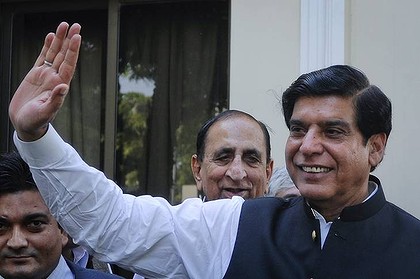
The new prime minister is Raja Pervez Ashraf, a 61-year-old from Sindh, who was water and power minister in the previous government. That job made him unpopular in a country stricken by chronic power shortages that only worsened on his watch. Some parts of the country are blacked out 22 hours a day. Mr Ashraf has also been accused of corruption over the importation of short-term power stations. Known as ”rental power” projects, they were costly and produced little power.

He is accused of making millions on the side from the deals and his derogatory nickname ”Rental Raja” was shouted by opponents in Parliament yesterday even as he was showered in rose petals on his election. Mr Ashraf won the parliamentary vote for prime minister 211 votes to 89.
In his first speech to Parliament, Mr Ashraf called on Pakistani Taliban militants to lay down their arms. ”The irresponsible behaviour of religious extremists has ruined Islam and Pakistan. I, as prime minister of Pakistan, appeal to them to lay down arms and join the mainstream of life.”

And he said his government would look to rebuild its relationship with key ally and aid donor, the US. ”We will develop cordial relations with the United States and international community on the basis of equal rights and dignity,” he said. Relations between the countries have rarely been worse, and show little scope for improvement.

Pakistan is refusing to reopen its border to Afghanistan to American trucks, after a botched US attack killed 24 Pakistani soldiers. And the US will not countenance abandoning its drone attack program in Pakistan’s north-west.

Regardless, few in Pakistan believe Mr Ashraf will have time to deliver even a fraction of what he promised in his maiden address. His government has, at most, nine months before elections are due, but they are expected now before the end of the year. ”This year will be the year of new elections, and we are going for the elections,” senior Pakistani People’s Party member Khursheed Shah said.
Raza Rumi, director of the Islamabad-based Jinnah Institute, said Mr Ashraf was a ”cynical choice” for PM. ”Whoever takes over as prime minister will be in for a very short time. Obviously the Pakistan People’s Party will not choose its best for this stint. They will choose people who can be dispensed with.”

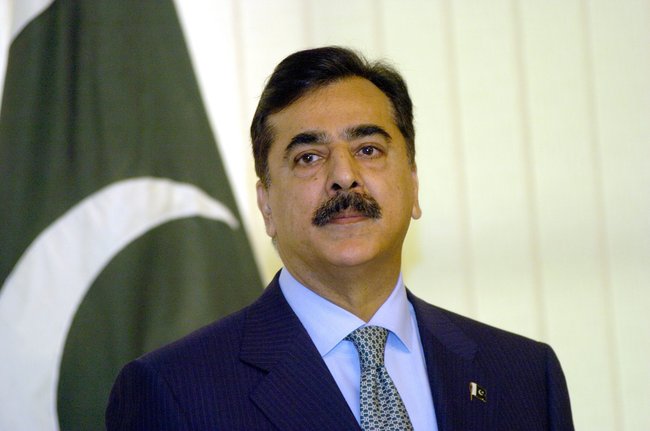
On Tuesday, the former prime minister Yusuf Raza Gilani, was dismissed by the Supreme Court for refusing a direction to write a letter allowing Swiss authorities to investigate corruption allegations against Pakistani President Asif Ali Zardari (the same demand is likely to be made of Mr Ashraf). Then, the man tipped to fill the PM’s post, Makhdoom Shahabuddin, had an arrest warrant issued for him over the illegal importation of the chemical ephedrine, used to make methamphetamine.

Pakistani President Chooses Party Stalwart as New Premier

By Salman Masood for The New York Times

President Asif Ali Zardari has chosen a party stalwart, Makhdoom Shahabuddin, to replace the ousted prime minister, Pakistani news media reported late Wednesday.

Mr. Shahabuddin, who was serving as textiles minister when the Supreme Court dismissed Prime Minister Yousaf Raza Gilani and broke up the cabinet on Tuesday, will file his nomination papers before the election commission on Thursday. Khurshid Shah, a senior leader of the governing Pakistan Peoples Party, said a special session of the National Assembly would be held Friday for a confirmation vote.

The nomination of Mr. Shahabuddin came after hours of negotiations between party officials and the other members of its governing coalition. Officials said he was Mr. Zardari’s first choice, but he faced mild resistance during a meeting at the president’s house on Wednesday afternoon.

Mr. Shahabuddin belongs to an influential family from the southern part of Punjab Province, which has been a stronghold of the Pakistan Peoples Party. He has held several positions, including deputy finance minister in the early 1990s. He was considered close to Prime Minister Benazir Bhutto.

The country’s economy, militants in the tribal badlands and troubled relations with the United States over reopening NATO supply lines would be among the issues facing him if he was confirmed. But he may face another challenge by the Supreme Court, which has been pushing the ruling government to reopen a Swiss corruption investigation against Mr. Zardari. Mr. Gilani’s refusal to do so led to contempt charges and his dismissal.

Most analysts expect Mr. Shahabuddin would fight such pressure, as Mr. Gilani did.

Raza Rumi, the policy director of the Jinnah Institute, a research group in Islamabad, said that the nomination of Mr. Shahabuddin indicated continuation of the governing party’s policies. “Mr. Shahabuddin is an experienced parliamentarian, but he will face a tough choice to balance loyalty to the president and deal with an assertive court and a restive opposition,” he said.

Political Instability Rises as Pakistani Court Ousts Premier

As Reported by Delcan Welsh for The New York Times

The Supreme Court dismissed Prime Minister Yousaf Raza Gilani on Tuesday, drastically escalating a confrontation between the government and the judiciary and plunging the political system into turmoil.

Chief Justice Iftikhar Muhammad Chaudhry declared that Mr. Gilani’s office had been effectively vacant since April 26 when the court convicted him on contempt charges because he refused to pursue a corruption case against President Asif Ali Zardari, his superior.

Although the decision is unlikely to topple the government, many viewed it as the product of a grudge-driven tussle between Mr. Zardari and Justice Chaudhry, with the prime minister caught in the middle.

“The court has been gunning for the prime minister for a long time,” said Najam Sethi, a veteran political analyst. “Clearly there is a lot of politics in this.”

The order left Pakistan in a state of constitutional uncertainty, with the cabinet effectively dismissed. The court instructed Mr. Zardari to “ensure continuation of the democratic process” — words widely interpreted as an order to arrange the election of a new prime minister.

Legal experts said Mr. Gilani could not appeal the decision but that he may continue in an interim role until a successor is chosen. It was unclear what impact the decision would have on troubled negotiations with the United States to reopen NATO supply lines through Pakistan into Afghanistan.

As word of the ruling spread, Pakistanis held their breath for reaction from the ruling Pakistan Peoples Party, whose top leaders held an emergency session at Mr. Zardari’s house. Television stations reported that the party had agreed in principle to accept the court’s ruling, but a final decision was not expected until later Tuesday.

Shahbaz Sharif, a senior leader of the opposition Pakistan Muslim League-N Party, which instigated the court action, hailed the decision. “It upholds the supremacy of the law and the Constitution,” Mr. Sharif said.

But it calls into question the validity of all executive decisions made since April 26, including the passing of the federal budget. One commentator said it “opened a massive legal can of worms.”

Speculation swirled about the identity of a replacement prime minister; among the names circulating were those of the foreign minister, Hina Rabbani Khar, and various stalwarts from the party’s electoral heartland in Sindh Province and southern Punjab.

Any candidate, however, will need the approval of the P.P.P.’s coalition partners — smaller, ethnically centered parties based in Karachi, Lahore and Peshawar, who are likely to seek fresh concessions from Mr. Zardari in exchange for their votes in Parliament.

The court decision advanced the likelihood that general elections, scheduled to take place by next spring, could be brought forward.

Equally, however, Mr. Zardari may wish to first resolve some of the governance failures that have marred his government’s reputation, notably widespread power outages and system failures that have continued for years. The court decision coincided with street agitation in Punjab, the country’s most populous province, where rioters burned buildings and clashed with police in several cities on Monday and Tuesday to protest power outages.

“Law has become subservient to politics, but this government had it coming. It has been singularly inept,” said Mr. Sethi, the analyst. “They had six months to anticipate the power crisis, and now it is upon them.”

In dismissing Mr. Gilani, the court chose the strongest option. It could have referred Mr. Gilani’s case to the Election Commission of Pakistan, which could have taken up to three months to adjudicate the case.

It comes at the end of a tumultuous week for the court itself. Last week, a billionaire businessman made explosive accusations in court and in the media that he had given $3.7 million in kickbacks to Justice Chaudhry’s son in order to swing several cases his way. The furor over those accusations, centered on the judge’s son, Arsalan Iftikhar, is now likely to fade as the country grapples with its latest political crisis.

Mr. Gilani’s dismissal stems from longstanding demands by the court that Mr. Gilani write a letter to the authorities in Switzerland to seek to reopen a dormant corruption investigation into Mr. Zardari’s finances that started in the 1990s.

Mr. Gilani refused, arguing that he was unable to do so because the president enjoyed immunity from prosecution. And the prime minister signaled long ago that he was ready to be dismissed or face prison in the case.

After Mr. Gilani was convicted on contempt charges on April 26, the speaker of Parliament examined calls for his dismissal from public office. The court intervened after the speaker, who is a member of the ruling party, ruled that Mr. Gilani should not be dismissed.

“What will happen to independence of judiciary if speaker or Parliament tries to scrutinize judicial rulings?” Justice Chaudhry said on Tuesday. “No one can undo a court verdict except a court of appeals.”

Edhi Faces Abduction Threat, Authorities Reveal

As Reported By Salman Siddiqui for The Express Tribune

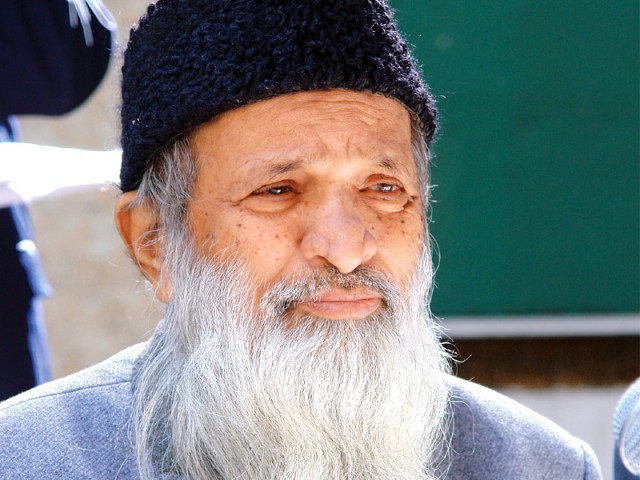
Leading humanitarian worker Abdul Sattar Edhi is in danger of being taken hostage by a militant group in exchange for prisoners that it wants sprung free, authorities have revealed.
Edhi, while talking to The Express Tribune, stated that he was informed by the authorities a few weeks back that his life was in danger. “I was told that the ‘fauj’ (Pakistan Army) had intercepted a conversation of militants where it was being discussed that I may come to be harmed,” he said.
Edhi Foundation spokesperson Anwar Kazmi elaborated that the nation’s most recognisable charity worker was warned that he could be taken hostage in exchange for some prisoners that the ‘Taliban’ wanted to get released —

an allegation the militant group has denied.

Crime Investigation Department (CID) Senior Superintendent Police (SSP) Chaudhry Aslam confirmed that the intelligence reports they had received sometime back indicated that Edhi may be kidnapped by militants in exchange for either “some of their men in custody” or a “large ransom amount”.

“There was a letter in which there were three names, which included my name, Malir SSP Rao Anwar’s and Edhi’s,” he said.

This is the first time that Edhi’s name has been mentioned in a militant group’s hit list. After SSP Anwar was attacked in a suicide bomb in April, it was decided that Edhi’s security would be beefed up as a precautionary measure.

Security provisions

Despite the threat to his life, Edhi remains unfazed and calm in light of this development. “Only God knows what the truth is,” he says. “I don’t have enmity with anyone or any group. I do humanitarian work for everybody without any prejudice.”

Since the threats surfaced, Edhi is being provided with round-the-clock police security — with two official guards escorting him everywhere he goes. “Never before in his life had Edhi ever asked or given security by the state,” the spokesperson said.

Currently, two policemen from the Kharadar police station have been deployed for his security who work in two shifts of 12-hours each, according to Station House Officer (SHO) Agha Asadullah. “We can increase the number of policemen, if need be,” he said.

Edhi himself appears irritated by the presence of policemen near him at all times — especially given that he has to keep the Kharadar police station informed about his movements constantly. “I don’t want any of this security. I really feel there’s no need for it,” he said modestly. Although he is being asked to restrict his movements as a precaution, Edhi said he won’t allow anything to stop him. “I am going to Hyderabad next to do some relief work there,” he said.

TTP reaction

His son Faisal revealed that a three-member delegation of the local chapter of the Tehreek-e-Taliban Pakistan (TTP) recently came to the Edhi office to clarify their position about the alleged threats.

“They said to us that this is all government propaganda to malign the Taliban movement,” he said. “They also added that they respected Edhi for his humanitarian work and could not even think of doing him any harm.”

SSP Aslam said that the good news was that according to recent reports, Edhi’s name had not been mentioned again. “We receive a number of intelligence reports which mention a lot of famous personalities on the hit list on a weekly basis. So hopefully all will remain well.”

Reacting to the development, Edhi said: “I don’t know who [wants to harm me] or why. “I only know that I have to continue to do my work — no matter what.”

Pakistanis for Peace Editor’s Note– The Taliban have once again showed their true colors by threatening a man of Mr Edhi’s caliber. To threaten a person who is akin to Mother Teresa for Pakistan, a living saint, shows us how far off the cuckoo’s nest they really are. Just another reason for us here at Pakistanis for Peace to have great disdain for this group of people.

Legendary Ghazal Singing Legend Mehdi Hassan Dies

As Reported by Maimoona Shoaib and Mohammad Ashraf for The Gulf News

He worked in a bicycle shop. He repaired cars. And when he would sing a ghazal, he would mesmerise a continent.

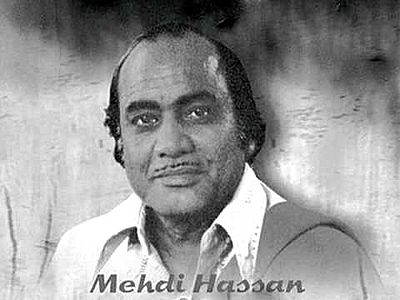
Pakistani ghazal legend Mehdi Hassan, who suffered from lung, chest and urinary tract ailments for ten years, died of breathing complications at a Karachi hospital on Wednesday at the age of 84.

His famous ghazals (ballads) include “Patta patta boota boota,” “Abke bicchde khwaabon mein mile”, “Zindagi mein sabhi pyar kiya kartein hain,” “Dekh tu dil ki jaan se uthta hai,” and “Ranjish hi Sahi”.

“My father’s funeral will take place Friday in Karachi,” son Arif Mehdi said, adding that the family was yet to finalise the burial location. “We have asked for the permission from the government to bury him at Quaid-e-Azam mazar [near the mausoleum of Mohammad Ali Jinnah, the founding father of Pakistan] in Karachi, but we are waiting for approval,” he said.

Born into a family of musicians in Loona village in undivided India (now in the Indian state of Rajasthan) in July 1927, Hassan had a modest beginning, mirroring the situation of the new country he migrated to at age 20 after the partition of India in 1947.

The family sank into penury after moving to Pakistan, and eking out a living was difficult. Young Hassan worked in a bicycle shop and later became a car mechanic, even as he was initiated into music by father Ustad Azeem Khan and uncle Ustad Esmail Khan, who were dhrupad (Indian classical) musicians.

In his book “Mehdi Hasan: The Man & his Music”, Pakistani author Asif Noorani writes that his humility during this phase stood tall against the fame and greatness he had achieved later.

“He had earned his living by repairing automobiles during his younger days. During his years of stardom, his harmonium broke and he started repairing it himself, wittingly replying to the people surrounding him that this was a piece of cake compared to the number of engines that he had repaired in the past,” Noorani writes.

Eventually, Hassan found his real vocation in the ghazal.

Mehdi is said to have given his first performance when he was eight, in sync with tradition where musicians started early and were paced through various levels of public performance before they graduated as accomplished vocalists.

The hardships of life notwithstanding, Hassan stuck to his music and continued with his rigorous practice, relying on the extreme discipline he lent to his style of constricted-throat singing as opposed to the full-throated version.

He was well into his twenties when he was first noticed as a singer of some merit. The break came when he was invited to sing for Radio Pakistan in Karachi in 1957 — first as a thumri singer and then as a ghazal exponent.

Hassan had to work harder than many of his younger colleagues but his innovative approach earned him fame.

Traditionally, ghazals were sung in a thumri-like manner. They were set to Indian classical ragas such as Khamaj, Piloo and Desh. The classical format stymied the scope of the compositions — preventing it from innovating. However, Hassan pioneered a ghazal “gayaki” (manner of singing) that played upon the mood of the music rather than on the classical nuances. A composer of rare brilliance, his style combined classical and Rajasthani folk music to create a new realm of ghazals whose magic spread beyond Pakistan to India and the rest of the world.

He was one of the first Pakistani ghazal singers who charmed Indian audiences and won impressive fan followings — former Indian prime minister Atal Bihari Vajpayee invited him for a private performance at his residence.

But many more years were to pass after 1957 for Hassan to get his opportunity to sing for films.

As Hassan arrived, the ghazal stage was dominated by greats as Khan Sahib Barkat Ali Khan, Mukhtar Begum and Begum Akhtar. Among Hassan’s contemporaries were Farida Khanum, Iqbal Bano and Ustad Amanat Ali Khan, with Gulam Ali and Jagjit Singh followed not too far behind.

According to an estimate by Arif, Hassan sang more than 20,000 songs and apart from Urdu, also sang in Bengali, Punjabi and Pashto.

It’s not uncommon for a singer whose career spanned over 50 years to churn up 20,000 songs. But given the quality and the unfailing discipline which were the hallmarks of Hassan’s songs, it will go down in the history of music as a gigantic superhuman effort. And the way Hassan sustained himself until health issues made it impossible for him to carry on, is a remarkable story that parallels the struggles of his homeland.

After shining on the musical firmament from the 1960s to 1980s, Hassan’s career started fading as frequent illnesses took their toll. The death of his first wife in 1998 followed by an attack of paralysis restricted Hassan to bed and he lost the power of speech. His health deteriorated further over the past 12 years.

His home country honoured Hassan with several awards and honours — from Tamgha-e-Imtiaz to Pride of Performance and Hilal-e-Imtiaz — while India honoured him with the Sehgal Award in 1979. The Nepal government too honoured him with the Gorkha Dakshina Bahu.

Hassan, who married twice, is survived by 14 children — nine sons and five daughters. His second wife also died before him.

His death brings the curtains down on a journey in music that lasted more than 50 years and crafted a new era of lyricism, melody and poetry in ghazals.

Pakistanis for Peace Editor’s Note– Pakistan has had a few stars that transform their industry across all borders. One of them was surely Mehdi Hassan, a supernova so bright that he was considered living legend for the last several decades. His passing has dimmed the night sky over Pakistan and indeed over the entire Indian subcontinent as many in the neighboring country are mourning his loss as of one of their own. RIP Hassan sahib, thank you for all your songs and ghazals, through which you will live on forver.

Pakistan Probe Says Ex-Envoy to US Wrote ‘Treasonous’ Memo to Washington

By Asif Shahzad for The Associated Press

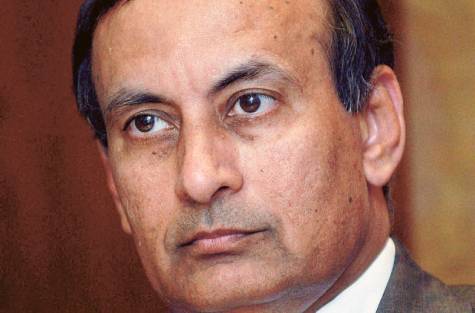
A judicial investigation has concluded Pakistan’s former ambassador to the U.S. did write a secret letter to American officials requesting their help in reining in the powerful army last year, a lawmaker and state media said Tuesday. The finding could lead to treason charges against the envoy.

The former envoy Husain Haqqani was a close aide to President Asif Ali Zardari and a member of his party. Zardari himself could be threatened if any evidence surfaces showing he ordered, or knew of, the memo.

Haqqani, who resigned from his post after the scandal broke and currently lives in America, has denied he wrote the memo and said the commission’s report was “political and one-sided.” Many independent observers have also concluded that the probe was politicized.

The commission was investigating politically explosive allegations that Haqqani sought U.S. assistance last year in warding off an alleged army coup in the aftermath of the U.S raid that killed Osama bin Laden in May. The scandal pitted the weak civilian government against the army, and drew in other the feuding power brokers in Pakistan — the Supreme Court, the opposition and the media.

The dispute over the letter and other politically driven clashes between Pakistani state institutions, as well as an increasingly hostile relationship with Washington, have intensified strains on the shaky elected government as it struggles against Islamist militancy and economic stagnation. Some analysts have predicted events could end in a destabilizing stalemate, conditions that in the past have led to coups and other military interventions.

Allegations of collusion between Washington and Pakistani officials may also complicate American efforts to rebuild security cooperation with Pakistan, thrown into disarray in November by U.S. airstrikes that accidentally targeted Pakistani soldiers along the Afghan border and killed 24 of them.

The United States wants Pakistan to resolve its political turmoil and focus on fighting militancy and helping in its campaign in neighboring Afghanistan. But anti-Americanism is rife in Pakistan, and few politicians are willing to publicly help Washington. Pakistan has yet to reopen supply lines for NATO and US troops that it blocked after the November airstrikes. On Monday, US officials said a negotiating team in Pakistan seeking to get the supply lines reopened was returning home, the latest sign of stalled relations between the two countries. Britain’s Foreign Secretary William Hague, on a visit to Pakistan, said his government wanted to see the supply lines reopened.

“Those lines of communication affect us as well,” he told reporters, but added it was an issue for Islamabad and Washington to resolve.

The commission called witnesses and sought telephone records from Haqqani, who did not appear before the probe. Many other Pakistani observers have been skeptical of the investigation. Haqqani’s chief accuser in the case was an American-Pakistani businessman with a history of making unsubstantiated allegations and who once appeared in a music video featuring naked female mud wrestlers.

The commission read out its finding in the Supreme Court. Opposition lawmaker Khwaja Asif, who was present, said it concluded Haqqani tried to undermine Pakistan’s constitution and was not “loyal to the state.” The court ordered Haqqani to appear before it after two weeks.

Retired Justice Nasira Javed said the commission was working on orders from the Supreme Court and criminal proceedings against Haqqani on treason charges could now begin.

The release of the findings came just hours before the Supreme Court heard testimony from a billionaire property developer who claimed that the son of Supreme Court Chief Justice Iftikhar Chaudhry accepted $3.5 million worth of shopping and foreign trips to influence judges at the court. The case is embarrassing for Chaudhry, and is seen by some as part of a campaign by supporters of Zardari’s government to tarnish his image. Chaudhry recently convicted Prime Minister Yousuf Reza Gilani, an ally of Zardari, of contempt of court for not opening corruption charges against the president.

Alluding to that case, ex-envoy Haqqani said the “commission’s report has been released to distract attention from other more embarrassing developments.”

Supporters of Haqqani and the government accuse the Supreme Court and the army of working against Zardari and the political party he heads. His movement claims a long history of persecution by the army in Pakistan

Quips a Sign That U.S.-Pakistan Bond Soured

By Sebastian Abbot and Rebecca Santana for The Associated Press

You know a friendship has gone sour when you start making mean jokes about your friend in front of his most bitter nemesis.

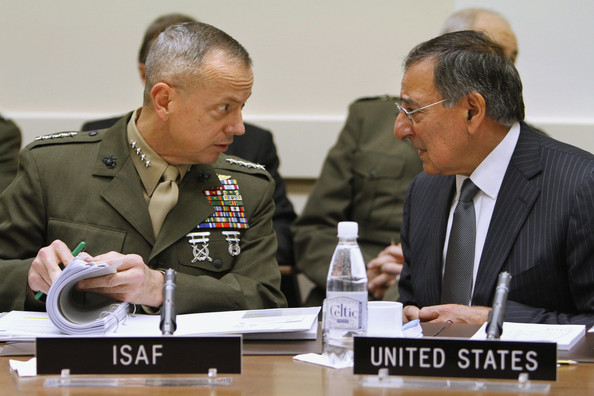
So it was a bad sign last week when the U.S. Defense Secretary Leon Panetta joshed in front of an audience of Indians about how Washington kept Pakistan in the dark about the raid that killed al-Qaida leader Osama bin Laden a year ago.

“They didn’t know about our operation. That was the whole idea,” Panetta said with a chuckle at a Q&A session after a speech in New Delhi, raising laughs from the audience. The bin Laden raid by U.S. commandos in a Pakistani town infuriated Islamabad because it had no advance notice, and it was seen by Pakistan’s powerful military as a humiliation.

The U.S. and Pakistan are starting to look more like enemies than allies, threatening the U.S. fight against Taliban and al-Qaida militants based in the country and efforts to stabilize neighboring Afghanistan before American troops withdraw.
Long plagued by frustration and mistrust, the relationship has plunged to its lowest level since the 9/11 attacks forced the countries into a tight but awkward embrace over a decade ago. The United States has lost its patience with Pakistan and taken the gloves off to make its anger clear.

“It has taken on attributes and characteristics now of a near adversarial relationship, even though neither side wants it to be that way,” said Maleeha Lodhi, who was serving as Pakistan’s ambassador to the U.S. on Sept. 11, 2001, and was key in hurriedly assembling the two countries’ alliance after the terror attacks.

The latest irritant is Pakistan’s refusal to end its six-month blockade of NATO troop supplies meant for Afghanistan. Even if that issue is resolved, however, the relationship may be on an irreversible downward slide. The main source of U.S. anger is Pakistan’s unwillingness to go after militants using its territory to launch attacks against American troops in Afghanistan.

On the Pakistani side, officials are fed up with Washington’s constant demands for more without addressing Islamabad’s concerns or sufficiently appreciating the country’s sacrifice. Pakistan has lost thousands of troops fighting a domestic Taliban insurgency fueled partly by resentment of the U.S. alliance.

Panetta’s comments about the bin Laden raid may have been unscripted, but others he made while in India and Afghanistan seemed calculated to step up pressure on Pakistan. He stressed Washington’s strong relationship with India — which Islamabad considers its main, historic enemy — and defended unpopular American drone attacks in Pakistan.

He also said in unusually sharp terms that the U.S. was running out of patience with Islamabad’s failure to go after the Pakistan-based Haqqani network, considered the most dangerous militant group fighting in Afghanistan.

Many analysts believe Pakistan is reluctant to target the Haqqanis and other Afghan militants based on its soil because they could be useful allies in Afghanistan after foreign forces withdraw, especially in countering the influence of India. Over the past 18 months, the relationship between the U.S. and Pakistan has suffered repeated crises.

In January 2011, a CIA contractor sparked outrage when he shot to death two Pakistanis in the city of Lahore who he claimed were trying to rob him.
In November, American airstrikes killed 24 Pakistani troops at two Afghan border posts. The U.S. has said it was an accident, but the Pakistani army claims it was deliberate.

Pakistan retaliated by kicking the U.S. out of a base used by American drones and closing its border to NATO supplies meant for troops in Afghanistan. Negotiations to reopen the supply route are slow but under way.
But Pakistani officials have said the route will not reopen without some kind of apology. The U.S. has expressed its regret over the incident but has refused to apologize for fear it could open the Obama administration to GOP criticism.

Latest U.S. Drone Operation in Pakistan Should Be Judged a Success

An Editorial By The Globe and Mail

The use of a drone to kill al-Qaeda’s second-in-command in Pakistan, confirmed on Tuesday by U.S. officials, is good news that has nonetheless provoked a diplomatic protest by Pakistan. The country’s position is understandable, and doubtless its posturing is necessary for domestic consumption. But it does not alter the fact that Pakistan is either unable or unwilling to act against terrorists in its lawless tribal lands and, though they occur in a foreign country, that Washington’s actions are defensive in nature.

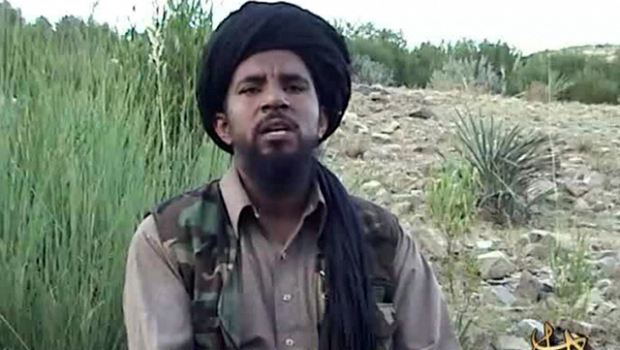
Abu Yahya al-Libi was a global jihadi figure who incited attacks on Western targets and served a critical propaganda role for al-Qaeda. His apparent death follows several similar drone strikes against senior al-Qaeda leaders, including Atiyah Abd al-Rahman, that have seriously diminished the terrorist group’s capability and, frankly, have made the world a safer place. What is more, the use of the unmanned stealth weapons has both preserved the lives of U.S. servicemen and women and resulted in limited civilian casualties.

Louise Arbour, the former war crimes prosecutor and Supreme Court of Canada justice, wrote recently in Foreign Policy that the use of drones “stretches legal boundaries to the breaking point and alienates people in Pakistan.” In calling for the rules for use of strike drones to be “clarified,” Ms. Arbour expressed concerns over the “very real risks to civilians.” There is indeed a need for a clarification of the rules. It would be folly to believe that the proliferation of the technology is without implications for international law and policy.

But any such debate must be built upon some pertinent facts. Strike drones are surgically targeted, and those killed are generally not good people (there is always the unfortunate risk of exceptions when terrorists hide among civilians).

In the case of the latest attack, American officials say Mr. Libi was the only person who died. Local tribesmen dispute this, saying others died, but they confirm no civilians were harmed. The same can hardly be said of the consequences of U.S. inaction in the face of al-Qaeda’s threat. This operation was then, by any reasonable measure, a success. Ms. Arbour and others concerned about drone wars need to reflect on the question of proportionality.

Pakistanis for Peace Editor’s Note– Until and unless Pakistan goes after the terrorists in its borders earnestly, the drone strikes and their often effectiveness in killing top wanted members of Al-Qaeda and the Taliban will most likely continue, despite the collateral damage to Pakistan’s sovereignty and loss of civilian lives.

Pakistan: Between a Rock and A Hard Place

By Yekaterina Kudashkina for The Voice of Russia

Interview with Dr. Theodore Karasik – the Director of Research and Development at the Institute for Near East and Gulf Military Analysis (INEGMA) in Dubai.

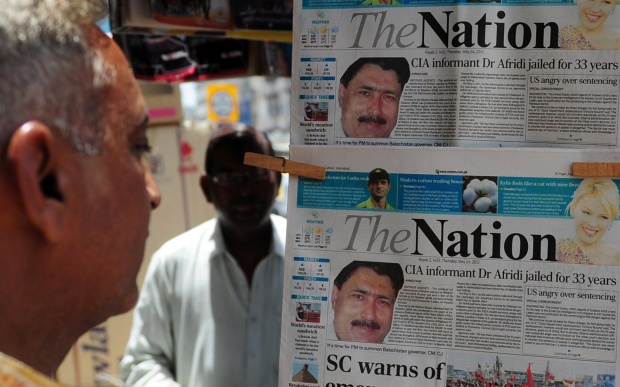
Particularly you have to first understand that the situation in Pakistan is rather icy politically, as well as on the religious scale. Pakistan now finds itself between a rock and a hard place when it comes to how it fits into the US and Western plans to halt fighting in Afghanistan as well as to get rid of terrorist events in the northwest frontier province. So, the Pakistani press is going to be very inflamed though, not only because of the NATO Summit, but also because of the sentencing of the doctor who outed Bin Laden for a sentence of 33 years.

Apparently what happened was that the US had managed to find a Pakistani physician who was able to pinpoint the location of Bin Laden’s compound and as a result of the leakage of this information in the US and foreign press this doctor was arrested and tried very quickly in Pakistan and sentenced to 33 years in jail for giving up Bin Laden’s position. This is a political trial where Pakistanis want to make an example of this individual by arguing that he managed to fail the state by giving up the secret of where Bin Laden was hiding.

Do you think that this case is going to further deteriorate the relations between the US and Pakistan or is it just a root in development?

I think it is a bit of both. I think that will embarrass the US-Pakistani relations. I think that will be pressuring the United States of why did the US revealed the identity of this doctor. There is also a discussion about how this relationship with Pakistan and the United States will continue in terms of transport of nonlethal goods to Afghanistan.

Now, talking about that issue. Do I get it right that the negotiations are still under way in Islamabad regarding the transportation routes agreement, the new one?

Yes, the negotiations are still ongoing in Islamabad about transferring nonlethal goods into the Afghan theatre. And Pakistanis are using this episode to put political pressure on US to make concessions, particularly when it comes to military aid or paying of very high prices for use of this supply lines.

Are we talking about concessions in terms of money or in some other aspects?

It’s a combination of both money and political support for the Zardari Government.

Is the US prepared to offer a political support for Zardari Government in the present circumstances?

At this time I would say that the United States is going to play quite tough with Pakistan. Let’s face it – Pakistan is just barely above a failed state. And the US needs to make sure that Pakistan does not descend in the total chaos while at the same time applying pressure on Pakistan to guarantee that the state remains somewhat coherent together.

The signals of the resumption of negotiations in Islamabad were generally seen as a sign that perhaps they could be ameliorating. And then came Zardari’s visit to Chicago. By the way, why would the Pakistanis be so disappointed with the results of his visit? What were their expectations?

I think that they were expecting to be treated more as an equal and key to solving the Afghan problem as well as to part of trying to help with the withdrawal of troops from Afghanistan. But instead you had this political issues popup and then you had Zardari acting in a very strange way by missing the key events like the group of progress of all the leaders and so on. I think that they left Chicago messed.

Does the United States want to ameliorate them and what needs to be done if there is a certain desire to make them better?

Clearly a lot of problems need to be discussed and we need to find the right remedies that would help both countries work together in this difficult time. I think it is going to get more difficult as tensions build over what to do with Afghanistan and the withdrawal from Afghanistan of NATO forces. Pakistan has an important role to play in all this because of the supply routes as we talked about previously. So, I think we are going to be entering a period of more jostling for position, negotiation that could get quite ugly at some points.

Afridi Sentence Pushes U.S.-Pakistan Relations From Bad to Worse

As Compiled by Araminta Wordsworth for The National Post

Full Comment’s Araminta Wordsworth brings you a daily round-up of quality punditry from across the globe. Today: One country’s freedom fighter is another nation’s traitor, from Benedict Arnold on down.

That’s the fate of Shakil Afridi. The Pakistani doctor is now behind bars, serving a 33-year sentence for treason and excoriated by fellow citizens.

His crime: helping the Americans track down the world’s most wanted terrorist, Osama bin Laden.

The physician organized a fake vaccination drive in Abbottabad, a leafy town about an hour north of Islamabad where the al-Qaeda chief had been bunked down, apparently for years. Nurses went from house to house, taking DNA samples. Among the doors they knocked on was that of bin Laden.

The sentence has been greeted by outrage in Washington, where relations with Islamabad are going from bad to worse. Americans believe they should at least get co-operation for the $1-billion in aid they dish out to Pakistan each year.

Pakistanis meanwhile are affronted by perceived infringements of their sovereignty — chiefly the US Navy SEALs’ raid that killed bin Laden, which was carried out without notifying Islamabad; but also U.S. drone attacks, a friendly fire accident that killed about 30 government troops, and the CIA’s continuing clandestine operations.

Reporting from Islamabad for The Guardian, Jon Boone explains the Pakistani position.

For some Americans the Pakistani doctor who worked on a clandestine operation to track down one of the U.S.’s greatest enemies is a hero who should be given citizenship. But for Pakistan’s security agencies Dr. Shakil Afridi, a 48-year-old physician who once led campaigns to vaccinate children against polio on the Afghan frontier, is a villain.

On Wednesday a representative of the country’s main spy agency said Afridi had got what he deserved when he was sentenced to 33 years in prison for conspiring against the state, for his role in trying to help the CIA track Osama bin Laden to his hideout in the garrison town of Abbottabad.
American lawmakers quickly responded, hitting Pakistan in the pocketbook, writes David Rogers at Politico.

Angered by the prosecution of a Pakistani doctor for helping the CIA locate Osama bin Laden, the Senate Appropriations Committee voted Thursday to cut another $33-million from an already much-reduced military aid package: $1-million for each of the physician’s 33-year prison sentence.
The 30-0 roll call followed a brief but often bitter discussion that underscored the deteriorating relationship between Washington and the Islamabad government, which remains an important ally in the war in Afghanistan.

“We need Pakistan. Pakistan needs us,” said Senator Lindsey Graham, who helped to craft the amendment. “But we don’t need a Pakistan that is just double dealing.” Judson Berger at Fox News believes the Obama administration was caught flat-footed by Afridi’s conviction.

Former U.S. intelligence officers accused the Obama administration of dropping the ball … — with one openly challenging the State Department’s claim that it pressed his case “regularly” with Islamabad.

Officials are now raising a slew of concerns with how the U.S. government has handled the case.
Peter Brookes, a former analyst and adviser with several intelligence agencies who is now a senior fellow with the Heritage Foundation, told Fox News on Thursday that the U.S. should have had a plan to get him out of Pakistan immediately following the raid.

But CNN’s national security contributor Fran Townsend told the program Starting Point Afridi probably thought he was “safe enough” in Pakistan and didn’t want to leave, especially without his extended family.

The United States is working to secure Afridi’s release, and Townsend confirms that [U.S. Secretary of ] State Hillary Clinton has intervened on the doctor’s behalf. Although she believes that Afridi may face some jail time, Townsend says that she ultimately thinks he’ll be released through negations between the U.S. and Pakistan.

“Pakistan will use it as a leverage point,” Townsend explains. “They’re going to want some concession, some commitment from the United States that there will be no use of Pakistani citizens inside their own territory by American intelligence.”

Her view of Afridi as a bargaining chip is confirmed by the BBC’s M. Ilyas Khan, who explains the significance of trying Afridi under Khyber Pakhtunkhwa tribal law .

A trial by a regular court could have gone on for months, involving a proper indictment, witnesses and lawyers, all under the glare of television cameras.

But the political officer in Khyber has made sure that it stays secret and swift … Analysts say the Pakistani establishment has done this not only to defy the Americans but also to send a message to all Pakistani contacts of American diplomatic missions to desist from repeating Dr Afridi’s “mistake.”

They also point to an enduring feeling in Pakistan that at some point it has to mend fences with its Western allies, in which case the release of r Afridi could be one of the bargaining chips.

As and when that happens, the governor of Khyber Pakhtunkhwa province can legally order his release.

Pakistanis for Peace Editor’s Note- The jailing of Dr Afridi is not only another stain in the US-Pakistani relations, such as the hiding of OBL, but rather it is another carriage of injustice in a nation that is guilty of it daily with its population. From the lack of providing rights and freedoms to many of its citizens to the downright shameful behavior towards its religious minorities and women, it regularly is guilty of miscarriage of justice.

Please don’t even get us started on failing miserably to provide basics such as power, clean water, security from home grown terrorists or even a remotely functioning democracy. This action, as well as others in the last thirteen months illustrate, in our view, simply no reason other than, we are sad to say, that Pakistan has essentially told the Americans that we are not with you.

US-Pakistan Tensions Deepen as Obama Snubs Zardari at Nato Summit

As Reported By Ewen MacAskill for The Guardian

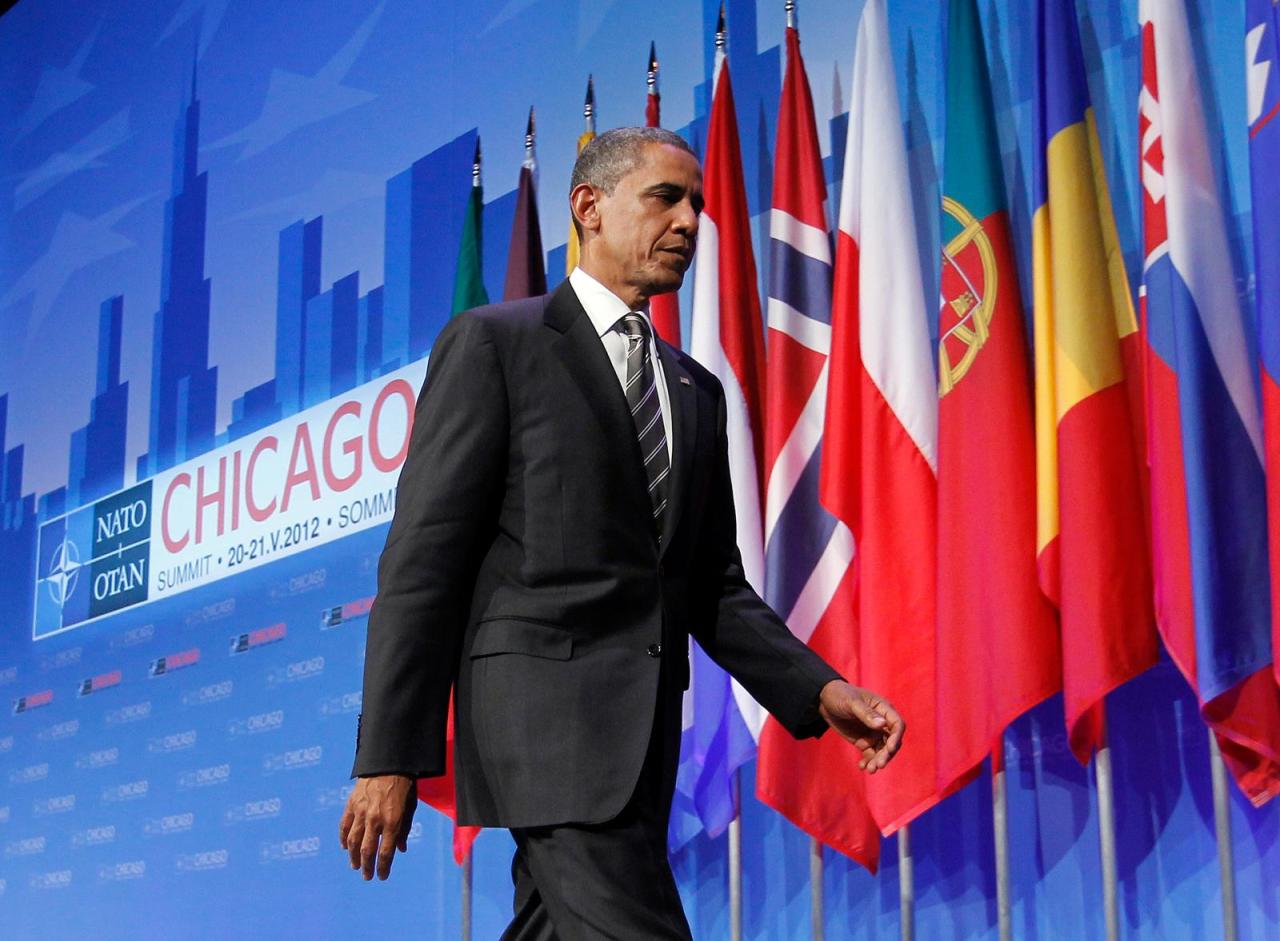
The rift between the US and Pakistan deepened on Monday as the Nato summit in Chicago broke up without a deal on Afghanistan supply routes.

Barack Obama, at a press conference to wind up the summit, made no attempt to conceal his exasperation, issuing a pointed warning to Pakistan it was in its wider interest to work with the US to avoid being “consumed” by extremists.

Seldom in recent years have the tensions between Washington and Islamabad been on public show to the extent as at the Chicago, overshadowing the two-day Nato summit.

The main point of friction is Pakistan’s closure of Nato supply routes to Afghanistan in protest over drone attacks and a US air strike in November that killed two dozen Pakistani troops.

Obama refused to make time during the two-day summit to see the Pakistan president Asif Ali Zardari for a face-to-face bilateral meeting. In a press conference, Obama made a point of stressing that the only exchange he had with his Pakistani counterpart was short. “Very brief, as we were walking into the summit,” Obama said.

The US president said he “did not want to paper over the cracks” and that there has been tension between the US-led international force in Afghanistan and Pakistan over the last few months.

But ultimately, it was in the US interest to have a stable, democratic and prosperous Pakistan, Obama said, adding it was in the interest of Pakistan to work with the US to ensure it is not consumed by extremists.

There are fears in the US that the Pakistan government is unstable and that the government could fall, to be replaced by hardliners. The risk for Obama is displaying his annoyance with Pakistan at the Chicago summit is that Zardari could leave the summit feeling humiliated and even less willing to play a positive role over Afghanistan.

Obama declined to meet Zadari one-to-one because Pakistan is refusing to re-open its Afghanistan border to Nato, which means the US and others are having to resupply their military forces through the slower and more expensive routes from the north and Russia.

The president claimed that he never anticipated the Pakistan supply line issue being resolved at the summit and, taking a more optimistic view of the stand-off, he said they were making “diligent progress”.

“We think that Pakistan has to be part of the solution in Afghanistan. Neither country is going to have the kind of security, stability and prosperity that it needs unless they can resolve some of these outstanding issues,” Obama said.

The British prime minister, David Cameron, at a press conference in Chicago, reflected the irritation with Pakistan, describing the blocked routes as “frustrating”. Cameron said he expected a deal eventually but not at the summit.

In its final communique, Nato formally committed to its withdrawal of the 130,000-strong force from Afghanistan based on a timetable agreed earlier by Obama and Karzai. All international combat troops would be withdrawn by the end of 2014. But the communique said a smaller force would remain to help “train, advise and assist” the Afghan army.

The communique does not say how many troops will be left but US commanders in Kabul are looking at a Nato force of around 15,000-20,000. Reflecting the public mood in Nato countries tired of the war, the comminque said the withdrawal timetable is “irreversible”.

Obama, at the opening of the second day of the Nato summit on Monday morning, showed his displeasure with the Pakistan government by singling out for mention the Central Asia countries and Russia that have stepped in to replace the Pakistan supply route and made no mention of Pakistan. Zardari was in the room at the time.

To ram home the point, the US defence secretary, Leon Panetta, also held a meeting at the Nato summit with senior ministers from Kazakhstan, the Kyrgyz Republic, Tajikistan, Turkmenistan, and Uzbekistan. Panetta expressed his “deep appreciation” for their support.

Zardari has demanded an apology from the US for the killing of the 24 Pakistani troops in November in return for reopening supply lines. He is also proposing that the tariff for each vehicle be raised from $250 to $5,000. The US is bitter about this, noting the amount of American military and other aid that goes to Pakistan annually.

In his wrap-up press conference, Obama stood praised the Chicago police for their handling of the demonstrations but also defended the rights of the protesters. “This is part of what Nato defends: free speech and freedom of assembly,” Obama said.

Pakistan Blocks Twitter Over Cartoon Contest

By Salman Masood for The New York Times

The Pakistani government blocked access to the social networking service Twitter on Sunday, after publicly holding Twitter responsible for promoting a blasphemous cartoon contest taking place on Facebook, officials said.

A government spokesman was quoted by local news media as saying that the government had been in talks with Twitter to remove “objectionable” material but that there had been no results.

“The material was promoting a competition on Facebook to post images of Islam’s Prophet Muhammad,” said Mohammad Yaseen, chairman of the Pakistan Telecommunication’s Authority, was quoted as saying. He was also quoted as saying that Facebook had agreed to allay the concerns of the Pakistani government.

Blasphemy is an issue that roils sentiment easily in Pakistan. Blasphemy allegations have often resulted in violent riots, and religious minorities in Pakistan have long maintained that the country’s blasphemy laws are used to settle personal scores.

Facebook was banned for two weeks in 2010 after protests erupted in the country over a similar cartoon contest on Facebook to draw the Prophet Muhammad. After a high court ordered the government to ban Facebook, the government was quick to ban YouTube and hundreds of other Web sites and services.

Speculation that the government intended to suspended Facebook and Twitter again had been swirling around for the past couple of days. However, this time around there have been no major public protests over the contest that Pakistani officials have expressed concerns about.

The ban has caught Twitter users by surprise.

“I never heard of any caricatures on Twitter,” said Arif Rafiq, an adjunct scholar at Middle East Institute and a commentator on Pakistani politics, who has a Twitter following of more than 10,000 users. “Now this ban will be promoting whatever caricatures were posted on it.”

Responding to a question last night, Rehman Malik, the country’s interior minister, had denied that ban on social networking sites was in the offing.

“The government of Pakistan’s ban on Twitter is ill advised, counterproductive and will ultimately prove to be futile as all such attempts at censorship have proved to be,” said Ali Dayan Hasan, Pakistan director at Human Rights Watch, in a press statement. “The right to free speech is nonnegotiable, and if Pakistan is the rights-respecting democracy it claims to be, this ban must be lifted forthwith. Free speech can and should only be countered with free speech.”

Critics said that the blocking of the micro-blogging site could actually be a part of longstanding government plan to muzzle media freedom and could be related to the vociferous opposition and criticism that is heaped on the country’s security apparatus in Twitter debates.

“Twitter is a place where fierce opposition to Pakistan’s security agencies is expressed,” said Raza Rumi, a widely read columnist and an adviser at the Jinnah Institute, a public policy center based in Islamabad.

“There is a clear trend,” Mr. Rumi said, “that the Pakistani military and spy agency get a strong critique from Pakistanis themselves, something that does not happen in mainstream media where people are generally shy to express such views.”

Activists supporting minority rights have established a strong voice on Twitter, and advocates for the Baluch people, who are demanding greater rights and a share of the natural-resources wealth in the southwestern province of Baluchistan, have also used it to spread their message.

Panetta to Confront Pakistan at NATO Summit on Transport Costs

By David Cloud for New York Daily News

Defense Secretary Leon E. Panetta heads to this weekend’s NATO summit prepared to confront Pakistan over what he considers price-gouging for transport of supplies to Afghanistan and hoping for a “consensus” among allies over the war effort.

In an interview before his arrival in Chicago, where the summit is scheduled to begin Sunday, Panetta all but ruled out paying Pakistan $5,000 for each truck carrying supplies across its territory for NATO troops waging the Afghanistan war. Pakistani officials have demanded that amount as a condition for reopening supply routes that have been closed to the alliance since fall.

“Considering the financial challenges that we’re facing, that’s not likely,” Panetta said of the demand.

Before the supply routes were closed in November after a mistaken U.S. attack on two remote Pakistani border posts that killed two dozen Pakistani troops, NATO convoys were paying an average of about $250 a truck, a senior U.S. official said.

U.S. officials say they remain hopeful they can resolve the dispute, perhaps at the summit. Pakistani President Asif Ali Zardari accepted a last-minute invitation to attend the meetings, although he is not expected to meet one-on-one with President Obama, officials said.

Thousands of trucks a day carrying supplies would go through multiple border crossings from Pakistan to Afghanistan, making the fees a potentially massive source of revenue for the cash-strapped government in Islamabad.

The U.S. has shifted deliveries to different routes through Russia and other countries to Afghanistan’s north. But the massive withdrawals of equipment due to unfold over the next 21/2 years as troops leave the country will be “significantly” more difficult if routes in Pakistan aren’t used, the Pentagon acknowledged in a report last month.

The Obama administration hopes the two-day summit will highlight what Panetta called a “consensus” within NATO about how to disengage militarily by the end of 2014. Exhausted after more than a decade of war, the U.S. and its allies want to hand off responsibility for fighting the Taliban to Afghan President Hamid Karzai’s government, even though its army and police remain well short of being able to stand on their own.

“Everybody in the alliance recognizes that for this to work, we can’t pick up and leave. We’ve got to remain there to provide support and to assist them in that effort with training, with assistance, with advice,” Panetta said.

But he acknowledged that there would be difficulties, both on the battlefield and within the alliance. Those splits are exemplified by the new French president, Francois Hollande, the Socialist Party leader who campaigned on a vow to withdraw all 3,300 French troops by the end of this year. Hollande met with Obama at the White House on Friday.

Panetta, who plans to meet the new French defense minister, Jean-Yves Le Drian, in Chicago, indicated that the U.S. hopes France will agree to keep some forces in a noncombat role in Afghanistan for the next 2 1/2 years, even if they withdraw all combat troops early.

Yet a more rapid exit by France than planned could lead other allies to speed up their own troop withdrawals.

“There are some countries — Canada, France — that want to bring their combat operations to an end on a faster time track, but that doesn’t have to mean they won’t accept the responsibility to continue to provide the needed support,” Panetta said.

Panetta acknowledged that U.S. efforts to persuade other countries to make long-term financial pledges to fund Afghanistan’s army and police, a key objective of the two-day Chicago summit, is running into difficulties.

“Of course, it’s not easy considering the financial difficulties that a lot of these countries are going through,” he said. “Many of them have come forward and said they would be willing to make a commitment, and I really do think we will be able to achieve the support levels we need.”

In an effort to secure more pledges, the U.S. is asking other countries to commit to providing aid for only three years, though Afghanistan’s armed forces are expected to need foreign assistance for at least a decade, a Western diplomat in Washington said.

A year ago, the Obama administration was hopeful it could draw the Taliban into peace negotiations with Karzai’s government, but Panetta acknowledged that he didn’t see a deal to end the conflict happening “any time soon.”

India, Pakistan Ties Hinge on Hope

By Mir Ayoob Ali Khan for The Times of India

When hope is lost, everything seems to be lost. But when we hear the adage, Ummid pe dunya khayam hai (the world stands on hope), we visualize a ray of light at the end of a tunnel.

The rollercoaster ties between India and Pakistan are an unending reading in despair. It is hope that makes people believe that one day, some day, we will live like good neighbours. That someday becomes believably close when we hear that Indian and Pakistani politicians, officials and members of the civil society are ‘seriously’ talking about the benefits of developing stronger economic and commercial links between the two nations. Or, when the Supreme Court of India allows aging Pakistani virologist Mohammed Khalil Chishti, a murder convict, to visit his hometown Karachi.

It is an unprecedented move by the Supreme Court which took a humane approach in a murder case. The apex court spoke of Chishti’s age (82), his global reputation as an accomplished microbiologist and his previous clean record to say that he is free to go to his country but on certain conditions. He should be back in India in November to face trial in court. Though the Supreme Court’s order is solely based on the prudence of the judges, there is hope that Islamabad would show some reciprocation with regard to Indians stranded in Pakistan prisons. For instance, many are waiting to see if they would free Sarabjit Singh, an Indian convicted of life imprisonment in a case of mistaken identity.

Chishti and Singh have been in the public eye owing to the extensive coverage of their plight in the media. However, there are numerous Indians languishing in Pakistani prisons and vice versa who have hardly been covered by any media agency or their cases taken up by any human rights organization seriously. They too deserve attention as their loved ones are waiting to see them. In the meantime, the air over India and Pakistan is thick with hope that the two countries are about to enter into a new era of trade and commercial cooperation. Activity in this direction gained momentum ever since Pakistan decided to give the MFN-the Most Favoured Nation-status to India last year.

The two sides have realised that the trade volume was a paltry $2.6 billion in the year ending 2011. Officials and members of the trading community believe that this could be taken to $10 billion to $12 billion in the next three to five years. In the forefront of trade with Pakistan which is expected to grow in the coming weeks, not years, are tomatoes from Maharashtra. About 4,000 trucks carrying tomatoes have crossed over to Pakistan in the past three months. Lorries containing soya beans followed. Not to lag behind, Pakistan has started exporting cement and other construction material to India. Talks are on to allow 8,000 items from Pakistan to enter India in the next couple of years.

Hope is now fuelled by the foundation laying of an oil refinery in Bathinda, a town in Punjab which is160 km from Lahore, by billionaire Lakshmi Mittal and Indian Oil Company Ltd costing $4 billion. Pakistan that is already importing kerosene and diesel from India is hungry for petroleum products. The refinery in Punjab and another one owned by the Reliance Group in Gujarat which is close to Karachi could meet the fuel needs of Pakistan, at least to some extent. There are also talks to dismantle hurdles in matters pertaining to education and IT sectors, visa regimes, especially for the business community and tourists, opening of more land and air trade routes.

In India-Pakistan relations, hope is the key word. Let’s hope that it becomes a reality extending benefits to the people of the two neighbouring nations.