Archive for the ‘ Pakistanis ’ Category

Judge Grants Bail to Young Christian Girl Accused of Blasphemy in Pakistan

As Reported by The Associated Press

A Pakistani judge granted bail Friday to a young, mentally challenged Christian girl accused of insulting Islam for burning pages of the religion’s holy book. Rights activists welcomed the decision after calling for her release since she was arrested three weeks ago.

The case has focused attention on Pakistan’s harsh blasphemy laws, which activists claim are used to persecute minorities and settle personal vendettas.

Judge Mohammed Azam Khan set bail at 1 million Pakistani rupees, or about $10,500, a significant sum in a country where many families live on only a few dollars a day. The girl’s impoverished family may need outside financial support to free her.

The young girl, who is reported to be 14 years old and suffering from some form of mental impairment, was arrested after an angry mob showed up at a police station in her neighborhood in Islamabad and accused her of burning pages from the Quran, an act punishable by life in prison under the country’s harsh blasphemy laws. Her lawyer has denied the allegation.

In an unusual twist, police arrested a Muslim cleric from her neighborhood a week ago after a follower from his mosque accused him of stashing pages of a Quran in her bag to make it seem as if she burned them. He allegedly planted the evidence to push Christians out of the neighborhood and is now being investigated for blasphemy himself. He has denied the allegation.

The head of Human Rights Watch in Pakistan, Ali Dayan Hasan, praised the judge’s decision to grant the young girl bail.

“The fact is that this child should not have been behind bars at all,” Hasan said. “All charges against her should be dropped, and Pakistan’s criminal justice system should instead concentrate on holding her accuser accountable for inciting violence against the child and members of the local Christian community.”

Hasan added, “Human Rights Watch hopes that the blatant abuse that has come to light in this case will lead to a considered re-examination of the law, and all stake-holders in Pakistan will actively seek to end frequent abuses perpetrated under cover of blasphemy allegations.”

Is Pakistan’s Hard Line on Blasphemy Softening?

By William Dalrymple for The Guardian

It is rare these days to read any good news coming out of Pakistan. It is rarer still to read good news concerning matters of religion. However, in one week two stories seem to show that Pakistan is for once bringing the force of law to bear on those who abuse religion to provoke violence against minorities.

Last Sunday Mohammed Khalid Chisti, the mullah who had accused a 14-year-old Christian girl, Rimsha Masih, of blasphemy, was himself arrested and charged with the same law. The turnaround took place after the muezzin of his mosque gave evidence that he had framed the girl and falsified evidence. More remarkable still, the far-from- moderate All Pakistan Ulema Council came to Rimsha’s defence, calling her “a daughter of the nation” and denouncing Chisthi: “Our heads are bowed with shame for what he did.”

On Tuesday an even more unexpected event took place. Malik Ishaq, the leader of the banned Sunni terrorist group Lashkar–e-Jhangvi, which is accused of killing hundreds of Shias, was arrested on his return from a fund-raising trip to Saudi Arabia. Lashkar operates quite openly in Lahore despite being officially banned; yet on this occasion Ishaq was immediately brought to court. There he was accused of involvement in more than 40 cases in which 70 people have been killed. He now resides in Kot Lakhpat jail on 14-day judicial remand.

When Pakistan was created in 1947 as a homeland for Indian Muslims, its clean-shaven, tweed-jacketed, spats-wearing and pork-eating founder, Muhammad Ali Jinnah, made sure the constitution of his new country provided the right for all its citizens to profess, practise and propagate their religion: “You may belong to any religion, caste or creed,” he said in his first address to the constituent assembly of Pakistan on August 11 1947. “That has nothing to do with the business of the state. In due course of time Hindus will cease to be Hindus and Muslims will cease to be Muslims – not in a religious sense, for that is the personal faith of an individual – but in the political sense as citizens of one state.”

It was Zulfikar Ali Bhutto who started the rot. In 1974 he bowed to pressure from the religious right and had the country’s small Ahmedi minority declared non-Muslim. The situation became worse still in the 1980s with the military coup of General Zia. Zia was responsible for initiating the fatal alliance between the conservative military and the equally reactionary mullahs that led to the use of Islamic radicals as part of state policy. At the same time Zia started tinkering with the law. He introduced the Islamic punishment of amputation for theft, and established the Hudood ordinances of sharia law, which asserted that the evidence of one man was equal to that of two women, and made any sex outside marriage a punishable offence for women. Rape was to be punished with the public flogging of the female victim as well as the perpetrator.

Between 1982 and 1986 Zia introduced radical changes to Pakistan’s blasphemy laws – the notorious sections 295 B and C of the penal code – prescribing life imprisonment for anyone who defiles a copy of the Qur’an and death for insulting or criticising the prophet Muhammad. Because there is no strict definition of blasphemy, and virtually no evidence above the word of the accuser is needed to bring a guilty verdict, the laws have often been exploited by individuals with grudges against innocent non-Muslims. In 1988 Bishop John Joseph of Faisalabad publicly committed suicide to protest against the laws; and although no one has yet been executed under the statutes, an estimated 1,200 to 4,000 blasphemy cases have been filed. The number of cases has multiplied in recent years, and the result is often prison sentences of three years or more.

Christians are widely derided in Pakistan; most are descended from “untouchable” converts who still perform the most menial tasks: cleaning the sewers and sweeping the streets. There has been a steady stream of attacks on the community, most bloodily in the murder of 16 Christians at a church in Bahawalpur in 2001. But it is not just Christians who have suffered. Hysteria about blasphemy has also been used to target Hindus, Sikhs, Ahmadis and Shias. In addition to formal convictions, there were at least 34 extrajudicial killings of people accused of blasphemy between 1990 and 2010. Of those, 15 were Muslim, 16 Christians, two Ahmadis and a Hindu. Indeed it is the Shias, not the Christians, who have suffered the brunt of the violence meted out by Lashkar–e-Jhangvi.

The high-water mark for religious intolerance in Pakistan was reached last year when the former governor of the Punjab, Salman Taseer, and the only Christian minister in the government, Shahbaz Bhatti, were both shot dead for suggesting that the blasphemy laws should be reviewed. Last week’s turnaround seems to represent a dawning realisation that things had gone too far – that a descent into mob violence was imminent. “There has been some genuine remorse on the right,” Pakistan’s leading human rights lawyer Asma Jahangir told me. “They realised a line had been crossed.”

This is certainly good news, but it is only a beginning. Rishma remains in custody and Malik Ishaq has yet to be convicted. “I am not optimistic that the laws will be repealed,” says Jahangir. “In fact, you cannot even discuss it.” While politicians such as Imran Khan have bravely called Rishma’s arrest “shameful … against the very spirit of Islam”, neither he nor any other major political figure has called for an outright repeal of the blasphemy laws. Nor, given the fate of Salman Taseer, are they likely to any time soon.

And as long as the laws remain on the statute books, cases like these will continue to occur, and major injustices will continue to be perpetrated on all of Pakistan’s religious minorities.

Pakistan Should Abolish Overly-Abused Blasphemy Laws

By Arsalan Iftikhar for The Washington Post

My grandfather was one of the most well-known literary figures in Pakistan’s history and once famously told me that, “Anger is the most extravagant luxury in the world.” I am always reminded of my beloved grandfather’s poignant sentiment whenever I read stories about death sentences being meted out in accordance with Pakistan’s blasphemy laws; with the most recent example being the case of an 11-year-old Christian girl in Pakistan who is facing blasphemy charges for allegedly burning pages of the Koran in rural Pakistan.

The child was arrested last week in a Christian area of the capital Islamabad, after a crowd of people demanded that she be punished for allegedly desecrating pages of the Muslim holy book. According to BBC News, it is not clear whether she burned pages of the Koran or was just found to be carrying them in her bag. Additionally, the BBC reported that doctors in Pakistan have examined this young Christian to further determine her mental capacity (some unconfirmed reports stated that she has Down’s Syndrome), with the results due to be presented in a Pakistani court in the coming days.

Pakistan’s Minister for National Harmony, Paul Bhatti, has said she is innocent of the charges and should be released. Shortly after her arrest, Bhatti told BBC News that, “The police were initially reluctant to arrest her, but they came under a lot of pressure from a very large crowd who were threatening to burn down Christian homes.”

As an international human rights lawyer, it is my personal belief that Pakistan’s blasphemy laws are one of the most obvious obstacles preventing the nation of Pakistan from protecting its religious minorities (including members of the Christian, Hindu and Ahmadiyya communities). According to Pakistan’s penal code, here are the primary sections dealing with blasphemy charges and their potential criminal punishments:

“Whoever will fully defiles, damages or desecrates a copy of the Holy Koran or of an extract therefrom or uses it in any derogatory manner or for any unlawful purpose shall be punishable for imprisonment for life. Whoever by words, either spoken or written or by visible representation, or by any imputation, innuendo, or insinuation, directly or indirectly, defiles the sacred name of the Holy Prophet Mohammed (peace be upon him) shall be punished with death, or imprisonment for life, and shall also be liable to fine.”

In recent times, these controversial blasphemy laws in Pakistan have created major international headlines and generated debate across the globe. In November 2010, a Pakistani Christian female laborer named Asia Bibi was sentenced to death after a fellow worker accused her of insulting Islam. Her sentence is under appeal, and Bibi is still in jail. Only a few months after Bibi’s death sentence, provincial Gov. Salman Taseer and Federal Minister Shahbaz Bhatti – both prominent Pakistani politicians – were assassinated in cold blood after public calls to amend the blasphemy laws.

CNN also further reported that militants attacked two mosques in May 2010 and killed more than 90 worshipers of the Ahmadiya sect, a minority Muslim group often “viewed as heretics and blasphemers by hardline Sunnis” in Pakistan.

As a proud and practicing Muslim, I have written previously on “blasphemy” issues insulting Islam around the world and how modern Muslim societies should respond to such controversies. Most Muslims are aware of a well-known Islamic parable which tells the story of the prophet Muhammad and his daily interactions with an unruly female neighbor who used to curse him violently and then proceed to dump garbage onto him every day from her perch-top window each time he would ever walk by her house.

One day, prophet Muhammad noticed that the woman was not present to throw garbage outside of her window. In an act of true prophetic kindness, he actually went out of his way to inquire about her well-being and then proceeded to visit his hostile neighbor at her bedside inside of her own home when had found out that she had fallen sick.

This genteel act of prophetic kindness toward unfriendly (and overtly hostile) neighbors is the truly Muslim and Islamic standard that we should all use within our collective lives, not threats of violence and/or death sentences which disparately impact religious minorities in Muslim-majority nations. After all, if our prophet Muhammad treated those who cursed him with kindness, shouldn’t other Muslims do exactly the same?

Thus, although Pakistan has a very long way to go in terms of protecting religious minorities within their national borders, it can take a giant step in the right direction by abolishing its overly-abused blasphemy laws and show compassion to people of other religions, something that Islam’s prophet taught us over 1,400 years ago.

Arsalan Iftikhar is an international human rights lawyer, founder of TheMuslimGuy.com and author of “Islamic Pacifism: Global Muslims in the Post-Osama Era.”

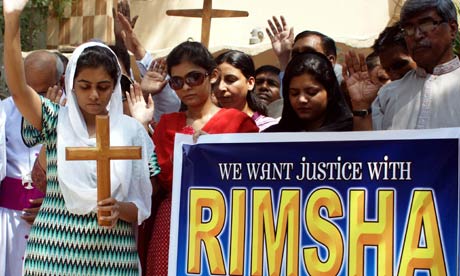
Free Rimsha Masih Now and End The Blasphemy Law Witch Hunts in Pakistan

The latest victim of Pakistan’s blasphemy laws, is an 11 year old girl suffering from Downs Syndrome. Rimshah Masih screamed pitifully as she was brutally snatched from her mother by an angry mob intent on killing her. Burnt religious texts had been mischievously planted in a bag she was carrying. We call on the Pakistani Government to take action to stop the ongoing discrimination, persecution and hatred towards minorities living there. We call on the Britisha Government the EU and the Un to intervene on behalf of this poor child and to bring about her freedom.

To bring an end to hatred towards minority faiths in conservative Pakistan and to defend otherwise helpless victims like Rimsha please sign the petition below: http://www.petitionbuzz.com/petitions/freerimshamasih

This petition will be sent to the Pakistan Government at the highest levels.

“Whilst the Burmese’s treatment of the Rohingya is indeed appalling and deserves condemnation, our minorities are living in their very own Burma right here in Pakistan.

“As the rest of the country goes about its way, having just celebrated another joyous Eid, spare a thought for a little girl with special needs, languishing in a juvenile jail.

“She is probably all alone, and scared. With her condition, she very well might not even know the reason she is in there.

“But ask her neighbours, some who are frothing at the teeth to have a go at her, and they will tell you that she deserves to die.

“Rimsha Masih, an 11-year-old Pakistani girl of the Christian faith, who reportedly suffers from Down Syndrome, was arrested on allegations that she had desecrated the Holy Quran.

“The girl and her mother were severely beaten by an enraged mob that had converged outside their house, while the rest of her family managed to flee. If the police had not intervened, there is no telling what else could have happened….”

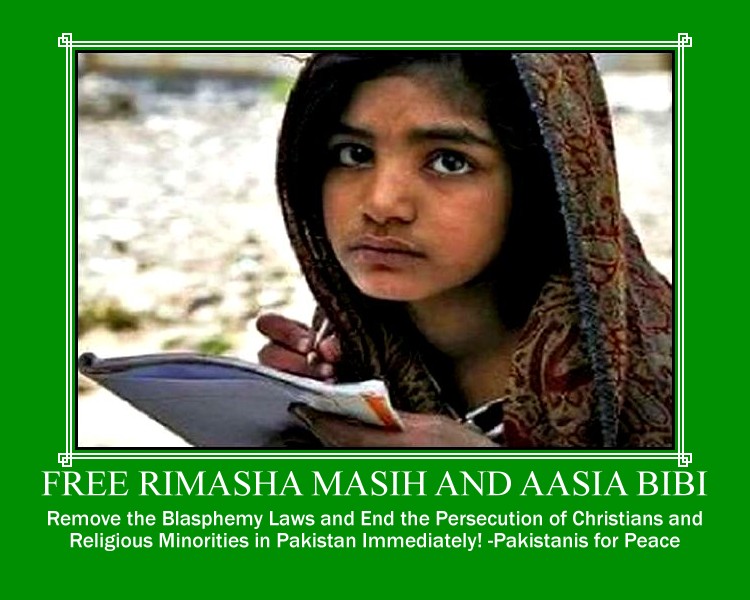
Please sign the petition and help free Rimsha and Aasia Bibi and put an end to Pakistan’s Blasphemy Laws.

Pakistan Police Arrest Christian Girl After Angry Neighbors Accuse Her of Burning the Quran

By Munir Ahmed, Zarar Khan and Matthew Lee for The Associated Press

A Christian girl was sent to a Pakistani prison after being accused by her furious Muslim neighbors of burning pages of the Islamic holy book, the Quran, in violation of the country’s strict blasphemy laws.

A police official said Monday there was little evidence that pages of the book had been burned and that the case would likely be dropped. But hundreds of angry neighbors gathered outside the girl’s home last week demanding action in a case raising new concerns about religious extremism in this conservative Muslim country.

Some human rights officials and media reports said the girl was mentally handicapped. Police gave conflicting reports of her age as 11 and 16.

Under Pakistan’s blasphemy laws, anyone found guilty of insulting Islam’s Prophet Muhammad or defiling the holy book, or Quran, can face life in prison or even execution. Critics say the laws are often misused to harass non-Muslims or target individuals.

Police put the girl in jail for 14 days on Thursday after neighbors said they believed a Christian girl had burned pages of a Quran, gathering outside her house in a poor outlying district of Islamabad, said police officer Zabi Ullah. He suggested she was being held for her protection.

“About 500 to 600 people had gathered outside her house in Islamabad and they were very emotional, angry and they might have harmed her if we had not quickly reacted,” Ullah said.

Almost everyone in the girl’s neighborhood insisted she had burned the Quran’s pages, even though police said they had found no evidence of it. One police official, Qasim Niazi, said when the girl was brought to the police station, she had a shopping bag that contained various religious and Arabic-language papers that had been partly burned, but there was no Quran.

Some residents claimed they actually saw burnt pages of Quran — either at the local mosque or at the girl’s house. Few people in Pakistan actually speak or read Arabic, so often assume that anything they see with Arabic script is believed to be from the Quran, sometimes the only Arabic-language book people have seen.

But one police officer familiar with the girl’s case said the matter would likely be dropped once the investigation is completed and the atmosphere is defused, saying there was “nothing much to the case.” He did not want to be identified due to the sensitivity of the case.

A spokesperson for Pakistani President Asif Ali Zardari, Farhatullah Babar, said the president has taken “serious note” of reports of the girl’s arrest and has asked the Interior Ministry to look into the case.

In Washington, State Department spokeswoman Victoria Nuland called the case “deeply disturbing”.

“We urge the government of Pakistan to protect not just its religious minority citizens but also women and girls,” she said.

The Associated Press is withholding the girl’s name; the AP does not generally identify juveniles under 18 who are accused of crimes.

The case demonstrates the deep emotion that suspected blasphemy cases can evoke in a country where religion Many critics say the blasphemy laws are often abused.

“It has been exploited by individuals to settle personal scores, to grab land, to violate the rights of non-Muslims, to basically harass them,” said the head of the Human Rights Commission of Pakistan, Zora Yusuf.

Those convicted of blasphemy can spend years in prison and often face mob justice by extremists when they finally do get out. In July, thousands of people dragged a man accused of desecrating the Quran from a police station in the central city of Bahawalpur, beat him to death and then set his body on fire.

Attempts to revoke or alter the blasphemy laws have been met with violent opposition. Last year, two prominent political figures who spoke out against the laws were killed in attacks that basically ended any attempts at reform.

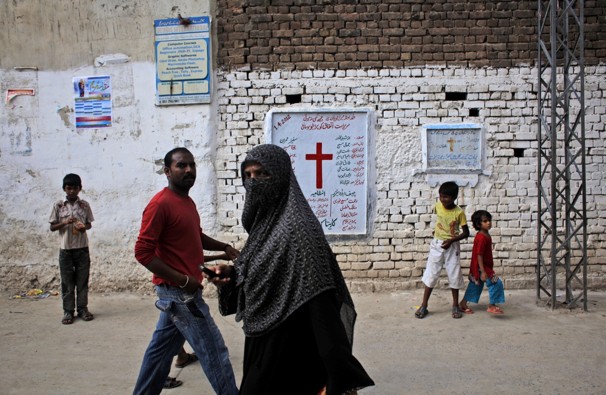
The girl’s jailing terrified her Christian neighbors, many of whom left their homes in fear after the incident. One resident said Muslims used to object to the noise when Christians sang songs during their services. After the girl was accused he said senior members of the Muslim community pressured landlords to evict Christian tenants.

But Muslim residents insisted they treated their neighbors with respect, and said Christians needed to respect Islamic traditions and culture.

“Their priest should tell them that they should respect the call for prayer. They should respect the mosque and the Quran,” said Haji Pervez, one of several Muslims gathered at the local mosque less than 100 yards (meters) from the grey concrete house where the Christian girl lived.

“This is what should have happened. We are standing in the house of God. This incident has happened and it is true. It was not good.”

“Even a 3-year-old, 4-year-old child knows: “This is Muslim. This is Christian. This is our religion,” said shopkeeper Mohammed Ilyas.

Pakistanis for Peace Editor’s Note– The case of this young Christian girl is reminiscent of the case of Aasia Bibi and many other lesser known unfortunate people who have been arrested under Pakistan’s ridiculous blasphemy laws. These laws are draconian and have no place in the country’s judicial system serving only to intimidate Pakistan’s religious minorities and giving the zealots an official tool to harass the country’s Christians, Hindus and other minorities. As we have done before, we call on the government of Pakistan to do the right thing and strike these absurd laws from the books and free the individuals who have been imprisoned under these laws.

The Water Car Fraud

By Pervez Hudbooy for The Express Tribune


Agha Waqar Ahmad deserves a medal from the people of Pakistan for his great service to the nation. In a few short days, he has exposed just how far Pakistan has fallen into the pit of ignorance and self-delusion. No practical joker could have demonstrated more dramatically the true nature of our country’s political leaders, popular TV anchors and famed scientists.

At first, it sounded like a joke: a self-styled engineer, trained in Khairpur’s polytechnic institute, claims to have invented a ‘water kit’ enabling any car to run on water alone. It didn’t matter that the rest of world couldn’t extract energy from water; he had done it. He promised a new Pakistan with limitless energy, no need for petrol or gas, and no more loadshedding. For an energy starved nation, it is a vision of paradise.
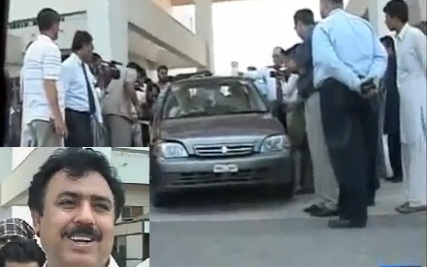
Agha Waqar Ahmad is now a national celebrity thanks to Religious Affairs Minister Khursheed Shah. Federal ministers Mir Hazar Khan Bijarani and

Qamar Zaman Kaira have added their commendations. President Asif Ali Zardari has expressed his delight. The cabinet has met three times to discuss the water vehicle, and a fourth meeting is scheduled. Reports suggest millions may be spent on the ‘water fuel kit project’.
The media has rushed in to celebrate the new national hero. For TV anchor Talat Husain, thanks to Agha Waqar Ahmad’s invention, Pakistan’s image can go from a country ravaged by terrorism to one of boundless possibilities. Anchor Hamid Mir and Senator Parvaiz Rasheed drove around Islamabad sitting next to the inventor, wondering how to protect the man’s life from Western oil companies. Anchor Arshad Sharif was euphoric about the $14 billion Pakistan would save on oil imports.

Pakistan’s most celebrated scientists were not far behind. Asked by Anchor Sharif whether a car could run only on water, nuclear hero Dr Samar Mubarakmand replied without hesitation: “jee haan, bilkul ho sakta hai” (yes, absolutely possible). For his part, Hamid Mir asked Dr AQ Khan if there was any chance of this being a fraud. The response was clear: “Main nay apnay level per investigate kiya hai aur koi fraud waraud nahi kiya hai” (I have investigated the matter and there is no fraud involved). The head of the Pakistan Council of Scientific and Industrial Research, Dr Shaukat Parvaiz, went further: “hum nay bhi iss pay kam karaya tha” (we had some work done on this too).

So, what is the problem? It’s that the laws of physics, in particular a fundamental scientific principle known as the Second Law of Thermodynamics, impose inviolable constraints. Every machine constructed anywhere uses the Second Law. This is something that I learned in my first year as a student at MIT and have taught for 40 years. No serious scientist would dream of challenging the Second Law. Agha Waqar Ahmad’s ‘water kit’, if one believes science to be right, simply cannot work. What the inventor, the ministers, the anchors and scientists claim on TV is wrong.

To his credit, the only person on TV that seemed to know this elementary principle was Dr Attaur Rahman, a chemist and a former HEC chairman. I have not agreed with all his actions and views in the past, but he alone rejected the claims about the new machine. Sadly, he was not able to hold back the tide of a nation desperate for any answer to its energy woes.

The water fraud will be exposed soon enough and, like a bad posterior smell, will go away. A simple experiment will make this happen faster. Here’s how: take an emergency electricity generator, of which there are thousands in Islamabad. Its engine is similar to that in a car. Remove the fuel tank and make sure the ‘water kit’ contains only water. Then ask the inventor to connect it up and run the generator. Let there be enough sharp-eyed witnesses of intelligence and integrity.

But this episode raises bigger questions. Scientific frauds exist in other countries, but what explains their spectacular success in Pakistan? Answer: our leaders are lost in the dark, fumbling desperately for a miracle; our media is chasing spectacle, not truth; and our great scientists care more about being important than about evidence. It is easy for them all to get away with this. As a nation, we have proven unwilling to do the hard work needed to learn to reason, to be sceptical, to demand proof, to understand even basic science. It is easier to believe the world is run by magic and conspiracies, to wish and wait for Aladin’s magic lamp. We live in the age of jahilliya.

Pakistanis for Peace Editor’s Note– No Kidding and well said Professor Hoodboy when you mention in the article that: “Pakistan has fallen into the pit of ignorance and self-delusion” We think so too and may God help us all!

Mango Mania

By Huma Yusuf for The International Herald Tribune

KARACHI — Summers in the city — and across much of Pakistan — are relentless. Temperatures typically hit 100 degrees, power outages drag on for hours, heatstroke is common, and while monsoon rains bring some relief, they bring great ruin through widespread flooding. But there is one thing that makes Pakistanis anticipate the torpid summer months — mangoes.

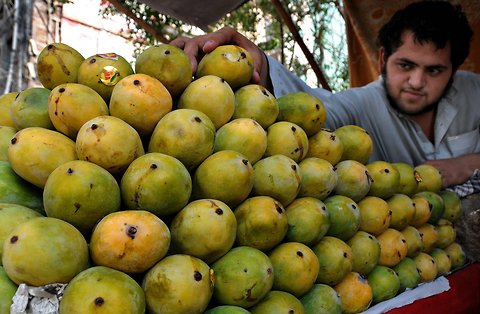
With their golden yellow, blushing pink and pale green hues coloring markets by the cart-full, Pakistani mangoes are a source of national joy and pride. But bad luck — and poor logistics — are now threatening Pakistan’s king of fruits.

The country is the fifth-largest producer and third-largest exporter of mangoes in the world. For as long as I can remember, mangoes have turned oppressive summers into seasons of celebration and amity. Friends and families share crates of the finest mangoes. Rival tribes exchange baskets to resolve arguments. Hotels and restaurants host mango festivals featuring mango puppets or 4-foot-high, mango-shaped cardboard cutouts strung with streamers.

Pakistan’s love affair with the mango is culturally ingrained. Mirza Ghalib, the foremost Urdu-language poet of the Mughal era, was an avid mango eater who measured his health and joie de vivre by the number of mangoes he was able to consume.

Nothing (except perhaps cricket) will stir Pakistani nationalism more than the suggestion that another country’s mangoes could taste half as good as Pakistan’s. The only point of contention is which of the country’s hundreds of mango varieties is the most delicious: chaunsa, langara, sindhri, anwar ratol? (My vote goes to the subtle and aromatic anwar ratol.)

Last summer, Pakistani growers were thrilled at the prospect of countries beyond Asia finally enjoying their mangoes. Not only did the British retailer Asda start stocking Pakistani mangoes, but the first-ever shipment of Pakistani mangoes arrived in the United States in July 2011 after USAID helped Pakistan to meet U.S. standards of pest control and post-harvest management. New exports to Western markets were expected to be a boon to local farmers.

But this summer’s crop has not met expectations — some mango varieties ripened too late in the season, others are too small or are lacking in taste or texture. Pakistan is now likely to fail to meet its mango export target of 150,000 tons by September, instead managing to export only 100,000 tons.

This is partly because of last year’s monsoon and subsequent flooding, which reduced mango productivity by 30 percent. According to some estimates, up to a quarter of all mango farms in the southern province of Sindh were completely washed out.

But a big part of the shortfall is due to poor logistical planning: containers needed to ship mangoes are in short supply; Pakistan International Airlines does not appear to have the proper infrastructure to make shipments; international shipping companies have transported mangoes to the wrong destination or failed to secure the fruit against damage or theft en route; a cumbersome distribution system has caused Pakistan to lose out in the Asian mango market to China and India. Meanwhile, U.N. sanctions against trade with Iran have also caused a loss of $10 million to Pakistan’s mango growers, who previously exported up to 40 percent of their crop to the neighboring country.

All this bodes poorly for the future. Meagre profits — or in some cases, losses — from exports, coupled with last year’s widespread damage to mango farms, could compromise future yields. This would be nothing less than tragic, especially given that a worsening economic and security situation means that there are ever fewer things for Pakistanis to enjoy.

I, for one, am not taking any chances. This summer, I’m scarfing down mangoes at every opportunity. But my real hope is that the Pakistani mango’s reign endures for many years to come.

Huma Yusuf is a columnist for the Pakistani newspaper Dawn and was the 2010-11 Pakistan Scholar at the Woodrow Wilson International Center for Scholars in Washington.

Pakistan Should Open Itself Up to India

By Aakar Patel for Firstpost

India and Pakistan have a reciprocal relationship. If one does something to the other, send back a spying diplomat for instance, the other imitates this and also sends one back. One country’s visa regime mirrors the other’s. We would rather harm ourselves by an act that is imitative than let the other side get away.

The world sees this behaviour as childish, perhaps rightly.

India acted maturely in opening up trade unilaterally a few years ago. This is why the shelves of Thom’s Cafe and Bakery, where I shop for groceries in Bangalore, are filled with Shan Masala boxes.

Now an opportunity exists for Pakistan to take the lead.

Islamabad should open up its borders and give Indian tourists visas on arrival. The same conditions under which Indians are allowed into Sri Lanka and Nepal and Bhutan. A quick stamp on the passport and that’s it.

Vast crowds of Indians will come to Pakistan.

Sikhs on pilgrimage to Nankana Sahib and to see Ranjit Singh’s masoleum (totally empty when I went there 10 years ago) next to Lahore fort.

Hindus who want to see the Indus, after which their country is named, and their faith. Muslims and Hindus who want to visit Pak Pattan, Data Saheb, and the shrines of Rukn-e-Alam and Bahauddin Zakariya.

Pakistanis will be amazed by how many Hindus worship at Muslim shrines. Punjabis will come and see the cities of Lahore and Pindi, of which they have only heard about from their grandparents. India’s wealthy Sindhi community will come to Sukkur, Hyderabad and Karachi.

Three Muslim communities – Memons, Bohras and Khojas – have their headquarters in India. They have family ties to Karachi and also business interests that will benefit from regular visits.

Deoband and Nadwa scholars can exchange views with Pakistan’s ulema.

The package tour business, which is big in India, will bring in large numbers who might see a Pakistan different from the one in their imagination. College and school excursions, which are also big in India, will find new venues to take their students to.

Bollywood will be interested in new settings to shoot, and access to the cities will open up plot-lines.

As an intelligent piece in The Friday Times a few years ago noted, Indian tourists will blend in, dress modestly, not expect too much, be at home with the food and do shopping on a healthy scale.

The exchange rate of the Pakistani Rupee, whose value is a little over half that of the Indian Rupee, will give them a bigger budget than they have at home.

The Hindu middle class, especially Bengali and Gujarati, are adventurous travellers and will not be easily put off by a couple of bomb blasts as westerners will. Because Indian women are not secluded, whole families will come, especially if non-airplane routes such as road and rail are opened. Pakistanis will not be threatened by middle aged Indian men and women with squealing kids about them.

It will not be possible, given the mischief in Mumbai and in Parliament, for India to freely let Pakistanis enter. So reciprocality must not be expected immediately. But that shouldn’t be seen as a problem.

Pakistan has already accepted a break in the tit-for-tat relationship. Pakistan’s cricket team is likely to play in India while there’s no chance that India’s players will come to Pakistan. No other cricketing nation is willing either and so it’s not about Indian obstinacy in this case. Just the circumstances, which can be altered by a little wisdom.

It’s a profitable opportunity for Pakistan to benefit economically, improve its image as a safe place and normalise relations with India. Three things gained while nothing is lost.

Pakistan should open itself up to Indians without waiting for reciprocity. And it should do this in self interest.

Pakistan and India to Resume Cricket Matches

By Michele Langevine Leiby for The Washington Post

Whatever their differences, Pakistanis and Indians love their cricket. Their armies might fight wars and their governments may deeply mistrust each other, but sports fans and politicians in both countries see a diplomatic bright spot: a series of matches this year between the historical rivals.

The Board of Control for Cricket in India announced last week that the country would resume matches with Pakistan for the first time in five years. They will be the first bilateral games between the countries since the 2008 Mumbai attacks, which India says were launched by Pakistani terrorists who have been protected from prosecution by Pakistan’s government.

Although dates and the venue are still being worked out, the prospect of a renewed sporting rivalry has stirred optimism for rapprochement in both capitals.

“I think this will be further cementing the bilateral relationship, which is improving by the day,” Indian Foreign Minister S.M. Krishna said. Krishna is planning a visit to Islamabad in September.

Pakistan’s president, Asif Ali Zardari, wrote a letter to Indian Prime Minister Manmohan Singh expressing hope that reviving cricket matches would improve trust between the two nations, the newspaper Dawn reported.

Pakistani cricket-star-turned-politician Imran Khan also weighed in. “Anything which can bring both the countries to negotiations and normalcy is very good, and we must appreciate that,” he said.

Khan, who is running for prime minister, captained the Pakistan cricket team to its 1992 World Cup championship.

Young Pakistanis and Indians — aided by social media and unhampered by the long and contentious history — have found other ways to interact. Facebook pages such as “Romancing the Border” offer a forum for college students from both sides to learn about each other.

But online messaging and cricket diplomacy may not have much impact on a fundamentally hostile relationship; India and Pakistan fought three wars and remain locked in conflict over control of Kashmir. Their militaries are faced off on the disputed Siachen Glacier, described as the world’s highest battleground, where more men are lost due to the brutal conditions than to actual combat. In April, an avalanche at the entry to the glacier buried dozens of Pakistanis, most of them soldiers.

Religion Journal: For Ramadan, India Goes it Alone

By Joanna Sugden for The Wall Street Journal

Muslims start the month-long daytime fast of Ramadan Friday. But not in India.

While most of the world’s Muslims look to Saudi Arabia or follow astronomical calculations to determine when the new moon of the ninth lunar month has arrived – marking the start of Ramadan – India follows the declaration of its own Central Moon Sighting Committee.

“Geographical differences mean we are a day behind Saudi Arabia in terms of lunar months, so we are expecting to start on Saturday,” says Syed Tariq Bukhari, a member of the committee and general secretary of the advisory council at Old Delhi’s Jama Masjid, one of the country’s most important mosques.

At sunset Friday, the 29th day of the eighth lunar month, 21 senior leaders from Delhi’s mosques will meet to decide whether the new moon has been sighted. In the Muslim calendar, months are either 29 or 30 days long.

“It is very difficult to spot a new moon, particularly on the 29th day of the month because it appears for a very short time and is a very thin sliver,” Mr. Bukhari said, adding that the best time to spot a new moon is half an hour before sunset.

“If naturally we are not able to see it because it’s cloudy then we coordinate with the other committees of other cities who have similar geographic circumstances,” Mr. Bukhari said.

The committee then waits for a Shahadah or Islamic witness who has seen the new moon. “The appearance of the witness should be according to Sharia law, which means having a beard and his neighbors should know him as a dependable person as far as being a witness is concerned,” Mr. Bukhari added.

If no credible Islamic witness comes forward, the committee waits until between 80 and 90 other witness statements on sightings are collected by moon sighting committees across the country. Then it declares the start of Ramadan.

If the moon isn’t sighted at all in the last days of the lunar month, the committee waits until the first day of the ninth lunar month – which this year is on Sunday – to declare that Ramadan has begun. It announces the start of the fast via the media, to the government and over loud speakers from mosques.

Zasarul Islam Khan, president of the All India Muslim Majlis-e-Mushawarat, an umbrella body for Muslim organizations, says the timing of Ramadan should always be based on local sightings of the moon.

“Outside the Subcontinent they are following Saudi Arabia, which is technically wrong. The scholars say that you should wait to see the new moon physically before starting Ramadan,” he told India Real Time.

Mosques in the southern Indian state of Kerala go by Saudi Arabian timings because they have close links with the Middle East, according to Mr. Bukhari. Those in the northern state of Jammu and Kashmir go by Pakistan’s declaration as they are more geographically in line with the country, he adds.

The Fiqh Council of North America, which rules on matters of Islamic jurisprudence, says Muslims should follow precise astrological calculations to decide the start of the fast.

In sunlight hours during Ramadan, Muslims refrain from food, water, sex, smoking and oral medicine in order to bring desire under self-control and to focus on prayer and Allah.

This year, the fast coincides with the London Olympics, so Muslim athletes will have to decide whether to observe it and risk a dent in their performance or exempt themselves and carry out the fast once they finish the competition.

Maher Abu Rmeileh, a Palestinian Judo champion who is competing at the Games, told the BBC that he would not be observing Ramadan this year. “Scholars recommended me not to fast and said that I represented my nation not just myself, so once I return from the games I will have to make up for it,” he said.

Such a clash only happens once every 44 years and the International Olympic Committee has said it will look into the possibility of avoiding such a conflict in future, once London 2012 is over.

People exempt from fasting include pregnant women, children who haven’t reached puberty, menstruating women, breast-feeding women, the elderly, travelers and the chronically ill.

Mr. Khan said those who are sick or elderly are allowed to give to charity instead of fasting. If they are determined to observe Ramadan, they should consult their doctor, he added.

Joanna Sugden is freelance journalist living in Delhi. Before coming to India in 2011 she spent four-and-a-half years as a reporter at The Times of London, covering religion and education. You can follow her on Twitter @jhsugden.

Amir Khan at Crossroads After Fourth-Round Loss to Danny Garcia

Kevin Mitchell for The Guardian

Amir Khan does not lack for friends. They gathered around him in impressive numbers in the small hours of Sunday morning after the second shocking stoppage loss of his career – this time at the hands of the strong young Philadelphian Danny Garcia in four rounds at the Mandalay Bay on Saturday night – and it seems not only will he fight on but he will be encouraged to do so by those who write the cheques as well as the condolence cards.

How wise this sympathy is might become clearer when they have time to reflect on the consequences of their loyalty. Khan will have to start again.

If he has the stomach for it, fine. If he finds some discipline to go with his courage and talent, fine. If he could buy a new chin, even better still.

But boxing rarely allows fighters to write all their own story. It seems unlikely that Khan will get a rematch with the unbeaten Garcia, a fine champion but the son of an intransigent father, Angel, who wants to move on, declaring Khan “an old pair of shoes”. It was a remark as cutting as were his pre-fight barbs, which had strong racial undertones and which got to Khan, according to his trainer, Freddie Roach.

This WBA/WBC light-welterweight unification bout defeat was a bad loss. It was bad for quite a few reasons. Not only did Khan, reinstalled as the WBA champion at 10st, lay down a beautiful gameplan in the first two rounds then rip it up, but the chin that Breidis Prescott famously exposed inside a minute in Manchester four years ago again looks a liability.

Khan did not lose just because he was angry. He lost because Garcia survived a ferocious battering for two rounds then got him with a peach of a counter that unravelled his senses. He lost because he boxed poorly – and he knows it.

The punches that felled him were heavy and arrived unseen – a left hook behind the ear in the third round, a glancing right that relieved his unsteady legs of their power at the start of the fourth then another arcing hook from the left that thumped the top of his head to finish it 32sec from the end of a fierce, thrilling stanza.

He was not counted out; indeed he would have fought on until dawn. But he would have been badly beaten up had Kenny Bayless, a sound referee, let it continue.

Khan went out swinging, but he should have gone out boxing – and winning. Too often, as Roach, the boxer’s father Shah, and his American promotional partner Richard Schaefer, agreed afterwards, he is unable to resist a war.

He is some entertainer. But he entertains disaster – especially when he lets the fire in his belly burn through his arms without constraint.

As Roach said while Khan was undergoing routine checks in hospital: “The plan was to counterpunch, use the jab, but Mr Garcia got under his skin, and his heart got in the way. Amir says he will be back. Hopefully Garcia will come to England and we will fight him over there.”

From what Angel Garcia said afterwards, there is no hope of that. “Why should we?” he screamed. “He is like an old pair of shoes that you throw out. Who needs him now?”

Cruel? Well, Mr Garcia is a pretty uncompromising character – and a roadblock to a rematch.

Schaefer, the CEO of Golden Boy Promotions, was still supportive, though. “I agree with Freddie. Amir will be back. He’s an exciting fighter, one of the best pound for pound. He likes to entertain and the public like to see fights like that. We will let him rest and see what opportunities are out there for him at 140lb. Sometimes his balls are too big for his own good, but that’s what makes him the fighter he is. It doesn’t mean we have to write off Amir Khan. Who wouldn’t want to see him again?”

Shah Khan added: “He’s got a big heart and wanted to get engaged. All he had to do was stay one step away, but that’s the way he is. He’s OK, no worries, just getting a check-up in hospital. The Americans love him, Mandalay Bay love him, HBO love him. He’s not one of those guys who hides away.”

Yet, for all the kind words and promises of rehabilitation, Khan is a beaten champion for the third time in his career. That’s a worrying cycle of events. And for the second time, he has been physically taken apart.

The doubly disappointing aspect to the evening for Khan was that he had it pretty much all his own way for two-and-a-half rounds. He carved bleeding bruises in Garcia’s right eyelid, cheek and nose. Victory seemed assured.

Then he was felled by a left hook behind the ear – and we were in Prescott territory again. Garcia found the sweet spot twice more, and it was done. “I’m a killer,” Garcia said later.

Before he went to hospital, Khan took a quick look at the replay. He did not like what he saw. “I was coming in with my hands down and Danny took advantage,” he said. “I respect Danny. He was countering very well against me, I got a little complacent and he caught me. I was a little surprised when the referee stopped it. My mind was clear and my legs were OK. I respect the commission and the officials. Who knows? Maybe they made the right call.”

They did. Without question.

The other loss on his record – a controversial decision to Lamont Peterson in Washington last December – was seemingly forgiven by Golden Boy Promotions, HBO and the public – especially when Peterson failed a drug test.

Khan had tremendous backing on Saturday night. But talk of a super-fight with Floyd Mayweather Jr in London next May is no longer relevant.

Whatever Schaefer says, Khan will have to reconstruct his career from the bottom up. There will be no immediate world title fight. It will be against a lesser foe, someone he might struggle to feel motivated against – and that is another danger for him. He lives on the adrenaline of the big occasion – and, on Saturday night, it flooded his brain with foolishness.

The Unsolicited Symbolism of Amir Khan

By Shahan Mufti for Grantland
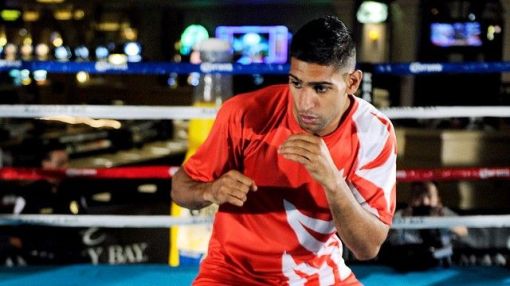
British, Pakistani, Muslim — how fans from Islamabad to London to New York process the champion boxer.

Since the very beginning of his career, Amir Khan has been more than just a boxer. He has been a symbol — well, more like symbols. One fighter, whose ethnic background, birthplace, and blinding hand speed mean very different things to different groups of fans. Khan himself has little control over how the people watching him choose to interpret his success.

It started early, when Khan was 17 years old and won a silver medal in the 2004 Athens Olympics. He became not only the “pride of Bolton,” his hometown, but also “the great young hope of British Boxing.” Khan decided to turn professional soon after, but days before his debut, the mood around Khan’s celebrity changed. The coordinated bombings on London’s transport system in July 2005 were the largest terrorist attack in British history. Three of the four bombers were, like Khan, of Pakistani origin, and all of them hailed from within a hundred miles of Khan’s home in Northern England. Khan, whose Olympic run established him as the country’s most prominent homegrown Muslim athlete, had no choice but to speak up. “I hope, by stepping into a ring, I can show all young kids in Britain, whether they are white, Muslims, or whatever, that there are better things to do than sitting around on street corners getting into trouble and mixing with bad people.” Ten days after the attacks, Khan proudly held the Union Flag when he walked to the ring. It was embroidered with the word “London” in black ribbons to mourn the victims. Moments after Khan wrapped up a first-round TKO victory, the police issued a red alert for a bomb scare and evacuated the arena.

At the ripe age of 18, Khan was not only a professional fighter, but also an unofficial spokesperson for Muslims and Asians in the U.K. Like it or not, he was a role model for underprivileged children caught at the crossroads of drugs, poverty, and now international terrorism. He also became “the best thing to happen for race relations in Britain.” All this translated into tremendous box office appeal. Before his London debut, for example, Khan visited Brick Lane, a large South Asian neighborhood on London’s East End, to promote the fight. “We brought him to the heart of the Asian community and we hope they will turn out and support him,” promoter Frank Warren said. They did. His next fight, against Belarussian Vitali Martynov, sold 10,000 tickets. It was Khan’s fifth professional fight.

Seven years later, it’s more of the same. Wherever Khan goes, he seems to carry the aspirations and insecurities of fans from all over the world. At the time of his last fight, on December 10, 2011, I was in Pakistan, a few miles away from Khan’s ancestral home, near Rawalpindi. Pakistanis aren’t die-hard boxing fans, but the sport isn’t completely unknown on the national scene. Of the two Olympic medals Pakistan has won in individual events, one is in boxing. Before every Khan fight, highlights from his previous bouts and flashy promos amped with heavy metal soundtracks start running on a loop on Pakistani television. Local governments set up big screens in public markets, and dense crowds arrive to cheer for Khan. Everything from his ring entrance to his punches to his post-match interviews are parsed and analyzed for how they reflect on Pakistan and its people.

In Pakistan, the buildup to Khan’s December bout with Lamont Peterson was feverish even by the local media’s distorted standards. Exactly two Saturdays before the fight, a swarm of American jet fighters and attack helicopters swooped into Pakistani territory from bases in neighboring Afghanistan and let loose a barrage of missiles targeting two Pakistani military posts. When the smoke cleared, 24 Pakistani soldiers were dead. The reaction was something like what it might have been if a Pakistani helicopter had flown into American territory and killed two dozen American soldiers: People cried bloody murder. America refused to apologize for the attack and instead blamed Pakistan for provoking it. In response, Pakistan cut off the American military supply routes that run through its territory to deprive U.S. forces in Afghanistan of equipment and food. The resulting standoff was the closest the two countries had come to all-out war after a decade of complex military rivalry.

While the world watched the diplomatic stare-down between two nuclear states, Pakistanis looked to Khan’s fight for a taste of vengeance. Khan’s opponent wasn’t just a real-life American — he was a real-life American from Washington, D.C. And in Pakistan, Washington is not just the name of another American city (never mind that the Washington from which Peterson hails bears little resemblance to the government monoliths that most Pakistanis associate with the city). Vashing-tone is the dark lair from which Obama orders the drone strikes that hit Pakistani villages every week. Vashing-tone is the Pentagon that drops American Special Forces into Pakistan in the dark of night to take out Osama. It’s akin to what the Kremlin meant to Americans during the Cold War. Actually, it’s not unlike what the word “PACK-istan” conjures up in many Americans’ minds today.

The Peterson fight would be Khan’s fourth in the United States, and this time he would enter the ring accompanied not only by the Union Jack, but also by the green flag of Pakistan with its white crescent. Unlike the battlefield, the American was the underdog in this fight, which ended up being one of 2011’s best. At the end, two questionable point deductions by the referee cost Khan the bout, and he lost on the scorecards. Khan let the alarm bells ring before he’d even left the ring. “It was like I was against two people in there, Lamont and the ref himself,” he said. Golden Boy Promotions appealed the decision a week later and the IBF began an investigation into the scoring of the fight.

Two weeks later, Khan flew to Pakistan. He travels there every so often to visit his parents’ homeland, but this time he visited to lend some star power to a Pakistani boxing tournament. When Khan arrived in the country, this is what you might have found while flipping through the dozen-odd local news channels: a steaming-mad middle-aged man calling for war against America; a montage from the Khan-Peterson fight showing Khan’s best combinations and Peterson hitting the mat again and again and again; an elaborate computer-generated graphic re-creating the American attack on the border posts; a field of caskets draped in Pakistani flags; Khan at a press conference calling the judges’ decision “disgusting” or saying something like “let’s take the fight somewhere neutral and I’ll see if he’s the same man.” The TV channels almost didn’t need different talking heads to discuss the two conflicts. The narrative was essentially the same: Americans play dirty, and when they feel like they’re losing, they cheat.

It was in the middle of such channel flipping that I found Amir Khan on my screen, being interviewed on Khyber News, a regional outfit that telecasts in the Pashto language to the Pashtuns, most of whom live along Pakistan’s western border with Afghanistan, including in the troubled tribal areas. Khan was seated on a plush, bright orange-and-yellow sofa, watching the tournament at ringside. The interviewer threw questions at him in Urdu and Khan answered in English, but that was no problem — Khan demonstrated a solid understanding of the questions in Urdu. It was the substance of the questions, which were less interested in Khan’s boxing career than in exploring the prospects of an interviewer, a TV channel, an ethnic group, and a nation’s hopes for itself on the global stage. Here are excerpts:

[“Khyber” is what Pakistanis call the northwest Afghan border regions. Inshallah means, “If Allah wills it.”]

INTERVIEWER: Does Amir Khan like the international popularity more or the love he gets from Pakistanis?
KHAN: Ummmm … it’s the same, you know. It’s the same in England. And in Pakistan, very same. You know? I’d say it’s the same everywhere we go. The two places where we get a lot of love is in England and also in Pakistan …

INTERVIEWER: Khyber News wants to show your fights live. I just talked to your father about this as well, but in the future do you think you will have a relationship with Khyber News?
KHAN: Yeah, definitely, I think it’s a good idea. We’re happy to work with anybody. To work with Khyber News will be, maybe good, you know. Let me speak to my team and inshallah the next fight for me will be in April or May against Lamont Peterson — I want a rematch — so maybe it can be on Khyber News. Let’s see what happens. I will try and speak to my team also …
INTERVIEWER: Wouldn’t it be nice if there were a ‘Khyber’ logo next to the ‘Khan’?
KHAN: Khyber Khan? Yeah, you know, maybe … [Laughs uncomfortably.]

INTERVIEWER: One more question, we’ve heard you have found your life partner and she lives in USA, I think. Is she Pakistani or is she from there?
KHAN: No, no. She’s Pakistani.
INTERVIEWER: Where from in Pakistan?
KHAN: Her father’s from Multan and her mother’s from Lahore.
INTERVIEWER: So she’s Punjabi?
KHAN: Yeah, I think so.
INTERVIEWER: When are you going to get married?
KHAN: Oh, not for a long time. I’m getting engaged next month so inshallah I’ll let the engagement happen first. Step at a time, brother.
INTERVIEWER: Will you keep fighting after the marriage?
KHAN: Yeah, yeah, it’s my job. It’s my job. I love boxing.
Any final thoughts? “To everybody in Pakistan, I want to say I hope they watch my next fight. Inshallah I’ll win for them. I’ll do it for my people in Pakistan.”

Khan seems to have understood what’s expected of him.

Where is Amir Khan from? The question follows Khan wherever he goes. Without a doubt that same question was asked when he arrived in New York to defend his WBA light welterweight title against Paulie Malignaggi in 2010. At the weigh-in, a group of 40 or so Pakistani-British fans who call themselves “Khan’s Army” caused pandemonium. Their fervent support for Khan was reminiscent of British football supporters, but with a Muslim twist. “If anyone can, Khan can,” they bellowed. “Amir, Amir, Amir.” This was punctuated several times with the loudest call of all: “Allah-o-Akbar.” While Khan and Malignaggi engaged in a stare-down for the flashing cameras, their supporters were in the throes of a full-fledged brawl.

Khan’s Army is no jihadi outfit. This is just how they show love for their fighter. But America was understandably tone-deaf to Khan’s Army when the latter first arrived in the country. How many times in the previous decade had a large group of brown men chanted “Allah-o-Akbar” with such confrontational zeal in New York City? You could probably ask any Pakistani immigrant — a taxi driver in New York or a heart surgeon in Chicago — or even a Pakistani in Pakistan and they would all tell you with equal certainty: It is not a good idea to gather in large groups with other men who look like you and scream “Allah-o-Akbar” for any reason whatsoever, especially in New York. But then, Khan’s Army is not Pakistani; nor is it Pakistani American. They are British Pakistanis and they are part of a different culture, one in which “Allah-o-Akbar” often has more to do with ethnic pride than with Allah.

Khan was born in a town called Bolton, on the outskirts of Manchester in northern England, a fact he demonstrates by failing to pronounce the letter t when it comes in the middle of a word. Long before Manchester became famous for its football clubs, the city was an engine of the industrial revolution. The region’s textile mills attracted thousands of immigrants from the former British colonies in South Asia. Khan’s family arrived in the 1970s from the northern Punjab region of Pakistan.

Today, “Asians” — that’s what the British call South Asian immigrants from Pakistan, India, and Bangladesh — make up about 5 percent of the population of England, and together they are the country’s largest minority group. A large majority of British Asians are Muslim, and a vast majority of Muslims are Pakistani immigrants. Khan’s father did well as a scrap metal merchant, and although Khan grew up in a comfortable home, his family still lived in a depressed part of Bolton. In general, Pakistani immigrants are some of the poorest people in Britain, living in some of the more violent and drug-ridden neighborhoods in London and the big cities of the North.

Amir “King” Khan was arguably the best thing that ever happened to this community. So when Khan left his English promoter to join Oscar de la Hoya’s Golden Boy Promotions in 2010, some in Britain saw the move as more than just a desire for big money. Maybe Amir was trying to get away, to base his career in a country where every business decision he makes and every punch he throws is not fraught with ethnic, religious, and class symbolism. And how did that reflect on Britain itself? Kevin Mitchell, the Guardian’s boxing correspondent, blamed “the small crew of British bigots who have taken against Khan” and driven him out of the country. “Over there, living quietly and comfortably in the Californian sunshine,” Mitchell lamented, “he is accepted without question by the fans — black and white Americans, Filipinos, Mexicans, all of them.”

Khan’s other British fans didn’t seem to mind the move as much. They just started traveling en masse to the United States for his fights. Khan’s Army remains as die-hard as ever, but it seems that they’ve toned down the “Allah-o-Akbar” — at least in America.

Amir Khan will step into the ring Saturday night with undefeated light welterweight champion Danny Garcia. The bout has been a long time coming for Khan — the seven-month layoff since his December loss to Peterson is as long an inactive period as he has had in his career. He was scheduled to fight Peterson in a May rematch that was canceled after Peterson tested positive for performance-enhancing drugs. Peterson also admitted to having the banned substance in his system before the first Khan fight, and that led the WBA to reinstate Khan as its 140-pound champion earlier this week. The Pakistani press had a ball with the news about Peterson’s failed drug test, but it sent Khan scrambling to find a new opponent. The Islamic holy month of Ramadan was coming up in mid-July, and Khan, as always, planned to fast. After that, he probably wouldn’t be in fighting shape until winter. Khan has already fought almost every credible opponent in the 140-pound weight class and so Garcia, the current WBC champion, seemed like the best option, even if Khan would be a heavy favorite in the fight.

Ever since the match was set up, Angel Garcia, Danny’s father and trainer, has been calling Khan an “overrated” fighter. But that’s not all he’s saying. He proclaimed that he has “never, ever, ever in my lifetime, that I’ve been living 49 years, I ain’t never met a Pakistani that could fight.” Then, somewhat nonsensically, he dismissed Khan as a “European fighter from Europe.” Finally, for good measure, he went after Khan’s religion: “I know Khan’s god already. His god is a punishing god. And my god is a loving god.” At the press conference in Los Angeles to announce the fight, Garcia senior cut off everyone from team Khan and began ranting about “magic carpets” and a “genie.” Boxers and their camps always play up their mutual dislike to promote fights, but Angel Garcia seems genuinely perturbed by Khan. It was at the end of the presser, when Angel was practically spitting with rage, that the elder Garcia yelled what he was really getting at this whole time: “Where you from, man? Europe? America? Where you from?”

California has been good to Khan. Since relocating to Los Angeles to train at Freddie Roach’s Wild Card gym, he’s been spotted sitting courtside at Laker games, he’s been featured in a GQ fashion spread, and he’s been photographed on the red carpet for the L.A. Spider-Man premiere. He even got to throw the first pitch at a Dodgers game this month, and it reportedly zipped right over home plate. With the exception of Angel Garcia, America and Amir Khan seem to be getting along just fine.

Islam, Pakistani, Muslim, European — none of those are necessarily flattering descriptions in America these days, but Khan continues to hold together the various strands of his identity and carry the dreams of people halfway across the world, and perhaps that’s what’s most appealing about him. Which flag is he going to carry into the ring this weekend? Will he someday add the Stars and Stripes to his collection? At the end of the day it doesn’t really matter. What matters is that there will be people spread across a dozen time zones, all of whom will root for Khan, all for their very own personal and selfish reasons. And as long as he keeps delivering, Khan’s Army will be there, too, in ever-growing numbers. Khan said once about his fans that “they might not be boxing fans, but they might be Amir Khan fans, y’ge’ me?” It’s a figure like this who can transcend boxing’s current status as a niche sport and grow from a prizefighter to a global sports figure.

Shahan Mufti is a freelance journalist whose work has been published in Harper’s Magazine, Wired, The New York Times Magazine, Bloomberg Businessweek, and The Atlantic, among other places. He is at work on a book about Muslim identity in Pakistan that comes out next year. This is his first piece in Grantland.
Pakistan Shuns Physicist Linked to ‘God Particle’

By Sebastian Abbot for Bloomberg Businessweek News

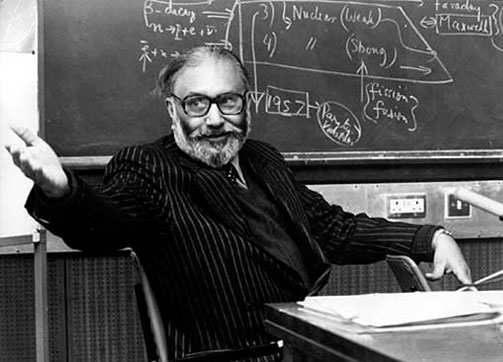
The pioneering work of Abdus Salam, Pakistan’s only Nobel laureate, helped lead to the apparent discovery of the subatomic “God particle” last week. But the late physicist is no hero at home, where his name has been stricken from school textbooks.

Praise within Pakistan for Salam, who also guided the early stages of the country’s nuclear program, faded decades ago as Muslim fundamentalists gained power. He belonged to the Ahmadi sect, which has been persecuted by the government and targeted by Taliban militants who view its members as heretics.

Their plight — along with that of Pakistan’s other religious minorities, such as Shiite Muslims, Christians and Hindus — has deepened in recent years as hardline interpretations of Islam have gained ground and militants have stepped up attacks against groups they oppose. Most Pakistanis are Sunni Muslims.

Salam, a child prodigy born in 1926 in what was to become Pakistan after the partition of British-controlled India, won more than a dozen international prizes and honors. In 1979, he was co-winner of the Nobel Prize for his work on the so-called Standard Model of particle physics, which theorizes how fundamental forces govern the overall dynamics of the universe. He died in 1996.

Salam and Steven Weinberg, with whom he shared the Nobel Prize, independently predicted the existence of a subatomic particle now called the Higgs boson, named after a British physicist who theorized that it endowed other particles with mass, said Pervez Hoodbhoy, a Pakistani physicist who once worked with Salam. It is also known as the “God particle” because its existence is vitally important toward understanding the early evolution of the universe.

Physicists in Switzerland stoked worldwide excitement Wednesday when they announced they have all but proven the particle’s existence. This was done using the world’s largest atom smasher at the European Organization for Nuclear Research, or CERN, near Geneva.

“This would be a great vindication of Salam’s work and the Standard Model as a whole,” said Khurshid Hasanain, chairman of the physics department at Quaid-i-Azam University in Islamabad.

In the 1960s and early 1970s, Salam wielded significant influence in Pakistan as the chief scientific adviser to the president, helping to set up the country’s space agency and institute for nuclear science and technology. Salam also assisted in the early stages of Pakistan’s effort to build a nuclear bomb, which it eventually tested in 1998.

Salam’s life, along with the fate of the 3 million other Ahmadis in Pakistan, drastically changed in 1974 when parliament amended the constitution to declare that members of the sect were not considered Muslims under Pakistani law.

Ahmadis believe their spiritual leader, Hadrat Mirza Ghulam Ahmad, who died in 1908, was a prophet of God — a position rejected by the government in response to a mass movement led by Pakistan’s major Islamic parties. Islam considers Muhammad the last prophet and those who subsequently declared themselves prophets as heretics.

All Pakistani passport applicants must sign a section saying the Ahmadi faith’s founder was an “impostor” and his followers are “non-Muslims.” Ahmadis are prevented by law in Pakistan to “pose” as Muslims, declare their faith publicly, call their places of worship mosques or perform the Muslim call to prayer. They can be punished with prison and even death.

Salam resigned from his government post in protest following the 1974 constitutional amendment and eventually moved to Europe to pursue his work. In Italy, he created a center for theoretical physics to help physicists from the developing world.

Although Pakistan’s then-president, Gen. Zia ul-Haq, presented Salam with Pakistan’s highest civilian honor after he won the Nobel Prize, the general response in the country was muted. The physicist was celebrated more enthusiastically by other nations, including Pakistan’s archenemy, India.

Despite his achievements, Salam’s name appears in few textbooks and is rarely mentioned by Pakistani leaders or the media. By contrast, fellow Pakistani physicist A.Q. Khan, who played a key role in developing the country’s nuclear bomb and later confessed to spreading nuclear technology to Iran, North Korea and Libya, is considered a national hero. Khan is a Muslim.

Officials at Quaid-i-Azam University had to cancel plans for Salam to lecture about his Nobel-winning theory when Islamist student activists threatened to break the physicist’s legs, said his colleague Hoodbhoy.

“The way he has been treated is such a tragedy,” said Hoodbhoy. “He went from someone who was revered in Pakistan, a national celebrity, to someone who could not set foot in Pakistan. If he came, he would be insulted and could be hurt or even killed.”

The president who honored Salam would later go on to intensify persecution of Ahmadis, for whom life in Pakistan has grown even more precarious. Taliban militants attacked two mosques packed with Ahmadis in Lahore in 2010, killing at least 80 people.

“Many Ahmadis have received letters from fundamentalists since the 2010 attacks threatening to target them again, and the government isn’t doing anything,” said Qamar Suleiman, a spokesman for the Ahmadi community.

For Salam, not even death saved him from being targeted.

Hoodbhoy said his body was returned to Pakistan in 1996 after he died in Oxford, England, and was buried under a gravestone that read “First Muslim Nobel Laureate.” A local magistrate ordered that the word “Muslim” be erased.

For Surjeet Singh, Life Unfolds a Guessing Game

As Reported by The Hindustan Times

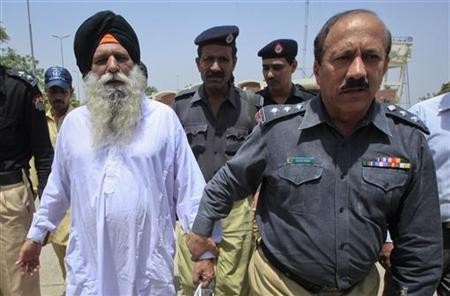
“Pehchanon ji ye kaun hai” (guess who this is), is what Surjeet Singh often hears, as he relaxes on a cot in the sweltering summer heat on a farm in this Punjab village. Surjeet, 69, now plays this ‘guessing game’ several times a day, ever since he arrived in his native village last week, after more than 30 years of incarceration in Pakistan.
“There are several people from villages and other places coming to meet me despite the heat. Sometimes, my family members ask me to guess who a particular person is. Most of them look so different and older, just like me. It is hard to guess every time and then I try to identify them by their names. I can re-collect some names though,” Surjeet Singh told IANS with several people sitting around him.

“Ye budhi kaun hai (who is this old woman)?” was a question Surjeet popped in Punjabi to his relatives as an elderly woman came to meet him. He was told that she was a relative and he gave her a warm hug.

Surjeet wears a pair of white kurta-payjama and slippers as he wanders through his daily life and receives scores of visitors or meets them around his village. He returned home Thursday to a tumultuous and teary welcome from family and friends.

Among the visitors Saturday was Gurbaksh Ram, a fellow prisoner in Pakistan who returned to India in June 2006.

“I was with Bapuji in the Lahore jail for several years. I was released in June 2006 after, spending over 20 years in Pakistani jails. When I read about his return, I wanted to meet him,” Gurbaksh told IANS.

Among the visitors were two Sikh gentlemen who asked if he could recognise them.

“I am Bhai Singh and he is Vikar Singh,” one of them said. Surjeet had a hearty laugh as he hugged the taller Vikar Singh and remarked: “Ehh taan baba baneya phirda hai (he has become an old man).”

Besides the people who knew him from over three decades back, there are others who come to him with hope to hear about their own missing ones.

“Some people get their files and photographs of missing family members who are believed to be in Pakistani jails. They show him (Surjeet) the photos to know if he has met that person in Lahore jail,” one of his relatives said.

“He is very happy to be back in his country and among his family members and friends. Even though we were forced to sell our old house (where Surjeet lived) and land, this new house is lucky for us as it has brought him back,” Surjeet’s wife Harbans Kaur said.

“In the (Pakistani) jail, he had some facilities like regular power supply which is not available here. He is back now and my tension is over. I will put the entire responsibility on him. He will take charge of things,” Harbans Kaur, who supported her children in adversity after Surjeet went missing in 1982, said with a smile.

Surjeet languished in Pakistani jails for over 30 years after being arrested on charges of spying there. He was sentenced to death but the sentence was later commuted to life imprisonment.

Surjeet was released from Lahore’s Kot Lakhpat jail early Thursday and made the road journey in a prison van to Wagah, on the Pakistan side of the border, before walking into India at the famous checkpost.

Imran Khan’s Strategy: End Corruption

By Azeem Ibrahim for The Express Tribune

Pakistan Tehreek-i-Insaf leader Imran Khan has pledged in his political manifesto to eliminate major corruption in Pakistan within his first 90 days as prime minister. This is a tall order and was being derided by Nawaz Sharif yesterday as impractical and naive.

Despite his tenure in office, Sharif has failed to understand the different modes and echelons of corruption in Pakistan. Khan intends to target specific government level corruption which is most damaging in a series of enforceable reforms based on forceful transparency and assertive accountability.

Imran Khan is right to see the fight against corruption as a priority and instead of criticism he should be receiving national support for the huge task ahead. Corruption in Pakistan is widespread, systemic and deeply entrenched at all levels of society and government and is a substantial obstacle to the country’s development.

With losses due to corruption in Pakistan being estimated at Rs8500 billion, it has been described as “plunder” in a country where people still lack the most basic needs. Pakistan’s main anti-corruption body, the National Anti-Corruption Bureau (NAB) admitted in 2008 that Rs200 billion are wasted through corrupt practices at higher government levels with more billions locally. Petty corruption in the form of bribery is prevalent in law enforcement, procurement and the provision of public services; widespread financial and political corruption, nepotism and the misuse of power are rife.

Transparency International (TI), a Berlin-based organisation that puts out an annual Corruptions Perception Index (CPI), attributes corruption to autocratic governments, sprawling government bureaucracies of under-paid, under-trained civil servants and a lack of media freedom to keep track of fat government contracts and easy money. TI ranked Pakistan 139th among 180 countries in its 2009 CPI.

Pakistan has undertaken anti-corruption proceedings over the years but has avoided scrutiny of senior officials. The National Reconciliation Ordinance (NRO) issued by the former President of Pakistan, General Pervez Musharraf, on October 5, 2009, granted amnesty to politicians, political workers and bureaucrats who were accused of corruption, embezzlement, money laundering and even murder. A list of 8041 individuals who benefited from NRO included 34 politicians, further reducing public trust in leadership and encouraging the spread of corrupt practice at federal, provincial and local government level. It was declared unconstitutional by the Supreme Court of Pakistan on December 16, 2009, throwing the country into a continuing political crisis.

Pakistan’s citizens expect to pay bribes to obtain services such as electricity, health care and education and in dealings with the police. In the absence of a democratic and effective taxation authority, bribery can be seen as a form of illegal taxation in a country where the national budget is inadequate for the delivery of social services. This is damaging to the social fabric of society but it is low-level petty corruption nevertheless.

It is the illegal use of power by politicians and bureaucrats that deserves immediate attention and urgent scrutiny in Pakistan and Imran Khan recognises the need to put an end to these predatory practices that waste resources that should be invested for the good of the country.

Just one example of the direct impact of increased corruption is the rise in the prices of food commodities which according to the latest official data of Federal Bureau of Statistics, have increased up to 120 per cent in one year.

Lack of transparency and accountability have allowed the awarding of government contracts and licenses to one’s family, relatives or to corporations where one is a shareholder, allowing for private greed to overrule the public good. This type of corruption at a governmental level can be tackled relatively easily by enacting conflict of interest and transparency legislation – and enforcing it aggressively.

Imran Khan has already set an example and proposed that all politicians should also declare their assets.

A short blog like this is not the most effective medium to convey Imran Khan’s strategy in its entirety, but I can assure the naysayers that a comprehensive and effective policy is being developed alongside a strategic implementation plan. This is a powerful first step in clearing up corruption in Pakistan, vital for Pakistan’s survival as a democracy and hopefully the shape of government to come.

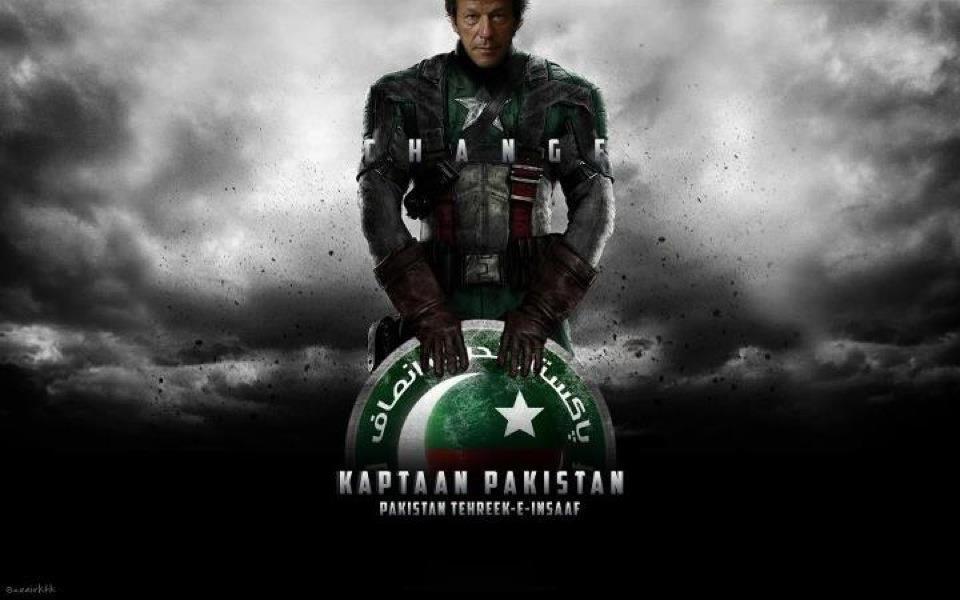
Pakistanis for Peace Editor’s Note– Although we do not agree with all the policies and proposals put forward by Imran Khan, we believe he represents the best hope for Pakistan and its world leading corrupt crony style feudal system of psudo-democratic and hyper military state. All other contenders are either too corrupt or too untrustworthy, unlike Khan, a hero for winning the 1992 Cricket World Cup as well as singlehandedly establishing a free state of the art cancer hospital for the country thru own money and largely through donations from the nation.

Let’s hope regardless of the outcome in the next elections, Pakistan finally gains a leader worthy of fixing all the ills of this nation and perhaps Kaptaan Imran Khan is the only hope.