Archive for the ‘ Peace ’ Category

Iran Presses Ahead with Nuclear Enrichment Despite Warning from the US and Others

By Manzer Munir
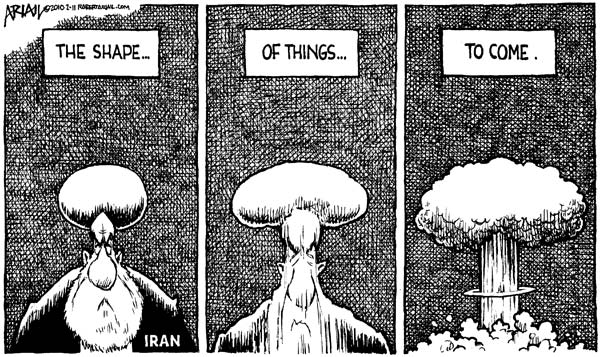
Tehran, Iran- France, Russia and the United States on Tuesday voiced their displeasure with Iran’s escalation of its uranium enrichment and saw this as a great a concern for its neighbors and other countries around the globe. The three countries, nuclear club members themselves, sent a letter to the International Atomic Energy Agency (IAEA) expressing worry about Iran’s actions and demonstrating renewed pressure on the regime of President Ahmadinejad.

This alarm by the US and other countries comes after February 7 when Iran announced it intended to start producing 20 percent enriched uranium for a medical research reactor, defying ultimatums by members of the UN security council that it faces strict UN sanctions unless it halts its nuclear weapons ambitions. The concern is that Iran is enriching uranium not for a medical research reactor but rather for making atomic weapons since enriched uranium in high purity form can be used in the fissile core of a nuclear bomb. “If Iran goes forward with this escalation, it would raise concerns about Iran’s nuclear intentions,” said the joint letter, which was obtained by AFP. “Iran’s enrichment of its LEU (low-enriched uranium) stockpile to higher levels is not only unnecessary, but would serve to further undermine the confidence of the international community in Iran’s actions,” it said.

The US and other powers are trying to convince Iran to accept an IAEA backed deal where Iran is supplied with nuclear fuel for the research reactor in exchange for its low enriched uranium. This is a deal that is not acceptable to the regime in Iran. Iran’s announcement that it would enrich on its own and its “subsequent formal notification to the IAEA are wholly unjustified,” the three countries wrote in the letter to IAEA chief Yukiya Amano. The moves “represent a further step toward a capability to produce highly enriched uranium.” The countries “recognize the need in Iran for medical radioisotopes,” the letter continued. “If Iran does not wish to accept the IAEA offer, we note that these are available on the world market and could be obtained as a responsible, timely and cost effective alternative to the IAEA’s proposal.

The pressure on Iran to not acquire nuclear weapons in the troubled neighborhood of the Middle East is justified. The area has long been very unstable and Iran and Israel have already for several years been fighting a proxy war with each other through Hezbollah in Lebanon and allegedly through arming Hamas in the West Bank and Gaza. But one must also realize that as long as Israel maintains nuclear weapons and there remains no peace in the Middle East, its enemies in the region, namely Syria, Iran, and until recently Iraq would stop at nothing to acquire nuclear weapons technology also. Therefore, the core of this issue as with many other problems involving regional security and even global terrorism have their roots in the situation in the Middle East between Israel, Palestine and its neighbors.

Al-Qaeda itself gives Israel and the United States backing of it as a reason to attack America and its interests. So as long as there is not a resolution to the problem of the Palestinian state, there will be friction and a charged atmosphere in the region. Believe me, it has not calmed down much in the last 62 years. One can continue to expect countries like Iran, Libya, Syria, Egypt, Saudi Arabia and others to continue to desire nuclear weapons in order to feel less threatened by Israel’s arsenal and military supremacy. The real solution to Iran’s nuclear ambitions and other regional security threats to Israel and American interests in the region is the need to get back to the table and return to the difficult task of making peace between the Israelis and its neighbors. Only a lasting and durable peace between the Israelis and the Arabs will encourage nuclear disarmament and make the neighborhood safe from a looming nuclear mushroom cloud.
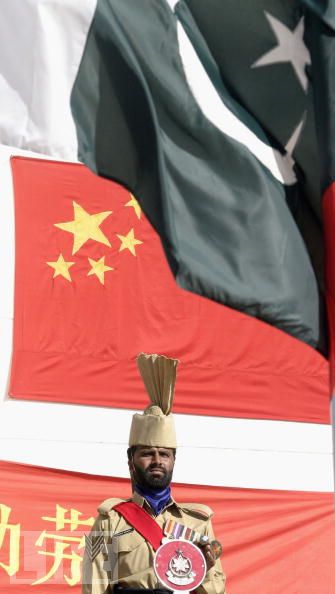
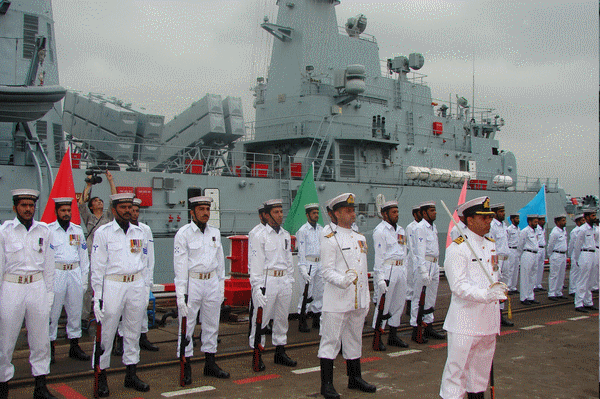
Pakistan and China increase military spending and cooperation as India shows concern

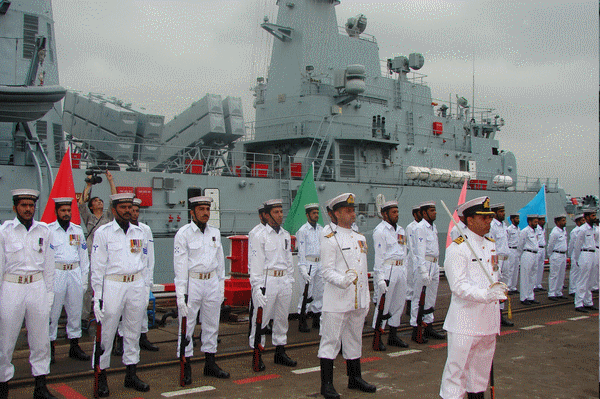
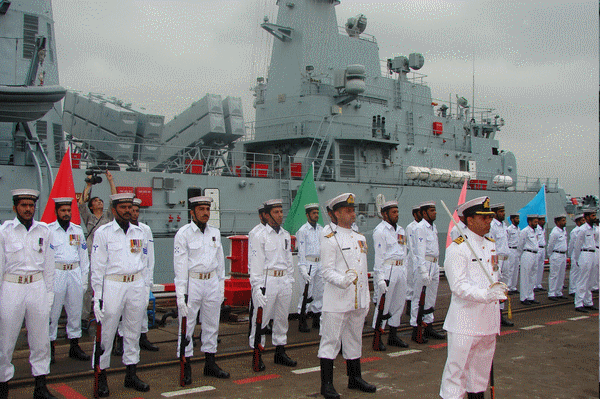
Beijing, China- A senior Chinese defense official has justified Chinese sales of warships and submarines to Pakistan on the grounds that Russia and the United States were selling similar systems to India.

The defense official also indicated that China was aware of the fact that India may not be happy with its deal with Pakistan. “The initiative may invite concerns from its neighboring countries. But the doubts are unnecessary,” Zhai Dequan, deputy director of China Arms Control and Disarmament Association , was quoted as saying by the official media.

Pakistan’s chief of naval staff, Norman Bashir, also made a push to persuade China to sell higher capacity ships compared to the F22P frigates that China began delivering in June.  Chinese official Zhai said that Pakistan’s   desire for higher capacity ships is normal for an independent nation seeking to bolster its security. “India has also entered into deals for military hardware from the Unites States and Russia. India’s aircraft carrier has already cost it billions of dollars”, said Zhai.

Bashir also met with the Chinese defense minister, Liang Guanglie, and discussed with him Pakistan’s needs in terms of modernizing their armed forces to try and keep up with the torrid pace of rival India’s defense spending. “The Chinese armed forces would like to improve friendly and cooperative relations with the Pakistani armed forces,” defense minister Liang Guangile said, according to China’s state-run Xinhua press agency.” China attached great importance to its traditional friendship with Pakistan, Liang said, adding that the two countries had conducted comprehensive and multi-level military exchanges and cooperation in various areas.”

“The Pakistani armed forces and people cherished their friendship with the Chinese armed forces and people”, Noman Bashir said, noting that “Pakistan would like to work with China to promote the comprehensive and cooperative partnership.” Bashir also stated that Pakistan was keen on buying bigger ships and more JF-17 fighter planes from China in addition to submarines and that Pakistan will be buying more weapons from China, including missiles. 

“These growing military ties between China and Pakistan are a serious concern to India,” stated Defense Minister A K Antony. India worries about China’s rising influence in South Asia and the Indian Ocean region, a neighborhood traditionally considered as its sphere of influence.

India’s relations with Pakistan, never easy after three wars since 1947, went downhill fast after last November’s Mumbai attacks blamed on Pakistani originated militants. Meanwhile, Chinese and Pakistani cooperation on military and economic projects has increased in the last few years. “The increasing nexus between China and Pakistan in military sphere remains an area of serious concern,” Antony said in a speech. “We have to carry out continuous appraisals of Chinese military capabilities and shape our responses accordingly. At the same time, we need to be vigilant at all times.” Tensions between India and China, who fought a brief war in 1962, flared again in recent months, especially with the re-emergence of a long-standing border dispute made worse by a visit by the Dalai Lama, the Tibetan spiritual leader, to Indian territory claimed by Beijing.

India increased defense spending by 24% for this year’s budget to $28.4 billion a year dwarfing Pakistan’s budget of $4.2 billion for the same period. Meanwhile, China and India are together set to make Asia the highest regional spender on defense in the next seven years replacing North America as their economies continue to fund their weapons appetite.

Pakistan cannot compete with the likes of India and China militarily. Just as Taiwan could not compete with China militarily, but went on to become an economic powerhouse and used its influence economically,  so too must Pakistan focus on growing its economy rather than growing militarily. Even though Pakistan possesses the nuclear bomb, and that very well may end up being a strong deterrent against India in the likelihood of a war, it still is loathe to use it, for the consequences from India would be similar and far worse due to their increased warheads and military might.

Also, although Pakistan’s military and previous leadership have articulated the right to a preemptive nuclear strike or a nuclear first use option in the event of hostilities with India, this choice is often seen as a losing option by the military due to the aftermath of a nuclear exchange between the two countries. India’s budget and its technological advancements make it impossible for Pakistan to ever win a conventional war with India. And a nuclear exchange between these two neighbors will leave neither side feeling as the winner.  

Pakistan’s most beneficial strategy must consist of directing its full armed forces against the Taliban and militant groups within its territory and re-engaging India back to the peace table in hopes of resolving the long disputed Kashmir region because war with India will certainly not leave Pakistan the victor. However a peace treaty can open the long border between India and Pakistan for trade, goods, ideas, money and people to move freely across the border and allowing much needed investments and flow of technology to Pakistan that will go a long ways in helping the country and its people catch up with the rest of the world.

Reported by Manzer Munir for www.PakistanisforPeace.com

Chicago Man Is Charged in 2008 Attack on Mumbai

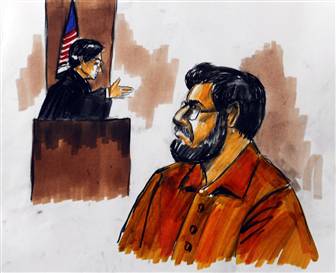
December 7, 2009 WASHINGTON — The Chicago man with roots in Pakistan who was arrested two months ago for planning to attack a Danish newspaper now faces the much more serious charge that he was deeply involved in planning the 2008 massacre in India that killed more than 150 people, according to court documents filed by the Justice Department.  

Court documents charge that David Coleman Headley, 49, an American citizen who is the son of a former Pakistani diplomat and a Philadelphia socialite, conducted extensive surveillance of targets in Mumbai, India, for more than two years prior to the attacks by the terrorist group called Lakshar-e-Taiba, which is based in Pakistan.  

Six Americans were among the dead in the attacks on a Mumbai train station, the Oberoi and Taj Mahal hotels and other sites.

He has been charged with conspiracy to murder and maim in a foreign country, and material support of terrorism. Federal officials said the most serious charges, conspiring to carry out bombings that resulted in deaths, carry possible sentences of death or life in prison.

The Justice Department said that Mr. Headley, who is cooperating with the government’s investigation, spent several years and considerable effort on behalf of the plotters, attended training by the group in Pakistan, videotaped targets and briefed the other conspirators on how to carry out the attack on India’s largest city.

 Mr. Headley took boat trips in and around Mumbai harbor in the spring of 2008, videotaping potential landing sites for the attackers, who would arrive by sea, the court documents charge. The attackers traveled from Karachi, Pakistan, hijacked an Indian fishing trawler, killed its captain, and then used a small boat to go ashore. The masked men used assault rifles and grenades in their deadly onslaught.

 Mr. Headley also scouted out other potential targets in Mumbai and elsewhere in India that were not attacked, including the National Defense College in Delhi.

 Mr. Headley, a resident of Chicago with a criminal record for smuggling drugs to the United States from Pakistan, was arrested in October with a Pakistani-born businessman, Tahawwur Rana, 45, who runs several businesses in Chicago and Toronto. Mr. Rana and Mr. Headley, who have known each other since attending an elite Pakistani military high school, were charged with plotting an attack against Jyllands-Posten, a Danish newspaper that published a series of cartoons depicting the Prophet Muhammad.

 Mr. Rana, a citizen of Canada, was not charged in the Mumbai attacks. But officials said the two men appeared to consult closely, and Mr. Headley posed as a representative of a company owned by Mr. Rana. In a bail hearing last week, Mr. Rana argued that he was duped by Mr. Headley.

 The Justice Department also announced Monday it had filed charges against Abdur Rehman Hashim Syed, a retired major in the Pakistani army, with collaborating in the plot against the Danish newspaper.

“This investigation remains active and ongoing,” said Patrick J. Fitzgerald, the United States Attorney for the northern district of Illinois.

 David Kris, the Assistant Attorney General for National Security, said, “This case serves as a reminder that the terrorist threat is global in nature and requires constant vigilance at home and abroad.”

Arrested on Oct. 3 at O’Hare airport in Chicago as he was boarding a plane on the first leg of a trip to Pakistan, Mr. Headley was officially charged a few weeks later with plotting to attack employees of a Danish newspaper that in 2005 published cartoons of the Prophet Muhammad that offended many Muslims.

Federal authorities said at the time that Mr. Headley told F.B.I. agents that he had initially targeted a building occupied by the Danish newspaper, Morgenavisen Jyllands-Posten in Copenhagen, but later proposed killing the paper’s cartoonist and cultural editor instead.

Officials said they regarded the case as significant because Mr. Headley traveled to Pakistan and consulted closely with three Pakistani men who belonged to Harakat-ul Jihad Islami, a terrorist group affiliated with Al Qaeda. The officials said Mr. Headley reported to Ilya Kashmiri, the operational leader of the terrorist group, who is based in a tribal region of northwest Pakistan.

When he was arrested, Mr. Headley was carrying about a dozen videotapes of the Danish newspaper office and surrounding areas that he was going to deliver to other conspirators in Pakistan, federal officials said. They said he had made the videotapes during several visits to Copenhagen in 2009.

Mr. Headley (or Daood Gilani, the name he was given at birth) is a man who has been pulled in different directions almost from the moment he was born. Even his eyes — one brown, one green — seem to symbolize the contradictions in his life.

Mr. Headley was born in Washington, where his Pakistani father and American mother worked at the Pakistani Embassy, he as a diplomat and she as a secretary. Mr. Headley’s mother, Serrill, grew up in a fashionable suburb of Philadelphia, and the cultural differences between her and her husband were too vast for the marriage to survive after the family went to Pakistan.

Serrill Headley left her husband and her children and moved back to Philadelphia sometime in the early 1970s. She worked at various office jobs and borrowed enough money from a suitor to buy an old bar, which she named the Khyber Pass.

In the late 1970s, she brought her adolescent son to Philadelphia to live with her. “Daood was not immune to the pleasures of American adolescence,” a former Khyber Pass employee once recalled.

Nor, to judge from his own words, was he immune to the lure of Islamic fundamentalism. “Courage is, by and large, exclusive to the Muslim nation,” he told high school classmates in an e-mail message last February. More chilling was an e-mail message he wrote defending the beheading of a Polish engineer by the Taliban in Pakistan: “The best way for a man to die is with the sword.”

By Ginger Thompson and David Stout for The New York Times originally published Dec 7, 2009

Law and Order in Pakistan Gets Worse as Schools are Shut across the country after Attacks

PakistanIslamabad, Pakistan- Millions of children and university students across the country stayed home Wednesday and are expected to for the rest of the week following fresh bomb attacks a university in Islamabad. Children as little as first graders all the way through Phd candidates in both government as well as private schools across the country got an unexpected holiday from their studies as the law and order situation in Pakistan continues to get worse by the day.

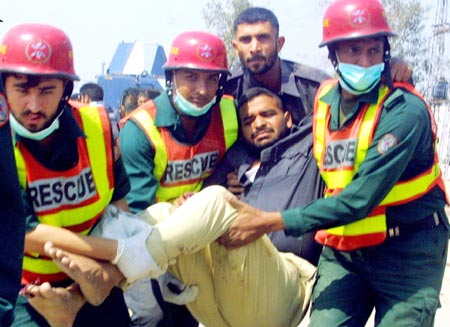
Many schools had shut down earlier in the week and the rest of the country followed suit after two suicide bombers Tuesday blew themselves up at Islamabad’s International Islamic University, killing five people.

“All educational institutions are shut across the country,” said an education ministry spokesman.

“The closure has been ordered because of security threats received in recent days… We will assess the situation and hopefully they will reopen on Monday,” the spokesman, Atiqur Rehman, told reporters.

“We are under constant threat. Our children’s education is suffering. If they can attack an Islamic university, they can do it anywhere,” said Muhammad Irfan, whose five-year-old had to stay away from one of Islamabad’s top private schools.

“We don’t know what to do. We can’t sacrifice our children but neither can we keep them at home.”

Tuesday’s university bombing was the seventh major militant attack in just over two weeks, and the first since the military launched what officials vowed would be a knock-out blow against the Taliban in South Waziristan.

The attacks came after a raid on army headquarters left 23 people dead and five UN World Food Programme workers were killed when a suicide bomber dressed in military uniform detonated his explosives in their Islamabad office.

Authorities believe that many of the bombings in Pakistan, as well as attacks in the West, are being planned by Al-Qaeda and Taliban militants who are fiercely fighting the Pakistan army in the border regions with Afghanistan.

Law and order inside Pakistan is getting grimmer by the day as the general public does not feel secure in their daily lives knowing that many government institutions, army and police barracks, and now educational institutions are now targets. The population is becoming shell shocked as live round the clock news coverage by over a dozen Pakistani media outlets broadcasts the carnage and destruction live from the scene of the attacks. The average Pakistani who is desperately poor and trying to survive economically is now also fighting for survival of their lives by avoiding becoming targets of the Taliban and the militants by not becoming unwitting victims during the fight between the government forces and the Taliban.

It used to be that people inside the country for years cried out with pride the slogan “Pakistan Zindabad” (Long Live Pakistan). That slogan has now popularly been replaced by the younger generation as “Pakistan say Zinda Bhaag” (Run from Pakistan with your Life)

The situation inside Pakistan has gotten worse by the day and there are fears by many in the country that it is headed towards becoming a lawless and failed state like its neighbor Afghanistan, if it hasn’t already started on that path.

Reporting by Manzer Munir for www.PakistanisforPeace.com

Indian doctors who saved Pakistani Boy’s Life doing well 6 months later

Karachi, Pakistan- The improving relations between India and Pakistan soured once again after the Mumbai attacks of November 2008. But for Syed Saadat Ali and his wife Nadia, the heightened tensions between the two neighboring countries did not affect the treatment for their son, Syed Raahim, who was operated for a rare congenital heart disorder in New Delhi by Indian doctors in December of 2008, just a mere month after the horrible attacks .

Now six months have passed since Ali and his wife returned from India after a successful open heart surgery for their son who will soon be celebrating his first birthday. As the critical phase of Raahim’s recovery is over, the couple, who had earlier avoided the media, believe that they are in a better position to discuss their case now.

Raahim had been suffering from a rare congenital heart disorder that obstructed blood flow to the infant’s heart, making it difficult for him to breathe. Due to the lack of the required surgery facilities in Pakistan, the couple decided to go to India for his treatment after a positive response from a medical center and doctors there.

“Raahim suffered from shortness of breath since the day he was born and had the ‘Blue Baby’ syndrome in which his skin would turn bluish or purplish due to lack of oxygen, but even doctors at one of the most leading hospitals of the city in Pakistan could not understand what was wrong,” said Ali.
According to doctors, about one out of every 1,000 live-born babies is born with a congenital heart defect in which the major blood vessels of the heart either do not function properly or are not formed during the early stages of fetal development. “In Raahim’s case, his vessels had not been formed,” said his mother Nadia.

“We were asked to take one test after the other along with an ECG, but none of the doctors here could understand what the complication was and were hesitant to operate. We also took his reports to the Aga Khan University Hospital (AKUH), where doctors agreed to perform a surgery but failed to satisfy us when we asked about its success rate.”

Ali then sought a second opinion from a doctor in India, as suggested by his close friend and within a day received a response from a doctor at one of the leading cardiac hospitals in India. Despite the talk of war and blame game between the governments of Pakistan and India, they decided to fly and save Raahim before it was too late. Unlike a regular visitor, Saadat and Nadia Ali were soon issued a visa on medical grounds.

“Our governments may have their differences, but once we stepped into India and interacted with the common man, each one of them welcomed us with open arms,” recalled Nadia. In fact, not only did they open their doors for us, but also their pockets to save Raahim’s life, added the father. The cost of the total surgery amounted up to Rs0.65 million, most of which was borne by the hospital trust. “This financial exemption came as a surprise because we could not afford it. For a while, we had lost hope.”

During their month-long stay in the country and frequent visits to the hospital, Nadia said that she was most touched by the support and respect they got in their times of adversity. “From the staff to the common visitor at the hospital, everyone gave us special treatment because we were from Pakistan. This just tells you how political or religious differences never trickle down to the common man, no matter how hard the government or media in both the countries try. Like us, we want more families in Pakistan to benefit from the medical community across the border”, the couple said. A peace between India and Pakistan will allow thousands more children to be saved every year and is one more reason for the two countries to find a solution to their differences.

US Intelligence Report: Pakistan in Danger of Becoming an Islamist State run by the Taliban and Warlords


Islamabad, Pakistan- There is growing concern in intelligence circles in the US that the Taliban in Pakistan are determined to make Pakistan an Islamist state controlled by warlords and terrorists and little or no central government authority or power to stop them.


Their strategy had its beginnings in the alarming success of the Taliban in gaining concessions from the authorities in the Swat valley this winter after fighting the Pakistan army to a standstill and getting the government to agree to instituting Islamic Shariah law in the valley and in parts of the NWFP province.


US intelligence officials believe that it is just a matter of time in as little as 10 years the the growing influence of the Taliban will overrun all the rural towns and communities and the government and the army will be relegated to city centers across the country with large swaths of land and power in the hands of the Taliban and other militant groups aligned with them and Al-Qaeda hell bent on instituting a new Islamic order throughout the country.


This scenario presents a very troubling outcome for Pakistanis, Pakistan’s immediate neighbors and the world at large. Pakistan is not a small undeveloped country torn by three decades of war like Afghanistan with only 3 million of its 30 million people living in Kabul and the rest spread out all over the country. Or like Iraq, another country of nearly 30 million people that also has experienced its share of turmoil the last 6 years.


Instead, Pakistan is the sixth most populous country in the world with over 170 million people living in major cities like Lahore (population 11 million) and Karachi the twentieth largest city in the world with a population of nearly 20 million people. With at least 100 nuclear weapons, several dozen highly organized and heavily armed militant groups, a weak and getting weaker by the day central government, abject poverty and high unemployment mixed in with rampant corruption and lawlessness, the country is ripe for a revolution. The Taliban have stepped into the vacuum created by the ineffectiveness of various governments who are more concerned with getting to and holding onto power and plundering the nation for their own personal wealth rather than be concerned with the future of the fragile nation with enemies of the state getting stronger from within. Many Pakistanis are more adept to believing in conspiracy theories of American involvement in various plots across the country rather than opening their eyes to the fact that the biggest threat and enemy of the nation is the Taliban and militants who use violence and terror in gaining bigger control across the country.


Furthermore, add religious violence amongst its Sunni and Shiite communities, a raging war and Al-Qaeda at its border in Afghanistan to the west. And an ever present historical feud with arch enemy India to the east who has fought three wars with Pakistan in the last 60 years makes this a country that has reached a boiling point. The disillusionment and hopelessness is very high amongst the majority of its moderate citizens who are intelligent and educated enough to know that the real enemy is the Taliban and militants that are determined to bring about Shariah law across the country but who do not see an effective partner in the government that will stand up to this growing threat. Instead the government capitulated to the Taliban in the Swat valley earlier this year and allowed Shari ah law there and agreed to a truce with the Taliban. Now their power and influence is growing in other parts of country as the Taliban are focusing on gaining strength in the populous Punjab state and other provinces across the country. The future has never looked bleaker for the country.


We at Pakistanis for Peace believe and have always believed that the biggest threat to the sovereignty and stability of Pakistan is the Taliban and Islamic militant menace that has begun to sweep the country after originating in the mountains of Afghanistan. The government of Asif Zardari has been quite ineffective in fighting the militant threat and there is not clear counterinsurgency strategy to tackle the Taliban and militant threat. Instead the government has done itself little favor by both half heartedly fighting and taking on the Taliban earlier this year and then agreeing to various truces with the militants to end the fighting. Pakistan needs to learn a lesson from the recent high drama at sea near the Somali coast involving the kidnapping of the American captain by the pirates. You do not negotiate and accept demands of the pirates, kidnappers, or terrorists. You speak to them in a firm manner to give up and surrender, if they do not do so, you bring the full force of your military and do so relentlessly until you gain victory. The country of Pakistan is too vital to regional and global peace for it to become a failed state like Afghanistan did in the 1980’s. Its possible failure and falling into the hands of the Taliban will be the greatest challenge and threat to US and world security for the next 30 years and all efforts must be made by Pakistan and its allies to ensure that never happens. Sometime to keep the peace, you have to go to war.


Reported by Manzer Munir for www.PakistanisforPeace.com


Pakistan fought the Law and the Law Won

 pakistani-lawyers-protesting

To avert a dangerous situation from becoming more volatile, the government of Pakistan announced Monday morning to reinstate the fired chief justice of Pakistan’s Supreme Court, Iftikhar Mohammad Chaudhry to the top seat at the country’s highest court.

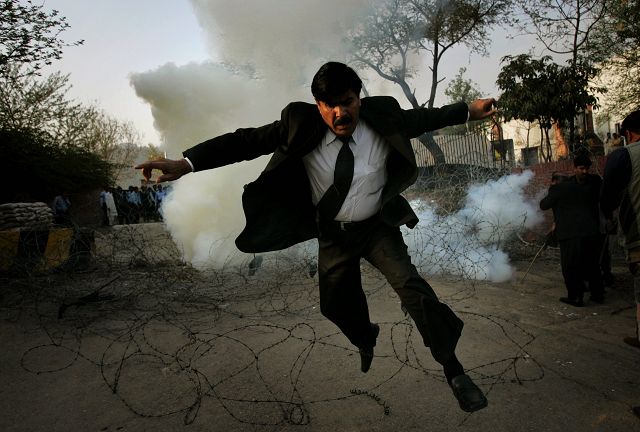
Justice Chaudhry had been suspended by then President Pervez Musharraf on March 9, 2007 as the justice was preparing a court decision against Musharraf’s re-election for President for a second term. After suspending Chaudhry, Musharraf then promptly suspended the constitution and declared a state of emergency. Lawyers across the country rallied against the sacking of the chief justice and the judiciary went to war against the government by organizing protests all across the country. This caused Musharraf’s popularity to plummet across Pakistan and after six weeks of protests, Musharraf was forced to restore the constitution and ended emergency rule.


A weakened Musharraf announced his resignation from office on August 18, 2008 under impeachment pressure from the opposition coalition government and stepped aside. After the assassination of Benazir Bhutto, Zardari had become the head of her party Pakistan People’s Party (PPP). Musharraf was succeeded on September 6, 2008 by Asif Ali Zardari as Pakistan’s President. Zardari had promised to restore Justice Chaudhry to his seat at the head of the Supreme Court but had not done so due to his fear that corruption charges against him may be brought by Chaudhry’s court as Justice Chaudhry is famous for his anti corruption rulings against the government and other powerful institutions.

Pakistani lawyers and political activists had coordinated a long political march to culminate in a huge rally at the parliament building in the capital Islamabad on Monday to protest the government not having restored the judiciary in Pakistan. Hundreds of thousands of people had taken part in the anti-government procession and there was fear that the protests could turn violent and lead to further instability and possibly a coup by the military to restore order and an end yet again to democracy in Pakistan.

Perhaps fearing both the people’s sentiment against him as well as possible moves by the army against his rule due to the unstable situation, the government of Zardari announced Monday morning that Justice Chaudhry will be restored to his office of the chief Justice of the Supreme Court of Pakistan.


We at Pakistanis for Peace believe that this is a good decision by the Zardari government and they must realize what even past President Musharraf came to realize and that is that no government or entity of Pakistan will be able to overcome the mobilization and public support for the lawyers and judges of the country. Also they are seen by the common man as supporters of the people’s rights against powerful institutions and individuals and going against the judiciary is seen as going against the interests of the people of Pakistan as they are the last institution before a ruler assumes absolute power. Having a strong and independent judiciary is needed for a thriving democracy which Pakistan hopes to become one day like India has proven itself to be the last 60 years. The reinstatement of Chief Justice Chaudhry is a necessary step in the right direction towards bringing political stability back to Pakistan, a nation already facing so many internal and external threats.


Reported by Manzer Munir for www.PakistanisforPeace.com

iftikhar-mohammad-chaudhry


Seasoned Diplomat Appointed Special Envoy to Afghanistan and Pakistan

richard-holbrooke

On her very first day as the new Secretary of State, Hillary Clinton called on the Prime Minister of Pakistan Asif Ali Zardari to advise him and the Pakistani government that the Obama administration has designated former US ambassador to the UN, Richard Holbrooke as a special envoy for Afghanistan and Pakistan.

A senior diplomat at the State department stated that it was a touch-base meeting between Clinton and Zardari but she also wanted to advise him that Pakistan would continue to be a crucial ally to the US and also a partner in fighting extremists in the region. It is noted that back in the 80’s the United States had appointed a similar envoy during the Afghan-Russian war and the individual had been instrumental in helping the Afghan resistance groups comprised of the mujhaideens fighters successful in repelling the Soviets with US and Pakistani backed assistance.

The US government terminated the special envoy position after the end of the war and the pullout of the Soviets but the incoming Obama administration is keen on reestablishing the important position.

Richard Holbrooke is seen as a very capable career diplomat very familiar with the two countries from his time as the American ambassador for the UN. He was also nominated 7 times for the Nobel Peace prize and is also the only person to have held the assistant secretary of state for two different regions of the world. He also was instrumental in brokering the peace agreement among the Bosnian warring factions that led to the Dayton Peace Accord in 1995. During Bill Clinton he was considered heavily for the Secretary of State position before eventually losing out to Madeline Albright as the head person in charge at the State department.

More recently he also served as a senior advisor for Hillary Clinton’s campaign for President and is seen as a close confidant of the former first lady.  President Obama and Secretary Clinton have stated that the Afghanistan and Pakistan border and the situation in the two couuntries will be one of their top foreign policy concerns. The appointment of such an experience and powerful diplomat underscores this commitment by the new administration.

Pakistanis for Peace believes that the appointment of Richard Holbrooke as the special envoy to the region is a welcome sign to a region that will be a critial focus for the US and for this new president. An accomplished and well experienced diplomat such as Mr. Holbrooke will ensure that when he talks, Kabul and Islamabad are aware that it is essentially Secretary Clinton or President Obama himself that they are conversing with and this direct link back to Washington will enable the two countries to fight the militants better. There is not just change afoot in Washington DC, the appointment of Richard Holbrook signals the arrival of a more robust and engaging US policy towards Afghanistan and Pakistan.

-Reporting by Manzer Munir for  www.pakistanisforpeace.com .

Temporary Halt in Bombings

palestinian-boy-with-arafat-in-back palestinian-boy-with-arafat-in-back1palestinian-boy-with-arafat-in-back2palestinian-boy-with-arafat-in-back3arafat


January 19, 2009, Israel announced a cease-fire after 22 days of utter
chaos and destruction in Gaza.  Twelve hours later, Palestinian
militants followed suite and declared a week long cease-fire.  More
than 1300 people have died of which 1% are Israelis.
Earlier, a summit hosted  by Egyptian President Hosni Mubarak and
French President Nicolas Sarkozy, called on International leaders to
discuss the crisis and its resolutions.

Also present were Palestinian Authority leader Mahmoud Abbas and UN
chief Ban Ki-moon.   Although no concrete resolutions came at the end
of the summit, each side did make its own unilateral declaration of
a cease fire.  Still far from any permanent peace agreement the Israelis and
Palestinians each declared their demands.  Israel demands a complete
halt to the missile attacks on their Southern border by Hamas or any
Palestinian militants.  Hamas wants Israel to withdraw from the Gaza
strip within a week and to remove all bans and allow access to
humanitarian needs.  Or as stated by Charles Clayton, the national
director of World Vision Jerusalem, an aid group, an “18-month
blockade of the 1.5 million Palestinians in Gaza,” needs to come to an
end.  And he added that this blockade has “devastated the economy,
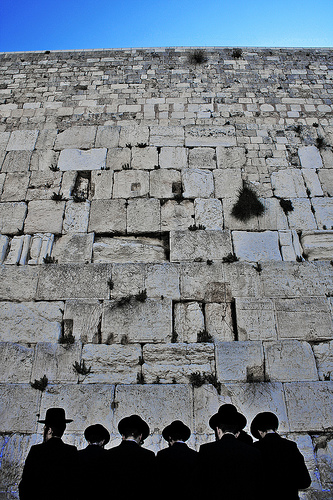
halted services, aisraels-wailing-wall2nd rendered the people of Gaza entirely dependent on

humanitarian aid.”  In the near future, the Israeli Prime Minister Ehud Olmert has planned
a meeting in Jerusalem.  Leaders of the UK, France, Germany, Italy,
Spain and the Czech Republic are expected to attend.  What, if any,
positive outcome will be reached at this meeting, remains to be seen.  As always, unless all sides are true and honest at the negotiating table, there will not be any lasting peace between these two long warring tribes of the children of Abraham.  Pakistanis for Peace calls on its Jewish and Muslim brothers in both countries to sit down and make an ever lasting peace with the help of perhaps the most important American President since FDR coming into office in Washington DC on Tuesday January 20, 2009. These two groups of people need to realize that with Secretary Clinton and President Obama on board, they have true allies in Real and Everlasting Peace and Never a better time than now to attain it. The Jews and the Muslims greet each other the same way when they meet their families or friends on the street. They say “Shalom” and the Muslims say “Salaam”. Both mean “Peace” in Hebrew and Arabic. Interesting that such a common word and form of greeting and salutation can be so uncommon in the lands of Jesus. Let’s continue to hope for peace in the region on the eve of this historic presidency in the United States across the Atlantic.

President Barack Hussein Obama, 44th President of the United States

President Barack Hussein Obama, 44th President of the United States


As  reported by Manzer Munir in Orlando, FL USA and Taneem Ali and M. Lameesa Ali in Chicago, Illinois, USA.

Pakistan moves troops from Afghan border to Indian border

paf-jet

The US government today acknowledged that Pakistan has began shifting troops from Afghanistan border on its west to the east and the long border with India due to heightened tensions between the two countries following the Mumbai blasts of last month. There are confirmed reports inside Pakistan of the elevated national security concerns within Pakistan as well as sightings of Pakistan Air Force (PAF) jets seen patroling the border over Lahore Pakistan using US made F-16’s. US commanders in Afghanistan are worried that Pakistani troops going to the Indian border will leave them undermanned in helping fight the insurgency within Afghanistan.

As a Pakistani American with family and friends in both India and Pakistan, I am very concerned. Not only because they have nuclear weapons aimed at each other and share a huge border! But also because it is against our vital interests in the US to see south Asia explode and much of East and West Asia as well as parts of Europe affected by a nuclear holucast caused by an all out war between the two nations.

Furthermore, we need Pakistan to continue to help our American troops and personnel in Afghanistan fighting the Taliban and Bin Laden’s boys and do not need the Pakistanis to lose their focus on the war in Afghanistan against the terrorists on Pakistan’s west border with Afghanistan. So, India to the east sharing a huge border and Afghanistan to the west with another war going on over there, it is too much even for one of the largest armies in the world (Pakistan) to deal with considering how easily India could win a war with Pakistan. It would obviously come at a very very steep price and God Willing incoming president Obama and secretary of state Hillary Clinton will be up to the job of diffusing the most dangerous situation in the world when it comes to Pakistan and India.

Please check back often for near daily updates on the situation from a grassroots level as we at Pakistanis for Peace have friends on the ground in both countries monitoring the situation. Website Pakistanisforpeace.com launching soon where this blog will be integrated. Until then, please continue to visit us here at wordpress.

https://pakistanisforpeace.wordpress.com

Also, join us on Facebook under groups: Pakistanis for Peace.

Thanks and lets pray for peace on Earth or at least in some very dangerous places! Ameen.

A Movement Begins

pak-india-flags2


Welcome to Pakistanis for Peace. A group founded on Facebook for Pakistanis united against terrorism and extremism and united in their quest for immediate and lasting peace between India and Pakistan specifically but also around the world in general. Also you may visit us at our Facebook page at http://www.facebook.com/home.php#/group.php?gid=37793413510

Thanks for visiting. And remember the next time someone asks you how come Muslims or Pakistanis don’t do enough speak up against terrorism and  violence perperterated by Mulsims or Pakistanis, please tell them that there are groups and individuals out there such as http://www.Pakistanisforpeace.com and together with your help they will be as vigilant about peace as the terrorists are about terror. Pakistanis for Peace because Pakistan is for Peace.