Archive for the ‘ Peace ’ Category

Grandsons of Mahatma Gandhi and Sir Abdullah Haroon Appeal for Pakistan Flood Relief

As reported by The United Nations

Miseries of millions unleashed by unprecedented floods in Pakistan brought together grandsons of two famous men in the Indian sub-continent to raise money for the sufferers.

Rajmohan Gandhi, grandson of Mahatma Gandhi and Abdullah Hussain Haroon, Pakistani ambassador to the UN, reached across the lines of history to make a joint appeal here to people to open their wallets to help the flood devastated people of Pakistan.

Acknowledging the gesture of Gandhi’s grandson, Hussain Haroon said Mahatma Gandhi was not only the father of nation to Indians, but also for Pakistanis and the people of entire sub-continent.

Appearing in a joint appeal at the UN headquarters, the Pakistani ambassador introduced Rajmohan saying “Mahatma Gandhi had a very special relationship with all of the Indian sub-continent and also the Muslims” and noted that their grandfathers were very personal friends.

Hussain’s grandfather Sir Abdullah Haroon was a close associate of Mohammad Ali Jinnah, whom the founder of Pakistan described as one of the strongest pillars of Muslim League.

But Haroon acknowledged that though Gandhi and his grandfather were on opposite side of the political spectrum, yet they had immense strength and respect for each other.

“My grandfather Sir Abdullah Haroon was a very personal friend of his (Gandhi), and when my grandfather passed away, we still have Gandhi’s letter where he said to my grandmother, I would have trusted your husband with a blank check,” Haroon said, making reference to the history.

And many a time Mahatma Gandhi proved his selflessness, he asserted.

“When I remember the fledgling Pakistani state did not receive its share from the then newly formed Indian government, the Mahatma went on a fast unto death in Delhi, and the Indian government had to buckle down and pay Pakistan its share,” the Pakistani ambassador acknowledged.

“When the Hindu-Muslim riots took place in Calcutta, he not only went there with Huseyn Shaheed Suhrawardy, he brought together both elements, and the rioting stopped in the city because he was fasting until it would stop. And people realised that it had to stop,” he said, adding it was because of one of these very reasons that he was assassinated.

Adding his voice to the appeal for generous support for the people of Pakistan, Rajmohan Gandhi said, “Now, in this catastrophe, as in all wars and conflicts, the poorest are once more the prime sufferers, losing not a portion of what they had, but all they had. Their sorrows are unrecorded, their heroism unsung, their pain unremembered. I pray that this flood will help us in South Asia to reorder our priorities.”

Give White House Credit for Mideast Peace Efforts

By Peter A Joseph for The Huffington Post

Skeptics have had a field day criticizing the direct negotiations between Israelis and Palestinians to be launched this week in Washington. To be sure, the obstacles to concluding an agreement are significant, the stakes are high and expectations are low.

But it is time to give the Obama Administration some credit. The White House is launching direct talks on Thursday with tools that previous administrations did not have or were unwilling to employ in past negotiation efforts. Despite the rampant skepticism, there are indeed reasons to be hopeful without being naïve.

The Obama Administration has come a long way to get to this point. The year-long tussle with Israel over West Bank settlement construction, a botched photo-op between the Israeli and Palestinian leadership in New York one year ago, and painstaking attempts to bring the parties to direct talks in recent months have eroded the optimism and expectations that came with the election of President Obama.

However, there are a number of essential ingredients that the Administration has got right as it launches direct talks. Martin Indyk mentioned four of them last week in the New York Times: 1) there is very little violence between the parties today; 2) settlement activity has been limited; 3) the majority on both sides support a two-state solution; and 4) the contours of an agreement are largely already known. Here are four more:

First, violence is down because security cooperation between Israel and the Palestinians is at an all-time high. Palestinian security forces trained with the direct support and supervision of the United States, Israel and Jordan have significantly secured the West Bank and created an atmosphere conducive to economic growth. The success of the burgeoning Palestinian security force is providing Israelis with much needed confidence. Security is – and always has been – Israel’s number one concern. With such cooperation already in place, these talks will have a distinct advantage over all other previous efforts.

Second, the Arab states have endorsed President Mahmoud Abbas’ negotiating with Israel and pledged to be part of the effort. The inclusion of Egypt and Jordan in the launch next week is vital. As co-chairs of the Arab League’s Arab Peace Initiative follow-up committee, Egypt and Jordan bring with them the promise of normal relations for Israel with 22 Arab states following a successfully negotiated agreement on the final status issues.

Regardless of whether Yasser Arafat truly intended to achieve peace with Israel, he never enjoyed the mobilized support of the Arab states, let alone the United States and Israel. Mahmoud Abbas does. The Arab states are providing Abbas with the kind of backing and legitimacy to negotiate with Israel on all of the sensitive final status issues that he will need in order to conclude a historic agreement. This is particularly significant given the political split of the Palestinians between the West Bank and Gaza.

Third, the Palestinians are invested in building the foundation for a Palestinian state. The Palestinians have been plagued in previous negotiation efforts by poor governance and widespread corruption. While concerning issues remain, the progress of Prime Minister Salaam Fayyad to establish the infrastructure for a future state – like the aforementioned security advancements – distinguishes these negotiations from previous ones. The success of the state-building effort to this point and the growth of the West Bank economy lends credibility to the moderate leadership of Abbas and Fayyad and their ability to govern a viable, contiguous state, should the political process enable one to be established. Their efforts should also give Israelis added confidence that they would be establishing a conflict-ending agreement with a responsible neighbor.

Fourth, the Netanyahu government has been calling for negotiations for months, repeatedly stating that an agreement could be reached quickly if negotiated in good faith. The Administration now has a chance to test them on their word.

The make-up of the Israeli government presents both a challenge and an advantage to the renewed talks. The fact that this is a largely right-wing government intended to provide Israel with essential guarantees on security could bolster confidence among the Israeli public for an agreement, should one be achieved. This would remain true even if the government were at some point to replace Avigdor Lieberman’s Yisrael Beiteinu party with Tzipi Livni’s Kadima party. Just as the Likud Prime Minister Menachem Begin secured a peace agreement with Egypt, so too might the current Likud Prime Minister secure the elusive peace agreement with the Palestinians.

Finally, the White House has pledged to be actively engaged and bridge the gaps when necessary. The failed Annapolis process proved that Israelis and Palestinians need the United States to be at the negotiating table in order to help the parties bridge the gaps.

Active engagement by the United States does not just require bridging proposals, but also reminding the parties of the interests at stake. To Israelis, concluding an agreement with the Palestinians would certainly help amplify efforts to mobilize the international community to counter the threat from Iran. To Palestinians, a viable and secure state can only come about through negotiations.

However, even with these various important ingredients in place, there remains a missing one that is vital to the success of direct talks: trust. Without trust between the parties – or in the United States’ leadership – the current effort will undoubtedly fail. Building this trust, beginning with navigating the parties past the September 26th deadline of Israel’s settlement moratorium, is clearly the United States’ most pressing challenge in the weeks ahead. But the foundation to succeed in doing so is beginning to be put into place. The Administration deserves some credit for laying it.

– Peter A Joseph is the president of the Israel Policy Forum

Ground Zero Mosque Controversy Helps Give Rise to Islamophobia Across the US

By Manzer Munir for Pakistanis for Peace

A man was accused of attempted murder for his vicious knife attack on a Muslim New York City Cab driver Tuesday evening in what is being described as a hate crime by the authorities.

Michael Enright, a college student who also did some volunteer work in Afghanistan, was being held without bail on charges of assault and attempted murder as hate crimes.

In a criminal complaint filed by the New York Police Department, Michael Enright allegedly asked the driver if he was a Muslim. The cab driver, Ahmed H Sharif, an immigrant from Bangladesh, replied that yes he was indeed a Muslim. At this point, Mr. Enright is alleged to have uttered the customary Arabic greeting of “Aslaam-a-laikum” (Peace be with you) and brutally attacked the cab driver with a knife, slashing him badly on the face, hands and neck. During the attack, Mr Enright also uttered “Consider this a checkpoint” to the cab driver, all the while brutally attacking him with his knife.

 Besides a serious neck wound, the cab driver, Mr Sharif, suffered cuts on his forearms, face, and hands while trying to defend himself from the attacker.

Inexplicably, Einright had volunteered with Intersections International, a group that promotes interfaith dialogue between religions and an organization that has also supported the plans for the Islamic center and mosque 2 blocks from Ground Zero. He had also recently returned from Afghanistan where he volunteered to be embedded with a combat battalion so that he could document their experiences as soldiers that Einright wanted to showcase in an upcoming documentary.

Police stated that Einright was drunk and intoxicated at the time of the attack on Mr Sharif and it is not clear what his motive was for perpetrating the violence on the cab driver. There is growing speculation however amongst members of the American Muslim community as well as several civil rights organizations such as the ACLU and CAIR that the attack is a result of the growing Islamophobia and fear amongst the American public as a direct result of the Ground Zero Mosque controversy that has been brewing for weeks and has been front and center in the media and the American public for some time now.

The plan to build an Islamic community center and mosque two blocks from the 9/11 tragedy and the site of the World Trade Center towers became controversial as right wing groups seized on what they believed to be “an insensitive provocation towards the American public”. Muslim groups demanded their First Amendment rights of freedom of religion and pointed to the New York City council vote allowing them the permit to build as reasons for what they are doing as legal and in fact an effort to build bridges between Islam and other faiths following the events of September 11. However, the issue became nationally prominent and controversial by then as fanned by right wing blogs and ad campaigns, the majority of the American public became against the building of the mosque, according to recent polls.

Thankfully, the voice of reason in this whole debate has been none other than the billionaire Jewish mayor of New York, Mayor Michael Bloomberg. His stance and views in support of the mosque as a constitutionally protected right has been welcomed by Muslims as well as civil rights organizations and he should be commended for standing up for what is constitutionally the right thing to do. Briefly, President Obama also came out in support of the group’s right to build the mosque as being a constitutional right, before making statements the next day that “questioned the wisdom” of building it there.

Nonetheless, a link has been made by the right wing, no matter how unfairly, that Islam promotes terror and violence. This can be seen in the fact that the vast majority of Americans now have a negative and unfavorable view of Muslims. For the country to be even having a debate whether a group of Americans can build a house of worship is a testament to how far things have regressed.

No one would ever have thought that a constitutionally protected right such as that of freedom of religion would ever seem controversial. Many have argued that only the area around Ground Zero is off limits to Muslims and they are free to build their mosques elsewhere. This does not appear to be the case as mosques thousands of miles away from Ground Zero in California, Tennessee, Ohio and elsewhere across the country have now come under heavy opposition by local zoning boards and people in those communities. The fear and hatred of Muslims is becoming a growing problem as the Ground Zero Mosque controversy has began to fuel acts of violence against Muslims as seen in the attack on the NYC cab driver. It is a message that is being sent to the American public that Muslims in the United States do not deserve the same rights and privileges enjoyed by all others. In fact, there is an attempt to link all mosques to terror somehow, which is very offensive to millions of peaceful Muslims who abhor violence and who live decent hard working lives in their communities.

At first I was not happy to learn that Muslims planned to build a mosque near Ground Zero as I knew that this would become controversial. But as the opposition to mosques has grown across the nation, and not just for building near Ground Zero, but hundreds and thousands of miles away, it has become clear that this anti-mosque movement is not just about that hallowed area near the World Trade Center site but is in fact becoming an opposition to the religion of Islam as a whole.

This idea by the opponents of the mosque and the right wingers that somehow it is perverted and insensitive to build a mosque several blocks from Ground Zero is in reality only true if we buy into the belief that Muslims and Islam brought down the towers and not a handful of radical extremists of the religion of Islam. If we believe that mainstream Islam itself was responsible for all those deaths on American soil and not Osama Bin Laden and his Al-Qaida network, only then would building the mosque there be insensitive. But for us to somehow associate the whole religion of Islam of over 1.5 billion people by the actions of 19 terrorists is ridiculous.

It is my fear that attacks similar to the one a few days ago on the NYC cab driver will continue to grow as we allow an environment of hate to perpetuate and grow against a group of people. At the very least, this opposition to mosques across the country will certainly grow and continue to spread the notion that ALL Muslims are violent and terrorists. This is simply not true as the 5-7 million American Muslims and the 1.5 billion Muslims around the world will attest.

We must remember that we have a war on terror and not a war on Islam. Far away from Ground Zero in cities across the US as more and more mosques come under opposition in their communities, we must hold steadfast to our ideals, principles and to the US Constitution. As the best nation in the world, we have to defend our ideal and the basis of what makes us the best and that is the US Constitution. Speaking as an American and not even as a Muslim, I know that if we stop defending it for fear of being distasteful, insensitive, or inconsiderate, then we lose what makes us who we are as the freest nation in the world and we must not ever let that happen!

-Manzer Munir, a peace activist, and the founder of Pakistanis for Peace, is a freelance journalist who writes for www.PakistanisforPeace.com and other online journals.

India, Pakistan Can’t Break the Ice, Even in Hour of Tragedy

Reported by Sanjeev Miglani for Reuters

Pakistan’s catastrophic flood continues to boggle the mind, both in terms of the human tragedy and the scale of the damage it has wrought, and even more so over the longer term. One official has likened the disaster to the cyclone that devastated what was once East Pakistan, setting off a chain of events that eventually led to its secession and the birth of Bangladesh.

Not even that spectre, raised by Pakistan’s ambassador to Britain, can however dent the steadfast hostility between India and Pakistan. For a full three weeks as the floods worked their way through the spine of Pakistan from the turbulent northwest to Sindh in the south, Islamabad made frantic appeals to the international community not ignore the slow-moving disaster, and help it with emergency aid, funds. But next-door India, best-placed to mount a relief effort probably more because of the geography than any special skill at emergency relief, was kept at arm’s length. An Indian aid offer of $5 million, which itself came after some hesitation and is at best modest,was lying on the table for days before Pakistan accepted it. ”There are a lot of sensitivities between India and Pakistan … but we are considering it very seriously,” a Pakistani embassy spokesman told our reporter in New Delhi earlier this week. Things appeared to have moved faster only after Indian Prime Minister Manmohan Singh called his Pakistani counterpart Yusuf Raza Gilani expressing sympathy and reminding him of the offer of aid. Millions of Pakistans meanwhile continued to struggle for food.

To some extent, Pakistan’s hesitation in accepting aid from India is understandable. India is the traditional enemy. It is also the bigger country of the two. And over the last two decades it has become easily the more prosperous entity, courted by the world’s industrialists while Pakistan is “haunted by the world’s terrorists”, as columnist Vir Sanghvi writes in the Hindustan Times. A Pew poll that we wrote about a few weeks ago showed how deep-seated these Pakistani fears are: a majority of those polled said they considered India to be the bigger threat than al Qaeda or the Taliban, despite the violence they have suffered at the hands of the militant groups over the past few years.

As Sanghvi writes:

But, to be fair to the Pakistanis, let us accept the position that decades of hostility between our two countries have led to a situation where the Pakistanis simply do not trust us. Let us also accept that they are so resentful of India that even in their hour of greatest crisis when thousands of people have died and millions are homeless, they will still spurn India’s hand of friendship. And let us grant them their claim that given our history, they are justified in being suspicious of India.

But then, you have to wonder, if the two nations cannot even keep up basic neighbourly ties such as offering aid and commiseration at times of natural crises, what chances they can ever come to a peace deal that will demand much more from them ?

It was pretty much the same in 2005 when the earthquake struck Pakistani Kashmir and the authorities struggled to provide aid to the affected. And Indian aid offer was initially ignored, later blankets from India were accepted. But even then Pakistan had people cut out the label that read ‘made in India’ on each blanket.

Indeed, some Pakistani writers are already criticising the government of bringing dishonour to the country by accepting Indian assistance. Commentator Shireen M. Mazari in a piece entitled “What Have We Become” says the Pakistani government accepted the Indian offer for help under pressure from the United States and that it was a matter of shame. By taking Indian aid, Pakistan had let the people of Kashmiri down just when they had risen in revolt against Indian forces.

“This money has the blood of Kashmiris on it and one wonders how our Kashmiri brethren must be feeling as they face the bullets of Indian forces every day and see us taking Indian “aid”,” Mazari wrote.

Kashmir, then, can’t be far from any discourse relating to India and Pakistan. It is the core dispute at the heart of 60 years of difficult ties, says Pakistan and must be resolved before any normalcy can take place. India doesn’t even consider the territory to be disputed, so the argument, at least in public, hasn’t changed much in over half a century.

For the 20 million affected by the flooding in Pakistan, and facing a future that would daunt any of us, Kashmir must, at the moment, be a distant thought.

Pakistan Accepts Flood Aid Money From Rival India

By Issam Ahmed for The Christian Science Monitor

Pakistan has accepted an offer of $5 million of flood aid from neighbor and longtime rival India, in a move that could spark a political backlash at home.

In an interview with Indian news channel NDTV, Pakistani Foreign Minister Shah Mehmood Qureshi described the offer of aid, made last week, as a “very welcome initiative” which the government of Pakistan has agreed to accept, after taking some time to decide.

But it would have been better to say “thanks, but no thanks,” according to Liaqat Baloch, secretary general of Pakistan’s second-largest religious party, the Jamaat-e-Islami.

“Pakistan has many disputes with India, with reference to Kashmir, and the Indian Army engaging in brutality in occupied Kashmir,” he says. “In the past, when Pakistan tried to support India after their natural disasters, India never accepted. Therefore it would be better if our government refused the aid with a big thank you.”

Al Khidmet foundation, Jamaat-e-Islami’s charitable wing, has been one of the most visible aid organizations in the flood-affected areas.

The two countries have made efforts in recent months to repair bilateral relations, which took a plunge following the 2008 Mumbai attacks. India blames those attacks on Pakistan-backed militants. The two countries have fought three full-scale wars, most recently in 1999.

The United States had urged Pakistan to accept India’s offer of aid earlier this week. When Indian Prime Minister Manmohan Singh called his Pakistani counterpart to offer his condolences following the worst natural disaster in Pakistan’s history, it was an event widely reported in the Pakistan media.

“In such times of natural disasters, all of South Asia should rise to the occasion and extend every possible help to the people of Pakistan affected by the tragedy,” Mr. Singh said, according to a statement released by his office.

According to Badar Alam, editor of Pakistan’s Herald magazine, the amount of aid pledged is “symbolic, but its effect is immense. It’s a good confidence building measure between the two countries.”

But, he warns, Pakistan’s religious parties will try to spin the move “as a sign of weakness.”

“They will see it as a capitulation to India, that our own government is so weak we have been forced to accept help from the historic enemy,” says Mr. Alam.

Mosharraf Zaidi, a columnist for Pakistan’s The News, termed the decision brave: “It’s a tremendous gesture, very mature. India should be commended for donating it and Pakistan should be commended for accepting it.”

“The whole idea in an emergency is you’ll have the Jamat ud Dawas [the charitable wing of banned militant outfit Lashkar-e-Taiba] and you’ll have competing powers working almost in tandem to support people. It shows that no matter what our value systems, we have to work together right now,” he adds.

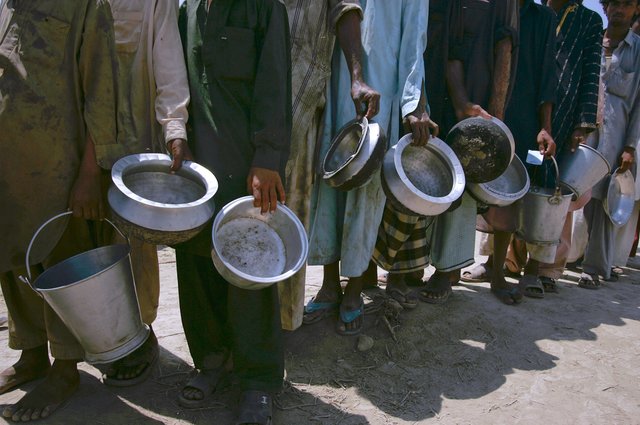
Some 20 million people are affected by Pakistan’s worst flooding in recent memory; Pakistan’s government estimates around 1,600 deaths and millions homeless or displaced. The United Nations appealed to the international community to donate $460 million in emergency assistance last week, and has met half of that goal. Yesterday the US increased its flood aid to Pakistan from $80 million to $150 million.

-Pakistanis for Peace Editor’s Note- It is a good decision by the Pakistani government to accept the aid offer from India. Not only will this be a confidence building measure between the two nations, it will save countless lives, and no nation is too proud to save the lives of its citizens.

Keith Olbermann – Special Comment, Muslim Community Center

“THEY CAME FIRST for the Communists,
and I didn’t speak up because I wasn’t a Communist.

THEN THEY CAME for the trade unionists,
and I didn’t speak up because I wasn’t a trade unionist.

THEN THEY CAME for the Jews,
and I didn’t speak up because I wasn’t a Jew.

THEN THEY CAME for me
and by that time no one was left to speak up.”
-Martin Niemöller

“This is America damn it! And in America when somebody comes for your neighbor, or his Bible, or his Torah, or his Athiest Manifesto, or his Koran, you and I do what our fathers did and our grandmothers did, and our founders did, you and I SPEAK UP!”
– Keith Olbermann

What They Said: Pakistan Spies Downgrade India Threat

By Vibhuti Agarwal for The Wall Street Journal

The Wall Street Journal reportedTuesday that a report from the Pakistan’s chief spy agency, the Inter-Services Intelligence, said domestic militancy had overtaken the Indian army as the greatest threat to Pakistan’s national security. This is the first time since the ISI was founded in 1948 that the ISI has found a bigger threat than its neighbor. India Real Time presents a roundup of comments from readers and others below:

The Times of India newspaper reported Wednesday that Pakistan’s acknowledgment of its internal problems comes as the country is struggling with an image problem which may be affecting the flow of international aid to help the victims of the devastating floods there. “The unexpected downgrading of the threat perception from New Delhi and waking up to the scourge of home-grown terrorism comes even as foreign aid for the thousands affected in floods in Pakistan is yet to pick up,” wrote Chidanand Rajghatta for the Times of India.

The Hindustan Times newspaper quoted analysts saying the change of mindset makes sense. “I am not surprised that the ISI has changed its strategic thinking,” Talat Masood, a retired general and analyst on defense and security issues told the newspaper. Another analyst, Imtiaz Gul, was also quoted in the article. “The ground realities have changed and have forced allies into becoming enemies,” he said.

“At this point, the Pakistan government will say just about anything the world community wants it to,” wrote H. Jere. “After seeing the response to the aid request has been disappointing, it will agree to almost anything.”

Other readers called Pakistan’s latest admission “hogwash,” adding that it may be a trick to get more funds from the United States.

“It is sheer naiveté to consider Pakistan’s ISI and Islamic terrorists as two separate entities,” said Shri K. “ISI is the quintessence of rabid Islamic fascism and has been mercilessly exporting Islamic terror all over the world.”

Some readers said Pakistan’s admission came as a ray of hope for improving the long-estranged India-Pakistan relationship.

“I hope India take this opportunity to offer real assistance to the victims of the floods,” wrote Phillip Hwee. “It’s time for India and Pakistan to reconcile with one another. A détente is very necessary so that each of the two rivals can reallocate their resources to improve the standard of living of their respective citizens.”

David Almeida agreed, adding that “one can only hope that the military establishment in Pakistan is truly serious about abjuring terrorism, regardless of whether it is targeted at Indian or Pakistani state.”

NYC Mosque Should Be Seen As a Reconciliation Not a Provocation

By Manzer Munir for Pakistanis for Peace

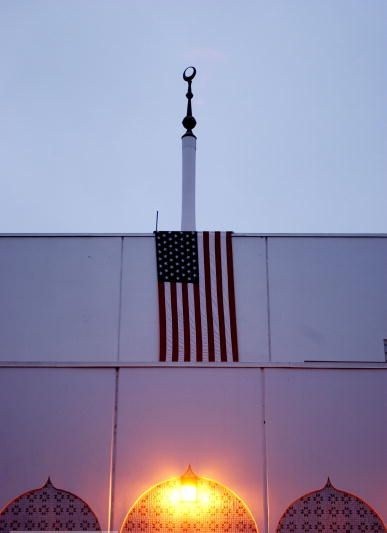
A New York City panel cleared the way Tuesday for an Islamic Center and mosque to be built several blocks from Ground Zero and the tragedy of September 11, 2001. The New York City Landmarks Preservation Commission voted unanimously to deny historic status to a 19th century building near Ground Zero. By doing so, it paves the way for the old building’s demolition and the construction of a 15 story Muslim community center, a mere two blocks from the World Trade Center site. The controversy has brewed for months over the creation of a mosque and an Islamic center so close to the site of the World Trade Centers where nearly 3,000 Americans died in terrorist attacks blamed on Muslim terrorists affiliated with the terrorist group Al-Qaeda.

Opponents of the mosque have argued that the creation of it so close to the site of the 9/11 terrorist attacks disrespects the memory of those killed. They also question who is behind the funding and bankrolling of the proposed structure, Cordoba House, which is estimated to cost nearly $100 million. Many prominent members of the Republican Party such as Newt Gingrich and Sarah Palin have come out strongly against the building of the mosque and Muslim center so close to the site of the attacks. Gingrich argued that “that the Ground Zero mosque is all about conquest and thus an assertion of Islamist triumphalism which we should not tolerate.”

Seemingly directed at peace seekers such as myself, Sarah Palin posted the following message on her Twitter page “Peace-seeking Muslims, please understand. Ground Zero Mosque is UNNECESSARY provocation; it stabs hearts. Please reject it in the interest of healing.”

Some of the relatives of the victims of the 9/11 attacks have come out and said that the mosque and Islamic center would amount to a monument for terrorists as the extremists would see it as a celebration of their destruction of an American monument and lives lost. According to them, the building of the Muslim structure gives an impression that the Islamic extremists won and we Americans lost, not just in terms of lives lost but also in terms of lost and lowered morale.

The proponents of the Cordoba House have advocated the building of the structure especially since they see the center as an organization that promoted tolerance and inter faith dialogue, reflecting the rich diversity of New York City. They say that the “center will be community-driven, serving as a platform for inter-community gatherings and cooperation at all levels, providing a space for all New Yorkers to enjoy.”

Their website further states that the Cordoba House project is “about promoting integration, tolerance of difference and community cohesion through arts and culture. Cordoba House will provide a place where individuals, regardless of their backgrounds, will find a center of learning, art and culture; and most importantly, a center guided by Islamic values in their truest form – compassion, generosity, and respect for all.”

In fact the name Cordoba House, takes its name from the medieval Spanish city where Christians, Jews and Muslims lived in peace and harmony under the Moors of Spain for over 800 years. Mayor Michael Bloomberg was right in supporting the construction of the Cordoba House not just on the basis that religious freedom is enshrined in our constitution, but because it was the right thing to do. Denying the building of this structure would have been a blatant admission on the part of the city and indeed the entire country that there is absolutely no difference in the twisted misinterpretation of Islam practiced by the hijackers and the Taliban and the one practiced by the rest of the 1.5 billion Muslims worldwide. As if a mere 19 deranged, misguided, yet determined adolescent men could change the fact that the vast majority of the adherents of Islam are peaceful, hardworking, average people like you and me who want nothing more than to live a good life, raise their kids, and worship their creator.

No, the opponents of the Cordoba House and their hate wagering backers and right wing politicians like Palin and Gingrich want nothing more than to incite people into believing that Islam in general is bad and evil and to suspect anything that goes on in a mosque. Oddly enough, it seems that much like their enemy, the Taliban and Muslim fundamentalists, the right wing politicians in the GOP want nothing more than “Clash of Civilizations” to come about between Islam and the West. Preachers like the Pastor Terry Jones in Gainesville, Florida who is organizing an “Everybody burn a Quran Day” as well as mainstream evangelicals like Pat Robertson also condone this view and treatment of Islam and Muslims.

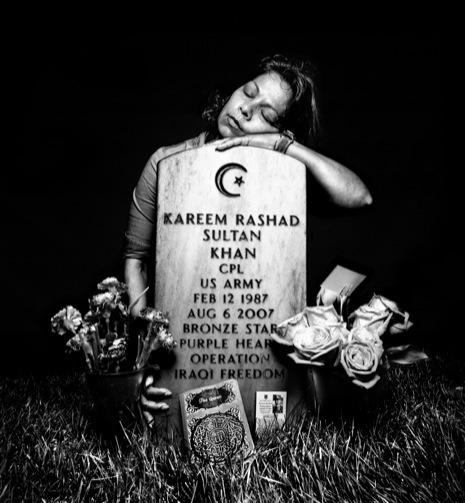
Little do these so called “leaders” realize that scores of Muslim Americans also perished that day on September 11, 2001. The hate and fear mongers will not want you to know the story of Salman Hamdani, a NYPD police cadet, who was a part time ambulance driver, an incoming medical student, and devout Muslim whose remains were found at the North Tower, with his EMT medical bag beside him, presumably trying his best to help those at the site of the attacks. Or the Muslim waiter at the Windows of the World restaurant, who never got to see his wife give birth to their son two days after the attacks. I wonder if Gingrich, Palin or any of the others could look US Army Specialist Kareem Rashad Sultan Khan’s mother in the eye and tell her that although her son died in an American uniform fighting in Iraq under the American flag, his religion and his beliefs system are evil and have no place in American life. The deceased Purple Heart and Bronze Star recipient would turn in his grave at Arlington National Cemetery if he knew how his faith was being disrespected and marginalized by politicians and right wing blowhards like Rush Limbaugh and Glenn Beck, individuals who never served this country or risked their life as had Specialist Khan.

It is heartening to see that good sense prevailed by the New York City panel that had the tough job of deciding on this issue and this heavily watched story. Although there promises to be a further fight and appeal by the opponents of the Islamic center, one hopes that the ruling would stand as denying it would clearly violate the freedom of religion that all faiths should get in America, regardless of the actions of some of their members. After all, one should not punish and ostracize the many for the actions of a few.

-Manzer Munir, founder of Pakistanis for Peace, is a freelance journalist who writes for PakistanisforPeace.com and other online journals.

Arab Guilty of Rape After Consensual Sex with Jew

By Jo Adetunji and Harriet Sherwood for The Guardian

A Palestinian man has been convicted of rape after having consensual sex with a woman who had believed him to be a fellow Jew.

Sabbar Kashur, 30, was sentenced to 18 months in prison on Monday after the court ruled that he was guilty of rape by deception. According to the complaint filed by the woman with the Jerusalem district court, the two met in downtown Jerusalem in September 2008 where Kashur, an Arab from East Jerusalem, introduced himself as a Jewish bachelor seeking a serious relationship. The two then had consensual sex in a nearby building before Kashur left.

When she later found out that he was not Jewish but an Arab, she filed a criminal complaint for rape and indecent assault.

Although Kashur was initially charged with rape and indecent assault, this was changed to a charge of rape by deception as part of a plea bargain arrangement.

Handing down the verdict, Tzvi Segal, one of three judges on the case, acknowledged that sex had been consensual but said that although not “a classical rape by force,” the woman would not have consented if she had not believed Kashur was Jewish.

The sex therefore was obtained under false pretences, the judges said. “If she hadn’t thought the accused was a Jewish bachelor interested in a serious romantic relationship, she would not have cooperated,” they added.

The court ruled that Kashur should receive a jail term and rejected the option of a six-month community service order. He was said to be seeking to appeal.

Segal said: “The court is obliged to protect the public interest from sophisticated, smooth-tongued criminals who can deceive innocent victims at an unbearable price – the sanctity of their bodies and souls. When the very basis of trust between human beings drops, especially when the matters at hand are so intimate, sensitive and fateful, the court is required to stand firmly at the side of the victims – actual and potential – to protect their wellbeing. Otherwise, they will be used, manipulated and misled, while paying only a tolerable and symbolic price.”

Gideon Levy, a liberal Israeli commentator, was quoted as saying: “I would like to raise only one question with the judge. What if this guy had been a Jew who pretended to be a Muslim and had sex with a Muslim woman?

“Would he have been convicted of rape? The answer is: of course not.”

Arabs constitute about 20% of Israel’s population, but relationships between Jews and Arabs are rare. There are few mixed neighbourhoods or towns, and Arabs suffer routine discrimination.

Israeli MPs are considering a law requiring prospective Israeli citizens to declare loyalty to Israel as a “Jewish, democratic state”. Many Arabs would balk at swearing allegiance to a state which they see as explicitly excluding or marginalising them.

Dan Meridor, a deputy prime minister in Binyamin Netanyahu’s government, is opposed to the proposal. “Why does every bill need the word ‘Jewish’ in it – to show the Arab citizens that it doesn’t belong to them? Then we’re all shocked when they radicalise their stance.

“The majority doesn’t need to remind the minority that it is in fact a minority all the time,” he added.

“This Passport is valid for all the countries of the World, except Israel”

By Junaid Ghumman for Mideast Youth
The world Zionist movement should not be neglectful of the dangers of Pakistan to it. And Pakistan now should be its first target, for this ideological State is a threat to our existence. And Pakistan, the whole of it, hates the Jews and loves the Arabs. This lover of the Arabs is more dangerous to us than the Arabs themselves. For that matter, it is most essential for the world Zionism that it should now take immediate steps against Pakistan.” Ben-Gurion, the Prime Minister of Israel.

This speech was first published in Jewish Chronicles on 9th August 1967. This statement risen many controversies bloggers like me have quoted it many times; various explanations were also given to disprove this statement, but still we read it on every article related to Pakistan and Israel.

Pakistan and Israel do share some history and ideology. These are only two countries in the world created in the name of Religion; Pakistan for Islam, Israel for Judaism and both countries have taken independence from same British Empire after World War II.

Then why my passport still says, “This Passport is valid for all the countries of the World, except Israel”?

Pakistan claimed its independence from foreign invaders after two centuries of struggle. In 1757 after Battle of Plessey, East India Company started ruling Indian Sub-continent. The first armed resistance was Battle of Independence in 1857 after which the power was transferred to British government. In 1885 the political movement of independence started as Indian National Congress. Some of the Muslim leaders soon separated and launched new movement in 1906 as All India Muslim League for separate Muslim state which led to the creation of independent Islamic state Pakistan on 14th August 1947, which then became Islamic Republic of Pakistan in 1973.

For Israel the timings was same and the rulers were also same as of Indian sub-continents, but events and circumstances were totally different. Israel declared its independence on 14th May 1948 from British Mandate of Palestine. But Israel independence movement was not against British Occupation; rather it was a movement of creating a Jewish State by silently invading the markets, trades and areas to make Jewish settlements. Hovevei Zion or Hibbat Zion refers to organizations that are considered the foundations of the modern Zionist movement. These movements led to creation of Rishon LeZion in 1882 which is the first Jewish settlement in Palestine; which was at that time under Ottoman Empire. First Zionist Congress held in 1897 started the unified Zionist Movement which was converted to World Zionist Organization in 1960. This movement was successful in legalizing its demand of separate Jewish state in Palestine after Balfour Declaration 1917, in which British Mandate of Palestine’s (1917 – 1948) foreign Secretary Arthur James Balfour wrote letter to the leader of British Jewish Community Baron Rothschild, pledging British Empire support of creation of Jewish State in Palestinian Land.

So what kind of relationship does Pakistan and Israel has over period of 60 years?

While writing this blog I also tried to ask couple Pakistanis; their view points about Pakistan-Israel Relationship. Yousaf is Pakistani Engineer living and working in Saudi Arabia. Being in the region, Pakistanis here are emotionally and regionally attached to Middle East crisis. I asked him what kind of relationship both countries have. “Relationship between Pakistan and Israel are tied to the fact that how Israel government treats the Palestinians. In general, as Jerusalem is considered as one of the holiest places in Islam; this fact serves as a thorn in the eyes of Pakistanis.” Yousaf said.

Pakistan is among those 20 UN member nations which do not recognize Israel as an independent state. These 20 countries also include Afghanistan, Algeria, Bahrain, Bangladesh, Chad, Cuba, Indonesia, Iran, Iraq, Kuwait, Lebanon, Libya, Malaysia, North Korea, Saudi Arabia, Sudan, Syria, United Arab Emirates and Yemen. Unofficial media reports say that first Prime Minister of Israel David Ben-Gurion send secret message to Muhammad Ali Jinnah to formally accept its existence, but no response was given back to him. At the time of independence of Pakistan, it was reported that some 2,000 Jews remained in Pakistan, mostly Bene Yisrale Jews. Many left to Israel after its declaration of independence. Jews from Karachi, Pakistan, now live in Ramla, Israel, and they also built a synagogue they named Magen Shalome after the Pakistani Synagogue which was demolished in 1980.

60s, 70s and beginning of 80s were the decades when for the first time both countries came face to face when Arab-Israel war started. In “Six-day Arab Israeli War” of 1967; Royal Jordanian Air Force (RJAF) and Pakistan Air Force (PAF) were flying under a joint command. PAF pilot Flt. Lt. Saiful Azam became the only pilot from the Arab side to have shot down 3 IDF/AF aircraft within 72 hours.

In 1973 Arab-Israeli Yom Kippur War, 16 PAF pilots volunteered to support Syria and Egypt. On 23 October 1973 Flt. Lt. M. Hatif shot down the Israeli Phantom. On 26 April 1974, PAF pilot Flt. Lt. A. Sattar Alvi became the first Pakistani pilot, during the Yom Kippur War; to shoot down an Israeli Mirage in air combat. He was honoured by the Syrian government. Nur Khan, who was the Wing Commander received praised from Israeli President Ezer Weizman who wrote in his autobiography that: “He was a formidable fellow and I was glad that he was Pakistani and not Egyptian”. Pakistan also sent medical ambulances to Egypt and Syria.

After the Israeli attack on Iraq’s under-construction French-built nuclear Osirak-type reactor, Tammuz-I, south of Baghdad on 7 June 1981, Pakistan’s then President President Zia-ul-Haq directed PAF Air Headquarters (AHQ) to make contingency plans for a possible Israeli attack on Kahuta. Kahuta is noted for its nuclear research studies and nuclear development technologies in Kahuta Research Laboratories. On 10 July 1982, a special contingency plan was issued. In the event of an Israeli attack on Pakistan’s strategic installations, plans were drawn up for a retaliatory Pakistani strike on Negev Nuclear Research Centre. The Negev Nuclear Research Centre is an Israeli nuclear installation located in the Negev desert, about thirteen kilometres to the south-east of the city of Dimona.

On political level many statements were given. As chair of the Second Islamic Summit in 1974, then Pakistan’s Prime Minister Zulfiqar Ali Bhutto said: “To Jews as Jews we bear no malice; to Jews as Zionists, intoxicated with their militarism and reeking with technological arrogance, we refuse to be hospitable.”

In of his speeches in National Assembly of Pakistan, before Zulfiqar Ali Bhutto was hanged in 1979, he said, “Mr. Speaker Sir! This is not Desi (local) conspiracy, it’s an international conspiracy. Let me make it quite clear for the history, whatever the future and fate of this individual will be; that doesn’t matter, but let me tell you again this is not a desi (local) conspiracy, this is not PNA conspiracy, this is massive, huge and colossal international conspiracy against the Islamic State of Pakistan.” (PNA was Pakistan National Alliance against the ruling Pakistan Peoples Party). Nowadays people like to refer this international controversy as Zionist or Israeli Conspiracy.

A controversial book was published in 2003, named Charlie’s Wilson war which conspire about use of Israeli weapons supplied to General Zia ul Haq to fight Soviets in Afghanistan (1979 – 1989). Famous Hollywood movie Charlie’s Wilson War was also released in 2007. After that the back door politics started between Pakistan and Israel.

The President of Pakistan General Zia ul Haq was assassinated in plane crash on 17 August 1988. Among the conspiracy theories; Mossad (Israeli Intelligence Agency) involvement is also believed to exist. In the fall 2005 World Policy Journal, John Gunther Dean, a former US ambassador to India, blamed the Mossad for orchestrating Zia’s assassination in retaliation for Pakistan developing a nuclear weapon to counteract India and Israel.

Ali is my friend living in Middle East. I asked him, can there ever be any friendship or peace between Pakistan and Israel, to which he replied, “Yes there can be, Israel is a small country with a group of people belonging to a group of faith. And also it is in its interest that it should be at peace with every country, and especially those countries that it feels can threaten its existence.”

It is believed that, at the time of Benazir Bhutto’s Government both countries had very strong relationship especially in countering terrorism. In 1993 Benazir Bhutto, along with her then-Director-General of Military Operations, Pervez Musharraf, intensified the ISI’s liaison with Mossad in 1993, and she too began to cultivate the American Jewish lobby. Bhutto is said to have had a secret meeting in New York with a senior Israeli diplomat, who flew to the U.S. during her visit to Washington, D.C. in 1995.

In 1996, Pakistan’s Intelligence Agency, FIA, started a secret war against Extremist in Pakistan under Rehman Malik. According to sources, FIA also contacted Israeli intelligence agency Mossad to help and send its officers to investigate the extremism. Even after these strong ties, controversies never left the scenario. Benazir Bhutto was assassinated on 27 December 2007 in one political rally. This was considered to be typical Mossad Assassination style. It is believed that she was the one knowing the reality of 9/11 being inside job and death of Osama Bin Laden, which she also publicly stated in David Frost TV program. That program was edited before telecasting. But Jewish Journals and Media still believed in the opposite way. According to Jewish media, Miss Bhutto asked for Mossad help to protect her on her return to Pakistan as she was afraid she will be killed.

In 1998 Pakistan and Israel were again on the verge of war. On 27 May 1998, day before Pakistan conducted its nuclear test in Chaghi, Southern Province of Baluchistan, Pakistan; unidentified F-16 was found hovering around skies on border areas of Pakistan. Pakistan Air Force; taking is as repetition of Israeli Conspiracy similar to 1981, Air Bourne its fighters to foil any attack. But Pakistan and Israeli UN delegation met in UN soon after Pakistan Nuclear tests in 1998 to give assurance that Pakistan will not transfer its technologies to Iran, the arch enemy of Israel.

Musharraf’s nine years of rule was also golden times for both countries. In 2003, General Pervaiz Musharraf said on television interview, “Mainly Muslim Pakistan must seriously take up the issue of recognizing Israel and avoid dealing with it on emotional grounds”. This statement gave birth to local opposition, esp. among Religious Parties in Pakistan. “Jerusalem is not just an Arab issue, it is linked to the faith of every Muslim” said Qazi Hussain Ahmed, chief of Jamaat-i-Islami Pakistan, the largest and oldest religious political party. “Presenting Palestine as a sole Arab issue is a heinous conspiracy of the imperialists and colonists aimed at disintegrating the Muslims and shattering the concept of Muslim unity. It is for the same reason the colonist forces are trying to portray every Muslim issue as regional or bilateral” said Qazi.

In 2005 Pakistani Foreign Minister Khurshid Kasuri and his Israeli counterpart Silvan Shalom met in Istanbul after Israel withdrew its forces from Gaza, Palestine hoping to start peace talks. However, following the meeting Musharraf said, “Pakistan will not recognize the state of Israel until an independent Palestinian state is established”.

An unofficial Pakistan-Israel Peace Forum was created the next day of the meeting. It was created by 3 friends Waleed Ziad (Pakistan), Dror Topf (Israel), and Michael Berenhaus (US), all currently based in Washington, DC. This forum was an unsuccessful attempt to lobby in UN, US, Israel and Pakistani political establishments, hoping that Pakistani might accept Israel as independent legal state.

Pakistan and Israel are also secretly involved in Weapons and Arms Development Race. Close ties between India and Israel, and arms business between them forces Pakistan to keep an eye on Israel’s weapons industry. Like for example; Pakistan Ordinance Factory (POF) developed POF Eye Gun and exhibited in 2008 to counter the Israeli made Cornershot Rifle which is also known as Jews Gun in Arab World.

Shall Pakistan recognize Israel as an independent state to which Yousaf and Ali shared the same answer, “Pakistan should only consider recognizing Israel if it gives an independent state to the Palestinians with Jerusalem at its capital. And completely cut off itself from the internal affairs of that state, only then Pakistan should even start to consider recognizing them.”

I thought why not to ask some of Palestinians who have been living in exile for almost six decades. Abdul-Rahman is originally from Nabulus, West Bank and Qasim is from Gaza. I asked them what role Pakistan can play any role in solving Middle East Crisis, to which Abdul Rahman replied, “May be or may be not. Pakistan has its own problems with India, in Kashmir and in Afghanistan.” And Qasim said, “Pakistan cannot play any role especially with the current government which is only thinking of business but not Islam or Muslims.” Which actually hit me hard but truth is truth. On inquiring the Pakistan’s nuclear threat to Israel, Abdul Rahman said, “Israelis are even scared of stones so obviously Israel want end to Pakistan’s Nuclear technology, the Islamic Bomb.” But Qasim stuck to his same point, “If Pakistani government wants it can use nuclear technology against Israel, not in war or something but also to play politics.” Then in the end I asked, shall Pakistan Recognize Israel as independent country. Both of them came up with different and interesting answers. Abdul Rahman said, “There is should be a procedure of acceptance. Israel should balance the power and control of every city between themselves and Palestinians, then Pakistan can recognize Israel.” Whereas Qasim said, “Pakistan should recognize Israel. Sitting outside and ending any communication will not resolve the Middle East problem. We need to enter the region to solve the problem and if Pakistan wants it can do that by taking first step of recognizing Israel.”

It was interesting journey going through all the historic events which Pakistan and Israel share and knowing different ideas and opinions. All these events which I have mentioned above, cannot be confirmed from any credible or authentic source as all this happened back stage, behind the camera. But whatever governments’ relationship may be it is true that people of Pakistan still want to call every conspiracy as Zionist conspiracy and this will keep on going until some peaceful solution is devised to Middle East crisis between Muslim Palestinians and Jewish Israelis
Two Die in Gunfire at India-Pakistan Border

By Augustine Anthony for Reuters

An exchange of fire at the Indian-Pakistan border near Pakistan’s Punjab province has killed two Indian troops and wounded a Pakistani soldier and several villagers, officials said Wednesday.

The neighbours have in the past exchanged almost daily fire across what is known as the Line of Control separating the two armies in Kashmir, but the latest incident occurred in the Sialkot sector of Pakistan which rarely experiences trouble.

A spokesman for the Pakistan Rangers said Indian border security forces fired automatic weapons and mortars at a village along the Sialkot working boundary, north of the Pakistani city of Lahore.

“First they fired yesterday morning and then again in the evening and the firing continued sporadically throughout the night until Wednesday morning,” said Nadeem Raza.

“One of our soldiers and several villagers have been wounded in the Indian firing.” A senior Indian border official confirmed the incident but said Indian forces retaliated for “unprovoked firing” from the Pakistani side.

“We were facing unprovoked firing from the Pakistani side for the last two days, resulting in the death of two of our men. We were forced to retaliate,” said K. Srinivasan. “The firing was precise, but at this stage we cannot say for sure who fired at us.”

The flare-up comes ahead of Indian Foreign Minister S.M. Krishna’s trip to Pakistan next week to meet with his counterpart in a renewed bid to normalise ties.

Relations between the nuclear-armed neighbours, who have fought three wars since 1947, were frozen when Pakistan-based militants attacked the Indian city of Mumbai in 2008, killing 166 people.

A late 2003 cease-fire between the two sides across the cease-fire line in Kashmir has largely held although there have been several exchanges of fire over the past year. Raza said Pakistani forces returned fire after Indian forces “did not respond to the call for a flag-meeting” and continued firing.

The Director General of Pakistan Rangers in Punjab, Major General Yaqub Khan, said a protest had been lodged with Indian forces. “In future, a strong reply will be given by Rangers and loss of civilian lives and property will not be tolerated at any cost,” he was quoted as saying in a statement issued after visiting the area.

This was the third violation of a cease-fire in that area in the last two weeks, according to the statement. India has long accused Pakistan of backing militants fighting Indian security forces in the Himalayan region of Kashmir.

Pakistan supports what it calls a freedom struggle by the people of Kashmir against what it sees as the brutal and illegitimate Indian occupation of the region. But it denies arming the guerrillas, who have been fighting Indian forces since 1989.

Aisam-Rohan Reach Wimbledon Quarter-Finals: Next Stop, Wagah

By Sehar Tariq for All Things Pakistan

Pakistan’s stellarly good-looking tennis champ Aisam-ul-Haq Qureshi became the first Pakistani to reach the quarter-finals at Wimbledon when along with his Indian partner Rohan Bopannahe beat Lucas Lacko of Slovakia and Sergiy Stakhovsky of Ukraine in straight sets in the Mens’ Double. Their straight set victory – 7-5, 7-6 (7-4), 6-2- in the Round of 16 now take them to the Mens’ Doubles Quarterfinals, and already place them in the top-8.

It was only two years ago that Aisam – who is Pakistan No. 1 and World No. 43 for Men’s Doubles –  became the first Pakistani to play at Wimbledon since 1976. Since then he has been steadily improving his game, including beating a doubles duo with Roger Federer in it last year. The news report in Dawn points out that “the Pakistani number one and world number 42 is a grass-court specialist and has been improving his performance at the world’s most prestigious tennis tournament in the last few years.”

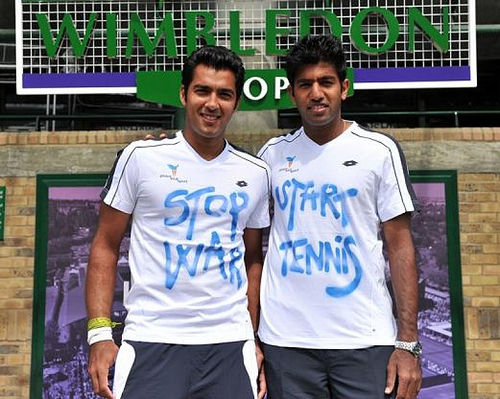
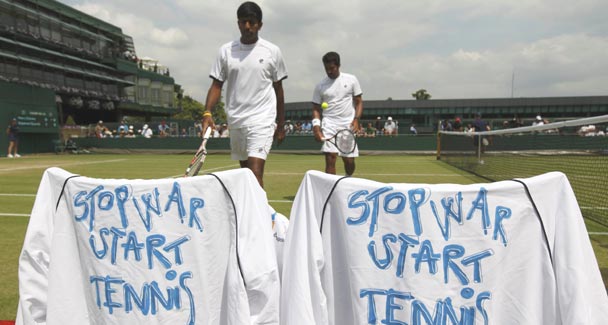
But Pakistani Aisam-ul-Haq Qureshi and his doubles partner Rohan Bopanna from India are also attracting a lot of attention for where they come from, and what they are doing together. The unlikely Indo-Pak pair have been playing as one team and they have been sporting tennis jackets that say “Stop War Start Tennis.” Now they have suggested a novel idea of a tennis match played at the Wagah border.

The world is not used to seeing India and Pakistan step onto any field as one team so the unlikely duo have been making headlines. And they are making full and good use of it by promoting the game of Tennis in the cricket dominated subcontinent and spreading the message of peace. Aisam and Rohan met at the age of 16 at a tennis camp and they have been good friends ever since. They are a good example of how friendship can overcome barriers or race, religion and nationality. While their international tennis playing status has allowed them to remain friends and see each other frequently, there are thousands of people on both sides of the border who long and yearn to see the people and places they once loved and knew as home but have been unable to see for over 60 years due to cruel visa regimes and heartless politicians who drive wedges deeper and wider between India and Pakistan for personal gain.

According to a report in the Guardian , the two tennis players want to play a tennis match at Wagah, the border separating India and Pakistan. The border will serve as the net. Aisam will play on the Indian side and Rohan will play on the Pakistani side of the border. I want very much for the two to win the Quarter-Finals at Wimbledon, but maybe even more than that I want to see them playing at Wagah Border Crossing!

The tennis stars are trying to turn this fantastic idea into reality. And at this point in time, I think that is exactly what the two countries need. Their performance at Wimbledon and the recent positive vibes coming from the governments as well as civil society in both India and Pakistan makes this a very good time to pursue this idea.

I don’t know much about tennis but I really want this match to happen! I will go to watch. And I promise to read up everything I can and ask anyone I can to help me understand the game better so I am prepared to watch the war of tennis at the border. And I’m sure a lot of other Pakistanis will too. As will many Indians. We all love a little bit of healthy competition with the Indians!

I don’t know how one goes about organizing a tennis match at an international border. But I wish I knew how to do it. So if any of you have ideas, please help.

I would like to see some Indo-Pak tennis and also some regional peace and good will. And while I watch this match, I will put aside my intensely competitive patriotic feelings and cheer loudly for Rahul Bopanna. So Rohan, you try to make this tennis match happen – and we the 170 million people of Pakistan will cheer you on with all our might!

As both Aisam and Rohan have been saying: Its time to “Stop War Start Tennis!”

At Talks, Pakistan, India Close the Gap

By Anita Joshua for The Hindu

Conscious of the historical baggage, but unwilling to be burdened by it, India and Pakistan on Thursday inched closer to each other during the Foreign Secretary-level talks here and both sides held out the possibility of some tangible outcome after the July 15 ministerial engagement.

However, both Foreign Secretaries refused to be drawn into chalking out a road map or identifying goal posts. “There is a constituency for peace in both countries, and we should avoid stock phrases like road map,” Foreign Secretary Nirupama Rao said at a “joint press stakeout” here, shortly after spending a greater part of the morning with her Pakistan counterpart Salman Bashir.

The talks, according to Mr. Bashir, began as an exploratory venture, but “after this round, we are much more optimistic of good prospects at the Foreign Ministers meeting.” He summed up the talks as a “good essay in mutual comprehension,” a phrase he admitted to have borrowed from Ms. Rao.

Optimism apart, both conceded that this would be a protracted process that may not yield quick results, but decided to work on the doables in the interim. As to how they proposed to insulate the process from another freeze in relations in the eventuality of a flashpoint, Ms. Rao said this would also be a subject of discussion.

The first indication of some forward movement came with the announcement of the “joint press stakeout” soon after the talks had wound up, and the Foreign Secretaries were breaking bread in the Foreign Office.

In his opening remarks, Mr. Bashir said the two sides decided to work towards restoring confidence and building trust to make it possible for a comprehensive, sustained and substantial dialogue.

Speaking in a similar vein, Ms. Rao described the talks as forward-looking with both sides trying to understand each other’s position. “We reflected on the modalities for restoring trust and confidence to pave the way for a comprehensive, sustained and meaningful dialogue in all areas. We have agreed that dialogue is the best way forward.”

Asked whether terrorism was discussed, she said both sides agreed that terrorists must be denied the opportunity to derail the process of dialogue while pointing out that Pakistan Prime Minister Yusuf Raza Gilani had made an important commitment when he told his counterpart that efforts would be made to ensure that the Pakistani soil was not used for attacks on India.

Unlike in the past, when the two countries appeared to be speaking at cross purposes, this time the Foreign Secretaries seemed to complement each other.

If Ms. Rao deftly side-stepped a leading question on India’s reluctance to continue with composite dialogue by saying there was no issue over nomenclature, Mr. Bashir returned the favour by echoing this remark and refusing to be drawn into commenting on why Pakistan was not raising the issue of Indian-sponsored terrorism in Balochistan.

Instead, he broad-brushed the issue, stating that terrorism impacted Pakistan and was a concern to the region and the world. “Essentially, we have agreed to move from the rhetoric to the ways and means of addressing these concerns,” he said.

Afridi for Resumption of Indo-Pak Bilateral Cricket Series

As reported on Sify.com

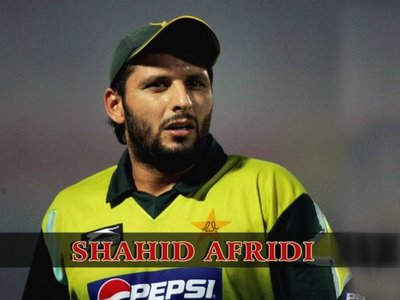
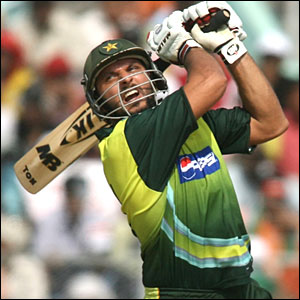
Following coach Waqar Younis’ call for resumption of bilateral cricket series between India and Pakistan, skipper Shahid Afridi also wants more encounters with the arch rivals.

Afridi said India and Pakistan must play against each other more often, which would help in toning down the heightened tension between the two neighbouring nations.

“I have always enjoyed playing against India and I have been saying we should play more often against each other as it will only help improve relations,” The Nation quoted Afridi, as saying.

Pakistan and India last played in the ICC Champions Trophy in South Africa in September 2009.

The newly appointed captain added that he was eagerly looking forward to the match against India in the Asia Cup, starting June 15 in Sri Lanka.

Afridi, however, pointed out that Pakistan’s opening match against Sri Lanka would also hold great importance.

“Certainly, the event will not be easy and the team would have to start it on a winning note to lift its morale. As a captain I would try my every bit to cash in on every opportunity to win,” he said.

Earlier, Waqar had also lamented the lack of bilateral series between India and Pakistan.

“I want to see the two teams revive bilateral cricket ties and for now I am eagerly awaiting their clash in the Asia Cup in Sri Lanka,” Waqar had said.

“It should be a great match as any contest between the two teams produces top quality cricket. It is unfortunate we are not playing against each other more often as Indo-Pak matches are watched by people all over the world and they are great for the sport,” he added.

India and Pakistan are scheduled to fight it out on June 20 in Dambulla.

India, Pakistan and the Musical Gurus of Peace

By Varun Soni for The Huffington Post

In July, India and Pakistan will begin a new round of talks in hopes of reviving their diplomatic efforts and renewing their peace process. While there are many pressing political issues to discuss, these talks could also be a remarkable opportunity for an innovative public diplomacy initiative between the nuclear neighbors. Although public diplomacy is often thought of as a form of state-to-state engagement, it also has the power to engage populations on a person-to-person level as well, especially in the age of social media and networking. Given the fact that many Indians and Pakistanis sing the same songs and listen to the same music, there is a unique opportunity now to promote popular music as a form of public diplomacy.

Although India and Pakistan are politically divided, their cultural roots still bind them together. Nowhere is this more apparent than Punjab — a region that was partitioned to create the modern nation-states of India and Pakistan in 1947, and further divided into the Indian states of Haryana and Himachal Pradesh in the 1960s. Despite these geopolitical divisions, Punjabis in both India and Pakistan remain united by “Punjabiyat,” a shared cultural heritage that has developed over millennia.

The historical Punjab is the only region in South Asia where Hindus, Muslims, and Sikhs are all represented in large numbers. Even as Punjab’s history is one of conflict and communalism, it is also one of overlapping musical and religious traditions. For example, the Guru Granth Sahib, the Sikh canonical text, contains within it not only the devotional compositions of Guru Nanak and his Sikh successors, but also verses from poets now considered Hindu and Muslim, such as Namdev and Baba Farid. Likewise, the Sikh devotional music of kirtan draws from similar lyrical sources and employs a similar instrumentation as Hindu bhajan music and Sufi qawwali music. For contemporary musicians, the devotional syncretism of Punjab remains a powerful model for how music can provide an encompassing framework for both unity and diversity.

Earlier this year, I interviewed the Sufi rock star Salman Ahmad as part of a USC book launch series focused on religion, popular culture, and diplomacy. As the founder of Junoon, Pakistan’s most popular rock band, Ahmad discussed his experiences performing in both India and Pakistan and explained how rock and roll empowers and connects the youth in both countries. In the name of rock-and-roll diplomacy, Ahmad organized last year’s Concert for Pakistan at the UN General Assembly Hall as a way of raising money and awareness for the three million internally displaced people of the Swat Valley in Pakistan. Inspired by George Harrison and Ravi Shankar’s famous Concert for Bangladesh, the Concert for Pakistan brought together prominent Indian and Pakistani musicians, diplomats, and entrepreneurs in solidarity and support for Swat.

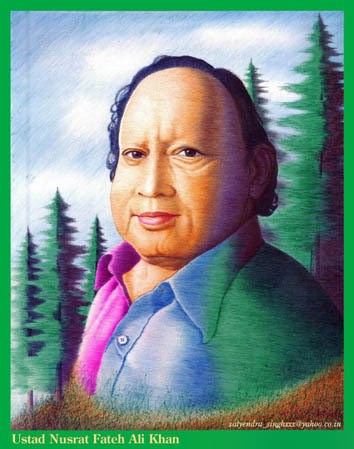
Another powerful moment in India-Pakistan musical diplomacy occurred in August of 1997, when India and Pakistan celebrated their fiftieth anniversaries of independence as nation-states. In order to commemorate this occasion, the virtuoso Indian music composer A.R. Rahman recorded with the late great Pakistani qawwali singer Nusrat Fateh Ali Khan. Together, the most famous musician from India and the most famous musician from Pakistan composed “Gurus of Peace,” an impassioned plea for peace between India and Pakistan. “Gurus of Peace” proved prescient, as the following year both India and Pakistan tested nuclear weapons, prompting President Clinton to call the India-Pakistan border the world’s most dangerous region. But A.R. Rahman and Nusrat Fateh Ali Khan had reminded the region the year earlier that India and Pakistan could unite through musical fusion instead of divide over nuclear fusion.

In the 1950s, the US State Department began sponsoring jazz luminaries, such as Duke Ellington and Dizzy Gillespie, to perform concerts overseas and serve as American cultural ambassadors. This public diplomacy initiative was aimed at winning the hearts and minds of potential allies in the Cold War, but the concerts also connected communities and ideas at a person-to-person level, and inspired artistic movements throughout the world. Likewise, India and Pakistan should sponsor and promote a series of musical concerts, workshops, and exchanges as a way of creating connections and engaging communities on a non-state level. Musical diplomacy certainly has its limits and should only be one part of a broader public diplomacy strategy, but after more than 60 years of missed public diplomacy opportunities, it’s time for India and Pakistan to follow the lead of A.R. Rahman and Nusrat Fateh Ali Khan and give music a chance.