Archive for the ‘ Peace ’ Category

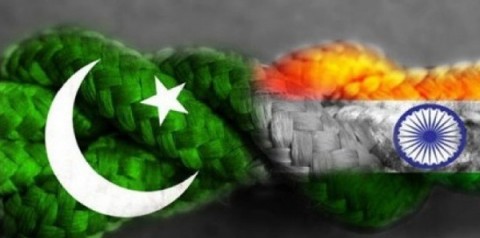
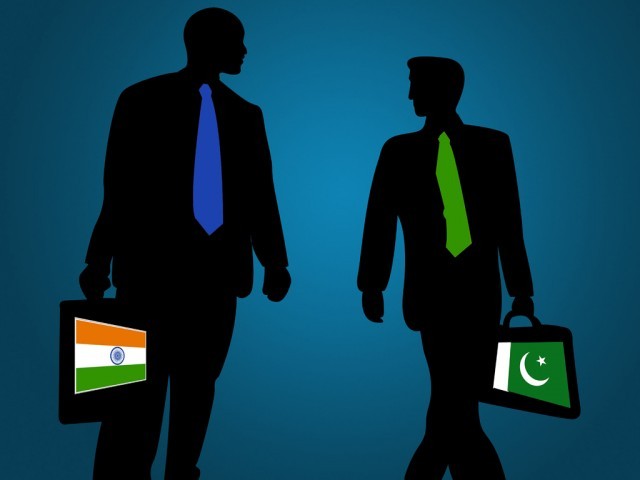
India, Pakistan Ties Hinge on Hope

By Mir Ayoob Ali Khan for The Times of India

When hope is lost, everything seems to be lost. But when we hear the adage, Ummid pe dunya khayam hai (the world stands on hope), we visualize a ray of light at the end of a tunnel.

The rollercoaster ties between India and Pakistan are an unending reading in despair. It is hope that makes people believe that one day, some day, we will live like good neighbours. That someday becomes believably close when we hear that Indian and Pakistani politicians, officials and members of the civil society are ‘seriously’ talking about the benefits of developing stronger economic and commercial links between the two nations. Or, when the Supreme Court of India allows aging Pakistani virologist Mohammed Khalil Chishti, a murder convict, to visit his hometown Karachi.

It is an unprecedented move by the Supreme Court which took a humane approach in a murder case. The apex court spoke of Chishti’s age (82), his global reputation as an accomplished microbiologist and his previous clean record to say that he is free to go to his country but on certain conditions. He should be back in India in November to face trial in court. Though the Supreme Court’s order is solely based on the prudence of the judges, there is hope that Islamabad would show some reciprocation with regard to Indians stranded in Pakistan prisons. For instance, many are waiting to see if they would free Sarabjit Singh, an Indian convicted of life imprisonment in a case of mistaken identity.

Chishti and Singh have been in the public eye owing to the extensive coverage of their plight in the media. However, there are numerous Indians languishing in Pakistani prisons and vice versa who have hardly been covered by any media agency or their cases taken up by any human rights organization seriously. They too deserve attention as their loved ones are waiting to see them. In the meantime, the air over India and Pakistan is thick with hope that the two countries are about to enter into a new era of trade and commercial cooperation. Activity in this direction gained momentum ever since Pakistan decided to give the MFN-the Most Favoured Nation-status to India last year.

The two sides have realised that the trade volume was a paltry $2.6 billion in the year ending 2011. Officials and members of the trading community believe that this could be taken to $10 billion to $12 billion in the next three to five years. In the forefront of trade with Pakistan which is expected to grow in the coming weeks, not years, are tomatoes from Maharashtra. About 4,000 trucks carrying tomatoes have crossed over to Pakistan in the past three months. Lorries containing soya beans followed. Not to lag behind, Pakistan has started exporting cement and other construction material to India. Talks are on to allow 8,000 items from Pakistan to enter India in the next couple of years.

Hope is now fuelled by the foundation laying of an oil refinery in Bathinda, a town in Punjab which is160 km from Lahore, by billionaire Lakshmi Mittal and Indian Oil Company Ltd costing $4 billion. Pakistan that is already importing kerosene and diesel from India is hungry for petroleum products. The refinery in Punjab and another one owned by the Reliance Group in Gujarat which is close to Karachi could meet the fuel needs of Pakistan, at least to some extent. There are also talks to dismantle hurdles in matters pertaining to education and IT sectors, visa regimes, especially for the business community and tourists, opening of more land and air trade routes.

In India-Pakistan relations, hope is the key word. Let’s hope that it becomes a reality extending benefits to the people of the two neighbouring nations.

India, Pakistan Try ‘Trade Diplomacy’

As Reported by AFP

India and Pakistan, still at loggerheads on Kashmir and no closer to a full peace deal, are channeling their efforts into increasing trade in the hope that business can bring them together.

31-year-old Karachi food trader Kashif Gul Memom is among those eager to seize the opportunities offered by easier links between the estranged neighbours, which have fought three wars since independence in 1947.

“This is a change for the good. It’s an exciting time,” said Memom, one of the generation born after the painful partition of the subcontinent that gave birth to India and the Islamic republic of Pakistan.

“My generation of business people is putting the past behind us. We’re looking to the future, India is such a huge market for us,” Memom told AFP while at the largest ever Pakistani trade fair held in India.

The improved relations between the nuclear-armed rivals stem from Pakistan’s decision to grant India “Most Favoured Nation (MFN)” status by year end, meaning Indian exports will be treated the same as those from other nations.

In further progress, the neighbours opened a second trading gate in April along their heavily militarised border, boosting the number of trucks able to cross daily to 600 from 150.

India now also says it is ready to end a ban on investment from Pakistan and the countries are planning to allow multiple-entry business visas to spur exchanges — a key demand by company executives.

The warming commercial ties underline the new relevance of the private sector in the peace process, with prospects still low for any swift settlement of the “core issue” of the nations’ competing claims to Kashmir. The divided Himalayan territory has been the trigger of two of their three wars since independence.

Indian and Pakistani officials have been looking at the so-called “China option” as a model, with deepening economic engagement seen by experts as crucial to establishing lasting peace in the troubled region.

Beijing and New Delhi have been pursuing stronger economic ties while resolving outstanding political issues, such as a festering border dispute that erupted into a brief, bloody war in the 1960s.

“There is no other option but economic partnership between India and Pakistan — this leads on to other partnerships,” Indian Commerce Minister Anand Sharma said at the April trade fair in Delhi, a follow-on to a similar venture in Lahore earlier in the year.

“We have to recognise our true trade potential and leave our children with a legacy that ensures prosperity, harmony and peace.”
Some Pakistani businesses have protested against the trade opening, fearing they may be swamped by cheaper Indian goods, especially in drugs, auto parts and consumer goods. But others eye the possibilities India’s market offers.

“India with 1.2 billion people gives us great potential,” Mian Ahad, one of Pakistan’s leading furniture designers, told AFP.
Indian businessmen are equally enthusiastic, saying there is an opportunity for trade in areas from agriculture, information technology, pharmaceuticals, and engineering to chemicals.

Official bilateral trade between India and Pakistan is just $2.7 billion and heavily tilted in New Delhi’s favour.
But Indian business chamber Assocham estimates up to $10 billion worth of goods are routed illicitly — carried by donkeys through Afghanistan or shipped by container from Singapore and the Gulf.

Indian commerce secretary Rahul Khullar told AFP that Pakistan’s decision to grant India MFN status by the end of the year was “the game-changer.”
MFN status will mean India can export 6,800 items to Pakistan, up from around 2,000 at present, and the countries aim to boost bilateral trade to $6 billion within three years.

“I’m cautiously optimistic. Commerce is an excellent way to bring countries together,” Indian strategic analyst Uday Bhaskar told AFP.
“Once you institutionalise trade, it becomes hard to slow the momentum for cross-border exchanges. People say if there are onions or cement or sugar available next door, why can’t I have them? And why can’t I travel there too?”

India and Pakistan: The Truth of the One Nation Theory

By Aakar Patel for FirstPost

The first time I came to Pakistan, I was taken aback at how good some of the infrastructure was. The airports at Karachi and Lahore were small, but they were efficient and well designed. I think my host told me the Japanese had built one or both of them, and those airports were a very different thing from the ones I had just taken off from in India.

This was when the government made the airports and as with all things the Indian government takes up, our airports were clumsy and barely functional. But a few years later this changed. Today the airports at Mumbai, Delhi and Bangalore are pretty good. They’re not world class (nothing in India can ever be), but they are not embarrassing as the earlier ones were.

The differences that I had thought were significant turned out not to be so.

This led me to think of how similar we were as nations. Not in the sense that Mohd Ali Jinnah meant. I think it is fairly obvious that the character of India and of Pakistan is different when we observe their constitutions. India’s secularism is fundamentally Hindu in its nature. Pakistans constitution is Islamic by design and in appearance.

Though this is an important aspect of nationhood, however, it is only one aspect.

What I mean is how we are one nation in all the negative aspects. Our neighbourhoods and streets are among the most shameful in the world, because we are selfish and blind to the concern of others. Delhi’s drivers are as terrible as those in Lahore (and the women of Delhi and Lahore would concur on the behaviour of the loutish men of those cities). Half of us are illiterate and the half who are literate don’t really read much. The comments sections of Indian and Pakistani websites are the most dreadful in the world, without qualification. Hateful and pedantic, the product of minds who are only functionally literate. We think time will bring some big change in our society but it isn’t easy to see where this change is going to come from.

I know of few other nations where people would not be embarrassed at the thought of keeping servants. Few cultures would be so unaffected, so uncaring of privacy to not mind the constant presence of the servant in the house. I am not even talking about the bestial manner in which we treat them, because every reader of this piece, whether Indian or Pakistani already knows what I mean.

We divide ourselves into nations based on things like which animal the other eats or does not eat. The outsider probably sees no difference between us, and rightly.

We produce very little of meaning to the outside world, and it is tough to think of what our contribution is to the nations from whom we take so much. In science and technology we have nothing to offer the West, despite the boasts of Indians that we gave the world Arabic numerals and zero (I agree with that; we have given the world zero).

Pakistanis stake claim to Islams golden age. Daily Jang columnist Hassan Nisar often takes up this point. He says that the Arabs laugh when Pakistanis owns Islams achievements. What aspect of the conquest of Spain or the scientific revolution in Baghdad did Punjabis and Sindhis participate in?
To the world we are one people in that sense.

My friend Col Iftikhar, from Musharrafs batch in the Pakistan Military Academy, said he discovered this horrifying fact when he went to Mecca a few decades ago for Haj. He met some Saudis, one of whom asked him where he was from. Lahore, said Ifti. Where’s that, the Saudi asked (this was in the 70s). Pakistan, said Ifti proudly. Where’s that, the puzzled Saudi asked. Ifti took out a map and pointed. Ah, said the Saudi to his friends, he’s Hindi.

Our problems are so primitive that they should make us stop and repair ourselves immediately. But they don’t seem to affect us at all. Our media carry on like we are normal people. Reading the militant bombast of the strategic affairs experts in the newspapers of these two nations, the outsider would never suspect that these were two nations unable to even keep their public toilets clean.

Pakistan Leader’s India Visit Hailed For Its Symbolism

By Mark Magnier for The Los Angeles Times

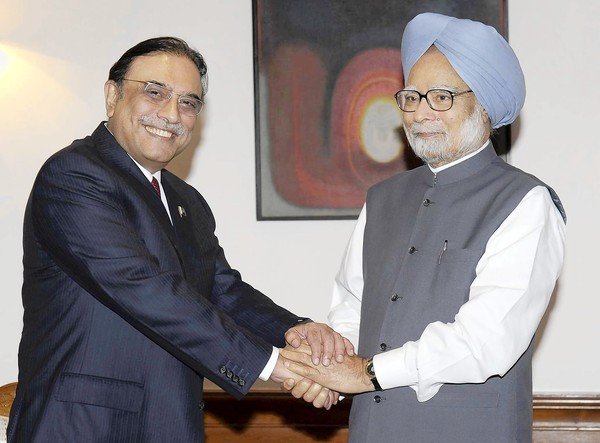
Pakistan’s president arrived in India on Sunday, the first official visit one leader of the wary neighbors has paid to the other nation in seven years. No breakthroughs were announced, but both sides hailed the meeting as a sign of easing tensions along one of the world’s most dangerous borders.

Spinmeisters on both sides worked overtime to lower public expectations of the “private” trip that saw Pakistani President Asif Ali Zardari and Indian Prime Minister Manmohan Singh discuss the 2008 terrorist attack on the Indian city of Mumbai, modest if expanding trade links, the disputed territory of Kashmir and efforts to bring various militants to justice.

The Pakistani president then visited a famous Muslim shrine for Sufi saint Moinuddin Chishti, offering a $1-million contribution.

“I am very satisfied with the outcome of this visit,” Singh said. “The relations between India and Pakistan should become normal — that is our common desire.”

The rapid-fire luncheon and shrine visit weren’t enough to overturn long-standing distrust between the nuclear neighbors, however, as summed up in a headline in India’s Mail Today tabloid newspaper: “Eat, Pray, No Love.”

The meeting is part of an apparent effort to follow the diplomatic model in place between India and China, which fought a war in 1962 over their disputed border: Put aside the most nettlesome issues for the time being and focus on building investment and trade links that benefit both sides.

This year, India and Pakistan approved a most-favored-nation agreement, lowering taxes that impede trade. Although India had offered this benefit to Pakistan in 1996, it wasn’t reciprocated until recently. Official two-way trade of about $2.6 billion is heavily weighted in India’s favor.

Sunday’s one-day visit was heavy on symbolism if not on substance. Zardari invited Singh for a reciprocal visit to Pakistan, which the Indian leader accepted, although no date was set. Zardari’s 23-year-old son, Bilawal, invited ruling Congress Party General Secretary Rahul Gandhi to Pakistan, which was also accepted, again with no date set.

On other fronts, both sides agreed in principle to ease visa restrictions. India offered its assistance in the wake of this weekend’s massive avalanche in the Siachen Glacier area, which buried about 130 people on the Pakistani-controlled side of the border in disputed Kashmir. And both sides did lots of glad-handing for the cameras.

“We had fruitful bilateral talks,” Zardari said. We “hope to meet on Pakistani soil very soon.”

But any bid to bring to justice those who planned the 2008 Mumbai attack that killed at least 166 people was sidestepped. India has long blamed Pakistani-based groups for plotting the attack.

Last week, Washington offered a $10-million reward for information leading to the capture of one Pakistani militant leader, Hafiz Muhammad Saeed, who enjoys widespread support in Pakistan.

Analysts on both sides of the divide welcomed the gradual thaw even as they acknowledged its slow pace. That no date was set for a return visit, and that Congress Party head Sonia Gandhi — characterized by some as India’s real leader behind the scenes — didn’t meet Zardari or attend the lunch, suggests the Indian government is wary of getting too far ahead of public opinion, some observers said.

“There have been some useful steps forward,” said B. Raman, director of Chennai’s Institute for Topical Studies and a former Indian intelligence officer on the Pakistan desk. “But the government has taken a cautious line.”

The fact that Zardari, 56, made the trip at all suggests that Pakistan’s military realizes improved relations are in its interest, added Talat Masood, an analyst and retired Pakistani general.

“They’re overstretched, realize the economy’s in a shambles and that you can’t have a genuine defense without a good economy,” Masood said. “It’s very sad in a way, that the process has been held hostage to jihadi groups and hard-rightists on both sides.”

Singh, 79, heading a weak government beset by corruption scandals, has pushed for improved ties with Pakistan in a bid to secure a legacy, analysts on both sides said. “Prime Minister Singh realizes he’s only going to be there a few more months,” said Masood. “He wants to do something positive so he’s remembered.”

Pakistani Troops Dig for 135 Missing in Avalanche

By Chris Brummitt for The Associated Press

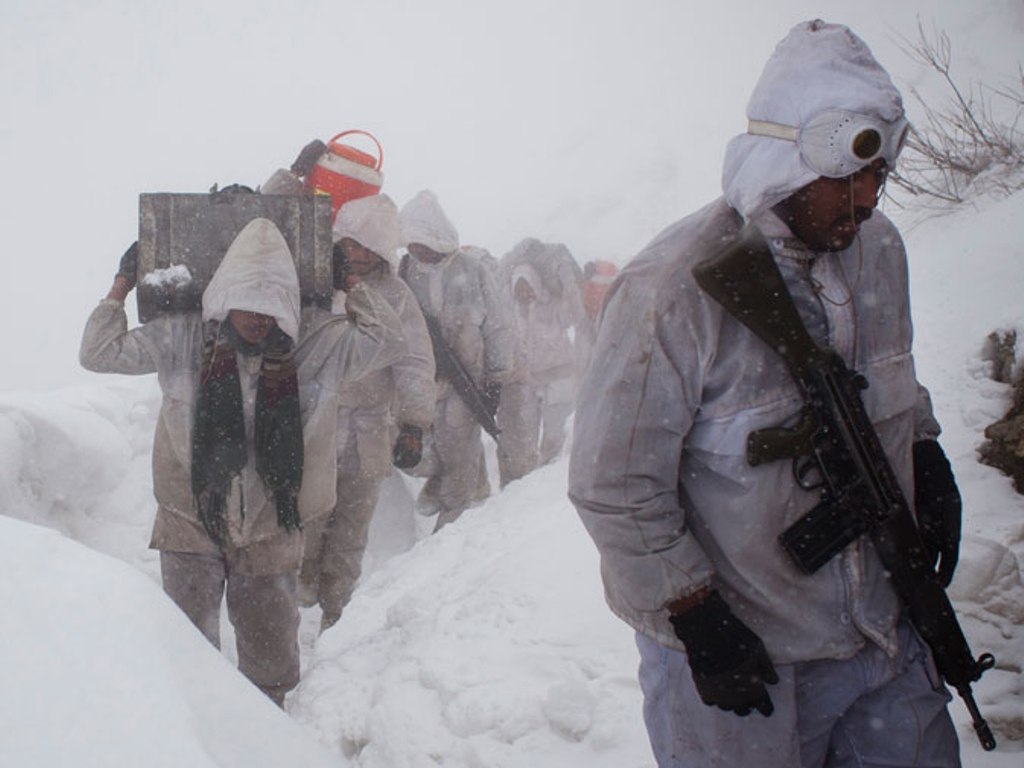
Pakistani soldiers dug into a massive avalanche in a mountain battleground close to the Indian border on Saturday, searching for at least 135 people buried when the wall of snow engulfed a military complex.

More than 12 hours after the disaster at the entrance to the Siachen Glacier, no survivors had been found.

“We are waiting for news and keeping our fingers crossed,” said army spokesman Maj. Gen. Athar Abbas.

Hundreds of troops, sniffer dogs and mechanical equipment were at the scene, but were struggling to make much headway into the avalanche, which crashed down onto the rear headquarters building in the Gayari sector early in the morning, burying it under some 21 meters (70 feet) of snow, Abbas said.

“It’s on a massive scale,” he added. “Everything is completely covered.”

The military said in a statement that at least 124 soldiers and 11 civilian contractors were missing.

Siachen is on the northern tip of the divided Kashmir region claimed by both India and Pakistan.

The accident highlighted the risks of deploying troops to one of the most inhospitable places on earth.

The thousands of troops from both nations stationed there brave viciously cold temperatures, altitude sickness, high winds and isolation for months at a time. Troops have been deployed at elevations of up to 6,700 meters (22,000 feet) and have skirmished intermittently since 1984, though the area has been quiet since a cease-fire in 2003. The glacier is known as the world’s highest battlefield.

Prime Minister Yousuf Raza Gilani expressed his shock at the incident, which he said “would in no way would undermine the high morale of soldiers and officers.”

The headquarters in Gayari, situated at around 4,572 meters (15,000 feet) is the main gateway through which troops and supplies pass on their to other more remote outposts in the sector. It is situated in a valley between two high mountains, close to a military hospital, according to an officer who was stationed there in 2003.

“I can’t comprehend how an avalanche can reach that place,” said the officer, who didn’t give his name because he is not authorized to speak to the media. “It was supposed to be safe.”

More soldiers have died from the weather than combat on the glacier, which was uninhabited before troops moved there.

Conflict there began in 1984 when India occupied the heights of the 78-kilometer (49-mile)-long glacier, fearing Pakistan wanted to claim the territory. Pakistan also deployed its troops. Both armies remain entrenched despite the cease-fire, costing the poverty-stricken countries many millions of dollars each year.

Pakistan and India have fought three wars since the partition of the subcontinent on independence from Britain in 1947. Two of the wars have been over Kashmir, which both claim in its entirety.

Pakistanis for Peace Editor’s Note– The death of these 135 and allegedly more soldiers should prove to be a defining moment for Pakistan in regards to the urgency of peace with India just as the death of the 24 killed by “friendly” NATO attack that killed so many near the Afghanistan border last November.  It is high time India and Pakistan find a way to make peace and end this 60+ year battle and hatred with ourselves as we are one people.  This may not completely apply for India, but the ONLY way to fix EVERYTHING that ails Pakistan is a peace treaty with India~ RIP to the patriots of my sacred land~ MM

Why President Zardari’s Visit Is A Small Bonus

By Soutik Biswas for The BBC

Hope is not a policy, but neither is despair, as South Asia expert Stephen Cohen says in a recent essay on Pakistan.

So it is with relations between India and Pakistan.

The past few days have shown how fragile the relationship can be – even as India welcomed President Asif Ali Zardari’s private trip to India on Sunday – the first by a Pakistani head of state for seven years – and PM Manmohan Singh invited him for lunch, the $10m US bounty for Hafiz Saeed, the founder of Pakistan-based militant group Lashkar-e-Taiba, provoked the cleric to openly launch a fresh attack against India (and the US).

But people live in hope, so Indian media is gung-ho about Mr Zardari’s visit.

They say the Pakistani president must be applauded for trying to end trade discrimination against India, easing petroleum imports from across the border, and moving towards a liberal visa deal.

“Under Mr Zardari’s watch, India and Pakistan are considering a sweeping agenda for economic co-operation for the first time in decades. The prime minister has every reason to welcome Mr Zardari warmly and consider the next steps in consolidating the unexpected movement in bilateral relations,” the Indian Express wrote.

Analyst C Raja Mohan believes Mr Singh must make an official trip to Pakistan after his meeting with Mr Zardari. “For his part,” he wrote, “Mr Singh should convey to Mr Zardari his readiness to move as fast and as far as the Pakistan president is willing to go.” Others like Jyoti Malhotra actually find Mr Zardari’s visit to the shrine of a famous Sufi Muslim saint in Rajasthan loaded with symbolism in these troubled times. “Clearly, Mr Zardari has stolen an imaginative moment from the bitter-sullen history of India-Pakistan, by asking to come to pay his respects to a cherished and much-beloved saint across the Indian subcontinent,” she wrote.

The relations between two neighbours remain complex. A 2010 Pew survey found 53% of the respondents in Pakistan chose India as the greater threat to their country, and only 26% chose the Taliban and al-Qaeda. At the same time 72% said it was important to improve relations with India, and about 75% wanted more trade relations and talks with India.

Pundits like Mr Cohen believe that it will “take the [Pakistan] army’s compliance, strong political leadership, and resolutely independent-minded foreign ministers to secure any significant shift of approach towards India”.

None of this appears to be in much evidence at the moment.

Both countries have seriously weakened governments that makes them unable to move towards any radical confidence building measures. In the current circumstances, President Zardari’s visit can only be a small bonus. And as scholars like Kanti Bajpai suggest, India must remain patient (even if faced with another Mumbai-style attack), continue to engage with Islamabad, help the civilian government in Pakistan politically, try to resolve a few outstanding disputes like Siachen and Sir Creek, build a relationship with the army and explore the possibility of cooperating with Islamabad on the future of Afghanistan. Despair does not help mend a stormy relationship.

A Nobel Prize for Edhi

Pakistanis for Peace and Manzer Munir cordially and humbly request you to please sign this petition to nominate Abdul Sattar Edhi for the Nobel Peace Prize.

The Nobel Peace prize is an annual prize awarded to individuals who have made formidable contributions to the pursuit of peace and have, through their work, changed the world for the better.

As the founder of Pakistan’s largest welfare organization, the Edhi Foundation and trust, Mr Abdul Sattar Edhi embodies the spirit of this prize, and is a deserving candidate for this honour. He has single-handedly served countless Pakistani’s and has left a lasting impact on his fellow countrymen and the world.

Quite simply, there has never been anyone more deserving of the Nobel Peace prize in its entire history than Mr Abdul Sattar Edhi. Please help us get him his dues by having him finally nominated this year.

Please sign this petition to show your support for the nomination of Mr.Edhi for the 2012 Nobel Peace Prize.


Pakistan’s Move on Trade With India Can Help in Wider Normalization of Ties

As Reported by The Economic Times

The reported move by the Pakistan government to phase out major restrictions on trade with India by switching to the negative list, and doing away with that too by the end of the year, is wholly welcome. Normalising trade relations with India will help establish a template of wider normalization of mutual ties.

An indication of deep-rooted animosities and suspicions which have stymied that goal can be seen in the opposition from quarters within Pakistan to Islamabad’s declared – and logical – aim of granting India the World Trade Organization-compliant Most Favoured Nation status next year.

But the arrangement to separate commerce from thornier issues like Kashmir and Pakistan’s actions against those accused of terror attacks against India can lay a foundation for minimising mutual distrust. For New Delhi, this would be in keeping with the idea of engaging various power centres in Pakistan, given the fractured power structure in that country.

While being perfectly aware that policy on India, like in other areas deemed to be ‘strategic’ by the military, is mostly determined by the latter, the aim should be to defang and isolate hardline elements by positing the real and tangible benefits enhanced mutual trade can offer Pakistan.

And there certainly is ample scope to do that: direct Indo-Pak trade is less than 1% of their global trade; annual mutual trade was around $2.7 billion through March 2011, which, despite being up 50% from the previous year is still measly compared to, say, India’s $60 billion annual trade with China or the potential.

But a beginning has been made with Pakistani industry backing the new move, which, in turn, can help allay fears that Indian goods will swamp Pakistani markets. What will happen is the ending of trade routed through third countries (mostly Dubai).

Legitimate mutual trade can lead to both countries envisaging cooperation in a wider trading entity comprising Afghanistan and Central Asia, with obvious benefits for regional stability. This might sound utopian for now, but mutually-beneficial commerce does have a way of tempering hostilities.

Peace Effort Takes Karzai to Pakistan .

By Yaroslav Trofimov, Tom Wright and Adam Entous for The Wall Street Journal

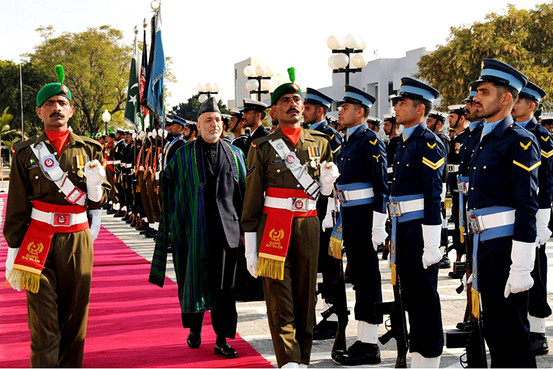
Afghan President Hamid Karzai on Thursday met with Pakistan’s leaders, trying to gain Islamabad’s support for his peace outreach to the Taliban, as U.S. officials worked to keep expectations in check about the strategy’s prospects for yielding direct peace talks with the Islamic militant group.

The Taliban, meanwhile, denied Mr. Karzai’s claim that they have been negotiating with the Afghan government.On the first day of his three-day visit to Pakistan, Mr. Karzai met with Pakistani Prime Minister Yousuf Raza Gilani, who promised Pakistani cooperation in investigating the September assassination of the chief Afghan peace negotiator and voiced support for an Afghan-led peace process. Pakistan’s Army Chief of Staff Gen. Ashfaq Kayani, who wields considerable influence over the country’s foreign policy, also took part in the talks.

In Islamabad, Mr. Karzai reiterated that respect for the Afghan constitution and for women’s rights remain his “crucial conditions” for any future deal with the Taliban.

Defense Secretary Leon Panetta, who has been skeptical of reconciliation efforts in the past, at a Thursday news conference lauded Mr. Karzai’s remarks—made in a Wall Street Journal interview—about Kabul’s willingness to engage with the Taliban.

“What President Karzai’s statement confirmed is that Afghanistan is very much involved in the process of reconciliation and that is extremely helpful and important to determining whether or not we are ultimately going to be able to succeed with reconciliation or not,” Mr. Panetta said. “The news that Afghanistan has joined those reconciliation discussions is important.”

Mr. Panetta said he didn’t know whether additional three-way sessions between the U.S., the Afghan government and the Taliban have been planned.

Another senior Obama administration official remained cautious about whether such confidence-building contacts would translate into direct peace talks, calling the process “complicated and precarious.”

A day after Mr. Karzai told the Journal that Afghan government representatives have had contacts with U.S. and Taliban officials in an attempt to end the 10-year war, the Taliban said they had no intention of negotiating with “the powerless Kabul administration.”

“If someone met the Karzai administration representing the Islamic Emirate, he is an impostor,” said a statement by the Taliban leadership, which calls itself the Islamic Emirate of Afghanistan. The Taliban in the past denied reports of peace talks with the U.S., only to confirm them in recent months.

U.S. officials have confirmed Mr. Karzai’s remarks, saying at least one three-way negotiating session occurred in recent weeks.

Admitting negotiations with Kabul would be fraught will political risks for the insurgent leadership, possibly undermining the morale of Taliban fighters, and weakening the militants’ resolve amid coalition offensives.

The intensity of the conflict already declined dramatically in recent months, Afghan and coalition officials say, though it is unclear whether this drop is due to the spreading news about peace talks, unusually harsh winter weather, or a strategic decision by the Taliban to hold their fire as foreign forces withdraw.

Pakistan, which U.S. officials say provides shelter and support to the Taliban leadership, plays a crucial role in Afghanistan’s peace outreach.

Mr. Karzai’s relations with Pakistan neared a rupture point after the September assassination of former President Burhanuddin Rabbani, the peace negotiator, by purported Taliban peace emissaries. At the time, Afghan officials blamed the killing on Pakistan, something that Pakistani officials denied. Two suspects have since been arrested in Pakistan.

The White House wants to show progress on the reconciliation track before a May summit of North Atlantic Treaty Organization leaders in Chicago. There, NATO leaders are expected to announce plans to shift to a train-and-assist mission in Afghanistan in 2013, giving Mr. Karzai’s security forces the lead role in combat operations before most U.S. and NATO troops pull out at the end of 2014.

Where Pakistan fits into tentative peace talks with the Taliban remains unclear. The U.S. has not kept Islamabad informed about developments in the peace process, Pakistan civilian and military leaders claim.

U.S. and Afghan officials say they are concerned Pakistan might try to undermine peace talks. In January 2010, Pakistan detained a senior Taliban leader, Mullah Abdul Ghani Baradar. Afghan and U.S. officials claim Pakistan arrested him for contacting the U.S. and Mr. Karzai’s government without Pakistan’s knowledge, a claim denied by Pakistan.

Afghanistan has asked for Pakistan to transfer Mr. Baradar to Kabul, but this hasn’t happened so far. Pakistani officials deny they back the Taliban.

Pakistan will stay on the sidelines in the tentative peace process as long as the U.S. remains distrustful of Islamabad, said Imtiaz Gul, director of the Islamabad-based Center for Research and Security Studies.

“We’re not sure to what extent the U.S. wants Pakistan to play a role,” Mr. Gul said. “The Pakistani role at this moment seems very limited.”

Pakistan’s ability to play a meaningful part in talks has further been hampered by a deterioration in relations with U.S. after an American helicopter strike in November mistakenly killed 26 Pakistani soldiers along the Afghan border.

U.S. officials say they are still trying to hammer out an agreement with Taliban representatives on a sequence of confidence-building measures aimed at laying the ground for any future direct negotiations on ending the war.

In addition to the establishment of a political office for the Taliban in Qatar, the U.S. wants the Taliban to issue a statement distancing itself from international terrorism and to agree to stop fighting in certain areas of the country.

The U.S., in turn, would transfer of up to five Taliban militants held at the U.S. military prison in Guantanamo Bay, Cuba, to Qatar. Key U.S. lawmakers have raised objections to the prospective prisoner transfers.

Officials have identified the five Guantanamo detainees who may be transferred to Qatar as Muhammad Fazl, a former senior Taliban defense official; two former local governors, Khairullah Khairkhwa and Noorullah Nori; former Taliban intelligence official Abdul Haq Wasiq; and top Taliban financier Muhammad Nabi.

Messrs. Haq Wasiq, Fazl and Nori were among the first 20 detainees who arrived at Guantanamo Bay 10 years ago, when the prison was opened on Jan. 11, 2002.

The U.S. has received assurances from Qatar that the five militants, if transferred, won’t be released by the government or handed over to the Taliban. But officials said the men could be freed later as part of a future Afghan-Taliban peace deal.

Made in India’ Show in Pakistan as Both Talk to Boost Trade

By Surojit Gupta for The Times of India

Trade ties between India and Pakistan are expected to get a boost as New Delhi reaches out to the business community across the border, starting Monday to assure them about the positive impact of normal trade ties. Commerce minister Anand Sharma will undertake a rare journey to Pakistan, leading a large delegation of senior officials and top businessmen as the two hostile neighbours take baby steps to normalise trade and economic relations.

The private sector led by industry chambers has put up an “India show”, in Lahore and Karachi – the first ever trade exhibitions from India where over 100 exhibitors are participating. Firms representing pharmaceuticals, textile, gems and jewellery, chemicals and petro-chemicals are showcasing products.

The move is a follow up to the efforts to normalise trade ties. The Pakistan government announced granting of Most Favoured Nation (MFN) status to India in November last year. But, criticism from a section of industry in Pakistan has forced Islamabad to take measured steps on the issue. But, officials said they were optimistic that by the end of 2012, the transition to full MFN status would be complete.

Officials said they will launch outreach programme to assure businessmen in Pakistan that Indian goods will not swamp the Pakistan market if trade is normalised. “We will tell them that there are enough trade safeguards measures to ensure that Indian goods do not flood the Pakistani market. Let us first liberalise trade and see the impact,” said a senior government official.

Pakistan allows exports to India but has a positive list of 1,938 items which are officially allowed to be imported from India. Latest data shows that formal trade between India and Pakistan rose to $2.7 billion in 2010-11 from $144 million in 2001, while informal trade including third country trade is estimated at $10 billion, according to a Ficci status paper. “I have no doubt in my mind that bilateral trade, which currently stands at $3 billion, can be raised to $10 billion if trade through third countries (Dubai, Singapore and Central Asian countries) is channelised into direct exchange between the two countries,” said R V Kanoria, president, Ficci.

The government has undertaken a series of measures to increase bilateral trade. There is a move to open a second gate at the Attari-Wagah border, which is expected to increase the number of trucks crossing the border to 500-600 daily from 150-200 at present. Pakistan has agreed to remove restrictions on the number of commodities traded by the land route once the infrastructure in Wagah is ready, while both countries have agreed to avoid arbitrary stoppage of goods at ports. Suggestions have been made for opening up of an additional land route at Monabao-Khokhara Par on the Sindh border for faster movement of goods.

“We are taking significant steps to improve the border infrastructure. India has invested nearly Rs 150 crore to develop infrastructure at the Integrated Check post near Attari,” said a senior government official. He said the visa regime for business travel is also expected to be liberalised soon with multiple entry visas for 10 Indian cities, along with exemptions for police reporting. The formal announcement is expected to be made soon. Talks to expand trade in petroleum products are progressing, while efforts are also on to start negotiations for trade in electricity between the two nuclear-armed neighbours. Both sides have agreed on grid-connectivity between Amritsar and Lahore, which would pave the way for trade of up to 500 MW of power.

Trade experts said they were optimistic about the latest moves and said the effort will go a long way in helping faster regional integration. “The positive spin off for normalisation of trade is enormous. Pakistan has given signals and India now needs to take the initiative. Normalisation of bilateral trade relations will help in putting much of the political bickering on the backburner,” said Biswajit Dhar, director-general at Research and Information System for Developing Countries, an economic and trade thinktank. Experts said there was huge potential for forging joint ventures between Indian and Pakistani companies in sectors such as information technology, fish-processing, drugs and pharmaceuticals, agro chemicals, chemicals, automobile ancillary and light engineering.

Pakistanis for Peace Editor’s Note– The best chance of peace between India and Pakistan can only be achieved through trade and normalization of ties. The India Show at the Lahore International Expo Centre Feb 11-13 will go a long ways to bridging the gap and move us closer to achieving peace one day, which is the best scenario for both nations long term.

Jews Honour Muslim Rescuers

By Mario Toneguzzi for The Calgary Herald

Calgary’s Jewish community is honouring Muslims who rescued Jews during the Holocaust.

In commemoration of International Holocaust Remembrance Day, the Calgary Jewish Federation, in association with the Canadian Society for Yad Vashem, is presenting the Yad Vashem exhibition Besa: A Code of Honor — Muslim Albanians who Rescued Jews During the Holocaust.

The photographic exhibition opened Friday and will remain open through Feb. 11 at the Calgary Jewish Community Centre, 1607 90th Ave. S.W.

“We are very pleased to be sharing this inspiring and visually stunning exhibit with the Calgary community at large,” said Adam Singer, president of the Calgary Jewish Federation.

“Historically, there have been many examples of Jews and Muslims living side by side as neighbours and friends. The 17 Albanian Muslims featured in the exhibit are among 63 who have been recognized by the state of Israel as Righteous Among the Nations. The courageous acts of all rescuers, carried out under perilous circumstances, set a moving example. We want to get the message out that every one of us has the potential to emulate the humanity and bravery celebrated by renowned photographer Norman Gershman in the Besa exhibit.”

The Calgary showing of Besa was made possible through grants from the Calgary Foundation and Citizenship and Immigration Canada.

Singer said Besa means “to keep the promise” by taking responsibility for others, especially in peril.

Close to 24,000 individuals from around the world have been named Righteous Among the Nations by Yad Vashem, Israel’s world centre for Holocaust research, documentation, education and commemoration.

Admission is free to the exhibit and everyone is welcome.

“One message, obviously, is that the Holocaust happened and it’s been recognized by the United Nations,” Singer said. “It’s important to bear in mind that as years pass and the Second World War becomes more distant in time from the present, we lose, of course, first-hand accounts. The survivors are dying off and at some point will no longer be with us. And there’s a tendency to not want to remember things like the Holocaust. That’s a natural and even normal human desire not to think about bad things that happened in the past.

“So it’s critical that we take active steps to ensure that there is collective recollection of what happened. And collective recollection not only of the terrible things that were done, but also the great things.

“The other thing is that there seems to be a narrative these days that Jews and Muslims are enemies and this exhibit helps remind us that that’s only a small part of a centuries-old narrative in which Jews and Muslims are not enemies, but in fact are neighbours and friends and people who help each other.”

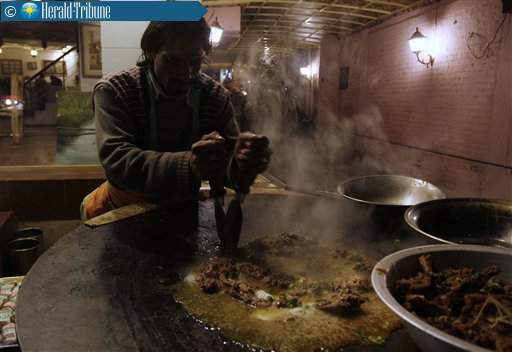
Pakistani and Indian Chefs Compete on Reality TV

By Sebastian Abbot for The Associated Press

For decades, archenemies Pakistan and India have engaged in a dangerous nuclear arms race. Now they’re also competing in a more cheerful forum. The outcome will be mouthwatering curries and soothing Sufi ballads, not violent conflict.

The fractious neighbors are going head-to-head in a pair of reality TV shows that pit chefs and musicians against each other. Producers hope the contests will help bridge the gulf between two nations that were born from the same womb and have been at each other’s throats ever since.

But so far it hasn’t completely worked out that way. The top Pakistani chef on the cooking show, which is called Foodistan, quit the contest early. He accused the judges of bias toward India and is threatening to sue. The producers denied the allegations.

Pakistan and India were founded in 1947 following the breakup of the British empire. They have fought three major wars, two of them over the disputed territory of Kashmir.

The TV shows do not try to hide or brush over this painful history. They make light of it.

“Now the world’s greatest rivalry is going to get spicier,” said co-host Ira Dubey during one of the early episodes of Foodistan, which first aired in India on Jan. 23 and will be shown in Pakistan starting in mid-February.

Her counterpart, Aly Khan, said the aim of the two teams “would be to grind the opposition into chutney, to make them eat humble pie, to dice them, slice them and fry them on their way to culinary glory.”

Eight chefs from each country were scheduled for individual and team competitions over 26 one-hour episodes, with the winner authoring the first Foodistan cookbook and receiving a trip to three cities of his or her choice anywhere in the world.

There is significant overlap in the cuisines of both countries, as there is in language, music and culture. Pakistanis and Indians both love curry, kebab and biryani – a spiced rice dish. But they often use different ingredients, and dishes can also vary from one region to another within the same country.

Pakistani dishes often include beef, which is not eaten by many people in majority Hindu India for religious reasons. India has more vegetarian dishes, and the food is often cooked with ingredients like coconut milk that are rarely found in Pakistan.

Many Pakistanis and Indians have missed out on enjoying the varied tastes of the other country because mutual enmity has made cross-border travel difficult.

“Even though they are neighbors, Indians don’t know what Pakistani food is like and vice versa,” said Mirza Fahad, a production assistant at India’s NDTV, which developed Foodistan. “It was long overdue to get to know each other’s foods.”

During the first cook-off on the show, filmed in New Delhi, the judges gave four chefs from each side two hours to prepare a biryani, curry, kebab and dessert. Each of the three judges gave the team’s meal a score out of 10.

The judges loved the Iranian-inspired fish biryani cooked by the Pakistanis, their chicken kebab stuffed with figs, olives, bread and mango chutney, and their shahi tukda – a dessert of fried bread soaked in hot milk with spices. They scored 21 out of a possible 30, losing points because a dish of chicken in shalimar curry was a tad chewy.

The Indians ended up winning the first contest by one point with a menu that included chicken tikka with truffle cream, cheese kofta in a tomato and water chestnut curry, lamb biryani and phirni – a sweet rice pudding that they topped with strawberry granita.

The captain of the Pakistani team, Mohammed Naeem, executive chef at the Park Plaza Hotel in Lahore, alleged the judges didn’t have enough knowledge of Pakistani food and were destined from the beginning to pick an Indian to win.

The judges included a British chef, an Indian food critic and a Bollywood actress of Pakistani and French descent.

Another member of the team, Akhtar Rehman, a chef at the Marriott Hotel in Islamabad, said concerns about the judges were fairly widespread on the Pakistani side, but Naeem was the only one to quit.

It remains to be seen whether the music competition – Sur Kshetra, or Musical Battlefield – also will spark ill will.

The contest, which is being filmed in Dubai, is scheduled to air in Pakistan and India starting in mid-February, said Mohammed Zeeshan Khan, a general manager at Pakistan’s Geo TV, which is developing the show.

“Music can unite people across borders and bring them closer together,” said Khan.

The competition will include teams of six musicians from each country between the ages of 18 and 27. The teams will be mentored by two well-known pop singers and actors, Pakistani Atif Aslam and Indian Himesh Reshammiya. They will compete across a range of genres, including jazz, pop, rock and qawwali – traditional Sufi Muslim ballads that are popular in both countries, said Khan.

The grand prize is still being worked out, but Khan said the winner can claim to be “the new musical icon for the subcontinent.”

Peace Pipeline Moves Closer To Fruition

By Mohammed Aasim Saleem for Deutsche Welle

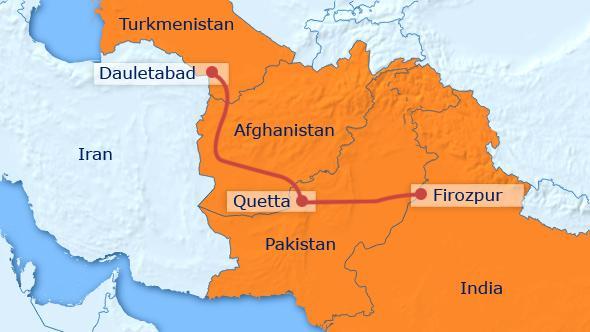
Officials from India and Pakistan have announced they are moving closer to inking a deal to import gas from Turkmenistan via a pipeline through Afghanistan. The 1,700-kilometer “TAPI” duct will transport over 30 billion cubic meters of gas annually from fields in Dauletabad in southeastern Turkmenistan.

In high-level talks in New Delhi this week, Indian Oil Minister S. Jaipal Reddy said “considerable progress” has been made on the project. His Pakistani counterpart, Asim Hussain, added at the meeting that “the issue of transit fees is being discussed with Afghanistan. A joint strategy is also being created between India and Pakistan.”

When the four countries signed a framework agreement back in 2008, the Asian Development Bank estimated the cost of the TAPI pipeline project at around $7.6 billion.

After the talks in New Delhi, the Indian oil minister emphasized that the pipeline would help address the energy needs of the region. Reddy also clarified that security concerns were discussed with Afghan officials, who themselves sought to provide reassurance that necessary measures would be taken to protect the TAPI project.

“We consider it a pipeline of peace,” Reddy said. “Everyone needs gas.”

Improving cooperation between the nuclear armed and traditionally hostile neighbors is seen as a positive development towards establishing long term stability in South Asia.

Pakistan gave India a “Most Favored Nation” trading status when the countries’ commerce secretaries met in New Delhi in November last year to discuss energy and bilateral trade. Indian commerce chief Rahul Khullar expressed his desire to boost bilateral trade to $6 billion within the next three years. Currently, total trade amounts to $2.7 billion.

Reddy said that Pakistan had pledged to also consider a proposal to import Indian petroleum products, highlighting the cost advantages for Pakistan. India, meanwhile, offered electricity to Pakistan through its power plants in Punjab and Gujrat.

The Indian oil minister went on to express disappointment over a failed Iran-Pakistan-India gas pipeline project. With the US leaving no stone unturned in trying to corner Iran over its nuclear ambitions, any possibility of India, Afghanistan or Pakistan going against the Obama administration is somewhat remote. India imports 12 to 14 percent of its oil from Iran, making the Islamic Republic India’s second largest source of oil after Saudi Arabia.

There was significant domestic pressure in India as the analysts and masses called for a stern stand against the US in determining trade relations with Iran. With other regional countries, including China, also refusing to follow US directions, India is still continuing with the import of oil from Iran. In this regard, Reddy said that New Delhi would continue importing oil from Iran and was not bound by new sanctions imposed by the European Union on the Islamic Republic earlier this week.

“We, as a member of the UN, are obliged to follow UN sanctions. Other sanctions imposed by big blocs of countries, we can have some freedom there,” he added further.

Improving relations and cooperation in the energy sector between India and Pakistan will go a long way to establishing harmony and stability in the region. Pakistan is experiencing a severe energy crisis whilst India needs to feed its rapidly developing economy. Mutual dependency and cooperation in this sector with projects such as the TAPI pipeline can also ensure smoother political ties.

Pakistanis for Peace Editor’s Note– A Peace pipe was often used between the Native American tribes when they ended their wars and called a truce. A different sort of peace pipe between Turkmenistan and India via Pakistan can do great wonders for the bilateral relations of the two feuding neighbors and must be encouraged to fruition.

A Bronx Tale

By Ted Regencia and Lindsay Minerva for Tablet Mag
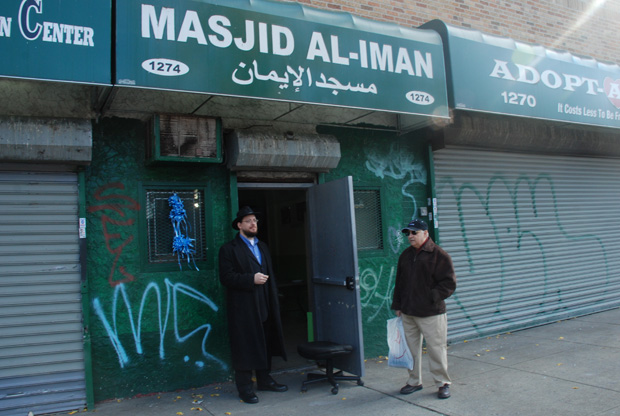
Near the corner of Westchester Avenue and Pugsley Street in Parkchester, just off the elevated tracks of the No. 6 train, Yaakov Wayne Baumann stood outside a graffiti-covered storefront on a chilly Saturday morning. Suited up in a black overcoat with a matching wide-brimmed black fedora, the thickly bearded 42-year-old chatted with elderly congregants as they entered the building for Shabbat service.

The only unusual detail: This synagogue is a mosque.

Or rather, it’s housed inside a mosque. That’s right: Members of the Chabad of East Bronx, an ultra-Orthodox synagogue, worship in the Islamic Cultural Center of North America, which is home to the Al-Iman mosque.

“People have a misconception that Muslims hate Jews,” said Baumann. “But here is an example of them working with us.”

Indeed, though conventionally viewed as adversaries both here and abroad, the Jews and Muslims of the Bronx have been propelled into an unlikely bond by a demographic shift. The borough was once home to an estimated 630,000 Jews, but by 2002 that number had dropped to 45,100, according to a study by the Jewish Community Relations Council. At the same time, the Muslim population has been increasing. In Parkchester alone, there are currently five mosques, including Masjid Al-Iman.

“Nowhere in the world would Jews and Muslims be meeting under the same roof,” said Patricia Tomasulo, the Catholic Democratic precinct captain and Parkchester community organizer, who first introduced the leaders of the synagogue and mosque to each other. “It’s so unique.”

The relationship started years ago, when the Young Israel Congregation, then located on Virginia Avenue in Parkchester, was running clothing drives for needy families, according to Leon Bleckman, now 78, who was at the time the treasurer of the congregation. One of the recipients was Sheikh Moussa Drammeh, the founder of the Al-Iman Mosque, who was collecting donations for his congregants—many of whom are immigrants from Africa. The 49-year-old imam is an immigrant from Gambia in West Africa who came to the United States in 1986. After a year in Harlem, he moved to Parkchester, where he eventually founded the Muslim center and later established an Islamic grade school. Through that initial meeting, a rapport developed between the two houses of worship, and the synagogue continued to donate to the Islamic center, among other organizations.

But in 2003, after years of declining membership, Young Israel was forced to sell its building at 1375 Virginia Ave., according to a database maintained by Yeshiva University, which keeps historical records of synagogues. Before the closing, non-religious items were given away; in fact, among the beneficiaries was none other than Drammeh, who took some chairs and tables for his center.

Meanwhile, Bleckman and the remaining members moved to a nearby storefront location, renting it for $2,000 a month including utilities. With mostly elderly congregants, Young Israel struggled to survive financially and, at the end of 2007, was forced to close for good. The remaining congregants were left without a place to pray. During the synagogue’s farewell service, four young men from the Chabad Lubavitch world headquarters in Crown Heights showed up. Three months earlier, Bleckman, then chairman of the synagogue’s emergency fund, had appealed for help from the Chabad.

“The boys from the Chabad said they came to save us,” said Bleckman. “We were crying.”

At this point, Chabad took over the congregational reins from Young Israel, with members officially adopting the new name Chabad of East Bronx. Still, for the next six to seven weeks, Bleckman said they could not even hold a service because they had nowhere to hold it.

When Drammeh learned of their plight, he immediately volunteered to accommodate them at the Muslim center at 2006 Westchester Ave.—for free.

“They don’t pay anything, because these are old folks whose income are very limited now,” said Drammeh, adding that he felt it was his turn to help the people who had once helped him and his community. “Not every Muslim likes us, because not every Muslim believes that Muslims and Jews should be like this,” Drammeh said, referring to the shared space. But “there’s no reason why we should hate each other, why we cannot be families.” Drammeh in particular admires the dedication of the Chabad rabbis, who walked 15 miles from Brooklyn every Saturday to run prayer services for the small Parkchester community.

For the first six months, congregants held Friday night Sabbath services inside Drammeh’s cramped office. As more people began joining the congregation, Drammeh offered them a bigger room where they could set up a makeshift shul. (When it’s not in use, students from the Islamic school use it as their classroom.) Inside the synagogue, a worn, beige cotton curtain separates the men and women who attend the service. A solitary chandelier hangs just above the black wooden arc that holds the borrowed Torah, which is brought weekly from the Chabad headquarters. A large table covered with prayer books stands in the center, and a picture of the Lubavitcher Rebbe is displayed prominently on a nearby wall. During Shabbat, when Jewish congregants are strictly prohibited from working, they have to rely on the Muslim workers at the center or on Drammeh to do simple chores such as turning on the light and switching on the heater.

At first, it did not make sense, said Hana Kabakow, wife of Rabbi Meir Kabakow. “I was surprised,” said the 26-year-old congregant who was born and raised in Israel. “But when I came here I understood.” The Kabakows have been coming to the service from Brooklyn for the last two years.

Harriet Miller, another congregant, said she appreciated the center’s accommodating the synagogue. “They are very sweet people,” said the 79-year-old Bronx native and long-time resident of Parkchester, who added that she welcomes the new Muslim immigrants in her neighborhood: “We were not brought up to hate.”

Drammeh also understands the importance of teaching tolerance more broadly, and for turning the school—which was itself founded at the nearby St. Helena Catholic Church on, of all days, Sept. 11, 2001—into a model of sorts for religious tolerance in New York.

“We’re not as divided as the media portrays us to be,” Drammeh said. “Almost 90 percent of Jewish, Muslim, and Christian teachings are the same.”

His latest project involves introducing fifth-grade Jewish and Islamic school students to each other’s religious traditions. Other participants of the program, now in its sixth year, include the Solomon Schechter School of Manhattan, the Al Ihsan Academy of Queens, and the Kinneret Day School of Riverdale. At the end of the program, students organize an exhibit that shows family artifacts of their respective cultures and religion. The principal of the Islamic school, who is also Sheik Drammeh’s wife, said that even after the program ended, the participants became “fast friends” and would visit each other’s homes.

“They would have birthday parties together,” Shireena Drammeh said. “When someone invites you to their house, I mean, that says it all right there and then.”

While the Jewish congregants are thankful for their new home, they hope that one day they can rebuild their own synagogue. That day may be far off: Even now that they have space to worship, they still struggle to operate. They don’t have proper heating inside, and the portable working heater could not reach the separate area where the elderly women are seated, forcing them to wear their jackets during the entire service. Congregants are appealing for financial support from the Jewish community and other congregations.

But Leon Bleckman and others say they now also have loftier goals, including reviving the Jewish presence in the neighborhood and reaffirming the positive relationship with their Muslim friends. “We are able to co-exist together side by side in the same building,” said Assistant Rabbi Avi Friedman, 42. “That’s sort of like a taste of the future world to come—the messianic future where all people live in peace.”

Ted Regencia is a digital media student at the Columbia Journalism School. His Twitter feed is at @tedregencia. Lindsay Minerva, a digital media student at the Columbia Graduate School of Journalism, is an intern at Newsweek. Her Twitter feed is at @lindsayminerva.


Pakistanis for Peace Editor’s Note– A story like this illustrates the good in all of us. A few months ago, we highlighted an article on Heartsong Church in Cordova, Tennessee where Christians in that part of the US welcomed a Muslim community that was undergoing construction of their mosque nearby. Now this kind deed is being passed forward to another flock of faithful when Muslims in New York are offering a helping hand to Jewish members of their community. This is the type of love for one another God of all religions wants and appreciates. May God bless them all.
Pakistani Judges Press Premier to Defy President

By Salman Masood and Ismail Khan for The New York Times

The political and legal crisis in Pakistan took a new turn on Tuesday when the Supreme Court threatened to dismiss Prime Minister Yousaf Raza Gilani for failing to comply with court orders to reopen corruption cases against his political boss: President Asif Ali Zardari.

The latest pressure from the court compounds the problems of the governing Pakistan Peoples Party, already facing a political crisis over a controversial memo that sought United States support in thwarting a feared military coup.

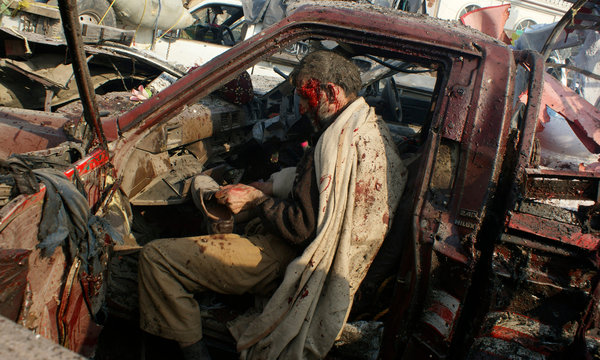
Adding to the government’s troubles is a steep increase in terrorist attacks. Another attack occurred early Tuesday, a truck bombing that the authorities said killed more than 25 people, including women and children, in northwestern Pakistan. A senior government official said the bombing appeared to be in retaliation for the recent killing of a militant leader.

Since December 2009, when the Supreme Court struck down an amnesty that nullified corruption charges against thousands of politicians, the court has insisted that the government reopen corruption cases against Mr. Zardari.

But the government has resisted court orders, and Mr. Zardari said last week that, “come what may,” officials from his party would not reopen the graft cases filed against him and his wife, Benazir Bhutto, in Switzerland. Ms. Bhutto was assassinated in 2007.

On Tuesday, a five-member panel of the Supreme Court, led by Justice Asif Saeed Khosa, ruled that the government was guilty of “willful disobedience” and said that Mr. Gilani was “dishonest” for failing to carry out the earlier court orders.

The judges laid out six options — including initiating contempt of court charges, dismissing the prime minister, forming a judicial commission and taking action against the president for violating his constitutional oath — and ordered the attorney general to explain the government’s position in court on Monday.

A three-member judicial commission that is investigating the controversial memo is scheduled to resume its hearing the same day. Apart from having an acrimonious relationship with the judiciary, the government has an uneasy relationship with the country’s top generals.

Mr. Zardari, who spent 11 years in prison on unproved corruption charges, says the corruption cases against him and Ms. Bhutto that date to the 1990s were politically motivated.

In an interview last week with GEO TV, a news network, Mr. Zardari said reopening those cases would be tantamount to “a trial of the grave” of his wife.

Mr. Zardari also claims immunity as president, but the judiciary, led by Chief Justice Iftikhar Muhammad Chaudhry, has resisted that claim and has aggressively pursued cases against Mr. Zardari’s party, leading many government officials to speculate that the judiciary was being used by the country’s powerful military to dismiss the government before the March elections for the Senate, in which the Pakistan Peoples Party is expected to win a majority.

Political analysts said the fate of Mr. Gilani, the prime minister, was in peril.

Mr. Zardari called a meeting of his party officials and coalition partners on Tuesday evening to chart strategy, and he was expected to get a statement of support from his allies.

“The situation is fast moving towards a head-on confrontation,” said Hasan Askari Rizvi, a political and military analyst based in Lahore. “It depends on what options are exercised by the Supreme Court.”

According to the Pakistani Constitution, a prime minister can be removed only by the Parliament, and the Supreme Court can disqualify the prime minister only indirectly, Mr. Rizvi said.

“If the court disqualifies the prime minister and the prime minister continues to enjoy the support of the Parliament, then the stage is set for a very dangerous confrontation,” he said.

The legal standoff is forcing the government to defer issues of greater importance, like rescuing a failing economy and fighting Taliban insurgents, as it focuses on its political survival, Mr. Rizvi said.

“The court, the military and the executive are trying to assert themselves,” he said. “It has become a free-for-all.”

There were no immediate claims of responsibility for the bombing on Tuesday, but it appeared to have been carried out by Tehrik-i-Taliban, an umbrella organization of Pakistani militant groups, against the Zakhakhel tribe, which has formed a militia in support of the government, said Mutahir Zeb, administrator for the Khyber tribal region.

Mr. Zeb said the Tehrik-i-Taliban sought to avenge the killing of Qari Kamran, a local Taliban commander, by security forces last week in an area occupied by the Zakhakhel.

Mr. Zeb said a pickup truck exploded in the middle of a bus terminal used by the Zakhakhel in the town of Jamrud.

The bomb destroyed several vehicles, damaged a nearby gasoline pump and shattered windows in the area. In addition to those killed, 27 people were reported wounded in the bombing and were taken to hospitals in Peshawar.

“I was on duty at the nearby checkpoint when I heard a big bang,” said Mir Gul, a security guard. “I rushed toward the spot and saw bodies lying around while the injured cried for help. It was devastating. There was blood everywhere.”

Pakistanis for Peace Editor’s Note-
The Pakistani people deserve better than this. The only solution to EVERYTHING that ails Pakistan is a true and long lasting peace with India. The sooner this dream becomes a reality, the sooner grim news of extremism and its grip on Pakistan will go away~