Archive for the ‘ Peace ’ Category

On the ground: For border village, peace is a beautiful dream

By Taha Siddiqui for The Express Tribune

We left behind everything when we came to this side, but not for such living conditions. Some of our family that stayed behind in India now mock us about our migration,” says Haji Shahzad.

Shahzad, in his early 70s, is a resident of Bhanoo Chak, a village located on the Indo-Pak border.
“The border force here has made our lives miserable. We live not under the threat of India but this force. Day and night, we have to live by their rules,” Shahzad says.

Bhanoo Chak, a village occupied by Sikhs who fled at the time of partition, is an hour’s drive from central Lahore and is closest in distance to the border.

“We just want peace so that there is relaxation on the border and we can have normal lives again,” adds Shahzad.
Mostly farmers, these men are not allowed to roam around freely after 6pm and need to acquire no-objection certificates before constructing anything on their property.

Many of these villagers have families that were divided in the partition in 1947 and wish to go meet them.
“We have family in Rajasthan. They want to come visit us and we want to go and visit them too. But we have to go through bureaucratic hurdles that we have stopped making the effort,” says Shahzad.

Pakistan Rangers Colonel Osman Siddiqui, who is in charge of the Wagah Border area, says that without checks and balances, he cannot trust anyone in the area. “The border is a sensitive spot, and to stop smuggling and unwanted people from crossing over, we have devised a system where we allow men to roam in these areas only between 6am and 6pm,” he says.

When asked if he will ease the policy in case the Pakistan-India dialogue is successful, he replied that national policy and local policy are different subjects. “When a change happens in the national policy, we can see. But for now, the policy will stay the same since the force needs to be vigilant,” he said.

Many villagers believe that if Pakistani and Indian leaders sincerely wanted peace, an accord could be reached today. They also do not fear another war with India.

“In 1965, Indian forces destroyed our homes. There were planes overhead and even the Pakistan Army had little idea what was going on,” says Mohammad Tayyab, who was barely seven years old at the time. “But today, we cannot expect the same as we are now a nuclear state.”
Still, the villagers are always on their toes. “Every time Pakistan Army increases its presence on the border area, I fear I may have to leave home again,” says Tayyab, who moved his family out of the village during a standoff in 2002.

For some, however, peace is just a far-fetched but beautiful dream. “Peace is not possible, even though it will be good for both our countries. We will [finally] be living with no fear,” says Azeem impatiently, during a short break from a cricket match.

Pakistan and the American Learning Curve

By Ethan Casey for Dawn

On June 1, I took part in a TEDx event hosted by the Princeton Public Library in Princeton, New Jersey, USA. The TED people bill what they do as “ideas worth spreading,” and during the weeks I spent preparing my talk I pondered what ideas I wanted to spread to an American audience. I titled my talk “What Does Pakistan Have to Do with Haiti? (the full text is on my website, and I’m told the video will be online soon), but in an important sense it’s really about the United States.

I used the occasion to try to make some sense of the weird coincidence that the two countries I care about most deeply and personally, other than my own, both were devastated in 2010 by horrific natural disasters. I did find a number of things they have in common, believe it or not, but the most salient is that Pakistanis and Haitians both see the United States from the outside. And what they see is often ugly and cruel, because they live on the receiving end of the American power that we Americans usually don’t experience, because we’re the ones wielding it. This is a point that’s very clearly apparent to many people worldwide, but not always easy to get across to Americans.

One way I tried to do it in Princeton was by arguing that both countries are prime examples of what the Nigerian novelist Chimamanda Adichie, in an excellent TED talk in 2009, called “the danger of a single story.” We Americans tell ourselves a single story about Haiti, and a different single story about Pakistan. Dr. Paul Farmer, a celebrated physician who works in the poorest areas of rural Haiti, wrote a book titled The Uses of Haiti. We use Haiti rhetorically and ideologically and, every time there’s a new fitful spasm of American interest in Haiti, our uses for it rear their heads anew. It’s never an edifying thing to see, and it’s maddening to those of us who know Haiti.

America has different uses for Pakistan, and those are not unlike the uses we used to have for the Soviet Union. If Haiti meets Americans’ need to have someone to pity, Pakistan fulfills our need to have someone or something to fear. Fear, pity, and contempt are easy, self-indulgent emotions. But much more demanding, I said, is to cultivate and practice respect. Respect implies distance and difference, and to practice it entails acknowledging that difference is inevitable and even desirable.

Another thing Haitians and Pakistanis have in common is their experience as immigrants and visitors to America. I tried to bring this home by telling the audience about novelist Edwidge Danticat’s 81-year-old uncle, who fled violence in his neighborhood in Haiti’s capital, Port-au-Prince, in 2004 and made the mistake of asking for political asylum at the airport in Miami. US Immigration officials threw him into the infamous Krome Detention Center and denied him his diabetes medication, and he died in detention. Danticat tells the story eloquently in her wonderful nonfiction book Brother, I’m Dying, which is above all a beautifully composed story about family love, immigrant struggle and aspiration, and the tortured and all too intimate relationship between Haiti and the United States, told by a Haitian who is also an American. I often find myself telling Pakistanis the story of Edwidge Danticat’s uncle, and I know that many Pakistanis would recognize its elements.

The idea I tried to leave the American audience with was that, as I put it, our lazy and self-comforting reductionism says nothing about Haiti or Pakistan, and all too much about us Americans — that the earthquake in Haiti and the floods in Pakistan were natural disasters, to be sure, but didn’t happen in a geopolitical vacuum. I gave them a lot to think about, possibly too much.

What I want, by the same token, to offer Pakistani readers is an occasion to reflect on just how big and delicate is the task of influencing American awareness and opinion. The novelist Upton Sinclair famously quipped that it’s difficult to get a man to understand something when his salary depends on his not understanding it. There’s a national analogue that applies to Americans: we are no less innately patriotic than Pakistanis or anyone else, and no one wants to think ill of his or her own country.

So the job of educating and influencing the American public is a long uphill battle, and changing US foreign policy is like turning around an aircraft carrier: it has to be done carefully and very patiently.

Perhaps it can be helped along by American friends of Pakistan like myself and, even more, by leaders and members of the Pakistani-American community. In the meantime I urge Pakistanis to remember the humanity of ordinary Americans, who have been on a steep learning curve since at least September 11, 2001.

Ethan Casey is the author of Alive and Well in Pakistan: A Human Journey in a Dangerous Time (2004) and Overtaken By Events: A Pakistan Road Trip (2010). He is currently writing Bearing the Bruise: A Lifetime in Haiti, to be published in early 2012. Web: http://www.facebook.com/ethancaseyfans or http://www.ethancasey.com.

Follow Ethan Casey on Twitter: http://www.twitter.com/ethan.casey

Gaddafi Stadium Name Must Go

By Manzer Munir for Pakistanis for Peace

It has been over three months since the Arab Spring arrived on Libyan shores. The Libyan Civil War started there in February of 2011 after Ben Ali of Tunisia and Hosni Mubarak of Egypt begrudgingly relinquished power in the neighboring North African nations. At first it had appeared that Mubarak would resort to thuggery and despotic abuse of his powers. But due to the brave people in Tharir Square in Cairo, he eventually was forced out by the Egyptian army and under American pressure once the Obama administration calibrated their stance to not support a long time ally in Mubarak and instead follow the popular opinion of the people of Egypt against his autocratic rule.

Unfortunately for the people of Libya, Muammar Gaddafi is not ready to step down from over 40 years at the helm of Libyan society. His army brutally quashed a rebellion against his rule and when it appeared that many thousands more would be killed by his troops, the US and NATO forces intervened and bombed Libyan government forces. The standoff between the Libya forces of Gaddafi and the US and NATO bombings have left Libyans in the middle as their nation continues to suffer several months into the fighting.

A brutal dictator like that who cares more about holding onto power than the fate of his nation does not deserve any honors. Instead he deserves to be tried for murdering many innocent people and if found guilty he should be hanged.

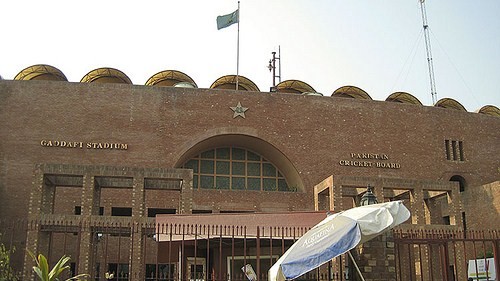
Therefore it is a shame that in Pakistan, one of the country’s most important stadium continues to bare the name of the Butcher of Tripoli. Yes, Gaddafi stadium in Lahore, a venue for many Pakistan Cricket Board sanctioned domestic and international cricket matches, is named after the Libyan dictator.

The stadium was built in 1959 and was originally named Lahore Stadium. However it was renamed in 1974 to Gaddafi stadium in honor of the Libyan ruler who had given a speech in favor of Pakistan’s right to pursue nuclear weapons at a meeting of the Organization of Islamic States Conference (OIC). The stadium also houses the headquarters of the Pakistan Cricket Board (PCB).

But now, as Qaddafi continues to kill his own people in the most brutal of ways, it is time that Pakistan’s Cricket Board changes the name of the country’s premier stadium back to Lahore stadium since honoring this man responsible for indiscriminately killing his fellow citizens unnecessarily further looks negatively upon Pakistan.

A country that already has a grave public relations image problem can surely give itself a break by doing something as simple as changing the name of this stadium. Afterall, what does it say of Pakistan if it continues to honor a man like Gaddafi? Do Pakistanis not care that this man is responsible for killing thousands of his own people?

It is time to put pressure on the Pakistan Cricket Board and on the government to immediately change the name of the stadium. I know that Pakistan has many other problems inside this fractured and unstable nation to think that changing the name of Gaddafi stadium can fix all that ails the country. Nay, it is merely a drop in the bucket. There are countless other problems facing the country that are too many and too complex to list here. But one easy fix the country can do to help improve its image is to change the name of this stadium.

There is absolutely no reason that the stadium should be associated with a lunatic such as Qaddafi. The name should never have been changed to begin with no matter what support he gave to Pakistan’s nuclear aspirations. He has never been a good or stable leader. In fact, the man is thought to have been directly responsible for numerous acts of terrorism in the 1970’s and ’80’s including the Pan Am Lockerbie bombing. And this was BEFORE he started killing his own people in order to quash a rebellion against his rule!

In light of the many recent embarrassments for the nation such as Osama Bin Laden’s hiding in their country, the continued imprisonment of Asia Bibi, the killings of Salmaan Taseer and Shahbaz Bhatti, Pakistanis must decide whether or not they want to join the community of nations or become a pariah state much like North Korea, Libya and Iran. Changing the name of the stadium is a small step, but it is indeed a step in the right direction.

–Manzer Munir, a proud Pakistani American and peace activist, is the founder of Pakistanis for Peace and blogs at http://www.PakistanisforPeace.com as well at other websites as a freelance journalist and writer.

Pakistan must stop treating India as ‘biggest enemy’: Nawaz Sharif

As Reported by The Economic Times

As Pakistan’s powerful military held out threats to India, former Prime Minister Nawaz Sharif has called for reappraisal of ties with its neighbour to move forward and progress, saying Islamabad must stop treating New Delhi as its “biggest enemy”.

Sharif, who was earlier involved in talks with India when the Kargil crisis erupted, also sought a probe into the 1999 conflict with India.

The former Prime Minister, who is the chief of main opposition PML-N party, is currently on a three-day visit to southern Sindh province where he made the remarks during an interaction with the media in Karachi yesterday.

He called on the government to also conduct an inquiry into the 2006 killing of Baloch leader Nawab Akbar Bugti in a military operation and the carnage in Karachi on May 12, 2007 that killed over 40 people who tried to rally in support of then-deposed Supreme Court Chief Justice Iftikhar Chaudhry.

Sharif, whose government was deposed in a military coup led by former President Pervez Musharraf in 1999, reiterated his demand for the budgets of the military and the ISI to be placed before Parliament for scrutiny in line with the practice in other democracies.

He said one of his biggest regrets was not taming the powerful military when he was Prime Minister in the 1990s.

The Parliamentary resolution calling for an independent commission to investigate the killing of al-Qaeda leader Osama bin Laden in a US raid on May 2 was the first step towards making Parliament a sovereign body, Sharif said.

“We need structural changes and this inquiry has provided an opportunity to move forward and put the country on the right track, correct its direction by putting our house in order, establish the rule of law and bring all institutions under civilian control,” Sharif said.

If the government fixes responsibility for the Abbottabad incident and punishes those found guilty, a message will go out to the world that the people of Pakistan will not brook another embarrassment like the US raid, he said.

Sharif spoke out against the recent alliance forged by the ruling PPP and the PML-Q, both of which are rivals of his PML-N in Punjab and at the centre.

With Friends Like Pakistan…

By Manzer Munir for Pakistanis for Peace

Many people in Pakistan these days are wondering why their nation often finds itself on the wrong side of recent history. First, there is the continued and unjust imprisonment of a Christian Pakistani woman named Asia Bibi who has been languishing in jail for nearly two years. She has been given a death sentence for allegedly making derogatory remarks about the prophet Muhammad.

Then there was the killing of Salman Taseer, who was the then sitting governor of Punjab, Pakistan’s most populous province, by one of his own bodyguards for his outspoken support for Asia’s rights and her freedom. Instead of swift punishment and public outcry at his actions, the killer, Malik Mumtaz Hussain Qadri, was showered with rose petals by some cheering members of the bar association of Lahore when he came to the courthouse for formal charges of murder. Yes, members of the judiciary were cheering his unilateral action of murdering another human being simply for his support towards a condemned non Muslim woman’s rights.

You can only imagine the warped sense of logic and justice in a country where lawyers cheer the cold blooded murder of an innocent man whose only crime was to come at the aid of a condemned Christian mother of two children.

Fast forward to a few months later, the extremists managed to assassinate the only Christian member of President Asif Ali Zardari’s government when the Minister for Minority Affairs, Shahbaz Bhatti, was killed in a hail of bullets by unknown gunmen who then managed to escape on their motorcycle. Bhatti being a Christian as well as a minister in the government, had campaigned for the release of Asia as well as for the repeal of the blasphemy laws in Pakistan that at help promote a culture of state sanctioned hatred against religious minorities in Pakistan.

The culture of fear and hatred as well as violence against the religious minorities has progressively gotten worse along with the security situation inside the country in the last ten years. If there is anything that has been proven by some of these recent events in Pakistan, it is only that the country has become the undisputed global hotbed of extremism, fanaticism, and Islamic militancy in the Muslim world. It has now morphed into a country where the Wahhabi and Salafi fanatics have successfully used fear and hate to silence the majority moderate Barelvi and Sufi Muslims of Pakistan.

When powerful moderate voices like those of Bhatti and Taseer are silenced despite having heavy protection, how safe can the common man feel about his life if he chooses to speak up against the radicals within Islam? To kill someone is against Islamic belief at its core, unless it is done in self defense but you would be hard pressed to hear that view from the religious fanatics in Pakistan. They have justified killing others over many insane reasons such as making derogatory remarks about Islam or the prophet Muhammad. They also rationalize the killing of someone over a family’s honor, thus honor killings where often young women are killed if they are deemed to have brought dishonor to their family. These radical Islamists will even want someone dead for simply uttering disparaging remarks against Islam or its prophet. It is both ironic and hypocritical to see that the same derogatory remarks towards other figures such as Jesus, Moses, Abraham or other prophets of the Quran do not meet the same outcry nor receive the same impassioned response from the masses as when Islam or its prophet Muhammad are criticized.

The seeds of this current fanaticism fanning the flames of hatred were planted during an earlier conflict, this one involving the Soviets against an under matched adversary in Afghanistan. It was during this time in the ‘80’s when the Pakistani dictator, General Zia ul Haq, was in power and he accepted American aid from the Reagan administration in thwarting the threat from the 1979 Soviet invasion of neighboring Afghanistan. At the time, Pakistan’s ISI worked very closely with these “freedom fighters” waging what many thought was a just jihad against a communist foe who disallowed all religious worship. In fact, a good movie to rent right now to put some of these current events in perspective would be Charlie Wilson’s War starring Tom Hanks which details this era of Pakistan-US relations and cooperation against a common enemy in the Soviets.

The trouble now however is that in this current uneasy alliance between Pakistan and the US, there is not a common enemy, at least not as how it is viewed by many in Pakistan, which recently was polled to be the most anti-American nation in the world. Even though radical Islam and fanaticism is as much a threat to Pakistan’s sovereignty and prosperity as it is to the United States, India has always been seen as the big threat by its army and rulers. Pakistan has long seen Afghanistan as a country offering it strategic depth in any future wars with India. Thus, its interests in Afghanistan do not coincide with those of the United States.

The Pakistani media also constantly feeds a steady news diet of bombings by the Taliban/Haqqani network as well as any one of the other fill-in-the-blank militants groups seemingly operating freely from within its borders. There is also the regular news reports of US drone attacks and NATO actions in the AfPak region, as well as the all ubiquitous and constant threat faced from India, who is still seething from the Mumbai bombings in 2008, which were blamed on Pakistani trained terrorists. To further add insult to their injury, not a single leader of the Lashkar E Taiba has been convicted in Pakistan for the attacks in Mumbai that claimed 174 deaths and seriously injured several hundred others.

To the Indians, the perpetrator of their version of 9/11 is not an Arab from Yemen named Osama, but rather a whole nation state with whom it has fought three wars in 60 years and who is a long time sworn enemy with which it shares a long border. Too often it is rightly assumed by many that Pakistan will not act against Lashkar E Taiba and other openly anti-Indian militant groups because these groups are seen as a strategic asset for use against India. Only the fear of an all out nuclear war between the two nations by a trigger happy Pakistan placated India enough so that New Delhi did not immediately take military action against Pakistan after the Mumbai attacks.

So this culture of fear from all enemies both foreign and domestic to Pakistan’s sovereignty is now at an all time high within the nation. With a several decade long war on its western border in Afghanistan as well as the constant threat from its arch enemy to the east in India, Pakistan has never felt more threatened or squeezed. This pressure is now only going to get ratcheted higher since last week’s killing of Osama Bin Laden at a compound in a suburb of Islamabad, Pakistan. Living for five years undetected in the compound, Bin Laden was less than a mile away from the Kakul Military Academy in Abbottabad, Pakistan’s version of the famed American military college of West Point, when he was killed by a US Navy Seal team.

For the world’s most wanted terrorist to hide in plain sight in such a manner and for so many years, rightly points a lot of suspicion on Pakistan. Long suspected by many intelligence analysts, elements within Pakistan’s spy agency, the ISI, naturally now attracts a lot of suspicion in their possible involvement in the whole affair. There are strong voices and calls within the US Congress to halt all aid to Pakistan in light of Bin Laden’s death. We certainly can assume that any other country in the world found to be harboring terrorists would already have been labeled a state sponsor of terrorism and would be facing immediate sanctions from the international community. “You are either with us or against us” were the words so famously uttered by then President Bush to Pakistan specifically after 9/11. But due to Pakistan’s importance for a successful pullout from Afghanistan of US troops, as well as its strategic position within the Islamic world, neither side can afford to cut off relations with each other.

Although the Obama administration stopped short of claiming that the corrupt civilian government of Zardari was directly involved in protecting and sheltering Bin Laden, all signs point to complicity to some extent by some segments within Pakistan’s hierarchy. There is near unanimous agreement among many in Washington, and this is true on both sides of the aisle, that there are many sympathizers of the Taliban and Al Qaeda within the ranks of the army and the intelligence agencies of Pakistan.

Having driven the Soviets out of the region with the help of militant jihadi groups like the Taliban, no doubt a cadre of army and intelligence officers must have come to espouse the belief that it is in Pakistan’s best interests to have a religiously frenzied force available to use as a weapon against India in a future conflict also. In fact, Pakistan has always had this policy of seeking strategic depth in Afghanistan against India.

The death of Osama Bin Laden in Pakistan by Special Forces of the American military illustrates just what a duplicitous game the country has been playing with the United States and more importantly with itself. In the war on terror America lost nearly 3,000 citizens in the attacks on 9/11. In that same period stretching the last ten years, Pakistan has lost nearly 31,000 citizens to terrorist attacks by the Taliban, Al Qaeda and other militant groups. So it has always been in Pakistan’s best interests to fight the militant threat brewing in its borders the last two decades that has claimed so many lives and caused so much instability.

The murders of Salman Taseer and Shahbaz Bhatti illustrates the dire situation within Pakistani society where many young underprivileged men gravitate towards Osama Bin Laden’s ideology of hate against the US, which is seen by many, as the aggressor in an already very anti-American country. Also western ideas, religious and political liberties, and freedoms, such as those for women in western society, are all seen by the Islamic clergy and religious establishment as being against Islamic doctrine and clashing with the Muslim way of life. Therefore, the madrassahs and the masjids continue to espouse rhetoric against the American and European way of life which is seen as contradicting the teachings of the Quran. Even moderate Muslims and their sites of worship have come under heavy attack by the militants as witnessed by a new strategy of attacking Sufi Muslim shrines and mosques. Pakistan may not want to admit it, but there is a raging war going on within itself for the control of Islam and the attack on moderate Islam by the extremists within the religion.

The Bin Laden killing makes Pakistan seem either highly incompetent about knowledge his whereabouts or at the very least appear to be deeply complicit in sheltering and keeping him hidden while the United States launched the biggest manhunt in US history. At this point, the United States justly feels betrayed and distrustful towards anyone in the Pakistani establishment. After all, how are they to know who now to trust in the army or the civilian government?

It is imperative that Pakistan mount an immediate and urgent investigation that has the full cooperation and assistance of the US so that both countries can discover the source of this support system that Bin Laden has had from within Pakistan. Certainly, some heads do need to roll in Islamabad over this. Whether those resignations be of the current ISI chief, Ahmad Shuja Pasha, head of the army, General Ashfaq Parvez Kayani, or Zardari and Gilani themselves, as some accountability needs to occur. This is important not just for the sake of American-Pakistani relations, but just as importantly for the benefit of the Pakistani populace who is both deeply embarrassed by breach of Pakistan’s sovereignty, but also for the intelligence failure by the government of Pakistan at Osama’s whereabouts. Until and unless Pakistan makes this investigation a top priority, USA and Pakistan relations will continue to slide downhill and will mire further in distrust.

Pakistan must realize that in this global war against religious Islamic fanaticism, it cannot continue to speak from both sides of its mouth. Not when everything, including its very existence is at stake. It cannot at once be both a front line ally in the war against terror and receive billions of dollars in US aid, and at the same time, be found to shelter or allow terrorists and militant organizations safe havens and allow them to operate within its territory.

It is up to Pakistan to salvage a quickly deteriorating situation. However at the time of publication of this article, it seems that President Asif Ali Zardari’s government is off to a horrible start in mending fences with the US. First the name and identity of the CIA station chief in Pakistan was leaked by someone in the ISI to members of the local press. This leak compromised his mission and even poses a danger to his life as the anonymity of all operatives is a necessary requirement in intelligence work.

Then later in the day, in remarks given by Pakistan’s Prime Minister Yousuf Raza Gilani to its Parliament, he defiantly stated that neither Pakistan’s army nor its intelligence agency should be suspected by the Obama administration for providing support to Bin Laden. Gilani also went as far as to say that any future unilateral action by the US or any other nation inside Pakistan’s territory will be met with like force. I thought to myself, did he really just that? Did Pakistan just threaten the United States? It is appalling to see the political posturing now being done by the Pakistani government and the long term negative consequences they will have on the nation.

For a country that is receiving nearly $3.5 billion in US aid yearly, these are very tough words that will undoubtedly only make the strained relations between the two countries worse. Pakistan should realize that United States wants to feel that it can trust it to be a full partner in the fight against militancy and extremism. And unless this distrustful and at times, very adversarial relationship changes, the United States cannot help but feel that with friends like Pakistan, it does not need enemies!

-Manzer Munir, a proud Pakistani American and peace activist, is the founder of Pakistanis for Peace and blogs at http://www.PakistanisforPeace.com as well at other websites as a freelance journalist and writer. 

India’s Own Operation Geronimo?

By Ashok K Mehta for The Wall Street Journal

Every time there is a Pakistan-sourced terrorist attack in India, the reaction in the world’s largest democracy is predictable. Demands range from “hot pursuit” of the terrorists across the border to cries for all-out war. In the last decade, analysts have proposed other alternatives: surgical air strikes, a limited armored offensive and covert operations. The latter option seems especially inviting after U.S. special forces took out Osama bin Laden last Sunday.

These demands for strong action are in stark contrast with the way the Indian government has responded to these attacks: pursuing bland diplomacy. The starker this contrast gets, the more complicated it will be for New Delhi to implement a foreign policy that is assertive, yet careful and deterrent, in the future. Instead, if the government displays the requisite will and capabilities for a targeted strike today, it can avoid the need for an actual strike later.

History offers some perspective. After the Pakistani-based Lashkar-e-Taiba (LeT) and Jaish-e-Mohammed attacked New Delhi’s Parliament in December 2001, the U.S. had to step in quickly to prevent armed clashes between the arch rivals. In May 2002, following yet another terrorist attack and after months of coercive diplomacy by both New Delhi and Washington, Pakistani dictator Pervez Musharraf offered a very strong assurance that his country’s territory would not be used to host attacks against India. This assurance was conveyed to New Delhi by then-U.S. Deputy Secretary of State Richard Armitage, who said that terrorism emanating from Pakistan would end “permanently, irreversibly, visibly and to the satisfaction of India.”

New Delhi bought that assurance and started to reach out to Islamabad diplomatically. Yet its pattern of responses since 2002 has led to six more terrorist attacks originating in Pakistan. All Islamabad has done is give similar reassurances.

After the attack on Mumbai in November 2008, India found itself in the same trap. It issued the usual protests accompanied by vague threats of retaliation and called off the dialogue that had started a few years ago. But Islamabad denied any state complicity. At that point, India’s strategic-affairs and military community noted that New Delhi had to raise Pakistan’s costs of encouraging cross-border terrorism.

However, by 2009, the Manmohan Singh government’s energies were focused on sending dossiers of evidence to Islamabad, pointing to proof of LeT’s hand in the Mumbai attacks. Pakistan’s civilian government stalled on them. Still, Mr. Singh staked his reputation on trying to start a dialogue. Earlier this year it began, most visibly at the sidelines of the cricket world cup.

These diplomatic back-and-forths have not yielded results. Despite playing nice, Islamabad has snubbed its neighbor’s friendliness. Last week, Pakistan’s government called India’s demand for the Mumbai 2008 suspects “familiar and outdated.”

What should New Delhi do then? Even with the world’s fourth largest military, India has failed to deter Pakistan’s cross-border terrorism. Now, the success of America’s Operation Geronimo in killing bin Laden has whetted its appetite to do more. Last week, when asked if India could pull off a similar mission, India’s armed service chiefs replied in the affirmative.

This could well be bravado on the chiefs’ part, because India suffers from fundamental deficiencies. For one, India’s political leadership has been risk-averse. Even before the two sides fought a limited war in Kashmir in 1999, New Delhi had already announced that it would never cross the Line of Control, the de facto border. This tied the Indian army’s hands when Pakistan crossed this amorphous line and claimed Indian soil as its down. More broadly, India has a history of strategic restraint, which means its diplomatic and military strategy hasn’t been focused on assertively achieving select goals.

As a result, India has invested in neither the legal architecture nor the physical capabilities to pull off an Operation Geronimo. For instance, U.S. counterterrorism policy declares that terrorists in breach of U.S. laws who are harbored by any state will be brought back for prosecution through “induced cooperation” and, when necessary, force. India needs something like this. Such laws would give its counterterror operators legal cover as well as set the ground for dealing with other gray legalities in the war on terror.

Then there’s the question of what intelligence and arms India can put on the ground. Its human intelligence across the border and experience in foreign clandestine operations is weak. Unlike the U.S.—which probably maintains an estimated 3,000-4,000 intelligence operatives in Pakistan—India has been scaling back its intelligence infrastructure inside that country for the past 15 years. In the late 1990s, then-Prime Minister Inder Kumar Gujral consciously dismantled this infrastructure as part of a new doctrine for peace, a grave strategic error.

Equipment- and training-wise, too, India falls short. Indian commandos freed the Mumbai hostages with much clumsiness over a prolonged 72-hour operation in November 2008, making some wonder how they would operate in alien environments.

None of this is to suggest that India should prosecute an operation similar to Geronimo in coming months. But being ready for one is necessary. It sends a strong psychological deterrent to those in Pakistan’s intelligence services who may sympathize with and assist the likes of LeT—just like possessing more tanks and fighter jets deters a conventional military threat. It suggests to Islamabad that New Delhi has the necessary political will.

Preparing for such small operations can prevent larger debacles in the future. Unless Pakistan’s military-jihadi complex is completely dismantled, it can still pose a threat to India. And the more that threat looms large and the less India prepares to stay ahead of it, there could come a day when a big terrorist attack makes India’s electorate—infuriated with its government’s bland version of diplomacy—scream for blood.

Political pressure could then compel an Indian prime minister to hurriedly send in a team of commandos without any direction. Worse, it could hurl the subcontinent into full-scale war.

Mr. Mehta is a retired major general of the Indian Army and founder member of India’s Defence Planning Staff.

Syria Steps Up Crackdown; International Outcry Grows

As Reported by Voice of America

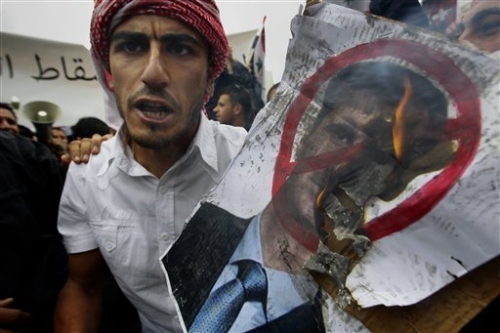
Syria has intensified its bloody military crackdown on pro-democracy demonstrators, as international criticism against the government’s action mounts. Gunfire continued Tuesday in the flashpoint city of Daraa, where an armed assault to end anti-government protests was in its second day.

Human rights activists say at least 34 people have been killed and dozens more arrested since Syrian troops and tanks entered the city at dawn Monday to crush the demonstrations.

Residents were said to be too afraid to venture out in Daraa. Electricity, water and telecommunications to the city remain cut.

Also Tuesday, thousands of riot police deployed near the coastal city of Banias and in two areas on the outskirts of the Syrian capital. Activists say clashes have been especially brutal near the town of Douma. Demonstrators who attempted to enter Damascus from there during the last two weeks were met with bullets.

More than 400 people have been killed since pro-democracy protests erupted last month. The Syrian rights organization Sawasiah said Tuesday the government has arrested at least 500 people during the ensuing crackdown.

Also Tuesday, the international response to Syrian President Bashar al-Assad’s brutal crackdown intensified. The U.S. ambassador to the United Nations accused the Syrian leader of “disingenuously blaming outsiders” for the protests.

Susan Rice also reiterated that Washington has evidence of active Iranian support for what she called Syria’s “abhorrent and deplorable” crackdown on peaceful demonstrators. She said the “outrageous use of violence to quell protests” must end now.

U.N. Secretary-General Ban Ki-moon also condemned “the continuing violence against peaceful demonstrators,” including the use of tanks and live fire that have “killed and injured hundreds of people.” The U.N. chief has called for an independent inquiry into the violence.

But Syria’s U.N. envoy said Damascus is capable of undertaking its own transparent investigation into the deaths of anti-government protesters, rejecting outside assistance.

Bashar Ja’afari also said the U.N. Security Council “should not rely on media reports” when making its decisions. Britain, France, Germany and Portugal asked the council to condemn Syria’s crackdown in a draft statement circulated on Tuesday.

Ja’afari told reporters Syria regrets civilian casualties, but said the unrest has “hidden agendas,” adding that some foreign governments are attempting to destabilize the country.

Earlier Tuesday, ltalian Prime Minister Silvio Berlusconi and French President Nicolas Sarkozy urged Syria to “show moderation” and halt the “violent repression” of peaceful demonstrations.

Turkish Prime Minister Recep Tayyip Erdogan telephoned Mr. Assad and urged him to show restraint. British Foreign Secretary William Hague said the European Union is exploring possibilities for action against Syria, including asset freezes and targeted travel bans on the country’s leadership.

While U.S. officials have condemned the violence against Syrian citizens, Defense Secretary Robert Gates and his British counterpart, Liam Fox, played down the likelihood of a Libya-style intervention in Syria.

At a joint news conference in Washington Tuesday, Fox said the world’s response to popular revolts across the Middle East and North Africa must reflect the circumstances in each country. Gates made a similar point, saying that although the U.S. applies its values to all countries in the region, its actions will not always be the same.

A U.S. State Department official said Tuesday that, for now, Washington will limit its response to diplomacy and possible sanctions.

Ahmed Rashid on Negotiating With the Taliban

By Amar C Bakshi for CNN Global Public Square

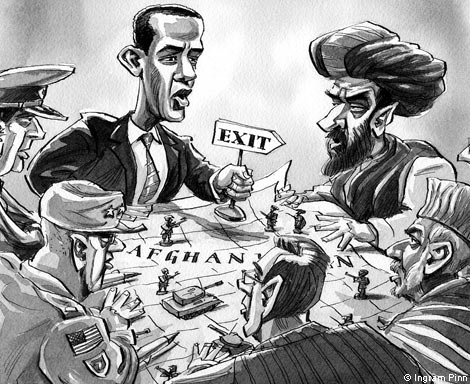
Intrepid Pakistani author and journalist Ahmed Rashid wrote an op-ed in the Financial Times describing the Obama administration’s secret decision to ramp up talks with the Afghan Taliban, trying to find a negotiated solution to a decade-long conflict. In a follow-up phone call, Rashid said that the Obama administration ought to announce these talks publicly and pressure Afghanistan’s neighbors to get behind them.

Amar C. Bakshi: What is the shift in U.S. policy toward Afghanistan?
Ahmed Rashid: For a very long time there was a lot of division about whether the U.S.would talk to the Taliban or not. Those divisions have now more or less ended. There is much greater determination to set in motion not just secret talks but everything around it that has to happen.

For example, the Taliban are very keen to open an office somewhere in one of the Gulf countries or maybe Turkey. There is nowU.S.support for that. There would presumably be international support for that also. These are the kinds of steps that are needed to get a political process going.

There is the acknowledgement that an over-dependence on a military strategy is not going to work in the long-term. Secondly, the economic and international situation is really not in favor of a long-term military strategy. What is needed now very much is a political strategy. Secretary of State Hillary Clinton herself has said this several times in the past few weeks.

What would a deal with the Taliban look like?
We are a very, very long way away from that. Many questions are being raised. For example, would there be a power-sharing with the present government? How would it take place? How would the constitution accommodate something like that? There are all sorts of social and legal issues about the constitution and Islamic law.

One of the key steps that the Americans have taken is that for the last two years or so, the Obama administration has been talking about preconditions – that the Taliban has to renounce Al Qaeda, accept the constitution and President Karzai. Now what we’re seeing is that talks are going on without any preconditions. These preconditions, or red lines, are something that everyone assumes will be accepted by the Taliban at the end of the talks rather than at the beginning. That is a very positive thing because I don’t think either side could go into their talks with their preconditions.

There are Taliban preconditions that seem to be watered down too because the Taliban were insisting that they wouldn’t talk until the American forces started to leave. But they seem to be willing to put that aside for the time being.

Why is this shift happening now?
The overall international and economic situation is very, very dire. First of all, the majority of European countries want to pull their troops out of Afghanistan as quickly as possible and that includes some of the leading nations like Britain, Germany and Canada.

Economically they can’t do it. They’re cutting their defense budgets. They are in recession.

And secondly the huge expenditure by the Americans themselves: Something like $108 billion is going to be spent on Afghanistan this year on the war effort. This is clearly not sustainable with all the economic crises that President Obama is facing right now.

What can the U.S. do to help make India and Pakistan see eye-to-eye on Afghanistan?
That is obviously a very crucial part of it. The big tussles going on over Afghanistan right now is between India and Pakistan in a battle for influence there. I think the U.S. needs to play a more upfront role – privately at least – to bring the two countries together if not on the other issues that divide them like Kashmir and larger issues, then certainly on Afghanistan. I think that’s very doable.

The more we get into this endgame and negotiations – the more the world realizes that the Americans are talking to the Taliban – I think it becomes very imperative for both the governments in India and Pakistan to accept the fact that they will have to work with each other if they want to be part of the ultimate equation.

Does Pakistan want to see stability in Afghanistan?
Pakistanis very keen to see stability in Afghanistan. An end to the war in Afghanistan could have a very dramatic effect on containing terrorism inside Pakistan too and containing the Pakistani Taliban. So I think Pakistanis very keen to see stability.

The question at the moment is: If the U.S. is going to take the lead – or the United Nations or whoever we are going to see in the months ahead take the lead on this – they have to bring together all the neighboring countries, of which Pakistan is probably by far the most important, but all of the neighboring countries have to agree to some king of on non-interference in Afghanistan.

Tensions between Iran and Saudi Arabia are being exacerbated by upheavals throughout the Middle East. How might Saudi Arabia and Iran see eye-to-eye in Afghanistan?
For the last 30 years, Saudi Arabia and Iran have been rivals in Afghanistan. For example, the Saudis backed the Taliban regime in the 90s. The Iranians very strongly opposed it.

The point right now is that with the tensions in the Gulf – the Saudis accusing the Iranians of destabilizing Bahrain and Saudi Arabia– they are both searching for allies.

The Saudis have recently been approaching the Afghans and the Pakistanis to ally with them against Iran. That is something that neither country can afford to do – neitherAfghanistannorPakistan. Secondly, you need the compliance of both Saudi Arabia and Iran for any eventual Afghan peace settlement.

So taking sides on this Iran-Saudi dispute in the region is not a good idea. It is not very helpful, especially if you want to bring the two countries into the peace agreement.

So a major diplomatic lift is needed?
Yes, absolutely. We’re talking about a huge diplomatic effort, which the former U.S. Af-Pak Special Envoy, Richard Holbrooke, had started. It needs a very big push by the United States, NATO and the European countries.

It needs some public diplomacy. Things need to be done and said in public so that people around the world can see that there is movement on this. As well, of course, a great deal of private diplomacy is needed such as dealing with this Iran-Saudi Arabia issue, bringing India and Pakistan together. A mixture of private and public diplomacy is needed.

We might see some of that public diplomacy in July when President Obama marks the withdrawal of some U.S. troops from Afghanistan.
The quicker the United States gets on with this, the better it is going to be. One of the big steps it should take in the public realm is admitting that the U.S. is having talks with the Taliban and set out a roadmap as to what the President would like to see. The quicker we see the administration doing this, the faster this process will move.

The “Indo-Pak Express” Overthrows No. 2 Seeds to Reach Semis in Monte Carlo

By Erin Frauenhofer for 10SBalls.com

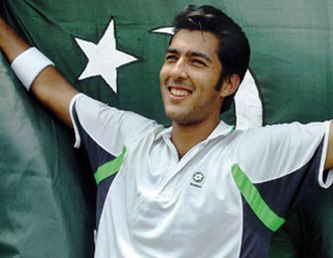
The India/Pakistan pairing of Rohan Bopanna and Aisam-ul-Haq Qureshi made waves at the Monte Carlo Masters with a quarterfinal upset over No. 2 seeds Daniel Nestor of Canada and Max Mirnyi of Belarus. With a 6-1, 7-5 victory on Friday, the sixth-seeded duo advanced to Saturday’s semifinals, where the pair will play Argentina’s Juan Ignacio Chela and Brazil’s Bruno Soares.

Bopanna and Qureshi took command in the first set, breaking Nestor’s serve and holding steady on their own serve to take a 4-1 lead. The “Indo-Pak Express,” as the pair has been dubbed, remained in control for the rest of the set, breaking Mirnyi to give Qureshi the opportunity to serve for the set. Bopanna and Qureshi won the game to wrap up the first set handily, in only 21 minutes.

Nestor and Mirnyi displayed a stronger performance in the second set, after suffering an early break to fall behind 1-2. They rallied back to break Bopanna and Qureshi in the next game, and both pairs held serve for the next four games, until Nestor and Mirnyi were broken once again.

At 5-4, Bopanna and Qureshi had their first chance to serve for the match, but Nestor and Mirnyi battled back to even the score with a break. Bopanna and Qureshi retaliated in the next game with another break to take a 6-5 lead.

Serving for the match for the second time, with victory nearly in sight, Bopanna and Qureshi dropped the first two points of the game but recovered to close out the match. Bopanna and Qureshi broke their opponents a total of five times during the match and lost their serve twice.

Friday’s win was the second victory of the tournament for Bopanna and Qureshi. After receiving a bye in the first round, Bopanna and Qureshi notched a 7-6 (4), 6-3 win over the American/Netherlands Antilles duo of Eric Butorac and Jean-Julien Rojer to reach the quarterfinals.

Chela and Soares have recorded three wins in the tournament thus far. The duo took a straight-set win in the quarterfinals, defeating Ukranian Sergiy Stakhovsky and Russian Mikhail Youzhny, 6-4, 6-3. In the previous round, the pair upset No. 8 seeds Robert Lindstedt of Sweden and Horia Tecau of Russia by a score of 6-2, 6-4. Earlier, Chela and Soares had prevailed in a three-set first-round match, outlasting Michal Mertinak of Slovakia and Dick Norman of Belgium, 6-2, 3-6, 10-7.

Monte Carlo is the first clay-court Masters tournament for the Indo-Pak Express, and the duo has high hopes for the French Open. Bopanna and Qureshi’s strong showings this year and efforts toward peace between their countries have earned them an enthusiastic and steadily growing following.

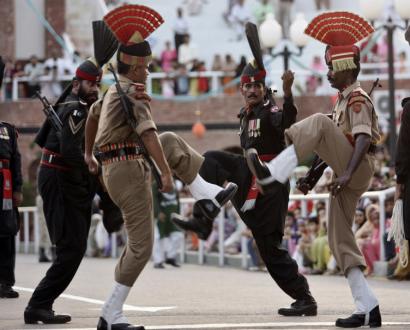
Bopanna and Qureshi have made recent headlines for their request to play an exhibition match on the India-Pakistan border in an attempt to foster reconciliation efforts between the two nations. As part of a “Stop War, Start Tennis” campaign, the duo plans to string a net across the Wagah border crossing and switch sides during the match.

India Continues to Dominate Pakistan’s Strategic Thinking: US

As Reoported By The Times of India

Pakistan’s efforts to launch a comprehensive fight against terrorism are greatly hampered by its perceived threat perception against India, US President Barack Obama has said in a new report to Congress.

“As India continues to dominate their strategic threat perception, large elements of Pakistan’s military remain committed to maintaining a ratio of Pakistani to Indian forces along the eastern border,” Obama said in the third-quarterly report to the Congress on Afghanistan and Pakistan sent yesterday.

“This deprives the Pakistani COIN (counter-insurgency) fight of sufficient forces to achieve its ‘clear’ objectives and support the ‘hold’ efforts and causing available Army forces to be bogged down with ‘hold’ activities because there are insufficient trained civilian law enforcement personnel to assume that responsibility,” Obama said in his 38-page unclassified (rpt) unclassified version of the report.

Due to flood in Pakistan last year the offensive military operations Pakistan had envisioned for KP (Khaibar Pakhtoonwah) and the Federally Administered Tribal Areas (FATA) in the second half of 2010 were overtaken by events, he said.

“Militants were impacted by the floods as well, so we did not observe significant offensive actions on their side, but as Pakistani forces ceased offensive operations, extremists extended their control to areas without sufficient Pakistani central government-provided security and governance,” he wrote.

Between October 1 and December 31, 2010, Obama said Pakistani security forces remained largely static, generally focusing on maintaining the security of previously cleared areas in the FATA and KP and continuing to support flood relief operations.

There were small but notable security operations in November and December in Orakzai Agency and Dir District, but no major operations.

National attention during the reporting period focused on the need for continued flood relief and the start of early recovery efforts, he said.

“The military served as a force of stability during the monsoons, ensuring that Pakistani and international emergency resources were available for rescue and relief operations. The Pakistan Army, Air Force, and Navy committed large numbers of personnel and resources to the flood relief operations throughout October and November,” he said.

The civilian government’s response suffered from a lack of coordination and reflected broader shortcomings in the government’s ability to execute the civilian “hold” and “build” phases of COIN.

The last quarter of 2010 saw no progress on effectively executing the COIN cycle in KP and the FATA.

Time For World, ICC To Realise Significance of Pak-India Cricket

By Ramiz Raja for Dawn

The stakes are massive, the pressure unbearable and Mohali is burning with Pak-India fever. As if the contest needed more spice, we now have the small matter of two prime ministers catching up with each other at the ground, looking to de freeze the bilateral dialogue over cricket diplomacy.

The world is seeing the power of India-Pakistan cricket. All those people in positions, who were cold and indifferent towards it, are now queueing up to use the occasion to cash in. The governments, the media and the ICC have been given enough evidence in the past also of the unfathomable strength of Indo-Pak match-up, to know that uncoupling the two can mean a turbulent world and a colorless cricket calendar. Yet, all of them allowed the most passionate cricket duel to get stuck by petty politics.

The game at Mohali can have significant repercussions for the players. A loss will be remembered like a tsunami aftermath. On the other hand, a win can, like a wedding video, linger on the minds for eternity. A performance against India is never forgotten and that’s such a strong point to motivate the players and deflect pressure. This game is all about nerves and who jangles them first. The greater the wait the higher the anxiety and it’s been a long break for both teams.

Listening to cricket pundits on channels, calling home to impress the folks that all is under control and filling the fans with high hopes must be taking a toll on the system. The players would be desperate to go out in the middle to settle the racket in the mind and settle the issue on the field.

People fear the Indian crowd and how their pressure will play up on the players. From playing in India I know that the one sided pro India crowd can in fact give you a high because you are fighting them against the odds, and draw from experience the moments when you have beaten them.

It’s such a great feeling when you box them into dead silence, stroke after stroke! I am sure most of our players have sampled that experience and will be motivated to repeat it for their fans.

Captains, at times, worry in normal situations about lack of effort and skill from the team. Afridi will not have any such issues at Mohali. The game gets raised by the players who tend to play above themselves against India. The captain has to remain cool and, in any eventuality, remain dignified. At the end of the day it’s only a game of cricket.

We may or may not win this but our team has certainly won the hearts of the people. Whether they go to Mumbai or Karachi, we need to give them a heroes welcome for they have bonded us together as one!

— The writer is a former Pakistan captain.

India vs Pakistan – much more than just a game

By Anand Philar for Sify

With one stroke, India banished the ghosts of the 2003 final and the fantastic win at Motera virtually ended an era of Aussie dominance. Earlier this year, Ponting’s men lost the Ashes and now the World Cup, but like all great players, Punter left an indelible mark on the tournament with a century in what probably was his last CWC game.

While we rejoice the Indian win, let us show some grace and salute the Aussies for their achievements on the field that, sadly, has been sullied by the behaviour of some of the players. The sheer outpouring of emotions by Yuvraj and Raina after the winning boundary hit was indicative of the value the Indian team attaches to any win against the Aussies. Yes, it is always special to beat a top side even if it is on its way down.

India vs Australia: Turning point and Top performers

If anybody thought Australia are the favourites to win the Cup, then such presumption was based on the team’s track record of three consecutive triumphs, two of them under Ponting’s captaincy. As it turned out, pace, hitherto Australia’s biggest weapon, was unable to deliver and the absence of a quality spinner, much less a pair of them, eventually hurt them far more than their opponents.

On a Motera pitch that was on the slower side and assisting spin, the Aussies went at the Indians with a bevy of fast bowlers hoping to exploit the well-known weakness against the rising delivery. It was a ploy that boomeranged on the Aussies whose lone specialist spinner Krejza was just about club standard.

The fact that the three Aussie slow bowlers Krejza, Clarke and Hussey, sent down only 17 overs as against 33 by their Indian counterparts accurately reflects the difference in approach of the two teams. I feel that proved to be the decisive factor.

I am sure, Ponting would have given his arm to have a Shane Warne bowling during the Yuvraj-Raina partnership that eventually turned the game around for India or for that matter a Hayden or Gilchrist to light up their fragile batting.

India end Australia`s 12-year reign to reach semis

So, having lost to the two top sub-continental sides, Pakistan (in the league phase) and India, the Aussies return home well and truly beaten, leaving the two neighbours in a face-off at Mohali next week.

Although the Pakistanis also have beaten the Aussies, the Indian win came under far greater pressure and in a knock-out situation that offered no safety net. As such, I would rate the Motera win much higher than the one in Colombo where the Aussies fell for 176 to Pakistani spinners.

Of course, all that is history now that India and Pakistan clash at Mohali in a game that can be equated to a Brazil vs Argentina football game in terms of interest, rivalry and of course, the immense pressure on the teams to deliver.

For all that, I will still back India who I feel are better equipped than Pakistan, be it in batting or bowling with the teams being on par at fielding. The spin quotient virtually gets negated since it is a staple diet for the rival batsmen while it is not as if the two teams have a Lee or a Tait or a Johnson in their ranks to trouble anyone with searing pace. It is India’s superior batting line-up that could well tilt the scales.

Further, it will also boil down to the collective character and resilience to withstand the pressure of expectations. I have covered more than my share of Indo-Pak sporting encounters in some of the major sports to say that the levels of passion and emotions among the rival players defy words. You have to be in it to know it.

Since the rivalry between the two neighbours transcends sports and given the historical political enmity (never mind the diplomatic mumbo-jumbo to the contrary), even a sporting victory or defeat that is a mere pinhead in the big picture of life, triggers mass euphoria as if it were a Kargil.

The players themselves might not admit it in public, but the irrefutable fact is the adrenaline rush is greater and the emotions are on the boil among the contestants. It will never be ”just another game” regardless of at what stage the two teams meet and it being a World Cup semi-final, one can imagine the pressure on the players.

World Cup 2011

Under the circumstances, the saying that cricket is played more in the mind than on the field cannot be any truer in an Indo-Pak contest. We have said this before, but needs to be reiterated that ultimately, the team that blinks first will lose. The cricketing aspects such as team combination, technique, strategy and what have you, are secondary.

In effect, the stakes, like it or not, admit it or not, are much more than cricketing gains or losses. So, tighten your seatbelts and on to Mohali!

The Myth of ‘Moderate Pakistan’

By Sadanand Dhume for The Wall Street Journal

It’s time to bury the myth of moderate Pakistan. You know the one: the notion, repeated ad nauseam in magazine articles, think-tank reports and congressional testimony—as though saying it often enough will make it true—that Pakistan is an essentially tolerant country threatened by a rising tide of fundamentalism. Here’s a news flash: The tide has risen.

The most recent reminder of this came last Wednesday in Islamabad, when suspected Taliban militants shot dead Shahbaz Bhatti, Pakistan’s 42-year-old minister for minority affairs and the only Christian in the overwhelmingly Muslim nation’s cabinet. His crime? Supporting the repeal of a barbaric blasphemy law that makes insulting the prophet Muhammad punishable by death.

The law is often used to settle scores with hapless religious minorities, especially Christians such as Asia Bibi, an illiterate peasant sentenced to hang last year after she allegedly badmouthed the prophet during a row with Muslim coworkers. Bhatti’s assassination comes two months after a bodyguard murdered Punjab Gov. Salmaan Taseer for visiting Ms. Bibi in jail and speaking out against abuse of the law.

To be fair, Pakistan’s claim to relative moderation has been kept alive thus far by more than just wishful thinking. Overtly Islamist parties such as the Jamaat-e-Islami have rarely commanded more than a fraction of the national vote. Women enjoy freedoms in the public square that their counterparts in Saudi Arabia and Iran could only dream of. At great personal risk, a small but courageous group of activists, intellectuals and politicians speak out publicly against bigotry and religious intolerance.

Scratch the surface, however, and a bleaker picture emerges. Islamist parties may not garner large-scale electoral support, but Islamist ideas are widely tolerated by mainstream political parties. The major opposition party, former Prime Minister Nawaz Sharif’s Pakistan Muslim League, flaunts its closeness to sundry Islamists, including Jamaat-ud-Dawa, the parent organization of the international terrorist group Lashkar-e-Taiba.

Ostensibly secular, the ruling Pakistan Peoples Party supported both Kashmiri militancy and the Afghan Taliban in the past. In its current incarnation it appears permanently cowed by the country’s legion of vocal fundamentalists. President Asif Ali Zardari failed to attend the funerals of either Taseer or Bhatti. His government has made it clear that it will not touch the controversial blasphemy law. Interior Minister Rehman Malik declared that he would personally kill anyone who dared blaspheme Muhammad’s name.

As for Pakistan’s undeniably brave activists and intellectuals, unfortunately they appear to have more admirers overseas than among their compatriots. Hand-wringing in the pages of Dawn and the Friday Times, two of the country’s leading English-language newspapers, has not prevented Mumtaz Qadri, Taseer’s murderer, from becoming a national hero.

Not surprisingly, anti-American sentiment—often a reliable shorthand for a society’s paranoia and self-loathing—is rampant. According to the Pew Global Attitudes Project, American favorability ratings stood at 17% last year, the lowest of all countries surveyed. On the streets, bloodcurdling yells for the execution of alleged Central Intelligence Agency operative Raymond Davis, accused of killing two Pakistanis in January, have prevented the government from granting Mr. Davis the diplomatic immunity that the U.S. claims he is entitled to. This despite personal pleas by President Barack Obama and Sen. John Kerry.

By now the reasons for Pakistan’s predicament are well known. They include the intolerance embedded in the nation’s founding idea of a separate “land of the pure” for Indian Muslims, the malign shadow of Saudi Arabia on religious life, blowback from the anti-Soviet jihad of the 1980s, and the overwhelming influence that the army and its thuggish intelligence wing, the Inter-Services Intelligence, wield on national life. The army’s very motto, Jihad-fi-Sabilillah, or jihad in the path of Allah, is an exhortation to holy war.

For the international community, the long road to fixing Pakistan begins with the simple recognition that the country’s true face is not the urbane intellectual making reasoned arguments, but the frenzied mob showering rose petals on a murderer for his services to the faith. Over time, Pakistan can only be saved by re- arranging the basic building blocks of the country.

This means backing provincial autonomy and linguistic identity as an alternative to the centralized pan-Islamism used by the military and its supporters to weld the country together. It means deploying social networks and satellite television to open the door to reasonable discourse about religion. It means channeling aid to ensure that children are no longer taught to glorify Islamic conquest and reflexively mistrust the West and India. It means accepting that the most poisonous madrassas—such as Jamia Binoria in Karachi and Darul Uloom Haqqania outside Peshawar—must be shuttered if they can’t be reformed.

Needless to say, none of this will be easy. But the consequences of the alternative—pandering to fundamentalists while blaming outsiders for all the country’s ills—can be seen in the freshly turned soil of Bhatti’s grave.

-Sadanand Dhume is a resident fellow at the American Enterprise Institute and a columnist for WSJ.com.

Sindh Saves the Day

By Nadeem F Paracha for Dawn
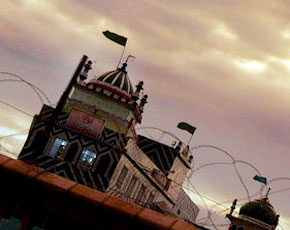
Plans are afoot to build the world’s first ever international Sufi university near Bhit Shah in Sindh. The main purpose of the institution would be to promote interfaith and intercultural education to tackle extremism in the country.

Such a thought and project could only have come about in Sindh. Especially in the context of what Pakistan has beengoing through in the last many years.

Not only have the country’s other provinces – especially the Punjab and Khyber Pakhtunkhwa (KP) – become central targets of horrid terrorist attacks by extremist organisations, the Punjab in particular has also been witnessing a steady growth of faith-based conservatism within its urban middle and lower middle-classes.

When extremists (calling themselves ‘Punjabi Taliban’) attacked the famous Sufi shrine, Data Darbar in Lahore late last year, economist and political analyst, Asad Sayeed, made a rather insightful observation.

He said that had such an attack on the Darbar taken place twenty years ago, thousands of Lahorites would have poured out to protest.

But not anymore. The attack on one of Punjab’s most popular Sufi shrines was simply treated as just another terrorist attack.

Though it is now clear that the Wahabi/Deobandi extremists have been going around blowing up Sufi shrines frequented by the majority Barelvi Muslims, the Barelvi leadership has looked elsewhere, putting the blame on the ever-elusive ‘foreign hands.’

Journalist and intellectual Khaled Ahmed once wrote a telling tongue-in-cheek article about the annual gathering of the Dawat-i-Islami in Multan.

The Dawat is the Barelvi equivalent of the Deobandi Tableeghi Jamat. Both these outfits are considered to be non-political organisations who are more interested in evangelizing their respective versions of Islam and its rituals. One should also mention that both these (sub-continental) strains of Islam accuse one another of being ‘flawed Muslims.’

Ahmed wrote how after Dawat’s huge congregation in Multan, when police found some bullet-riddled bodies of Dawat members, the outfit’s main leadership simply refused to acknowledge the glaring evidence that pointed towards the involvement of an opposing Sunni sect’s organisation in the murders.

Ahmed adds that Dawat leaders began babbling about ‘outside forces (RAW, CIA, Mossad)’ who wanted to create disharmony between Pakistan’s Barelvi majority and the Deobandi and Wahabi sects.

Barelvis: From moderate to militant

One can understand the above-mentioned episode as an example of the confusion Barelvi spiritual leadership has gone through since the 1980s.

From its inception in the 18th century and until about the mid-1980s, the Barelvi sect was largely apolitical in orientation, non-Jihadist and followers of some of the most relaxed dictates of the Hanafi madhab – the first of the four main Islamic schools of law that is also considered to be the most moderate.

‘Barelvi Islam’ (as it is sometimes called) is purely a sub-continental phenomenon that fuses elements of Indian Sufism with the folk and populist strains of various cultures that exist in the sub-continent.

It is also called the ‘folk Islam’ of the region in which a high degree of tolerance exists between various faiths, sects, classes and ethnicities and in which the puritanical aspects of other Islamic sects are eschewed and even rejected.

The Sufi shrine and an intense reverence of the Prophet (PBUH) play a central role in Barelvi Islam. Its populist and moderate make-up helped it become the majority Sunni sect amongst the Muslims of the sub-continent.

Two of its leading opponents have been the Sunni Deobandi sect (also a product of the subcontinent) and the Saudi-inspired Wahabism.

Both have accused Barelvis of ‘adopting Hindu rituals and practices’ and assorted ‘heresies.’

In spite of being the majority sect amongst Sunni Muslims in Pakistan, ‘Barelvi Islam’ hardly ever had a coherent political expression in shape of a mass-based political party or organisation.

Its spiritual leadership remained pro-Jinnah (unlike Deobandi organizations of undivided India), and various Pakistani political leaders have continued to appeal to the symbolism and lingo associated with various populist aspects of Barelvi-ism.

Zulfikar Ali Bhutto and his Pakistan Peoples Party (PPP) was the most successful in this respect.

Bhutto was also one of the first leading Pakistani political figures to undertake the act of regularly visiting various famous Sufi shrines in Sindh and Punjab.

Barelvis are in the majority in Sindh and the Punjab, whereas Deobandis are largely centred in Khyber Pakthunkhwa and in the Pushtun-dominated areas of Balochistan.

Until the 1970s Barelvi-ism also prevailed among many of Sindh and Punjab’s urban middle-classes, especially those who considered themselves to be progressive and likely supporters of secular politics.

However, the arrangement in this context was suddenly disturbed with the arrival of the Ziaul Haq dictatorship in 1977.

Dipped in the political Islam of scholar and Jamat-i-Islami (JI) chief Abul Ala Mauddudi, Zia soon moved towards infiltrating the spiritual and political nerve centres of Barelvi-ism in an attempt to ‘reform’ them.

Barelvi dominance across the country’s religious landscape reminded him of Z A. Bhutto’s populism (which he, like JI, considered to be ‘vulgar’ and ‘un-Islamic’), and from 1979 onwards Pakistan under Zia also became one of the leading client states of Saudi-generated Wahabi propaganda and aid.

Stunned by the ‘Islamic revolution’ in the Shia-dominated Iran in 1979, Saudi Arabian monarchy and its Wahabi Sunni religious elite began seeing Pakistan’s Barelvi-dominated make-up as venerable to Shia-ism’s revolutionary symbolism and also of socialist propaganda, especially with the arrival of Soviet forces in Afghanistan.

At least that was one of the reasons used by Zia and his Saudi allies to draw the United States into giving Pakistan billions of dollars worth of aid and arms.

With the aid also came Wahabi propaganda literature and preachers who along with Pakistani Deobandi and Wahabi spiritual and political groups began setting up madressas and mosques.

These madressas operated as institutions that would indoctrinate young Pakistanis – most of whom were immersed in the non-Jihadi traditions of Barelvi-ism – and prepare them for Jihad against Soviet forces in Afghanistan.

Bralevi tradition had also not been very kind to the ulema and the clergy.

To address this, Zia also began describing famous Sufi saints as ulema and banned (in the media) all criticism and humour aimed at the clergy.

The Afghan war, Saudi propaganda, the mushrooming of Deobandi and Wahabi madressas and televangelists, and a concentrated campaign by the Zia regime to equate the dictatorship’s capitalist-Islamist makeup as something in accordance with the Shariah and with ‘Jinnah and Iqbal’s vision,’ had a telling impact on Pakistan’s religious sociology.

In the Khyber-Pakhtunkhwa many moderate and progressive Deobandi strains that had prevailed in the province began sliding into the sect’s more radical dictates, coming closer to the puritanical Wahabi and Salafi ideas about faith.

This slide was celebrated by the Punjab-dominated military as a successful blow to the secular and ‘treacherous’ Pukhtun separatist tendencies.

In the Punjab, the province benefited the most from Zia’s Punjab-centric capitalist maneuvers. This coupled with unprecedented remittances coming from Pakistanis who had begun going to Arab Gulf states to work from the 1970s onwards, gave birth to new moneyed classes.

Many from the petty-bourgeoisie and bourgeoisie sections began moving away from their Barelvi heritage and towards more puritanical strains of faith.

Their Barelvi past now reminded them of their lower status and economic modesty, whereas they began relating their enhanced economic standing with the adoption of the more puritanical strains of Islam.

That’s why the growth of puritanical Islamist and sectarian organizations that Punjab saw under Zia, a lot of their local funding came from Punjab’s nouveau-riche and petty-bourgeois trader classes.

Interestingly, it was also the same classes that also pushed the Barelvi leadership to become more conservative and radical. Those sections of the Punjabi petty-bourgeoisie that stuck to Barelvi-ism encouraged their spiritual leadership to compete with the Puritanism and radicalism of the growing number of Deobandi and Wahabi groups.

This trend saw the first ever emergence of radical Barelvi groups. In the early 1980s, the Dawat-i-Islami was formed to counterbalance the growth of the Deobandi Tableeghi Jamaat that had begun making deep inroads into Punjab’s bourgeoisie and the military.

The Dawat discouraged the Barelvis from indulging in antics associated with the region’s folk Islam, emphasising an increased reverence of holy personalities and encouraging holding of recitals of naats and milads instead of quwalis and dhamals. The last two became associated with the practices of the lower-class Barelvis.

In 1992, emerged the Sunni Thereek (ST). A Barelvi outfit that emerged from the splintering of the oldest Barelvi Islamic political party, the Jamiat Ulema Pakistan (JUP).

Such occurrences did not really help the Barelvi sect defend its traditions in the face of the state-sponsored Deobandi and Wahabi onslaught –  rather, these organisations began turning Barelvi-ism into an equally anti-pluralistic and militant political phenomenon.

Sindh saves the day?

By the 1990s, Zia’s manoeuvres and Saudi involvement in reshaping Pakistan’s religious tradition had seen Khyber Pakhtunkhwa and Punjab become hostage to various violent Deobandi/Wahabi outfits and new-born Barelvi reactionary-ism.

The Punjab also saw a rise in the use of reactionary political and religious narratives within its lower-middle and middle-classes, whereas in Balochistan attempts were being made (by intelligence agencies) to neutralize secular Baloch nationalist militancy with the help of puritanical evangelical outfits. The agencies had already done this successfullyin Khyber Pakhtunkhwa in the 1980s.

But what happened in Sindh? Barelvi-ism in Sindh (outside Karachi) has always been a lot more secular and pluralistic than the Bareilvi-ism in the Punjab.

Its  sociology  in Sindh heavily revolves around the staunchly secular historicity that the province’s famous scholar, GM Syed’s literary work generated.

He described a highly pluralistic and secular reading of Sufism as being the cultural and religious make-up of the Sindhis and it is this narrative that still rules the roost in the province’s social and religious psyche.

This is one of the reasons why Zia completely failed to impose his version of Islam here. Also, just like the majority of the Baloch who equate puritanical Islam with the ‘Punjabi civil-military elite,’ so does the socio-political discourse in Sindh.

On the other hand, in Karachi, though Zia-backed Deobandi and Wahabi radical outfits did manage to find a foothold, two things have always worked against these outfits here.

The first is the fact that the sprawling ethnic, sectarian and religious diversity found in Karachi actually absorbs and neutralizes any attempt by an outfit to impose its version of Islam.

Secondly, MQM, a party that first emerged as a mohajir nationalist group, adopted almost the same populist Barelvi symbolism and lingo as Bhutto did in the 1970s.

Also, the other two big political parties in the city too are secular: the PPP and ANP.

Though the Sunni Thereek (ST) has managed to infiltrate some sections of MQM’s support, ST is Barelvi and anti-Taliban (albeit reactionary).

In spite of the rampant crime and ethnic tensions that are a constant in Karachi, it will not be an overstatement to claim that Karachi along with the rest of Sindh today stands to be perhaps the only (ragged) sanctuaries in present-day Pakistan that are (comparatively-speaking) largely free of the factors that have created opportunities in the Punjab and KP for violent extremist activity as well as for reactionary conservatism to now become a mainstay in Punjab’s bourgeois psyche.

Dialogue Key to Peace with Pakistan, Says India

By Anjana Pasricha for The Voice of America

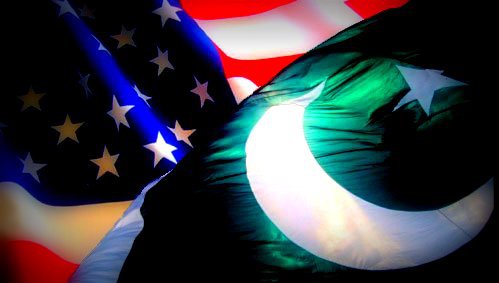
As India and Pakistan get ready to restart peace talks after more than two years, Prime Minister Manmohan Singh says dialogue is the only way to resolve their differences.  The embattled Indian leader is also vowing to tackle inflation and punish those guilty of corruption — two issues which have put his government on the ropes at home.

Speaking to parliament Thursday, Prime Minister Singh said South Asia will not realize its potential unless India-Pakistan relations are normalized. India is willing to discuss all outstanding issues with Pakistan, he said.

But, striking a cautious note, he expressed hope that Islamabad will give up allowing its territory to be used for terrorist activity directed at India.

“I sincerely hope and believe that the new ruling classes of Pakistan would grasp the hands of our friendship and recognize that whatever our differences, terror as an instrument of state policy, is something no civilized society ought to be using,” he said. “I am not saying that we have today an atmosphere in which negotiations can go forward, but there are hopeful signs.”

Earlier this month, both countries decided to restart a peace process, which New Delhi had put on hold after blaming Pakistan-based Islamic militants for mounting the 2008 terror attacks in Mumbai. The foreign secretaries of the two countries will meet in the Indian capital in March. Their foreign ministers are to meet by July.

Singh’s comments on the peace talks with Pakistan came during an address to parliament, in which he outlined the priorities facing his government.

He pledged to lower inflation from 10 percent to seven percent by the end of the year. Food inflation is even higher and has emerged as a major worry in a country with millions of poor people.

Singh has promised to bring a new food security bill in parliament to ensure that poor people are protected from rising food prices.

Inflation has to be tackled in a manner that it does not hurt the economy, which the prime minister says is growing well.

“If we had a ham-handed [heavy] approach, we could have killed the growth process which is the only source of providing jobs for our youth. So, this delicate balance has to be preserved between control of inflation and protection of employment,” he said.

The Indian leader also vowed to crack down on those guilty of corruption in connection with sale of telecom spectrum, in 2008, and the organization of the Commonwealth Games in New Delhi, last year. Allegations that officials siphoned off billions of dollars have put the spotlight on corrupt practices in government contracts.

With the two corruption scandals dominating headlines in recent months, Singh expressed fears that the wrong impression may be going out.

“The message should not go out that India is adrift, that India has lost its way, that the enthusiasm for getting this country moving forward is something that is no longer in evidence,” he said.

The Congress-led government was voted back to power in 2009, but is facing a rising wave of discontent both becauseof high food prices and the high-profile graft scandals.