Archive for the ‘ President Obama ’ Category

Will India Win Coveted UN Seat?

By Sunil Sharan for The Huffington Post
Indian foreign secretary Nirupama Rao says Pakistan is hypnotically obsessed with India but she and her bosses too are fixated on a coveted prize, a permanent seat at the United Nations Security Council. The mandarins of New Delhi must be pleased as punch to have had over to visit leaders of all five permanent member countries in quick succession. Inexorable appears the march but will India find the pot of gold at the end of the rainbow? And, if it does, what are the implications for itself as well as for Pakistan?

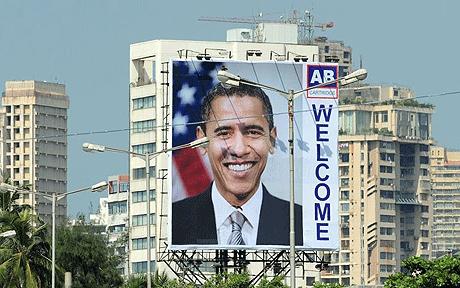
First in was David Cameron of Britain, who arrived during the summer and offered unstinting support, whetting local appetite for the main American course. And, did he fail to disappoint? No sir, Barack Obama set the cat amongst the pigeons by endorsing India for the seat, the first time ever by the US. India rejoiced while Pakistan recoiled.

But a careful examination shows him adhering closely to what he told Bob Woodward in the book, Obama’s Wars. In lieu of the seat, he expects India to resolve Kashmir. At a press conference with Manmohan Singh, Obama characterized Kashmir as a long-standing dispute making the latter stutter that the K-word was not scary. Only then did Obama hand over the endorsement in India’s Parliament but couched in such diplomatese that countless local hair were split over when “the years ahead” would dawn.

Next waltzed in Nicolas Sarkozy of France. The French, like the British, have consistently seen merit in India’s case. Sarkozy though, true to type, proved an enigma. He first tagged on the applications of Africa, the Arabs and pretty much the rest of the world onto India’s, befuddling his hosts, who are willing to concede as equal aspirants only “self-appointed frontrunners” Germany, Japan and Brazil. Just as they were about to give up on him, Sarkozy warmed the cockles of India’s heart by throwing in 2011 as early as when it could make it.

But soon came the caveat. Sarkozy, just like Obama before him, cautioned that with great power status came great responsibilities. Whereas Obama wanted India to be more mindful of human rights violations of countries such as Iran and Myanmar, Sarkozy wanted India to send military forces to keep world peace. With India already being one of the foremost contributors to UN peacekeeping missions throughout the world, the mandarins of New Delhi must have been left wondering what more was being asked of them.

No matter, three down, two to go. By now the state jets were landing at Delhi airport almost on top of one another. Wen Jiabao, the leader India was least looking forward to, came with the master key to entry. Shortly before his visit, WikiLeaks revealed China’s opposition to any council expansion. Indian hopes were up nevertheless but Wen remained inscrutable, willing only to acknowledge an understanding of India’s aspirations. No one in India knew quite what to make of him and since Wen was off to Pakistan next, all the country could do was wait with clenched teeth to hear what he would say there.

Rounding off the passage to India was Dmitry Medvedev. Relations between Russia and India have frayed considerably since the heady days of the cold war, so much so that Russia has waffled on India’s bid. Medvedev signaled that the waffle still needed baking, voicing support for India while reiterating that reforming the council was tough and required consensus.

All the while Pakistan protested vociferously against what it deemed an indulgence of Indian hegemonism. But what will India gain with a permanent UN seat? Could it block Pakistani claims on Kashmir? True a permanent member wielding veto power can stonewall but the veto seems unattainable for seekers since they themselves have forsaken it. And, while India sees red when the K-word is uttered in the UN by Pakistan, no ascension to permanency can make it strangle the latter. Nor can it efface any past security council resolutions.

So then, what is it? Nothing comes to mind but the obvious, the acceptance that any arriviste craves. Even that appears a false hankering because ever since its early years, Gandhi’s legacy and Nehru’s charisma burnished the country with global influence disproportionate to its economic and military capabilities. A bee once in one’s bonnet is hard to get rid of though. And, as every journey must have a fitting end, India has found a destination to its liking.

Flush with cash, New Delhi wants to beef up its military. All of the recent visitors bar China are major suppliers of defence equipment to India. As bees flock to honey, they arrived armed with catalogues of the most terrifying stuff. Inherent was a delicate diplomatic quid-pro-quo. The more arms you buy from us, the more we will push your candidacy. As Islamabad keeps raising the bar for India’s seat, so too will India have to up its arms binge.

Lost in Pakistan’s current rhetoric was its vote in October to put India in the security council for two years beginning January 1, 2011. Once on, we will never get off is the new mantra of India’s brave. India seemingly returned the favor by taking in stride the sale of Chinese nuclear reactors to Pakistan. Is there more afoot than meets the eye?

Every country is entitled to its obsession. Pakistan’s is obvious. By continually thumbing its nose at a NATO mired in Afghanistan, it has put the K-word in spotlight, albeit on the backstage. A deal has been blessed by the powers that be. Both the seat and Srinagar are not far away.

The writer edits a website on India: http://www.scooptime.com.
UN Halts Aid After Female Suicide Bomber Kills 46 in Pakistan

By Anwar Shaikh for Businessweek

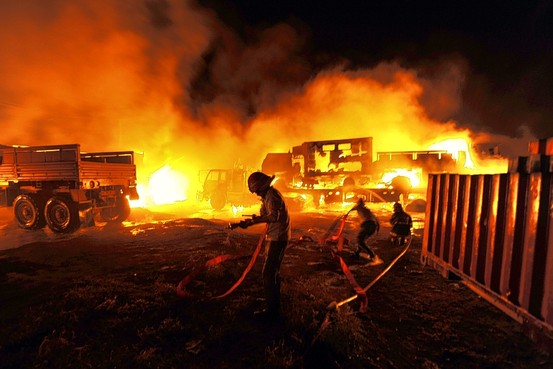
A female suicide bomber carried out a Christmas Day attack in northwest Pakistan that killed 46 people, a local official said, as the UN food agency caught up in the blast closed centers that had fed 41,000 families.

The burqa-clad woman aged between 18 and 22 lobbed grenades and detonated an explosive vest near a World Food Programme distribution center after being stopped by security personnel, Mustaqeem Khan, a government official in the tribal region of Bajaur, said by phone today. At least 96 people were injured in what Dawn newspaper said was Pakistan’s first suicide bombing known to have been carried out by a woman.

The device was detonated at about 8:30 a.m. local time on Dec. 25 as officials were handing out food to victims of this year’s floods, said Gull Rehman, a spokesman for the government of the area. Khan said officials had collected body parts of the female attacker, who had attempted to join a line of men queuing for aid.

Prime Minister Yousuf Raza Gilani condemned the attack and said his government’s fight against militants will “continue till their complete elimination,” according to an e-mailed statement issued by the Information Ministry in the capital, Islamabad. Operations at four WFP centers in the region will likely restart this week once security improves, program spokesman Amjad Jamal said by phone from Islamabad.

The death toll eclipsed the 43 people killed Dec. 6 in a suicide bombing outside a government office in the northwest tribal region of Mohmand. Four days later, 25 people died in a similar attack in the town of Hangu.

U.S. President Barack Obama condemned what he called the “outrageous attack” in Bajaur. “Killing innocent civilians outside a World Food Program distribution point is an affront to the people of Pakistan, and to all humanity,” Obama said in a written statement. “The United States stands with the people of Pakistan in this difficult time, and will strongly support Pakistan’s efforts to ensure greater peace, security and justice for its people.”

UN Secretary General Ban Ki-moon condemned an “abhorrent act of terrorism aimed at innocent people.”

Pakistan’s government blames Taliban militants based in the country’s tribal region for terrorist attacks in the country. The army last year began offensives in the Taliban stronghold of South Waziristan, after a similar operation against guerrillas in the Swat Valley.

Militants have stepped up attacks as the government is struggling to rehabilitate 17 million people who lost homes and livelihoods during floods in August. The deluge threatened to cripple Pakistan’s economy with a surge in unemployment, an increase in inflation and damage to billions

The Illiteracy of Hate

A News and Opinion Special Report by Manzer Munir for Paksitanis for Peace

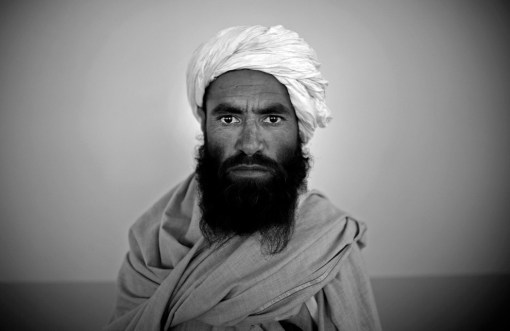
Alleged Taliban Member pic courtsey of Boston Globe

The Taliban are not just simply a bunch of illiterate thugs and bullies for they too often prove to be even worse than animals and barbarians.

Nowhere else in the world has a country experienced a more tragic and callous attack as the one on Christmas day, the birth day of Jesus, the Prince of Peace, than the one Pakistan experienced. In an attack described by President Obama as an “affront on humanity”, the cowards attacked helpless women, children and men while they queued up in food and aid distribution site such as the WFP depot, people who mind you are already suffering from the ongoing war, once in a lifetime floods, and the poverty and radicalism of a generation of desperate, hopeless and increasingly uneducated young men brainwashed by the Taliban and other radical Muslim extremists.

I am still disturbed by the disdain for basic human life that this new attack proves about this radical and extreme enemy. I imagine another one of their brain washed ‘walking zombies’, this time purportedly a woman suicide bomber, a first, even for Pakistan, killed in excess of 43 people in Bajur Pakistan at a World Food Program rations and aid storage and distribution center.

The Pakistani authorities and several domestic and foreign NGO’s who provide food aid at various centers in the area are temporarily closing these centers in order to have increased security. This means that aid distribution will come to a crawl and up to several hundred thousand people will now have to suffer at the hands of the attacker and their backers, the Taliban who have claimed responsibility. The authorities will have to ensure the safety of aid organizations and their personnel for both Pakistani and non Pakistanis relief workers involved in getting food, water and medicine to many people who are either suffering from the war or from the floods.

This catastrophe, although not of near Biblical proportions, does present both a security and humanitarian problem to both the government of Pakistan as well the suffering citizens in the northwest areas of the country where; Taliban fighters take sanctuary from the war in Afghanistan to regroup and return to the fight in warmer weather after the winter months as we have seen in years past. In fact, the reach of the Taliban in Pakistan is now not only reputed to be in the headquartered areas such as in Quetta Pakistan among the restive Baluchi population, now they are so often found to be in major cities like Karachi, Lahore, Rawalpindi, Peshawar and many points in between as they use their religious cover to endear themselves to certain impressionable, weakened or illiterate individuals that are so commonly found in throughout the country. 

Here are the some of the depressing facts. Pakistan, a nation approaching 180 million people at current estimates, perhaps only boasts to having about 60-65% of the male population at a literate level and at best, the females to be only at 40-45% of the total female population. Sadly, what this means is that 4 out of 10 Pakistani males are completely illiterate while up to as many as 6 out of 10 women are not able to read or write. Poverty breeds extremism since there is no support from any government programs or hope for any solution.

Time and time again throughout history and not just of Pakistan’s, we can see that the role of the church, synagogue or mosque in building the community is deeper than that of any government initiatives or other measures. The poverty for these young men along with the lack of jobs like for those individuals who are either very poorly paid construction site workers, household labor or servants, or beggars and sewer workers, a job sadly almost seems to have been reserved for Pakistan’s Christian community members as many can attest in Pakistan of their unfortunate and depressing state. One does not need to remind the reader of the plight of Asia Bibi (also Aasia and Ayesa), the Christian Pakistani woman who is still awaiting her fate in Pakistani courts after more than a year and a half since first being accused of a BS blasphemy charge and being in jail ever since. 

The medieval mentality of these radical extremists is not something that needs to be described as the evidence is here in this latest attack . Certainly anyone alive in any part of the world outside Pakistan and Afghanistan with eyes, TV, radio or newspaper within their reach can see plenty of near daily reminders of the carnage that many natives of these lands see, and to what they have painfully become accustomed.

 The Pakistani and Afghani Talibans have by all the various reports in newspapers and media sources over the last several years have pointed out to the fact that these groups all have too often similar goals. Not only that, these groups all share the same characteristics. The anti-Americanism, the pro-Wahaabi or Orthodox version of Islam, the need for justice for the ‘suffering of the Palestinian people’ , and the anti-colonial and often times anti western sentiment amongst these groups. The radicalization of certain Muslim groups be they Hamas and Hezbollah in the Mideast or Lashkar e taiba, or any other militant outfit operating in this part of the world as mentioned in this quote a few days before he passed, the late Richard Holbrooke of the US State department said that there are a range of militant groups such as the Afghan Taliban, the Pakistani Taliban, the Haqqani Network, Lashkar-e-Taiba, and that “an expert could add another 30.” His exact words are in quotations. 

The radical Muslim groups who take prey of the weaker, cannot think for themselves because they are scions of those abjectly illiterate segments of the society who are only educated in the madrassahs of Pakistan. This is the de facto way of educating Pakistan’s poorer children in little mosque schools which consist of nothing but Qu’ranic surahs and words of ‘wisdom’ or ‘interpretation’ by the local mullah of the said mosque/school. Most probably these children in many Pakistani madrassahs, especially the ones who live near the border areas within the NWFP or North West Frontier Province of Pakistan as this is the part of the country most affected by its close proximity to Afghanistan.

The people in this area of Pakistan, as well as their cousins in Afghanistan have been fighting one enemy or another for the better part of 100 years now. Whether to them the enemy be the British, during the height of the British Raj rule in India, or to the Soviets and the Red army and the Cold War, then in chronological order came the infighting after the Russian withdrawal as various Tajik, Afghani, Uzbek, Pakistani warlords came in to try and consolidate power to now us Americans and the Pakistanis who are our allies in this war.

Granted we do often hear that the Pakistanis can be doing more. By all accounts, the Pakistani government can do more in terms of fighting this war on terror. Numerous western reports and articles in respected dailies have alleged that small elements within both Pakistan’s Army as well as the spy agency, the ISI, have sympathizers to either the Taliban’s cause or they want to be on favorable terms with a powerful entity that most in Pakistan’s establishment believes that Pakistan will be dealing with and not a weakened Karzai once the US begins to draw down troops and end the war by 2014. If this is indeed true, then these ‘officers’ and supposed ‘leaders’ of Pakistan should realize that the colluding with the enemy, which in this case is the Taliban, is tantamount to treason, and the members of the armed forces of Pakistan as well as the intelligence community should not be assisting the enemies of all concerned: Afghanistan, Pakistan and the United States. 

Of course we must not kid ourselves and assume that only alleviating the illiteracy and poverty of the Pakistani youth will and bettering the education system of the Pakistani poor, particularly that of the refugees and residents of the northwest areas near the Afghan border. No there needs to be a study and introspection by the people of these two countries where this hatred breeds. To to get out of this darkness, the population needs be provided not only safety when delivering food aid and or medicine but aldo most importantly give them a book, a pen, and a paper. And teach them how to fish for knowledge with basic comprehension and deductive reasoning skills that can reject a radical and violent view of Islam too often manipulated by the clergy. This is the only way we can come to end this illiteracy of hate.

–Manzer Munir, is a proud and patriotic Pakistani American, an author, who plans to write a book on Pakistan, who is also a blogger and journalist, and as the Founder of Pakistanis for Peace  can be found at www.PakistanisforPeace.com, www.DigitalJournal.com ,www.Open.Salon.com, www.Examiner.com, as well at other websites as a freelance journalist and writer.

‘Attack in Pakistan Affront to Humanity’ says President Obama

As Reported by Hindustan Times from the Indo-Asian News Service

US President Barack Obama condemned a suicide bombing in Pakistan that left at least 44 people dead at a UN World Food Programme distribution point on Saturday. “Killing innocent civilians outside a World Food Programme distribution point is an affront to the people of Pakistan, and to all

humanity,” Obama said that in a statement issued from Hawaii, where he is spending Christmas with his family.
“The United States stands with the people of Pakistan in this difficult time, and will strongly support Pakistan’s efforts to ensure greater peace, security and justice for its people.”

A female suicide bomber targeted the crowd collecting food at the distribution centre in Khar. Seventy others were injured in the attack in the Bajaur tribal district, where government forces are fighting Taliban and Al Qaeda militants.

Saturday’s bombing targeted the Salarzai tribe, which has joined forces with the government against the Taliban and raised a tribal militia to drive them out of their area. The Taliban took responsibility for the attack in a message sent to various news organizations.

China’s Wen, India’s Singh Make Little Progress at Summit

By Mark Magnier, Los Angeles Times

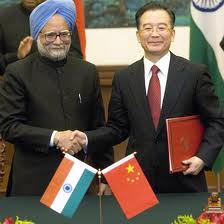
Chinese Premier Wen Jiabao and Indian Prime Minister Manmohan Singh met Thursday in New Delhi, the main event of a three-day summit aimed at building trust and reducing long-standing irritants. But they announced no substantive breakthrough and little progress on border disputes, access to shared water resources or security issues.

Nor was there any apparent progress on India’s bid to open Chinese markets to its software, pharmaceuticals and farm products. New Delhi also remains wary of Beijing’s regional ambitions and its ties with Pakistan, India’s nuclear adversary.
The two rising Asian superpowers made some modest progress on the economic front, pledging to expand trade to $100 billion by 2015 from $60 billion at present and try to reduce the trade gap. China is India’s largest trading partner, but trade flows are heavily weighted in Beijing’s favor.

The two leaders also agreed to set up a hotline, and both sides spoke about the need for improved ties.

“I hope that my visit will help increase our cooperation in a wide range of fields and raise our friendship and cooperation to an even higher level,” Wen told reporters on leaving a welcoming ceremony at the presidential palace.

“A strong partnership between India and China will contribute to long-term peace, stability, prosperity and development in Asia and the world,” Singh added.

But any move to turn the regional cooperation rhetoric into reality will quickly run into roadblocks, analysts said, given the nations’ differences over Iran’s nuclear ambitions, North Korea’s long-standing conflict with the international community and continued warfare in Afghanistan.

China appeared keen to outdo the recent visit to India by President Obama. Chinese officials brought a contingent of 400 business executives, compared with the 250 American business men and women who accompanied the U.S. leader. And they signed $16 billion worth of business deals, compared with America’s $10 billion.

Singh and Wen reportedly discussed many of their nations’ core differences, including Pakistan; divided Kashmir; and the Dalai Lama, the exiled Tibetan spiritual leader based in northern India and considered by Beijing to be a “splittist” enemy of a unified China. But neither side made any significant concessions.

The two nations agreed to keep working on peacefully resolving their lingering border disputes, the focus of a brief war in 1962. Talks have languished for years.

China claims much of the Indian state of Arunachal Pradesh, whereas India wants China to back away from a slice of territory it controls in Kashmir, the disputed region largely divided between India and Pakistan.

“It will not be easy to completely resolve this question,” Wen said in a speech. “It requires patience and will take a fairly long period of time. Only with sincerity, mutual trust and perseverance can we eventually find a fair, reasonable and a mutually acceptable solution.”

In other words, said analysts: Don’t hold your breath. Add it up, they said, and this meeting — the 11th between the two leaders in five years — accomplished relatively little.

“Issues that fuel mutual mistrust, such as Kashmir for the Indians and Tibet for the Chinese, were addressed, but not substantially,” said Srikanth Kondapalli, a professor of Chinese studies at New Delhi’s Jawaharlal Nehru University. “The boundary dispute has not been resolved. There’s no road map.”


Obama and the Pakistan Dilemma

By Matthew Kaminski for The Wall Street Journal

Islamabad, Pakistan– America can’t win in Afghanistan as long as assorted Taliban insurgents find safe haven in Pakistan. That’s the no-brainer dressed up as revelation in leaks this week about the latest U.S. National Intelligence Estimate regarding both countries.

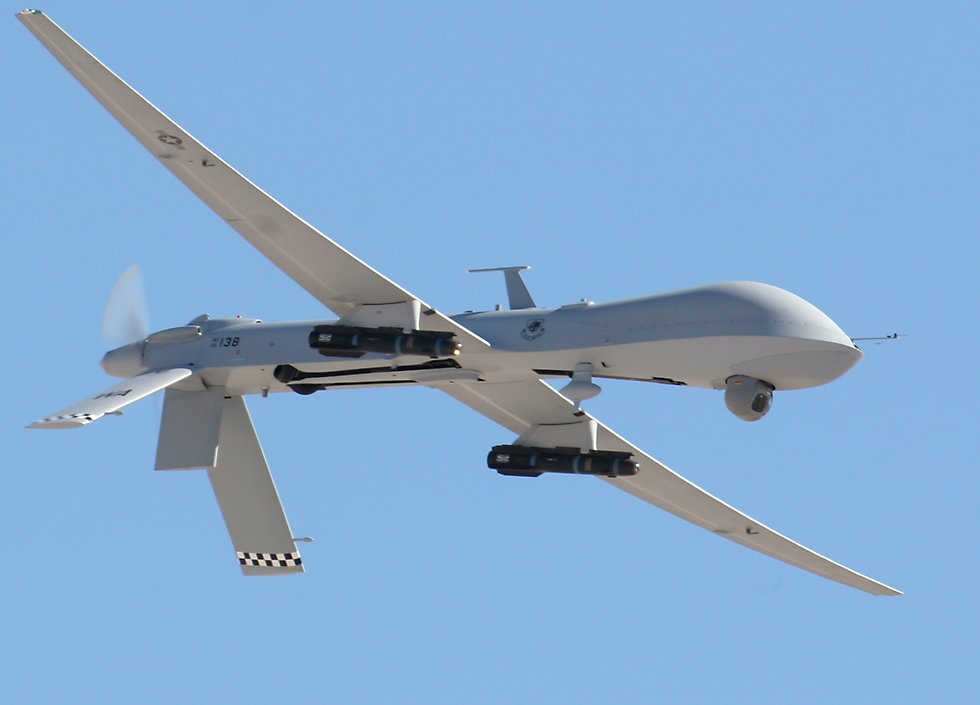
The proposed solution is tidy, too: Lean on Pakistan to cut links to extremists in the tribal regions along Afghanistan’s eastern border and in southern Baluchistan, even as the CIA ramps up the number of covert drone strikes on those groups.

The assumption is that Pakistan can bring the extremists to heel at its pleasure. After all, the Pakistani military began nurturing Afghan and other jihadists in the 1980s and has kept them on as “strategic assets” throughout the American long war brought about by 9/11. So, we think, if Islamabad cuts its support and makes life difficult for the jihadists, this unfortunate genie can be put back in the bottle. President Obama might even meet his self-imposed deadlines for drawing down the 98,000 American troops in Afghanistan.

This is all a useful fiction, maybe even a necessary one. American bribes, threats and pleas have prompted Pakistan into its own troop surge in the tribal regions. Over the past 18 months the Pakistanis have more than quadrupled their presence there, to 140,000, and have taken heavy casualties. Last year the Pakistani army cleared Swat Valley and South Waziristan, which had been overrun by militants.

Today’s White House review of the war, which comes a year into the Obama surge, will likely highlight such progress. The president can consider his administration’s spirited engagement with Pakistan a foreign policy success. Credit is also due to “bulldozer” diplomat Richard Holbrooke, who developed close relations with the Pakistani civilian leadership before his untimely death Monday evening.

But Pakistan hasn’t turned. The insurgents who kill American troops in Afghanistan—principally the Taliban, whose leadership is in Baluchistan, and the militants loyal to the legendary fighter Jalaluddin Haqqani in the tribal regions—operate all too freely from Pakistan. President Obama should note that, too, today.

The year ends sourly for U.S.-Pakistani military relations. American frustration with Pakistan’s army chief, Gen. Ashfaq Kayani, has grown over broken Pakistani promises and a perceived lack of urgency. Summer floods diverted Pakistani troops away from the tribal areas, but the military doesn’t have that excuse now. The Pakistanis have also denied American requests to expand drone coverage to the area around Quetta, the city in Baluchistan that is the heaquarters-in-exile of the Taliban.

Pakistani officials say that Gen. Kayani will move his forces into North Waziristan, the tribal region that hosts the Haqqani network, in his own time. Some 50,000 troops are said to be ready to go in. No one wants them to lose, but they could against Haqqani’s respected force. A U.S. official says, “We don’t want them to do it if they’re not ready, but we don’t want them to think it’s not important.”

The Pakistanis may have found a way out. Analysts here say that the military is giving Haqqani time to relocate to a neighboring tribal region, Kurram, before soldiers go in to “clear” North Waziristan. A U.S. defense official here says that he’s seen no evidence to back the claim. But in the past most insurgents have simply melted away in the face of Pakistani advances.

Haqqani also figures as a trusted ally in Islamabad’s plans for a postwar Afghanistan. Afghan President Hamid Karzai and some American officials are open to talks with the Taliban, if they bring peace in exchange for power sharing. Also, who knows, America may get fed up and pull out before it wins. With all that in mind, Pakistani leaders may protect Haqqani, their favorite “asset,” thinking he and his Taliban allies may get power in Kabul one way or another.
Instead of sending drones over Quetta, the CIA this summer was allowed to set up shop on the ground. Across Pakistan, several such “fusion cells” pair CIA operatives with officials from Pakistan’s intelligence agency, the Inter-Services Intelligence. A Pakistani official says that this takes courage, as “ISI officers are murdered for helping Americans.”

Many circles here welcome U.S. pressure on the military and state to act. Islamic extremists are putting down deep roots in society, to the consternation of educated and moderate Pakistanis. This goes well beyond the mountainous regions that are the traditional home to religious warrior tribes. The state is losing its grip on Baluchistan. The country’s largest city, Karachi, is a militant hotbed. Parts of all Pakistani provinces have been radicalized, including the most populous, Punjab. Terrorism now touches all Pakistanis.

Pakistan is becoming more like Afghanistan—only with a more advanced economy and nuclear weapons. The people who cross the porous border between them, an arbitrary line drawn up by the British in the 1890s—already consider them the same country. Pakistan’s military has yet to show that it wants to—or that it can—control the Islamist wave. Many groups have slipped their leash and look at their old patron, the ISI, with distrust.
Gen. David Petraeus, the American commander in Afghanistan, certainly has contingency plans for Pakistan that go beyond extra doses of drones or diplomacy. Putting American boots in Waziristan is an obvious idea. But, like so many options, it is unappealing. The fallout in Pakistan would be hard to predict.

So for the moment, America gets to pretend that Pakistan can do this on its own. A successful terrorist attack on the U.S. with a Pakistani return address might quickly change that.

Pakistanis for Peace Editor’s Note
– As we have noted on several occasions before, Pakistan must do a lot more to hunt down the Taliban, its leaders and other militants on its side of the border. Already the violence and acts of terrorism within Pakistan are at an all time high as noted in this article and have touched every Pakistani and every corner of the country. Not eliminating the Taliban completely only allows them to get stronger.

Pakistan needs to stop playing a double game and stop thinking of the Taliban as a strategic asset as they never were nor ever will be an asset in any way. Pakistan must eliminate the safe havens for the Taliban within its territory, otherwise the United States will be compelled to act, with or without Pakistan’s blessings, and shall be correct in doing so to prevent attacks on its homeland emanating from Pakistan based militants.

Holbrooke Mentioned Afghan War Before Surgery

By Rajiv Chandrasekaran and Karen DeYoung for The Washington Post

As friends and colleagues from four decades of diplomatic life reflected on the intensity of Richard C. Holbrooke’s dedication, many were not surprised to learn that concerns about the Afghanistan war were apparently among his final thoughts.

After Holbrooke’s death Monday, The Washington Post, citing his family members, reported that the veteran diplomat had told his physician just before surgery Friday to “stop this war.”  But Tuesday, a fuller account of the tone and contents of his remarks emerged.

As physician Jehan El-Bayoumi was attending to Holbrooke in the emergency room at George Washington University Hospital, she told him to relax and asked what she could do to comfort him, according to an aide who was present.

Holbrooke, who was in severe pain, said jokingly that it was hard to relax because he had to worry about the difficult situation in Afghanistan and Pakistan.

El-Bayoumi, an Egyptian American internist who is Secretary of State Hillary Rodham Clinton’s physician, replied that she would worry for him. Holbrooke responded by telling her to end the war, the aide said.

The aide said he could not be sure of Holbrooke’s exact words. He emphasized Tuesday that the comment was made in painful banter, rather than as a serious exhortation about policy. Holbrooke also spoke extensively about his family and friends as he awaited surgery by Farzad Najam, a thoracic surgeon of Pakistani descent.

Holbrooke’s statement was seized upon quickly by critics of the Afghan war debate, some of whom interpreted it as a clarion call to end the conflict. Others viewed his comment as a last-breath disavowal of the Obama administration’s war policy, which has involved a troop surge – which Holbrooke publicly supported – to combat the Taliban. But State Department spokesman P.J. Crowley cast Holbrooke’s words simply as “humorous repartee.”

Crowley said the comment “says two things about Richard Holbrooke in my mind. Number one, he always wanted to make sure he got the last word. And secondly, it just showed how he was singularly focused on pursuing and advancing the process and the policies in Afghanistan and Pakistan to bring them to a successful conclusion.”

Holbrooke’s deputy, Frank Ruggiero, has been named to fill his post as special representative to Afghanistan and Pakistan in an acting capacity, Crowley said, adding that no significant move had been made to select a permanent replacement.

Richard Holbrooke: The Death of a Peacemaker

By Manzer Munir for Pakistanis for Peace

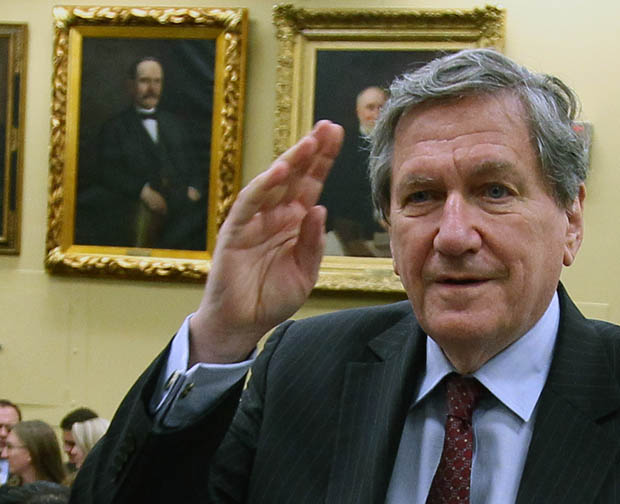
President George H.W. Bush once described him as the “most persistent advocate I’ve ever run into.” President Obama’s special envoy to Afghanistan and Pakistan, Ambassador Richard Holbrooke, died earlier today after complications from heart surgery. He was a gifted diplomat and a tough negotiator who was considered one of the superstars of international diplomacy. Richard Holbrooke died Monday evening at George Washington University Hospital after doctors had performed emergency surgery Saturday to repair a tear in his aorta, the largest artery in the human body responsible for carrying blood from the heart to all parts of the body.

Described only days ago by President Obama as a “towering figure in American diplomacy,” Holbrooke was a career diplomat who started his career in 1962 as an officer during the Vietnam War where he initially worked at the US Agency of International Development. He continued to work on Vietnam issues during the war under President Lyndon B. Johnson and was a part of the delegation that presided in Paris for the peace negotiations to end the war. He also served as the director of the Peace Corps in Morocco in the early 1970’s as well as the assistant secretary of state for East Asian and Pacific Affairs in the Carter administration. He was in charge of US ties with China when relations between the two countries were “normalized” in late 1978.

Later in his career, he also held senior positions at a few prestigious Wall Street firms before returning to diplomacy under the Clinton administration. During this time he was credited with his most illustrious achievement to date when he helped orchestrate the Dayton peace agreement which ended the horrific war and genocide in Bosnia. He later went on to write a memoir titled “To End a War” and become somewhat of a celebrity in the Balkans, and is widely believed to have become the Secretary of State under Hillary Clinton if she had won. He also went on to serve as the US ambassador to Germany as well as the United Nations under President Bill Clinton before being tapped by the incoming Obama administration with the herculean task of being the special envoy of the United States to Afghanistan and Pakistan.

His last assignment was arguably his most difficult as he himself stated that “There’s no Slobodan Milosevic. There’s no Palestinian Authority. There is a widely dispersed group of people that we roughly call the enemy. There’s also al Qaeda, with which there’s no possibility of any discussion at all.” He mentioned that in the AfPak region, (a term he is credited with having coined), there are a range of militant groups such as the Afghan Taliban, the Pakistani Taliban, the Haqqani Network, Lashkar-e-Taiba, and that “an expert could add another 30.”

Such was the difficulty of his last assignment that some close to him are speculating whether the high level of stress and travels associated with shuttling between Washington, Kabul and Islamabad might have been a factor in causing a tear in his aorta. Certainly the complex and high strung meetings with Karzai and Zardari as well as the delicate balancing acts of diplomacy along with military operations in a region of the world described as “the most dangerous in the world” possibly took a toll on his health.

But to those that knew Richard Holbrooke, he was a man capable of taking on and winning the challenges of this and any difficult assignment as he had done so many times in his career. A New York Times reporter once wrote “if you want somebody to pull the trigger, or close a deal, think Holbrooke.”

Tonight in Washington DC, President Obama, Secretary Clinton, and the thousands of employees of the US State Department mourn the death of this icon of American diplomacy and celebrate his lifelong service to the United States and the American people in search of peace in troubled spots the world over. Meanwhile, thousands of miles away, a job vacancy has sadly opened up in the dangerous AfPak region of the world for an assignment that no one is capable of fulfilling quite like Mr Holbrooke. For the sake of the success in the Afghan war, peace and stability in Pakistan and securing America’s vital national interests in the region and around the world, let us hope that his successor will be half as capable a diplomat and negotiator as the late Richard C. Holbrooke, truly a giant of American diplomacy.

–Manzer Munir, a proud Pakistani American and peace activist, is the founder of Pakistanis for Peace and blogs at http://www.PakistanisforPeace.com as well at other websites as a freelance journalist and writer.

Obama Prays for Holbrooke’s Recovery

As Reported by The Associated Press

Richard Holbrooke, the Obama administration’s diplomatic point man for Afghanistan and Pakistan, remained in critical condition Saturday night after surgery to repair a tear in his aorta. President Barack Obama Saturday expressed support for Holbrooke’s family in the difficult hour and prayed for his recovery.

“Earlier today, I spoke to Richard Holbrooke’s wife Kati and told her that Michelle and I are praying for Richard. Richard Holbrooke is a towering figure in American foreign policy, a critical member of my Afghanistan and Pakistan team, and a tireless public servant who has won the admiration of the American people and people around the world. I know that Secretary Clinton, Admiral Mullen, Tom Donilon, and other members of our team have been with him at George Washington hospital, and we continue to pray for his recovery, and support his family in this difficult time,” Obama said in the statment.

Holbrooke, 69, was rushed to George Washington University Hospital on Friday morning after he had chest pains during a meeting with Secretary of State Hillary Rodham Clinton, The Washington Post reported. He was almost immediately taken into surgery that extended for 21 hours into Saturday, the paper added.

With Holbrooke in intensive care only blocks away, President Obama’s senior national security advisers met at the White House on Saturday to discuss a major internal assessment of the war in Afghanistan. Obama will review the assessment Monday, with release to the public scheduled for later in the week.

Meanwhile, according to the Post, the U.S. administration officials said that Holbrooke’s condition would not affect the war review, compiled over the past month by the National Security Council staff from assessments made by Holbrooke and his staff and by the military coalition led by Gen Patreaus.

Holbrooke’s long diplomatic experience has given him a unique perspective within the administration and has positioned him perhaps better than anyone to navigate the often messy intersection of diplomacy, counterinsurgency and politics, the newspaper noted. Holbrooke, the newspaper reported, has been a strong advocate of a negotiated settlement of the war and of massive increases in development and governance aid. Under his direction, the number of U.S. civilian officials in Afghanistan has more than tripled, to exceed 1,000. He experienced health problems in August, when he underwent treatment for heart problems.

Pakistan Rejects U.S. Drone Expansion

By Alex Rodriguez for The LA Times

Pakistan has rejected a request from the U.S. to expand a drone missile campaign against Al Qaeda and Taliban militants, a decision that limits Washington’s use of one of its most effective tools against insurgents hiding in the nation.

Pakistani Foreign Ministry spokesman Abdul Basit said Islamabad would not allow the U.S. to carry out drone strikes outside the tribal belt along the Afghan border and repeated the government’s request that Washington abandon its use of drones in Pakistan on the grounds that the program violates the country’s sovereignty.

Basit did not say which additional areas the U.S. wanted to target. However, the Washington Post reported Saturday that the request focused on areas outside the southern city of Quetta, where Afghan Taliban leaders have hideouts.

“We are allies of the United States in the war against terror,” Basit said. “However, Pakistan will not compromise on sovereignty.”

Islamabad’s refusal comes as little surprise, given the animosity that the drone campaign has stirred among Pakistanis for years, but even as the government publicly condemns the drone program, it tacitly allows the missile strikes to take place. Pakistan even provides intelligence to facilitate the targeting of the strikes.

The drone missions are deeply unpopular in Pakistan, where they are viewed as an illustration of President Asif Ali Zardari’s willingness to acquiesce to most demands that Washington makes. Allowing an expansion of the drone program could further aggravate the vulnerability of Zardari’s government, already weakened by its mishandling of this summer’s catastrophic floods and the country’s ongoing economic troubles.

Any expansion of the drone campaign into Baluchistan, the province where Quetta is located, would also represent a dramatic departure in policy for Islamabad because it is not part of the semi-autonomous tribal region where the drones are permitted now.

In addition, the Quetta region is a heavily populated area; the city itself has a population of 900,000. The core leadership of the Afghan Taliban insurgency, known as the Quetta Shura and headed by Mullah Muhammad Omar, has used Quetta and its outlying regions as a sanctuary for years.

In recent months, the U.S. has dramatically stepped up its use of drone strikes in the tribal areas. So far this year, the U.S. has carried out 101 drone missile strikes in northwest Pakistan, compared to 53 in 2009.

The attacks have focused largely on North Waziristan, a primary stronghold of militants and commanders belonging to the Haqqani network, an Afghan Taliban wing regarded by the U.S. as one of the biggest threats facing coalition forces in Afghanistan.

According to the Long War Journal website, which keeps track of drone missile strike statistics, 92 of the attacks this year occurred in North Waziristan.

How to Win Back Pakistan

By Michael O’Hanlon for Foreign Policy

Nine years into the war in Afghanistan, the United States should have a clear idea of Pakistan’s interests there. It’s time to take these lessons to heart — and start applying the right incentives. As recent intelligence findings reported in late October confirm, Pakistan remains at the heart of the U.S.-led coalition’s problems in Afghanistan — where the war is hardly lost, yet hardly headed for clear victory either. Indeed, Pakistan arguably remains the most complex ally the United States has ever had in wartime, making President Franklin D. Roosevelt’s challenges in dealing with Stalin (a far worse leader, but at least one who knew the outcome he wanted) seem simple by comparison.

Nine years into the campaign, we still can’t clearly answer the question of whether Pakistan is with us or against us. America needs bold new policy measures to help Islamabad — in all its many dimensions and factions — make up its mind.

The crux of the problem is this: Despite allowing massive NATO logistics operations through its territory and helping the United States pursue al Qaeda operatives, Pakistan tolerates sanctuaries on its soil for the major insurgencies fighting in Afghanistan. These include the Afghan Taliban (otherwise known as the Quetta Shura Taliban because its principle base remains in Quetta in the Pakistani province of Baluchistan) as well as the Haqqani and Hezb-i-Islami Gulbuddin (HiG) networks. The Haqqanis straddle the border between the Afghan provinces of Khost, Paktia, and Paktika as well as North Waziristan and other tribal areas within Pakistan; HiG is further north, operating in and around the Khyber Pass connecting Kabul and Jalalabad in Afghanistan with Peshawar and points east in Pakistan. Thus, all three major Afghan insurgent groups have home bases in Pakistan, and despite the occasional drone strike are generally beyond NATO’s reach as a result.

Pakistan has done some worthy things against extremists in its remote northern and western areas in recent years. Specifically, it has recognized the so-called Pakistani Taliban (the Tehrik-i-Taliban Pakistan, or TTP) as a mortal threat to the Pakistani state and responded accordingly. After suffering hundreds of bombings and assassination attacks by the TTP, including the killing of former Prime Minister Benazir Bhutto in 2007 and several thousand casualties a year to its troops and citizens since roughly that time, it has responded in force, particularly over the last year and a half or so. It has swung about 100,000 troops previously guarding the border with Pakistan’s nemesis India to the northwestern tribal regions and cleared several major areas including South Waziristan, Bajaur, and the Swat Valley. This is all to the good.

Pakistanis argue, however, that limited numbers of ground troops combined with the past year’s admittedly devastating floods prevent them from doing more. Quetta, North Waziristan, and other key places remain dens of iniquity, havens for extremists who continue to attack NATO and Afghan troops across the border and then return home for rest, regrouping, and fresh recruiting. Major command-and-control hubs are permanently located within Pakistan as well, and key insurgent leaders like Mullah Omar (to say nothing of Osama bin Laden) probably remain safely ensconced on Pakistani territory where U.S. forces cannot get at them.

But even if limited Pakistani capacity is part of the problem, there’s more at stake. Pakistan worries that President Barack Obama’s promise to start reducing U.S. troops in Afghanistan come July will lead to anarchy and civil conflict next door, and it is retaining proxies that it can use to ensure that its top goal in Afghanistan — keeping India out — can be accomplished come what may. Pakistan would rather have the Taliban and the Haqqanis back in power, especially in the country’s south and east, than any group like the former Northern Alliance, which it views as too close to New Delhi. It is this strategic calculation, more than constrained Pakistani resources, that constitutes Obama’s main challenge in Afghanistan. And it could cost him the war.

Under these circumstances, part of the right policy is to keep doing more of what the Obama administration has been doing with Pakistan — building trust, as with last month’s strategic dialogue in Washington; increasing aid incrementally, as with the new five-year $2 billion aid package announced during that dialogue; and coordinating militarily across the border region. But Obama also needs to think bigger.

First, he needs to make clear America’s commitment to South Asia, to wean Pakistan away from its current hedging strategy. Obama has frequently used general language to try to reassure listeners in the region that there will be no precipitous U.S. withdrawal next summer. But few fully believe him. Hearing stories like Bob Woodward’s accounts of how the vice president and White House advisors have generally opposed a robust counterinsurgency strategy in favor of a counterterrorism-oriented operation with far fewer U.S. troops, they worry that next summer’s withdrawal will be fast. Obama needs to explain that he will not revert to such a minimalist “Plan B” approach under any imaginable circumstances. More appropriate would be a “Plan A-minus” that involves a gradual NATO troop drawdown as Afghan forces grow in number and capability, without necessarily first stabilizing the entire south and east, should the current strategy not turn around the violence by next summer or so. This would represent a modification to the current plan rather than a radical departure. The president can find a way to signal that this is in fact his own thinking, sooner rather than later — ideally before the year is out.

Second, Obama should offer Islamabad a much more expansive U.S.-Pakistani relationship if it helps win this war. Two major incentives would have particular appeal to Pakistan. One is a civilian nuclear energy deal like that being provided to India; Pakistan’s progress on export controls in the wake of the A.Q. Khan debacle has been good enough so far to allow a provisional approval of such a deal if other things fall into place as well. Second is a free trade accord. Struggling economically, Pakistan needs such a shot in the arm, and a trade deal could arguably do even more than aid at this point.

But the key point is this: Pakistan should be told that these deals will only be possible if the United States and its allies prevail in Afghanistan. Small gestures of greater helpfulness are not adequate; bottom-line results are what count and what are needed. If Afghanistan turns around in a year or two, the deals can be set in motion and implemented over a longer period that will allow the United States to continually monitor subsequent Pakistani cooperation in the war.

It may seem harsh to Pakistan that America would put things in such stark terms — but in fact, it is not realistic that any U.S. president or Congress would carry out such deals if the United States loses the war in Afghanistan partly due to Pakistani perfidy. As such, these terms are really just common sense, and they are based on political realism about America’s domestic politics as well as its strategic interests.

America’s current strategy for the war in Afghanistan is much improved. But it is not yet sound enough to point clearly toward victory. The most crucial problem is the role of Pakistan in the war, and so far, the Obama administration is not thinking creatively enough about how to fix it.

The Nexus of US-India-Pakistan Relations

By Manzer Munir for Pakistanis for Peace

As President Obama wraps up his visit to India in the next day, a couple of things are important to point out about relations between the United States and India as well as how Pakistan fits into the equation.

The balance of power between India and the US still lies with the United States, however, India is set to make more and more gains in becoming more influential as its economy grows and as the United States looks to it to counter China in Asia.

The strategic partnership between the two countries and the importance of India for the United States is going to become vital as America uses India to contain China’s influence in the region and around the world.

We do believe that President Obama is correct in stating that relations between the two countries warrant being called the defining relationship of the century as there is no other country that compliments the United States presently in the world as does India. Not only do both countries share democratic ideals and a multiethnic population, but both countries are also increasingly dependent on each other’s economies. Add to this the nuclear cooperation as well as America’s support for India to get a permanent seat on the UN Security Council, and it becomes evident that this relationship will continue to grow over time.

President Obama has offered criticism on Pakistan already but is careful in trying to walk the tight rope act that is India-Pakistan relations. There are certainly more behind the scene steps taking place that will chide Pakistan into doing more. But in our view, the single most important thing that the US and the Obama administration can do is to help India and Pakistan come back to the table to get the peace process moving along. There is widespread agreement with the President’s assessment that a prosperous and stable Pakistan is in the best interests of India, Afghanistan and the region. In this effort, we believe there needs to be done more by all parties involved.

India’s argument has always been that the terrorist infrastructure and support for some anti-India militant groups needs to end before New Delhi will resume the peace process with Pakistan.

India should not refuse extensive trade relationships with the US due to American support of Pakistan as it does not do anything to help India. India realizes the situation both inside Pakistan and America’s dependency of the Pakistan Army’s support in flushing out the Taliban. It would go against India’s interests if it put its relationship and advancement with the United States as being dependent on American support for Pakistan and its vital assistance in the war in Afghanistan and on terror.

Peace between India and Pakistan and in the Kashmir valley is the only solution to both the conflict between the two nations as well as it is in America’s interests for both countries and the region. Furthermore, peace between the two countries will allow both Pakistan’s full focus on the Afghan border in helping American troops against the Taliban as well as the elimination of anti-India militant groups within Pakistan, many of whom are alleged to still be receiving support from elements within Pakistan’s ISI spy agency, much to India’s chagrin.

Obama Calls for India – Pakistan Peace

By Andrew Buncombe for NZ Hearald

Barack Obama has called on India and Pakistan to renew their efforts to find peace, even as he said Islamabad was not moving quickly enough to counter militants operating from inside its borders.

In comments that appeared to underscore the high-wire act of diplomacy the US president is trying to pull off while on the three-day visit to India, Mr Obama said Washington would not act as an intermediary between the two countries.

However, he told a group of students in Mumbai: “My hope is that over time, trust develops between the two countries, that dialogue begins, perhaps on less controversial issues, building up to more controversial issues. There are more Pakistanis who’ve been killed by terrorists inside Pakistan than probably anywhere else.”

The president has received criticism from some opposition parties in India after he failed to directly mention Pakistan when he arrived in India on Saturday and spoke of the 2008 attacks at the Taj Hotel and other locations in Mumbai, that left more than 160 people dead.

In the aftermath of the attacks, the so-called “composite dialogue” peace process between India and Pakistan was put on hold and while there have been a series of high-level meetings, the relationship between the two remains tense.

The president, who stayed at the seafront hotel in what aides said was a clear sign of solidarity, had talked about the militants and the terror they wrought, but was criticised by the right-wing Bharatiya Janata Party (BJP) for failing to attribute the blame to Pakistan.

Asked why he had not done so, Mr Obama reflected a reality in which the US is paying billions of dollars to Pakistan in aid as it pushes it to do more against militants responsible for cross-border strikes in Afghanistan.

“Pakistan is a strategically important country, not just for America, but for the world,” he said. “India and Pakistan can prosper and live side by side. This can happen and this should be the ultimate goal. The US can be a partner but cannot impose this process. India and Pakistan have to arrive at an understanding.”

Mr Obama started his visit to India, one of four countries he is including on a tour through Asia, by announcing more than 20 deals he said were worth up to $10bn and would help support 50,000 US jobs.

He also said the US was to relax export controls over sensitive technology, a demand of India’s that will help deepen ties between the two countries. The president is to hold formal talks today with India’s prime minister, Manmohan Singh.

On a domestic level, Mr Obama also recognised he needed to make “midcourse corrections” in the aftermath of last week’s mid-term elections if he is going to win over a frustrated and divided electorate.

India Urged to Revive Pakistan Talks

By James Lamont and Edward Luce for The Financial Times

Barack Obama, the US president, has urged India to step up its dialogue with Pakistan to help to secure the region’s stability, warning that efforts to combat extremism in India’s nuclear-armed neighbour have not progressed as quickly as Washington had hoped.

Mr Obama, on a three-day visit to India, called on Sunday for New Delhi to revive a dialogue with Islamabad badly set back by the 2008 terror attacks on Mumbai by Pakistani militants.

His comments at a town hall event with students in Mumbai were a sharp break from his initial emphasis on creating jobs in the US and gaining more access to the fast-growing Indian economy for US companies.

“My hope is that over time trust develops between the two countries, that dialogue begins,” he told students at St Xavier’s College. “Ultimately India and Pakistan have to arrive at their own understandings”.

Mr Obama cautioned that the economic success that India was enjoying would be imperilled by an unstable region where militant insurgencies raged in Pakistan and Afghanistan, where US troops are fighting the Taliban.

“The country that has the biggest stake in Pakistan’s success is India. I think that if Pakistan is unstable that is bad for India. If Pakistan is stable and prosperous that’s good,” he said.

Mr Obama recommended the two rivals start talking about the “less controversial issues” and then build up to tougher issues, such as the disputed territory of Kashmir, over which the two have fought three wars over the past 63 years.

Manmohan Singh, India’s prime minister, believes the two countries have shared destinies, and has stressed that India poses no threat to Pakistan in an effort to scale down military forces on the border.

Yet Mr Obama’s emphasis of linkages between Pakistan and India, which were separated at the end of British rule in 1947, is highly sensitive. Many Indian leaders gauge the growing maturity of New Delhi’s relationship with Washington by what they call the “de-hyphenation” of India and Pakistan in recognition of India as a global power and vibrant economy.

New Delhi is suspicious of US military assistance to Pakistan and is uneasy about Washington identifying any role for Islamabad in bringing stability to Afghanistan and brokering talks with the Taliban.

Mr Obama warned that Pakistan was confronted by a “profound problem” and that its progress towards eradicating extremism was “not as quick as we would like”. He said that his administration was “engaging aggressively” with the Pakistani government to bring peace and stability.

“There’s a need to look for practical steps . . . Living in the past simply won’t work,” said Stephen Cohen, a senior fellow at the Brookings Institution, in Washington.

“I see a 100 years of conflict between India and Pakistan looking ahead.”

America and India: The Almost-Special Relationship

By Jim Yardley for The New York Times

At a panel discussion last week on relations between India and the United States, Strobe Talbott, the former American diplomat, told an audience of Indian business leaders that he had learned a valuable lesson about India: Do not hyphenate it. As in Indo-Pak. (Or, in a close cousin of a hyphen, as in Chindia.) The audience smiled at his epiphany: India matters because it is India.

In a nutshell, President Obama is trying to deliver the same message during his three-day visit to India, the first stop on a broader Asian tour. Both countries are eager to build on their improved ties and set up a unique, special relationship, given that together they represent the world’s richest and largest democracies. Faced with a rising authoritarian China, and an economically wounded Europe, a weakened United States is casting about for global partners. India would seem a nice fit.

“This is the time to be ambitious about this relationship,” said Shivshankar Menon, India’s national security adviser, speaking on the panel with Mr. Talbott.

And yet eliminating the hyphen is not easy, especially given India’s fraught relations with its neighbors in what is perhaps the most politically complicated region on earth, one in which American lives and treasure are at stake in Pakistan and Afghanistan. And India’s evolving relationship with another neighbor, China, is also a prime concern for America. Indeed, the decision to focus Mr. Obama’s India trip on India was itself not easily achieved; some senior administration officials lobbied the president to put pressure on Indian leaders for a conciliatory gesture toward Pakistan, in hope that such a carrot might entice the Pakistanis to do more to help America against the Taliban.

These sorts of political equations have long tangled the U.S.-India relationship: The Americans, at different times, have pushed the Indians to cut a deal with Pakistan over the disputed region of Kashmir, but the Indians have bristled at any interference. The Indians still want the Americans to sponsor India for a permanent seat on the United Nations Security Council. Not such an easy thing, the Americans reply, since America alone can’t do this and it creates issues between America and China. It has sometimes seemed like a relationship built around one country asking the other to do something it considers against its self-interest.

Moreover, the economic relationship between the two countries often has been a source of friction. High unemployment in America has renewed complaints that outsourcing to India hurts American workers. Indians complain that American protectionism is hurting Indian companies and that American export restrictions on technologies that can have both military and civil uses are outdated and unnecessary in a relationship between putative allies.

Mr. Obama’s trip is an attempt to reboot or refocus the relationship away from these disputes and de-emphasize the tangible goodies (for example, contracts) that politicians call “deliverables.” Instead, the two sides are discussing how they can partner on education, clean energy, agriculture, technological development and military cooperation. The thematic emphasis of the visit is on shared democratic values — a pointed dig at China — and what the two countries say are shared opportunities. American officials say that an expected $4 billion deal for India to buy military transport aircraft — yes, a goodie — will provide thousands of American jobs. Indian officials emphasize that trade between the two countries is basically balanced — unlike with China — and that the anger over outsourcing is misplaced, especially since some Indian companies are investing and creating jobs in the United States.

Some Indian commentators have groused that all the diplospeak about shared opportunities obscures the fact that the trip lacks a “big idea” to excite or elevate the relationship, even as big, unavoidable problems are seemingly being avoided. In 2000, former President Bill Clinton spent five days in India on a door-opening visit that was credited with righting what had been a stalled relationship. Then former President George W. Bush made the most dramatic gesture by pushing through an agreement to cooperate on civilian nuclear projects; the move effectively legitimized India as a nuclear power and lifted a 30-year moratorium on nuclear trade with India even though India had not signed the Nuclear Nonproliferation Treaty. By comparison, Mr. Obama seems not to be offering much.

“The jury is out,” said Shekhar Gupta, editor of The Indian Express, speaking of how India’s political establishment views Mr. Obama.

But Ronen Sen, who recently retired from India’s diplomatic corps after serving as ambassador to the United States, says the focus on a “big idea” is misplaced. Given the litany of difficult problems between the two countries, Mr. Sen said, Mr. Obama’s approach was a reasonable way to build trust and broaden a bilateral relationship that, while greatly improved, had not yet fully matured.

“It has not yet reached a critical mass where it can be self sustaining,” Mr. Sen said.

Indeed, even the landmark civil nuclear deal remains a subject of dispute as the two sides still squabble over fine details of how American suppliers could begin doing business in the lucrative Indian market. The Americans say that rules recently approved by India are inconsistent with accepted global practice, which exempts foreign suppliers from liability in cases of accidents, leaving it solely with local operators. A senior American official said “intense discussions” were underway to find a solution. If one is found, Mr. Obama may get a nice “deliverable” — an open door through which American firms, as originally expected, can sell nuclear equipment to India and provide jobs at home.

There is less talk of the chances of solving bigger problems, like differences between America and India in global negotiations on global warming climate change and trade. And the uncertainty over the most problematic hyphens — Afghanistan and Pakistan — looms over the visit. Even as Mr. Obama seeks a way to stabilize Afghanistan and get out, Indian officials dread the day America leaves. They worry about what will be left behind, since India cannot leave the neighborhood.

“Quite obviously, we have strategic stakes there,” said Brig. Gurmeet Kanwal, director of the Center for Land Warfare Studies, a military research institute. “We do not wish to have a government in Afghanistan or a government in Kabul that is inimical to Indian interests.”

He added: “We see the United States as a stabilizing influence in Asia.”

And so a political courtship will continue, problems and all. Governmental ties already lag far behind the people-to-people relationships. America remains the premier destination for Indian students studying abroad, and Indian immigrants in America have achieved disproportionate success in business, medicine and many other fields. It is this backchannel closeness that serves as a cattle prod nudging the governments to become closer, too.

K. Subrahmanyam, a leading Indian defense analyst, believes that India and the United States represent the inevitable and necessary partnership of the 21st century because China’s rise represents a threat to a global order based on democratic principles. He said that demographic trends, too, should bind the two countries together.

“If America needs a partner, Europe is aging, Japan is aging and China is going to age,” he said. “The only two major nations in the world who will not be aging, at least for the next 30 years, are the United States and India.”