Saudi Arabia to Allow Women to Vote
By Jeffrey Fleishmam for The Los Angeles Times
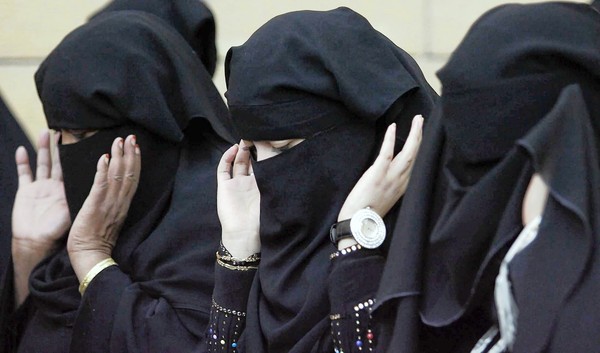
King Abdullah of Saudi Arabia surprised his ultraconservative nation Sunday by announcing bold reforms that for the first time will give women the right to vote, run for local office and serve on the Shura Council, the king’s advisory board.
The measures by an aging monarch who has battled Islamic hard-liners for years will marginally improve the standing of women in a country that still forbids them to drive or leave the house without their faces covered. The moves appear likely to enrage religious conservatives while advancing at least a veneer of change in one of the world’s most repressive states.
“Because we refuse to marginalize women in society in all roles that comply with sharia [Islamic law], we have decided … to involve women in the Shura Council as members, starting from the next term,” the king said in a five-minute speech to his advisors.
He added: “Women will be able to run as candidates” in the 2015 municipal election “and will even have a right to vote.”
The announcement suggests that the ailing 87-year-old king seeks a legacy as a reformer, despite making only modest inroads on human rights. Abdullah built the country’s first coeducational university and has granted 120,000 scholarships to students, many of them women, to study outside the country. Each move was opposed by clerics and religious ultraconservatives in the royal family.
Allowing women to vote is “hugely significant,” said Lubna Hussain, a Saudi writer. “The king is implementing the reform promises he made when he became leader. It shows he is not willing to pander to religious fundamentalists … who are quite weakened and don’t seem to have the voice they used to.”
The new rights for women come as Saudi Arabia has bristled at demands for political freedoms that have sparked spirited rebellions across the Arab world and toppled such longtime allies of the king as Egyptian President Hosni Mubarak. When rumblings of revolt echoed in Saudi Arabia, the government, whose security forces are omnipresent, promised $130 billion in salary raises and spending for social and religious programs.
Such largesse and attempts at modernization have kept Abdullah popular even as challenges to the royal family have been quickly crushed. Saudi dissidents and human rights groups have condemned the government for crackdowns that have occasionally damaged the king’s image and led to criticism that his family’s reliance on religious conservatives to stay in power makes him too cautious a reformer.
The king is the counterbalance to influential anti-reformist forces, including Prince Nayif ibn Abdulaziz, the interior minister, who many believe may succeed Abdullah. Nayif is sympathetic to fundamentalist Wahhabi clerics who uphold the segregation of sexes and have resisted the monarch’s attempts at modest reforms to ease religion’s grip on schools, courts and other institutions.
Yet discriminatory laws, such as those preventing women from driving, have become an international embarrassment for the kingdom, a key U.S. ally that relies on oil wealth to expand its diplomatic stature. A number of women were arrested over the summer for defying the driving ban. Analysts predicted that by allowing women to vote the king has opened the possibility for wider rights debates.
But others said the latest reforms were diversions that did little to change the plight of women in a country where they can be flogged for adultery and cannot travel abroad without the permission of a male guardian.
“It’s a mixed feeling. On one hand he opens the door for her and on the other hand she is still banned from driving,” said Mohammad Fahad Qahtani, a college professor and human rights advocate. “It doesn’t save her from horrible treatment by government agencies and the courts. It’s a symbolic gesture, but it is in no way enough to improve the lives of women.”
He added: “These rights to vote are still, if you see how it’s worded, are contingent on Islamic jurisprudence. So we’ll have to see in coming years what happens. The devil could be in the details. But maybe it’ll get some international praise for the regime.”
Sunday’s announcements “represent an important step forward in expanding the rights of women in Saudi Arabia, and we support King Abdullah and the people of Saudi Arabia as they undertake these and other reforms,” said Tommy Vietor, spokesman for the U.S. National Security Council.
The change will not alter the Saudi power structure. Municipal councils have little authority and only half their members are elected. The Shura Council, a body akin to a parliament but with no legislative power, advises the king on economic, social and international affairs.
But liberals and activists believe that even a little nudge forward in the kingdom is significant.
“It’s almost like a watershed,” said Hussain, who has written eloquently over the years on women’s rights. “You’ll now have women in [the Shura Council] taking up women’s causes. Before it was men talking for us. It’s quite revolutionary and it will open up a Pandora’s box.”


You must be logged in to post a comment.