Archive for the ‘ Tehrik-i-Taliban ’ Category

Breaking Pakistan’s Sufi Heart

By Mira Sethi for The Wall Street Journal

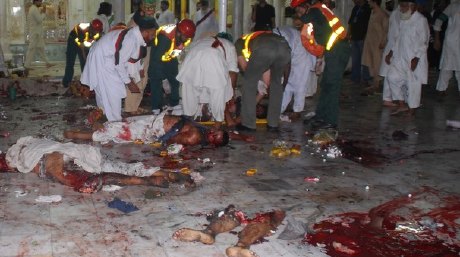
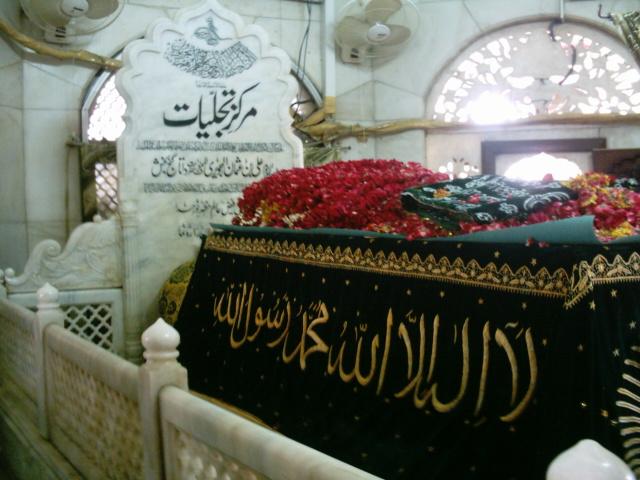
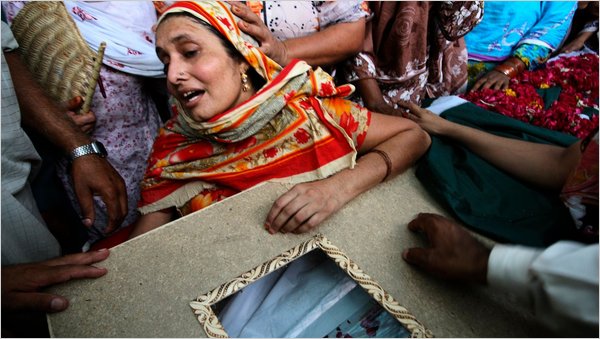
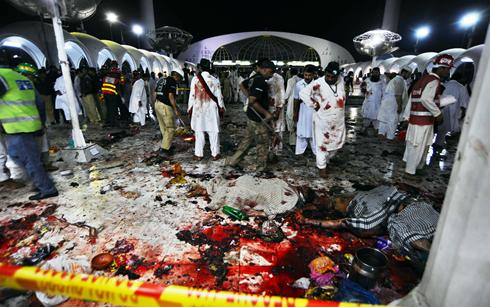
The two suicide bombers chose midnight on July 1, when the throng of worshipers in the ancient Data Darbar shrine in Lahore, Pakistan, was at its peak, to blow themselves up. Forty-five people were killed and 175 were injured. The attack on the 1,000-year-old center of Sufi Islam—the religion’s mystical, unorthodox face—was the first Taliban attack of its kind in Punjab province, the heartland of the country’s moderate, majority Barelvi sect.

The day after the attack on the shrine, Lahore’s students, politicians, traders and housewives took to the streets in loud, visceral protest. Major commercial centers were shut down, and in a rare show of sympathy, students from religious seminaries blocked roads and burned a few tires.

Pakistanis are now asking themselves: Is this America’s war or is it ours too? How can we fight it? Why did our military nurture these warriors for three decades and why has it turned against them now? How and when are we going to be at peace with our neighbors, especially India with which the military is obsessed and for whom these non-state actors were originally spawned?

To understand why this attack is so shocking, one must first look at Pakistan’s religious history. The majority of Pakistanis are Barelvis, who respect the inclusive traditions of the Sufis who brought Islam to the Indian Subcontinent. This is completely unlike the harsh version of Islam imported from Wahabi Saudi Arabia after the petro-dollar boom in the Middle East in the 1970s.

So the bombing of the Sufi shrine has symbolic resonance: Sufism has always thrived as a reaction to the politics of the state. In modern Turkey Sufism grew as a response to Ataturk’s secularism; in the Soviet Union, it grew as resistance to the state’s official policy of promoting atheism; in Algeria, it was a reaction to French colonialism. In Pakistan, Sufism has thrived as an alternative to the state-sponsored Wahabi Islam of the Deobandi jihadi sect.

If there’s one thing that Pakistanis are proud of, it’s their Sufi heritage. The shrine attacked in Lahore housed the tomb of one of the most famous Sufis to have ever lived, Ali Hajwiri, affectionately known by Lahoris as Data—one who facilitates the fulfillment of aspirations. Hajwiri wrote a seminal text in Sufi thought, the Kashf-al-Mahjub or “Unveiling of the Hidden.” An early example of Sufi doctrine, the book’s importance has grown over the centuries.

Although not a native of Lahore, Hajwiri decided to settle in the city for the last 34 years of his life at the end of the 11th century. Even then, Lahore’s fame as a center of culture was widespread. It was known for its old fortified city, a nourishing river, and a collection of free-spirited artists, artisans, and musicians. During his 34 years of residence, Hajwiri became a revered dervish, offering an inclusive mystical path to Lahore’s non-Muslim population, many of whom were subject to a punishing caste hierarchy.

Hajwiri’s shrine remained protected through centuries of rising and falling empires in the Punjab. Even the Sikh marauder Maharaja Ranjit Singh left the shrine untouched as he plundered many of Lahore’s riches.

In attacking Hajwiri’s shrine, the Taliban have grossly miscalculated. They had hoped to provoke anger at the Pakistani government for fighting America’s war. Instead they have managed to convince more and more Pakistanis that this is now their war, not just America’s.

Pakistan Are Over Here But Thinking About Home

By Stephen Brenkley for The Independent

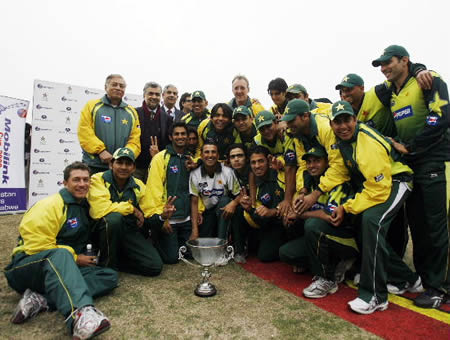
Pakistan are here to win. Anybody who thought that they were in England this summer to make up the numbers, licking their wounds, grateful to be given a temporary home, would be misguided. 

They may indeed be the refugees of world cricket, unable to play in their own country because teams refuse to go there, but they will be nobody’s fools. It is the most bizarre of tours they have embarked on. Starting on Tuesday at Lord’s, they play the first of two Tests against Australia, which will be considered as home matches.

 They then play four Tests against England in which they will be the touring side. Such have been the ramifications of the terrorist activities at home. Pakistan have been forced to play where they can. “It’s a big tour. It’s not easy to get hold of 17 boys, a lot on their first tour here, and I don’t think we have ever played six Test matches in two months,” said Yawar Saeed, their wise, veteran manager.

 “We have a young side here and it was important to keep them together. There is plenty of talent in this team. The one sitting there, Umar Akmal, is just a bundle of talent, God is so kind to him. I have told him, if he doesn’t use his talent I will beat him one of these days. I see him as a future Vivian Richards. Look at his confidence at his age and look at the way he’s playing. He’s a very good kid and I’m trying to help him and the left-arm fast bowler, [Mohammad] Aamer, who’s only 18 and can also do great things.”

There is, of course, no physical intent by Yawar towards the precocious Umar, he merely makes the point to reinforce his desire not to waste his gifts. There has been precious little sign of that so far.

Yawar is on his 26th or 27th tour – he really has lost count – as manager. At 75, he thought he had unpacked for the last time but with the shifting of officials yet again in the Pakistan Cricket Board he has returned as a safe pair of hands. He is an Anglophile who was educated at Millfield, played for Somerset for three seasons in the mid-Fifties and whose father, Mohammad Saeed, was the first captain of Pakistan post-partition and pre-Tests.

At the core of the thinking of those who run cricket in Pakistan is the day when they can play at home again. Somehow, cricket is being sustained despite the lack of international competition but Yawar and the PCB hierarchy know that cannot last while understanding the virtual boycott.

The memory is still raw of the Sri Lanka team being attacked on the way to a Test in Lahore last year. Yawar and the Pakistan team were in a coach 40 yards behind. “The whole thing is dependent on the conditions and security within the country,” he said. “You have to ask: Yawar, if you were an Australian or an Englishman, would you go there? It’s very difficult, I don’t blame any of the people who are hesitant to come there. But all I can say is it’s not as bad as it looks from here. I’m not saying it’s perfect.”

Pakistan have taken a big risk by appointing as captain Shahid Afridi, who has been in regular trouble for ill-discipline. He has not so far shown diplomatic tendencies when they may be needed. In England four years ago, Pakistan’s tour was almost derailed when the Fourth Test was abandoned amid allegations of ball-tampering.

On the tour of Australia last winter, disharmony led to a whitewash and a series of disciplinary actions later on. Shahid himself was penalised for being spotted biting a ball. “We had problems about the captain,” said Yawar. “I can see in Shahid the one who can get them all together, mould them into one team. People who matter have had a chat with Shahid. I am very confident he’s going to be OK. Even this ball-biting thing, it’s just that he’s so keen, he’s keen to win like a lot of people, so he does lose control at times. I don’t think he will as captain.”

So to Australia on Tuesday. “Playing Australia you have got to be mentally tough. That’s where I’m working on them. I have seen Australia play, I have seen these boys play, I know their psyche. I can’t say that overnight we will become X, Y, Z, but you will see a graph going up by the Test match.”

But nobody in Pakistan will rest until the next touring team arrives to play this attractive, gifted young team. “It has to be reintroduced. I can’t put a date on it but I think that something should happen within the next three or four years. I would love to see cricket being played in Pakistan again. Before I say goodbye to this world, I would love to see that.”


Pakistan Suicide Bombing Death Toll Jumps to 102

By Riaz Khan and Nahal Toosi for The Associated Press

The death toll from twin suicide bombings in Pakistan jumped to 102 with 115 people wounded on Saturday, making it the deadliest attack this year in the country.

Authorities continued to remove debris from the site of the attack in the village of Yakaghund in a northwest tribal region, after two bombers struck seconds apart Friday near a government office.

One of the bombs appeared fairly small but the other was huge, officials said. At least one bomber was on a motorcycle.

The attackers detonated their explosives near the office of Rasool Khan, a deputy Mohmand administrator who escaped unharmed. Tribal elders, including those involved in setting up militias to fight the Taliban, were in the building, but none was hurt, according to Mohmand chief administrator Amjad Ali Khan.

Video footage showed dozens of men searching through piles of yellow brick and mud rubble for survivors. Women and children were among the victims.

Mohmand is one of several areas in Pakistan’s lawless tribal belt where Taliban and al-Qaida members are believed to be hiding.

Abdul Wadood, 19, was sitting in a vehicle at the time of the bombings.

“I only heard the deafening blast and lost consciousness,” said Wadood, who was being treated for head and arm wounds in Peshawar, the main city in the northwest, about 15 miles (25 kilometers) away. “I found myself on a hospital bed after opening my eyes. I think those who planned or carried out this attack are not humans.”

Some 70 to 80 shops were damaged or destroyed, while damage to a prison building allowed 28 prisoners — ordinary criminals, not militants — to flee, said Rasool Khan, who gave the casualty figures.

Friday’s was the deadliest attack this year in Pakistan. On New Year’s Day, a suicide car bomber struck a sports event near a meeting of tribesmen who supervise an anti-Taliban militia near the South Waziristan tribal area, killing 96 people.

Near the attack site, officials had been distributing wheelchairs Friday to disabled people and equipment to poor farmers, Amjad Ali Khan said. It was unclear how many participants in that event were among the victims.

Pakistani Taliban spokesmen could not be immediately reached after the attack. There were scattered reports the militant group’s branch in Mohmand had claimed responsibility and said it was targeting the elders.

The Pakistani army has carried out operations in Mohmand, but it has been unable to extirpate the militants. Its efforts to rely on citizen militias to take on the militants have had limited success there.

Nevertheless, there have been fewer attacks in Pakistan this year than in previous years — most notably in the northwest. In the last three months of 2009, more than 500 people were killed in a surge of attacks in the country.

3 Arrested in Norway al-Qaida Bombing Plot

By Ian Macdougall, Matt Apuzzo, and Adam Goldman for The Associated Press

Three suspected al-Qaida members were arrested Thursday for what Norwegian and U.S. officials said was a terrorist plot linked to similar plans to bomb New York’s subway and blow up a shopping mall in England.

Officials believe the men were planning attacks with portable but powerful bombs like the ones at the heart of last year’s failed suicide attack in the New York City subway, an attack U.S. Attorney General Eric Holder has called one of the most serious plots since 9/11. On Wednesday, U.S. prosecutors revealed the existence of a related plot in Manchester, England.

The plots underscore al-Qaida’s interest in smaller-level attacks that don’t require the intricate planning and coordination of the Sept. 11, 2001 attacks in which airplanes were hijacked and flown into the World Trade Center towers in New York City and the Pentagon in Arlington, Va. And they follow a trend in which the terrorist group has used operatives inside potential target countries, rather than trying to sneak people across increasingly secure borders.

The three men, whose names were not released, had been under surveillance for more than a year. Two were arrested in Norway and one in Germany. Officials would not say what country or site was the target of the latest terror threat, or even whether they believed the men had selected a target.

Those arrested in Norway included a 39-year-old Norwegian of Uighur origin who has lived in the country since 1999 and a 31-year-old citizen of Uzbekistan who had a permanent Norwegian residency permit, said Janne Kristiansen, head of Norway’s Police Security Service. The man arrested in Germany was a 37-year-old Iraqi with a Norwegian residency permit, Kristiansen said.

She did not say exactly where the arrests took place but said all three men “had connections to Oslo.”

Norwegian and U.S. officials believe the Norway plan was organized by Salah al-Somali, al-Qaida’s former chief of external operations who is in charge of plotting attacks worldwide. Al-Qaida usually keeps its plots compartmentalized, and officials do not believe the suspects in Norway knew about the other plots. The officials spoke on condition of anonymity because they were not authorized to discuss the case.

Al-Somali, who was killed in a CIA drone airstrike last year, has been identified in U.S. court documents as one of the masterminds of the New York subway plot. Two men have pleaded guilty in that case, admitting they planned to detonate explosives during rush hour. A third man awaits trial.

Officials said the men were attempting to make peroxide bombs, the powerful homemade explosives that prosecutors say were attempted in both New York and England. Norwegian and U.S. officials said it was unclear whether the men ever perfected the recipe for the bomb and said investigators had contained the plot.

“According to our evaluation, the public has never been at risk,” Kristiansen said.

The Associated Press learned of the investigation in recent weeks and approached U.S. and Norwegian officials. Authorities told the AP that reporting on the case could jeopardize public safety and allow dangerous suspects to go free. The AP agreed not to report on the investigation until arrests were made.

“AP’s knowledge of the case was only one of several factors that was taken into consideration when deciding on the timing of the arrests,” Police Security Service spokesman Trond Hugubakken said. “It was not the decisive factor.”

U.S. and Norwegian counterterrorism officials worked closely together to unravel the Norwegian plot, officials said. Kristiansen traveled to the U.S. this spring to discuss the closely held intelligence gathered in the case.

Norwegian Prime Minister Jens Stoltenberg urged Norwegians not to judge large groups of people because of the arrests.

“These are separate individuals that are responsible for criminal acts,” Stoltenberg said. “It is always bad to judge a whole group of people from what individuals are doing and that is independently of what group these people belong to.”

Even though it was not clear if Norway was a target, Al-Qaida’s No. 2 leader, Ayman al-Zawahri, has called for attacks on Norway, among other countries.

Magnus Norell, a terrorism expert at the Swedish Defense Research Agency, said Norway’s 500 troops in Afghanistan could be a factor, as could the 2006 controversy sparked by a Danish newspaper’s publication of 12 cartoons depicting the Prophet Muhammad.

Norell said the controversy has extended to neighboring Norway and Sweden after newspapers there republished the cartoons and later published similar cartoons. Images of Muhammad, even favorable ones, are considered blasphemous by many Muslims.

British police and security officials have never provided details of the alleged target of the purported English plot, but said it was likely focused on a major shopping center in northern England. Media speculation centered on Manchester’s Arndale shopping center.

A judge said last year the gang was plotting a “mass casualty” attack in northern England.

Two Die in Gunfire at India-Pakistan Border

By Augustine Anthony for Reuters

An exchange of fire at the Indian-Pakistan border near Pakistan’s Punjab province has killed two Indian troops and wounded a Pakistani soldier and several villagers, officials said Wednesday.

The neighbours have in the past exchanged almost daily fire across what is known as the Line of Control separating the two armies in Kashmir, but the latest incident occurred in the Sialkot sector of Pakistan which rarely experiences trouble.

A spokesman for the Pakistan Rangers said Indian border security forces fired automatic weapons and mortars at a village along the Sialkot working boundary, north of the Pakistani city of Lahore.

“First they fired yesterday morning and then again in the evening and the firing continued sporadically throughout the night until Wednesday morning,” said Nadeem Raza.

“One of our soldiers and several villagers have been wounded in the Indian firing.” A senior Indian border official confirmed the incident but said Indian forces retaliated for “unprovoked firing” from the Pakistani side.

“We were facing unprovoked firing from the Pakistani side for the last two days, resulting in the death of two of our men. We were forced to retaliate,” said K. Srinivasan. “The firing was precise, but at this stage we cannot say for sure who fired at us.”

The flare-up comes ahead of Indian Foreign Minister S.M. Krishna’s trip to Pakistan next week to meet with his counterpart in a renewed bid to normalise ties.

Relations between the nuclear-armed neighbours, who have fought three wars since 1947, were frozen when Pakistan-based militants attacked the Indian city of Mumbai in 2008, killing 166 people.

A late 2003 cease-fire between the two sides across the cease-fire line in Kashmir has largely held although there have been several exchanges of fire over the past year. Raza said Pakistani forces returned fire after Indian forces “did not respond to the call for a flag-meeting” and continued firing.

The Director General of Pakistan Rangers in Punjab, Major General Yaqub Khan, said a protest had been lodged with Indian forces. “In future, a strong reply will be given by Rangers and loss of civilian lives and property will not be tolerated at any cost,” he was quoted as saying in a statement issued after visiting the area.

This was the third violation of a cease-fire in that area in the last two weeks, according to the statement. India has long accused Pakistan of backing militants fighting Indian security forces in the Himalayan region of Kashmir.

Pakistan supports what it calls a freedom struggle by the people of Kashmir against what it sees as the brutal and illegitimate Indian occupation of the region. But it denies arming the guerrillas, who have been fighting Indian forces since 1989.

Pakistani Student Britain Couldn’t Deport was ‘Involved in Planning Attack in US’

By Duncan Gardham for The Daily Telegraph

A suspected terrorist who Britain is unable to deport has been arrested on suspicion of plotting to bomb New York’s underground system. A US warrant was issued for Abid Naseer, who is accused of helping an al-Qaeda cell planning suicide bomb attacks in the city. Naseer was arrested on Wednesday in Middlesbrough, sources said, and the US authorities have requested he is extradited for trial.

He was among a group of 12 men arrested in Manchester last year accused of plotting to blow up shopping centres, but was never charged. Naseer, 24, was subsequently released and is thought to have been put under a control order and electronically tagged. In May the Special Immigration and Appeals Commission ruled that he was connected to al-Qaeda but could not be deported back to Pakistan on human rights grounds.

However, US authorities believe he stockpiled July 7-style bomb making materials for the planned attack in Manchester. The same type of material was to be used in the thwarted bomb attacks on the New York Metro.

He is also believed to have been in touch with the same senior al-Qaeda commanders.

The US Department of Justice (USDoJ) said the American plot was “directly related to a scheme by al-Qaeda plotters in Pakistan to use Western operatives to attack a target in the United Kingdom.”

Naseer is accused of providing material support to al-Qaeda and conspiracy to use a firearm in New York and elsewhere. According to a US statement, “large quantities of flour and oil were found” when Naseer’s address in Cheetham Hill, Manchester was raided by police.

The operation, codenamed Pathway, had to be brought forward 24 hours after Assistant Commissioner Bob Quick was photographed entering Downing Street to brief the Prime Minister with details of the raids visible.

Two members of the US cell, Najibullah Zazi and Zarein Ahmedzay have pleaded guilty to planning to conduct suicide bombings in New York using improvised explosive devices made from supplies such as hydrogen peroxide, acetone, flour and oil – ingredients similar to those used in the July 7 attacks five years ago.

In other addresses, Greater Manchester Police allegedly found surveillance photographs of public areas in Manchester – thought to be the Arndale shopping centre – and maps of Manchester’s city centre posted on the wall with one of the locations from the surveillance photographs highlighted.

Another student called Tariq ur-Rehman who returned to Pakistan after he was released from British custody, was allegedly recruited at the same time. The US Department of Justice said ur-Rehman was not in custody.

A US indictment says Naseer and ur-Rehman were members of a terrorist cell coordinated by Rashid Rauf – a British al-Qaeda commander who was also involved in the July 7 attacks of 2005.

Rauf is thought to have been killed in Pakistan by a missile from a US drone in November 2008 but according to the indictment the plot was also allegedly directed by Adnan el-Shukrijumah, known as “Hamad”, a 34-year-old Saudi citizen with a $5m price on his head from the FBI, and Saleh al-Somali, another al-Qaeda commander.

All three were said by the US to be leaders of al-Qaeda’s “external operations programme”.

The students were allegedly recruited in Peshawar, Pakistan in November 2008 along with the leader of the US plot, Najibullah Zazi.

After returning to Britain, Naseer allegedly sent emails to the same account that a man calling himself Sohaib, but also known as Ahmad and Zahid, was using to communicate with the US cell on behalf of al-Somali.

The Daily Telegraph previously reported that MI5 tipped off the FBI about the US plot and published the emails that used the names of girls as code words for bomb-making ingredients and a wedding to refer to the planned attack between April 15 and 20 last year.

Zazi had agreed a similar code, the Americans say, and emailed Sohaib that the “marriage is ready” just before he left Colorado for New York City in early September last year.

Government in Pakistan Calls Meeting on Terrorism

By Jane Perlez for The New York Times

In an unusual sign of accord between the two major political parties, Prime Minister Yousaf Raza Gilani announced over the weekend that the government and the opposition would hold a national conference on ways to combat terrorism.

The announcement came days after 42 people were killed and hundreds were wounded when two suicide bombers struck the famed Sufi shrine Data Darbar on Thursday night in Lahore, the capital of Punjab Province.

The attack incited street protests in Lahore on Saturday, and it provoked complaints that law enforcement was not doing enough to protect holy sites from sectarian militant groups.

Nawaz Sharif, the leader of the main opposition party, Pakistan Muslim League-N,  deplored the attack at a news conference on Saturday. It is time, he said, for the government to hold a national conference on terrorism and open talks with the Pakistani Taliban, “who are ready to talk and ready to listen.”

Mr. Sharif, whose brother Shahbaz Sharif  is the chief minister of Punjab, did not specify which Taliban figures such talks should include.

Prime Minister Gilani agreed late Saturday to the proposal for a national conference, though it appeared unlikely that it would involve representatives of any militant groups. The conference will discuss how to better fight back against the militants, and show concern for the problem, politicians said.

The creation of such a conference was interpreted as an encouraging step by politicians who have called for greater leadership by the civilian government against terrorism. Until now the army has mostly led the effort against the Pakistani Taliban, fighting the militants in the tribal areas adjacent to Afghanistan.

The Pakistani Taliban denied responsibility for the Data Darbar attack. The shrine, one of the most popular in Lahore, is considered un-Islamic by followers of the Wahhabi and Salafi schools of Islamic thought that Taliban fighters generally adhere to.

Some religious scholars were so outraged by the attack on the shrine that they called for the resignations of Chief Minister Sharif and the Punjab law minister, Rana Sanaullah.

Earlier this year, Chief Minister Sharif was criticized by the national government, led by the more secular Pakistan Peoples Party, when he appealed to the Taliban to stop attacking Punjab on the grounds that the Muslim League and the Taliban had a common enemy in the United States. Since then, he has been accused of not doing enough to crack down on militant groups that have coalesced under the umbrella of the Punjabi Taliban.

The federal Interior Ministry said after the assault on the shrine that it had warned Punjab authorities of a possible terrorist attack in Lahore last week.

A rare joint statement by the prime minister and Nawaz Sharif on Sunday said now was “not the time for blame games.”

A similar conference on terrorism by the two main political parties was held in Islamabad two years ago, but those talks petered out and responsibility for tackling terrorism was handed to the army.

An effective national strategy by the civilian government would need stronger and more cohesive leadership and more money for the poorly financed police forces in the major cities, according to law enforcement officials.

Sectarianism Has Poisoned Pakistan

By Basim Usmani for The Guardian

The recent attacks on a prominent shrine in Lahore demonstrate how the unrest in Pakistan is caused by a minority of few who cannot tolerate the plurality of beliefs in Pakistan. The Tehrik-e-Taliban are lying through their teeth when they claim that they do not attack public places. It’s becoming more and more apparent that these militants aren’t resisting American hegemony; this a war to determine Pakistan’s future and, by proxy, the future of Islam.

Whether the Tehrik-e-Taliban actually arranged the bombers’ suicide belts is irrelevant; they have created a domino effect that’s likely to spread from commercial capitals such as Lahore to cities with historic shrines and Pakistani historical sites, such as Multan, or Taxila.

Unlike Baghdad, where violence between Islamic sects is a product of the war America is waging, the onus of last Thursday’s blasts falls squarely on us, the citizens of Pakistan. We have been complacent about sectarianism for too long.

A good friend who works for a transportation company told me in 2007 that in villages along the highways to Waziristan where the Taliban had seized control were the bodies of butchered Shia Muslims. That year, Lahore’s public was too busy mobilising about the judiciary and President Musharraf to pay the violence any mind.

Sectarianism has a brutal history in Pakistan that existed long before militants in Afghanistan began calling themselves the Taliban. I remember as a child in Lahore the broadcasts of gun violence outside Shia houses of worship during the early 1990s.

Many Pakistanis feel that the attacks on two Ahmadiyya mosques last May, where gunmen unloaded bullets and grenades on Friday prayer-goers, were unprecedented. Certainly the Ahmadiyya community doesn’t think they are.

To have a Pakistani passport requires citizens to assert that they are not part of the Ahmadiyya community. In a sense, holding that passport also makes you complicit in the blasts that killed dozens in Lahore’s most famous Sufi shrine last week. Our inability to understand that this war is about national identity is rooted in the same complacency.

We are OK with the state deciding for us who is or isn’t Muslim. In this regard, the Pakistani government has the weakest moral fibre in taking on this growing strand of extremism. It is hypocritical to fight the Taliban in Waziristan if we are okay about denying citizenship to millions of Muslims born in Pakistan.

It may sound extreme of me, but we should be jailing clerics in Pakistan that give edicts declaring believers to be non-Muslim or anti-Pakistani. It may seem extreme to an American that writers who deny the Holocaust are imprisoned in Europe, but extreme contexts call for extreme measures.

Pakistanis must stress how being born or raised in their country is enough to be Pakistani; laws preventing Ahmadis from referring to themselves as Muslims were amended to the constitution by Zulfikar Ali Bhutto in the 1970s.

I remember being uneasy at my desk in middle school when I was studying at Aitchison College in Lahore, and some of my classmates were getting bullied for having marks on them after returning from Shia processions during Muharram. Pakistanis themselves are the only ones capable of stamping out this discriminatory culture.

Some proactiveness is necessary on our part to make it clear that mystics, Shias, Ahmadis and Christians are all fellow Pakistanis. When you are pulled over by street police in any major Pakistani city, the first bit of information the police ask for is your family name. From one name your caste, religious beliefs and affluence is determined.

This came as a shock to all of my family who have emigrated away: that collectively our stock in our own nationhood has plummeted so. In a sense, these problems are all accrued debt we’ve accumulated for being so complacent. In the light of our bigoted constitution and deterministic culture we have to – for ourselves – decide that being Pakistani is enough to make us all countrymen. Otherwise, we might as well just refer to ourselves as Taliban, Muslim extremists, Islamic militants, and so forth.

Deadly blasts hit Sufi shrine in Lahore

By Syed Shoaib Hasan for The BBC

Suicide bombers have launched a deadly attack on a Sufi shrine in the eastern Pakistani city of Lahore. At least 35 people died in the blasts at the popular Data Darbar shrine late on Thursday evening, officials say. At least 175 other people were hurt in the blasts, believed to be the first targeting a shrine in Lahore. Thousands of people were visiting the shrine at the time, officials say. It holds the remains of a Persian Sufi saint, Abul Hassan Ali Hajvery.

Although no-one has yet said they carried out the attack, Taliban militants and their Punjabi jihadi allies have been involved in several such bombings in the northern Khyber Pakhtoonkhwa province. The shrine is largely frequented by members of the majority Barelvi sect, who are seen as heretics by the Taliban. Most of the Taliban belong to the rival Deoband Sunni sect, which strongly disapproves of worship at shrines. Many are also allied to the Sipah-e-Sahaba, and its armed splinter group, Lashkar-e-Jhangvi, which seeks to turn Pakistan into a Deoband Sunni state.

The shrine is visited by hundreds of thousands of people each year from both Sunni and Shia traditions of Islam. At least two attackers were involved, although police initially said three explosions had been heard.  The impact of the blasts ripped open the courtyard of the shrine. Rescue workers could be seen clambering over the rubble as they carried out the victims. Khusro Pervez, commissioner of Lahore, said two of the attacks took place in the main courtyard and one in the lower level of the shrine.

The first attacker struck in the underground area where visitors sleep and prepare themselves for prayer, he said. As people fled, a second bomber detonated his explosives in the upstairs area. Officials say they believe the bombers used devices packed with ball-bearings to maximise the impact of their attack.  A volunteer security guard at the shrine described scenes of devastation.

“It was a horrible scene,” said Mohammed Nasir. “There were dead bodies all around with blood and people were crying.” The attack is the biggest on a Sufi shrine in Pakistan since militant attacks began in 2001.  No group has said it carried out the attack, but correspondents say the attacks continue a growing trend among militants to target members of other sects as well as minorities.

Lahore has been hit by a series of bomb attacks, including a suicide blast at anti-terrorist offices in March, when at least 13 people died. In May, more than 90 people were killed in a double attack on the minority Ahmadi sect in the city.

Earlier, security chiefs had been congratulating themselves after what was the first month in two years in which there had been no suicide bombings in Pakistan, the BBC’s Aleem Maqbool reports from Islamabad.

They said it was proof the militant networks had been disrupted. Most Pakistanis knew the battle against militancy in this country was far from over, he adds. Last year Pakistan launched a major military offensive against militant strongholds in South Waziristan.  In December the military said they had achieved victory, but subsequent reports have suggested the militants remain active in the region.

Vengeful New Militant Group Emerges in Pakistan

By Kathy Gannon for The Associated Press
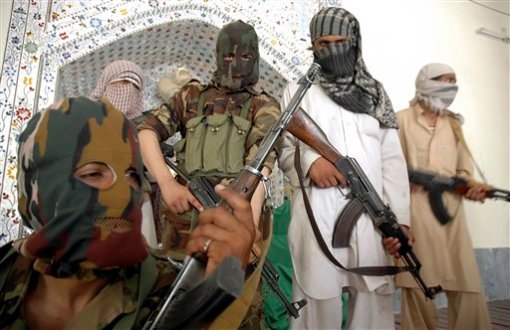
Pakistani authorities now believe a dangerous new militant group, out to avenge a deadly army assault on a mosque in Islamabad three years ago, has carried out several major bombings in the capital previously blamed on the Taliban.

The emergence of the Ghazi Force was part of the outrage among many deeply religious Pakistani Muslims over the July 2007 attack by security forces against the Lal Masjid, or Red Mosque, a stronghold of Islamic militants.

The fierce attack, in which scores of young, heavily armed religious students died, inspired a new generation of militants. These Pakistanis have turned against a government they felt has betrayed them and, to their dismay, backed the U.S. role in neighboring Afghanistan.

The brief but bloody history of the Ghazi Force illustrates the unintended results of Pakistan’s policy of promoting Islamic extremists to fight India in the disputed area of Kashmir. That policy — which Pakistan denies it pursues — now threatens regional stability as the U.S. and Pakistan’s other Western partners pour billions of dollars into the country to stop the rise of Islamic militancy.

The new group is made up of relatives of students who died in the Red Mosque assault. It is named after the students’ leader, Maulana Abdul Rashid Ghazi, who was also killed. The mosque’s religious school, or madrassa, had been a sanctuary for militants opposed to Pakistan’s support of the U.S.-run war in Afghanistan.

Private television stations broadcast vivid scenes of the assault — commandos in black fatigues rapelling down ropes, the crackle of gunfire, bodies of black-shrouded girls carried out through the smoldering gates. Those images stunned the nation, especially families of the students and Pakistanis with deep religious feelings.

“Before the Lal Masjid, militants hadn’t yet declared war on the state of Pakistan. That changed with Lal Masjid,” said Zahid Hussain, author and terrorism expert who has written extensively about Pakistan.

Islamabad’s inspector general of police, Kalim Imam, told The Associated Press that the Ghazi Force was behind most of the deadliest attacks in the capital during the last three years. The attacks targeted the military, the Inter-Services Intelligence agency or ISI — which had ties to a number of militants — and a five-star hotel frequented by foreigners and the Pakistani elite.

The Ghazi Force helped recruit a security official who blew himself up inside the office of the World Food Program last October, killing five people, according to Imam. The force also sent a suicide bomber in September 2007 into the mess hall of the commando unit that attacked the Red Mosque, killing 22 people, he said.

Ghazi Force members may also have been involved in the audacious June 9 attack north of the capital that killed seven people and destroyed 60 vehicles ferrying supplies to NATO and U.S. soldiers next door in Afghanistan, Imam said.

Many of those attacks had been attributed to the Pakistani Taliban, which operates in the remote tribal areas of the northwest along the border with Afghanistan. There is evidence of close ties between the Ghazi Force and the Pakistani Taliban, which the government has vowed to crush.

The Ghazi Force is believed to be headquartered in the Orakzai region of the border area, where the leader of the Pakistan Taliban, Hakimullah Mehsud, held sway for years. The leader of the Ghazi Force is believed to be Maulana Niaz Raheem, a former student at the Red Mosque.

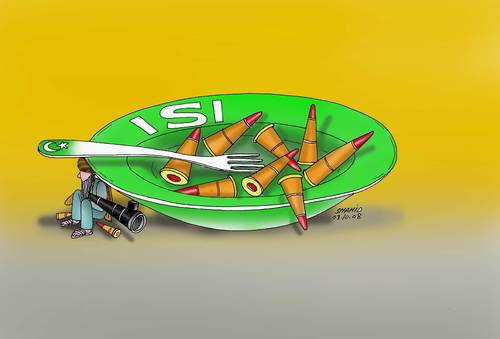
Anger over the bloodshed at the mosque was all the greater because many of the militants and their supporters felt betrayed by a government that had once supported them. Both Ghazi and his brother Maulana Abdul Aziz Ghazi, who was freed on bail this year after two years in jail, were widely believed to have been on the payrolls of both the government and the ISI intelligence service.

Their father, Maulana Mohammed Abdullah, enjoyed a close relationship with the late President Mohammad Zia ul-Haq, and the mosque was a center for recruiting volunteers to fight against the Soviets in Afghanistan in the 1980s.

As opposition grew to Pakistan’s support of the U.S. role in Afghanistan, the mosque became a center of religious agitation against the government, with armed students taking over the complex and police laying siege.

A former senior official in the Interior Ministry told The Associated Press that the police wanted to storm the mosque and end the siege at its outset, send the students home and shut down the religious school and a neighboring library until tempers cooled.

President Gen. Pervez Musharraf refused, the official said, even though police knew that members of al-Qaida’s affiliate organization Jaish-e-Mohammed, which is banned in Pakistan, were bringing in weapons for the students.

Musharraf relented and ordered the assault after militants kidnapped several Chinese nationals running a massage parlor in Islamabad, accusing them of prostitution. The death toll remains in dispute. Red Mosque officials say hundreds died. The government says fewer than 100 were killed.

In a rare interview, Abdul Aziz Ghazi told AP he warned the government that an assault on the mosque would unleash forces that no one could control.

“I have been in jail. I did not form this force and I don’t condone the violence but they are angry at the injustices done,” he said this week.

Although the assault turned many Islamic hard-liners against the government, Pakistan remains unwilling to break all ties to the militants, instead following a high-risk strategy of coddling “good militants” while fighting those deemed “bad militants,” analysts say.

“The military and the ISI have given importance to these militants as assets. But those who have openly declared war, and there is no chance of them returning back to the state, the army is going after them,” said Manzar Jameel, a terrorism expert and researcher on the growth of extremism in Pakistan. “Yet they still believe that some are still assets and that they can keep control of the assets. It’s a failure of strategy.”

Army spokesman Maj. Gen. Athar Abbas denies any assistance to militant groups, saying past ties have long since been severed. He says the Ghazi Force is among the groups the 120,000 Pakistani soldiers waging war in the tribal regions are fighting.

Yet Anatol Lieven, a terrorism expert with the Department of War Studies at London’s King College, said it’s clear that the ISI continues to protect some militant groups, even if it has broken with others.

In a June report, the Rand Corporation think tank also alleged that Pakistan’s military and intelligence still support some militant groups “as a tool of its foreign and domestic policy.”

“A key objective of U.S. policy must be to alter Pakistan’s strategic calculus and end its support to militant groups,” the report said.

Christine Fair, a co-author of that report and an assistant professor at Georgetown University’s Center for Peace and Security Studies, said the battle against extremists in Pakistan is mired in layers of subterfuge by Pakistani intelligence and a “mystifying” acceptance by the CIA of Pakistan’s “good-militant, bad-militant” policy.

She said U.S. intelligence knows Pakistan protects one group — Lashkar-e-Taiba, which India blames for the 2008 Mumbai assault and Afghanistan accuses of masterminding deadly attacks against the Indian Embassy in Kabul.

“Lashkar-e-Taiba remains intact. I have had conversations with … officials in Washington. It is not their priority. Lashkar-e-Taiba is not an issue,” she said in an interview. “Yet Lashkar-e-Taiba has been attacking us in Afghanistan since 2004.”
Imran Khan Moves Supreme Court Against Drone Attacks

As reported on Despardes.com

Cricketing legend-turned politician Imran Khan has filed a lawsuit in Pakistan’s apex court asking it to declare drone attacks as war crimes.

According to published reports, the Pakistan Tehrik-i-Insaf (PTI) chief on Wednesday filed a petition in the Supreme Court asking it to declare drone attacks as attacks on the sovereignty and defence of Pakistan and a war crime.

The petition, filed by Imran Khan’s lawyer Shaukat Aziz Siddiqui, argues that the provisions of logistics and facilities to any foreign country or alliance for mass destruction through drone strikes inside the territory of Pakistan resulting into killings of Pakistani citizen is illegal, unwarranted, unconstitutional, in violation the United Nations Charter, universal declaration of human rights, international law as well as the international humanitarian law, a war crime and an attack on the sovereignty, solidarity, integrity and defence of Pakistan.

Imran Khan’s petition was filed today after a Lahore court Lahore cort ruled against drone strikes and called on the government to take appropriate measures to halt strikes by unmanned drones in Pakistan if they aren’t approved by Islamabad.

Federal authorities should take measures to stop drone attacks in Pakistan if they are carried out without formal approval, the court said on Wednesday. The court was responding to a petition that said drone strikes were a violation of national sovereignty.

Drone attacks have increased under the authority of U.S. President Barack Obama, notably inside Pakistan. The CIA, a civilian entity, said it is acting according to the code of law in carrying out the strikes.

Pakistan’s government publicly objects to the attacks, saying they violate its sovereignty. But it is widely thought there is a tacit agreement between the U.S. intelligence agency, the CIA, and Islamabad to allow such strikes, reported Voice of America on its website today.(http://www1.voanews.com/english/news/asia/Suspected-US-Missile-Strike-Kills-10-in-Pakistan-97396999.html)

Two missiles believed fired Tuesday by an unmanned drone struck a village in the tribal regions of Pakistan, killing militants including Hamza al-Jufi, an Egyptian allied with al-Qaida.

Pakistan Rejects Allegations of Taliban Ties

As reported by CNN

Pakistani officials Sunday rejected allegations that their country’s powerful intelligence agency still supports the Taliban and other Afghan insurgents after a paper from a Harvard academic accused the agency of continued links to the rebels.

The powerful Inter-Services Intelligence agency does not “actually control the Afghan insurgency” and does not have “the ability to bring it to an end,” Matt Waldman argues in a paper for the London School of Economics. But the ISI provides “sanctuary, and very substantial financial, military and logistical support to the insurgency,” giving it “strong strategic and operational influence — reinforced by coercion,” according to his report, which cites Taliban commanders among its sources.

The ISI is widely thought to have played a key role in creating the Afghan Taliban during the 1990s, but Pakistan officially denies supporting them now. Maj. Gen. Athar Abbas, spokesman for the Pakistani military, called the claim “rubbish” on Sunday and said Waldman’s report “does not have a credible source or authenticity.”

“At best, it is speculative and only gives open sources without naming [them],” Abbas told CNN. “So, therefore, this kind of report requires a treatment which it really deserves. We are not going to formally respond to this, but we reject these allegations and accusation. If there are hard evidence, we would like for them to be brought out and we would be able to respond accurately.”

And Farahnaz Ispahani, a spokeswoman for President Asif Ali Zardari, called Waldman’s report “one-sided” and dismissed what she called its “wild accusations.”

“If Mr. Waldman had been a seasoned academic, he would have conducted interviews in Pakistan itself to balance his so-called research report,” Ispahani said. “The Pakistani government and its military have been performing an outstanding service to the world community as well as the region in its fight against militancy and extremism, and we can count the dead we have sacrificed in the thousands.”

Waldman’s report is titled, “The Sun in the Sky: The relationship between Pakistan’s ISI and Afghan insurgents.” He based his conclusions on interviews with nine insurgent field commanders in three regions of Afghanistan, plus former Taliban officials, tribal leaders, politicians, experts and diplomats. The title comes from Taliban commanders’ claims that their relationship with Pakistani intelligence is “as clear as the sun in the sky.”

Waldman concluded that that Pakistan “continues to give extensive support to the insurgency in terms of funding, munitions and supplies.” But Abbas dismissed the unnamed sources, calling the report “rubbish.”

“Has he named any Taliban commanders in this, has he named any officials?” Abbas said. “So, therefore, if it doesn’t have any specific source, which is not willing to disclose a name, it just becomes one of those reports that keep appearing. It is a serious allegation, but unless it has a credible evidence to support it or substantiate the report, only then it warrants a serious consideration for response.”

The ISI works not only with the Taliban, but also with the armed Haqqani network, led by Jalaluddin Haqqani and his son Sirajuddin, Waldman wrote. The Haqqani network sometimes cooperates with the Taliban and sometimes fights it.

The Taliban members interviewed believe that the ISI has a heavy influence on their leadership, which some of them said amounts to control, according to the report.

One of the southern commanders claimed: “If anyone rejects that the ISI backs or controls the Taliban, he has a mental problem … all our plans and strategy are made in Pakistan and step by step it is brought to us, for military operations or other activities,” the report says.

And southern Taliban commanders all complained of heavy ISI involvement, which they blamed for some attacks on civilians.

“One southern commander described their predicament as follows: ‘Another group of Taliban is directly supported by the ISI. They will never stop fighting in the country; they want to destroy the government and bring chaos. Behind all the attacks on … NGOs, schools, teachers, doctors, this is Pakistan. We cannot deny that it is Taliban; but there are Pakistan controlled groups among us. They want destabilisation …,’ ” the report says.

Waldman’s report comes two months after a U.N. report on the assassination of former Prime Minister Benazir Bhutto in 2007 — an attack blamed on Pakistani Taliban leaders — found that intelligence agencies hindered the subsequent investigation. The report concluded that the “pervasive reach” of Pakistan’s intelligence agencies left police “unsure of how vigorously they ought to pursue actions, which they knew, as professionals, they should have taken,” the report states.

Official Admits Militancy’s Deep Roots in Pakistan

By Jane Perlez and Waqar Gillani for The New York Times

LAHORE, Pakistan — Days after one of the worst terrorist attacks in Pakistan, a senior Pakistani official declared in a surprising public admission that extremist groups were entrenched in the southern portion of the nation’s most populous province, underscoring the growing threats to the state.

 The statements by the interior minister, Rehman Malik, after the killing of more than 80 people at two mosques last week here in Lahore, were exceptional because few Pakistani politicians have acknowledged so explicitly the deep roots of militancy in Pakistan. They also highlighted the seeming impotence of the civilian government to root out the militant groups, even in Punjab Province, providing a troubling recognition that decades of state policy to nurture extremism had come home to roost in the very heart of the country.

 The extent of the problem has become an increasing concern for the United States, which has pressed the government to deal with the issue with renewed urgency since the failed attempt by a Pakistani-American to explode a car bomb in Times Square.

 “We’re dealing with a problem that is so deeply burrowed into the bosom of the society,” said a senior Western official about the difficulty of loosening the grip of the militant groups. “And we’re dealing with a government that is unhappy within itself.”

The problem for Pakistan, Western officials and some Pakistani politicians said, is not only the specific acts of terrorism by these groups, but the far more pervasive jihadi mentality that has been nurtured in the society by an extensive network of extremist madrasas and mosques.

Mr. Malik’s remarks — in which he rattled off a host of extremist groups once supported by the state — were a nod to these larger problems. In contrast to the tribal areas at the nation’s periphery, where the military is battling the Pakistani Taliban on several fronts, militants were “now active” in the southern part of Punjab and were trying to “destabilize the country,” he said.

Though Mr. Malik seemed to hint at possible military action in Punjab, the civilian government, led by the Pakistan Peoples Party, the more secular of the political parties in Pakistan, has little leverage to make it happen.

The Pakistani military, which still holds most power, has shown little interest in taking on extremist groups in Punjab. The province is a major recruiting area for the army, and many of the militant groups there were created by the state decades ago and have been fostered since as arms of Pakistan’s enduring anti-India strategy.

To a large degree, they have slipped from the control of their handlers in the military and intelligence services, according to Western diplomats and Pakistani security experts, and have linked up with Taliban fighters and other militant groups that are now striking deeper into Pakistan in an effort to overthrow the state.

Today these militants move back and forth easily between the tribal areas for training and Punjab, where they carry out a rising number of spectacular attacks.

“They — Lashkar-e-Janghvi, the Sipah-e-Sohaba Pakistan and Jaish-e-Mohammad — are allies of the Taliban and Al Qaeda,” Mr. Malik told reporters in Lahore after the mosque attacks. 

The loose conglomerate of militants that Mr. Malik listed is now being grouped by officials and others under the name of the Punjabi Taliban, a designation that itself highlights the expanding nature of the threat in Pakistan’s most important province and the militants’ shifting ambitions. Under that rubric also falls Lashkar-e-Taiba, an anti-India militant group. Like the others listed by Mr. Malik, Lashkar-e-Taiba has been banned by the state, but continues to operate under a different name and apparently with the blessing of the military.

The Punjabi Taliban took credit for the assaults on the two Ahmadi mosques last Friday. At least one of the men arrested by the Pakistani authorities in connection with the Times Square bombing case is connected to Jaish-e-Mohammed, according to law enforcement officials in Karachi.  Adding to the difficulty of clamping down on the groups, the Punjabi government, led by Shahbaz Sharif, a leader of the more conservative Pakistan Muslim League-N and a chief political rival of President Asif Ali Zardari, has stopped short of condemning the militants. In some respects, he has treated them as allies.

Two months ago, Mr. Sharif asked the Taliban to stay away from Punjab, arguing that his party and the Taliban had a common enemy in the United States. The Punjab government is “in a state of denial,” said Arif Nizami, a columnist with the newspaper The News. Mr. Sharif played down the attack on the two mosques in Lahore, Punjab’s capital. Instead, he visited the wounded survivors in a hospital quietly at night without the usual television coverage.

The groups hold such sway that Pakistani politicians frequently pander to some, like the pro-Taliban Sipah-e-Sohaba Pakistan, during elections.  In a bold illustration of the power of one of the militant groups in southern Punjab, the provincial law minister, Rana Sanaullah, campaigned alongside the leader of Sipah-e-Sohaba, Maulana Muhammad Ahmed Ludhianvi, during a March by-election for the provincial assembly in the city of Jhang.

In an interview, Mr. Sanaullah, said he saw nothing wrong with campaigning with Mr. Ludhianvi. It was a good thing, he said, because it helped bring groups that he described as no longer militant into the democratic mainstream. “If they want to be law-abiding citizens, we should allow them to be,” Mr. Sanaullah said.  Mr. Sanaullah was not alone in seeking votes from Sipah-e-Sohaba. A candidate for the National Assembly running for the Pakistan Peoples Party also won with its support earlier this year. Though security is a paramount concern, government officials and others acknowledge that the problem of militancy will not be solved by military force alone. Having been nurtured through generations, it will also not be undone quickly.

A program announced by Mr. Zardari two years ago to rein in the madrasas has yet to get off the ground, blocked by bureaucratic inertia and fears of a backlash from powerful conservative religious groups, Pakistani officials say. As state-sponsored education becomes too expensive for poor parents, the number of madrasas has actually increased in the past three years, to more than 17,000 in 2010 from 13,000 in 2007. At least several thousand of the madrasas churn out militant students, experts say.

Facebook in Pakistan: Islamists vs. Liberals

By Adam B Ellick and Ahmad Ziadi for The New York Times

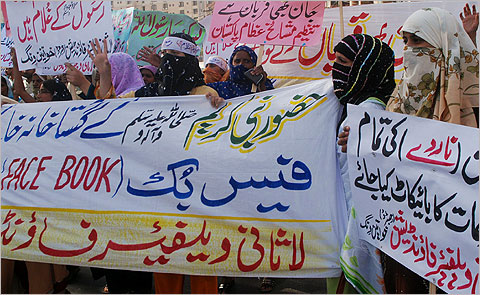
When Facebook was recently banned in Pakistan for hosting a “Draw Muhammad Day” fan page, one thing became very clear: Islamists here operate with organized precision, able to mobilize the masses in an instant, while the liberal voice remains paralyzed by fear and passivity.

Some media experts predicted that the ban – which a Pakistani court has now ordered the government to lift – might motivate the nation’s deeply disconnected liberal elite to take on the Islamists. After all, while members of the urban elite have been largely immune to the recent rise of violent militant attacks, the Facebook ban presented them with a personal vendetta.

In a nation without bars, and where entertainment options such as music concerts are rare, Facebook serves as a precious tool for the elite to organize discreet private events with music, drugs and alcohol. It has also helped mobilize social movements, including the lawyers’ march in 2009.

But the fervor that has followed the Facebook ban has been entirely one-sided in favor of the Islamists.

As the rest of Muslim world remains largely indifferent, tens of thousands of anti-Facebook Pakistanis protested in urban centers by burning American flags. A poll conducted by an IT portal called ProPakistani showed 73 percent out of about 8,000 voters favor a permanent ban on Facebook.

How did it get to this? There has been a widespread SMS campaign perpetuating a false narrative that Pakistan’s ban has brought a behemoth anti-Muslim company to its knees. One SMS attributes the recent fall in the Euro to the ban. Here’s another SMS I received:

THE BOYCOTT MADE BY MUSLIMS AGAINST FACEBOOK SINCE LAST 2 DAYS

CHARGE DEM A LOSS OF 2 BILLION EUROS..AND IF ITS CONTINUED AFTER 7 DAYS IT WOULD

REACH AROUND 40 BILLION EURO…. PLZ SPREAD AS MUCH AS U CAN.

Facts suggest otherwise. Facebook is not a publicly traded company, therefore, its earnings are not published. Still, some venture capitalists have valued Facebook at about $8 billion. Its annual revenue is estimated between $500 to $800 million.

In addition to the SMS campaign, this week, two new Muslim-friendly alternatives to Facebook have been launched. One of them, www.millatfacebook.com, was inaugurated by the bar association of the same Lahore court that banned Facebook. Millat means “Nation” in Urdu.

The site wooed more than 20,000 users with its slogan: “A site for Muslims by Muslims where sweet people of other religions are also welcome!!” Members are asked to specify if they drink alcohol. The founders are enraged at Facebook for curtailing Nazi-related hate speech while refusing to curb the Muhammad cartoons.

Their website says “Let’s prove to the world that if we can generate revenue for Facebook.com then we can also run our own website. Prove to the world that we are independent Muslims…” The other alternative site, www.Buddyflick.com , aims to “create/build/run our own network.” But where are Pakistan’s liberal and moderate voices?

Speaking out against the ban can be as hazardous as the forbidden cartoons. When those against the ban held a small news conference, the press mostly ignored it. After the press conference, several anti-ban activists were aggressively confronted by a large crowd of opposing activists as they left the venue. As tensions escalated, the anti-ban activists retreated into the building and waited for the crowd to dissipate.

One friend who is especially furious about the ban wouldn’t dare to speak out. “Nobody has the guts to go out and do something about it. The issue of Muhammad is so sensitive that you just never know.”

Instead, liberals are hashing out their frustrations in the low-traffic comment sections of liberal blogs and leftist newspapers, and, ironically enough, on their actual Facebook pages. Some have hacked into the banned site from the confines of their gated homes. Among the comment section in one newspaper is the latest joke: What’s the difference between Facebook and Lashkar  e Taiba? Answer: Facebook is banned!

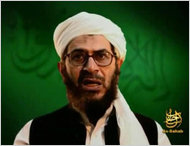
Al Qaeda Aide Believed Dead- Drone Attack in Pakistan Said to Have Killed No. 3 Official

By Kimberley Dozier for AP

Al Qaeda’s third in command, who played key roles in a recently foiled terrorist plot against the U.S. and the 2001 terrorist attacks, is believed to have been killed by a U.S. drone strike in Pakistan’s tribal areas, potentially dealing a significant blow to the terrorist network. Mustafa al-Yazid, al Qaeda’s chief operating officer, was killed a little more than a week ago, according to two U.S. officials. This is the main person who everyone has been looking for,” one official said.

Al-Qaida announced Monday that its No. 3 official, Mustafa al-Yazid, had been killed along with members of his family — perhaps one of the most severe blows to the terror movement since the U.S. campaign against al-Qaida began. A U.S. official said al-Yazid was believed to have died in a U.S. missile strike.

A statement posted on an al-Qaida Website said al-Yazid, which it described as the organization’s top commander in Afghanistan, was killed along with his wife, three daughters, a grandchild and other men, women and children but did not say how or where.

The statement did not give an exact date for al-Yazid’s death, but it was dated by the Islamic calendar month of “Jemadi al-Akhar,” which falls in May.

A U.S. official in Washington said word was “spreading in extremist circles” of his death in Pakistan’s tribal areas in the past two weeks.

His death would be a major blow to al-Qaida, which in December “lost both its internal and external operations chiefs,” the official said on condition of anonymity because of the sensitivity of the information.

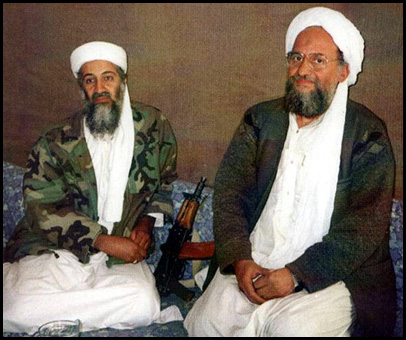
The Egyptian-born al-Yazid, also known as Sheik Saeed al-Masri, was a founding member of al-Qaida and the group’s prime conduit to Osama bin Laden and Ayman al-Zawahri. He was key to day-to-day control, with a hand in everything from finances to operational planning, the U.S. official said.

Al-Yazid has been reported killed before, in 2008, but this is the first time his death has been acknowledged by the militant group on the Internet.

Two Pakistani intelligence officials, speaking on condition of anonymity because they were not authorized to talk to the media, said al-Yazid died in a U.S. missile strike on May 21 in the North Waziristan tribal area.

Soon after the attack, officials reported that two foreigners were among the 10 people killed, but did not know their identities. Five women and two children were also wounded in the attack, which occurred in the village of Boya near the main town in the area, Miran Shah.

The intelligence officials said they received word of al-Yazid’s death last week and confirmed it by speaking to local tribal elders and Taliban members. They said their sources had not seen al-Yazid’s body and did not know where he was buried.

Al-Yazid has been one of many targets in a U.S. Predator drone campaign aimed at militants in Pakistan since President Barack Obama took office. Al-Yazid made no secret of his contempt for the United States, once calling it “the evil empire leading crusades against the Muslims.”

“We have reached the point where we see no difference between the state and the American people,” al-Yazid told Pakistan’s Geo TV in a June 2008 interview. “The United States is a non-Muslim state bent on the destruction of Muslims.”

The shadowy, 55-year-old al-Yazid has been involved with Islamic extremist movements for nearly 30 years since he joined radical student groups led by fellow Egyptian al-Zawahri, now the No. 2 figure in al-Qaida after bin Laden.

In the early 1980s, al-Yazid served three years in an Egyptian prison for purported links to the group responsible for the 1981 assassination of Egyptian President Anwar Sadat. After his release, al-Yazid turned up in Afghanistan, where, according to al-Qaida’s propaganda wing Al-Sabah, he became a founding member of the terrorist group.

He later followed bin Laden to Sudan and back to Afghanistan, where he served as al-Qaida’s chief financial officer, managing secret bank accounts in the Persian Gulf that were used to help finance the Sept. 11, 2001, attacks on New York and Washington. After the U.S. and its allies invaded Afghanistan in 2001, al-Yazid went into hiding for years. He surfaced in May 2007 during a 45-minute interview posted on the Web by Al-Sabah, in which he was introduced as the “official in charge” of the terrorist movement’s operations in Afghanistan.

Some security analysts believe the choice of al-Yazid as the Afghan chief may have signaled a new approach for al-Qaida in the country where it once reigned supreme.

Michael Scheuer, former head of the CIA unit that tracked bin Laden, believes bin Laden and al-Zawahri wanted a trusted figure to handle Afghanistan “while they turn to other aspects of the jihad outside” the country.

Al-Yazid had little background in leading combat operations. But terrorism experts say his advantage was that he was close to Taliban leader Mullah Omar. As a fluent Pashto speaker known for impeccable manners, al-Yazid enjoyed better relations with the Afghans than many of the al-Qaida Arabs, whom the Afghans found arrogant and abrasive.

That suggested a conscious decision by al-Qaida to embed within the Taliban organization, helping the Afghan allies with expertise and training while at the same time putting an Afghan face on the war.

Al-Yazid himself alluded to such an approach in an interview this year with Al-Jazeera television’s Islamabad correspondent Ahmad Zaidan. Al-Yazid said al-Qaida fighters were involved at every level with the Taliban.

“We participate with our brothers in the Islamic Emirate in all fields,” al-Yazid said. “This had a big positive effect on the (Taliban) self-esteem in Afghanistan.”

A September 2007 al-Qaida video sought to promote the notion of close Taliban-al-Qaida ties at a time when the Afghan insurgents were launching their comeback six years after their ouster from power in Kabul.

The video showed al-Yazid sitting with a senior Taliban commander in a field surrounded by trees as a jihad anthem played. The Taliban commander vowed to “target the infidels in Afghanistan and outside Afghanistan” and to “focus our attacks, Allah willing, on the coalition forces in Afghanistan.”

There is also evidence that al-Yazid has promoted ties with Islamic extremist groups in Central Asia and Pakistan, where other top al-Qaida figures are believed to be hiding.

“He definitely seems to have significant influence among the Pakistani Taliban and the Central Asian groups,” terrorism expert Evan Kohlman said. “They regularly post and share his videos on the Web, just as they would with bin Laden or al-Zawahri.”

In August 2008, Pakistani military officials claimed al-Yazid had been killed in fighting in the Bajaur tribal area along the Afghan border. However, he turned up in subsequent al-Qaida videos, all of which had clearly been made after the Bajaur fighting.