Sectarianism Infects Hospital Wards
As Reported by IrinNews.org
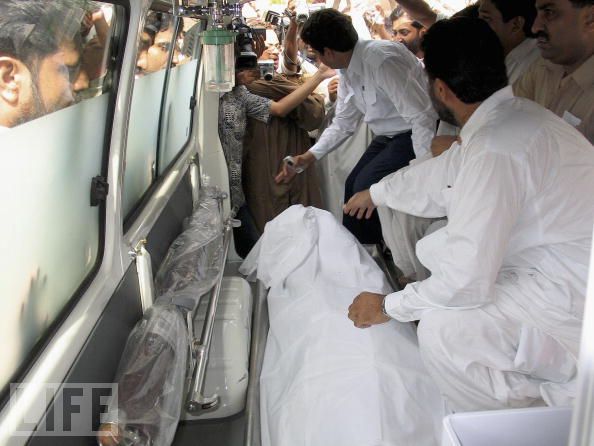
Religious, political and ethnic divisions have claimed hundreds of lives in Karachi, Pakistan’s largest city, but also influence the chances of survival for the injured.
A doctor in the emergency ward of Civil Hospital Karachi, one of the city’s largest public hospitals, told IRIN: “After a terrorism incident, we are under intense pressure. Earlier, we had the activists of various political parties threatening us in the emergency department to not treat the patients of their rival groups. They use all sorts of delay tactics, be it blocking the entrance to pounding on the doors and abusing the staff. Now, we also get calls [from the militants].”
The doctor, who asked not to be identified, added: “One ethnic-based party is so strong that it makes sure that the duty doctors are unable to carry out their work once the injured start arriving. We have doctors and other staff who are from that party within the premises. Time and again we have been told not to treat Pushtun injured, who are very easy to identify due to their language and beards. We already face a shortage of staff, medicines and medical equipment… It’s just a mess here. [But] all professionalism and ethics aside, how can you expect me to save someone when my life is in danger?”
According to a Human Rights Commission of Pakistan report released in July, 260 people have been killed in targeted killings since January 2010. The number continues to rise with 50 people killed so far in the latest wave of violence following a shooting rampage in Shershah Market on 19 October.
Turf war
The nub of the problem in Karachi is the ongoing turf war between the Muttahida Quami Movement (MQM) and the Awami National Party (ANP) for control of the coastal city. Both parties draw support from rival ethnic groups; the MQM’s vote bank is among largely Urdu speakers who migrated to Karachi after partition from India in 1947, while the ANP mainly represents Pushtuns.
Habib ur Rehman Soomro, secretary-general of the Pakistan Medical Association, acknowledged that sectarianism was rife in the health services. “I will not deny this occurrence. I live in this city and I know how things work. Refusing and delaying treatment in cases of emergency, especially after incidents of ethnic violence and terrorism, is a crime but all this is happening… Now the situation is such that all public hospitals in the city have the offices of MQM, PPP [the ruling Pakistan Peoples Party] and if it’s a Pashtun-dominated area, ANP.”
Shams Khan was injured on 3 August in the violence that erupted after the killing of MQM leader Raza Haider, which claimed 45 lives.
“I was shot in the leg by these boys near Lalo Khait. I made my way to Abassi Shaheed Hospital but they refused to treat me. I was practically thrown out of the facility by my beard as one of the doctors called me a Taliban. Bleeding, I made my way to JPMC [Jinnah Postgraduate Medical Centre]. I lost so much blood by the time the doctors attended to me. I now limp around and need a crutch to walk. The doctor told me that had I been treated earlier, it would not have happened.”
Soomro told IRIN that doctors were under constant threat. “Since the 1990s, there have been plenty of incidents of targeted killings of doctors killed on the basis of sect and ethnicity. Over 85 doctors have been murdered. First it was the Shia-Sunni issue, then the Pushtun-Mohajir issue, now it’s about sects. It’s just insane. Political affiliations need to be removed.”
A doctor at the JPMC, who asked not to be named, said: “We have seen days where doctors were beaten by angry political activists as well as the family members of the victims after a bomb blast… This cycle of madness will not end.”
Pakistanis for Peace Editor’s Note– We are unsure which is sadder, the inability of doctors in Pakistan’s biggest city to save lives without threat and or intimidation and violence against them, or that the very people giving these threats to the doctors are in fact linked to members of the two ruling political parties, who have been charged with being “leaders” of the country.


You must be logged in to post a comment.