Archive for the ‘ US Army ’ Category

Pakistani Parliament Approves Proposals on US Ties

As Reported By The Associated Press
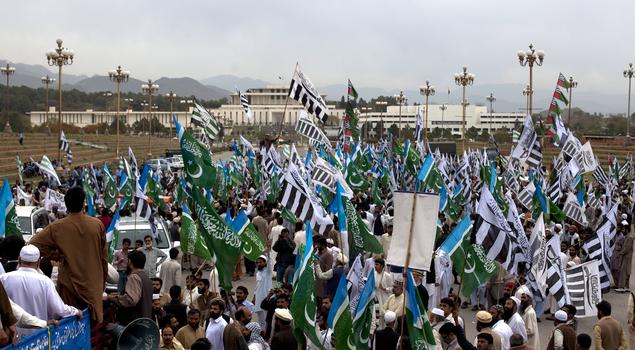
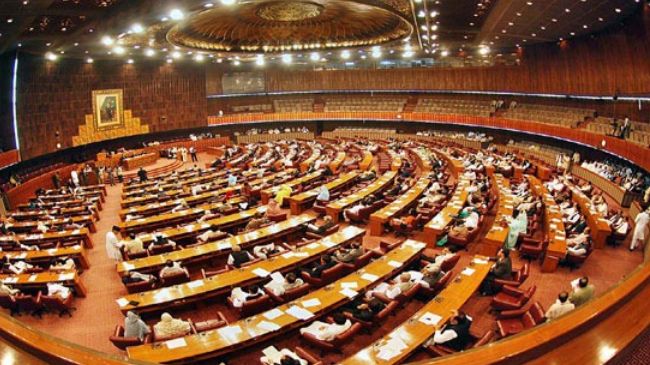
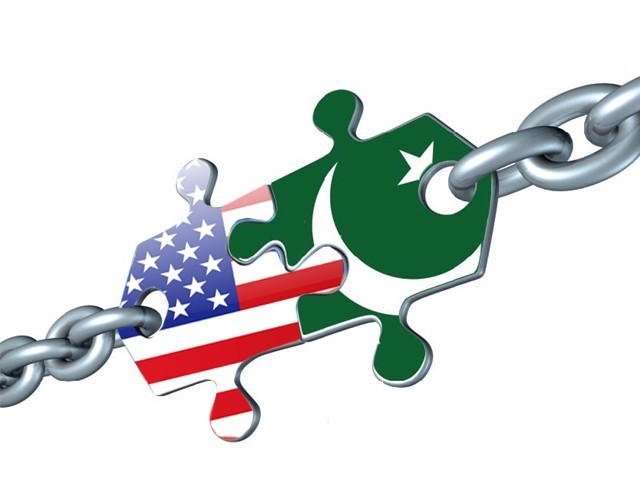
Pakistan’s parliament on Thursday unanimously approved new guidelines for the country in its troubled relationship with the United States, a decision that could pave the way for the reopening of supply lines to NATO troops in neighboring Afghanistan.

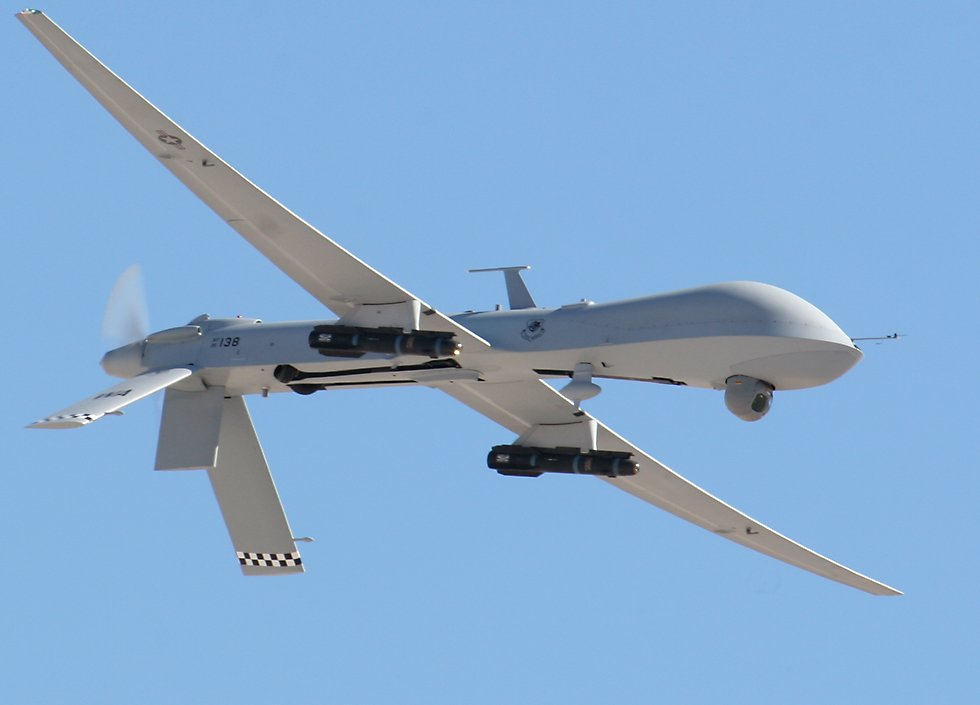
The guidelines allow for the blockade on U.S. and NATO supplies to be lifted, but also call for an immediate end to American drone strikes against militants on Pakistani soil.

However, the lawmakers did not make a halt in the CIA-led missile attacks a prerequisite to reopening the supply lines, as some lawmakers had been demanding. The government and the army will use the recommendations as the basis for re-engaging with Washington.

Ties between the U.S. and Pakistan all but collapsed in November after U.S. airstrikes inadvertently killed 24 Pakistani soldiers on the Afghan border, after which Islamabad blocked the supply lines in protest. Washington wants the relationship back on track.

The U.S. State Department expressed respect for the Pakistani parliament’s decision. “We respect the seriousness with which parliament’s review of U.S.-Pakistan relations has been conducted,” said State Department spokeswoman Victoria Nuland. “We seek a relationship with Pakistan that is enduring, strategic, and more clearly defined. We look forward to discussing these policy recommendations with the Government of Pakistan and continuing to engage with it on our shared interests.”

About 30 percent of supplies used by NATO and U.S. troops in landlocked Afghanistan are transported through Pakistan. Washington also needs Islamabad’s cooperation to negotiate an end to the Afghan war because many insurgent leaders are based on Pakistani soil.

The drones are a source of popular outrage in the country and have fueled anti-U.S. sentiment, although Pakistan’s powerful army has tacitly aided the missile attacks in the past, weakening Islamabad’s official stance that they are a violation of sovereignty.

Washington has ignored previous entreaties by the parliament to end the strikes, and is seen as unlikely to change its policy now.

Despite calls by Islamists for a permanent supply line blockade, few inside the Pakistani government or the army believed this was desirable, given that Pakistan relies on the U.S. and other NATO countries for its economic survival and diplomatic and military support.

Soon after the deadly airstrikes on the border, the Pakistani government called on parliament to draw up new guidelines for Islamabad’s relations with the U.S. The government’s move was widely seen as way to give it political cover for reopening the routes.

The national security committee presented a first set of proposals last month but opposition parties riding a wave of anti-American sentiment rejected them, seemingly unwilling to share any fallout ahead of elections this year or early next.

But on Thursday the opposition voted with government lawmakers to approve a revised set of guidelines, which differed little from the original ones. Opposition lawmakers didn’t explain why they had dropped earlier objections, but they could have come under pressure from the army or extracted other, unrelated concessions from the government.

The guidelines call for NATO and the U.S. to pay Pakistan more for the right to ship supplies across its soil and stipulate that no arms or ammunitions be transported. Western forces have only ever trucked fuel and other nonfatal supplies across Pakistan because of the risk they could fall into the hands of insurgents.

“We believe that the world has heard the voice of the people of Pakistan,” Prime Minister Yousuf Raza Gilani told parliament. “I would like to assure the house that our government will implement the recommendations that have been made in both letter and spirit.” Gilani did not say when the supply lines would reopen.

Western officials have said Pakistan would come under intense criticism if routes remained blocked during a NATO conference in Chicago on May 20-21 where more than 50 heads of state will discuss progress on ending the war.

Washington’s public line has been that it is waiting for the parliament to finish its review before calling for Pakistan to reopen the routes. It has refused to apologize for the border incident in November, and last week put a $10 million bounty on the head of a militant leader believed close to Pakistan’s security forces.

Behind the scenes, however, negotiations have been going on between the U.S. and Pakistan over the supply line issue and drone strikes. It was unclear whether there has been any new agreement on the strikes, which Washington believes are key to keeping al-Qaida on its back foot.

U.S. officials had said they had offered Pakistan notice about impending strikes and new limits on which militants are being targeted. For most of the Afghan war, 90 percent of the supplies came through Pakistan, but NATO has increased its reliance on an alternate, so-called “northern” route, through Central Asia in recent years.

Increased use of the northern route has removed some of the leverage Islamabad had over the West, but at a cost to the coalition.

Pentagon officials now say it costs about $17,000 per container to go through the north, compared with about $7,000 per container to go through Pakistan.

Rural Tinkerer Builds The First Airplane Made in Afghanistan

By Tom A Peter for The Christian Science Monitor

Afghanistan’s rural Ghazni Province usually appears on the news radar only to herald a tragedy: Five Polish soldiers were killed by a roadside bomb days before Christmas. A group of armed men accused a widow and her daughter of adultery in November and stoned the pair before shooting them in front of their home.

In other words, it’s not the sort of place you’d expect to find a hobbyist aviator in his backyard building what he describes as the first airplane ever designed and constructed in Afghanistan.

Yet, over the past three years Ghazni-native Sabir Shah managed to fashion a one-man “microlight,” aircraft at his family home using instructions from the Internet and parts from the local market.

While impressive compared with a Wright Brothers’ creation, the plane is far from a marvel of modern aviation. But Mr. Shah hopes it’s enough to inspire government support or private investment in Afghan aviation.

So far though, aside from modest, but passing interest from a few government officials, he’s received little attention. Most Afghans, including his own family, have called him crazy and told him to get a regular job. Still, Shah remains determined to create a business building airplanes for Afghanistan.

“I believe that if you want something, you can get it,” he says.

Shah is an unlikely candidate to be Afghanistan’s aviation advocate. A high school graduate with no pilot training nor aeronautical engineering background, he’d never even traveled by airplane when he started building one.

For Afghans wishing to learn how to fly, the options are extremely limited. The country has a fledging air force, but there are no other practical opportunities for pilot training. The Ministry of Transportation and Aviation offers flight classes, but ministry officials admit that few students actually take the courses because Afghan airlines almost exclusively hire foreign pilots with better training and more experience.

After high school, Shah considered going on to college. Yet even though public universities are free, his family couldn’t afford losing the extra pair of hands.
Given his circumstances it’s easy to understand why people were skeptical when Shah announced his plans to build a microlight airplane after seeing one featured on a documentary and doing a bit of Internet research.

“I didn’t have money and there was no one to help me,” says Shah. “Everyone was saying, ‘Have you studied about airplanes? Do you know anything about airplanes?’ I would say, ‘I have got some recommendations from the Internet.’ Nobody believed I could build it.”

Undeterred, Shah continued his research and worked a series of odd jobs to save up money for parts and equipment. As he progressed, friends and family donated money. An uncle in Australia gave him a vital $2,000 donation and even Afghan Vice President Abdul Karim Khalili contributed $1,000 when he learned of the project.

After three years, Shah had constructed a microlight airplane using a propeller he made himself, a small Toyota car engine, a homemade fiberglass body, a wing made of a metal frame and cloth, and some spare gauges he bought at the market for his instrument panel. The project cost Shah a total of $12,000, a small fortune here.

When it came time for his first test flight, the Afghan Ministry of Defense agreed to use a military helicopter to transport Shah and his plane to an airfield north of Kabul. The trip was the first time Shah had ever traveled by air. “I was frightened a little when I was looking down,” he says, recalling the trip.

Before Shah climbed into the pilot seat, a retired Afghan pilot who’d flown jets for the Soviets and now managed the airport gave him a few pointers. Otherwise, he was relying on manuals he’d collected on other microlight aircraft.

As his plane sped down the runway, his fear momentarily faded. The flight lasted less than a minute before he set it down on the runway again.

In a total of four takeoffs, his longest and last flight traveled about a quarter of a mile – nothing compared with professional tests, but 11 times farther than the original Wright Brothers’ flight. However, that final flight ended when he crash-landed just off the runway. Though he walked away from the crash, the plane was damaged beyond repair.

Considering that it’s been 64 years since a pilot first broke the sound barrier and 25 years since a plane circumnavigated the globe without stopping or refueling, Shah’s achievement may seem hardly worth mentioning. But his accomplishment is much less about the actual plane he built and more about his creativity and inventiveness in a country where innovation and ingenuity are in short supply after three decades of war.

“Innovation doesn’t mean anything in this country,” says Daoud Sultanzoy, a former member of parliament from Ghanzi, who has been a pilot since 1973 and is now starting his own airline. “We always look at the past and behind us instead of looking forward…. He’s a young man who must have used his own know-how to build his own airplane, which should be encouraged.”

Despite the challenges, Shah says he’ll keep working. If he can find a scholarship to study abroad he will, but he doesn’t know how to look for such an opportunity and doubts it will happen. For now, he hopes his initial success will attract investors as he endeavors to start his next project, an eight- to 10-seater airplane that he hopes can be used for domestic travel in Afghanistan.

Pakistanis for Peace Editor’s Note– What an amazing story of ingeunity and ambition that Sabir Shah demonstrates that should make all Afghans and Pakistanis proud. Just imagine what amazing talents could be nurtured with several billion dollars in seed money in start-ups in Kabul instead of all the money lost on wars~

Why President Zardari’s Visit Is A Small Bonus

By Soutik Biswas for The BBC

Hope is not a policy, but neither is despair, as South Asia expert Stephen Cohen says in a recent essay on Pakistan.

So it is with relations between India and Pakistan.

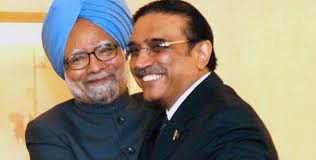
The past few days have shown how fragile the relationship can be – even as India welcomed President Asif Ali Zardari’s private trip to India on Sunday – the first by a Pakistani head of state for seven years – and PM Manmohan Singh invited him for lunch, the $10m US bounty for Hafiz Saeed, the founder of Pakistan-based militant group Lashkar-e-Taiba, provoked the cleric to openly launch a fresh attack against India (and the US).

But people live in hope, so Indian media is gung-ho about Mr Zardari’s visit.

They say the Pakistani president must be applauded for trying to end trade discrimination against India, easing petroleum imports from across the border, and moving towards a liberal visa deal.

“Under Mr Zardari’s watch, India and Pakistan are considering a sweeping agenda for economic co-operation for the first time in decades. The prime minister has every reason to welcome Mr Zardari warmly and consider the next steps in consolidating the unexpected movement in bilateral relations,” the Indian Express wrote.

Analyst C Raja Mohan believes Mr Singh must make an official trip to Pakistan after his meeting with Mr Zardari. “For his part,” he wrote, “Mr Singh should convey to Mr Zardari his readiness to move as fast and as far as the Pakistan president is willing to go.” Others like Jyoti Malhotra actually find Mr Zardari’s visit to the shrine of a famous Sufi Muslim saint in Rajasthan loaded with symbolism in these troubled times. “Clearly, Mr Zardari has stolen an imaginative moment from the bitter-sullen history of India-Pakistan, by asking to come to pay his respects to a cherished and much-beloved saint across the Indian subcontinent,” she wrote.

The relations between two neighbours remain complex. A 2010 Pew survey found 53% of the respondents in Pakistan chose India as the greater threat to their country, and only 26% chose the Taliban and al-Qaeda. At the same time 72% said it was important to improve relations with India, and about 75% wanted more trade relations and talks with India.

Pundits like Mr Cohen believe that it will “take the [Pakistan] army’s compliance, strong political leadership, and resolutely independent-minded foreign ministers to secure any significant shift of approach towards India”.

None of this appears to be in much evidence at the moment.

Both countries have seriously weakened governments that makes them unable to move towards any radical confidence building measures. In the current circumstances, President Zardari’s visit can only be a small bonus. And as scholars like Kanti Bajpai suggest, India must remain patient (even if faced with another Mumbai-style attack), continue to engage with Islamabad, help the civilian government in Pakistan politically, try to resolve a few outstanding disputes like Siachen and Sir Creek, build a relationship with the army and explore the possibility of cooperating with Islamabad on the future of Afghanistan. Despair does not help mend a stormy relationship.

Pakistani militant taunts US: ‘I will be in Lahore tomorrow’

By Sebastian Abbot for The Associated Press

One of Pakistan’s most notorious extremists mocked the United States during a defiant media conference close to the country’s military headquarters Wednesday, a day after the US slapped a $10 million bounty on him.

“I am here, I am visible. America should give that reward money to me,” said Hafiz Mohammad Saeed, referring to the fact that the bounty was given to a man whose whereabouts are not a mystery. “I will be in Lahore tomorrow. America can contact me whenever it wants to.”

Analysts have said Pakistan is unlikely to arrest Saeed, founder of the militant group Lashkar-e-Taiba, because of his alleged links with the country’s intelligence agency and the political danger of doing Washington’s bidding in a country where anti-American sentiment is rampant.

Saeed, 61, has been accused of orchestrating the 2008 attacks in the Indian city of Mumbai that killed 166 people, including six American citizens. But he operates openly in Pakistan, giving public speeches and appearing on TV talk shows.

He has used his high-profile status in recent months to lead a protest movement against US drone strikes and the resumption of NATO supplies for troops in Afghanistan sent through Pakistan. The supplies were suspended in November in retaliation for American airstrikes that accidentally killed 24 Pakistani soldiers.

Hours before Saeed spoke, US Deputy Secretary of State Thomas Nides met Pakistani Foreign Minister Hina Rabbani Khar in the nearby capital, Islamabad, for talks about rebuilding the two nation’s relationship. In a brief statement, Nides did not mention the bounty offer but reaffirmed America’s commitment to “work through” the challenges bedeviling ties.

Increasingly ‘brazen’ appearances
The US said Tuesday it issued the bounty for information leading to Saeed’s arrest and conviction in response to his increasingly “brazen” appearances. It also offered up to $2 million for Lashkar-e-Taiba’s deputy leader, Hafiz Abdul Rahman Makki, who is Saeed’s brother-in-law.

The rewards marked a shift in the long-standing US calculation that going after the leadership of an organization used as a proxy by the Pakistani military against archenemy India would cause too much friction with the Pakistani government.

This shift has occurred as the US-Pakistani relationship steadily deteriorated over the last year, and as the perception of Lashkar-e-Taiba’s potential threat to the West increased.

Bounty backfire?
The US may be hoping the bounty will force Pakistan to curb Saeed’s activities, even if it isn’t willing to arrest him. But the press conference he called at a hotel in the garrison city of Rawalpindi on Wednesday was an indication that is unlikely, and the bounty may even help him by boosting his visibility.

At the hotel, located near the Pakistani army’s main base and only a half hour drive from the US Embassy in Islamabad, Saeed was flanked by more than a dozen right-wing politicians and hardline Islamists who make up the leadership of the Difa-e-Pakistan, or Defense of Pakistan, Council. The group has held a series of large demonstrations against the US and India in recent months.

Some in the media have speculated the movement has the tacit support of the Pakistani military, possibly to put pressure on Washington.

“I want to tell America we will continue our peaceful struggle,” said Saeed. “Life and death is in the hands of God, not in the hands of America.”

Denies involvement in Mumbai massacre
He denied involvement in the Mumbai attacks and said he had been exonerated by Pakistani courts.

Pakistan kept Saeed under house arrest for several months after the attacks but released him after he challenged his detention in court. It has also resisted Indian demands to do more, saying there isn’t sufficient evidence.

The bounty offers could complicate US efforts to get the NATO supply line reopened. Pakistan’s parliament is currently debating a revised framework for ties with the US that Washington hopes will get supplies moving again. But the bounties could be seen by lawmakers and the country’s powerful army as a provocation and an attempt to gain favor with India.

Origins in the Kashmir dispute
Saeed founded Lashkar-e-Taiba in the 1980s allegedly with ISI support to pressure India over the disputed territory of Kashmir. The two countries have fought three major wars since they were carved out of the British empire in 1947, two of them over Kashmir.

Pakistan banned the group in 2002 under US pressure, but it operates with relative freedom under the name of its social welfare wing Jamaat-ud-Dawwa — even doing charity work using government money.

The US has designated both groups foreign terrorist organizations. Intelligence officials and terrorism experts say Lashkar-e-Taiba has expanded its focus beyond India in recent years and has plotted attacks in Europe and Australia. Some have called it “the next Al Qaeda” and fear it could set its sights on the US

* Associated Press writer Asif Shahzad contributed to this report from Islamabad.

Ornate, but not lavish: Another bin Laden home located in Pakistan

By Kathy Gannon for The Associated Press

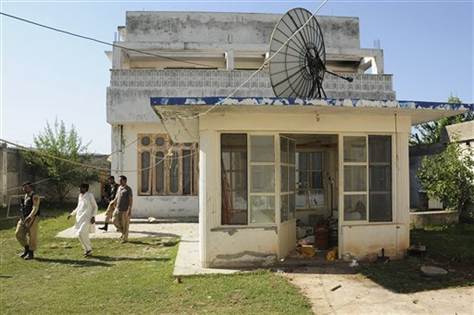
It’s an ornate but not lavish two-story house tucked away at the end of a mud clogged street. This is where Pakistan’s intelligence agency believes Osama bin Laden lived for nearly a year until he moved into the villa in which he was eventually killed.

The residence in the frontier town of Haripur was one of five safe houses used by the slain Al Qaeda leader while on the run in Pakistan according to information revealed by his youngest wife, who has been detained.

Retired Pakistani Brig. Shaukat Qadir, who has spent the last eight months tracking bin Laden’s movements, told The Associated Press that he was taken to the Haripur house last November by intelligence agents who located it from a description they got from Amal Ahmed Abdel-Fatah al-Sada.

Al-Sada, a 30-year-old Yemeni, has been in Pakistani custody since May 2 when US Navy SEALs overran the Abbottabad compound, killing bin Laden and four other people inside. Since then, Pakistan’s intelligence agency, known as the ISI, has been trying to uncover the trail that brought him to Abbottabad villa in the summer of 2005.

The best information appears to have come from al-Sada, who was believed to be his favorite and who traveled with bin Laden since his escape from Afghanistan’s eastern Tora Bora mountain range in 2001.

Qadir, a 35-year army veteran who is now a security consultant, was given rare access to transcripts of Pakistani intelligence’s interrogation of al-Sada and access to other documents on bin-Laden’s movements. He provided the AP with details in a recent interview.

The details of bin Laden’s life as a fugitive — which were first published by the Pakistani newspaper Dawn — raise fresh questions over how bin Laden was able to remain undetected for so long in Pakistan after the Sept. 11, 2001 attacks, despite being the subject of a massive international manhunt.

Yet a senior US official, who is familiar with the contents recovered in bin Laden’s Abbottabad house, said there was no evidence that Pakistani officials were aware of bin Laden’s presence. “There was no smoking gun. We didn’t find anything,” he said on condition of anonymity because he was not authorized to speak about the contents of the Abbottabad house

According to the interrogation report, bin Laden lived in five safe houses and fathered four children — the two youngest born in a public hospital in Abbotabad. But investigators have only located the houses in Abbottabad and Haripur.

Al-Sada’s descriptions of the homes have been vague and the Haripur house was found only after a series of hits and misses.

She knew only that it was located on the edge of Haripur, it was two stories and it had a basement. It apparently was used by bin Laden while he waited for construction crews to finish his new home Abbottabad, a garrison town just 20 miles away.

Investigators scoured the area looking for properties until they found the Haripur house in Naseem Town, a chaotic suburb where relatively affluent houses bump up against sun-baked mud huts that belong to nomadic Afghans.

Like the CIA, the Pakistani agency also tracked the movements of bin Laden’s Pakistani courier who used the pseudonym Abu Ahmed al-Kuwaiti and his brother. The two were ethnic Pashtuns from Pakistan’s Khyber Pukhtunkhwa province on the border with Afghanistan. They were bin Laden’s front men.

The ISI discovered that the Haripur house, like the land on which bin Laden’s Abbottabad villa was built, was rented by two Pashtun brothers claiming to be from Charsadda, a Pashtun dominated town about 80 miles away.

The AP located the Haripur house that Qadir said ISI agents had taken him to last November and found the real estate broker, Pir Mohammed, who rented the four-bedroom house to the two brothers, Salim and Javed Khan from Charsadda, for $150 a month.

At the time Pir Mohammed ran a small real estate firm called Mashallah. He said his meeting with the brothers was random.

“They must have seen my sign and come in,” Mohammed said, adding that he had met the brothers only three times — when they signed the contract, when they moved into the house, and when they moved out 11 months later.

Two months ago several ISI agents took all the records of the house and its tenants since its construction in 2000, said Qasi Anis Rahman, the brother of the widow who owns the house.

“All they said was that it was for ‘security purposes,'” said Rahman.

Al-Sada is currently in Pakistani custody, along with bin Laden’s two other wives and several children. They were arrested after the raid. The US Navy SEALs shot al-Sada in the leg during the operation.

Mohammed Amir Khalil, a lawyer for the three widows, said the women would be formally charged for illegally staying in Pakistan on April 2. That charge carries a maximum five-year prison sentence.

Pakistani Panel Demands End to US Drone Attacks, Apology for NATO Air Strike

As Reported By The Voice Of America

A Pakistani parliamentary committee — tasked with laying out new terms of engagement with the United States and NATO — on Tuesday demanded an end to U.S. drone strikes and an apology from Washington for a NATO strike last year that mistakenly killed 24 Pakistani troops.

The report, read to a joint session of both houses of parliament by committee chairman Mian Raza Rabbani, calls on the United States to review its activities and cease all drone attacks inside Pakistan.

Rabbani said that “drone strikes are counterproductive, cause loss of valuable lives and property, radicalize the local population, create support for terrorists and fuel anti-American sentiments.”

U.S. lawmakers, however, are rejecting those calls. Independent Senator Joe Lieberman told VOA the drone strikes are critically important to America’s national security, adding he does not believe they should stop.

Democratic Senator Dianne Feinstein, chairwoman of the Senate Intelligence Committee, said the drones are needed due to the lack of a more aggressive effort by Pakistan to root out terrorists and radical militants along its border with Afghanistan.

Republican Senator Lindsey Graham said that although sovereignty is a big issue for any country, he would like to see Pakistan embrace the idea that extremism has no welcome home in Pakistan. He said drone strikes have been effective and that, in his words, “it is not in Pakistan’s long-term interest to be seen by the world-at-large as a safe haven for terrorists.”

Rabbani also demanded an unconditional U.S. apology for the NATO airstrike in November that killed the 24 Pakistani soldiers. He said “the condemnable and unprovoked NATO/ISAF attack” represents “a breach of international law and constitutes a blatant violation of Pakistan’s sovereignty and territorial integrity.”

Washington has expressed regret for the loss of life and accepted partial responsibility for the airstrike, but has so far refused to apologize, saying NATO forces acted in self-defense.

Pakistani lawmakers are expected to eventually approve the panel’s recommendations. But, ultimately, Pakistan’s government and powerful army have the final say in the U.S.-Pakistani relationship.

U.S. State Department spokeswoman Victoria Nuland Tuesday said she would not comment on the issue until the process is completed.
Pakistani Foreign Minister Hina Rabbani Khar told reporters outside of Parliament that Pakistan needs to balance good diplomatic relations with its own interests.

Pakistan Wants U.S. Drones Out

By Indira A.R. Lakshmanan for Bloomberg News

Pakistan has told the White House it no longer will permit U.S. drones to use its airspace to attack and collect intelligence on Al-Qaida and other militants, according to officials involved.

Eliminating drone missions would aid the resurgence of extremist groups operating along Pakistan’s border with Afghanistan, said Peter Singer, author of “Wired for War: The Robotics Revolution and Conflict in the 21st Century.”

Pakistan’s ambassador to Washington, Sherry Rehman, met Vice President Joe Biden’s national security adviser, Antony Blinken, on Friday and told him that Pakistan’s political parties have agreed that the drone flights over Pakistan must end, officials involved said.

Pakistan’s sovereignty over its airspace and the civilian casualties that have resulted from drone strikes are emotional issues in Pakistan, where public opinion heavily favors terminating drone missions.

The only chance for a compromise, Pakistani officials said, may be if the United States agrees to share intelligence and coordinate strikes first. The United States has resisted giving information to Pakistan in advance because of fears that some in Pakistan’s security forces might warn the targets of impending strikes.

The drone program has been part of U.S. counter-terrorism strategy in Pakistan since 2004, officials and experts say. The administration authorized 53 drone attacks in 2009 and 117 in 2010, compared with 35 in 2008 under former President George W. Bush, according to Bill Roggio, a U.S. military analyst whose website, the Long War Journal, maintains a database of the campaign.

The drone program is “critical” because it provides better real-time surveillance and reconnaissance than satellite imagery does, Seth Jones, a senior political scientist for the RAND Corp. research institute, said in an interview.

Singer said that “for several years, Pakistan has openly said, ‘How dare you violate our sovereignty,’ but it turned out the CIA was flying from Pakistani bases with Pakistan’s permission.” This time, it’s possible “they really mean it,” after a series of high-profile disputes have damaged relations, Singer said.

Afghan Village Massacre Will Compound US Problem

By Amin Saikal for The Sydney Morning Herald

US forces are stumbling from one disaster to another in Afghanistan. The latest is the killing of at least 16 Afghan civilians by an American soldier in Kandahar province, the spiritual seat of the Taliban.

It comes shortly after the American burning of copies of the Koran that set off a week of riots across Afghanistan in which some 30 Afghans were killed. This latest incident is set to heighten anti-American sentiment in the country, with serious repercussions for the international forces and their Afghan partners.

President Barack Obama and the commander of the International Security Assistance Force, General John Allen, have profusely apologised and promised an immediate investigation. The perpetrator is described as a rogue soldier, who recently had a nervous breakdown. This is unlikely to placate many Afghans, especially in the ethnic Pashtun-dominated areas of southern and eastern Afghanistan, where the Taliban-led insurgency is at its peak. Nor will it deter the Taliban from capitalising on the incident to once again castigate the US and its allies as infidel occupiers, and the Karzai government as their stooge.

It is also bound to add to the complexity of the new strategic partnership that Washington and Kabul are currently negotiating to establish the parameters for US military-security involvement in Afghanistan after the US and its allies have withdrawn most of their troops from Afghanistan by 2014. While Karzai will find it expedient to become more demanding in the negotiations to show that he is not an American lackey, the Obama administration may need to make more concessions to Karzai, despite the fact that he has proved to be an incompetent and untrustworthy partner, who has continued to preside over a corrupt and dysfunctional government for more than a decade.

Rogue actions in conflicts are not unusual. There were many during the Vietnam War and the Soviet occupation of Afghanistan. The present US-led military involvement in Afghanistan has not been free of them either. An American soldier has just been convicted of premeditated murder of three Afghans two years ago.

American and ISAF troops have also been killed by rogue Afghan soldiers for one reason or another. However, what makes the latest incident alarming is that it has been enacted by a soldier who had a nervous breakdown, and yet was still on duty. He committed a massacre in a zone of insurgency where the Taliban had not been active for six months. Inhabitants across the region now will become more receptive to the Taliban than ever before.

All this does not augur well for a smooth withdrawal of foreign troops from Afghanistan, and the current efforts by Washington, and, for that matter, the Karzai government, to reach a political settlement with the Taliban as part of the US-led NATO exit strategy. As the anti-US and anti-Karzai government feelings escalate, the more they will play into the hands of the Taliban and their supporters, most importantly Pakistan’s notorious military intelligence, ISI, to drive a hard bargain. The Taliban and ISI have never found the situation more conducive to their belief that the final victory is ultimately theirs. All they now need to do is await the substantial drawdown of foreign troops and further ineffectiveness and humiliation of the Karzai government. As one Taliban commander joked: ”We have the time and the Americans have the watch.”

It is most unfortunate that after some $450 billion in military expenditure, more than $60 billion in reconstruction costs, and 3000 foreign troops, mostly American, killed, and thousands of Afghans sacrificed, stability, security and good governance still elude most Afghans. The biggest question that will confront the US and its allies by 2014 is: what was that all about?

If it was for the purpose of destroying al-Qaeda and its harbourers, the Taliban, this objective has not been achieved. Osama bin Laden is dead, as are many of his ranking operatives, but the network remains operative, especially in Pakistan, Iraq, Yemen, and Somalia. As for the Taliban, the US now wants to negotiate a political deal with the militia.

If it was for rebuilding and securing Afghanistan, this goal is nowhere near fruition. The country continues to teeter on the verge of the return of the Taliban to power and civil war, with the prospects of Afghanistan’s neighbours intensifying their scramble for influence.

Amin Saikal is professor of political science and director of the Centre for Arab and Islamic Studies at the Australian National University and the author of Modern Afghanistan.

Pakistan is a Nation at Odds With Itself, U.S.

By Stephen Magagnini for The Sacremento Bee

KARACHI, Pakistan — On a moonlit Thursday night in February, a television network executive hosted an elegant affair for journalists and diplomats at his villa above the Arabian Sea.

Karachi’s privileged dined on lamb, shrimp, chicken, mutton and fettuccine in mushroom sauce, and were surprised by a quartet of wandering minstrels, soulful Sufi poets who serenade for their supper, uncorking ballads about love.

On the south side of this city of 18 million, a group of Afghan refugees, who scrape out a living collecting cardboard and other recyclables in a slum straddling a swamp of open sewage, were mopping up gravy with roti – Pakistani bread.

About 900 Afghans live in this fetid slum, down the street from poor Pakistanis and water buffalo. They earn about $60 a month and survive on bottled water, chewing tobacco and roti.

“We’re happy in Pakistan,” said 33-year-old Shaezhad, leader of a cardboard collection station. “We get food and respect.”

At the party across town, talk-show hosts and other Pakistani elites blew cigarette smoke into the faces of U.S. journalists, criticizing U.S. foreign policy and the toll the war in Afghanistan has taken on their country.

Many Pakistanis resent American aggression in the region and want more respect from U.S. policymakers, but they don’t hold individual Americans responsible. Yet everywhere we went, we were held to answer for U.S. wars and Americans’ deep misunderstanding of Pakistan.

“You are arrogant, playing video games with our lives,” Abdul Moiz Jaferii, political analyst for CNBC Pakistan, said over lunch one day in Karachi. He was referring to U.S. drone attacks that have killed Pakistani and Afghan civilians.

“And we hate America because the U.S. has always been the biggest, closest ally of the military dictators. You have done nothing to help democracy.”

The impact of the war in Afghanistan has permeated nearly every pore of this country of 180 million. More than 2 million Afghan refugees have fled to Pakistan, and some have brought a culture of violence. Since 9/11, 35,000 Pakistanis have been killed in terrorist attacks by suicide bombers and other war-related violence, according to Pakistan’s intelligence agency. The victims include 6,000 soldiers and 29,000 civilians.

The unpredictable violence and the kidnapping of foreign workers have created a climate of fear in this country. We weren’t allowed to visit villages outside urban areas, where 40 percent of Pakistanis live. Two shotgun-wielding security guards protected our buses in Islamabad, Lahore and Karachi. We entered our hotels through metal detectors and were rarely allowed to interact with average citizens in public places.

Pakistan – strategically located between Afghanistan, India, China and Iran and influenced by Saudi Arabia – remains an enigma to many Americans, who aren’t sure whether it’s friend or foe, democracy or military dictatorship.

Pakistan has provided critical support to NATO troops in the Afghan war – drones are launched from here, NATO supplies are sent through this country, and Pakistani troops have helped recapture terrorist strongholds along the volatile Afghan border.

But distrust of the United States in the wake of deadly drone attacks and the deaths of 24 Pakistani soldiers in a cross-border battle in November is such that rather than calling for more U.S. aid to build needed power plants, schools and hospitals, a growing number of Pakistanis want nothing to do with the United States. The government of Punjab – Pakistan’s most powerful state with about 90 million people – has decided to reject U.S. aid.

The killing of Osama bin Laden by U.S. Navy SEALs in Abbottabad in the heart of this country embarrassed and angered the Pakistan military and made Americans question why bin Laden was allowed to live in essentially a resort town. Some U.S. politicians have called for an end to the $18 billion in financial aid pledged since 9/11.

An Islamic republic?

Some of the world’s largest, most beautiful mosques are here, and to celebrate the Prophet Muhammad’s birthday on Feb. 4, 10,000 people named Muhammad gathered in prayer in Karachi.

We saw few women wearing hijabs, or head coverings, except those at Islamabad’s Faisal Mosque, which can hold 10,000 people for Juma, or Friday prayer.

Professional women drive cars, dress like their counterparts in U.S. cities and run government ministries, clinics and newsrooms. Women, who constitute 52 percent of the population, are increasingly getting advanced degrees. There’s a Pakistani proverb: “Every girl who goes to university gets a husband.”

Despite Islam’s ban on liquor, at a party in Islamabad guests of both sexes repaired to a speakeasy in the basement to drink wine or Johnny Walker Black and smoke cigars.

Though most marriages are still arranged, as many as 20 percent are “love marriages,” said Samina Parvez, director general of the government’s external publicity agency. “The divorce rate is also increasing – it’s about 10 or 15 percent,” Parvez said. “The majority of us are not practicing Muslims.”

Kamoran Sani, sales and marketing director for the Sheraton Hotel in Karachi, declared, “What you’ve heard about the Islamic Republic of Pakistan’s a big farce. There are orgies, voyeurs’ lounges, raves.”

A diverse nation

Pakistan didn’t become a nation until the British sliced India into Muslim and Hindu majority states in 1947. Pakistan – an Urdu acronym for Punjab, Afghania, Kashmir, Sindh province and Baluchistan (“stan” means nation) – varies wildly from region to region.

“There is no such thing as Pakistan,” Jaferii said. “First comes your family, then your clan, third your region, fourth your province – the nation comes a distant fifth.”

Much of rural Pakistan is a feudal society dating back to the 13th century. Mullahs, or religious leaders, still invoke blasphemy laws exacting punishment against those accused of insulting Islam. Last year, the governor of Punjab was killed by his bodyguard for criticizing the law as he sought a pardon for a Christian woman sentenced to death.

But Pakistan has tremendous religious and ethnic diversity. Muslims include Sunnis, Shiites, Ismaelis, Ahmadis and Sufis – each practicing their own brand of Islam. At Lahore University of Management Sciences, I chatted with Muslims, Hindus and Christians who were all friends.

From the Sufi love poems to Pashtun folk songs about social justice, music plays a key role in Pakistani identity.

In the center of Karachi there’s a Catholic church – St. Patrick’s Cathedral, built by the Jesuits in 1931. There’s a Jewish cemetery. Sikhs worship throughout Pakistan. The ancient city of Taxila was occupied by Alexander the Great and reflects Persian, Moghul, Buddhist and Christian traditions.

Pakistan’s future

Sixty percent of Pakistan’s population is under age 30; half is under age 20. Half the kids haven’t been to school, and fifth-grade students are reading at a second-grade level, said Nadeem ul-Haq, deputy chairman of the government’s planning commission.

“We have 2 million kids a year entering the labor force. What are these kids going to do?” ul-Haq said. There is no building boom to provide jobs, and foreign investments have been scared away by terrorism.

“Entrepreneurship is the key thing we need to focus on,” he said. “Overseas Pakistanis have been very entrepreneurial, sending back $13 billion a year to their poorer relatives.”

From 7-Elevens to Silicon Valley firms and venture capital funds, ex-pat Pakistanis are thriving in the United States. The 500,000 Pakistanis in the United States, including 100,000 in California, send $100 million a year to charities in Pakistan, said Ahson Rabbani, CEO of I-Care, which connects donors with 30 nonprofits.

In Northern California, Pakistanis raised more than $100,000 for Pakistani flood relief efforts spearheaded by cricket star Imran Khan, who may lead the country if his party wins the next election. Khan has gained credibility by building a cancer hospital for the poor in honor of his late mother. His party includes a women’s wing that has direct access to him.

Philanthropy is playing a growing role in Pakistan, financing schools in poor villages and slums. The Citizens Foundation is educating 100,000 students.

“I mentored six girls,” said Karachi journalist Samia Saleem. “One was 13 and said she didn’t want to get married – she wants to be a teacher.”

Ali Shah Haider, 17, wants to be a commercial pilot. “I sleep from 2 p.m. until 4:30 p.m., then go to work at the textile factory from 8 p.m. to 5 a.m. to support my family – there are 12 of us. I do my homework between shifts.”

A nation’s dreams

Though life seems cheap in Pakistan, the people are upbeat survivors who often describe life as bo hat acha, which means “great!” in Urdu, their main language.

Last year 1,575 people were killed in Karachi, where 2 million weapons are in circulation, said Francisco Quinones of Arcis International Security. A doctor was killed in Karachi the day before we landed. Violence has been blamed on the Taliban, rival political gangs, Sunni and Shia militants, rogue security forces, and Afghan refugees.

Some refugees have been recruited by the Taliban. Others like Shaezhad, who collects recyclables in the slums of Karachi, are glad to be alive under the green and white crescent flag of this country.

Still, he wants to go home to Afghanistan. “We want our land back, we want to live with respect and we want employment.”

Azhar Abbas, the managing director of Geo TV news who hosted the party in Karachi, said that “democracy is taking hold” in his Pakistan despite the violence many here believe followed the U.S. war on terror.

The business editor of daily newspaper the News, Amir Zia, said the United States can still play a positive role in Pakistan. “If Americans pull out without getting the job done, the Islamic extremists will say it’s a victory and will become much more organized.”

But at the National Defense University, business and technology expert Bilal Munshi called Pakistan “a psychologically scarred nation suffering from a mass form of PTSD (post-traumatic stress disorder).”

If the 4 million young people entering the workforce each year get jobs, “we will be a power 
 but if they don’t see a future they’re going to pick up the gun, and you’re going to be in real trouble.”

The U.S. can help develop Pakistani schools, Bilal said, “but don’t interfere in our internal affairs – let us do things our way.”

Peace Effort Takes Karzai to Pakistan .

By Yaroslav Trofimov, Tom Wright and Adam Entous for The Wall Street Journal

Afghan President Hamid Karzai on Thursday met with Pakistan’s leaders, trying to gain Islamabad’s support for his peace outreach to the Taliban, as U.S. officials worked to keep expectations in check about the strategy’s prospects for yielding direct peace talks with the Islamic militant group.

The Taliban, meanwhile, denied Mr. Karzai’s claim that they have been negotiating with the Afghan government.On the first day of his three-day visit to Pakistan, Mr. Karzai met with Pakistani Prime Minister Yousuf Raza Gilani, who promised Pakistani cooperation in investigating the September assassination of the chief Afghan peace negotiator and voiced support for an Afghan-led peace process. Pakistan’s Army Chief of Staff Gen. Ashfaq Kayani, who wields considerable influence over the country’s foreign policy, also took part in the talks.

In Islamabad, Mr. Karzai reiterated that respect for the Afghan constitution and for women’s rights remain his “crucial conditions” for any future deal with the Taliban.

Defense Secretary Leon Panetta, who has been skeptical of reconciliation efforts in the past, at a Thursday news conference lauded Mr. Karzai’s remarks—made in a Wall Street Journal interview—about Kabul’s willingness to engage with the Taliban.

“What President Karzai’s statement confirmed is that Afghanistan is very much involved in the process of reconciliation and that is extremely helpful and important to determining whether or not we are ultimately going to be able to succeed with reconciliation or not,” Mr. Panetta said. “The news that Afghanistan has joined those reconciliation discussions is important.”

Mr. Panetta said he didn’t know whether additional three-way sessions between the U.S., the Afghan government and the Taliban have been planned.

Another senior Obama administration official remained cautious about whether such confidence-building contacts would translate into direct peace talks, calling the process “complicated and precarious.”

A day after Mr. Karzai told the Journal that Afghan government representatives have had contacts with U.S. and Taliban officials in an attempt to end the 10-year war, the Taliban said they had no intention of negotiating with “the powerless Kabul administration.”

“If someone met the Karzai administration representing the Islamic Emirate, he is an impostor,” said a statement by the Taliban leadership, which calls itself the Islamic Emirate of Afghanistan. The Taliban in the past denied reports of peace talks with the U.S., only to confirm them in recent months.

U.S. officials have confirmed Mr. Karzai’s remarks, saying at least one three-way negotiating session occurred in recent weeks.

Admitting negotiations with Kabul would be fraught will political risks for the insurgent leadership, possibly undermining the morale of Taliban fighters, and weakening the militants’ resolve amid coalition offensives.

The intensity of the conflict already declined dramatically in recent months, Afghan and coalition officials say, though it is unclear whether this drop is due to the spreading news about peace talks, unusually harsh winter weather, or a strategic decision by the Taliban to hold their fire as foreign forces withdraw.

Pakistan, which U.S. officials say provides shelter and support to the Taliban leadership, plays a crucial role in Afghanistan’s peace outreach.

Mr. Karzai’s relations with Pakistan neared a rupture point after the September assassination of former President Burhanuddin Rabbani, the peace negotiator, by purported Taliban peace emissaries. At the time, Afghan officials blamed the killing on Pakistan, something that Pakistani officials denied. Two suspects have since been arrested in Pakistan.

The White House wants to show progress on the reconciliation track before a May summit of North Atlantic Treaty Organization leaders in Chicago. There, NATO leaders are expected to announce plans to shift to a train-and-assist mission in Afghanistan in 2013, giving Mr. Karzai’s security forces the lead role in combat operations before most U.S. and NATO troops pull out at the end of 2014.

Where Pakistan fits into tentative peace talks with the Taliban remains unclear. The U.S. has not kept Islamabad informed about developments in the peace process, Pakistan civilian and military leaders claim.

U.S. and Afghan officials say they are concerned Pakistan might try to undermine peace talks. In January 2010, Pakistan detained a senior Taliban leader, Mullah Abdul Ghani Baradar. Afghan and U.S. officials claim Pakistan arrested him for contacting the U.S. and Mr. Karzai’s government without Pakistan’s knowledge, a claim denied by Pakistan.

Afghanistan has asked for Pakistan to transfer Mr. Baradar to Kabul, but this hasn’t happened so far. Pakistani officials deny they back the Taliban.

Pakistan will stay on the sidelines in the tentative peace process as long as the U.S. remains distrustful of Islamabad, said Imtiaz Gul, director of the Islamabad-based Center for Research and Security Studies.

“We’re not sure to what extent the U.S. wants Pakistan to play a role,” Mr. Gul said. “The Pakistani role at this moment seems very limited.”

Pakistan’s ability to play a meaningful part in talks has further been hampered by a deterioration in relations with U.S. after an American helicopter strike in November mistakenly killed 26 Pakistani soldiers along the Afghan border.

U.S. officials say they are still trying to hammer out an agreement with Taliban representatives on a sequence of confidence-building measures aimed at laying the ground for any future direct negotiations on ending the war.

In addition to the establishment of a political office for the Taliban in Qatar, the U.S. wants the Taliban to issue a statement distancing itself from international terrorism and to agree to stop fighting in certain areas of the country.

The U.S., in turn, would transfer of up to five Taliban militants held at the U.S. military prison in Guantanamo Bay, Cuba, to Qatar. Key U.S. lawmakers have raised objections to the prospective prisoner transfers.

Officials have identified the five Guantanamo detainees who may be transferred to Qatar as Muhammad Fazl, a former senior Taliban defense official; two former local governors, Khairullah Khairkhwa and Noorullah Nori; former Taliban intelligence official Abdul Haq Wasiq; and top Taliban financier Muhammad Nabi.

Messrs. Haq Wasiq, Fazl and Nori were among the first 20 detainees who arrived at Guantanamo Bay 10 years ago, when the prison was opened on Jan. 11, 2002.

The U.S. has received assurances from Qatar that the five militants, if transferred, won’t be released by the government or handed over to the Taliban. But officials said the men could be freed later as part of a future Afghan-Taliban peace deal.

Punishing Pakistan Is Not The Way To Go

By Nancy Birdall for Foreign Policy

In the January/February 2012 issue of Foreign Affairs, Stanford political scientist Stephen Krasner claims that “current U.S. policy toward Pakistan has failed” and recommends that the United States take a radically different approach: credibly threaten to sever all forms of cooperation, including all U.S. aid – military and civilian – to force Pakistan into cooperating with the United States on security matters. Center for Global Development President Nancy Birdsall responds.

Stephen Krasner (“Talk Tough to Pakistan: How to End Islamabad’s Defiance,” Jan/Feb 2012) wants to change the Pakistani government’s behavior. He argues that its failure to cooperate with the United States on Afghanistan and on terrorism is not due to its weakness as a state. Instead, it is a rational response of Pakistan’s military leadership, whose priority is to defend itself against India – with a nuclear deterrent and support for terrorists and the Afghan Taliban. Therefore, the only way the United States can win cooperation from Pakistan is to threaten “malign neglect”- cut off military and civilian assistance, sever intelligence cooperation, maintain and possibly escalate drone strikes and initiate unilateral cross-border raids. If that isn’t enough, then the U.S. could move on to “active isolation” — declare Pakistan a state sponsor of terrorism, making it a pariah, and impose sanctions.

If only it were this easy. Krasner fails to mention that the U.S. has tried this approach before. In the 1990s it cut off military and civilian assistance to Pakistan and imposed sanctions in an effort to dissuade Pakistan from developing a nuclear capability. We all know how that story ended. But let’s suppose this time the threats or the follow-through worked and brought the military and intelligence establishment to heel in Pakistan. Let’s suppose the United States got what it wanted on the security front – helping assure a timely U.S and NATO withdrawal from Afghanistan. Would that solve the problem Pakistan poses for America’s security in the long run? No.

What Krasner doesn’t say is that the U.S. wants something more than compliance from Pakistan’s military and intelligence communities with its immediate security needs. The U.S. wants a capable and stable civilian government that plays by the rules of the international community. It wants a democratic state that would not abuse and misuse its nuclear capability and that would find its way to peaceful relations with India.

In other words the U.S. has a long-run vision for Pakistan, very much in its own interests, as well as a set of short-term demands. In the 2009 Enhanced Partnership with Pakistan Act (known as Kerry-Lugar Berman, or KLB) Congress recognized the resulting need for a two-track approach. That legislation made U.S. security assistance (not actually authorized in the legislation) conditional on Pakistani cooperation on security matters. But its fundamental purpose, and the money it authorized for civilian aid, was the rebuilding of a serious partnership with the civilian government and the people of Pakistan. With KLB as the framework, since 2009 the Obama Administration has engaged fully with the civilian government and with civil society and private sector leaders in Pakistan on a range of issues — energy, water, agriculture, macroeconomic issues, private investment and trade.

In short, the purpose of U.S. civilian aid to Pakistan is to help build a better state. It is not to bribe or reward the “government” (neither the military nor the civilian leadership). Withholding military aid would likely not punish the military anyway. It would, however, reduce the resources available to the civilian government, since the evidence is that the military can get what it wants from the government’s overall available resources. And withholding civilian aid obviously would not punish the military. It would, however, take away a modest tool of America – investing to educate kids, create jobs, and strengthen civil society and representative institutions and thus give Pakistan a better shot at becoming a stable, prosperous and democratic country in the long term.

There are of course real questions about the effectiveness of U.S engagement with the civilian government – with aid and dialogue – given the prevailing suspicion there of U.S. motives, the inherent difficulties of operating in a complex and insecure environment, and the bureaucratic shortcomings of the U.S. aid system itself. But then those are reasons to put relatively more emphasis on other forms of engagement: trade, investment, and encouraging the normalization of relations with India. They do not warrant bullying the weak civilian government that the U.S. wants to strengthen.

Krasner begins and ends his article by invoking the testimony of former chairman of the Joint Chiefs of Staff Admiral Mike Mullen during his last appearance before the Senate Armed Services Committee. Krasner is right in pointing out that Mullen was critical of Pakistan’s role in supporting extremist organizations and the need to get tough with Pakistan. Yet, Krasner fails to mention the conclusion Mullen reached in his statement. Mullen recognized that the U.S. has a variety of objectives in Pakistan and the region, and that by focusing too intensely on short term interests, the U.S. will end up short-changing itself over the long haul: “We must also move beyond counter-terrorism to address long-term foundations of Pakistan’s success – to help the Pakistanis find realistic and productive ways to achieve their aspirations of prosperity and security.” Mullen concludes, “Isolating the people of Pakistan from the world right now would be counter-productive.”

Nancy Birdsall is the founding president of the Center for Global Development, a Washington, DC based think tank.

How Pakistan Continues to Help US Drone Campaign Despite Political Tensions

As Reported by Reuters

The death of a senior Al-Qaeda leader in a US drone strike in Pakistan’s tribal badlands, the first strike in almost two months, signaled that the US-Pakistan intelligence partnership is still in operation despite political tensions. The Jan 10 strike-and its follow-up two days later- were joint operations, a Pakistani security source based in the tribal areas told Reuters. They made use of Pakistani “spotters” on the ground and demonstrated a level of coordination that both sides have sought to downplay since tensions erupted in January 2011 with the killing of two Pakistanis by a CIA contractor in Lahore.

“Our working relationship is a bit different from our political relationship,” the source told Reuters, requesting anonymity. “It’s more productive.” US and Pakistani sources told Reuters that the target of the Jan 10 attack was Aslam Awan, a Pakistani national from Abbottabad, the town where Osama bin Laden was killed last May by a US commando team.

They said he was targeted in a strike by a US-operated drone directed at what news reports said was a compound near the town of Miranshah in the border province of North Waziristan. That strike broke an undeclared eight-week hiatus in attacks by the armed, unmanned drones that patrol the tribal areas and are a key weapon in US President Barack Obama’s counter-terrorism strategy.

The sources described Awan, also known by the nom-de-guerre Abdullah Khorasani, as a significant figure in the remaining core leadership of al Qaeda, which US officials say has been sharply reduced by the drone campaign. Most of the drone attacks are conducted as part of a clandestine CIA operation.

The Pakistani source, who helped target Awan, could not confirm that he was killed, but the US official said he was. European officials said Awan had spent time in London and had ties to British extremists before returning to Pakistan. The source, who says he runs a network of spotters primarily in North and South Waziristan, described for the first time how US-Pakistani cooperation on strikes works, with his Pakistani agents keeping close tabs on suspected militants and building a pattern of their movements and associations. “We run a network of human intelligence sources,” he said. “Separately, we monitor their cell and satellite phones. “Thirdly, we run joint monitoring operations with our US and UK friends,” he added, noting that cooperation with British intelligence was also extensive. Pakistani and US intelligence officers, using their own sources, hash out a joint “priority of targets lists” in regular face-to-face meetings, he said. “Al-Qaeda is our top priority,” he said. He declined to say where the meetings take place. Once a target is identified and “marked,” his network coordinates with drone operators on the US side. He said the United States bases drones outside Kabul, likely at Bagram airfield about 25 miles (40 km) north of the capital. From spotting to firing a missile “hardly takes about two to three hours”, he said.

It was impossible to verify the source’s claims and American experts, who decline to discuss the drone program, say the Pakistanis’ cooperation has been less helpful in the past. US officials have complained that when information on drone strikes was shared with the Pakistanis beforehand, the targets were often tipped off, allowing them to escape. Drone strikes have been a sore point with the public and Pakistani politicians, who describe them as violations of sovereignty that produce unacceptable civilian casualties. The last strike before January had been on Nov 16, 10 days before 24 Pakistani soldiers were killed in what NATO says was an inadvertent cross-border attack on a Pakistani border post. That incident sent US-Pakistan relations into the deepest crisis since Islamabad joined the US-led war on militancy following the Sept 11, 2001 attacks. On Thursday, Pakistani foreign minister Hina Rabbani Khar said ties were “on hold” while Pakistan completes a review of the alliance.

The End of a Geopolitical Affair

By Pramit Pal Chaudhri for The Hindustan Times

In Pakistan’s current crisis, why is its military is so reluctant to consider simply seizing power? One reason is that General Ashfaq Pervez Kayani cannot count on the US looking the other way. At a minimum, Washington would have to slap sanctions on an economically faltering country. At a maximum, it would be the last straw in a bilateral relationship at its lowest ebb since it was first woven in the 1950s.

Pakistan’s establishment claims it has been used and abused by the US, the most serious violation being that country’s stealth attack on Abbottabad that led to Osama bin Laden’s death. There has been the Raymond Davies affair, the endless drone attacks and the increasingly public accusation of double-dealing by senior US officials – the most notable being Admiral Mike Mullen’s linking of the Inter-Services Intelligence with terrorist groups.

There is some satisfaction for India in all this. It has been persistently claiming the existence of a military-terrorist nexus. Many in Washington agree. After Abbottabad, there is no one in Washington who doesn’t. The US-Pakistan relationship, says Daniel Twining of the German Marshall Fund, “was really at a historic high for the past decade but is diminishing.” But it might not matter as much to the US if relations fall apart, he says.

Other events are undermining the basis of the US-Pakistani bond. Islamabad had expected the US to totally retreat from Afghanistan, leaving Pakistan’s Taliban allies in charge. Instead, the US will leave a substantial force behind along with many drone bases. The US is talking with the Taliban, but only desultorily with groups that Islamabad patronises.

With the US Congress also pulling the plug on aid to Pakistan, what is left? The answer is nukes. “If Pakistan didn’t have nuclear weapons, with Al Qaeda almost gone, no one would care a fig about that country,” said one ex-US ambassador to the region. As they realise this, Islamabad is getting more paranoid about the security of its “strategic assets.” The more unstable they look, the more willing the US will be to try and do something risky to salvage Pakistan’s nuclear weapons.

US officials are talking about a “new normal” in their Pakistan relations. This would cut ties to the bare bones: counterterrorism cooperation, limited military transit requirements, Afghan talks, narcotics and some humanitarian assistance. “We’ll have to work with the Pakistan military on a limited basis while negotiations with the Taliban proceed,” says John Schlosser, a former state department South Asia hand.

There seems to be no real understanding among Pakistanis that their leverage is dwindling or how much Abbottabad vapourised their credibility in the US. A parliamentary committee report on how to change the US relationship bizarrely demanded, for example, a civilian nuclear agreement.

It could get worse. “The relationship will fall further if the US finds [Al Qaeda chief] Zawahiri in Pakistan. Or there are terror strikes on India or the US,” says Bruce Riedel, former AfPak advisor to Barack Obama.

The worst thing is that Washington is decoupling just at a time when Pakistan, economically and otherwise, can least afford to lose their most generous international partner.

Early Elections Seen as Possible Solution to Pakistan’s Political Crisis

By Saeed Shah for The Miami Herald

Pakistan’s political crisis, which pits its president against determined opponents in foes in Parliament, the Supreme Court and the military, is likely to reach fever pitch on Monday with a confidence vote scheduled in Parliament and hearings scheduled in two critical court cases.

The crisis is so intense that President Asif Zardari’s administration may be willing to call elections for as soon as October, according to members of his ruling coalition and its advisers. But that may not be enough to mollify the opposition, which wants earlier elections, or the country’s powerful military establishment, which is believed to be trying to force a so-called “soft coup,” under which Zardari, a critic of the military’s traditional dominance of Pakistan, would be forced out by Parliament or the courts.

The threat of an outright coup also hangs over the crisis, if the politicians cannot find a way out or the court proceedings reach absolute stalemate.

Whether the government can reach agreement with opposition leader Nawaz Sharif is unclear. Zardari’s Pakistan Peoples Party doesn’t want to announce elections until after voting in March for a new Senate, which the PPP is widely expected to win. But Sharif would like the new elections to be in the summer, perhaps June, which would require an earlier announcement.

“There is no other option for the government to come out of the current crisis without elections,” said an adviser to the PPP leadership, who spoke on condition of anonymity because of the sensitivity of the issue, as did the other coalition members. “It is in the interests of the PPP to reach an agreement with Nawaz.”

The PPP rules with three major coalition partners, but the alliance is looking shaky. Two of the parties, the Muttahida Quami Movement (MQM) and the Pakistan Muslim League-Q, have distanced themselves somewhat from the government.

A senior member of the coalition said the parties so far have agreed internally only to a general election to be held in October. That would be just a few months before the February 2013 date when Parliament would complete its five-year term and elections would have to be held anyway.

An early election should also placate the courts and the military. A supposedly neutral caretaker government would have to be installed to oversee a three-month electioneering period.

Another coalition member said: “It is 100 percent certain that there will be elections in 2012. The only solution is elections. It doesn’t matter whether they are held in June or October.”

Zardari’s coalition itself brought Monday’s confidence vote resolution to Parliament, cleverly wording it so that it asks for support not for the prime minister or even the government, but for democracy. That makes it difficult to oppose.

But the PPP’s troubles in Parliament are only one of the fronts in its battle for survival. The courts and the military are both maneuvering against the party’s leaders, with two explosive cases coming up for hearings Monday.

The first stems from a 2007 decree by President Pervez Musharraf that granted immunity from prosecution to Zardari and other exiled PPP politicians in an effort to persuade them to return to Pakistan to participate in elections that Musharraf was being pressured by the United States to hold.

The Supreme Court later ruled, however, that the decree was illegal and demanded that the government reopen corruption charges against Zardari stemming from the time when his wife, the assassinated PPP leader Benazir Bhutto, was prime minister.

The government declined, however, and now the court has summoned the government to explain its actions. The court could declare Prime Minister Yousaf Raza Gilani in contempt of court, which would in effect remove him from office.

The other case involves the the scandal in which a judicial commission is investigating allegations that Husain Haqqani, a close Zardari adviser and former ambassador to the U.S., wrote a memo that was passed to U.S. officials in May. That memo offered to replace the Pakistan military’s top officials in return for U.S. support should the military attempt to push Zardari aside.

Haqqani, who was forced to resign, says he had nothing to do with the memo, which the military has said amounted to treason.

The judicial commission may take testimony this week from an American businessman, and occasional news commentator, Mansoor Ijaz, who claimed that he had delivered the memo to U.S. officials, in a column that appeared in the British newspaper the Financial Times in October. Ijaz has said he will show up as a witness, though he apparently has yet to receive a visa to enter Pakistan.

New Year’s gift: Obama signs bill freezing aid to Pakistan

As Reported By Reuters

President Barack Obama signed a sweeping US defense funding bill on Saturday which includes new sanctions on financial institutions dealing with Iran’s central bank, and curtailing up to $850 million in aid to Pakistan. The bill was signed despite concerns about sections that expand the US military’s authority over terrorism suspects and limit his powers in foreign affairs.

The massive defense bill Congress passed on earlier in December freezes 60 per cent of the $850 million aid, or $510 million, until the US defense secretary provides lawmakers with assurances that Pakistan is working to counter improvised explosive devices (IEDs). US lawmakers say that many Afghan bombs that kill US troops are made with fertilizer smuggled by militants across the border from Pakistan into Afghanistan.

“The fact that I support this bill as a whole does not mean I agree with everything in it,” Obama said in a statement, citing limits on transferring detainees from the US base at Guantanamo Bay, Cuba, and requirements he notify Congress before sharing some defense missile information with Russia as problematic.

The bill, approved by Congress last week after its language was revised, aims with its Iran sanctions to reduce Tehran’s oil revenues but gives the US president powers to waive penalties as required. Senior US officials said Washington was engaging with its foreign partners to ensure the sanctions can work without harming global energy markets, and stressed the US strategy for engaging with Iran was unchanged by the bill.

The bill may also prove problematic for Pakistan in ways other than providing assurances of concrete steps to counter the manufacture of IEDs. The sanctions placed on dealing with Iran’s central banks may weigh on Pakistan’s plans for the Iran-Pakistan pipeline which aims to provide gas to Pakistan.

Pakistan needs the gas supplies from Iran to augment its own gas reserves which have been shrinking fast, leading to widespread gas shortages affecting its industry and daily life.