Archive for the ‘ US Army ’ Category

11/11/11: Luck, Mysticism and Conspiracy of Rare Perfect Palindrome

By The National Post Staff

Regardless of how you keep the date — year/month/day? month/day/year? — 11/11/11 is a rare day on the Western calendar when six of the same number line up, capturing the fancy of numerologists, conspiracy theorists and textile lovers (more on this later) alike. Below, some of the ways the world is marking November 11, 2011.

Remembrance

The most solemn meaning of November 11? Remembrance, as much of the globe pauses in honour of those who fought — and those who fell — in various conflicts around the world. As most who paid attention during their school’s Remembrance Day ceremony know, the date’s origins come from signing of the armistice ending World War I on the eleventh hour of the eleventh day of the eleventh month — November 11, 1918.

Luck

In China, couples flocked to registry offices to marry on Friday in the belief that the “11/11/11” date is the most auspicious in a century. November 11 has been celebrated as an unofficial “singles’ day” in China since the 1990s — as the date is composed of the number one — and it is seen as a good day to marry and leave the single life behind. But this year is viewed as particularly special because the year also ends in the number 11. More than 200 couples packed into a marriage registration office in downtown Shanghai Friday morning, some having lined up for hours before its doors opened to ensure they were among the first to marry.

Shanghai alone had more than 3,300 couples who booked to marry on Friday, but the final tally could be higher as it does not include people who walk-in unannounced, a civil affairs bureau spokeswoman told AFP. Other Chinese cities reported a similar mania for marriage. In the eastern city of Nanjing, more than 3,000 couples planned to marry on Friday, ten times the usual daily average, the official Xinhua news agency said. More than 1,300 pairs will tie the knot in eastern Hangzhou city.
Conspiracy

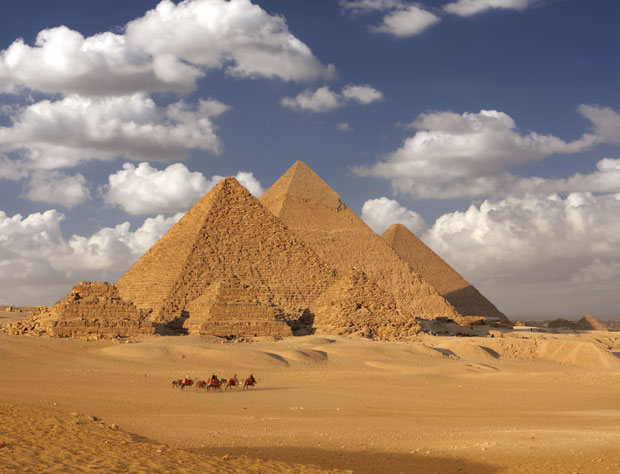
Egypt will close the Great Pyramid of Giza on Friday to avoid any rituals by a group rumoured to have plans to mark the date of 11/11/11 at the site, an official said. The decision came “after much pressure” from Egyptian Internet users that strange rituals were going to be held “within the walls of the pyramid on November 11, 2011,” Atef Abu Zahab, head of the Department of Pharaonic Archaeology, told AFP.

The Supreme Council of Antiquities confirmed the closure Friday of the tourist site, in a statement that only referred to the need for maintenance following a busy period during Muslim holidays.

The Pyramid of Cheops is the biggest and most famous of the three Giza pyramids. It houses the tomb of Pharaoh Khufu, and is the only surviving one of the seven wonders of the ancient world.

Mysticism

Thousands of people plan to meet at the time around the world for ceremonial dances, and several pages devoted to the date have appeared on social networking website Facebook.

Some attribute the number 11 to paranormal powers that provide a channel of communication with the subconscious, others see a mystical connection between the number and disasters, like the 9/11 attacks on the United States.

Corduroy

It’s not just a day for solemnity and subconscious-channeling — what about the fabric that has given so much plush joy to the world? The folks at the Corduroy Appreciation Club havedeclared November 11, 2011 The date which most closely resembles Corduroy, EVER. In honour of this extremely important occasion — the culmination of an 11-day celebration that includes protests against that sinister, smooth rival, velvet and a “mass waling” — members are assembling in New York. They will be required to don at least three (not two!) items of corduroy. Activities will include “Dark Secret Rituals,” “Presentation of Awards for Exemplary Usage of Corduroy,” “Singing, Dancing and Poetry inspired by Corduroy,” and, we suspect most crucially, an open bar.

 

Marketing

Much like 9-9-99, 01-01-01 and 09-09-09, 11-11-11 is a great date for marketers. Several companies, including Taco Bell and Energizer had huge promotions based around the easy-to-remember date. Probably the most notable North American promotion was the release of Elder Scrolls V: Skyrim, a massive role playing video game, which switched its launch date from the traditional Tuesday to Friday to get the 11-11-11 date. The fact that the date is an American holiday, Veteran’s Day, is also fueling ad dollars. From the NYT:

Ads that hinge on a special date are an example of a marketing tactic called borrowed interest, in which advertisers try to involve themselves in big, topical events that the proverbial “everyone” is talking about. It is the hucksters’ equivalent of candidates far down on the ballot attempting to win by riding the coattails of those at the top of the ticket.
Births

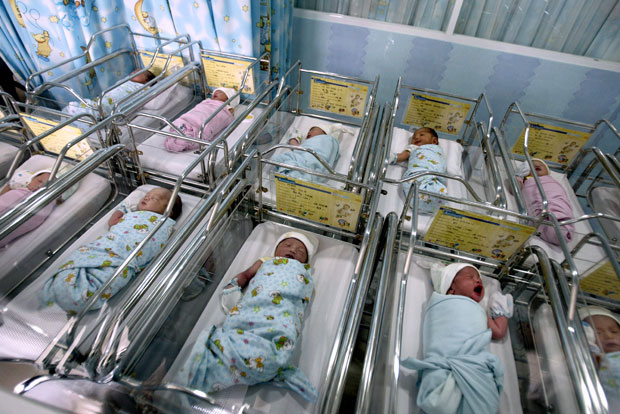
Marketers aren’t the only ones looking to cash in — several Des Moines, Iowa women hope to get a refund on their obstetrician’s fee by giving birth on 11/11/11. Reports the Des Moines Register:

Dr. Ross Valone announced last February — nine months ago — that he would put the fee money into a bank account in the baby’s name, with the stipulation that the child could withdraw the money upon turning 21. His fee usually runs from $900 to $2,000, depending on the case and the insurer. Valone said Wednesday that he is scheduled to perform cesarean sections Friday on two women who delivered that way in the past. He also is scheduled that day to deliver a baby for a woman who plans to have an induced birth.

With files from Agence France-Presse
Pakistan, India take Another Cautious Step Forward

By Alex Rodriguez and Mark Magnier for The Los Angeles Times


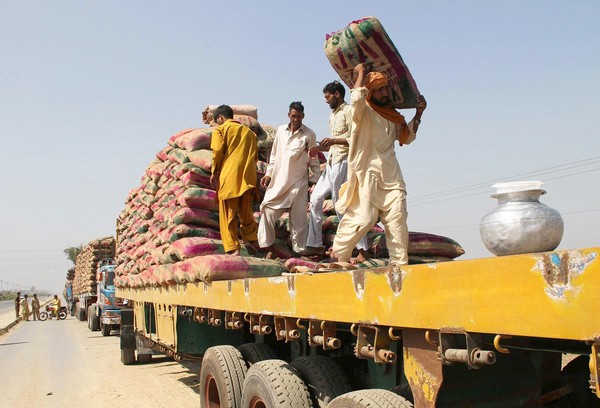
In cautious increments, nuclear archrivals Pakistan and Indiahave been easing the pall of tension that has overshadowed the two nations in recent years, as Islamabad increasingly worries about another neighbor: volatile Afghanistan.

The latest move toward rapprochement came last week, when the Pakistani Cabinet announced it would normalize trade relations with India by granting its longtime foe “most favored nation” status.

The designation has practical ramifications, including the elimination of discriminatory pricing and mutual imposition of lower tariffs and high import quotas. More important, however, it marks the latest in a series of decisions and events that signals a warming in relations between two countries that have fought three wars since their independence after the 1947 partition of British India.

Driving the move toward improved relations with India is Pakistan’s belief that strained ties with traditional allies such as the U.S. and Afghanistan are leaving it increasingly isolated, analysts say. India and Afghanistan signed a strategic partnership pact last month that included the training of Afghan troops by Indian forces — a move that rankled Islamabad.

The steps between the two South Asian neighbors have been small yet striking.

After an Indian military helicopter flying in bad weather strayed into Pakistani-controlled territory Oct. 23, Pakistani troops promptly released the aircraft and its crew and returned them to India, averting a crisis. Earlier this year, the two countries also resumed peace talks scuttled by the 2008 attacks in Mumbai that killed 166 people. Pakistani militants carried out the attacks, and India has accused Pakistan’s ISI spy agency of involvement in the assault.

Both countries are also discussing a deal that would allow Pakistan to import electricity from India to relieve massive power shortages crippling the Muslim nation’s economy. In addition, India didn’t oppose Pakistan’s nonpermanent seat on the United Nations Security Council last month, which passed by a single vote. And, earlier this year, New Delhi didn’t fight a European Union bid to allow duty-free imports of Pakistani textiles, even though it would cost competing Indian textile makers an estimated $1 billion a year in lost sales.

Experts warn that major roadblocks still loom. At the top of that list is the divided Himalayan region of Kashmir, claimed by both countries and the cause of two wars since 1947. A dispute over water rights remains unresolved, and New Delhi continues to accuse the ISI of backing militant groups that target India.

Still, bolstering trade relations between the two countries, said Zafar Hilaly, a former Pakistani ambassador to the U.S., “is a good first step. It shows a genuine feeling within Pakistan that the relationship should be normalized.”

Particularly significant is the Pakistani military’s decision to endorse granting MFN status to India. Foreign policy remains the purview of Pakistan’s security establishment, especially when it comes to the country historically regarded by the military as its chief enemy.

“All the stakeholders, including the military … are on board,” Pakistani Information Minister Firdous Ashiq Awan said in announcing the decision. “Such a big step could not be taken alone.”

The military’s backing of MFN status for India, Hilaly said, likely represents a realization that an easing of tensions with New Delhi may now be in Pakistan’s best interests, particularly at a time when relations with Washington and Kabul have soured. Both the U.S. and Afghanistan assert that their efforts to battle Afghan Taliban insurgents have been hampered by Pakistan’s backing of the insurgency there, a charge that Islamabad denies.

“What has happened is that, with respect to issues that the military faces, the priorities have changed,” Hilaly said. “India is still the main culprit as far as security is concerned, but the eastern front is much less active than the one developing in Afghanistan.”

Officials in Washington have been encouraged by the movement toward trade normalization between Islamabad and New Delhi, especially because economic interdependence is seen as an ideal path toward stability in South Asia. Testifying before the House Foreign Affairs Committee last month, Secretary of State Hillary Rodham Clinton called the Pakistan-India relationship “the real game-changer in the region.”

“We have in Pakistan today a leadership, both civilian and military, that wants to see progress with India, and we have the same on the Indian side,” Clinton told lawmakers. “I firmly believe greater regional economic integration would revolutionize the economy in Pakistan.”

Though India extended MFN status to Pakistan in 1996, Pakistan had not reciprocated until now. Observers in India wondered why it took Islamabad so long to see the value in the move. “Not allowing MFN status hurt Pakistan more than India and was shortsighted,” said Satish Chandra, an analyst and former Indian ambassador to Pakistan. “It was an exercise in cutting your nose to spite your face.”

With trade normalization, experts estimate two-way trade could triple to $8 billion within five years. Official trade flows currently run nearly 7 to 1 in New Delhi’s favor, with Indian exports to Pakistan totaling about $2.33 billion versus $332 million in the other direction.

“When trade picks up, there’s more and more confidence to ease political and other differences,” said Shaqeel Qalander, a furniture maker and former president of a business group on the Indian-held portion of Kashmir. “It’s a very good decision.”

Our Man in Pakistan?

By Ed Husain for The Council on Foreign Relations

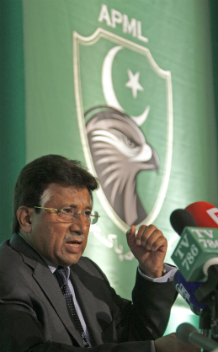
His close proximity to former U.S. president George W. Bush earned him the popular moniker, “Busharraf.” So it was with some intrigue that I went to hear Pakistan’s former president, Pervez Musharraf, address a prestigious and influential U.S. audience at a packed meeting at the Council on Foreign Relations’ headquarters in New York this week.

I was struck by what was, essentially, his appeal for U.S. political sponsorship of his bid to contest elections in Pakistan next year. He spoke eloquently about the poor state of U.S.-Pakistan relations, the need for a peace settlement with elements of the Taliban, and his country’s—and his own—unhelpful Machiavellian attitude toward India and Afghanistan. Nevertheless, the following facts left me worried:
First, for a man who prosecuted the war on terror with such vigor, it was unforgivable for him to say to an Indian journalist who asked about Pakistan’s export of terrorism, ‘Sir, your terrorist is someone else’s freedom fighter.” This moral equivocation is the same justification used by terrorists to inflict harm on innocent lives around the world. Musharraf should know better.

Second, a major cause for widespread, ongoing anti-American radicalization in Pakistan is the CIA-led drone attacks in the country’s tribal regions. Musharraf did not make any references to the drones, their many innocent victims, and the perceived violation of Pakistani sovereignty. It would have been wiser to reassure the audience that a Pakistan under his control would be a nation in which the United States would not need to use drones because terrorists would be brought to justice. Ignoring the issue of drones is self-defeating all around.

Third, his confidence that Pakistan’s nuclear weapons arsenal is safe is questionable. The premise of his assurance was that extremists seeking access to these weapons would need to fight elite battalions of the Pakistani armed forces. The assumption there, of course, is that the Pakistani army is immune from extremism. Sadly, that thinking is flawed. Since General Zia’s time, and increasingly so in recent years, Islamist radicalization within Pakistan’s armed forces has been a cause for concern.

It wasn’t all bad. Fortunately, he spoke somewhat candidly about the economic and energy generation challenges faced by Pakistan. My colleague Isobel Coleman, who was also in attendance, has analyzed his remarks on her thoughtful blog, “Democracy in Development.”
With Imran Khan and Pervez Musharraf both gearing up for elections in Pakistan in 2013, the next two years will be eventful and heated in Pakistan’s fractious political landscape.

Beyond Gaddafi, America Turns its Attention to Pakistan

By Peter Hoskin for The Spectator

It’s hard to recall a more grisly complement of newspaper covers than those this morning. Only the FT refrains from showing either Gaddafi’s stumbling last moments or his corpse, whereas the Sun runs with the headline, big and plain: “That’s for Lockerbie”.

The insides of the papers are more uncertain. There are doubts about the details, such as what has happened to Gaddafi’s infamous son Saif. And there are doubts about the general tide of events too. Several commentators, includingPeter Oborne, make the point that the passing of Gaddafi is only the first phase in Libya’s struggle towards democracy — and it is a struggle that might easily be forced off course by various factions, splinter groups and madmen. As the New York Times puts it, “The conflicting accounts about how [Gaddafi] was killed seemed to reflect an instability that could trouble Libya long after the euphoria fades…”

As significant as all this is, however, we should also alight on the news from another area of instability: Afghanistan and Pakistan. Hillary Clinton visited Kabul yesterday, where she not only heard about the Gaddafi’s death in photo montage-friendly fashion, but took some very clear swipes at Pakistan for being the Taliban’s favourite holiday destination. Here are some extracts from the full transcript of her speech and Q&A here:

“We will be looking to the Pakistanis to take the lead, because the terrorists operating outside of Pakistan pose a threat to Pakistanis, as well as to Afghans and others. And we will have ideas to share with the Pakistanis. We will certainly listen carefully to the ideas that they have. But our message is very clear: We’re going to be fighting, we’re going to talking, and we’re going to be building. And they can either be helping or hindering, but we are not going to stop our efforts……So my message will be as it just was to you: We have to deal with the safe havens on both sides of the border. It is not enough to point fingers across the border; we must work together to end the safe havens. We must send a clear, unequivocal message to the government and the people of Pakistan that they must be part of the solution, and that means ridding their own country of terrorists who kill their own people and who cross the border to kill in Afghanistan.I think that how we increase that pressure, how we make that commitment, is the subject of the conversations that President Karzai and I have had, and that I will have in Pakistan. But we’re looking to the Pakistanis to lead on this, because there’s no place to go any longer. The terrorists are on both sides. They are killing both people. No one should be in any way mistaken about allowing this to continue without paying a very big price. So I will deliver the message on behalf of the mothers of Afghanistan andon behalf of my own country.”

Just words, perhaps. But these words are some of the firmest that Obama’s adminstration has directed towards Islamabad since the death of Osama Bin Laden. In a news interview last night (do watch it if you’ve got two minutes), Clinton suggested that “something has changed” in the relationship between the two countries, and that Pakistan needs to “make some some serious choices”. That change could well define much of what lies ahead for Afghanistan and the wider region.

Have We Hit Rock Bottom Yet?

By Shahzad Chaudhry for The Express Tribune

Attending conferences and travelling to them are the two most testing tasks these days for most Pakistanis. The airports tend to give you a full low-down as soon as the ‘green’ passport is presented: I am told by authentic sources that in as friendly country as China it takes twice the time to clear immigration for a Pakistani traveller than for someone with any other passport.

Just so that we may place our ‘higher than the Himalayas’ relationship in perspective, I was also informed that there was a daily flight between Delhi and Beijing compared to only two a week between Islamabad and Beijing. The disparity in trade figures between Beijing and Delhi, and Beijing and Islamabad, respectively, are already well-known. Call it anything, size of the economies or economic pragmatism, or whatever, the fact is China and India are unlikely to go to war with a $100 billion stake, keeping the two tied in an interdependent embrace; wish what you may, Pakistan, bosom love ain’t coming to the rescue. That is the new world ‘geconomics’.

One thing that always strengthened my hand as an ambassador for Pakistan during the Shaukat Aziz years was the perpetual good news that came out on the economic front from Pakistan. Now there may be more than one opinion about Musharrafian economy, but I have always held, and with some conviction I might add, that economies work on few sound fundamentals and a lot of good sentiment. This last word is key. So if the services sector — telecom, construction, finance — all seemed to be galloping under Shaukat Aziz’s mantra of economic progress, he perhaps understood well the significance of looking dapper and sounding happy. He held the dollar pegged and the stock market boomed: the first was clever policy, the latter sentiment. After all what is in the story of an ‘Incredible’ India — the incredibility indeed of a well-manufactured fable and from there on the critical mass of success takes on.

It was famously reported that a particular British chancellor of the Exchequer was singing in the bathroom: the veil of pessimism lifted and the economic sentiment began its own hum. But when you sit on a dredged economy and scooped-out resources there is little that you can offer to the world as hope. Words remain just that, words. Give Hafeez Shaikh something to hum about, and he will hum. The difficulty is he himself remains incapable of carving one.

I haven’t heard a sicker pronouncement of Pakistan’s economic predicament than someone quoting to me the likely $12-16 billion flowing in remittances, as the ultimate trigger for turning around our fortunes. There cannot be a darker indictment of our lows. Incapable of generating revenues inside, we hope like hell for the world and the people to resuscitate us from the outside. Even in that, though, madness must have a method. Investments, portfolio or otherwise, flow into congenial environs; some, Hafeez Shaikh will have to conjure, some we, as partners in crime, will have to relent and enable.

I am not an economist, and certainly never pretended to be one, but I have been subjected enough to the pains of a few that even I could venture to suggest a course to the hapless finance minister. For instance, capital flight is a growing reality and industry needs an injection of support and sustenance under a dwindling availability of energy. The approaching winter months may just provide some respite from domestic energy consumption, enabling diversion to the industry sector. Where possible, policy measures can enable relief and sectoral benefits to industries that wish to work through the difficult times. That might just sustain the benefits emerging from an export boost last year.

Many have tended to qualify the boost in different ways and perhaps each has a point but then how long can you keep a merchant down; there is something called “recess fatigue”, and he must break from it to keep the wheels going. One hopes that a finance minister may recognise such trends and then have the wits to turn them into triggers of rebound. If not, paralysis may just be a more enveloping reality in Islamabad.

Agriculture is half policy, half divine. The policy side has seen some attention while divinity is mostly earned. Our erstwhile brothers in East Punjab seem to have hit a good combination and are worth a reflection. So if there is a formula for our finance gurus to follow in the short-term, it must reside around energy, industry and agriculture. Once out of the hole, we can then begin to embellish our societal existence.

What will bring back a smile on the finance minister’s face? An enabling environment? A country in war, and a 10-year-old war at that, cannot be given to economic congeniality. We need to wean this country away from war. Seriously taken, the All Parties Conference urgings to ‘give peace a chance’ is a worthy, if catchy slogan, and must find the necessary politico-military resolve. The difficulty in our prevailing discourse is that few are willing to find solace in a political effort alone. As the refrain is that military runs the policy, perhaps that is where one may head. So then, over to General Kayani.

With two years to go in his tenure, here are a few things that General Kayani must do: get us out of this war — the lesser the pain the better; shun militancy in all its manifestations — and here the word manifestation to my mind carries all its consequences; and cleanse the military system of this ill-advised and ill-conceived baggage of the yore. We need not depend on the augmenting effect of an irregular effort in enhancing our national agenda. For some time let us simply look inside and avoid external diversions. With General Kayani convinced of such disposition, no arm whatever can practice any part of our rather sad legacy in regional ambitions.

I do not know who killed Rabbani and why; I also don’t know if the Pakistani military alone supports the Haqqani network and to what extent, but I do know that defending accusations of Pakistani culpability is becoming a harder task. The time when any such insinuation will stick is when we will have hit rock bottom.

I wish we were out of this predicament. I wish to see my country relevant and respected; and, I wish to see a smile on a humming Hafeez Shaikh.

Pakistan, US Pledge to Strengthen Alliance

As Reported By The Khaleej Times

Pakistani and US diplomats on Thursday vowed to strengthen their troubled alliance two days after Washington acknowledged for the first time that it is waging “war” against militants in Pakistan.

US special envoy, Marc Grossman, on Thursday met Pakistani leaders in Islamabad as US drone strikes killed 10 militants, including a commander in the Haqqani network that the US military has linked to Pakistani intelligence.

“We tried to think about the future and way to keep our strategic dialogue going,” Grossman told a joint press conference with Pakistani Foreign Minister Hina Rabbani Khar.

“We also talked about how can we continue in a systematic way to identify the interests that we share with Pakistan, and there are many, and then find ways to act on them jointly,” he added.

Grossman said they had been preparing for conferences on the future of Afghanistan, in Istanbul next month and in the German city of Bonn in December.

US officials openly acknowledge that the relationship with Pakistan is complicated, but say it is important to persevere no less because Pakistan is a key stakeholder in any eventual political settlement in Afghanistan.

Khar said both sides would “build on this partnership which is not only important for the two countries but also for the region and the whole world”.

On Tuesday, acknowledging for the first time that the US is waging a war in Pakistan, Defense Secretary Leon Panetta described Washington’s relationship with Islamabad as “complicated”.

“And admittedly, there are a lot of reasons for that. We are fighting a war in their country,” Panetta said.

He said the two countries sharply disagreed over “relations they maintain with some of the militant groups in that country,” a reference to Washington’s demand that Islamabad crack down on the Haqqani network.

A covert CIA drone campaign that the US government declines to discuss publicly has seen around 30 missile attacks in Pakistan since American troops killed Osama bin Laden near the capital Islamabad on May 2.

Pakistan Warns U.S. Against Hot Pursuit On Its Soil

As Reported by The Detroit Free Press

Pakistan’s foreign minister today warned the United States against sending ground troops to her country to fight an Afghan militant group that America alleges is used as a proxy by Pakistan’s top intelligence agency for attacks in neighboring Afghanistan.

The warning came as a top U.S. military commander was in Pakistan for talks with the army chief at a time of intense strain between the two countries. The U.S. Embassy said Gen. James Mattis, head of U.S. Central Command, arrived in Pakistan late Friday, and that he will meet the army chief, Gen Ashfaq Parvez Kayani.

Ties between Islamabad and Washington are in crisis after American officials stepped up accusations that Pakistan’s Inter Services Intelligence was aiding insurgents in neighboring Afghanistan, including those who took part in an attack on the U.S. Embassy last week in Kabul.

Pakistan’s Foreign Minister Hina Rabbani Khar said in an interview today that there are red lines and rules of engagement with America, which should not be broken.

“It opens all kinds of doors and all kinds of options,” she told Pakistan’s private Aaj News TV from New York. The comment was in response to a question about the possibility of U.S. troops coming to Pakistan.

Khar, however, insisted that Pakistan’s policy was to seek a more intensive engagement with the U.S. and that she would like to discourage any blame game.

“If many of your goals are not achieved, you do not make someone a scapegoat,” she said, addressing the U.S.

The U.S. allegations have seen a strong reaction from Pakistan.

Kayani, the Pakistani army chief, said on Friday that the charges were baseless and part of a public “blame game” detrimental to peace in Afghanistan. Other Islamabad officials urged Washington to present evidence for such a serious allegation. Khar warned the United States is risking losing an ally in the war on terror.

The row began when Adm. Mike Mullen, chairman of the Joint Chiefs of Staff, on Thursday accused the ISI agency of supporting Haqqani insurgents in planning and executing last week’s 22-hour assault on the U.S. Embassy and a truck bombing that wounded 77 American soldiers days earlier.

Kayani said the allegations were “very unfortunate and not based on facts.”

The claims were the most serious yet by an American official against nuclear-armed Pakistan, which Washington has given billions in civilian and military aid over the last 10 years to try to secure its cooperation inside Afghanistan and against al-Qaida.

The Haqqani insurgent network is widely believed to be based in Pakistan’s North Waziristan tribal area along the Afghan border. The group has historical ties to Pakistani intelligence, dating back to the war against the Soviets in Afghanistan in the 1980s.

The relationship between the two countries has never been smooth, but it took one of its hardest hits when U.S. commandos slipped into Pakistan on May 2 without informing the Pakistanis of their mission and killed al-Qaida chief Osama bin Laden in a garrison town not far from Islamabad.

Pakistanis for Peace Editorial Note– We hope that the United States and Pakistan can get through this incredibly difficult period in their long and close relationship. The United States should present the concrete evidence that it has that there is collusion on the part of individuals in the Pakistani government with the terrorists and the Pakistanis for their part must do a lot more to end terror networks within their borders, and this certainly includes sending troops into North Waziristan, Quetta and any other city in the country where the terrorists are based. The already unstable and dangerous neighborhood that is South Asia can not afford further deterioration in US-Pakistan relations.

Decade After 9/11, Afghans Languish in Pakistan

By Qasim Nauman and Rebecca Conway for Reuters

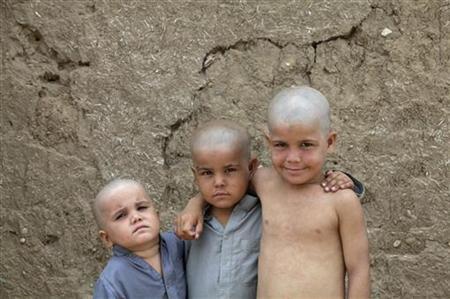
When Ghulum Nabi’s father heard U.S.-backed troops toppled Afghanistan’s Taliban after the September 11, 2001, attacks, he rushed to their family home in an Afghan refugee camp in Pakistan to spread the news.

Perhaps, one day they could all return to a peaceful and prosperous Afghanistan supported by a Western superpower.

After 10 years of U.S.-led efforts to pacify one of the world’s most turbulent countries, Afghan refugees in Pakistan have little hope for stability in their homeland.

“I grew up here and Pakistan is my country. When my father pushes me to go back to visit, I end up having a fight with him. I’m never going to live there. I want to get Pakistani nationality. This is my home,” said Nabi, 22, who runs a crockery shop.

“It doesn’t matter if it is America or anyone else trying to watch over Afghanistan. I will still be looking around to see if anyone is pointing a gun at me.”

Afghan President Hamid Karzai would welcome a return of the millions of Afghans living in Pakistan.

It would be a vote of confidence in his administration, which faces many problems, from widespread allegations of state corruption, to a resilient Taliban.

SOVIET INVASION TRIGGERED LIFE OF UNCERTAINTY

Many of the refugees are skilled labourers who could boost reconstruction and help revive a weak economy if they return. But it’s unlikely to happen.

Most of the refugees in Pakistan arrived after the Soviet invasion of Afghanistan in 1979. The conflict that followed consumed their homeland. After the mujahideen warriors defeated the Russians, warlords turned on each other and tore Afghanistan apart.

Many refugees fear a repeat of that chaos as a U.S. troop withdrawal looms.

Some would like to go home but feel they can’t. Others regard Pakistan as home despite its many disadvantages. Without proper Pakistani identification cards, Afghans can’t open bank accounts or buy or lease property.

Many are openly mistreated by Pakistanis who have little fear of being held to account.

On August 14, the anniversary of Pakistan’s independence, Saeed Anwar’s landlord showed up with three men armed with AK-47 assault rifles at his clothing shop at a busy bazaar in the city of Haripur, home to 80,000 Afghan refugees who live in camps.

“They threw around my merchandise and said I need to pay them a 300,000 Pakistani rupees ($3,450) advance on the rent. I had already paid the rent,” said Anwar, wearing traditional, loose Pakistani trousers.

“I went to the police to register a case. But when they see a dispute between a Pakistani and an Afghan, they automatically assume the Afghan has done something wrong.”

Still, many Afghans believe its wiser, and safer, to just accept the frequent humiliation than return to a homeland still shattered, despite a long U.S.-led military campaign against militancy and billions of dollars in Western aid.

Afghans — from elders who vividly remember the first Soviet gunship helicopters in Afghanistan, to teenagers who have only visited a few times — work for Pakistanis as welders or carpenters and tailors in Haripur and other cities.

Most of them prefer to run their own small businesses, from food carts to car dealerships. It’s the only sense of independence they have in the camps which consist of small cement and mud housing units near a reservoir.

The elders have set up a jirga, or tribal gathering, to settle internal disputes, as is done in much of Afghanistan. Cricket games are the only form of entertainment and leisure activity for most youths.

Two years ago Pakistan agreed to let displaced Afghans stay until the end of 2012, after a resurgence of militant violence along the Pakistan-Afghanistan border hindered repatriation.

Still, people like Sherullah, whose nine children were born in Pakistan, feel vulnerable. What if Pakistan asks them to leave one day?

“There is a lot of confusion. If there’s one thing I want, it’s for this confusion to go away, for us to know if we will be staying or not,” said Sherullah, who was cutting women’s clothing in his tailor shop.

“There are many people living here that can afford to build a proper house but don’t want to. They think ‘what if next year we are told to leave?’. So they continue to live in mud houses.”

Aside from 1.7 million officially registered Afghans in Pakistan, there are an additional 800,000 with no documentation.

According to the United Nations, Pakistan is home to the world’s largest refugee population, mostly Afghans, who strain the country’s troubled economy.

Pakistan would like to repatriate them.

There are, however, few incentives for refugees to head back to Afghanistan. So life in camps may drag on for many years.

Even though the U.S. disengagement is gradual, it brings back painful memories of what was widely seen as American abandonment of Afghanistan after the Soviet exit in 1989. Warlords soon took over and bloodshed returned.

Haji Aslam, 65, an elder in one of the camps, has seen conflict in Afghanistan over the last 30 years — from the battlefields where he fought the Soviets to what he sees today on his television screen. He is betting on the Taliban to prevail once the Americans leave.

“Even if just 10 Taliban show up, the Afghan government will flee Kabul,” said Aslam, a man with a white beard wearing a traditional flat Afghan cap. “In Pakistan, I am at peace. I know my children are safe.”

No Evidence Pakistan Helped Osama Bin Laden: U.S. Security Adviser

As Reported by The International Business Times

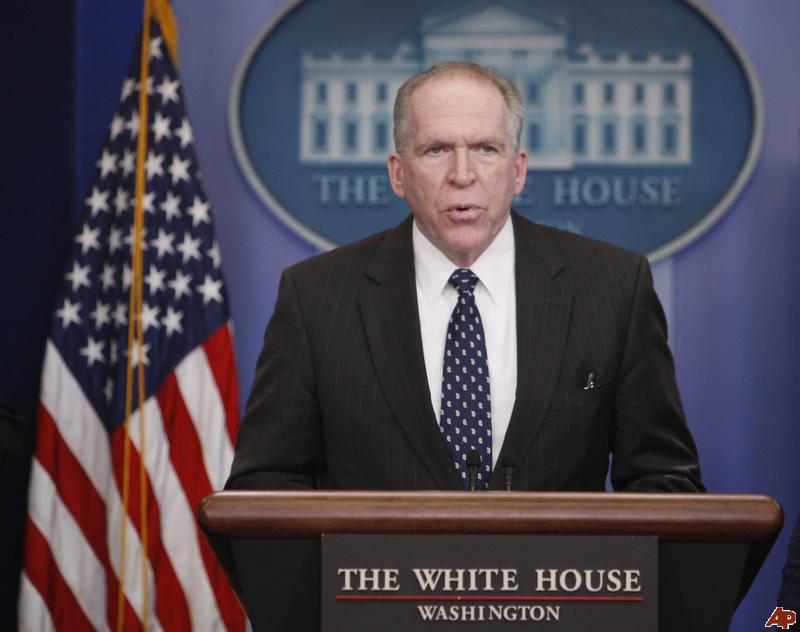
There is no evidence that Pakistan government officials helped and protected Osama bin Laden, claimed John Brennan, Deputy National Security adviser and President Barack Obama’s chief counter-terrorism adviser.

Brennan, speaking to reporters at a morning briefing said “I have not seen anything that the Pakistanis were aiding his refuge there.”

In May, Osama was found and killed by U.S. Navy SEALS in a large compound in the town of Abbottabad in northern Pakistan, near the capital Islamabad. Since that time, rumors have swirled that Pakistani intelligence officials had been aiding the former al-Qaeda terror chief as well as many other militants.

Brennan also said that based on examination of documents and data found and seized at Osama’s compound, it became apparent that bin Laden was “a little out of touch about how debilitated his organization was” after fighting for almost a decade against the U.S.

“It did reveal an organization in distress,” Brennan said.

Brennan also reportedly praised Pakistan’s offensive against terrorist groups operating the country and that Washington has a close working relationship with Islamabad in this joint effort.

He cited the recent arrest in Pakistan of Younis al-Mauritani, a senior al-Qaeda official, is proof that Islamabad is taking its responsibilities seriously.

He noted that al-Qaeda “has taken it on the chin” and has been “degraded significantly over the past couple of years.”

Brennan’s latest comments dramatically contradict assertions he made in May (just after the killing of Osama) when he declared that it was “inconceivable” that bin Laden did not have the support of officials within Pakistan.

Pakistan’s 10 Years of Chaos

As Reported by Jennie Matthew for AFP

The 9/11 attacks that thrust Pakistan into the war on terror have brought the nuclear-armed state to its knees, fighting Islamist radicals at home and risking pariah status abroad.

It was already evening in Pakistan when television channels, recently deregulated by then president General Pervez Musharraf, began broadcasting the terrifying scenes from the twin towers in New York.

Few slept that night, realising immediately that the world had changed forever and that Pakistan was in the eye of the storm after spending years fostering extremist movements for its own ends.

“My immediate thought was ‘oh my God, more trouble coming onto Pakistan’,” said author Imtiaz Gul, who has written extensively about the subsequent war and its fallout at home.

“My fears have been borne out… The 9/11 events shocked Pakistan into an unprecedented crisis of insecurity,” he said.
It didn’t take long for Musharraf to weigh up conditions imposed by Washington and announce on September 19 that Pakistan would offer its airspace, territory and capabilities to help the United States defeat terrorism.

But as America put the finishing touches to its war plans, Pakistan desperately tried to persuade its Taliban allies in Afghanistan to give up Osama bin Laden and avert catastrophic military action, to no avail.

Within weeks, bin Laden, his future successor Ayman al-Zawahiri and Taliban leaders had fled the American invasion into Pakistan.

And there in the northwestern tribal belt, which no government has been able to subjugate, they found refuge among an extremist support network dating back to the 1990s jihad against the Soviets in Afghanistan.

They regrouped, forming bases used by the Taliban to direct the insurgency in Afghanistan and training camps for Al-Qaeda to brainwash young extremists from all over the world into carrying out terror attacks.

As a result, the last decade has made the only Muslim nuclear power more unstable than ever before in its bloody and chaotic 64-year existence.

The watershed came in July 2007 when government troops cleared out extremists preaching hate from the Red mosque in the heart of the capital Islamabad.

The militants declared war and in the past four years, around 500 bomb attacks have killed 4,600 people, according to an AFP tally.
Just when it appeared things couldn’t get worse, this year the US discovered bin Laden living close to Pakistan’s equivalent of West Point, sending in Navy SEALs to kill him and sinking already fractured US-Pakistani relations.

“No doubt that this is absolutely the worst time for the country,” said Pakistani journalist Ahmed Rashid, whose book “Taliban” became an international bestseller after 9/11.

Rashid describes Pakistan as “completely isolated” by a war that “brought terrorism, sectarianism, a weakening of the state (and) much greater ethnic insurgencies” within the country.

But the blame — he says — is Pakistan’s for frittering away American aid money and refusing to realign its national security priorities.
“Politically, the most far-reaching mistake was the hosting and relaunching of the Afghan Taliban by the military and the intelligence agencies. That was enormously detrimental and led to the growth of the Pakistani Taliban.” Pakistan routinely proclaims to have sacrificed the most of any country fighting terror.

The government claims that 35,000 people have been killed. The army confirms the deaths of 3,019 soldiers since 2001 — more than the 2,684 Western soldiers to have died in Afghanistan.

More than three million people have been displaced by violence and counter-terrorism activities in Pakistan since 9/11, according to International Crisis Group figures released in 2010.

The army says 147,000 troops are deployed in the northwest compared to 35,000 in October 2001, a drastic reversal from the previous concentration along the Indian border in the east.

Yet extremism has increased. An average of one US drone strike every four days against militants in the tribal belt is raising fears that the campaign is recruiting a new generation of insurgents and suicide bombers.

Jihadist groups — fostered by Pakistan’s security establishment to fight India in Kashmir and maintain Afghanistan as a strategic asset — have splintered, and increasingly turned the guns on their old allies in the state.

“Pakistan is a lot less secure country now than 10 years ago, because it has become a battleground, an extension of the Afghan war. Pakistan is now facing a serious threat for its stability,” said journalist Zahid Hussain.

Yet the public discourse concentrates less on how to defeat militancy than debating the merits of the hugely unpopular US alliance.
Trust between Islamabad and Washington is at an all-time low. Cooperation between the CIA and Pakistan’s ISI spy agency is poor. Blame games on both sides are played out in the media.

Compounding the sense of crisis is the country’s economic meltdown. Pakistan says losses related to the war are $68 billion. Critics say the country has squandered up to $20 billion in aid given by the United States. “The biggest mistake was the failure to really address strategic issues in the economy. Pakistan could have changed its very weak economic structure at that point in time,” said Rashid.

Instead crippling inflation, rampant unemployment and an energy crisis with power cuts of up to 16 hours a day have left millions wondering how to fill the void.

C.I.A. Drone Is Said to Kill Al Qaeda’s No. 2

By Mark Mazzetti for The New York Times


A drone operated by the CIA killed Al Qaeda’s second-ranking figure in the mountains of Pakistan on Monday, American and Pakistani officials said Saturday, further damaging a terrorism network that appears significantly weakened since the death of Osama bin Laden in May.

An American official said that the drone strike killed Atiyah Abd al-Rahman, a Libyan who in the last year had taken over as Al Qaeda’s top operational planner. Mr. Rahman was in frequent contact with Bin Laden in the months before the terrorist leader was killed on May 2 by a Navy Seals team, intelligence officials have said.

American officials described Mr. Rahman’s death as particularly significant as compared with other high-ranking Qaeda operatives who have been killed, because he was one of a new generation of leaders that the network hoped would assume greater control after Bin Laden’s death.

Thousands of electronic files recovered at Bin Laden’s compound in Abbottabad, Pakistan, revealed that Bin Laden communicated frequently with Mr. Rahman. They also showed that Bin Laden relied on Mr. Rahman to get messages to other Qaeda leaders and to ensure that Bin Laden’s recorded communications were broadcast widely.

After Bin Laden was killed, Mr. Rahman became Al Qaeda’s No. 2 leader under Ayman al-Zawahri, who succeeded Bin Laden.

There were few details on Saturday about the strike that killed Mr. Rahman. In the months since Bin Laden’s death, the C.I.A. has maintained a barrage of drone missile strikes on mountainous redoubts in Pakistan, a bombing campaign that continues to strain America’s already turbulent relationship with Pakistan.

The C.I.A almost never consults Pakistani officials in advance of a drone strike, and a Pakistani government official said Saturday that the United States had told Pakistan’s government that Mr. Rahman had been the target of the strike only after the spy agency confirmed that he had been killed.

The drone strikes have been the Obama administration’s preferred means of hunting and killing operatives from Al Qaeda and its affiliate groups. Over the past year the United States has expanded the drone war to Yemen and Somalia.

Some top American officials have said publicly that they believe Al Qaeda is in its death throes, though many intelligence analysts are less certain, saying that the network built by Bin Laden has repeatedly shown an ability to regenerate.

Yet even as Qaeda affiliates in places like Yemen and North Africa continue to plot attacks against the West, most intelligence analysts believe that the remnants of Al Qaeda’s leadership in Pakistan have been weakened considerably. Mr. Rahman’s death is another significant blow to the group.

“Atiyah was at the top of Al Qaeda’s trusted core,” the American official said. “His combination of background, experience and abilities are unique in Al Qaeda — without question, they will not be easily replaced.”

The files captured in Abbottabad revealed, among other things, that Bin Laden and Mr. Rahman discussed brokering a deal with Pakistan: Al Qaeda would refrain from mounting attacks in the country in exchange for protection for Qaeda leaders hiding in Pakistan.

American officials said that they found no evidence that either of the men ever raised the idea directly with Pakistani officials, or that Pakistan’s government had any knowledge that Bin Laden was hiding in Abbottabad.

Mr. Rahman also served as Bin Laden’s liaison to Qaeda affiliates. Last year, American officials said, Mr. Rahman notified Bin Laden of a request by the leader of Al Qaeda’s affiliate in Yemen to install Anwar al-Awlaki, the radical American-born cleric, as the leader of the group in Yemen.

That group, known as Al Qaeda in the Arabian Peninsula, apparently thought Mr. Awlaki’s status as an Internet celebrity, for his popular video sermons, and his knowledge of the United States might help the group’s fund-raising efforts. But according to the electronic files in Abbottabad, Bin Laden told Mr. Rahman that the group’s leadership should remain unchanged.

After Bin Laden’s death, some intelligence officials saw a cadre of Libyan operatives as poised to assume greater control inside Al Qaeda, which at times has been fractured by cultural rivalries.

Libyan operatives like Mr. Rahman, they said, had long bristled at the leadership of an older generation, many of them Egyptian like Mr. Zawahri and Sheikh Saeed al-Masri.

Mr. Masri was killed last year by a C.I.A. missile, as were several Qaeda operations chiefs before him. The job has proved to be particularly deadly, American officials said, because the operations chief has had to transmit the guidance of Bin Laden and Mr. Zawahri to Qaeda operatives elsewhere, providing a way for the Americans to track him through electronic intercepts.

Mr. Rahman assumed the role after Mr. Masri’s death. Now that Mr. Rahman has died, American officials said it was unclear who would take over the job.

Panetta: ‘No Choice’ in US Relations with Pakistan

By David Gollust for Voice of America

Defense Secretary Leon Panetta said Tuesday that the United States has no choice but to maintain close relations with Pakistan, despite government links with Islamic militants including the Haqqani network. The State Department, meanwhile, put sanctions on another Haqqani network commander.

Panetta, who took over as defense secretary in June after two years of heading the CIA, declined comment on news reports that Pakistan allowed China to inspect the wreckage of an advanced U.S. helicopter lost in the raid that killed Osama bin Laden.

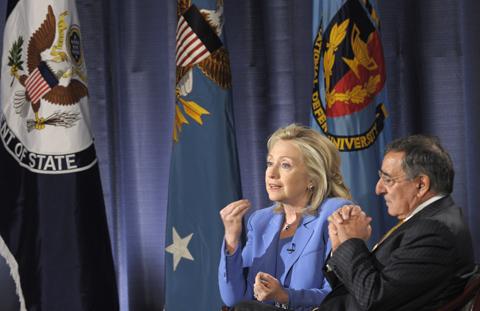
But at a public forum with Secretary of State Hillary Clinton at Washington’s National Defense University, the defense chief was unusually candid about U.S. problem issues with Pakistan.

Panetta said Pakistan has “relationships” with the Haqqani network – militants based in western Pakistan who conduct cross-border attacks on U.S. forces in Afghanistan, and with Lashkar-e-Taiba militants who have attacked India.

Both groups are listed by the United States as terrorist organizations. Despite complaints that Pakistan has withheld visas for U.S. citizens being posted there, Panetta said the relationship remains essential.

“There is no choice but to maintain a relationship with Pakistan,” said Panetta. “Why? Because we are fighting a war there. We are fighting al-Qaida there. And they do give us some cooperation in that effort. Because they do represent an important force in that region. Because they do happen to be a nuclear power that has nuclear weapons, and we have to be concerned about what happens with those nuclear weapons. So for all of those reasons, we’ve got to maintain a relationship with Pakistan.”

Secretary of State Clinton said the Obama administration considers relations with Pakistan to be of “paramount importance.”

She said there have been “challenges” in bilateral ties for decades with valid complaints on both sides, and that she credits the Islamabad government with lately recognizing its shared interest with Washington in confronting terrorism.

“I was very pleased when the Pakistanis moved into [the] Swat [Valley] and cleaned out a lot of what had become a kind of Pakistani Taliban stronghold,” said Clinton. “And then they began to take some troops off their border with India, to put more resources into the fight against the Pakistani Taliban. Now, as Leon [Panetta] says, we have some other targets that we discuss with them – the Haqqanis, for example. And yet it’s been a relatively short period of time, two-and-a-half years, when they have begun to reorient themselves militarily against what is, in our view, an internal threat to them.”

The State Department on Tuesday designated a key Haqqani network commander – Mullah Sangeen Zadran – a terrorist under a 2001 White House executive order, freezing any U.S. assets he has and barring Americans from business dealings with him.

At the same time, Sangeen was designated a terrorist by the U.N. sanctions committee, which will subject him to a global travel ban, an asset freeze and an arms embargo.

A State Department statement said Sangeen, is a “shadow governor” of Afghanistan’s southeast Paktika province and a senior lieutenant of network leader Sirajuddin Haqqani. It said Sangeen has coordinated the movement of hundreds of foreign fighters into that country and that he is linked to numerous bomb attacks and kidnappings.

U.S. Says Pakistan Let China See Copter

By Mark Mazzetti for The Seattle Times

In the days after the raid that killed Osama bin Laden, Pakistan’s intelligence service probably allowed Chinese military engineers to examine the wreckage of a stealth American helicopter that crashed during the May operation, according to U.S. officials and others familiar with the classified assessments.

Such cooperation with China would be provocative, providing further evidence of the depths of Pakistan’s anger over the bin Laden raid, which was carried out without Pakistan’s approval.

U.S. spy agencies have concluded it is likely that Chinese engineers took detailed photographs of the severed tail of the Black Hawk helicopter equipped with classified technology designed to elude radar, the officials said.

The members of the Navy SEALs team who conducted the raid had tried to destroy the helicopter after it crashed at bin Laden’s compound in Abbottabad, but the tail section remained largely intact.

U.S. officials cautioned they did not yet have definitive proof the Chinese were allowed to visit Abbottabad. They said Pakistani officials had denied they showed the technology to other foreign governments.

One person with knowledge of the intelligence assessments said the U.S. case was based mostly on intercepted conversations in which Pakistani officials discussed inviting the Chinese to the crash site.

He characterized intelligence officials as being “certain” that Chinese engineers were able to photograph the helicopter and even walk away with samples of the wreckage. The tail has been shipped back to the U.S., according to American officials.

The U.S. assessments were disclosed Sunday by The Financial Times. The newspaper cited Pakistani officials who denied the accusations.

Musharraf Moves to Mend US-Pakistan Relations

By Lydia Mulvany for The Mimami Hearld

Former Pakistani President Pervez Musharraf said Thursday that his country wasn’t complicit in hiding Osama bin Laden but was “extremely negligent” for not knowing that the al-Qaida leader was living a 75-mile drive from the Pakistani capital.

Speaking in Washington, the former military dictator sought to heal a U.S.-Pakistani relationship that’s become badly strained since the American raid May 2 that killed bin Laden, saying mutual interests in the global war on terrorism bound the countries and that blaming each other was counterproductive.

“The United States and Pakistan must restore trust,” Musharraf told an audience at the Woodrow Wilson International Center for Scholars. “Confrontation would be most unwise.”

The bin Laden incident pushed U.S.-Pakistani relations to their lowest point in years. American officials weren’t happy when, after a decade-long hunt, they found al-Qaida’s leader living in a garrison town so close to Islamabad. Pakistani officials were outraged that they weren’t told about the unilateral raid beforehand.

Since the raid, Pakistan has restricted visas for American officials and expelled military trainers. The U.S. has cut off $800 million, about one-third of its aid to Pakistan’s military. The U.S. has long complained of ties between Pakistan’s military and insurgent groups that have attacked American-led forces in neighboring Afghanistan.

But Musharraf said that if Pakistani intelligence had colluded with bin Laden, it also would have known that the CIA was operating a safe house nearby and whisked the al-Qaida leader away. He described bin Laden’s high-walled compound in the town of Abbottabad as a normal dwelling that wouldn’t have raised suspicion.

He also claimed that Abbottabad – which is home to a major military college that’s been described as Pakistan’s West Point, as well as other military installations – wasn’t a garrison town but a touristy resort area with many colleges.

The recent raid was a “violation of sovereignty,” Musharraf said, echoing a widespread Pakistani complaint. He added that Pakistani antipathy toward the U.S. also stems from the American campaign of drone strikes on militant targets, which reportedly have caused civilian casualties, as well as lingering bitterness over U.S. sanctions for developing nuclear weapons in the 1990s.

The way forward for Pakistan, Musharraf said, is to show that it isn’t complicit with terrorists and to deal with domestic extremism. It also needs to establish an honest, stable government in the 2013 elections, said the former leader, who’s expected to mount a run for president.

Musharraf, who seized power in a military coup in 1999 and resigned in 2008, embodied the frustration and contradictions of American policy toward Pakistan.

Mark Quarterman, a senior adviser at the Center for Strategic and International Studies, a nonpartisan Washington research center, said that many wanted to see Musharraf as a modern, progressive leader: He wasn’t an extremist, his wife and daughter didn’t wear veils and the family even had a dog, an animal many Muslims view as impure. Ultimately, however, Musharraf’s rule was a military dictatorship and, according to many experts, he didn’t do enough to rein in Taliban militants who were operating in remote corners of Pakistan.

Clinton Says US Encouraged by India-Pakistan Talks

By Matthew Lee and Ravi Nessman for The Associated Press

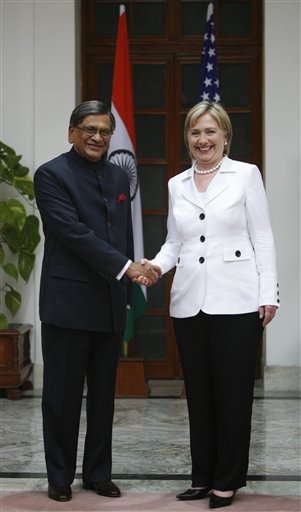
U.S. Secretary of State Hillary Rodham Clinton said Tuesday that the United States was “encouraged” by the ongoing talks between nuclear-armed rivals India and Pakistan and promised to give full support to Indian efforts to protect itself from terror.

Clinton’s visit to India came less than a week after a triple bombing killed 20 people in India’s financial capital of Mumbai, the worst terror strike in the country since 10 Pakistan-based gunmen rampaged through the city in 2008.

Her meetings with top Indian officials Tuesday focused on fighting terror, the U.S. withdrawal plans from Afghanistan and ways to broaden economic and security ties between the United States and India.

She also called for a swift resolution to their dispute over investments in nuclear energy, calling on India to ratify by the end of the year the Convention on Supplementary Compensation for Nuclear Damage and to adapt its liability laws to conform with the treaty.

The U.S. views India’s new nuclear liability law as too stringent on nuclear plant suppliers, making it difficult for private U.S. companies to compete against state-owned companies in India’s multibillion dollar nuclear reactor market.

Clinton’s trip here is part of a new round of U.S.-India strategic dialogue established last year to deepen ties between the world’s oldest and largest democracies.

S.M. Krishna, India’s foreign minister, expressed concerns that the planned U.S. troop withdrawal from Afghanistan that began this month could lead to a resurgence in Islamic extremism.

“It is in the larger interests of the region that it is necessary for the United States to work very closely with (Afghan) President (Hamid) Karzai and the government of Afghanistan and thereby create conditions where terrorists do not take any more advantage in Afghanistan,” Krishna said after 2 1/2 hours of talks with Clinton.

Clinton said she had outlined the drawdown strategy and stressed that the United States will not support Afghan reconciliation with insurgents unless it is inclusive and protects the rights of minority groups, religions and women.

Clinton also assured India of U.S. support in the fight against terror.

“We are allies in the fight against violent extremist networks. And homeland security is a high priority and a source of increasing partnership,” Clinton said.

While the U.S. and India have already signed agreements to cooperate in counterterrorism efforts, “the events in Mumbai have driven home how important it is that we get results,” she said.

Though India has not blamed Pakistan for last week’s attack, it has accused its neighbor of harboring violent extremist groups responsible for other attacks in India and of not doing enough to crack down on those responsible for the 2008 Mumbai siege.

For its part, U.S. officials fear Pakistan is not fully committed to combatting radical plots, such as the failed 2010 Times Square bombing in New York.

“We have made it clear to the Pakistani government that confronting violent extremists of all sorts is in its interest,” Clinton said.

India recently resumed peace talks with Pakistan that broke off following the 2008 Mumbai siege, and the two countries’ foreign ministers are expected to meet next week.

The U.S. is eager for the fragile talks to pick up steam, in part to allow Pakistan to focus its forces on the chaotic Afghan border.

“We are encouraged by the dialogue between India and Pakistan,” Clinton said, calling talks “the most promising approach” to build more confidence between them.

During the meeting Tuesday, Clinton and Krishna agreed to strengthen their countries’ ties in energy, security, education, the economy, science and promoting stability across the region. The two countries also signed an agreement promoting closer cooperation in cybersecurity.

Once frosty relations between India and the United States have warmed considerably in recent years as Washington has looked to India as stable ally in the turbulent South Asia region and its growing economy as a valuable market for U.S. goods.

President Barack Obama hosted Prime Minister Manmohan Singh at his first state dinner and visited India for three days last year, praising it as a new regional power. Clinton was to meet with Singh later Tuesday.

Growing business ties were among the top issues in the talks.

Western officials have looked to India’s rising economy and its 1.2 billion people as a coveted market to help stimulate growth in their own troubled economies.

“Each of our countries can do more to reduce barriers, open our markets, and find new opportunities for economic partnership,” Clinton said. “Taking these steps is in our mutual interest. We can improve millions of lives and increase both of our nations’ economic competitiveness.”

She praised India’s fight against piracy, and pushed for greater sales of U.S. arms to India — the world’s largest arms importer —as a way of deepening security cooperation between the two nations.

U.S. officials were annoyed earlier this year when Indian officials chose two European companies as finalists for an $11 billion order for 126 fighter jets. However, last month India signed an agreement to buy 10 Boeing C-17 cargo and troop-carrying aircraft for more than $4 billion.

From New Delhi, Clinton on Wednesday will move on to the southeastern port of Chennai, where she plans to deliver a speech on the importance of U.S.-Indian relations, the benefits of enhanced bilateral commercial ties and India’s role in South Asia and the greater Asia-Pacific region.

Clinton is in India on the third leg of a 12-day, around-the-world diplomatic tour that has already taken her to Turkey and Greece. After India, she will visit Indonesia, Hong Kong and southern mainland China before returning home July 25.