Archive for the ‘ US-Pakistan Relations ’ Category

Pakistani militant taunts US: ‘I will be in Lahore tomorrow’

By Sebastian Abbot for The Associated Press

One of Pakistan’s most notorious extremists mocked the United States during a defiant media conference close to the country’s military headquarters Wednesday, a day after the US slapped a $10 million bounty on him.

“I am here, I am visible. America should give that reward money to me,” said Hafiz Mohammad Saeed, referring to the fact that the bounty was given to a man whose whereabouts are not a mystery. “I will be in Lahore tomorrow. America can contact me whenever it wants to.”

Analysts have said Pakistan is unlikely to arrest Saeed, founder of the militant group Lashkar-e-Taiba, because of his alleged links with the country’s intelligence agency and the political danger of doing Washington’s bidding in a country where anti-American sentiment is rampant.

Saeed, 61, has been accused of orchestrating the 2008 attacks in the Indian city of Mumbai that killed 166 people, including six American citizens. But he operates openly in Pakistan, giving public speeches and appearing on TV talk shows.

He has used his high-profile status in recent months to lead a protest movement against US drone strikes and the resumption of NATO supplies for troops in Afghanistan sent through Pakistan. The supplies were suspended in November in retaliation for American airstrikes that accidentally killed 24 Pakistani soldiers.

Hours before Saeed spoke, US Deputy Secretary of State Thomas Nides met Pakistani Foreign Minister Hina Rabbani Khar in the nearby capital, Islamabad, for talks about rebuilding the two nation’s relationship. In a brief statement, Nides did not mention the bounty offer but reaffirmed America’s commitment to “work through” the challenges bedeviling ties.

Increasingly ‘brazen’ appearances
The US said Tuesday it issued the bounty for information leading to Saeed’s arrest and conviction in response to his increasingly “brazen” appearances. It also offered up to $2 million for Lashkar-e-Taiba’s deputy leader, Hafiz Abdul Rahman Makki, who is Saeed’s brother-in-law.

The rewards marked a shift in the long-standing US calculation that going after the leadership of an organization used as a proxy by the Pakistani military against archenemy India would cause too much friction with the Pakistani government.

This shift has occurred as the US-Pakistani relationship steadily deteriorated over the last year, and as the perception of Lashkar-e-Taiba’s potential threat to the West increased.

Bounty backfire?
The US may be hoping the bounty will force Pakistan to curb Saeed’s activities, even if it isn’t willing to arrest him. But the press conference he called at a hotel in the garrison city of Rawalpindi on Wednesday was an indication that is unlikely, and the bounty may even help him by boosting his visibility.

At the hotel, located near the Pakistani army’s main base and only a half hour drive from the US Embassy in Islamabad, Saeed was flanked by more than a dozen right-wing politicians and hardline Islamists who make up the leadership of the Difa-e-Pakistan, or Defense of Pakistan, Council. The group has held a series of large demonstrations against the US and India in recent months.

Some in the media have speculated the movement has the tacit support of the Pakistani military, possibly to put pressure on Washington.

“I want to tell America we will continue our peaceful struggle,” said Saeed. “Life and death is in the hands of God, not in the hands of America.”

Denies involvement in Mumbai massacre
He denied involvement in the Mumbai attacks and said he had been exonerated by Pakistani courts.

Pakistan kept Saeed under house arrest for several months after the attacks but released him after he challenged his detention in court. It has also resisted Indian demands to do more, saying there isn’t sufficient evidence.

The bounty offers could complicate US efforts to get the NATO supply line reopened. Pakistan’s parliament is currently debating a revised framework for ties with the US that Washington hopes will get supplies moving again. But the bounties could be seen by lawmakers and the country’s powerful army as a provocation and an attempt to gain favor with India.

Origins in the Kashmir dispute
Saeed founded Lashkar-e-Taiba in the 1980s allegedly with ISI support to pressure India over the disputed territory of Kashmir. The two countries have fought three major wars since they were carved out of the British empire in 1947, two of them over Kashmir.

Pakistan banned the group in 2002 under US pressure, but it operates with relative freedom under the name of its social welfare wing Jamaat-ud-Dawwa — even doing charity work using government money.

The US has designated both groups foreign terrorist organizations. Intelligence officials and terrorism experts say Lashkar-e-Taiba has expanded its focus beyond India in recent years and has plotted attacks in Europe and Australia. Some have called it “the next Al Qaeda” and fear it could set its sights on the US

* Associated Press writer Asif Shahzad contributed to this report from Islamabad.

U.S. and Pakistan Take Step to Mend Relations

By Salman Masood and Declan Walsh for The New York Times

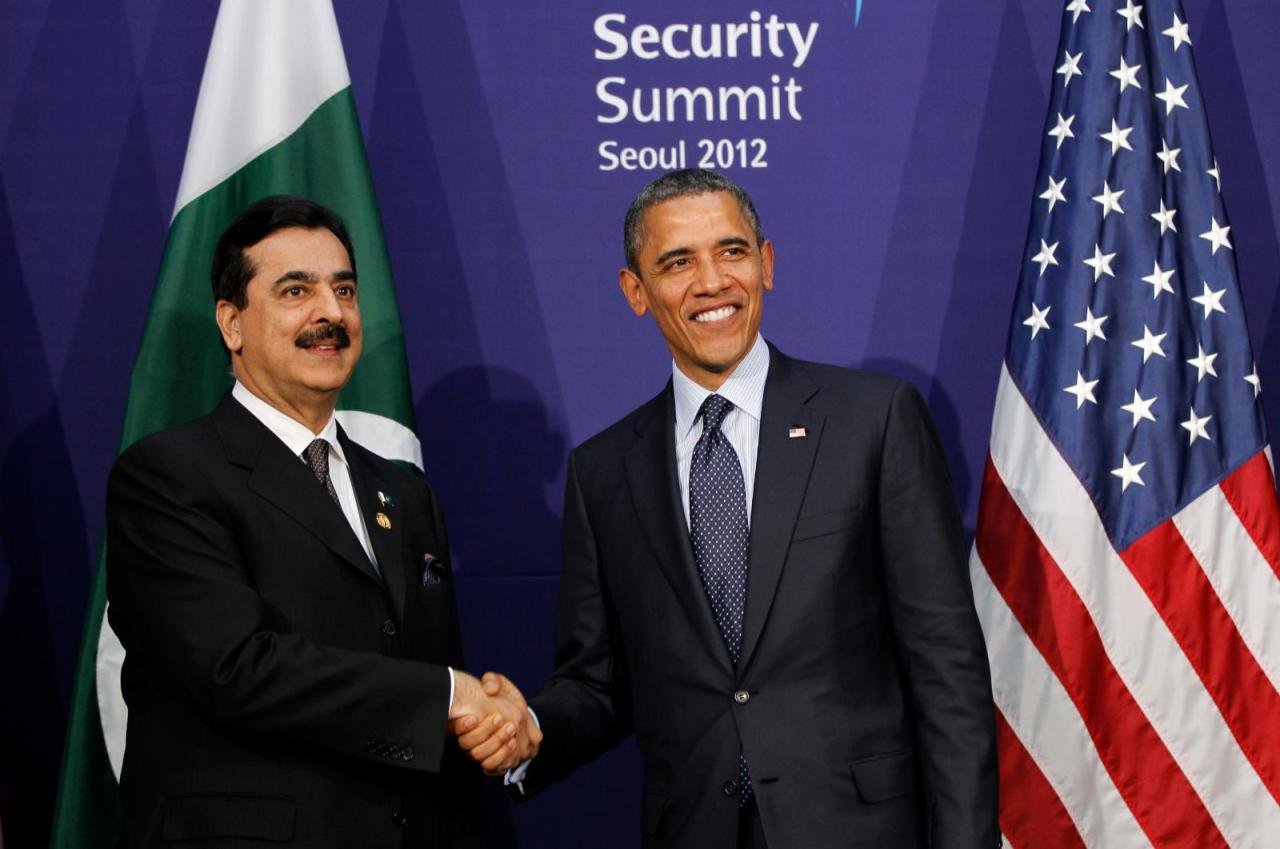
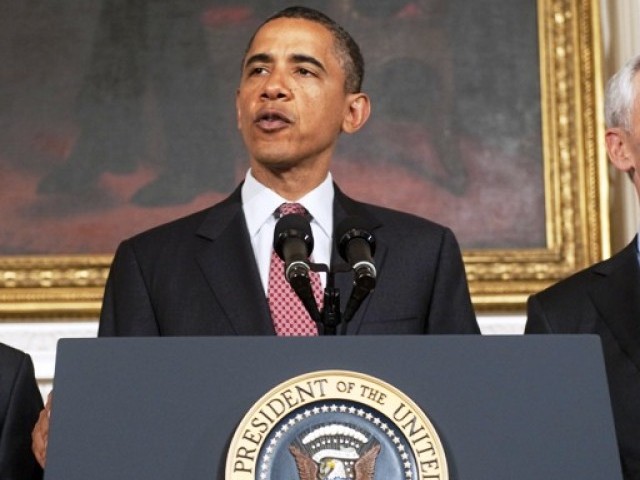
President Obama took a symbolic step toward improving ties with Pakistan on Tuesday when he met with Prime Minister Yousaf Raza Gilani on the sidelines of a nuclear summit meeting in South Korea.

But even as the two leaders made polite, if freighted, comments about improved cooperation, harsh debate in Pakistan’s Parliament on Tuesday made clear that there may be very little political upside for any Pakistani warming toward Washington.

Speaking in Seoul, President Obama acknowledged “strains” in the relationship and voiced his support for a parliamentary review process in Pakistan that aims to get the relationship back on its feet. “I think it’s important for us to get it right,” he said at a joint news conference.

But Mr. Obama added that Pakistan must also respect pressing American security concerns centered on “national security and our needs to battle terrorists who have targeted us in the past.”

Mr. Gilani replied that he would help work with Mr. Obama “to have all the peace, prosperity and progress of the whole world.”

Relations between the two countries plunged steeply after the American commando raid that killed Osama bin Laden last May, then worsened further after American warplanes fired airstrikes that killed 24 Pakistani soldiers along the border with Afghanistan in November.

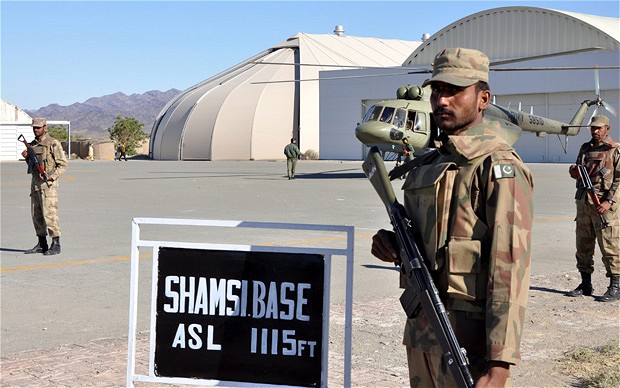
The border strikes caused Pakistan to close NATO supply routes into Afghanistan and expel American officials from a remote air based used by the C.I.A. to launch drone strikes against militants from Al Qaeda and the Taliban in the northwestern Pakistani tribal belt. More recently, a Pakistani parliamentary committee on national security demanded an end to drone strikes and an unconditional American apology for the airstrikes.

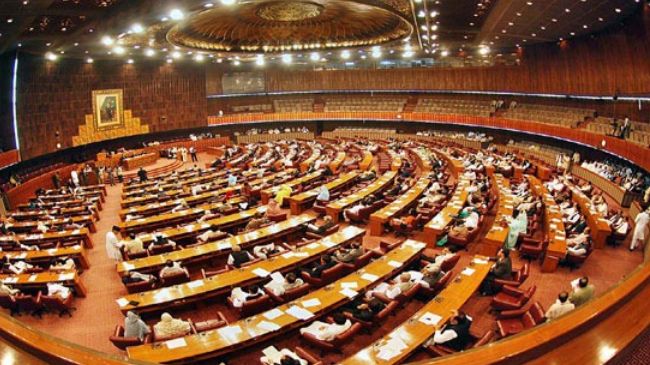
In Islamabad on Tuesday, Parliament was supposed to start a long-awaited debate that would pave the way toward re-engaging diplomatically with the United States. But the opposition stalled the debate, with some lawmakers expressing fury at news reports that the government had already promised to reopen the NATO supply lines.

Ayaz Amir, an influential lawmaker with the opposition Pakistan Muslim League-N party, questioned why Pakistan even bothered blocking the supply routes if it was assumed they would start right back up again. “We are fooling ourselves, and we are also fooling the Pakistani people,” he said.

The most scathing criticism came from Maulana Fazalur Rehman, an influential religious politician, who warned that if the government failed to win broad political backing for its review of American ties, he would take his protests onto the streets.

“We will not let such a decision to be implemented in the field,” he said.

Mr. Rehman asserted that given urgent efforts by the Americans to start negotiations with the Taliban in Afghanistan, American weapons transported through NATO supply lines could ultimately be turned back on Pakistan, earning loud applause from fellow lawmakers. And he asked how the government intended to bring covert American operations in Pakistan under the law of the land.

Raza Rabbani, a senior government lawmaker, responded that the parliamentary committee’s recommendations on American policy were “broad policy guidelines” and not a final decision.

The session was adjourned until Wednesday evening, when the formal debate is due to begin. Meanwhile, outside Parliament, a newly formed alliance of religious parties and extremist groups, the Defense of Pakistan Council, held a large street rally against the reopening of the supply routes.

“If Parliament compromises on the security and sovereignty of the country, then we cannot guarantee the security of the lawmakers,” said Maulana Sami ul-Haq, head of the alliance, as hundreds of protesters chanted anti-American slogans.

Pakistani Panel Demands End to US Drone Attacks, Apology for NATO Air Strike

As Reported By The Voice Of America

A Pakistani parliamentary committee — tasked with laying out new terms of engagement with the United States and NATO — on Tuesday demanded an end to U.S. drone strikes and an apology from Washington for a NATO strike last year that mistakenly killed 24 Pakistani troops.

The report, read to a joint session of both houses of parliament by committee chairman Mian Raza Rabbani, calls on the United States to review its activities and cease all drone attacks inside Pakistan.

Rabbani said that “drone strikes are counterproductive, cause loss of valuable lives and property, radicalize the local population, create support for terrorists and fuel anti-American sentiments.”

U.S. lawmakers, however, are rejecting those calls. Independent Senator Joe Lieberman told VOA the drone strikes are critically important to America’s national security, adding he does not believe they should stop.

Democratic Senator Dianne Feinstein, chairwoman of the Senate Intelligence Committee, said the drones are needed due to the lack of a more aggressive effort by Pakistan to root out terrorists and radical militants along its border with Afghanistan.

Republican Senator Lindsey Graham said that although sovereignty is a big issue for any country, he would like to see Pakistan embrace the idea that extremism has no welcome home in Pakistan. He said drone strikes have been effective and that, in his words, “it is not in Pakistan’s long-term interest to be seen by the world-at-large as a safe haven for terrorists.”

Rabbani also demanded an unconditional U.S. apology for the NATO airstrike in November that killed the 24 Pakistani soldiers. He said “the condemnable and unprovoked NATO/ISAF attack” represents “a breach of international law and constitutes a blatant violation of Pakistan’s sovereignty and territorial integrity.”

Washington has expressed regret for the loss of life and accepted partial responsibility for the airstrike, but has so far refused to apologize, saying NATO forces acted in self-defense.

Pakistani lawmakers are expected to eventually approve the panel’s recommendations. But, ultimately, Pakistan’s government and powerful army have the final say in the U.S.-Pakistani relationship.

U.S. State Department spokeswoman Victoria Nuland Tuesday said she would not comment on the issue until the process is completed.
Pakistani Foreign Minister Hina Rabbani Khar told reporters outside of Parliament that Pakistan needs to balance good diplomatic relations with its own interests.

Pakistan Wants U.S. Drones Out

By Indira A.R. Lakshmanan for Bloomberg News

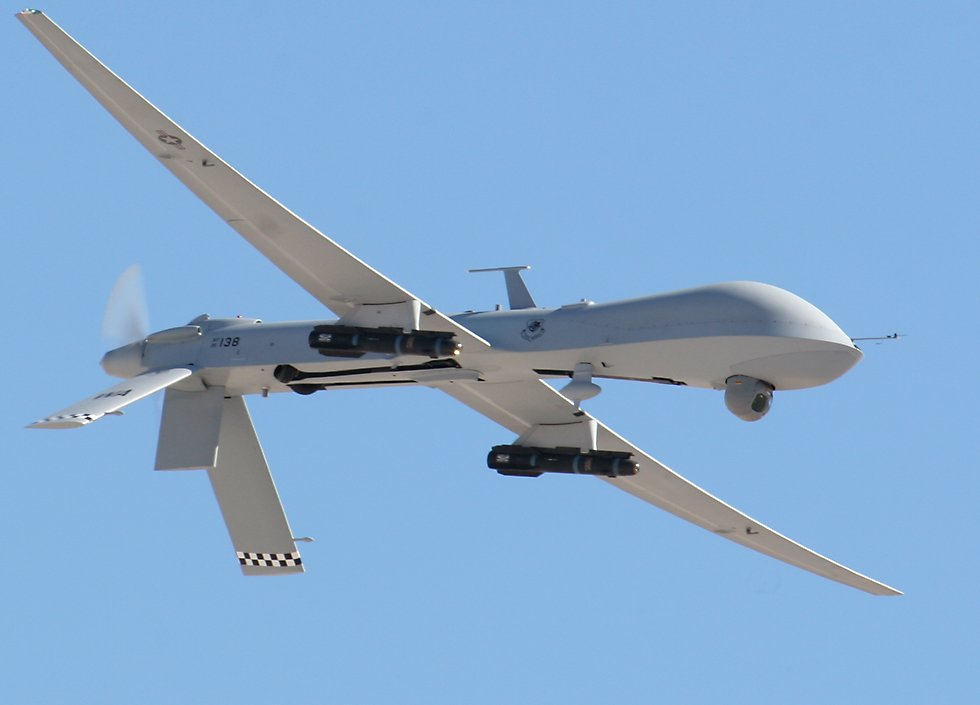
Pakistan has told the White House it no longer will permit U.S. drones to use its airspace to attack and collect intelligence on Al-Qaida and other militants, according to officials involved.

Eliminating drone missions would aid the resurgence of extremist groups operating along Pakistan’s border with Afghanistan, said Peter Singer, author of “Wired for War: The Robotics Revolution and Conflict in the 21st Century.”

Pakistan’s ambassador to Washington, Sherry Rehman, met Vice President Joe Biden’s national security adviser, Antony Blinken, on Friday and told him that Pakistan’s political parties have agreed that the drone flights over Pakistan must end, officials involved said.

Pakistan’s sovereignty over its airspace and the civilian casualties that have resulted from drone strikes are emotional issues in Pakistan, where public opinion heavily favors terminating drone missions.

The only chance for a compromise, Pakistani officials said, may be if the United States agrees to share intelligence and coordinate strikes first. The United States has resisted giving information to Pakistan in advance because of fears that some in Pakistan’s security forces might warn the targets of impending strikes.

The drone program has been part of U.S. counter-terrorism strategy in Pakistan since 2004, officials and experts say. The administration authorized 53 drone attacks in 2009 and 117 in 2010, compared with 35 in 2008 under former President George W. Bush, according to Bill Roggio, a U.S. military analyst whose website, the Long War Journal, maintains a database of the campaign.

The drone program is “critical” because it provides better real-time surveillance and reconnaissance than satellite imagery does, Seth Jones, a senior political scientist for the RAND Corp. research institute, said in an interview.

Singer said that “for several years, Pakistan has openly said, ‘How dare you violate our sovereignty,’ but it turned out the CIA was flying from Pakistani bases with Pakistan’s permission.” This time, it’s possible “they really mean it,” after a series of high-profile disputes have damaged relations, Singer said.

Pakistan is a Nation at Odds With Itself, U.S.

By Stephen Magagnini for The Sacremento Bee

KARACHI, Pakistan — On a moonlit Thursday night in February, a television network executive hosted an elegant affair for journalists and diplomats at his villa above the Arabian Sea.

Karachi’s privileged dined on lamb, shrimp, chicken, mutton and fettuccine in mushroom sauce, and were surprised by a quartet of wandering minstrels, soulful Sufi poets who serenade for their supper, uncorking ballads about love.

On the south side of this city of 18 million, a group of Afghan refugees, who scrape out a living collecting cardboard and other recyclables in a slum straddling a swamp of open sewage, were mopping up gravy with roti – Pakistani bread.

About 900 Afghans live in this fetid slum, down the street from poor Pakistanis and water buffalo. They earn about $60 a month and survive on bottled water, chewing tobacco and roti.

“We’re happy in Pakistan,” said 33-year-old Shaezhad, leader of a cardboard collection station. “We get food and respect.”

At the party across town, talk-show hosts and other Pakistani elites blew cigarette smoke into the faces of U.S. journalists, criticizing U.S. foreign policy and the toll the war in Afghanistan has taken on their country.

Many Pakistanis resent American aggression in the region and want more respect from U.S. policymakers, but they don’t hold individual Americans responsible. Yet everywhere we went, we were held to answer for U.S. wars and Americans’ deep misunderstanding of Pakistan.

“You are arrogant, playing video games with our lives,” Abdul Moiz Jaferii, political analyst for CNBC Pakistan, said over lunch one day in Karachi. He was referring to U.S. drone attacks that have killed Pakistani and Afghan civilians.

“And we hate America because the U.S. has always been the biggest, closest ally of the military dictators. You have done nothing to help democracy.”

The impact of the war in Afghanistan has permeated nearly every pore of this country of 180 million. More than 2 million Afghan refugees have fled to Pakistan, and some have brought a culture of violence. Since 9/11, 35,000 Pakistanis have been killed in terrorist attacks by suicide bombers and other war-related violence, according to Pakistan’s intelligence agency. The victims include 6,000 soldiers and 29,000 civilians.

The unpredictable violence and the kidnapping of foreign workers have created a climate of fear in this country. We weren’t allowed to visit villages outside urban areas, where 40 percent of Pakistanis live. Two shotgun-wielding security guards protected our buses in Islamabad, Lahore and Karachi. We entered our hotels through metal detectors and were rarely allowed to interact with average citizens in public places.

Pakistan – strategically located between Afghanistan, India, China and Iran and influenced by Saudi Arabia – remains an enigma to many Americans, who aren’t sure whether it’s friend or foe, democracy or military dictatorship.

Pakistan has provided critical support to NATO troops in the Afghan war – drones are launched from here, NATO supplies are sent through this country, and Pakistani troops have helped recapture terrorist strongholds along the volatile Afghan border.

But distrust of the United States in the wake of deadly drone attacks and the deaths of 24 Pakistani soldiers in a cross-border battle in November is such that rather than calling for more U.S. aid to build needed power plants, schools and hospitals, a growing number of Pakistanis want nothing to do with the United States. The government of Punjab – Pakistan’s most powerful state with about 90 million people – has decided to reject U.S. aid.

The killing of Osama bin Laden by U.S. Navy SEALs in Abbottabad in the heart of this country embarrassed and angered the Pakistan military and made Americans question why bin Laden was allowed to live in essentially a resort town. Some U.S. politicians have called for an end to the $18 billion in financial aid pledged since 9/11.

An Islamic republic?

Some of the world’s largest, most beautiful mosques are here, and to celebrate the Prophet Muhammad’s birthday on Feb. 4, 10,000 people named Muhammad gathered in prayer in Karachi.

We saw few women wearing hijabs, or head coverings, except those at Islamabad’s Faisal Mosque, which can hold 10,000 people for Juma, or Friday prayer.

Professional women drive cars, dress like their counterparts in U.S. cities and run government ministries, clinics and newsrooms. Women, who constitute 52 percent of the population, are increasingly getting advanced degrees. There’s a Pakistani proverb: “Every girl who goes to university gets a husband.”

Despite Islam’s ban on liquor, at a party in Islamabad guests of both sexes repaired to a speakeasy in the basement to drink wine or Johnny Walker Black and smoke cigars.

Though most marriages are still arranged, as many as 20 percent are “love marriages,” said Samina Parvez, director general of the government’s external publicity agency. “The divorce rate is also increasing – it’s about 10 or 15 percent,” Parvez said. “The majority of us are not practicing Muslims.”

Kamoran Sani, sales and marketing director for the Sheraton Hotel in Karachi, declared, “What you’ve heard about the Islamic Republic of Pakistan’s a big farce. There are orgies, voyeurs’ lounges, raves.”

A diverse nation

Pakistan didn’t become a nation until the British sliced India into Muslim and Hindu majority states in 1947. Pakistan – an Urdu acronym for Punjab, Afghania, Kashmir, Sindh province and Baluchistan (“stan” means nation) – varies wildly from region to region.

“There is no such thing as Pakistan,” Jaferii said. “First comes your family, then your clan, third your region, fourth your province – the nation comes a distant fifth.”

Much of rural Pakistan is a feudal society dating back to the 13th century. Mullahs, or religious leaders, still invoke blasphemy laws exacting punishment against those accused of insulting Islam. Last year, the governor of Punjab was killed by his bodyguard for criticizing the law as he sought a pardon for a Christian woman sentenced to death.

But Pakistan has tremendous religious and ethnic diversity. Muslims include Sunnis, Shiites, Ismaelis, Ahmadis and Sufis – each practicing their own brand of Islam. At Lahore University of Management Sciences, I chatted with Muslims, Hindus and Christians who were all friends.

From the Sufi love poems to Pashtun folk songs about social justice, music plays a key role in Pakistani identity.

In the center of Karachi there’s a Catholic church – St. Patrick’s Cathedral, built by the Jesuits in 1931. There’s a Jewish cemetery. Sikhs worship throughout Pakistan. The ancient city of Taxila was occupied by Alexander the Great and reflects Persian, Moghul, Buddhist and Christian traditions.

Pakistan’s future

Sixty percent of Pakistan’s population is under age 30; half is under age 20. Half the kids haven’t been to school, and fifth-grade students are reading at a second-grade level, said Nadeem ul-Haq, deputy chairman of the government’s planning commission.

“We have 2 million kids a year entering the labor force. What are these kids going to do?” ul-Haq said. There is no building boom to provide jobs, and foreign investments have been scared away by terrorism.

“Entrepreneurship is the key thing we need to focus on,” he said. “Overseas Pakistanis have been very entrepreneurial, sending back $13 billion a year to their poorer relatives.”

From 7-Elevens to Silicon Valley firms and venture capital funds, ex-pat Pakistanis are thriving in the United States. The 500,000 Pakistanis in the United States, including 100,000 in California, send $100 million a year to charities in Pakistan, said Ahson Rabbani, CEO of I-Care, which connects donors with 30 nonprofits.

In Northern California, Pakistanis raised more than $100,000 for Pakistani flood relief efforts spearheaded by cricket star Imran Khan, who may lead the country if his party wins the next election. Khan has gained credibility by building a cancer hospital for the poor in honor of his late mother. His party includes a women’s wing that has direct access to him.

Philanthropy is playing a growing role in Pakistan, financing schools in poor villages and slums. The Citizens Foundation is educating 100,000 students.

“I mentored six girls,” said Karachi journalist Samia Saleem. “One was 13 and said she didn’t want to get married – she wants to be a teacher.”

Ali Shah Haider, 17, wants to be a commercial pilot. “I sleep from 2 p.m. until 4:30 p.m., then go to work at the textile factory from 8 p.m. to 5 a.m. to support my family – there are 12 of us. I do my homework between shifts.”

A nation’s dreams

Though life seems cheap in Pakistan, the people are upbeat survivors who often describe life as bo hat acha, which means “great!” in Urdu, their main language.

Last year 1,575 people were killed in Karachi, where 2 million weapons are in circulation, said Francisco Quinones of Arcis International Security. A doctor was killed in Karachi the day before we landed. Violence has been blamed on the Taliban, rival political gangs, Sunni and Shia militants, rogue security forces, and Afghan refugees.

Some refugees have been recruited by the Taliban. Others like Shaezhad, who collects recyclables in the slums of Karachi, are glad to be alive under the green and white crescent flag of this country.

Still, he wants to go home to Afghanistan. “We want our land back, we want to live with respect and we want employment.”

Azhar Abbas, the managing director of Geo TV news who hosted the party in Karachi, said that “democracy is taking hold” in his Pakistan despite the violence many here believe followed the U.S. war on terror.

The business editor of daily newspaper the News, Amir Zia, said the United States can still play a positive role in Pakistan. “If Americans pull out without getting the job done, the Islamic extremists will say it’s a victory and will become much more organized.”

But at the National Defense University, business and technology expert Bilal Munshi called Pakistan “a psychologically scarred nation suffering from a mass form of PTSD (post-traumatic stress disorder).”

If the 4 million young people entering the workforce each year get jobs, “we will be a power … but if they don’t see a future they’re going to pick up the gun, and you’re going to be in real trouble.”

The U.S. can help develop Pakistani schools, Bilal said, “but don’t interfere in our internal affairs – let us do things our way.”

Pakistan’s Sesame Street: Can an Urdu Elmo Aid a Blighted Nation?

By Aryn Baker for Time

For a 3-year-old who has yet to master the use of the personal pronoun, Elmo is a whiz at foreign languages. Already fluent in Chinese, German, Hindi, Spanish and Arabic, among others, the fluffy red icon has just picked up Urdu, the most common language in Pakistan. At a time when the U.S.-Pakistani relationship is at its worst in more than a decade, Sesame Street — the quintessential American children’s television program — has burst onto the Pakistani scene in a flurry of fake fur, feathers and infectious ditties about the letter alef, or A.

With its background of ripening wheat, banyan trees and a center stage that features a village snack shop overflowing with exotic fruits and vegetables, the set of Sim Sim Hamara, as it is called in Pakistan, may seem far removed from the urban street scene familiar to most Americans. But the lovable Muppets, child actors and messages of tolerance are pure Sesame. And they have all been brought to life in Pakistan with the help of a $20 million, five-year grant from USAID.

Developed in 1969 by TV producer and early-childhood-education advocate Joan Cooney, Sesame Street was designed to tap the addictive qualities of television to bring early literacy education to American preschoolers. The “quaint” American streetscape, as Cooney then called it, has since grown into the “longest street in the world,” with more than 20 unique programs worldwide, according to Sesame Workshop’s senior vice president of global education Charlotte Frances Cole. Some features dubbed segments lifted from the American version; others, like Sim Sim Hamara, which means Our Sesame, are created in partnership with local production teams to reflect native culture. In Pakistan, Big Bird and Oscar have been replaced by a self-involved crocodile and a donkey with rock-star ambitions. “Children have to be able to recognize their environment and their friends if they are going to learn,” says Faizaan Peerzada, who directs Sim Sim Hamara from a studio just outside the city of Lahore. “So we had to give Elmo Pakistani citizenship.”

On a tour of the workshop where the show’s Muppets are made, Peerzada, a master puppeteer with more than 40 years of experience directing educational puppet shows for Pakistani children for the Rafi Peer Theatre Workshop, slips his hand into a limp, feathered pocket of gray felt. Even without eyes, the unfinished puppet springs to life with the mannerisms of an owl, swiveling its head to listen as Peerzada expounds on Sim Sim’s potential with evangelical zeal. Underfunded and neglected for more than 30 years, Pakistan’s education system is in a parlous state. The recently released Annual Status of Education report in Pakistan reveals that nearly 60% of school-age children can’t read, or even do basic, two-digit subtraction problems. For a country where 35% of the population is under the age of 14, the consequences are enormous.

“As a nation, Pakistan has failed its children,” says Peerzada. If Sesame Street brought the joy of learning to generations of American preschoolers, why can’t it help teach Pakistan’s 66 million children under the age of 14 how to read? he asks. “Our children deserve this. All children deserve this,” he says. Obviously a television program that airs twice a week can’t compensate for missing teachers and limited school access, but it’s a start. “To me, Sim Sim Hamara is a gift to Pakistani children, and a window into homes that might think their children are better employed in the fields than at school,” says Peerzada.

Like the original, Sim Sim Hamara is a half-hour-long program divided into skits, song segments and celebrity appearances designed to appeal to a wide spectrum of Pakistani society. The Muppets caper with live actors on a set that combines features recognizable across the country, a kind of Pakistani Main Street that doesn’t stand out as belonging to any particular region. A dhaba, the ubiquitous snack-and-grocery shop that is the center of any Pakistani community, stands in for Mr. Hooper’s store, and is manned (or womanned) by a heavily made up Muppet auntie who anchors the show with amusing lessons about manners, safety and healthy eating. In an effort to promote tolerance in a country marked by ethnic divisions, the Muppets’ skin colors range from brown to pale orange.

Most striking, however, considering Pakistan’s male-dominated society, is the lead character, Rani, a 6-year-old female Muppet who captains the cricket team and who is passionate about science and reading. In a country where only 22% of Pakistani girls complete primary school, Rani is a model of female empowerment. But it doesn’t stop there. The rest of the show’s characters encourage Rani’s quest for knowledge — “Where does the sun go every evening?” was a recent one — modeling acceptance of women’s progress for a wider society. “You are not just teaching little girls that they can have dreams,” says Sesame Workshop executive vice president Sherrie Westin. “You are also teaching boys that it’s O.K. for girls to have those dreams.”

Of course progressive values in one culture can be interpreted as transgressive in another. Sim Sim Hamara has the added burden of being sponsored by the U.S. in a country where American meddling is viewed with increasing hostility. For that reason, the program’s authors have had to broach sensitive issues with subtle creativity. One recent segment opened with a despondent Baily, the would-be rock-star donkey, who decided he would never sing again because someone told him it would make him grow horns. “This is how we get at the idea of mullahs who are against singing,” explained one of the producers. The skit ended with the appearance of one of Pakistan’s most famous rock stars leading the whole cast in an uplifting song about believing in your self, entitled, fittingly, “Faith.”

Teachers who see it as a way to promote literacy at home have praised Sim Sim Hamara, as do children who have never really had a program to call their own. “I find that those who regularly watch Sim Sim Hamara know more about health and body parts and their functions,” says Islamabad school principal Masart Sadiq. “They get lots of ideas about careers, which they discuss with their teachers too.” Aniqa Khan, a 12-year-old from Rawalpindi, says she now wants to be a pilot, like Munna, Rani’s 5-year-old Muppet co-star. “He is excellent at math, which inspires me to spend more time on math.”

So far, and against fears in a country where the assassination of a governor accused of blasphemy was celebrated in the streets, there has been no negative response to Sim Sim Hamara. “I think my biggest fear was that the program would be misunderstood before it even aired,” says Peerzada. “People might have thought it was some kind of brain-washing project. But at the end of the day, all we are doing is teaching a child to count.”

The same could not be said of reactions to the program in the U.S., where Fox News in October dubbed Sim Sim Hamara a boondoggle for Elmo and conservative commentators quickly took up the cause. But as Sesame Workshop’s Westin points out, $20 million pays for a lot more than Elmo’s Urdu lessons and a plane ticket to Pakistan. It covers a state-of-the-art studio, high-definition digital-video equipment that won’t be obsolete in a few years, and the foundations of an educational institution that, if all goes to plan, will provide Pakistani children with the basic-literacy building blocks that have been the mainstay of early-childhood education in America for more than four decades. Current estimates say that Sim Sim Hamara is reaching more than 3.5 million Pakistani children who have no other access to preschool education. “This is a smart investment,” says Westin. “Early-childhood education is one of the most effective ways to build stability in any country. An investment like this is not only going to benefit Pakistan, but our children as well. If we can help to create a more peaceful world, that is a benefit to all of our children.” And that sounds like something Elmo would love, in any language.

Pakistanis for Peace Editor’s Note– We commend this great project by the United States government and the USAID program. The $20 million grant and this educational program will not only help the children of Pakistan who are not provided an adequate educational system by their own government but a program like this goes a long ways in the betterment of ties between the United States and Pakistan and leaves a lasting legacy for the area’s children for years to come.

Punishing Pakistan Is Not The Way To Go

By Nancy Birdall for Foreign Policy

In the January/February 2012 issue of Foreign Affairs, Stanford political scientist Stephen Krasner claims that “current U.S. policy toward Pakistan has failed” and recommends that the United States take a radically different approach: credibly threaten to sever all forms of cooperation, including all U.S. aid – military and civilian – to force Pakistan into cooperating with the United States on security matters. Center for Global Development President Nancy Birdsall responds.

Stephen Krasner (“Talk Tough to Pakistan: How to End Islamabad’s Defiance,” Jan/Feb 2012) wants to change the Pakistani government’s behavior. He argues that its failure to cooperate with the United States on Afghanistan and on terrorism is not due to its weakness as a state. Instead, it is a rational response of Pakistan’s military leadership, whose priority is to defend itself against India – with a nuclear deterrent and support for terrorists and the Afghan Taliban. Therefore, the only way the United States can win cooperation from Pakistan is to threaten “malign neglect”- cut off military and civilian assistance, sever intelligence cooperation, maintain and possibly escalate drone strikes and initiate unilateral cross-border raids. If that isn’t enough, then the U.S. could move on to “active isolation” — declare Pakistan a state sponsor of terrorism, making it a pariah, and impose sanctions.

If only it were this easy. Krasner fails to mention that the U.S. has tried this approach before. In the 1990s it cut off military and civilian assistance to Pakistan and imposed sanctions in an effort to dissuade Pakistan from developing a nuclear capability. We all know how that story ended. But let’s suppose this time the threats or the follow-through worked and brought the military and intelligence establishment to heel in Pakistan. Let’s suppose the United States got what it wanted on the security front – helping assure a timely U.S and NATO withdrawal from Afghanistan. Would that solve the problem Pakistan poses for America’s security in the long run? No.

What Krasner doesn’t say is that the U.S. wants something more than compliance from Pakistan’s military and intelligence communities with its immediate security needs. The U.S. wants a capable and stable civilian government that plays by the rules of the international community. It wants a democratic state that would not abuse and misuse its nuclear capability and that would find its way to peaceful relations with India.

In other words the U.S. has a long-run vision for Pakistan, very much in its own interests, as well as a set of short-term demands. In the 2009 Enhanced Partnership with Pakistan Act (known as Kerry-Lugar Berman, or KLB) Congress recognized the resulting need for a two-track approach. That legislation made U.S. security assistance (not actually authorized in the legislation) conditional on Pakistani cooperation on security matters. But its fundamental purpose, and the money it authorized for civilian aid, was the rebuilding of a serious partnership with the civilian government and the people of Pakistan. With KLB as the framework, since 2009 the Obama Administration has engaged fully with the civilian government and with civil society and private sector leaders in Pakistan on a range of issues — energy, water, agriculture, macroeconomic issues, private investment and trade.

In short, the purpose of U.S. civilian aid to Pakistan is to help build a better state. It is not to bribe or reward the “government” (neither the military nor the civilian leadership). Withholding military aid would likely not punish the military anyway. It would, however, reduce the resources available to the civilian government, since the evidence is that the military can get what it wants from the government’s overall available resources. And withholding civilian aid obviously would not punish the military. It would, however, take away a modest tool of America – investing to educate kids, create jobs, and strengthen civil society and representative institutions and thus give Pakistan a better shot at becoming a stable, prosperous and democratic country in the long term.

There are of course real questions about the effectiveness of U.S engagement with the civilian government – with aid and dialogue – given the prevailing suspicion there of U.S. motives, the inherent difficulties of operating in a complex and insecure environment, and the bureaucratic shortcomings of the U.S. aid system itself. But then those are reasons to put relatively more emphasis on other forms of engagement: trade, investment, and encouraging the normalization of relations with India. They do not warrant bullying the weak civilian government that the U.S. wants to strengthen.

Krasner begins and ends his article by invoking the testimony of former chairman of the Joint Chiefs of Staff Admiral Mike Mullen during his last appearance before the Senate Armed Services Committee. Krasner is right in pointing out that Mullen was critical of Pakistan’s role in supporting extremist organizations and the need to get tough with Pakistan. Yet, Krasner fails to mention the conclusion Mullen reached in his statement. Mullen recognized that the U.S. has a variety of objectives in Pakistan and the region, and that by focusing too intensely on short term interests, the U.S. will end up short-changing itself over the long haul: “We must also move beyond counter-terrorism to address long-term foundations of Pakistan’s success – to help the Pakistanis find realistic and productive ways to achieve their aspirations of prosperity and security.” Mullen concludes, “Isolating the people of Pakistan from the world right now would be counter-productive.”

Nancy Birdsall is the founding president of the Center for Global Development, a Washington, DC based think tank.

Peace Pipeline Moves Closer To Fruition

By Mohammed Aasim Saleem for Deutsche Welle

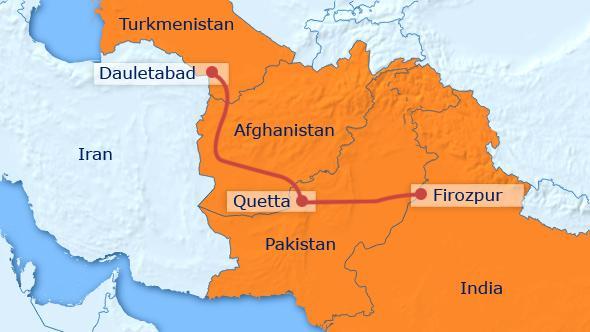
Officials from India and Pakistan have announced they are moving closer to inking a deal to import gas from Turkmenistan via a pipeline through Afghanistan. The 1,700-kilometer “TAPI” duct will transport over 30 billion cubic meters of gas annually from fields in Dauletabad in southeastern Turkmenistan.

In high-level talks in New Delhi this week, Indian Oil Minister S. Jaipal Reddy said “considerable progress” has been made on the project. His Pakistani counterpart, Asim Hussain, added at the meeting that “the issue of transit fees is being discussed with Afghanistan. A joint strategy is also being created between India and Pakistan.”

When the four countries signed a framework agreement back in 2008, the Asian Development Bank estimated the cost of the TAPI pipeline project at around $7.6 billion.

After the talks in New Delhi, the Indian oil minister emphasized that the pipeline would help address the energy needs of the region. Reddy also clarified that security concerns were discussed with Afghan officials, who themselves sought to provide reassurance that necessary measures would be taken to protect the TAPI project.

“We consider it a pipeline of peace,” Reddy said. “Everyone needs gas.”

Improving cooperation between the nuclear armed and traditionally hostile neighbors is seen as a positive development towards establishing long term stability in South Asia.

Pakistan gave India a “Most Favored Nation” trading status when the countries’ commerce secretaries met in New Delhi in November last year to discuss energy and bilateral trade. Indian commerce chief Rahul Khullar expressed his desire to boost bilateral trade to $6 billion within the next three years. Currently, total trade amounts to $2.7 billion.

Reddy said that Pakistan had pledged to also consider a proposal to import Indian petroleum products, highlighting the cost advantages for Pakistan. India, meanwhile, offered electricity to Pakistan through its power plants in Punjab and Gujrat.

The Indian oil minister went on to express disappointment over a failed Iran-Pakistan-India gas pipeline project. With the US leaving no stone unturned in trying to corner Iran over its nuclear ambitions, any possibility of India, Afghanistan or Pakistan going against the Obama administration is somewhat remote. India imports 12 to 14 percent of its oil from Iran, making the Islamic Republic India’s second largest source of oil after Saudi Arabia.

There was significant domestic pressure in India as the analysts and masses called for a stern stand against the US in determining trade relations with Iran. With other regional countries, including China, also refusing to follow US directions, India is still continuing with the import of oil from Iran. In this regard, Reddy said that New Delhi would continue importing oil from Iran and was not bound by new sanctions imposed by the European Union on the Islamic Republic earlier this week.

“We, as a member of the UN, are obliged to follow UN sanctions. Other sanctions imposed by big blocs of countries, we can have some freedom there,” he added further.

Improving relations and cooperation in the energy sector between India and Pakistan will go a long way to establishing harmony and stability in the region. Pakistan is experiencing a severe energy crisis whilst India needs to feed its rapidly developing economy. Mutual dependency and cooperation in this sector with projects such as the TAPI pipeline can also ensure smoother political ties.

Pakistanis for Peace Editor’s Note– A Peace pipe was often used between the Native American tribes when they ended their wars and called a truce. A different sort of peace pipe between Turkmenistan and India via Pakistan can do great wonders for the bilateral relations of the two feuding neighbors and must be encouraged to fruition.

How Pakistan Continues to Help US Drone Campaign Despite Political Tensions

As Reported by Reuters

The death of a senior Al-Qaeda leader in a US drone strike in Pakistan’s tribal badlands, the first strike in almost two months, signaled that the US-Pakistan intelligence partnership is still in operation despite political tensions. The Jan 10 strike-and its follow-up two days later- were joint operations, a Pakistani security source based in the tribal areas told Reuters. They made use of Pakistani “spotters” on the ground and demonstrated a level of coordination that both sides have sought to downplay since tensions erupted in January 2011 with the killing of two Pakistanis by a CIA contractor in Lahore.

“Our working relationship is a bit different from our political relationship,” the source told Reuters, requesting anonymity. “It’s more productive.” US and Pakistani sources told Reuters that the target of the Jan 10 attack was Aslam Awan, a Pakistani national from Abbottabad, the town where Osama bin Laden was killed last May by a US commando team.

They said he was targeted in a strike by a US-operated drone directed at what news reports said was a compound near the town of Miranshah in the border province of North Waziristan. That strike broke an undeclared eight-week hiatus in attacks by the armed, unmanned drones that patrol the tribal areas and are a key weapon in US President Barack Obama’s counter-terrorism strategy.

The sources described Awan, also known by the nom-de-guerre Abdullah Khorasani, as a significant figure in the remaining core leadership of al Qaeda, which US officials say has been sharply reduced by the drone campaign. Most of the drone attacks are conducted as part of a clandestine CIA operation.

The Pakistani source, who helped target Awan, could not confirm that he was killed, but the US official said he was. European officials said Awan had spent time in London and had ties to British extremists before returning to Pakistan. The source, who says he runs a network of spotters primarily in North and South Waziristan, described for the first time how US-Pakistani cooperation on strikes works, with his Pakistani agents keeping close tabs on suspected militants and building a pattern of their movements and associations. “We run a network of human intelligence sources,” he said. “Separately, we monitor their cell and satellite phones. “Thirdly, we run joint monitoring operations with our US and UK friends,” he added, noting that cooperation with British intelligence was also extensive. Pakistani and US intelligence officers, using their own sources, hash out a joint “priority of targets lists” in regular face-to-face meetings, he said. “Al-Qaeda is our top priority,” he said. He declined to say where the meetings take place. Once a target is identified and “marked,” his network coordinates with drone operators on the US side. He said the United States bases drones outside Kabul, likely at Bagram airfield about 25 miles (40 km) north of the capital. From spotting to firing a missile “hardly takes about two to three hours”, he said.

It was impossible to verify the source’s claims and American experts, who decline to discuss the drone program, say the Pakistanis’ cooperation has been less helpful in the past. US officials have complained that when information on drone strikes was shared with the Pakistanis beforehand, the targets were often tipped off, allowing them to escape. Drone strikes have been a sore point with the public and Pakistani politicians, who describe them as violations of sovereignty that produce unacceptable civilian casualties. The last strike before January had been on Nov 16, 10 days before 24 Pakistani soldiers were killed in what NATO says was an inadvertent cross-border attack on a Pakistani border post. That incident sent US-Pakistan relations into the deepest crisis since Islamabad joined the US-led war on militancy following the Sept 11, 2001 attacks. On Thursday, Pakistani foreign minister Hina Rabbani Khar said ties were “on hold” while Pakistan completes a review of the alliance.

The End of a Geopolitical Affair

By Pramit Pal Chaudhri for The Hindustan Times

In Pakistan’s current crisis, why is its military is so reluctant to consider simply seizing power? One reason is that General Ashfaq Pervez Kayani cannot count on the US looking the other way. At a minimum, Washington would have to slap sanctions on an economically faltering country. At a maximum, it would be the last straw in a bilateral relationship at its lowest ebb since it was first woven in the 1950s.

Pakistan’s establishment claims it has been used and abused by the US, the most serious violation being that country’s stealth attack on Abbottabad that led to Osama bin Laden’s death. There has been the Raymond Davies affair, the endless drone attacks and the increasingly public accusation of double-dealing by senior US officials – the most notable being Admiral Mike Mullen’s linking of the Inter-Services Intelligence with terrorist groups.

There is some satisfaction for India in all this. It has been persistently claiming the existence of a military-terrorist nexus. Many in Washington agree. After Abbottabad, there is no one in Washington who doesn’t. The US-Pakistan relationship, says Daniel Twining of the German Marshall Fund, “was really at a historic high for the past decade but is diminishing.” But it might not matter as much to the US if relations fall apart, he says.

Other events are undermining the basis of the US-Pakistani bond. Islamabad had expected the US to totally retreat from Afghanistan, leaving Pakistan’s Taliban allies in charge. Instead, the US will leave a substantial force behind along with many drone bases. The US is talking with the Taliban, but only desultorily with groups that Islamabad patronises.

With the US Congress also pulling the plug on aid to Pakistan, what is left? The answer is nukes. “If Pakistan didn’t have nuclear weapons, with Al Qaeda almost gone, no one would care a fig about that country,” said one ex-US ambassador to the region. As they realise this, Islamabad is getting more paranoid about the security of its “strategic assets.” The more unstable they look, the more willing the US will be to try and do something risky to salvage Pakistan’s nuclear weapons.

US officials are talking about a “new normal” in their Pakistan relations. This would cut ties to the bare bones: counterterrorism cooperation, limited military transit requirements, Afghan talks, narcotics and some humanitarian assistance. “We’ll have to work with the Pakistan military on a limited basis while negotiations with the Taliban proceed,” says John Schlosser, a former state department South Asia hand.

There seems to be no real understanding among Pakistanis that their leverage is dwindling or how much Abbottabad vapourised their credibility in the US. A parliamentary committee report on how to change the US relationship bizarrely demanded, for example, a civilian nuclear agreement.

It could get worse. “The relationship will fall further if the US finds [Al Qaeda chief] Zawahiri in Pakistan. Or there are terror strikes on India or the US,” says Bruce Riedel, former AfPak advisor to Barack Obama.

The worst thing is that Washington is decoupling just at a time when Pakistan, economically and otherwise, can least afford to lose their most generous international partner.

New Year’s gift: Obama signs bill freezing aid to Pakistan

As Reported By Reuters

President Barack Obama signed a sweeping US defense funding bill on Saturday which includes new sanctions on financial institutions dealing with Iran’s central bank, and curtailing up to $850 million in aid to Pakistan. The bill was signed despite concerns about sections that expand the US military’s authority over terrorism suspects and limit his powers in foreign affairs.

The massive defense bill Congress passed on earlier in December freezes 60 per cent of the $850 million aid, or $510 million, until the US defense secretary provides lawmakers with assurances that Pakistan is working to counter improvised explosive devices (IEDs). US lawmakers say that many Afghan bombs that kill US troops are made with fertilizer smuggled by militants across the border from Pakistan into Afghanistan.

“The fact that I support this bill as a whole does not mean I agree with everything in it,” Obama said in a statement, citing limits on transferring detainees from the US base at Guantanamo Bay, Cuba, and requirements he notify Congress before sharing some defense missile information with Russia as problematic.

The bill, approved by Congress last week after its language was revised, aims with its Iran sanctions to reduce Tehran’s oil revenues but gives the US president powers to waive penalties as required. Senior US officials said Washington was engaging with its foreign partners to ensure the sanctions can work without harming global energy markets, and stressed the US strategy for engaging with Iran was unchanged by the bill.

The bill may also prove problematic for Pakistan in ways other than providing assurances of concrete steps to counter the manufacture of IEDs. The sanctions placed on dealing with Iran’s central banks may weigh on Pakistan’s plans for the Iran-Pakistan pipeline which aims to provide gas to Pakistan.

Pakistan needs the gas supplies from Iran to augment its own gas reserves which have been shrinking fast, leading to widespread gas shortages affecting its industry and daily life.

SHINE’s Impact on Armadeus Davidson

Volunteers Extraordinaire Todd Shea of SHINE Humanity and Armadeus Davidson of Empact Northwest of WA doing humanitarian work in Pakistan.

The Pakistanis Have A Point

By Bill Keller for The New York Times
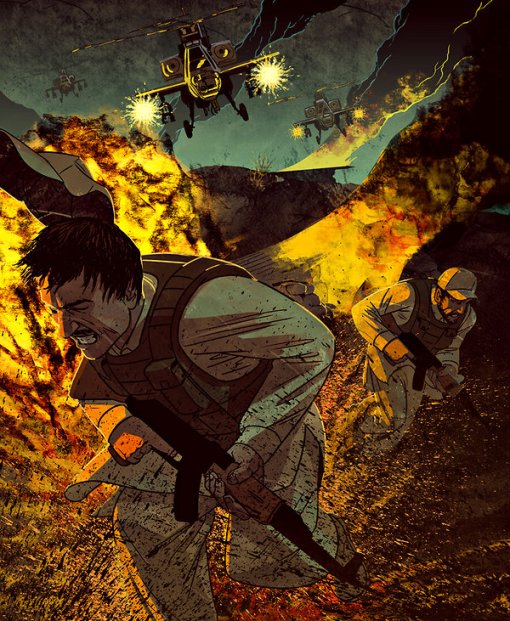
As an American visitor in the power precincts of Pakistan, from the gated enclaves of Islamabad to the manicured lawns of the military garrison in Peshawar, from the luxury fortress of the Serena Hotel to the exclusive apartments of the parliamentary housing blocks, you can expect three time-honored traditions: black tea with milk, obsequious servants and a profound sense of grievance.

Talk to Pakistani politicians, scholars, generals, businessmen, spies and journalists — as I did in October — and before long, you are beyond the realm of politics and diplomacy and into the realm of hurt feelings. Words like “ditch” and “jilt” and “betray” recur. With Americans, they complain, it’s never a commitment, it’s always a transaction. This theme is played to the hilt, for effect, but it is also heartfelt.

“The thing about us,” a Pakistani official told me, “is that we are half emotional and half irrational.”

For a relationship that has oscillated for decades between collaboration and breakdown, this has been an extraordinarily bad year, at an especially inconvenient time. As America settles onto the long path toward withdrawal from Afghanistan, Pakistan has considerable power to determine whether the end of our longest war is seen as a plausible success or a calamitous failure.

There are, of course, other reasons that Pakistan deserves our attention. It has a fast-growing population approaching 190 million, and it hosts a loose conglomerate of terrorist franchises that offer young Pakistanis employment and purpose unavailable in the suffering feudal economy. It has 100-plus nuclear weapons (Americans who monitor the program don’t know the exact number or the exact location) and a tense, heavily armed border with nuclear India. And its president, Asif Ali Zardari, oversees a ruinous kleptocracy that is spiraling deeper into economic crisis.

But it is the scramble to disengage from Afghanistan that has focused minds in Washington. Pakistan’s rough western frontier with Afghanistan is a sanctuary for militant extremists and criminal ventures, including the Afghan Taliban, the Pakistani Taliban, the notorious Haqqani clan and important remnants of the original horror story, Al Qaeda. The mistrust between Islamabad and Kabul is deep, nasty — Afghanistan was the only country to vote against letting Pakistan into the United Nations — and tribal. And to complicate matters further, Pakistan is the main military supply route for the American-led international forces and the Afghan National Army.

On Thanksgiving weekend, a month after I returned from Pakistan, the relationship veered precipitously — typically — off course again. NATO aircraft covering an operation by Afghan soldiers and American Special Forces pounded two border posts, inadvertently killing 24 Pakistani soldiers, including two officers. The Americans said that they were fired on first and that Pakistan approved the airstrikes; the Pakistanis say the Americans did not wait for clearance to fire and then bombed the wrong targets.

The fallout was painfully familiar: outrage, suspicion and recrimination, petulance and political posturing. Gen. Ashfaq Parvez Kayani, the chief of the army and by all accounts the most powerful man in Pakistan, retaliated by shutting (for now and not for the first time) the NATO supply corridor through his country. The Pakistanis abruptly dropped out of a Bonn conference on the future of Afghanistan and announced they would not cooperate with an American investigation of the airstrikes. President Obama sent condolences but balked at the suggestion of an apology; possibly the president did not want to set off another chorus of Mitt Romney’s refrain that Obama is always apologizing for America. At this writing, American officials were trying to gauge whether the errant airstrike would have, as one worried official put it, “a long half-life.”

If you survey informed Americans, you will hear Pakistanis described as duplicitous, paranoid, self-pitying and generally infuriating. In turn, Pakistanis describe us as fickle, arrogant, shortsighted and chronically unreliable.

Neither country’s caricature of the other is entirely wrong, and it makes for a relationship that is less in need of diplomacy than couples therapy, which customarily starts by trying to see things from the other point of view. While the Pakistanis have hardly been innocent, they have a point when they say America has not been the easiest of partners.

One good place to mark the beginning of this very, very bad year in U.S.-Pakistani relations is Dec. 13, 2010, when Richard C. Holbrooke died of a torn aorta. Holbrooke, the veteran of the Balkan peace, had for two years held the thankless, newly invented role of the administration’s special representative for Afghanistan and Pakistan. The antithesis of mellow, Holbrooke did not hit it off with our no-drama president, and his bluster didn’t always play well in Kabul or Islamabad either.

But Holbrooke paid aggressive attention to Pakistan. While he was characteristically blunt about the divergent U.S. and Pakistani views, he understood that they were a result of different, calculated national interests, not malevolence or mere orneriness. He was convinced that the outlooks could be, if not exactly synchronized, made more compatible. He made a concentrated effort to persuade the Pakistanis that this time the United States would not be a fair-weather friend.

“You need a Holbrooke,” says Maleeha Lodhi, a well-connected former ambassador to Washington. “Not necessarily the person but the role.” In the absence of full-on engagement, she says, “it’s become a very accident-prone relationship.”

On Jan. 27, a trigger-happy C.I.A. contractor named Raymond Davis was stuck in Lahore traffic and shot dead two motorcyclists who approached him. A backup vehicle he summoned ran over and killed a bystander. The U.S. spent heavily from its meager stock of good will to persuade the Pakistanis to set Davis free — pleading with a straight face that he was entitled to diplomatic immunity.

On May 2, a U.S. Navy Seals team caught Osama bin Laden in the military town Abbottabad and killed him. Before long, American officials were quoted questioning whether their Pakistani allies were just incompetent or actually complicit. (The Americans who deal with Pakistan believe that General Kayani and the director of the Inter-Services Intelligence agency, Gen. Ahmed Shuja Pasha, were genuinely surprised and embarrassed that Bin Laden was so close by, though the Americans fault the Pakistanis for not looking very hard.) In Pakistan, Kayani faced rumbles of insurrection for letting Americans violate Pakistani sovereignty; a defining victory for President Obama was a humiliation for Kayani and Pasha.

In September, members of the Haqqani clan (a criminal syndicate and jihadi cult that’s avowedly subservient to the Taliban leader Mullah Omar) marked the 10th anniversary of 9/11 with two theatrical attacks in Afghanistan. First a truck bomb injured 77 American soldiers in Wardak Province. Then militants rained rocket-propelled grenades on the U.S. Embassy in Kabul, forcing our ambassador to spend 20 hours locked down in a bunker.

A few days later the former Afghan president, Burhanuddin Rabbani, spread his arms to welcome an emissary from the Taliban to discuss the possibility of peace talks. As they embraced, the visitor detonated a bomb in his turban, killing himself, Rabbani and the talks. President Hamid Karzai of Afghanistan, without any evidence that American officials are aware of, accused Pakistan of masterminding the grotesque killing in order to scuttle peace talks it couldn’t control.

And two days after that, Adm. Mike Mullen, the outgoing chairman of the Joint Chiefs of Staff, took to Capitol Hill to suggest that Pakistani intelligence had blessed the truck bomb and embassy attack.

His testimony came as a particular shock, because if the turbulent affair between the United States and Pakistan had a solid center in recent years, it was the rapport between Mullen and his Pakistani counterpart, General Kayani. Over the four years from Kayani’s promotion as chief of the army staff until Mullen’s retirement in September, scarcely a month went by when the two didn’t meet. Mullen would often drop by Kayani’s home at the military enclave in Rawalpindi, arriving for dinner and staying into the early morning, discussing the pressures of command while the sullen-visaged general chain-smoked Dunhills. One time, Kayani took his American friend to the Himalayas for a flyby of the world’s second-highest peak, K2. On another occasion, Mullen hosted Kayani on the golf course at the Naval Academy. The two men seemed to have developed a genuine trust and respect for each other.

But Mullen’s faith in an underlying common purpose was rattled by the truck bombing and the embassy attack, both of which opened Mullen to the charge that his courtship of Kayani had been a failure. So — over the objection of the State Department — the admiral set out to demonstrate that he had no illusions.

The Haqqani network “acts as a veritable arm of Pakistan’s Inter-Services Intelligence agency,” he declared. “With ISI support, Haqqani operatives planned and conducted that truck-bomb attack as well as the assault on our embassy.”

Several officials with access to the intelligence told me that while the Haqqanis were implicated in both attacks, there was no evidence of direct ISI involvement. A Mullen aide said later that the admiral was referring to ISI’s ongoing sponsorship of the Haqqanis and did not mean to say Pakistan authorized those specific attacks.

No matter. In Pakistan, Mullen’s denunciation led to a ripple of alarm that U.S. military “hardliners” were contemplating an invasion. The press had hysterics. Kayani made a show of putting the Pakistani Army on alert. The Pakistani rupee fell in value.

In Washington, Mullen’s remarks captured — and fed — a vengeful mood and a rising sense of fatalism about Pakistan. Bruce O. Riedel, an influential former C.I.A. officer who led a 2009 policy review for President Obama on Pakistan and Afghanistan, captured the prevailing sentiment in an Op-Ed in The Times, in which he called for a new policy of “containment,” meaning “a more hostile relationship” toward the army and intelligence services.

“I can see how this gets worse,” Riedel told me. “And I can see how this gets catastrophically worse. . . . I don’t see how it gets a whole lot better.”

When Gen. David H. Petraeus took over the U.S. military’s Central Command in 2008, he commissioned expert briefing papers on his new domain, which sprawled from Egypt, across the Persian Gulf, to Central Asia. The paper on Afghanistan and Pakistan began, according to an American who has read it, roughly this way: “The United States has no vital national interests in Afghanistan. Our vital national interests are in Pakistan,” notably the security of those nuclear weapons and the infiltration by Al Qaeda. The paper then went on for the remaining pages to discuss Afghanistan. Pakistan hardly got a mention. “That’s typical,” my source said. Pakistan tends to be an afterthought.

The Pakistani version of modern history is one of American betrayal, going back at least to the Kennedy administration’s arming of Pakistan’s archrival, India, in the wake of its 1962 border war with China.

The most consequential feat of American opportunism came when we enlisted Pakistan to bedevil the Soviet occupiers of Afghanistan in the 1980s. The intelligence agencies of the U.S. and Pakistan — with help from Saudi Arabia — created the perfect thorn in the Soviet underbelly: young Muslim “freedom fighters,” schooled in jihad at Pakistani madrassas, laden with American surface-to-air missiles and led by charismatic warriors who set aside tribal rivalries to war against foreign occupation.

After the Soviets admitted defeat in 1989, the U.S. — mission accomplished! — pulled out, leaving Pakistan holding the bag: several million refugees, an Afghanistan torn by civil war and a population of jihadists who would find new targets for their American-supplied arms. In the ensuing struggle for control of Afghanistan, Pakistan eventually sided with the Taliban, who were dominated by the Pashtun tribe that populates the Pakistan-Afghanistan frontier. The rival Northern Alliance was run by Tajiks and Uzbeks and backed by India; and the one thing you can never underestimate is Pakistan’s obsession with bigger, richer, better-armed India.

As long as Pakistan was our partner in tormenting the Soviet Union, the U.S. winked at Pakistan’s nuclear-weapons program. After all, India was developing a nuclear arsenal, and it was inevitable that Pakistan would follow suit. But after the Soviets retreated, Pakistan was ostracized under a Congressional antiproliferation measure called the Pressler Amendment, stripped of military aid (some of it budgeted to bring Pakistani officers to the U.S. for exposure to American military values and discipline) and civilian assistance (most of it used to promote civil society and buy good will).

Our relationship with Pakistan sometimes seems like a case study in unintended consequences. The spawning of the mujahadeen is, of course, Exhibit A. The Pressler Amendment is Exhibit B. And Exhibit C might be America’s protectionist tariffs on Pakistan’s most important export, textiles. For years, experts, including a series of American ambassadors in Islamabad, have said that the single best thing the U.S. could do to pull Pakistan into the modern world is to ease trade barriers, as it has done with many other countries. Instead of sending foreign aid and hoping it trickles down, we could make it easier for Americans to buy Pakistani shirts, towels and denims, thus lifting an industry that is an incubator of the middle class and employs many women. Congress, answerable to domestic textile interests, has had none of it.

“Pakistan the afterthought” was the theme very late one night when I visited the home of Pakistan’s finance minister, Abdul Hafeez Shaikh. After showing me his impressive art collection, Shaikh flopped on a sofa and ran through the roll call of American infidelity. He worked his way, decade by decade, to the war on terror. Now, he said, Pakistan is tasked by the Americans with simultaneously helping to kill terrorists and — the newest twist — using its influence to bring them to the bargaining table. Congress, meanwhile, angry about terrorist sanctuaries, is squeezing off much of the financial aid that is supposed to be the lubricant in our alliance.

“Pakistan was the cold-war friend, the Soviet-Afghan-war friend, the terror-war friend,” the minister said. “As soon as the wars ended, so did the assistance. The sense of being discarded is so recent.”

A Boston University-educated economist who made his money in private equity investing — in other words, a cosmopolitan man — Shaikh seemed slightly abashed by his own bitterness.

“I’m not saying that this style of Pakistani thinking is analytically correct,” he said. “I’m just telling you how people feel.”

He waved an arm toward his dining room, where he hung a Warhol of Muhammad Ali. “We’re just supposed to be like Ali — take the beating for seven rounds from Foreman,” he said. “But this time the Pakistanis have wised up. We are playing the game, but we know you can’t take these people at their word.”

With a timetable that has the United States out of Afghanistan, or mostly out, by the end of 2014, Pakistan has leverage it did not have when the war began.

One day after 9/11, Richard Armitage, the deputy secretary of state, summoned the head of Pakistani intelligence for a talking to. “We are asking all of our friends: Do they stand with us or against us?” he said. The following day, Armitage handed over a list of seven demands, which included stopping Al Qaeda operations on the Pakistani border, giving American invaders access to Pakistani bases and airspace and breaking all ties with the Taliban regime.

The Pakistanis believed from the beginning that Afghanistan had “American quagmire” written all over it. Moreover, what America had in mind for Afghanistan was antithetical to Pakistan’s self-interest.

“The only time period between 1947 and the American invasion of Afghanistan that Pakistanis have felt secure about Afghanistan is during the Taliban period,” from 1996 to 2001, says Vali Nasr, an American scholar of the region who is listened to in both academia and government. Now the Bush administration would attempt to supplant the Taliban with a strong independent government in Kabul and a muscular military. “Everything about this vision is dangerous to Pakistan,” Nasr says.

Pakistan’s military ruler at the time, Pervez Musharraf, saw the folly of defying an American ultimatum. He quickly agreed to the American demands and delivered on many of them. In practice, though, the accommodation with the Taliban was never fully curtailed. Pakistan knew America’s mission in Afghanistan would end, and it spread its bets.

The Bush-Musharraf relationship, Vali Nasr says, “was sort of a Hollywood suspension of disbelief. Musharraf was a convenient person who created a myth that we subscribed to — basically that Pakistan was on the same page with us, it was an ally in the war on terror and it subscribed to our agenda for Afghanistan.”

But the longer the war in Afghanistan dragged on, the harder it was to sustain the illusion.

In October, I took the highway west from Islamabad to Peshawar, headquarters of the Pakistan Army corps responsible for the frontier with Afghanistan. Over tea and cookies, Lt. Gen. Asif Yasin Malik, the three-star who commanded the frontier (he retired this month) talked about how the Afghan war looked from his side of the border.

The official American version of the current situation in Afghanistan goes like this: By applying the counterinsurgency strategy that worked in Iraq and relying on a surge of troops and the increasingly sophisticated use of drones, the United States has been beating the insurgency into submission, while at the same time standing up an indigenous Afghan Army that could take over the mission. If only Pakistan would police its side of the border — where the bad guys find safe haven, fresh recruits and financing — we’d be on track for an exit in 2014.

The Pakistanis have a different narrative. First, a central government has never successfully ruled Afghanistan. Second, Karzai is an unreliable neighbor — a reputation that has not been dispelled by his recent, manic declarations of brotherhood. And third, they believe that despite substantial investment by the United States, the Afghan Army and the police are a long way from being ready to hold the country. In other words, America is preparing to leave behind an Afghanistan that looks like incipient chaos to Pakistan.

In Peshawar, General Malik talked with polite disdain about his neighbor to the west. His biggest fear — one I’m told Kayani stresses in every meeting with his American counterparts — is the capability of the Afghan National Security Forces, an army of 170,000 and another 135,000 police, responsible for preventing Afghanistan from disintegrating back into failed-state status. If the U.S. succeeds in creating such a potent fighting force, that makes Pakistanis nervous, because they see it (rightly) as potentially unfriendly and (probably wrongly) as a potential agent of Indian influence. The more likely and equally unsettling outcome, Pakistanis believe, is that the Afghan military — immature, fractious and dependent on the U.S. Treasury — will disintegrate into heavily armed tribal claques and bandit syndicates. And America, as always, will be gone when hell breaks loose.

General Malik studied on an exchange at Fort McNair, in Washington, D.C., and has visited 23 American states. He likes to think he is not clueless about how things work in our country.

“Come 2015, which senator would be ready to vote $9 billion, or $7 billion, to be spent on this army?” he asked. “Even $5 billion a year. O.K., maybe one year, maybe two years. But with the economy going downhill, how does the future afford this? Very challenging.”

American officials will tell you, not for attribution, that Malik’s concerns are quite reasonable.

So I asked the general if that was why his forces have not been more aggressive about mopping up terrorist sanctuaries along the border. Still hedging their bets? His answer was elaborate and not entirely facile.

First of all, the general pointed out that Pakistan has done some serious fighting in terrorist strongholds and shed a lot of blood. Over the past two years, Malik’s forces have been enlarged to 147,000 soldiers, mainly by relocating more than 50,000 from the Indian border. They have largely controlled militant activities in the Swat Valley, for example, which entailed two hard offensives with major casualties. But they have steadfastly declined to mount a major assault against North Waziristan — a mountainous region of terrorist Deadwoods populated by battle-toughened outlaws.

Yes, Malik said, North Waziristan is a terrible situation, but his forces are responsible for roughly 1,500 miles of border, they police an archipelago of rough towns in the so-called Federally Administered Tribal Areas, or FATA, and by the way, they had a devastating flood to handle last year.

“If you are not able to close the Mexican border, when you have the technology at your call, when there is no war,” he said, “how can you expect us to close our border, especially if you are not locking the doors on your side?”

Americans who know the area well concede that, for all our complaints, Pakistan doesn’t push harder in large part because it can’t. The Pakistan Army has been trained to patrol the Indian border, not to battle hardened insurgents. They have comparatively crude weaponry. When they go up against a ruthless outfit like the Haqqanis, they tend to get killed. Roughly 4,000 Pakistani troops have died in these border wars — more than the number of all the allied soldiers killed in Afghanistan.

“They’re obviously reluctant to go against the Haqqanis, but reluctant for a couple of reasons,” an American official told me. “Not just the reason that they see them as a potential proxy force if Afghanistan doesn’t go well, but also because they just literally lack the capability to take them on. They’ve got enough wars on their hands. They’ve not been able to consolidate their gains up in the northern part of the FATA, they have continued problems in other areas and they just can’t deal with another campaign, which is what North Waziristan would be.”

And there is another, fundamental problem, Malik said. There is simply no popular support for stepping up the fight in what is seen as America’s war. Ordinary Pakistanis feel they have paid a high price in collateral damage, between the civilian casualties from unmanned drone attacks and the blowback from terror groups within Pakistan.

“When you go into North Waziristan and carry out some major operation, there is going to be a terrorist backlash in the rest of the country,” Malik told me. “The political mood, or the public mood, is ‘no more operations.’ ”

In late October, Hillary Clinton arrived in Islamabad, leading a delegation that included Petraeus, recently confirmed as C.I.A. director, and Gen. Martin E. Dempsey, Mullen’s successor as chairman of the Joint Chiefs. Petraeus used to refer to Holbrooke as “my diplomatic wingman,” a bit of condescension he apparently intended as a tribute. This time, the security contingent served as diplomacy’s wingmen.

The trip was intended as a show of unity and resolve by an administration that has spoken with conflicting voices when it has focused on Pakistan at all. For more than four hours, the Americans and a potent lineup of Pakistani counterparts talked over a dinner table.

Perhaps the most revealing thing about the dinner was the guest list. The nine participants included Kayani and Pasha, but not President Zardari or Prime Minister Yousuf Raza Gilani, who provided the dining room at his own residence and made himself scarce. The only representative of the civilian government was Clinton’s counterpart, the new foreign minister, Hina Rabbani Khar, a 34-year-old rising star with the dark-haired beauty of a Bollywood leading lady, a degree in hospitality management from the University of Massachusetts and, most important, close ties to the Pakistani military.

For a country that cherishes civilian democracy, we have a surprising affinity for strong men in uniform. Based on my conversations with American officials across the government, the U.S. has developed a grudging respect for Kayani, whom they regard as astute, straightforward, respectful of the idea of democratic government but genuinely disgusted by the current regime’s thievery and ineptitude. (We know from the secret diplomatic cables disclosed by WikiLeaks that Kayani has confided to American officials his utter contempt for his president and “hinted that he might, however reluctantly, have to persuade President Zardari to resign.”) Zardari, whose principal claim to office is that he is the widower of the assassinated and virtually canonized Benazir Bhutto, has been mainly preoccupied with building up his patronage machine for elections in 2013. The Americans expect little from him and don’t see a likely savior among his would-be political challengers. (As this article goes to press, Zardari is recovering from chest pains in a hospital in Dubai; there are rumors he won’t return.) So, Kayani it is. The official American consensus is less enamored of Kayani’s loyal intelligence underling, General Pasha, whose agency consorts with terrorists and is suspected of torturing and killing troublemakers, including journalists, but Pasha is too powerful to ignore.

The day after the marathon dinner, Clinton’s entourage took over the Serena Hotel for a festival of public diplomacy — a press conference with the foreign minister, followed by a town meeting with young Pakistanis and then a hardball round-table interview with a circle of top editors and anchors.

Clinton’s visit was generally portrayed, not least in the Pakistani press, as a familiar ritual of America talking tough to Pakistan. In the town meeting, a woman asked why America always played the role of bossy mother-in-law, and that theme delighted editorial cartoonists for days.

But the private message to the Pakistanis — and a more careful reading of Clinton’s public performance — reflected a serious effort to reboot a troubled relationship. Clinton took care to pay tribute to Pakistani losses in the war against terror in the past decade — in addition to the military, an estimated 30,000 civilian dead, the equivalent of a 9/11 every year. She ruled out sending American ground troops into Pakistani territory. She endorsed a Pakistani plea that U.S. forces in Afghanistan do a better job of cleaning up militant sanctuaries on their own side of the border.

Questioned by a prominent television anchor, she repudiated Mullen’s testimony, not only disavowing any evidence of ISI complicity in the attack on America’s embassy in Kabul but also soft-peddling the spy agency’s coziness with terrorists.

“Now, every intelligence agency has contacts with unsavory characters,” she said. “I don’t think you would get any denial from either the ISI or the C.I.A. that people in their respective organizations have contacts with members of groups that have different agendas than the governments’. But that doesn’t mean that they are being directed or being approved or otherwise given a seal of approval.”

That particular riff may have caused jaws to clench at the C.I.A. compound in Langley, Va. The truth is, according to half a dozen senior officials with access to the intelligence, the evidence of Pakistan’s affinity for terrorists is often circumstantial and ambiguous, a matter of intercepted conversations in coded language, and their dealings are thought to be more pragmatic than ideological, more a matter of tolerating than directing, but the relationship goes way beyond “contacts with unsavory characters.”

“They’re facilitating,” one official told me. “They provide information to the Haqqanis, they let them cross back and forth across the border, they let this L.E.T. guy (the leader of the dangerous Lashkar-e-Taiba faction of Kashmiri terrorists) be in prison and not be in prison at the same time.”

And yet the Pakistanis have been helpful — Abbottabad aside — against Al Qaeda, which is America’s first priority and which the Pakistanis recognize as a menace to everyone. They have shared intelligence, provided access to interrogations and coordinated operations. Before the fatal border mishap Thanksgiving weekend, one U.S. official told me, anti-terror cooperation between the C.I.A. and Pakistani intelligence had been “very much on the upswing.”

The most striking aspect of Clinton’s trip, however, was her enthusiastic embrace of what is now called “reconciliation” — which is the polite word for negotiating with the Taliban.

Pakistan has long argued that the way to keep Afghanistan from coming to grief is to cut a deal with at least some of the Taliban. That would also mean Afghanistan could get by with a smaller, cheaper army. The notion has been anathema to the Americans tasked with killing Taliban; a principled stand against negotiating with terrorists is also a political meme that acquires particular potency in election seasons, as viewers of the Republican debates can attest.

Almost unnoticed, though, reconciliation has moved to a central place in America’s strategy and has become the principal assignment for U.S. officials in the region. Clinton first signaled this in a speech to the Asia Society last February, when she refocused Afghanistan strategy on its original purpose, isolating the terrorists at war with America, meaning Al Qaeda.

The speech was buried beneath other news at the time, but in early October, Tom Donilon, Obama’s national security adviser, met Kayani in Abu Dhabi to stress to skeptical Pakistani leaders that she was serious. Clinton’s visit to Islamabad with her generals in tow was designed to put the full weight of the U.S. behind it.

Clinton publicly acknowledged that the ISI (in fact, it was General Pasha in person) had already brokered a preliminary meeting between a top American diplomat and a member of the Haqqani clan. Nothing much came of the meeting, news of which promptly leaked, but Clinton said America was willing to sit down with the Taliban. She said that what had once been preconditions for negotiations — renouncing violence, shunning Al Qaeda and accepting Afghanistan’s constitution, including freedoms for women — were now “goals.”

In diplomacy, no process is fully initiated until it has been named. A meeting of Pakistani political parties in Islamabad had adopted a rubric for peace talks with the Taliban, a slogan the Pakistanis repeated at every opportunity: “Give peace a chance.” If having this project boiled down to a John Lennon lyric diminished the gravitas of the occasion, Clinton didn’t let on.

Within the American policy conglomerate, not everyone is terribly upbeat about the prospect of reconciling with the Taliban. The Taliban have so far publicly rejected talks, and the turban-bomb killing of Rabbani was a serious reversal. There is still some suspicion — encouraged by Afghanistan and India — about Pakistan’s real agenda. One theory is that Pakistan secretly wants the Taliban restored to power in Afghanistan, believing the Pashtun Islamists would be more susceptible to Pakistani influence. A more cynical theory, which I heard quite a bit in New Delhi, is that the Pakistani Army actually wants chaos on its various borders to justify its large payroll. Most Americans I met who are immersed in this problem put little stock in either of those notions. The Pakistanis may not be the most trustworthy partners in Asia, but they aren’t idiots. They know, at least at the senior levels, that a resurgent Taliban means not just perpetual mayhem on the border but also an emboldening of indigenous jihadists whose aim is nothing less than a takeover of nuclear Pakistan. But agreeing on the principle of a “stable Afghanistan” is easier than defining it, or getting there.

After Clinton left Islamabad, a senior Pakistani intelligence official I wanted to meet arrived for breakfast with me and a colleague at Islamabad’s finest hotel. With a genial air of command, he ordered eggs Benedict for the table, declined my request to turn on a tape recorder, (“Just keep my name out of it,” he instructed later) and settled into an hour of polished spin.

“The Taliban learned its lesson in the madrassas and applied them ruthlessly,” he said, as the Hollandaise congealed. “Now the older ones have seen 10 years of war, and reconciliation is possible. Their outlook has been tempered by reason and contact with the modern world. They have relatives and friends in Kabul. They have money from the opium trade. They watch satellite TV. They are on the Internet.”

On the other hand, he continued, “if you kill off the midtier Taliban, the ones who are going to replace them — and there are many waiting in line, sadly — are younger, more aggressive and eager to prove themselves.”

So what would it take to bring the Taliban into a settlement? First, he said, stop killing them. Second, an end to foreign military presence, the one thing that always mobilizes the occupied in that part of the world. Third, an Afghan constitution framed to give more local autonomy, so that Pashtun regions could be run by Pashtuns.

On the face of it, as my breakfast companion surely knows, those sound like three nonstarters, and taken together they sound rather like surrender. Even Clinton is not calling for a break in hostilities, which the Americans see as the way to drive the Taliban to the bargaining table. As for foreign presence, both the Americans and the Afghans expect some long-term residual force to stay in Afghanistan, to backstop the Afghan Army and carry out drone attacks against Al Qaeda. And while it is not hard to imagine a decentralized Afghanistan — in which Islamic traditionalists hold sway in the rural areas but cede the urban areas, where modern notions like educating girls have already made considerable headway — that would be hard for Americans to swallow.

Clinton herself sounded pretty categorical on that last point when she told Pakistani interviewers: “I cannot in good faith participate in any process that I think would lead the women of Afghanistan back to the dark ages. I will not participate in that.”

To questions of how these seemingly insurmountable differences might be surmounted, Marc Grossman, who replaced Holbrooke as Clinton’s special representative, replies simply: “I don’t know whether these people are reconcilable or not. But the job we’ve been given is to find out.”

If you look at reconciliation as a route to peace, it requires a huge leap of faith. Surely the Taliban have marked our withdrawal date on their calendars. The idea that they are so deeply weary of war — – let alone watching YouTube and yearning to join the world they see on their laptops — feels like wishful thinking.

But if you look at reconciliation as a step in couples therapy — a shared project in managing a highly problematic, ultimately critical relationship — it makes more sense. It gives Pakistan something it craves: a seat at the table where the future of Afghanistan is plotted. It gets Pakistan and Afghanistan talking to each other. It offers a supporting role to other players in the region — notably Turkey, which has taken on a more active part as an Islamic peace broker. It could drain some of the acrimony and paranoia from the U.S.-Pakistan rhetoric.

It might not save Afghanistan, but it could be a helpful start to saving Pakistan.

What Clinton and company are seeking is a course of patient commitment that America, frankly, is not usually so good at. The relationship has given off some glimmers of hope — with U.S. encouragement, Pakistan and India have agreed to normalize trade relations; the ISI has given American interrogators access to Osama bin Laden’s wives — but the funerals of those Pakistani troops last month remind us that the country is still a graveyard of optimism.

At least the U.S. seems, for now, to be paying attention to the right problem.

“If you stand back,” said one American who is in the thick of the American strategy-making, “and say, by the year 2020, you’ve got two countries — 30 million people in this country, 200 million people with nuclear weapons in this country, American troops in neither. Which matters? It’s not Afghanistan.”

Bill Keller, a former executive editor of The Times, writes a column for the Op-Ed page.

Virginia Man Admits Conspiring With Pakistan Spy Agency

By Tom Schoenberg for Bloomberg Businessweek

A Virginia man admitted to aiding what prosecutors said was a “decades-long” operation by Pakistan’s spy agency to influence U.S. policy on Kashmir through unregistered lobbying and campaign contributions to members of Congress.

Syed Ghulam Nabi Fai, 62, pleaded guilty today in federal court in Alexandria, Virginia, to one count of conspiracy to defraud the U.S. and one count of impeding the administration of tax laws. He faces as long as eight years in prison when he’s sentenced on March 9. U.S. District Judge Liam O’Grady agreed to let Fai remain free until sentencing.

Fai admitted to helping funnel at least $3.5 million from Pakistan’s government through the Washington-based Kashmiri American Council to sway the attitudes of U.S. lawmakers on the disputed territory with campaign contributions and other lobbying activities.

The council, which was headed by Fai at the time of his arrest in July, is “actually run” by elements of the Pakistani government, including Pakistan’s military intelligence service, the Inter-Services Intelligence Agency, or ISI, prosecutors said.

Pakistan and India, which have split control of the territory since 1948, fought wars over Kashmir in 1965 and 1999.

‘Paid Operative’

“For the last 20 years, Mr. Fai secretly took millions of dollars from Pakistani intelligence and lied about it to the U.S. government,” U.S. Attorney Neil MacBride said in a statement. “As a paid operative of ISI, he did the bidding of his handlers in Pakistan while he met with U.S. elected officials, funded high-profile conferences, and promoted the Kashmiri cause to decision-makers in Washington.”

Fai, a Pakistani immigrant and U.S. citizen living in Fairfax, Virginia, was charged in July with conspiracy to violate the Foreign Agents Registration Act and lying to federal agents. He was charged along with Zaheer Ahmad, 63, a U.S. citizen who remains at large, according to prosecutors. The pair failed to disclose their affiliation with Pakistan’s government as required by law, prosecutors said.

On Nov. 23, the government separated Fai’s case from Ahmad’s and added the charge of impeding the Internal Revenue Service.

As part of his plea, Fai agreed to pay about $200,000 to the IRS and forfeit about $143,000 the government seized from five bank accounts in Virginia and Washington, according to court papers. Fai also agreed to cooperate with any federal investigation.

Fai’s Admission

Fai said little during today’s plea hearing. He answered “No sir” when O’Grady asked if he disagreed with any of the information contained in the statement of facts submitted by the government outlining the conspiracy and his ties to the ISI.

Fai admitted that during an interview with Federal Bureau of Investigation agents in July, he “falsely denied” that he or the council received money from the ISI or the government of Pakistan, according to the statement of facts.

A search of Fai’s home, office and a storage facility turned up documents detailing the council’s Washington strategies, including budget requirements for contributions to members of Congress and trips to Kashmir for lawmakers, money for opinion pieces distributed to the media, as well as money for seminars and conferences, prosecutors said in a court filing. One document found in the search called for $100,000 for contributions to members of Congress in 2009, prosecutors said.

Annual Budget

Fai, who admitted the conspiracy took place from 1990 until July 18, said he submitted annual budget requests of about $500,000 to $700,000 to officials of the government of Pakistan, including the ISI.

Since the mid-1990s, Ahmad, an American living in Pakistan, has moved government funds through a network he ran to Fai and the council, which also has offices in London and Brussels, prosecutors said.

The council’s goal is to build support for Pakistani interests in Kashmir and offset lobbying by India over the disputed territory, the U.S. said in court papers.

Fai has donated more than $10,000 to federal politicians in the past five years, according to data compiled by the Washington-based Center for Responsive Politics.

Among his political contributions, Fai, in 2008 and again in 2010, gave $2,000 to U.S. Representative Dan Burton, an Indiana Republican, according to the center. He also gave $5,000 to the National Republican Senatorial Committee in 2006, followed by a $1,000 contribution in 2008. He gave $250 to President Barack Obama’s campaign in 2008 and $250 to the Democratic Senatorial Campaign Committee in 2009.

The case is U.S. v. Fai, 11-00561, U.S. District Court, Eastern District of Virginia (Alexandria).

Pakistani Taliban Splintering Into Factions

By Kathy Gannon for The Associated Press

Battered by Pakistani military operations and U.S. drone strikes, the once-formidable Pakistani Taliban has splintered into more than 100 smaller factions, weakened and running short of cash, according to security officials, analysts and tribesmen from the insurgent heartland.

The group, allied with al Qaeda and based in northwest Pakistan close to the Afghan border, has been behind much of the violence tearing apart Pakistan over the last 4½ years. Known as the Tehrik-e-Taliban, or TTP, the Taliban want to oust the U.S.-backed government and install a hard-line Islamist regime. They also have international ambitions and trained the Pakistani-American who tried to detonate a car bomb in New York’s Times Square in 2010.

“Today, the command structure of the TTP is splintered, weak and divided, and they are running out of money,” said Mansur Mahsud, a senior researcher at the FATA (Federally Administered Tribal Area) Research Center. “In the bigger picture, this helps the army and the government because the Taliban are now divided.”

The first signs of cracks within the Pakistani Taliban appeared after its leader, Baitullah Mehsud, was killed in a drone strike in August 2009, Mr. Mahsud said. Since then, the group has deteriorated steadily.

Set up in 2007, the Pakistani Taliban is an umbrella organization created to represent roughly 40 insurgent groups in the tribal belt plus al-Qaeda-linked groups headquartered in Pakistan‘s eastern Punjab province.

“In the different areas, leaders are making their own peace talks with the government,” Mr. Mahsud added. “It could help the Pakistani government and military separate more leaders from the TTP and more foot soldiers from their commanders.”

The two biggest factors hammering away at the Taliban’s unity are U.S. drone strikes and Pakistani army operations in the tribal region.

Turf wars have flared as militants fleeing the Pakistani military operations have moved into territory controlled by other militants, sometimes sparking clashes between groups. And as leaders have been killed either by drones or the Pakistani army, lieutenants have fought among themselves over who will replace them.

“The disintegration … has accelerated with the Pakistan military operation in South Waziristan and the drone attacks by the United States in North Waziristan,” Mr. Mahsud said, referring to the two tribal agencies that are the heartland of the Pakistani Taliban.

Another factor is the divide-and-conquer strategy that Pakistan‘s military long has employed in its dealings with militants. Commanders have broken away from the TTP and set up their own factions, weakening the organization. Battles have broken out among the breakaway factions, and in one particularly remote tribal region the TTP was thrown out. These growing signs of fissures among the disparate groups that make up the Pakistani Taliban indicate the military’s strategy could be paying off.

That would explain the mixed signals this month coming out of the tribal belt, where some militants are mulling the idea of peace talks with the government, others are offering to stop fighting, and still others are disavowing both peace and a cease-fire. It might also explain a steady decline in suicide attacks in Pakistan, according to the privately run Pak Institute for Peace Studies.

The U.S. is eager to see some benefits in neighboring Afghanistan, where its troops have come under attack from militants based across the border in Pakistan. NATO forces in Afghanistan are trying to break the back of the Afghan insurgency before the end of the U.S.-led coalition’s combat mission in 2014.

There is no evidence so far that fissures within the militant structure in Pakistan are helping NATO and U.S. forces.

The deadly Haqqani network, which has bases both in Pakistan and Afghanistan and is affiliated with al Qaeda, is one of the most lethal threats to coalition troops. It long has found safe haven in Pakistan‘s tribal belt and has used the Pakistani Taliban as a source of recruits. Senior U.S. officials say the Haqqanis also receive support from Pakistan‘s army and intelligence agency, a charge Islamabad denies.

Analysts predict that over time, however, the internecine feuding in the Pakistani Taliban will take a toll on militants fighting in Afghanistan, making it increasingly difficult for them to find recruits and restricting territory available to them.

Pakistan‘s military has rebuffed appeals from Washington to take on all of the insurgent groups in the tribal region, saying it has neither the men nor the weapons to do so. Instead, Islamabad has pushed its divide-and-conquer approach, which is gaining some traction in the United States, according to two Western officials in the region.

The officials say the success of this approach will be measured in Washington by its ability to curb Haqqani network attacks in Afghanistan. The officials requested to remain anonymous in order to speak candidly.

Cooperation between the U.S. and Pakistan suffered a serious setback a week ago when NATO aircraft killed 24 Pakistani soldiers at two border posts. The Nov. 26 incident seems certain to blunt any prospect of Pakistan taking direct steps to curb the Haqqani network, analysts say.

In the wake of the attack, intelligence sharing has stopped, military-to-military contact has been suspended, routes supplying nonlethal goods to NATO in Afghanistan have been shut, and Pakistan has withdrawn its offer to bring Taliban and representatives of the Haqqani network to the negotiating table.

Pakistan also announced it will boycott next month’s conference in Bonn, Germany, to find ways to stabilize Afghanistan.

There is no independent figure on how many Taliban fighters operate in the tribal regions, but it is estimated to be in the thousands. Upward of 130 groups are in the area, Mr. Mahsud said, some of them small, violent offshoots of larger groups.

They have varying loyalties to a handful of key commanders such as Hakimullah Mehsud, the current leader of the Pakistani Taliban.

Popular support dwindled for Mr. Mehsud after his group was driven out of South Waziristan by the military and relocated to North Waziristan, according to tribesmen in the area. They spoke to the Associated Press on condition of anonymity because they feared reprisals from militants.

The Pakistani army has brokered agreements with some Taliban factions, according to a senior Pakistani security official who spoke to the Associated Press on condition of anonymity to discuss the sensitive topic. But there are no peace talks under way with Mr. Mehsud, who has declared war on Pakistan, the official said.

A brash and heavy-handed insurgent, Mr. Mehsud has killed former allies, defied orders from the Haqqani network’s chief and developed close links with criminal gangs who kidnap, extort and exploit the local population.

He also has made enemies of former lieutenants in other parts of the tribal region, such as neighboring Kurram Agency, where a deputy, Fazl Saeed Haqqani, split with Mr. Mehsud three months ago and formed his own Islami-Tehrik-e-Taliban group.

In yet another tribal region of Orakzai, where Mr. Mehsud once held sway, members of feuding groups are now killing one another.