Posts Tagged ‘ Afghanistan ’

Clinton Says US Encouraged by India-Pakistan Talks

By Matthew Lee and Ravi Nessman for The Associated Press
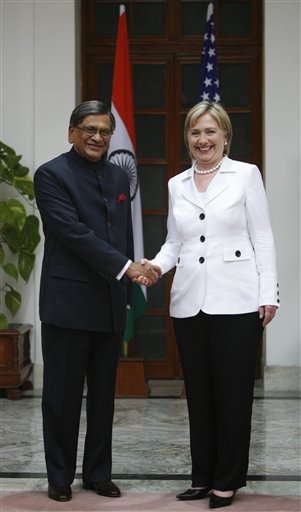
U.S. Secretary of State Hillary Rodham Clinton said Tuesday that the United States was “encouraged” by the ongoing talks between nuclear-armed rivals India and Pakistan and promised to give full support to Indian efforts to protect itself from terror.

Clinton’s visit to India came less than a week after a triple bombing killed 20 people in India’s financial capital of Mumbai, the worst terror strike in the country since 10 Pakistan-based gunmen rampaged through the city in 2008.

Her meetings with top Indian officials Tuesday focused on fighting terror, the U.S. withdrawal plans from Afghanistan and ways to broaden economic and security ties between the United States and India.

She also called for a swift resolution to their dispute over investments in nuclear energy, calling on India to ratify by the end of the year the Convention on Supplementary Compensation for Nuclear Damage and to adapt its liability laws to conform with the treaty.

The U.S. views India’s new nuclear liability law as too stringent on nuclear plant suppliers, making it difficult for private U.S. companies to compete against state-owned companies in India’s multibillion dollar nuclear reactor market.

Clinton’s trip here is part of a new round of U.S.-India strategic dialogue established last year to deepen ties between the world’s oldest and largest democracies.

S.M. Krishna, India’s foreign minister, expressed concerns that the planned U.S. troop withdrawal from Afghanistan that began this month could lead to a resurgence in Islamic extremism.

“It is in the larger interests of the region that it is necessary for the United States to work very closely with (Afghan) President (Hamid) Karzai and the government of Afghanistan and thereby create conditions where terrorists do not take any more advantage in Afghanistan,” Krishna said after 2 1/2 hours of talks with Clinton.

Clinton said she had outlined the drawdown strategy and stressed that the United States will not support Afghan reconciliation with insurgents unless it is inclusive and protects the rights of minority groups, religions and women.

Clinton also assured India of U.S. support in the fight against terror.

“We are allies in the fight against violent extremist networks. And homeland security is a high priority and a source of increasing partnership,” Clinton said.

While the U.S. and India have already signed agreements to cooperate in counterterrorism efforts, “the events in Mumbai have driven home how important it is that we get results,” she said.

Though India has not blamed Pakistan for last week’s attack, it has accused its neighbor of harboring violent extremist groups responsible for other attacks in India and of not doing enough to crack down on those responsible for the 2008 Mumbai siege.

For its part, U.S. officials fear Pakistan is not fully committed to combatting radical plots, such as the failed 2010 Times Square bombing in New York.

“We have made it clear to the Pakistani government that confronting violent extremists of all sorts is in its interest,” Clinton said.

India recently resumed peace talks with Pakistan that broke off following the 2008 Mumbai siege, and the two countries’ foreign ministers are expected to meet next week.

The U.S. is eager for the fragile talks to pick up steam, in part to allow Pakistan to focus its forces on the chaotic Afghan border.

“We are encouraged by the dialogue between India and Pakistan,” Clinton said, calling talks “the most promising approach” to build more confidence between them.

During the meeting Tuesday, Clinton and Krishna agreed to strengthen their countries’ ties in energy, security, education, the economy, science and promoting stability across the region. The two countries also signed an agreement promoting closer cooperation in cybersecurity.

Once frosty relations between India and the United States have warmed considerably in recent years as Washington has looked to India as stable ally in the turbulent South Asia region and its growing economy as a valuable market for U.S. goods.

President Barack Obama hosted Prime Minister Manmohan Singh at his first state dinner and visited India for three days last year, praising it as a new regional power. Clinton was to meet with Singh later Tuesday.

Growing business ties were among the top issues in the talks.

Western officials have looked to India’s rising economy and its 1.2 billion people as a coveted market to help stimulate growth in their own troubled economies.

“Each of our countries can do more to reduce barriers, open our markets, and find new opportunities for economic partnership,” Clinton said. “Taking these steps is in our mutual interest. We can improve millions of lives and increase both of our nations’ economic competitiveness.”

She praised India’s fight against piracy, and pushed for greater sales of U.S. arms to India — the world’s largest arms importer —as a way of deepening security cooperation between the two nations.

U.S. officials were annoyed earlier this year when Indian officials chose two European companies as finalists for an $11 billion order for 126 fighter jets. However, last month India signed an agreement to buy 10 Boeing C-17 cargo and troop-carrying aircraft for more than $4 billion.

From New Delhi, Clinton on Wednesday will move on to the southeastern port of Chennai, where she plans to deliver a speech on the importance of U.S.-Indian relations, the benefits of enhanced bilateral commercial ties and India’s role in South Asia and the greater Asia-Pacific region.

Clinton is in India on the third leg of a 12-day, around-the-world diplomatic tour that has already taken her to Turkey and Greece. After India, she will visit Indonesia, Hong Kong and southern mainland China before returning home July 25.

Pakistan threatens to withdraw troops from Afghan border over US aid reduction

By Rob Crilly for The Telegraph

Pakistan has warned it will withdraw troops from the Afghan border where they are fighting Taliban and al-Qaeda-linked insurgents if the US does not reinstate $800m in military assistance which has been suspended amid a worsening diplomatic row.

The cash includes $300m to reimburse the Pakistan military for deploying troops in the mountainous tribal areas close to Afghanistan.

Chaudhry Ahmad Mukhtar, the country’s defence minister, said without it Pakistan could not afford to keep troops at 1,100 checkpoints near the mountainous border.

“The next step would be that the government or the armed forces will pull back the forces from the border areas,” he told the Express 24/7 news channel. “We cannot afford to keep military out in the mountains for such a long period.”

Officials say 147,000 troops are deployed in the tribal areas, where they are engaged in operations against Taliban and al-Qaeda cells.

Relations between the two countries have been fraught ever since they were forced into an awkward alliance in the aftermath of 9/11. This year they have plunged to new depths.

You might like:Prince Harry’s new girlfriend is his cousin (eight times removed)29 Jun 2011(Telegraph News)
News of the World final crossword has a message for ‘ catastrophe’ Rebekah Brooks10 Jul 2011(Telegraph News)
As Gordon and Sarah Brown learnt of son’s illness, The Sun editor Rebekah Brooks called to say she knew11 Jul 2011(Telegraph News)

Pakistan’s military officers are furious that the Pentagon did not inform them of a covert raid to kill or capture Osama bin Laden in May in the town of Abbottabad, only 30 miles from the capital Islamabad.

Since then they have stepped up condemnation of CIA drone strikes against terror suspects and expelled American military trainers, as they try noisily to distract domestic attention from their own failure to find bin Laden or spot the American helicopters as they flew through Pakistani air space.

In return, US officials have questioned Pakistan’s commitment to tackling militants and accused the government of assassinating a troublesome journalist.

At the weekend it emerged that the Pentagon was to end a third of its annual $2.7bn assistance to the Pakistan military.

In Washington, Colonel David Lapan, Pentagon spokesman, said the military aid could be resumed if Pakistan increased the number of visas for US personnel and reinstated the training missions.

However, analysts in Islamabad said such threats would be counterproductive and warned of an anti-American backlash.

“The US needs to treat Pakistan as a country it’s not trying to bully into submission,” said Cyril Almeida, a columnist with Dawn newspaper.

In the meantime, the US has begun using land routes through Central Asia to resupply troops in Afghanistan in case Pakistan shuts the Khyber Pass to convoys carrying food and fuel.

A fresh wave of drone attacks may also exacerbate tension. At least 45 suspected militants were killed by missiles in Pakistan’s northwest, according to local intelligence officials on Tuesday, one of the largest death tolls to date in the controversial air bombing campaign.

Pakistan Issues Shoot-On-Sight Order as Karachi Violence Escalates

As Reported by The Voice of America

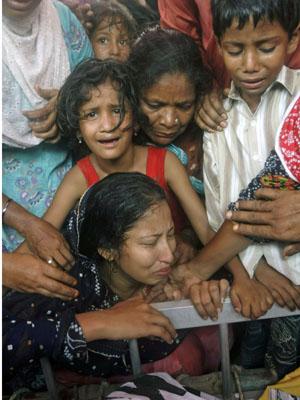
Pakistani security forces have been ordered to shoot on sight when confronting disorders in Karachi, where days of political and ethnic violence have left up to 85 people dead.

About 1,000 additional police and paramilitary forces were deployed in Karachi on Friday with new orders to shoot any armed “miscreants” they encounter.

Interior Minister Rehman Malik told reporters that dozens of suspects have been detained in connection with a series of targeted killings since Monday. At least 34 people died on Thursday alone when gunmen opened fire on buses.

Police say the killings are part of clashes between political groups in Sindh province, including the Muttahida Qaumi Movement and its rival, the Awami National Party (ANP).

The MQM largely represents the Urdu-speaking community, and until last month was part of the ruling coalition in Sindh. ANP represents ethnic Pashtuns. Both those groups and the ruling Pakistan People’s Party are believed to have links to armed groups in Karachi.

Shops were closed and streets were deserted in the southern port city Friday after the MQM called for a day of mourning and protest rallies.

MQM leader Raza Haroon has said his movement’s supporters are being targeted because the party quit the coalition.

The Human Rights Commission of Pakistan says 490 people were victims of targeted killings in Karachi in the first half of this year.

On Friday, Pakistani Prime Minister Yousuf Raza Gilani appealed for peace and security in Karachi, saying it was important for the economic development of the country.

U.S. Ambassador to Pakistan Cameron Munter called on all parties to refrain from further violence and work toward a “peaceful resolution of differences.”

Amnesty International criticized the government’s order for security forces to “shoot on sight” armed men involved in the violence. The rights group said Friday that by giving troops such power the government is effectively declaring Karachi “a war zone” and encouraging further lawlessness and violence, citing what it said was the army’s record of human rights violations.

About 18 million people live in Karachi, the country’s economic hub. The city also has been the scene of sectarian violence between Sunni and Shi’ite Muslims and militant attacks.

Meanwhile, in Pakistan’s northwest, military officials say troops backed by jets have killed 11 militants in the Kurram tribal region along the Afghan border. Officials say nearly 50 militants have been killed in Kurram since a military operation began there this week.

Military Puppet. Or Rising Star?

By Rubab Shirazi for Tehelka Magazine

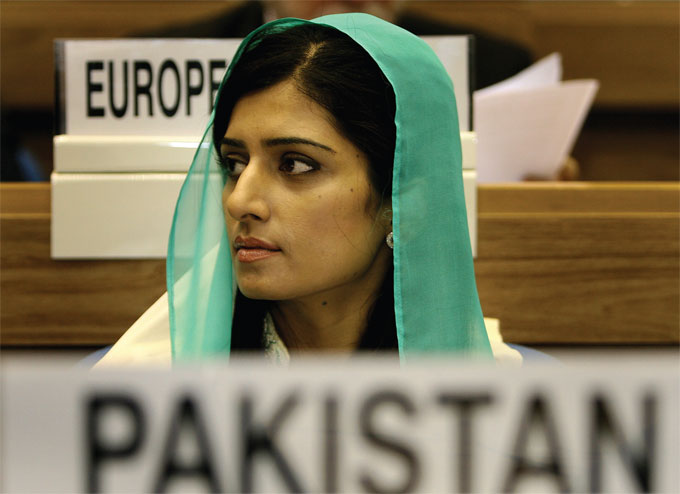
If The unfolding political crisis in Pakistan does not upset junior foreign and economic affairs minister Hina Rabbani Khar’s elevation as full-fledged foreign minister, she appears all set to travel to New Delhi for meeting her Indian counterpart SM Krishna this month for the ministerial meeting of the resumed dialogue process. Her promotion is needed to remove the protocol hitch for the ministerial meeting.

When Khar, 34, became the minister of state for foreign affairs in February, hardly any eyebrows were raised — more so because the ceremonial position has been used since 2004 to accommodate scions of influential families in the Federal Cabinet. Khar’s entry was instead seen as a bid by the government to prioritise the economic aspect in its diplomacy.

But the news of her elevation was met with strong criticism because she was seen as being too young and raw to handle complex foreign policy issues, even though she had been part of the Cabinet since 2004. For a good part of her political career, which started with her election as member of the National Assembly in 2003, Khar has been a low-key politician.

In a country that already has an accidental president (Asif Ali Zardari) and prime minister (Yousuf Raza Gilani), it wouldn’t be a surprise if the foreign minister is also accidental. If things go as planned, she would take oath this month as Pakistan’s 26th foreign minister and bag the honour of being the first woman to hold the post. But, Foreign Office (FO) bureaucrats, who derisively refer to her as “the girl” in private, say that she is no match for most who have occupied this crucial post.

Khar comes from a privileged background, being the daughter of well-known politician Ghulam Noor Rabbani Khar and niece of infamous playboy and former Punjab governor Ghulam Mustafa Khar. The latter’s wife Tehmina Durrani wrote My Feudal Lord, which caused controversy by describing her abusive and traumatic marriage with Ghulam Mustafa and her experience of life in a patriarchal society. Despite her feudal upbringing, Khar graduated from Pakistan’s best business school, Lahore University of Management Sciences and obtained her masters in hospitality from the University of Massachusetts.

Khar’s likely appointment is coming at a time when the country’s foreign relations are not in the best of shape — the alliance with the US is withering away fast; cross-border controversies are marring Pak-Afghan bonhomie; and though the Indo-Pakistan dialogue is progressing, the Thimphu spirit is fading as indicated by recent bilateral meetings.

Even if Khar succeeds in getting the post, diplomatic observers think she will not be the real decision maker — the power would still lie with the military. Having an inexperienced person like Khar as the FO boss, who would depend heavily on bureaucracy for policy as well as administrative matters, suits the military establishment at Rawalpindi GHQ in maintaining its control over Pakistan’s foreign policy.

Unlike her predecessor Shah Mehmood Qureshi, who lost his job for taking a hardline position on immunity for CIA operative Raymond Davis (involved in fatally shooting two youth in January), Khar isn’t thought to be independent minded.

No one at the FO knows about Khar’s views on important issues like relations with the US, Europe, India, Afghanistan and about the War on Terror. She hasn’t given any interviews or delivered speeches on foreign policy ever since she moved to the FO in February, even though she was the de facto boss during this time.

Though much has been written about her meteoric rise in politics, she still remains an enigma. Her credentials for being considered for the crucial post are her two stints as minister of state for economic affairs; a brief assignment as special assistant to the prime minister on finance, revenue and economic affairs; and more lately her FO job.

No one knows Khar’s views on important issues like the war on terror, Indo-Pak relations, or the strained partnership with the US

According to her curriculum vitae, foreign affairs was not a subject of interest until lately. She avows interest in finance, economic affairs and agriculture development. But, quite contrary to her fondness for the three subjects, she runs an upscale restaurant in Lahore. Her husband Feroze Gulzar is a textile industrialist. For most of her career, Khar had been dealing with international loans and grants. Foreign Service officials, who don’t want to be named, caution that real-time diplomacy is a different ball game.

Administrative chaos at the FO, another officer says, grew under the overachieving lady, who had been promoted by the PPP government as an astute manager. Khar was responsible for economic affairs during Gen Pervez Musharraf’s regime. Economic mismanagement turned out to be the major cause of the defeat of her previous party, PML(Q), in the 2008 elections. Fearing that she wouldn’t be given a party ticket, she changed her loyalties weeks before the polls and joined the PPP.

IF SUCCESSFUL in achieving the prized foreign ministership, it would not be the first time she would be filling someone’s shoes. In 2003, she contested elections in place of her father, who couldn’t run for National Assembly as he was not a graduate; in 2009 she became the first woman minister to present the federal budget because former finance minister Shaukat Tarin was not an elected Parliamentarian.

Her inexperience aside, party colleagues say that Khar is deceptively wily and ambitious as they point to how she smartly outmanoeuvered other contenders in the race for the foreign ministry, including former law minister Babar Awan, former foreign minister Sardar Assef Ali and National Assembly speaker Dr Fehmida Mirza — all political heavyweights.

One of her weaknesses is that she isn’t a media darling. Searching online for her interviews turns up a little-known Saturday Post article, that too dated several years ago. On this count, she would turn out to be a weak and ineffectual representative of her country’s foreign policy. In her first media appearance alongside a visiting US functionary Thomas Nides, Khar was unimpressive. Foreign Secretary Salman Bashir hurriedly scripted a few lines for her to deliver before PTV cameras, but according to one official, she struggled with it. Days later, when speaking to the media alongside UK Foreign Secretary William Hague, when she was asked about the prospects of a peace deal with Afghan Taliban, Khar started speaking about a failed peace deal with militants in Swat to prove Islamabad’s commitment to peace with militants. Pakistan, she probably forgot, does not equate Afghan and local Taliban. The government has been treating the two entities differently.

Online discussion boards have been filled with negative comments on her expected elevation. “What a farce. We are at one of the most critical junctures in our foreign affairs, so we decide to hand out perhaps the most important portfolio to a 34-year-old with a degree in hospitality management!” reads a posting on a discussion platform called Pakistan Defense.

What goes in her favour is that apart from allegations by her critics of tax evasion, something normal for a Pakistani politician, she has no major controversies attached to her name.

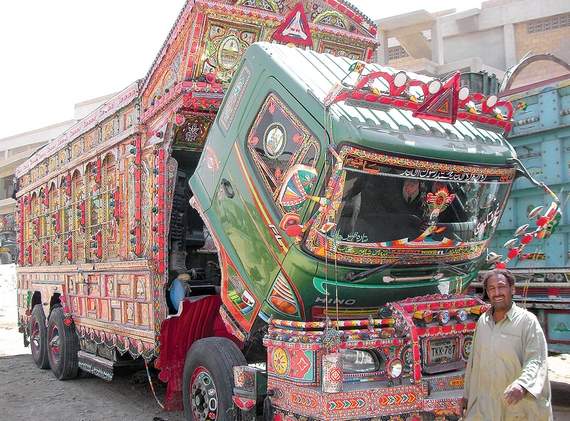
In Pakistan, Truck Decoration a High-Octane Art Movement

By James Parchman for The New York Times

MURIDKE, Pakistan — Here on the historic Grand Trunk Road, some 40 miles north of Lahore and a few hours south of the former bin Laden hideout of Abbottabad, a mosque’s call to Friday afternoon prayers was overwhelmed by Pakistani pop music spilling from open-air markets. The barks of bus conductors calling out destinations added to the din.

The passing parade of motorized rickshaws, farm tractors, buses and highway cargo trucks looked as if a re-enactment of ’60s peaceniks making the pilgrimage to Woodstock might be under way. A panorama of red, yellow and green, mixed with plastic whirligigs, polished mahogany doors and gleaming stainless steel cover plates, was a magical sight for a visitor with a love for anything on wheels.

It was not only the variety of vehicles — all are common across South Asia — that elicited this reaction, or even their Partridge-Family-meets-Ken-Kesey color schemes. Rather, it was the fascinating quantity and surrealistic detail of their decoration, unlike anything I’d seen in my travels around the world.

A deeper understanding of the origins and meanings of the decoration craft was gained over days of mingling with the truck drivers and the owners of decorating shops in Karachi, Lahore and Peshawar.

Karachi, situated on the Arabian Sea, is Pakistan’s major seaport. It is also the cargo hub of the country, and with 13 million people has a great many local and intercity buses. As such, the city supports a considerable customizing industry: When Saudi Aramco World magazine published an article about the trade in 2005, more than 50,000 people in Karachi were said to be employed decorating buses and trucks.

What I found at the Pakistani workshops was a pride of design and a willingness to answer questions — and to show off their creations to a former long-haul trucker.

Sparing no expense

At a driver’s cafe near Karachi’s 3-mile-long International Truck Yard (where I turned down an offer of boiled camel meat and cow-leg soup) workers took me by the hand to the shop of Masallah the truck decorator. My Dockers and Rockports were as out of place as their long-shirted, working-class shalwar kameez outfits and leather sandals, called chappals, would have been in one of New York City’s outer boroughs.

But my full beard may have helped in gaining their confidence and a look inside their truck cabs. Government safety agencies equivalent to OSHA were nowhere to be seen in the truck yards, and workers, many of whom were children of the owners, were being showered with sparks from their grinders and cutting torches.

Many of the trucks being outfitted at Masallah’s carried identification plates from Balochistan province. Their owners were prospering thanks to a steady demand for hauling loaded sea containers from Karachi’s port to landlocked Afghanistan. Their cargo, typically including supplies for U.S. and NATO military operations, make a trip of 500 miles by the southern route to Kandahar or 1,200 miles by a northern route to Kabul.

Pakistani truck owners can easily spend more on their trucks than on their homes. One driver from the Gwadar area of Balochistan told me he had just bought a Hino truck chassis for the equivalent of $35,000 and brought it straight to Masallah’s workshop. There he might spend another $25,000 for its body, paint and decoration. During the several weeks required to complete the work, he would sleep inside or under the truck, on his bedroll.

Adding decorative touches like ribbons, spinners, flags and polished steel cutouts in the shape of animals to a small bus costs an owner at least $800. This is considered an advertising expense; a highly decorated bus is usually the first choice of customers when there are several options.

Nissan and Hino tandem-axle trucks of the flat-front cabover design, many assembled in Pakistan, are the popular choices for cargo-haulers today, replacing the revered Vauxhall Bedford, a British model with a traditional cab. The Bedford was the mainstay of Pakistan’s cargo network since the early days of Pakistan’s independence.

The Bedford is still prized for its sturdy chassis and ability to continuously haul outsize loads. Many have bodywork with a high-crowned front prow, which lends itself to decoration and gives the truck the look of a sailing ship.

As is the case in the United States, offering a sharply decorated truck can be a powerful incentive for recruiting drivers. Pakistani bus and truck owners usually allow their drivers, whose average wages are about $75 a month, to work out their own designs in conjunction with the owner of the decoration shop.

Big business

Predictably, mass production has changed the business over the years. Adornments are no longer exclusively handmade.

“Pakistani buses were originally decorated using carved woodwork and individual paintings,” said Kurram Awan, the owner of a small shop of truck-decorating supplies in Lahore.

“Now, my shop sells over 1,000 different items, including braids, reflectors, flashing lights and antennas,” he said.

He added that the Pashtun drivers (Pashto speakers from the border region between Afghanistan and Pakistan) spent the most on decorations.

Durriya Kazi, an artist and teacher in Karachi, has long been a proponent of Pakistan’s folk art. She sees bus and truck decorating as an integral part of that tradition, noting the importance of distinguishing between sculpture as defined by the art gallery and the rich activity of actually making things that exists all over Pakistan.

In 2006, Kazi was instrumental in a program intended to spread Pakistan’s bus decoration skills to Melbourne, Australia, where a tram was transformed into a replica of a minibus used on Karachi’s W-11 route, resplendent in all its finery.

Another Pakistani with expertise in the subject is Jamal Elias of the University of Pennsylvania, a professor and the author of “On Wings of Diesel: Trucks, Identity and Culture in Pakistan” (Oneworld, 2011). His book explores the tradition of Pakistani truck decoration, and looks deeper into the “nature of response to religious imagery in popular Islamic culture.”

In an e-mail, Elias said that the creative inputs of decorators included several major themes, which could be combined across the cab and body of the truck or bus. These include Islamic religious images like the horse of Muhammad and depictions of the mosques at Mecca.

Other possibilities include images of a fish, representing good fortune, or the elegant eyes of a woman, representing beauty.

Pakistan Kicks U.S. Off Air Base

By Farhan Bokhari for CBS News

The U.S. faces the challenge of quickly establishing alternative facilities from which to launch drone aircraft inside Afghanistan after Pakistan ordered U.S. personnel and hardware out of a base believed to have been used in the past for CIA drones, two senior Western defense officials tell CBS News.

Concern mounted Wednesday over the future of Pakistan’s clandestine support for Washington’s use of drones after the country’s defense minister announced Pakistan had told the U.S. to vacate the small Shamsi air base in the southwestern Baluchistan province.

Only “Pakistani aircraft will be flown from Shamsi in future,” Pakistani defense minister Chaudhary Ahmed Mukhtar told reporters. “No U.S. aircraft will fly from Shamsi.”

“U.S. personnel will not be allowed to use the Shamsi air base,” a senior Pakistani government official added to CBS News.

Another senior Pakistani official, who spoke Thursday to CBS News on condition of anonymity, said there previously “have been U.S. activities at the Shamsi air base. All those activities are being ceased now.”

The news comes as the Obama administration details its new strategy for combating extremism across the globe — a strategy which shifts the focus sharply away from the large-scale ground operations espoused by President George W. Bush, to smaller “surgical” strikes, like drone attacks.

The official refused to specify the types of U.S. activities that have now been ceased at Shamsi.

Pakistan has always publicly criticized the U.S. for carrying out attacks using pilotless drones, and has never acknowledged that it cooperates with Washington on the use of such aircraft. The drones have become widely unpopular across Pakistan after some of the attacks reportedly resulted in civilian casualties, including women and children.

“The damage to the U.S. drone program will not be substantial. But Pakistan’s decision is a setback for efforts to improve U.S. relations with Pakistan,” a senior Western defense official based in Islamabad told CBS, also speaking on the condition of anonymity. “It will take some time for the Americans to establish the program in Afghanistan. It can be done.”

Relations between the U.S. and Pakistan have remained frosty since U.S. Navy SEALs killed Osama bin Laden in the country’s northern city of Abbottabad.

That attack was undertaken without the U.S. offering advanced information to Pakistan, out of fear that militant sympathizers in Pakistan’s intelligence and security establishment might have alerted al Qaeda or the Taliban.

The 2nd May operation has been followed by a hardening of attitude by Pakistan’s influential military, which claims the attack violated Pakistan’s sovereignty. In reaction to the raid, Pakistan has already ordered more than 150 U.S. military trainers to leave the country.

Cost Of Wars In Iraq, Afghanistan, Pakistan To Reach $3.7 Trillion: Report

By Elise Foley for The Huffington Post

Costs of War: 225,000 Lives and up to US$4 Trillion from Watson Institute on Vimeo.

WASHINGTON — The United States will have spent a total of $3.7 trillion on wars in Iraq, Afghanistan and Pakistan, costing 225,000 lives and creating 7.8 million refugees, by the time the conflicts end, according to a report released on Wednesday by Brown University.

The report, written by more than 20 economists, political scientists, lawyers, anthropologists and humanitarian personnel for Brown’s Watson Institute for International Studies, gives staggering estimates for the cost of military action in those three countries. Nearly ten years since U.S. troops first entered Afghanistan, the report estimates the final cost of all three conflicts will be between $3.7 trillion and $4.4 trillion — far higher than the $1 trillion price tag referenced by President Barack Obama earlier this year. The report estimates the U.S. government has already spent between $2.3 trillion to $2.7 trillion and will spend at least a trillion more over the next fifty years.

In a video op-ed exclusive to HuffPost, some of the report’s authors explained the high costs — both past and future — of the wars.

Long-term obligations to war veterans will cause the price tag of the conflicts to climb for decades after troops have returned home. The report puts the cost of health care for veterans at between $600 to $950 billion, not peaking until the 2050s.

“Wars, in a sense, are never over when they’re over,” Catherine Lutz, a Brown University anthropologist, said in the video op-ed. “They go on for decades, and the peak costs for this war will be incurred forty years from now.”

Because the wars have had no true front-lines, there have been a huge number of injuries, primarily to young people serving in the military. There has been a particularly large amount of casualties in Pakistan, the report says.

“The costs have been borne unevenly,” Lutz said. “The military families, contractor families, the people of Iraq and Afghanistan and Pakistan, have borne a tremendous cost.”

Even just paying the interest on the United States’ war debt will be a large endeavor, according to the report, at a time when the country is set to exceed its current debt limit of $14.29 trillion. The government has already paid about $185 billion in interest on war spending, and could accrue another $1 trillion — an amount not included in the $3.7 trillion estimate — in interest by 2020, according to the report.

“We have borrowed virtually all of the money that has been used to pay for the Iraq and Afghanistan conflicts, and that has been very expensive, adding at least $1.5 trillion to our national debt,” Linda Bilmes, an economist with Harvard University, said in the video op-ed.

Now the country is at a decision point, aligned with the current showdown over a deal to raise the debt ceiling by August.

“There is immense and urgent requirement to learn from the experience of the past decade and to try to ensure we don’t make the same mistakes all over again,” Andrew Bacevich, a Boston University military historian and veteran, said in the video.

Nominee Questions Pakistan’s Battle Plan

By Julian E Barnes for The Wall Street Journal

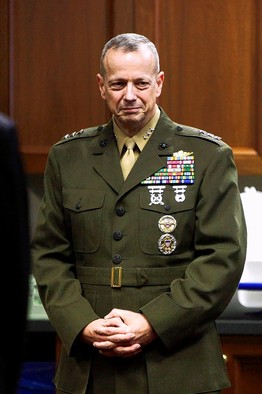
WASHINGTON—The Marine general chosen by President Barack Obama to lead the Afghanistan war raised doubts about Pakistan’s willingness to go after militants who cross the Afghan border to attack U.S. and allied troops.

In a confirmation hearing before the Senate Armed Services Committee, Lt. Gen. John Allen also said he believed that the Afghan insurgency’s momentum has been halted and even reversed in key parts of the country, and backed Mr. Obama’s troop drawdown plans.

But Pakistan, as a haven for militants, looms large over the war in Afghanistan. Gen. Allen said Pakistan continues to “hedge” against a precipitous U.S. withdrawal from Afghanistan by supporting anti-American militant groups, including the Haqqani network.

The statements were a rare public show of military skepticism about Pakistan’s intentions, reflecting the military’s increasing view that relations with Pakistan are deteriorating.

Gen. Allen, deputy commander of the U.S. Central Command, argued that it would be ultimately in Islamabad’s interest to expel militant groups from their sanctuaries in Pakistan.

“We will encourage and will continue to encourage our Pakistani friends to bring pressure to bear upon those safe havens,” he said. “It’s not just good for the outcome of our strategy and for the president’s vision on the outcome in Afghanistan; it’s good for Pakistan as well.”

Appearing alongside Gen. Allen, Adm. William McRaven, nominated to lead Special Operations Command, also said Pakistan is unlikely to move against the frontier militant havens anytime soon.

The admiral oversaw the Navy SEAL team that last month killed Osama bin Laden at his hideout in a Pakistani garrison town.

The officers’ testimony shined a light on the fragile state of U.S.-Pakistan relations, which have grown combative in the wake of the bin Laden raid.

Military leaders have made plain they are displeased with the declining cooperation by Pakistan, but insist the U.S. can’t walk away from the relationship.

“We’re giving them $4 billion,” said Sen. Scott Brown (R., Mass.). “And yet sometimes we don’t know if they’re in or they’re out, are they with us or [are] they not?”

After Adm. McRaven said Taliban leader Mullah Mohammad Omar is likely hiding in Pakistan, Sen. Lindsey Graham (R., S.C.) demanded Pakistan hand him over.

Pakistani officials have said limited military capacity—not lack of will—is inhibiting their operations against militant groups.

Gen. Allen said he backs President Obama’s decision to pull 10,000 troops out of Afghanistan this year, and the remaining 23,000 surge troops by the end of next summer. After the drawdown, the U.S. would still have 68,000 troops in the country, he said.

But he acknowledged that the military didn’t recommend a drawdown schedule as aggressive as the one Mr. Obama chose.

Under questioning from Sen. Joe Lieberman (I., Conn.), a critic of the Obama administration’s drawdown plan, Gen. Allen suggested that if conditions deteriorate he would advise Mr. Obama to alter the plan.

“It is my responsibility to the chain of command and to our commander-in-chief to ensure—should I be concerned about the progress or the execution of the campaign—that I so advise the chain of command,” he said.

Neither the Afghan Taliban nor the Haqqani network has directly targeted the Pakistani government. And Islamabad remains wary of a hasty U.S. withdrawal and sees the militant networks as potential future allies in Afghanistan.

Gen. Allen said even as troops leave Afghanistan, the military would continue to implement its current counterinsurgency strategy, which is aimed at protecting civilians from the insurgents while helping the government extend its reach and legitimacy.

Sen. Graham asked if Gen. Allen would have enough forces to continue that strategy, which requires large numbers of troops to secure population centers.

“How can we maintain counterinsurgency if all the surge forces have gone?” Sen. Graham asked.

The End of AfPak

By Scott Malcomson for The New York Times

Remember how after 9/11, Osama bin Laden’s attacks on us could be linked to almost anything, from shopping habits to the rediscovery of Western values to carbon-pricing schemes? Something similar appears to be happening with Bin Laden’s death. Jihadism sure isn’t what it used to be. After 10 years, it seems, the time has come to go home. Troops are and will be coming back to the United States from Iraq and Afghanistan. The military budget will be cut. The outgoing secretary of defense feels able to openly mock NATO because, presumably, he thinks he can afford to — because it doesn’t matter all that much. The global war on terror is being downgraded from Armageddon to something more out of Leviticus: a tricked-out police action, just as John Kerry, in this magazine, always said it should be. On Sunday, Helene Cooper and Mark Landler reported that “American success in the counterterrorism campaign would seem to bolster arguments for a swift withdrawal from Afghanistan.” By Tuesday morning, they were reporting that President Obama would announce his withdrawal plans on Wednesday. Meanwhile, a Harris poll revealed that 51 percent of Americans and 54 percent of Britons believed “the death of Bin Laden meant it was time to bring troops from their countries home.”

That isn’t quite how it looked when I was in Washington a few weeks ago and spoke with about a dozen current and former American officials and with Pakistanis. The impression they each gave was that American withdrawal would be speeded not because of Bin Laden’s death but because of Pakistan’s reaction to it. After the initial shock, Pakistan’s (government-influenced) press latched onto a narrative of “national humiliation” as a result of the American raid, rather than, say, one of jubilation at the demise of a killer whose fantasies have brought Pakistan nothing but misery. A younger generation of military officers — Pakistan is dominated by its military — seemed at times about to revolt in reaction to the insult to Pakistan’s sovereignty. And the Inter Services Intelligence (I.S.I.), Pakistan’s ubiquitous military intelligence outfit, reacted, as was subsequently reported, by scouring the neighborhood around Bin Laden’s house for … evidence of how the C.I.A. found out he was there, and to determine who had been helping the Americans.

Finally, the Pakistan government did not respond to the Bin Laden raid by pressing its new advantage and rolling up terrorist networks across the land. No, it did not do that at all. So Secretary of State Hillary Rodham Clinton and Admiral Mike Mullen, chairman of the joint chiefs of staff, went to Islamabad and on May 27 presented a list of demands. These included the arrest or elimination of Ayman al-Zawahiri (of Al Qaeda), Ilyas Kashmiri (a long-sought semi-free-agent and former Pakistani military man), Sirajuddin Haqqani (of the AfPak-border based Haqqani network) and Atiya Abdur Rahman (Al Qaeda), and the shutting down of bomb factories in Pakistan.

By June 3, Kashmiri was dead. But this promising start now seems isolated. The other wanted men are still at large. The bomb-makers might well be getting tipped off. The revolt by younger Pakistani officers seemed only to get worse.

In short, the U.S. and Pakistan are really not getting along. Among members of Congress, beating up Pakistan has become ritualized; Senators McCain and Rogers were doing it again on the Sunday programs. I wondered: How many times can Pakistan be abandoned? As Bruce Riedel, a former C.I.A. officer and the head of President Obama’s first major AfPak review, shows in his excellent new book, “Deadly Embrace: Pakistan, America and the Future of Islamist Jihad,” embrace and abandonment have formed the pattern of American-Pakistani relations since the majority-Muslim nation was formed out of the breakup of British India in 1947. Harry Truman’s lack of interest yielded to Dwight Eisenhower’s enthusiasm for Pakistan as an anti-Communist bulwark and a base for spying on the Soviets. The relationship was and remained built around security and intelligence. Lyndon Johnson reversed course when India and Pakistan went to war in 1965; he cut off both, but Pakistan had, unlike India, been a strong ally, and it felt betrayed. This set the pattern: ultimately, Pakistan was tactical and India was strategic.

Now, after almost 10 years of intense engagement, Pakistan and the U.S. appear set for another split; at least that was the consensus among the officials I spoke with. There was a pervasive sadness in these conversations. It was due in part to the sheer human effort that has gone into the U.S.-Pakistan relationship. A lot of spies and soldiers and diplomats and politicians have put years of their lives into making “AfPak” work, which requires making Pak work. A lot (not all) of that effort seems to be going down the drain, along with much of the billions of taxpayer dollars that financed it.

There is also personal sadness in that the AfPak effort was associated toward the end with Richard Holbrooke, whose death late last year brought the foreign-policy world up short. Holbrooke did not take great care of himself, so objectively his death could not be entirely a surprise, and among people over 70 the reactions I heard were more of the well-what-did-you-expect variety. But in the 35-to-65 range it was different. Holbrooke represented, very attractively, the assertion of youth and hope against experience. Even at 69 he had a distinct eagerness, even boyishness, alongside the baritone gravitas. He attracted bright young people. He could be young and old at the same time. Once he was gone, that sort of generational bridging disappeared. (Older figures are few in this administration.) The sense of continuity (as well as of optimism) is weakening. There’s something missing now.

There was also a sense of ideological loss of direction. For all their differences, Bill Clinton and George W. Bush shared a tangible optimism about American governmental involvement abroad. President Obama is different, and even if he weren’t the national mood is. The people’s representatives in Congress are vying to bring troops home faster, and if there is an internationalist remaining in the House he or she is keeping quiet. The Republican candidates for president seem to have settled on anti-war isolationism as a winning position. Obama’s great strength in foreign policy — his ability to repackage, and optimize, American power in a multipolar world — is the strategy that dare not speak its name, or it will bring accusations of “declinism.”

Finally, there is the tremendous sadness of Pakistan itself. The country doesn’t have enough water. It lacks the electricity to develop its industries. Literacy, by some reckonings, is actually declining. Democracy has been restored but the government is hardly stable. The one truly semi-stable institution, the military, is struggling against itself, just as Pakistanis are dividing, and attacking each other on an increasing scale (which is saying something).

But, in a way, the saddest thing of all, from a foreign-policy point of view — Pakistani or American — is that the one great card Pakistan has to play is to make itself a problem. Pakistan formed itself into a regional player through building its army, running terrorist proxies in Kashmir and Afghanistan, indulging in enough Islamist millenarianism to make itself frightening, and developing nuclear weapons. None of these strategies have a good future. But in the absence of a long-term committed relationship — what Holbrooke promoted as a “strategic partnership” — with the United States or, perhaps, with China, Pakistan is left with fear as its most successful export.

There was some discussion in Washington as to whether Mullah Omar’s name was on that list that Clinton and Mullen presented in Islamabad. It almost doesn’t matter. The doubt itself is the message: Pakistan stays valuable because it has terrorist “ties” or “links” or “proxies” or whatever. As national existential dilemmas go, Pakistan’s is particularly nightmarish. The U.S. will leave them to it — abandonment again — and choose the happier relationship with India. Secretary Clinton will be at the regional forum of the Association of Southeast Asian Nations in late July, helping to take her longtime initiative of eastward Indian engagement, and the integration of the United States into East Asian political structures, to a new level. This is part of a long-term strategy of accommodating the rise of China and of India.

And Pakistan, after 10 years, will be left behind; as the line in Washington goes, “There is no good solution.”

Suspicions Rise as Pakistan Bomb Labs Empty Before Raids

By Thom Shanker for The New York Times

For the second time this month, bomb-making factories in Pakistan were evacuated shortly after American intelligence officials notified Pakistani security forces of their existence, fueling suspicions that such intelligence is being shared with insurgents.

It remains unclear whether the evacuations — four of them in the past month alone — were the result of deliberate or inadvertent leaks or were planned in advance of the intelligence sharing as part of a mobile production operation.

But the disclosure, which appeared in an article by The Associated Press over the weekend, prompted senior members of Congress on Sunday to accuse Pakistan of playing a double game by aiding the United States on some counterterrorism operations while also maintaining ties to violent, extremist organizations operating from its territory.

The comments, by legislators who specialize in intelligence matters and military affairs, were just the latest expression of distrust between Washington and Islamabad after a series of bruising episodes, notably the secret American raid that killed Osama bin Laden.

However — as with everything having to do with Pakistan, terrorism and espionage — it remained unclear how or whether the militants learned of the American intelligence, which came with a request from Washington for local security forces to raid the explosives laboratories. Pakistani security forces routinely inform tribal elders before raids, in order to keep the peace with them, and it is possible that these village leaders in turn tipped off fellow Pashtuns among the insurgents.

Representative Mike Rogers, a Republican of Michigan and the chairman of the House Intelligence Committee, having returned from meetings in Pakistan last week, said Sunday on the CBS program “Face the Nation” that “I am more pessimistic coming out of this trip than I have been in the past.”

He expressed deep skepticism that the Pakistani military and the nation’s spy agency, the Inter-Services Intelligence, or ISI, were fully partners with the United States in battling terrorists and insurgents on their side of the border with Afghanistan.

“Pakistan needs to understand that there is no such thing as a good terrorist,” Mr. Rogers said. “They’re playing this very dangerous game of destabilization by having elements of the ISI and the army sympathetic to the Taliban and Al Qaeda elements.”

He was joined by Senator John McCain of Arizona, the ranking Republican on the Senate Armed Services Committee, in calling for a reassessment of American financial assistance to Pakistan.

“After all, the United States is investing billions and billions of dollars in Pakistan,” Mr. McCain said on the ABC program “This Week.” “And taxpayers have a right to have a return on that.”

He said “the most frustrating aspect of this whole issue” was ISI’s continuing relations with two insurgent organizations, the Taliban and the Haqqani network, a Taliban ally based in the Pakistan tribal area of North Waziristan. “So it seems to me that to restore our confidence in our relationship with Pakistan, they have to make certain steps,” Mr. McCain said. “And we have to sort of set up some benchmarks as to what we expect.”

All four of the bomb factories — which made improvised explosive devices, or I.E.D.’s, the largest killer of American troops in Afghanistan — were evacuated before Pakistani security forces could take action against them. Information on two of the locations, in Pakistan’s tribal areas, was shared only in the past week, and insurgents packed up and left both sites within days.

A range of senior American intelligence officials, diplomats and military officers have visited Pakistan since the May 2 raid that killed Bin Laden; the mission outraged Pakistan’s government and citizens because it was carried out without first informing the government in Islamabad.

The goal of these high-level visits has been to halt the erosion of the relationship and to offer new opportunities for cooperation. Some have described those offers as tests of Pakistan’s will to be a full partner and act on shared information to pursue terrorists and insurgents.

The Pakistan military spy agency has arrested more than 30 people who fed information about the Bin Laden compound to the Central Intelligence Agency in the months leading up to the raid, fueling further distrust between the two nations.

On “This Week” on Sunday, Pakistan’s ambassador to the United States, Husain Haqqani, defended the arrests. “No one is being punished,” he said, adding: “When something like this happens, you want to know what happened and how, and who was involved.”

Pakistan Aid Depends on Security Cooperation, Panetta Says

By Roxana Tiron for Bloomberg News

An accelerated counterterrorism campaign in the border region between Afghanistan and Pakistan is “vital” for the U.S. to defeat al-Qaeda there and prevent its return, according to CIA Director Leon Panetta, who is nominated to succeed Defense Secretary Robert Gates.

Any decisions on future U.S. security assistance “will be informed” by Pakistan’s response to the “concrete steps” the U.S. has set for counterterrorism cooperation, Panetta said in a 79-page set of answers to questions from the Senate Armed Services Committee in advance of his confirmation hearing scheduled for June 9.

Last month, the U.S. found and killed al-Qaeda leader Osama bin Laden who was hiding in a compound in the city of Abbottabad, 30 miles (50 kilometers) north of the capital, Islamabad.

The U.S. “train-advise-equip” programs with Pakistani military and paramilitary forces have been important in eliminating terrorist sanctuaries and disrupting the al-Qaeda network, Panetta said.

“It is vital, however, that Pakistan live up to its end of the bargain, cooperating more fully in counterterrorism matters and ceasing to provide sanctuary to Afghan Taliban and other insurgent groups,” he said.

Pakistan continues to lack the necessary military and civilian capacities to “hold” and “build” in areas along the border region that have been cleared of al-Qaeda forces, Panetta said.

Seeking Results

“If confirmed, I will work the Congress to ensure that the support we provide is yielding the results we seek,” he said.
Since 2009, Pakistan has undertaken counterinsurgency operations against extremist organizations in the northwest, including in Swat, South Waziristan, Mohmand and Bajaur “with varying levels of success,” said Panetta.

“Pakistan’s level of commitment is reflected in the enormous casualties it has suffered as a result of terrorism in the last few years, including more than 11,000 military personnel killed or wounded in action and more than 30,000 civilian causalities in recent years,” he said.
Panetta said that while, bin Laden’s death is a “significant blow” to al-Qaeda, the core group and its offshoots “remain a vary dangerous threat” in the region and to the U.S. homeland.

“There is a risk that decentralized affiliates may pose an increased threat to the United States,” he said
Panetta said that President Barack Obama’s Afghanistan strategy is “sound” and the U.S. has made “the progress necessary to give the President meaningful options for his decision,” on how many U.S. forces to withdraw beginning in July.
The military gains in Afghanistan are “helping to create the conditions for reconciliation,” between Afghanistan’s government and the Taliban insurgents.

Pakistan Leaders Must Make Choice After Clinton’s Warning

By The Bloomberg News Editorial Board

When U.S. Secretary of State Hillary Clinton visited Pakistan last week, she noted that U.S.- Pakistani relations were at a turning point after the killing of Osama bin Laden. It was up to the Pakistanis, she said, to decide “what kind of country they wish to live in.”

The brutalized body of investigative journalist Syed Saleem Shahzad, which turned up outside of Islamabad on May 31, may provide a clue to the answer.
Shahzad disappeared after publishing the first of two promised articles linking elements of the Pakistan navy to al- Qaeda following a deadly May 22 attack on a Karachi naval station. Last fall, after being questioned about a different story by Pakistan’s Directorate for Inter-Services Intelligence (ISI), Shahzad wrote that he was threatened by the spy agency.

Alternatively, it could be that foul play like Shahzad’s murder will become a thing of the past in Pakistan. While in Islamabad May 27, Clinton and Chairman of the Joint Chiefs of Staff Admiral Mike Mullen demanded authorities take “decisive steps” to crush the violent extremists the government has long supported, which would end the need to intimidate journalists who expose that support. Whichever way the Pakistan government goes, the May warnings by the U.S. ought to be the last.

The U.S. administration has continued to insist, as President Barack Obama did in a May 22 interview with the BBC, that the Pakistanis have “generally been significant and serious partners against the terrorist threat to the West.” This simply isn’t the case.

Victim, Sponsor

For much of the past decade, Pakistan has been both a victim and a sponsor of Islamic militants. Its soldiers are fighting bravely against homegrown terrorists seeking to install an Islamic government. In 20 attacks in May, these radicals killed some 150 people.

At the same time, the Pakistani army, led by General Ashfaq Parvez Kayani, is a longstanding patron of violent groups targeting Afghanistan and India.
Guided by excessive fear bordering on paranoia about India, Pakistan’s military and intelligence services believe that nurturing those extremists is an effective way to frustrate India’s regional ambitions. The ISI largely created and continues to support the Taliban and the Haqqani Network, the principal groups battling U.S. forces in Afghanistan and the fledgling government in Kabul. It also backs Lashkar-e-Taiba, the group responsible for the 2008 attacks in Mumbai that killed more than 160 people.

Double-Dealing

President George W. Bush’s administration tried to end this double-dealing by giving Pakistan billions in economic and military assistance. Yet Bush didn’t make the aid contingent on a crackdown on extremists. The Pakistanis cooperated somewhat with U.S. efforts to dismantle al-Qaeda but refused to act against other groups, including the Afghan Taliban, which was given refuge inside Pakistan’s borders.

The Obama administration accelerated the failed Bush policy, substantially increasing military and economic assistance, again without imposing rigorous conditions. And Pakistan continued to ignore administration warnings about continued support for extremists.
In one incident reported by the Washington Post, Obama’s first national security adviser, James Jones, warned officials in Islamabad that there would be “consequences” if a terrorist attack directed at the U.S. was traced to Pakistan. Yet when a man who had trained at a terrorist camp in that country attempted to detonate a car bomb in Times Square in May 2010, the U.S. administration did nothing. Shortly thereafter, Obama watered down Jones’s words, telling Kayani that a “successful” attack would have consequences.

Meaning Business

So when U.S. authorities learned that Osama bin Laden might be housed in a villa in a Pakistani garrison town, they dispatched Navy Seals to capture or kill him without so much as notifying the Pakistanis in advance. The raid provoked great outrage from officials in Pakistan. Since then, emotions have cooled. Clinton and Mullen have delivered their warnings, public and private. And this time, the Americans may mean business.

Will the Pakistanis respond?

Shahzad’s murder is a bad sign. On the other hand, reports from Pakistani tribal leaders suggest that the Pakistani army may be preparing a serious campaign in North Waziristan, where the leaders of the Haqqani Network and other extremist groups live.
It will soon be clear whether Clinton’s latest message got through. If not, the administration must consider new ways to persuade Pakistan to change course, recognizing that the country is behaving more like an adversary than a partner.

Al Qaeda’s Latest Loss

By Bruce Riedel for The Daily Beast

The reported death of Muhammad Ilyas Kashmiri deals a huge hit to the terror cell, still reeling from bin Laden’s killing. Ex-CIA analyst Bruce Riedel on the impact on U.S.-Pakistan relations.

Pakistani sources are reporting the death in a drone strike this weekend of Muhammad Ilyas Kashmiri. If true, it is a big setback for al Qaeda and could help ease tensions between Pakistan and the U.S. a bit.

Kashmiri is al Qaeda’s top Pakistani operative. He was born in Pakistani-controlled Kashmir on February 10, 1964. Trained in the camps of the Pakistani Inter Services Intelligence directorate (ISI) and then the elite Pakistani commando group, the Special Services Group (SSG), he was the darling of the Pakistani army for years. He fought in the war against the Soviets in Afghanistan where he lost an eye and a finger. Then he took the war to India both in Kashmir and in New Delhi itself.

He formed his own militant group called the 313 Brigade, after the 313 fighters who joined the prophet Muhammad in an early Islamic victory. His exploits in India were legendary. He was personally decorated and thanked by the then head of Inter-services Intelligence (ISI), Mahmud Ahmad and Pakistani’s dictator, Pervez Musharraf, in 2000. But Kashmiri broke with his ISI and army friends in 2002 when Musharraf decided to give the Americans at least some help against al Qaeda.

Kashmiri took his 313 Brigade into al Qaeda’s camp and assisted in training Taliban fighters in Afghanistan and began targeting his former friends in the ISI. His teams killed at least one senior ISI officer. He was involved in an attempt to assassinate Musharraf in 2004. The United Nations credits him as a key player in the plot to murder former Prime Minister Benazir Bhutto in December 2007.

The Pakistani American David Headley, who has confessed to plotting the Mumbai terror attack in November 2008, says Kashmiri was his key contact in al Qaeda. The two worked on a plot to attack a Danish newspaper office in Copenhagen in 2009. That was foiled when the FBI arrested Headley, but Kashmiri continued planning to carry out Mumbai-style attacks in Europe. Another was foiled in Denmark at the end of 2010. Kashmiri would have played an important role in helping al Qaeda recover from bin Laden’s demise. He had key connections inside the Pakistani syndicate of terror groups.

Just last week one of Pakistan’s best investigative reporters Syed Salam Shahzad was murdered after finishing a new book on al Qaeda in Pakistan. According to excerpts published in India and Pakistan, Shahzad had evidence Kashmiri may have been the real brains behind the Mumbai plot and hoped it would precipitate an Indo-Pakistani war that al Qaeda could exploit.

This is not the first time Kashmiri has been reported killed by a drone attack; he has reappeared after claims of his demise. But if this time he is dead, it is a significant setback for al Qaeda just a month after American commandos killed Osama bin Laden. Kashmiri would have played an important role in helping al Qaeda recover from bin Laden’s demise. He had key connections inside the Pakistani syndicate of terror groups with both the Afghan and Pakistani Taliban and Lashkar-e-Taiba, and with al Qaeda operatives in Europe and fund raisers in the Persian Gulf. And he had penetrations deep inside the Pakistani army and ISI.

So both Washington and Islamabad will be glad to see him gone. Kashmiri’s demise won’t solve all the problems in the tortured American relationship with Pakistan by any means but it will help.

Of course, if Kashmiri is not dead and reappears yet again unscathed, it will only add to his credentials. Bin Laden benefited enormously from surviving the cruise missile attack that targeted him in 1998. Recriminations could damage the Pakistani-American relationship further. Nonetheless those are risks worth taking. In either case we will know soon. Al Qaeda is quick to eulogize its martyrs. If Kashmiri’s dead, they will say so.

-Pakistanis for Peace Editor’s Note– Good Riddance!!!

Soldier cited for holding off up to 30 Taliban by himself

As reported by CNN

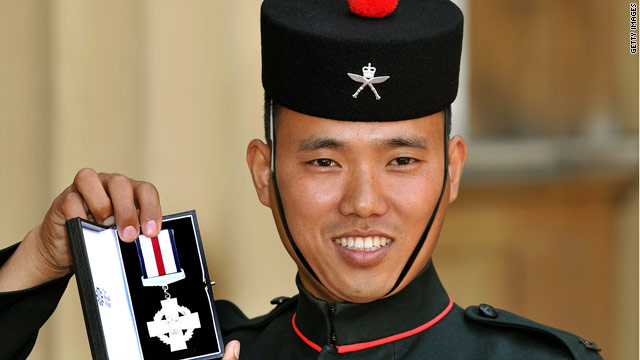
Britain’s newest hero is a Nepali.

Queen Elizabeth II on Wednesday awarded Britain’s second-highest award for bravery, the Conspicuous Gallantry Cross, to Acting Sgt. Dipprasad Pun of the Royal Gurkha Rifles.

While stationed as a lone sentry at a checkpoint in Afghanistan’s Helmand province on September 17, Pun fended off an attack by up to 30 Taliban fighters.

“There were many Taliban around me,” Pun said in an interview with British Forces News. “I thought they are definitely going to kill me. … I thought before they kill me I have to kill some of them.”

During the 15-minute battle, Pun fired more than 400 rounds of ammunition, detonated 17 grenades and a mine and even threw his gun tripod at a Taliban fighter climbing toward his position, according to British Forces News.

“He was just about to climb up there and I hit (him) with my tripod and he fell down again,” Pun told British Forces News.

Pun’s actions saved the lives of three fellow soldiers at the checkpoint and were the “bravest seen in his battalion over two hard tours in Afghanistan,” according to his medal citation.

Pun was not wounded in the firefight.

“That he survived unscathed is simply incredible,” his medal citation says. “Throughout Dip’s actions he was under almost constant intense fire. Dip’s courage and gallantry were simply astonishing.”

Pun, 31, joined the British military in 2000 and also has served in Bosnia and Kosovo.

Like other Gurkhas, Pun is from Nepal. The Gurkhas were incorporated into British forces after their fighting skill impressed the opposition British during the Nepal Wars of 1814 to 1816. As part of the peace treaty ending that conflict, Gurkhas were admitted into East India Company’s army and then into the British military.

Gurkhas recruited solely in Nepal remain Nepalese citizens during their service. Gurkha unit officers are British.

–Pakistanis for Peace Editor’s Note– Congratulations to Sgt. Dipprasad Pun for his amazing feat of bravery and determination in his battle with the Taliban. We salute him for his gallantry and wish there were thousands more like him in the allied forces fighting the Taliban menace. If that were the case, these barbarians would be already defeated.

U.S., Pakistan, Through Thick and Thin

By Gerald F Seib for The Wall Street Journal

One diplomat long involved in the tempestuous U.S.-Pakistan relationship likens it to a Catholic marriage: There may be problems, but divorce isn’t an option.

And so it is that, almost a month after U.S. Navy SEALs entered Pakistan to kill Osama bin Laden, the two troubled partners find themselves not in divorce court but in an awkward but unmistakable process of reconciliation.

Signs of healing are popping up. Despite its anger and embarrassment at being left in the dark about the bin Laden raid, Pakistan’s intelligence service has begun cooperating again on a series of sensitive matters. Meanwhile, Secretary of State Hillary Clinton and Joint Chiefs of Staff Chairman Mike Mullen have just held the obligatory kiss-and-make-up talks in Pakistan, which U.S. officials describe as blunt but useful in moving forward.

And despite widespread anger in Congress over Pakistan’s harboring, either willfully or unknowingly, the world’s leading terrorist, Obama administration officials seem to be squelching the desire to extract revenge by cutting Pakistan’s aid.

There remains the danger of a rupture, and there still could be long-term damage. Street-level anger on both sides means the relationship can’t stand too many more shocks just now.

In particular, it seems likely that one result of the trauma will be a scaling back of the drone wars—America’s use of armed drones to launch strikes inside Pakistan to attack operatives of the Taliban movement fighting U.S. forces next door in Afghanistan.

The drones likely will continue to be used against top Taliban leaders when found, but less often against lower-priority targets, and probably under new and clearer rules of cooperation with the Pakistanis, say those familiar with the effort.

Still, the reality is that the two countries don’t have much choice but to move on. Regardless of how much love is flowing at any moment, they simply need each other.

The American war against al Qaeda globally and against Taliban insurgents in Afghanistan simply can’t be won without the cooperation of Pakistan. Much as Americans are infuriated by the way elements of Pakistan’s government and intelligence service hedge their bets by playing both sides in the struggle against extremism, there’s no doubt that Pakistani intelligence has been crucial in the fight.

For its part, Pakistan has, in its fit of pique over the bin Laden raid, made its best show of playing the China card to demonstrate to the U.S. that Pakistanis can find good, powerful friends in Beijing if Americans don’t treat them better. By coincidence, this has been proclaimed, officially by the two countries, the year of China-Pakistan friendship, which is a useful card for Pakistan to play right now.

But Pakistan’s post-raid overture showed the limits of the China option as much as anything else. Pakistani Prime Minister Yousuf Raza Gilani made a four-day trip to China soon after the bin Laden operation, and came away with a Chinese pledge to speed up delivery of some previously promised fighter jets.

Mr. Gilani’s other takeaway from his visit promptly proved dubious. His defense minister announced that Pakistan had invited China to take over management of a big Pakistani port at Gwadar, and to build a new naval base there. In response, the Chinese said, essentially, “We have no idea what you’re talking about.” Whatever was discussed, it appears to be less than originally advertised.

Pakistanis as well as Americans know China has its limits as an alternative big-power friend for Islamabad. American aid can’t easily be replaced, and China doesn’t tend to dole out assistance easily. Meanwhile, the U.S. is the top market for Pakistani exports, while China ranks fifth. China’s big textile industry actually is a key international competitor to Pakistan’s own textile sector.

Ultimately, the Chinese are less likely to be helpful to Pakistan in the war against extremism than will the U.S. China tends to use partnerships abroad to solve its problems, not to help friends solve theirs.

In the meantime, real and meaningful steps have resumed in the U.S.-Pakistani intelligence relationship. Pakistan has allowed American officials to speak with the bin Laden wives found in his compound. It has returned the tail section of a U.S. helicopter lost in the raid; there was stealth technology embedded in it—technology the U.S. feared an angry Pakistan might instead share with China.

And Pakistan has agreed to allow American officials into the bin Laden compound to search for more intelligence on al Qaeda operations run from there.

The U.S. now seeks more help in fighting the Taliban inside Pakistan, and there will be a three-way American-Afghan-Pakistani meeting to discuss Afghanistan next month.

All isn’t bliss between Washington and Islamabad—not by a long shot—but those aren’t the actions of partners headed their separate ways.