Posts Tagged ‘ Al-Qaeda ’

Teen Held in Alleged Portland Bomb Plot

By Bob Drogin and April Choi for The Los Angeles Times
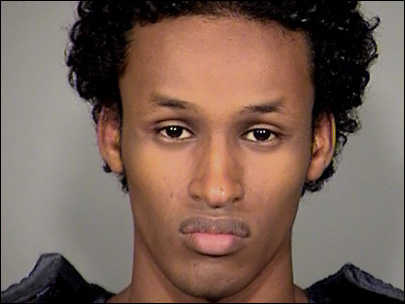
Reporting from Washington and Corvallis, Ore. — In August, the FBI says, 19-year-old Mohamed Osman Mohamud told two men who claimed to be Al Qaeda operatives that he had considered violent jihad since he was 15, and that he now was ready to commit mass slaughter.

Mohamud, a naturalized U.S. citizen from Somalia, said he wanted to set off a bomb during the lighting of a giant Christmas tree the day after Thanksgiving in an outdoor plaza in downtown Portland, Ore. The festive ceremony on the busiest shopping day of the year normally draws thousands of people.

“You know, the streets are packed,” said Mohamud, at the time a student at Oregon State University in Corvallis. When one of the men responded that “a lot of children” would attend, according to an FBI affidavit, he replied, “Yeah, I mean, that’s what I’m looking for.”

Mohamud — tall, thin and known for enjoying rap music and pickup basketball — reportedly shrugged off concerns about security at the event, explaining: “They don’t see it as a place where anything will happen…. It’s on the West Coast, it’s in Oregon, and Oregon’s like you know, nobody ever thinks about it.”

But the two men were undercover FBI agents, and audio and video recorders captured that conversation and many others like it. Mohamud now sits in federal custody — the latest alleged domestic terrorist to fall for an elaborate FBI sting — after months of secret surveillance and a grisly plot worthy of Jack Bauer.

A 38-page FBI affidavit released Saturday paints Mohamud as highly determined and deadly serious. He is charged with attempted use of a weapon of mass destruction, which carries a maximum sentence of life in prison. He is due in court Monday.

“The threat was very real,” said Arthur Balizan, special agent in charge of the FBI in Oregon. “Our investigation shows that Mohamud was absolutely committed to carrying out an attack on a very grand scale.”

According to the FBI, they arrested Mohamud after he dialed a cellphone that he thought would detonate a huge bomb — six 55-gallon drums, diesel fuel and a large box of screws — in a large white van parked near the tree lighting.

But the bomb was a fake built by the FBI, and the packed crowds who enjoyed a youth choir and a symphony orchestra at Friday’s holiday celebration at Pioneer Courthouse Square were never in danger, authorities said.

Mohamud appears to have joined a growing list of amateurs who have shown more fervor than smarts in their apparent plots against America. His alleged operation unfolded under the careful supervision, and with the direct assistance, of undercover FBI agents.

Aided by good luck and good intelligence, U.S. authorities have disrupted or uncovered at least 15 homegrown terrorist conspiracies over the last two years, often by penetrating the scheme at an early stage and carefully orchestrating the results.

Two domestic attacks have produced casualties — the shooting deaths of 13 people at Ft. Hood, Texas, and the slaying of an Army recruiter in Little Rock, Ark., both last year. Another plot, involving a failed car bomb in New York’s Times Square in May, was traced to a Pakistani-born U.S. citizen, who was arrested and pleaded guilty.

The alleged plot in Portland also would have carried the potential for mass slaughter.

According to the affidavit:

The FBI began tracking Mohamud in August 2009 when they discovered he was e-mailing a former Oregon student who was living in Pakistan’s lawless northwest region, where Al Qaeda has a stronghold. The Associated Press reported that the bureau was led to Mohamud by a tip from someone concerned about him.

By December, Mohamud was trying to visit the area. His friend, who was not named in court documents, urged him to contact an associate named Abdulhadi to arrange the trip. But Mohamud repeatedly mixed up the Hotmail address with the password, and the e-mails bounced back.

Apparently frustrated, Mohamud tried to fly to Kodiak, Alaska, on June 10. He already was on a no-fly list, however, and was stopped from boarding at Portland International Airport. He told the FBI that he had hoped to go to Yemen, but couldn’t obtain a visa or ticket, so had gotten a summer fishing job in Alaska instead.

Two weeks later, an FBI undercover agent contacted Mohamud and pretended to be Abdulhadi, providing an e-mail address that the FBI controlled. Mohamud and the agent met for the first time on July 30 in downtown Portland.

Mohamud boasted that he had written in support of violent jihad for an online, English-language propaganda magazine called Jihad Recollections, using the pen name Ibnul Mubarak.

The FBI later recovered the three articles, including one titled “Getting in shape without weights.” It seeks to introduce Pilates training to those preparing “physically for jihad.”

Mohamud also submitted an article to Inspire, an extremist magazine published by the media arm of the Al Qaeda affiliate in Yemen. Samir Khan, a Pakistani-American, allegedly ran Jihad Recollections from his parents’ home in Charlotte, N.C. He moved to Yemen last year and now is believed to edit Inspire.

Mohamud told “Abdulhadi” that he “initially wanted to wage war in the U.S.” The FBI agent told Mohamud he could not tell him what to do, but suggested several options, including going “operational” or becoming a shaheed, or martyr. Mohamud said he wanted to build a car bomb, but would need help.

At Oregon State, about 80 miles south of Portland, Mohamud had a benign profile. “He wasn’t the most social person, but he wasn’t anti-social,” said Omar Mohamed, president of the Muslim Student Assn. “He seemed like a pretty normal guy.”

Mohamud also was not known for being particularly pious. “From what I understand, he wasn’t the most religious person,” Mohamed said. “He didn’t regularly go to mosque.”

And unlike some Muslim students, he was known to attend college parties where alcohol was served, though it was unclear whether Mohamud actually drank.

On Aug. 19, Mohamud and “Abdulhadi” met again — in a bugged hotel room — and “Abdulhadi” brought another undercover FBI agent, who claimed to be an expert in explosives. Mohamud told them that he had begun thinking of jihad when he was 15.

The FBI affidavit then goes on to say how he described his plan to bomb the Nov. 26 event.

“They have a Christmas lighting and some 25,000 people that come,” he said. They should “be attacked in their own element with their families celebrating the holidays,” he added, quoting Osama bin Laden.

He said he had scouted where Black Friday shoppers streaming from nearby stores would likely gather in the busy outdoor square. The tree lighting was scheduled for 5:30 p.m., “so I was thinking that would be the perfect time.”

The trio met again Sept. 7. This time, the undercover agents asked Mohamud to buy the bomb components. They gave him $2,700 in cash to rent an apartment where they could all hide, and $110 to cover the cost of the bomb parts.

Over the next few weeks, the affidavit says, Mohamud mailed them a Utiliteck programmable timer, two Nokia cellphones, stereo phone jacks, a toggle switch and other gear, mostly from Radio Shack. One package also had a pack of gum and a scrawled note: “Good Luck with ur stereo system Sweetie. Enjoy the Gum.”

They held more meetings in early October in Corvallis, and Mohamud gave them a computer thumb drive with Google street-view photographs of his preferred parking spot, the attack site and escape routes. And he enthused again about his plan.

“It’s going to be a fireworks show… a spectacular show… New York Times will give it two thumbs up.”

According to the university, Mohamud stopped attending the school that month.

On Nov. 4, Mohamud and the two agents drove to a remote location near the coast west of Corvallis, supposedly to test the homemade bomb design. In reality, federal agents remotely detonated a device.

On the way home, he recalled the Sept. 11 attacks. “Do you remember when 9/11 happened, when those people were jumping from skyscrapers? … I thought that was awesome.” He said he hoped people attending the tree lighting would “leave either dead or injured.”

That afternoon, the undercover agents helped Mohamud record a video statement. Explaining that he wanted to dress “Sheik Osama style,” he donned a white robe and camouflage jacket. He then read a lengthy testimonial to jihad on camera. According to an FBI transcript of the statement, Mohamud, who was born in Mogadishu, briefly mentions his parents and suggests they had tried to steer him on another path in life. Arabic phrases are set off in brackets:

“To my parents, who held me back from jihad in the cause of Allah. I say to them [by Allah] if you — if you make allies with the enemy, then Allah’s power [the glorified and exalted] will ask you about that on the day of judgment, and nothing you can do can hold me back.”

In a follow-up meeting, their seventh, he gave the FBI agents hard hats, safety glasses, and reflective vests and gloves. He said they would wear the gear before the attack as a disguise, and put traffic markers around the parked van.

Abdulhadi, the first FBI agent, picked up Mohamud at about noon Friday, and they went to inspect the bomb. Built by FBI technicians, it appeared impressive. But the explosives, the detonation cord and the blasting caps all were inert.

“Beautiful,” Mohamud said.

At 4:45 p.m., they drove the van to Yamhill and Sixth Street and parked. Police had secretly kept the space open. Mohamud attached the blasting cap and flipped the toggle switch to arm the bomb, then put on his hard hat.

They walked several blocks, got in another car and drove to a pre-selected parking lot. Mohamud quickly dialed the number to detonate the bomb. When they didn’t hear anything, he got out of the car to look for a better signal, and FBI agents swarmed in for the arrest.

An Oregon State student directory listed an apartment address for Mohamud in the Portland suburb of Beaverton. A woman who answered the apartment door declined to speak with a reporter. Hanging to the right of the door was a heart-shaped sign with the words “Bless this home.”

When Mohamud attended Oregon State, he was not a member of the Muslim Student Assn. and rarely attended events held by the group. But Mohamed, the association president, recalls that Mohamud had recently attended “Night of the Crescent: Understanding Muslims,” a program aimed at showing that “Muslims in general are not scary people. They are neighbors, your best friends. We’re not all scary men with beards.”

That was Nov. 17. The next day, Mohamud met with the undercover agents to continue planning the attack.

Pakistanis for Peace Editor’s Note– We are thankful on this Thanksgiving Day weekend that the FBI folied this terror attack in Oregon and averted the loss of countless innocent lives. Both the authorities and Muslim Americans as a whole must keep vigilant about others like Mohamud in their midst who have extremist views and want to do us harm.
Pakistan Rejects U.S. Drone Expansion

By Alex Rodriguez for The LA Times

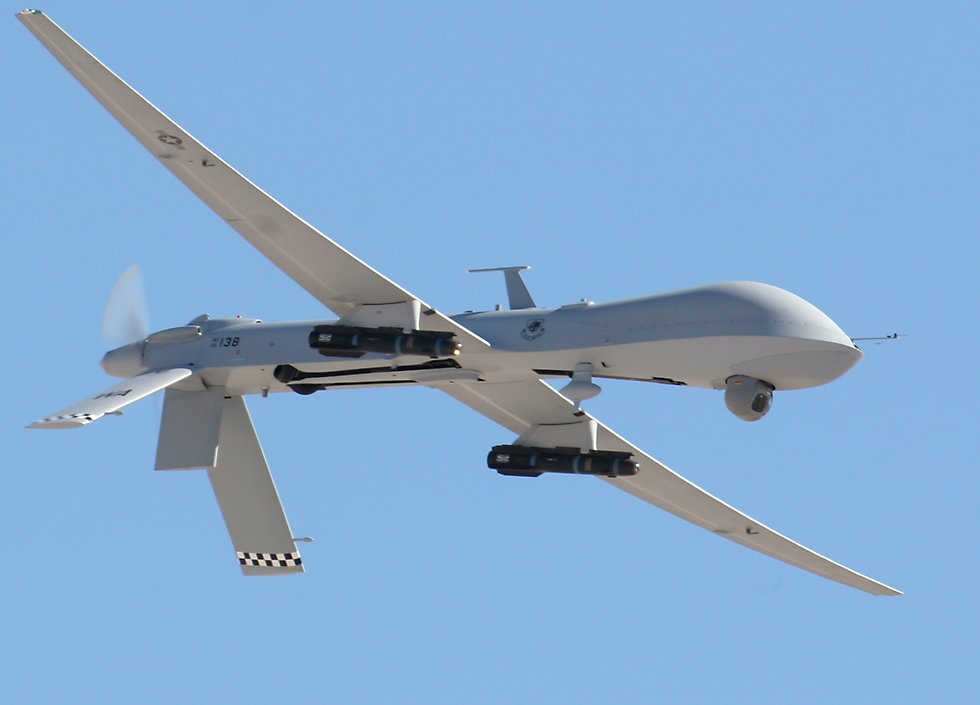
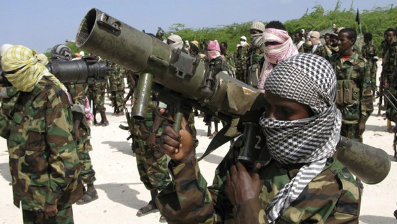
Pakistan has rejected a request from the U.S. to expand a drone missile campaign against Al Qaeda and Taliban militants, a decision that limits Washington’s use of one of its most effective tools against insurgents hiding in the nation.

Pakistani Foreign Ministry spokesman Abdul Basit said Islamabad would not allow the U.S. to carry out drone strikes outside the tribal belt along the Afghan border and repeated the government’s request that Washington abandon its use of drones in Pakistan on the grounds that the program violates the country’s sovereignty.

Basit did not say which additional areas the U.S. wanted to target. However, the Washington Post reported Saturday that the request focused on areas outside the southern city of Quetta, where Afghan Taliban leaders have hideouts.

“We are allies of the United States in the war against terror,” Basit said. “However, Pakistan will not compromise on sovereignty.”

Islamabad’s refusal comes as little surprise, given the animosity that the drone campaign has stirred among Pakistanis for years, but even as the government publicly condemns the drone program, it tacitly allows the missile strikes to take place. Pakistan even provides intelligence to facilitate the targeting of the strikes.

The drone missions are deeply unpopular in Pakistan, where they are viewed as an illustration of President Asif Ali Zardari’s willingness to acquiesce to most demands that Washington makes. Allowing an expansion of the drone program could further aggravate the vulnerability of Zardari’s government, already weakened by its mishandling of this summer’s catastrophic floods and the country’s ongoing economic troubles.

Any expansion of the drone campaign into Baluchistan, the province where Quetta is located, would also represent a dramatic departure in policy for Islamabad because it is not part of the semi-autonomous tribal region where the drones are permitted now.

In addition, the Quetta region is a heavily populated area; the city itself has a population of 900,000. The core leadership of the Afghan Taliban insurgency, known as the Quetta Shura and headed by Mullah Muhammad Omar, has used Quetta and its outlying regions as a sanctuary for years.

In recent months, the U.S. has dramatically stepped up its use of drone strikes in the tribal areas. So far this year, the U.S. has carried out 101 drone missile strikes in northwest Pakistan, compared to 53 in 2009.

The attacks have focused largely on North Waziristan, a primary stronghold of militants and commanders belonging to the Haqqani network, an Afghan Taliban wing regarded by the U.S. as one of the biggest threats facing coalition forces in Afghanistan.

According to the Long War Journal website, which keeps track of drone missile strike statistics, 92 of the attacks this year occurred in North Waziristan.

Staying Nimble to Fight Al-Qaeda’s Shifting Threat

By David Ignatius for The Washington Post

Behind the latest terrorism plots is an al-Qaeda leadership that is getting battered in Pakistan but that is determined to strike back wherever it can – using a dispersed network and new tactics that are harder to detect.

The package bombs sent last week from Yemen are one face of al-Qaeda’s continuing campaign. The Yemeni operatives are nimble, adaptive and “frustratingly clever,” says a U.S. counterterrorism official. “They have one main goal, which is to mess with us.”

The Yemen-based operations came as intelligence officials were struggling to disrupt another al-Qaeda plot to launch Mumbai-style attacks in European cities. Officials say that plan involved roughly 25 al-Qaeda terrorists, organized into cells of perhaps three to five members who would stage roving assaults in one or more European cities. Of the 25, about 10 have been captured or killed, according to a second U.S. official.

While these operations are tactically separate, officials say they both reflect a secret mid-2009 directive from an embattled Osama bin Laden to his followers to demonstrate that al-Qaeda could still do damage.

For U.S. officials, these latest terror plots have been a grim reminder that there’s a long fight ahead against al-Qaeda, with no “quick fixes” available. Defense isn’t enough: The explosives sent from Yemen can’t be detected by conventional X-ray screening or sniffer dogs, so stopping these plots requires good intelligence, as was the case last week when Saudi Arabia tipped the United States about the package bombs.

Nobody wants to say so publicly, but the lesson of the past few weeks, for me at least, is that one of these days the terrorists will succeed – and people should be prepared for that likelihood. The greatest damage won’t be the attack itself but the public response. The Yemeni plotters saw the frenzy produced by their failed Christmas Day bombing attempt on a flight to Detroit. They must be hoping now, with the package bombs, to disrupt cargo-handling around the world and damage a fragile global economy.

As the CIA has stalked al-Qaeda over the past two years, this has been a story of punch and counterpunch, of escalating U.S. drone attacks over Pakistan’s tribal areas and defiant al-Qaeda responses. As the senior U.S. official says, this is a “learning enemy” that adapts its tools and tactics as the West alters its defenses.

To understand the latest news, it helps to scroll back to early 2008. The CIA gathered intelligence that al-Qaeda leaders were regrouping, forming new alliances and planning new operations in the West. At that time, the CIA’s attacks from Predator drones were sporadic, and Pakistan was consulted before each attack.

So the Bush administration escalated the drone attacks in mid-2008. Now, Pakistan was given only “concurrent” notification, which in practice meant it was informed after the drone had launched its missile. Moreover, the CIA was authorized to strike targets that had a “signature” of terrorist activity, rather than a precise identification. President Obama has increased the tempo of Predator attacks even more.

The drone attacks have pounded al-Qaeda and killed key members of its leadership. Bin Laden reacted with his mid-2009 directive, which the U.S. official summarizes this way: “Undertake operations however and wherever you can. We need to prove ourselves again.” Specifically, bin Laden directed operatives to plan assaults in Europe similar to the November 2008 attacks that killed about 175 people and terrified Mumbai.

The United States and its European allies have been working hard to disrupt the Mumbai copycat operations. Since the third week of August, the CIA has conducted more than 40 drone attacks on the tribal areas, more than in all of 2008. A British national was killed in Pakistan in September, and two Germans in October. Other plotters have been arrested in Europe and Pakistan. Officials say they can’t be sure yet whether the terror plans have been shelved.

A similar escalation is likely in Yemen, with soldiers from the U.S. Joint Special Operations Command working with Yemeni government forces. The JSOC sums up its lethal approach with the phrase “find, fix, finish,” but a U.S. official says it has been hard to keep track of al-Qaeda targets in Yemen’s tribal villages and cities.

The reality is that the adversary that declared war on the United States in 1996 is still active – morphing and mobilizing even as it is hunted by America and its allies. It’s a nasty fight, and it’s far from over.

Suspicious UPS, FedEx Packages Raise New Concerns About Al Qaeda in Yemen

By Christa Case Bryant for The Christian Science Monitor

Suspicious packages found on United Parcel Service and FedEx planes reportedly originated in Yemen. While the planes appear to be undamaged, the incidents could bring fresh scrutiny to Al Qaeda in the Arabian Peninsula (AQAP), the relatively new franchise that claimed responsibility for the failed underwear bomber plot on Christmas Day last year.

A spokesman in Yemen’s US embassy said in a statement that the Yemeni government, which has carried out numerous strikes against suspected AQAP operatives over the past 10 months, has launched a full-scale investigation.

“We are working closely with international partners – including the US – on the incident,” said Mohammed Albasha, adding that no UPS cargo planes land or take off from Yemeni airports.

However, an airport employee in Sanaa, who did not want his name used, confirmed that there are private company flights from Sanaa to the United Kingdom, where a suspicious package was found at East Midlands airport at 3:28 a.m. local time.

The UPS store in Sanaa was staffed with one employee and one guard Friday evening local time. The employee refused to talk to the media.

The White House said that in addition to the package found in the UK, which according to CNN contained a “manipulated” toner cartridge, another suspicious item was found in Dubai. Both were said to have originated in Yemen.

“Last night, intelligence and law enforcement agencies discovered potential suspicious packages on two planes in transit to the US,” White House spokesman Robert Gibbs said Friday. “As a result of security precautions triggered by this threat, the additional measures were taken regarding the flights at Newark Liberty and Philadelphia International Airports.”

Among the suspected targets were Chicago-area synagogues.

The incident, which CNN posited could be a “dry run” for a future terrorist plot, is one of numerous red flags raised this year about suspected Al Qaeda militants operating in Yemen.

The country’s weak central government, which has difficulty maintaining order in Yemen’s rugged mountain terrain, has over the past year quietly strengthened its cooperation with US counterterrorism officials to address the militant threat.

The US military announced early this year it would more than double the $67 million aid package to the country. Since the failed Christmas Day bombing on a Detroit-bound airliner, international concern that Yemen could become the next Afghanistan – a lawless refuge from which to launch terrorist attacks on the West – has risen.

The rise in prominence of Anwar al-Awlaki, a Yemeni-American preacher linked to the Fort Hood shootings last year and now wanted by the CIA, has heightened fears that the militants could more easily navigate Western society with his help.

Experts have cautioned, however, that focusing US and international efforts solely on containing the Al Qaeda threat could backfire.

Yemen is the Arab world’s poorest country, and faces numerous other challenges, including corruption, a violent southern secessionist movement, tensions between powerful tribes and the central government, and dwindling resources.

Accused DC Bomb Plotter Farooque Ahmed’s Goal Was ‘Killing as Many Metro Riders as Possible’

By Kerry Wills, James Gordon Meek, and Helen Kennedy for The NY Daily News

A former Staten Island man was busted in Washington on Wednesday for helping what he thought were Al Qaeda terrorists plotting to bomb the capital’s subways.

It was really the FBI stringing him along, the feds say.

Farooque Ahmed, 34, a computer engineer who lives with his wife and baby in suburban Virginia, was accused of making sketches and surveillance videos of busy subway stops near the Pentagon and tourist-packed Arlington Cemetery.

The stations Ahmed helped case are popular with Defense Department workers. He thought the stations would be blown up sometime next year, the indictment says.

His goal was “killing as many Metro riders as possible through simultaneous bomb attacks,” U.S. Attorney Neil MacBride said. “It’s chilling.”

The feds said straphangers were never in any danger.

Much like the four men convicted this month of plotting to attack a Bronx synagogue, Ahmed was stung by an undercover FBI operation and never met any real terrorists.

His face hidden by a long beard, mustache and glasses, Ahmed appeared briefly in federal court and will be held until a detention hearing tomorrow. He said he could not afford a lawyer.

A Pakistani who became a naturalized citizen in New York 17 years ago, Ahmed worked for Ericsson telecommunications in Virginia setting up routers for the Sprint network, his LinkedIn profile says.

He received a bachelor’s degree in computer science from the College of Staten Island in 2003 and studied mechanical engineering at City College, but did not receive the graduate degree, college officials said.

Ahmed’s online profile blamed that on “a political issue between computer science and (engineering) departments.” Officials said the dispute was over academic credits, not geopolitics.

He registered as a Republican in the borough in 2002.

Neighbors in Ashburn, Va., said he moved there a year ago with his British wife, Sahar Mirza, and toddler son.

Sahar Mirza is co-organizer of a Meetup.com group for mothers of new babies called Hip Muslim Moms.

He wore casual clothes – he appeared in court in jeans – but she wore more traditional garb and covered her hair.
“He was out back mowing the lawn over the weekend. He just seemed like a normal guy. He never talked about politics,” said neighbor Barbi Shires, 43. “I’m just glad it was the FBI he did it for, not al Qaeda.”

Next door neighbor, Tanya Minor, 32, who works in a doctor’s office, said Ahmed “came to look at the house with a man who spoke his language, who said he helped people from New York find apartments here. They were very quiet. They always had the blinds closed.”


Pakistanis for Peace Editor’s Note–The arrest of Faisal Shahzad and now Farooque Ahmed illustrates that unfortunately there are some within the large Pakistani and Muslim American community in the United States who mean to do us harm and they need to be caught and brought to justice. We urge all Pakistani and Muslim Americans to be vigilant and proactive in reporting anyone to the authorities who they believe have become radicalized and deemed a threat to the safety of others.

Top of the Agenda at US-Pakistan Meetings: Mending Relations

By Howard LaFranchi for The Christian Science Monitor

If Osama bin Laden is really living comfortably in a house in northwest Pakistan, can we finally get him?

One might assume that the question would come up during this week’s three-day “strategic dialogue” between the United States and Pakistan – given the news out of NATO earlier this week that the Al Qaeda leader is no longer believed to be roughing it in a remote, no-man’s-land cave.

But instead, topic No. 1 at the three days of Washington meetings that begin Wednesday is likely to be relations-mending.

US-Pakistan ties, already roiled by frequent US drone attacks in Pakistani territory, suffered an abrupt setback over a NATO helicopter attack on the Pakistan-Afghanistan border late last month that killed several Pakistani soldiers. The US apologized for the incident, but not before the Khyber pass border crossing was closed and dozens of bottled-up trucks transporting fuel and supplies to NATO troops in Afghanistan were torched.

It is in the still-touchy aftermath of the border incident that the US is expected to offer Pakistan a multiyear, multibillion-dollar security package aimed at enhancing the ability of Pakistani security forces to take on domestic Islamist militants.

The US already offers Pakistan about $1.5 billion a year in military assistance through what is now a year-to-year program. The proposal to be presented at this week’s meetings is for a package of military hardware, training, and counterinsurgency materials stretching over several years – something the Pakistanis have been seeking for a while. Secretary of State Hillary Rodham Clinton had said at the last session of the US-Pakistan strategic dialogue in Islamabad in July that the US was “working on a multiyear package.”

Such a package for security assistance would presumably mirror a five-year, $7.5 billion development assistance package for Pakistan that the US approved last year.

US officials acknowledge that Pakistani security forces are stretched thin – especially after the summer’s devastating floods – and could use more supplies and training if they are to go after militants in their havens. But at the same time, US officials continue to harbor suspicions that some of the Taliban and other militant groups, in particular those involved in fighting in neighboring Afghanistan, continue to enjoy protection from certain elements of the Pakistani security structure.

The claim from a NATO official about Mr. bin Laden, reported by CNN, included the widely held contention that the Al Qaeda leadership is protected by elements within the Pakistani intelligence services.

Earlier this month, the White House submitted an assessment of Pakistan to Congress that is critical of the country’s antimilitancy campaign and suggests its existing capacities would allow it to do much more to confront the Taliban and Al Qaeda. A softer version of that assessment was offered at the State Department this week, when spokesman P.J. Crowley commended Pakistan for “aggressive action within its borders” before adding, “Clearly, this is an ongoing threat, and more needs to be done.”

At a State Department briefing Tuesday, the deputy US special representative for Afghanistan and Pakistan, Frank Ruggiero, said that while the Pakistanis have taken “some substantial steps” against organizations threatening the security of both countries, the US will call on Pakistan to do more – such as taking its campaign into North Waziristan.

Confronted with America’s you-can-do-more attitude, the Pakistanis are responding with requests of their own. Pakistan’s foreign minister, Shah Mehmood Qureshi, has a list of things he says the US could do to build his country’s confidence in the US partnership. Among them are a civilian nuclear energy deal like the one the US has signed with India, a wider door for Pakistani products to enter the US, and more US pressure on India to resolve issues of interest to both India and Pakistan, such as Kashmir.

Mr. Qureshi, who is to meet with Secretary Clinton on Friday, has already previewed the proudly independent tone he is likely to employ when meeting with senior Obama administration officials.

“We are an ally, not a satellite,” Qureshi said Monday in comments at Harvard University’s Institute of Politics in Cambridge, Mass. “We have to protect our borders. You have to respect our sovereignty,” he said, alluding to the recent helicopter border shooting.

Qureshi said the “trust deficit” affecting relations between the two countries has been furthered by such interventions in Pakistani territory, although he acknowledged that the outpouring of US relief assistance after the summer flooding was viewed much more positively.

Pakistan is Not America’s Enemy

 By Ryan Crocker for The Wall Street Journal

 The news from Pakistan is grim. NATO helicopters engage suspected militants inside Pakistan, killing three, only to discover they are Pakistani soldiers. The angry Pakistani government blocks NATO fuel shipments at the Khyber Pass, and militants attack the stalled trucks. An Obama administration report to Congress charges that the Pakistanis aren’t doing enough against the Taliban and al Qaeda. Press accounts quote unnamed officials asserting that elements in Pakistani intelligence are encouraging the Taliban to step up attacks on NATO forces. And Bob Woodward cites President Obama as saying “the cancer is in Pakistan.”

One could easily conclude that we are describing an enemy, not an ally. Many in Pakistan feel the same way. And yet the prospects for stabilizing Afghanistan, defeating al Qaeda and preventing further attacks on the United States are a direct function of that strained alliance. It is time for a collective deep breath.

Pakistan’s historical narrative focuses on how the U.S. worked with Pakistanis and Afghans to drive the Soviets from Afghanistan in the 1980s: We succeeded—and then we left. And on our way out, we slapped sanctions on Pakistan, ending all security and economic assistance because of the country’s nuclear program, which we had known about since 1974 when Pakistan’s prime minister announced it publicly. We left Pakistan alone to deal with a destabilizing civil war in Afghanistan, and when the Taliban emerged as a dominant force in the mid-1990s, Islamabad supported them as a means of ending the conflict.

Then came 9/11 and the U.S. was back. Pakistanis welcomed the renewed assistance. But a constant question I heard while serving as ambassador to Pakistan from 2004-2007 was “How long will you stay this time, and what mess will you leave us with when you go?” For a fragile state with innumerable problems, including a vicious internal insurgency, these are existential questions.

Never in Pakistan’s six decades of existence has the U.S. sustained a long-term, strategic commitment in the country. The Bush administration recognized this and enacted security and economic assistance programs designed to make a long-term difference in education, health care and governance. In 2006, I argued successfully for a five-year assistance package for Pakistan’s Federally Administered Tribal Areas (FATA), which are notable both for chronic underdevelopment and extremism. The Obama administration has built on this, and last year’s Kerry-Lugar bill provided $7.5 billion in assistance over five years. So we have the architecture in place to build a strategic relationship.

Still, short-term pressures risk undermining long-term strategy. When I was ambassador, voices in Congress, the media and even the administration were constantly calling for the U.S. to get tough on Pakistan, make Pakistanis do more, threaten them with consequences. Such exhortations were—and remain—generally counterproductive, as they fuel fears that the U.S. will again abandon Pakistan.

The U.S. can better work with Pakistan if we improve our understanding of history: Given its rivalry with India and its organic disunity, which dates back to its founding, Pakistan fears for its basic survival. The country has always had a difficult relationship with Afghanistan, not least because in the 19th century the British deliberately drew the Pakistani-Afghan border, the so-called Durand Line, in order to divide the Pashtun people. Today Pashtuns make up Afghanistan’s largest community, but there are more Pashtuns in Pakistan.

The Durand Line also set the groundwork for the tribal areas, which are legally distinct from the rest of Pakistan because the British could never exert direct control over them. No central authority ever has. Winston Churchill’s first published work, “The Story of the Malakand Field Force,” is about fierce tribesmen declaring jihad against a Western army. It could be a contemporary account.

So what does this mean in concrete terms?

First, the U.S. should appreciate Pakistan’s challenges and support its government in dealing with them. This summer’s devastating floods have disappeared from the U.S. media but will continue to wreak havoc in Pakistan for a long time to come. In 2005 and 2006, after an earthquake in Kashmir killed almost 80,000 Pakistanis, the U.S. organized the largest relief operation since the Berlin Airlift. The floods’ death toll is lower, but their long-term damage will be far greater. U.S. support should be commensurate.

Second, the U.S. should not carry out cross-border military actions, which I strongly resisted as ambassador. They are clearly counterproductive, and not just because we hit the wrong target. If NATO can carry out military actions in Pakistan from the west, Pakistanis wonder, what stops India from doing the same from the east? There are other options, including drone strikes, which the U.S. is now coordinating more closely with Pakistanis.

Third, with Pakistan’s government (as with Afghanistan’s), we must be private in our criticism and public in our support

Private talks should deepen regarding challenges like the insurgent Haqqani network in North Waziristan, and we need to listen at least as much as we lecture.Fourth, any talks between the U.S. or Afghanistan and the Taliban must be transparent to the Pakistanis. A nightmare for Islamabad is the prospect that the Americans and Afghans come to some accommodation with Taliban elements that would leave them hostile to Pakistan. If Pakistan is not part of the process, we will be working at cross-purposes and only the Taliban will benefit.

Pakistan’s arrest of Taliban leader Abdul Ghani Baradar—at a time when he had begun reconciliation talks with Afghan authorities—underscored the risks of leaving Islamabad out of the loop. Going forward, the timing and nature of talks with the Taliban should be set by Afghans, Pakistanis and Americans working together.

None of this will be easy, but it is essential. A sustained U.S.-Pakistani partnership after the Soviet withdrawal from Afghanistan could have produced a very different history than the one we wrestle with today. Writing a different future requires making long-term commitments—on both sides of the Durand Line.

Mr. Crocker, the dean of Texas A&M’s George Bush School of Government and Public Service, was U.S. ambassador to Pakistan from 2004 to 2007 and U.S. ambassador to Iraq from 2007 to 2009.

How to End the War in Afghanistan

As Reported on CNN

New York (CNN) — Afghan President Hamid Karzai has started talks with representatives of the Taliban, a move that analyst Fareed Zakaria says could bring an end to the nine-year-long war.

Karzai convened a meeting Thursday with the Afghan Peace Council, which was formed to help negotiate with the Taliban. Referring to the militants, Karzai said, “I call on them once again to use this opportunity and say ‘yes’ to this endeavor. I want them to come and bring peace to this land.”

The author and host of CNN’s “Fareed Zakaria GPS” spoke to CNN on Thursday. Here is an edited transcript:

CNN: Hamid Karzai has launched a council to help negotiate with the Taliban? What’s the significance of that step?

Fareed Zakaria: I think it’s about time. If you look at any good study of civil wars, what you find is that most of them end in a negotiated settlement. Maybe because Americans have the memory of our civil war in which the North crushes the South, we somehow think that that’s how civil wars end. But that’s actually is very unusual.

What normally happens is some kind of settlement that is negotiated in which the losers are reintegrated into the political order. Civil wars are unlike normal wars, because the winners and losers are going to have to live with one another.

CNN: How does that apply to Afghanistan?

Zakaria: The Taliban, which is mounting this insurgency, is not a foreign element within the body politic. The Taliban is basically the political representative of the conservative elements of the Pashtun community.

The Pashtuns are 50 percent of Afghanistan. … It is a political force in Afghanistan. Coming to terms with it politically and seeing if there’s some way it can be reintegrated into the political order makes sense. You’re not going to kill every member of the Taliban. They’re not going to be exiled to a foreign land. They’re going to be there at the end of the day so it’s better to to have them in the tent.

CNN: The U.S. military view seems to be that the talks haven’t yielded progress so far, and a senior defense official told CNN, “We don’t think the Taliban believe that they’re losing to the degree that they’d come to terms in large numbers.” Are the talks premature because the effects of the U.S. military buildup haven’t been felt yet?

Zakaria: First the very fact that the Taliban are coming to the table in a way they had not been willing to before suggests that they are feeling some pressure.

But I also think you can’t get too hung up with this idea that you have to negotiate from a position of strength. Ideally we would have them totally prostrate on the floor and that would be the time to negotiate. But the reality is that this is a very mixed military campaign. I don’t know if it’s going to be dramatically better one year from now or three years from now.

This is a little like somebody who owns a stock, who says, it’s at six now, I need to sell it, but I’m going to wait till it goes to eight. Well maybe it will go to eight, maybe it will go to four.

You might as well start talking at this point. First of all you learn a lot in the process of negotiations. And secondly, the military campaign could move in many different directions. If the surge starts succeeding even more, that will be reflected in our negotiating posture.

CNN: Is there an idea yet of what a negotiated settlement might involve?

Zakaria: It seems as though the Taliban demands are that they want all foreign troops out. They don’t want to accept the Afghan constitution and they don’t want to lay down their arms.

Now those are obviously their opening demands. Foreign troops aren’t going to be out, but one could point out that President Obama has said there is going to be a reduction of foreign forces next year.

On the Afghan constitution, there is a compromise there where there could be a few amendments to the constitution. But on laying down their arms, that it seems to me you can’t really compromise, they would have to lay down their arms. Could some elements be integrated into the militia, or the Afghan national army? Perhaps — that’s what happened in Iraq.

CNN: Isn’t there also a clashing conception of society, with the Taliban being a closed society that doesn’t recognize an elevated role for women as opposed to a potentially democratic kind of society that’s envisioned by the Afghan constitution?

Zakaria: Yes, it is the kind of society envisioned by the Afghan constitution. But Afghanistan is a fairly conservative society. While the extreme elements of the Taliban have draconian visions which are obviously not supported by the Afghans — the polls bear this out — it’s also true that on issues of women’s rights and some of the more progressive elements of the Afghan constitution, the Karzai government is in a minority and those rights are not popularly supported.

There are clashing visions, but there is probably a reality of Afghanistan which is a lot more progressive and open than the Taliban believe but is still a society that is somewhat conservative, and often tribal, and with very traditional views on something like women’s rights.

The key is creating a situation where these rights are guaranteed but not fetishizing it. For example, one of the things the Afghan constitution has is a requirement for 25 percent representation of women in parliament. We don’t have such a requirement either in the U.S. Constitution or in the amendments. Many European countries don’t.

Is it conceivable that something like that could be compromised? Perhaps, and that’s the kind of thing where we’d have to be creative in coming up with a solution that moderates and some elements of the Taliban could live with.

CNN: Is this an honorable exit for the United States?

Zakaria: I think so, and it’s not really an exit, it’s a reduction in our forces and in our role. And I think it would be appropriate. We’ve been there for nine years. It’s not the only battleground, the only place where al Qaeda operates. There are many more members of al Qaeda in Pakistan than in Afghanistan.

You’re trying to create a political settlement, and a self-sustaining political framework in Afghanistan that can survive the departure of American troops. And finally you’re leaving enough troops in there where you could still prosecute a fairly vigorous counterterrorism operation against those elements of the Taliban or al Qaeda that continue to plot and plan to do violence to civilians, foreigners, westerners.

And I do think, if we could get this kind of a settlement, it would be an honorable way for the United States to begin reducing its exposure in Afghanistan.

Fareed Zakaria is an author and foreign affairs analyst who hosts “Fareed Zakaria GPS” on CNN

Envoy Insists Pakistan Will Tackle Terrorists As Attack Kills 3

By Nasir Habib for Cnn

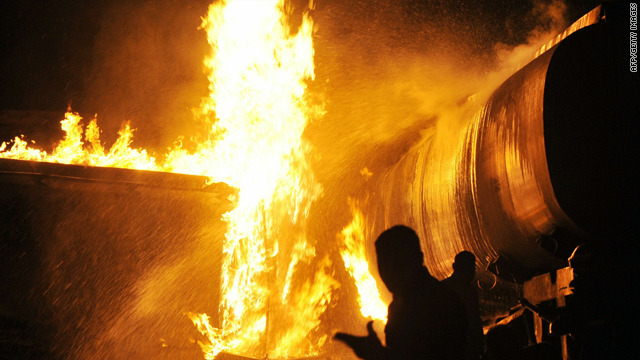
Islamabad, Pakistan (CNN) — Gunmen in Pakistan opened fire on oil trucks bound for NATO forces in Afghanistan, setting some 20 vehicles on fire and killing three, police said Monday. The attack came shortly after Pakistan’s ambassador to the United States vowed his country would go after terrorists on its soil.

Naeem Iqbal, a police spokesman, said five people were wounded in the attack on tankers parked on a main road outside a housing complex near the capital city of Islamabad. Efforts to put out the blaze are ongoing, he said.

Bin Yamin, a deputy police chief, said eight gunmen entered the area on Monday around 12:15 a.m. local time. He said they told people near the trucks to run away and that most did. Then they opened fire.

The tankers were parked in the vicinity of an oil refinery where they were going to go to pick up fuel for NATO forces in Afghanistan, Yamin said. Video images of the scene showed firefighters working to put out flames that stood out in the night against the overturned trucks.

On Sunday, Pakistan’s ambassador to the United States insisted his country would go after terrorists on its soil and needed only “technical” help from Washington, not U.S. troops on the ground.

Husain Haqqani, told CNN’s “State of the Union” that Pakistan would reopen a NATO supply route into Afghanistan “relatively quickly,” probably in less than a week.

Pakistan halted the convoys Thursday after officials blamed cross-border NATO helicopter fire for the deaths of three Pakistani soldiers. Haqqani said the United States and Pakistan were investigating the killings together. He said Pakistan will move against militants on its own schedule, not Washington’s.

“Pakistan is saying we will take care of all terrorists on the Pakistani side of the border, but we will do it on our timeline,” Haqqani said Sunday. “We cannot always follow a timeline that our allies set for us, because we are allies, not a satellite.”

Pakistan has lodged protests against NATO helicopter incursions into its territory — which the International Security Assistance Force says its rules of engagement permit — and is very sensitive about reported U.S. drone strikes in Pakistan.

There were a record number of drone strikes last month, according to a CNN count. On Saturday, three suspected drone strikes killed 18 people.

Pakistani intelligence officials said 10 people died in one drone strike targeting a militant hideout, four people died when a vehicle was struck, and four others were killed when another hideout was targeted.

All three occurred in the Data Khel area of North Waziristan. The intelligence officials did not want to be named because they are not authorized to speak to the media.

Security analysts have described North Waziristan as a haven for various factions of Afghan and Pakistani Taliban and al Qaeda militants. The majority of reported strikes this year have hit targets in the district, a mountainous tribal area on Pakistan’s border with Afghanistan, analysts said.

The United States does not officially acknowledge that it has unmanned aircraft firing missiles at suspected militants in Pakistan, but it is the only country operating in the area that is known to have the ability to do so.

Ambassador Haqqani also said Pakistan couldn’t do everything Washington wants “because sometimes we don’t have the capacity and sometimes we don’t have the means.” He said Pakistan’s geography makes it hard to hit militants.

“Sometimes people in the U.S. think … that it’s all flat land with everything visible. Not even the drones can identify everyone in North Waziristan because of the complexity of terrain,” Haqqani said.

Haqqani also argued that Pakistani politicians, just like U.S. counterparts, are constrained by public opinion. “All politics is local and the local situation in Pakistan is that the United States is not very popular amongst our public,” he said. “The fact remains that an elected democratic government in Pakistan is limited by public opinion to the extent of what it can do,” he said.

The Continuous Struggle Along Pakistan’s Frontier

By David Ignatius for The Wall Street Journal

In the same week when U.S. helicopters mistakenly killed three members of Pakistan’s Frontier Corps near the Afghan border, American Special Forces were training members of that same force on how to use radios, sniper rifles and other counterinsurgency tools at a remote base here.

Pakistanis and Americans don’t talk much about this joint training camp, northwest of Peshawar about 20 miles from Afghanistan. But the program is a symbol of the weird duality of the relationship — a mix of public distance and private cooperation that’s awkward for both sides.

“We have good relations; it’s going very well,” Col. Ahsan Raza, the camp commander, said when I visited Tuesday afternoon, two days before the fatal U.S. cross-border attack. But the Pakistani commandant was eager not to appear too close to America, stressing that the U.S. trainers were supplying technical skills, not running the show.

Both sides view the program here as a success story. But the joint effort masks a tension that is only likely to deepen in coming months.

Pakistan wants to use the 70,000-strong Frontier Corps to stabilize the Federally Administered Tribal Areas, or FATA, and halt the domestic Taliban insurgency. The United States, struggling in Afghanistan, wants Pakistan to help seal the border and destroy the sanctuaries used by al-Qaeda and the Afghan Taliban. The two sides talk as if their goals are identical, but they aren’t. The differing priorities became clear in conversations last week with Pakistani commanders.

Warsak is a pet project of Maj. Gen. Tariq Khan, the commander of the Frontier Corps. At his headquarters in the ancient Bala Hissar fortress in Peshawar, the traditional garb of the tribal “scouts,” as they’re called, makes you wonder whether the days of the British Raj ever really ended. Behind Khan’s desk is a plaque bearing the names of his predecessors back to 1907.

Khan argues that it’s time for Pakistan to move from big military offensives in the tribal areas to what he calls “policing” actions. “No steamroller operations,” he says.

Lt. Gen. Asif Yasin Malik, who commands the Pakistani army in the western border areas and is Khan’s boss, makes the same point. “Don’t expect major new kinetic operations,” he says. “We have changed gears to a softer approach.”

This can’t be comforting to Gen. David Petraeus, the U.S. commander in Afghanistan. He is said to have concluded, after several months in Kabul, that more Pakistani pressure on the havens is crucial for American success. That’s the basic conflict — an overstretched America wants a Pakistani surge in the tribal areas; an overstretched Pakistan just wants to keep the peace.

Khan’s strategy is an updated version of the old British approach: work through the tribal chiefs, or maliks, keep the roads open and pound any renegades back into line. He wants to maintain order through three tiers of force: local militias, known as “levies,” recruited by the maliks; the Frontier Corps dispersed across the FATA; and the big guns of the Pakistani army.

Working with the American trainers at Warsak, Khan has devised some smart tactics: Private vehicles in the FATA will have electronic chips that register their movements. The scouts will report suspicious activities on their American-made radios, and the snipers will blow away any miscreants using their American-made sniper rifles. To demonstrate that order is returning, the burly Khan, the scion of a princely Pashtun family, took a car trip last summer through the FATA with his wife and daughter.

Khan’s enthusiasm is infectious: “There are no safe havens in my area of responsibility — I can take you anywhere, any place, anytime.” That sidesteps the fact that North and South Waziristan, the main trouble spots, are still the responsibility of the army.

Driving down the roads of the border areas, you sometimes have the sense that you are traveling back in time. But that “back to the future” strategy is a temporary fix, at best. Pakistan, with U.S. support, should be moving forward, not in reverse. The years of war have shattered the old tribal order, and the long-run goal should be to bring the tribal areas into a modern Pakistan, rather than let them fester on their own.

U.S. drone attacks and other firepower can keep the insurgents on the run, but they won’t bring stability. Neither will Tariq Khan’s snipers. Somehow, the people in this desolate region have to feel they have a stake in a future that’s something other than continuous warfare.

Message to Muslims: I’m Sorry

By Nicholas D Kristof for The New York Times

Many Americans have suggested that more moderate Muslims should stand up to extremists, speak out for tolerance, and apologize for sins committed by their brethren.

Go to Columnist Page »That’s reasonable advice, and as a moderate myself, I’m going to take it. (Throat clearing.) I hereby apologize to Muslims for the wave of bigotry and simple nuttiness that has lately been directed at you. The venom on the airwaves, equating Muslims with terrorists, should embarrass us more than you. Muslims are one of the last minorities in the United States that it is still possible to demean openly, and I apologize for the slurs.

I’m inspired by another journalistic apology. The Portland Press Herald in Maine published an innocuous front-page article and photo a week ago about 3,000 local Muslims praying together to mark the end of Ramadan. Readers were upset, because publication coincided with the ninth anniversary of 9/11, and they deluged the paper with protests.

So the newspaper published a groveling front-page apology for being too respectful of Muslims. “We sincerely apologize,” wrote the editor and publisher, Richard Connor, and he added: “we erred by at least not offering balance to the story and its prominent position on the front page.” As a blog by James Poniewozik of Time paraphrased it: “Sorry for Portraying Muslims as Human.”

I called Mr. Connor, and he seems like a nice guy. Surely his front page isn’t reserved for stories about Bad Muslims, with articles about Good Muslims going inside. Must coverage of law-abiding Muslims be “balanced” by a discussion of Muslim terrorists?

Ah, balance — who can be against that? But should reporting of Pope Benedict’s trip to Britain be “balanced” by a discussion of Catholic terrorists in Ireland? And what about journalism itself?

I interrupt this discussion of peaceful journalism in Maine to provide some “balance.” Journalists can also be terrorists, murderers and rapists. For example, radio journalists in Rwanda promoted genocide.

I apologize to Muslims for another reason. This isn’t about them, but about us. I want to defend Muslims from intolerance, but I also want to defend America against extremists engineering a spasm of religious hatred.

Granted, the reason for the nastiness isn’t hard to understand. Extremist Muslims have led to fear and repugnance toward Islam as a whole. Threats by Muslim crazies just in the last few days forced a Seattle cartoonist, Molly Norris, to go into hiding after she drew a cartoon about Muhammad that went viral.

And then there’s 9/11. When I recently compared today’s prejudice toward Muslims to the historical bigotry toward Catholics, Mormons, Jews and Asian-Americans, many readers protested that it was a false parallel. As one, Carla, put it on my blog: “Catholics and Jews did not come here and kill thousands of people.”

That’s true, but Japanese did attack Pearl Harbor and in the end killed far more Americans than Al Qaeda ever did. Consumed by our fears, we lumped together anyone of Japanese ancestry and rounded them up in internment camps. The threat was real, but so were the hysteria and the overreaction.

Radicals tend to empower radicals, creating a gulf of mutual misunderstanding and anger. Many Americans believe that Osama bin Laden is representative of Muslims, and many Afghans believe that the Rev. Terry Jones (who talked about burning Korans) is representative of Christians.

Many Americans honestly believe that Muslims are prone to violence, but humans are too complicated and diverse to lump into groups that we form invidious conclusions about. We’ve mostly learned that about blacks, Jews and other groups that suffered historic discrimination, but it’s still O.K. to make sweeping statements about “Muslims” as an undifferentiated mass.

In my travels, I’ve seen some of the worst of Islam: theocratic mullahs oppressing people in Iran; girls kept out of school in Afghanistan in the name of religion; girls subjected to genital mutilation in Africa in the name of Islam; warlords in Yemen and Sudan who wield AK-47s and claim to be doing God’s bidding.

But I’ve also seen the exact opposite: Muslim aid workers in Afghanistan who risk their lives to educate girls; a Pakistani imam who shelters rape victims; Muslim leaders who campaign against female genital mutilation and note that it is not really an Islamic practice; Pakistani Muslims who stand up for oppressed Christians and Hindus; and above all, the innumerable Muslim aid workers in Congo, Darfur, Bangladesh and so many other parts of the world who are inspired by the Koran to risk their lives to help others. Those Muslims have helped keep me alive, and they set a standard of compassion, peacefulness and altruism that we should all emulate.

I’m sickened when I hear such gentle souls lumped in with Qaeda terrorists, and when I hear the faith they hold sacred excoriated and mocked. To them and to others smeared, I apologize.

Aisam-Ul-Haq Qureshi Delivers Message of Peace at U.S. Open After Indo-Pak Express Suffers Defeat

By Stefan Bondy for NY Daily News

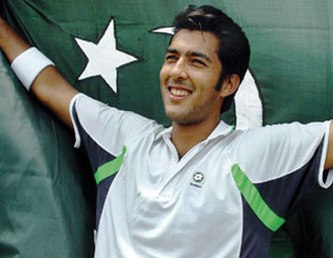
Aisam-Ul-Haq Qureshi delivered his message loud and peacefully, and it had nothing to do with forehands or backhands, or even the doubles title he failed to win.

As a Muslim from Pakistan playing in the U.S. Open doubles final, he said New York needed his words the most, as post-9/11 counsel. So the 30-year-old grabbed the microphone and addressed the estimated 15,000 at Arthur Ashe Stadium – probably the biggest crowd to watch a Grand Slam doubles final – and made sure the moment wasn’t lost.

“I want to say something on behalf of all Pakistanis,” he said following Friday’s 7-6 (5), 7-6 (4) defeat to the Bryan brothers, Bob and Mike. “Every time I come here, there’s a wrong perception about the people of Pakistan.

“They are very friendly, very loving people. We want peace in this world as much as you guys.”

The crowd cheered. By now, such poignancy is expected from Qureshi and, to a lesser extent, his doubles partner, Rohan Bopanna of India. Together, they’ve formed the politically charged tandem known as the Indo-Pak Express, breaking down barriers with their kinship and jettisoning expectations with their recent play.

Their respective neighboring countries have warred with and terrorized each other since the 1940s, citing religion as their great chasm. But Qureshi and Bopanna, a Hindu, represent peace, both on and off the court. Indian and Pakistani fans filled pockets of Arthur Ashe Friday, arriving as early as two hours before the match. U.N. ambassadors from both countries sat side-by-side in the President’s Box – the second straight match they’ve attended together – cheering the same unexpected struggle their team brought to the greatest doubles team of all time, the Bryan brothers. The 16th-seeded Qureshi and Bopanna followed up their run to the Wimbledon quarterfinals with five wins in Flushing.

“They’ve proven that when Indians and Pakistanis get together we can raise fire,” Pakistan ambassador Abdullah Hussain Haroon said. “I think on a people-to-people basis, they’re setting an example that the politicians should follow.”

Prize money and rankings were never a motivating factor, Qureshi said, only good news for his flood-stricken countrymen and a platform to express his message of American misunderstanding. He also defended the decision to build a mosque near the World Trade Center site.

“For me, as a Muslim, that’s what makes America the greatest country in the world – freedom of religion, freedom of speech,” Qureshi said. “If the mosque is built, I think it’s a huge gesture to all the Muslim community out there in the world. I would really appreciate it.”

Pakistan, which borders Afghanistan, has long been considered a headquarters of Al Qaeda.

Qureshi said he’s been stopped at airport immigration “every time” in New York – three hours at a time – including after his latest flight for the Open. And on the eve of the ninth anniversary of the 9/11 attacks, he wanted to defend his country’s masses.

“Since September 11, every time I come to the States or western countries I feel people have the wrong impression about Pakistan as a terrorist nation,” Qureshi said. “I just wanted to declare that we are very friendly, loving and caring people, and we want peace in this world as much as Americans and the rest of the world wants.

“There are extremists in every religion, but just because of them you cannot judge the whole country as a terrorist nation. I just wanted to get this message across as a Pakistani.”

Obama Calls For Religious Tolerance

By Christi Parsons, Tribune Washington Bureau

In a news conference on the eve of Sept. 11, he speaks of his own Christianity, the economy, and asks Americans to remember they’re not at war with Islam, but with terrorists that distort the faith.

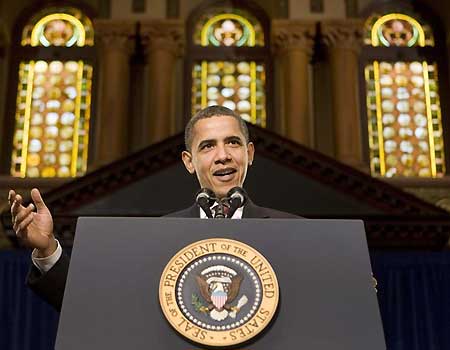
President Obama spoke of his own Christianity on Friday while calling on Americans to turn away from religious divisions and join together as “one nation, under God.” It was a rare personal reference from the president, coming in a news conference that sounded more like a homily to the nation before a somber anniversary.

“As somebody who relies heavily on my Christian faith in my job, I understand the passions that religious faith can raise,” Obama said. “But I’m also respectful that people of different faiths can practice their religion, even if they don’t subscribe to the exact same notions that I do, and that they are still good people, and they are my neighbors and they are my friends, and they are fighting alongside us in our battles.”

In his first news conference in several months, Obama talked up his plans for stimulating economic growth and complained about Republican obstruction to his proposals. He said people should remember that there is still a terrorist threat to Americans nine years after Sept. 11, even though U.S. troops overseas are successfully compromising the ability of extremists to carry out new plots.

Capturing or killing Osama bin Laden and Ayman Zawahiri, Al Qaeda’s No. 2 leader, is a high priority, he said, though it “doesn’t solve all our problems.”

But as a Florida preacher held out the possibility of a Koran-burning demonstration on Saturday, tying it to plans for the development of a mosque near the site of the World Trade Center attacks, even Obama’s messages about the economy and overseas conflict were interwoven with a larger message about religious tolerance.

If there is an increase in suspicion and resentment of Islam in this country, Obama said, it arises during trying times when the country is feeling a sense of general anxiety. He said he worries that the threat of a Koran burning could endanger American troops and cause others around the country to think it’s a good way to get attention.

The proposed New York City mosque has run up against the “extraordinary sensitivities around 9/11,” he said. “But I go back to what I said earlier: We are not at war against Islam,” Obama said. “We are at war against terrorist organizations that have distorted Islam or falsely used the banner of Islam to engage in their destructive acts.”

Americans, he said, must cling to the shared belief in religious tolerance. “We’ve got millions of Muslim Americans, our fellow citizens, in this country,” he said. “They’re going to school with our kids. They’re our neighbors. They’re our friends. They’re our co-workers. And when we start acting as if their religion is somehow offensive, what are we saying to them?”

Obama devoted a substantial portion of his Friday remarks to the economy, beginning with the announcement that he is naming Chicago economist Austan Goolsbee to head his Council of Economic Advisors. Goolsbee is an economist with expertise in tax policy.

The president refused to characterize his proposal to spend money on infrastructure as a “second stimulus” plan, despite one reporter’s prodding and even though he said he has “no problem with people saying the president is trying to stimulate growth and hiring.”

“I would assume that’s what the Republicans think we should do, to stimulate growth and jobs,” Obama said. Senate Republican leader Mitch McConnell of Kentucky fired off a speedy critique, saying Americans are more interested in lower taxes and reductions in federal spending.

“The president spent a lot of time blaming others and talking about more government spending,” McConnell said. “But Americans want to know that Washington is going to stop the reckless spending and debt, the burdensome red-tape and job-killing taxes.”

But McConnell and others hastened to echo the president’s words about who, exactly, the U.S. is targeting with its war effort. “I agree wholeheartedly with the president that we need to do everything we can to fight Al Qaeda, while being clear who the enemy is,” McConnell said. “This war on terror goes on,” McConnell said. “We are confident in the strength and goodness of our cause and our country.”

Why The Mosque Needs To Be Built At Ground Zero

By Manzer Munir for Pakistanis for Peace

This is already my third article on the NYC Mosque controversy. When I started my Facebook group and website Pakistanis for Peace by the same name nearly two years ago, I did it in response to the tragic and callous terrorist attacks in Mumbai India in 2008 and my desire to see peace in that region and beyond. As a firm believer in God, but not a particularly religious person, I never would have imagined that I would end up making a big part of my focus not just peace between India and Pakistan, but also peace and understanding between the Muslim and non-Muslim worlds as well. Heaven knows I have my own questions and issues with certain Muslim laws and practices and I of all people am the least suitable to be one of its defenders. However, I am a strict constitutionalist and as mentioned in my previous articles on this subject, I have advocated the building of the mosque simply on First Amendment religious freedom grounds.

Now here I am in less than one month, I find myself already writing a third article on the mosque controversy. Much has been written already by others on this topic also, but I wanted to give a few more opinions from a rational, moderate and patriotic American Muslim perspective, one which is missing in the current dialogue.

We know that many people who are opposed to the building of the mosque in lower Manhattan simply ask “Why there?” “Why would “they” possibly want to build it there of all places? It is seen as an affront by them that Muslims should want to build an inter-faith mosque, community center and a planned outreach ministry in the heart of Manhattan two city blocks from the site of the World Trade Center and the attacks of September 11, nine year ago. In fact, last night, while watching CNN, I saw Rick Sanchez ask former Governor George Pataki of New York about the Ground Zero Mosque controversy and his views on the subject. “Why there of all places would you build a mosque?” asked Gov. Pataki.  Why there?  As if he had fully bought into a favorite point of right wing groups that “Muslims build mosques at places they conquer” and that this is somehow a celebration of their “victory” over us because of the deaths of so many of our fellow countrymen on 9/11. That statement is wrong on so many levels that normally I would not even waste energy answering a clearly misguided assumption, but I will make an exception to clear the air as that is precisely what this article aims to do.

First of all, the 9/11 attacks were not a result of the actions of mainstream Muslims or the collective billion plus adherents of the religion but instead by members of a terror group known as Al-Qaeda, whose leader, Osama Bin Laden, we were very familiar and friendly with during the Soviet Afghan War of the 1980’s as he had assisted us in stopping the Red Army from conquering Afghanistan at the height of the Cold War between the two superpowers. Also a mosque is a place of worship. It is not a place where bombs are made and terrorists are trained either in ideology or practical training. To equate the building of a mosque to a direct link to terrorism or some other nefarious activity is in itself a deeply offensive argument to any Muslim, if one must speak of insensitivities.

So are we at war with Islam? This really is the only question we must ask ourselves to understand the debate over the mosque controversy. Debra Burlingame, the co-founder of 9/11 Families for a Safe and Strong America, issued a statement saying that “Building a 15-story mosque at Ground Zero is a deliberately provocative act.” This is simply not true as it is not exclusively just a mosque, but rather a multi layered structure that will house an auditorium, restaurant, gymnasium, library, conference rooms and multi-faith prayer halls devoted to allowing non-Muslim visitors the chance to come explore the center and at the same time take time to meditate and pray according to their own customs.

The center, as its leader Imam Faisal Abdul Rauf pointed out recently, “will establish this community as the place where the moderate Muslim voice condemns terrorism and works for new, peaceful, and harmonious relationships with all New Yorkers and indeed all Americans.” Just the fact that this center will have a restaurant, conference rooms, a library and multi-faith dialogue and prayer rooms, already makes this proposed building the most uniquely American mosque in the world. Nowhere else will one find a mosque so devoted to understanding and bridge building between Islam and other religions and no other place and location will it be more sorely needed in the years to come than in New York City! Too often, many non-Muslims complain about the self segregation practices of Muslims and indeed a characteristic of all minority communities to be in their own bubble and for not having a lot of interaction between other communities or faiths.

Many times my own non-Muslim friends have been curious and inquired on how Muslims pray and what they believe in and what exactly goes on in a typical mosque. But typically a small, regular mosque does not have the sort of access and resources to satisfy this curiosity and neither the infrastructure nor the logistics to handle curious visitors of other faiths. Primarily mosques in this country have been built with Muslims as its sole audience and occupants. This is the first time a mosque and cultural center is being proposed that will eliminate the barriers that many non-Muslims feel when it comes to understanding Islam and Muslims and actually takes into considerations its non-Muslim visitors when planning the structure. For many years to come, many Americans and indeed tourists from around the world will be coming to the proposed complex now under construction at the site of the World Trade Centers that will house the 9/11 Memorial. What better place  will there be than a few blocks away from the 9/11 Memorial where visitors can be told about the Islam of the great boxer Muhammed Ali and hall of fame basketball player Kareem Abdul Jabbar and not that of evil individuals such as Mohammed Atta and Osama Bin Laden? Where else should they be told of the difference between the Islam that is practiced by comedian Dave Chappelle and Oprah’s Dr Mehemt Oz versus the one practiced by the backward barbarian murderers known as the Taliban in the mountains of Afghanistan? Where else can they come to know of the type of Islam practiced by patriotic Bronze Star and Purple Heart decorated deceased US soldier Kareem Rashad Sultan Khan or the one practiced by the deranged Major Nidal Malik Hasan, the accused perpetrator of the Fort Hood Army base who sadly killed 13 fellow soldiers almost 1 year ago?

Now in order to satisfy the opponents and critics of the center, I also believe that all the funding needs to be transparent, there needs to be a multi-faith board of directors, and the Muslim leadership needs to be cognizant that this is indeed a very special place for all Americans and a place of national mourning. This mosque needs to therefore address the attacks of 9/11 and also needs to be a reminder not just to non-Muslims of the tragedy that was 9/11 but more importantly it needs to  serve as a constant reminder to the rest of the Muslim world of the terrible actions some have committed in the name of Islam.

Why build it here of all places you may still ask? Why not here? What other place in America, nay, what other place in the world did Islam take the biggest blow to its reputation and image? It is Ground Zero and lower Manhattan itself where this religion of over a billion people got literally hijacked and its message of peace and tolerance got forever destroyed in the eyes of the world’s non-Muslims by events of 9/11 and the actions of a handful of radical extremists who were terrorists and part of a network known as Al-Qaeda. So, why not build a monument to tolerance and understanding for the very religion that took the biggest hit to its global credibility by events that happened in this area?  I believe that it is not out of any provocation or insensitivities that Muslims want to build a community center near Ground Zero, but rather because this is the one place in the world where truth about the religion needs to be told and the need to showcase the real Islam of the world’s Muslims rather than allow the story of the hatred and violence perpetrated by the terrorists to be the only story one hears when discussing the religion of Islam. This center needs to be a part of the healing process we must go through as a nation and will be a testament for the rest of the Muslim world outside our shores of the grandeur of our nation and for our acceptance of Muslims and for not allowing the stereotyping of a religion of hundreds of millions of people over the actions of 19 evildoers. 

Trust me, the terrorists will triumph if this mosque does not get built.  We must not forget who we’re fighting against, and what we are indeed fighting for. The Taliban, the terrorists and other radical Islamists do not respect religious freedom or tolerance. Their distorted and narrowly interpreted Wahhabi views of Islam leave no room for dissent, debate or disagreements. These terrorists are responsible for more deaths of dissenting and or differing Muslims than of any other religion at their hands. These terrorists are Islam’s biggest enemy and threat and we must remember that this is not a war between us and the Muslim world. It is a war between us and Al-Qaeda. And to prevent moderate, peace seeking, bridge building, and patriotic American Muslims from building a structure that will help ease the pain and misunderstanding of the events of that dark day 9 years ago in September will only play into the hands of those who hate us for our freedoms. To have Muslim Americans potentially lose these very freedoms due to all the pressure, in this land built on freedom and liberty, will only strengthen the hands of the terrorists and bolster their claims that this is truly a war on Islam and that they are second class citizens who do not even have the fundamental rights to worship that is afforded to all Americans. This is a battle for Islam itself, one where the forces of evil are attempting to commandeer the entire religion towards their narrow minded interpretation of the sacred texts. We must hold steadfast to our principles and ideals and support moderate Islam in taking back the religion from the extremists and allowing this mosque to be built will go a long ways in turning the tide of radicalism, and ensuring that we stand for our time tested principles, no matter how unpopular they may be in the current climate.

-Manzer Munir, founder of Pakistanis for Peace, a proud Pakistani American and peace activist, is a freelance journalist that writes for PakistanisforPeace.com and other publications.

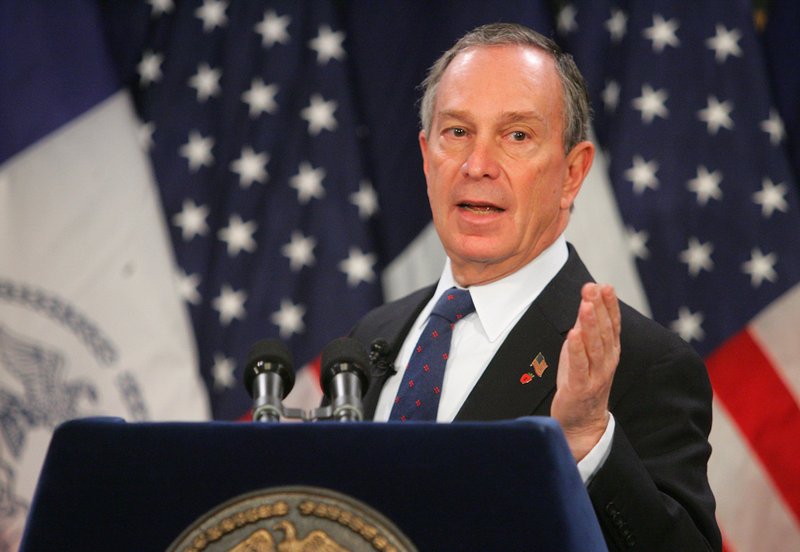
Mayor Bloomberg on Mosque: ‘A Test of Our Commitment to American Values’

As Reported By The Wall Street Journal

In a speech at a Ramadan Iftar dinner at Grace Mansion Tuesday, Mayor Michael Bloomberg offered an extended defense of the proposed Islamic community center and mosque near the World Trade Center site. Those who say the center should not be built “would compromise our commitment to fighting terror with freedom,” the mayor said. “There is nowhere in the five boroughs that is off limits to any religion.”

Below, the full transcript of Bloomberg’s prepared remarks.

Good evening, and Ramadan Kareem. I want to welcome everyone to our annual Ramadan Iftar at Gracie Mansion.

We call this ‘The People’s House,’ because it belongs to all 8.4 million New Yorkers who call this city home. People of every race and religion, every background and belief. We celebrate that diversity here in this house with gatherings like this.

And for me, whether it’s marking St. Patrick’s Day or Harlem Week or any other occasion, these gatherings are always a powerful reminder of what makes our city so strong and our country so great.

America is a nation of immigrants, and no place opens its doors more widely to the world than New York City. America is the land of opportunity, and no place offers its residents more opportunity to pursue their dreams than New York City. America is beacon of freedom, and no place defends those freedoms more fervently, or has been attacked for those freedoms more ferociously, than New York City.

In recent weeks, a debate has arisen that I believe cuts to the core of who we are as a city and a country. The proposal to build a mosque and community center in Lower Manhattan has created a national conversation on religion in America, and since Ramadan offers a time for reflection, I’d like to take a few minutes to reflect on the subject.

There are people of good will on both sides of the debate, and I would hope that everyone can carry on the dialogue in a civil and respectful way. In fact, I think most people now agree on two fundamental issues: First, that Muslims have a constitutional right to build a mosque in Lower Manhattan and second, that the site of the World Trade Center is hallowed ground. The only question we face is: how do we honor that hallowed ground?

The wounds of 9/11 are still very much with us. And I know that is true for Talat Hamdani, who is here with us tonight, and who lost her son, Salman Hamdani, on 9/11. There will always be a hole in our hearts for the men and women who perished that day.

After the attacks, some argued – including some of those who lost loved ones – that the entire site should be reserved for a memorial. But we decided – together, as a city – that the best way to honor all those we lost, and to repudiate our enemies, was to build a moving memorial and to rebuild the site.

We wanted the site to be an inspiring reminder to the world that this city will never forget our dead and never stop living. We vowed to bring Lower Manhattan back – stronger than ever – as a symbol of our defiance and we have. Today, it is more of a community neighborhood than ever before, with more people than ever living, working, playing and praying there.

But if we say that a mosque and community center should not be built near the perimeter of the World Trade Center site, we would compromise our commitment to fighting terror with freedom.

We would undercut the values and principles that so many heroes died protecting. We would feed the false impressions that some Americans have about Muslims. We would send a signal around the world that Muslim Americans may be equal in the eyes of the law, but separate in the eyes of their countrymen. And we would hand a valuable propaganda tool to terrorist recruiters, who spread the fallacy that America is at war with Islam.

Islam did not attack the World Trade Center – Al-Qaeda did. To implicate all of Islam for the actions of a few who twisted a great religion is unfair and un-American. Today we are not at war with Islam – we are at war with Al-Qaeda and other extremists who hate freedom.

At this very moment, there are young Americans – some of them Muslim – standing freedoms’ watch in Iraq and Afghanistan, and around the world. A couple here tonight, Sakibeh and Asaad Mustafa, has children who have served our country overseas and after 9/11, one of them aided in the recovery efforts at Ground Zero. I’d like to ask them to stand, so we can show our appreciation. Thank you.

The members of our military are men and women at arms – battling for hearts and minds. And their greatest weapon in that fight is the strength of our American values, which have always inspired people around the world. But if we do not practice here at home what we preach abroad – if we do not lead by example – we undermine our soldiers. We undermine our foreign policy objectives. And we undermine our national security.

In a different era, with different international challenges facing the country, President Kennedy’s Secretary of State, Dean Rusk, explained to Congress why it is so important for us to live up to our ideals here at home. He said, ‘The United States is widely regarded as the home of democracy and the leader of the struggle for freedom, for human rights, for human dignity. We are expected to be the model.’

We are expected to be the model. Nearly a half-century later, his words remain true. In battling our enemies, we cannot rely entirely on the courage of our soldiers or the competence of our diplomats. All of us must do our part.

Just as we fought communism by showing the world the power of free markets and free elections, so must we fight terrorism by showing the world the power of religious freedom and cultural tolerance. Freedom and tolerance will always defeat tyranny and terrorism – that is the great lesson of the 20th century, and we must not abandon it here in the 21st.

I understand the impulse to find another location for the mosque and community center. I understand the pain of those who are motivated by loss too terrible to contemplate. And there are people of every faith – including, perhaps, some in this room – who are hoping that a compromise will end the debate.

But it won’t. The question will then become, how big should the ‘no-mosque zone’ around the World Trade Center be? There is already a mosque four blocks away. Should it too, be moved?

This is a test of our commitment to American values. We must have the courage of our convictions. We must do what is right, not what is easy. And we must put our faith in the freedoms that have sustained our great country for more than 200 years.

I know that many in this room are disturbed and dispirited by the debate. But it is worth keeping some perspective on the matter. The first colonial settlers came to these shores seeking religious liberty and the founding fathers wrote a constitution that guaranteed it. They made sure that in this country the government would not be permitted to choose between religions or favor one over another.

Nonetheless, it was not so long ago that Jews and Catholics had to overcome stereotypes and build bridges to those who viewed them with suspicion and less than fully American. In 1960, many Americans feared that John F. Kennedy would impose papal law on America. But through his example, he taught us that piety to a minority religion is no obstacle to patriotism. It is a lesson that needs updating today, and it is our responsibility to accept the challenge.

Before closing, let me just add one final thought: Imam Rauf, who is now overseas promoting America and American values, has been put under a media microscope. Each of us may strongly agree or strongly disagree with particular statements he has made. And that’s how it should be – this is New York.

And while a few of his statements have received a lot of attention, I would like to read you something that he said that you may not have heard. At an interfaith memorial service for the martyred journalist Daniel Pearl, Imam Rauf said, ‘If to be a Jew means to say with all one’s heart, mind, and soul: Shma` Yisrael, Adonai Elohenu Adonai Ehad; Hear O Israel, the Lord our God, the Lord is One, not only today I am a Jew, I have always been one. If to be a Christian is to love the Lord our God with all of my heart, mind and soul, and to love for my fellow human being what I love for myself, then not only am I a Christian, but I have always been one.’

In that spirit, let me declare that we in New York are Jews and Christians and Muslims, and we always have been. And above all of that, we are Americans, each with an equal right to worship and pray where we choose. There is nowhere in the five boroughs that is off limits to any religion.

By affirming that basic idea, we will honor America’s values and we will keep New York the most open, diverse, tolerant, and free city in the world. Thank you.