Posts Tagged ‘ Al-Qaeda ’

Progress, For a Price, in Pakistan

By Doyle McManus for The Los Angeles Times
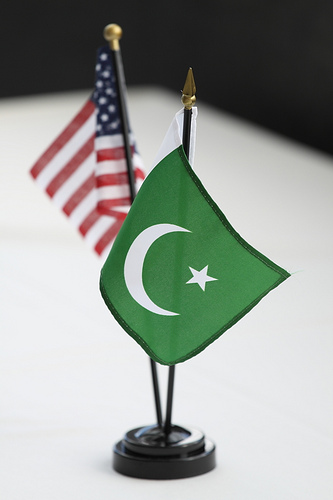
In 2001, on the eve of the U.S. invasion of Afghanistan, President George W. Bush gave Pakistan’s then-leader, Gen. Pervez Musharraf, a choice: He was either with us or against us. Musharraf chose to become an ally, but the question ever since has been whether that shotgun marriage can mature into a healthy adult relationship. At times, the prospect has seemed far from reach.

The world’s second-most-populous Muslim country is caught in a brutal internal struggle between extremism and moderation. Most of its people tell pollsters they don’t like the United States and wish we’d go away. The tribesmen of its western frontier shelter Osama bin Laden and the leaders of Afghanistan’s Taliban. And the United States can’t forget how, in the 1980s, Pakistan built nuclear weapons — and then later exported nuclear technology to North Korea and Iran.

But in recent months, there has been progress in the relationship. Military and intelligence cooperation between the United States and Pakistan has increased significantly. Pakistan has allowed the CIA to increase its missile strikes against Al Qaeda and Taliban targets in Pakistani territory. Pakistani authorities have arrested several Taliban leaders and allowed U.S. intelligence officers to question them. And now Pakistan is offering to increase its own military operations in North Waziristan, the presumed lair of Bin Laden. All that cooperation came at a price, of course: a flood of U.S. military and economic aid.

And last week, the Pakistanis came to Washington to press for more. The academic criticism of the U.S.-Pakistani relationship is that it is “transactional” — nothing more than a series of bargains between buyers and sellers who don’t trust each other much. That’s still mostly true. Pakistan’s delegation arrived with a 56-page shopping list covering everything from military equipment to education and cultural exchanges. And one Pakistani official, asked during the visit whether his government was truly willing to act against the havens that allow the Taliban to maintain bases in Pakistan, replied frankly: “Yes — but at a price.”

After a series of meetings with Secretary of State Hillary Rodham Clinton, Pakistan’s ebullient foreign minister, Shah Mehmood Qureshi, declared: “I think we are going to move from a relationship to a partnership.” But he used the future tense. In the meantime, there are things to work out. Pakistan is clearly worried about what happens when the United States begins pulling troops out of Afghanistan in 2011.

Although Obama administration officials have tried to reassure Pakistan that Washington’s commitment to the region is for the long haul, uncertainty remains. “Our fear is . . . that we get into a fight with these guys [the Taliban], and you walk away, and we’re still there,” a Pakistani official said. Pakistan’s powerful army chief of staff, Gen. Ashfaq Kayani, spent part of his time in Washington visiting Congress with PowerPoint slides to show that Pakistan has committed more troops to its fight against insurgents than the United States has on the ground in Afghanistan, and that it has suffered almost 30,000 killed and wounded in the process.

According to U.S. officials, Kayani made a strong case that Pakistan can do more if it gets more modern military equipment from the United States, especially helicopters to ferry troops into the rugged badlands where Al Qaeda and the Taliban hide. The United States has helped Pakistan acquire some helicopters, but not as many and not as quickly as the Pakistanis would like. U.S. officials said they would try to speed the delivery of more. In the past, U.S. officials complained that Pakistan used much of its U.S. military aid to bolster its eastern front with India instead of its fight with internal insurgents; but since Pakistan’s 2009 offensive in the Swat Valley, that criticism has been stilled.

The delegation also added a new item to Islamabad’s wish list: a nuclear agreement under which the United States would help Pakistan develop its civilian nuclear energy industry — to mirror a similar U.S. agreement with India, Pakistan’s longtime enemy. The United States told the Pakistanis that would have to wait. The memory of having to clamp sanctions on Pakistan for its nuclear weapons program is still too fresh. But it was a sign of improving relations that the idea wasn’t rejected completely.

 In 2001, the United States sought a new relationship with Pakistan mostly because it was next to Afghanistan — and thus a country we would need for moving military supplies and basing drones. But that thinking has slowly evolved. In the long run, with its population of 170 million people — not to mention its cache of nuclear weapons — Pakistan is more important than Afghanistan.

“We’re engaging with Pakistan because we’re afraid of it,” says Christine Fair, a Pakistan expert at Georgetown University. “It’s the scariest country in the region. Because of Afghanistan, it’s been treated as if it were a subsidiary issue. But Pakistan should be the primary issue.” The Americans are working hard to convince the Pakistanis that they are interested in Pakistan’s stability for its own sake, not just because it’s next door to Afghanistan. The Pakistanis are working hard to convince the Americans that they are committed to defeating the extremists in their midst. It’s not a strategic relationship yet. If it’s a partnership, it’s still a wary one. But that’s progress.
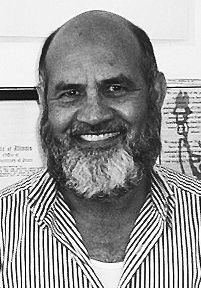
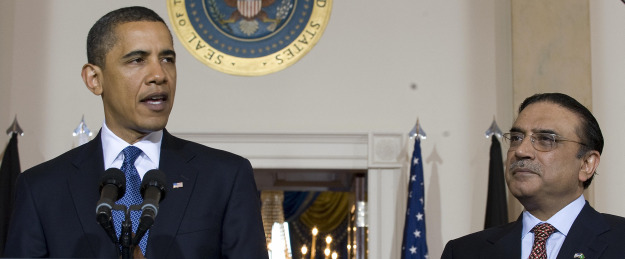
Pakistan-Born Cabdriver In Chicago Accused of Helping Al-Qaeda

By Carrie Johnson for The Washington Post

A Chicago taxi driver born in Pakistan was arrested Friday on two charges of providing material support to terrorists — allegedly attempting to funnel money to al-Qaeda and discussing an attack on a U.S. stadium.

Raja Lahrasib Khan, a naturalized U.S. citizen, does not pose an imminent danger to Americans, prosecutors said. But they said Khan, 56, had claimed he knew Ilyas Kashmiri, a Pakistan-based extremist leader with close ties to al-Qaeda.

Kashmiri faces criminal charges in the United States for allegedly conspiring with another Chicagoan, David C. Headley, to kill employees of a Danish newspaper that published derogatory cartoons of the prophet Muhammad.

The court papers in Khan’s case describe a March 11 phone call in which he appeared to discuss attacking an unnamed U.S. stadium in August with bombs that go “boom, boom, boom, boom.”

Authorities sent an undercover agent to meet with Khan and give him $1,000 to send to Kashmiri, the court papers said. Khan, 56, of the North Side, was then charged with two counts of providing material support to terrorism in a criminal complaint filed Thursday in U.S. District Court in Chicago and unsealed Friday following his arrest, the release said. The investigation is continuing.

A Victory For Obama, From An Unlikely Quarter-Pakistan

By Fareed Zakaria for Newsweek

President Obama gets much credit for changing America’s image in the world—he was probably awarded the Nobel Prize for doing so. But if you asked even devoted fans to cite a specific foreign-policy achievement, they would probably hesitate. “It’s too soon for that,” they would say. But in fact, there is a place where Barack Obama’s foreign policy is working, and one that is crucial to U.S. national security—Pakistan.

There has been a spate of good news coming out of that complicated country, which has long promised to take action against Islamic militants but rarely done so. (The reason: Pakistan has used many of these same militants to destabilize its traditional foe, India, and to gain influence in Afghanistan.) Over the past few months, the Pakistani military has engaged in serious and successful operations in the militant havens of Swat, Malakand, South Waziristan, and Bajaur. Some of these areas are badlands where no Pakistani government has been able to establish its writ, so the achievement is all the more important. The Pakistanis have also ramped up their intelligence sharing with the U.S. This latter process led to the arrest a month ago of Mullah Abdul Ghani Baradar, the deputy leader of the Afghan Taliban, among other Taliban figures.

Some caveats: most of the Taliban who have been captured are small fish, and the Pakistani military has a history of “catching and releasing” terrorists so that they can impress Americans but still maintain their ties with the militants. But there does seem to be a shift in Pakistani behavior. Why it’s taken place and how it might continue is a case study in the nature and limits of foreign-policy successes.

First, the Obama administration de-fined the problem correctly. Senior ad-ministration officials stopped referring to America’s efforts in Afghanistan and instead spoke constantly of “AfPak,” to emphasize the notion that success in Afghanistan depended on actions taken in Pakistan. This dismayed the Pakistanis but they got the message. They were on notice to show they were part of the solution, not the problem.

Second, the administration used both sticks and carrots. For his first state dinner, Obama pointedly invited Indian Prime Minister Manmohan Singh—clearly not Pakistan’s first choice. Obama made clear that America would continue to pursue the special relationship forged with India under the Bush administration, including a far-reaching deal on nuclear cooperation. But at the same time, the White House insisted it wanted a deep, long-term, and positive relationship with Pakistan. Sens. John Kerry and Dick Lugar put together the largest nonmilitary package of U.S. assistance for the country ever. Aid to the Pakistani military is also growing rapidly.

Third, it put in time and effort. The administration has adopted what Central Command’s Gen. David Petraeus calls a “whole of government” approach to Pakistan. All elements of U.S. power and diplomacy have been deployed. Pakistan has received more than 25 visits by senior administration officials in the past year, all pushing the Pakistani military to deliver on commitments to fight the militants.

Finally, as always, luck and timing have played a key role. The militants in Pakistan, like those associated with Al Qaeda almost everywhere, went too far, brutally killing civilians, shutting down girls’ schools, and creating an atmosphere of medievalism. Pakistan’s public, which had tended to downplay the problem of terrorism, now saw it as “Pakistan’s war.” The Army, reading the street, felt it had to show results.

These results are still tentative. Pakistan’s military retains its obsession with India—how else to justify a vast budget in a small, poor nation? It has still not acted seriously against any of the major militant groups active against Afghanistan, India, or the United States. The Afghan Taliban, the Haqqani group, Gulbuddin Hekmatyar, Lashkar-e-Taiba, and many smaller groups all operate with impunity within Pakistan. But the Pakistani military is doing more than it has before, and that counts as success in the world of foreign policy.

Such success will endure only if the Obama administration keeps at it. There are some who believe that Pakistan has changed its basic strategy and now understands that it should cut its ties to these groups altogether. Strangely this naive view is held by the U.S. military, whose top brass have spent so many hours with their counterparts in Islamabad that they’ve gone native. It’s up to Obama and his team to remind the generals that pressing Pakistan is a lot like running on a treadmill. If you stop, you move backward, and, most likely, you fall down.

Lahore bombing is Pakistan’s bloodiest this year

By Saeed Shah for The Guardian

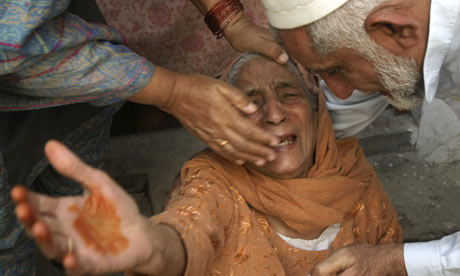
A bombing in the eastern city of Lahore has killed at least 43 people – the fifth terrorist attack this week as extremists in Pakistan demonstrate their continued ability to strike.

The bloodiest terrorist strike in Pakistan this year was carried out by two attackers wearing suicide jackets who walked into a busy market in a high security military district and blew themselves up. The target appeared to be passing military vehicles but most of the victims were civilians. Shops in the market were ripped apart, with children crossing the road and people waiting at a bus stop among the victims. About 10 soldiers were killed and 100 injured, said the Lahore police chief, Parvaiz Rathore.

“There were about 10 to 15 seconds between the blasts. Both were suicide attacks,” a senior local government official, Sajjad Bhutta, said at the site. “The maximum preventative measures were being taken but these people find support from somewhere.” The bombers struck at 1pm, around the time of Friday prayers, in the cantonment area, home to the local army garrison and one of Lahore’s most upmarket residential districts.

Lahore is the bustling cultural hub of Pakistan and had enjoyed several weeks of relative peace. It is the capital of the eastern Punjab province, Pakistan’s most densely populated area and its political heartland. The suicide bombings were followed in the evening by three smaller blasts in a residential area across town. They caused panic but damage was reported to be minor. The authorities repeated their regular assertion that the Taliban and other extremist groups have been defeated. The provincial law minister, Rana Sanaullah , said: “We broke their networks. That’s why they have not been able to strike for a considerable time.”

But it was the second bombing this week in Lahore. A car bombing on Monday at a police interrogation centre killed 14 people. Other attacks this week included a gun and grenade assault on a US Christian aid agency’s office in the north-west, killing six of its staff, all Pakistani nationals. “They (the extremists) are trying to project their power, telling the government that they are still alive,” said analyst Imtiaz Gul, author of The al-Qaida Connection. “They are still far from broken. It’s going to be a long haul.”

In 2009 that Lahore was dragged into the bloody insurgency in Pakistan, which claimed around 3,000 lives last year, with a series of spectacular attacks including a gun assault on the visiting Sri Lankan cricket team. The last major attack in Lahore was in December when a market was bombed, killing at least 49 people. The launch of a military offensive in South Waziristan, on the Afghan border, the base of the Pakistani Taliban, in October last year was accompanied by a vicious spate of terrorist reprisals but the country had been relatively peaceful this year.

Some Experts See Fatwa As A Significant Blow To Terrorist Recruiting

By Kiran Khalid  for CNN.com

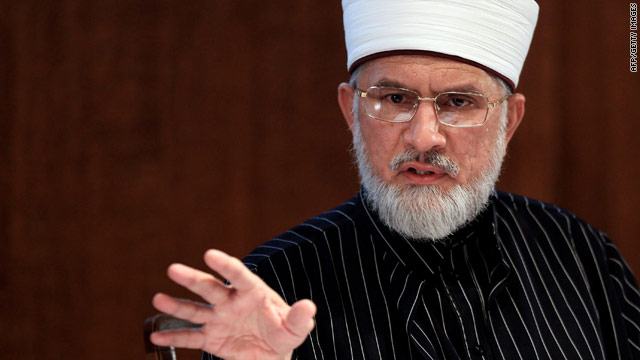
A fatwa, or religious ruling, issued this week is roiling theological waters after it took aim at those notorious for targeting others: terrorists.  The anti-terrorism fatwa by renowned Muslim scholar Muhammad Tahir ul-Qadri pulled no punches, declaring that terrorism was “haraam,” or forbidden by the Quran, and that suicide bombers would be rewarded not by 72 virgins in heaven, as many terrorist recruiters promise, but with a suite in hell.

Qadri, the founder of the Minhaj-ul-Quran International, an Islamic movement with centers in 90 countries, told a news conference in London, England, on Tuesday that his decree categorically condemns terrorism and suicide bombings in the name of Islam. “Until now, scholars who were condemning terrorism were conditional and qualified what they said,” Qadri said in a phone interview, noting that his 600-page ruling left no room for interpretation. “I didn’t leave a single, minor aspect that, in the mind of radicals or extremists, can take them to the direction of martyrdom.”

The 59-year-old Pakistani scholar called his fatwa an “absolute” condemnation, going as far as to label the terrorists themselves “kafirs,” a term in the Quran meaning “unbeliever.” “This fatwa has the potential to be a highly significant step towards eradicating Islamist terrorism,” Quilliam, a counter-extremism think tank based in London, said in a statement.

Manan Ahmed, assistant professor of Islam in South and Southeast Asia at the Institute for Islamic Studies in Berlin, agreed, calling the fatwa “unprecedented.” “This is a landmark theological study — a careful and systematic treatment of a thousand years of legal tradition dealing with armed resistance against the state, rules of engagement, aspects. The fatwa itself … is categorically and comprehensively against terrorism in any form and for any cause,” Ahmed said.

Many skeptics questioned whether an intellectual dismantling of al Qaeda’s religious philosophy could have any impact on recruiting terrorists in places like Pakistan, where many potential foot soldiers don’t have access to education, much less academic discourse. Ahmed says it can. “This is not an academic or an intellectual argument alone. This is a theological argument, based in the Qur’an and Sunnah [practice of the Prophet],” Ahmed said. “What it provides are easily available argumentation and proof for the millions of preachers across Pakistan, who can, in turn, incorporate this into their weekly sermons.”

Ahmed says where it will undoubtedly leave an indelible mark is online. Just this week, U.S. Army Brig. Gen. John Custer, head of intelligence at the U.S. military’s Central Command, told the CBS program “60 Minutes” that “without a doubt, the Internet is the single most important venue for the radicalization of Islamic youth.”

In the recent case involving five young Americans from the Virginia area, known as the “D.C. Five,” who are in a Pakistani jail potentially facing terrorism charges, the so-called ringleader Ramy Zamzam allegedly had contact with radical Islamist Web sites. Last week, 24 year-old Afghan-born American Najibullah Zazi pleaded guilty to conspiring to blow up high-density targets in New York City. Prosecutors allege he, too, communicated online with terrorists.

Salman Ahmad, the lead singer of the Pakistani rock band “Junoon” and author of “Rock & Roll Jihad: A Muslim Rock Star’s Revolution,” says it’s young men in the West who can be influenced the most by Qadri’s arguments.

“The fatwa by the Pakistani Islamic scholar is an important positive religious ruling and it has been made in the West, where a lot of young impressionable Muslim kids are being brainwashed by the terrorists to commit murder and suicide in the name of Islam,” Ahmad said.

“It’s about time Osama bin Laden and Al Qaeda realize that Muslims will not allow their faith and identity to be hijacked by a bunch of thugs masquerading as holy men.”

War on Terror Requires Continued Muslim Support From Friends and Family of Suspects

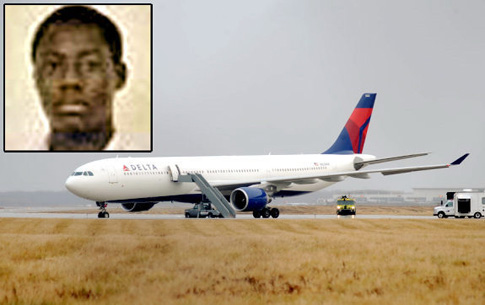
Detroit, USA- The attempted Christmas Day foiled terror attack proved that there are terrorists out there still very much planning and attempting to carry out attacks on the United States and Europe. The alleged terrorist is a 23 year old man from an affluent family in Nigeria. The suspect Umar Farouk Abdulmutallab, boarded a plane from Amsterdam headed to Detroit, Michigan. The young man’s father, who is a prominent banker in Nigeria, had previously notified the American embassy in Lagos, Nigeria that his son may have become radicalized and he was concerned that he may carry out an attack based on his extremist views.

The American authorities had placed Abdulmutallab on a watch list known as Terrorist Identities Datamart Environment (TIDE) list which has roughly 550,000 names. But despite being on this list, being denied a visa for the United Kingdom, and the fact that his father warned authorities a month ago, Abdulmutallab managed to buy a one way ticket purchased with cash, boarded a plane with no luggage, and snuck past security and screening at Amsterdam airport and almost succeeded in creating a Christmas Day massacre somewhere over the Atlantic or the United States.

The suspect has claimed to have received training and instructions from Al-Qaida operatives in Yemen, a country known for an active Al-Qaeda network called Al-Qaeda in the Arabian Peninsula and is also the paternal homeland of Al-Qaeda chief, Osama Bin Laden.

It is simply good fortune that the suspect was incompetent in carrying out the detonation on his device, which authorities say would have brought down the plane. Also helpful was the fact that there were several alert and vigilant passengers who were quick to prevent Abdulmutallab from succeeding in mass murder. Despite all the technological and security advances, the last line of defense always appears to be other passengers and civilians who must heroically act to stop these fundamentalists from carrying out their attacks.

There is a good deal to be learned by American intelligence and airport security agencies to ensure that terrorist incidents like these are prevented by following the clues and connecting the dots much earlier in order to avoid a catastrophe. The various agencies of the United States from the embassies and foreign missions to FBI, TSA, and Homeland Security must work closely to identify individuals who have been placed on strict watch lists. Also needed are very stringent security procedures for international flights coming to the United States, as the majority of the terrorists have attempted to blow up planes inbound to the United States from abroad. Also, authorities must ask themselves how they did not do enough after the young man’s father himself alerted US officials to inform them he was worried his son may have become radicalized and may be planning an attack.

The obvious good news that came out of this incident is that the terrorist attack was foiled and no one was injured. A closer look at the facts should also hearten the American public that for the second straight potential terrorist incident, a Muslim family member willingly and proactively alerted the authorities regarding the suspicious activities of their family member. Just as we saw with the family of the five Washington DC men who are accused of planning attacks on the US and are currently in detention in Pakistan, we should take heart in the fact that Abdulmutallab’s father felt compelled to notify American authorities of his son’s radicalization and possible terrorist planning.

It is sad to see an uptick in the amounts of terrorist incidents in the last few months, but it is also nonetheless heartening to see that Muslim family members are willing to step forward to thwart terrorist attacks and alert the authorities whenever they have suspected them to have become extremist and radicalized in nature and planning attacks. The recent events show that the authorities must continue to rely on Muslim communities to step forward and offer any assistance they can to prevent any future terrorist attacks as authorities tighten their security procedures to continue to protect the public.

Reported by Manzer Munir for http://www.PakistanisforPeace.com