Posts Tagged ‘ Asif Ali Zardari ’

In Pakistan, Another Assassination and the Lessons Unlearned

By Natasha Fatah for Canadian Broadcasting Corporation
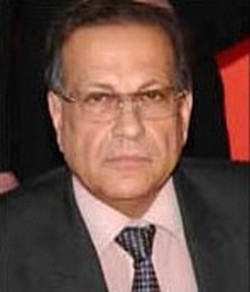
The Lion of Punjab is dead. Salman Taseer, the governor of Punjab in Pakistan, was assassinated in Islamabad on Tuesday by one of his own security guards.

When the guard later turned himself in to the police, he said that he killed the man he was supposed to be protecting because he considered Taseer’s campaign against Pakistan’s blasphemy laws an insult to Prophet Muhammad.

The blasphemy laws, which have been around since the 1980s, have been at the heart of a huge religious debate in Pakistan recently after a 45-year-old Christian woman was sentenced to death, allegedly in a dispute over drinking water among farm hands.

Most human rights observers say that the woman did nothing wrong, did not break any blasphemy law, and that the law is just being used to make some kind of example out of her.

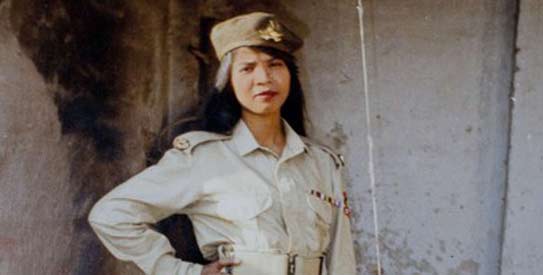
Taseer stood by the side of this Christian woman, Asia Bibi, both literally and figuratively.

He stood next to her in the courtroom, which was a brave and dangerous move for any Muslim in Pakistan, but particularly so when you are a member of government and have a profile.

He had also waged an attack on those who wanted her dead by constantly criticizing the mullahs and hard-liners on his very active Twitter account these past weeks.

In response, Islamic fundamentalist politicians and imams were constantly attacking Taseer, even going as far as to say that criticizing the blasphemy law is an act of blasphemy itself, thus making Taseer an apostate.

A member of the Pakistan People’s Party and closely tied to President Asif Ali Zardari, Taseer had dedicated his life to social and political liberalism and to taking on the fundamentalists. But now that bravery has cost him everything.

According to witnesses, the guard who killed Taseer jumped out of a car, pointed his Kalashnikov and blasted away. He then continued his rampage, shooting the governor at least nine times.

Dropping his weapon, the man then gave himself up to police, saying later he was “proud” that he killed the blasphemer.

Another disturbing aspect to this story is that the assassin had managed to get himself into the police force and then, barely four months into the job, was transferred to the unit assigned to protect the governor.

It makes you wonder who was doing the vetting and whether some other even more devious plan was afoot. But how deep and powerful this doctrine of hate must be when someone who is paid to protect you ends up being the one to take your life?

Still, while it was the guard who pulled the trigger, it was the culture of hatred, ignorance and bigotry that put the idea in his head in the first place.

And it will no doubt be the disease of apathy among the majority of Pakistan’s comfortable middle class that will ensure nothing changes, which means more good men and women who want to reform Pakistan’s society will lose their lives.

After all, it was only three years ago that the world lost Benazir Bhutto, the former prime minister and leader of the Pakistan People’s Party, for the same reasons.

She, too, was an advocate on behalf of liberalism and democracy and an enemy of religious extremists and she, too, paid for it with her life. If her death could not motivate the wealthy, powerful and influential in Pakistan to stand up and change things, then I’m not sure what will.

There is strange culture in Pakistan of blaming the victim. When Benazir Bhutto was murdered, many middle-class Pakistanis, in effect blamed her for her own assassination.

They criticized her for knowing the risks and continuing to speak out. Some said that as a mother she was being selfish for putting herself in the public eye.

And now, with Taseer’s murder, there are murmurs about him bringing this on because he provoked the Islamists through his criticism of their agenda. These are the risks you take when you stand behind a Christian blasphemer, some are saying.

It is only in an upside-down world like Pakistan’s self-absorbed middle class where those who die for being brave are considered irresponsible.

And it’s not like these moderate politicians such as Taseer don’t represent the values of the ordinary Pakistani.

Overwhelmingly, whenever given the election opportunity, the people of Pakistan vote in liberal, moderate and middle-of-the-road parties. Hardline Islamist parties do not win majorities in any of the country’s provinces.

Still, there seems to be a disconnect between what the Pakistani middle class say they want — stability and democracy — and what they are willing to work for.

Yes, in the case of Taseer, they will mourn the loss of another great leader. But Pakistan has lost far too many moderate leaders like this while everything goes on as before.

Wealthy Pakistanis will continue to go to their luxurious parties at fancy hotels, where the poor and their servants are not even allowed to enter. They will continue to justify the economic divide that keeps so many of their fellow citizens in squalor. And they will continue to argue that the Islamist militants are just a creation of the Western media.

Fortunately, there are still a handful of journalists, lawyers and politicians in Pakistan who are fighting the good fight and putting their lives on the line to try to push back against the extremists who think that violence is the only way to get their ideas across.

But unless Pakistan’s elites joins this fight, nothing will change.

For Pakistan, with the current government coalition in danger of crumbling and its Taliban launched on a terror campaign in the capital Islamabad itself, Taseer’s murder is a horrible start to a new year.

Yes, there will be vigils throughout Pakistan and around the world this week for this fallen hero. But vigils are temporary and the underlying problem that Taseer was taking on will likely still be around long after the vigils have wrapped up.
Key Party Rejoins Pakistan’s Coalition

By J David Goodman for The New York Times

A day after Prime Minister Yusuf Raza Gilani announced a rollback of fuel price increases that were deeply unpopular in Pakistan, a major political party said on Friday that it would rejoin the ruling coalition, defusing a tense political standoff and saving Mr. Gilani’s government from potential collapse, news reports said.

The party, the Muttahida Qaumi Movement, broke with the ruling Pakistan Peoples Party over the weekend in part to protest the price increases and other reforms proposed by the government, causing a political crisis for the prime minister and President Asif Ali Zardari. Opposition parties echoed the call to reverse the increases as well as recent cuts in spending and threatened the government with a three-day deadline before a no-confidence vote.

Political tension deepened on Tuesday with the assassination of Salman Taseer, the governor of Pakistan’s most populous region and an ally of Mr. Zardari, because of his support for changes to the country’s blasphemy law.

Raza Haroon, a senior leader in the Muttahida Qaumi Movement, said on Friday that his party had decided to rejoin the ruling coalition for the sake of democracy and the country, The Associated Press reported.

While the government appears to have survived for the moment, it does so at the expense of political and economic reforms encouraged by the United States.

In a meeting with Muttahida Qaumi Movement party officials on Friday, Mr. Gilani said that he would also put off proposed changes promoted by the State Department and the International Monetary Fund to increase tax collection, Reuters reported.

Pakistan, an important American ally, still faces a widening rift between secular and religious forces within the government, even as its army battles Taliban insurgents around the country’s mountainous northwestern border with Afghanistan.

The killing of Mr. Taseer, by a religiously motivated member of his own security staff, raised concerns for the United States and exposed the deep divisions in Pakistan. His killer, who proudly confessed the crime to the police, has been celebrated by many and was greeted by affectionate crowds throwing rose petals both times he appeared in court this week.

But Adm. Mike Mullen, chairman of the Joint Chiefs of Staff, said earlier this week that Pakistan’s security relations with the United States would survive the crisis.

Salman Taseer Assassination Points to Pakistani Extremists’ Mounting Power

By Karin Brulliard for The Washington Post

One of Pakistan’s most openly progressive politicians was gunned down Tuesday in an act that violently highlighted extremists’ tightening grip on the country even as the beleaguered government struggled to stay in power.

The killing of Salman Taseer, apparently at the hands of one of his own guards, marked the most prominent political assassination in Pakistan since former prime minister Benazir Bhutto’s death three years ago.

The razor-tongued governor of Pakistan’s most populous province was known for speaking out on behalf of women and religious minorities, and his slaying stunned the nation and alarmed U.S. officials. It also further rocked Taseer’s ruling Pakistan People’s Party, which is desperately trying to keep its government afloat following a key ally’s defection to the opposition Sunday.

The secular PPP condemned the killing and promised a swift investigation, but its weakened position undermines its ability to crack down on religious extremists.

In timing that underscored those limitations, Taseer was shot in an upscale area of Islamabad as Pakistan’s main opposition party was across town demanding that the government agree within three days to implement a list of reforms, or risk collapse.

After the killing, the party of former prime minister Nawaz Sharif said it would allow three additional days for the changes, including a slash in government spending and the reversal of unpopular fuel price increases.

Taseer was a chief ally of President Asif Ali Zardari, who in 2008 appointed him governor of Punjab, Pakistan’s wealthiest province. But Sharif’s party rules the province, making Taseer’s assassination a blow to the federal government’s influence there.

Secretary of State Hillary Rodham Clinton condemned the killing in a statement Tuesday, saying she had met Taseer and “admired his work to promote tolerance and the education of Pakistan’s future generations.”

Taseer’s apparent killer cited his boss’s stance against a controversial anti-blasphemy law in justifying his actions. As the embattled, pro-U.S. PPP sought in recent days to win back defecting allies that also include a small Islamic party, it had already said it would not support a proposal to change the blasphemy statutes. That left Taseer one of the few vocal champions of the move, which hard-line religious organizations had labeled a Western conspiracy.

The laws have drawn scrutiny since a Christian woman was sentenced to death in November for allegedly criticizing the Muslim prophet Muhammad. Taseer had called for her pardon, leading religious groups to denounce him as an “apostate” and burn effigies of him during a nationwide strike last week in support of the law. One Muslim cleric has offered $6,000 to anyone who kills the woman, who remains in jail.

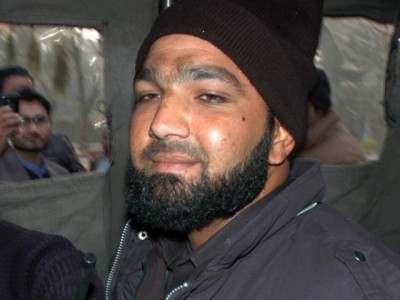
Even as Pakistani television stations were dominated Tuesday by commentators condemning rising religious intolerance, supporters of Taseer’s arrested guard, Mumtaz Qadri, 26, created a page for him on Facebook. Page visitors called him a “hero” and praised his “awesome job.” No major unrest over the killing was reported, but authorities said they were on high alert.

“This shows how the religious extremists want to impose their agenda to terrorize the society,” Shahbaz Bhatti, the federal minister for minorities affairs and also a proponent of changing the laws, said in an interview. “This cowardly act cannot stop us who are raising our voice.”

Yet in a country where Taliban militants increasingly flex their muscles through bombings, religious hard-liners have great power to intimidate even though polls show that their views are not widely shared. Last week’s strike by Islamic organizations drew few supporters to the streets, but shops in major cities closed – and many merchants said they did so under threat.

Human rights activists say the blasphemy laws are also abused by extremists, who use them as a tool to persecute minorities or opponents by bullying police and courts into arrests and convictions. The laws were strengthened during the 1980s rule of Islamist military dictator Gen. Zia ul-Haq.

Taseer lamented the power of the religious mob in an interview last summer following bombings of mosques belonging to the Ahmadi sect, whose members identify themselves as Muslims but are barred by the constitution from “posing” as such. Taseer – whose appointed position gave him little direct power in Punjab – condemned the provincial government of Sharif’s center-right PML-N for what he called its tolerance of radical religious groups.

“Extremist people are not in the majority,” Taseer said at the time. “This is a very narrow minority, but . . . they are always prepared to do and die. That is their strength.”

On Dec. 24, he had posted on his Twitter account: “My observation on minorities: A man/nation is judged by how they support those weaker than them not how they lean on those stronger.”

Authorities said Taseer’s guard, a member of an elite Punjab provincial police force that provides VIP security, shot the governor multiple times outside the Kohsar market in Islamabad, a small shopping plaza near his residence that is frequented by foreigners. The guard proudly surrendered to police afterward, according to local news reports.

Most political parties condemned the killing, and the government announced a three-day mourning period, during which political activity would be suspended. Zardari, to whom Taseer was close, called the assassination “ghastly.”

“The governor of Punjab was the bravest person in our government, and the stands he took for women, minorities and on the blasphemy law were incredibly brave and will never be forgotten,” Farahnaz Ispahani, a Zardari spokeswoman, said in an interview.

Taseer, who began his political career as a PPP student activist, was a successful businessman who played polo and smoked heavily. With his flashy sunglasses and frequent Twitter dispatches, Taseer, 66, cut a rather shocking figure in a country dominated by conservative social mores.

Critics assailed him for fathering a child with an Indian journalist while he was still married to the mother of his other children. In 2008, minor scandals broke out when opponents published photos online of him holding wine glasses at parties and of one of his daughters wearing shorts and dancing.

Despite the alleged gunman’s confession, Taseer’s killing was sure to be swept up in the conspiracy theories that permeate Pakistani politics, particularly in times of turmoil. Interior Minister Rehman Malik said investigators would seek to determine whether the suspect acted alone or was “asked” to carry out the attack.

In the hours after the killing, some criticism centered on the PML-N-led Punjab government, which provided Taseer’s police guard. There was no indication Tuesday night that the party played a role.

But the PML-N might yet bring down the PPP, whose government faces growing criticism over corruption, a floundering economy and a ham-handed response to last year’s devastating floods. The ruling party’s coalition partner, the Muttahida Qaumi Movement, withdrew from the government Sunday, weakening its mandate by depriving it of a parliamentary majority.

A united opposition could pass a vote of no confidence in Prime Minister Yousaf Raza Gillani, leading to his ouster and potentially triggering early elections. That has appeared unlikely, because of divisions among opposition parties. But Sharif threatened Tuesday to “ask the opposition parties to come forward and we will give them our full support” if the government does not show progress on reforms within 45 days, according to the Associated Press.

Like many in the PPP, Taseer often criticized opposition parties for stoking political instability in a country that has been ruled by the military for half its 63-year history and where an elected government has never completed its term.

Religious extremism, Taseer said last summer, would be quashed only by the “continuous, functional position of a democratic system.”

A Brave Man Killed

A New York Times Editorial

Some twisted person has created a Facebook page in support of Malik Mumtaz Hussain Qadri, the bodyguard accused of assassinating Salman Taseer, the governor of Pakistan’s Punjab province. Mr. Taseer was a brave man who had called for the repeal of Pakistan’s outrageous anti-blasphemy law.

Whoever killed Mr. Taseer must be condemned and repudiated, not extolled. Otherwise, Pakistan will certainly continue on a downward spiral in which intolerance and self-destruction triumph.

The governor’s death is a tragedy not just for Pakistan but for all who understand that just and stable societies need honest debate and full respect for minorities. Pakistan cannot afford to lose any fair-minded leaders, especially at a time when it is struggling with a virulent insurgency, an unraveling economy and an unraveling central government.

Mr. Taseer — a longtime ally of President Asif Ali Zardari and his wife, Benazir Bhutto, who was assassinated in 2007 — was Pakistan’s most prominent defender of the rights of women and minorities. He had pressed hard for repeal of the blasphemy law, which imposes a mandatory death sentence on anyone convicted of insulting Islam.

The law is popular with the Muslim majority but is routinely manipulated to settle personal rivalries and persecute minorities. And Mr. Taseer had been particularly outspoken, calling for leniency for a Christian mother of four who was sentenced to death under the law, in a case that stemmed from a dispute in her village.

Pakistani officials, who have the bodyguard in custody, say he killed Mr. Taseer because of the governor’s opposition to the blasphemy law. But there are far too many unanswered questions: Did the suspect act alone? Why did the Punjab police assign a religious conservative to protect Mr. Taseer? News reports first said nine bullets were fired into Mr. Taseer, and hospital officials later said he was hit 24 times. Yet other members of the security detail did not shoot to stop Mr. Qadri, who surrendered with his hands up.

Pakistani authorities need to investigate thoroughly and share their full findings with the Pakistani people.

The United States and the international community must make clear their outrage over this killing. So must every Pakistani. The country’s political leaders and the Pakistani media also need to consider whether the way they have shaped the debate on the blasphemy law — some have argued that mentioning reform is blasphemy punishable by death — is further fueling conflict.

Ultimately, only Pakistanis can save their nation, and they must answer the more profound questions: Do they want a country in which Muslims and non-Muslims can peacefully co-exist? Or one in which religious zealots, espousing the most intolerant interpretation of Islam, kill anyone brave enough to defend the defenseless? That would be the true blasphemy.

Pakistan’s Political Crisis

Reported by Farhana Bokhari for CBS News

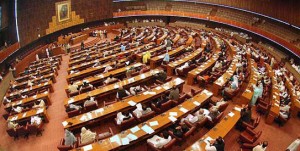
Pakistan’s pro-U.S. ruling coalition on Sunday night battled to restore calm across the country’s political landscape after a regional political party allied to president Asif Ali Zardari’s Pakistan People’s Party (PPP) quit at short notice, leaving the PPP in minority in the lower house of parliament, the national assembly.

The Muhajir Qaumi Movement (MQM), a political party mainly representing Pakistanis who migrated from India to Pakistan when the country was created in 1947, withdrew its support to the PPP, reacting to the government’s decision on Saturday to raise gasoline prices.

The move marked the first major upheaval over gasoline prices since they were raised, mainly to be kept in line with global trends. Western diplomats based in Islamabad, reacting to the latest political developments, warned it was still early to tell if Zardari or his handpicked prime minister, Yusuf Raza Gilani, were in danger of being forced out.

There were warnings that the split with the MQM may in the short term completely paralyze the government. Long term consequences are harder to predict. Pakistan has been ruled by its army for more than half the of country’s 63-year existence. Some previous periods of heightened uncertainty have been followed by the military stepping in to fill the void.

General Ashfaq Pervez Kayani, Pakistan’s present military chief, is widely known to be an apolitical figure. A western ambassador based in Islamabad, speaking to CBS News on condition of anonymity, said, “While there are no signs of the military stepping in, you have to remember that previous [military] takeovers have been preceded by fast growing turmoil. Much depends on the way things happen in future.”

For the U.S., mounting political uncertainty in Pakistan is potentially worrying. This has to do with the support that Washington receives from Pakistan in its campaign to defeat Al-Qaeda and the Taliban in the Afghanistan-Pakistan region, as well as periodic worries in the western world over Islamic hardliners making inroads into Pakistan’s politics.

A minister from the PPP who spoke on condition of anonymity to CBS News Sunday said after the split with the MQM was announced, “If a government is weak and struggling for its own survival, how will it be able to pursue interests of other countries, including the U.S.?” The minister added, “Unpopular steps like petroleum prices are forced upon governments through circumstances which are beyond their control.”

A second western diplomat in Islamabad who spoke to CBS News on condition of anonymity said while Islamic politicians have only pockets of support across Pakistan, “You can never rule out the dangerous possibility of a ground swell in their favor, especially if governments from the political mainstream become weak and unpopular.”

Blasphemy Cases Draw Focus in Pakistan

By Alex Rodriguez for The Los Angeles Times

NANKANA SAHIB, Pakistan | Muslim cleric Muhammad Salim isn’t worried that a court or Pakistan’s president might spare a Christian mother from this village who has been sentenced to death on blasphemy charges.

After all, if Asia Bibi escapes the hangman’s noose, he’s confident someone else will kill her.

“Any Muslim, if given the chance, would kill such a person,” Salim said calmly, seated cross-legged on a straw mat at a mosque here. “You would be rewarded in heaven for it.”

Salim isn’t the only one calling for vigilante justice. A cleric in Peshawar has offered 500,000 rupees, or $6,000, to anyone who kills Asia Bibi, if her execution doesn’t take place.

The mother of five is accused of disparaging the prophet Muhammad and the Qur’an during a dispute with three other women. She denies the charge. “My God knows that I never used those words,” she told investigators.

Her case has exposed deep rifts in Pakistan over the blasphemy law, seen by some as an appropriate measure to defend the tenets of Islam, but viewed by others as a dangerous tool easily abused in a society that is a volatile patchwork of ethnicities, religions and sects.

There have been other controversial blasphemy cases. Accused of burning pages from the Koran, Imran Latif was charged with blasphemy in Lahore but then released on bail Nov. 3. Eight days later, two men shot him to death.

This month in the southern city of Hyderabad, a Shiite doctor was arrested on blasphemy charges after police received a complaint that he had maligned the prophet Muhammad. His crime? He tossed out the business card of a pharmaceutical company representative whose first name, Muhammad, was printed on it. The doctor belongs to the smaller Shiite sect known as Ismailis.

“There’s a fundamental lunacy to it,” said Ali Dayan Hasan, South Asia researcher for Human Rights Watch. “There is no good spin to put on the blasphemy law. It’s used frequently in these preposterous ways, for preposterous reasons.”

The law dates to the 1980s and the rule of Gen. Zia ul-Haq. Since Zia’s rule, 974 people have been charged under the law, according to the Pakistani news media. No one has been put to death for a blasphemy conviction.

Chinese Premier Visits Pakistan to Reinforce Ties

By Salman Masood for The New York Times

ISLAMABAD, Pakistan — Chinese Prime Minister Wen Jiabao arrived in Islamabad on Friday for a three-day visit that Pakistani officials said was aimed at strengthening the strategic partnership and economic cooperation between the two neighboring countries.

Prime Minister Yusuf Raza Gilani and members of his cabinet welcomed Mr. Wen at Chaklala Air Base in neighboring Rawalpindi on Friday afternoon. A red carpet was rolled out and elaborate ceremonies were held to signify the importance Pakistan attaches to China, which is considered a close ally.

“Friendship with China is a matter of pride for our nation,” Mr. Gilani was quoted as saying by local media as he welcomed his Chinese counterpart.

Apart from holding meetings with Mr. Gilani and President Asif Ali Zardari, Mr. Wen was scheduled to address a special joint session of the Parliament on Sunday.

Pakistan’s military ties with China are strong and China has assisted Pakistan in tank production, fighter aircraft manufacturing and naval technology. But since the late 1990s, economic concerns have gained increased importance. Trade and energy have taken precedence in Pakistan’s relations with China.

Mr. Wen was accompanied by 260 business executives.

Pakistani officials say there is a need to enhance trade between the countries that stands around $7 billion a year. But there also are concerns here that the trade deficit is growing heavily in favor of China.

“The relationship is undergoing a qualitative change,” said Mansoor Ahmad, an independent security analyst based in Islamabad. “This change is manifested in China’s relationship with emerging markets and developing countries, which is essentially based on forging and enhancing trade linkages and securing new markets for Chinese investment.”

The Chinese are also cooperating with Pakistan in developing its civil nuclear energy program despite discontent from Washington and New Delhi.

Mr. Wen, the Chinese prime minister, arrived here after completing a two-day tour of India, the estranged neighbor of Pakistan.

China would have to undertake a fine balancing act regarding enhancing its cooperation with both India and Pakistan, said Mr. Ahmad. China and India would forge economic ties despite their continuing territorial disputes, given India’s huge market, he said. Tensions between India and Pakistan worsened after the terrorist attacks in Mumbai in 2008, which India and the United States blamed on Lashkar-e-Taiba, a militant Islamic group based in Pakistan.

The Pakistan government sees China as a counterweight to India, and officials said that closer Chinese cooperation with India would not affect Pakistani ties with China.

Nonetheless, Mr. Wen’s visit to India this week yielded greater immiediate progress on the economic front than toward resolving the more complicated geostrategic issues.

“In Pakistan’s case, we have already had a longstanding strategic partnership which is now being supplemented by increasing Chinese investment in infrastructural development, civil nuclear cooperation and establishing rail and road linkages between the two countries,” Mr. Ahmad said.

Richard Holbrooke: The Death of a Peacemaker

By Manzer Munir for Pakistanis for Peace

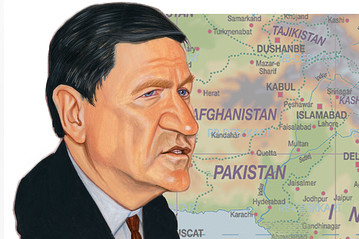
President George H.W. Bush once described him as the “most persistent advocate I’ve ever run into.” President Obama’s special envoy to Afghanistan and Pakistan, Ambassador Richard Holbrooke, died earlier today after complications from heart surgery. He was a gifted diplomat and a tough negotiator who was considered one of the superstars of international diplomacy. Richard Holbrooke died Monday evening at George Washington University Hospital after doctors had performed emergency surgery Saturday to repair a tear in his aorta, the largest artery in the human body responsible for carrying blood from the heart to all parts of the body.

Described only days ago by President Obama as a “towering figure in American diplomacy,” Holbrooke was a career diplomat who started his career in 1962 as an officer during the Vietnam War where he initially worked at the US Agency of International Development. He continued to work on Vietnam issues during the war under President Lyndon B. Johnson and was a part of the delegation that presided in Paris for the peace negotiations to end the war. He also served as the director of the Peace Corps in Morocco in the early 1970’s as well as the assistant secretary of state for East Asian and Pacific Affairs in the Carter administration. He was in charge of US ties with China when relations between the two countries were “normalized” in late 1978.

Later in his career, he also held senior positions at a few prestigious Wall Street firms before returning to diplomacy under the Clinton administration. During this time he was credited with his most illustrious achievement to date when he helped orchestrate the Dayton peace agreement which ended the horrific war and genocide in Bosnia. He later went on to write a memoir titled “To End a War” and become somewhat of a celebrity in the Balkans, and is widely believed to have become the Secretary of State under Hillary Clinton if she had won. He also went on to serve as the US ambassador to Germany as well as the United Nations under President Bill Clinton before being tapped by the incoming Obama administration with the herculean task of being the special envoy of the United States to Afghanistan and Pakistan.

His last assignment was arguably his most difficult as he himself stated that “There’s no Slobodan Milosevic. There’s no Palestinian Authority. There is a widely dispersed group of people that we roughly call the enemy. There’s also al Qaeda, with which there’s no possibility of any discussion at all.” He mentioned that in the AfPak region, (a term he is credited with having coined), there are a range of militant groups such as the Afghan Taliban, the Pakistani Taliban, the Haqqani Network, Lashkar-e-Taiba, and that “an expert could add another 30.”

Such was the difficulty of his last assignment that some close to him are speculating whether the high level of stress and travels associated with shuttling between Washington, Kabul and Islamabad might have been a factor in causing a tear in his aorta. Certainly the complex and high strung meetings with Karzai and Zardari as well as the delicate balancing acts of diplomacy along with military operations in a region of the world described as “the most dangerous in the world” possibly took a toll on his health.

But to those that knew Richard Holbrooke, he was a man capable of taking on and winning the challenges of this and any difficult assignment as he had done so many times in his career. A New York Times reporter once wrote “if you want somebody to pull the trigger, or close a deal, think Holbrooke.”

Tonight in Washington DC, President Obama, Secretary Clinton, and the thousands of employees of the US State Department mourn the death of this icon of American diplomacy and celebrate his lifelong service to the United States and the American people in search of peace in troubled spots the world over. Meanwhile, thousands of miles away, a job vacancy has sadly opened up in the dangerous AfPak region of the world for an assignment that no one is capable of fulfilling quite like Mr Holbrooke. For the sake of the success in the Afghan war, peace and stability in Pakistan and securing America’s vital national interests in the region and around the world, let us hope that his successor will be half as capable a diplomat and negotiator as the late Richard C. Holbrooke, truly a giant of American diplomacy.

–Manzer Munir, a proud Pakistani American and peace activist, is the founder of Pakistanis for Peace and blogs at http://www.PakistanisforPeace.com as well at other websites as a freelance journalist and writer.

Aasia Bibi and Impurities in the Land of the Pure

By Manzer Munir for Pakistanis for Peace

The case of Aasia Noreen aka Aasia Bibi illustrates how far Pakistan has to go to secure freedoms for its religious minorities. Christians and Hindus are not the only minorities who are persecuted for their beliefs but it is also Muslim minorities such as the Ismailis, Ahmadis, and Shiites who are routinely harassed, discriminated and also killed. Sadly, it is the case of Aasia Bibi that has brought some much needed attention to Pakistan’s sad state of affairs towards the treatment of its religious minorities.

Several sections of Pakistan’s Criminal Code consist of its blasphemy laws and of all the Muslim countries of the world that have anti-blasphemy laws, Pakistan’s anti-blasphemy laws are by far the strictest. There is section 295 that forbids damaging or defiling a place of worship or a sacred object. Then there is section 295-A that “forbids outraging religious feelings.” There is also 295-B which prohibits defiling the Qu’ran and was originally punishable by life imprisonment but has since been amended to up to three years imprisonment.

No section of the blasphemy law is more controversial or harder to prove than Article 295-C, the law that Aasia Bibi is allegedly charged with having broken. In respect to prophet Muhammad, this statute states that ” Whoever by words, either spoken or written, or by visible representation, or by any imputation, innuendo, or insinuation, directly or indirectly defiles the sacred name of the Holy Prophet Muhammad shall be punished with death, or imprisonment for life and shall also be liable to a fine.”

Aasia’s case and charges against her started almost a year and a half ago when there was a quarrel over a bowl of water in a dusty village in the heart of Pakistan’s Punjab province. A group of women were working the fields in the heat of the Pakistani sun when one of them, Aasia Bibi, dipped her glass in the communal bucket of drinking water to fetch herself and others a glass of water to drink and immediately was rebuffed by the other women who claimed that the water was now unclean as it had been touched by a non-Muslim. According to witnesses, instead of quietly bowing her head and taking the indignities, Aasia’s crime was that she mounted a strong defense of her faith and remained steadfast in her demeanor that she did nothing wrong. Too often in Pakistan, the blasphemy laws are used against religious minorities to settle personal vendettas and old scores according to Pakistan’s Human Rights Watch, a watchdog group monitoring the case.

The news traveled fast in Aasia’s village of Ittan Wali, in Punjab’s Sheikhupura district that a Christian woman had insulted the prophet. The local mullah got on the mosque loudspeakers, urging the “faithful” to take action against Aasia Bibi. In sad but familiar pattern, her defense of her faith was somehow twisted into an accusation of blasphemy, according to her family and others familiar with the case. Soon as a mob gathered outside her home ready to take the law into their own hands and handing out vigilante justice, the police moved in and took her into custody. But instead of protecting her, they charged her with insulting Islam and its prophet under the blasphemy laws.

And then on Nov. 8, after suffering 18 months in prison, Aasia Bibi was sentenced to death by a district court, making her the first person to be handed the death penalty in Pakistan under the blasphemy laws. Many before her over the years have been charged, but punishment had been commuted to lesser penalties than the death sentence imposed on Aasia Bibi. No concrete evidence was ever presented against Aasia, according to Pakistan’s Human Rights Watch. Instead, the district judge relied on the testimonies of three other women, all of whom were hostile towards her.

Unfortunately this is a common insult hurled at many of Pakistan’s 2 million Christians who make up just 1.59% of the total population. Often, Christians in Pakistan are discriminated and persecuted and many times only get the lowest of the low jobs such as street sweepers, janitorial and sanitation workers. In fact, in Pakistan, the term ‘Chura‘ has become synonym with the Christian community as it relates to an unclean person akin to how the untouchables or Dalit community is seen in India. In India however, the Dalits are not subjected to arcane state blasphemy laws geared towards religious minorities as in Pakistan or are threatened with their lives at the hands of the Hindu majority.

As discussed in a couple of my previous articles, Taliban 1o1, History and Origins and Taliban 201, The Rise of the Pakistani Taliban, the Islamization of Pakistan started under the late General Zia ul Haq of Pakistan who took over the leadership of the country through a military coup in 1977 when he hung the deposed and democratically elected Prime Minister Zulfiqar Ali Bhutto. Earlier in 1973, the 1973 Constitution of Pakistan had declared that “Islam shall be the religion of the Pakistan” and had systematically begun the process of restricting the participation of religious minorities in government and politics.

Before General Zia, there were only two reported cases of blasphemy. Since the death sentence was inserted in 1986 into the Penal Code for the blasphemy laws, this number has now reached 962 — including 340 members of the Ahmadi Muslim community, 119 Christians, and 14 Hindus. A close examination of the cases reveals the blasphemy laws are often invoked to settle personal scores, or they are used by Islamist extremists as cover to persecute religious minorities, sadly with the help of the state under these laws.

General Zia began this policy of Islamization of Pakistan in conjunction with his support for the war against the Russians and assistance to the Afghan Mujahedeen as well as the building of thousands of madrassahs or religious schools across Afghanistan and Pakistan which nurtured the young men into what later became the Taliban. Many of these blasphemy laws fully came into being under his reign, although some were around since as early as more than 100 years prior when the British drew up the Indian Penal Code of 1860 which was initially an ill foreseen aim at keeping the peace among the many fractured faiths of the subcontinent. For instance, section 295-A, which “forbids outraging religious feelings”, could have been applied against a Muslim who insulted a Hindu or a Hindu who taunted a Sikh or Christian or vice versa. However under Zia, the blasphemy laws were expanded and almost exclusively applied against Muslim minorities such as the Ahmadis, Islamilis and Shiites as well as against the Christian and Hindu populations.

Recently, a religious ‘leader’ came out and has offered over $6000 to anyone who can kill Aasia Bibi while she awaits her punishment in police custody. Outrage and denunciations on this case are coming from across the world as many people are appalled at the sad state of rights for religious minorities in Pakistan. The Pope has intervened also asking for clemency for Aasia Bibi from Pakistan’s President Asif Ali Zardari. Against all manner of reason and justice, Lahore’s High Court recently issued an order on November 29, 2o1o, preventing Zardari from exercising his constitutional authority to pardon Aasia Bibi.

In a country rife with violence and chaos and one that has become synonymous with terror the world over, the case of Aasia Bibi is yet another dark stain on the country’s image around the world. The Taliban and the extremist groups ravaging Pakistan can be explained as being a violent minority and do not and should not reflect on the nation as a whole as the majority of people in Pakistan are opposed to them and their views of Islam. But the blasphemy laws, for as long as they have stayed on the books in Pakistan and in the constitution, cannot and should not be excused in any shape or form. These laws need to be repealed and the constitution needs to be amended in an emergency manner so that Aasia Bibi and other religious minority citizens of Pakistan are not subjected to cruel and subjective laws that are almost exclusively used against minorities to settle scores, personal vendettas, and instill terror in less than 3 percent of the country that is not part of the religious majority of Sunni Muslims.

There needs to be international pressure placed on Pakistan from the United Nations, the United States, Europe and others to modify the constitution immediately and to pardon this 45 year old mother of five children. It is ironic that in a country where many people sympathize with Osama’s Al Qaeda and profess to hate the west with one hand, they decry with the other why not enough western aid has came to their country when it recently saw the worst flooding in its history. Can you blame the American citizens, the Europeans or citizens of any other Christian nation from hesitating to give aid to a country that not only plays a duplicitous game when it comes to terrorists and terror havens but also treats Christians and other religious minorities in the manner as in the case of Aasia Bibi?

The name Pakistan literally translates into “The Land of the Pure”. And as a child growing up I was told that the meaning of Pakistan’s flag is this: “The green is a traditional Islamic color and the crescent moon and star are also Islamic symbols. The white stripe represents the non-Muslim minority and religious groups of Pakistan and there place in the country.” In my view, as long as the nation sanctions and tolerates these utterly unjust and biased blasphemy laws, the religious minorities of Pakistan clearly have no place in this land of the ‘pure’.

-Manzer Munir, a proud Pakistani American and peace activist, is the founder of Pakistanis for Peace and blogs at www.PakistanisforPeace.com as well at other websites as a freelance journalist and writer.

Pakistan Police Officers to be Arrested Over Death of Benazir Bhutto

By Delacn Walsh for The Guardian

A Pakistani court has ordered the arrest of two senior police officers in connection with Benazir Bhutto’s assassination, reviving hopes for a breakthrough in Pakistan’s most pressing political mystery.

An anti-terrorism court ordered the arrest of Rawalpindi’s former police chief, Saud Aziz, and his deputy Khurram Shahzad, who ordered the crime scene to be washed down less than two hours after the killing, destroying critical evidence.

“They were responsible for Bhutto’s security,” said special investigator Chaudhry Zulfiqar. “They ordered the crime scene to be hosed down despite resistance from other officials.”

A strongly-worded UN report into Bhutto’s death last April said the decision to wash the crime scene did “irreparable damage” to the subsequent investigation. Investigators speculated that Aziz had been influenced by powerful military intelligence agencies.

Aziz and Khurram, who are now retired from the police, could not be contacted today. They are due to be formally charged on 11 December along with five men already in custody.

The warrants are the latest twist in a torturously slow police investigation. Three years after Bhutto was killed in a suicide blast as she left an election rally in Rawalpindi on 27 December 2007, Pakistanis have little idea of who was behind her death.

Pervez Musharraf, who was president at the time, initially blamed Taliban leader Baitullah Mehsud, but officials from Bhutto’s party, the PPP, have said that other forces, possibly including elements of Pakistan’s powerful military, played a role in her death.

Bhutto’s widower, President Asif Zardari, has vowed to unveil her killers, but made little progress in an investigation bogged down by controversy, recrimination and conspiracy theories – one popular rumour in Pakistan has it that Zardari himself was responsible.

The three-man UN investigation into the killing, headed by Chilean diplomat Heraldo Muñoz, published its report last April in an effort to bring some clarity. It dismissed the allegations against Zardari and blamed Musharraf for failing to protect Bhutto, while accusing police and intelligence officials of hampering the investigation into her death.

The UN team said that Aziz stalled the investigation for two days after Bhutto’s death, deliberately prevented a postmortem on her body, and gave the order to sanitise the crime scene just 100 minutes after Bhutto’s death. As a result crucial DNA evidence was lost and investigators gathered just 23 pieces of evidence instead of the “thousands” that would be expected, Muñoz’s team noted.

The UN focused on the actions of Aziz, who witnesses said was “constantly talking on his mobile phone” as doctors scrambled to save Bhutto’s life in a Rawalpindi hospital.

The UN received “credible information” that the Pakistani intelligence agencies had intervened. But Aziz refused to say who he spoke with, and tried to blame the failure to carry out an autopsy on Zardari – something that was “highly improper”, the UN said. “It suggests a preconceived effort to prevent a thorough examination of Ms Bhutto’s remains.”

The strongly-worded report represented a watershed in moribund efforts to solve the mystery of Bhutto’s death – Pakistan’s greatest political trauma since the dictator General Zia-ul-Haq died in mysterious circumstances in 1988. But it fell short of identifying those behind her death, and government efforts to advance the probe has since floundered.

Bhutto’s own party has been split by divisions. Last week Zardari suspended the membership of Naheed Khan, Bhutto’s confidante, following simmering tensions that included criticism of his failure to find Bhutto’s killers. Critics have also raised questions about the role of Rehman Malik, Bhutto’s security chief and now Pakistan’s interior minister.

The main suspect in custody remains a teenager from the tribal belt accused of helping the Bhutto assassins. His case, and those of the police officers, will be heard in camera at Adiala jail outside Rawalpindi.

But the government has not probed the role of the other parties mentioned in the UN report – former president Pervez Musharraf, currently in exile in London, and the intelligence services that are considered beyond the control of the civilian authorities.

‘Bhutto’: For Pakistan’s Heroine, A Hagiography

By Ella Taylor for National Public Radio

A new documentary about Benazir Bhutto lets a full hour go by before entertaining the mildest doubts about its subject, the hugely popular prime minister of Pakistan who was assassinated on her triumphant return to Karachi from exile in 2007.

Bhutto is smart and thorough on the inflamed history of Pakistan. But as a portrait of the first woman elected head of state in an Islamic nation, it comes closer to hero-worship than to considered biography. Front-loaded with glowing testimonials from family and FOB’s East and West, the movie gives a startling degree of face time to its own co-producer, Mark Siegel, a political consultant and close friend of Bhutto who co-authored a book with her.

The director, Duane Baughman, also a political consultant, helped get Michael Bloomberg and Hillary Clinton elected, so he knows how to brand a public figure, dead or alive.

Not that this particular public figure needs much enlarging. Bhutto’s sense of mission and her personal courage, as she returned again and again to try and democratize a nation whose military leaders blithely murdered their opposition, are beyond dispute. Like her adored father Zulfikar Ali Bhutto, Pakistan’s first democratically elected head of state (and the creator of its nuclear program), she struggled to bring basic services to a country mired in poverty, illiteracy and chronic conflict across its volatile borders with India, Afghanistan and Iran — to say nothing of its ambivalent dependency on a United States worried to death by the Taliban, al-Qaida and the enriched uranium in Pakistan’s nuclear arsenals.

About Bhutto’s failings and mistakes, however, the film is discreet to the point of squeamishness. Luckily, this magnificently complicated woman’s contradictions tumble out anyway. Almost despite itself, the movie offers a riveting melodrama about a daddy’s girl born into a close but feuding Western-educated dynasty known both for its populist politics and its champagne tastes. (The Bhuttos were thought of — admiringly, Baughman implies, though given the straits in which most Pakistanis live, one wonders — as the Kennedys of Pakistan.)

From grieving family and friends (inevitably, Arianna Huffington was a pal at Oxford), we learn of a serious-minded young woman freed from her burqa by Dad while still in her teens. At Harvard, where she roomed with Kathleen Kennedy, she absorbed feminism and leftist politics.

After Bhutto’s murder, her husband, Asif Ali Zardari, became co-chairman of the Pakistan People’s Party — and the nation’s new president. After Bhutto’s murder, her husband, Asif Ali Zardari, became co-chairman of the Pakistan People’s Party — and the nation’s new president.
Yet later she willingly submitted to an arranged marriage with a Karachi playboy-entrepreneur, Asif Ali Zardari, who has been Pakistan’s president since the fall of Pervez Musharraf in 2008. She prayed to Allah in public, yet worked hard to bring schooling to girls in an Islamic state vehemently opposed to rights for women.

Bhutto inherited her father’s charm, charisma and elegant tailoring, as well as his preference for backroom wheeler-dealing. Remarkably, her father chose Benazir over her two brothers as his successor, and her political career eerily echoed his, zigzagging between triumph, prison, exile and return to repeated rapturous welcomes from adoring masses.

Bookended by footage of the sniper fire and suicide bombing that killed her, Bhutto faithfully follows the hectic arcs of her life and death. Yet the movie glides smoothly past the corruption charges — never proved or disproved — that led to Bhutto’s exile and her husband’s imprisonment, effectively dismissing them as trumped up by her enemies. Much time is spent, meanwhile, on the moving but sentimental memories of her tearful family, topped up with new but unedifying audiotapes of Bhutto herself outlining her ideals, the harshness of her incarceration in a Pakistani prison and the loneliness of exile in Dubai.

Bhutto could stand a less adulatory tone — and more reliable skeptics than her clearly disgruntled niece, for instance, when it comes to topics such as Bhutto’s role in the mysterious plane crash that killed the military dictator responsible for her father’s murder. Despite herself, and for all her efforts toward reconciliation, Bhutto proved an enormously polarizing figure.

Perhaps she had no choice, in a country so riven by internal strife and external threat. At its best, Bhutto is a fascinating study in the difficulties of bringing democracy to a radically unstable nation plagued by its colonial legacy, by the cowboy politics of a dictatorial military, by daily terrorism and the sporadic interventions of world powers arguably less interested in rural voting rights than in pushing their own interests on the global stage.

Bhutto’s untimely death at 54 years old was a private tragedy and a tremendous loss for a country desperate for moderate leadership. But she was a heroine, not a saint. Eliding this distinction, Bhutto unwittingly diminishes her.

Pakistani-Americans, Human Rights Groups Seek Blasphemy Laws Review

As reported by Dawn

Pakistanis living in the United States have joined human rights groups in urging the government to release Aasia Bibi and reconsider the laws that discriminate against minorities.

“We condemn the abuse of the blasphemy law and request President Asif Ali Zardari not to accede to the threats made by certain religious groups and award imminent clemency to Aasia Bibi,” said the Pakistani-American Public Affairs Committee, an umbrella organisation representing a dozen groups. In a recent meeting of its executive board, the Christian League of Pakistan in America also “strongly condemned the victimisation of innocent people under the blasphemy law”, reminding the government that “the entire world is awaiting a sane decision in the Aasia Bibi case”.

The organisation noted that President Zardari, Prime Minister Yousuf Raza Gilani, Human rights activist Asma Jehanghir and Punjab Governor Salman Taseer have all concluded that Aasia Bibi is innocent.

These and other Pakistani leaders also have realised that the blasphemy law discriminates against religious minorities, said a statement issued by the Christian League in Philadelphia.

“This law encourages certain elements which institutionalise intolerance in the name of religion and spread social persecution and legal discrimination,” observed the Pakistani American Public Affairs Committee. “As it stands, this law with its ambiguity
harms Pakistan and its’ citizens.”

The group warned that such news emanating from Pakistan “hinders its stature in rest of the world, which in turn negatively impacts its economic stability and trade practices”. The committee referred to a study by the National Commission for Justice and Peace, which reported that a total of 964 people had been charged under these laws from 1986 to 2009. Out of them, 479 were Muslims, 340 Qadianis, 119 Christians, 14 Hindus, and 10 of other religions.

The report also noted that although none of those charged under the laws has been executed; 32 people charged with blasphemy have been extra-judicially killed.

PAPAC noted that last July, Lahore High Court Chief Justice Khawaja Sharif while overturning a blasphemy case, said that “the treatment meted out to the woman was an insult to humanity and the government; and that civil organisations should be vigilant enough to help such people”.

The group urged the larger society in Pakistan to educate the masses of the virtue of tolerance.

“Pakistanis must start a meaningful and focused dialogue to look at how the blasphemy laws are being abused and thus violating the basic premise of their creation – to protect minorities.”

PAPAC also asked Pakistan’s legislators to amend and remove ambiguity and legal discrimination from Section 295 and 298 of the Pakistan Penal Code which covers the blasphemy provisions.

Meanwhile, a leading US human rights group called on Pakistan’s government to abolish the blasphemy law and other discriminatory legislation.

The government should also take legal action against militant groups responsible for threats and violence against minorities and other vulnerable groups, the New York-based Human Rights Watch said.

Referring to Aasia Bibi’s conviction, the group noted that she had already “suffered greatly and should never have been put behind bars”.

Amnesty International, USA, also issued a statement on Friday, seeking Aasia Bibi’s release and revision of the law under which this mother of five was convicted this month.

“Critics say that Pakistan’s blasphemy laws are used to persecute Christian and other minorities,” the group observed.

Christian Woman Sentenced to Death in Pakistan Not Yet Pardoned

By Reza Sayah for CNN

A Christian woman sentenced to death for blasphemy has not yet been pardoned by Pakistan’s president, representatives for the president said Wednesday, a day after a provincial governor told CNN that the president is expected to pardon the woman.

Asia Bibi, who has been jailed for nearly 15 months, was convicted in a Pakistani court earlier this month of breaking the country’s controversial blasphemy law by insulting Islam’s Prophet Mohammed, a crime punishable with death or life imprisonment, according to Pakistan’s penal code. She was sentenced to death.

Two representatives of President Asif Ali Zardari said Wednesday that no action has been taken, but the president will pardon if necessary.

“No decision has been taken,” spokesman Farhatullah Babar said. “Under the constitution, the president has to act under the advise of the prime minister. He will advise the president to take whatever action he proposes.”

On Tuesday, the governor of Punjab province said Zardari will pardon Bibi.

“What basically he’s made it clear is that she’s not going to be a victim of this law,” Gov. Salman Taseer told CNN International’s “Connect the World” program.

“I mean, he’s a liberal, modern-minded president and he’s not going to see a poor woman like this targeted and executed. … It’s just not going to happen,” Taseer said.

She has filed a petition for mercy with the high court, Taseer said.

“If the high court suspends the sentence and gives her bail then that is fine. We’ll see that, and if that doesn’t happen, then the president will pardon her,” he said.

Babar said jurists and legal experts have debated about whether the president has absolute power under the constitution to grant a pardon.

But he said Bibi is not in danger of being executed.

“Asia cannot be executed now,” Babar said. “Under the law, a death sentenced issued by a session court can not be carried out until it has been endorsed by the high court.”

Farahnaz Ispahani, a spokeswoman for the president, said Pakistan remains committed to protecting religious minorities.

“Pakistan is a nation of many faiths and religions, and all Pakistanis, no matter what their religion, are equal under the law,” Ispahani said in a written statement. “President Zardari has followed the case of Asia Bibi closely and will take appropriate action, if necessary, to issue a pardon or grant clemency to insure that Asia Bibi is neither incarcerated or harmed.”

A preliminary investigation showed Bibi was falsely accused, a government official said Monday.

“The president asked me to investigate her case, and my preliminary findings show she is innocent and the charges against her are baseless,” Pakistani Minister for Minority Affairs Shahbaz Bhatti told CNN.

Bhatti has said he will submit a final report Wednesday to Zardari’s office.

Prosecutors say Bibi, a 45-year-old field worker, insulted the Prophet Mohammed after she got into a heated argument with Muslim co-workers who refused to drink from a bucket of water she had touched.

In a brief news conference at the prison where she’s being held, Bibi said last weekend that the allegations against her are lies fabricated by a group of women who don’t like her.

“We had some differences and this was their way of taking revenge,” she said.

Bibi’s death sentence sparked outrage among human rights groups, who condemned Pakistan’s blasphemy law as a source of violence and persecution against religious minorities.

But Babar said the president’s party lacks the power in parliament to repeal Pakistan’s blasphemy laws.

“The manifesto of the Pakistan Peoples Party calls for the law to be repealed, but the party has not been able to repeal it because we lack the majority in parliament,” Babar said. “We don’t have the numbers to do it.”

Pakistan Rejects U.S. Drone Expansion

By Alex Rodriguez for The LA Times

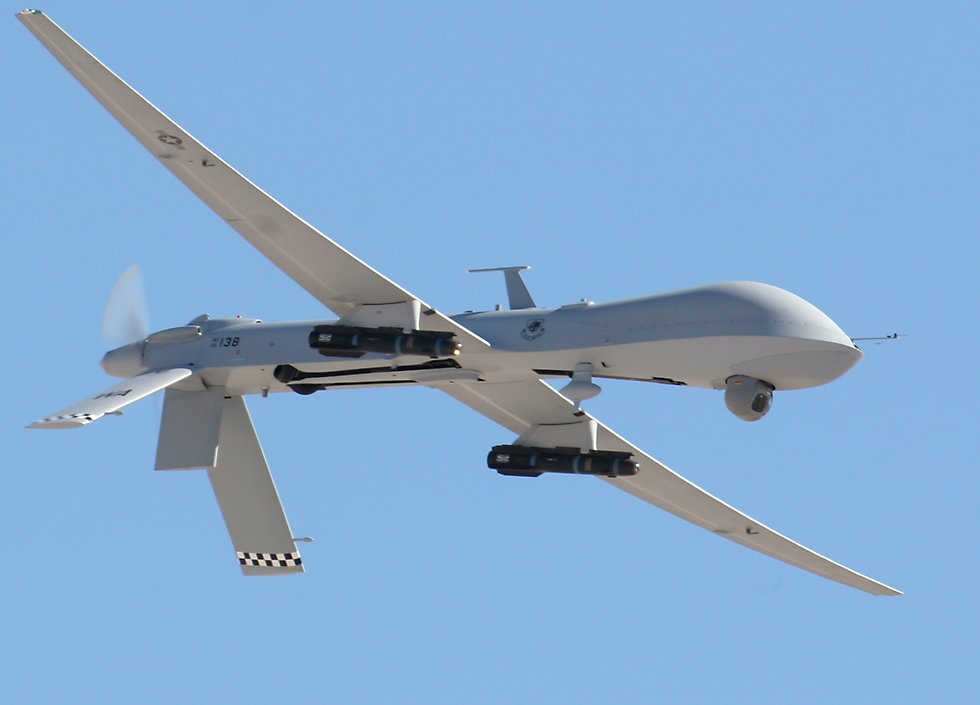
Pakistan has rejected a request from the U.S. to expand a drone missile campaign against Al Qaeda and Taliban militants, a decision that limits Washington’s use of one of its most effective tools against insurgents hiding in the nation.

Pakistani Foreign Ministry spokesman Abdul Basit said Islamabad would not allow the U.S. to carry out drone strikes outside the tribal belt along the Afghan border and repeated the government’s request that Washington abandon its use of drones in Pakistan on the grounds that the program violates the country’s sovereignty.

Basit did not say which additional areas the U.S. wanted to target. However, the Washington Post reported Saturday that the request focused on areas outside the southern city of Quetta, where Afghan Taliban leaders have hideouts.

“We are allies of the United States in the war against terror,” Basit said. “However, Pakistan will not compromise on sovereignty.”

Islamabad’s refusal comes as little surprise, given the animosity that the drone campaign has stirred among Pakistanis for years, but even as the government publicly condemns the drone program, it tacitly allows the missile strikes to take place. Pakistan even provides intelligence to facilitate the targeting of the strikes.

The drone missions are deeply unpopular in Pakistan, where they are viewed as an illustration of President Asif Ali Zardari’s willingness to acquiesce to most demands that Washington makes. Allowing an expansion of the drone program could further aggravate the vulnerability of Zardari’s government, already weakened by its mishandling of this summer’s catastrophic floods and the country’s ongoing economic troubles.

Any expansion of the drone campaign into Baluchistan, the province where Quetta is located, would also represent a dramatic departure in policy for Islamabad because it is not part of the semi-autonomous tribal region where the drones are permitted now.

In addition, the Quetta region is a heavily populated area; the city itself has a population of 900,000. The core leadership of the Afghan Taliban insurgency, known as the Quetta Shura and headed by Mullah Muhammad Omar, has used Quetta and its outlying regions as a sanctuary for years.

In recent months, the U.S. has dramatically stepped up its use of drone strikes in the tribal areas. So far this year, the U.S. has carried out 101 drone missile strikes in northwest Pakistan, compared to 53 in 2009.

The attacks have focused largely on North Waziristan, a primary stronghold of militants and commanders belonging to the Haqqani network, an Afghan Taliban wing regarded by the U.S. as one of the biggest threats facing coalition forces in Afghanistan.

According to the Long War Journal website, which keeps track of drone missile strike statistics, 92 of the attacks this year occurred in North Waziristan.

Pakistan Looks Ahead to End of Afghan War

By Olivia Ward for The Toronto Star

As NATO forces prepare to pull out of Afghanistan, worries about the country falling back to Taliban control are paramount. But in neighbouring Pakistan, where suicide bombings and brazen attacks on security forces have become regular occurrences, the stakes are also high.

“What happens in Afghanistan affects us and vice-versa,” says Akbar Zeb, Pakistan’s High Commissioner to Canada. “We have four million Afghan refugees still living in Pakistan, and it’s in our interest to have a stable country where we can send them back. A Taliban takeover won’t be just detrimental to Afghanistan. It would harm Pakistan and the whole region.”

Zeb said that under the civilian government of President Asif Ali Zardari, relations have improved with Afghanistan, and contrary to reports of friction, there are “frequent contacts” between the two countries that would be helpful in creating stability.

But he added that Canada, and other Western countries, should not repeat the mistakes of the post-Soviet era, when the West lost interest in Afghanistan and Pakistan as soon as the Soviet troops withdrew.

During the rule of Pakistan’s military leader, President Pervez Musharraf, groups of Taliban-linked militants got a foothold in Pakistan, but were not seen as a danger to the country until internal attacks began to spread. Former prime minister Benazir Bhutto was assassinated, and suicide bombings took the lives of hundreds of civilians. Under pressure from the U.S., the Pakistani military began a massive campaign against the Taliban along the Afghan border.

“We have managed to clear a lot of areas from the Taliban,” said Zeb. “Military campaigns are the only language they understand. But they alone won’t help to win the war. We have border regions with a lot of poverty, and backward elements that have been ignored for a long time.”

Canada has announced support for road and rail projects linking Afghanistan and Pakistan to speed trade between the two countries.

“It’s a very good initiative, but scope is limited,” said Zeb.”We wish the projects were larger and not just (confined to) those that involve both Afghanistan and Pakistan.”

Talks with Islamabad are also ongoing on the use of ports in Karachi for shipping out Canadian troops and military supplies from Afghanistan.

But as the war continues, Pakistan has also been urged to be tougher on the Taliban. In the past two years it has carried out attacks against the militants in its border regions with some success, while American-launched drone strikes have killed high-ranking Taliban. The catastrophic floods that wiped out some of the most important agricultural areas of Pakistan brought a temporary truce, but militant attacks have resumed since the waters receded.

Last week, talk of a peace deal between the notorious Taliban-linked Haqqani network, and an opposing tribe in the remote northwest raised fears that it could open the way for Taliban access to strategic border areas. But the U.S. has also urged a Pakistani offensive against the network in North Waziristan, a volatile region where 400,000 civilians are vulnerable to displacement.

According to Pakistani officials, the country has lost some 7,000 security forces in a decade of fighting the militants — more than three times the coalition deaths in Afghanistan. Meanwhile 30,000 Pakistani civilians have died. The border region, a tangle of mutually hostile tribes, remains a haven for militants.

“It’s a difficult balance for Pakistan,” said Zeb. “Foreign troops may leave, and for them Afghanistan is a distant land. We’re Afghanistan’s neighbours. We helped with the fighting in the decade-long war against the Soviets. And we have to live with the outcome of this war.”