Posts Tagged ‘ India ’

Jinnah’s Pakistan

By Ziyad Faisal for The Friday Times
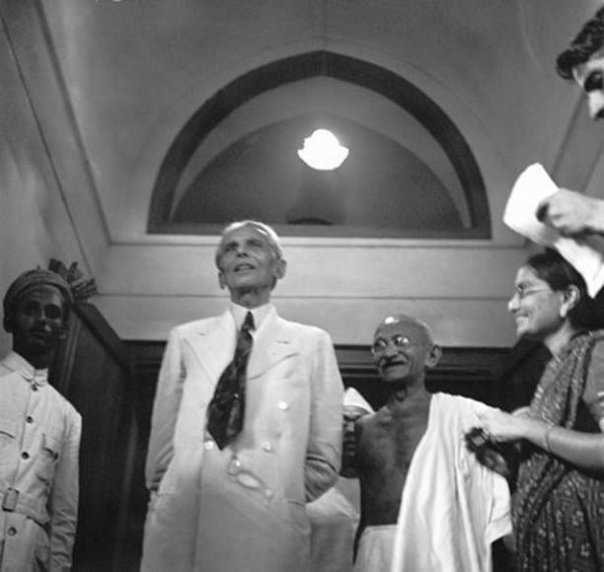
When a suicide-bomber targets a market-place, a rabid Islamist kills a figure who is not pious enough or Independence Day comes, we are reminded of the psychosis of the Pakistani state. We are reminded that in addition to shaky material foundations, the Pakistani state rests upon highly flimsy and contested ideological grounds. At such times, there is almost always a chorus from the literate urban middle-classes of the country: they want “Jinnah’s Pakistan”. For the more conservative sections of our urban middle-class, the Pakistan they long for is the “laboratory” which Jinnah claimed he sought, to implement Islamic values. For the more liberal sections of the urban middle-class, the Pakistan they want was described by a secular Jinnah in his speech on August 11, 1947. The more perceptive reader will already realize that while every historical figure can be interpreted in a wide variety of ways, if a single leader can be held up by secularists, conservatives, nationalists and Islamists alike, perhaps the leader himself was not so sure about certain things.

But what exactly was Mr Jinnah’s own vision for Pakistan, and how did it interact with the nature of the Pakistan Movement and the realities of post-1947 Pakistan? To understand the yearning for “Quaid-e-Azam ka Pakistan”, one must look at the founding myths of Pakistan and Jinnah’s place therein.

Almost any child who goes to school in Pakistan learns a certain story. The story involves a young man, burning the proverbial midnight oil as he studied at night, trying to shield the light he was using with cardboard sheets, so as not to disturb his siblings. When asked by his sister as to why he would not simply go to bed, he said something along the lines of how important this hard work was, for him to become a great man. The Pakistani reader will recognize immediately the young man we are talking about: the Quaid-e-Azam, Muhammad Ali Jinnah.

Most modern nation-states actively propagate their foundational myths: based on a kernel of truth but embellished greatly with fantasy, exaggeration and historical omissions. It is only natural that such myths centre around the integrity, heroism or ambition of one or more “founding fathers” who were instrumental in creating the state it in its modern, institutional form. So, for instance, Israel has its Bar Kochba and its Ben Gurion. Turkey has its Attaturk leading the fight for independence from barren Anatolia. The United States has its George Washington, who supposedly would not lie to his father about cutting a cherry tree, even as a boy. Latin American countries have their Simon Bolivar, Italy has its Garibaldi, Ireland has its Michael Collins. The Indian state has its own pantheon of founding fathers, from Asoka to the Rani of Jhansi, all the way down to Gandhi and Subhas Chandra Bose. Even Saudi Arabia has its epic tale of Bedouin raiders from the sand-dunes of Najd turning into majestic kings and defenders of the Holy Kaabah.

As for the foundational myths of Pakistan, let us bear in mind the following: every modern nation-state is ultimately a very artificial social construct, and the more artificial a state, the more artificial its founding myths.

And what is the Pakistani child taught about the founding fathers of the country? Well, if we put aside the valuable nation-building efforts of Muhammad bin Qasim and Mahmud of Ghazni, what we are left with is essentially Allama Muhammad Iqbal and, of course, the Quaid-e-Azam. Iqbal, as a brilliant poet and an aspiring philosopher, who dreamt of Pakistan. Mr Jinnah, the great political leader who brought this vision to fruition. Such is the clichéd narrative we are given.

In that famous story about the hard-working youthful Jinnah, the Pakistani student is being taught that a boy in his mid-to-late teens had already within him a young Quaid-e-Azam: the Great Leader. He would go on to study the legal system of the British colonialists, gain the respect of the British and the adulation of the Muslim masses of South Asia and eventually this epic tale culminates in the heroic Muslim League’s achievements of Partition and its accompanying bloodbath.

The historical record suggests that the budding Leader was not exactly convinced about the need for communal Muslim politics until at least the early 1920s. He was, after all, the chief architect of the Lucknow Pact of 1916: the “ambassador of Hindu-Muslim unity” as Sarojni Naidu famously described him. Even as late as 1946, Jinnah as a practical politician could entertain the possibility of some sort of compromise with the Congress leadership and the British. The Muslim League leadership would have been satisfied with adequate guarantees of limited autonomy for Muslim-majority regions of Punjab, Sindh and Bengal. The Pashtun leaders of the north-western Frontier, of course, were not to be taken on board, because their loyalty to the Congress amounted to some sort of treachery. As for the Baloch, one imagines, it was assumed that they need not be considered in any calculations: they would somehow automatically be convinced to join the new nation-state and forget centuries of distinct history.

The Muslim League itself, founded in 1905-06 by disinherited and disgruntled members of the former Muslim elite of South Asia, was not committed to mass politics or independence from British rule – and certainly not an independent Pakistan. Unlike the populist appeals of Congress leaders like Gandhi, Nehru and others, the Muslim League’s political programme was for a long time directed towards the Aligarh-educated ex-nobility among Muslims. In the 1940s, were it not for a last-minute alliance with Muslim feudal lords in Punjab and some urban elements from Sindh, the Muslim League could never have mustered the political resources to make their demand for an independent Pakistan into a reality.

Conservative nationalists and Islamists in Pakistan are likely to be disappointed by the real Mr Jinnah. He was an intelligent, British-educated barrister, and had little time for the discourse of village mullahs. Steeped in the traditions of British liberalism, Jinnah could bring only a tiny minority of the Muslim clergy to his side even in the 1940s. It is obvious that he was looking for some form of constitutional liberal democracy, no matter how inspiring the pan-Islamic yearnings of Allama Iqbal might have been.

But perhaps our secular liberals are even more likely to be disappointed, notwithstanding the fact that Mr Jinnah laid out a set of principles for a secular Pakistani state in his speech to our first Constituent Assembly, on the 11th of August, 1947. To quote his memorable words on that occasion:

“You are free; you are free to go to your temples, you are free to go to your mosques or to any other place or worship in this State of Pakistan. You may belong to any religion or caste or creed that has nothing to do with the business of the State. ”

While these are admirable sentiments, perhaps we can be forgiven for pointing out the glaring contradiction here. If a citizen’s religion is not the business of the state, how does one explain the creation of Pakistan as a separate state? If it were not differences in religion with the Hindus and other religious communities of India, what else was it that motivated the Muslim League to demand Pakistan?

Allow me go one step further and remind the reader of the many occasions on which Mr Jinnah invoked Islamic rhetoric in his various speeches to justify the idea of Pakistan. With apologies beforehand, allow me to recall that it was the same Mr Jinnah who would not accept his daughter marrying a non-Muslim man, even though he himself had married a non-Muslim woman. One is reminded of the typical mindset of the contemporary Pakistani Muslim father or brother.

For years, Mr Jinnah brilliantly argued for federal autonomy in Muslim-majority provinces…until Partition happened and the Pashtuns, Bengalis, Baloch and other nationalities within Pakistan demanded the same autonomy. For years, Mr Jinnah pointed out the distinct cultural identity of South Asian Muslims…until Partition happened and Bengalis asked for their language to be given the status of a national language. Urdu and Urdu alone, Mr Jinnah firmly reminded them.

I understand that quite a few readers ought to be exasperated by now. What am I trying to say? What exactly was Muhammad Ali Jinnah? Was he socially liberal or conservative? Was he secular or not? What future did he envision for Pakistan?

The historical record shows that Mr Jinnah was himself has given us adequate arguments for just about any side we choose. Despite the personal integrity, intelligence and political skill of Mr Jinnah, it has to be recognized that the Muslim League was not exactly what it claimed to be. It was supposed to speak for the Muslims of South Asia, but its actual representative credentials were not very credible, even in the “moth-eaten and truncated” (to quote Mr Jinnah) Pakistan of 1947.

To limit ourselves to an imagined version of what Mr Jinnah wanted would mean limiting our political vision and perhaps the very frontiers of our political morality.

What sort of Pakistan does the hari from Sindh want? What sort of Pakistan does the silenced rape victim want? What sort of Pakistan does the tortured body of the young Baloch student want? What sort of Pakistan does the textile worker from Faisalabad want, considering he is paid some 6000 rupees a month? What sort of Pakistan does the terrified Ahmadi want? What sort of Pakistan do you want? What sort of Pakistan do I want?

You see, perhaps the real question is not what our founding father(s) wanted, but what today’s unfortunate Pakistanis want.

Perhaps it is time to consider a possibility: that the laboratory for implementing Islamic teachings was created, and the experiment went horribly wrong. And perhaps it is time to consider another possibility: given the many different interpretations which Mr Jinnah left himself open to, might we be forgiven for concluding that this is it? That this, where we live today, is Jinnah’s Pakistan in all its glory?

China launches communications satellite for Pakistan

As Reported by The South Asian News Agency

The year 2011 marks 60 years of diplomatic relationship between China and Pakistan. This all-weather relationship has largely withstood ‘the test of time’.

Both states recognize the relevance of their cooperation in areas like security, trade and culture. All these years China has mostly followed the ‘friend of Pakistan policy’. From the Indian perspective the focus of their cooperation, which has mostly revolved around security issues, has been a source of anxiety. Apart from the question of direct military aid, India must also take note of China’s assistance to Pakistan in the field of science and technology as well since it has long-term strategic implications. China launched Pakistan’s first communications satellite (PAKSAT-1R) on August 12, 2011 on a Long March-3B carrier rocket. This event demonstrates the deepening in technological cooperation between these two states. For China this was also an event to display the capabilities of its rapidly growing commercial satellite industry.

Over the years Pakistan has largely demonstrated a copycat syndrome (with reference to India) as far as programmes of strategic importance are concerned. Pakistan’s technological and industrial base is not well-established in comparison with India. Therefore, to match India, Pakistan has relied on foreign (overt or covert) help. In certain cases Pakistan also developed underground networks to ‘manage’ hardware/technology. However, Pakistan’s investments in space technologies have been minimal. This is somewhat surprising particularly, because it has a reasonably well-developed missile programme which, in fact, could have helped at least partially to build up an indigenous space programme.

Pakistan’s lack of interest in space technology could be due to three reasons. Firstly, the Pakistani focus on long-term investments in technology has predominantly been military specific over the years. The use of technology for social, educational and scientific needs was not the prime focus. Secondly, Pakistan appears to have failed to anticipate the long-term strategic importance of space technologies. What is more surprising is the failure to understand the importance of space technologies particularly, in the background of the country’s nuclear ambitions. Thirdly, because of superfluous investments in military hardware, Pakistan was unable to make investments in space technology. Also, the state appears to have failed to realise the future commercial relevance of a space programme.

Against this backdrop the launch of the made in China PAKSAT-1R with 30 transponders for the purposes of communications services marks a new beginning. This satellite would take care of broadband Internet, telecom and broadcasting services. It is expected to cover South Asia, Europe, West Asia and eastern Africa and is also likely to help in weather monitoring. Being a communication satellite its dual-use nature could offer strategic defence applications as well. Pakistan has been collaborating with China in the space arena since the 1990s. Its first satellite Badr-1 was launched by China on July 16, 1990 (on a Long March 2E rocket). However, during the span of the last two decades, Pakistan’s space programme has not made any significant progress baring two more satellite launches with outside help. Pakistan’s space agency called Space and Upper Atmosphere Research Commission (SUPARCO) was established in 1961 as a committee. It was upgraded into a Commission in 1981. But it has failed to make any significant progress.

The August 2011 launch of a communication satellite opens a new chapter in Pakistan’s space history. Today, Pakistan has no launch vehicle of its own to launch satellites of any type. It has a long way to go in developing expertise in this arena as well as in satellite manufacture though the very first satellite was developed indigenously. Pakistan also needs to invest in the development of Spaceport and ground stations. All this will take time and its dependence on China is expected to increase in coming years.

Since their border settlement pact of March 3, 1963 the relationship between these two neighbours of India has been steadily growing. In the field of space there was a pause for almost two decades particularly, in the high-end projects like satellite launches. However, during these years a certain degree of collaboration was underway for personnel training and infrastructure development. Pakistan’s inadequacy in the space field offers China an opportunity to take their strategic partnership to a higher plane and also simultaneously maintain its own commercial interests.

For the last couple of years China has been using space technology to further its geopolitical as well as commercial interests. Now, Pakistan offers it an opportunity to use space engagement for strategic purposes as well. China has begun to help states like Nigeria and Venezuela with their satellite programmes. Also, recently China signed a deal with Bolivia for building and launching a satellite. In comparison with the western space agencies, China offers better commercial deals. Also, China has earned a prestige for its space programme with various successful space launches. Naturally, various developing states in the world are looking towards China.

China’s space programme is surging ahead at a much faster rate than India’s. Pakistan’s space programme is likely to remain in infancy for some more time to come. However, nuclear Pakistan is likely to pursue its space agenda (with China’s help) with more vigour in the future. On the military front, it is bound to benefit from various Chinese programmes like the navigational programme (COMPASS constellation). India needs to look at these developments seriously. Till date Pakistan’s space capabilities were probably not factored into India’s strategic planning, but that must change

Indian Inquiry Confirms Graves in Kashmir Hold More Than 2,000 Unidentified Bodies

As Reported by The Associated Press

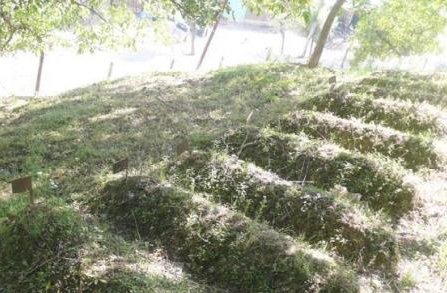
SRINAGAR, India — Hundreds of unmarked graves in Kashmir hold more than 2,000 bullet-riddled bodies that may include innocent victims, despite police claims that they were militants fighting Indian rule in the disputed Himalayan territory, according to an Indian government report.

The report — following a three-year investigation launched amid allegations of rights abuses by the army, paramilitary and police — is the first official acknowledgment that civilians killed in the two-decade conflict may have been buried in unmarked graves.

It stops short of confirming that suspicion, long alleged by rights groups, but says “there is every possibility that … various unmarked graves at 38 places of north Kashmir may contain the dead bodies of locals.”

Previously, officials have insisted that all the bodies were of militant fighters, as claimed by police when they were handed over to villages for burial.

The report says 2,156 unidentified bodies were found in single and mass graves in three northern mountainous regions, while 574 other bodies found in the graves have been identified as local residents.

The findings by the Jammu-Kashmir State Human Rights Commission are likely to deepen cynicism in restive Kashmir, where anti-India sentiment runs deep and most people want independence or merger with neighboring Pakistan.

India and Pakistan have fought two wars since 1947 for control of the territory, which is divided between them. India accuses Pakistan of arming and training rebel fighters, but Pakistan says it only offers moral and diplomatic support for their cause.

Rebel groups began fighting in 1989 against Indian rule, and more than 68,000 people have been killed in the uprising and subsequent Indian crackdowns. Most have been civilians.

Rights groups have said some 8,000 people have disappeared, and accused government forces of staging gunbattles to cover up killings. The groups also say suspected rebels have been arrested and never heard from again.

The state government has countered that most of the missing were likely Kashmiri youths who crossed into Pakistan for weapons training.

In 2008, a rights group reported unmarked graves in 55 villages across the northern regions of Baramulla, Bandipore and Handwara, after which researchers and other groups reported finding thousands of single and mass graves without markers.

Indian officials set up the commission to investigate and also began a separate police investigation, the findings of which have yet to be released.

The commission’s 17-page report also urged DNA profiling to identify the bodies, saying the matter should be “investigated thoroughly by an impartial agency.”

The head of a local rights group welcomed the report as vindicating its research into the graves.

“Security agencies accused us of maligning the image of the armed forces,” said Pervez Imroz of the International People’s Tribunal on Human Rights and Justice. Now, “we will seek judicial intervention if the government fails to implement the report’s recommendations.”

Pakistan Yearns For a ‘Hazare’ Too

By Farhan Bokhati for Gulf News

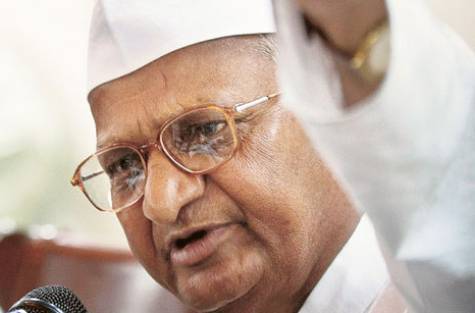
The crisis unleashed by anti-corruption protests targeting India’s graft-tainted government offers many lessons for Pakistan. While public rallies in India have lifted the credentials of the 74-year-old veteran campaigner, Anna Hazare, Pakistanis have watched the situation across the border with much interest.

Pakistan is no stranger to corruption in high places. Scandal after scandal involving senior politicians, high-ranking officials and other prominent individuals have become public, underlining the nature of the beast. While there have been high-profile arrests in the past, Pakistan tragically has a poor history when it comes to successful prosecution and sentencing.

Across the country, however, there is widespread popular lament over graft being more than just a mere fact of life. Calls for a revolution come frequently from ordinary Pakistanis, notably those who consider themselves disempowered and marginalised.
In recent days, TV coverage in Pakistan of the anti-graft campaign in India appears to have vividly illustrated the way that events in Delhi have struck a chord across the border. For long, Pakistanis have waited for a messiah but to no avail. Today, the yearning for such a deliverer from corruption appears to be much stronger than ever before.

To make matters worse for the country, Pakistan’s ruling class appears to show no signs of responding to the challenge posed by corruption in high places. Unlike India where a veteran campaigner in his 70s has become the lightning rod for popular opinion and has inspired the public at large to take the cue from him, there is no similar individual who has become a comparable figure in Pakistan.

But like India, Pakistan’s ruling politicians including members of the country’s parliament have seldom considered corruption an important enough issue to be vigorously discussed and debated in parliament. Ironically, for a country where politicians are keen to note the importance of strengthening the evolving democratic framework, it is important to recognise the equal if not greater significance of aggressively battling corruption.

Politicians in Pakistan appear to give no heed to corruption as an issue of vital significance. But what is even more disturbing is indeed the fact that questions raised on the conduct of politicians in relation to impropriety are quickly shoved under the carpet as if they were an attack on democratic values.

In this background, the time has now come for Pakistan to recognise the overwhelming significance of fighting corruption, not just for the country’s overall well-being but also for its ability to sustain its still young democratic order.

Abject poverty
If Pakistan continues to become an even more tainted country where values related to clean governance remain subservient to so-called discussions on democracy and civilian rule, sustaining the latter may remain an uphill task. While reverting to military rule as has been the case in Pakistan’s history may not be an option, it can be stated with a significant degree of certainty that chaos will increasingly become a fact of life going forward. The popular yearning for an end to corruption coincides with what appear to be difficult economic times for Pakistan. The country’s elite have neglected the poorest of the poor for too long.

At least a third of Pakistan’s population, or by some accounts even a higher proportion, continues to live below the poverty line. This essentially means that a large segment of the country’s population, which on its own may be larger than the entire population of many countries, lives in extreme and abject poverty, facing conditions that can simply not be imagined by the ruling elite.

The missing element for now may indeed be that Pakistan has yet to discover a prominent individual like India’s Hazare who becomes the hope for the country’s downtrodden and those in need. Given the desperation felt by many Pakistanis, it is possible that such an individual may be found sooner or later, who then leads calls for a long-overdue change.

The consequences of such an eventuality may be difficult to comprehend at the moment. But given the popular yearning for an abrupt change, it is more than likely that such a change could be tumultuous and even possibly bloody. The easier option for Pakistan’s complacency-driven ruling elite which they are unlikely to embrace going by past precedent, is simply that of learning a lesson from events across the border. The ‘Hazare factor’ in India’s landscape is a breath of fresh air.

Farhan Bokhari is a Pakistan-based commentator who writes on political and economic matters.

India and Pakistan, Talking

As reported by The New York Times

With a relationship as combustible as that between India and Pakistan, it’s progress just to get the two sides in a room. Last week’s meeting was better. Their foreign ministers announced modest, but very welcome, agreements concerning the bitterly disputed region of Kashmir.

They promised to double the number of days when cross-border trade between the two parts of Kashmir — one controlled by India, the other by Pakistan — is allowed and to expand and expedite travel permits for Kashmiris who want to cross the border for family visits, tourism and religious purposes. India and Pakistan have fought three wars since 1947, two over Kashmir. Even these small steps could help chip away at their visceral mistrust.

Three weeks ago, some doubted the meeting would even happen after three explosions ripped through Mumbai, killing 24 people. The Mumbai attacks in 2008 that killed 160 people were blamed on Pakistani terrorists and sent relations with India into the deep freeze. So far, suspicion for the recent attacks has fallen on Indian terrorists.

Prime Minister Manmohan Singh of India deserves huge credit for staying engaged despite Pakistan’s failure to prosecute those responsible for the 2008 horrors. And he deserves credit for not shooting first and asking questions later after the recent attacks.

We wish we could say the same of Pakistan’s leaders. Before there can be a true reconciliation, and stability in the region, Pakistan’s Army must realize that using militants to try to counter Indian influence in Kashmir and Afghanistan is self-destructive — and that homegrown extremism, not India, is the real threat to Pakistan’s survival.

India and Pakistan have more to talk about, including cooperation on water, expanded trade and their joint stake in a stable Afghanistan. President Obama’s drawdown of American troops will go easier if India and Pakistan are part of the solution, not fighting over the spoils. New Delhi insists that it will accept no outside mediation. Washington needs to keep pressing the two to work together.

The United States and its allies are planning a conference in Bonn in December and hope to rally international support for a broad regional strategy that includes a peace deal for Afghanistan, trade agreements and ambitious energy projects. India and Pakistan need to be full participants. The payoff could be huge if their leaders muster the courage to resolve their differences.

Why My Father Hated India

By Aatish Taseer for The Wall Street Journal

Ten days before he was assassinated in January, my father, Salman Taseer, sent out a tweet about an Indian rocket that had come down over the Bay of Bengal: “Why does India make fools of themselves messing in space technology? Stick 2 bollywood my advice.”

My father was the governor of Punjab, Pakistan’s largest province, and his tweet, with its taunt at India’s misfortune, would have delighted his many thousands of followers. It fed straight into Pakistan’s unhealthy obsession with India, the country from which it was carved in 1947.

Though my father’s attitude went down well in Pakistan, it had caused considerable tension between us. I am half-Indian, raised in Delhi by my Indian mother: India is a country that I consider my own. When my father was killed by one of his own bodyguards for defending a Christian woman accused of blasphemy, we had not spoken for three years.

To understand the Pakistani obsession with India, to get a sense of its special edge—its hysteria—it is necessary to understand the rejection of India, its culture and past, that lies at the heart of the idea of Pakistan. This is not merely an academic question. Pakistan’s animus toward India is the cause of both its unwillingness to fight Islamic extremism and its active complicity in undermining the aims of its ostensible ally, the United States.

The idea of Pakistan was first seriously formulated by neither a cleric nor a politician but by a poet. In 1930, Muhammad Iqbal, addressing the All-India Muslim league, made the case for a state in which India’s Muslims would realize their “political and ethical essence.” Though he was always vague about what the new state would be, he was quite clear about what it would not be: the old pluralistic society of India, with its composite culture.

Iqbal’s vision took concrete shape in August 1947. Despite the partition of British India, it had seemed at first that there would be no transfer of populations. But violence erupted, and it quickly became clear that in the new homeland for India’s Muslims, there would be no place for its non-Muslim communities. Pakistan and India came into being at the cost of a million lives and the largest migration in history.

This shared experience of carnage and loss is the foundation of the modern relationship between the two countries. In human terms, it meant that each of my parents, my father in Pakistan and my mother in India, grew up around symmetrically violent stories of uprooting and homelessness.

But in Pakistan, the partition had another, deeper meaning. It raised big questions, in cultural and civilizational terms, about what its separation from India would mean.

In the absence of a true national identity, Pakistan defined itself by its opposition to India. It turned its back on all that had been common between Muslims and non-Muslims in the era before partition. Everything came under suspicion, from dress to customs to festivals, marriage rituals and literature. The new country set itself the task of erasing its association with the subcontinent, an association that many came to view as a contamination.

Had this assertion of national identity meant the casting out of something alien or foreign in favor of an organic or homegrown identity, it might have had an empowering effect. What made it self-wounding, even nihilistic, was that Pakistan, by asserting a new Arabized Islamic identity, rejected its own local and regional culture. In trying to turn its back on its shared past with India, Pakistan turned its back on itself.

But there was one problem: India was just across the border, and it was still its composite, pluralistic self, a place where nearly as many Muslims lived as in Pakistan. It was a daily reminder of the past that Pakistan had tried to erase.

Pakistan’s existential confusion made itself apparent in the political turmoil of the decades after partition. The state failed to perform a single legal transfer of power; coups were commonplace. And yet, in 1980, my father would still have felt that the partition had not been a mistake, for one critical reason: India, for all its democracy and pluralism, was an economic disaster.

Pakistan had better roads, better cars; Pakistani businesses were thriving; its citizens could take foreign currency abroad. Compared with starving, socialist India, they were on much surer ground. So what if India had democracy? It had brought nothing but drought and famine.

But in the early 1990s, a reversal began to occur in the fortunes of the two countries. The advantage that Pakistan had seemed to enjoy in the years after independence evaporated, as it became clear that the quest to rid itself of its Indian identity had come at a price: the emergence of a new and dangerous brand of Islam.

As India rose, thanks to economic liberalization, Pakistan withered. The country that had begun as a poet’s utopia was reduced to ruin and insolvency.

The primary agent of this decline has been the Pakistani army. The beneficiary of vast amounts of American assistance and money—$11 billion since 9/11—the military has diverted a significant amount of these resources to arming itself against India. In Afghanistan, it has sought neither security nor stability but rather a backyard, which—once the Americans leave—might provide Pakistan with “strategic depth” against India.

In order to realize these objectives, the Pakistani army has led the U.S. in a dance, in which it had to be seen to be fighting the war on terror, but never so much as to actually win it, for its extension meant the continuing flow of American money. All this time the army kept alive a double game, in which some terror was fought and some—such as Laskhar-e-Tayyba’s 2008 attack on Mumbai—actively supported.

The army’s duplicity was exposed decisively this May, with the killing of Osama bin Laden in the garrison town of Abbottabad. It was only the last and most incriminating charge against an institution whose activities over the years have included the creation of the Taliban, the financing of international terrorism and the running of a lucrative trade in nuclear secrets.

This army, whose might has always been justified by the imaginary threat from India, has been more harmful to Pakistan than to anybody else. It has consumed annually a quarter of the country’s wealth, undermined one civilian government after another and enriched itself through a range of economic interests, from bakeries and shopping malls to huge property holdings.

The reversal in the fortunes of the two countries—India’s sudden prosperity and cultural power, seen next to the calamity of Muhammad Iqbal’s unrealized utopia—is what explains the bitterness of my father’s tweet just days before he died. It captures the rage of being forced to reject a culture of which you feel effortlessly a part—a culture that Pakistanis, via Bollywood, experience daily in their homes.

This rage is what makes it impossible to reduce Pakistan’s obsession with India to matters of security or a land dispute in Kashmir. It can heal only when the wounds of 1947 are healed. And it should provoke no triumphalism in India, for behind the bluster and the bravado, there is arid pain and sadness.

—Mr. Taseer is the author of “Stranger to History: A Son’s Journey Through Islamic Lands.” His second novel, “Noon,” will be published in the U.S. in September

-Pakistanis for Peace Editor’s Note– Aatish Taseer’s brutally honest and forthright column is one of the best articles I have read in a long time.  As a Pakistani American, I find a lot of truth in what he is saying, no matter how ill received it may be back in Pakistan, I feel that Aatish does make some good points and it was well worth sharing with you readers.

Pakistan’s Glamorous New Foreign Minister Wows India

By Robert Zeliger for Foreign Policy

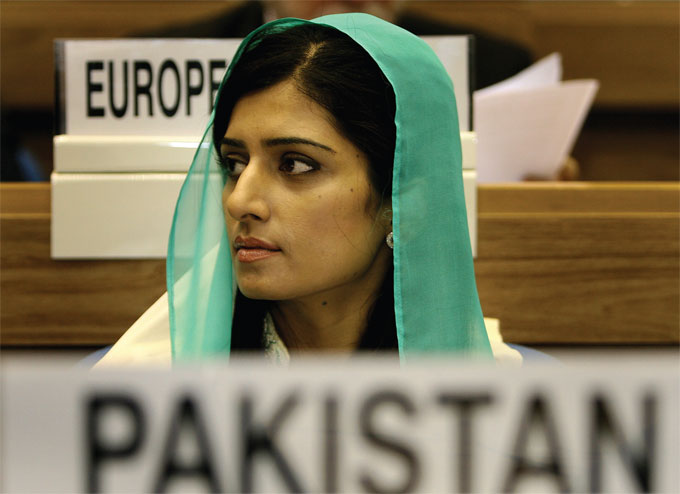
She’s young, stylish, sharp and pretty, and Indians are falling for her. Yep, it seems that Pakistan’s new 34-year-old foreign minister, Hina Rabbani Khar, has accomplished what years of tense diplomacy haven’t been able to — create some genuine goodwill between the two constantly sparring nations. In her first official visit today to India since taking over the foreign ministry last week, Khar met with her Indian counterpart, S.M. Krishna. The two agreed to boost security, trade, transportation, travel, and cultural links between the countries — in what analysts called some of the most productive talks between the two sides since Pakistani militants killed 166 people in Mumbai three years ago. But it’s her youth and glamour that are credited with creating a “fresh start atmosphere.” She later met with India’s Prime Minister Manmohan Singh.

But who really cares what happened behind closed doors. More importantly: she got high marks for wearing Roberto Cavalli sunglasses, classic pearl and diamond jewelry, a blue designer dress, and toting an Hermes Birkin bag. And thus ladies and gentleman, a glamour icon is born. We give it three months before Vogue comes calling… wait, maybe two.

Indian papers and news programs today gushed over Khar, praising her beauty and style. The Times of India headlined their front page story: “Pak Puts On Its Best Face.” The Navbharat Times said the country was “sweating over model-like minister.” The Mail Today said she had brought a “Glam touch to Indo-Pak talks” and asked, “Who says politicians can’t be chic?” These are not the usual superlatives Pakistani diplomats are used to getting in the Indian press.

Of course, not everything was picture perfect. The Indian press did attack her for meeting with a Kashmiri separatist group later in the day.

But overall, it was hard not to sense the generational shift as Khar spoke about “a new generation of Indians and Pakistanis [who] will see a relationship that will hopefully be much different from the one that has been experienced in the last two decades” after meeting with the Indian foreign minister who — through no fault of his own, save for his misfortune of being born 79 years ago — did totally look like her grandfather.

As Seema Goswami, a leading Indian social commentator, put it, “She’s incredibly young pretty, glamorous and has no fear of appearing flash. She wore pearls when she arrived and diamonds for the talks. We’re so obsessed with her designer bag and clothes that we forget she first held talks with the Hurriyat [Kashmiri separatists]. She could be Pakistan’s new weapon of mass destruction.”

Killing of infants on the rise in Pakistan

By Raza Sayah for CNN

At a morgue in Pakistan’s largest city, five linen pouches — each the size of a loaf of bread — line the shelf of a walk-in freezer.
Wrapped inside each small sack is the corpse of an infant.

The babies are victims of what one relief agency calls Pakistan’s worst unfolding tragedy: the killing and dumping of newborns.
“Sometimes they hang them, and sometimes they kill by the knife, and sometimes we find bodies which have been burned,” said Anwar Kazmi, a manager at Edhi Foundation, Pakistan’s largest privately run social service and relief agency.

Records at Edhi Foundation show that more than 1,200 newborns were killed and dumped in Pakistan last year, an increase of about 200 from the previous year.

Families view many of these children as illegitimate in a culture that condemns those born outside of marriage.
Statistics show that roughly nine out of 10 are baby girls, which families may consider too costly to keep in a country where women frequently are not allowed to work.

The babies are usually just days old. Their corpses are often dumped in Karachi’s sprawling garbage dumps, where they’re sometimes mutilated by street animals, Kazmi said. He estimates that hundreds of baby corpses are never found.

The head of Edhi Foundation, 83-year-old Abdul Sattar Edhi, blames Pakistan’s crippling poverty and a government that, for decades, has failed to educate the masses, generate jobs and provide citizens with the most basic needs.

“The distribution of resources by the government is wrong,” Edhi said. “Many people don’t pay taxes; there’s no charity, and what you get from the government is all based on your wealth.”

The Pakistani government has said it’s improving education, but 55 million Pakistanis remain illiterate, according to the United Nations. And the government is billions of dollars in debt while entangled in a costly fight against the Taliban and other Islamic militant groups. The killing of newborns gets little attention in Pakistan, and rarely are they investigated by a police force that’s often poorly trained, lacks resources and stays focused on what’s perceived to be more important crimes.

In many parts of the world, female infanticide is still practiced through direct violence but also by intentional neglect, according to the World Health Organization.

In some Asian countries, infanticide of girls is enough to skew the population figures in favor of males. The United Nations found, for example, that there are 130 boys to 100 girls in parts of Asia, especially in countries with extreme poverty and overpopulation such as China and India.
“Girls are seen as a burden, seen as a property which belongs to somebody else so people see that as a waste of money and the wasting of an education of a girl,” said Bhagyashri Dengle, executive director of Plan India, a nonprofit for children. “Then when the girl gets married, the families have a big, heavy dowry. So that is one of the reasons here.”

Dengle said awareness and education at the grass-roots level are ways to combat this practice. “I think we really need to reach out to young people (to) create an awareness, to change attitudes and dispel the notion that having a boy is better than a girl,” she said. “We launched this program ‘Let Girls Be Born’ — that campaign is reaching out to masses using televisions, through newspapers and through (the) Internet. What we are trying to do is positive messaging on the girls. That girls aren’t a sect; they are as good as boys.”

In Pakistan, until things improve, the Edhi Foundation said, it will keep more than 300 cradles in front of its offices throughout Pakistan where families can drop off unwanted newborns. The foundation cares for them and puts them up for adoption, no questions asked.
“It’s for awareness — that please don’t kill your innocent babies,” Kazmi said.

Clinton Says US Encouraged by India-Pakistan Talks

By Matthew Lee and Ravi Nessman for The Associated Press

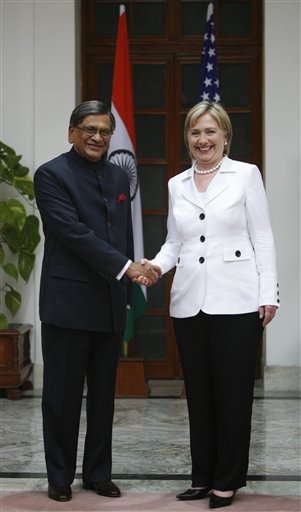
U.S. Secretary of State Hillary Rodham Clinton said Tuesday that the United States was “encouraged” by the ongoing talks between nuclear-armed rivals India and Pakistan and promised to give full support to Indian efforts to protect itself from terror.

Clinton’s visit to India came less than a week after a triple bombing killed 20 people in India’s financial capital of Mumbai, the worst terror strike in the country since 10 Pakistan-based gunmen rampaged through the city in 2008.

Her meetings with top Indian officials Tuesday focused on fighting terror, the U.S. withdrawal plans from Afghanistan and ways to broaden economic and security ties between the United States and India.

She also called for a swift resolution to their dispute over investments in nuclear energy, calling on India to ratify by the end of the year the Convention on Supplementary Compensation for Nuclear Damage and to adapt its liability laws to conform with the treaty.

The U.S. views India’s new nuclear liability law as too stringent on nuclear plant suppliers, making it difficult for private U.S. companies to compete against state-owned companies in India’s multibillion dollar nuclear reactor market.

Clinton’s trip here is part of a new round of U.S.-India strategic dialogue established last year to deepen ties between the world’s oldest and largest democracies.

S.M. Krishna, India’s foreign minister, expressed concerns that the planned U.S. troop withdrawal from Afghanistan that began this month could lead to a resurgence in Islamic extremism.

“It is in the larger interests of the region that it is necessary for the United States to work very closely with (Afghan) President (Hamid) Karzai and the government of Afghanistan and thereby create conditions where terrorists do not take any more advantage in Afghanistan,” Krishna said after 2 1/2 hours of talks with Clinton.

Clinton said she had outlined the drawdown strategy and stressed that the United States will not support Afghan reconciliation with insurgents unless it is inclusive and protects the rights of minority groups, religions and women.

Clinton also assured India of U.S. support in the fight against terror.

“We are allies in the fight against violent extremist networks. And homeland security is a high priority and a source of increasing partnership,” Clinton said.

While the U.S. and India have already signed agreements to cooperate in counterterrorism efforts, “the events in Mumbai have driven home how important it is that we get results,” she said.

Though India has not blamed Pakistan for last week’s attack, it has accused its neighbor of harboring violent extremist groups responsible for other attacks in India and of not doing enough to crack down on those responsible for the 2008 Mumbai siege.

For its part, U.S. officials fear Pakistan is not fully committed to combatting radical plots, such as the failed 2010 Times Square bombing in New York.

“We have made it clear to the Pakistani government that confronting violent extremists of all sorts is in its interest,” Clinton said.

India recently resumed peace talks with Pakistan that broke off following the 2008 Mumbai siege, and the two countries’ foreign ministers are expected to meet next week.

The U.S. is eager for the fragile talks to pick up steam, in part to allow Pakistan to focus its forces on the chaotic Afghan border.

“We are encouraged by the dialogue between India and Pakistan,” Clinton said, calling talks “the most promising approach” to build more confidence between them.

During the meeting Tuesday, Clinton and Krishna agreed to strengthen their countries’ ties in energy, security, education, the economy, science and promoting stability across the region. The two countries also signed an agreement promoting closer cooperation in cybersecurity.

Once frosty relations between India and the United States have warmed considerably in recent years as Washington has looked to India as stable ally in the turbulent South Asia region and its growing economy as a valuable market for U.S. goods.

President Barack Obama hosted Prime Minister Manmohan Singh at his first state dinner and visited India for three days last year, praising it as a new regional power. Clinton was to meet with Singh later Tuesday.

Growing business ties were among the top issues in the talks.

Western officials have looked to India’s rising economy and its 1.2 billion people as a coveted market to help stimulate growth in their own troubled economies.

“Each of our countries can do more to reduce barriers, open our markets, and find new opportunities for economic partnership,” Clinton said. “Taking these steps is in our mutual interest. We can improve millions of lives and increase both of our nations’ economic competitiveness.”

She praised India’s fight against piracy, and pushed for greater sales of U.S. arms to India — the world’s largest arms importer —as a way of deepening security cooperation between the two nations.

U.S. officials were annoyed earlier this year when Indian officials chose two European companies as finalists for an $11 billion order for 126 fighter jets. However, last month India signed an agreement to buy 10 Boeing C-17 cargo and troop-carrying aircraft for more than $4 billion.

From New Delhi, Clinton on Wednesday will move on to the southeastern port of Chennai, where she plans to deliver a speech on the importance of U.S.-Indian relations, the benefits of enhanced bilateral commercial ties and India’s role in South Asia and the greater Asia-Pacific region.

Clinton is in India on the third leg of a 12-day, around-the-world diplomatic tour that has already taken her to Turkey and Greece. After India, she will visit Indonesia, Hong Kong and southern mainland China before returning home July 25.

Can Pakistan Understand China?

By Khaled Ahmed for the South Asian News Agency

We look at South Asia as a region where we will hold India accountable for its injustices and force it to cede Kashmir to us. We have jihad as our guiding doctrine. Justice demands that we be the agents of instability. We are the revisionists determined to change the status quo.

India is too big, so we think China should do the job of cutting India down to size. India believes this strange figment of our imagination and criticises China for partly giving Pakistan its military muscle, the sort of thing the US used to do in the past. But was the US able to make Pakistan win against India? Was Kashmir ceded to Pakistan by an India felled and writhing on the ground?

Some in the US think of China as a global rival, but eight American presidents one after the other have resisted the old instinct of looking at the world through military goggles and have treated China instead as a ‘strangely behaving’ trading partner. And one person who doesn’t want America to think in terms of military equations is Henry Kissinger.

Henry Kissinger, in his latest book On China (The Penguin Press 2011), tells us things about China that we have ignored in our decades of ‘all-weather’ friendship. He says the Chinese mind hates policies of instability and disharmony. It did not grab Hong Kong but waited for the British lease on it to run out. Seeing Portugal in decline, India didn’t wait in the case of Goa; China waited in the case of Macao.

The presiding philosopher in China is Confucius who, unlike Machiavelli, was concerned more with the cultivation of social harmony than with the machinations of power (p.15). For him, mankind’s central spiritual task was to recreate proper order, already on the verge of being lost. Spiritual fulfilment was a task not so much of revelation as patient recovery of forgotten principles of self-restraint (p.14).

China doesn’t want victory, therefore it doesn’t go to war. The philosopher of China’s realpolitik is Sun Tzu who has written Art of War. According to Kissinger, “A turbulent history has taught Chinese leaders that not every problem has a solution and that too great an emphasis on total mastery over specific events could upset the harmony of the universe. There were too many potential enemies for the empire ever to live in total security. If China’s fate was relative security, it also implied relative insecurity — the need to learn the grammar of over a dozen neighbouring states with significantly different histories and aspirations” (p.23).

On the other hand, the western tradition prizes the decisive clash of forces emphasising feats of heroism. The Chinese ideal stresses subtlety, indirection and the patient accumulation of relative advantage. Writes Kissinger: “Chinese thinkers developed strategic thought that placed a premium on victory through psychological advantage and preached the avoidance of direct conflict” (p.35).

Kissinger gives us another contrast: “Chinese diplomacy has learned from millennia of experience that, in international issues, each apparent solution is generally an admission ticket to a new set of related problems. Hence Chinese diplomats consider continuity of relationships an important task and perhaps more important than formal documents. By comparison, American diplomacy tends to segment issues into self-contained units to be dealt with on their own merits” (p.245).

India is intellectually better placed to understand China than jihad-obsessed, warlike Pakistan. After India lost Aksai Chin to China in 1962, it could have become revisionist like Pakistan and fought losing wars to regain the territory, but it decided that Aksai Chin was strategically ‘unimportant’. Today, it hopes to take its bilateral trade with China to $200 billion while Pakistan languishes at $9 billion.

Mumbai Counts Its Losses

As Reported by The Hindustan Times

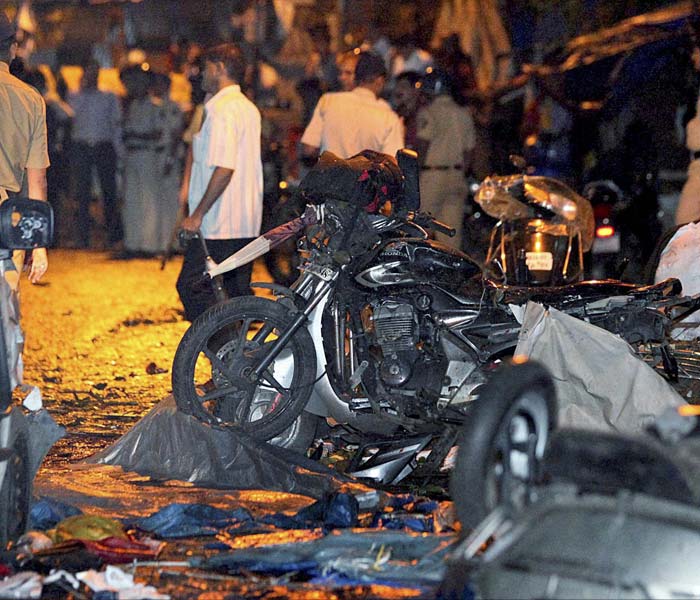
The improvised explosive devices (IEDs) used in the triple bombings were not crude but prepared with “some level of sophistication”, the government said as investigators scrambled for clues on a rain-soaked Thursday and a weary Mumbai picked up the pieces after yet another terror strike.

A day after 17 people were killed and 131 injured when synchronised blasts rocked India’s financial capital, striking the congested areas of Dadar, Zaveri Bazaar and Opera House within minutes of each other, there was no breakthrough on who was behind it.

“We will ensure no matter wherever the accused are, we will identify them and bring them to book,” Maharashtra Anti-Terrorism Squad (ATS) chief Rakesh Maria vowed, appealing for faith and trust.

In a flurry of activity, Prime Minister Manmohan Singh and Congress chief Sonia Gandhi headed for Mumbai. Home minister P. Chidambaram reached on Wednesday night and opposition leader LK Advani on Thursday morning.

Resigned, outraged or simply stoic, Mumbaikars rallied around to battle the crisis, 31 months after the Nov 26-28, 2008 terror assault, India’s worst. They waited outside morgues to claim the bodies of their kin, lined up at hospitals or packed into trains and buses to go about their daily work.

“I am a Mumbaikar and we shall not be scared by these terror attacks. Like me, lakhs of co-commuters are in the trains, buses and roads. It actually helps gives strength to each other,” Archana Shukla said as she went to work.

In Zaveri Bazaar, Mumbai’s most popular address for jewellery that on Wednesday saw its third terror strike, merchants were shocked. But said firmly they were staying put.

“What is the point in shifting base? Are other business locations safer?” asked Raju Solanki, a gold jeweller.

That was a question even experts were loathe to answer as investigators began unravelling the conspiracy behind this latest assault by yet unknown terrorists.

Various agencies, including the National Security Guard (NSG), the Central Forensic Science Laboratory (CFSL) and the National Investigation Agency (NIA) and Mumbai Police, were involved in the probe.

According to union home secretary RK Singh, the ammonium nitrate-based IEDs were “not crude” but indicated “some level of sophistication”.

A top doctor at one of the hospitals where the bodies of the dead were taken for a post mortem said an electric circuit, that may have triggered the blast, was found on one of them, leading to speculation that it may have been a suicide bomber at work.

Sources said traces of ammonium nitrate, also confirmed by Chidambaram, and fuel had been found in the explosives.

“Ammonium nitrate was used with a timer. The fact that they all took place within minutes of each other — eight-to-10 minutes — shows that it was a coordinated terror attack,” Chidambaram said.

The CCTV footage holds the key. Sources told IANS that some of the footage was marred by the rain and bad light Wednesday evening.

Hours after visiting the terror sites, Chidambaram said 131 people had been taken to 13 hospitals with injuries. He said one severed head was also found at the site that could take the death toll to 18.

Addressing a press conference in Mumbai, he admitted there was no prior intelligence input.

Quick to seize the initiative, BJP leader Advani pointed the needle of suspicion towards Pakistan.

“It is a policy failure not intelligence failure. There have been repeated attacks on Mumbai, this is a failure of policy,” Advani told reporters.

Advani quoted reports of a probable link between the blast and the Indian Mujahideen (IM) and said even if it were behind the attack it was being sustained by Pakistan.

“The last attack on our land is proved to have been engineered by the ISI (Inter-Services Intelligence),” Advani said.

“So far as India is concerned, the government of India should shed its ambivalence to terrorism,” Advani said.

Pakistan’s foreign minister comes to New Delhi for talks July 26-27 and external affairs minister SM Krishna said the terror strikes would not impact the strategic dialogue.

The timing of the attack has raised suspicions in informed strategic circles over whether the serial blasts were engineered by those who wanted to derail the peace process in the subcontinent.

Pakistanis for Peace Editor’s Note– We at Pakistanis for Peace are saddened by this loss of life and would like to let our Indian friends know that we as Pakistanis for Peace stand in solidarity with India against acts of terror.

Pak, India Talks to Mark New Beginning

By Hameed Shaheen for The Pakistan Observer

The outcome from the forthcoming July 26-27 talks between Foreign Ministers of Pakistan and India in New Delhi is expected to usher in a new beginning in the bilateral relations of both countries. The optimism is hyped by the recent statements of Pakistan Prime Minister Syed Yusuf Raza Gilani describing India as “most important neighbour” and a recent TV interview of Indian Foreign Secretary Nirupuma Rao displaying growing realization of her country for the continuity of dialogue with Pakistan. Much before these scheduled talks Pakistan’s Minister of State for Foreign Affairs Ms Hina Rabbani Khar is sure to be upgraded to full minister status.

Prior to the 2-day Delhi meetings of the Foreign Ministers on July 26-27, 2011, Foreign Secretaries of both countries will meet on July 25, 2011, in New Delhi to fine tune recommendations of two separate technical groups on trans-Kashmir trade and travel CBMS and nukes CBMs.

The additional trans-Kashmir travel and trade CBMs likely to be announced at the conclusion of the Foreign Ministers meeting on July 27, 2011, are opening of Skardu-Kargil passengers bus service, increasing the current run of Muzaffarabad-Srinagar bus service from weekly to bi-weekly duration and upping trading days from 2-day per week to 4-day a week besides making it bankable trade.

The expert level panel from both countries consisting of Ms Sehra H Akberi, DG South Asia of Pakistan and Y K Sinha JS from India is likely meet by middle of next week in Delhi.

Kashmiris strongly demand opening of Sialkot-Suchet Garh railway service for trading Sialkot industrial products to occupied Jammu and beyond. In pre-1947 era the major business market and education center of Jammu was Sialkot.

Military Puppet. Or Rising Star?

By Rubab Shirazi for Tehelka Magazine

If The unfolding political crisis in Pakistan does not upset junior foreign and economic affairs minister Hina Rabbani Khar’s elevation as full-fledged foreign minister, she appears all set to travel to New Delhi for meeting her Indian counterpart SM Krishna this month for the ministerial meeting of the resumed dialogue process. Her promotion is needed to remove the protocol hitch for the ministerial meeting.

When Khar, 34, became the minister of state for foreign affairs in February, hardly any eyebrows were raised — more so because the ceremonial position has been used since 2004 to accommodate scions of influential families in the Federal Cabinet. Khar’s entry was instead seen as a bid by the government to prioritise the economic aspect in its diplomacy.

But the news of her elevation was met with strong criticism because she was seen as being too young and raw to handle complex foreign policy issues, even though she had been part of the Cabinet since 2004. For a good part of her political career, which started with her election as member of the National Assembly in 2003, Khar has been a low-key politician.

In a country that already has an accidental president (Asif Ali Zardari) and prime minister (Yousuf Raza Gilani), it wouldn’t be a surprise if the foreign minister is also accidental. If things go as planned, she would take oath this month as Pakistan’s 26th foreign minister and bag the honour of being the first woman to hold the post. But, Foreign Office (FO) bureaucrats, who derisively refer to her as “the girl” in private, say that she is no match for most who have occupied this crucial post.

Khar comes from a privileged background, being the daughter of well-known politician Ghulam Noor Rabbani Khar and niece of infamous playboy and former Punjab governor Ghulam Mustafa Khar. The latter’s wife Tehmina Durrani wrote My Feudal Lord, which caused controversy by describing her abusive and traumatic marriage with Ghulam Mustafa and her experience of life in a patriarchal society. Despite her feudal upbringing, Khar graduated from Pakistan’s best business school, Lahore University of Management Sciences and obtained her masters in hospitality from the University of Massachusetts.

Khar’s likely appointment is coming at a time when the country’s foreign relations are not in the best of shape — the alliance with the US is withering away fast; cross-border controversies are marring Pak-Afghan bonhomie; and though the Indo-Pakistan dialogue is progressing, the Thimphu spirit is fading as indicated by recent bilateral meetings.

Even if Khar succeeds in getting the post, diplomatic observers think she will not be the real decision maker — the power would still lie with the military. Having an inexperienced person like Khar as the FO boss, who would depend heavily on bureaucracy for policy as well as administrative matters, suits the military establishment at Rawalpindi GHQ in maintaining its control over Pakistan’s foreign policy.

Unlike her predecessor Shah Mehmood Qureshi, who lost his job for taking a hardline position on immunity for CIA operative Raymond Davis (involved in fatally shooting two youth in January), Khar isn’t thought to be independent minded.

No one at the FO knows about Khar’s views on important issues like relations with the US, Europe, India, Afghanistan and about the War on Terror. She hasn’t given any interviews or delivered speeches on foreign policy ever since she moved to the FO in February, even though she was the de facto boss during this time.

Though much has been written about her meteoric rise in politics, she still remains an enigma. Her credentials for being considered for the crucial post are her two stints as minister of state for economic affairs; a brief assignment as special assistant to the prime minister on finance, revenue and economic affairs; and more lately her FO job.

No one knows Khar’s views on important issues like the war on terror, Indo-Pak relations, or the strained partnership with the US

According to her curriculum vitae, foreign affairs was not a subject of interest until lately. She avows interest in finance, economic affairs and agriculture development. But, quite contrary to her fondness for the three subjects, she runs an upscale restaurant in Lahore. Her husband Feroze Gulzar is a textile industrialist. For most of her career, Khar had been dealing with international loans and grants. Foreign Service officials, who don’t want to be named, caution that real-time diplomacy is a different ball game.

Administrative chaos at the FO, another officer says, grew under the overachieving lady, who had been promoted by the PPP government as an astute manager. Khar was responsible for economic affairs during Gen Pervez Musharraf’s regime. Economic mismanagement turned out to be the major cause of the defeat of her previous party, PML(Q), in the 2008 elections. Fearing that she wouldn’t be given a party ticket, she changed her loyalties weeks before the polls and joined the PPP.

IF SUCCESSFUL in achieving the prized foreign ministership, it would not be the first time she would be filling someone’s shoes. In 2003, she contested elections in place of her father, who couldn’t run for National Assembly as he was not a graduate; in 2009 she became the first woman minister to present the federal budget because former finance minister Shaukat Tarin was not an elected Parliamentarian.

Her inexperience aside, party colleagues say that Khar is deceptively wily and ambitious as they point to how she smartly outmanoeuvered other contenders in the race for the foreign ministry, including former law minister Babar Awan, former foreign minister Sardar Assef Ali and National Assembly speaker Dr Fehmida Mirza — all political heavyweights.

One of her weaknesses is that she isn’t a media darling. Searching online for her interviews turns up a little-known Saturday Post article, that too dated several years ago. On this count, she would turn out to be a weak and ineffectual representative of her country’s foreign policy. In her first media appearance alongside a visiting US functionary Thomas Nides, Khar was unimpressive. Foreign Secretary Salman Bashir hurriedly scripted a few lines for her to deliver before PTV cameras, but according to one official, she struggled with it. Days later, when speaking to the media alongside UK Foreign Secretary William Hague, when she was asked about the prospects of a peace deal with Afghan Taliban, Khar started speaking about a failed peace deal with militants in Swat to prove Islamabad’s commitment to peace with militants. Pakistan, she probably forgot, does not equate Afghan and local Taliban. The government has been treating the two entities differently.

Online discussion boards have been filled with negative comments on her expected elevation. “What a farce. We are at one of the most critical junctures in our foreign affairs, so we decide to hand out perhaps the most important portfolio to a 34-year-old with a degree in hospitality management!” reads a posting on a discussion platform called Pakistan Defense.

What goes in her favour is that apart from allegations by her critics of tax evasion, something normal for a Pakistani politician, she has no major controversies attached to her name.

The End of AfPak

By Scott Malcomson for The New York Times

Remember how after 9/11, Osama bin Laden’s attacks on us could be linked to almost anything, from shopping habits to the rediscovery of Western values to carbon-pricing schemes? Something similar appears to be happening with Bin Laden’s death. Jihadism sure isn’t what it used to be. After 10 years, it seems, the time has come to go home. Troops are and will be coming back to the United States from Iraq and Afghanistan. The military budget will be cut. The outgoing secretary of defense feels able to openly mock NATO because, presumably, he thinks he can afford to — because it doesn’t matter all that much. The global war on terror is being downgraded from Armageddon to something more out of Leviticus: a tricked-out police action, just as John Kerry, in this magazine, always said it should be. On Sunday, Helene Cooper and Mark Landler reported that “American success in the counterterrorism campaign would seem to bolster arguments for a swift withdrawal from Afghanistan.” By Tuesday morning, they were reporting that President Obama would announce his withdrawal plans on Wednesday. Meanwhile, a Harris poll revealed that 51 percent of Americans and 54 percent of Britons believed “the death of Bin Laden meant it was time to bring troops from their countries home.”

That isn’t quite how it looked when I was in Washington a few weeks ago and spoke with about a dozen current and former American officials and with Pakistanis. The impression they each gave was that American withdrawal would be speeded not because of Bin Laden’s death but because of Pakistan’s reaction to it. After the initial shock, Pakistan’s (government-influenced) press latched onto a narrative of “national humiliation” as a result of the American raid, rather than, say, one of jubilation at the demise of a killer whose fantasies have brought Pakistan nothing but misery. A younger generation of military officers — Pakistan is dominated by its military — seemed at times about to revolt in reaction to the insult to Pakistan’s sovereignty. And the Inter Services Intelligence (I.S.I.), Pakistan’s ubiquitous military intelligence outfit, reacted, as was subsequently reported, by scouring the neighborhood around Bin Laden’s house for … evidence of how the C.I.A. found out he was there, and to determine who had been helping the Americans.

Finally, the Pakistan government did not respond to the Bin Laden raid by pressing its new advantage and rolling up terrorist networks across the land. No, it did not do that at all. So Secretary of State Hillary Rodham Clinton and Admiral Mike Mullen, chairman of the joint chiefs of staff, went to Islamabad and on May 27 presented a list of demands. These included the arrest or elimination of Ayman al-Zawahiri (of Al Qaeda), Ilyas Kashmiri (a long-sought semi-free-agent and former Pakistani military man), Sirajuddin Haqqani (of the AfPak-border based Haqqani network) and Atiya Abdur Rahman (Al Qaeda), and the shutting down of bomb factories in Pakistan.

By June 3, Kashmiri was dead. But this promising start now seems isolated. The other wanted men are still at large. The bomb-makers might well be getting tipped off. The revolt by younger Pakistani officers seemed only to get worse.

In short, the U.S. and Pakistan are really not getting along. Among members of Congress, beating up Pakistan has become ritualized; Senators McCain and Rogers were doing it again on the Sunday programs. I wondered: How many times can Pakistan be abandoned? As Bruce Riedel, a former C.I.A. officer and the head of President Obama’s first major AfPak review, shows in his excellent new book, “Deadly Embrace: Pakistan, America and the Future of Islamist Jihad,” embrace and abandonment have formed the pattern of American-Pakistani relations since the majority-Muslim nation was formed out of the breakup of British India in 1947. Harry Truman’s lack of interest yielded to Dwight Eisenhower’s enthusiasm for Pakistan as an anti-Communist bulwark and a base for spying on the Soviets. The relationship was and remained built around security and intelligence. Lyndon Johnson reversed course when India and Pakistan went to war in 1965; he cut off both, but Pakistan had, unlike India, been a strong ally, and it felt betrayed. This set the pattern: ultimately, Pakistan was tactical and India was strategic.

Now, after almost 10 years of intense engagement, Pakistan and the U.S. appear set for another split; at least that was the consensus among the officials I spoke with. There was a pervasive sadness in these conversations. It was due in part to the sheer human effort that has gone into the U.S.-Pakistan relationship. A lot of spies and soldiers and diplomats and politicians have put years of their lives into making “AfPak” work, which requires making Pak work. A lot (not all) of that effort seems to be going down the drain, along with much of the billions of taxpayer dollars that financed it.

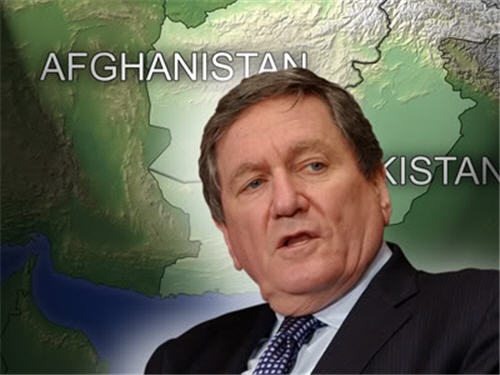
There is also personal sadness in that the AfPak effort was associated toward the end with Richard Holbrooke, whose death late last year brought the foreign-policy world up short. Holbrooke did not take great care of himself, so objectively his death could not be entirely a surprise, and among people over 70 the reactions I heard were more of the well-what-did-you-expect variety. But in the 35-to-65 range it was different. Holbrooke represented, very attractively, the assertion of youth and hope against experience. Even at 69 he had a distinct eagerness, even boyishness, alongside the baritone gravitas. He attracted bright young people. He could be young and old at the same time. Once he was gone, that sort of generational bridging disappeared. (Older figures are few in this administration.) The sense of continuity (as well as of optimism) is weakening. There’s something missing now.

There was also a sense of ideological loss of direction. For all their differences, Bill Clinton and George W. Bush shared a tangible optimism about American governmental involvement abroad. President Obama is different, and even if he weren’t the national mood is. The people’s representatives in Congress are vying to bring troops home faster, and if there is an internationalist remaining in the House he or she is keeping quiet. The Republican candidates for president seem to have settled on anti-war isolationism as a winning position. Obama’s great strength in foreign policy — his ability to repackage, and optimize, American power in a multipolar world — is the strategy that dare not speak its name, or it will bring accusations of “declinism.”

Finally, there is the tremendous sadness of Pakistan itself. The country doesn’t have enough water. It lacks the electricity to develop its industries. Literacy, by some reckonings, is actually declining. Democracy has been restored but the government is hardly stable. The one truly semi-stable institution, the military, is struggling against itself, just as Pakistanis are dividing, and attacking each other on an increasing scale (which is saying something).

But, in a way, the saddest thing of all, from a foreign-policy point of view — Pakistani or American — is that the one great card Pakistan has to play is to make itself a problem. Pakistan formed itself into a regional player through building its army, running terrorist proxies in Kashmir and Afghanistan, indulging in enough Islamist millenarianism to make itself frightening, and developing nuclear weapons. None of these strategies have a good future. But in the absence of a long-term committed relationship — what Holbrooke promoted as a “strategic partnership” — with the United States or, perhaps, with China, Pakistan is left with fear as its most successful export.

There was some discussion in Washington as to whether Mullah Omar’s name was on that list that Clinton and Mullen presented in Islamabad. It almost doesn’t matter. The doubt itself is the message: Pakistan stays valuable because it has terrorist “ties” or “links” or “proxies” or whatever. As national existential dilemmas go, Pakistan’s is particularly nightmarish. The U.S. will leave them to it — abandonment again — and choose the happier relationship with India. Secretary Clinton will be at the regional forum of the Association of Southeast Asian Nations in late July, helping to take her longtime initiative of eastward Indian engagement, and the integration of the United States into East Asian political structures, to a new level. This is part of a long-term strategy of accommodating the rise of China and of India.

And Pakistan, after 10 years, will be left behind; as the line in Washington goes, “There is no good solution.”

Pak Sailors Thank India, On Way Home

Mateen Hafeez for The Times of India

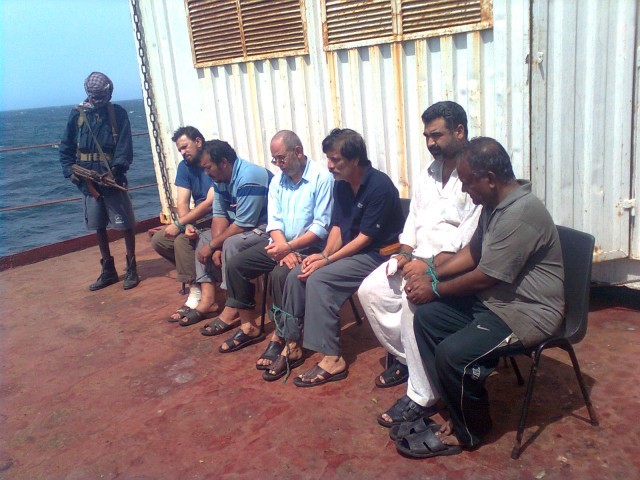
Five Pakistani hostages, who were held captive by Somali pirates for five months and rescued by the Indian Navy, will finally leave for Pakistan on Monday. The hostages had been languishing at Yellow Gate police station after their ‘consular access’ process got stuck in diplomatic channels of the two countries.

TOI was the first to report about the hostages’ plight and the problems in the consular access programmme. A team from the Pakistani High Commission then landed up at the Yellow Gate police station and completed the formalities. Earlier, this was scheduled to be done at Tihar jail in Delhi as the hostages were wrongly labeled ‘prisoners’. The men are Aurangzeb Balloch, his brother Sajjad, Farhad Aalam Khan, Mohammed Umair and Lal Bakhsh.

“We are excited to go home. There were some problems in our travel to Pakistan but the Yellow Gate police took care of us properly. We have no words to thank the Indian police and those who helped make our journey to Pakistan easy,” said Aurangzeb, a resident of Karachi. The other hostages were also jubilant when asked about their return to Pakistan. “In the last three months we saw the lanes and bylanes of this city. It’s very similar to Karachi. The people, places, food and roads here are similar to Karachi. Initially, we were afraid that we may be kept in India, but now we have a positive feeling about this country and its people who loved us,” said Sajjad, another hostage. “We watched the World Cup matches between India and Pakistan in the police station. When India won the final against Sri Lanka, we were happy. We never faced any discrimination here,” added Lal Bakhsh.

The hostages were part of an Iranian fishing trawler, Al-Murtuza. The ship was hijacked by AK-47 borne Somali pirates from the Ballochistan sea in November. “We would get insufficient food after we were captured by the pirates,” added Farhad.

The five men were provided food, chai and clothes. Sometimes they managed to get cigarettes. The policemen even gave their phones to the hostages so they could speak to their families in Pakistan. To speed up the process to send them home, Ansar Burny, former human rights minister in Pakistan, filmmaker Mahesh Bhatt and Abraham Mathai, state minorities commission vice-chairperson, worked together. “We spoke to Gurudas Kamat, the Union minister of state for home and he arranged consular access. The process was speeded up due to his efforts,” said Bhatt.