Posts Tagged ‘ Indian aid to Pakistan ’

Pakistan’s Strange Response Towards Indian Aid offer

by Omer Farooq Khan for The Times of India
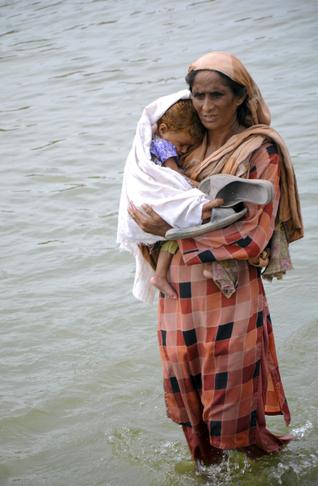
The worst floods in Pakistan’s history provided a good opportunity for both the South Asian nations to come closer. Accepting Indian aid offers half-heartedly and that too after US insistence, Pakistan has given an impression that it is convinced that its policy on India cannot change.

Pakistan’s initial response to the Indian offer of five million dollars was a positive one but then it was unsure how to respond. It took several days for Pakistan to finally accept the offer, saying that the aid had to come through the UN. Now, a total of $25 million Indian assistance for flood relief efforts in Pakistan has to be spent by the UN.

Pakistan’s foreign minister Shah Mehmood Qureshi had said that the delay was due to the sensitivities involved in the relationship with India. Even, a section of policymakers, conspiracy theorists in media and some India-centric elements within the Pakistani establishment blamed India for opening floodgates of its dam to inundate Pakistan’s cities and towns. While building public opinion, they did not care that their contention was technically wrong. The fact is that the rivers that caused destruction in Pakistan do not originate in India.

Some defence analysts argue that Pakistan’s strange response towards India’s aid offer was meant not to get obliged. “Pakistan reacted politically towards Indian humanitarian gesture. The destruction is so colossal that petty politics must be avoided. Pakistan asks for help and when it is offered by a neighbour, its ego comes its way. The main hurdle was that Pakistan did not want to be obliged,” argues defence analyst General Talat Masood.

Kamran Shafi, Dawn’s columnist says that Indian-centric approach within the security establishment and intelligence agencies was the main predicament that the government accepted Indian offer half heartedly. “Values and wisdom demand that politics must be kept aside at time of tragedy. Pakistan needed to have warmly welcomed neighbour’s goodwill gesture.”

India and Pakistan have made major efforts in recent months to build confidence in their relations, which were badly strained by the Mumbai 2008 terror attacks that India blamed on militants from Pakistan. If Indian civil society, volunteers and NGO’s were allowed to do relief work in the flood affected areas, this could have been an ideal confidence building measure in the relations of the two countries.

Certainly, it would have served the spirit of Thimphu where Pakistani PM Yusuf Raza Gilani and his Indian counterpart Manmohan Singh tasked their top diplomats to create CBMs. An opportunity is still not lost if governments, media and civil societies in both the countries come forward and create enough space to use this calamity into an opportunity.

-Editor’s Note for Pakistanis for Peace- The writer is spot on with his analysis of Pakistan’s aid offer from India. During times of a humanitarian crisis of biblical proportions, its political response was petty and irresponsible to its citizens. Furthermore, half heartedly accepting several days after the response does little to build on the goodwill. Either accept it right away with gratitude (our advice) or reject it outright. It did neither and so was ineffective in either cause. The politicians of Pakistan continue to show their incompetence by ineffectively managing the affairs of the country both domestically and internationally.
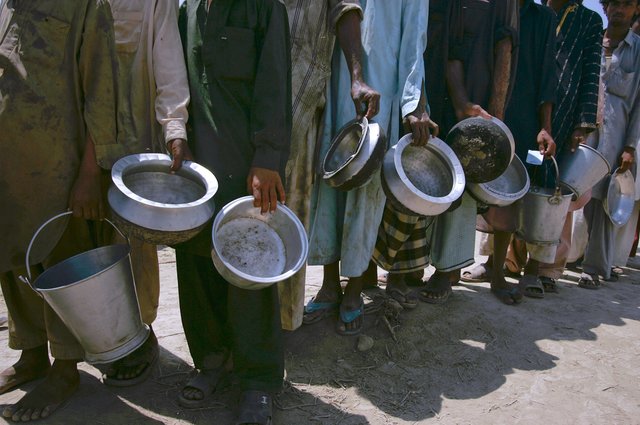
India, Pakistan Can’t Break the Ice, Even in Hour of Tragedy

Reported by Sanjeev Miglani for Reuters

Pakistan’s catastrophic flood continues to boggle the mind, both in terms of the human tragedy and the scale of the damage it has wrought, and even more so over the longer term. One official has likened the disaster to the cyclone that devastated what was once East Pakistan, setting off a chain of events that eventually led to its secession and the birth of Bangladesh.

Not even that spectre, raised by Pakistan’s ambassador to Britain, can however dent the steadfast hostility between India and Pakistan. For a full three weeks as the floods worked their way through the spine of Pakistan from the turbulent northwest to Sindh in the south, Islamabad made frantic appeals to the international community not ignore the slow-moving disaster, and help it with emergency aid, funds. But next-door India, best-placed to mount a relief effort probably more because of the geography than any special skill at emergency relief, was kept at arm’s length. An Indian aid offer of $5 million, which itself came after some hesitation and is at best modest,was lying on the table for days before Pakistan accepted it. ā€There are a lot of sensitivities between India and Pakistan … but we are considering it very seriously,ā€ a Pakistani embassy spokesman told our reporter in New Delhi earlier this week. Things appeared to have moved faster only after Indian Prime Minister Manmohan Singh called his Pakistani counterpart Yusuf Raza Gilani expressing sympathy and reminding him of the offer of aid. Millions of Pakistans meanwhile continued to struggle for food.

To some extent, Pakistan’s hesitation in accepting aid from India is understandable. India is the traditional enemy. It is also the bigger country of the two. And over the last two decades it has become easily the more prosperous entity, courted by the world’s industrialists while Pakistan is ā€œhaunted by the world’s terroristsā€, as columnist Vir Sanghvi writes in the Hindustan Times. A Pew poll that we wrote about a few weeks ago showed how deep-seated these Pakistani fears are: a majority of those polled said they considered India to be the bigger threat than al Qaeda or the Taliban, despite the violence they have suffered at the hands of the militant groups over the past few years.

As Sanghvi writes:

But, to be fair to the Pakistanis, let us accept the position that decades of hostility between our two countries have led to a situation where the Pakistanis simply do not trust us. Let us also accept that they are so resentful of India that even in their hour of greatest crisis when thousands of people have died and millions are homeless, they will still spurn India’s hand of friendship. And let us grant them their claim that given our history, they are justified in being suspicious of India.

But then, you have to wonder, if the two nations cannot even keep up basic neighbourly ties such as offering aid and commiseration at times of natural crises, what chances they can ever come to a peace deal that will demand much more from them ?

It was pretty much the same in 2005 when the earthquake struck Pakistani Kashmir and the authorities struggled to provide aid to the affected. And Indian aid offer was initially ignored, later blankets from India were accepted. But even then Pakistan had people cut out the label that read ā€˜made in India’ on each blanket.

Indeed, some Pakistani writers are already criticising the government of bringing dishonour to the country by accepting Indian assistance. Commentator Shireen M. Mazari in a piece entitled ā€œWhat Have We Becomeā€ says the Pakistani government accepted the Indian offer for help under pressure from the United States and that it was a matter of shame. By taking Indian aid, Pakistan had let the people of Kashmiri down just when they had risen in revolt against Indian forces.

ā€œThis money has the blood of Kashmiris on it and one wonders how our Kashmiri brethren must be feeling as they face the bullets of Indian forces every day and see us taking Indian ā€œaidā€,ā€ Mazari wrote.

Kashmir, then, can’t be far from any discourse relating to India and Pakistan. It is the core dispute at the heart of 60 years of difficult ties, says Pakistan and must be resolved before any normalcy can take place. India doesn’t even consider the territory to be disputed, so the argument, at least in public, hasn’t changed much in over half a century.

For the 20 million affected by the flooding in Pakistan, and facing a future that would daunt any of us, Kashmir must, at the moment, be a distant thought.