Posts Tagged ‘ Islamabad ’

India’s Own Operation Geronimo?

By Ashok K Mehta for The Wall Street Journal
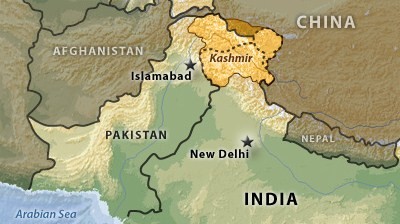
Every time there is a Pakistan-sourced terrorist attack in India, the reaction in the world’s largest democracy is predictable. Demands range from “hot pursuit” of the terrorists across the border to cries for all-out war. In the last decade, analysts have proposed other alternatives: surgical air strikes, a limited armored offensive and covert operations. The latter option seems especially inviting after U.S. special forces took out Osama bin Laden last Sunday.

These demands for strong action are in stark contrast with the way the Indian government has responded to these attacks: pursuing bland diplomacy. The starker this contrast gets, the more complicated it will be for New Delhi to implement a foreign policy that is assertive, yet careful and deterrent, in the future. Instead, if the government displays the requisite will and capabilities for a targeted strike today, it can avoid the need for an actual strike later.

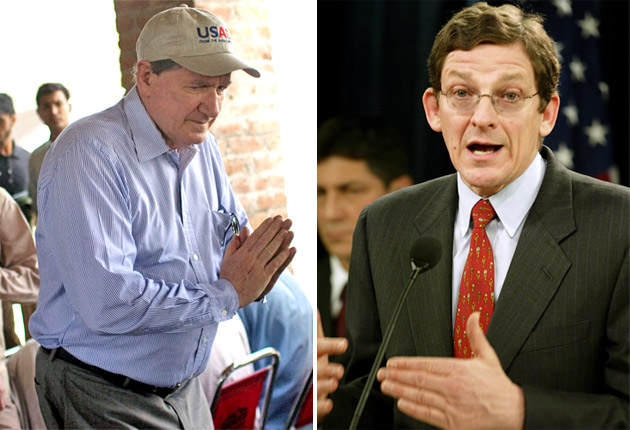
History offers some perspective. After the Pakistani-based Lashkar-e-Taiba (LeT) and Jaish-e-Mohammed attacked New Delhi’s Parliament in December 2001, the U.S. had to step in quickly to prevent armed clashes between the arch rivals. In May 2002, following yet another terrorist attack and after months of coercive diplomacy by both New Delhi and Washington, Pakistani dictator Pervez Musharraf offered a very strong assurance that his country’s territory would not be used to host attacks against India. This assurance was conveyed to New Delhi by then-U.S. Deputy Secretary of State Richard Armitage, who said that terrorism emanating from Pakistan would end “permanently, irreversibly, visibly and to the satisfaction of India.”

New Delhi bought that assurance and started to reach out to Islamabad diplomatically. Yet its pattern of responses since 2002 has led to six more terrorist attacks originating in Pakistan. All Islamabad has done is give similar reassurances.

After the attack on Mumbai in November 2008, India found itself in the same trap. It issued the usual protests accompanied by vague threats of retaliation and called off the dialogue that had started a few years ago. But Islamabad denied any state complicity. At that point, India’s strategic-affairs and military community noted that New Delhi had to raise Pakistan’s costs of encouraging cross-border terrorism.

However, by 2009, the Manmohan Singh government’s energies were focused on sending dossiers of evidence to Islamabad, pointing to proof of LeT’s hand in the Mumbai attacks. Pakistan’s civilian government stalled on them. Still, Mr. Singh staked his reputation on trying to start a dialogue. Earlier this year it began, most visibly at the sidelines of the cricket world cup.

These diplomatic back-and-forths have not yielded results. Despite playing nice, Islamabad has snubbed its neighbor’s friendliness. Last week, Pakistan’s government called India’s demand for the Mumbai 2008 suspects “familiar and outdated.”

What should New Delhi do then? Even with the world’s fourth largest military, India has failed to deter Pakistan’s cross-border terrorism. Now, the success of America’s Operation Geronimo in killing bin Laden has whetted its appetite to do more. Last week, when asked if India could pull off a similar mission, India’s armed service chiefs replied in the affirmative.

This could well be bravado on the chiefs’ part, because India suffers from fundamental deficiencies. For one, India’s political leadership has been risk-averse. Even before the two sides fought a limited war in Kashmir in 1999, New Delhi had already announced that it would never cross the Line of Control, the de facto border. This tied the Indian army’s hands when Pakistan crossed this amorphous line and claimed Indian soil as its down. More broadly, India has a history of strategic restraint, which means its diplomatic and military strategy hasn’t been focused on assertively achieving select goals.

As a result, India has invested in neither the legal architecture nor the physical capabilities to pull off an Operation Geronimo. For instance, U.S. counterterrorism policy declares that terrorists in breach of U.S. laws who are harbored by any state will be brought back for prosecution through “induced cooperation” and, when necessary, force. India needs something like this. Such laws would give its counterterror operators legal cover as well as set the ground for dealing with other gray legalities in the war on terror.

Then there’s the question of what intelligence and arms India can put on the ground. Its human intelligence across the border and experience in foreign clandestine operations is weak. Unlike the U.S.—which probably maintains an estimated 3,000-4,000 intelligence operatives in Pakistan—India has been scaling back its intelligence infrastructure inside that country for the past 15 years. In the late 1990s, then-Prime Minister Inder Kumar Gujral consciously dismantled this infrastructure as part of a new doctrine for peace, a grave strategic error.

Equipment- and training-wise, too, India falls short. Indian commandos freed the Mumbai hostages with much clumsiness over a prolonged 72-hour operation in November 2008, making some wonder how they would operate in alien environments.

None of this is to suggest that India should prosecute an operation similar to Geronimo in coming months. But being ready for one is necessary. It sends a strong psychological deterrent to those in Pakistan’s intelligence services who may sympathize with and assist the likes of LeT—just like possessing more tanks and fighter jets deters a conventional military threat. It suggests to Islamabad that New Delhi has the necessary political will.

Preparing for such small operations can prevent larger debacles in the future. Unless Pakistan’s military-jihadi complex is completely dismantled, it can still pose a threat to India. And the more that threat looms large and the less India prepares to stay ahead of it, there could come a day when a big terrorist attack makes India’s electorate—infuriated with its government’s bland version of diplomacy—scream for blood.

Political pressure could then compel an Indian prime minister to hurriedly send in a team of commandos without any direction. Worse, it could hurl the subcontinent into full-scale war.

Mr. Mehta is a retired major general of the Indian Army and founder member of India’s Defence Planning Staff.

Pakistan’s Man in Washington

 By Chris Frates for Politico

 As Pakistan’s top Washington lobbyist, it’s Mark Siegel’s job to convince U.S. officials not to take out their anger on the country despite the fact that Osama bin Laden spent at least five years living in relative comfort outside Islamabad.

It’s not an easy sell.

Lawmakers from across the political spectrum wonder aloud how the world’s No. 1 terrorist could be living in plain sight unbeknownst to the Pakistanis. Siegel has to make the pitch that it’s in America’s national security interests to continue its relationship with Pakistan and to keep the billions of dollars in foreign aid flowing.

It’s a message that Siegel’s firm, Locke Lord, is getting paid good money to sell; the firm brings in almost $1 million a year representing Pakistan.

In addition to Siegel, the firm has about half a dozen lobbyists representing the country including Harriet Miers, an aide to former President George W. Bush and a one-time U.S. Supreme Court nominee.

Siegel is uniquely positioned to make the country’s case to skeptics on the Hill. He’s been friends with Pakistani President Asif Ali Zardari’s family for almost three decades and has a direct line to Islamabad.

“The Pakistanis insist to me that they were not aware that Osama bin Laden was at that venue. The president made that very clear to me,” Siegel told POLITICO after speaking with Zardari this week. “I think if they had known, they would have been happy to nab him themselves.”

His connection to Zardari isn’t lost on those he lobbies, like House Homeland Security Chairman Peter King, who met with Siegel on Tuesday.

“It wasn’t so much what Mark was saying to me on Tuesday, it was what I was saying to him knowing, or feeling confident that it was going to go directly back to the president,” said King (R-N.Y.). “There is a real question of credibility and trust and faith. You can’t have the No. 1 mass murderer of Americans living in plain view in Pakistan all these years while Pakistan is claiming to be our ally and getting $3 billion a year.”

Pakistan, King said, must investigate and credibly explain how bin Laden was able to go undected and demonstrate that its intelligence services and military have not been penetrated by al Qaeda.

“Mark’s basic job is almost to tread water, to keep everything afloat until something can be done,” King said. “I think he’s trying to prevent something from happening too quickly to have the relationship severed. He wants to make sure that he keeps it together and so you can have extensive talks between the two governments.”

But King’s not the only one critical of Pakistan these days.

The Obama administration – which didn’t give its ally a heads up that Americans would be swooping into their country to take out bin Laden for fear of leaks – has been describing the relationship between the two countries with the ambiguous “it’s complicated” tag usually reserved for Facebook profiles.

And Senate Armed Services Chairman Carl Levin told ABC News Thursday that he thinks high-level Pakistani intelligence knew of bin Laden’s whereabouts and he has “no doubt” the country knows the location of other top-level targets.

“None of the people on the Hill are suggesting to me that anybody in the civilian government knew that Osama was there,” Siegel said, drawing a distinction between Zardari and the country’s military and intelligence branches.

Tony Podesta, a lobbyist who represents Egypt, knows something of representing a vilified client that is nevertheless a U.S. military ally in an unstable part of the world.

“You want to take it back to the long term strategic interests of the U.S. and to facts rather than supposition. It makes no long term strategic sense for any kind of reckless decisions to be made at this moment,” Podesta said. “That’s where he’ll leave it.”

Siegel has been friends with Zardari’s family for almost three decades, having met Zardari’s late wife, Benazir Bhutto, in 1984 when a mutual friend asked him to host a dinner party for her. The two would go on to write a book together and when Bhutto became prime minister, Siegel represented her government.

This week, Siegel said he has been reminding lawmakers that Pakistan has been a strong ally and that President Barack Obama and other administration officials have praised the country’s cooperation in fighting al Qaeda and terrorism. Pakistan itself has been a victim of terrorism – 30,000 civilians have been killed by terrorists in the last decade, he added.

Even before this week’s killing of bin Laden, Locke Lord has been active on the Hill. In February and March, firm lobbyists accompanied the Pakistani Ambassador Husain Haqqani on meetings with House Speaker John Boehner, Senate Foreign Relations Committee Chairman John Kerry, House Armed Services Committee Chairman Buck McKeon, House Intelligence Committee Chairman Mike Rogers, and Kay Granger, chairwoman of the House appropriations subcommittee on state-foreign operations.

Last year, the firm successfully lobbied for $1.5 billion in economic and social aid over the next five years — a sum that has to be reauthorized each year. The firm is also lobbying to secure foreign aid and create duty-free “reconstruction opportunity zones” inside Pakistan’s tribal lands and Afghanistan.

Raid Sparks Question: Is Pakistan Doing Enough?

As Reported By CNN

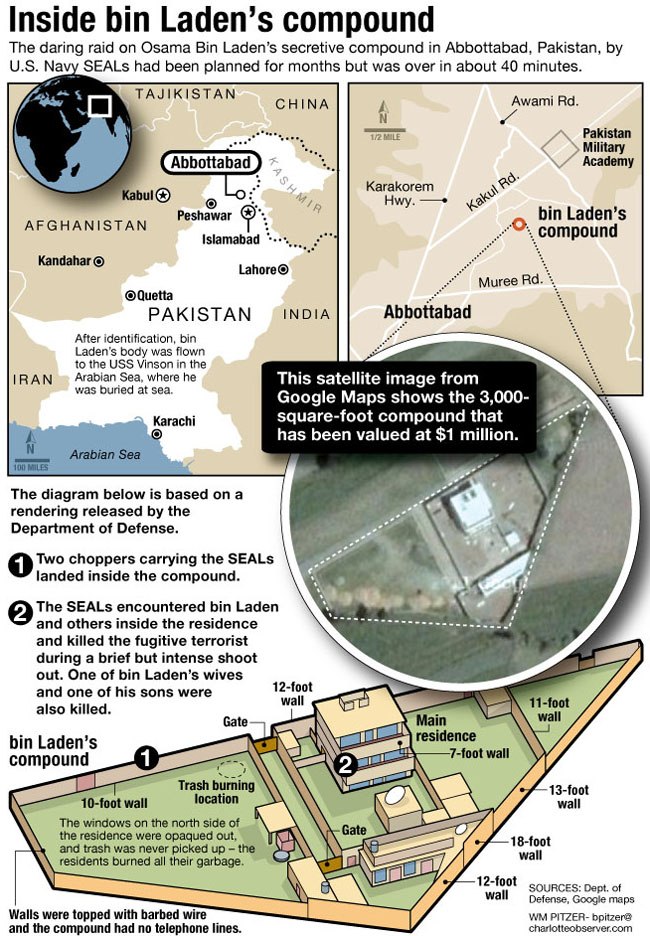
The United States wants answers from Pakistan about how Osama Bin Laden could have lived in that country — near a major military base not far from the capital — without the government knowing.

The United States is asking Pakistan for information on who built and owned the compound where bin Laden lived, two senior U.S. officials said Wednesday. The United States also wants to know about security at the compound, in the city of Abbottabad.

Pakistani government officials have insisted that they did not know Bin Laden’s whereabouts. They reacted angrily to news that CIA Director Leon Panetta told U.S. legislators in a closed-door hearing that “either they (the Pakistanis) were involved or incompetent. Neither place is a good place to be.”

“What worse statement can come than that we heard from Panetta?” a senior Pakistani intelligence official said. “I am afraid this statement is totally regrettable. (Panetta) of all people knows how much we have been doing.”

The official, who did not want to be named, said his country had been generously sharing intelligence with their American counterparts.

“We have been sharing everything with them, but they have been selectively sharing with us,” the official said. “They are entirely dependent on what we provided them. Why were details (of the operation to kill bin Laden) not shared with us?”

Pakistan has argued that it has provided valuable intelligence information and worked with the United States to capture or kill numerous al Qaeda members and other Islamic extremists.

Yet the questions around bin Laden’s presence in Pakistan has exacerbated an already rocky relationship between the two nations.

Many Obama administration officials, lawmakers and observers from across the political spectrum want to know how bin Laden — based at a compound in the military garrison city of Abbottabad — could have eluded Pakistani capture, or whether the government or elements of it harbored bin Laden.

They want to know whether Pakistan is firmly backing the fight against terror or is supportive of militants fighting against troops in Afghanistan.

In Islamabad Tuesday, Marc Grossman, the special U.S. representative on Afghanistan and Pakistan, met with Pakistan’s president Asif Ali Zardari, the head of the ISI military intelligence Gen. Ahmed Pasha, and military chief Gen. Ashfaq Kayani. During that visit, which was scheduled before the killing of bin Laden, Grossman discussed the operation with the officials, the State Department confirms.

Those officials say the Pakistani officials expressed surprise that bin Laden was living at the compound and the U.S. officials tell CNN they are taking that at face value until more information is available.

The United States has a “complicated but important relationship” with Pakistan, White House press secretary Jay Carney said Tuesday.

Carney told reporters that U.S. officials need to learn more about the “support network” that sustained bin Laden in Pakistan. But he also warned against “tarring” everyone in Pakistan’s government because of the revelation that bin Laden had been living so close to Islamabad.

There has also been “a great deal of important cooperation” in the fight against Islamic extremism, he said. “The idea that these kinds of complications exist is not new.”

But Rep. Peter King, the New York Republican who is chairman of the Committee on Homeland Security, said “this can’t be allowed to go on.”

In comments Tuesday at a House subcommittee hearing on Pakistan, King noted that bin Laden’s compound was near a headquarters for the Pakistani intelligence services.

“There are two possibilities and one answer,” King said. “One is that it was a direct facilitation by elements of the Pakistani government, or Pakistani intelligence is entirely inept, and that has not proven to be the case over the years.”

According to two sources who were in the closed-door briefing with Panetta Tuesday on Capitol Hill, the CIA director echoed King’s concerns.

Panetta made clear, the sources said, that he and other administration officials are trying to get to the bottom of which it was — involvement or incompetence — on the part of the Pakistanis.

In an interview with TIME magazine, Panetta explained why the Pakistanis were not told of the bin Laden mission “It was decided that any effort to work with the Pakistanis could jeopardize the mission,” he said. “They might alert the targets.”

At King’s hearing, Seth Jones of the Rand Corporation told the panel that bin Laden’s presence in Pakistan showed that “at the very least, there has not been a high priority in targeting senior al Qaeda leaders” in the country.

“Based on the threat streams coming from this area, those interests have to change in my view,” Jones said. Another terrorism expert, Frederick Kagan of the American Enterprise Institute, said mistrust between the United States and Pakistan runs both ways, with Pakistani officials fearful that the United States will abandon the region after eliminating bin Laden.

“It is essential that we find ways not only to communicate our frustration to Pakistan,” Kagan said, but also to say “we’re not leaving.”

The United States has regarded Pakistan as a top ally in the fight against the Taliban, al Qaeda, the Haqqani Network and other Pakistan-based militants who have launched attacks against international and Afghan troops in Afghanistan. At Tuesday’s hearing, experts also identified Lashkar-e-Taiba as a major emerging threat from Pakistan to the Indian subcontinent and beyond.

According to the U.S. Government Accountability Office, the United States has provided $18 billion in foreign assistance and reimbursements to Pakistan, two-thirds of which are security-related.

The administration and lawmakers have praised the Pakistanis for their anti-terrorism efforts, but at the same time some lawmakers suspect the country hasn’t been robust enough in going after terrorists. Some say elements of Pakistan’s intelligence services — the Inter-Services Intelligence or ISI — have close ties with militants.

Sen. Dianne Feinstein, the California Democrat and chairwoman of the Senate Intelligence Committee, agrees that they have been “good at going after some terrorists” but have “very subtly walked both sides of the street.”

“That’s of concern to many of us, I think, because you have to declare yourself,” she told reporters, noting that the issue of Pakistan will be addressed by her committee.

Denis McDonough, who is President Barack Obama’s deputy national security adviser, told CNN that despite legitimate questions about what Pakistani authorities knew, the United States needed to maintain the relationship.

“We obviously recognize that nobody has sacrificed more in this war against al Qaeda than the Pakistanis,” McDonough said. “Al Qaeda had declared war, in fact, on the Pakistani government, have threatened and continues to threaten to try to get their hands on nuclear material in that country. … So they obviously have a lot at stake in this fight. So we’re going to continue to work with them and continue to try to partner with them against al Qaeda, because we recognize that it’s not only in our interests, but in their interests.”

Asked if the U.S. funding to Pakistan should continue, McDonough said such investments bolster U.S. security.

“We’ll continue to try to work with them to train, to try to target the common threat that we face from al Qaeda,” McDonough said, adding: “Nobody has greater concern about our ability to … carry out the fight against al Qaeda than the president. We’re going to continue to do that, either with our Pakistani friends or alone. But this is too big a fight for us to give it up.”

McDonough also said he agreed with the reported quote by Panetta that the United States decided not to share intelligence with Pakistan in the run-up to the Monday raid that led to bin Laden’s death because of fears of a leak. Sen. Richard Lugar, the top Republican on the Senate Foreign Relations Committee, also cited concern that some Pakistani officials might alert bin Laden.

“This is one reason we did not inform the Pakistanis of our actions,” Lugar said, while noting “there were probably many who were very uncomfortable about the presence likewise.”

The Pakistani government on Tuesday “categorically” denied reports that its leadership “had any prior knowledge” of the U.S. operation against bin Laden

One ISI official denied any complicity in hiding bin Laden, saying one failure and embarrassment doesn’t negate its “track record” of capturing more al Qaeda members than anyone else.

“Yes, we did fail to locate him. Yes, we are embarrassed. But that does not mean we are incompetent and straddling the fence,” the official said. “Had we known that OBL was there we would have raided it and handed him over to the U.S. to silence the critics talking about the complicity of the ISI.”

The United States is reviewing intelligence seized in the compound to determine whether bin Laden received support inside Pakistan, a senior U.S. official told CNN. This comes amid discussions in Washington over the extent of the Pakistani intelligence service’s knowledge of his whereabouts and whether it provided him sanctuary.

Lugar was asked in Washington why taxpayers should support money for Pakistan.

“It’s a very complex country. A very complex set of officials,” the Indiana senator said. “To try to obtain perfection in terms of who the recipients ought to be is out of the question. It’s a question of if there are goals we can achieve if we have some accountability of the money.”

Former Secretary of State Condoleezza Rice told CNN on Tuesday that Pakistan has been an “important partner in counterterrorism cooperation and we’ve had very important cooperation from them.”

But she questions how bin Laden could “hide in plain sight in that kind of compound without the knowledge of high-ranking officials.”

“We have captured many, many al Qaeda operatives in Pakistan, including Khalid Sheikh Mohammed, so Pakistan has been a cooperating counterterrorism partner,” Rice said, making reference to the mastermind of the 9/11 attacks. “But everyone knows that there are elements within Pakistan that are still tied to extremism, that has been a concern, and it is very important now that the Pakistanis take a hard look at how this possibly could have happened,”

Mark Quarterman, director of the Program on Crisis, Conflict, and Cooperation at the Center for Strategic and International Studies and an expert on Pakistan, said there have been strong differences between Washington and Islamabad over U.S. drone strikes in the tribal region and calls to remove CIA operatives in the country. The bin Laden operation and the issues surrounding it add to the tension, he said.

“I would not be surprised if there are questions on Capitol Hill about continued level of support to Pakistan, about the U.S. relationship with Pakistan and the consideration of the nature of that relationship and how we handle it going forward,” he said.

The Pakistan government and the ISI supported the Taliban when it controlled Afghanistan during the 1990s, but the government broke ties with the Taliban after the 9/11 attacks. American officials have consistently indicated that there are rogue ISI elements supportive of militants.

One reason Pakistanis also have supported militants in the tribal region is that the fighters are seen as serving as a bulwark for Pakistani interests. That includes a focus against the influence of longtime rival India in Afghanistan, Quarterman said.

“The Pakistanis are hedging their bets,” he said. “They know the United States isn’t there to stay.”

Jamie Metzl, executive vice president of the Asia Society, said the onus will be on Pakistan to do a thorough investigation to assess what happened with bin Laden.

“If Pakistan denies any official involvement with bin Laden, it will be difficult to prevent a backlash among members of the U.S. Congress who will believe that Pakistan is playing a double game,” Metzl said.

Metzl also says Pakistan’s fear is that India will increase influence in Afghanistan and surround Pakistan, and that calculation has led Pakistan to keep militants under its sway.

Mike Rogers, a Michigan Republican who is chairman of the House Select Intelligence Committee, said Pakistan and the United States have “a very funny relationship.”

Pakistan dispatched “troops into the tribal areas at our request” and “took thousands and thousands of casualties trying to fight Taliban and al Qaeda elements,” Rogers said on CNN’s “American Morning.”

“There are some concerns about their ISI being penetrated, their intelligence services being penetrated, but at the same time,” he said, “we’ve got to have them.”


-CNN’s Joe Sterling, Jill Dougherty, Elise Labott, Zain Verjee, Ted Barrett, Elise Labott, Alan Silverleib, Tom Cohen and Nick Paton Walsh contributed to this report

Pakistan’s president denies harboring bin Laden

By Nahal Toosi and Zarar Khan for The Associated Press

Pakistan’s leader denied suggestions that his country’s security forces sheltered Osama bin Laden as Britain demanded Tuesday that Islamabad answer for how the al-Qaida chief lived undetected for six years in a large house in a garrison town close to the capital.

But in a nod to the complexities of dealing with a nuclear-armed, unstable country that is crucial to success in the war in neighboring Afghanistan, British Prime Minister David Cameron said having “a massive row” with Islamabad over the issue would not be in Britain’s interest.

A day after U.S. commandos killed bin Laden, reporters were allowed within the 15-foot, barbed-wire-topped walls of the compound for the first time. But the doors of the house were sealed shut and police were in no mood to open them.

Local residents showed off small parts of what appeared to be a U.S. helicopter that Washington said malfunctioned and was disabled by the American strike team as they retreated. A small servant’s room outside the perimeter showed signs of violent entry and had been briskly searched, clothes and bedding tossed to the ground. Its wall clock was on the floor, the time stuck at 2:20, when the U.S. team would have been on the ground in the early hours of Monday.

Asif Ali Zardari’s comments, in a Washington Post opinion piece Monday, were Pakistan’s first formal response to suspicions raised by U.S. officials and others. Those suspicions could further sour relations between Islamabad and its Western backers at a key point in the war in Afghanistan.

Bin Laden was killed close to a military academy in the bustling northwestern town of Abbottabad, not in the remote Afghan border region where intelligence assessments had assumed he had been holed up. That was quickly taken as a sign of possible collusion with the country’s powerful security establishment, which Western officials have long regarded with a measure of suspicion despite several notable al-Qaida arrests in the country since 2001.

“Some in the U.S. press have suggested that Pakistan lacked vitality in its pursuit of terrorism, or worse yet that we were disingenuous and actually protected the terrorists we claimed to be pursuing. Such baseless speculation may make exciting cable news, but it doesn’t reflect fact,” Zardari wrote.

Ties between the two nominal allies were already strained amid U.S. accusations that the Pakistanis are supporting militants in Afghanistan and Pakistani anger over American drone attacks and spy activity on its soil. They came to head in late January after a CIA contractor shot and killed two Pakistan’s, in what Washington said was self-defense.

Senior U.S. officials did not directly accuse Pakistan of collusion, but made it clear they had concerns.

“People have been referring to this as hiding in plain sight,” Obama’s counterterrorism chief John Brennan told reporters Monday. “Clearly, this was something that was considered as a possibility. Pakistan is a large country. We are looking right now at how he was able to hold out there for so long and whether or not there was any type of support system within Pakistan that allowed him to stay there.”

Lawmakers were more direct.

U.S. Senate Armed Services Committee Chairman Carl Levin said Pakistan’s intelligence and army have “got a lot of explaining to do,” given that bin Laden was holed up in such a large house with surrounding buildings, the fact that its residents took the unusual step of burning their garbage and avoiding any trash collection.

“It’s hard to imagine that the military or police did not have any ideas what was going on inside of that,” Levin said.

Cameron, who has also made supporting Pakistan a major foreign policy commitment, echoed those concerns.

“Those are questions we have to ask, those are questions we will want answered and we will be asking that question of everyone in Pakistan and the Pakistani government,” Cameron told BBC radio before acknowledging the West’s limited leverage against Islamabad.

“We could go down the route of having some massive argument, massive row with Pakistan, but I assess our relationship with Pakistan and it is my very clear view that it is in out interests to work with the government and people of Pakistan to combat terrorism, combat extremism and help development in that country.”

Suspicions were also aired in many Pakistan’s media and on the street Tuesday.

“That house was obviously a suspicious one,” said Jahangir Khan, who was buying a newspaper in Abbottabad. “Either it was a complete failure of our intelligence agencies or they were involved in this affair.”

Pakistan’s security establishment has yet to explain how bin Laden was able to live there undetected, and given that it is rarely transparent about what it does, it might never do so. Asked about the raid, Pakistani Foreign Secretary Salman Bashir said it was time to move on.

“The issue of Osama bin Laden is history and I think we do now want to keep ourselves mired in the past,” he told reporters.

U.S. officials have said that Pakistani officials were not told about the early morning helicopter raid until the strike team had killed bin Laden had returned to Afghanistan from where they took off from, citing security reasons.

Many Pakistanis were surprised at how this was possible, especially when initial reports stated that the choppers took off from a Pakistani air base. Some were angry that the country’s sovereignty had been violated — an especially sensitive issue given the unpopularity of America here.

Zardari said it “was not a joint operation” — the kind of which has been conducted in the past against lesser terror suspects in Pakistan — but that Pakistani cooperation, in a general sense, had helped lead them to bin Laden.

“A decade of cooperation and partnership between the United States and Pakistan led up to the elimination of Osama bin Laden as a continuing threat to the civilized world,” he said.

President Barack Obama also said the country’s anti-terror alliance had helped in the run-up to the operation, but did not thank Pakistan when he announced the death of bin Laden.

The death has raised fears of revenge attacks, both in Pakistan — which has seen hundreds of suicide attacks by al-Qaida and its allies since 2007 — and internationally. The U.S Embassy said its missions in Pakistan would remain closed to the public until further notice.

Shahbaz Bhatti, Modern Day Martyr in Pakistan

By Terry Mattingly for The Pocono Record

In the early days of Christianity, martyrs often gave their final testimonies of faith to Roman leaders before they were crucified, burned or fed to lions.
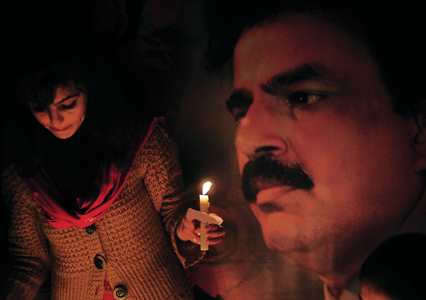
Times being what they are, Shahbaz Bhatti turned to Al-Jazeera and YouTube. The only Christian in Pakistan’s Cabinet knew it was only a matter of time before his work as minister for minority affairs got him killed. Threats by the Taliban and al-Qaida kept increasing.

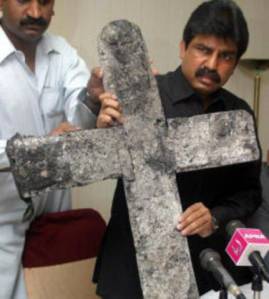
“I want to share that I believe in Jesus Christ, who has given his own life for us. I know what is the meaning of the cross and I follow him on the cross,” said Bhatti, in a startlingly calm video recorded several weeks before his assassination on March 2.

“When I’m leading this campaign against the sharia laws for the abolishment of blasphemy law, and speaking for the oppressed and marginalized persecuted Christian and other minorities, these Taliban threaten me. … I’m living for my community and suffering people and I will die to defend their rights. So these threats and these warnings cannot change my opinion and principles.”

The last straw was almost certainly the Catholic statesman’s defense of Asia Bibi, a Christian mother of five who was sentenced to death last November for the crime of blasphemy after she publicly defended her faith in a village argument. The verdict — which must be upheld by a higher court — further polarized a tense nation and sparked a global firestorm.

Then again, in 2009 Bhatti received the U.S. Commission on International Religious Freedom’s first medallion for the promotion of religious freedom. A year later, he met with Pope Benedict XVI to discuss interfaith work and religious liberty in Pakistan. Bhatti was not hiding his convictions.

The blasphemy laws in question went into effect in 1986, during the dictatorship of Gen. Muhammad Zia-ul-Haq. They ban, among other actions, the use of “derogatory remarks, etc; in respect of the Holy Prophet. Whoever by words, either spoken or written or by visible representation, or by any imputation, innuendo or insinuation, directly or indirectly, defiles the sacred name of the Holy Prophet Mohammed (PBUH) shall be punished with death, or imprisonment for life, and shall also be liable to fine.”

These blasphemy laws have been used against hundreds of Muslim dissenters and Ahmadi sect members, whose approach to Islam is specifically attacked in the laws. In practice, conversion from Islam to another faith is considered blasphemy, as are attempts to advocate or defend minority faiths, such as Christianity or Hinduism.

Vigilantes often kill those formally or informally accused of blasphemy — making trials irrelevant.

This was the case with Bhatti’s death in a wave of machine-gun fire into his unarmored car. Pakistani officials had denied his request for an armored car, despite the constant threat of drive-by shootings.

Formalities were also irrelevant on Jan. 4, when Salmaan Taseer, the governor of Pakistan’s Punjab Province, was assassinated by one of his bodyguards. This outspoken Muslim also defended Bibi and called for reform in the use of blasphemy laws.

Adoring crowds showered Taseer’s assassin with rose petals and garlands as he arrived to face a magistrate, while moderate Muslim leaders remained silent. Pakistan’s legislators observed a moment of silence for Bhatti, since it probably would have been fatal for anyone to offer a prayer in his honor.

After all, pamphlets left by those who killed Bhatti warned that they would keep fighting “all the world’s infidels, crusaders, Jews and their operatives within the Muslim brotherhood. … This is the fate of that cursed man. And now, with the grace of Allah, the warriors of Islam will pick you out one by one and send you to hell, God willing.”

Apparently, many radicals in Pakistan have concluded — a perfect Catch-22 — that it is blasphemy to oppose the blasphemy laws.

Meanwhile, the Pakistani conference of Catholic bishops is preparing to render a judgment of its own. Later this month the bishops will review a proposal to ask the Vatican to designate Bhatti as a martyr.

“Bhatti is a man who gave his life for his crystalline faith in Jesus Christ,” Bishop Andrew Francis of Multan told a Vatican news agency. “It is up to us, the bishops, to tell his story and experience to the church in Rome, to call for official recognition of his martyrdom.”

-Terry Mattingly is director of the Journalism Center at the Council for Christian Colleges and Universities.

Our Noblest Selves

By Marvi Sirmed for Newsweek Pakistan

Be careful. After the assassination of Shahbaz Bhatti, federal minister for minorities, on March 2 and of Salmaan Taseer, governor of the Punjab, two months before that, friends and family put out the same, simple message. Be careful. But with two brave men slain so violently and so publicly, can we afford to be careful?

Everything changed after the governor’s assassination. For Taseer’s killer, there are shrines on Facebook and rose petals. For those of us who, accurately, refer to Taseer as a martyr, there is concern from well-wishers—and death threats from others. Lawyers lined up in the hundreds to defend and garland Taseer’s self-confessed killer, while cleric after another refused to lead his funeral services. The right’s pundits called Qadri a ghazi or holy warrior, while state-owned Pakistan Television dropped shaheed or martyr for Taseer within hours of his death. Qadri supporters brandished their bloody hands at rallies that pulled in tens of thousands, while those who mourn Taseer and what he represented struggled to manage mere hundreds at vigils. The polarization and plight of Pakistan have never before been so painfully obvious.

Like Taseer, Bhatti, too, gave his life up for a cause that must be owned by those who run our country. But people everywhere are being careful. And this just won’t do.

Bhatti was one of those rare public figures who never sought the spotlight, who spoke softly, who had no skeletons in his closet. Bhatti could have played it safe. He began receiving death threats after the Gojra massacre. These picked up after he championed the cause of Aasia Noreen, a Christian mother convicted under the blasphemy laws, which the Pakistan Peoples Party had committed to review in order to prevent their misuse. After Taseer’s death, Bhatti could have played it safe and gone quiet. He did not. He was not “careful.” He was laid to rest in Faisalabad on March 4 with thousands turning out to honor him.

What can we do? We need to be honest with ourselves. Bhatti was killed by a group that calls itself the Punjabi Taliban. Punjab Chief Minister Shahbaz Sharif has taken exception to interior minister Rehman Malik highlighting this fact. Terrorists are a national problem, they are not Punjabis or Sindhis, says Sharif, who is also the home minister of his province. What more has to happen before the chief minister, a compassionate man by most accounts, finally acknowledges that we have a problem in the Punjab?

Second, we need to stop passing the buck and offering contrition practiced for television. Prime Minister Yousaf Raza Gilani reportedly offered his resignation to the cabinet the day Bhatti was assassinated. There have been two shocking high-profile murders in Islamabad in as many months and not a single soul has been sacked. There’s no shortage of candidates who deserve the ax. Let’s start with the state-employed clerics who refused to perform Taseer’s last rites.

Third, name and shame the members of Parliament who refused to raise their hands in prayer for Taseer and Bhatti. There was a prayer for Taseer in the National Assembly, but, infamously, not in the Senate. Bhatti got two minutes of silence in the National Assembly on March 3 and a walkout from all parties—including, oddly, the ruling party—against the government’s failure to protect Bhatti, but no prayers. What have we come to when we cannot bring ourselves to pray for the departed and their devastated families? This is not coldhearted or remotely Islamic, but pure evil.

Fourth, we need to enforce a strict ban on hate speech. Incitement to murder, character assassination and hate words cannot be provided mainstream platforms—whether print or electronic—under the pretense of free speech. Some channels promoted the false impression that Taseer had blasphemed, and they publicized fatwas against him. They also hyped up pro-Qadri rallies. It never came to light that these processions, while big, were limited to three cities. Responsibility will not suddenly dawn on our lawless media. To keep television honest and to counter the state’s halfhearted ban on militant groups, corporations need to step up and withhold ad spend from channels providing support to the jihadists. Consumers can then hold these corporations accountable by buying or boycotting their products.

The brave among us refuse to be careful when they see the rapid undoing of their motherland, and whose faith in man’s goodness speaks to our noblest selves. We are not a nation of murderers and monsters, but we sure are close.

Sirmed is a rights activist in Islamabad.

Bombing kills 25 Near Intelligence Office in Eastern Pakistan

By Karen Brulliard for The Washington Post

ISLAMABAD, PAKISTAN – A car bomb exploded near an office of Pakistan’s main intelligence agency in the eastern city of Faisalabad on Tuesday, killing 25 people in the type of militant attack that is growing more common in the country’s populous heartland.

A spokesman for the Pakistani Taliban asserted responsibility for the attack and said it was aimed at the intelligence office, the Associated Press reported.

Police said the bomb, which was detonated at a gas station, sparked additional explosions of natural gas cylinders, compounding the damage. The blast destroyed parts of several businesses, including an office of the national airline, and wounded at least 100 people.

Sectarian violence is common in Faisalabad, Pakistan’s third-largest city and a textile-producing hub, but Tuesday’s blast was the first major militant attack there. Militants have often carried out bombings in other large cities, including Lahore, about 80 miles to the east. The attacks regularly target Pakistan’s security forces, who in recent years have mounted counterterrorism offensives against insurgent hideouts in the mountainous northwest.

Now, Pakistani authorities and analysts say, violent extremist organizations are spreading across Punjab province, of which Lahore is the capital.

Southern Punjab is home to militant groups that traditionally focused attacks on Indian targets but are now thought to be deepening ties to Taliban factions in Pakistan and Afghanistan.

The car bombing occurred nearly a week after the assassination of federal cabinet minister Shahbaz Bhatti, which a group calling itself the Punjabi Taliban said it had carried out.

Bhatti, a Christian, had spoken out against Pakistan’s anti-blasphemy laws, which are enforced most stringently in Punjab. The laws are defended by religious groups, which say that violators of the statutes – and supporters of the violators – deserve death.

India and Pakistan Are United by Language and History, Divided by Commerce

By Karin Brulliard for The Washington Post

In India, where it is made, Fair and Handsome men’s skin lightening cream sells for $1.25 a tube.

But by the time it hits the shelf at Sajid Khan’s shop in this city’s old marketplace, it has traversed 2,000 miles of sea and land, been smuggled over the Hindu Kush and marked up 25 percent.

Pakistan and India share language, culture, history and an 1,800-mile border; they are South Asia’s largest economies. What they barely share is trade – officially at least, because of a quasi-blockade that dates from partition in 1947, and all but chokes off commerce under a dizzying web of rules.

The hurdles have spurred off-the-books trade, much of it shipped through third parties in such places as Dubai, where products are re-labeled as imports from other lands – journeys that result in 40-to-70-percent markups. Only recently did Pakistan make its first export to India by truck: a load of gypsum rock.

But economists, business groups and U.S. officials are pushing to loosen at least the most maddening restrictions, and they are hopeful that the two nations’ decision two weeks ago to resume peace talks might help. Free trade, they say, would benefit both India and Pakistan and might help to ease tensions whose gravity is reflected in rival nuclear arsenals.

“Economics 101 dictates that countries’ major trading partners should be their neighbors,” said Shuja Nawaz, director of the South Asia Center at the Washington-based Atlantic Council. “To change the dialogue from a zero-sum game to a positive, win-win outcome for both India and Pakistan, you need to start with the low-hanging fruit of opening trade and tourism.”

For a Pakistani economy in tatters, experts say, a freer flow of goods from India would allow cheaper access to products and raw materials, and could open up India, with its enormous population, to exports of Pakistan products such as cement.

Some research indicates that bilateral trade – currently at about $2 billion a year, less than 1 percent of each country’s total trade – could swell 20 to 50 times under more liberal policies. Estimates of illicit trade range from $2 billion to $10 billion a year.

But for now, progress creeps. India admits all Pakistani products, but Pakistani firms complain that stringent standards and paperwork make many exports unviable. Pakistan, for its part, allows a slowly expanding list of Indian products that now includes artificial kidneys, camphor, parachutes and 1,931 other items – but not Fair and Handsome cream, which is instead legally exported from Kolkata to landlocked Afghanistan, via the Pakistani port of Karachi, then smuggled back into Pakistan.

Travel restrictions are another barrier. Businessmen in both countries say they wait months for visas that allow travel only within major cities in the other country – preventing visits to rural factories or farms – where they are often tailed by intelligence agents.

Then there is the logistic muddle of land trade at the one border crossing, midway between Lahore and the Indian city of Amritsar. The twice daily cargo train involves an engine switch: A train carrying Pakistani exports, for example, can enter mere miles into India, at which point the Pakistani engine and conductors are replaced by an Indian ones before continuing inland. With so few trains, exporters wait months for cargo space.

Trucks have only eight hours each day to cross, because each afternoon the two-lane road is overtaken by Indian and Pakistani border guards’ theatrical gate-closing ceremony. Even then, trucks must stop just past the frontier, where porters transfer the goods to local trucks. That is an advancement: Before 2007, trucks were barred from crossing at all, and laborers lugged all cargo across the boundary on their heads.

The little existing trade often falls victim to what look like political whims. In December, cargo trains sat idle for three weeks while Indian conductors awaited the visas that allow them to park just inside Pakistan.

That same month, spiraling onion prices prompted India to drop import tariffs and standards for the staple, triggering a surge in Pakistani onion exports. But Pakistan abruptly halted overland sales amid concerns about a domestic shortage.

“I had 400 trucks stuck on the other side,” said Rajdeep Uppal, a trader who is vice president of the Amritsar Exporters Council. “For a week these onions were standing there, and eventually they had to be sold within Pakistan for half the price. Who loses? Both the countries.”

Tensions aside, scenes of goodwill abound along the border. Pakistani and Indian train conductors sip tea and gripe about red tape together. Satanam Singh, a turbaned Indian driver – wearing a regulation yellow vest stamped “Indian Driver” – beamed as laborers unloaded his ginger on the Pakistani side. Coming to Pakistan, he gushed, was delightful compared with Mumbai, where the language is different and people hostile.

“It is a strange feeling, like I am going to a strange land,” said a smiling Mohammed Zafar, a Pakistani whose vibrantly painted truck, brimming with dates, was about to make its virgin voyage across the Indian frontier. “I am very happy.”

Here in Lahore, just 20 miles from the Indian border, Khan’s shop was the pioneer in a winding lane of stores now crammed with Indian silk and cosmetics – all smuggled into Pakistan illegally.

He said he would welcome friendlier business relations, even if they lessened the luxury value of his stock. Even his Afghan smuggler, who stopped by on a recent evening, agreed, on grounds that it would lessen the need to bribe border officials.

Among some merchants, skepticism about trade prospects remains, with Pakistanis fearing that open trade would lead to a glut of cheap Indian imports. S.M. Akhter, a top Indian customs official at the border, said national security concerns must trump market demands.

But despite the tangle of rules, some trade is quietly rising. Tahir Habib Cheema, the top Pakistani customs official at the border, said he realized last year that truck exports from Pakistan were allowed, but that “status quo” and “fear” had prevented them. He decided to change that – without notifying his bosses.

A comedy of errors ensued. By Oct. 7, Cheema had found one willing exporter and one importer. After hiccups on each side, a meeting at the frontline was arranged.

All parties agreed, Cheema said – and then the truck would not start. Someone proposed pushing it into India, an idea that was nixed by border guards who said the pushers would need visas. Finally, another vehicle nudged the truck over the line.

“This was something for the national cause,” Cheema said proudly. Since then, he added, Pakistani trucks have exported $2.5 million worth of products to India. He expects that to escalate this spring, when the two nations open a dedicated truck passage.

Correspondent Rama Lakshmi contributed to this article from New Delhi.


Veteran US Diplomat To Replace Holbrooke as Pakistan-Afghan Envoy

By David Usborne for The Independent, UK

The long and fractious search for a replacement for the late Richard Holbrooke as a special US envoy to both Pakistan and Afghanistan is over, but the job of filling his shoes is looking more impossible than ever, not least because of an expected exodus of top American officials from Kabul this year.

Marc Grossman, who was a top-rank US diplomat for three decades until he moved to the private sector in 2005, has agreed to take on the post after others turned it down. His appointment is expected to be announced by Hillary Clinton, the US Secretary of State, during a speech in New York on Friday.

The death from a torn aorta of Mr Holbrooke, a giant on the diplomatic stage, left a void in America’s diplomatic front in Afghanistan and Pakistan. While some in the White House resented the wide remit he enjoyed dealing with both countries, Mrs Clinton was adamant she needed someone of similar stature in his place.

Several high profile names were passed over for the job or turned it down, including Strobe Talbott and John Podesta, both of whom served former President Bill Clinton. Another who declined to don the Holbrooke mantle was Frank Wisner, another former diplomat who unsuccessfully sought to mediate with Hosni Mubarak of Egypt before his ouster last week.

Mr Grossman, currently chairman of the Cohen Group which advises companies on ventures overseas, will take the job at a particularly tricky juncture. Relations between Washington and Islamabad are at an all time low, and in Afghanistan the clock is ticking on the start of US troop withdrawals this summer.

The diplomatic and military team he will inherit in Afghanistan will meanwhile begin to dissolve almost the moment he arrives there. Among those set to depart are Karl Eikenberry, the US Ambassador there, as well as all four of the top US officials in the embassy.

It is widely expected, meanwhile, that the top military commander of Nato forces in Afghanistan, General David Petraeus, will be rotated out before the end of the year. The number two military officer there, Lt Gen David Rodriguez, who runs day-to-day military operations, is also set to leave. Officials at the State Department and the Pentagon concede that finding replacements for the departing officials will be difficult.

Violence in Afghanistan is still at critical levels. On the political level, the US is striving to overcome long-running tensions with President Hamid Karzai, while trying to push forward a process of reconciliation talks with elements of the Taliban and other insurgent groups that are seen as crucial to achieving stability, and step up training of Afghan soldiers and police officers.

“Afghanistan is keen to work closely with the new Afghanistan-Pakistan envoy in better coordination and understanding,” commented Siamak Herawi, a spokesman for Mr Karzai, who had a prickly relationship with Mr Holbrooke.

The latest downturn in relations with Pakistan follows the arrest of an American at the US embassy on charges of murder. So far the Pakistani government has ignored calls from Washington that the accused, Raymond Davis, who is on the embassy staff, be given diplomatic immunity in the case. He has claimed that he shot the two men in self defence as they attempted to rob him.

In Islamabad yesterday on a mission to try to resolve the stand-off was Senator John Kerry, the chairman of the Senate Foreign Relations Committee and arguably the only person available in Washington with the stature to get the Pakistani government to focus on the issue. Bilateral talks that were scheduled to take place at the State Department next week have been postponed by Mrs Clinton because of the dispute.

The biggest challenge of all for Mr Grossman will be winning the trust and respect of leaders in both Pakistan and Afghanistan while navigating the sometimes conflicting priorities of his various bosses in Washington at the State Department, the Pentagon and the White House.

Leading players on their way out:

General David Petraeus

Unexpectedly pulled into Afghanistan after the sudden departure of General Stanley McChrystal last year, Petraeus is drafting withdrawal plans for President Obama. Once he has presented the President with options for the best exit strategy, which he is expected to do in July, there are suggestions that he could look to stand down. He has denied that he could seek the Republican presidential nomination for 2012.

Ambassador Karl Eikenberry

With his relationship with President Karzai strained at best, there have long been rumours in Washington of Eikenberry’s return home; any departure, though, was held up by the exit of McChrystal, when it was felt that another change at the top of Afghan policy would be unhelpful. A similar logic may have applied after Richard Holbrooke’s death. One of Grossman’s key tasks will be identifying the best candidates to replace him.

Lt. General David Rodriguez

Named as deputy commander in Afghanistan in 2009, Rodriguez has considerably more experience in the country than Petraeus, and holds responsibility for day-to-day operations, with particular expertise in counter-insurgency. If suggestions that he could be going home soon prove correct, there are fears that a shortage of top-class military leadership with knowledge of the country could be exposed.

Top Diplomats From India, Pakistan Meet on Sidelines of Regional Conference

By Anjana Pasricha for The Voice of America

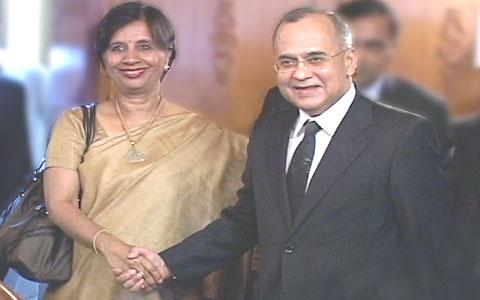
Officials from India and Pakistan have met to discuss the possible resumption of a stalled peace process. The meeting was held Sunday on the sidelines of a regional conference in Bhutan. The discussions are another step in building trust between the two rival nations.

Indian and Pakistani diplomats made no specific announcements, but sounded positive after their late Sunday discussions in the Bhutanese capital, Thimpu.

Indian Foreign Secretary Nirupama Rao expressed optimism on Monday. But she also said government leaders would remain realistic, pointing out that the relationship between the two countries is “complex.”   

“We talked about the process to chart the way forward, what the best modalities would be,” Rao said.

The meeting in Bhutan was held on the sidelines of a South Asian Association for Regional Cooperation conference. It was the first time in six months that officials representing the two countries met to discuss the possibility of resuming peace talks. India suspended peace talks more than two years ago after terror attacks in Mumbai killed more than 160 people. The attacks were blamed on Pakistan-based Islamic militants.

There had been some expectation that the two countries would set a date for resuming full-fledged peace talks, but that did not happen.

Commenting on the meeting, Indian Foreign Minister S.M. Krishna said in New Delhi that the two countries are trying to re-build trust, and build bridges of confidence.

“The very fact that the two foreign secretaries have met, it is certainly an indication of the fact that solid foundations are being laid for getting the two countries on to a sustained engagement,” Krishna said.  

India is under pressure to return to the negotiating table and resolve its many differences with Pakistan.

But New Delhi accuses Islamabad of not doing enough to bring the Pakistan-based perpetrators of the Mumbai terror attacks to justice. It says relations between the two countries cannot improve unless Pakistan cracks down on the Islamic militant group, Laskhar-e-Taiba.

Pakistan says it has put on trial seven of the suspected Mumbai attackers. Meanwhile, Islamabad says it wants New Delhi to take action against those responsible for the 2007 bombing of a train that runs between the two countries.

Pakistan Army Propaganda Drama Set for TV

By Khurram hahzad for The Associated Press

Pakistan’s Taliban-fighting soldiers are set for celebrity status with the launch of a multi-million-dollar glossy television drama hailing army victories over militants.

Emotive tales of 11 “brave Pakistanis” battling an Islamist insurgency that is plaguing Pakistan and neighbouring Afghanistan, will air on the small screen in an army-funded drama that casts the anti-terror fight in a positive light.

Focused on the heroism of soldiers fighting a key air and ground offensive in the northwestern Swat valley in 2009, one tale looks at the deeds of soldier Hawaldar Naeem Asghar who died fighting an insurgent checkpoint.

Asghar, portrayed as a hardworking soldier from peasant roots, sacrifices his life to overcome Taliban dug in to a hilltop, during operations in the town of Mingora to flush militants from the picturesque valley.

Throwing grenades from his bunker without success, Asghar is depicted abandoning cover and climbing the hill, tossing more explosives on his way as bullets rain down from the rebels’ post.

The checkpoint is destroyed, but Asghar is killed.

“Hawaldar Asghar’s story is a common man’s story. It’s a message to the public that everybody can play a role in the fight against extremism,” says Sajjad Saji, one of the drama serial’s writers.

“It is filmed to encourage the common people in this war,” he adds.

Urged by its key but critical ally the United States to launch further operations in the lawless tribal areas bordering Afghanistan, the army wants to show the sacrifices it has already endured in the war on terror.

“The basic purpose is to reveal the deeds of bravery of our soldiers, officers and civilians who are at the front of this war…. This drama shows the human face of the war,” says Major General Athar Abbas, head of the army’s publicity wing.

“The nation should own these stories of bravery and sacrifice, they should be proud of our sons and daughters of the land who created these true stories with their blood and defended the motherland.”

One of the filmmakers, who would not be named, said the high-end production was a “multi-million-dollar” effort, but refused to put a precise figure on costs.

The production, peppered with special effects, was filmed amid rugged verdant hills and forests close to the Swat valley — scene of major operations by Pakistan’s military in 2009 to rid the area of rampant militancy.

“We travelled extensively to film this serial. A crew of more than 35 people with trucks of luggage roamed in the forests and hills for months to show the reality,” said Khawar Azhar, the show’s executive producer.

The former tourism hotspot of Swat slipped out of government control after a radical cleric led an uprising in July 2007, beheading opponents, burning schools and fighting to enforce a harsh brand of Islamic law.

Pakistan launched a blistering air and ground offensive in the valley after militants marched out of Swat and advanced to within 100 kilometres (60 miles) of the capital Islamabad in April 2009.

After heavy fighting that displaced an estimated two million people, the military declared the region back under army control last summer and efforts have begun to revive the local economy amid sporadic outbreaks of violence.

Television productions are one of the tools adopted by the military’s publicity wing to polish its image and boost recruitment and morale at a key juncture in anti-Taliban efforts and with religious conservatism on the rise.

Accused by US-based Human Rights Watch of carrying out collective punishments on relatives of militants since it re-established control over the Swat valley, the army knows the importance of securing local hearts and minds.

More than 4,000 people have been killed in Taliban and Al Qaeda-linked attacks since government forces launched an attack against militants in a mosque in Islamabad in 2007.

The television drama depicts the bitter divide between Pakistan’s opposing cultures as the moderate middle class fights religious extremism in a country fractured by deep regional political divided.

In other episodes the film makers show the victims of Taliban power — one girl is subject to brutal gang rape by militants, while in another a young boy is brain-washed into becoming a suicide bomber.

Pakistan Confronts Deepening Radicalism in Wake of Assassination

By Sarah A Topol for AOL News

ISLAMABAD, Pakistan — When Vice President Joe Biden made his surprise visit to Pakistan this week to shore up the battle against the Taliban and al-Qaida, he warned against the implications of increasing radicalism in Pakistani society in light of the assassination of a liberal governor by his bodyguard.

“The governor was killed simply because he was a voice of tolerance and understanding,” Biden said at a news conference Wednesday. “As you know all too well … societies that tolerate such actions end up being consumed by those actions.”

But when President Barack Obama meets Pakistani President Asif Ali Zardari later today in Washington to discuss counter-terrorism in Pakistan’s lawless frontier, he greets a president facing a new fight against radicalism deep in the heart of Pakistan’s urban centers.

Since Mumtaz Qadri unloaded over two-dozen bullets into Salmaan Taseer’s back because the outspoken liberal called the country’s blasphemy laws a “black law,” ecstatic crowds have flocked to shower Qadri with rose petals at his court appearances. Facebook fan pages and a fawning YouTube video cropped up within hours of the murder.

The glorification of a confessed killer by the masses has shocked the country’s small liberal minority. But most troubling has been the reaction of Pakistan’s urban middle class, whose support the United States needs in its war against terror and against the Taliban in neighboring Afghanistan.

From lawyers to tech-savvy Web users, the reaction of the educated middle class has most clearly illuminated the toehold that Islamic extremists have found when it comes to religious issues in Pakistan, even as the country continues to resist the allure of Islamic militants. Some see the reaction of the middle class as the expression of latent social outrage over how Islam is treated by the West, combined with a growing confusion over how to follow their faith in the modern world. This dormant indignation has found an outlet in the murder of a liberal governor.

“Taseer is a victim of religious extremism, but this religious extremism is wrapped up in a class and culture war, between the have-nots and the have, between the socially disposed and the possessors of society, between the globally connected and the globally disconnected,” Mosharraf Zaidi, a political analyst and policy development adviser in Islamabad, told AOL News.

Zaidi sees the convergence of educated Muslims around Qadri as a sign of confusion among the middle class over how to rationalize their modern lifestyle with Islamic tenets, prompting them to defer to radical right-wing mullahs when it comes to certain religious issues, like blasphemy.

“The Islamic narrative in Pakistan is dominated by a small religious establishment who has no viability electorally and who has limited social appeal. But on a number of specific issues they’re able to tap into something much deeper than what’s apparent in a day-to-day situation that awakens the inner radical,” Zaidi said. “The middle class is increasingly susceptible to the symbolism of the little guy taking on the big guy.”

Among Qadri’s most stalwart supporters are some of the same jurists who staged months of protests against Pakistan’s military dictator in 2007 and 2008, when Gen. Pervez Musharraf removed the country’s chief justice.

“We were supporting rule of law, the supremacy of the constitution and the independence of the judiciary,” said Mohammad Faisal Malik, who notes he was an active participant in the movement. “It was the most memorable year of my life.”

Dressed in a dapper black suit, Malik has a neat mustache and carefully styled sideburns that don’t suggest a picture of extremism taking root in Pakistan’s judicial system. But today he is among the group of lawyers who have been throwing garlands and chanting slogans in support of Qadri outside the district courthouse in Rawalpindi, and he is also one of the 500 lawyers signed on to represent Qadri.

Malik does not see a contradiction in supporting both the rule of law and a man who took the law into his own hands.

“Mr. Qadri reacted under certain provocation, feeling hurt from the remarks of the deceased governor. He acted like any Muslim will act when anyone uses filthy language against our prophet. … We were chanting and raising slogans against all those sectors that are using objectionable language against Muslims, against our holy prophet and against our religion. That was our message,” Malik explains in nearly flawless English, expressing a sense of global victimhood common among his compatriots.

In Pakistan, the day-to-day injustices in an impoverished society find no legal outlet. Corruption here is rife, and the rich can bribe their way out of anything. The lawyers supporting Qadri express an understanding of why the security guard picked up a gun.

“He took the law into his own hands when he thought he was helpless. He’s not in a position to initiate criminal proceedings against Mr. Taseer, so he reacted in this manner,” Malik said.

But some say the passivity of the educated class toward radical strains is not merely a product of a class and culture struggle but part of a larger generational gap in Pakistani society. Under the rule of Gen. Mohammad Zia ul-Haq in the 1980s, Pakistan underwent an Islamization campaign as the military dictator sought to unify the country and encourage jihadists to fight against Indian control of Kashmir and the Soviet occupation of Afghanistan. Today, some suggest, the younger generation is the product of state-sponsored radicalization.

“The state as a machinery is supporting and promoting religious extremism, and it happens through various means. It happens through media messages, it happens through textbooks,” said Marvi Sirmed, a human rights activist and blogger.

“The literate, quasi-educated urban population is the most vulnerable to these extremist propagandas, because they are exposed to electronic media and the outside world through social networking,” Sirmed said. “And I see a lot of stuff coming out through these sources that if you are naive, they can make you a suicide bomber very easily.”

It is this middle class, struggling with its faith in an age of global media and inter-connectivity, that the U.S. needs to win over, and it is precisely this sector it appears to be losing.

Pakistan’s middle class sees the United States not as a model of liberal values to be followed but rather as a country that inflicts repeated indignities upon Pakistanis’ culture and sense of worth with its military forays into the region in the past 10 years.

“We have to pay attention to the narrative of indignity, because it’s fueling things that start only as rhetorical and verbal but could very well link to Faisal Shahzad’s Nissan Pathfinder,” said Zaidi, referring to the failed Times Square bomber, an educated Pakistani who knew the United States only too well.

Pakistanis, Indians want peace, friendship, says poll

As Reported by SANA (South Asian News Agency)

Despite a history of conflicts, mistrust and estranged relationship, an overwhelming number of Pakistanis and Indians want peace and friendship between the nuclear-armed South Asian nations, a survey conducted on both sides of the border has revealed.

The survey – conducted by independent research agencies and sponsored by the Jang Group of Pakistan and The Times of India on the first anniversary of their joint peace initiative ‘Aman Ki Asha’ – showed that 70 per cent of Pakistanis and 74 per cent of Indians want peaceful relations.

Although, the process of composite dialogue between Islamabad and New Delhi remains stalled since the 2008 Mumbai carnage, 72 per cent Pakistanis and 66 per cent Indians hope to see ’sustainable friendly relations’ in their lifetime. Compared with last year, the number of Indians hoping to see peace in their lifetime has surged by 17 per cent.

The optimism at the people’s level appears in a stark contrast to the current bitter official positions. The Indian government accuses Pakistan of harbouring terrorists and not doing enough against the alleged sponsors of the Mumbai attack, while Islamabad says that New Delhi has been using this incident as a ‘propaganda’ tool to avoid talks on the core issue of Kashmir. Islamabad also blames India for instigating violence in Balochistan.

According to the survey, awareness of the Kashmir problem as being central to the state of relations between the two countries, particularly in India, has increased. The survey results show that 77 per cent Pakistanis and 87 per cent of Indians feel that peace can be achieved by settling the protracted Kashmir dispute.

The scientific survey covered 10 Pakistani cities and 42 villages, covering a cross-section of people from rural and urban areas. Pakistani cities where the survey was carried out were: Karachi, Lahore, Rawalpindi, Islamabad, Peshawar, Quetta, Multan, Faisalabad, Hyderabad and Sukkur. In India, the survey was conducted in six cities: Delhi, Mumbai, Kolkata, Bangalore, Hyderabad (Deccan) and Chennai. Adult population, both male and female, were represented in the survey.

This was the second survey on Pakistan-India relations. The first survey was conducted in December 2009; just before the Aman Ki Asha peace campaign was launched. Survey results show a consistent and marked improvement in perceptions about each other by people in both countries.

The survey showed that the issue of Pakistan-India relations featured in the thoughts of 73 per cent Pakistanis and 68 per cent Indians. The survey results said apart from settling the Kashmir dispute, 80 per cent Pakistanis and 91 per cent Indians think ’stronger relations and better defence’ would also contribute in achieving the goal of peace.

The survey tracked the impact of the Aman Ki Asha campaign in India by asking a similar set of questions to two groups of people – one aware of this peace campaign and the other not aware of it. On all four questions asked – perceiving Pakistan as a high threat to India, as a sponsor of terror, desire for peace and being hopeful for achieving sustainable peace – there was a marked difference in the responses of the two groups. The group that was aware of the Aman Ki Asha initiative had a much better perception of Pakistan.

Around 77 per cent of Pakistanis and 87 per cent Indians consider that international pressure may help in bringing peace, while 71 per cent Pakistanis and 72 per cent Indians pin hopes on greater people-to-people contact to pave the way for friendly relations. Eighty-one per cent Pakistanis and Indians see people-to-people contact as an effective ‘instrument of peace’.

An increase in business has also been tipped as a vehicle of peace by 67 per cent Pakistanis and 69 per cent Indians, the survey said. Among other steps needed to promote peace, 32 per cent Pakistanis pinned hopes on sports, 28 per cent on business, 22 per cent on tourism, 20 per cent on travel for health treatment and 13 per cent each on culture and higher education. The data from the Indian side regarding this questionnaire was not available.

For 51 per cent of Pakistanis, business can help bring peace, while 46 and 45 per cent of respondents said that it can also be done through sports and tourism respectively.

AMAN KI ASHA: The first of its kind peace drive ‘Aman Ki Asha’ was seen by a vast majority as articulating the aspirations of the people. Around 87 per cent Pakistanis and 74 per cent Indians were of the view that this sustained campaign ‘developed tremendous awareness about the Indo-Pak relationship’. Around 85 per cent Pakistanis and 61 per cent Indians said Aman Ki Asha communicated ‘peoples’ desire for peace to their governments, while 80 per cent Pakistanis and 86 per cent Indians said it ‘helped bring the people of the two countries together’.

The Jang Group and The Times of India have held a series of events over the last 12 months that involved a broad section of people, including students, intellectuals, artists, businessmen, doctors, information technology experts and ordinary citizens in an attempt to boost people-to-people ties.

In Pakistan, the recall of the ‘Aman Ki Asha’ campaign has been around an impressive 92 per cent. Shahrukh Hasan, Group Managing Director of the Jang Group, said this media-led civil society movement had made a huge contribution for peace at a time when tensions remained high between the two countries.

“The survey results should lay to rest any misgivings or apprehensions people may have had about the objectives or chances of success of the campaign,” he said. “The survey results show that Aman Ki Asha has brought about a sea change in perceptions in India about Pakistan. Every negative perception has decreased and every positive perception has improved. The Jang Group feels vindicated and is delighted that we have helped put across Pakistan’s point of view through honest dialogue, seminars, people-to-people contacts and cultural events.”

According to the survey, the terror perception in India about Pakistan is down to 42 per cent from 75 a year ago, of bomb threats to 29 per cent from 54 and awareness about the Kashmir dispute rising to 17 per cent from a mere four per cent. Hasan hoped that the Pakistani and Indian governments would continue to facilitate the Aman Ki Asha peace campaign and take advantage of the access to the hearts and minds of the people of the two countries that the Jang Group and the Times of India provided.

Salman Taseer Assassination Points to Pakistani Extremists’ Mounting Power

By Karin Brulliard for The Washington Post

One of Pakistan’s most openly progressive politicians was gunned down Tuesday in an act that violently highlighted extremists’ tightening grip on the country even as the beleaguered government struggled to stay in power.

The killing of Salman Taseer, apparently at the hands of one of his own guards, marked the most prominent political assassination in Pakistan since former prime minister Benazir Bhutto’s death three years ago.

The razor-tongued governor of Pakistan’s most populous province was known for speaking out on behalf of women and religious minorities, and his slaying stunned the nation and alarmed U.S. officials. It also further rocked Taseer’s ruling Pakistan People’s Party, which is desperately trying to keep its government afloat following a key ally’s defection to the opposition Sunday.

The secular PPP condemned the killing and promised a swift investigation, but its weakened position undermines its ability to crack down on religious extremists.

In timing that underscored those limitations, Taseer was shot in an upscale area of Islamabad as Pakistan’s main opposition party was across town demanding that the government agree within three days to implement a list of reforms, or risk collapse.

After the killing, the party of former prime minister Nawaz Sharif said it would allow three additional days for the changes, including a slash in government spending and the reversal of unpopular fuel price increases.

Taseer was a chief ally of President Asif Ali Zardari, who in 2008 appointed him governor of Punjab, Pakistan’s wealthiest province. But Sharif’s party rules the province, making Taseer’s assassination a blow to the federal government’s influence there.

Secretary of State Hillary Rodham Clinton condemned the killing in a statement Tuesday, saying she had met Taseer and “admired his work to promote tolerance and the education of Pakistan’s future generations.”

Taseer’s apparent killer cited his boss’s stance against a controversial anti-blasphemy law in justifying his actions. As the embattled, pro-U.S. PPP sought in recent days to win back defecting allies that also include a small Islamic party, it had already said it would not support a proposal to change the blasphemy statutes. That left Taseer one of the few vocal champions of the move, which hard-line religious organizations had labeled a Western conspiracy.

The laws have drawn scrutiny since a Christian woman was sentenced to death in November for allegedly criticizing the Muslim prophet Muhammad. Taseer had called for her pardon, leading religious groups to denounce him as an “apostate” and burn effigies of him during a nationwide strike last week in support of the law. One Muslim cleric has offered $6,000 to anyone who kills the woman, who remains in jail.

Even as Pakistani television stations were dominated Tuesday by commentators condemning rising religious intolerance, supporters of Taseer’s arrested guard, Mumtaz Qadri, 26, created a page for him on Facebook. Page visitors called him a “hero” and praised his “awesome job.” No major unrest over the killing was reported, but authorities said they were on high alert.

“This shows how the religious extremists want to impose their agenda to terrorize the society,” Shahbaz Bhatti, the federal minister for minorities affairs and also a proponent of changing the laws, said in an interview. “This cowardly act cannot stop us who are raising our voice.”

Yet in a country where Taliban militants increasingly flex their muscles through bombings, religious hard-liners have great power to intimidate even though polls show that their views are not widely shared. Last week’s strike by Islamic organizations drew few supporters to the streets, but shops in major cities closed – and many merchants said they did so under threat.

Human rights activists say the blasphemy laws are also abused by extremists, who use them as a tool to persecute minorities or opponents by bullying police and courts into arrests and convictions. The laws were strengthened during the 1980s rule of Islamist military dictator Gen. Zia ul-Haq.

Taseer lamented the power of the religious mob in an interview last summer following bombings of mosques belonging to the Ahmadi sect, whose members identify themselves as Muslims but are barred by the constitution from “posing” as such. Taseer – whose appointed position gave him little direct power in Punjab – condemned the provincial government of Sharif’s center-right PML-N for what he called its tolerance of radical religious groups.

“Extremist people are not in the majority,” Taseer said at the time. “This is a very narrow minority, but . . . they are always prepared to do and die. That is their strength.”

On Dec. 24, he had posted on his Twitter account: “My observation on minorities: A man/nation is judged by how they support those weaker than them not how they lean on those stronger.”

Authorities said Taseer’s guard, a member of an elite Punjab provincial police force that provides VIP security, shot the governor multiple times outside the Kohsar market in Islamabad, a small shopping plaza near his residence that is frequented by foreigners. The guard proudly surrendered to police afterward, according to local news reports.

Most political parties condemned the killing, and the government announced a three-day mourning period, during which political activity would be suspended. Zardari, to whom Taseer was close, called the assassination “ghastly.”

“The governor of Punjab was the bravest person in our government, and the stands he took for women, minorities and on the blasphemy law were incredibly brave and will never be forgotten,” Farahnaz Ispahani, a Zardari spokeswoman, said in an interview.

Taseer, who began his political career as a PPP student activist, was a successful businessman who played polo and smoked heavily. With his flashy sunglasses and frequent Twitter dispatches, Taseer, 66, cut a rather shocking figure in a country dominated by conservative social mores.

Critics assailed him for fathering a child with an Indian journalist while he was still married to the mother of his other children. In 2008, minor scandals broke out when opponents published photos online of him holding wine glasses at parties and of one of his daughters wearing shorts and dancing.

Despite the alleged gunman’s confession, Taseer’s killing was sure to be swept up in the conspiracy theories that permeate Pakistani politics, particularly in times of turmoil. Interior Minister Rehman Malik said investigators would seek to determine whether the suspect acted alone or was “asked” to carry out the attack.

In the hours after the killing, some criticism centered on the PML-N-led Punjab government, which provided Taseer’s police guard. There was no indication Tuesday night that the party played a role.

But the PML-N might yet bring down the PPP, whose government faces growing criticism over corruption, a floundering economy and a ham-handed response to last year’s devastating floods. The ruling party’s coalition partner, the Muttahida Qaumi Movement, withdrew from the government Sunday, weakening its mandate by depriving it of a parliamentary majority.

A united opposition could pass a vote of no confidence in Prime Minister Yousaf Raza Gillani, leading to his ouster and potentially triggering early elections. That has appeared unlikely, because of divisions among opposition parties. But Sharif threatened Tuesday to “ask the opposition parties to come forward and we will give them our full support” if the government does not show progress on reforms within 45 days, according to the Associated Press.

Like many in the PPP, Taseer often criticized opposition parties for stoking political instability in a country that has been ruled by the military for half its 63-year history and where an elected government has never completed its term.

Religious extremism, Taseer said last summer, would be quashed only by the “continuous, functional position of a democratic system.”

China Ramps Up Pressure Over Kashmir

By Sudha Ramachandran The Asia Times

BANGALORE – A recent report in the Chinese media describing the Sino-Indian border as being 2,000 kilometers long, roughly 1,500 km shorter than that defined by India, has evoked an alarmed response among sections of the Indian strategic community.

The “missing 1,500 km” from the definition of the Sino-Indian border is seen to be a clear pointer to Beijing’s hardening position, not only on its long-standing boundary dispute with India but also on Jammu and Kashmir (J&K). While India holds about 45% of J&K territory and Pakistan controls 35%, China occupies about 20% (including Aksai Chin and the Shaksgam Valley, ceded by Pakistan to China in 1963).

A Beijing-datelined Xinhua news agency report of an official briefing by China’s Assistant Foreign Minister Hu Zhengyue on the eve of Prime Minister Wen Jiabao’s recent visit to India triggered the flap. “China and India share a 2,000-km-long border that has never been formally demarcated,” the report said. India describes the border as being 3,488 km.

The different positions were made even more explicit by the Global Times, an English-language newspaper published by the People’s Daily, the official mouthpiece of the ruling Chinese Communist Party. In an interview with Global Times, India’s ambassador to China, Subrahmanyam Jaishankar, spoke of the “long common border of 3,488 kilometers” between the two countries. But a comment by the editors of Global Times in parentheses said: “There is no settled length of the common border. The Chinese government often refers to the border length as being ‘about 2,000 kilometers’.”

Reports in state-owned media have been describing the border as being 2,000 km for at least a year now.

The roughly 1,500 km-long shortfall in the Chinese perception is believed to refer to the Sino-Indian boundary in J&K. “China apparently no longer treats the line of nearly 1,600 km separating Jammu and Kashmir on the one hand and Xinjiang and Tibet on the other as a border with India,” strategic affairs expert C Raja Mohan wrote in the Indian Express. That is, it does not recognize Kashmir to be part of India.

Beijing is questioning India’s locus standi to discuss J&K’s border with China, observes B Raman, a retired director in India’s external intelligence agency, the Research and Analysis Wing (RAW). In essence, it is seeking to exclude discussion of the western sector of the disputed Sino-Indian boundary with India. The western sector includes the large chunk of Indian territory, Aksai Chin, in the Ladakh region of Jammu and Kashmir that China occupied in 1962.

Besides, China “wants to change the format of the border talks in order to keep it confined bilaterally to the eastern and middle sectors and expand it to a trilateral issue involving India, China and Pakistan in the western sector,” Raman wrote recently.

China has become increasingly assertive in its questioning of India’s sovereignty over J&K. Since 2008, it has been issuing visas on a separate sheet of paper to residents of Jammu and Kashmir rather than stamping the visa in their passports, as is the norm with other Indian citizens. In August last year, China also denied a visa to Lieutenant General B S Jaswal – commander of the Indian army’s Northern Command, which includes Kashmir – for an official visit to China, on the grounds that he “controlled” a “disputed area”.

Besides, over the past year, Beijing has been reaching out to the Hurriyat Conference, an umbrella organization of Kashmiri separatist outfits. In March 2010, for instance, Chinese Foreign Affairs director Ying Gang met with Hurriyat leader Mirwaiz Umar Farooq in Geneva on the sidelines of the 13th session of the UN Human Rights Council. Besides questioning India’s sovereignty over Kashmir, China has been endorsing Islamabad’s control over the part of Kashmir it has administered since 1947.

It was with India that the Maharajah of Jammu and Kashmir, Hari Singh, signed an Instrument of Accession in October 1947. However, only 45% of the territory of the former princely state is in India’s hands today, roughly 35% remaining under Pakistani administration and another 20% under Chinese control. The territory under Chinese occupation includes Aksai Chin and the Shaksgam Valley that Pakistan gifted to China in 1963.

In the Northern Areas of Pakistan-administered Kashmir, China is involved in the construction of several infrastructure projects, including roads, hydroelectric power projects, dams, expressways, bridges and telecommunication facilities. During Wen’s recent visit to Pakistan, the two countries signed a US$275 million agreement for repair and expansion of the Karakoram Highway. Earlier in September, Beijing underlined its support to Islamabad’s territorial claims over parts of Pakistan-administered Kashmir when it described the Northern Areas as “a northern part of Pakistan”.

The India-Pakistan dispute over Kashmir predates the People’s Republic of China (PRC). India and Pakistan had already fought their first war over Kashmir when the PRC came into being. Initially, China took its cues from the Soviet Union on the issue. It described the conflict as a Western creation and maintained that the US and Britain were hoping to make Kashmir a Western base.
China took a “neutral position” in the 1950s. It opposed foreign arbitration on the Kashmir issue, which pleased India. At the same time, it did not endorse Delhi’s claims over Kashmir. Fraying Sino-Soviet relations and Moscow’s overt support to Jammu and Kashmir as “an inalienable part of the Republic of India”, as well as concerns that its backing of India would push Pakistan into a closer embrace of the US, seem to have prompted it to adopt a more “neutral position” between India and Pakistan on Kashmir.

With Sino-Indian relations deteriorating from 1959 onwards, China began tilting towards Pakistan. It signed a border agreement with Pakistan. Since this dealt with areas that constituted Pakistan-administered Kashmir, the agreement amounted to a de facto Chinese recognition of Pakistan’s control over this area. Although it subsequently denied such recognition, describing this as “provisional” and “pending settlement of the Kashmir dispute”, a joint communique issued at the end of prime minister Zhou Enlai’s visit to Pakistan in February 1964 was a strong endorsement of the Pakistani position. It urged a solution of the dispute “in accordance with the wishes of the people of Kashmir”. India is opposed to a plebiscite in Kashmir.

By the mid/late 1970s, China began advocating a status quo on Kashmir. Support for the Kashmiris’ right to self-determination was toned down. In 1976, in his speech before the UN General Assembly, Chinese foreign minister Chia Kuan-Hua omitted naming Kashmir in a list of territories where the right to self-determination had not been exercised. It is believed that China’s own troubles with separatism and improving ties with India prompted its shrinking support on self-determination.

With Sino-Indian rapprochement gathering momentum in the 1990s, China began describing Kashmir as a bilateral matter to be resolved by India and Pakistan through peaceful means. On his visit to India in 1996, president Ziang Zemin called on India and Pakistan to set aside contentious issues and build a cooperative relationship. During the brief Kargil conflict in 1999, China called on India and Pakistan to respect the Line of Control that separates Pakistani- and Indian-administered Kashmir. These were seen as signs of Beijing taking a neutral position on Kashmir again.

China has never accepted India’s sovereignty over Jammu and Kashmir, even over the part that is under its control. After all, if it did it would mean giving up the roughly 43,180 square kilometers of territory that is currently under its control. However, it had avoided provoking India on the matter publicly. This has changed in recent years, with Beijing being “deliberately provocative” on Kashmir.

India is not letting the repeated provocations go unchallenged. After all, the territorial integrity of the country is a core concern of the Indian state. A couple of months ago, in his talks with Chinese Foreign Minister Yang Jiechi, India’s External Affairs Minister S M Krishna did some tough talking. According to officials quoted by the Hindu, for the first time India drew a parallel between “the territorial red lines” of the two countries.

Krishna reportedly told Yang that just as India had been sensitive to its concerns over Tibet and Taiwan, Beijing too should be mindful of Indian sensitivities on Jammu and Kashmir. The message that India is sending is that if China questions India’s sovereignty over Kashmir, India will question Beijing’s sovereignty over Tibet and Taiwan.

Delhi has indicated that Krishna’s warning was to be taken seriously. The joint communique issued at the end of Wen’s visit to India made no reference to India’s commitment to a “one china policy”. This is the first time since 1988 that a summit-level joint communique has made no mention of the policy. Instead, both sides agreed to show “mutual respect and sensitivity for each other’s concerns and aspirations”.

-Sudha Ramachandran is an independent journalist/researcher based in Bangalore.