Posts Tagged ‘ Islamabad ’

Pakistan, India Swap Nuclear Sites Lists

By Zhang Xiang for Xinhua News

Pakistan and India exchanged lists of nuclear installations and facilities on Saturday in spite of a tension over the 2008 Mumbai attacks that has disrupted the dialogue process between the two countries, the Foreign Ministry said.

The two countries exchange the lists of nuclear sites on the first day of the new year under an agreement signed in 1988 and came into force in January 1991.

“The government of Pakistan and India today exchanged lists of their respective nuclear installations and facilities in accordance with Article-II of the Agreement on Prohibition of Attacks against Nuclear Installations and Facilities between Pakistan and India of Dec. 31, 1988,” a Foreign Ministry statement said.

The statement said the Ministry of Foreign Affairs handed over the list of Pakistan’s nuclear installations and facilities to an officer of the Indian High Commission in Islamabad at the Foreign Office on Saturday morning.

The Indian side also handed over their list to an officer of the Pakistan High Commission at the Ministry of External Affairs in New Delhi, it said.

After the agreement was signed the first exchange took place Jan. 1, 1992.

Sources said it is the 20th consecutive list exchange between the two countries.

Pakistan and India conducted tit-for-tat nuclear tests in 1998. India conducted its first nuclear test in 1974, followed by five more in 1998. Pakistan conducted its six nuclear tests in 1998. Neither India nor Pakistan is a signatory to the Nuclear Non- Proliferation Treaty (NPT).

India considers the NPT discriminatory, while Pakistan has indicated that it won’t join the international agreement till its neighbor does so.

Neither of the two rival neighbors have signed the Comprehensive Test Ban Treaty.

In 2004 they launched a peace process, but that is now on hold following the Mumbai attacks, with New Delhi pressuring Islamabad to do more to punish those responsible for the carnage and to crack down on anti-India groups.

Meanwhile, both countries also exchanged Lists of Prisoners in the two countries, the Foreign Ministry said.

According to the Agreement on Consular Access signed between Pakistan and India on May 21, 2008, both countries are required to exchange lists of prisoners in each other’s custody on Jan. 1 and July 1 every year, the statement said.

“Consistent with the provisions of this Agreement, the Ministry of Foreign Affairs handed over the list of Indian prisoners in Pakistan to the Indian High Commission in Islamabad today,” it said.

China’s Growing Influence on Pakistan Worries U.S.

By Farhan Bokhari for CBS news

China’s premier Wen Jiabao concluded a high profile visit to Pakistan on Sunday, promising to lay the foundation for a “deeper” relationship to a country which is central to U.S. efforts for stabilizing Afghanistan.

Wen sought to broaden a relationship which has traditionally been driven by Beijing’s role as a key supplier of military hardware to Islamabad. Pakistan’s government officials said that during Wen’s visit, China signed business deals between the governments and private businesses of the two countries worth at least $29 billion, with a possibility of another $6 billion worth of contracts. These contracts were the largest ever signed during a visit by a foreign leader to Pakistan, underlining the growing importance of the country to China.

The Chinese premier also used a speech to a joint session of Pakistan’s upper and lower houses of parliament to commend the country for its efforts against terrorism. It was an apparent effort to negate criticism from the western world, including the U.S., which has urged Islamabad to take further steps against Al-Qaeda and the Taliban.

“Pakistan has given great sacrifices and made great efforts in the fight against terrorism. It is a reality and the international community should respect Pakistan’s efforts,” Wen said.

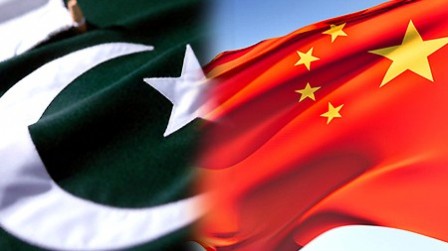
While the U.S. has poured billions of dollars into Pakistan to assist in combating terrorist groups, Pakistan’s military and civilian leaders remain committed to retaining a close alliance with China. “Let’s stand together, with a new confidence, and begin a new era of progress and prosperity, by jointly confronting all challenges,” Wen said in his speech on Sunday. To the applause of Pakistan’s ruling and opposition politicians, the Chinese continued that “China and Pakistan are all-weather strategic partners and share the sorrows and joys of each other as close brothers.”

A senior Pakistani official told CBS News that the deals signed during Wen’s visit included contracts for the development of a road and train network linking the two countries, for mineral resources, for gas and oil fields and for facilities to produce electronics.

“China is beginning to launch an important new phase to help Pakistan transform itself economically,” said the official, who spoke anonymously because he was not authorized to talk to journalists. “Unlike our western friends such as the U.S., China remains a true friend of Pakistan,” he added.

Western diplomats in Islamabad who spoke to CBS News, also on condition of anonymity, said Pakistan’s relations with China remain of concern to Washington in some areas, notably China’s continued support for Pakistan’s nuclear energy program and signs that China is stepping up its supply of conventional military hardware to Pakistan.

In the past decade, the two countries have jointly developed their first fighter plane for the Pakistan Air Force (PAF), known as the JF-17, or “Thunder.” The PAF plans to buy up to 250 of the JF-17s, making it the largest-ever purchase by the PAF of a single type of aircraft. On the other hand, Pakistani leaders frequently speak of the trust factor in their country’s relations with China, an oblique reference to the lack thereof in the country’s ties with the U.S.

In the 1990s, the U.S. sanctioned Pakistan on suspicions that the country was preparing to produce nuclear weapons, which reversed the two sides’ close cooperation when they confronted the occupation of Afghanistan by the former Soviet Union. While those sanctions were lifted after 9/11, which prompted a new partnership against terrorism, many Pakistanis remain skeptical of ties to the U.S. But a Pakistani foreign ministry official who spoke to CBS News said a growing economic relationship with China “will not come at the expense of our relations with the U.S. We want to establish and maintain a close partnership with the U.S. Our relations with China must never be seen as a replacement for our relations with the U.S.”

Chinese Premier Visits Pakistan to Reinforce Ties

By Salman Masood for The New York Times

ISLAMABAD, Pakistan — Chinese Prime Minister Wen Jiabao arrived in Islamabad on Friday for a three-day visit that Pakistani officials said was aimed at strengthening the strategic partnership and economic cooperation between the two neighboring countries.

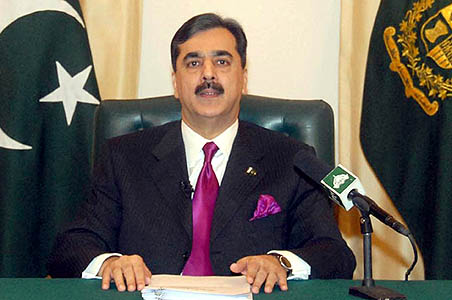
Prime Minister Yusuf Raza Gilani and members of his cabinet welcomed Mr. Wen at Chaklala Air Base in neighboring Rawalpindi on Friday afternoon. A red carpet was rolled out and elaborate ceremonies were held to signify the importance Pakistan attaches to China, which is considered a close ally.

“Friendship with China is a matter of pride for our nation,” Mr. Gilani was quoted as saying by local media as he welcomed his Chinese counterpart.

Apart from holding meetings with Mr. Gilani and President Asif Ali Zardari, Mr. Wen was scheduled to address a special joint session of the Parliament on Sunday.

Pakistan’s military ties with China are strong and China has assisted Pakistan in tank production, fighter aircraft manufacturing and naval technology. But since the late 1990s, economic concerns have gained increased importance. Trade and energy have taken precedence in Pakistan’s relations with China.

Mr. Wen was accompanied by 260 business executives.

Pakistani officials say there is a need to enhance trade between the countries that stands around $7 billion a year. But there also are concerns here that the trade deficit is growing heavily in favor of China.

“The relationship is undergoing a qualitative change,” said Mansoor Ahmad, an independent security analyst based in Islamabad. “This change is manifested in China’s relationship with emerging markets and developing countries, which is essentially based on forging and enhancing trade linkages and securing new markets for Chinese investment.”

The Chinese are also cooperating with Pakistan in developing its civil nuclear energy program despite discontent from Washington and New Delhi.

Mr. Wen, the Chinese prime minister, arrived here after completing a two-day tour of India, the estranged neighbor of Pakistan.

China would have to undertake a fine balancing act regarding enhancing its cooperation with both India and Pakistan, said Mr. Ahmad. China and India would forge economic ties despite their continuing territorial disputes, given India’s huge market, he said. Tensions between India and Pakistan worsened after the terrorist attacks in Mumbai in 2008, which India and the United States blamed on Lashkar-e-Taiba, a militant Islamic group based in Pakistan.

The Pakistan government sees China as a counterweight to India, and officials said that closer Chinese cooperation with India would not affect Pakistani ties with China.

Nonetheless, Mr. Wen’s visit to India this week yielded greater immiediate progress on the economic front than toward resolving the more complicated geostrategic issues.

“In Pakistan’s case, we have already had a longstanding strategic partnership which is now being supplemented by increasing Chinese investment in infrastructural development, civil nuclear cooperation and establishing rail and road linkages between the two countries,” Mr. Ahmad said.

Pakistan Shifted Emphasis Away From India Border, says US

As reported by The Economic Times

WASHINGTON: Pakistan was shifting its emphasis away from its eastern border with India, a decision it had taken on its own because of a “definite shift” in Islamabad’s military posture brought about by fundamental changes within the country, the US has said.

It said while it does want Islamabad to act more aggressively against extremists within Pakistan it played little role in Islamabad’s decision to move its troops away from the border with India.

“First of all, how Pakistan decides to deploy its military forces is a decision for Pakistan,” State Department spokesman P. J. Crowley told reporters Friday what role the US had played in the movement of 140,000 troops away from the Pakistani-Indian border as mentioned by Secretary of State Hillary Clinton.

“We’ve made no secret of our desire to see Pakistan take more aggressive action against extremist elements within its own borders,” he said. “That is a threat to Pakistan itself.”

“And as the Secretary said, we have seen Pakistan shift its emphasis away from the Pakistani-Indian border and more aggressively to the Swat Valley and other areas where these extremists operate.”

“And no military has suffered more significant casualties in undertaking these operations than Pakistan. But these were obviously decisions for Pakistan to make,” Crowley said.

“But the context of increasing dialogue and reducing tensions between Pakistan and India is something that we have stressed in our dialogue with both countries,” he said.

Asked if Clinton was making an announcement, Crowley said: “Yeah, we’ve seen a definite shift in the Pakistani military’s posture. (But), it wasn’t an announcement.”

“I think it was a reflection of fundamental changes that have occurred in Pakistan as part of our strategic dialogue and our cooperation on dealing with the threat on both sides of the Afghan-Pakistan border.”

Asked about India’s role in Afghanistan after the recent review of the US Af-Pak strategy, Crowley said: “Well, we do have a regional strategy. India has legitimate interest in helping with the future of Pakistan.

“It has contributed significantly to development and reconstruction projects within Afghanistan. And we encourage that activity, even as we stress the importance of dialogue between India, Pakistan, Afghanistan, other countries. So no efforts like this are misunderstood,” he said.

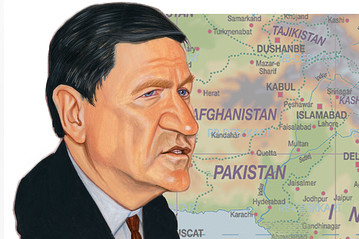
Richard Holbrooke: The Death of a Peacemaker

By Manzer Munir for Pakistanis for Peace

President George H.W. Bush once described him as the “most persistent advocate I’ve ever run into.” President Obama’s special envoy to Afghanistan and Pakistan, Ambassador Richard Holbrooke, died earlier today after complications from heart surgery. He was a gifted diplomat and a tough negotiator who was considered one of the superstars of international diplomacy. Richard Holbrooke died Monday evening at George Washington University Hospital after doctors had performed emergency surgery Saturday to repair a tear in his aorta, the largest artery in the human body responsible for carrying blood from the heart to all parts of the body.

Described only days ago by President Obama as a “towering figure in American diplomacy,” Holbrooke was a career diplomat who started his career in 1962 as an officer during the Vietnam War where he initially worked at the US Agency of International Development. He continued to work on Vietnam issues during the war under President Lyndon B. Johnson and was a part of the delegation that presided in Paris for the peace negotiations to end the war. He also served as the director of the Peace Corps in Morocco in the early 1970’s as well as the assistant secretary of state for East Asian and Pacific Affairs in the Carter administration. He was in charge of US ties with China when relations between the two countries were “normalized” in late 1978.

Later in his career, he also held senior positions at a few prestigious Wall Street firms before returning to diplomacy under the Clinton administration. During this time he was credited with his most illustrious achievement to date when he helped orchestrate the Dayton peace agreement which ended the horrific war and genocide in Bosnia. He later went on to write a memoir titled “To End a War” and become somewhat of a celebrity in the Balkans, and is widely believed to have become the Secretary of State under Hillary Clinton if she had won. He also went on to serve as the US ambassador to Germany as well as the United Nations under President Bill Clinton before being tapped by the incoming Obama administration with the herculean task of being the special envoy of the United States to Afghanistan and Pakistan.

His last assignment was arguably his most difficult as he himself stated that “There’s no Slobodan Milosevic. There’s no Palestinian Authority. There is a widely dispersed group of people that we roughly call the enemy. There’s also al Qaeda, with which there’s no possibility of any discussion at all.” He mentioned that in the AfPak region, (a term he is credited with having coined), there are a range of militant groups such as the Afghan Taliban, the Pakistani Taliban, the Haqqani Network, Lashkar-e-Taiba, and that “an expert could add another 30.”

Such was the difficulty of his last assignment that some close to him are speculating whether the high level of stress and travels associated with shuttling between Washington, Kabul and Islamabad might have been a factor in causing a tear in his aorta. Certainly the complex and high strung meetings with Karzai and Zardari as well as the delicate balancing acts of diplomacy along with military operations in a region of the world described as “the most dangerous in the world” possibly took a toll on his health.

But to those that knew Richard Holbrooke, he was a man capable of taking on and winning the challenges of this and any difficult assignment as he had done so many times in his career. A New York Times reporter once wrote “if you want somebody to pull the trigger, or close a deal, think Holbrooke.”

Tonight in Washington DC, President Obama, Secretary Clinton, and the thousands of employees of the US State Department mourn the death of this icon of American diplomacy and celebrate his lifelong service to the United States and the American people in search of peace in troubled spots the world over. Meanwhile, thousands of miles away, a job vacancy has sadly opened up in the dangerous AfPak region of the world for an assignment that no one is capable of fulfilling quite like Mr Holbrooke. For the sake of the success in the Afghan war, peace and stability in Pakistan and securing America’s vital national interests in the region and around the world, let us hope that his successor will be half as capable a diplomat and negotiator as the late Richard C. Holbrooke, truly a giant of American diplomacy.

–Manzer Munir, a proud Pakistani American and peace activist, is the founder of Pakistanis for Peace and blogs at http://www.PakistanisforPeace.com as well at other websites as a freelance journalist and writer.

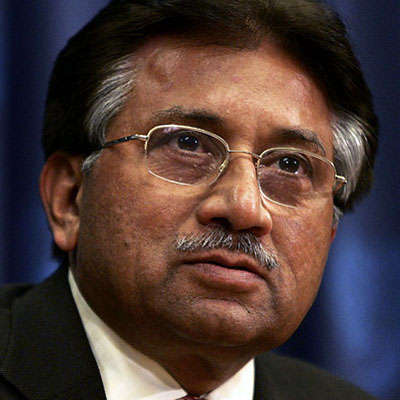
India Denies Visa to Former Pakistan President Musharraf

By Anjana Pasricha for The Voice of America

Indian officials have confirmed that former Pakistani President Pervez Musharraf has been denied a visa. They did not give a reason.

Mr. Musharraf had been invited to speak at a seminar organized by business professionals in New Delhi.

Several of Mr. Musharraf’s supporters, who were planning to visit India with him, were also denied a visa. The former Pakistani military ruler, who lives in Britain, is attempting a political comeback and launched a political party in October.

Foreign affairs observers say that India wants to avoid providing a platform for Mr. Musharraf’s political ambitions, which they believe would be sending a wrong message to the civilian government in Islamabad.

“With Mr. Musharraf threatening to go back to Pakistan to start a political career, the Indian government is not very comfortable with helping him enlarge his political portfolio or image,” said Bharat Karnad, a strategic affairs analyst with the independent Center for Policy Research in New Delhi.

New Delhi has also been irked by Mr. Musharraf’s recent comments that India is responsible for creating unrest in Pakistan’s south-western Balochistan province, and that India is trying to create an anti-Pakistan Afghanistan.

Mr. Musharraf was army chief when India and Pakistan came close to a fourth war in 1999. Later, when he became Pakistan’s military ruler, the South Asian rivals embarked on a peace process which lowered tensions and led to a ceasefire along their tense Kashmir border.

That ceasefire is still holding. But the peace process remains stalled since the November 2008 terror attacks in Mumbai, which India says were planned by the Pakistan-based Lashkar-e-Taiba.

Karnad says New Delhi is unlikely to resume a full-fledged peace dialogue with its rival until its repeated calls to clamp down on groups directing terror at India are heeded.

“There has to be something on the ground is what Delhi wants by way of reassurance before it gets into thinking of resuming the composite dialogue,” added Karnad. “There is no give on Pakistan’s part, so there is unlikely to be any movement in Delhi.”

The top Indian demand is that Islamabad speed up the trial of the Lashkar-e-Taiba operatives it accuses of planning the Mumbai attacks.

Pakistan Rejects U.S. Drone Expansion

By Alex Rodriguez for The LA Times

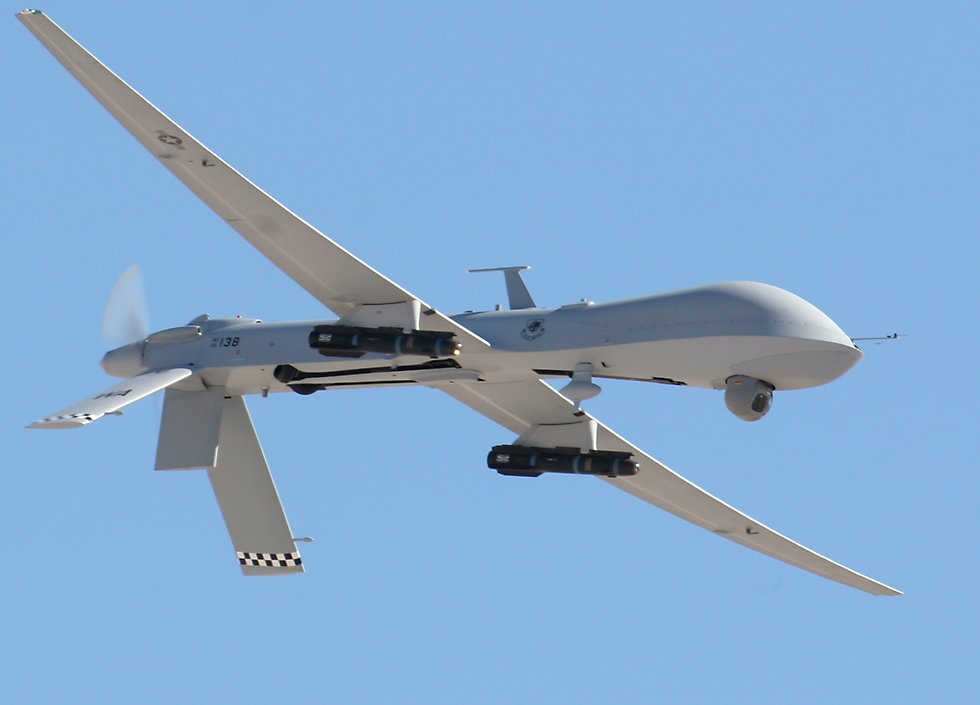
Pakistan has rejected a request from the U.S. to expand a drone missile campaign against Al Qaeda and Taliban militants, a decision that limits Washington’s use of one of its most effective tools against insurgents hiding in the nation.

Pakistani Foreign Ministry spokesman Abdul Basit said Islamabad would not allow the U.S. to carry out drone strikes outside the tribal belt along the Afghan border and repeated the government’s request that Washington abandon its use of drones in Pakistan on the grounds that the program violates the country’s sovereignty.

Basit did not say which additional areas the U.S. wanted to target. However, the Washington Post reported Saturday that the request focused on areas outside the southern city of Quetta, where Afghan Taliban leaders have hideouts.

“We are allies of the United States in the war against terror,” Basit said. “However, Pakistan will not compromise on sovereignty.”

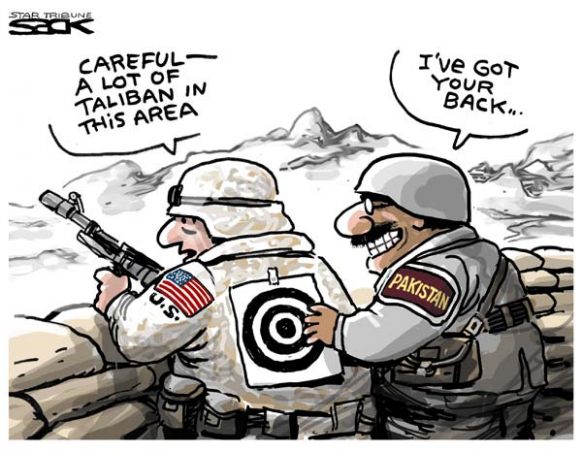
Islamabad’s refusal comes as little surprise, given the animosity that the drone campaign has stirred among Pakistanis for years, but even as the government publicly condemns the drone program, it tacitly allows the missile strikes to take place. Pakistan even provides intelligence to facilitate the targeting of the strikes.

The drone missions are deeply unpopular in Pakistan, where they are viewed as an illustration of President Asif Ali Zardari’s willingness to acquiesce to most demands that Washington makes. Allowing an expansion of the drone program could further aggravate the vulnerability of Zardari’s government, already weakened by its mishandling of this summer’s catastrophic floods and the country’s ongoing economic troubles.

Any expansion of the drone campaign into Baluchistan, the province where Quetta is located, would also represent a dramatic departure in policy for Islamabad because it is not part of the semi-autonomous tribal region where the drones are permitted now.

In addition, the Quetta region is a heavily populated area; the city itself has a population of 900,000. The core leadership of the Afghan Taliban insurgency, known as the Quetta Shura and headed by Mullah Muhammad Omar, has used Quetta and its outlying regions as a sanctuary for years.

In recent months, the U.S. has dramatically stepped up its use of drone strikes in the tribal areas. So far this year, the U.S. has carried out 101 drone missile strikes in northwest Pakistan, compared to 53 in 2009.

The attacks have focused largely on North Waziristan, a primary stronghold of militants and commanders belonging to the Haqqani network, an Afghan Taliban wing regarded by the U.S. as one of the biggest threats facing coalition forces in Afghanistan.

According to the Long War Journal website, which keeps track of drone missile strike statistics, 92 of the attacks this year occurred in North Waziristan.

Alleged Would Be Terrorist Thwarted At Every Turn

By Richard Serrano for The Los Angeles Times

Abdel Hameed Shehadeh, according to the FBI, traveled the world in search of jihad. But Pakistan turned him away, and Jordan did too. He tried to get into Somalia, but U.S. authorities placed him on the no-fly list. An American citizen, he visited an army recruiting station in New York’s Times Square hoping to be sent to Iraq; they did not want him either.

So, the FBI said, the 21-year-old born and raised in New York created websites and posted threats of radical Islamic violence, including one from another American expatriate, Anwar al Awlaki. Then Shehadeh flew to Hawaii and allegedly started taking target practice.

FBI agents said he wanted to join a jihadist group to learn “guerilla warfare and bomb-making.” Had he been welcomed into the U.S. army, they said, his plan was to defect in Iraq and turn against his comrades.

Shehadeh’s journeys ended last Friday. He was arrested in Honolulu and accused in a federal criminal complaint, unsealed Monday, of making false statements in an international terrorism case.

For two and a half years federal officials followed his travels, tracked his websites and enlisted help from his grade school friends. On Tuesday they singled him out as someone much like Awlaki — eager to forfeit his U.S. citizenship for a life of jihad.

Florence T. Nakakuni, the U.S. attorney in Hawaii, said the investigation covered “a six-hour time difference and 5,000 miles.” In New York, FBI assistant director Janice K. Fedarcyk said “stopping one prospective terrorist can prevent untold numbers of casualties.”

Shehadeh faces up to eight years in prison. His Hawaiian attorney, Matthew Winter, said he “wants to return as soon as possible to New York and face the charges there.”

He is slightly built, thin and clean-shaven. He does not evoke the image of an angry Islamic radical. But his arrest comes during a heightened alert over threats from homegrown terrorists.

“My brothers of revolutionary Islam, I am with you as long as you keep struggling,” Shehadeh allegedly posted on his website. “Trust me there are many brothers and sisters in America that are ready to speak up. They just need a push.”

He first drew the eye of FBI agents in June 2008 for signing into the online Expedia travel agency and purchasing a one-way ticket to Pakistan. A New York detective interviewed him at the airport; Shehadeh said he was going to Pakistan to attend an Islamic school there.

Customs and Border Patrol searched his checked baggage. They found a sleeping bag, toiletries, three books and two changes of clothes. When the plane landed at Islamabad, he was not allowed in.

According to the FBI, he created his own websites. One highlighted the “Benefits of Jihad in Our Times.” Another ran speeches from al Awlaki. A third, titled “civiljihad,” included warnings dripping in blood.

He visited the recruiting station at Times Square in October 2008, according to the complaint. The army turned him away because he failed to disclose his trip to Pakistan. Two weeks later he flew to Jordan, but the authorities would not let him in.

The FBI developed two confidential informants who were boyhood classmates of Shehadeh. The agents said they learned Shehadeh wanted American Muslims to travel to Muslim countries and fight against the U.S. He allegedly told them he wanted to die a martyr, that there were “no more excuses” for avoiding jihad. He spoke of an afterlife with 72 virgins.

In June 2009 he purchased a ticket to Dubai. Again FBI agents said they interviewed him; he told them his destination was Somalia. But now he was on the no-fly list; he could not even leave the U.S.

He went to Hawaii. In October 2009, he visited the SWAT Gun Club, and practiced firing an M-16 assault rifle, .45 caliber and 9 mm semi automatic pistols, and a .44 caliber Magnum revolver. Last April, he again spoke to the FBI. The conversation turned to why U.S. muslims become radicalized. The agents said Shehadeh told them, “take my story for example.”

Pakistanis for Peace Editor’s Note– Deranged individuals such as Abdel Hameed Shehadeh, Faisal Shahzad, and Nidal Malik Hasan do not deserve American citizenship and all the freedoms and privileges it entails. The US government must remain vigilant and suspicious of anyone who espouses treasonous acts against the republic and its interests regardless of their race, ethnicity, citizenship, religion or any other identifying characteristic. It is our hope that the Obama administration will continue to remain proactive and alert in apprehending and stopping all individuals who pose danger to the country and patriotic Muslim Americans must continue to do more to assist the nation in keeping safe.

The Pakistan Paradox

By Bret Stephens for The Wall Street Journal

Any serious observer of the war in Afghanistan will tell you that we can’t win without striking hard at the safe havens the Taliban and its allies enjoy in Pakistan. That means going beyond drone strikes and deploying ground forces in places like North Waziristan.

Any serious observer of Pakistan will also tell you that such strikes would complicate, and perhaps fatally compromise, our relations with the country whose cooperation we require to win in Afghanistan.

Both observations are on the mark. Isolating the battlefield is a cardinal rule of warfare. So long as the Taliban can shrink away to Pakistan to lick their wounds and plot their return—as they have in the wake of their recent reversals in Kandahar—then we have failed to isolate them. Yet if Pakistan should begin to turn against us—as they briefly did earlier this month following the accidental killing of Pakistani border guards in a NATO strike—then we are the ones who will be isolated.

So how do we finesse the Pakistan paradox?

It helps to see the country for what it is. Pakistan suffers from an abandonment complex rooted in historical facts, especially the Pressler Amendment that cut off Pakistan-U.S. military ties throughout the 1990s. Those fears are compounded by a national paranoia that is the product of conspiracy theory, misplaced indignation and jingoism. The country’s elites typically divide between secularists, mainly feudal aristocrats or corrupt parvenus like President Asif Ali Zardari, and Islamists of either conservative or radical bent.

Standing astride the Islamist-secular divide is the military, which profits from cultivating both connections and is Pakistan’s most competent—and least accountable—institution. Down below is an ethnically fractious and largely destitute population of 170 million people, just emerging from a flood that swamped 20% of the country.

From this unsavory stew it’s unrealistic to expect a high degree of clarity or consistency in Pakistani policy. At best it leans one way or the other, never very far and rarely for very long. Mr. Zardari’s government has deployed the army against the Taliban, or parts of it, and consented to a dramatic increase in Predator strikes. But that’s happening concurrently with the intelligence service, or ISI, providing material aid to the al Qaeda-linked Haqqani network, and failing (or more likely refusing) to break up the so-called Quetta Shura of Mullah Mohammed Omar.

If there’s an overarching logic here it’s that Islamabad wants to preserve its options. Uncertainty about U.S. staying power in Afghanistan helps explain why Pakistan will not entirely forsake its erstwhile clients in the Taliban and the mujahedeen. Pakistani fears are further exacerbated by America’s recent tilt toward India. And while the Obama administration has made much of its aid packages for Pakistan—$1.5 billion a year on the civilian side, followed last week by the announcement of another $2 billion for the military—Pakistani officials complain that only a small fraction of the funds have been disbursed.

What, then, to do? First, instead of publicly lecturing Pakistanis on how they need to get tough with the Taliban, the administration would do better to make good on its existing commitments. Say what you will about Mr. Zardari’s abilities, he has aided the U.S. military effort in a way his predecessor Pervez Musharraf, supposedly a pro-American strongman, never did.

That’s a relationship to build on, quietly and incrementally, not to tear down. So it would be helpful if the administration doesn’t repeat the mistake of blabbing to Bob Woodward, whose book may have helped Mr. Obama seem more presidential but didn’t do any favors to his presidency.

Equally helpful would be to stop mindlessly demanding that military assistance to Pakistan go toward fighting the Taliban instead of arming against India. The missing ingredient in Pakistan’s counterinsurgency effort isn’t the right military tool kit, such as night-vision goggles or Apache helicopters. It’s the will of the Pakistani general staff to cooperate more fully in the fight. If that cooperation can be secured by selling conventional weapons such as F-15s and M-1 tanks to Pakistan, so much the better.

(As for India, it has less to fear from a reasonably well-armed, confident Pakistani army that has strong ties to the U.S. than it does from a poorly armed Pakistan that mistrusts the U.S. and continues to consort with jihadists as a way of compensating for its weakness.)

Finally, the administration ought to understand that Pakistan’s reluctance to defeat the Taliban at any price is a mirror image of our own reluctance. The July 2011 “deadline” to begin withdrawing troops was bound to affect Islamabad’s calculations, and not for the better. The sooner we junk it, the better the cooperation we’ll get.

It’s an old American habit to lament the incompetence and duplicity of our wartime allies, and Pakistan abounds in both qualities. But unless we are prepared to deal with Pakistan as an adversary, we must make do with it as a friend.

Flood Relief: A US Helicopter Pilot’s Tale

By John Bockmann for The Express Tribune

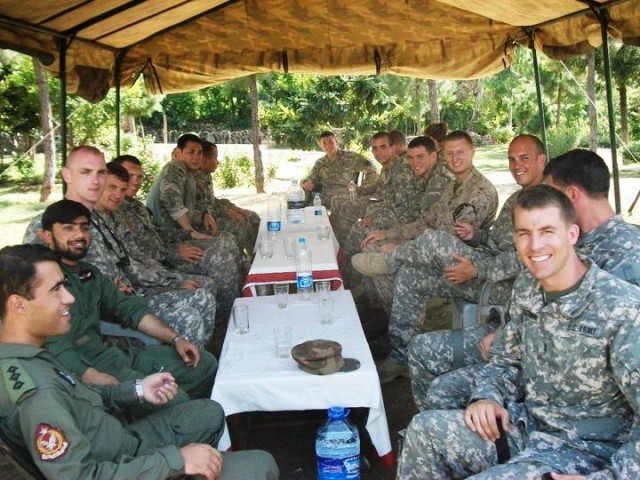
I am an American helicopter pilot in Pakistan.  My colleagues and I came because Pakistan and its people are enduring the aftermath of a devastating flood.  We were ordered to be here, and we miss our homes, but most of us are glad to help because we believe it’s the right thing to do.

I did not know much about Pakistan before I arrived here.  I knew of the food.  I knew of monsoons and Mohenjo Daro, Karachi and the Khyber Pass, but I had no concept of what Pakistan looked, felt, or sounded like. I even thought many Pakistanis would want us to leave.

I had no idea what the people would be like in person.  I wondered if they would resemble the images I’d seen on TV – would they protest our presence in the streets?  Would they tolerate us?  Or would they simply ignore us and go about their business?

After a few weeks of packing and planning, we were ready to deploy.  Full of excitement and some anxiety, I kissed my wife, took one last picture and was gone. We flew on a cargo jet from Alaska to Islamabad and the flight took so long I hardly knew whether it was day or night when we finally arrived.  Shouldering my gear, I headed to the terminal, weaving among Pakistani military and civilians on the tarmac.  A US Marine captain guided my group inside where we filled out information cards and relaxed in the cool quietness, surveying our area; smooth stone floors, low-slung furniture, and ceiling fans spinning high above.  The captain was talking to a Pakistani man who had been helping us.  Before we left, the man shook my hand and looked me in the eyes. “Thank you for coming to my poor country,” he said quietly.

I wanted to convey the depth of my feelings toward him and his homeland, but all I said was, “You would probably do the same for us” as I walked away.

That was my first interaction with a Pakistani here.

The days since arriving have passed quickly.  Every day we take rice, flour, blankets, housing materials, cooking oil – anything – up and down the Swat and Indus River Valleys.  We also bring sick, injured, and displaced people to hospitals and hometowns.

My first mission took us up the Indus river valley, and I embarrassed myself by constantly exclaiming its beauty.  Below me was the Karakorum Highway – the old Silk Road into China – and the valley itself, with terraced farmland overshadowed by majestic, snow-capped mountains.

Along with the beauty, though, I see reminders of the flood, bridges that are broken or missing and roads and fields that have been washed away.  I am beginning to see widespread reconstruction now as well and feel hope for the people in these villages.  They will soon have another way to get help.

I realize that some who read this will question our intentions and some may even wish us ill.  I certainly did not imagine that cheering throngs would greet us at each village though – we are always welcomed.  I did not expect our goodwill to be taken at face value by all of Pakistan, but we have received immense support.

I have learned in my time here that Pakistani people are truly gracious.  Strangers have invited me for chai and conversation.  Almost anyone will shake my hand and ask my name, inquire about my health and how I am getting along.  Instead of a handshake at our first meeting, I have sometimes been embraced.  “Strangers shake hands,” my new friend Mahmood explained, “but brothers hug each other.”

This warms my heart.  My mission, our mission, is straightforward, noble, and good.  I am deeply grateful to those who support us here, for we need all the help we can get in order to help those in need.   I am honored to do this work. I feel at home here beyond anything I could have expected.

Ah, home!  I miss my home, my wife and family; each day I wonder when I will see them again. But we have a humanitarian mission to accomplish.  Since I must be away, I’m glad that I am here, doing work that’s needed and good.

When I do return home, I will bring with me hundreds of pictures, dozens of journal entries, six duffel bags, and several recipes for local dishes that I have enjoyed, but I will also bring innumerable memories that I will treasure for life — memories of Pakistan and its people.  They have surprised me with friendship.  I hope that through our work of compassion we may surprise them with friendship as well.

Meeting Pakistanis, U.S. Will Try to Fix Relations

By Mark Landler and Eric Schmitt for The New York Times
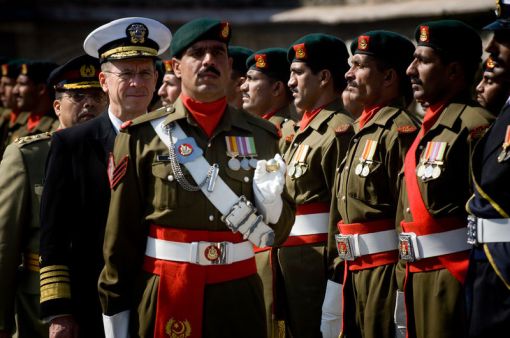
WASHINGTON — As Pakistani civilian and military leaders arrive here this week for high-level meetings, the Obama administration will begin trying to mend a relationship badly damaged by the American military’s tough new stance in the region.

Among the sweeteners on the table will be a multiyear security pact with Pakistan, complete with more reliable military aid — something the Pakistani military has long sought to complement the five-year, $7.5 billion package of nonmilitary aid approved by Congress last year. The administration will also discuss how to channel money to help Pakistan rebuild after its ruinous flood.

But the American gestures come at a time of fraying patience on the part of the Obama administration, and they will carry a familiar warning, a senior American official said: if Pakistan does not intensify its efforts to crack down on militants hiding out in the tribal areas of North Waziristan, or if another terrorist plot against the United States were to emanate from Pakistani soil, the administration would find it hard to persuade Congress or the American public to keep supporting the country.

“Pakistan has taken aggressive action within its own borders. But clearly, this is an ongoing threat and more needs to be done,” the State Department spokesman, Philip J. Crowley, said Monday. “That will be among the issues talked about.”

The Pakistanis will come with a similarly mixed message. While Pakistan is grateful for the strong American support after the flood, Pakistani officials said, it remains frustrated by what it perceives as the slow pace of economic aid, the lack of access to American markets for Pakistani goods and the administration’s continued lack of sympathy for the country’s confrontation with India.

Other potentially divisive topics are likely to come up, too, including NATO’s role in reconciliation talks between President Hamid Karzai of Afghanistan and the Taliban. Pakistani officials say they are nervous about being left out of any political settlement involving the Taliban.

Still, in a relationship suffused by tension and flare-ups — most recently over a NATO helicopter gunship that accidentally killed three Pakistani soldiers and Pakistan’s subsequent decision to close a supply route into Afghanistan — this regular meeting, known here as the strategic dialogue, serves as a lubricant to keep both countries talking.

At this meeting, Secretary of State Hillary Rodham Clinton will formally introduce the new American ambassador to Pakistan, Cameron Munter. Mr. Munter, who recently served in Iraq, replaces Anne W. Patterson, who just wrapped up her tour of duty in Islamabad.

“No country has gotten more attention from Secretary Clinton than Pakistan,” said Richard C. Holbrooke, the administration’s special representative for Afghanistan and Pakistan. Pakistan’s delegation will be led by its foreign minister, Shah Mahmood Qureshi, but much of the attention will be on another official, the military chief, Gen. Ashfaq Parvez Kayani, who is viewed by many as the most powerful man in Pakistan.

White House and Pentagon officials said one immediate goal of this meeting was to ease the tensions that led Pakistan to close the border crossing at Torkham, halting NATO supplies into Afghanistan. Officials on both sides said that acrimony from the border flare-up had already receded, soothed by the multiple apologies that American officials made to Pakistan last week.

Last week, Adm. Mike Mullen, the chairman of the Joint Chiefs of Staff, said that General Kayani had assured him that Pakistan’s army would tackle the North Waziristan haven, but on Pakistan’s timetable. In an interview, Pakistan’s ambassador to the United States, Husain Haqqani, said, “Our American partners understand that we have 34,000 troops in North Waziristan. Our soldiers have been engaged in flood relief after history’s worst floods. It is not a question of lack of will.”

The new security pact would have three parts: the sale of American military equipment to Pakistan, a program to allow Pakistani military officers to study at American war colleges and counterinsurgency assistance to Pakistani troops.

Currently, the United States spends about $1.5 billion a year to provide this same assistance, but it is doled out year by year. The new agreement, if endorsed by Congress, would approve a multiyear plan assuring stability and continuity in the programs, although Congress would continue to appropriate the financing on a yearly basis. “This is designed to make our military and security assistance to Pakistan predictable and to signal to them that they can count on us,” said a senior official.

At the last dialogue in Islamabad in July, Mrs. Clinton presented more than $500 million in economic aid, including plans to renovate hospitals, upgrade hydroelectric dams, improve water distribution and help farmers export mangoes. But the floods upended those plans, and officials said they now planned to redirect funds to more urgent needs.

This week’s meeting will also be shadowed by a new eruption of political instability in Pakistan: the government of President Asif Ali Zardari is locked in a confrontation with the Supreme Court over the court’s demand that senior ministers be fired on corruption charges. Analysts said they were less worried about the atmospherics than the underlying differences in perspective. The administration’s public contrition for the cross-border attack has largely resolved that issue, said Daniel S. Markey, senior fellow for India, Pakistan and South Asia at the Council on Foreign Relations.

But Mr. Markey said he saw potential friction stemming from the American openness to reconciliation with the Taliban. With the United States facilitating rather than guiding the talks, he said, there could be poor coordination between the Afghans, NATO and others — all of which would rattle the Pakistanis.

“Washington is opening the door to a range of negotiations with groups that it has discouraged Pakistan against working with in the past,” he said. “This sends a mixed signal, and cannot help but encourage hedging on Islamabad’s part.”

Another potential bone of contention is one of President Obama’s nuclear objectives: a global accord to end the production of new nuclear fuel. Pakistan has led the opposition to the accord. And without its agreement, the treaty would be basically useless.

Mr. Qureshi blamed the United States for the situation, saying Washington signed a civilian nuclear accord with India that discriminated against Pakistan. “You have disturbed the nuclear balance,” he said in a recent interview in New York, “and we have been forced to develop a new strategy.”

Police: Plot to Kill Pakistan PM Uncovered

By Frederik Pleitgen for CNN

Several people have been seized in a plot to kill Pakistan’s prime minister, and the suspects claim they were getting orders from a militant in the country’s volatile tribal region, police said.

Police official Babar Bakhat Qureshi told CNN that officers arrested several suspects who were plotting to attack the compound of Pakistani Prime Minister Yousaf Raza Gilani.

Shabir Anwar, Gilani’s press secretary, had no comment on the alleged plot because it is a security matter.

The plot to strike the compound, located in the Punjab provincial city of Multan, was in its “final planning stages,” Qureshi said. The location is about 395 kilometers, or 245 miles, southeast of the nation’s capital, Islamabad.

The suspects were planning to use a car bomb for the attack, and that they had acquired large amounts of fertilizer to manufacture an improvised explosive device, since confiscated by police, he said.

A vehicle for the attack had not been acquired yet.

The police confiscated one kilogram of gold and and two and a half kilograms of silver, which the men were going to sell to fund the plot, the official said.

Qureshi said the suspects have confessed that they were getting their orders and instructions from Kari Imram, a leader of a Taliban offshoot group from Miran Shah in North Waziristan. Drone strikes said to be conducted by the United States have targeted militants in North Waziristan, one of seven of the county’s tribal districts.

The arrests were made after police stopped three suspects traveling on two motorcycles near Multan in the town of Ahmed Pur Sharkia on a check during a police patrol. Questioning led police to other suspects.

Envoy Insists Pakistan Will Tackle Terrorists As Attack Kills 3

By Nasir Habib for Cnn

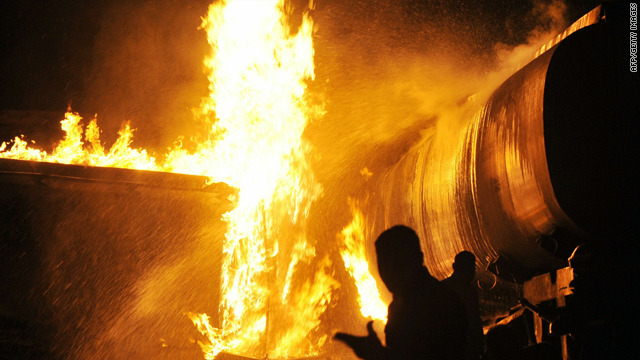
Islamabad, Pakistan (CNN) — Gunmen in Pakistan opened fire on oil trucks bound for NATO forces in Afghanistan, setting some 20 vehicles on fire and killing three, police said Monday. The attack came shortly after Pakistan’s ambassador to the United States vowed his country would go after terrorists on its soil.

Naeem Iqbal, a police spokesman, said five people were wounded in the attack on tankers parked on a main road outside a housing complex near the capital city of Islamabad. Efforts to put out the blaze are ongoing, he said.

Bin Yamin, a deputy police chief, said eight gunmen entered the area on Monday around 12:15 a.m. local time. He said they told people near the trucks to run away and that most did. Then they opened fire.

The tankers were parked in the vicinity of an oil refinery where they were going to go to pick up fuel for NATO forces in Afghanistan, Yamin said. Video images of the scene showed firefighters working to put out flames that stood out in the night against the overturned trucks.

On Sunday, Pakistan’s ambassador to the United States insisted his country would go after terrorists on its soil and needed only “technical” help from Washington, not U.S. troops on the ground.

Husain Haqqani, told CNN’s “State of the Union” that Pakistan would reopen a NATO supply route into Afghanistan “relatively quickly,” probably in less than a week.

Pakistan halted the convoys Thursday after officials blamed cross-border NATO helicopter fire for the deaths of three Pakistani soldiers. Haqqani said the United States and Pakistan were investigating the killings together. He said Pakistan will move against militants on its own schedule, not Washington’s.

“Pakistan is saying we will take care of all terrorists on the Pakistani side of the border, but we will do it on our timeline,” Haqqani said Sunday. “We cannot always follow a timeline that our allies set for us, because we are allies, not a satellite.”

Pakistan has lodged protests against NATO helicopter incursions into its territory — which the International Security Assistance Force says its rules of engagement permit — and is very sensitive about reported U.S. drone strikes in Pakistan.

There were a record number of drone strikes last month, according to a CNN count. On Saturday, three suspected drone strikes killed 18 people.

Pakistani intelligence officials said 10 people died in one drone strike targeting a militant hideout, four people died when a vehicle was struck, and four others were killed when another hideout was targeted.

All three occurred in the Data Khel area of North Waziristan. The intelligence officials did not want to be named because they are not authorized to speak to the media.

Security analysts have described North Waziristan as a haven for various factions of Afghan and Pakistani Taliban and al Qaeda militants. The majority of reported strikes this year have hit targets in the district, a mountainous tribal area on Pakistan’s border with Afghanistan, analysts said.

The United States does not officially acknowledge that it has unmanned aircraft firing missiles at suspected militants in Pakistan, but it is the only country operating in the area that is known to have the ability to do so.

Ambassador Haqqani also said Pakistan couldn’t do everything Washington wants “because sometimes we don’t have the capacity and sometimes we don’t have the means.” He said Pakistan’s geography makes it hard to hit militants.

“Sometimes people in the U.S. think … that it’s all flat land with everything visible. Not even the drones can identify everyone in North Waziristan because of the complexity of terrain,” Haqqani said.

Haqqani also argued that Pakistani politicians, just like U.S. counterparts, are constrained by public opinion. “All politics is local and the local situation in Pakistan is that the United States is not very popular amongst our public,” he said. “The fact remains that an elected democratic government in Pakistan is limited by public opinion to the extent of what it can do,” he said.

China, Pakistan Discuss Another Nuclear Plant

By Jeremy Page for The Wall Street Journal

BEIJING—China’s main nuclear power company announced that it is in talks to build a one-gigawatt nuclear power plant in Pakistan, even as the two countries face U.S. and Indian concerns over their cooperation to build other plants in Pakistan.

Pakistan has not signed the Nuclear Non-Proliferation Treaty, and U.S. and Indian officials worry that nuclear material might fall into the hands of al Qaeda and Taliban militants based near the Afghan border in northwestern Pakistan.

The state-run China National Nuclear Corp. has already helped Pakistan build its main nuclear power facility at Chashma in Punjab province, is completing a second reactor there and has contracts to build two more 300-megawatt reactors.

Qiu Jiangang, vice president of CNNC, told a meeting in Beijing on Monday that the first reactor was operating safely, the second one was now being tested and expected to start formal operations by the end of the year. “Both sides are in discussions over the CNNC exporting a one-gigawatt nuclear plant to Pakistan,” he added, without giving details.

There was no immediate reaction from the U.S. or India. Officials from both countries expressed concern after China signed a deal in February to build the additional two 300-MW reactors. U.S. officials said such plans required special exemption from the 46-nation Nuclear Suppliers Group, which China joined in 2004, and which is supposed to regulate the global nuclear trade.

Vann H. Van Diepen, the U.S. acting assistant secretary of state for international security and nonproliferation, suggested before the House Foreign Affairs Committee in July that the U.S. would vote against such an exemption.

The U.S. and many other NSG members have long had concerns about nuclear proliferation from Pakistan, especially since A.Q. Khan, its top nuclear scientist, confessed in 2004 to selling nuclear secrets to North Korea, Iran and Libya.

Abdul Basit, a Pakistani Foreign Ministry spokesman, declined to comment on the one-gigawatt plant, but said Pakistan’s nuclear cooperation with China was for civilian purposes. “The nuclear cooperation between the two countries are in accordance with international obligations and comes under IAEA safeguards,” he said, referring to the International Atomic Energy Agency.

China and Pakistan argue that the U.S. set a precedent by sealing a landmark deal to sell civilian nuclear fuel and technology to India in 2006 even though New Delhi had yet to sign the NPT.

That agreement, which lifted a U.S. ban imposed after India tested its first nuclear device in 1974, is seen as the cornerstone of a new partnership with New Delhi designed to counterbalance China’s influence in Asia.

Critics, however, say it undermined the global non-proliferation regime by recognizing India as a global nuclear power, but not Pakistan, even though the South Asian rivals developed nuclear bombs simultaneously.

How Pakistan’s Floods Have Made Women Dangerously Visible

By Rania Abouzeid for TIME

Nagina drew her modest light-green cotton dupatta, the scarf that Pakistani women drape over their arms, head and chest, up over her face as she cautiously peered out from a muddy white tent to watch her youngest child, a barefoot, trouserless four-year-old boy in a navy blue shirt streaked with mud. The timid Pathan woman has four other children, three older girls and a boy, but her daughters are not with her in this overcrowded cluster of tents known as the Khandar relief camp in Nowshera, a flood-devastated northwestern district some 90 miles west of the capital Islamabad in the insurgency-plagued, religiously conservative Khyber Pakhtunkwa province. “We are trying to keep the girls away,” Nagina says, “because parda is impossible now.”

Parda, which is also spelled “purdah” and means “curtain” in Urdu, is the practice of shielding women from men they are not directly related to, both through physical segregation and through the custom of modesty, that is, with the women wearing clothing to conceal their shape. It is observed by many women in rural areas of Pakistan, including in the majority-Pathan northern belt bordering Afghanistan. In these parts, a family’s honor is often tied to the chastity and obedience of its women — and protecting and defending the honor of women from verbal and physical harm is part of an ancient code of honor and revenge. But the code is all too often taken to extremes. Barely a week goes by without stories appearing in the Pakistani media about an enraged male — from across Pakistan’s multiethnic spectrum — who has killed his female relative or relatives for some perceived infringement of “honor.” For women adhering to Parda, it’s usually easier and safer for them to simply remain secluded in their homes.  

The floods have made that option unavailable in many places. Desperation has driven women to vigorously jostle with men for limited relief goods at distribution points. Overcrowding and densely pitched tents have forced them into close quarters with men they don’t know, the flimsy canvas coverings providing little privacy from prying eyes. In the camp at Nowsherra, Adiba nods in gloomy agreement as her sister-in-law Nagina discusses the limits of parda amid the calamity . Her tribal tattoos — a green dot on her forehead and another on her chin — mark her as a member of a conservative tribe from the Taliban-infested town of Bajaur. Both women say their husbands are understanding of the conditions but they fear that their men’s patience will run out. “My husband is very upset,” says Adiba, a mother of six. “This is why we’re just sitting in our tents during the day and the night, like in a cage.”  

Pakistan’s northwest, the first region to be hit by the floods and the most devastated, “is an extremely conservative society,” says Imtiaz Gul, author of The Most Dangerous Place, a book about the Pakistan’s northwestern tribal belt bordering Afghanistan. “You hardly see women outside and they hardly have any role except for cooking and cleaning the house and that’s about it.”  

Nagina, like many of the women in Nowsherra’s camps and other places the Pathan have sought refuge from the waters, has sent her unmarried daughters away to live with relatives whose homes were not washed away by the deluge. She hasn’t seen them for a month. “We have no choice,” she says sullenly. “This situation is forced on us.”

Gul says that the longer it takes to get people back to their homes, the greater the possibility of social unrest between men from different conservative towns who have been thrown together. The situation “is pregnant with the possibility of social friction,” he says. “Frustrations will start boiling over. People are saying the worst is over, but I would say that the worst has just started.”

Akbar Ali, a 27-year-old driver who has been in the Khandar camp for 18 days now with his wife and two-year-old daughter, is simmering. He is desperately trying to rent a house at any price he says, to get his family indoors, but there’s little left on the market. He has been offered work, but turned it down because he did not want to leave his wife, who used to be in parda, alone in the camp. “We are all Pathan but we are still very different from each other. The men move around the camp. I’m just afraid that one day if they say something to my wife, it will cause a problem, a fight because I will have to respond, it’s my duty.”

As relative newcomers to the camp, Ali and his small family had missed out on securing a tent on the grounds of the Government College of Technology, or a space inside the school’s two-storey brick structure. The classrooms were already brimming with evacuees, packed four or five families per room, by the time he arrived. And so, he has had to make do with a slab of concrete outside the college cafeteria open to the elements. “We have become like dogs,” he says bitterly from behind dark sunglasses. “Wherever we hear that relief supplies have arrived, we just run after them.”

To avoid violence, he and the several other men whose families are also squatting along the cafeteria wall, have banded together to try and prevent strangers from approaching them. “Some people have tried to come around here, but they only try once,” Ali says. “They know not to come around again.”