Posts Tagged ‘ Osama Bin Laden ’

Pakistan Stops NATO Supplies After Deadly Raid

By Shams Momand for Reuters

NATO helicopters and fighter jets attacked two military outposts in northwest Pakistan Saturday, killing as many as 28 troops and plunging U.S.-Pakistan relations deeper into crisis.

Pakistan shut down NATO supply routes into Afghanistan – used for sending in nearly half of the alliance’s land shipments – in retaliation for the worst such incident since Islamabad uneasily allied itself with Washington following the September 11, 2001 attacks on the United States.

Islamabad also said it had ordered the United States to vacate a drone base in the country, but a senior U.S. official said Washington had received no such request and noted that Pakistan had made similar eviction threats in the past, without following through.

NATO and U.S. officials expressed regret about the deaths of the Pakistani soldiers, indicating the attack may have been an error; but the exact circumstances remained unclear.

“Senior U.S. civilian and military officials have been in touch with their Pakistani counterparts from Islamabad, Kabul and Washington to express our condolences, our desire to work together to determine what took place, and our commitment to the U.S.-Pakistan partnership which advances our shared interests, including fighting terrorism in the region,” said White House national security council spokesman Tommy Vieter.

U.S. Secretary of State Hillary Clinton and Pakistani Foreign Minister Hina Rabbani Khar spoke by telephone, as did General Martin Dempsey, the chairman of the Joint Chiefs of Staff, and Pakistani Chief of Army Staff General Ashfaq Parvez Kayani.

The NATO-led force in Afghanistan confirmed that NATO aircraft had probably killed Pakistani soldiers in an area close to the Afghan-Pakistani border.

“Close air support was called in, in the development of the tactical situation, and it is what highly likely caused the Pakistan casualties,” said General Carsten Jacobson, spokesman for the International Security Assistance Force (ISAF).

He added he could not confirm the number of casualties, but ISAF was investigating. “We are aware that Pakistani soldiers perished. We don’t know the size, the magnitude,” he said.

Pakistan’s Prime Minister Yusuf Raza Gilani said the killings were “an attack on Pakistan’s sovereignty,” adding: “We will not let any harm come to Pakistan’s sovereignty and solidarity.”

Pakistan’s Foreign Office said it would take up the matter “in the strongest terms” with NATO and the United States, while army chief Kayani said steps would be taken to respond “to this irresponsible act.”

“A strong protest has been launched with NATO/ISAF in which it has been demanded that strong and urgent action be taken against those responsible for this aggression.”

Two military officials said up to 28 troops had been killed and 11 wounded in the attack on the outposts, about 2.5 km (1.5 miles) from the Afghan border. The Pakistani military said 24 troops were killed and 13 wounded.

The attack took place around 2 a.m. (2100 GMT) in the Baizai area of Mohmand, where Pakistani troops are fighting Taliban militants. Across the border is Afghanistan’s Kunar province, which has seen years of heavy fighting.

“Pakistani troops effectively responded immediately in self-defense to NATO/ISAF’s aggression with all available weapons,” the Pakistani military statement said.

The commander of NATO-led forces in Afghanistan, General John R. Allen, offered his condolences to the families of Pakistani soldiers who “may have been killed or injured.”

Dempsey’s spokesman, Colonel David Lapan, could not confirm the closure of the Pakistani border crossing to trucks carrying supplies for ISAF forces. However, he noted that “if true, we have alternate routes we can use, as we have in the past.”

POORLY MARKED

Around 40 troops were stationed at the outposts, military sources said. Two officers were reported among the dead. “They without any reasons attacked on our post and killed soldiers asleep,” said a senior Pakistani officer, requesting anonymity.

The border is often poorly marked, and Afghan and Pakistani maps have differences of several kilometres in some places, military officials have said.

However, Pakistani military spokesman Major-General Athar Abbas said NATO had been given maps of the area, with Pakistani military posts identified.

“When the other side is saying there is a doubt about this, there is no doubt about it. These posts have been marked and handed over to the other side for marking on their maps and are clearly inside Pakistani territory.”

The incident occurred a day after Allen met Kayani to discuss border control and enhanced cooperation.

A senior military source told Reuters that after the meeting that set out “to build confidence and trust, these kind of attacks should not have taken place.”

BLOCKED SUPPLIES

Pakistan is a vital land route for nearly half of NATO supplies shipped overland to its troops in Afghanistan, a NATO spokesman said. Land shipments account for about two thirds of the alliance’s cargo shipments into Afghanistan.

Hours after the raid, NATO supply trucks and fuel tankers bound for Afghanistan were stopped at Jamrud town in the Khyber tribal region near the city of Peshawar, officials said.

The border crossing at Chaman in southwestern Baluchistan province was also closed, Frontier Corps officials said.

A meeting of the cabinet’s defense committee convened by Gilani “decided to close with immediate effect NATO/ISAF logistics supply lines,” according to a statement issued by Gilani’s office.

The committee decided to ask the United States to vacate, within 15 days, the Shamsi Air Base, a remote installation in Baluchistan used by U.S. forces for drone strikes which has long been at the center of a dispute between Islamabad and Washington.

The meeting also decided the government would “revisit and undertake a complete review of all programs, activities and cooperative arrangements with US/NATO/ISAF, including diplomatic, political, military and intelligence.”

A similar incident on Sept 30, 2010, which killed two Pakistani service personnel, led to the closure of one of NATO’s supply routes through Pakistan for 10 days. NATO apologised for that incident, which it said happened when NATO gunships mistook warning shots by Pakistani forces for a militant attack.

Relations between the United States and Pakistan were strained by the killing of al Qaeda leader Osama bin Laden by U.S. special forces in Pakistan in May, which Pakistan called a flagrant violation of sovereignty.

Pakistan’s jailing of a CIA contractor and U.S. accusations that Pakistan backed a militant attack on the U.S. embassy in Kabul have added to the tensions.

“This will have a catastrophic effect on Pakistan-U.S. relations. The public in Pakistan are going to go berserk on this,” said Charles Heyman, senior defense analyst at British military website Armedforces.co.uk.

Other analysts, including Rustam Shah Mohmand, a former ambassador to Afghanistan, predicted Pakistan would protest and close the supply lines for some time, but that ultimately “things will get back to normal.”

Pakistan’s New U.S. Envoy Faces Tough Task Ahead

As Reported by Xinhuanet

A journalist-turned politician, Ms. Sherry Rehman, will soon proceed to Washington to assume responsibility as Pakistan’s new ambassador where she would face tough task as how to bridge the trust gap with the United States.

Prime Minister Yusuf Raza Gilani appointed Sherry Rehman as Pakistan’s new ambassador in Washington a day after her predecessor Hussain Haqqani resigned over a recent claim by a Pakistani-American business tycoon that he had been asked by Haqqani to deliver the alleged President Asif Ali Zardari’s memo to the former U.S. Chairman of the Joint Chiefs of Staff Mike Mullen, seeking Washington’s help to rein in the powerful army.

Haqqani, who was summoned to Pakistan this week after the memo controversy dragged the country into crisis, was asked by the Prime Minister to quit during a meeting attended by the President, the Army Chief General Ashaq Pervaiz Kayani and Intelligence Chief, Lt. Gen. Ahmad Shuja Pasha in Islamabad on Tuesday.

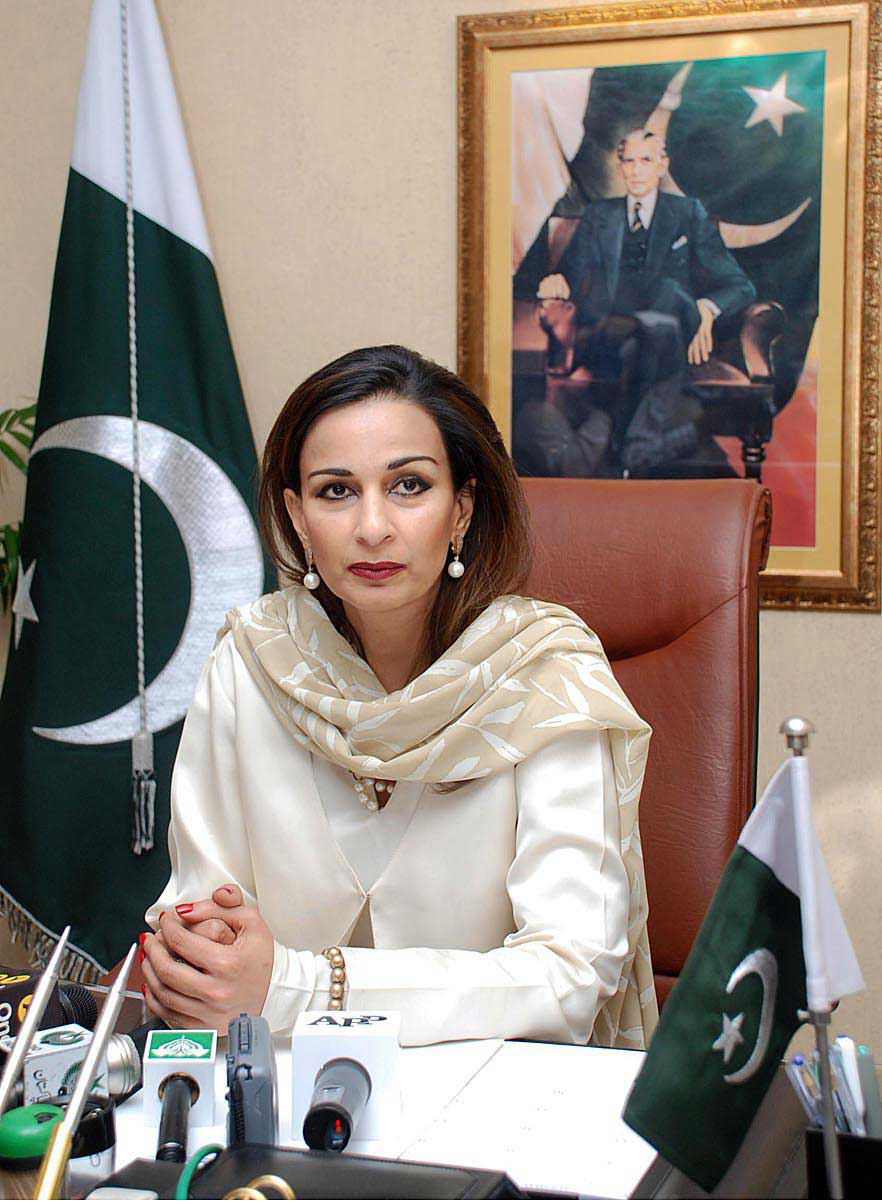
Sherry Rehman, a former Information Minister and current member of the National Assembly or Lower House of the parliament, is also a central leader of the ruling Pakistan Peoples Party. She was chosen for the key post only because of her association with the ruling party as she has no diplomatic career. Islamabad routinely appoints ambassadors to the United States on a political basis. Several retired military men have also served as the country’s ambassadors to the U.S..

The Pakistani government has designated a political loyalist and the woman ambassador to the U.S at a time when mistrust between the two key allies in the so-called war on terror is at peak. Pakistan and the U.S. cooperation is considered a key to stability in Afghanistan as Washington is mounting pressure on Islamabad to take measures in “days and weeks” to encourage the Taliban, the dreaded Haqqani network and other Afghan armed groups to join the peace and reconciliation process in the war-ravaged Afghanistan.

“It’s like that old story – you can’t keep snakes in your backyard and expect them only to bite your neighbors. Eventually those snakes are going to turn on whoever has them in the backyard, ” US Secretary of State Hillary Clinton said while standing along with her Pakistani counterpart in Islamabad last month in a blunt message to Pakistan.

The first major challenge the Pakistan new ambassador will have to face is how to address to the U.S. concern about the Afghan Taliban and Haqqani network, which the U.S. officials say are operating from Pakistan’s tribal region. Washington seemed to be in haste on the Afghan peace process in view of its troops’ withdrawal, which already began in July and will be completed by 2014.

The Pakistani Taliban is also an issue for the U.S. as the CIA says that they are sheltering Afghan armed militants in the country’s lawless tribal regions bordering Afghanistan. In view of its frustration, the U.S. routinely uses its spy aircraft to hit targets in Pakistan tribal regions, which is also a source of tension in bilateral relationship and the U.S. is in no mood to stop drone strikes despite Pakistan’s criticism.

The new Pakistani ambassador will also have to convince the U.S. administration to unblock the suspended military aid to Pakistan. The U.S. withheld some 800 million US dollars in assistance to the country’s armed forces in July just two months after Osama bin Laden was killed in a U.S. military raid, the U.S. unilateral action had itself worsened relationship. The U.S. has also attached tough conditions with the civilian aid for Pakistan.

Pakistan is nowadays under fire during the Presidential nomination campaign in the U.S. and even on Tuesday Republican presidential candidates attacked Pakistan in their foreign policy debate. The Republican presidential hopefuls ganged up on Pakistan and questioned whether the United States could trust it. Texas Governor Rick Perry called Pakistan unworthy of U.S. aid because it had not done enough to help fight al-Qaida.

Criticism at Pakistan by the Republican hopefuls shows how much tough environment she would face after she assumes the office of ambassador in the coming days. She vowed on Wednesday, a day when she was designated as ambassador, to work for improvement of ties with the U.S..

The United States on Wednesday acknowledged the impending change of guard at the Pakistani embassy in Washington as they praised deposed Ambassador Husain Haqqani for his services and announced their anticipation of working with Pakistan’s new Ambassador Sherry Rehman to continue strengthening bilateral ties between the two countries. In Washington too, the State Department spokesman on Wednesday said the U.S. looks forward to working together with her as both countries “continue to build a strong, cooperative relationship between our two countries.”

The former Pakistani ambassador to the U.S. had also good ties with the U.S. administration and his role was praised by the State Department spokesman, Mark Toner, but even then the relationship had been worst during his tenure. Now Sherry Rehman will not only have to address to the U.S. concern but also to serve the interests of Pakistan where a majority of the people are against the U.S. policies.

Fate of Pakistan’s Zardari May Hinge on Scandal of Purported Memo

By Alex Rodriguez for The Los Angeles Times

Did he, or didn’t he?

All over Pakistan, people are asking whether Pakistani President Asif Ali Zardari approved a memo asking for Washington’s help in reining in the country’s powerful military.

The answer could play a role in whether Zardari, already deeply unpopular with both the public and the military, stays in power.

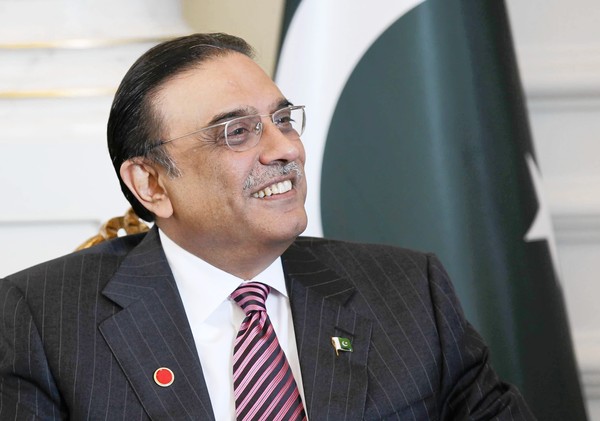
The scandal scorching the airwaves in Pakistani cities and towns now has a name — Memogate — and it is sparking talk of early elections. At the center of it all is Pakistani American businessman Mansoor Ijaz, who says a senior Pakistani diplomat asked him to convey a letter to Washington seeking its help in preventing a military takeover of Zardari’s administration.

In return, the letter stated, the Zardari government would eliminate a wing of the Inter-Services Intelligence spy agency, or ISI, that maintains links with Afghan insurgent groups, and would give U.S. troops “a green light” to root out Afghan militants hiding out in Pakistan’s tribal areas.

Ijaz says Pakistan’s ambassador to the United States, Husain Haqqani, asked him to be the intermediary and that Zardari had endorsed the memo. The explosive allegations prompted Haqqani to offer his resignation as a way of defusing the controversy, though he denies either writing the memo or asking Ijaz to pass it on to Washington.

Unless Haqqani can show that the memo was fabricated, he could be ousted from his post. But analysts say the crisis also casts a shadow on Zardari, who has been criticized by many Pakistanis for his closeness to the American government, which they mistrust, as well as his failure to solve the country’s myriad economic and infrastructure ills.

“It might be a game-changer in the political arena, with the military concluding there’s no way it can trust the Zardari government,” said Pakistani columnist and legal expert Babar Sattar. “If the military isn’t willing to let this go, it could reduce the term of this government. That might be the only resolution: to hold early elections.”

If genuine, the memo sheds a harsh light on the deep rifts between Pakistan’s civilian and military leaders. Although Zardari is president, the military, led by army chief Gen. Ashfaq Kayani, holds ultimate power in Pakistan, as it has for most of the country’s 64-year history. The military thinks Zardari is too acquiescent to Washington’s demands.

The memo purportedly was drafted a week after U.S. commandos killed Al Qaeda leader Osama bin Laden during a secret nighttime raid on his compound in the Pakistani military city of Abbottabad, about a two-hour drive from the capital. It portrays a civilian government convinced that the country’s military leaders were planning a coup against Zardari.

The rationale, Ijaz said in an Oct. 10 op-ed piece in the Financial Times newspaper, was that the military was being heavily criticized by the public and the media for allowing the raid to occur, and needed to make Zardari a scapegoat to deflect blame.

“Request your direct intervention in conveying a strong, urgent and direct message to Gen. Kayani that delivers Washington’s demand for him and [ISI chief Lt. Gen. Ahmed Shuja] Pasha to end their brinkmanship aimed at bringing down the civilian apparatus,” stated the memo, which was delivered to the then-chairman of the U.S. Joint Chiefs of Staff, Adm. Michael G. Mullen. The memo was published on the website of Foreign Policy magazine and by the Pakistani newspaper the News.

“If true, it shows that the civilian government really panicked,” said security analyst Talat Masood, a retired Pakistani general. “It’s extraordinary that they would get so nervous that they would write all this. It shows the deep divide between the civilian leadership and the military.

“If it’s a phony memo, it would recoil back at the [military].”

If the military was behind such a move, it could be aimed at discrediting or weakening Zardari’s government.

“The more likely, but far from certain, scenario? The boys are up to their tricks again,” Cyril Almeida, a columnist for Dawn, an English-language Pakistani newspaper, wrote Friday, referring to the military.

To back up his claims, Ijaz gave the News email that he says he and Haqqani exchanged at the time the memo was drafted and later conveyed to Mullen. On May 10, after the memo was delivered to Mullen, Ijaz allegedly emailed Haqqani, saying, “Ball is in play now — make sure you have protected your flanks.”

Pakistani Envoy Offers to Resign Over Memo

By Salmaan Masood for The New York Times

Pakistan’s ambassador to the United States, Husain Haqqani, has offered to resign amid a political and diplomatic storm in Pakistan over a mysterious memo, which asks for American help in dealing with the Pakistani military and Mr. Haqqani is accused of orchestrating.

Mr. Haqqani denies any involvement with the memo, but he said he offered to resign to end the continuing controversy.

The claims that Mr. Haqqani wrote the memo were made by Mansoor Ijaz, an American citizen of Pakistani origin, who said he was asked to ensure the delivery of the document to Adm. Mike Mullen, who was chairman of the Joint Chiefs of Staff at the time.

Mr. Ijaz described the memo, which he has not made public, as saying that the civilian government in Pakistan was seeking help in preventing a possible military coup in May. The military had just suffered humiliation over the American raid into Pakistan that killed Osama bin Laden.

Mr. Ijaz said that the memo indicated that Pakistan promised, in return, to dismantle a part of its premier intelligence agency — which some American officials have come to distrust.

On Wednesday, Admiral Mullen’s former spokesman, Capt. John Kirby, said that the memo was delivered, but that Admiral Mullen “did not find the memo at all credible.”

“Therefore,” Captain Kirby said, “he addressed it with no one.”

Captain Kirby added that the memo was unsigned and was delivered by someone other than Mr. Ijaz.

Supporters of Mr. Haqqani say that he maintains close contacts with American officials, including Admiral Mullen, and did not need an intermediary to deliver a message, especially one as explosive and diplomatically delicate as what was said to be included in the memo.

The controversy over the memo threatens to further aggravate the differences between Pakistan’s civilian government and the powerful military.

Many people in Pakistan view Mr. Haqqani as too close to the United States because he often pushes for closer cooperation between the countries. Before becoming ambassador, Mr. Haqqani was also a vocal critic of the military, but since taking his job he has sometimes been supportive of the military in speaking with American officials. Many in the Pakistani military view him with suspicion.

The prime minister announced this week that Mr. Haqqani had been told that he needed to return to Pakistan to answer questions about the memo.

Mr. Haqqani said the decision of whether he continued at his job or not rested with President Asif Ali Zardari.

“I do not want this nonissue of an insignificant memo written by a private individual and not considered credible by its lone recipient to undermine democracy,” Mr. Haqqani said in an e-mail.

The news of the memo first surfaced last month when Mr. Ijaz wrote an op-ed article for The Financial Times. At the time, he did not name the diplomat he said he was behind the memo. He only recently said it was Mr. Haqqani.

Thom Shanker contributed reporting from Washington, and Matthew Rosenberg from New York.

The Arab Spring Will Only Flourish if The Young Are Given Cause to Hope

By Henry Porter for The Guardian

Osama bin Laden and Muammar Gaddafi dead; Hosni Mubarak and family behind bars with millions of dollars of assets frozen; President Ben Ali of Tunisia sentenced to 35 years in absentia; the Bosnian war criminal Ratko Mladic awaiting trial in the Hague. We can take a moment to recognise that sometimes things go astonishingly well – the removal of these five characters from the picture is a blessing.

Whatever doubts we have about Gaddafi’s death and the absence of due process (if you can’t even decide where to bury a man, it is a good rule not to kill him), his death is a bracing lesson for the likes of President Bashar al-Assad of Syria, who is torturing young demonstrators to death, and President Saleh of Yemen and King Hamad of Bahrain, both of whom are drenched in the blood of their countrymen.

The knowledge that just 12 months ago Ben Ali, Mubarak and Gaddafi all looked untouchable must cause the goofy-looking butcher of Damascus and his fragrant missus to clutch at each other in the wee small hours.

The Nato intervention was right and I would say that now, even if it had not gone so well for the rebels in the last three months. At the time the decision was taken, I was in Tunisia, in the stunned aftermath of Ben Ali’s departure, looking up the timeline of the Srebrenica massacre in July 1995, when General Mladic separated the men from the women and young children and went on to murder 8,000 people. Benghazi, the eastern city where Gaddafi did his military training, was as vulnerable as the Bosniak enclave. His mercenaries would have created a bloodbath if they had not been driven from the outskirts as the first air strikes began.

I wasn’t optimistic – Libya seemed too vast, Gaddafi too cunning and the rebel forces hopelessly amateur. And there were doubts whether air power alone could achieve the result that it did. But after 26,000 air sorties and 9,600 strike missions, and a lot of blood spilled, the regime is no more and David Cameron and Nicolas Sarkozy can quietly take a bow. Both are nimble politicians, yet it is not unduly naive to believe they were influenced by the memory of what happened in Bosnia.

There is always a basic moral requirement to intervene, but any decision to act must gauge risk and the likelihood of achieving success. The seemingly pragmatic considerations also contain a moral element, because the interventionist obviously has an obligation not to inflame local opinion or create a situation worse than the one he is seeking to alleviate. These conditions were met in Libya, yet there was the additional incentive of the country’s “sweet, light” crude and the reserves of 46.4bn barrels, which have nothing to do with morality or Srebrenica.

Stage two of the Arab Spring begins today with elections in Tunisia for the Constituent Assembly, in which the Islamist party An-Nahda, led by Rachid Ghannouchi, is likely to do well. This is the first big test for the west because we have to allow the people who risked everything on the streets to develop their own politics and democratic processes.

Nor should we allow ourselves to be spooked by what happens in the Egyptian elections on 28 November, when the Muslim Brotherhood’s well-organised political wing, the Freedom and Justice party, is expected to trounce nascent secular parties. Admittedly, this will not be the greatest outcome. Quite apart from the Islamists’ failure to reconcile their declared support for rights and civil liberties with the deeper convictions of religious authoritarianism, the generation of devout men likely to take power is hardly equipped to address, or properly understand, the problems of the young people who took to the streets Tunis and Cairo.

The thing that so few have really absorbed about the revolutions is that they were generational – the young rising against the tyranny and corruption but also the incompetence of their parents’ generation. The first demonstrations in the Arab Spring occurred in the Tunisian provincial city of Sidi Bouzid, where a young man set himself on fire because officials confiscated the fruit and vegetables he was selling without a permit. Like so many of his contemporaries, Mohamed Bouazizi, 26, could not find proper work.

Youth unemployment and the grinding lack of hope are the source of the most serious social and political problems across the Arab world. The unemployment rate among Tunisians under 25 is about 26%. Half of the 60,000 graduates released on to the jobs market every year will not find work. These are the well-educated and highly organised single young people who had nothing to lose during the uprising and have gained very little in material terms since.

To grasp what happened in Tahrir Square, you must know that 54 million of Egypt’s population of 82 million are under 30 years old and this age group makes up 90% of the country’s unemployed. The very highest rates of joblessness are among the well educated.

The UK’s median age is 40. Across the Arab world, it hovers in the mid-20s. In Egypt, it is 24.3, Libya 24.5, Tunisia 30 and Syria 21.9. Factor in regular unemployment rates in the Middle East of 25% among the young – even in the rich Gulf states – and you know that we are only at the beginning of this particular story.

The sophistication of this new generation of Arabs should not be underestimated. They require far more than sermons about prayer and clean living from middle-aged chaps to make lives for themselves in the 21st century. They will need freedom, empathy and technocratic as well as political leadership to create the jobs that will ensure stability and peace. When you talk to these educated young adults, as I did earlier this year in Tunis and Cairo, it is striking how well they appreciate that democratic change depends on job creation. Yes, they declare their faith, but it’s a given – not something they want to go on about.

If the west wants permanent change in North Africa, we have to recognise the potential of this new generation and find ways of providing stimulus and investment, even as we struggle to create jobs for our own young people. That is the only intervention open to us now and in some ways it is much more demanding.

In Libya, the guns need to be put away, a national army and police force set up and proper courts founded. The first test of the new civil society must be to give a scrupulously honest account of how the former dictator met his end. The new republic will not be served by a cover-up and by spokesmen for the National Transitional Council lying through their boots. As the graffiti that appeared in Tripoli this weekend reads: “Clean it up and keep it clean”.

Pakistan Warns U.S. Against Hot Pursuit On Its Soil

As Reported by The Detroit Free Press

Pakistan’s foreign minister today warned the United States against sending ground troops to her country to fight an Afghan militant group that America alleges is used as a proxy by Pakistan’s top intelligence agency for attacks in neighboring Afghanistan.

The warning came as a top U.S. military commander was in Pakistan for talks with the army chief at a time of intense strain between the two countries. The U.S. Embassy said Gen. James Mattis, head of U.S. Central Command, arrived in Pakistan late Friday, and that he will meet the army chief, Gen Ashfaq Parvez Kayani.

Ties between Islamabad and Washington are in crisis after American officials stepped up accusations that Pakistan’s Inter Services Intelligence was aiding insurgents in neighboring Afghanistan, including those who took part in an attack on the U.S. Embassy last week in Kabul.

Pakistan’s Foreign Minister Hina Rabbani Khar said in an interview today that there are red lines and rules of engagement with America, which should not be broken.

“It opens all kinds of doors and all kinds of options,” she told Pakistan’s private Aaj News TV from New York. The comment was in response to a question about the possibility of U.S. troops coming to Pakistan.

Khar, however, insisted that Pakistan’s policy was to seek a more intensive engagement with the U.S. and that she would like to discourage any blame game.

“If many of your goals are not achieved, you do not make someone a scapegoat,” she said, addressing the U.S.

The U.S. allegations have seen a strong reaction from Pakistan.

Kayani, the Pakistani army chief, said on Friday that the charges were baseless and part of a public “blame game” detrimental to peace in Afghanistan. Other Islamabad officials urged Washington to present evidence for such a serious allegation. Khar warned the United States is risking losing an ally in the war on terror.

The row began when Adm. Mike Mullen, chairman of the Joint Chiefs of Staff, on Thursday accused the ISI agency of supporting Haqqani insurgents in planning and executing last week’s 22-hour assault on the U.S. Embassy and a truck bombing that wounded 77 American soldiers days earlier.

Kayani said the allegations were “very unfortunate and not based on facts.”

The claims were the most serious yet by an American official against nuclear-armed Pakistan, which Washington has given billions in civilian and military aid over the last 10 years to try to secure its cooperation inside Afghanistan and against al-Qaida.

The Haqqani insurgent network is widely believed to be based in Pakistan’s North Waziristan tribal area along the Afghan border. The group has historical ties to Pakistani intelligence, dating back to the war against the Soviets in Afghanistan in the 1980s.

The relationship between the two countries has never been smooth, but it took one of its hardest hits when U.S. commandos slipped into Pakistan on May 2 without informing the Pakistanis of their mission and killed al-Qaida chief Osama bin Laden in a garrison town not far from Islamabad.

Pakistanis for Peace Editorial Note– We hope that the United States and Pakistan can get through this incredibly difficult period in their long and close relationship. The United States should present the concrete evidence that it has that there is collusion on the part of individuals in the Pakistani government with the terrorists and the Pakistanis for their part must do a lot more to end terror networks within their borders, and this certainly includes sending troops into North Waziristan, Quetta and any other city in the country where the terrorists are based. The already unstable and dangerous neighborhood that is South Asia can not afford further deterioration in US-Pakistan relations.

Ten Years After 9/11, We’re Still in the Dark

By Omar S. Ashmawy for The Washington Post

I joined the U.S. military after law school to help my country defend itself against the threat of Islamic extremism. My final assignment in my eight years in the Air Forcewas as a war crimes prosecutor in Guantanamo Bay, Cuba. With access to our nation’s most intimate secrets, I shuttled between Guantanamo and the Pentagon from the summer of 2007 to the winter of 2009. I learned many lessons, but on the anniversary of the Sept. 11 attacks, the most important lesson I can share is the most alarming: After so many years and so much sacrifice, nothing has changed.

Our greatest weakness remains today what it was 10 years ago, and what it was eight years before that, when the World Trade Center was bombed in 1993. We don’t understand Islam or Arab culture, and that ignorance prevents us from accurately predicting our relationship with Arab and Muslim countries and identifying our enemies.

From our government to the front lines, individuals are making decisions based on inaccurate, biased information. The White House’s August announcement on combating radical Islam acknowledged this reality. Our soldiers, agents and analysts don’t have the facts they need to make informed decisions about whom to trust, what to believe and how to keep the threat at bay.

Whether it’s the FBI recommending its agents read books by a known anti-Muslim author, misplaced anxiety over “sharia law,” the near absence of linguistic and cultural training in the military, or our government’s collective surprise at the Arab Spring, the effect of what we don’t know reverberates through U.S. policy. But the result is the same: We are caught off guard by events we should have anticipated or, worse, we confuse our enemy’s propaganda with knowledge.

As an American Muslim born and raised in New Jersey, I am frustrated that America still struggles with the basics: We don’t understand the difference between Islam and Islamic extremism, or that Arab culture is not the same as the religion. We divide Muslims into secularists and extremists and can’t tell the devout from the radical, the sympathizer from the opportunist.

Two of the most enduring examples are the military commissions and Guantanamo Bay — intractable problems that will never be resolved to anyone’s satisfaction. They’re once and future disasters built by people who should have known better — people America trusted to know more. Both were operated and sustained by individuals so uninformed of our enemy’s religion, language and culture that they could not accurately process the information available to them. Attorneys couldn’t tell good cases from bad ones, and the agents assigned to the commissions didn’t know what questions to ask detainees.

I saw it firsthand. From lawyers to interrogators, the vacuum was enormous. It filled Guantanamo Bay with men who did not need to be there and barred their release. It was fuel on a fire set by a legal process that initially conflated the mutually exclusive missions of intelligence-gathering and the rendering of justice. The absence of knowledge and leadership permitted the worst of what happened — reports of the abuse of prisoners, the desecration of holy books, the legal pantomimes — and continues to prevent a resolution to the human drama playing out on that island.

We cannot close Guantanamo because the trials of the detainees who remain would be tainted by evidence from botched interrogations and because the men there are now radicalized — the result of decisions based in an ignorance tantamount to racism.

This ignorance is a degenerative disease that debilitates our efforts to protect our nation. It was tempting to think that with Osama bin Laden’s death we could end this conflict, if only we could end the wars in Iraq and Afghanistan. While those wars must be concluded, neither their end nor the death of any individual terrorist will secure us against another attack by Islamic extremists. We’re not fighting a single enemy but a decentralized patchwork of groups that adhere to the same twisted, bankrupt ideology. Whether it is Jemaah Islamiah in Southeast Asia or al-Shabab in Somalia, our enemies are motivated and wait — patiently — until we forget.

As we honor the past, we must also commit to the future. This commitment must include an expectation that all Americans responsible for protecting us possess the education and knowledge to do so and be committed to accuracy and learning. A good place to start would be language and culture training for our soldiers, and training in Islam and Arab culture and history for policymakers. Similar education should be made available to local law enforcement and community leaders. At the height of the Cold War, we encouraged our best and brightest to study Russian language and history. Ten years after Sept. 11, this is a basic but necessary step. Ignorance is our vulnerability, and we must begin somewhere. Those individuals we remember Sunday deserve better. We all do.

The writer is a former Air Force officer and war crimes prosecutor. He prosecuted U.S. v. Hamdan and U.S. v. Al Bahlul, the first two litigated cases to be brought before a military tribunal since the Nuremberg trials after World War II.

Al Qaeda’s Roots Grow Deeper in Pakistan’

As Reported in Zee News

Ten years after the 9/11 terrorist attacks and the subsequent “war on terror” launched by United Stated-led forces against al Qaeda, the terrorist outfit “continues to pose a serious threat to the world as it keeps surviving and thriving mainly on the Pakistan-Afghanistan tribal belt”, a senior Pakistani journalist and author has said.

“In these rugged areas, it [al Qaeda] has established an effective jihadi network that increasingly exploits its Pakistani affiliates to carry on the global jihadi agenda of Osama bin Laden, despite his May 02 killing in a United States military raid in Abbottabad in Pakistan,” Amir Mir wrote in a piece for Asia Times Online.

Until recently, analysts have been mostly focusing on the dangers posed by the growing Talibanisation of Pakistan, he noted.

“Yet, it has now become abundantly clear that the time has come to pay more attention to the bigger dangers posed by the Pakistanisation of al Qaeda,” he added.

Mir, who has written several books on the subject of militant Islam and terrorism, the latest being ‘The Bhutto murder trail: From Waziristan to GHQ’, said that the al Qaeda leadership’s choice of using the FATA region, especially the North and South Waziristan tribal agencies as their hideout, has enabled the terror outfit to build a new power base, separate from Afghanistan.

“As a result, despite Pakistan’s extensive contribution to the “war on terror”, many questions persist about the extent to which al Qaeda and its allied groups are operating within Pakistan,” he observed.

He said that al Qaeda’s success in forging close ties to Pakistani jihadi groups has given it an increasingly secure haven in Pakistan’s mountainous tribal areas, which have “replaced Afghanistan as the key training and indoctrination grounds for al Qaeda recruits to be used in operations abroad and for training those indoctrinated and radicalised elsewhere.”

The journalist also said it appears that al Qaeda not only remains in business in its traditional stronghold in the Waziristan tribal region, it has “also clearly advanced to the urban areas in all four provinces of Pakistan”.

“This is confirmed by the growing belief of the Barack Obama administration that if there is one country that matters most to the future of al Qaeda, it is Pakistan,” he added.

No Evidence Pakistan Helped Osama Bin Laden: U.S. Security Adviser

As Reported by The International Business Times

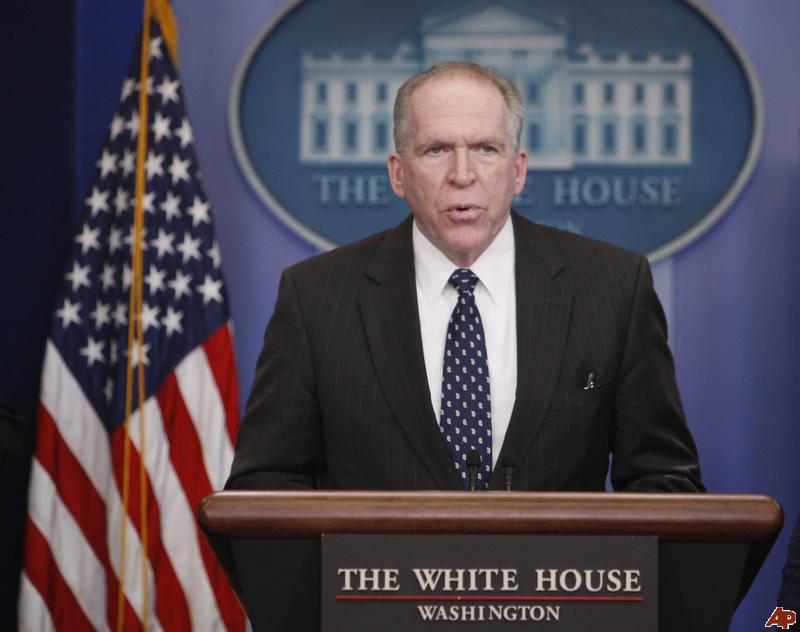
There is no evidence that Pakistan government officials helped and protected Osama bin Laden, claimed John Brennan, Deputy National Security adviser and President Barack Obama’s chief counter-terrorism adviser.

Brennan, speaking to reporters at a morning briefing said “I have not seen anything that the Pakistanis were aiding his refuge there.”

In May, Osama was found and killed by U.S. Navy SEALS in a large compound in the town of Abbottabad in northern Pakistan, near the capital Islamabad. Since that time, rumors have swirled that Pakistani intelligence officials had been aiding the former al-Qaeda terror chief as well as many other militants.

Brennan also said that based on examination of documents and data found and seized at Osama’s compound, it became apparent that bin Laden was “a little out of touch about how debilitated his organization was” after fighting for almost a decade against the U.S.

“It did reveal an organization in distress,” Brennan said.

Brennan also reportedly praised Pakistan’s offensive against terrorist groups operating the country and that Washington has a close working relationship with Islamabad in this joint effort.

He cited the recent arrest in Pakistan of Younis al-Mauritani, a senior al-Qaeda official, is proof that Islamabad is taking its responsibilities seriously.

He noted that al-Qaeda “has taken it on the chin” and has been “degraded significantly over the past couple of years.”

Brennan’s latest comments dramatically contradict assertions he made in May (just after the killing of Osama) when he declared that it was “inconceivable” that bin Laden did not have the support of officials within Pakistan.

A Monster Roaming The World

By Paul Mcgeough for The City Weekly
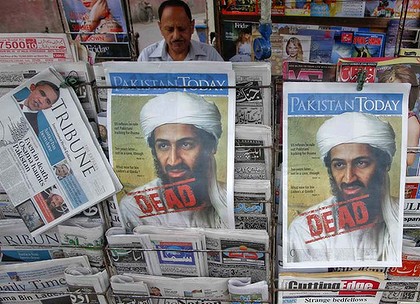
Search for a firm footing in Pakistan and there is none – all is quicksand … strategically, politically, morally.

Here in south Asia, strategically sandwiched between failing Afghanistan and the China and India powerhouses, is a country in which journalists are abducted in the night by agents of the state and murdered; in which the only advance after a decade in which Washington has tried to buy friendship with cheques for more than $20 billion, is the expansion of Pakistan’s nuclear arsenal – which is on the verge of surpassing Britain’s as the fifth biggest in the world.

In Pakistan, a 50-year-old woman is sentenced to death on a dubious blasphemy charge – and politicians who dare to speak in her defence are gunned down; and a woman is gang-raped and paraded naked through her village on the orders of a local council, over bogus claims that her 12-year-old brother has offended a 20-year-old woman from the clan of the men who defiled her.

But that’s village life. In the leafy garrison town of Abbottabad, an hour’s drive north of Islamabad, Osama bin Laden, mastermind of the attacks of September 11, 2001, was able to hide in plain sight for years. The location of his fortified bunker, a stone’s throw from a prestigious military academy, made it harder to give any credence to the generals’ repeated denials that significant elements of Pakistan’s extensive security apparatus sheltered the al-Qaeda chief and continue to give succour to the Taliban and other insurgency and terrorist movements.

In the south-west, in the wilds of provincial Baluchistan, there have been 150 ”kill and dump” operations this year. Most of the victims are Baluch nationalist rebels. Their killers are the Inter-Services Intelligence agency (ISI) and other elements of Pakistan’s national security forces – driven to brutality by a belief, which could be correct, that Pakistan’s arch foe, India, stirs the local nationalist pot. In turn, the Baluch nationalists are accused of running their own death squads – their victims are Punjabi ”settlers”, government workers brought in from other parts of the country.

Baluchistan is half Pashtun, which also makes it a sanctuary for the Taliban from adjoining Afghanistan, where Washington and the world still struggle, with little success, to impose a semblance of democracy on the bones of a fracturing, failing state. Here then is another of the ironies that puts a serious question mark over the bona fides of the Pakistani security forces: the leadership of the Afghanistan Taliban sequesters in Quetta, the provincial capital of Baluchistan, but the various Pakistani security services are so busy putting the Baluch nationalists through the mincer they don’t have time to take down the Taliban command-and-control centre. Instead, they reportedly socialise with the Taliban and sit in on their strategy meetings.

West from Baluchistan is the sprawling port city of Karachi, where the spiralling death toll in renewed ethnic turf-wars gives raw meaning to what local novelist Kamila Shamsie broaches obliquely, recounting how the city ”winks” at her. “Yes, the city said, I am a breeding ground for monsters, ” she writes, “but don’t think that is the full measure of what I am.”

This drab, chaotic home to 18 million people who account for 65 per cent of Pakistan’s economy is being carved up by bullets that this year have accounted for as many as 1000 ”wrong place, wrong time” deaths as gunmen randomly select their targets – sending messages to whole communities, not the individuals with whose blood they paint the rough pavements. As the suburbs seethe, police do little, because they are cowed by the systematic elimination of those in their ranks who intervened in the last iteration of these ethnic wars. Provincial and federal governments and the security forces only wring their hands.

In Karachi everyone lies. No one denies turf wars are being waged. They simply blame everyone else – all the political parties deny any links to the militias that prosecute their bloody agendas and to the crime, drug and land-development mafias that prosper in their wake. And the city’s once-dominant Urdu-speaking Mohajirs fight to maintain their control of corrupted city politics, amid an influx of Pashtuns fleeing upheavals along the Afghan border.

“Tension rises, we see killings and then scores must be settled,” an adviser to the provincial governor says. “We are at war – the political parties say they are not involved, but the mafias take shelter from the parties as they exploit the situation.”

In Islamabad, enter any of the city’s newsrooms, and see fear in the eyes of journalists who risk death and torture for going about assignments. Consider the words of their Karachi colleague Madiha Sattar – “a growth of intolerance has forged an extreme, murderous antipathy to freedom of expression.”

Most shocking in this campaign of fear and intimidation against one of the pillars of democracy was the disappearance in late May of Syed Saleem Shahzad, an investigative reporter for the respected, Hong Kong-based Asia Times Online. Two days after his abduction, Shahzad’s battered body was found at Mandi Bahauddin, 130 kilometres south-east of the capital. The reporter left detailed accounts of the threats he had received from the ISI; in Washington, senior officials unflinchingly confirming that Shahzad’s death had been ”sanctioned” by the Pakistani government.

Umar Cheema might just as easily have been their victim. Behind a door marked ”Investigation Cell” off a basement corridor in the Islamabad offices of The News, the 34-year-old father of two explains that the shock in his colleague Saleem Shahzad’s murder was a realisation it might just as easily have been him.

As Cheema drove home from a party in the early hours during Ramadan last year, 12 men who identified themselves as police commandos abducted him, he says. Informing him first that he was a suspect in a killing, they pulled a bag over his head and hauled him away.

“They took me to a building where the leader stripped off my clothes. Then I was ordered to lie on the floor and they beat me on the back and shoulders for 20 or 25 minutes with leather straps and wooden canes.

“I was writing about corruption in the government and the lack of accountability in the military and intelligence agencies – they said they were beating me because of my reporting. Then they shaved my head and eyebrows – that’s what is done to thieves in rural areas to humiliate them.

“Shahzad’s death left me speechless,” he says. “I was the second last victim before they took him. So I felt very much that this was a message for me – it was very, very personal.”

In Islamabad, the government of Prime Minister Yousaf Gillani is as overwhelmed as it is complicit in the nation’s failings. The economy is in crisis and the government has ceded control of more than half the country to the military or to extremist militias. “None of the cogs of state mesh to make it do what must be done,” Human Rights Commission of Pakistan’s Kamran Arif said.

Just south of Islamabad is Rawalpindi, a more typical Asian city than the sanitised and empty boulevards of Islamabad. As home and headquarters to the men and institutions that comprise Pakistan’s military and intelligence establishment, this is the centre of absolute power in Pakistan. And it is here that a deep-fried sense of humiliation over the American raid to kill Osama bin Laden, in May this year, is felt most acutely.

“After the bin Laden raid, it’s a question of the survival of the state,” the defence analyst and director of the South Asian Strategic Stability Institute, Maria Sultan, says. “The problem now is that by this very public humiliation, the US has lost its biggest supporter – it’s not the capability of the Pakistani military that is affected, it’s its credibility.”

A close reading of ”Getting Bin Laden”, The New Yorker’s inside account of the May 2 raid, reveals the mission was not just a single US incursion that managed to evade Pakistan’s air defences. On the night, there were effectively three separate American missions, none of which was detected by a military-security complex that demands indulgence by the people of Pakistan on the grounds that it is their only protection from the Indian hordes.

Pakistan’s generals faced a grim choice – they had to admit to deceiving the world in harbouring bin Laden, or to incompetence by not knowing he was lounging in their backyard. So supine were they in opting to plead incompetence there were fears of a mutiny in the middle ranks of the security services.

The US signal to the world of just how much it could not trust its south Asian ally came hard on the heels of serial embarrassments at the hands of the Taliban and other militant groups in Pakistan.

There have been a series of militant attacks on the most secure and sensitive defence establishments. The latest, which some observers concluded could not have been undertaken without inside help, saw a 10-man assault team storm the Mehran naval aviation base in Karachi. It took hundreds of Pakistani navy commandos, marines and paramilitaries to retake the base, but not before two aircraft were destroyed, hostages taken and the base had been occupied for the best part of a day.

But it takes a discerning Pakistani general to differentiate between militants – some are ”strategic assets” of the security apparatus and the generals refuse to go after them.

Dr Ayesha Agha, whose military and political commentaries appear in Pakistan’s Dawn newspaper, explains: “The military depends on these ‘assets’ – they are a cost-effective means to fighting wars that the Pakistani military wants to fight in India and Afghanistan.” Extrajudicial killings by the military now are counted in the hundreds.

When men in uniform were filmed recently murdering a detainee, the reckoning in human rights circles was that far from being a lapse of judgment, the recording had been allowed in the knowledge that its distribution on the internet would serve as a useful warning to the wider community.

A Karachi taxi driver becomes excited as he ferries us from the airport to a downtown hotel – “Pakistan lovely country,” he bellows. “Terrorism? No, no, no.”

But a single graphic in a 200-page study of Pakistan, published in May by the Washington-based Centre for Strategic and International Studies, reveals an impossible security challenge. Last year alone, 2113 terrorist attacks, 369 clashes between the security services and militants, 260 operational attacks by the security forces, 135 US drone attacks, 69 border clashes, 233 bouts of ethno-political violence and 214 inter-tribal clashes resulted in more than 10,000 dead and as many injured.

The death of bin Laden and the reported death of al-Qaeda’s new No. 2 figure, Atiyah Abd al-Rahman, in an American drone attack last week, are still being factored into a running debate among intelligence specialists on the extent to which al-Qaeda offshoots elsewhere in the world, especially the Yemen-based al-Qaeda in the Arabian Peninsula [AQAP], have taken the baton from the Pakistani organisation.

But a July study by the New America Foundation of 32 ”serious” jihadist terror plots against the West from 2004 to 2011, finds 53 per cent had operational or training links to jihadist groups in Pakistan – compared to just 6 per cent being linked to Yemen. And the rising tempo of the drone attacks has failed to dent the rising frequency of Pakistan-linked plots against the West, the study finds.

Implicit or explicit in any discussion on Pakistan’s volatile mix of militant violence and governmental chaos, is the level of anxiety around the world about the security of its nuclear arsenal. Confronted with claims such as that by bin Laden that acquiring a nuclear weapon was a ”religious duty” and the hope expressed by one of his lieutenants that such a weapon one day might be seized in Pakistan, officials in Islamabad invariably boast that all is tightly locked down.

But when we ask a Pakistani diplomat how secure were the weapons in the aftermath of the US mission to kill Osama bin Laden, he replies: “Less so, now that the Americans have revealed to the world that it is possible to sneak into Pakistan undetected, to take something that you really want.”

President Obama’s public appeal that Pakistan not become the world’s first ”nuclear-armed militant state” gives context to disclosures by The New Yorker’s Seymour Hersh of the existence of a US Special Operations rapid-response team which would be parachuted into Pakistan in the event of a nuclear crisis.

Rolf Mowatt-Larssen, a former director of intelligence and counter intelligence at the US Department of Energy, is boldest in setting out the fears of Washington, London and other capitals – some of which were disclosed without diplomatic varnish by Wikileaks last year.

Writing in Arms Control Today, Mowatt-Larssen, who served 20 years at the CIA, bills Pakistan as the most likely setting for terrorists bent on acquiring a nuclear device to co-opt a nuclear insider – of whom there are estimated to be as many as 70,000 in Pakistan.

“There is a lethal proximity between terrorists, extremists, and nuclear weapons insiders,” he writes. “Insiders have facilitated terrorist attacks. Suicide bombings have occurred at air force bases that reportedly serve as nuclear weapons storage sites. It is difficult to ignore such trends.

”Purely in actuarial terms, there is a strong possibility that bad apples in the nuclear establishment are willing to co-operate with outsiders for personal gain or out of sympathy for their cause.”

“Not possible,” says Maria Sultan. “About eight to 10,000 personnel working at the strategic level on security,” she says, ticking off seven or eight interlocking layers of complex security, the first of which she says would trip most intruders before they came within 80 kilometres of a nuclear facility. “The idea that a terrorist can walk in and get hold of a device is just not possible.”

Such is the bind in which Pakistanis find themselves. But if it is true feeble and corrupt civilian administrations make circumstances ripe for a military takeover, it is hardly surprising the generals have no respect for democratic fundamentals.

As revealed in one of the Wikileaks cables, Army chief General Ashfaq Parvez Kayani was ready to force President Asif Ali Zardari from office – save for the fact the general thought even less of Zardari’s likely civilian replacement. And historically, Washington has opted to connect with Pakistan through the military power of the generals, rather than the people power of the civilian leadership.

Bruce Riedel, a veteran CIA analyst, sets out the connections in Deadly Embrace: Pakistan, America and the Future of the Global Jihad. “…Richard Nixon turned a blind eye to the murder of hundreds of thousands of Bangladeshis to keep his friends in Pakistan’s army in power, a strategy that ultimately failed,” Riedel writes. “Ronald Reagan entertained Zia-ul-Haq even as Zia was giving succour to the Arab jihadists who would become al-Qaeda. George W. Bush allowed Pervez Musharraf to give the Afghan Taliban a sanctuary from which to kill American and NATO soldiers in Afghanistan.”

And in the judgment of Bushra Gohar, an elected MP from Pakistan’s troubled Swat Valley, Washington still prefers to deal with the military rather than the country’s civilian leadership. “That’s not a role that the military has under the constitution,” she says during a break in the business of the National Assembly in Islamabad. “There has been a democratic transition in this country and we expect the international community to support it.”

Power vacuums become ripe for exploitation, as was revealed with frightening clarity earlier this year when two of three elected figures who had dared to speak out against Pakistan’s draconian blasphemy laws were assassinated. In January, Punjab provincial governor Salman Taseer was gunned down by one of his state-provided security men; in March, the Minorities Minister and the only Christian in Gillani’s cabinet, Shahbaz Bhatti, died in a hail of gunfire as his car left his mother’s home in Islamabad.

Taseer’s killer confessed and became a national hero. His home is a shrine, he is garlanded with rose petals and, in the oddest twist of all, the young lawyers’ movement that effectively bundled Pervez Musharraf, the last dictator, from power in 2008, has taken the side of this cold-blooded murderer – not the principle for which his victim died.

A visitor leaves Pakistan wondering if anyone here speaks the truth. The dictators habitually resort to amping up religious parties – either to drown out secular ones that might be interested in the ideals of selfless democracy, or to further marginalise the country’s Shiia Muslim minority.

“And people like Musharraf have two faces,” Kamran Arif of the Human Rights Commission of Pakistan said. “He would say all the right things for the West and do just what he wanted to do at home.”

Some foreign analysts fall back on the seeming failure of Pakistan’s religious parties at the ballot box as a hopeful sign. But a sense of rising radicalisation, particularly in the military and the middle classes, suggests an asymmetric contest for control of a highly unstable society – the non-religious parties fight in the parliament, but the religious parties are street brawlers.

Sherry Rehman, the only elected figure in the country to defend the convicted blasphemer Aasia Bibi, makes the same point in explaining how that debate was lost. “The discourse shifted from the parliament to the street,” she says.

“We have to keep the agenda in the parliament, and not with the gun-toting thugs who make inflammatory speeches outside.”

Like the financial institutions in the 2008 global financial crisis, Pakistan is deemed by Washington to be ”too big to fail”. Between them, however, Washington and Islamabad have been unable in the past decade to make this relationship work – credibly or creditably.

Predictions of imminent collapse in Islamabad are exaggerated, but perhaps not overly so. “The government does not have the capacity to tackle any of the issues,” says the Human Rights Commission of Pakistan’s Arif. “Things will just keep getting bad … and I don’t discount the fact that we can fall into chaos.”

Like many other analysts, Bruce Riedel laboriously sets out the policy options by which Washington and Islamabad might work together to defeat the global jihadist movement – before he concludes that none is easy or guaranteed.

An adviser to several US administrations and now with the Brookings Institution, Riedel sees Pakistan under siege from a syndicate of radical terrorist groups unified by the notion that nuclear-armed Pakistan could be the extremist jihadist state they have never had.

“They want to hijack Pakistan and its weapons,” he says. Alluding to Islamabad’s role in creating a monster, as often as not with Washington’s sponsorship, he writes: “An extremely powerful jihadist Frankenstein is now roaming the world, with equally powerful protectors in Pakistani society, right up to the very top.

“Who cannot fear that the ‘long beards’ will prevail?”
Pakistan’s 10 Years of Chaos

As Reported by Jennie Matthew for AFP

The 9/11 attacks that thrust Pakistan into the war on terror have brought the nuclear-armed state to its knees, fighting Islamist radicals at home and risking pariah status abroad.

It was already evening in Pakistan when television channels, recently deregulated by then president General Pervez Musharraf, began broadcasting the terrifying scenes from the twin towers in New York.

Few slept that night, realising immediately that the world had changed forever and that Pakistan was in the eye of the storm after spending years fostering extremist movements for its own ends.

“My immediate thought was ‘oh my God, more trouble coming onto Pakistan’,” said author Imtiaz Gul, who has written extensively about the subsequent war and its fallout at home.

“My fears have been borne out… The 9/11 events shocked Pakistan into an unprecedented crisis of insecurity,” he said.
It didn’t take long for Musharraf to weigh up conditions imposed by Washington and announce on September 19 that Pakistan would offer its airspace, territory and capabilities to help the United States defeat terrorism.

But as America put the finishing touches to its war plans, Pakistan desperately tried to persuade its Taliban allies in Afghanistan to give up Osama bin Laden and avert catastrophic military action, to no avail.

Within weeks, bin Laden, his future successor Ayman al-Zawahiri and Taliban leaders had fled the American invasion into Pakistan.

And there in the northwestern tribal belt, which no government has been able to subjugate, they found refuge among an extremist support network dating back to the 1990s jihad against the Soviets in Afghanistan.

They regrouped, forming bases used by the Taliban to direct the insurgency in Afghanistan and training camps for Al-Qaeda to brainwash young extremists from all over the world into carrying out terror attacks.

As a result, the last decade has made the only Muslim nuclear power more unstable than ever before in its bloody and chaotic 64-year existence.

The watershed came in July 2007 when government troops cleared out extremists preaching hate from the Red mosque in the heart of the capital Islamabad.

The militants declared war and in the past four years, around 500 bomb attacks have killed 4,600 people, according to an AFP tally.
Just when it appeared things couldn’t get worse, this year the US discovered bin Laden living close to Pakistan’s equivalent of West Point, sending in Navy SEALs to kill him and sinking already fractured US-Pakistani relations.

“No doubt that this is absolutely the worst time for the country,” said Pakistani journalist Ahmed Rashid, whose book “Taliban” became an international bestseller after 9/11.

Rashid describes Pakistan as “completely isolated” by a war that “brought terrorism, sectarianism, a weakening of the state (and) much greater ethnic insurgencies” within the country.

But the blame — he says — is Pakistan’s for frittering away American aid money and refusing to realign its national security priorities.
“Politically, the most far-reaching mistake was the hosting and relaunching of the Afghan Taliban by the military and the intelligence agencies. That was enormously detrimental and led to the growth of the Pakistani Taliban.” Pakistan routinely proclaims to have sacrificed the most of any country fighting terror.

The government claims that 35,000 people have been killed. The army confirms the deaths of 3,019 soldiers since 2001 — more than the 2,684 Western soldiers to have died in Afghanistan.

More than three million people have been displaced by violence and counter-terrorism activities in Pakistan since 9/11, according to International Crisis Group figures released in 2010.

The army says 147,000 troops are deployed in the northwest compared to 35,000 in October 2001, a drastic reversal from the previous concentration along the Indian border in the east.

Yet extremism has increased. An average of one US drone strike every four days against militants in the tribal belt is raising fears that the campaign is recruiting a new generation of insurgents and suicide bombers.

Jihadist groups — fostered by Pakistan’s security establishment to fight India in Kashmir and maintain Afghanistan as a strategic asset — have splintered, and increasingly turned the guns on their old allies in the state.

“Pakistan is a lot less secure country now than 10 years ago, because it has become a battleground, an extension of the Afghan war. Pakistan is now facing a serious threat for its stability,” said journalist Zahid Hussain.

Yet the public discourse concentrates less on how to defeat militancy than debating the merits of the hugely unpopular US alliance.
Trust between Islamabad and Washington is at an all-time low. Cooperation between the CIA and Pakistan’s ISI spy agency is poor. Blame games on both sides are played out in the media.

Compounding the sense of crisis is the country’s economic meltdown. Pakistan says losses related to the war are $68 billion. Critics say the country has squandered up to $20 billion in aid given by the United States. “The biggest mistake was the failure to really address strategic issues in the economy. Pakistan could have changed its very weak economic structure at that point in time,” said Rashid.

Instead crippling inflation, rampant unemployment and an energy crisis with power cuts of up to 16 hours a day have left millions wondering how to fill the void.

C.I.A. Drone Is Said to Kill Al Qaeda’s No. 2

By Mark Mazzetti for The New York Times


A drone operated by the CIA killed Al Qaeda’s second-ranking figure in the mountains of Pakistan on Monday, American and Pakistani officials said Saturday, further damaging a terrorism network that appears significantly weakened since the death of Osama bin Laden in May.

An American official said that the drone strike killed Atiyah Abd al-Rahman, a Libyan who in the last year had taken over as Al Qaeda’s top operational planner. Mr. Rahman was in frequent contact with Bin Laden in the months before the terrorist leader was killed on May 2 by a Navy Seals team, intelligence officials have said.

American officials described Mr. Rahman’s death as particularly significant as compared with other high-ranking Qaeda operatives who have been killed, because he was one of a new generation of leaders that the network hoped would assume greater control after Bin Laden’s death.

Thousands of electronic files recovered at Bin Laden’s compound in Abbottabad, Pakistan, revealed that Bin Laden communicated frequently with Mr. Rahman. They also showed that Bin Laden relied on Mr. Rahman to get messages to other Qaeda leaders and to ensure that Bin Laden’s recorded communications were broadcast widely.

After Bin Laden was killed, Mr. Rahman became Al Qaeda’s No. 2 leader under Ayman al-Zawahri, who succeeded Bin Laden.

There were few details on Saturday about the strike that killed Mr. Rahman. In the months since Bin Laden’s death, the C.I.A. has maintained a barrage of drone missile strikes on mountainous redoubts in Pakistan, a bombing campaign that continues to strain America’s already turbulent relationship with Pakistan.

The C.I.A almost never consults Pakistani officials in advance of a drone strike, and a Pakistani government official said Saturday that the United States had told Pakistan’s government that Mr. Rahman had been the target of the strike only after the spy agency confirmed that he had been killed.

The drone strikes have been the Obama administration’s preferred means of hunting and killing operatives from Al Qaeda and its affiliate groups. Over the past year the United States has expanded the drone war to Yemen and Somalia.

Some top American officials have said publicly that they believe Al Qaeda is in its death throes, though many intelligence analysts are less certain, saying that the network built by Bin Laden has repeatedly shown an ability to regenerate.

Yet even as Qaeda affiliates in places like Yemen and North Africa continue to plot attacks against the West, most intelligence analysts believe that the remnants of Al Qaeda’s leadership in Pakistan have been weakened considerably. Mr. Rahman’s death is another significant blow to the group.

“Atiyah was at the top of Al Qaeda’s trusted core,” the American official said. “His combination of background, experience and abilities are unique in Al Qaeda — without question, they will not be easily replaced.”

The files captured in Abbottabad revealed, among other things, that Bin Laden and Mr. Rahman discussed brokering a deal with Pakistan: Al Qaeda would refrain from mounting attacks in the country in exchange for protection for Qaeda leaders hiding in Pakistan.

American officials said that they found no evidence that either of the men ever raised the idea directly with Pakistani officials, or that Pakistan’s government had any knowledge that Bin Laden was hiding in Abbottabad.

Mr. Rahman also served as Bin Laden’s liaison to Qaeda affiliates. Last year, American officials said, Mr. Rahman notified Bin Laden of a request by the leader of Al Qaeda’s affiliate in Yemen to install Anwar al-Awlaki, the radical American-born cleric, as the leader of the group in Yemen.

That group, known as Al Qaeda in the Arabian Peninsula, apparently thought Mr. Awlaki’s status as an Internet celebrity, for his popular video sermons, and his knowledge of the United States might help the group’s fund-raising efforts. But according to the electronic files in Abbottabad, Bin Laden told Mr. Rahman that the group’s leadership should remain unchanged.

After Bin Laden’s death, some intelligence officials saw a cadre of Libyan operatives as poised to assume greater control inside Al Qaeda, which at times has been fractured by cultural rivalries.

Libyan operatives like Mr. Rahman, they said, had long bristled at the leadership of an older generation, many of them Egyptian like Mr. Zawahri and Sheikh Saeed al-Masri.

Mr. Masri was killed last year by a C.I.A. missile, as were several Qaeda operations chiefs before him. The job has proved to be particularly deadly, American officials said, because the operations chief has had to transmit the guidance of Bin Laden and Mr. Zawahri to Qaeda operatives elsewhere, providing a way for the Americans to track him through electronic intercepts.

Mr. Rahman assumed the role after Mr. Masri’s death. Now that Mr. Rahman has died, American officials said it was unclear who would take over the job.

Panetta: ‘No Choice’ in US Relations with Pakistan

By David Gollust for Voice of America

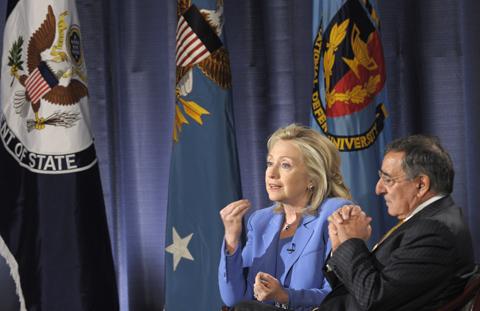
Defense Secretary Leon Panetta said Tuesday that the United States has no choice but to maintain close relations with Pakistan, despite government links with Islamic militants including the Haqqani network. The State Department, meanwhile, put sanctions on another Haqqani network commander.

Panetta, who took over as defense secretary in June after two years of heading the CIA, declined comment on news reports that Pakistan allowed China to inspect the wreckage of an advanced U.S. helicopter lost in the raid that killed Osama bin Laden.

But at a public forum with Secretary of State Hillary Clinton at Washington’s National Defense University, the defense chief was unusually candid about U.S. problem issues with Pakistan.

Panetta said Pakistan has “relationships” with the Haqqani network – militants based in western Pakistan who conduct cross-border attacks on U.S. forces in Afghanistan, and with Lashkar-e-Taiba militants who have attacked India.

Both groups are listed by the United States as terrorist organizations. Despite complaints that Pakistan has withheld visas for U.S. citizens being posted there, Panetta said the relationship remains essential.

“There is no choice but to maintain a relationship with Pakistan,” said Panetta. “Why? Because we are fighting a war there. We are fighting al-Qaida there. And they do give us some cooperation in that effort. Because they do represent an important force in that region. Because they do happen to be a nuclear power that has nuclear weapons, and we have to be concerned about what happens with those nuclear weapons. So for all of those reasons, we’ve got to maintain a relationship with Pakistan.”

Secretary of State Clinton said the Obama administration considers relations with Pakistan to be of “paramount importance.”

She said there have been “challenges” in bilateral ties for decades with valid complaints on both sides, and that she credits the Islamabad government with lately recognizing its shared interest with Washington in confronting terrorism.

“I was very pleased when the Pakistanis moved into [the] Swat [Valley] and cleaned out a lot of what had become a kind of Pakistani Taliban stronghold,” said Clinton. “And then they began to take some troops off their border with India, to put more resources into the fight against the Pakistani Taliban. Now, as Leon [Panetta] says, we have some other targets that we discuss with them – the Haqqanis, for example. And yet it’s been a relatively short period of time, two-and-a-half years, when they have begun to reorient themselves militarily against what is, in our view, an internal threat to them.”

The State Department on Tuesday designated a key Haqqani network commander – Mullah Sangeen Zadran – a terrorist under a 2001 White House executive order, freezing any U.S. assets he has and barring Americans from business dealings with him.

At the same time, Sangeen was designated a terrorist by the U.N. sanctions committee, which will subject him to a global travel ban, an asset freeze and an arms embargo.

A State Department statement said Sangeen, is a “shadow governor” of Afghanistan’s southeast Paktika province and a senior lieutenant of network leader Sirajuddin Haqqani. It said Sangeen has coordinated the movement of hundreds of foreign fighters into that country and that he is linked to numerous bomb attacks and kidnappings.

U.S. Says Pakistan Let China See Copter

By Mark Mazzetti for The Seattle Times

In the days after the raid that killed Osama bin Laden, Pakistan’s intelligence service probably allowed Chinese military engineers to examine the wreckage of a stealth American helicopter that crashed during the May operation, according to U.S. officials and others familiar with the classified assessments.

Such cooperation with China would be provocative, providing further evidence of the depths of Pakistan’s anger over the bin Laden raid, which was carried out without Pakistan’s approval.

U.S. spy agencies have concluded it is likely that Chinese engineers took detailed photographs of the severed tail of the Black Hawk helicopter equipped with classified technology designed to elude radar, the officials said.

The members of the Navy SEALs team who conducted the raid had tried to destroy the helicopter after it crashed at bin Laden’s compound in Abbottabad, but the tail section remained largely intact.

U.S. officials cautioned they did not yet have definitive proof the Chinese were allowed to visit Abbottabad. They said Pakistani officials had denied they showed the technology to other foreign governments.

One person with knowledge of the intelligence assessments said the U.S. case was based mostly on intercepted conversations in which Pakistani officials discussed inviting the Chinese to the crash site.

He characterized intelligence officials as being “certain” that Chinese engineers were able to photograph the helicopter and even walk away with samples of the wreckage. The tail has been shipped back to the U.S., according to American officials.

The U.S. assessments were disclosed Sunday by The Financial Times. The newspaper cited Pakistani officials who denied the accusations.

Why My Father Hated India

By Aatish Taseer for The Wall Street Journal

Ten days before he was assassinated in January, my father, Salman Taseer, sent out a tweet about an Indian rocket that had come down over the Bay of Bengal: “Why does India make fools of themselves messing in space technology? Stick 2 bollywood my advice.”

My father was the governor of Punjab, Pakistan’s largest province, and his tweet, with its taunt at India’s misfortune, would have delighted his many thousands of followers. It fed straight into Pakistan’s unhealthy obsession with India, the country from which it was carved in 1947.

Though my father’s attitude went down well in Pakistan, it had caused considerable tension between us. I am half-Indian, raised in Delhi by my Indian mother: India is a country that I consider my own. When my father was killed by one of his own bodyguards for defending a Christian woman accused of blasphemy, we had not spoken for three years.

To understand the Pakistani obsession with India, to get a sense of its special edge—its hysteria—it is necessary to understand the rejection of India, its culture and past, that lies at the heart of the idea of Pakistan. This is not merely an academic question. Pakistan’s animus toward India is the cause of both its unwillingness to fight Islamic extremism and its active complicity in undermining the aims of its ostensible ally, the United States.

The idea of Pakistan was first seriously formulated by neither a cleric nor a politician but by a poet. In 1930, Muhammad Iqbal, addressing the All-India Muslim league, made the case for a state in which India’s Muslims would realize their “political and ethical essence.” Though he was always vague about what the new state would be, he was quite clear about what it would not be: the old pluralistic society of India, with its composite culture.

Iqbal’s vision took concrete shape in August 1947. Despite the partition of British India, it had seemed at first that there would be no transfer of populations. But violence erupted, and it quickly became clear that in the new homeland for India’s Muslims, there would be no place for its non-Muslim communities. Pakistan and India came into being at the cost of a million lives and the largest migration in history.

This shared experience of carnage and loss is the foundation of the modern relationship between the two countries. In human terms, it meant that each of my parents, my father in Pakistan and my mother in India, grew up around symmetrically violent stories of uprooting and homelessness.

But in Pakistan, the partition had another, deeper meaning. It raised big questions, in cultural and civilizational terms, about what its separation from India would mean.

In the absence of a true national identity, Pakistan defined itself by its opposition to India. It turned its back on all that had been common between Muslims and non-Muslims in the era before partition. Everything came under suspicion, from dress to customs to festivals, marriage rituals and literature. The new country set itself the task of erasing its association with the subcontinent, an association that many came to view as a contamination.

Had this assertion of national identity meant the casting out of something alien or foreign in favor of an organic or homegrown identity, it might have had an empowering effect. What made it self-wounding, even nihilistic, was that Pakistan, by asserting a new Arabized Islamic identity, rejected its own local and regional culture. In trying to turn its back on its shared past with India, Pakistan turned its back on itself.

But there was one problem: India was just across the border, and it was still its composite, pluralistic self, a place where nearly as many Muslims lived as in Pakistan. It was a daily reminder of the past that Pakistan had tried to erase.

Pakistan’s existential confusion made itself apparent in the political turmoil of the decades after partition. The state failed to perform a single legal transfer of power; coups were commonplace. And yet, in 1980, my father would still have felt that the partition had not been a mistake, for one critical reason: India, for all its democracy and pluralism, was an economic disaster.

Pakistan had better roads, better cars; Pakistani businesses were thriving; its citizens could take foreign currency abroad. Compared with starving, socialist India, they were on much surer ground. So what if India had democracy? It had brought nothing but drought and famine.

But in the early 1990s, a reversal began to occur in the fortunes of the two countries. The advantage that Pakistan had seemed to enjoy in the years after independence evaporated, as it became clear that the quest to rid itself of its Indian identity had come at a price: the emergence of a new and dangerous brand of Islam.

As India rose, thanks to economic liberalization, Pakistan withered. The country that had begun as a poet’s utopia was reduced to ruin and insolvency.

The primary agent of this decline has been the Pakistani army. The beneficiary of vast amounts of American assistance and money—$11 billion since 9/11—the military has diverted a significant amount of these resources to arming itself against India. In Afghanistan, it has sought neither security nor stability but rather a backyard, which—once the Americans leave—might provide Pakistan with “strategic depth” against India.

In order to realize these objectives, the Pakistani army has led the U.S. in a dance, in which it had to be seen to be fighting the war on terror, but never so much as to actually win it, for its extension meant the continuing flow of American money. All this time the army kept alive a double game, in which some terror was fought and some—such as Laskhar-e-Tayyba’s 2008 attack on Mumbai—actively supported.

The army’s duplicity was exposed decisively this May, with the killing of Osama bin Laden in the garrison town of Abbottabad. It was only the last and most incriminating charge against an institution whose activities over the years have included the creation of the Taliban, the financing of international terrorism and the running of a lucrative trade in nuclear secrets.

This army, whose might has always been justified by the imaginary threat from India, has been more harmful to Pakistan than to anybody else. It has consumed annually a quarter of the country’s wealth, undermined one civilian government after another and enriched itself through a range of economic interests, from bakeries and shopping malls to huge property holdings.

The reversal in the fortunes of the two countries—India’s sudden prosperity and cultural power, seen next to the calamity of Muhammad Iqbal’s unrealized utopia—is what explains the bitterness of my father’s tweet just days before he died. It captures the rage of being forced to reject a culture of which you feel effortlessly a part—a culture that Pakistanis, via Bollywood, experience daily in their homes.

This rage is what makes it impossible to reduce Pakistan’s obsession with India to matters of security or a land dispute in Kashmir. It can heal only when the wounds of 1947 are healed. And it should provoke no triumphalism in India, for behind the bluster and the bravado, there is arid pain and sadness.

—Mr. Taseer is the author of “Stranger to History: A Son’s Journey Through Islamic Lands.” His second novel, “Noon,” will be published in the U.S. in September

-Pakistanis for Peace Editor’s Note– Aatish Taseer’s brutally honest and forthright column is one of the best articles I have read in a long time.  As a Pakistani American, I find a lot of truth in what he is saying, no matter how ill received it may be back in Pakistan, I feel that Aatish does make some good points and it was well worth sharing with you readers.