Posts Tagged ‘ Pakistan ’

Have We Hit Rock Bottom Yet?

By Shahzad Chaudhry for The Express Tribune
Attending conferences and travelling to them are the two most testing tasks these days for most Pakistanis. The airports tend to give you a full low-down as soon as the ā€˜green’ passport is presented: I am told by authentic sources that in as friendly country as China it takes twice the time to clear immigration for a Pakistani traveller than for someone with any other passport.

Just so that we may place our ā€˜higher than the Himalayas’ relationship in perspective, I was also informed that there was a daily flight between Delhi and Beijing compared to only two a week between Islamabad and Beijing. The disparity in trade figures between Beijing and Delhi, and Beijing and Islamabad, respectively, are already well-known. Call it anything, size of the economies or economic pragmatism, or whatever, the fact is China and India are unlikely to go to war with a $100 billion stake, keeping the two tied in an interdependent embrace; wish what you may, Pakistan, bosom love ain’t coming to the rescue. That is the new world ā€˜geconomics’.

One thing that always strengthened my hand as an ambassador for Pakistan during the Shaukat Aziz years was the perpetual good news that came out on the economic front from Pakistan. Now there may be more than one opinion about Musharrafian economy, but I have always held, and with some conviction I might add, that economies work on few sound fundamentals and a lot of good sentiment. This last word is key. So if the services sector — telecom, construction, finance — all seemed to be galloping under Shaukat Aziz’s mantra of economic progress, he perhaps understood well the significance of looking dapper and sounding happy. He held the dollar pegged and the stock market boomed: the first was clever policy, the latter sentiment. After all what is in the story of an ā€˜Incredible’ India — the incredibility indeed of a well-manufactured fable and from there on the critical mass of success takes on.

It was famously reported that a particular British chancellor of the Exchequer was singing in the bathroom: the veil of pessimism lifted and the economic sentiment began its own hum. But when you sit on a dredged economy and scooped-out resources there is little that you can offer to the world as hope. Words remain just that, words. Give Hafeez Shaikh something to hum about, and he will hum. The difficulty is he himself remains incapable of carving one.

I haven’t heard a sicker pronouncement of Pakistan’s economic predicament than someone quoting to me the likely $12-16 billion flowing in remittances, as the ultimate trigger for turning around our fortunes. There cannot be a darker indictment of our lows. Incapable of generating revenues inside, we hope like hell for the world and the people to resuscitate us from the outside. Even in that, though, madness must have a method. Investments, portfolio or otherwise, flow into congenial environs; some, Hafeez Shaikh will have to conjure, some we, as partners in crime, will have to relent and enable.

I am not an economist, and certainly never pretended to be one, but I have been subjected enough to the pains of a few that even I could venture to suggest a course to the hapless finance minister. For instance, capital flight is a growing reality and industry needs an injection of support and sustenance under a dwindling availability of energy. The approaching winter months may just provide some respite from domestic energy consumption, enabling diversion to the industry sector. Where possible, policy measures can enable relief and sectoral benefits to industries that wish to work through the difficult times. That might just sustain the benefits emerging from an export boost last year.

Many have tended to qualify the boost in different ways and perhaps each has a point but then how long can you keep a merchant down; there is something called ā€œrecess fatigueā€, and he must break from it to keep the wheels going. One hopes that a finance minister may recognise such trends and then have the wits to turn them into triggers of rebound. If not, paralysis may just be a more enveloping reality in Islamabad.

Agriculture is half policy, half divine. The policy side has seen some attention while divinity is mostly earned. Our erstwhile brothers in East Punjab seem to have hit a good combination and are worth a reflection. So if there is a formula for our finance gurus to follow in the short-term, it must reside around energy, industry and agriculture. Once out of the hole, we can then begin to embellish our societal existence.

What will bring back a smile on the finance minister’s face? An enabling environment? A country in war, and a 10-year-old war at that, cannot be given to economic congeniality. We need to wean this country away from war. Seriously taken, the All Parties Conference urgings to ā€˜give peace a chance’ is a worthy, if catchy slogan, and must find the necessary politico-military resolve. The difficulty in our prevailing discourse is that few are willing to find solace in a political effort alone. As the refrain is that military runs the policy, perhaps that is where one may head. So then, over to General Kayani.

With two years to go in his tenure, here are a few things that General Kayani must do: get us out of this war — the lesser the pain the better; shun militancy in all its manifestations — and here the word manifestation to my mind carries all its consequences; and cleanse the military system of this ill-advised and ill-conceived baggage of the yore. We need not depend on the augmenting effect of an irregular effort in enhancing our national agenda. For some time let us simply look inside and avoid external diversions. With General Kayani convinced of such disposition, no arm whatever can practice any part of our rather sad legacy in regional ambitions.

I do not know who killed Rabbani and why; I also don’t know if the Pakistani military alone supports the Haqqani network and to what extent, but I do know that defending accusations of Pakistani culpability is becoming a harder task. The time when any such insinuation will stick is when we will have hit rock bottom.

I wish we were out of this predicament. I wish to see my country relevant and respected; and, I wish to see a smile on a humming Hafeez Shaikh.
Polio in Pakistan: One more Way in Which Pakistan Fails its People

As Reported by The Economist

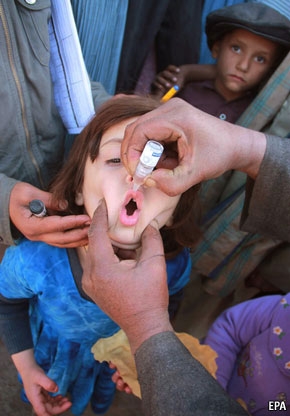
For a symptom of Pakistan’s problems, consider the spread of poliomyelitis. This week brought the 115th confirmed case of polio, a crippling and at times fatal disease passed on virally, mainly through bad hygiene. The tally is well up on last year.

In most countries polio is barely a memory. Rich countries had largely eliminated it by the 1970s, and many poor countries soon followed suit. Three decades ago the world saw an estimated 400,000 polio cases a year. Thanks to a cheap and effective vaccine, administered by two drops into a child’s mouth and washed down with dollops of public and private money, the annual global number is now roughly 1,000.

Only in South Asia and Nigeria is it still endemic, though it occasionally flares elsewhere. Since even wretched countries such as Sudan and Myanmar are rid of polio, doctors dream it could follow smallpox and rinderpest to become the third disease wiped from the planet. For hope, look at India. Last year it had just 44 cases of polio, down from an estimated 250,000 three decades ago. Sarah Crowe, of UNICEF in Delhi, credits ā€œone of the biggest mass mobilisations ever for public healthā€. This year teams of workers headed to train stations, schools and villages, mostly in Bihar and Uttar Pradesh, dosing children with vaccines and promoting habits like soapy hand-washing. Pitiful levels of sanitation persist: fewer Indians (about 50%) have toilets than have mobile phones. But this health campaign is working.

By contrast Pakistan flounders, even though the president, Asif Zardari, declared a national polio emergency in January and received help from the United Nations and the Gates Foundation. ā€œDefinitely the cases are on the riseā€, says a glum Dr Altaf Bosan, who heads the government campaign.

Blame insecurity most. Three-quarters of last year’s cases were in conflict-ridden areas. The ignorance of religious leaders does not help, with their suspicion of foreign ways. Nor does poor government management. The World Health Organisation thinks that over 200,000 Pakistani children missed their polio vaccinations in the past couple of years. The worst-affected spots are Baluchistan, beset by sectarian massacres and police killings, and the unstable Federally Administered Tribal Areas near the Afghan border. Southern Sindh, deluged by two years of floods, has also been hit.

As more people migrate—because of violence, floods or economic need—the virus has travelled north, to Khyber Pakhtunkhwa, Gilgit-Baltistan and beyond. Ten polio cases reported last month in the Chinese region of Xinjiang, which borders Pakistan, were the first in China since 1999. Eastern Afghanistan also struggles with eradication, given insecurity and its porous borders. But the heart of the problem is Pakistan. Officials conceded in January that the country could be ā€œthe last remaining reservoir of endemic poliovirus transmission in the world, and the only remaining threat to achieving global polio eradication.ā€ That is no distinction to savour.

Pakistan, US Pledge to Strengthen Alliance

As Reported By The Khaleej Times

Pakistani and US diplomats on Thursday vowed to strengthen their troubled alliance two days after Washington acknowledged for the first time that it is waging ā€œwarā€ against militants in Pakistan.

US special envoy, Marc Grossman, on Thursday met Pakistani leaders in Islamabad as US drone strikes killed 10 militants, including a commander in the Haqqani network that the US military has linked to Pakistani intelligence.

ā€œWe tried to think about the future and way to keep our strategic dialogue going,ā€ Grossman told a joint press conference with Pakistani Foreign Minister Hina Rabbani Khar.

ā€œWe also talked about how can we continue in a systematic way to identify the interests that we share with Pakistan, and there are many, and then find ways to act on them jointly,ā€ he added.

Grossman said they had been preparing for conferences on the future of Afghanistan, in Istanbul next month and in the German city of Bonn in December.

US officials openly acknowledge that the relationship with Pakistan is complicated, but say it is important to persevere no less because Pakistan is a key stakeholder in any eventual political settlement in Afghanistan.

Khar said both sides would ā€œbuild on this partnership which is not only important for the two countries but also for the region and the whole worldā€.

On Tuesday, acknowledging for the first time that the US is waging a war in Pakistan, Defense Secretary Leon Panetta described Washington’s relationship with Islamabad as ā€œcomplicatedā€.

ā€œAnd admittedly, there are a lot of reasons for that. We are fighting a war in their country,ā€ Panetta said.

He said the two countries sharply disagreed over ā€œrelations they maintain with some of the militant groups in that country,ā€ a reference to Washington’s demand that Islamabad crack down on the Haqqani network.

A covert CIA drone campaign that the US government declines to discuss publicly has seen around 30 missile attacks in Pakistan since American troops killed Osama bin Laden near the capital Islamabad on May 2.

Wake up Pakistan

By Najam Sethi for The Friday Times

US- PAK relations have broken down. The United States has ā€œ suspendedā€ military aid and all but closed the Kerry- Lugar- Berman tap of funds for the civilians. Proud Pakistanis have puffed up their chests and vowed to eat grass, if necessary, in order to defend their country’s ā€œsovereigntyā€. What’s the big deal, they aver, US aid was peanuts anyway, and our traditional friends like China and Saudi Arabia can bail us out of our problems.

To be sure, our relationship with the US has been no small disaster.

In the 1950s, we begged the US to befriend us instead of India, cheerily going along with the US into the Cold War against the USSR when it wasn’t our war at all. In consequence, the military became the dominant theme of our life and wrecked the budding impulse of democracy. Once again, in the 1980s and 2000s, we tripped over ourselves to rent out our services to the US in Afghanistan.

Today we are reaping the terrorist whirlwind of our greed and opportunism.

But a little introspection is in order to prove that we don’t need the US as an enemy because we are our own worst enemies.

More Pakistanis are eating ā€œ grassā€ now than ever before. The number of Pakistanis below the poverty line has increased from 27 per cent five years ago to 33 per cent in 2011. And this has nothing to do with the US. The growth rate of the economy has fallen from 6.5 per cent five years ago to 3 per cent now. The fiscal deficit is yawning at 7.5 per cent of the GDP today compared to 4.5 per cent five years ago. And this has nothing to do with the US. The Rupee has fallen from 77 to the dollar five years ago to 90 today. General inflation is running at 15% and food inflation at 25%. And this has nothing to do with the US. The tax to GDP ratio is down to 8.7% in 2011 from 11.5% five years ago. And this has nothing to do with the US. Floods continue to devastate the lives and produce of millions of poor people across the country.

And this has nothing to do with the US. Sunni extremists are rampaging, killing Shias. Ethnic parties continue to mow down people in Karachi. And this has nothing to do with the US. Power breakdowns have made the lives of tens of millions wretched and miserable while rendering millions of others jobless.

And this has nothing to do with the US. Instead of rooting for Pakistani nationalism, we are proud to undermine it as Muslims first, or Sindhis, Muhajirs, Baloch, Pakhtun, Punjabi, Seraiki, Hazarajat, Kashmiri, Sunni, Shia, Deobandi, Barelvi. And this has nothing to do with the US. We are counted amongst the most corrupt countries of the world. We have waged four wars with India and lost each of them, in the bargain losing half of Pakistan.

And this has nothing to do with the US. As if this litany of self- induced failures isn’t enough, there is the hypocrisy of double standards to contend with too. Of course, the US has violated our sovereignty by raining drones on FATA. But so have the Afghan Taliban and Al- Qaeda who have established safe havens there too. But we are quick to blast the US and quicker still to pretend that Al- Qaeda doesn’t exist and the Taliban are innocent refugees for whom our traditional hospitality is on offer.

The story doesn’t end here.

The IMF is not welcome. How dare it demand that we tax the rich, plug the bleeding in public sector corporations, stop the theft of power, and spend according to our means. US aid is dispensable.

We don’t need to build dams and reservoirs for managing our natural resources, we don’t need schools and teachers for our children and hospitals for the poor.

Our all- weather friends are China and Saudi Arabia. Never mind that China doesn’t help us much when we are ravaged by earthquakes and floods or when we are short of cash to pay our foreign bills.

NEVER MIND that Saudi Arabia treats our migrant workers like slaves, rents our military to crack down on Shia majorities in Bahrain and exports extremist ā€œ Islamā€ to our lands.

At the end of the day, who eats grass when we rise to defend our sovereignty? Not our pot- bellied traders and businessmen. Not our golf- playing generals. Not our Defence Housing Society residents.

Not our foreign- asset holding politicians whose kids go to English- medium private schools at home and abroad. Not our self righteous media Mughals who berate our slavish black- skins and white masks. Not our corrupt judges and civil servants. It’s the wretched of the earth, the poorest of the poor, who eat grass.

For too long we have made foreign scapegoats for our own failures and corruptions. It is time to wake up and set our house in order without begging or berating the US.

Caring for Pakistan’s Children

By Allison Zelkowitz for The Express Tribune

Every day we must each decide who to help, and who to ignore: the woman on the sidewalk begging for change, a neighbour carrying grocery bags up the apartment stairs, a colleague staying late in the office trying to finish a project. Sometimes we offer money, support, or time, and sometimes we walk by. Sometimes caring seems too hard.

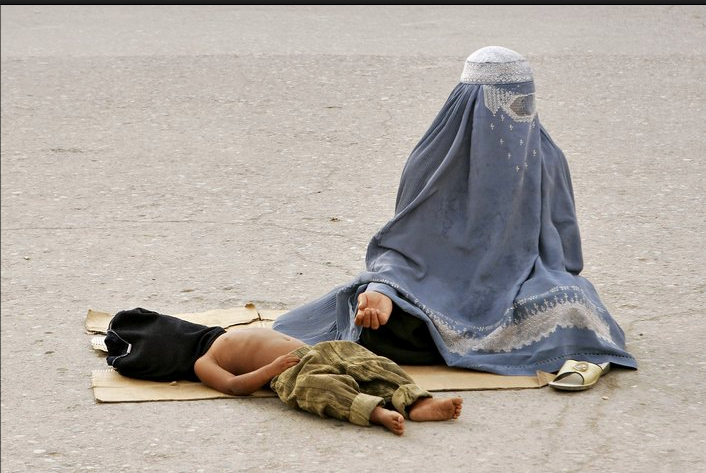
These days, it seems that caring for Pakistan’s children is too hard. Millions of children are homeless, hungry, and sick in lower Sindh, which was devastated by flooding over a month ago. But Pakistan is not on the world’s good side at the moment — Osama Bin Laden was discovered here. Media reports on suicide attacks and terrorist networks abound. Relations between the US and Pakistan have soured. With so much negative news, it’s hard to feel good about helping Pakistan. Our hearts go out to the downtrodden and helpless, not those who are tinged with violence and controversy.

But Pakistan’s children don’t know this. They don’t know that if they had been born in a different country, they might not be going to bed hungry. They don’t know that if they spoke Japanese or Creole, rather than Sindhi, they might be sleeping in a waterproof tent, rather than under a plastic sack strung between trees. And they don’t know that, if they had survived last year’s floods, rather than this year’s – they might have clean water to drink.

More than two weeks ago, the United Nations launched a $357 million appeal to provide life-saving relief to over 5.4 million people affected by the floods, including 2 million children. Last year, when a $460 million appeal was issued to help victims of the 2010 floods, 64 per cent of this amount was committed by international donors in 18 days. This year, only 14 per cent has been pledged so far.

For aid workers like myself, the ā€˜humanitarian imperative’ guides our work — this principle avows that it is the duty of the international community to provide humanitarian assistance wherever needed. Our job is to save lives and reduce suffering when disaster strikes. We are trying to do this in flood-ravaged lower Sindh. Both the government and the humanitarian community in Pakistan have provided food, water, shelter, and medical care to hundreds of thousands of people. Save the Children — the organisation I work for — has reached over 240,000 people in less than four weeks. Yet there are still hundreds of communities who have received no support, and aid agencies will run out of funding soon. What, then, for Pakistan’s children?
In some areas of lower Sindh, it will take months for the flood waters to recede. While they wait, those with livestock will sell off their goats and cattle one by one, for ten to 20 per cent of their value, so they can feed their families. The less fortunate families, those without such assets, will take loans from wealthy landlords, and fall further into debt. Their children will eat once a day, and often only flatbread. They will suffer from skin diseases and diarrhoea, and some will contract malaria. As children become more malnourished, their immune systems will weaken. Soon many will die.

With so much need in the world, we often become deaf to cries for help. But national governments and international donor agencies are not deaf — they read the reports, they know the numbers. And 5.4 million people is no small number — it is more than the populations of Norway, Ireland, and New Zealand. Yet unlike these countries, the 5.4 million people in Pakistan affected by the floods do not have savings accounts or insurance. Right now, most have only make-shift shelters, a few clay pots, and some dirty blankets, and with that they are trying to get by.
Pakistan will likely remain at the forefront of global controversy for some time to come. But its children should not have to pay the price for this. The children in lower Sindh are not militants or politicians. They are like your children — hopeful, genuine, and kind — and they deserve to survive as all children do.

Pakistan’s Power Woes

By Huma Imtiaz for Foreign Policy

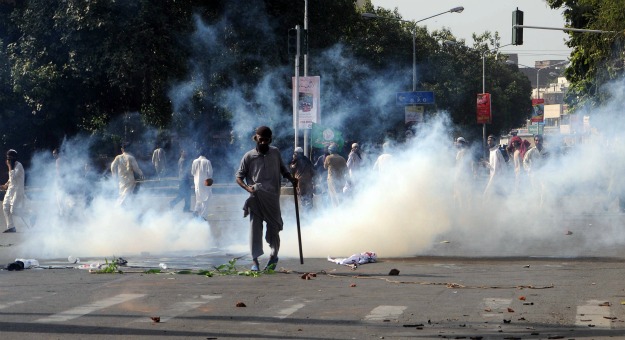
Pakistan’s power crisis has become a catastrophe. Power cuts of up to 14 hours a day have become the norm in Pakistan. In Karachi, four patients admitted in the largest public hospital died when the hospital’s backup generator failed after prolonged cuts. Riots have engulfed Punjab, and other major cities across the country, as the government wrings its hands and tries to get the situation under control. Allegations have flown between the leaders of the two major political parties — the Pakistan Muslim League (Nawaz) and the ruling Pakistan People’s Party (PPP). The PML (N) — has accused the PPP of being responsible for the crisis. In turn, the PPP has accused the PML-N of instigating the violence.

Riots over power cuts in the country, known as “load shedding,” have now become a matter of routine. In neighborhoods and cities across Pakistan, hundreds have taken to the streets to vent their anger at the frequent load shedding. This time around though, the PML-N, perhaps to apply more pressure as a political tactic against its rival PPP, has stepped in, and is supporting the protestors.

But as the flurry of allegations continues, the problem at hand grows more serious. Dubbed the circular debt issue, power companies have racked up billions in unpaid dues to petroleum companies, which supply them oil to run their powerhouses. On Sunday, Pakistan State Oil (PSO), tired of waiting for the dues long promised to them, decided to stop the petroleum supply to the power companies, leading to an increase in the already inhumane cuts.

While the Government of Pakistan (GoP) has now released some funds to appease PSO, this is not a long-term solution. The Federal Minister for Water and Power Naveed Qamar responded to the most recent protests by saying that there were no quick fixes, and then turned around and announced that the situation would improve in 24-36 hours. Last week in Washington DC, the Finance Minister of Pakistan Hafeez Sheikh solemnly announced that the government understood the severity of the circular debt issue, and would resolve it in the weeks to come. But with a growing fiscal deficit, and a refusal of the Asian Development Bank to fund programs in Pakistan after the GoP decided to end their International Monetary Fund (IMF) loan program, how Pakistan plans to resolve the circular debt issue is anyone’s guess.

One solution, according to Prime Minister Yousaf Raza Gilani, was that the United States “should help Pakistan solve its energy crisis if it wanted better ties.” The United States has previously said that it is investing in dams in Pakistan to help add to the power grid, and has helped in the reconstruction of existing dams in the country.

However, Pakistan needs to stop looking towards the West for a solution (or a scapegoat), and perhaps redirect its attention to how to fix its problems internally first — perhaps by collecting payment of unpaid bills, or cracking down against those stealing electricity. First, though, it has to deal with the political ramifications of these protests. The PML-N has played its cards right; by blaming the political center of which it is no longer part, it has easily scored political points while the PPP becomes the fall guy — and to an extent, perhaps deservedly so. Pakistan’s government, in turn, can only do so much. Strapped for cash, it barely has the funds to invest in power generation, and in cases where it has, such investments have barely led to a meaningful increase in the electricity grid.

Additionally, in the face of all of these problems, if Pakistan raises power tariffs on those that have been suffering for the last many years, the law and order situation could become even more perilous.

Meanwhile, the Pakistani population continue to take to the streets, hoping that it might eventually lead to the light bulbs burning bright again.

Huma Imtiaz works as a correspondent for Express News and is based in Washington, DC.

Gunmen Attack Shiite Muslims in Pakistan, 12 Dead

As Reported By USA Today

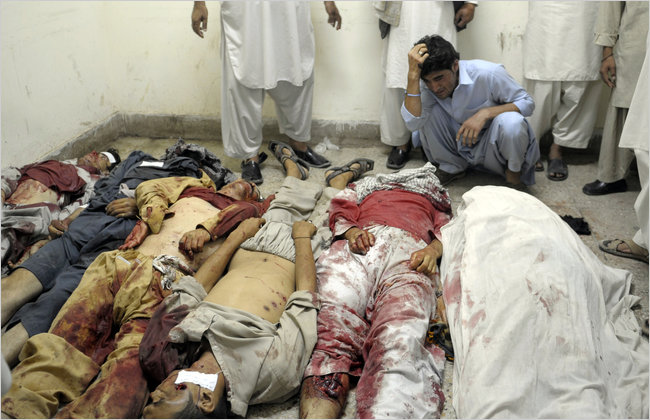
Suspected Sunni extremists opened fire on Shiite Muslims traveling through southwestern Pakistan on Tuesday, killing 12 people and wounding six others in the latest apparent sectarian attack to plague the country, police said.

Sunni militants with ideological and operational links to al-Qaida and the Taliban have carried out scores of bombings and shootings against minority Shiites in recent years, but the past couple weeks have been particularly bloody.

The gunmen who attacked Tuesday were riding on motorbikes and stopped a bus carrying mostly Shiite Muslims who were headed to work at a vegetable market on the outskirts of Quetta, the capital of Baluchistan province, said police official Hamid Shakeel.

The attackers forced the people off the bus, made them stand in a line and then opened fire, said Shakeel. The dead included 11 Shiites and one Sunni, he said. The wounded included four Shiites and two Sunnis.

Sunni extremists carried out a similar attack on Shiite pilgrims traveling through Baluchistan about two weeks ago, killing 26 people. Pakistan is a majority Sunni Muslim state, with around 15 percent Shiite.

Most Sunnis and Shiites live together peacefully in Pakistan, though tensions have existed for decades. In the 1980s and 1990s, Pakistan became the scene of a proxy war between mostly Shiite Iran and Sunni Saudi Arabia, with both sides funneling money to sectarian groups that regularly targeted each other.

The level of sectarian violence has declined somewhat since then, but attacks continue. In recent years, Sunni attacks on Shiites have been far more common.

The groups have been energized by al-Qaida and the Taliban, which are also Sunni and share the belief that Shiites are infidels and it is permissible to kill them. The Sunni-Shiite schism over the true heir to Islam’s Prophet Muhammad dates back to the seventh century.

Lashkar-e-Jhangvi, one of the country’s most ruthless Sunni militant groups, claimed responsibility for the attack in Baluchistan two weeks ago. One of its alleged leaders, Malik Ishaq, was released from prison on bail in July after being held for 14 years on charges, never proven, of killing Shiites.

Ishaq was re-arrested about a week ago after making inflammatory speeches against Shiites in the country. He was not charged but detained under a public order act, which means he can be held for three months.

It’s not clear if Ishaq’s speeches have been connected to the recent wave of sectarian attacks.

Growing Hope for Trade Ties Between India and Pakistan

By Shahzeb Jillani

Business leaders from India and Pakistan say there’s new optimism about the efforts their governments are making to improve trade ties. But critics warn that overcoming decades of mistrust may not be that easy.

For the first time in 35 years, a Pakistani commerce minister led a business delegation to India last week. The entourage included nearly 80 leading industrialists, traders and high-ranking officials.

Peace talks between the two nuclear-armed neighbours broke down in 2008 after the attacks in the Indian city of Mumbai, which India blamed on Pakistan-based militants.

Nearly three years on, as if to emphasise a sense of normalcy, the Pakistani Commerce Minister, Makhdoom Amin Fahim, stayed at the city’s Taj Mahal Hotel – which was one of the main targets of the 2008 attacks.

There, leading Pakistani traders got a chance to mingle with their equally eager-for-business Indian counterparts.

Between them, they spoke not just of the profits their individual businesses could make if their governments removed the long standing hurdles in their way. But also of how much the people of their two countries, and indeed the wider region, stand to benefit from freer movement of goods, money and commodities.

The only way I see realisation of trade potential between our two countries is for India to remove its non-tariff trade barriers and for Pakistan to reciprocate by granting the MFN status to Indiaā€

Vijay Kalantri, president of All India Association of Industries, said traders on both sides feel business between India and Pakistan is a win-win situation for everyone.

“Why are Indians and Pakistanis forced to trade unofficially via third countries like Dubai or Sri Lanka?” he tells the BBC from Mumbai.

“All we are asking is, let there be direct business-to-business contact between us.”

After the talks in Delhi, ministers from the two sides announced their agreement to boost their annual bilateral trade from current $2.7bn (Ā£1.7bn) to $6bn by 2015.

They also pledged to ease business travel and promote bilateral trade through the land route.

For Pakistan, a significant announcement was a pledge by India to drop its opposition to the European Union’s plan to grant Pakistan tariff waiver on select commodities to help it recover from the devastation of 2010 floods.

There was hope that Pakistan might reciprocate and grant India the Most Favoured Nation status (India granted Pakistan MFN status way back in the 1990s).

Even though no such announcement came, Pakistan committed itself to a road map to implement preferential trade ties with India, as prescribed under the South Asia Free Trade Agreement (Safta).

Trade barriers
There are a number of explanations why Pakistan has so far withheld the MFN status from India.

At present there are a number of barriers to prevent trade between Indian and Pakistan
First is political. Pakistani leaders have often linked it to the resolution of the core issue of Kashmir.

It’s a stance which has long been propagated for mainly domestic consumption.

But there is a sense in Pakistan that while the country should continue to push for a negotiated settlement of the Kashmir issue, trade and commerce should not be held hostage to resolution of political disputes.

The second is protectionism. For years, domestic industry in Pakistan has feared it would be swamped by imports from India. But even there, the mood appears to have shifted.

Senator Haji Ghulam Ali, president of Federation of Pakistan Chambers of Commerce and Industry, says there’s a consensus that Pakistan should open up to Indian business.

“Everyone now recognises it will be beneficial for both sides. It’s just a matter of time before it’s done,” he tells the BBC from Delhi.

Business leaders say that less trade barriers would benefit firms in both countries, However, the last, and more plausible, obstacle is the issue of non-tariff barriers.

“In my experience, India has one of the most restrictive trade regimes in the region,” asserts Dr Ashfaq Hasan Khan, a former advisor to Pakistan’s Ministry of Finance. His view matters, given has decades of dealings with South Asian governments on trade liberalization.

He explains that despite granting Pakistan the MFN status, India has a variety of non-tariff barriers in place – such as, stringent certification codes, customs rules, security clearances and movement restrictions – which make it virtually impossible for Pakistani traders to do business in India.

“The only way I see realisation of trade potential between our two countries is for India to remove its non-tariff trade barriers and for Pakistan to reciprocate by granting the MFN status to India,” says Mr Khan.

He adds: “Unless there’s political will to do that, everything else is just talk and photo op.”

CIA Contractor Charged in Pakistan Deaths Arrested in Colorado

By Jim Spellman for CNN

Raymond Davis, who was charged with killing two men in Pakistan as a CIA contractor but was later released, was arrested Saturday after a fistfight at a shopping center in Colorado, authorities said.

Davis was charged with misdemeanor assault and disorderly conduct after allegedly getting into a fight over a parking space at a suburban Denver mall, according to Lt. Glenn Peitzmeier of the Douglas County Sheriff’s Office.

The incident at the Highlands Ranch Town Center began as an argument between 37-year-old Davis and 50-year-old Jeff Maes and then turned physical, Peitzmeier said. Davis was released after posting $1,750 bond, Peitzmeier said.

Davis’ wife, Rebecca, declined a CNN request for comment. Davis was charged with killing two men in Lahore, Pakistan, in January. He was released in March after compensation was paid to their families.

U.S. officials originally said Davis was a diplomat and tried to claim diplomatic immunity but then revealed that he was a CIA contractor.
Davis said he killed the two men in self-defense, though Lahore authorities called the case “clear-cut murder.”

Death Sentence in Slaying of Pakistani Governor

By Salman Masood for The New York Times

A court on Saturday sentenced to death an elite police guard who assassinated a leading secular politician he had been charged with protecting, a slaying that sent shockwaves throughout Pakistan and was seen as a clear marker of the growing religious intolerance and extremism in the country.

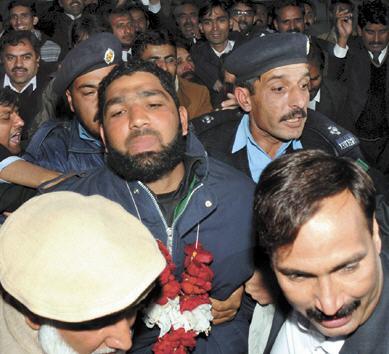
The news made international headlines not just because of the prominence of the politician killed, Salman Taseer, but because the killer was celebrated by many in Pakistan, including lawyers who showered him with rose petals and garlands at a court appearance.

Judge Syed Pervez Ali Shah announced the sentence for the guard, Malik Mumtaz Qadri, in an antiterrorism court at Adiala Jail in Rawalpindi. ā€œNobody can be given a license to kill on any pretext,ā€ the judge was quoted as saying after the conclusion of the trial, which was held under tight security.

The ruling was unusual in Pakistan; frightened justices in recent years have been cowed into releasing Islamic militants or letting them off with light sentences. The judgment was especially noteworthy in such a high-profile case against a man whose popularity only grew with his confession and defense of the killing on religious grounds.

Mr. Taseer was the governor of Punjab Province and one of the country’s most outspoken opponents of the country’s controversial blasphemy laws, which mandate a death sentence for anyone convicted of insulting Islam.

Liberals and rights activists were encouraged by the verdict, but noted that it could be overturned in appeals that can drag on for years.

ā€œToday’s judgment is a positive development whereby norms of justice have prevailed,ā€ said Raza Rumi, a political analyst and columnist in the eastern city of Lahore. ā€œPakistan cannot be allowed to become a vigilante society, and the state — its judges and prosecutors — need to uphold the law.ā€

No matter what happens with the case, however, Mr. Taseer’s death cast a pall over discussions of the blasphemy laws — which had become something of a test case for broader debate of how religion and politics mix in Pakistan. That trend continued Saturday. The usually voluble Pakistani press dutifully covered the story, but news broadcasts were mainly devoid of the normal commentary or debate.

ā€œLocal media’s muted coverage of the sentence is reflective of the fear factor and the polarization within the society which includes media personnel,ā€ Mr. Rumi said.

Mr. Qadri, 26, was convicted of murder and committing an act of terrorism, and was handed two life sentences.

No date for the execution has been announced, and Mr. Qadri has a right to appeal within seven days. Raja Shuja-ur-Rahman, a lawyer for Mr. Qadri, told the DAWN television channel that an appeal would be filed.

Mr. Qadri killed Mr. Taseer in a hail of bullets on Jan. 4, shooting at close range as Mr. Taseer was getting into his car.

Mr. Taseer, a businessman and a liberal politician, had emerged as a leader in a fight against the blasphemy law, which rights groups say has been used to persecute minorities, especially Christians.

The law was introduced in the 1980s under the military dictatorship of Gen. Mohammad Zia ul-Haq as part of a policy of promoting Islam to unite Pakistan’s deeply fractious society.

Mr. Qadri was hailed as a hero by Islamist lawyers, several mainstream politicians and religious leaders.

On Saturday, dozens of supporters of Mr. Qadri gathered outside the jail and chanted slogans against the sentence, while the judge slipped out a back door.

ā€œWe will free you! We will die for you!ā€ 20-year-old Mohamemd Aslam was quoted as saying by The Associated Press. Others yelled: ā€œLong live Qadri, long live Qadri!ā€

ā€œBy punishing one Mumtaz Qadri, you will produce a thousand Mumtaz Qadris!ā€ shouted another man.

The ruling Pakistan Peoples Party, to which Mr. Taseer belonged, has been accused of distancing itself from the cause of repealing the blasphemy law since the assassination.

Analysis: Pakistan’s Double-Game: Treachery or Strategy?

By John Chalmers for Reuters

Washington has just about had it withPakistan.

“Turns out they are disloyal, deceptive and a danger to the United States,” fumed Republican Representative Ted Poe last week. “We pay them to hate us. Now we pay them to bomb us. Let’s not pay them at all.”

For many in America, Islamabad has been nothing short of perfidious since joining a strategic alliance with Washington 10 years ago: selectively cooperating in the war on extremist violence and taking billions of dollars in aid to do the job, while all the time sheltering and supporting Islamist militant groups that fight NATO troops inĀ Afghanistan.

Pakistan has angrily denied the charges, but if its critics are right, what could the explanation be for such duplicity? What strategic agendas might be hidden behind this puzzling statecraft?

The answer is that Pakistan wants to guarantee for itself a stake in Afghanistan’s political future.

It knows that, as U.S. forces gradually withdraw from Afghanistan, ethnic groups will be competing for ascendancy there and other regional powers – from India toĀ ChinaĀ and Iran – will be jostling for a foot in the door.

Islamabad’s support for the Taliban movement in the 1990s gives it an outsized influence among Afghanistan’s Pashtuns, who make up about 42 percent of the total population and who maintain close ties with their Pakistani fellow tribesmen.

In particular, Pakistan’s powerful military is determined there should be no vacuum in Afghanistan that could be filled by its arch-foe, India.

INDIA FOCUS

Pakistan has fought three wars with its neighbor since the bloody partition of the subcontinent that led to the creation of the country in 1947, and mutual suspicion still hobbles relations between the two nuclear-armed powers today.

“They still think India is their primary policy,” said Talat Masood, a retired Pakistani general and prominent political analyst. “India is always in the back of their minds.”

In an interview with Reuters on Tuesday, Pakistani Prime Minister Yusuf Raza Gilani – unprompted – complained that Washington’s failure toĀ dealĀ even-handedly with New Delhi and Islamabad was a source of regional instability.

Aqil Shah, a South Asia security expert at the Harvard Society of Fellows, said Islamabad’s worst-case scenario would be an Afghanistan controlled or dominated by groups with ties to India, such as the Tajik-dominated Northern Alliance, which it fears would pursue activities hostile to Pakistan.

“Ideally, the military would like Afghanistan to become a relatively stable satellite dominated by Islamist Pashtuns,” Shah wrote in a Foreign Affairs article this week.

Although Pakistan, an Islamic state, officially abandoned support for the predominantly Pashtun Taliban after the 9/11 attacks on the United States in 2001, elements of the military never made the doctrinal shift.

Few doubt that the shadowy intelligence directorate, the Inter-Services Intelligence (ISI), has maintained links to the Taliban that emerged from its support for the Afghan mujahideen during the 1979-1989 Soviet occupation of Afghanistan.

Until recently, there appeared to be a grudging acceptance from Washington that this was the inevitable status quo.

That was until it emerged in May that al Qaeda leader Osama bin Laden – who was killed in a U.S. Navy SEALs raid – had been hiding out in a Pakistani garrison town just two hours up the road from Islamabad, by some accounts for up to five years.

Relations between Pakistan and the United States have been stormy ever since, culminating in a tirade by the outgoing U.S. joint chiefs of staff, Mike Mullen, last week.

Mullen described the Haqqani network, the most feared faction among Taliban militants in Afghanistan, as a “veritable arm” of the ISI and accused Islamabad of providing support for the group’s September 13 attack on the U.S. embassy in Kabul.

The reaction in Islamabad has been one of stunned outrage.

Washington has not gone public with evidence to back its accusation, and Pakistani officials say that contacts with the Haqqani group do not amount to actual support.

However, Imran Khan, a Pakistani cricketer-turned-populist-politician, said this week that it was too much to expect that old friends could have become enemies overnight.

He told Reuters that, instead of demanding that Pakistan attack the Haqqanis in the mountainous border region of North Waziristan, the United States should use Islamabad’s leverage with the group to bring the Afghan Taliban into negotiations.

“Haqqani could be your ticket to getting them on the negotiating table, which at the moment they are refusing,” Khan said. “So I think that is a much saner policy than to ask Pakistan to try to take them on.”

REGIONAL GAME

The big risk for the United States in berating Islamabad is that it will exacerbate anti-American sentiment, which already runs deep in Pakistan, and perhaps embolden it further.

C. Raja Mohan, senior fellow at New Delhi’s Center for Policy Research, said Pakistan was probably gambling that the United States’ economic crisis and upcoming presidential elections would distract Washington.

“The real game is unfolding on the ground with the Americans. The Pakistan army is betting that the United States does not have too many choices and more broadly that the U.S. is on the decline, he said.

It is also becoming clear that as Pakistan’s relations with Washington deteriorate, it can fall back into the arms of its “all-weather friend,” China, the energy-hungry giant that is the biggest investor in Afghanistan’s nascent resources sector.

Pakistani officials heaped praise on Beijing this week as a Chinese minister visited Islamabad. Among them was army chief General Ashfaq Kayani, arguably the country’s most powerful man, who spoke of China’s “unwavering support.”

In addition, Pakistan has extended a cordial hand toĀ Iran, which also shares a border with Afghanistan.

Teheran has been mostly opposed to the Taliban, which is dominated by Sunni Muslims while Iran is predominantly Shi’ite. But Iran’s anti-Americanism is more deep-seated.

“My reading is the Iranians want to see the Americans go,” said Raja Mohan, the Indian analyst. “They have a problem with the Taliban, but any American retreat will suit them. Iran in the short term is looking at the Americans being humiliated.”

ARMY CALLS THE SHOTS

The supremacy of the military in Pakistan means that Washington has little to gain little from wagging its finger about ties with the Taliban at the civilian government, which is regularly lashed for its incompetence and corruption.

“The state has become so soft and powerless it can’t make any difference,” said Masood, the Pakistani retired general. “Any change will have to come from the military.”

Daniel Markey, a senior fellow for South Asia at the U.S. Council on Foreign Relations, said the problem lies with a security establishment that continues to believe that arming and working – actively and passively – with militant groups serves its purposes.

“Until … soul-searching takes place within the Pakistani military and the ISI, you’re not likely to see an end to these U.S. demands, and a real shift in terms of the relationship,” Markey said in an online discussion this week. “This is the most significant shift that has to take place.”

Bacha Khan, Anti-Partition Hero Who Can Help Pakistan Today

By Mauro Vaiani for Pakistanis for Peace

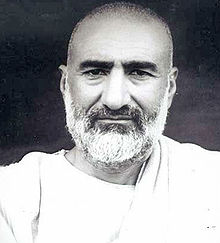
A person once stigmatized as an enemy of Pakistan, has something important to say in the contemporary public discourse in the second Islamic country in the world. His name is Abdul Ghaffar Khan (in the picture), a Pakhtun patriot, social reformer, charismatic leader. He was a lifelong activist in favour of his fellows Pathans living North and South the frontier Durand Line. He became a very close friend of the Mahatma and he himself was called the ā€œFrontier Gandhiā€.

Anti-Partition apostle of nonviolence
He was born on 1890 in Utmanzai, a town in Charsadda District, in the North-West Frontier Province, today Khyber Pakhtunkhwa Province in Pakistan. He was an apostle of nonviolence, that he considered a form of spiritual jihad for his time and for the future of his people. He founded a nonviolent movement which arrived to count 100,000 members. As he wrote in his 1969 autobiography, ā€œMy life and struggleā€, ā€œin 1929 we were able to found the kind of organisation we wanted. We decided to call it the Khudai Khidmatgar movement (Servants of God movement). Our motive for choosing that name was that we wanted to awaken in the Pathans the idea of service and the desire to serve their country and their people in the name of God, an idea and a desire which was sadly lacking among themā€. The Khudai Khidmatgars were also known, for the color of their uniforms, ā€œRed Shirtsā€. The founder was called by his followers, as a mark of esteem, Badshah Khan, also spelled Baacha Khan, or more commonly Bacha Khan, that means ā€œking of our noblesā€.

Baacha Khan fostered free education for all, women rights, religious freedom, judicial reform. He also was a pioneer of ecology and sustainable development. He believed in self-government for both the settled and the tribal Pakhtuns. He strongly opposed the Partition of India, proposing autonomous provinces in a unified Indian federal framework. When the Partition became inevitable, he renounce to oppose it with riots or violence. He and his Khidmatgars accepted, reluctantly, Pakistan as their new country and decided to be loyal. They hoped the new regime would have given the Pakhtuns a chance to live united in their territory, free to self-govern their own province. The autonomy of the federal units in Pakistan was instead nipped in the bud and their movement was declared illegal.
For the freedom fighter, a new cycle of imprisonment started. Baacha Khan spent one-third of his life in prison, but, more precisely, he spent more time, about 15 years, in Pakistani prisons than he had spent in the prisons of the British Raj, ā€œonlyā€ 12.

He also went in exile in Afghanistan, where he supported local Pashtun cultural, social and economical development, fighting backwardness, clanism, family feuds. He gave in Afghanistan many speeches in favor of ā€œPakhtunistanā€, which were free of every kind of chauvinism, fostering freedom and self-government of his people, within the Pakistani federation, firmly anchored to a commitment for peace in all South Asia, all over the world.
ā€œI am looking forward to the time when free, general elections will be possible again in Pakistan. – he wrote in his 1969’s autobiography – For only then will the world know which way my people are going and whom do they follow. This is the main conflict between me and the rulers of Pakistan.ā€. This champion of Pakhtun patriotism remained unheeded. He won’t see general and local fair election either under the dictatorship of Ayub Khan, nor under Yahya Khan, nor under the civil but still authoritarian rule of Zulfiqar Ali Bhutto, nor under Zia Ul-Haq.
He couldn’t see the general elections of December 1988, when Benazir Bhutto, daughter of Zulfiqar Ali, became Prime Minister, for he died in Peshawar on January 20.

He had requested to be buried in Jalalabad, Afghanistan. He hoped this way to witness the need of friendship, and mutual understanding, among all Pakhtuns, between Afghanistan and Pakistan. His last wish succeeded in leaving a footprint in the heart of many throughout South Asia. As one can read in Rajmohan Gandhi’s biography of Bacha Khan (New Delhi, 2004) his funeral resulted a mammoth rally: ā€œThough the Afghan struggle was not yet over, the Kabul government and the mujahedin both announced a ceasefire for the event. Tens of thousands of the Frontier’s mourning Pakhtuns accompanied the coffin and crossed the Durand Line. Pakistan’s military ruler, Zia-ul Haq (who would be killed in a plane crash later in the year), and India’s Prime Minister, Rajiv Gandhi (also destined for a violent death), were present for the last rites.ā€ (see Gandhi R., Ghaffar Khan, 2004, p. 263).

Political heritage

After decades of oblivion, his political heritage are now again gaining momentum among Pakhtuns. An important political player in the re-established Pakistani democracy, the Awami National Party (ANP), wrote in its manifesto that it ā€œdraws its inspiration from the example and teachings of Khan Abdul Ghaffar Khan, affectionately known to his people as Baacha Khan. He spent his entire life in the struggle for freedom and justice. He and his Khudai Khidmatgars offered great sacrifices in the fight against colonialism, imperialism and all other forms of oppression. In a broader sense, Baacha Khan saw politics as the highest form of public service and often described himself as only a social worker. His objective was to liberate the masses of South Asia and, particularly, his own people, the Pakhtuns, from the shackles of ignorance and poverty, so that they could rise to their full potential.ā€ (cf http://awaminationalparty.org/).
The ANP was led in the past by Bacha Khan’s son, Abdul Wali Khan, and today the most prominent figure is his grandson, Asfandyar Wali Khan. In the 2008 elections, the Awami National Party won the majority in Khyber Pakhtunkhwa and elected its first Chief Minister since the independence, in coalition with the Pakistan People’s Party. ANP is allied with PPP also in other provinces and at the federal level.
The parable of the Taliban regime and the political violence that still sets fire through the area, has been a terrifying experience for everybody but especially for Pakhtuns. Baacha Khan is being rediscovered, as a source of inspiration for a better future. He was a devout Muslim believer, but he refused terror and was also alien from any bigotry. His political action was centered on peace and social reformation. He sacrificed as a satyagrahi in nonviolent campaign of civil disobedience, firstly against the British Raj, but later also against Pakistan authoritarianism and military rule.
His spiritual heritage helped ANP to defeat the Muttahida Majlis-e-Amal, the Islamist coalition, which was in power in Pakhtunkhwa before 2008. It was a highly symbolic victory. In the name of Baacha Khan, the modern ANP defeated the Islamists, as well as the ancient Khudai Khidmatgars had always defeated the Muslim League in both the elections hold in the province, under the British rule, on 1936 and 1946. Many hope that this political change could represent the end of a cycle, dominated by a tangle of Islamist and nationalist ideologies, which have painfully marked the history of the Frontier, of all Pakistan, Afghanistan.

Several notable cultural foundations and charities are working in South Asia to promote peace and human rights through the rediscover of Badshah Khan’s life, thought and action. We must nominate the Baacha Khan Trust (see http://www.baachakhantrust.org/), whose chief aim is propagation of Ghaffar Khan’s philosophy, his vision of renaissance for the oppressed and marginalized Pakhtuns communities, and for peace in Pakistan, Afghanistan, the whole South Asia.
Nowadays efforts to make the public opinion and new generations aware of the figure and the teachings of Baacha Khan would certainly help the stabilization of the so called Afpak area. After 60 years of political authoritarianism and violence in Pakistan and 40 years of civil war in Afghanistan, it’s probably time to know something more about Bacha Khan.

Self-government

His Red Shirts were able to provide ā€œlocal leadership for education and development, and stood up for the dignity and rights of their community. They balanced affirmations of the rights and dignity of all people with teachings about responsibility and sacrifices needed to serve those same communities.ā€ – Ali Gohar, founder and guide at the Just Peace International center, in Peshawar, recently wrote, adding that the beauty of this kind of nonviolent struggle is again alive in 2011 Arab Spring heroes cf http://www.khyberwatch.com/index.php?mod=article&cat=MediaWatch&article=391).

ā€œYou all know that I believe in the principles of non•violence. – he said on August 31, 1966, talking in Afghanistan on the Pakhtunistan Day, as reported in his 1969’s autobiography – I am convinced that there will be no peace in the world till the problem of the Pakhtuns has been solved. I am telling both the Russians and the Americans the same thing: if they really want peace, they should solve the problem of the Pakhtuns. What do we want? We keep on telling Pakistan to consider us their brothers and not to make us their slaves. We were never the slaves of the British and you should not expect us to be your slaves.ā€. Heared today, these words are somehow prophetic and should encourage a serious reflection.

The Pathans, both in Afghanistan and in Pakistan, still need an accountable local self-government, in order to take on full responsibility of their own territories. They can hardly be governed from Kabul, or from Islamabad. May be they can resolve their own way their problems, included terror-related and security’s ones.

The recent Pakistani devolution can be seen as a historical accomplishment on the way indicated by Baacha Khan. This is what many political leaders, not only ANP’s ones, strongly believe. Federalism was part of the independence struggle and the only way to make the idea of Pakistan into a lasting reality.

Unfortunately, the centralized, bigoted and corrupt, republic chosen by Afghani Pashtun leadership, after the fall of the Taliban regime, is much farer from Baacha Khan’s ideal of decentralized responsible and accountable self-government. The present solution resembles too much like the 1973 republic. It may be not reveal the right solution for the future of such a vast, diverse, and bitterly divided, country.

Don’t let anybody deceive you in the name of Islam

Abdul Ghaffar Khan, along all his existence, advocated for reforms, social justice, change through education, and, last but not least, peaceful coexistence of all communities, without any kind of ethnic, religious, caste, clan, social discrimination.
He strongly demanded his fellow Pakhtuns, to strive against ignorance, bigotry, prejudices, family feud and political violence. His message, which follows the furrow of modern nonviolent revolutions, which have already brought down more than an empire, can drive the Islamist factions and wider Muslim public opinion to a radical rethinking.

His teaching was prescient and it is today more relevant than ever: ā€œAnd you, misguided Pathans, you do not even stop to think whether this is Islam or not, you just swallow anything you are told… I want you to promise me that you will never let anybody deceive you in the name of Islam.ā€ (from Baacha Khan’s speech in Afghanistan, on Pakhtunistan Day, 31 August 1967, as reported in Baacha Khan’s autobiography, 1969).

-Mauro Vaiani is a Geopolitics PhD CandidateĀ at theĀ University of Pisa in Italy and is a Facebook group member and contributor of Pakistanis for Peace. His page at the university is at http://www.sp.unipi.it/hp/vaianiĀ and he can be reached via email at mauro.vaiani@sp.unipi.it

U.S. Refrains From Declaring Haqqani Terrorist Group on Pakistan Concerns

By John Walcott and Viola Gienger for Bloomberg News

The Obama administration isn’t ready to declare the Haqqani group in Pakistan a ā€œforeign terrorist organizationā€ even after Admiral Mike Mullen, chairman of the Joint Chiefs of Staff, said the group attacked the U.S. embassy and American troops in Afghanistan.

ā€œWe are continuing to review whether to designateā€ the Haqqani organization, State Department spokeswoman Victoria Nuland said yesterday.
Mullen’s declaration in Senate testimony last week that Haqqani operatives acted as a ā€œproxyā€ for Pakistan’s intelligence service may have further complicated the question.

Taking the first step — adding the Haqqani group to the list of terrorist organizations — would lead to demands that Pakistan be declared a state sponsor of terrorism. That would put at risk Pakistan’s cooperation as the U.S. tries to snuff out al-Qaeda’s core and other militants in the country’s tribal areas.

For now, the U.S. has designated the Haqqani network’s founder and other leaders. It has made clear to Pakistan that clamping down on the group ā€œis job one, that we want to do it together, and that’s the conversation that we’re having now,ā€ Nuland said.
Designating Pakistan a state sponsor of terrorism would put it in the company of only four other countries — Cuba, Iran, Sudan and Syria — and might trigger a nationalist backlash in Pakistan. It would require halting U.S. aid to Pakistan, force the U.S. to oppose World Bank loans to Pakistan, and end cooperation between the two countries in fighting terrorism and trying to stabilize Afghanistan.

Pariah State

Naming Pakistan a sponsor of terrorism ā€œwould turn it into a pariah state,ā€ Robert Lamb, a senior fellow at the Center for Strategic and International Studies in Washington, said in a telephone interview. ā€œThat would complicate a lot of aspects of the relationship, which is complicated enough already. It’s ugly, but it’s not unsalvageable.ā€

The administration is under new pressure to designate the Haqqanis a terrorist organization alongside 49 others, including al-Qaeda, Lebanon’s Hezbollah, and Hamas, the Palestinian Islamist group that controls the Gaza Strip.

After Mullen testified to the Senate Armed Services Committee, Senator Dianne Feinstein, a California Democrat and chairman of the Senate Intelligence Committee, wrote Secretary of State Hillary Clinton that the Haqqani group ā€œmeets the standards for designationā€ as a terrorist organization. So far, said congressional officials, Clinton hasn’t responded.

Congressional Pressure

ā€œI think there’s going to be increasing congressional pressure on them to list the Haqqani network as a foreign terrorist organization,ā€ said Lisa Curtis, a former CIA analyst and now a senior research fellow at the Heritage Foundation policy group in Washington.
ā€œIf we know that the Haqqani network is behind these major attacks on U.S. interests and we fail to confront them, that is a signal of weakness and it simply invites more attacks,ā€ she said.

Nuland and other administration and military officials signaled a reluctance to sanction Pakistan.
Pentagon Press Secretary George Little said yesterday that the U.S. wants to ā€œmaintain a relationship with Pakistan that’s grounded in common interests, to include going after terrorists that threaten both countries.ā€
ā€œThere are differences from time to time,ā€ Little told reporters at the Pentagon. ā€œThose differences have been made public, and we continue to discuss those differences in private. We look forward to working with the Pakistanis to try to resolve them.ā€

Stretched Thin

Pakistani military officials told reporters in Islamabad on Sept. 25 that they had decided not to take action against the Haqqani group because their forces are stretched too thin.

If tensions escalated, Pakistan might again, as it did in a previous diplomatic confrontation, cut supply lines to U.S., NATO and Afghan forces in Afghanistan from its port city of Karachi. Alternative land or air routes are more costly and difficult.
The Pakistanis, said two U.S. intelligence officials, also might abandon secret agreements that permit unmanned U.S. drones to collect intelligence and attack targets in designated areas of Pakistan.

The U.S. already is restricted from operating over the Haqqanis’ suspected base in North Waziristan or the border city of Quetta, home to the main Afghan Taliban group. They also might expel some or all of the classified number of U.S. intelligence officers and special operations forces who are training Pakistani troops and helping target drone attacks, the officials said.

ISI Role

Designating the Haqqani network a terrorist organization would do little to stop the group, said Curtis of the Heritage Foundation. The Haqqanis, she said, probably still would be able to garner financial support from their allies in the Persian Gulf region and backing from the Pakistan spy agency, the Directorate of Inter-Services Intelligence, known as ISI.
A U.S. designation of the Haqqanis isn’t likely to change Pakistani policy either, said Christine Fair, a Pakistan expert at Georgetown University in Washington.

The ISI and the Pakistani military regard the Haqqani network and other militants as allies in their campaign to maintain Pakistani influence in Afghanistan and prevent arch- rival India from getting a toehold on Pakistan’s western border, said Fair and other specialists.
ā€œThey believe that the Haqqanis would protect Pakistan’s interest in any future setup in Afghanistan,ā€ Curtis said.
Rejecting the charges that his government uses the Haqqanis as a proxy, Pakistani Prime Minister Yousuf Raza Gilani said in a Sept. 25 statement that U.S. policy on Afghanistan shows ā€œconfusion and policy disarray.ā€

ā€œWe may just let this ride,ā€ said Marvin Weinbaum, a former Afghanistan and Pakistan intelligence analyst at the State Department and director of the Center for Pakistan Studies at the Middle East Institute in Washington. ā€œWe know what direction the U.S.-Pakistan relationship is going, and now we have no idea what the bottom looks like.ā€

Pakistani Commanders Meet After US Criticism

By Sebastian Abbot for The Asssociated Press

Pakistan’s army chief convened a special meeting of senior commanders Sunday following U.S. allegations that the military’s spy agency helped militants attack American targets in Afghanistan, the army said.

The government also summoned home the country’s foreign minister early from a trip to the United States to attend a meeting of all major political parties to discuss the American allegations of support for the militant Haqqani network.

Senior Pakistani officials have lashed out against the allegations, accusing the U.S. of trying to make Pakistan a scapegoat for its troubled war in Afghanistan. The public confrontation has plunged the already troubled U.S.-Pakistan alliance to new lows.

Pakistan’s leaders have shown no indication they plan to act on renewed American demands to attack the Haqqani network in its main base in Pakistan, even at the risk of further conflict with Washington, which has given the country billions in aid.

U.S. officials have implied that American forces could carry out unilateral raids inside Pakistan against the Haqqani network, operations that could have explosive implications in a country where anti-American sentiment is widespread.

Pakistanis were outraged by the covert U.S. commando raid that killed al-Qaida chief Osama bin Laden in a garrison town not far from Islamabad in May. The U.S. did not tell the Pakistani government about the operation beforehand for fear bin Laden would be tipped off.

Pakistani Interior Minister Rehman Malik warned the U.S. on Sunday against sending troops into Pakistan.

“Any aggression will not be tolerated,” Malik told reporters in Islamabad. “The nation is standing united behind the armed forces, which is the front line of Pakistan’s defense.”

The top U.S. military officer, Adm. Mike Mullen, last week accused Pakistan’s Inter-Services Intelligence agency of supporting Haqqani insurgents in planning and executing a 22-hour assault on the U.S. Embassy in Afghanistan on Sept. 13 as well as a truck bomb that wounded 77 American soldiers days earlier.

Pakistan’s army chief, Gen. Ashfaq Pervez Kayani, widely considered the most powerful man in Pakistan, has dismissed the allegations, saying they were baseless and part of a public “blame game” detrimental to peace in Afghanistan.

Pakistan army spokesman Maj. Gen. Athar Abbas said Kayani presided over Sunday’s commanders meeting but would not provide detail on the discussions.

Later in the day, Prime Minister Yousuf Raza Gilani’s office issued a statement saying Foreign Minister Hina Rabbani Khar was summoned back to attend a meeting of all major political parties on “threats emanating from outside the country.”

Gilani slapped down the U.S. allegations in a separate statement issued late Saturday.

“We strongly reject assertions of complicity with the Haqqanis or of proxy war,” Gilani said in a statement. “The allegations betray a confusion and policy disarray within the U.S. establishment on the way forward in Afghanistan.”

Pakistan claimed to have severed its ties with Afghan militants after the 9/11 attacks and supported America’s campaign in Afghanistan, but U.S. officials have long suspected it maintained links. The comments by Mullen, who is chairman of the Joint Chiefs of Staff, were the most serious yet accusing Pakistan of militant ties, although he didn’t cite any specific evidence.

Despite the seriousness of the U.S. claims, which appear to accuse Pakistan of state-sponsored terrorism, Mullen and other U.S. officials have said Washington needs to keep engaging with Islamabad, a reflection of its limited options in dealing with the country. Washington is also concerned about the danger of further instability in the nuclear-armed state.

The head of U.S. Central Command, Gen. James Mattis, called for continued cooperation after a meeting with Kayani in Islamabad. In a statement issued Sunday by the U.S. Embassy, Mattis emphasized “the need for persistent engagement among the militaries of the U.S., Pakistan and other states in the region.”

Mattis also met with the Pakistani military’s chief of staff, Gen. Khalid Wynne, who expressed his concern about “negative statements emanating from the U.S.” and stressed the need to address “the irritants in the relationship,” according to a statement issued by the military.

Around half of the U.S. war supplies to Afghanistan are trucked over Pakistani soil, and even as it accuses Islamabad of complicity with Afghan insurgents, Washington knows that it will likely need Islamabad’s cooperation in bringing them to the negotiating table.

Gilani also called for greater cooperation.

“Let’s avoid mutual recrimination and recommit ourselves to working together for eliminating terrorism and for reconciliation and peace in Afghanistan,” he said.

Pakistan Warns U.S. Against Hot Pursuit On Its Soil

As Reported by The Detroit Free Press

Pakistan’s foreign minister today warned the United States against sending ground troops to her country to fight an Afghan militant group that America alleges is used as a proxy by Pakistan’s top intelligence agency for attacks in neighboring Afghanistan.

The warning came as a top U.S. military commander was in Pakistan for talks with the army chief at a time of intense strain between the two countries. The U.S. Embassy said Gen. James Mattis, head of U.S. Central Command, arrived in Pakistan late Friday, and that he will meet the army chief, Gen Ashfaq Parvez Kayani.

Ties between Islamabad and Washington are in crisis after American officials stepped up accusations that Pakistan’s Inter Services Intelligence was aiding insurgents in neighboring Afghanistan, including those who took part in an attack on the U.S. Embassy last week in Kabul.

Pakistan’s Foreign Minister Hina Rabbani Khar said in an interview today that there are red lines and rules of engagement with America, which should not be broken.

“It opens all kinds of doors and all kinds of options,” she told Pakistan’s private Aaj News TV from New York. The comment was in response to a question about the possibility of U.S. troops coming to Pakistan.

Khar, however, insisted that Pakistan’s policy was to seek a more intensive engagement with the U.S. and that she would like to discourage any blame game.

“If many of your goals are not achieved, you do not make someone a scapegoat,” she said, addressing the U.S.

The U.S. allegations have seen a strong reaction from Pakistan.

Kayani, the Pakistani army chief, said on Friday that the charges were baseless and part of a public “blame game” detrimental to peace in Afghanistan. Other Islamabad officials urged Washington to present evidence for such a serious allegation. Khar warned the United States is risking losing an ally in the war on terror.

The row began when Adm. Mike Mullen, chairman of the Joint Chiefs of Staff, on Thursday accused the ISI agency of supporting Haqqani insurgents in planning and executing last week’s 22-hour assault on the U.S. Embassy and a truck bombing that wounded 77 American soldiers days earlier.

Kayani said the allegations were “very unfortunate and not based on facts.”

The claims were the most serious yet by an American official against nuclear-armed Pakistan, which Washington has given billions in civilian and military aid over the last 10 years to try to secure its cooperation inside Afghanistan and against al-Qaida.

The Haqqani insurgent network is widely believed to be based in Pakistan’s North Waziristan tribal area along the Afghan border. The group has historical ties to Pakistani intelligence, dating back to the war against the Soviets in Afghanistan in the 1980s.

The relationship between the two countries has never been smooth, but it took one of its hardest hits when U.S. commandos slipped into Pakistan on May 2 without informing the Pakistanis of their mission and killed al-Qaida chief Osama bin Laden in a garrison town not far from Islamabad.

Pakistanis for Peace Editorial Note– We hope that the United States and Pakistan can get through this incredibly difficult period in their long and close relationship. The United States should present the concrete evidence that it has that there is collusion on the part of individuals in the Pakistani government with the terrorists and the Pakistanis for their part must do a lot more to end terror networks within their borders, and this certainly includes sending troops into North Waziristan, Quetta and any other city in the country where the terrorists are based. The already unstable and dangerous neighborhood that is South Asia can not afford further deterioration in US-Pakistan relations.