Posts Tagged ‘ Pakistan ’

Rotations: Pakistan gets presidency of UN Security Council for January, 2013

As Reported by the APP

Image

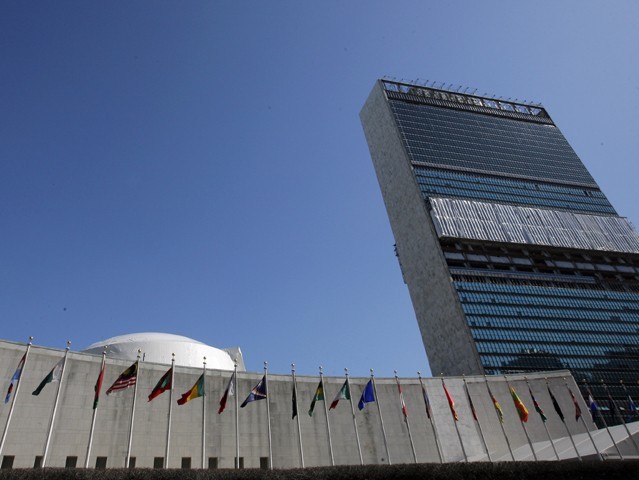
Pakistan took over the rotational office of the UN Security Council presidency for the month of January, with the dawn of the New Year.

The 15-nation Council is the United Nations’ most powerful body, which deals issues of international peace and security.

For the month of January, it has a busy schedule: Briefings and consultations on several issues and situations, which are part of the regular agenda, will take place during the month, according to their respective periodic cycles.

An open debate is planned on January 21, 2013, on “UN Peacekeeping: a multidimensional approach”, which is aimed at reviewing the UN flagship activity to maintain international peace and security. Prime Minister Raja Pervez Ashraf is expected to come to New York to preside over the session. UN Secretary-General Ban Ki-moon will brief the Council on the peacekeeping operations.

As a leading contributor of personnel to the UN peacekeeping operations over the past decades, Pakistan has a vital interest in the continued effectiveness and success of UN peacekeeping, Pakistani officials said.

Pakistan believes that the Council’s debate will be a contribution to international community’s collective efforts to make peacekeeping work even better.

A ministerial-level open debate is also planned on January 15, 2013, to deliberate on the comprehensive approach to counter-terrorism. Pakistan hopes that it will provide an opportunity to have a holistic view of the continuing threats and challenges posed by international terrorism and the best ways of formulating and implementing coherent and comprehensive responses to this menace.

Foreign Minister Hina Rabbani Khar will preside over this debate, in which high level participation from other Council members is also expected.

Currently, Pakistan has over 9,000 troops and other personnel deployed in eight UN peacekeeping missions around the world, which demonstrates its commitment to global peace and security. Prime Minister Ashraf will be the chief guest on the occasion. The UN chief will also attend.

The Council will also have the quarterly open debate on the situation in the Middle East, including the Palestinian question, on January 23. UN’s Special Coordinator for the Middle East Peace Process Robert Serry is likely to brief the Council.

Another important issue to be considered during Pakistan’s presidency is the Rule of Law. In terms of working methods, Pakistan has proposed to convene a formal Wrap-up Session of the Council on 31 January, which will allow the general membership to provide their views on the activities of the Council during the month.

Pakistan’s UN Ambassador Masood Khan in his capacity as president of the UN Security Council will brief the media on the work programme on January 3. The event will be telecast by the UN.

Earlier Pakistan had been elected six times for this prestigious body- 1952-53, 1968-69, 1976-77, 1983-84, 1993-94 and 2003-04. This is the seventh time, the member-states reposed confidence in Pakistan to serve on the Council.

Another victim of attacks on anti-polio teams dies in Pakistan, bringing 3-day toll to 9

As Reported by The Associated Press


Pakistan


Another victim from attacks on U.N.-backed anti-polio teams in Pakistan died on Thursday, bringing the three-day death toll in the wave of assaults on volunteers vaccinating children across the country to nine, officials said.

Hilal Khan, 20, died a day after he was shot in the head in the northwestern city of Peshawar, said health official Janbaz Afridi

Since Monday, gunmen had launched attacks across Pakistan on teams vaccinating children against polio. Six women were among the nine anti-polio workers killed in the campaign, jointly conducted with the Pakistani government.

The U.N. World Health Organization suspended the drive until a government investigation was completed.

U.N. Secretary-General Ban Ki-moon called the killings “cruel, senseless and inexcusable.” Speaking at his year-end news conference Wednesday, Ban said the victims were among thousands across Pakistan “working selflessly to achieve the historic goal of polio eradication.”

The suspension of the vaccinations was a grave blow to efforts to bring an end to the scourge of polio in Pakistan, one of only three countries where the crippling disease is endemic.

Azmat Abbas, with UNICEF in Pakistan said the field staff would resume the work when they have a secure working environment.

“This is undoubtedly a tragic setback, but the campaign to eradicate polio will and must continue,” Sarah Crowe, spokeswoman for UNICEF, said Wednesday.

However, local officials in the eastern city of Lahore continued the vaccination on Thursday under police escort, and extended the campaign with a two-day follow-up.

Deputy Commissioner Noorul Amin Mengal said about 6,000 Pakistani government health workers were escorted by 3,000 police as they fanned out across the city.

“It would have been an easy thing for us to do to stop the campaign,” he said. “That would have been devastating.”

No one has claimed responsibility for the attacks but some Islamic militants accuse health workers of acting as spies for the United States and claim that the vaccine makes children sterile.

Taliban commanders in the country’s troubled northwest tribal region have also said the vaccinations can’t go forward until the U.S. stops drone strikes in Pakistan.

The insurgent opposition to the campaign grew last year, after it was revealed that a Pakistani doctor ran a fake vaccination program to help the CIA track down and kill Al Qaeda founder Usama bin Laden, who was hiding in the town of Abbottabad in the country’s northwest.

Prevention efforts against polio have managed to reduce the number of cases in Pakistan by around 70 percent this year, compared to 2011, but the recent violence threatens to reverse that progress.

Pakistanis for Peace Editor’s Note– Less than a week since the tragedy in Newtown Connecticut and the death of so many innocent children, we see the ill effects of the Dr Shakil Afridi incident whereby undercover CIA agents using Pakistani doctor under the guise of a polio vaccination program infiltrated and eventually found where OBL was being hidden. The great thing was that we got and killed the bastard.

The negative consequences of this however is now evident as we risk putting up to 33 million Pakistani children in harm’s way as they may not get their polio vaccinations due to Taliban distrust of any medical worker as being a foreign agent. These are horrible consequences and 1 life is not worth 33 million. Very dismayed with the current situation and hoping the Pakistani and American governments can provide better security to all medical teams and doctors if the Pakistani children are to get their critical polio vaccines. 

In Sign of Normalization, Pentagon to Reimburse Pakistan $688 Million

By ERIC SCHMITT and DAVID E. SANGER for The New York Times

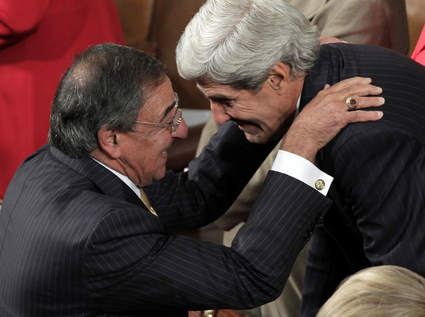
Kerry Panetta

The Pentagon quietly notified Congress this month that it would reimburse Pakistan nearly $700 million for the cost of stationing 140,000 troops on the border with Afghanistan, an effort to normalize support for the Pakistani military after nearly two years of crises and mutual retaliation.

The biggest proponent of putting foreign aid and military reimbursements to Pakistan on a steady footing is the man President Barack Obama is leaning toward naming as secretary of state: Senator John Kerry, Democrat of Massachusetts. Mr. Kerry, the chairman of the Senate Foreign Relations Committee, has frequently served as an envoy to Pakistan, including after the killing of Osama bin Laden, and was a co-author of a law that authorized five years and about $7.5 billion of nonmilitary assistance to Pakistan.

The United States also provides about $2 billion in annual security assistance, roughly half of which goes to reimburse Pakistan for conducting military operations to fight terrorism.

Until now, many of these reimbursements, called coalition support funds, have been held up, in part because of disputes with Pakistan over the Bin Laden raid, the operations of the C.I.A., and its decision to block supply lines into Afghanistan last year.

The $688 million payment — the first since this summer, covering food, ammunition and other expenses from June through November 2011 — has caused barely a ripple of protest since it was sent to Capitol Hill on Dec. 7.

The absence of a reaction, American and Pakistani officials say, underscores how relations between the two countries have been gradually thawing since Pakistan reopened the NATO supply routes in July after an apology from the Obama administration for an errant American airstrike that killed 24 Pakistani soldiers in November 2011.

Mr. Kerry’s nomination would be welcomed in Pakistan, where he is seen as perhaps the most sympathetic to Pakistani concerns of any senior lawmaker. He has nurtured relationships with top civilian and military officials, as well as the I.S.I., Pakistan’s most powerful intelligence agency.

But if he becomes secretary of state, Mr. Kerry will inherit one of the hardest diplomatic tasks in South Asia: helping Pakistan find a role in steering Afghanistan toward a political agreement with the Taliban. As the United States, which tried and failed to broker such an agreement, begins to step back, Pakistan’s role is increasing.

For a relationship rocked in the past two years by a C.I.A. contractor’s shooting of two Pakistanis, the Navy SEAL raid that killed Bin Laden and the accidental airstrike, perhaps the most remarkable event in recent months has been relative calm. A senior American official dealing with Pakistan said recently that “this is the longest we’ve gone in a while without a crisis.”

Sherry Rehman, Pakistan’s ambassador to the United States, said, “Pakistan-United States relations are settling down to a more stable trajectory.”

The interlude has allowed the United States to reduce the huge backlog of NATO supplies at the border — down to about 3,000 containers from 7,000 when the border crossings reopened — and to conduct dry runs for the tons of equipment that will flow out of Afghanistan to Pakistani ports when the American drawdown steps up early next year.

Moreover, the two sides have resumed a series of high-level meetings — capped by Secretary of State Hillary Rodham Clinton’s meeting this month with top Pakistani officials in Brussels — on a range of topics including counterterrorism, economic cooperation, energy and the security of Pakistan’s growing nuclear arsenal.

Maleeha Lodhi, a former Pakistani ambassador to Washington, concurred. “There’s greater convergence between the two countries than there has been in eight years,” she said. “It’s been a fairly quick kiss and make up, but it’s been driven by the approaching urgency of 2014, and by their shared desire for a stable outcome in the region.”

The one exception to the state of calm has been a tense set of discussions about Pakistan’s nuclear arsenal. United States officials have told their Pakistani colleagues that Islamabad’s move to smaller, more portable weapons creates a greater risk that one could be stolen or diverted. A delegation of American nuclear experts was in Pakistan last week, but found that the two countries had fundamentally divergent views about whether Pakistan’s changes to its arsenal pose a danger.

The greatest progress, officials say, has been in the relationship between Pakistan and Afghanistan, after years of mutual recrimination. A high-level Afghan delegation visited Pakistan in November, resulting in the release of several midlevel Taliban commanders from Pakistani jails as a sign of good will in restarting the peace process.

The United States, which was quietly in the background of those meetings, approved of the release of the prisoners, but has still held back on releasing five militants from Guantánamo Bay, Cuba, a key Taliban demand.

One American official said there was a “big push” to move the talks process forward during the current winter lull in fighting. The United States is quietly seeking to revive a peace channel in Qatar, which was frozen earlier this year after the Taliban refused to participate.

Despite the easing of tensions in recent months, there are still plenty of sore spots in the relationship.

Lt. Gen. Michael D. Barbero, who heads the Pentagon agency responsible for combating roadside bombs, known as improvised explosive devices, or I.E.D.’s, told a Senate hearing last week that Pakistan’s efforts to stem the flow of a common agricultural fertilizer, calcium ammonium nitrate, that Taliban insurgents use to make roadside bombs had fallen woefully short.

“Our Pakistani partners can and must do more,” General Barbero told a Senate Foreign Relations subcommittee hearing.

American officials have also all but given up on Pakistan’s carrying out a clearing operation in North Waziristan, a major militant safe haven.

“Pakistan’s continued acceptance of sanctuaries for Afghan-focused insurgents and failure to interdict I.E.D. materials and components continue to undermine the security of Afghanistan and pose an enduring threat to U.S., coalition and Afghan forces,” a Pentagon report, mandated by Congress, concluded last week.

Declan Walsh contributed reporting from Islamabad, Pakistan.

Pakistanis for Peace Editor’s Note– Kerry for Secretary is a great choice now that Susan Rice did not work out. We love Hillary Clinton and as a Democrat and Liberal through and through, as much as we wish Secretary Clinton a speedy recovery and look forward to voting for her as the first woman President of the United States, it is high time to have a man in there as a Secretary working together with Secretary Panetta. John Kerry is a good and honorable soldier who is a patriot and will uphold American interests but will be a person who is very familiar with Pakistan and the need to have a dialogue with the men who man the barracks in Rawalpindi, regardless who happens to be the Prime Minister in Islamabad. We hope he has a speedy confirmation and no obstructionism by the Do Nothing GOP~

Scahal Studios Lahore Tribute to Dave Brubeck

Dave Brubeck died yesterday. Here is a tribute to his classic Take Five by Pakistani orchestra and musicians from Sachal Studios in Lahore, Pakistan. RIP Dave, Love, Pakistani Musicians.

The Brazen, Beautiful Humanity of Malala Yousafzai

By Karen Angela Ellis for Urban Faith

Malala 1

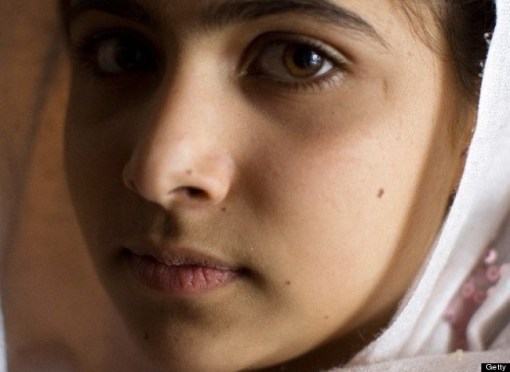
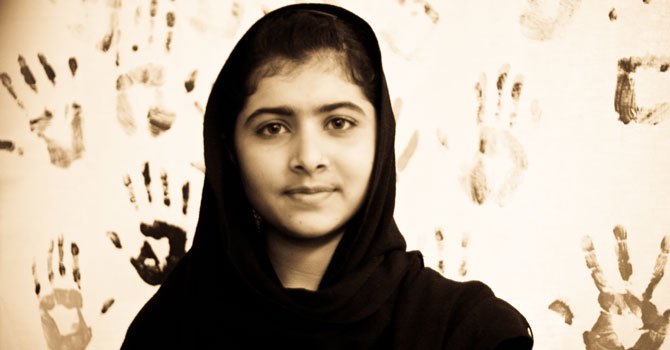
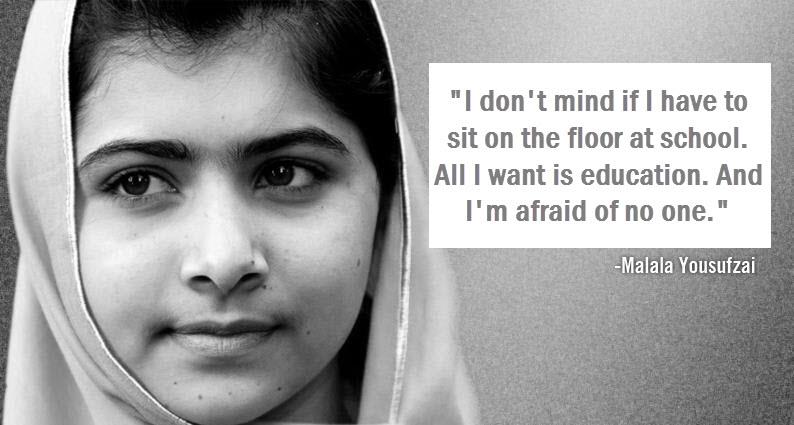
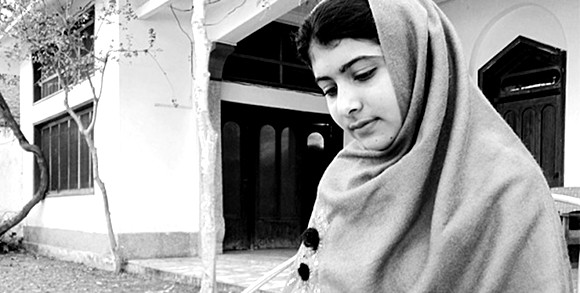
It is easy to imagine Malala Yousafzai gracing the cover of TIME magazine as its Person of the Year . Her soft brown eyes peek at us from pictures that have surfaced from the ripples of a sudden plunge into the spotlight. Her story is so dramatic, so much the essence of the human rights struggle that the it continues to fascinate and inspire worldwide. Her hair, side-parted and modestly covered, Miss Yousafzai demonstrates a hunger for peace well beyond her 14 years. In 2011, she was awarded the National Peace Award by the Government of Pakistan for her courage in seeking restoration of peace and education services. In a short span of time, this tiny girl has become a towering figure in her pursuit of justice for herself and 50,000 other schoolgirls who lost the right to education in their Pakistani communities.

Millions more are now familiar with Miss Yousafzai, who was forced off of her school bus, shot in the head, and critically wounded along with two other young schoolgirls at the hands of the Taliban. She continues to heal in the safety of a UK hospital, the government and the world watching over her as if she were the little sister of us all.

Since 2009, when Miss Yousafzai was a mere tween in the Swat Valley of Pakistan, the hope for education has burned in her heart. While other girls in freer societies tweeted their obsessions with fashion and musical heart throbs, Miss Yousafzai dodged daily threats to become internationally known for her blog that promoted the restoration of the education stolen from her and her classmates.

Her opponents brazenly confessed planning her demise for at least a year. This time they were mercifully denied satisfaction, though they threaten further attempts will be made until her voice is silenced. With ironic justice, the public magnification of her courage has likewise magnified her opponent’s cowardice, exposing grown men who will go to such lengths to snuff out any beacon of light that pierces the darkness of their own souls.

Nothing New Under the Sun
As a Christian woman, when I think of the social conditions that were in place when Christ walked the earth, I am forced to see how little a young girl’s plight has changed in many areas of the world. Centuries may have passed, but the fundamental flaws in our human character remain the same, and they are often unavoidably woven into the fabric of our societies, both free and restricted.

Knowing this, Christ’s counter-cultural treatment of women stands out in relief. In the first-century Roman Empire, a woman held very little sway on matters political or civil; their social plight two thousand years ago foreshadows the Taliban’s restrictions on a woman’s movements today, be they physical, psychological, political or intellectual.

Converse to these gaping holes in our societal fabric, the Bible’s high esteem for women and girls is recorded throughout its narrative. Indeed, many accounts in the Gospels tell us that Christ’s constant consideration of women was radical indeed for its day — His high view of women is perhaps best displayed and recorded in Luke 24 in the first witness of His resurrection and victory over hell, death and the grave; His greatest triumph was first revealed to a group of women (Luke 24:1-12).

These women gathered at his empty tomb were entrusted with the first knowledge of the risen Savior; an affirmation of God’s high estimation of the word, witness and worth of a woman (Mark 16:1-8, Matthew 28:1-10). There is one sole Entity who could first assess, and then restore a woman’s social worth properly as beings who bear the very image of God ; that is the Creator of that image, God, Himself (Genesis 1:26-31). These women were divinely commissioned to tell His disciples that Christ had risen, and the news of Hope for all humanity began to spread. “Go, tell the others what you have seen….” What a humbling honor, indeed, to be charged with bearing what has become a life-altering message for so many — including myself.

Salute
Today, Miss Yousafzai’s story is known worldwide; it was a proverbial “shot heard ’round the world.” It’s doubtful that life for this young woman will ever be the same, yet she and her family have accomplished more as ordinary citizens than many politicians have been able to do collectively. From her tormentor’s perspective, she must seem as one of the foolish things of the world that has confounded the self-proclaimed “wise.” In her courage, she has shown wisdom that they cannot comprehend. A mere and simple girl, who should have been easily silenced, now heals from her wounds with the protection of the world. She stands defiant in her innocence, large in the power of her perceived weakness.

I salute the courage of Miss Yousafzai and her classmates; they have stirred a passion in the world, and made us consider and confront our own humanity. May they be victorious in their quest not only for education and a just society, but also in their larger quest for recognition and in understanding the fullness of their humanity. May they also receive the full dignity and significance that is their right by the Creator and Sustainer of the universe, and may they come to know the One in whose majestic image they are made.

Mumbai Attacks: Four Years Later

By Bruce Riedel for The Daily Beast

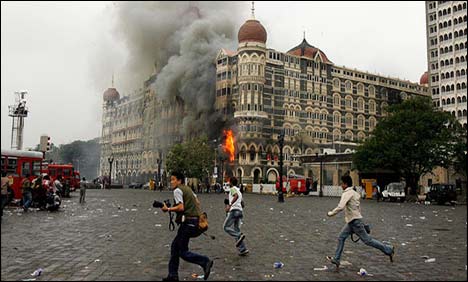
Four years ago Monday, the Pakistani terror gang Lashkar-e-Tayyiba attacked Mumbai, killing more than 160, including six Americans, in the deadliest and most brazen terror attack since 9/11. Then and now, LeT enjoyed the support of Pakistani intelligence and al Qaeda. Today, LeT is a ticking time bomb ready to explode again.

Ajmal Kasab, the only one of the 10 LeT terrorists who survived the attack, was hung for his crimes in India this week. He had confessed to joining the organization and to being trained in its camps in Pakistan for the operation. He implicated the senior LeT leadership in the plot. LeT’s founder and leader Hafez Saeed is not only still free and at large in Pakistan, he routinely speaks at large rallies attacking India, America, and Israel. He denounces the drones and demands Pakistan break ties with America. He eulogized Osama bin Laden as a “hero” of Islam after the SEALs delivered justice to al Qaeda’s amir last year.

Saeed’s patrons include the Pakistani army and its intelligence service, the ISI, which works closely with LeT. Kasab also implicated the ISI directly in the Mumbai operation, saying it assisted with his training and helped select the targets. Two Pakistani emigres, David Headley (an American) and Tahawwur Rana (a Canadian), have also confessed in American courts that they helped LeT plan the massacre in Mumbai and that the ISI was deeply involved in it. Both were found guilty. The ISI helped bankroll their reconnaissance trips to Mumbai to set up the attack.

In researching my forthcoming book, Avoiding Armageddon: America, India and Pakistan to the Brink and Back, it became apparent that there was a third party behind the scenes in the Mumbai plot: al Qaeda. Al Qaeda deliberately kept a very low profile, but helped the LeT plan and select the targets. Al Qaeda and LeT have long been close. Bin Laden helped fund its set-up, and LeT routinely helps hide al Qaeda terrorists at its bases in Pakistan. Al Qaeda had big hopes for the 2008 plot—a war between India and Pakistan that would disrupt NATO operations in Afghanistan and the drone attacks on al Qaeda. Instead, India chose to use diplomacy and avoid a military response. We all dodged a bullet.

Since 2008 LeT has continued to enjoy a free hand in Pakistan and plot more attacks. In 2010 it planned a major attack on the 19th Commonwealth Games held in New Delhi. The plot was thwarted by good intelligence work, especially by the British intelligence services. This summer the Indians arrested a major LeT terrorist, Sayeed Zabiuddin Ansari, a.k.a. Abu Jindal, who was plotting another terror attack from a hideout in Saudi Arabia. Abu Jindal was also involved in the Mumbai operation in 2008—he was in the LeT-ISI control room in Karachi from which the orders were given by cellphone to the terrorists to kill hostages, including the Americans.

The Mumbai attack took place just after Barack Obama’s election. It was his first crisis as president-elect. In the last four years his administration has tried to rein in LeT. This year a $10 million reward was offered for information leading to Hafez Saeed’s capture, and the U.S. helped capture Abu Jindal. But the group is free to plot and plan in Pakistan and it has cells in the Persian Gulf, Bangladesh, England, and elsewhere. It will strike again sooner or later. When it does, al Qaeda and the ISI will probably be co-conspirators again.

Pakistanis for Peace Editor’s Note– It has been 4 years since the tragic days of November 26, 2008 and the alleged masterminds of the attacks, the leadership of LeT has still not been brought to justice. We at Pakistanis for Peace believe that in a good faith measure towards a lasting peace between India and Pakistan, the Pakistani government needs to apprehend the LeT leadership and extradite those remaining terrorists responsible for this tragedy to India to face their trial and punishment there. Only then, can Pakistan and India start a dialouge about peace.

Pakistan Developing Combat Drones

As Reported by Joe Boone for The Guardian

20121113-204321.jpg

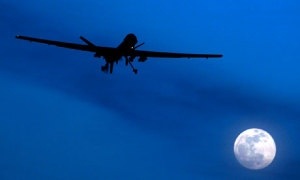
Pakistan is on the cusp of joining an elite group of countries capable of manufacturing unmanned aircraft capable of killing as well as spying, a senior defence official has claims.
Publicly, Islamabad, which officially objects to lethal drone strikes carried out by the CIA along its border with Afghanistan, says it is only developing remote-controlled aircraft for surveillance purposes.

But last week, during a major arms fair held in Karachi, military officials briefed some of Pakistan’s closest allies about efforts by the army to develop its own combat unmanned aerial vehicle (UAV).
“The foreign delegates were quite excited by what Pakistan has achieved,” said the official, who was closely involved with organising the four-day International Defence Exhibition and Seminar (Ideas). “They were briefed about a UAV that can be armed and has the capability to carry a weapon payload.”

The official said Pakistan wanted to demonstrate to friendly countries, principally Turkey and the Gulf, that it can be self-sufficient in a technology that is revolutionising warfare and which is currently dominated by a handful of countries that do not readily share the capability.

“It does not have the efficiency and performance as good as Predator,” he said, referring to the US combat drone widely used to attack militant targets. “But it does exist.”

He gave no details about the capabilities of the aircraft, or even its name.

Huw Williams, an expert on unmanned systems at Jane’s Defence Weekly, expressed doubts that Pakistan could have succeeded in progressing very far from the “pretty basic” small reconnaissance drones, which the country publicly exhibited at the weapons show, including the Shahpar and Uqab aircraft developed by the state-owned consortium Global Industrial and Defence Solutions.
“The smaller systems are not greatly beyond that of a model aircraft,” he said. “But the larger, long-endurance drones are a step up in technology across the board.”

Only the US and Israel are currently believed to have drones that can fire missiles. China and Turkey are also working on large-scale combat drones.
Both countries exhibited models of drones at the sprawling Karachi conference centre, which included Pakistani companies marketing everything from guns that shoot around corners to inflatable tanks intended to fox surveillance aircraft.

The big claims about Pakistan’s developing drone capacity highlights the enormous interest in the technology from armies around the world.

“Everyone has been asking us whether our drones can carry weapons,” said Raja Sabri Khan, chief executive of Integrated Dynamics, a company that showed off a wide range of small and mid-size reconnaissance drones. “But that’s a business for the big boys only.”
Khan has been deliberately refocusing his company’s efforts on smaller drones, many of which are launched by hand, which are mostly intended for civilian use.

A Pakistani army colonel attending the exhibition, after recently finishing a tour fighting against militants in the country’s border region, said such small drones were a vital tool.

“We have these small drones, but not enough of them and we do not always get them when we have operations,” said the colonel, who did not wish to be named. “They are excellent for observing the Taliban, their movements and deployments.”

It was the seventh arms fair hosted by Pakistan intended to show off the country’s defence industry.

Organisers conceded that this year had not been a major commercial success but were pleased with the turnout after the last event in 2010 had to be cancelled.

Several exhibitors said Pakistani companies – many of which are directly owned by the country’s military – offered a cheaper alternative to developing countries looking to buy everything from tanks to computer simulators used to train pilots.

Pakistan leader’s mangrove-to-metropolis dream

By Alex Rodriguez for The LA Times
20121104-142719.jpg

SHAH BANDAR, Pakistan — In his dreams, Pakistani President Asif Ali Zardari sees a spectacular metropolis rising up from the vast stretches of mangrove swamp and sea-salted wasteland along the mighty Indus River Delta.

High-speed rail zips people from place to place. Vacationers soak up the South Asian sun at seaside resorts. Universities, factories and a new seaport pump vitality into the region. Miles of bike lanes crisscross the city, whose population would eventually reach 10 million.

Zardari wants to call his jewel Zulfikarabad, after Zulfikar Ali Bhutto, the founder of the country’s ruling party, a prime minister and president, and the father of Zardari’s slain wife, former premier Benazir Bhutto.

That’s a lot of dreaming for a country struggling with a dizzying array of afflictions: Millions of Pakistanis are dirt poor, struggling to find clean water, contending with unreliable electricity and living in fear of violent extremists. In addition, the president has continued jousting with Pakistan’s Supreme Court over long-standing graft allegations lodged years ago by Swiss authorities.

Such realities have put Zardari’s popularity in a tailspin.

Many observers suspect that the president’s enthusiasm for Zulfikarabad may be rooted in a burning desire to leave a legacy for this country of 180 million people. He’s seeking an enduring achievement, they say, by an administration widely viewed as rife with failure.

Government officials won’t place a price tag on the president’s lofty vision, which is bound to cost tens of millions of dollars. They say only that the government’s share would be limited to the construction of roads, bridges and other infrastructure, with the rest shouldered by investors.

Officials also say they consider the proposed city a desperately needed engine for jobs and economic growth.

Karachi, the country’s largest city with a population of 18 million, is bloated with overcrowding and traffic jams, and needs a nearby city that can serve as a relief valve, they say.

“Karachi is getting choked,” said Iftikhar Hussain Shah, managing director of the Zulfikarabad Development Authority. “It’s going to suffer paralysis because there’s no more room. So the people who are trying to look for setting up industries, they are looking for space.

“You give opportunity to entrepreneurs, you lay down the infrastructure, you have a good clean administration and clear-cut laws, and people will come,” Shah said. “People will come if they see there is a good opportunity to make money.”

Officials said building on tidal flats along the Arabian Sea coastline would also help combat a burgeoning problem: the encroachment of the sea at a rate of 18 acres a day.

The goal makes sense, but the strategy remains a bit fuzzy. A splashy brochure touting the project suggests that a sea wall 100 feet high could keep Zulfikarabad dry. Even Shah, however, wonders whether building a sea wall in an area routinely flooded by monsoons will work.

“If you build a wall, what will happen to all that [flood] water?” Shah said. “Maybe we’ll go to [other] countries for that expertise.”

For inspiration, Zulfikarabad proponents look to Shenzhen, a city of 10 million in China’s Pearl River Delta region. Once a small fishing village, Shenzhen’s transformation began in the early 1980s after Chinese leader Deng Xiaoping designated it as one of that country’s special economic zones, a status that seeded growth through tax exemptions and other measures aimed at attracting foreign investors.

Today, Shenzhen is hailed as one of the world’s fastest growing cities, an economic powerhouse with its own stock exchange, a bustling port, and a gleaming glass-and-steel skyline.

“Within a span of four years, it went from a fishermen’s town to earning $2 billion a year,” said Shah, who along with other Pakistani officials has toured Shenzhen. “In another 10 years, they were earning $150 billion a year.”

Critics say Pakistan’s reliance on Shenzhen as a template is misguided because China is an economic juggernaut with a gross domestic product 23 times the size of Pakistan’s. The impoverished Indus Delta isn’t likely to have the same pull as Shenzhen, and, sure enough, no Pakistani magnate has committed to making the Zulfikarabad dream a reality.

Officials expect Chinese companies to play a crucial, if not dominant, role in Zulfikarabad. They said one Chinese firm, Sichuan Huantong Holding Investment, signed a nonbinding memorandum of understanding with Pakistan this summer to help develop the city. Investors from the Czech Republic, Turkey and even Pakistan’s nuclear-armed archrival, India, also showed preliminary interest by talking with Pakistani officials about the possibility of building wind-power farms in Zulfikarabad, said Mumtaz Ali, planning director at the Zulfikarabad Development Authority.

Skeptics who doubt Zulfikarabad’s prospects cite Pakistan’s troubled record with another urban planning mega-project, the port city of Gwadar in the volatile province of Baluchistan.

Nearly a decade ago, Pakistan enlisted China’s help in transforming Gwadar into a major deep sea port on the Arabian Sea. Since then, Gwadar has been largely dormant, with cranes along piers rusting from inactivity. Opposition by Baluch nationalists, who worry that the Baluch people would be marginalized by Gwadar’s evolution into a modern city, has played a role in the project’s stagnancy, as has the dearth of roads and rail lines connecting the port to the rest of Pakistan.

Nusrat Javed, a columnist and talk show host for Pakistan’s Aaj TV, said the Zulfikarabad project “reminds all of us of Gwadar.”

“When Gwadar was being developed, the Baloch nationalists and the local population thought that, even though Pakistan and China were investing $248 million there was no possibility or promise of any kind of economic uplift for the Baluch community,” Javed said.

“Our president is extremely excited about [Zulfikarabad]. But to my mind, it seems more like a pipe dream.”

Many of those opposing the Zulfikarabad idea are nationalist parties and movements championing the cause of Sindhis, the indigenous population of Sindh province. Sindhi nationalist leaders acknowledge that if Zulfikarabad produces what it promises many local Sindhis will prosper. But they worry that a healthy, vibrant Zulfikarabad would attract hundreds of thousands of migrants from other parts of Pakistan, turning Sindhis into a distinct minority in their own land.

“After Pakistan came into being, the population of Karachi was 400,000,” said Jalal Mehmood Shah, leader of the Sindh United Party, a Sindhi political movement. “Then migrants came into Karachi and we, local Sindhis, became the minority. So we don’t want another place where we will become a minority. And we don’t want another situation where we aren’t allowed to take part in the development.”

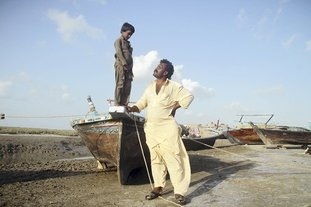
On a recent afternoon in Shah Bandar, a fishing village not far from where ground was broken this summer for a $39-million Zulfikarabad bridge, a group of sweat-soaked fishermen thumbed through a brochure promoting the city. They weren’t too ruffled because they remembered a similar idea laid out by Bhutto’s administration years ago to turn a nearby fishing hamlet, Keti Bandar, into a major sea port.

“Bhutto said it would happen,” said Wali Mohammed, a 30-year-old Shah Bandar fisherman, “but years passed and nothing was built.”
Eleven Long Years Of War

As Reported by The Japan Times

Eleven years have passed since America and its coalition allies launched Operation Enduring Freedom against the Taliban government in Afghanistan on Oct. 7, 2001, a little less than a month after the 9/11 terrorist attacks on the United States that killed some 3,000 people.

The Taliban government fell within two months, but the fighting dragged on. As the U.S. turned its attention to Iran, the Taliban regained its strength and took control of the southern and eastern areas of Afghanistan. The U.S. has attempted to engage in peace talks with the Taliban but discussions have soon broken down. Nevertheless, it is clear that a negotiated settlement is the only way to bring peace to Afghanistan. It is hoped that the U.S. will make strenuous efforts to resume talks with the Taliban.

On Sept. 20, the U.S. Defense Department announced that, as President Barack Obama had promised, the U.S. completed the withdrawal of some 33,000 soldiers dispatched by the Obama administration during a surge two years earlier. Now about 68,000 U.S. soldiers remain in Afghanistan and form the core of the International Security Assistance Force (ISAF), which is led by the North Atlantic Treaty Organization.

The Obama administration plans to fully transfer authority over peace and security to the Afghan National Security Forces (ANSF) by the end of 2014. Even after foreign combat forces are withdrawn from Afghanistan, about 20,000 foreign soldiers will remain stationed in Afghanistan to train the ANSF.

This year has witnessed a surge of “Green on Blue violence” — attacks on ISAF soldiers by Afghan soldiers and police officers who have fallen under the influence of the Taliban — resulting in the deaths of more than 50 ISAF soldiers.

Combat and other attacks by Afghans, including suicide bombings and the use of improvised explosive devices, have taken the lives of some 2,000 U.S. soldiers and another 1,000 ISAF soldiers since hostilities began. These casualties and the dragging on of a conflict with no possibility of victory in sight has resulted in war fatigue among the public in the U.S. and Europe.

In January, the Taliban announced that it had accepted an invitation to participate in peace talks with the U.S. and agreed to open a contact office in Qatar. But 10 weeks later it announced that it had suspended the talks. Apparently the Taliban did not like Washington’s considerate attitude toward Afghan President Hamid Karzai, who had expressed disapproval of the talks.

The Obama administration is also reluctant to appear as being soft on the Taliban during this election year, but it has made it clear that it is willing to engage in talks with the Taliban if the latter severs ties with al-Qaida and accepts the Afghanistan Constitution, which guarantees the rights of women and minorities. This reasonable position at least opens the door to a negotiated end to the war in Afghanistan.

Malala Attack Fuels Pakistani Conspiracy Theories

As Reported By The Daily Times

It’s a well-known fact in Pakistan that Osama bin Laden died in 2006 and that the US commando raid on his compound in May 2011 was merely a “drama” orchestrated by US President Obama to help win re-election, according to a report in The Washington Post.

Of course, if that were true, Obama might have waited until after the first presidential debate of the campaign season to fake the al Qaeda leader’s killing. But no matter. Pakistanis love a good conspiracy theory.

According to the report, some national newspapers and TV cable outlets routinely report the US is behind terrorist attacks and supports the war the Pakistani Taliban are waging against Pakistan’s government and military. The US Embassy in Islamabad has to regularly churn out “Corrections for the Record” that take Pakistani media to task for carrying outrageous claims.

Now, the latest conspiracy theory to gain traction is the notion the US was behind the Taliban attack this month on Malala Yousufzai, the student from Swat who criticised the extremist group for denying girls access to education. The purported purpose of the ruse: to make the Taliban look really bad and, thus, generate public sympathy for drone strikes – and whip up support for a Pakistan Army invasion of North Waziristan to rout Haqqani network based there.

A Taliban spokesman was quick to assert responsibility for the attack on the schoolgirl and her two classmates. Yet, the idea of US involvement has spread widely, even generating its own meme on Facebook. The Washington Post says a photo of Obama sharing a hearty laugh with members of his staff is making the rounds, being circulated and “liked” by thousands on social media sites. Its caption reads, “Sir, they still believe that Taliban attacked Malala.”

The newspaper states to many Pakistanis, Malala is a national hero. But others say she is a spy because she once met with then-US envoy Richard Holbrooke – another photo shared on the Internet.

Part of the reason there’s so much conspiracy thinking is because Pakistanis live in a security state many believe is controlled by the shadowy spy apparatus known as the Inter-Services Intelligence agency. It is widely seen – and feared – as a hidden force capable of steering domestic and foreign affairs.

AZ Hilali, chairman of the University of Peshawar Political Science Department, said politics is also behind much of the conspiracy mongering. “When the incident happened with Malala, the people thought the security establishment might be involved because there is pressure from the USthat they have to take action against the Haqqani network,” Hilali said. “That perception was already existing in Pakistan. Right-wing parties just exploited the situation.”

But now, WP quotes Hilali as saying, “right-wing parties are in a great crisis because Malala has deep sympathies from the common people… they believe the Taliban have crossed a boundary. Malala has become this symbol, and the right wing is losing support”.

Nasreen Ghufran, an international relations professor at the university, said a common sentiment in Peshawar is the horrendous deed had to serve other agendas. “They think that Taliban on their own would not do anything unless the ISI and the army are behind it,” she said.

The paper says as for the theories that besmirch Malala as an agent of the West, they will ultimately come to naught and even enhance her stature, Hilali said. The Islamists “were already against that girl, but there is not just one Malala, there are many Malalas”.

Rehman Malik Escapes Disqualification

By Irfan Ghauri for The Express Tribune

In a move that raises a number of questions, and possibly a number of ramifications, election authorities announced on Tuesday that they have decided not to disqualify Interior Minister Rehman Malik.

The Election Commission of Pakistan (ECP) said that it had endorsed the stand of Senate authorities that no question of disqualification had arisen in the case of Senator Malik – who was under scrutiny for submitting false statements to the Supreme Court in the dual nationality case.
The deputy chair of the Senate, Sabir Baloch, who is currently the acting chairman, rejected two separate references against Senator Malik that sought his disqualification.

Earlier, on September 20, the Supreme Court had taken note of a conflict between Senator Malik’s statements and the evidence provided by him in a
case probing dual national parliamentarians. Eleven federal and provincial lawmakers found to have dual nationality were held to be disqualified by the Supreme Court, given that Pakistani citizens holding foreign nationalities are not eligible to be parliamentarians, according the Constitution of Pakistan.

However, Senator Malik’s case was unique, and the court did not issue a direct verdict on his matter, and only raised the question of disqualification.

During the course of the case, Senator Malik had told the court that he had renounced his British citizenship before being elected to the Senate in 2008. However, when his documents were scrutinized, a blatant conflict emerged: The evidence suggested that his renunciation had taken place on May 29, 2012 – that is, when the court had taken notice of the matter.
As the matter was being heard in court, and his status as Senator was suspended, Malik resigned from the Senate on July 11, 2012 – and was then reelected within two weeks. Ostensibly, this would have given the interior minister cover – given that he had actually renounced his citizenship before resigning and being reelected. But the issue of perjury (lying under oath) came to the fore.

“Mr. A. Rahman Malik, in view of the false declaration filed by him at the time of contesting the election to the Senate held in the year 2008, wherein he was elected, cannot be considered sagacious, righteous, honest and ameen within the contemplation of section 99(1)(f) of the Act of 1976. Therefore, for such purposes Article 63(p) is to be adhered to because the disqualification incurred by him is envisaged under the law, referred to hereinabove in view of his own statement that he had renounced his citizenship of UK whereas the fact remains that such renunciation along with declaration can only be seen as having been made on 29.05.2012,” reads a portion of the court order regarding Senator Malik.
Two references had been pending with the Senate chairman regarding Senator Malik’s disqualification: One by a citizen Asif Ezdi, and another similar one by lawyer Maulvi Iqbal Haider, who had relied on the observations of the Supreme Court.
But the two were dismissed.

“Reference Supreme Court short order dated 20-09-2012, detailed judgment dated 16-10-2011, reference of Mr. Asif Azdi dated 26-08-2012 and reference of Malik Iqbal Haider dated 22-09-2012 I have held that no question of disqualification has arisen in respect of senator A. Rehman Malik. Resultantly the Election Commission of Pakistan is being informed accordingly,” wrote Sabir Baloch in his letter to the ECP.
Notably, the ECP did not issue any formal statement on the matter on Tuesday. Instead, it was verbally conveyed by officials of the commission to the media. They said the reference regarding Malik is disposed of and no further action can be taken against the minister.
Deadline passed?

Under the process, the Senate chairman has 30 days to decide on the matter and forward it to the ECP. The ECP has 60 days to take action on the matter. If no decision comes on the part of the Senate chairman in the stipulated 30 days, the case is deemed to have automatically been forwarded to the ECP.

Following the September 20 court orders, the Senate chairman had until October 20th to forward the matter to the ECP.
Interestingly, the letter by the Senate’s (acting) chairman to ECP was disclosed on Tuesday (October 23). In fact, Chief Election Commissioner Justice (retd) Fakhruddin G Ebrahim had himself told the media on Monday that the ECP was yet to receive a letter from the Senate regarding Senator Malik’s case. Though the date mentioned in the letter disclosed on Tuesday is “October 20th” sources said it was actually received by the ECP on October 22nd.

The ECP’s meeting regarding this matter was scheduled for Monday, but was postponed due to a meeting between the chief election commissioner and Chief Justice Iftikhar Muhammad Chaudhry.

Respite?

While the decision seems to have brought the interior minister some respite, the move could yet be challenged in court.
Earlier this year, the National Assembly Speaker Fehmida had held that no question of disqualification had arisen in the case of the then prime minister Yousaf Raza Gilani, and did not forward the matter to the ECP. Later, her decision was challenged, and the apex court ultimately overruled her. Gilani was disqualified from premiership as well as his National Assembly seat.

Dr Asim resigns
Senator Dr Asim Hussain, who holds the portfolio of advisor to the prime minister on petroleum, resigned from his Senate seat on Tuesday. He was part of the next batch of parliamentarians faced with court proceedings on their nationality status.
However, he will continue in his capacity as ‘advisor,’ which does not require him to be a member of Parliament.

Why Our Pampered Teens Need A Role Model Like Malala

By Sinead Moriarty for The Independent

Most teenagers getting the bus home from school chat to each other, play on their phones or try to get some of their homework done. Not so for Malala Yousafzai.

This Pakistani teenager was shot in the head on her way home from school. A man boarded her bus and shot her at point blank range for daring to stand up for her basic human right of an education.

A friend recently told me of her teenage daughter’s refusal to go to school, apparently she wasn’t “in the mood”. What are you going to do? I asked. “What can I do,” she said. “She’s two feet taller than me. I can’t drag her there.”

Perhaps she should tell her daughter the story of this Pakistani heroine who risked her life for an education. Perhaps we need to take down the posters of Cheryl Cole and Rihanna from our teenagers’ bedrooms and replace them with posters of Malala Yousafzai.

Our children’s role models now fall into two categories — sports stars or popstars (with the occasional WAG thrown in).

They watch talentless wannabes on reality TV, selling their souls to the devil for fame. Ask teenagers what they want to be when they grow up and the majority will say “famous”. Nobody seems to remember all the people who won the ‘X Factor’ and are now back working in their local fish shop.

In this post-feminist world, girls have become commodities. Where are the young women who want to shatter glass ceilings?

Where are the girls who want to change the world, not the size of their breasts? Where are the teenagers who want to grow up and rule the world, not the tabloids?

Nowadays teenage girls look at footballers’ wives and think, ‘I want that’. I want to live in a big house, drive a flashy car and shop in designer boutiques.

But what about the fact that so many of these husbands sleep with other women, prostitutes and even sometimes their brothers’ wives? None of the teenage girls ever seems to notice that side of the equation. If he provides you with a plush lifestyle, diamonds and furs, then he can do whatever he wants. And these young wives grin and bear it. They say nothing and they do nothing. No divorce is called for, because they know that once they’re dumped their ‘life’ is over. The limelight will shift to the new Mrs X. They’ll be ‘normal’. Who the hell wants to be ‘normal’ when you can be a famous doormat?

Just when you despair for young women, just when you wonder if your teenager will ever find a decent role model, a girl like Malala comes along and puts us all to shame. Her shooting was not the action of a random gunman. It was a carefully planned assassination attempt on a young lady the Taliban found threatening.

Malala’s crime was to be a female who wanted an education. In 2009, when the Taliban seized control of the area she lived in, the women were forced to wear burquas and banned from going to the market and girls were banned from going to school. But Malala spoke out.

In an anonymous blog for the BBC’s Urdu service, she said the ban on going to school was choking her and so she: “decided to stand against the force of backwardness.”

As she continued to blog, complaining of the terrible plight of women under the Taliban, fellow students recognised her and her anonymity was blown. But she still continued to speak out and now she lies in a hospital in Birmingham that was built to deal with injured service personnel. It is fitting that this young woman will lie side by side with injured soldiers as she begins her long road to recovery. After all, Malala is the heroine of a war, the war on human rights.

We in the West take for granted the rights for which Malala almost died. We need to tell our children her story. We need to show them that life is not about being on TV or having the latest phone, boots or bag . . .

We all want to protect our children from the difficulties that life will throw at them, but stories of courage like Malala’s will surely inspire them.

Her story might actually make our teenagers stop texting for five seconds and think about how lucky they are. They may still dread being ridiculed by fellow classmates for having the ‘wrong’ bag, but at least they know they won’t get shot in the head for it.

Her ‘Crime’ Was Loving Schools

By Nicholas D. Kristof for The New York Times

Twice the Taliban threw warning letters into the home of Malala Yousafzai, a 14-year-old Pakistan girl who is one of the world’s most persuasive advocates for girls’ education. They told her to stop her advocacy — or else.

She refused to back down, stepped up her campaign and even started a fund to help impoverished Pakistani girls get an education. So, on Tuesday, masked gunmen approached her school bus and asked for her by name. Then they shot her in the head and neck.

“Let this be a lesson,” a spokesman for the Pakistani Taliban, Ehsanullah Ehsan, said afterward. He added that if she survives, the Taliban would again try to kill her.

Surgeons have removed a bullet from Malala, and she remains unconscious in critical condition in a hospital in Peshawar. A close family friend, Fazal Moula Zahid, told me that doctors are hopeful that there has been no brain damage and that she will ultimately return to school.

“After recovery, she will continue to get an education,” Fazal said. “She will never, never drop out of school. She will go to the last.”

“Please thank all your people who are supporting us and who stand with us in this war,” he added. “You energize us.”

The day before Malala was shot, far away in Indonesia, another 14-year-old girl seeking an education suffered from a different kind of misogyny. Sex traffickers had reached out to this girl through Facebook, then detained her and raped her for a week. They released her after her disappearance made the local news.

When her private junior high school got wind of what happened, it told her she had “tarnished the school’s image,” according to an account from Indonesia’s National Commission for Protection of Child Rights. The school publicly expelled her — in front of hundreds of classmates — for having been raped.

These events coincide with the first international Day of the Girl on Thursday, and they remind us that the global struggle for gender equality is the paramount moral struggle of this century, equivalent to the campaigns against slavery in the 19th century and against totalitarianism in the 20th century.

Here in the United States, it’s easy to dismiss such incidents as distant barbarities, but we have a blind spot for our own injustices — like sex trafficking. Across America, teenage girls are trafficked by pimps on Web sites like Backpage.com, and then far too often they are treated by police as criminals rather than victims. These girls aren’t just expelled from school; they’re arrested.

Jerry Sandusky’s sex abuse of boys provoked outrage. But similar abuse is routine for trafficked girls across America, and local authorities often shrug with indifference in the same way some people at Penn State evidently did.

We also don’t appreciate the way incidents like the attack on Tuesday in Pakistan represent a broad argument about whether girls deserve human rights and equality of education. Malala was a leader of the camp that said “yes.” After earlier aspiring to be a doctor, more recently she said she wanted to be a politician — modeled on President Obama, one of her heroes — to advance the cause of girls’ education.

Pakistan is a country that has historically suffered from timid and ineffectual leadership, unwilling to stand up to militants. Instead, true leadership emerged from a courageous 14-year-old girl.

On the other side are the Taliban, who understand the stakes perfectly. They shot Malala because girls’ education threatens everything that they stand for. The greatest risk for violent extremists in Pakistan isn’t American drones. It’s educated girls.

“This is not just Malala’s war,” a 19-year-old female student in Peshawar told me. “It is a war between two ideologies, between the light of education and darkness.”

She said she was happy to be quoted by name. But after what happened to Malala, I don’t dare put her at risk.

For those wanting to honor Malala’s courage, there are excellent organizations building schools in Pakistan, such as Developments in Literacy (dil.org) and The Citizens Foundation (tcfusa.org). I’ve seen their schools and how they transform girls — and communities.

One of my greatest frustrations when I travel to Pakistan is that I routinely spot extremist madrassas, or schools, financed by medieval misogynists from Saudi Arabia or elsewhere. They provide meals, free tuition and sometimes scholarships to lure boys — because their donors understand perfectly that education shapes countries.

In contrast, American aid is mainly about supporting the Pakistani Army. We have tripled aid to Pakistani education to $170 million annually, and that’s terrific. But that’s less than one-tenth of our security aid to Pakistan.

In Malala’s most recent e-mail to a Times colleague, Adam Ellick, she wrote: “I want an access to the world of knowledge.” The Taliban clearly understands the transformative power of girls’ education.

Do we?

Nation Shocked: Hate Targets Hope

By Umer Farooq and Hazrat Ali for The Express Tribune

The ideology of hate has proven that it will target anything that comes in its way – even if it is a 14-year-old girl.
In a harrowing incident that shocked the nation on Tuesday, three armed men intercepted a van carrying schoolgirls, identified their target and then shot her, point blank.

Their target: iconic child activist and National Peace Award winner Malala Yousafzai.
An outspoken critic of the Taliban and vociferous proponent of female education, Yousafzai won international recognition for highlighting Taliban atrocities in Swat with a blog for the BBC three years ago when militants, led by radical cleric Maulana Fazlullah, burned girls’ schools in the valley.

Yousafzai was 11 when she started writing the blog in late 2008.

On Tuesday, she was on her way back home after sitting for a midterm examination paper, when the gunmen attacked and critically injured her. She is currently in critical condition. Three of her friends were also injured.

Tehreek-e-Taliban Pakistan (TTP) claimed responsibility for the attack, saying Yousafzai criticised the group, and called her a ‘Western-minded girl.’ In a chilling warning, TTP’s spokesman said that there would be follow up attacks if she survived.

As condemnations and expressions of shock and outrage poured in from all quarters, doctors in Peshawar battled to keep her alive.
Van ambushed

According to details, three armed men intercepted the van carrying Yousafzai and other female students near Sharifabad area of district Swat.
The armed men asked about Yousafzai, said Usman Ali, the driver of the van while talking to reporters.

“The man who stopped the vehicle signaled to his other armed accomplices that Yousafzai was inside. Another armed man went to the back of the vehicle, and started firing inside,” Ali said.

Yousafzai and her three friends –– Shahnaz, Kulsoom and Shabnam –– sustained injuries.
She was initially rushed to Saidu Hospital, where Medicinal Superintendent Lal Noor said that, despite head injuries, Yousafzai was in stable condition.

He said a bullet is still inside her body but added that Yousafzai could talk, and answered his questions.
She was shifted via helicopter to Combine Military Hospital (CMH) Peshawar where a team of senior doctors completed her medical examination, and stated her condition as critical.

“We have thoroughly examined her, she is in critical condition. The bullet travelled from her head and then lodged in the back shoulder, near the neck,” a doctor in CMH told AFP, requesting anonymity.
“The next three to four days are important for her life. She is in the intensive care unit and semi-conscious, although not on the ventilator,” he said.

TTP claims responsibility

Taliban spokesperson Ehsanullah Ehsan told AFP that his group carried out the attack after repeatedly warning Malala to stop speaking out against them.

“She is a Western-minded girl. She always speaks against us. We will target anyone who speaks against the Taliban,” he said by telephone from an undisclosed location.

“We warned her several times to stop speaking against the Taliban and to stop supporting Western NGOs, and to come to the path of Islam,” he said.
“This is a clear a message for the rest of the youth as well. Whoever is found following Yousafzai, will meet the same fate,” Ehsan said, adding the TTP will conduct follow-up attempts if Yousafzai survived this time.
The 14-year-old received the first-ever national peace award from the government last year, and was nominated for the International Children’s Peace Prize by advocacy group KidsRights Foundation in 2011.

Condemnations

Condemnations flew in from all quarters, including the president, prime minister, the opposition chief, even the US State Department.
President Zardari strongly condemned the attack, but said it would not shake Pakistan’s resolve to fight militants or the government’s determination to support women’s education.

The president also directed that Yousafzai be sent abroad for medical care.
Khyber-Pakhtunkhwa Information Minister Iftikhar Hussain, who lost his only son to militants, termed Taliban’s act ‘cowardice’ and called for a sweeping military offensive against all militants in northwest Pakistan. “A team of neurosurgeons is examining her condition and they said there are 70% chances that she will survive,” Hussain said at a late night press conference on Tuesday. The minister asked the nation to pray for her life.

Appeal for prayers

Yousafzai’s father, former Swat Peace Jirga spokesperson Ziauddin Yousafzai, made an appeal to the nation to pray for her recovery.
“She is a daughter of the nation, and represents the country’s female folk. I request the nation to pray for her recovery,” Ziauddin said.
District Police Officer (DPO) Swat Rasool Shah told The Express Tribune that an FIR of the incident has been registered, and a number of suspected persons have been arrested in search operation in different areas of Mingora.

Western Peace Activists March in Pakistan Against Drone Strikes

By Mark Mcdonald for The New York Times

Dozens of Western peace activists, including 32 Americans, participated in a convoy in Pakistan over the weekend to protest deadly American drone strikes in the tribal belt between Pakistan and Afghanistan.

The motorcade was almost certain to be turned away Sunday from entering South Waziristan and the town of Kotkai, the hometown of the founder of the Pakistani Taliban. The Pakistani government, as my colleague Salman Masood reported, was expected to block the group.

The activists, most of them from the group Codepink, object to the civilian deaths that occur in the aerial strikes against Taliban fighters and other militants. (Rendezvous recently explored the controversy over drone warfare in a piece, “Are Drone Strikes Worth the Costs?”)

“We kill a lot of innocent people,” said Medea Benjamin, a cofounder of Codepink and part of the delegation in Pakistan. She called the attacks “barbaric assassinations.”

Speaking of the tribal areas, she said, “This is a culture that very much believes in revenge, and then they seek revenge by trying to kill Americans. So we are just perpetuating a cycle of violence and it’s got to stop somewhere, and that’s why we are putting our bodies on the line by trying to go to Waziristan to say no.”

Ms. Benjamin said her group also was participating in the march to “put significant pressure on the Obama administration to come clean about these drone attacks, to recognize how inhumane and counterproductive they are.”

Before the convoy got under way in Pakistan, members of the Codepink delegation met with Richard E. Hoagland, the deputy chief of mission at the U.S. Embassy in Islamabad, and he was presented with a petition calling for an end to the drone strikes.

“I wish I could tell you how enormously, enormously careful the various deciders are before there is any strike these days,” Mr. Hoagland said. “I know you object to any strike at all, absolutely, I know that, but I wish I could also tell you the extreme process that is undertaken to avoid what is very sadly called ‘collateral damage.’ ”

“I looked at the numbers before I came here today,” Mr. Hoagland told the group, “and I saw a number for civilian casualties that officially — U.S. government classified information — since July 2008, it is in the two figures. I can’t vouch for you that that’s accurate, in any way, so I can’t talk about numbers. I wanted to see what we have on the internal record, it’s quite low.”

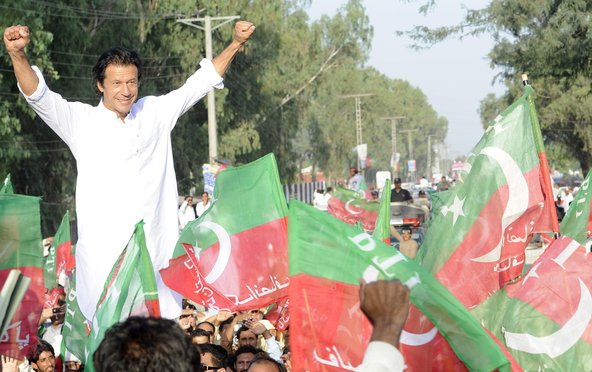
The so-called “peace march” — which was more like a motorcade — was organized by Tehreek-e-Insaaf, the opposition political party led by the cricket-star-turned-politician Imran Khan. In a recent profile in The New York Times Magazine, the writer Pankaj Mishra called Mr. Khan “Pakistan’s greatest sportsman and now its most popular politician since Benazir Bhutto.”

“His long and uncompromising opposition to American presence in the region,” the article said, “not only pleases assorted Islamic radicals; it also echoes a deep Pakistani anger about the C.I.A.’s drone attacks, whose frequency has increased under the Obama administration.”

Before the march, Mr. Khan said of the campaign of drone strikes: “It’s totally counterproductive. All it does is it helps the militants to recruit poor people. Clearly if they were succeeding, these drone attacks, we would be winning the war. But there’s a stalemate.”

In an interview on BBC Radio 4, Mr. Khan said Pakistani government officials were “completely complicit” in the U.S drone efforts, “covertly and tacitly giving their approval.”

If he becomes the Pakistani leader, Mr. Khan said, he would appeal to the United States and the United Nations to halt the aerial attacks. If those appeals failed, he said, he would have the Pakistani Air Force begin shooting down the drones.

In a scathing opinion piece Sunday in the Express Tribune newspaper from Karachi, the attorney and commentator Saroop Ijaz said Mr. Khan’s march was principally linked to domestic Pakistani politics. He also objected to Mr. Khan not denouncing Taliban suicide attacks that have killed numerous civilians. An excerpt from his commentary, headlined “Game of Drones”:

This is not about Waziristan, this is not even about drones; this is about politics and very dangerous and cowardly politics. By indulging and showing indecent deference to these murderers, Mr. Khan is insulting thousands of those dead in suicide attacks over these years.

By all means, go and play your political games and make populist, unrealistic promises, but a line needs to be drawn when the memory of thousands of our martyrs and the survival of our society is at stake. Unless, of course, Mr. Khan can give us his solemn word that his new friends are willing to lay down their weapons and stop killing our innocent civilians.
The journalist Ahmed Wali Mujeeb recently spent nearly a month in Waziristan. A condensed excerpt from his report for the BBC:

The drones do not suddenly appear over the horizon, carry out the attack and leave. At any given time of the day, at least four are hovering in the sky, emitting a distinctive and menacing buzzing sound. They call them “mosquitoes.”

“Anybody who has been listening to the buzzing all through the day usually can’t sleep at night,” says Abdul Waheed, a tribesman in North Waziristan. “It’s like a blind man’s stick — it can hit anybody at any time.”

Taliban and local tribesmen say the drones almost always depend on a local spy who gives word when the target is there. Some say the spy leaves a chip or microchip at the site, which guides drones in for the kill. Others say special marker ink is used — rather like “X” marks the spot.

Anyone coming under suspicion is unlikely to get a hearing. The Taliban kill first and decide afterwards if the suspect was involved or not. It is better to be safe than sorry, they say.
Jennifer Gibson, an attorney with Reprieve, a legal charity in Britain that represents a number of Pakistani drone victims, was a researcher in Pakistan for the recent report, “Living Under Drones,” a joint project by the law schools at Stanford University and New York University.

In a commentary for The Los Angeles Times, Ms. Gibson said drones did not simply fly to a target, launch their missiles and then withdraw to a distant base. Instead, she said, drones were “a constant presence” overhead, “with as many as six hovering over villages at any one time.”

“Parents are afraid to send their children to school,” she wrote. “Women are afraid to meet in markets. Families are afraid to gather at funerals for people wrongly killed in earlier strikes. Drivers are afraid to deliver food from other parts of the country.

“The routines of daily life have been ripped to shreds. Indisputably innocent people cower in their homes, afraid to assemble on the streets. ‘Double taps,’ or secondary strikes on the same target, have stopped residents from aiding those who have been injured. A leading humanitarian agency now delays assistance by an astonishing six hours.”