Posts Tagged ‘ Pakistan ’

Coca-Cola Tries to Bring India, Pakistan Together via its New Vending Machines

As Reported by The Economic Times
Image

An upscale mall in South Delhi has a Coca-Cola vending machine that not only dispenses Coke, Thums Up and other beverages of the firm but will very soon connect India and Pakistan.Once a similar machine is installed in Karachi or another Pakistan city, users of the two vending machines can see and virtually touch each other, a person in the know said.

The beverages major has quietly launched an online campaign that seeks to connect people in not-so-friendly countries through vending machines, starting with India and Pakistan this year.

“This year, two countries will show that what unites us is stronger than what sets us apart and come together to share a Coca-Cola,” says the commercial launched on YouTube.

A company spokesperson said it was too early to comment on specific plans, on how the beverage maker plans to scale up the concept.

This world peace initiative is part of the firm’s happiness project. “A moment of happiness has the power to bring the world together,” it says.

In another initiative, Coca-Cola recently set up a ‘hug machine’ in Singapore-a vending machine with red and white message announcing the consumer to ‘hug’ it, after which the consumer would be given a free Coke. The ‘hug machine’ generated 112 million impressions within one day. In Istanbul, it had installed a vending machine that gave away free Coke if people could prove they were indeed a couple.

Coca-Cola is spending heavily on social media globally, though the spends are still small compared to what it spends on traditional mass media.

“Brands can’t work remotely anymore so it is important to listen and engage to consumers,” Wendy Clark, senior VP, integrated marketing communications and capabilities, at Coca-Cola had told ET last month.

“We make consumers part of our marketing channel, sharing content and engaging with them all the time,” Clark had said, adding that the company was looking at investing in innovative ways to connect on social media.

Pakistan Prepares For Election

By Farhan Bokhari in Lahore and Victor Mallet in New Delhi for The Financial Times

Image

Pakistan’s government stepped down at the weekend after a full five-year term, paving the way for an election and change of administration that would be the country’s first constitutional democratic handover since independence and partition from India in 1947.

“It is true that in the past five years we have not been able to make rivers of milk and honey flow in the country,” said Raja Pervez Ashraf, prime minister in the Pakistan People’s party (PPP) government of President Asif Ali Zardari, in a televised farewell speech.

“We have used all our resources to strengthen the foundations of democracy and – by the grace of God – today democracy is so strong that no one will dare to dislodge it in the future.”

The PPP and its leader Mr Zardari, who was elected after his wife Benazir Bhutto was assassinated, claim credit for strengthening democracy in a country that has been ruled for long periods by the armed forces – most recently under General Pervez Musharraf in the decade up to 2008.

But the government’s popularity has collapsed during its time in office, undermined by bombings and the killing of civilians by the Pakistan Taliban, and by power shortages and other economic problems.

Even the process leading to a change of government is deadlocked, with mainstream politicians so far unable to agree on a caretaker prime minister to run the country for up to 90 days, and to oversee the general election. Among the possible candidates for the position are Ishrat Hussain, a former central bank governor and World Bank official, and Nasir Aslam Zahid, a former judge.

“The immaturity of our democracy is nowhere more evident than in the failure to agree on a way forward,” said one politician from the opposition Pakistan Muslim League-Nawaz (PML-N). “This decision should have been made weeks ago and we still seem to be haggling over it.”

Pakistanis mostly welcomed the completion of the government’s term – a feat that had sometimes seemed in doubt – but criticised Mr Zardari’s inability to curb extremist violence or to start restoring the economy to health.

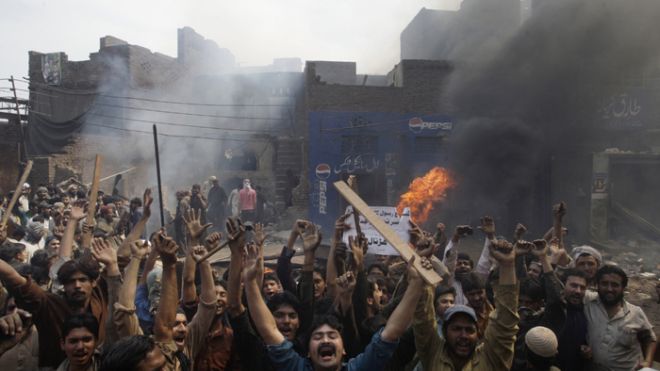
In a recent incident on March 9, Muslim zealots in Lahore burnt down 178 homes belonging to Christians – a tiny and poverty-stricken minority in Pakistan – following the arrest of a young Christian man on blasphemy charges. More than 250 Shia Muslims have been killed this year in attacks blamed on militant Sunnis.

Senior officials have also been murdered during the government’s term. They include Salman Taseer, governor of the populous Punjab province, killed by one of his police guards after Mr Taseer publicly defended Aasia Bibi, a Christian woman arrested in another blasphemy case.

“It would be utterly crazy to celebrate this coming of age of democracy,” said Nadeem Masih, a Christian office worker in Lahore. “The government has left more Pakistanis insecure than when it came to office.”

Investors are equally sceptical, noting the fall in the value of the Pakistani rupee and the state of most of the country’s infrastructure. “The economy is in shambles, there is more corruption and cronyism,” said one businessman from Karachi, who asked not to be named. “Should we still celebrate this democracy?”

Western diplomats say one reason why Pakistan might be able to keep its democracy alive is the refusal thus far by General Ashfaq Pervez Kayani, the army chief, to seize power in response to calls from some of the government’s opponents.

“General Kayani has played a very sobering role,” said one diplomat in Islamabad. “He has remained true to his promise of letting democracy flourish in Pakistan.”

Hasan Askari Rizvi, a political commentator, said it was a success for the government to have lasted five years. “But the government has left behind more problems for Pakistan than they inherited. Maybe the hope is that we will evolve into a more stable democracy in the long term, but that’s still on the distant horizon.”

Pakistani mobs use blasphemy as excuse to persecute, say Christians

By Sib Kaifee for Fox News

PakistanLahore

In Pakistan, the mere accusation of blasphemy is enough to spur angry mobs to violence, and human rights advocates say the victims are usually Christians.

Last weekend, some 3,000 Muslims stormed Christian churches, torched hundreds of homes and burned hundreds of Bibles in a Christian neighborhood of Lahore, the country’s second largest city.  It apparently began as an argument between two men, but once the accusation of blasphemy was invoked, it exploded into violence and mayhem.

“The attackers were given a free hand when they were torching the belongings and our homes,” a witness told FoxNews on condition of anonymity. “The attackers were Pashtuns and workers of different steel factories and warehouses.”

The violence came two days after Sawan Masih, a Christian sanitation worker , and Shahid Imran, a Muslim barber, scuffled.  When Imran accused Masih of blasphemy, police and a local mosque got involved and the situation spiraled out of control. Remarkably, no one was killed.

“I was beaten by the mob despite the fact I had nothing to do with what happened,” said a shaken up Chaman Masih, father of the suspect, “but I know one thing that my son is innocent.’’ Masih accused the Police of prior knowledge of the attack.

In Pakistan, where Christians make up about 1.6 percent of the population of 180 million, a blasphemy conviction can bring a sentence of life in prison or even death. And a religious political party also made attempts to urged the Islamic nation’s courts to ban the Christian bible altogether, arguing that “it contains blasphemous passages that are a cause of humiliation for Muslims”.  Although the nation has so far not taken that step, the sentiment provides cover for vigilante attacks on minorities, according to Christians.

Salamat Akhtar, founding chairman of the All Pakistan Christians League, told FoxNews.com it was the mob that committed blasphemy in the latest case, by burning two churches and destroying the bibles.

“We request the government to register the same blasphemy case against the perpetrators,” said Akhtar.

Nearly 200 houses were burned in the Christian neighborhood, called, Joseph Colony. The destruction has left about 300 poor Christian families homeless and wondering why police, instead of providing protection, told them to evacuate ahead of the mob backlash.

A senior police official from Lahore told FoxNews.com that the Christian residential colony comprises a quarter of an otherwise industrial area, and noted the factory owners have long been trying to dislodge them so they could expand their operations.

After hundreds of Christians took to the streets to protest the day after the violence, Pakistan’s Supreme Court criticized local police on Monday. A hearing has been adjourned for Wednesday, but Asif Aqeel, director of Center for Law and Justice, said the courts were not likely to be able to do much.

“Judicial inquiries into such incidents mostly remain useless as the administration influenced by [the] powerful government does not provide facts and dodges the judges,” Aqeel said.

Though Pakistani President Asif Ali Zardari and Prime Minister Raja Pervaiz Ashraf both have ordered an investigation in to the attack and condemned it, Christian activists are skeptical.

“The government, courts and institutions are not serious about our plight and after so many incidents, our confidence level is decreasing,’’ Naila Diyal, chairperson of Christian Progressive Movement, told FoxNews.com.


The Massacre of Shias in Shia founder Jinnah’s Pakistan

By Manzer Munir for Pakistanis for Peace

Image

Another day brings news of a yet a new massacre on the Shia community in Pakistan. By last count, at least 47 people have been killed in a bomb attack in the Shia enclave inKarachi Pakistan by the name of Abbas Town with many other injured.

I’m ashamed of this brutality and for the 3rd consecutive large scale attack on the Shia people in Pakistan. The founder of the nation, Jinnah and his sister Fatima Jinnah were Shia Pakistanis. My wife’s family is Shia. Now for the first time, today I am also a Shia Pakistani.

I feel for the fear that this Shia community across Pakistan must be feeling for the last several weeks. Earlier this year, nearly 200 people had been killed in two separate attacks targeting the Shia community in the south-western city of Quetta in January and February. And for what? For having a different view on certain events in Islam’s history? For that these murderous theologically ‘purists’ would want us to believe? Are they not Muslim? And if you answered no to that, then are they not at least human?

These are your fellow Pakistani who cheer for the same cricket team, sing the same anthem, love the same green and white crescent star flag, they read the same history books, and eat the samechaat. Do they not also face Mecca when praying? Did Allah not also create them? Stop killing everyone that does not see the Qu’ran with your Salafist and Wahaabi eyes. No matter what Islamic school of thought you may follow, one thing is certain, bombing and killing scores of innocent women and children is not something God, any God would ever condone, certainly not in his name. Certainly, this is not Prophet Muhammad’s Islam.

I wish the people of Pakistan somehow would put a stop to this weekly targeting of this community throughout Pakistan. Obviously this is the job of a competent government to arrest and dismantle the network throughout the country so that there are no more perpetrator left. This is not the job of the populace. Sadly, the most inept administration in Pakistan’s history is still in power. Zardari’s government is highly incompetent in running a country effectively. With elections a few weeks away, the desperate general population of the country is hopeful for a good change.

The current sad and alarming nation in the country is not what the father of the nation, Mohammed Ali Jinnah envisioned. Jinnah was a “was an Ismaili by birth and according to Vali Nasr, a noted expert on Shia Islam, he believed that Jinnah was a Twelver Shia by confession, although not a religiously observant man. He wanted a tolerant and secular Pakistan, a nation of majority Muslims, but one that also respected all religions and their right to exist freely within its borders. What we have is the opposite of that and not the Islam nor the country that neither the prophet nor the leader had preached about. Pakistan needs to stop this insanity. Stop killing Shias, stop imprisoning Christians for allegedly ‘blaspheming’, stop desecrating the graves of Ismailis and most of all I want these criminals to stop destroying this already fractured country by carrying attacks on helpless citizens.

A nation unable to protect its minorities is not in the end much different than Germany during the Holocaust. The standing by of the majority Sunni population will mean that they have blood on their hands also. This time its Shia blood. Tomorrow it will be Christian or Sufi blood, or perhaps that of a soldier or policeman targeted by these militants and terror outfits. Arrest and grant death penalty to those who are responsible.

Pakistan needs to get rid of all the militant groups for the safety of the common citizen and make peace with its neighbor India instead of cultivating many of these terror groups for proxy wars in Kashmir. The same dog bites you back and is not controllable. It should have never been raised for attacking. Best to put it to sleep, make peace with India, solve the problems of its own people and develop the economy and provide safety and security for a hungry population.

Of course for this to all happen, Pakistan needs to have a fair and free election later this year where the best person should win, one who is a patriot and wants to better the nation and not enrich their pockets from it. I am not sure there is anyone in the bunch running that qualifies.Imran Khan comes pretty close, although not a candidate without his own fallacies. All I can say week after week after hearing the news that comes from Pakistan is that may God help this nation, the most precarious country in the world.

Car bomb kills 37 in Pakistan

As Reported By Adil Jawad for The Associated Pres

car

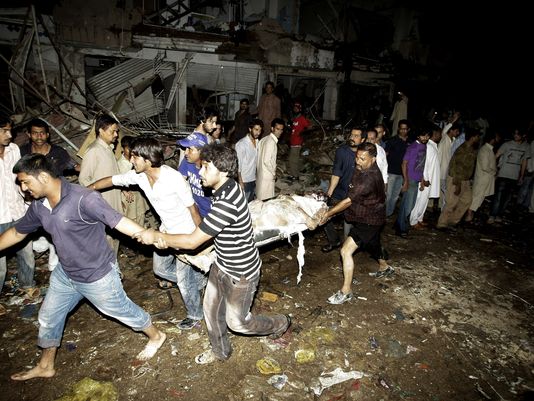
A car bomb exploded outside a mosque on Sunday, killing 37 people and wounding another 141 in a Shiite Muslim dominated neighborhood in the southern Pakistan city of Karachi — the third mass casualty attack on the minority sect in the country this year.

No one has taken responsibility for the bombing, but Shiite Muslims have been increasingly targeted by Sunni militant groups in Karachi, Pakistan’s economic hub and site of years of political, sectarian and ethnic violence, as well as other parts of the country.

The bomb exploded outside a Shiite mosque as people were leaving evening prayers in Pakistan’s largest city. Initial reports suggested the bomb was rigged to a motorcycle, but a top police official, Shabbir Sheikh, said later that an estimated 100 kilograms (220 pounds) of explosives was planted in a car.

Col. Pervez Ahmad, an official with a Pakistani paramilitary force called the Rangers, said a chemical used in the blast caught fire and spread the destruction beyond the blast site. Several buildings nearby were engulfed in flames.

Men and women wailed and ambulances rushed to the scene where residents tried to find victims buried in the rubble of collapsed buildings. The blast left a crater that was 2 meters (yards) wide and more than 1 meter (4 feet) deep.

“I was at home when I heard a huge blast. When I came out, I saw there was dust all around in the streets. Then I saw flames,” said Syed Irfat Ali, a resident who described how people were crying and trying to run to safety.

A top government official, Taha Farooqi, said at least 37 people were confirmed dead and 141 more were wounded.

Sunni militant groups have stepped up attacks in the past year against Shiite Muslims who make up about 20 percent of Pakistan’s population of 180 million people. Sunni militants linked to al-Qaida and the Taliban view Shiites as heretics.

Tahira Begum, a relative of a blast victim, demanded the government take strict action against the attackers.

“Where is the government?” she asked during an interview with local Aaj News TV. “Terrorists roam free. No one dares to catch them.”

It was the third large-scale attack against members of the minority sect so far this year. Two brazen attacks against a Shiite Hazara community in southwestern city of Quetta killed nearly 200 people since Jan 10.

Pakistani militant group Lashkar-e-Jhangvi claimed responsibility for the bombings, which ripped through a billiard club and a market in areas populated by Hazaras, an ethnic group that migrated from Afghanistan more than a century ago. Most Hazaras are Shiites.

Pakistan’s intelligence agencies helped nurture Sunni militant groups like Lashkar-e-Jhangvi in the 1980s and 1990s to counter a perceived threat from neighboring Iran, which is mostly Shiite. Pakistan banned Lashkar-e-Jhangvi in 2001, but the group continues to attack Shiites.

According to Human Rights Watch, more than 400 Shiites were killed last year in targeted attacks across the country, the worst year on record for anti-Shiite violence in Pakistan. The human rights group said more than 125 were killed in Baluchistan province. Most of them belonged to the Hazara community.

Human rights groups have accused the government of not doing enough to protect Shiites, and many Pakistanis question how these attacks can happen with such regularity.

A resident who lived in the area where the bomb went off Sunday said there had been another blast nearby just a few months ago.

“The government has totally failed to provide security to common people in this country,” Hyder Zaidi said.

After the Jan. 10 bombing in Quetta, the Hazara community held protests, which spread to other parts of the country. The protesters refused to bury their dead for several days while demanding a military-led crackdown against the Lashkar-e-Jhangvi group. Pakistan’s president dismissed the provincial government and assigned a governor to run Baluchistan province.

No operation was launched against the militant group until another bombing in February killed 89 people.

The government then ordered a police operation and has said some members of the group have been arrested. One of the founders of the group, Malik Ishaq, was among those detained and officials said he could be questioned to determine if his group is linked to the latest violence against Shiites.

The repeated attacks have left many Shiites outraged at the government. After the last blast in Quetta, Shiites in Karachi and other cities also demonstrated in support for their brethren in Quetta. Shiites in Karachi set fire to tires and blocked off streets leading to the airport. Many Karachi residents planned to strike on Monday as a form of protest following Sunday’s attack in their city.

Pakistan-Iran pipeline work ‘to begin on 11 March’

As Reported By The  BBC

Image

Work on a gas pipeline between Iran and Pakistan will begin on 11 March, Pakistani officials say.

The project has led US officials to warn that it may fall foul of sanctions on Iran’s nuclear programme.

The long-delayed project is seen in Pakistan as a way of combating the country’s chronic energy shortages with supplies of Iranian gas.

Officials told Pakistani media they hoped the presidents of both countries would attend a ceremony on 11 March.

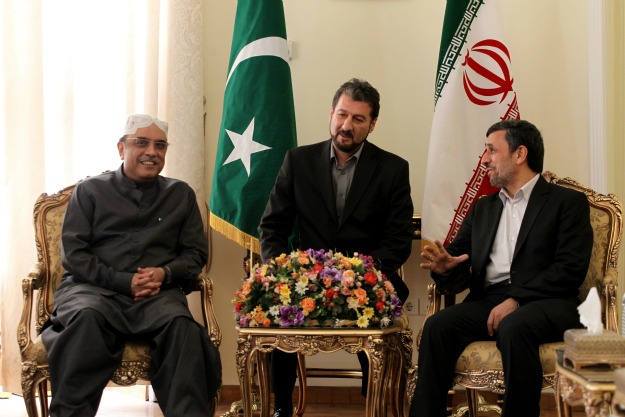
President Asif Ali Zardari visited Iran earlier this week, meeting his Iranian counterpart Mahmoud Ahmedinejad, and finalised the multi-billion dollar deal.

Officials say the pipeline on the Iranian side of the border has been completed, and that this month will see the start of work on the project in Pakistan.

On Wednesday, the US warned Pakistan to “avoid any sanctionable activity” in connection with the project.

“We think that we provide and are providing the Pakistani government and people a better way to meet their energy needs,” State Department spokesman Patrick Ventrell told reporters on Wednesday.

Last year Pakistani Foreign Minister Hina Rabbani Khar insisted the pipeline was “in Pakistan’s national interest and will be pursued and completed irrespective of any extraneous considerations”.

Power shortages have become a major issue in Pakistan, with the government ordering an investigation into a nation-wide power cut on Sunday blamed on a technical fault in a plant in south-western Balochistan province.

Beltway Foreign Policy

Image        
By Roger Cohen for The New York TImes 

“It is not going too far to say that American foreign policy has become completely subservient to tactical domestic political considerations.”

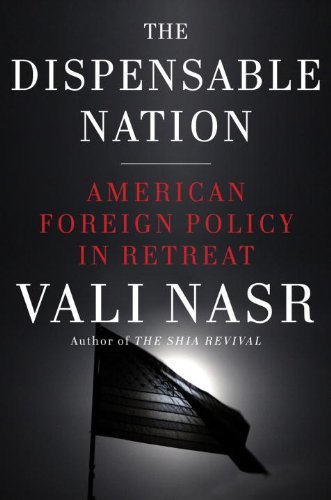
This stern verdict comes from Vali Nasr, who spent two years working for the Obama administration before becoming dean of the Johns Hopkins School of Advanced International Studies. In a book called “The Dispensable Nation,” to be published in April, Nasr delivers a devastating portrait of a first-term foreign policy that shunned the tough choices of real diplomacy, often descended into pettiness, and was controlled “by a small cabal of relatively inexperienced White House advisers.”

Nasr, one of the most respected American authorities on the Middle East, served as senior adviser to Richard Holbrooke, Obama’s special representative to Afghanistan and Pakistan until his death in December 2010. From that vantage point, and later as a close observer, Nasr was led to the reluctant conclusion that the principal aim of Obama’s policies “is not to make strategic decisions but to satisfy public opinion.”

In this sense the first-term Obama foreign policy was successful: He was re-elected. Americans wanted extrication from the big wars and a smaller global footprint: Obama, with some back and forth, delivered. But the price was high and opportunities lost.

“The Dispensable Nation” constitutes important reading as John Kerry moves into his new job as secretary of state. It nails the drift away from the art of diplomacy — with its painful give-and-take — toward a U.S. foreign policy driven by the Pentagon, intelligence agencies and short-term political calculus. It holds the president to account for his zigzags from Kabul to Jerusalem.

It demonstrates the emasculation of the State Department: Nasr quotes Admiral Mike Mullen, former chairman of the Joint Chiefs of Staff, telling him of Hillary Clinton that, “It is incredible how little support she got from the White House. They want to control everything.” And it paints a persuasive picture of an American decline driven not so much by the inevitable rise of other powers as by “inconsistency” that has “cast doubt on our leadership.”

Nowhere was this inconsistency more evident than in Afghanistan. Obama doubled-down by committing tens of thousands more troops to show he was no wimp, only to set a date for a drawdown to show he was no warmonger. Marines died; few cared.

He appointed Holbrooke as his point man only to ensure that he “never received the authority to do diplomacy.” Obama’s message to President Hamid Karzai of Afghanistan was: “Ignore my special representative.” The White House campaign against Holbrooke was “a theater of the absurd,” Nasr writes. “Holbrooke was not included in Obama’s videoconferences with Karzai and was cut out of the presidential retinue when Obama went to Afghanistan.”

The White House seemed “more interested in bringing Holbrooke down than getting the policy right.” The pettiness was striking: “The White House kept a dossier on Holbrooke’s misdeeds and Clinton kept a folder on churlish attempts by the White House’s AfPak office to undermine Holbrooke.”

Diplomacy died. Serious negotiation with the Taliban and involving Iran in talks on Afghanistan’s future — bold steps that carried a domestic political price — were shunned. The use of trade as a bridge got scant attention. Nasr concludes on Afghanistan: “We are just washing our hands of it, hoping there will be a decent interval of calm — a reasonable distance between our departure and the catastrophe to follow.”

In Pakistan, too nuclear to ignore, the ultimate “frenemy,” Nasr observed policy veering between frustrated confrontation and half-hearted attempts to change the relationship through engagement. “The crucial reality was that the Taliban helped Pakistan face down India in the contest over Afghanistan,” Nasr writes. America was never able to change that equation. Aid poured in to secure those nukes and win hearts and minds: Drones drained away any gratitude. A proposed “strategic dialogue” went nowhere. “Pakistan is a failure of American policy, a failure of the sort that comes from the president handing foreign policy over to the Pentagon and the intelligence agencies.”

In Iran, Nasr demonstrates Obama’s deep ambivalence about any deal on the nuclear program. “Pressure,” he writes, “has become an end in itself.” The dual track of ever tougher sanctions combined with diplomatic outreach was “not even dual. It relied on one track, and that was pressure.” The reality was that, “Engagement was a cover for a coercive campaign of sabotage, economic pressure and cyberwarfare.”

Opportunities to begin real step-by-step diplomacy involving Iran giving up its low-enriched uranium in exchange for progressive sanctions relief were lost. What was Tehran to think when “the sum total of three major rounds of diplomatic negotiation was that America would give some bits and bobs of old aircraft in exchange for Iran’s nuclear program”?

On Israel-Palestine, as with Iran, Obama began with some fresh ideas only to retreat. He tried to stop Israeli settlement expansion. Then he gave up when the domestic price looked too high. The result has been drift.

“The Dispensable Nation” is a brave book. Its core message is: Diplomacy is tough and carries a price, but the price is higher when it is abandoned.

Suicide bomber devastates Shiite enclave in Pakistan, killing 83

By Nasir Habib and Holly Yan for The CNN

Image

Pakistani police have revised the cause of a blast that killed 83 people on Saturday, saying a suicide bomber was behind the attack that pulverized a busy marketplace.

The explosion targeted Shiite Muslims in Hazara, on the outskirts of the southwestern city of Quetta, authorities said.

Police now say a suicide bomber, driving an explosive-laden water tanker, rammed the vehicle into buildings at the crowded marketplace.

The water tanker carried between 800 and 1,000 kilograms (1,760 to 2,200 pounds) of explosive material, Quetta police official Wazir Khan Nasir said.

Previously, police said explosives were packed in a parked water tanker and were remotely detonated.

The blast demolished four buildings of the marketplace, leaving dozens dead and 180 injured.

The banned Sunni militant group Lashkar-e-Jhangvi claimed responsibility for the attack, spokesman Abu Bakar Sadeeq told CNN Sunday.

The assault left some wondering what could stop the bloodshed in Quetta.

Zulfiqar Ali Magsi, the governor and chief executive of Balochistan province, told reporters Saturday that law enforcement agencies were incapable of stopping such attacks and had failed to maintain law and order in Quetta.

Pakistan, which is overwhelmingly Sunni, has been plagued by sectarian strife and attacks for years.

Last month, two deadly suicide bombings in a predominantly Shiite neighborhood of Quetta known as Alamdar Road killed 85 Shiite Muslims.

Police described that double bombing as one of the worst attacks on the Shiite minority.

Lashkar-e-Jhangvi also claimed responsibility for that dual attack.

According to its interpretation of Islam, Lashkar-e-Jhangvi believes that Shiites are not Muslims. The group believes Shiites insult close companions of Muslim’s prophet Muhammad. Therefore, the militant group believes killing Shiites is a justified in Islam.

Families of victims from Alamdar Road protested for several days bylaying their relatives’ bodies on a road in Quetta until the federal government dissolved the provincial government and imposed governor rule.

Although Balochistan is the largest Pakistani province in Pakistan, analysts and some locals have criticized the federal government for neglecting it, leading to instability.

The Shiite community has repeatedly asked for more protection but to no avail.

During the Alamdar Road protest, Pakistani Prime Minister Raja Pervez Ashraf met with Shiites in Quetta, Pakistani media reported. He agreed to toss out the provincial government and putting a governor in charge.

All administrative powers of the provincial government were given to the governor, who deployed paramilitary forces to maintain law and order in Quetta.


Pakistanis for Peace Editor’s Note- This attack and the continued attacks on Shiites, Christians and other minorities in Pakistan completely goes against the teachings of the prophet and civilized society in general. We are deeply saddened by this and past attacks and condemn all violent attacks in the name of religion and any other ideology. May God help Pakistan and soon.

Pakistan Rupee Weakens Beyond 100 to a Record Low in Kerb Market

By Khurrum Anis for Bloomberg News

Pakistan Rupee

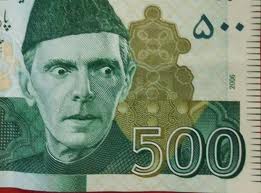
Pakistan’s rupee weakened beyond 100 per dollar to a record low in the so-called kerb market amid concern loan repayments to the International Monetary Fund will further erode the nation’s foreign-exchange reserves.

The State Bank of Pakistan tapped the nation’s currency stockpile to pay $145.8 million to the Washington-based lender this week, Syed Wasimuddin, the central bank’s Karachi-based spokesman, said in an e-mail today. The payments are putting pressure on the country’s reserves, which declined to $8.7 billion last month from $12.5 billion a year earlier, Moody’s Investors Service said in a statement on Feb. 7.

“People are converting their goods into dollars because they feel the country will not have enough money to pay the IMF,” said Bilal Razzak, a trader in Karachi at Glaxy Exchange Pvt., a foreign-exchange firm. “They are converting their savings and stay safe, in case there is a shortage of cash.”

The rupee fell to 100.10 per dollar today from 100.00 yesterday in the kerb market, according to Glaxy Exchange and Mega Currency Exchange Co., another Karachi-based currency firm.

In the interbank market, the rupee slid 0.1 percent to 98.075 per dollar as of 2:48 p.m. in Karachi, according to data compiled by Bloomberg. It lost 0.9 percent so far this year.

Rates at Pakistan’s kerb market, which isn’t regulated by the central bank, account for 20 percent of total transactions, and caters to the majority of the public. The market allows individual buyers and sellers to exchange currencies outside central bank rules that regulate interbank trading, Sayem Ali, an economist in Karachi at Standard Chartered Plc, said by phone.

Pakistani Militant, Price on Head, Lives in Open

By Declan Walsh for The New York Times

Image

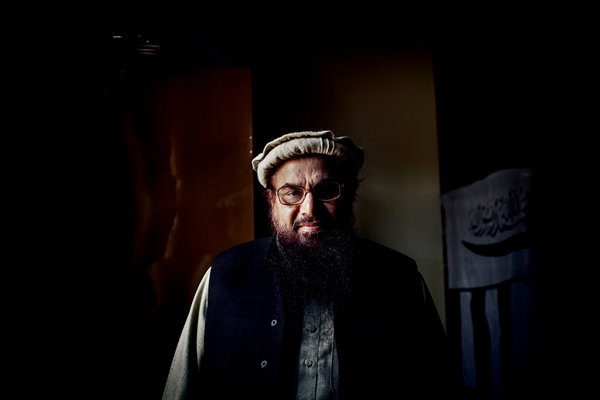
Ten million dollars does not seem to buy much in this bustling Pakistani city. That is the sum the United States is offering for help in convicting Hafiz Muhammad Saeed, perhaps the country’s best-known jihadi leader. Yet Mr. Saeed lives an open, and apparently fearless, life in a middle-class neighborhood here.

“I move about like an ordinary person — that’s my style,” said Mr. Saeed, a burly 64-year-old, reclining on a bolster as he ate a chicken supper. “My fate is in the hands of God, not America.”

Mr. Saeed is the founder, and is still widely believed to be the true leader, of Lashkar-e-Taiba, the militant group that carried out the 2008 attacks in Mumbai, India, in which more than 160 people, including six Americans, were killed. The United Nations has placed him on a terrorist list and imposed sanctions on his group. But few believe he will face trial any time soon in a country that maintains a perilous ambiguity toward jihadi militancy, casting a benign eye on some groups, even as it battles others that attack the state.

Mr. Saeed’s very public life seems more than just an act of mocking defiance against the Obama administration and its bounty, analysts say. As American troops prepare to leave Afghanistan next door, Lashkar is at a crossroads, and its fighters’ next move — whether to focus on fighting the West, disarm and enter the political process, or return to battle in Kashmir — will depend largely on Mr. Saeed.

At his Lahore compound — a fortified house, office and mosque — Mr. Saeed is shielded not only by his supporters, burly men wielding Kalashnikovs outside his door, but also by the Pakistani state. On a recent evening, police officers screened visitors at a checkpoint near his house, while other officers patrolled an adjoining park, watching by floodlight for intruders.

His security seemingly ensured, Mr. Saeed has over the past year addressed large public meetings and appeared on prime-time television, and is now even giving interviews to Western news media outlets he had previously eschewed.

He says that he wants to correct “misperceptions.” During an interview with The New York Times at his home last week, Mr. Saeed insisted that his name had been cleared by the Pakistani courts. “Why does the United States not respect our judicial system?” he asked.

Still, he says he has nothing against Americans, and warmly described a visit he made to the United States in 1994, during which he spoke at Islamic centers in Houston, Chicago and Boston. “At that time, I liked it,” he said with a wry smile.

During that stretch, his group was focused on attacking Indian soldiers in the disputed territory of Kashmir — the fight that led the military’s Inter-Services Intelligence Directorate to help establish Lashkar-e-Taiba in 1989. But that battle died down over the past decade, and Lashkar began projecting itself through its charity wing, Jamaat-ud-Dawa, which runs a tightly organized network of hospitals and schools across Pakistan.

The Mumbai attacks propelled Lashkar-e-Taiba to notoriety. But since then, Mr. Saeed’s provocations toward India have been largely verbal. Last week he stirred anger there by suggesting that Bollywood’s highest-paid actor, Shah Rukh Khan, a Muslim, should move to Pakistan. In the interview, he said he prized talking over fighting in Kashmir.

“The militant struggle helped grab the world’s attention,” he said. “But now the political movement is stronger, and it should be at the forefront of the struggle.”

Pakistan analysts caution that Mr. Saeed’s new openness is no random occurrence, however. “This isn’t out of the blue,” said Shamila N. Chaudhry, a former Obama administration official and an analyst at the Eurasia Group, a consulting firm. “These guys don’t start talking publicly just like that.”

What it amounts to, however, may depend on events across the border in Afghanistan, where his groups have been increasingly active in recent years. In public, Mr. Saeed has been a leading light in the Defense of Pakistan Council, a coalition of right-wing groups that lobbied against the reopening of NATO supply routes through Pakistan last year. More quietly, Lashkar fighters have joined the battle, attacking Western troops and Indian diplomatic facilities in Afghanistan, intelligence officials say.

The question now is what will happen to them once American troops leave. One possibility is a return to Lashkar’s traditional battleground of Kashmir, risking fresh conflict between nuclear-armed Pakistan and India.

But a more hopeful possibility, floated by some Western and Pakistani officials, is that Mr. Saeed would lead his group further into politics, and away from militancy.

“When there are no Americans in Afghanistan, what will happen?” said Mushtaq Sukhera, a senior officer with the Punjabi police who is running a fledgling demobilization program for Islamist extremists. “It’s an open question.”

A shift could be risky for Mr. Saeed: Some of his fighters have already split from Lashkar in favor of other groups that attack the Pakistani state. And much will depend on the advice of his military sponsors.

For their part, Pakistan’s generals insist they have abandoned their dalliance with jihadi proxy groups. In a striking speech in August, the army chief, Gen. Ashfaq Parvez Kayani, said the country’s greatest threat came from domestic extremism. “We as a nation must stand united against this threat,” he said. “No state can afford a parallel system of governance and militias.”

Five years of near-continuous battle against the Pakistani Taliban along the Afghan border, where more than 3,300 members of Pakistan’s security forces have been killed in the past decade, has affected army thinking, some analysts believe. Senior officers have lost colleagues and relatives, softening the army’s singular focus on India.

“This is a changed army,” said Shaukat Javed, a former head of the Intelligence Bureau civilian spy agency in Punjab Province. “The mind-set has changed due to experience, and pressure.”

But for all that, there is ample evidence that parts of the military remain wedded to jihadi proxies. In Waziristan, the army maintains close ties to the Haqqani Network, a major player in the Afghan insurgency. In western Baluchistan Province, it has used Sunni extremists to quell an uprising by Baluch nationalists — even though the same extremists also massacre minority Shiites.

And Mr. Saeed’s freedom to roam around Lahore — and, indeed, across Pakistan — suggests some generals still believe the “good” jihadis are worth having around.

Western intelligence officials say Lashkar’s training camps in northern Pakistan have not been shut down. One of those camps was the training ground of David C. Headley, an American citizen recently sentenced to prison by an American court for his role in the Mumbai attacks.

“There’s a strategic culture of using proxies,” said Stephen Tankel, an American academic and author of a book on Lashkar-e-Taiba. “And if that’s the tool you’re used to grabbing from the toolbox, it can be hard to let go.”

For all his apparent ease, Mr. Saeed has to walk a tightrope of sorts within the jihadi firmament. His support of the state puts him at odds with the Pakistani Taliban, which, he claims, are secretly supported by America and India — a familiar refrain in the right-wing media. “They want to destabilize Pakistan,” he said.

But that position leaves Mr. Saeed vulnerable to pressure from fighters within his own ranks who may still have Taliban sympathies. Western security officials say Lashkar has already suffered some defections in recent years..

“If he continues in this direction, the issue is how many people he can bring with him,” Mr. Tankel said.

But ultimately, he added, much depends on the Pakistani Army: “The army can’t dismantle these groups all at once, because of the danger of blowback. So for now they are putting them on ice. It’s too early to tell which way they will ultimately go.”

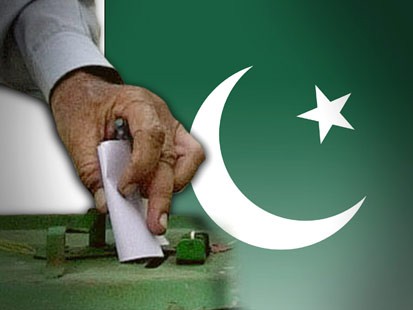
 

Pakistan’s Balochistan: Minerals, Militants, and Meddling

By Mahvish Ahmad for The Christian Science Monitor

balochistan coast

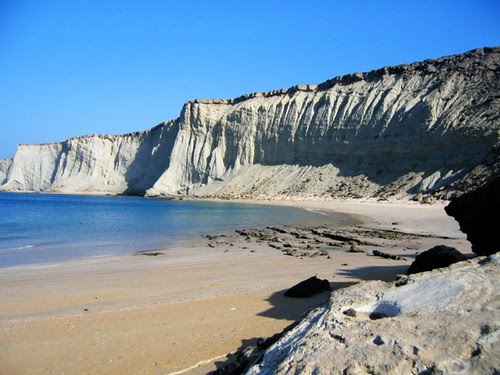
Balochistan is a key province in Pakistan that is filled with natural resources as well as a volatile mix of Afghan Taliban leaders, anti-Shiite militants, and ethnic separatists.

Why is Balochistan important?
Balochistan is Pakistan’s largest province in terms of size, and its smallest in terms of population. The province has always been seen as occupying a geo-strategic position. It has the country’s longest coastline, with a lucrative deep-sea port at Gwadar in the south, and a shared border with Afghanistan and Iran. Balochistan also has extensive tapped and untapped resources, including copper, gold, oil, lead, and zinc.

The province has always been seen as a strategic asset, first by the British colonial power who saw it as a buffer zone holding off Afghan and Russian forces. Today, it is a key source of gas and minerals for Pakistanis across the country, and seen as a strategic transport route.

An on-going separatist uprising and the continued presence of Islamist groups in the north has made this strategic province especially restive.

Who are Balochistan’s separatists?
A section of the province’s ethnic Baloch are calling for the outright independence of Balochistan, after the 2007 assassination of Akbar Bugti, the head of the Bugti tribe and a former Interior Minister in the provincial government. The demands of the separatist Baloch have prompted the deployment of thousands of Pakistani troops across the province, who have been accused of extra-judicial kidnappings, torture, and killings of Baloch activists. Baloch separatists have also been accused of carrying out attacks against members of Pakistan’s powerful Punjabi ethnicity as well as Baloch who take a more pro-Pakistan line.

Who are Balochistan’s Islamists?
Islamist groups hold sway in areas close to the Afghan border. The province’s capital, Quetta, was once known for the notorious Quetta Shura – a congregation of top leaders within the Afghan Taliban. Sources say that the Shura disbanded in 2010, but many suspect that members of the Taliban live among Afghan refugees close to the provincial capital. Other Sunni militant groups also operate with impunity, including Lashkar-e-Jhangvi, an outfit that has taken public responsibility for deadly attacks against Balochistan’s Hazaras – a primarily Shiite Muslim minority group easily identifiable because of their distinct Mongolian features. Almost 1,000 Hazaras have been killed over the last five years.

What recent political developments are important to watch?
A protest held by the Hazara community in January prompted the federal government to dismiss its provincial counterpart. After two bombs killed 130 people on Jan. 10 – most of them Hazaras – thousands sat in protest for four days, refusing to bury their dead until the government guaranteed that their community would receive necessary security. According to Islamic tradition, the dead must be buried as soon as possible – the protests were a powerful message to a provincial government that had been accused of gross negligence. The imposition of a form of direct rule in the province has, however, been met with criticism from the province’s majority Baloch, who believe it is a sign of a central government once again meddling in the province’s autonomy.

What international players are involved?

The Chinese are mining in various locations throughout the province. The Arabs are known to use parts of the province for recreational hunting. Indians are accused of providing support for Baloch separatists, but there is no evidence supporting this claim. Various Western countries have provided Baloch political activists asylum, in light of the heavy hand exercised by the Pakistani security forces. This prompted US Congressman Dana Rohrabacher to introduce a bill in Congress, calling for US support for the outright independence of Balochistan. The prospect of the bill caused an uproar in Pakistan, prompting politicians to accuse the US of meddling in the country’s internal affairs, but it did not go far. And the State Department has made it clear that the US respects Pakistani sovereignty when it comes to the question of Balochistan.

Muslims: #RemoveHate or Pakistan Will Disintegrate

As Reported By Dr Faheem Younus for The Huffington Post

Image

The irony was aptly captured by this picture, taken by a BBC journalist and now going viral on social media. It shows a group of Shiites protesting the recent attacks under another banner in the background, spewing anti-Ahmadi hatred.

Unless protestors #RemoveHate against all groups, they cannot #RemoveHate against any. That’s why I always had trepidations about the Shiite sect becoming the next target — the next Ahmadis if you will. Leading Pakistani analysts feel the same way.

So here is my unifying proposal for all Pakistani Muslims: redeem yourselves by starting a#RemoveHate Twitter campaign. You cannot change the discriminatory laws and you cannot change the school curricula — at least not that easily. But why not, physically and literally, tear down the banners, whitewashing the graffiti and throw away the pamphlets that incite hatred or violence against any religious group?

Americans may argue to confront such hate speech with “more good speech.” But here lies the rub: These banners actually incite violence by calling minorities “worthy of death” and leaving thousands dead.

These deaths — or target killings — are not happening in a vacuum. Just look at the anti-Ahmadi play book: First, the political arm of the Saudi funded Wahabi sect pigeonholes a minority sect as non-Muslims. This is followed by changing the public opinion and poisoning the public discourse, which manifests as hate filled banners and graffiti, and culminates into constitutional edicts and discriminatory laws.

For Pakistani minorities, the process has been kick-started. A 2012 Pew poll showed that 50 percent of Sunnis in Pakistan now believe Shiites to be non-Muslims. For Sufis, that number was at 25 percent.

Historically, Muslim sects in Pakistan chose to appease the “worthy of death” rhetoric against another minority because they saw it as an insurance policy for themselves. Perhaps they should listen to John F. Kennedy’s inauguration speech of 1961: “…remember that, in the past, those who foolishly sought power by riding the back of the tiger ended up inside.”

The tiger has already swallowed so many. Just look around: Shiite processions? Terrorized. Sufis shrines? Bombed. Christian leaders? Assassinated. Hindu girls? Kidnapped.

Don’t #RemoveHate and soon liberals and working women will be next.

I believe in unity against hatred. I believe that our love for Pakistan should not be measured by the amount of hatred we express for America. I believe that our love for Islam cannot be reckoned by our hatred for those who differ with our interpretation. I believe that if Pakistan’s Muslims did not#RemoveHate , Pakistan will disintegrate.

Let your Twitter feeds go wild with #RemoveHate. Let Facebook pages be dedicated to exploring and sharing the best ideas to remove hate from our surroundings. Did you use a ladder or climb on top of boxes to tear down the banner? Did you use paint or white wash to remove graffiti? Is pre-dawn a better time than post-dusk?

I beseech you, my Pakistani Muslim family: Sectarian killings are neither a Shiite nor an Ahmadi issue; they are a human rights issue. Instead of resorting to conspiracy theories, take individual responsibility to #RemoveHate from your streets. But if you still choose to stand under a hateful banner today, don’t complain if you are on it tomorrow.

Dr. Faheem Younus is a clinical associate professor at the University of Maryland. He is the founder of Muslimerican.com. Follow him on Twitter at @FaheemYounus.


Pakistan Releasing Taliban Detainees As Part Of Peace Process Ahead Of 2014 Withdrawal

By Rebecca Santana and Kathy Gannon for The Huffington Post

Pakistan-Taliban-_2063733b

Pakistan plans to release more Afghan militant detainees in an attempt to boost the peace process in neighboring Afghanistan ahead of the departure of international troops next year, a top Pakistani official said.

Foreign Secretary Jalil Abbas Jilani said Pakistan has initiated the process of releasing those Afghan detainees in its custody who they think will help facilitate the reconciliation process. His comments were made during a press conference Friday in Abu Dhabi and relayed by the Foreign Ministry on Saturday. He did not give a timetable.

In general, Kabul has pressed hard for Islamabad to release its detainees, with some officials saying that they hope the released Taliban can serve as intermediaries. But Washington is concerned about specific prisoners who they consider dangerous.

Jilani did not specifically mention whether Pakistan would release Mullah Abdul Ghani Baradar, the former deputy leader of the Afghan Taliban whom Kabul has been pushing Pakistan to release.

Senior U.S. and Afghan officials told The Associated Press that the U.S. has informed the Pakistani authorities that it was reluctant to see Baradar go free and asked for prior notice so it can try to track his movements.

Pakistan has upward of 100 Afghan prisoners in its custody including Baradar, who was arrested by Pakistan in the southern city of Karachi in 2010. The circumstances of his arrest, like that of most of the detainees, remain unclear. Afghanistan accuses Pakistan of providing shelter to some of the Taliban.

The U.S. and Afghan officials said a similar U.S. request for notification upon release has been made for another prisoner, Abdul Samad, according to the officials. Samad, who is from Kandahar, the former Taliban headquarters, is a specialist in making suicide jackets and came to prominence within the Taliban movement after its collapse in 2001.

Several senior Taliban have already been released by Pakistan including former governors and ministers. One of those released was the once-feared Vice and Virtue Minister Mullah Nooruddin Turabi, who oversaw a legion of Taliban fighters who roamed the streets searching for women who were not properly covered, or residents listening to music or watching television, both of which were forbidden under the Taliban.

In November Pakistan also released Anwar ul Haq Mujahed, a senior Taliban commander from eastern Nangarhar province whose release was sought by the Afghan High Peace Council although he had been implicated in several major attacks in eastern Afghanistan against coalition and Afghan forces.

The Afghan peace process has made little headway since it began several years ago, hobbled by distrust among the major players, including the United States. But it appears to be getting a new push in recent months with a high-level peace commission traveling from Afghanistan to Pakistan and Pakistani officials releasing 26 Taliban prisoners since November.

Part of the reason for the recent peace push is that Pakistani government and military officials are worried that if American troops leave without a plan in place, Afghanistan could deteriorate into another round of vicious infighting. After the Soviets pulled out in 1989, many of the militants who had helped best that superpower then turned on each other in what played out as a vicious war across the country.

A repeat of that scenario could have horrific consequences for Pakistan, such as a flood of Afghan refugees across its borders and increased fighting in Pakistan’s tribal areas, where the military is already trying to suppress a stubborn insurgency.

The Afghan and U.S. governments have long accused Islamabad of backing insurgents – an allegation Pakistan denies – and say many militant leaders are hiding in the country.

Whether the recent detainee releases will play a significant role in the peace process remains to be seen. The U.S. Ambassador to Afghanistan, James Cunningham, said on Thursday that although their release was a positive step, there was no indication of where the former detainees had gone.

He said the Afghan government was trying to ensure they did not return to the insurgency.

He said the Pakistanis so far have taken a “hands-off kind of approach to the people that they have released.”

All officials spoke anonymously as they were not authorized to talk to the media.

Ready to probe ‘gruesome’ beheading, Pakistan high commissioner Salman Bashir says

As Reported by Sachin Parashar for The Times of India 

ImageSal

On a day when Pakistan foreign minister Hina Rabbani Khar’s offer for talks received lukewarm response here, Pakistan high commissioner Salman Bashir turned out be the real game-changer as he said that Islamabadwas willing to address all Indian concerns over LoC, including its demand for a probe into the mutilation of the bodies of Indian soldiers.

In an exclusive interview to TOI, Bashir said: “Essentially, what the Pakistan foreign minister has said is that Pakistan is willing to discuss all Indian concerns, especially those related torecent LoC developments with a clear objective to ensure respect for ceasefire along LoC.” It was Pakistan’s refusal to give any such assurance that had forced India to harden its stand and provoked PM Manmohan Singh to say that it can’t be business as usual with Pakistan.

Asked if his assurance included India’s demand for investigations into the beheading of soldier Hem Raj, Bashir said, “When we say all concerns, we are not excluding anything…I believe all civilized people, no matter where they are, would be appalled by the gruesome incident”. However, Bashir added that for India to accuse Pakistan of the act without any probe was still not “understandable” for Pakistan.

Bashir reached out to the Indian people saying that they should not look upon the Pakistanis as “insensitive” or “inhuman”. In what is likely to soothe frayed nerves here further, Bashir did not mention any international role, including the UN, while talking about investigations into the incident.

“We want that both sides at the military level undertake their own investigations and use bilateral channels to get to the bottom of the incident. We are also concerned about ceasefire violations that have resulted in several casualties on our side but for peace to prevail we believe that the way forward is to talk to each other instead of getting into mutual recrimination,” he told TOI.

He added: “Pakistan foreign minister’s offer for talks with her counterpart is of considerable significance as it shows Pakistan’s desire to steer the process of reengagement in the right direction and at the same time address the issues of concern through the dialogue process. We hope that this sincere gesture will be reciprocated.”

While doubts have been raised about Pakistan’s commitment to MFN status for India, Bashir also brushed that aside saying that the “in principle” decision still stands and Islamabad will continue to seek better trade ties with India. He, however, added that for this it was important the positive atmosphere prior to the LoC flare-up was not vitiated.

Bashir said that he found developments like the return of Pakistan hockey players and move by India to stall visa-on-arrival for senior citizens “troubling”. “I think when there are multiple issues, both sides need to communicate more and not allow iron curtains to descend”.

As he pointed that there have been no “impulsive” reactions from Pakistan authorities to the statements made by Indian leaders, including Manmohan Singh. He said Pakistan still looked upon Singh as a man of peace who is very well respected in his country for his initiative for dialogue between the two countries.

Bashir said Pakistan was not proposing any time frame for Khar-Khurshid dialogue. “We have made an offer and the two most important words are ‘dialogue’ and ‘de-escalation’ – the rest is a question of form and modality,” he said.

Talking about the deep sense of hurt in India over the LoC incident, Bashir called upon people in position of responsibility and opinion makers to act responsibly and “not play with raw emotions”. “People of Pakistan are not insensitive to the sentiments of the people of India. Whenever there is a tragic incident – be it an earthquake or a terror attack or some heinous crime – ordinary people suffer from the same sentiment. But what I object to is the instinctive reflexes for Pakistan bashing and whipping up of emotions which has almost turned into a stereotype. It is important for saner voices to realize that neither Pakistan can wish India away nor India can do the same to Pakistan,” he said.

Bashir ended by recalling what Bihar chief minister Nitish Kumar had said on his visit to Pakistan recently: “Our people have shared geography and history and there is no reason why they can’t share their future too.”

Political Rally Shuts Down Pakistan Capital

As Reported by The Voice of America

Image

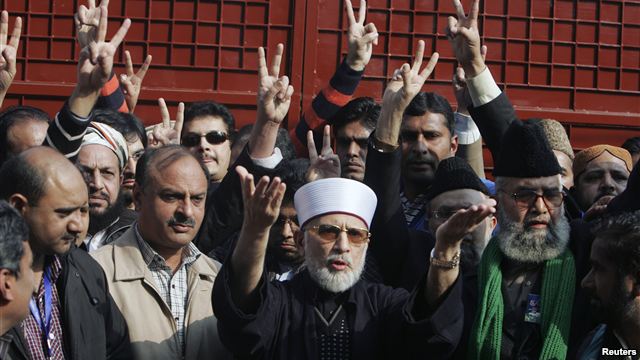
Thousands of flag-waving protesters marched into Pakistan’s capital Monday to demand changes to the country’s political system just months before scheduled elections. The rally is led by a Canadian-Pakistani cleric, Tahir-ul Qadri.

Cellphone services were shut off, shops closed their doors, metal containers barricaded major roads, and riot police were at the ready as protestors entered the country’s capital city.

Some 30,000 people were said to have arrived in Islamabad from the eastern city of Lahore in a two-day convoy.  Another estimated 40,000 were expected to arrive overnight.

Protest organizers had predicted the numbers would reach in the hundreds of thousands.

Rally leader Tahir-ul Qadri is calling for the current government to step down as part of an overhaul of the country’s electoral system. National voting for a new government is expected to be held in a few months.

Analysts say Qadri is tapping into the people’s deep frustration with ongoing violence and a deteriorating economy, but his campaign is unlikely to have a significant impact on the political system.

But supporters like Mariam Khalid, who flew in from her home in Britain to join the protest, says Qadri stands for the kind of change the country needs.

“Basically this is about change, and I know that is kind of vague and everyone wants change.  The difference with this protest is that it’s not just about talking the talk, it’s about walking the walk as well. What Dr. Tahir-ul Qadri is saying is basically that the people are sick of it, the situation in Pakistan; there is no food, no electricity, people are dying — basically they are, that’s the reality,” Khalid said.

Relatively unknown until he returned to Pakistan a few weeks ago, Qadri has spent the last seven years in Canada leading an Islamic charity group with branches around the world.

Now his television ads are on all of Pakistan’s major stations to protest what he says is a broken and corrupt political system that any election will just perpetuate.

If the national polls are held as scheduled, it will be the first time since Pakistan was formed in 1947 that a civilian government has completed its five-year term and peacefully handed over power to a new civilian leadership.

Tariq Junaid, head of Pakistan’s Institute for Public Opinion Research, says Qadri’s slogans are attractive, but his ability to force a change in the electoral laws, or even delay the elections, depends largely on the pressure Qadri can bring to bear on the government.

“Right now we have to see how much weightage the political parties will give to this. Apparently it seems like that, they are not taking it very seriously, they are letting it happen, and they think that in the due course of time it will die down, within the course of the next five or six days,” Junaid said.

Junaid says as yet, there is a general consensus within Pakistani civil society that timely elections are the best way to remove corrupt politicians and give the country a fresh start.