Posts Tagged ‘ Pakistan ’

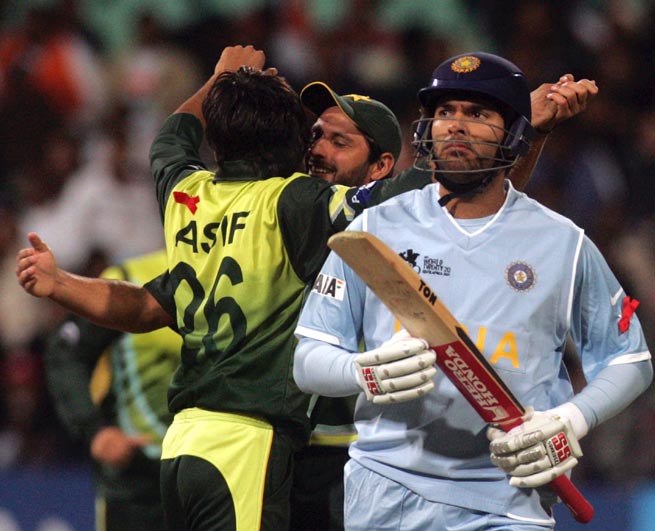
Preview: India v Pakistan, Super 8 Match

As Reported by Cricbuzz
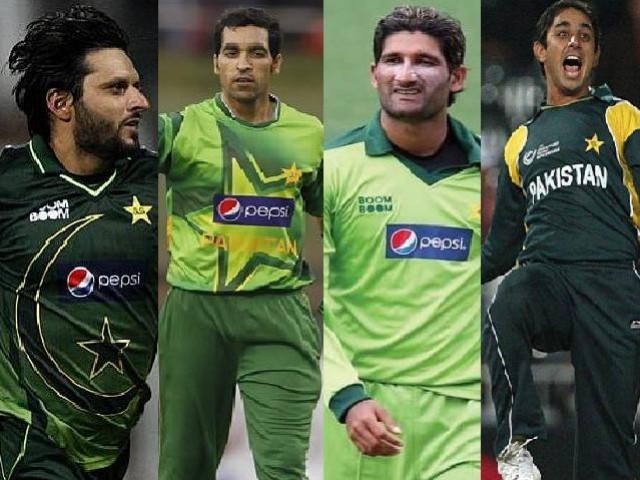
There are a few games during which rankings, form, prospects and position in the table hardly matter. An India-Pakistan game is one such. The rivalry between the two teams has seen them produce some rivetting entertainers and this game could be no different. India could see their semi-final prospects disappear if they are to lose this game while for Pakistan a win could seal a spot in the last 4.

Both the teams have some forgettable records against their name and one of them could be broken when the arch-rivals go head-to-head. Pakistan have never registered a win against India at World Cups while India have failed to register even a single win at the Super 8s after their victorious 2007 WC campaign.

Both teams will be going all-out for the win knowing that it would give the fans and themselves much to cheer about, even if they do not end up taking the cup at the end.

India

India come into the match after having been annihilated by the mighty Aussies in their first super 8s match. India looked ill at ease with the bat and with the ball as they were walloped by Australia. Dhoni’s men may revisit the plan to play with 5 bowlers knowing that Pakistan are much better players of spin.

Irfan Pathan’s lack of firepower up top could prompt the team to bring back the swashbuckling Virender Sehwag while the over-dependance on Virat Kohli to steady the ship and provide the platform would be a serious cause for concern. Suresh Raina performance would have given India a few cheers, but they will want the left hander to do the kind of job he is known for rather than do the consolidating job. There have also been experts who have pointed out that India have rushed Yuvraj Singh back into the side. With his form and overall fitness being a concern, he might make way for another batsman.

India’s bowling will present the think-tank with the most questions. Harbhajan Singh and Piyush Chawla looked only of shadow of themselves that ripped through the England side in the group stage match. While R Ashwin too was poor.

Zaheer Khan good showing was the silver lining for India and they will hope betters his performance by picking up a few wickets.

Pakistan

Pakistan come in to game carrying a bit of momentum. They managed to snatch victory from the jaws of defeat thanks to a brilliant lower-order stand against South Africa and will hope to carry forward their momentum. Their bowling was top-drawer stuff even with Umar Gul not being used to full potential.

Pakistan’s batting will be a worry as the team buckled under pressure chasing a sub-par target. Mohd Hafeez, Imran Nazir, Nasir Jamshed, Kamran Akmal and Shoaib Malik all failed to create an impact and it was left to Umar Akmal and Umar Gul to rescue them.

Pak will be hoping the collective failure was just a one-off incident and that the top can come good in the marquee game.

Everything looks rosy for Pakistan on the bowling front, their spinners Raza Hasan, Saeed Ajmal, Mohd Hafeez and Shahid Afridi complete a brilliant spin attack while Yasir Arafat and Umar Gul are more-than-capable bowlers with both the new ball and towards the end.

Watch out for

Yuvraj Singh: The left hander still hasn’t had the impact that he would have hoped for after his return. With India’s chances of progressing depending on this match; Yuvraj, if included, could bring out his best game.

Nasir Jamshed: The top order batsman has been widely renowned as one to look out for during this tournament and he has done his prospects no harm with a good show so far. Another big game against the arch-rivals will go a long way in emphasizing his status as a hot propect.

Quotes:

Hafeez: Since we have won against them in the warm-up game, it will give us confidence going into the match. That victory has been a real morale booster for us and the boys are upbeat and raring to go against India.

MS Dhoni: We will go out their and express ourselves without thinking too much about the result. Obviously, we can’t do worse than what we did against Australia, so we should go out there and play freely. Since we have to win two matches, we have no room for complacency.
Pakistan’s Other Taliban

By Malik Siraj Akbar for The Huffington Post

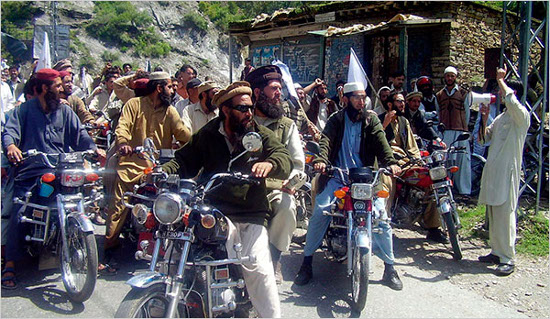
The sectarian war in Pakistan between militant Sunni and unarmed Shia Muslims is turning uglier by the day. A bomb blast targeting Shia pilgrims on September 18 in southwestern Balochistan province killed three people and also injured security guards who were officially assigned to protect the pilgrims from a terrorist attack. Sectarian offensives are expected every day but thwarted very infrequently.

The Lashkar-e-Jhangvi (LeJ), an underground Sunni extremist group that allegedly receives support from units of Pakistani intelligence agencies, has accepted responsibility for most of such attacks in the recent past.

The LeJ has extraordinarily increased its violent operations during this year. It has emerged as a dangerous force after succeeding in recruiting a new cadre of homegrown extremists. The freshly inducted fighters enjoy unmatched knowledge of local geography and safe hideouts. They are sophisticated shooters who are deeply motivated to live and die for what they deem as a “religious cause.” Theirs is a cause designed to cleanse Pakistan of Shias.

The LeJ asks Shias to either quit Pakistan or convert into Sunni Islam. Both of the demands seem unacceptable considering the fact that Pakistan has the world’s second highest Shia population. Many Shias serve as top-ranking professionals and enormously contribute to Pakistan’s politics and economy.

The LeJ is rising as a confident, self-reliant, invincible and ambitious power that will lead in the near future Balochistan’s march toward Islamization and expulsion or persecution of religious and sectarian minorities. There are scores of reasons why we should fear the rapid rise of the LeJ and Pakistani government’s inaction against it.

Pakistan’s handling of the LeJ is very similar to its disastrous experience of dealing with the Pakistani Taliban during the initial days. The country’s security establishment created and patronized radical Islamic groups but kept underestimating them until they transformed into such monsters that become impossible to micromanage or dismantle.

On August 30, the LeJ target killed Zulfiqar Hussain Naqvi, a judge in Quetta, the capital of Balochistan province, along with his driver and security guard.

Besides sectarian reasons, the larger motivation behind Mr. Naqvi’s killing was to intimidate and influence government institutions. Extremist groups carry out such attacks to dissuade government personnel from participating in counter-terrorism operations.

A LeJ spokesman says his organization would even target the Chief Justice of Pakistan if he takes stern action against some of the organization’s detained operatives.

“Any judge who sentences our arrested activists will meet the fate of Naqvi,” the spokesman warned in a statement published in the local media, “the Chief Justice and all other judges will be on our hit-list if they harden their attitude toward our activists whose cases are currently pending in the courts. We do not only issue warnings but also do what we warn to do.”

It turned out to be true.

Only a week after murdering Judge Naqvi, the LeJ killed a top police officer in Quetta on September 7, 2012. The slain officer, Jamil Ahmed Kakar, had newly been promoted as the superintendent of police (Investigation branch). Colleagues in the police department and foes in the LeJ unanimously agree that Mr. Kakar was instrumental in painstakingly investigating the Lashkar’s activities and taking action against key leaders of the terrorist outfit.

“Jamil Kakar was involved in the martyrdom of our colleagues,” confirmed the LeJ spokesman.

LeJ’s dramatic rise is perturbing for the following reasons.

All top LeJ commanders in Balochistan come from lower-middle class Baloch families. The Balochs have historically remained a secular people with rare connections with forces that fought in the name of religion. Hundreds of Muslim religious schools established across Balochistan with the covert funding of Saudi Arabia and Pakistani government to counter the ongoing Baloch separatist movement richly provide manpower to Muslim extremist groups.

Left-wing Baloch nationalists admit that self- Jihadist groups are actively engaged in employing young Balochs from religious schools for their unholy battles. The regional nationalists describe this phenomenon as a “deliberate policy” of the Pakistani intelligence agencies to undermine their movement. Radical Islam, they say, is used as an antidote to address mounting anti-Pakistan sentiments in Balochistan.

At present, there are no overt tensions between Baloch nationalists and neo-Jihadists in the Baloch-populated districts. The nationalists say they are already engaged in a full-fledged battle against the Pakistani government and cannot afford to open another front against extremist Islamic groups. But the current non-interference policy in each other’s operations may not last long. Tensions have been brewing, although slowly.

According to LeJ accounts, all of the organization’s key leaders come from Baloch families.

The growth of Sunni extremism has come with new dimensions and fresh techniques of terrorism. For example, direct suicide blasts on Shia processions reduced in 2012 but the year witnessed an upsurge in mass killings of Shia pilgrims by intercepting passenger buses in various parts of Balochistan. The LeJ is actively involved in attacks on NATO supplies, too. In 2010, as many as 34 drivers were killed in Balochistan while attempting to transport goods to foreign forces stationed in Afghanistan.

The LeJ is steadily growing so big in Balochistan that, at one point, it will start considering its anti-Shia operations as an inadequate match with its huge infrastructure and extended network of operatives and sanctuaries. The organization is already closely connected with Taliban in Afghanistan and has renewed connections with Jundullah, the anti-Iran Sunni militant group. In common, all these groups share abhorrence for the Shias.

The sectarian killers are, in fact, Pakistan’s other Taliban. Most of their top leaders do not face official action. They roam freely and make hate speeches across the country and incite violence against the Shias.

After the persecution of its chief, Abdolmalek Rigi, in the summer of 2010 by the Iranian authorities, Jundullah is too weak to continue with the robust suicide blasts it once used to conduct in Iranian cities under the leadership of Rigi. So, the Jundullah now continues (what Cricket fans call) ‘net practice’ with LeJ inside Pakistan until it fully regains the lost strength.

While the forces of Islamization consolidate their grip in Balochistan, there seems little interest on the part of the government or the regional opposition parties to cooperate with each other to collectively fight religious extremism. Promoting radicals may temporarily assist Pakistani government in fighting the nationalist-separatist insurgency but, in the long run, it is going to multiply the causes of unrest in Balochistan, making conflict resolution further impossible.

India On Look Out For Ascendance Against Pakistan

As Reported By The Hindu

Their tails up after an easy outing against hosts Sri Lanka, India would like to keep the winning momentum going when they take on arch-rivals Pakistan in their second warm-up game in Colombo on Monday ahead of the ICC World Twenty20 beginning on September 18.

The Mahendra Singh Dhoni-led Indian team would, however, want their batsman to come good against a superior Pakistani bowling unit to maintain a clean slate ahead of their World Twenty20 opener against Afghanistan on September 19.

Though, India won comfortably against the hosts in their opening warm-up game, they certainly need to put up a better show with the bat against Pakistan, who boast of quality bowlers like Saeed Ajmal and Umar Gul in their ranks.

Injury to opener Gautam Gambhir, who hurt his wrist against Sri Lanka, would be a concern for the Indians but Virender Sehwag along with other top-order batsmen need to redeem themselves against Pakistan following their dismal show with the bat in the first match.

India, in particular, would like Sehwag to fire against Pakistan and get some runs under his belt ahead of the tough battle ahead.

Virat Kohli, on the other hand, has been a consistent performer, but the young Delhi lad would look to settle down and get battle ready with a solid knock against Pakistan at the R Premadasa Stadium.

Yuvraj Singh, who made a comeback to world cricket after recovering from cancer with a cameo of 34 runs against New Zealand in the second T20 game in Chennai, also needs to get some more runs under his belt.

And the match against Pakistan will provide the gutsy left-hander with an opportunity to prove that he is ready and looking forward to take on the world with the same zeal as he had left it a year ago following the critical illness.

While Suresh Raina would also look to spend some more time on the crease, Dhoni showed why he is still rated as one of the great finishers of the game against Sri Lanka the other day.

But against Pakistan tomorrow, the Indian skipper needs to be much more focused both with the bat and with his leadership skills.

Of late, Rohit Sharma has been erratic with bat which might prompt Dhoni to give Manoj Tiwary a chance ahead of their campaign opener.

The Indian bowlers led by Irfan Pathan, however, looked in good stead in the previous match and they just need to continue their positive run against Pakistan.

Pathan continued his fine run and scalped five wickets to guide India to a comfortable 26-run victory over Sri Lanka in the first practice match yesterday.

The only concern for Dhoni would be lack of wickets in pace spearhead Zaheer Khan’s kitty.

But comeback man Harbhajan Singh looked composed against the hosts and bowled a tight line, which definitely is encouraging for the team.

Pakistan, on the other hand have been a bit inconsistent in the run-up to the sporting extravaganza. They won two successive T20 matches against Australia, but their 94-run loss to the Kangaroos in the final T20 tie showed that their batsmen are vulnerable to quality bowling.

Pakistan’s batting line-up exhibits immaturity at this level, but with the likes of Abdul Razzaq, Shahid Afridi and skipper Mohammed Hafiz in the ranks they really have the necessary fire power to upset any side.

Young Nasir Jamshed has shown tremendous promise with the bat and the game against India would certainly test his temperament.

On the bowling front, Pakistan has a much settled line-up with off-spinner Saeed Ajmal and speedster Umar Gul leading their respective departments.

The experience of Razzaq and Afridi with the ball gives Hafiz plenty of options to dismantle any batting side.

With both the teams having tasted success at the big stage — India winning the inaugural World T20 in 2007 and Pakistan lifting the trophy two years later — an exciting battle awaits cricket loving fans of both the countries.

Teams (from):

India: M S Dhoni (captain/wicket-keeper), Gautam Gambhir, Ravichandran Ashwin, Lakshmipathy Balaji, Piyush Chawla, Ashok Dinda, Harbhajan Singh, Zaheer Khan, Virat Kohli, Irfan Pathan, Suresh Raina, Virender Sehwag, Rohit Sharma, Manoj Tiwary, Yuvraj Singh.

Pakistan: Mohammad Hafeez (captain), Abdul Razzaq, Asad Shafiq, Imran Nazir, Kamran Akmal (wicket—keeper), Mohammad Sami, Nasir Jamshed, Raza Hasan, Saeed Ajmal, Shahid Afridi, Shoaib Malik, Sohail Tanvir, Umar Akmal, Umar Gul, Yasir Arafat.

More Than 300 Killed in Pakistani Factory Fires

By Zia ur-Rehman and Salman Masood for The New York Times

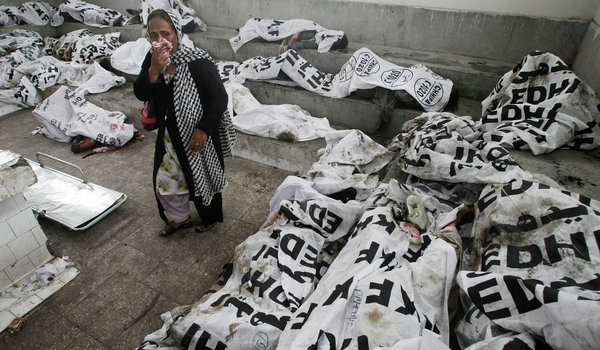
Fire ravaged a textile factory complex in the commercial hub of Karachi early Wednesday, killing almost 300 workers trapped behind locked doors and raising questions about the woeful lack of regulation in a vital sector of Pakistan’s faltering economy.

It was Pakistan’s worst industrial accident, officials said, and it came just hours after another fire, at a shoe factory in the eastern city of Lahore, had killed at least 25.

Flames and smoke swept the cramped textile factory in Baldia Town, a northwestern industrial suburb, creating panic among the hundreds of poorly paid workers who had been making undergarments and plastic tools.

They had few options of escape — every exit but one had been locked, officials said, and the windows were mostly barred. In desperation, some flung themselves from the top floors of the four-story building, sustaining serious injuries or worse, witnesses said. But many others failed to make it that far, trapped by an inferno that advanced mercilessly through a building that officials later described as a death trap.

Rescue workers said most of the victims died of smoke inhalation, and many of the survivors sustained third-degree burns. As firefighters advanced into the wreckage during the day, battling back flames, they found dozens of bodies clumped together on the lower floors.

One survivor, Muhammad Aslam, said he heard two loud blasts before the factory filled first with smoke, then with the desperate screams of his fellow workers. “Only one entrance was open. All the others were closed,” he said at a hospital, describing scenes of panic and chaos.

Mr. Aslam, who was being treated for a broken leg, said he saved himself by leaping from a third-floor window.

Hundreds of anguished relatives gathered at the site, many of them sobbing as they sought news. Some impeded the rescue operation, and baton-wielding police officers tried to disperse the crowd but failed.

“If my son does not return, I will commit suicide in front of the factory,” one woman shouted before news cameras as relatives tried to console her.

The death toll rose quickly. By evening, the Karachi commissioner, Roshan Ali Sheikh, said that 289 people had died, most of them men. The provincial health minister, Sagheer Ahmed, put the toll at 248, which he said was the number of bodies accounted for at major hospitals. The number was expected to rise further.

In the shoe factory fire in Lahore, 25 people were reported killed and dozens wounded. Officials said that blaze had been set off by a generator that caught fire and ignited chemicals stored nearby in the factory, illegally located in a residential neighborhood. Most of the victims were men under 25.

The fires immediately revived long-running questions about the regulation of Pakistan’s manufacturing sector, centered in Karachi, and of the vital textiles industry in particular.

Textiles are a major source of foreign currency for Pakistan, accounting for 7.4 percent of its gross domestic product in 2011 and employing 38 percent of the manufacturing work force. Pakistani cotton products are highly sought in neighboring India and form the backbone of a burgeoning fashion industry that caters to the elite. President Asif Ali Zardari’s government has often called on the United States to drop tariff barriers to Pakistani textile imports, which it says would be preferable to traditional aid.

But the industry suffers from weak regulation, characterized by lax oversight and corruption. Business owners often put profits over safety, workers’ rights advocates say.

On Wednesday evening the police raided the home of the owner of the Karachi factory, Abdul Aziz, who appeared to have gone into hiding. According to an online business information service, his company, Ali Enterprises, manufactured denim, knitted garments and hosiery and had capital of between $10 million and $50 million.

His nephew, Shahid Bhaila, the chief executive officer of the company, was also being sought for questioning. The police said both men had been placed on the exit control list, barring them from leaving the country.

The Muttahida Qaumi Movement, the most powerful political party in Karachi, announced three days of mourning. The city electricity company said it would cancel all outstanding bills for the families of those affected as a good will gesture.

The cause of the fire remained unclear. Geo News, the largest news channel, speculated that it had been started by extortionists, reporting that Mr. Aziz had previously faced a demand for a shakedown payment of more than $100,000, which he refused.

But others said an electrical fire was more likely. Wali Muhammad, a former electrical inspector, said that most accidental fires are caused by short circuits in equipment. But since 2003, he said, inspectors had been forbidden by law from visiting factories in Karachi and Punjab; it was not immediately clear why.

“This is criminal negligence,” he told Geo News, referring to the ban.

Another mystery surrounded the locked factory doors. Some survivors said the exits had been shuttered to prevent workers from slipping out early; others said it was the consequence of a recent break-in.

A majority of the garment workers came from Orangi Town, a poor working-class neighborhood in Karachi. Seventeen of the victims came from the same street, local news media reported.

The factory building suffered severe structural damage in the blaze, and officials feared it would collapse on rescue workers during the day.

While many distraught family members set up camp near the factory, others moved between city hospitals, seeking news of loved ones. One man said he was looking for his cousin, who earned $70 a month as a cashier. “He’s still missing. I’m afraid he may have been working in the basement,” the man said.

The Human Rights Commission of Pakistan called on the government to mount an immediate investigation. “The head of the firefighting operations in Karachi has noted that the factory was dangerous, flimsily built and had no emergency exits,” said Zohra Yusuf, chairwoman of the rights group. “Why did all of that escape official attention earlier?”

Workplace safety is guaranteed under Pakistan’s Constitution, but labor leaders say that government oversight has crumbled rapidly in recent years, along with a general decline in governance.

Sharafat Ali of the Pakistan Institute of Labor Education and Research, a labor rights group, said that 151 workers died in accidents in 2011. The state was partly responsible for the deaths, he said, because its civil servants “silently and criminally allow violation of laws and regulations established to ensure health and safety provisions at work.”

Judge Grants Bail to Young Christian Girl Accused of Blasphemy in Pakistan

As Reported by The Associated Press

A Pakistani judge granted bail Friday to a young, mentally challenged Christian girl accused of insulting Islam for burning pages of the religion’s holy book. Rights activists welcomed the decision after calling for her release since she was arrested three weeks ago.

The case has focused attention on Pakistan’s harsh blasphemy laws, which activists claim are used to persecute minorities and settle personal vendettas.

Judge Mohammed Azam Khan set bail at 1 million Pakistani rupees, or about $10,500, a significant sum in a country where many families live on only a few dollars a day. The girl’s impoverished family may need outside financial support to free her.

The young girl, who is reported to be 14 years old and suffering from some form of mental impairment, was arrested after an angry mob showed up at a police station in her neighborhood in Islamabad and accused her of burning pages from the Quran, an act punishable by life in prison under the country’s harsh blasphemy laws. Her lawyer has denied the allegation.

In an unusual twist, police arrested a Muslim cleric from her neighborhood a week ago after a follower from his mosque accused him of stashing pages of a Quran in her bag to make it seem as if she burned them. He allegedly planted the evidence to push Christians out of the neighborhood and is now being investigated for blasphemy himself. He has denied the allegation.

The head of Human Rights Watch in Pakistan, Ali Dayan Hasan, praised the judge’s decision to grant the young girl bail.

“The fact is that this child should not have been behind bars at all,” Hasan said. “All charges against her should be dropped, and Pakistan’s criminal justice system should instead concentrate on holding her accuser accountable for inciting violence against the child and members of the local Christian community.”

Hasan added, “Human Rights Watch hopes that the blatant abuse that has come to light in this case will lead to a considered re-examination of the law, and all stake-holders in Pakistan will actively seek to end frequent abuses perpetrated under cover of blasphemy allegations.”

Is Pakistan’s Hard Line on Blasphemy Softening?

By William Dalrymple for The Guardian

It is rare these days to read any good news coming out of Pakistan. It is rarer still to read good news concerning matters of religion. However, in one week two stories seem to show that Pakistan is for once bringing the force of law to bear on those who abuse religion to provoke violence against minorities.

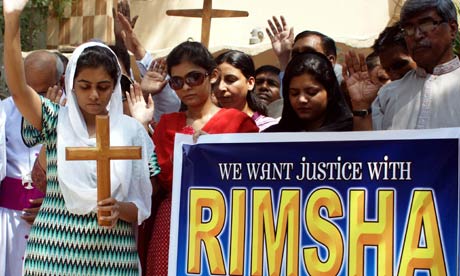
Last Sunday Mohammed Khalid Chisti, the mullah who had accused a 14-year-old Christian girl, Rimsha Masih, of blasphemy, was himself arrested and charged with the same law. The turnaround took place after the muezzin of his mosque gave evidence that he had framed the girl and falsified evidence. More remarkable still, the far-from- moderate All Pakistan Ulema Council came to Rimsha’s defence, calling her “a daughter of the nation” and denouncing Chisthi: “Our heads are bowed with shame for what he did.”

On Tuesday an even more unexpected event took place. Malik Ishaq, the leader of the banned Sunni terrorist group Lashkar–e-Jhangvi, which is accused of killing hundreds of Shias, was arrested on his return from a fund-raising trip to Saudi Arabia. Lashkar operates quite openly in Lahore despite being officially banned; yet on this occasion Ishaq was immediately brought to court. There he was accused of involvement in more than 40 cases in which 70 people have been killed. He now resides in Kot Lakhpat jail on 14-day judicial remand.

When Pakistan was created in 1947 as a homeland for Indian Muslims, its clean-shaven, tweed-jacketed, spats-wearing and pork-eating founder, Muhammad Ali Jinnah, made sure the constitution of his new country provided the right for all its citizens to profess, practise and propagate their religion: “You may belong to any religion, caste or creed,” he said in his first address to the constituent assembly of Pakistan on August 11 1947. “That has nothing to do with the business of the state. In due course of time Hindus will cease to be Hindus and Muslims will cease to be Muslims – not in a religious sense, for that is the personal faith of an individual – but in the political sense as citizens of one state.”

It was Zulfikar Ali Bhutto who started the rot. In 1974 he bowed to pressure from the religious right and had the country’s small Ahmedi minority declared non-Muslim. The situation became worse still in the 1980s with the military coup of General Zia. Zia was responsible for initiating the fatal alliance between the conservative military and the equally reactionary mullahs that led to the use of Islamic radicals as part of state policy. At the same time Zia started tinkering with the law. He introduced the Islamic punishment of amputation for theft, and established the Hudood ordinances of sharia law, which asserted that the evidence of one man was equal to that of two women, and made any sex outside marriage a punishable offence for women. Rape was to be punished with the public flogging of the female victim as well as the perpetrator.

Between 1982 and 1986 Zia introduced radical changes to Pakistan’s blasphemy laws – the notorious sections 295 B and C of the penal code – prescribing life imprisonment for anyone who defiles a copy of the Qur’an and death for insulting or criticising the prophet Muhammad. Because there is no strict definition of blasphemy, and virtually no evidence above the word of the accuser is needed to bring a guilty verdict, the laws have often been exploited by individuals with grudges against innocent non-Muslims. In 1988 Bishop John Joseph of Faisalabad publicly committed suicide to protest against the laws; and although no one has yet been executed under the statutes, an estimated 1,200 to 4,000 blasphemy cases have been filed. The number of cases has multiplied in recent years, and the result is often prison sentences of three years or more.

Christians are widely derided in Pakistan; most are descended from “untouchable” converts who still perform the most menial tasks: cleaning the sewers and sweeping the streets. There has been a steady stream of attacks on the community, most bloodily in the murder of 16 Christians at a church in Bahawalpur in 2001. But it is not just Christians who have suffered. Hysteria about blasphemy has also been used to target Hindus, Sikhs, Ahmadis and Shias. In addition to formal convictions, there were at least 34 extrajudicial killings of people accused of blasphemy between 1990 and 2010. Of those, 15 were Muslim, 16 Christians, two Ahmadis and a Hindu. Indeed it is the Shias, not the Christians, who have suffered the brunt of the violence meted out by Lashkar–e-Jhangvi.

The high-water mark for religious intolerance in Pakistan was reached last year when the former governor of the Punjab, Salman Taseer, and the only Christian minister in the government, Shahbaz Bhatti, were both shot dead for suggesting that the blasphemy laws should be reviewed. Last week’s turnaround seems to represent a dawning realisation that things had gone too far – that a descent into mob violence was imminent. “There has been some genuine remorse on the right,” Pakistan’s leading human rights lawyer Asma Jahangir told me. “They realised a line had been crossed.”

This is certainly good news, but it is only a beginning. Rishma remains in custody and Malik Ishaq has yet to be convicted. “I am not optimistic that the laws will be repealed,” says Jahangir. “In fact, you cannot even discuss it.” While politicians such as Imran Khan have bravely called Rishma’s arrest “shameful … against the very spirit of Islam”, neither he nor any other major political figure has called for an outright repeal of the blasphemy laws. Nor, given the fate of Salman Taseer, are they likely to any time soon.

And as long as the laws remain on the statute books, cases like these will continue to occur, and major injustices will continue to be perpetrated on all of Pakistan’s religious minorities.

Pakistan Should Abolish Overly-Abused Blasphemy Laws

By Arsalan Iftikhar for The Washington Post

My grandfather was one of the most well-known literary figures in Pakistan’s history and once famously told me that, “Anger is the most extravagant luxury in the world.” I am always reminded of my beloved grandfather’s poignant sentiment whenever I read stories about death sentences being meted out in accordance with Pakistan’s blasphemy laws; with the most recent example being the case of an 11-year-old Christian girl in Pakistan who is facing blasphemy charges for allegedly burning pages of the Koran in rural Pakistan.

The child was arrested last week in a Christian area of the capital Islamabad, after a crowd of people demanded that she be punished for allegedly desecrating pages of the Muslim holy book. According to BBC News, it is not clear whether she burned pages of the Koran or was just found to be carrying them in her bag. Additionally, the BBC reported that doctors in Pakistan have examined this young Christian to further determine her mental capacity (some unconfirmed reports stated that she has Down’s Syndrome), with the results due to be presented in a Pakistani court in the coming days.

Pakistan’s Minister for National Harmony, Paul Bhatti, has said she is innocent of the charges and should be released. Shortly after her arrest, Bhatti told BBC News that, “The police were initially reluctant to arrest her, but they came under a lot of pressure from a very large crowd who were threatening to burn down Christian homes.”

As an international human rights lawyer, it is my personal belief that Pakistan’s blasphemy laws are one of the most obvious obstacles preventing the nation of Pakistan from protecting its religious minorities (including members of the Christian, Hindu and Ahmadiyya communities). According to Pakistan’s penal code, here are the primary sections dealing with blasphemy charges and their potential criminal punishments:

“Whoever will fully defiles, damages or desecrates a copy of the Holy Koran or of an extract therefrom or uses it in any derogatory manner or for any unlawful purpose shall be punishable for imprisonment for life. Whoever by words, either spoken or written or by visible representation, or by any imputation, innuendo, or insinuation, directly or indirectly, defiles the sacred name of the Holy Prophet Mohammed (peace be upon him) shall be punished with death, or imprisonment for life, and shall also be liable to fine.”

In recent times, these controversial blasphemy laws in Pakistan have created major international headlines and generated debate across the globe. In November 2010, a Pakistani Christian female laborer named Asia Bibi was sentenced to death after a fellow worker accused her of insulting Islam. Her sentence is under appeal, and Bibi is still in jail. Only a few months after Bibi’s death sentence, provincial Gov. Salman Taseer and Federal Minister Shahbaz Bhatti – both prominent Pakistani politicians – were assassinated in cold blood after public calls to amend the blasphemy laws.

CNN also further reported that militants attacked two mosques in May 2010 and killed more than 90 worshipers of the Ahmadiya sect, a minority Muslim group often “viewed as heretics and blasphemers by hardline Sunnis” in Pakistan.

As a proud and practicing Muslim, I have written previously on “blasphemy” issues insulting Islam around the world and how modern Muslim societies should respond to such controversies. Most Muslims are aware of a well-known Islamic parable which tells the story of the prophet Muhammad and his daily interactions with an unruly female neighbor who used to curse him violently and then proceed to dump garbage onto him every day from her perch-top window each time he would ever walk by her house.

One day, prophet Muhammad noticed that the woman was not present to throw garbage outside of her window. In an act of true prophetic kindness, he actually went out of his way to inquire about her well-being and then proceeded to visit his hostile neighbor at her bedside inside of her own home when had found out that she had fallen sick.

This genteel act of prophetic kindness toward unfriendly (and overtly hostile) neighbors is the truly Muslim and Islamic standard that we should all use within our collective lives, not threats of violence and/or death sentences which disparately impact religious minorities in Muslim-majority nations. After all, if our prophet Muhammad treated those who cursed him with kindness, shouldn’t other Muslims do exactly the same?

Thus, although Pakistan has a very long way to go in terms of protecting religious minorities within their national borders, it can take a giant step in the right direction by abolishing its overly-abused blasphemy laws and show compassion to people of other religions, something that Islam’s prophet taught us over 1,400 years ago.

Arsalan Iftikhar is an international human rights lawyer, founder of TheMuslimGuy.com and author of “Islamic Pacifism: Global Muslims in the Post-Osama Era.”

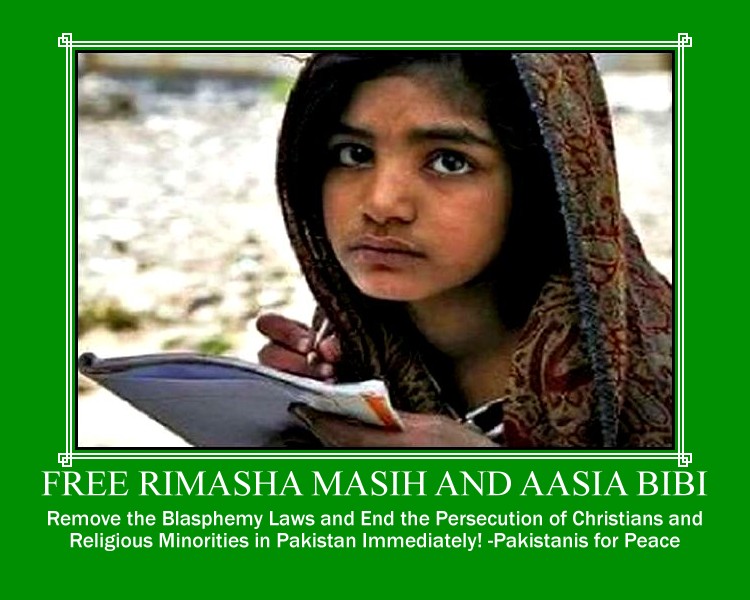
Free Rimsha Masih Now and End The Blasphemy Law Witch Hunts in Pakistan

The latest victim of Pakistan’s blasphemy laws, is an 11 year old girl suffering from Downs Syndrome. Rimshah Masih screamed pitifully as she was brutally snatched from her mother by an angry mob intent on killing her. Burnt religious texts had been mischievously planted in a bag she was carrying. We call on the Pakistani Government to take action to stop the ongoing discrimination, persecution and hatred towards minorities living there. We call on the Britisha Government the EU and the Un to intervene on behalf of this poor child and to bring about her freedom.

To bring an end to hatred towards minority faiths in conservative Pakistan and to defend otherwise helpless victims like Rimsha please sign the petition below: http://www.petitionbuzz.com/petitions/freerimshamasih

This petition will be sent to the Pakistan Government at the highest levels.

“Whilst the Burmese’s treatment of the Rohingya is indeed appalling and deserves condemnation, our minorities are living in their very own Burma right here in Pakistan.

“As the rest of the country goes about its way, having just celebrated another joyous Eid, spare a thought for a little girl with special needs, languishing in a juvenile jail.

“She is probably all alone, and scared. With her condition, she very well might not even know the reason she is in there.

“But ask her neighbours, some who are frothing at the teeth to have a go at her, and they will tell you that she deserves to die.

“Rimsha Masih, an 11-year-old Pakistani girl of the Christian faith, who reportedly suffers from Down Syndrome, was arrested on allegations that she had desecrated the Holy Quran.

“The girl and her mother were severely beaten by an enraged mob that had converged outside their house, while the rest of her family managed to flee. If the police had not intervened, there is no telling what else could have happened….”

Please sign the petition and help free Rimsha and Aasia Bibi and put an end to Pakistan’s Blasphemy Laws.

Pakistan Police Arrest Christian Girl After Angry Neighbors Accuse Her of Burning the Quran

By Munir Ahmed, Zarar Khan and Matthew Lee for The Associated Press

A Christian girl was sent to a Pakistani prison after being accused by her furious Muslim neighbors of burning pages of the Islamic holy book, the Quran, in violation of the country’s strict blasphemy laws.

A police official said Monday there was little evidence that pages of the book had been burned and that the case would likely be dropped. But hundreds of angry neighbors gathered outside the girl’s home last week demanding action in a case raising new concerns about religious extremism in this conservative Muslim country.

Some human rights officials and media reports said the girl was mentally handicapped. Police gave conflicting reports of her age as 11 and 16.

Under Pakistan’s blasphemy laws, anyone found guilty of insulting Islam’s Prophet Muhammad or defiling the holy book, or Quran, can face life in prison or even execution. Critics say the laws are often misused to harass non-Muslims or target individuals.

Police put the girl in jail for 14 days on Thursday after neighbors said they believed a Christian girl had burned pages of a Quran, gathering outside her house in a poor outlying district of Islamabad, said police officer Zabi Ullah. He suggested she was being held for her protection.

“About 500 to 600 people had gathered outside her house in Islamabad and they were very emotional, angry and they might have harmed her if we had not quickly reacted,” Ullah said.

Almost everyone in the girl’s neighborhood insisted she had burned the Quran’s pages, even though police said they had found no evidence of it. One police official, Qasim Niazi, said when the girl was brought to the police station, she had a shopping bag that contained various religious and Arabic-language papers that had been partly burned, but there was no Quran.

Some residents claimed they actually saw burnt pages of Quran — either at the local mosque or at the girl’s house. Few people in Pakistan actually speak or read Arabic, so often assume that anything they see with Arabic script is believed to be from the Quran, sometimes the only Arabic-language book people have seen.

But one police officer familiar with the girl’s case said the matter would likely be dropped once the investigation is completed and the atmosphere is defused, saying there was “nothing much to the case.” He did not want to be identified due to the sensitivity of the case.

A spokesperson for Pakistani President Asif Ali Zardari, Farhatullah Babar, said the president has taken “serious note” of reports of the girl’s arrest and has asked the Interior Ministry to look into the case.

In Washington, State Department spokeswoman Victoria Nuland called the case “deeply disturbing”.

“We urge the government of Pakistan to protect not just its religious minority citizens but also women and girls,” she said.

The Associated Press is withholding the girl’s name; the AP does not generally identify juveniles under 18 who are accused of crimes.

The case demonstrates the deep emotion that suspected blasphemy cases can evoke in a country where religion Many critics say the blasphemy laws are often abused.

“It has been exploited by individuals to settle personal scores, to grab land, to violate the rights of non-Muslims, to basically harass them,” said the head of the Human Rights Commission of Pakistan, Zora Yusuf.

Those convicted of blasphemy can spend years in prison and often face mob justice by extremists when they finally do get out. In July, thousands of people dragged a man accused of desecrating the Quran from a police station in the central city of Bahawalpur, beat him to death and then set his body on fire.

Attempts to revoke or alter the blasphemy laws have been met with violent opposition. Last year, two prominent political figures who spoke out against the laws were killed in attacks that basically ended any attempts at reform.

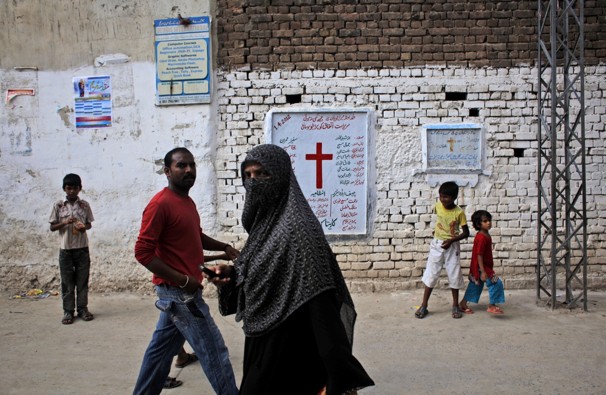
The girl’s jailing terrified her Christian neighbors, many of whom left their homes in fear after the incident. One resident said Muslims used to object to the noise when Christians sang songs during their services. After the girl was accused he said senior members of the Muslim community pressured landlords to evict Christian tenants.

But Muslim residents insisted they treated their neighbors with respect, and said Christians needed to respect Islamic traditions and culture.

“Their priest should tell them that they should respect the call for prayer. They should respect the mosque and the Quran,” said Haji Pervez, one of several Muslims gathered at the local mosque less than 100 yards (meters) from the grey concrete house where the Christian girl lived.

“This is what should have happened. We are standing in the house of God. This incident has happened and it is true. It was not good.”

“Even a 3-year-old, 4-year-old child knows: “This is Muslim. This is Christian. This is our religion,” said shopkeeper Mohammed Ilyas.

Pakistanis for Peace Editor’s Note– The case of this young Christian girl is reminiscent of the case of Aasia Bibi and many other lesser known unfortunate people who have been arrested under Pakistan’s ridiculous blasphemy laws. These laws are draconian and have no place in the country’s judicial system serving only to intimidate Pakistan’s religious minorities and giving the zealots an official tool to harass the country’s Christians, Hindus and other minorities. As we have done before, we call on the government of Pakistan to do the right thing and strike these absurd laws from the books and free the individuals who have been imprisoned under these laws.

The Water Car Fraud

By Pervez Hudbooy for The Express Tribune


Agha Waqar Ahmad deserves a medal from the people of Pakistan for his great service to the nation. In a few short days, he has exposed just how far Pakistan has fallen into the pit of ignorance and self-delusion. No practical joker could have demonstrated more dramatically the true nature of our country’s political leaders, popular TV anchors and famed scientists.

At first, it sounded like a joke: a self-styled engineer, trained in Khairpur’s polytechnic institute, claims to have invented a ‘water kit’ enabling any car to run on water alone. It didn’t matter that the rest of world couldn’t extract energy from water; he had done it. He promised a new Pakistan with limitless energy, no need for petrol or gas, and no more loadshedding. For an energy starved nation, it is a vision of paradise.
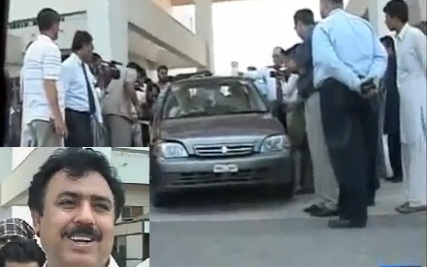
Agha Waqar Ahmad is now a national celebrity thanks to Religious Affairs Minister Khursheed Shah. Federal ministers Mir Hazar Khan Bijarani and

Qamar Zaman Kaira have added their commendations. President Asif Ali Zardari has expressed his delight. The cabinet has met three times to discuss the water vehicle, and a fourth meeting is scheduled. Reports suggest millions may be spent on the ‘water fuel kit project’.
The media has rushed in to celebrate the new national hero. For TV anchor Talat Husain, thanks to Agha Waqar Ahmad’s invention, Pakistan’s image can go from a country ravaged by terrorism to one of boundless possibilities. Anchor Hamid Mir and Senator Parvaiz Rasheed drove around Islamabad sitting next to the inventor, wondering how to protect the man’s life from Western oil companies. Anchor Arshad Sharif was euphoric about the $14 billion Pakistan would save on oil imports.

Pakistan’s most celebrated scientists were not far behind. Asked by Anchor Sharif whether a car could run only on water, nuclear hero Dr Samar Mubarakmand replied without hesitation: “jee haan, bilkul ho sakta hai” (yes, absolutely possible). For his part, Hamid Mir asked Dr AQ Khan if there was any chance of this being a fraud. The response was clear: “Main nay apnay level per investigate kiya hai aur koi fraud waraud nahi kiya hai” (I have investigated the matter and there is no fraud involved). The head of the Pakistan Council of Scientific and Industrial Research, Dr Shaukat Parvaiz, went further: “hum nay bhi iss pay kam karaya tha” (we had some work done on this too).

So, what is the problem? It’s that the laws of physics, in particular a fundamental scientific principle known as the Second Law of Thermodynamics, impose inviolable constraints. Every machine constructed anywhere uses the Second Law. This is something that I learned in my first year as a student at MIT and have taught for 40 years. No serious scientist would dream of challenging the Second Law. Agha Waqar Ahmad’s ‘water kit’, if one believes science to be right, simply cannot work. What the inventor, the ministers, the anchors and scientists claim on TV is wrong.

To his credit, the only person on TV that seemed to know this elementary principle was Dr Attaur Rahman, a chemist and a former HEC chairman. I have not agreed with all his actions and views in the past, but he alone rejected the claims about the new machine. Sadly, he was not able to hold back the tide of a nation desperate for any answer to its energy woes.

The water fraud will be exposed soon enough and, like a bad posterior smell, will go away. A simple experiment will make this happen faster. Here’s how: take an emergency electricity generator, of which there are thousands in Islamabad. Its engine is similar to that in a car. Remove the fuel tank and make sure the ‘water kit’ contains only water. Then ask the inventor to connect it up and run the generator. Let there be enough sharp-eyed witnesses of intelligence and integrity.

But this episode raises bigger questions. Scientific frauds exist in other countries, but what explains their spectacular success in Pakistan? Answer: our leaders are lost in the dark, fumbling desperately for a miracle; our media is chasing spectacle, not truth; and our great scientists care more about being important than about evidence. It is easy for them all to get away with this. As a nation, we have proven unwilling to do the hard work needed to learn to reason, to be sceptical, to demand proof, to understand even basic science. It is easier to believe the world is run by magic and conspiracies, to wish and wait for Aladin’s magic lamp. We live in the age of jahilliya.

Pakistanis for Peace Editor’s Note– No Kidding and well said Professor Hoodboy when you mention in the article that: “Pakistan has fallen into the pit of ignorance and self-delusion” We think so too and may God help us all!

Mango Mania

By Huma Yusuf for The International Herald Tribune

KARACHI — Summers in the city — and across much of Pakistan — are relentless. Temperatures typically hit 100 degrees, power outages drag on for hours, heatstroke is common, and while monsoon rains bring some relief, they bring great ruin through widespread flooding. But there is one thing that makes Pakistanis anticipate the torpid summer months — mangoes.

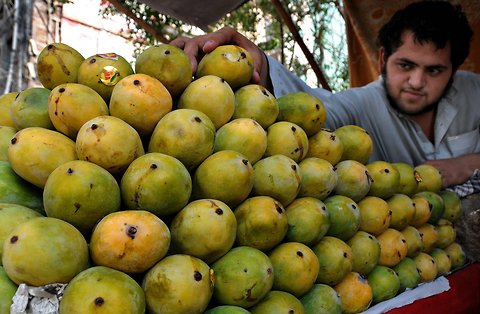
With their golden yellow, blushing pink and pale green hues coloring markets by the cart-full, Pakistani mangoes are a source of national joy and pride. But bad luck — and poor logistics — are now threatening Pakistan’s king of fruits.

The country is the fifth-largest producer and third-largest exporter of mangoes in the world. For as long as I can remember, mangoes have turned oppressive summers into seasons of celebration and amity. Friends and families share crates of the finest mangoes. Rival tribes exchange baskets to resolve arguments. Hotels and restaurants host mango festivals featuring mango puppets or 4-foot-high, mango-shaped cardboard cutouts strung with streamers.

Pakistan’s love affair with the mango is culturally ingrained. Mirza Ghalib, the foremost Urdu-language poet of the Mughal era, was an avid mango eater who measured his health and joie de vivre by the number of mangoes he was able to consume.

Nothing (except perhaps cricket) will stir Pakistani nationalism more than the suggestion that another country’s mangoes could taste half as good as Pakistan’s. The only point of contention is which of the country’s hundreds of mango varieties is the most delicious: chaunsa, langara, sindhri, anwar ratol? (My vote goes to the subtle and aromatic anwar ratol.)

Last summer, Pakistani growers were thrilled at the prospect of countries beyond Asia finally enjoying their mangoes. Not only did the British retailer Asda start stocking Pakistani mangoes, but the first-ever shipment of Pakistani mangoes arrived in the United States in July 2011 after USAID helped Pakistan to meet U.S. standards of pest control and post-harvest management. New exports to Western markets were expected to be a boon to local farmers.

But this summer’s crop has not met expectations — some mango varieties ripened too late in the season, others are too small or are lacking in taste or texture. Pakistan is now likely to fail to meet its mango export target of 150,000 tons by September, instead managing to export only 100,000 tons.

This is partly because of last year’s monsoon and subsequent flooding, which reduced mango productivity by 30 percent. According to some estimates, up to a quarter of all mango farms in the southern province of Sindh were completely washed out.

But a big part of the shortfall is due to poor logistical planning: containers needed to ship mangoes are in short supply; Pakistan International Airlines does not appear to have the proper infrastructure to make shipments; international shipping companies have transported mangoes to the wrong destination or failed to secure the fruit against damage or theft en route; a cumbersome distribution system has caused Pakistan to lose out in the Asian mango market to China and India. Meanwhile, U.N. sanctions against trade with Iran have also caused a loss of $10 million to Pakistan’s mango growers, who previously exported up to 40 percent of their crop to the neighboring country.

All this bodes poorly for the future. Meagre profits — or in some cases, losses — from exports, coupled with last year’s widespread damage to mango farms, could compromise future yields. This would be nothing less than tragic, especially given that a worsening economic and security situation means that there are ever fewer things for Pakistanis to enjoy.

I, for one, am not taking any chances. This summer, I’m scarfing down mangoes at every opportunity. But my real hope is that the Pakistani mango’s reign endures for many years to come.

Huma Yusuf is a columnist for the Pakistani newspaper Dawn and was the 2010-11 Pakistan Scholar at the Woodrow Wilson International Center for Scholars in Washington.

Pakistan Should Open Itself Up to India

By Aakar Patel for Firstpost

India and Pakistan have a reciprocal relationship. If one does something to the other, send back a spying diplomat for instance, the other imitates this and also sends one back. One country’s visa regime mirrors the other’s. We would rather harm ourselves by an act that is imitative than let the other side get away.

The world sees this behaviour as childish, perhaps rightly.

India acted maturely in opening up trade unilaterally a few years ago. This is why the shelves of Thom’s Cafe and Bakery, where I shop for groceries in Bangalore, are filled with Shan Masala boxes.

Now an opportunity exists for Pakistan to take the lead.

Islamabad should open up its borders and give Indian tourists visas on arrival. The same conditions under which Indians are allowed into Sri Lanka and Nepal and Bhutan. A quick stamp on the passport and that’s it.

Vast crowds of Indians will come to Pakistan.

Sikhs on pilgrimage to Nankana Sahib and to see Ranjit Singh’s masoleum (totally empty when I went there 10 years ago) next to Lahore fort.

Hindus who want to see the Indus, after which their country is named, and their faith. Muslims and Hindus who want to visit Pak Pattan, Data Saheb, and the shrines of Rukn-e-Alam and Bahauddin Zakariya.

Pakistanis will be amazed by how many Hindus worship at Muslim shrines. Punjabis will come and see the cities of Lahore and Pindi, of which they have only heard about from their grandparents. India’s wealthy Sindhi community will come to Sukkur, Hyderabad and Karachi.

Three Muslim communities – Memons, Bohras and Khojas – have their headquarters in India. They have family ties to Karachi and also business interests that will benefit from regular visits.

Deoband and Nadwa scholars can exchange views with Pakistan’s ulema.

The package tour business, which is big in India, will bring in large numbers who might see a Pakistan different from the one in their imagination. College and school excursions, which are also big in India, will find new venues to take their students to.

Bollywood will be interested in new settings to shoot, and access to the cities will open up plot-lines.

As an intelligent piece in The Friday Times a few years ago noted, Indian tourists will blend in, dress modestly, not expect too much, be at home with the food and do shopping on a healthy scale.

The exchange rate of the Pakistani Rupee, whose value is a little over half that of the Indian Rupee, will give them a bigger budget than they have at home.

The Hindu middle class, especially Bengali and Gujarati, are adventurous travellers and will not be easily put off by a couple of bomb blasts as westerners will. Because Indian women are not secluded, whole families will come, especially if non-airplane routes such as road and rail are opened. Pakistanis will not be threatened by middle aged Indian men and women with squealing kids about them.

It will not be possible, given the mischief in Mumbai and in Parliament, for India to freely let Pakistanis enter. So reciprocality must not be expected immediately. But that shouldn’t be seen as a problem.

Pakistan has already accepted a break in the tit-for-tat relationship. Pakistan’s cricket team is likely to play in India while there’s no chance that India’s players will come to Pakistan. No other cricketing nation is willing either and so it’s not about Indian obstinacy in this case. Just the circumstances, which can be altered by a little wisdom.

It’s a profitable opportunity for Pakistan to benefit economically, improve its image as a safe place and normalise relations with India. Three things gained while nothing is lost.

Pakistan should open itself up to Indians without waiting for reciprocity. And it should do this in self interest.

Pakistan and India to Resume Cricket Matches

By Michele Langevine Leiby for The Washington Post

Whatever their differences, Pakistanis and Indians love their cricket. Their armies might fight wars and their governments may deeply mistrust each other, but sports fans and politicians in both countries see a diplomatic bright spot: a series of matches this year between the historical rivals.

The Board of Control for Cricket in India announced last week that the country would resume matches with Pakistan for the first time in five years. They will be the first bilateral games between the countries since the 2008 Mumbai attacks, which India says were launched by Pakistani terrorists who have been protected from prosecution by Pakistan’s government.

Although dates and the venue are still being worked out, the prospect of a renewed sporting rivalry has stirred optimism for rapprochement in both capitals.

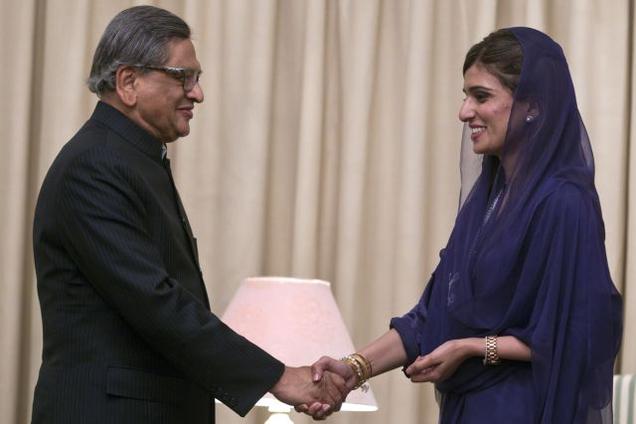
“I think this will be further cementing the bilateral relationship, which is improving by the day,” Indian Foreign Minister S.M. Krishna said. Krishna is planning a visit to Islamabad in September.

Pakistan’s president, Asif Ali Zardari, wrote a letter to Indian Prime Minister Manmohan Singh expressing hope that reviving cricket matches would improve trust between the two nations, the newspaper Dawn reported.

Pakistani cricket-star-turned-politician Imran Khan also weighed in. “Anything which can bring both the countries to negotiations and normalcy is very good, and we must appreciate that,” he said.

Khan, who is running for prime minister, captained the Pakistan cricket team to its 1992 World Cup championship.

Young Pakistanis and Indians — aided by social media and unhampered by the long and contentious history — have found other ways to interact. Facebook pages such as “Romancing the Border” offer a forum for college students from both sides to learn about each other.

But online messaging and cricket diplomacy may not have much impact on a fundamentally hostile relationship; India and Pakistan fought three wars and remain locked in conflict over control of Kashmir. Their militaries are faced off on the disputed Siachen Glacier, described as the world’s highest battleground, where more men are lost due to the brutal conditions than to actual combat. In April, an avalanche at the entry to the glacier buried dozens of Pakistanis, most of them soldiers.

Religion Journal: For Ramadan, India Goes it Alone

By Joanna Sugden for The Wall Street Journal

Muslims start the month-long daytime fast of Ramadan Friday. But not in India.

While most of the world’s Muslims look to Saudi Arabia or follow astronomical calculations to determine when the new moon of the ninth lunar month has arrived – marking the start of Ramadan – India follows the declaration of its own Central Moon Sighting Committee.

“Geographical differences mean we are a day behind Saudi Arabia in terms of lunar months, so we are expecting to start on Saturday,” says Syed Tariq Bukhari, a member of the committee and general secretary of the advisory council at Old Delhi’s Jama Masjid, one of the country’s most important mosques.

At sunset Friday, the 29th day of the eighth lunar month, 21 senior leaders from Delhi’s mosques will meet to decide whether the new moon has been sighted. In the Muslim calendar, months are either 29 or 30 days long.

“It is very difficult to spot a new moon, particularly on the 29th day of the month because it appears for a very short time and is a very thin sliver,” Mr. Bukhari said, adding that the best time to spot a new moon is half an hour before sunset.

“If naturally we are not able to see it because it’s cloudy then we coordinate with the other committees of other cities who have similar geographic circumstances,” Mr. Bukhari said.

The committee then waits for a Shahadah or Islamic witness who has seen the new moon. “The appearance of the witness should be according to Sharia law, which means having a beard and his neighbors should know him as a dependable person as far as being a witness is concerned,” Mr. Bukhari added.

If no credible Islamic witness comes forward, the committee waits until between 80 and 90 other witness statements on sightings are collected by moon sighting committees across the country. Then it declares the start of Ramadan.

If the moon isn’t sighted at all in the last days of the lunar month, the committee waits until the first day of the ninth lunar month – which this year is on Sunday – to declare that Ramadan has begun. It announces the start of the fast via the media, to the government and over loud speakers from mosques.

Zasarul Islam Khan, president of the All India Muslim Majlis-e-Mushawarat, an umbrella body for Muslim organizations, says the timing of Ramadan should always be based on local sightings of the moon.

“Outside the Subcontinent they are following Saudi Arabia, which is technically wrong. The scholars say that you should wait to see the new moon physically before starting Ramadan,” he told India Real Time.

Mosques in the southern Indian state of Kerala go by Saudi Arabian timings because they have close links with the Middle East, according to Mr. Bukhari. Those in the northern state of Jammu and Kashmir go by Pakistan’s declaration as they are more geographically in line with the country, he adds.

The Fiqh Council of North America, which rules on matters of Islamic jurisprudence, says Muslims should follow precise astrological calculations to decide the start of the fast.

In sunlight hours during Ramadan, Muslims refrain from food, water, sex, smoking and oral medicine in order to bring desire under self-control and to focus on prayer and Allah.

This year, the fast coincides with the London Olympics, so Muslim athletes will have to decide whether to observe it and risk a dent in their performance or exempt themselves and carry out the fast once they finish the competition.

Maher Abu Rmeileh, a Palestinian Judo champion who is competing at the Games, told the BBC that he would not be observing Ramadan this year. “Scholars recommended me not to fast and said that I represented my nation not just myself, so once I return from the games I will have to make up for it,” he said.

Such a clash only happens once every 44 years and the International Olympic Committee has said it will look into the possibility of avoiding such a conflict in future, once London 2012 is over.

People exempt from fasting include pregnant women, children who haven’t reached puberty, menstruating women, breast-feeding women, the elderly, travelers and the chronically ill.

Mr. Khan said those who are sick or elderly are allowed to give to charity instead of fasting. If they are determined to observe Ramadan, they should consult their doctor, he added.

Joanna Sugden is freelance journalist living in Delhi. Before coming to India in 2011 she spent four-and-a-half years as a reporter at The Times of London, covering religion and education. You can follow her on Twitter @jhsugden.