Posts Tagged ‘ Pakistan ’

Taliban Storm Pakistani Prison: Nearly 400 Freed

By Zulfiqar Ali and Alex Rodriguez for The Los Angeles Times

Pakistani Taliban militants stormed a prison in northwest Pakistan early Sunday and freed 390 prisoners, including 20 militants, local officials said.

The attack occurred about 2:30 a.m. at a prison in Bannu. The town is considered the gateway to North Waziristan, a tribal region along the Afghan border that has long been a stronghold for Taliban insurgents and several other militant groups.

Local police officials said as many as 200 Taliban militants drove up in pickups, lobbing hand grenades to break through the jail’s main gate.

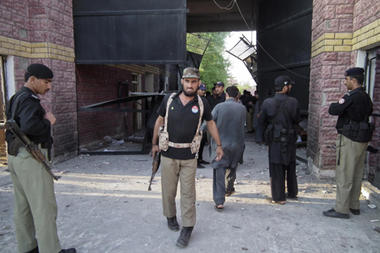
Once inside, a two-hour firefight broke out between the attackers and roughly 30 jail guards. The militants began freeing prisoners after the guards ran out of ammunition, officials said. No one was seriously injured or killed in the attack.

One of the prisoners freed was Adnan Rashid, on death row for an assassination attempt on former Pakistani leader Pervez Musharraf when the general was president, police said.

Officials said the jail’s 944 prisoners, including some militant commanders, recently had been moved to the Bannu jail after authorities received intelligence that Taliban militants might be planning major raids on detention centers holding insurgents.

In recent years, Pakistan has sent more than 140,000 troops to battle the Pakistani Taliban across much of the tribal region along the Afghan border. The army has retaken large stretches of territory, but the militants still cling to pockets of resistance throughout the tribal belt and continue to carry out periodic attacks on a variety of targets, including military checkpoints, mosques and markets.

Like the Afghan Taliban, the Pakistani movement is made up of factions united by the goal of toppling the government and imposing Sharia, or Islamic law. It maintains links with Al Qaeda, the Afghan Taliban and other Pakistani militant groups ensconced in Pakistan’s tribal belt.

Authorities in Islamabad, the capital, have blamed the Pakistani Taliban for some of the country’s worst terrorist attacks, including the assassination of former Prime Minister Benazir Bhutto in December 2007.

Baisakhi Festival: Sikhs Pray For World Peace, Porous Borders

By Maha Mussadaq for The Express Tribune

Tears gushed down Supreet Kaur’s face as she stared at the shrine of Punja Sahib and prayed for less stringent border controls so she can visit Hassan Abdal every year for Baisakhi. The three-day festival ended on Friday.

Wiping her tears with her veil Kaur said that her ‘mannat’ — a prayer that she hopes will be answered by visiting the shrine this year — is that people around the world live as one and all borders become porous. “I want the world to live in harmony and peace. So far all my prayers have come true and I am sure this one will as well”

Supreet was not the only one to wish for easier access to the shrine. Thousands of pilgrims who came for Baisakhi prayed for a change in visa policy for Sikhs so that they are able to visit the shrine any time of the year. Some pilgrims complained about acquiring a letter of invitation from either family or friends in Pakistan for their visa.

Rajpal Singh said that it was unfortunate that many Sikhs could not visit Pakistan because of the restrictions. “Both governments should devise a verification system so that Sikhs can cross the border for religious rituals. Even a permit would be fine,” Rajpal added. “I want these restrictions to come to an end so we can visit other shrines in Pakistan, such as Baba Buleh Shah’s,” Supreet said.

Baisakhi is an annual event which holds a very special place in the lives of Sikhs. The day marks the beginning of the new solar year. It also marks the formation of Khalsa (the pure one). Sikhs believe that it was on this day in 1699 when the tenth Sikh Guru, Gobind Singh declared all human beings as equal.

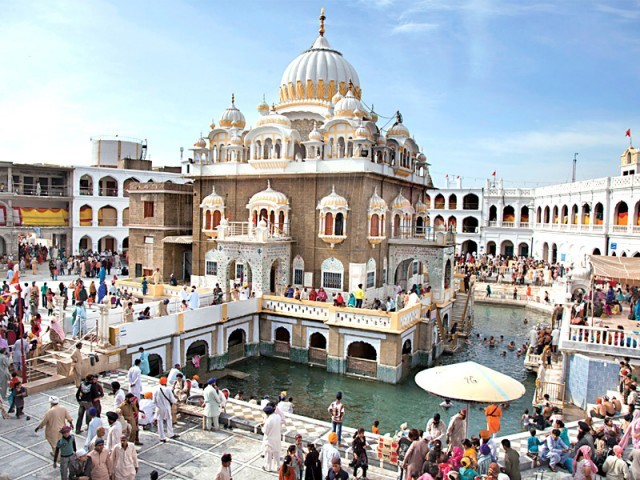
On Baisakhi, traditions of Gurus were compiled by Sikhs. Guru Granth Sahib was established as their eternal guide and the holy book. Punja Sahib is one of the three holiest shrines for Sikhs because of a large rock bearing an imprint of Guru Nanak’s hand or punja, founder of the Sikh religion. Sikhs swim across the stream, making a wish as they touch the imprint.

Security

Due to security fears, Sikhs could not leave Punja Sahib without permission. Some 3,000 Rangers had been deployed by the Punjab government in and around the premises.

Arrangements

Approximately 8,000 Sikhs came to Punja Sahib this year for the annual Baisakhi festival. Singh said that he was extremely satisfied with the arrangements and was happy to see the hospitality of the Pakistani government. However, Major Singh, 67, said both governments should improve facilities offered to pilgrims, including operational bathrooms and lights in trains.

Thousands of pilgrims were accommodated inside the gurdawara like every year. A huge portion of Punja Sahib is still under construction but most pilgrims were satisfied with the rooms provided.

Approximately, 2,300 Sikhs travelling from India have been accommodated in more than 400 rooms in Punja Sahib. Paramjeet Singh laughingly said just sleeping under a shade at Punja Sahib is more relaxing than any other place in the world. “It’s not about my physical needs; I am spiritually satisfied.”

Business opportunities
A large number of men and women had set up their stalls at the back of the gurdwara. Hindu vendor, Inder Kaur had come from Sindh to sell jewellery made in Mumbai. He said merchants make approximately Rs25,000 in three days. “I love shopping here because they sell items such as clothes or even bindia that we do not get in Pakistan,” said Kalvinder Kaur, who was buying bangles from Inder.

Pakistani Parliament Approves Proposals on US Ties

As Reported By The Associated Press

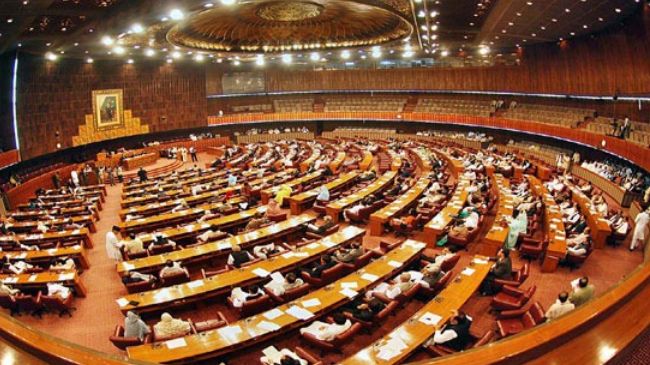
Pakistan’s parliament on Thursday unanimously approved new guidelines for the country in its troubled relationship with the United States, a decision that could pave the way for the reopening of supply lines to NATO troops in neighboring Afghanistan.

The guidelines allow for the blockade on U.S. and NATO supplies to be lifted, but also call for an immediate end to American drone strikes against militants on Pakistani soil.

However, the lawmakers did not make a halt in the CIA-led missile attacks a prerequisite to reopening the supply lines, as some lawmakers had been demanding. The government and the army will use the recommendations as the basis for re-engaging with Washington.

Ties between the U.S. and Pakistan all but collapsed in November after U.S. airstrikes inadvertently killed 24 Pakistani soldiers on the Afghan border, after which Islamabad blocked the supply lines in protest. Washington wants the relationship back on track.

The U.S. State Department expressed respect for the Pakistani parliament’s decision. “We respect the seriousness with which parliament’s review of U.S.-Pakistan relations has been conducted,” said State Department spokeswoman Victoria Nuland. “We seek a relationship with Pakistan that is enduring, strategic, and more clearly defined. We look forward to discussing these policy recommendations with the Government of Pakistan and continuing to engage with it on our shared interests.”

About 30 percent of supplies used by NATO and U.S. troops in landlocked Afghanistan are transported through Pakistan. Washington also needs Islamabad’s cooperation to negotiate an end to the Afghan war because many insurgent leaders are based on Pakistani soil.

The drones are a source of popular outrage in the country and have fueled anti-U.S. sentiment, although Pakistan’s powerful army has tacitly aided the missile attacks in the past, weakening Islamabad’s official stance that they are a violation of sovereignty.

Washington has ignored previous entreaties by the parliament to end the strikes, and is seen as unlikely to change its policy now.

Despite calls by Islamists for a permanent supply line blockade, few inside the Pakistani government or the army believed this was desirable, given that Pakistan relies on the U.S. and other NATO countries for its economic survival and diplomatic and military support.

Soon after the deadly airstrikes on the border, the Pakistani government called on parliament to draw up new guidelines for Islamabad’s relations with the U.S. The government’s move was widely seen as way to give it political cover for reopening the routes.

The national security committee presented a first set of proposals last month but opposition parties riding a wave of anti-American sentiment rejected them, seemingly unwilling to share any fallout ahead of elections this year or early next.

But on Thursday the opposition voted with government lawmakers to approve a revised set of guidelines, which differed little from the original ones. Opposition lawmakers didn’t explain why they had dropped earlier objections, but they could have come under pressure from the army or extracted other, unrelated concessions from the government.

The guidelines call for NATO and the U.S. to pay Pakistan more for the right to ship supplies across its soil and stipulate that no arms or ammunitions be transported. Western forces have only ever trucked fuel and other nonfatal supplies across Pakistan because of the risk they could fall into the hands of insurgents.

“We believe that the world has heard the voice of the people of Pakistan,” Prime Minister Yousuf Raza Gilani told parliament. “I would like to assure the house that our government will implement the recommendations that have been made in both letter and spirit.” Gilani did not say when the supply lines would reopen.

Western officials have said Pakistan would come under intense criticism if routes remained blocked during a NATO conference in Chicago on May 20-21 where more than 50 heads of state will discuss progress on ending the war.

Washington’s public line has been that it is waiting for the parliament to finish its review before calling for Pakistan to reopen the routes. It has refused to apologize for the border incident in November, and last week put a $10 million bounty on the head of a militant leader believed close to Pakistan’s security forces.

Behind the scenes, however, negotiations have been going on between the U.S. and Pakistan over the supply line issue and drone strikes. It was unclear whether there has been any new agreement on the strikes, which Washington believes are key to keeping al-Qaida on its back foot.

U.S. officials had said they had offered Pakistan notice about impending strikes and new limits on which militants are being targeted. For most of the Afghan war, 90 percent of the supplies came through Pakistan, but NATO has increased its reliance on an alternate, so-called “northern” route, through Central Asia in recent years.

Increased use of the northern route has removed some of the leverage Islamabad had over the West, but at a cost to the coalition.

Pentagon officials now say it costs about $17,000 per container to go through the north, compared with about $7,000 per container to go through Pakistan.

More than 120 Pakistani Soldiers Lie Dead in the Snow for Nothing

By Mohammed Hanif for The Guardian

Two months before President Asif Zardari’s unexpected visit to India, a newly formed political alliance, the Council to Defend Pakistan, unveiled its slogan. “What is our relationship with India?” it asked. And then in a rickety Urdu rhyme it answered: of hatred, of revenge.

The council is an alliance between recovering jihadists, some one-person political parties and the kind of sectarian organisations whose declared aim is that Pakistan cannot fulfil its destiny until every single Shia has been killed or expelled from the country.

The council is not likely to have much impact on Pakistan’s electoral politics, but it is a clear reminder that there are strong forces within the country, which want a return to the days when India was Pakistan’s enemy No 1. Back then all you had to do to malign a Pakistani politician was to somehow prove that they were soft on India. Things have changed. When President Zardari went to India, his bitter political enemy and the opposition leader Nawaz Sharif welcomed the visit.

President Zardari’s visit on the one hand was a reminder that India is right next door. If you plan carefully, you can do a day trip, have lunch, visit a shrine and make the correct, polite noises that visitors make about their future intentions.

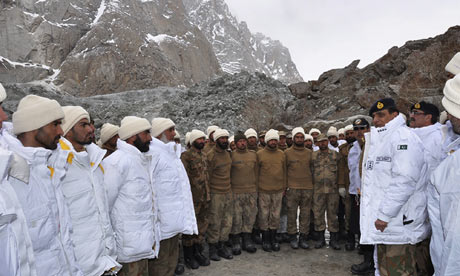
But the president’s visit was also set against a reminder that India and Pakistan have raised their animosity to a brutal art form. As the president’s plane landed in Delhi, rescue workers were trying to reach the Siachen glacier, where more than 120 Pakistani soldiers had been buried after an avalanche obliterated their military post. Siachen is often proclaimed the world’s highest battlefront – as if it’s a Guinness world record and not a monument to our mutual stupidity. As I write this, not a single survivor or body has been found. India offered help in rescue efforts. Pakistan politely declined, because that would compromise its military posts.

President Zardari’s visit was billed as a private one, but the pageantry surrounding it was state-visit like, complete with dozens of cameras broadcasting empty skies where the presidential plane was about to appear. And, of course, the media had scooped the menu for the state lunch a day in advance.

Did the visit achieve anything? An 80-year-old Pakistani prisoner in an Indian jail was released on bail. The leaders’ sons and probable heirs – Bilawal Bhutto Zardari and Rahul Gandhi – got to hang out.

There are peaceniks on both sides who have held endless candlelit vigils on the borders. They would like the borders to melt away, for all of us to come together in a giant hug and live happily ever after just like we did in a mythical past when we were all either little Gandhis or sufis and got along fine. There is another minority on both sides that would like us to live permanently in the nightmare that was partition. There are Pakistani groups who want to raise the green flag over the Red Fort in Delhi, and there are Indian hawks who go to sleep thinking of new ways to teach this pesky little country a lesson. But the vast majority – and given the size of population and ethnic diversity, that majority is really vast – would just be happy with cheaper onions from across the border.

There is another kind of coming together: Pakistani writers and artists can attend both Indian and Pakistani literary festivals and art expos, and although it’s great that they can peddle their wares to a curious audience, the rest of the population are denied that privilege. A Punjabi farmer, for example, can’t sell his often perishable produce in India, a couple of hours away, but is forced to transport it a thousand miles to southern Pakistan. If India and Pakistan could take tiny steps which weren’t just meant for the rulers and cultural tourists, it might make some difference. For instance, if there were only a couple of thousand Pakistani and Indian students studying in each others’ countries, the appetite for a war rhetoric might wane. At the moment it can’t happen because the security establishment fear infiltration. The same establishment forget that infiltrators usually don’t apply for a visa, and no suspects so far have been to an IT school in Bangalore or an arts college in Lahore.

I mention education because one in 10 children who doesn’t go to school lives in Pakistan. One in three children in the world who is malnourished lives in India. And these countries insist on sending young men to a frontline where there is no war, where there is nothing to fight over, and where 4,000 soldiers have died, mostly because it’s just too cold. Tens of thousands return with serious mental ailments because it’s so lonely and depressing. Twenty three years ago a withdrawal agreement had been agreed upon, but according to Indian defence analyst Srikant Rao, the then Indian prime minister Rajiv Gandhi backed out because withdrawing troops wouldn’t look very good in pictures. Well, troops buried under miles of snow don’t look very good either.

If India and Pakistan can’t leave each other alone, they should at least leave those mountains alone.

Pakistan Leader’s India Visit Hailed For Its Symbolism

By Mark Magnier for The Los Angeles Times

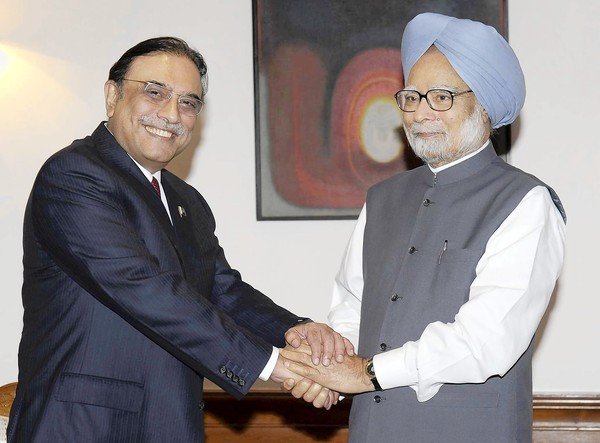
Pakistan’s president arrived in India on Sunday, the first official visit one leader of the wary neighbors has paid to the other nation in seven years. No breakthroughs were announced, but both sides hailed the meeting as a sign of easing tensions along one of the world’s most dangerous borders.

Spinmeisters on both sides worked overtime to lower public expectations of the “private” trip that saw Pakistani President Asif Ali Zardari and Indian Prime Minister Manmohan Singh discuss the 2008 terrorist attack on the Indian city of Mumbai, modest if expanding trade links, the disputed territory of Kashmir and efforts to bring various militants to justice.

The Pakistani president then visited a famous Muslim shrine for Sufi saint Moinuddin Chishti, offering a $1-million contribution.

“I am very satisfied with the outcome of this visit,” Singh said. “The relations between India and Pakistan should become normal — that is our common desire.”

The rapid-fire luncheon and shrine visit weren’t enough to overturn long-standing distrust between the nuclear neighbors, however, as summed up in a headline in India’s Mail Today tabloid newspaper: “Eat, Pray, No Love.”

The meeting is part of an apparent effort to follow the diplomatic model in place between India and China, which fought a war in 1962 over their disputed border: Put aside the most nettlesome issues for the time being and focus on building investment and trade links that benefit both sides.

This year, India and Pakistan approved a most-favored-nation agreement, lowering taxes that impede trade. Although India had offered this benefit to Pakistan in 1996, it wasn’t reciprocated until recently. Official two-way trade of about $2.6 billion is heavily weighted in India’s favor.

Sunday’s one-day visit was heavy on symbolism if not on substance. Zardari invited Singh for a reciprocal visit to Pakistan, which the Indian leader accepted, although no date was set. Zardari’s 23-year-old son, Bilawal, invited ruling Congress Party General Secretary Rahul Gandhi to Pakistan, which was also accepted, again with no date set.

On other fronts, both sides agreed in principle to ease visa restrictions. India offered its assistance in the wake of this weekend’s massive avalanche in the Siachen Glacier area, which buried about 130 people on the Pakistani-controlled side of the border in disputed Kashmir. And both sides did lots of glad-handing for the cameras.

“We had fruitful bilateral talks,” Zardari said. We “hope to meet on Pakistani soil very soon.”

But any bid to bring to justice those who planned the 2008 Mumbai attack that killed at least 166 people was sidestepped. India has long blamed Pakistani-based groups for plotting the attack.

Last week, Washington offered a $10-million reward for information leading to the capture of one Pakistani militant leader, Hafiz Muhammad Saeed, who enjoys widespread support in Pakistan.

Analysts on both sides of the divide welcomed the gradual thaw even as they acknowledged its slow pace. That no date was set for a return visit, and that Congress Party head Sonia Gandhi — characterized by some as India’s real leader behind the scenes — didn’t meet Zardari or attend the lunch, suggests the Indian government is wary of getting too far ahead of public opinion, some observers said.

“There have been some useful steps forward,” said B. Raman, director of Chennai’s Institute for Topical Studies and a former Indian intelligence officer on the Pakistan desk. “But the government has taken a cautious line.”

The fact that Zardari, 56, made the trip at all suggests that Pakistan’s military realizes improved relations are in its interest, added Talat Masood, an analyst and retired Pakistani general.

“They’re overstretched, realize the economy’s in a shambles and that you can’t have a genuine defense without a good economy,” Masood said. “It’s very sad in a way, that the process has been held hostage to jihadi groups and hard-rightists on both sides.”

Singh, 79, heading a weak government beset by corruption scandals, has pushed for improved ties with Pakistan in a bid to secure a legacy, analysts on both sides said. “Prime Minister Singh realizes he’s only going to be there a few more months,” said Masood. “He wants to do something positive so he’s remembered.”

Haley’s Comment

As Reported By Robert Walker for The Huffington Post

Like a comet streaking across the heavens, Governor Nikki Haley’s comment on The View about women not caring about contraception is drawing a lot of attention. And rightly so.

Poll after poll suggests that women do care about contraception. Case in point: Mitt Romney’s plan to shut down the family planning clinics run by Planned Parenthood has cost him dearly. His support among women has dropped precipitously in the past few months as voters learn more about his views on family planning.

When Haley and other Republican leaders opine about the lack of voter interest in contraception, it’s more wishful thinking than political insight. They recognize that the positions taken by the GOP presidential aspirants on family planning may help them in the primaries, but it will undoubtedly hurt them in the general election. As a result, they want to change the subject in the worst way.

Unfortunately for them, comments like those made by Governor Haley do nothing to shift voter attention to the issues they want to talk about, like deficits and the economy. To the contrary, they reinforce the idea that Republicans are tone-deaf on women’s issues.

Haley’s comment, in particular, appears to suggest that Republican leaders, even women like her, don’t care about a women’s access to contraception. Before making her claim, maybe she should have checked in with another Republican leader, Senator Olympia Snowe, who earlier this week said that the political attacks on contraception were “retro.”

What’s even more “retro,” however, is the unspoken half of Haley’s comment. By suggesting that women don’t really care about contraception, she’s suggesting that men could care even less. So much less that it’s not even worth discussing.

Polls, of course, suggest to the contrary. While men may feel less strongly than women do, they also care about contraception. Most men recognize that they also benefit when women are able to determine the number and timing of their pregnancies. Some men may want to keep women “barefoot and pregnant,” but it’s a pretty small minority. This is, after all, the 21st century.

As governor of South Carolina, Nikki Haley ought to appreciate the critical need for family planning services. Nearly half of all pregnancies in the United States are unintended. According to the Guttmacher Institute, South Carolina’s rate of unintended pregnancy is significantly higher than the national average. In 2006, 52,000 South Carolina residents had an unintended pregnancy, a rate of 58 per 1,000 women aged 15 to 44. Guttmacher report that births resulting from these unintended pregnancies cost the state and federal governments $254 million in 2006.

And South Carolina’s teenage pregnancy rate, while it’s been declining in recent years, is still about 25 percent higher than the national average according to the Centers for Disease Control.

A poll released earlier this year indicated that 95 percent of South Carolinians believe that teenage pregnancy is an important issue, with 85 percent supporting school-based sexuality education. Maybe, Governor Haley should go on a listening tour in South Carolina before declaring that women don’t care about contraception.

Many regard Governor Haley as a rising political star in the political firmament. She’s frequently mentioned as a possible vice presidential selection. Given Romney’s “gender gap,” adding a woman to the ticket might be a smart move, but, maybe he should find a woman who understands how women — and men — genuinely feel about contraception.

Governor Haley’s comment, like the famed Halley’s comet, will soon fade from public view, but the issue of contraception will not fade anytime soon. The war on contraception is real. State cutbacks, like those in Texas, are forcing family-planning clinics to close their doors, and if GOP leaders succeed in their efforts to eliminate Title X, the federal program that provides low-income women with improved access to family planning, more shutdowns will inevitably occur.

That’s why it’s so critically important that women — and men — pledge to speak out in support of reproductive health and rights. Don’t let the Governor Haleys of the world speak for you.

Pakistanis for Peace Editor’s Note– We profiled Governor Nikki Haley a few days before she was elected as the first Indian born female governor as well as minority woman governor of a US state and wished her well here. However, her party and ideals diametrically are opposed to ours as Democratic voters in the US elections as many Pakistani Americans now are. Thus, some of her ideas and beliefs are not necessarily our own, but we still wish her well as she is a fellow Desi~

Why President Zardari’s Visit Is A Small Bonus

By Soutik Biswas for The BBC

Hope is not a policy, but neither is despair, as South Asia expert Stephen Cohen says in a recent essay on Pakistan.

So it is with relations between India and Pakistan.

The past few days have shown how fragile the relationship can be – even as India welcomed President Asif Ali Zardari’s private trip to India on Sunday – the first by a Pakistani head of state for seven years – and PM Manmohan Singh invited him for lunch, the $10m US bounty for Hafiz Saeed, the founder of Pakistan-based militant group Lashkar-e-Taiba, provoked the cleric to openly launch a fresh attack against India (and the US).

But people live in hope, so Indian media is gung-ho about Mr Zardari’s visit.

They say the Pakistani president must be applauded for trying to end trade discrimination against India, easing petroleum imports from across the border, and moving towards a liberal visa deal.

“Under Mr Zardari’s watch, India and Pakistan are considering a sweeping agenda for economic co-operation for the first time in decades. The prime minister has every reason to welcome Mr Zardari warmly and consider the next steps in consolidating the unexpected movement in bilateral relations,” the Indian Express wrote.

Analyst C Raja Mohan believes Mr Singh must make an official trip to Pakistan after his meeting with Mr Zardari. “For his part,” he wrote, “Mr Singh should convey to Mr Zardari his readiness to move as fast and as far as the Pakistan president is willing to go.” Others like Jyoti Malhotra actually find Mr Zardari’s visit to the shrine of a famous Sufi Muslim saint in Rajasthan loaded with symbolism in these troubled times. “Clearly, Mr Zardari has stolen an imaginative moment from the bitter-sullen history of India-Pakistan, by asking to come to pay his respects to a cherished and much-beloved saint across the Indian subcontinent,” she wrote.

The relations between two neighbours remain complex. A 2010 Pew survey found 53% of the respondents in Pakistan chose India as the greater threat to their country, and only 26% chose the Taliban and al-Qaeda. At the same time 72% said it was important to improve relations with India, and about 75% wanted more trade relations and talks with India.

Pundits like Mr Cohen believe that it will “take the [Pakistan] army’s compliance, strong political leadership, and resolutely independent-minded foreign ministers to secure any significant shift of approach towards India”.

None of this appears to be in much evidence at the moment.

Both countries have seriously weakened governments that makes them unable to move towards any radical confidence building measures. In the current circumstances, President Zardari’s visit can only be a small bonus. And as scholars like Kanti Bajpai suggest, India must remain patient (even if faced with another Mumbai-style attack), continue to engage with Islamabad, help the civilian government in Pakistan politically, try to resolve a few outstanding disputes like Siachen and Sir Creek, build a relationship with the army and explore the possibility of cooperating with Islamabad on the future of Afghanistan. Despair does not help mend a stormy relationship.

Pakistani militant taunts US: ‘I will be in Lahore tomorrow’

By Sebastian Abbot for The Associated Press

One of Pakistan’s most notorious extremists mocked the United States during a defiant media conference close to the country’s military headquarters Wednesday, a day after the US slapped a $10 million bounty on him.

“I am here, I am visible. America should give that reward money to me,” said Hafiz Mohammad Saeed, referring to the fact that the bounty was given to a man whose whereabouts are not a mystery. “I will be in Lahore tomorrow. America can contact me whenever it wants to.”

Analysts have said Pakistan is unlikely to arrest Saeed, founder of the militant group Lashkar-e-Taiba, because of his alleged links with the country’s intelligence agency and the political danger of doing Washington’s bidding in a country where anti-American sentiment is rampant.

Saeed, 61, has been accused of orchestrating the 2008 attacks in the Indian city of Mumbai that killed 166 people, including six American citizens. But he operates openly in Pakistan, giving public speeches and appearing on TV talk shows.

He has used his high-profile status in recent months to lead a protest movement against US drone strikes and the resumption of NATO supplies for troops in Afghanistan sent through Pakistan. The supplies were suspended in November in retaliation for American airstrikes that accidentally killed 24 Pakistani soldiers.

Hours before Saeed spoke, US Deputy Secretary of State Thomas Nides met Pakistani Foreign Minister Hina Rabbani Khar in the nearby capital, Islamabad, for talks about rebuilding the two nation’s relationship. In a brief statement, Nides did not mention the bounty offer but reaffirmed America’s commitment to “work through” the challenges bedeviling ties.

Increasingly ‘brazen’ appearances
The US said Tuesday it issued the bounty for information leading to Saeed’s arrest and conviction in response to his increasingly “brazen” appearances. It also offered up to $2 million for Lashkar-e-Taiba’s deputy leader, Hafiz Abdul Rahman Makki, who is Saeed’s brother-in-law.

The rewards marked a shift in the long-standing US calculation that going after the leadership of an organization used as a proxy by the Pakistani military against archenemy India would cause too much friction with the Pakistani government.

This shift has occurred as the US-Pakistani relationship steadily deteriorated over the last year, and as the perception of Lashkar-e-Taiba’s potential threat to the West increased.

Bounty backfire?
The US may be hoping the bounty will force Pakistan to curb Saeed’s activities, even if it isn’t willing to arrest him. But the press conference he called at a hotel in the garrison city of Rawalpindi on Wednesday was an indication that is unlikely, and the bounty may even help him by boosting his visibility.

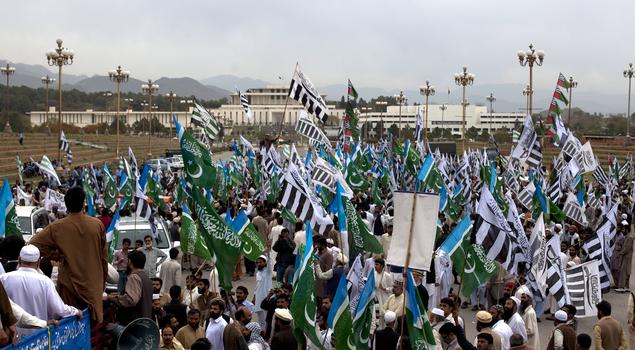
At the hotel, located near the Pakistani army’s main base and only a half hour drive from the US Embassy in Islamabad, Saeed was flanked by more than a dozen right-wing politicians and hardline Islamists who make up the leadership of the Difa-e-Pakistan, or Defense of Pakistan, Council. The group has held a series of large demonstrations against the US and India in recent months.

Some in the media have speculated the movement has the tacit support of the Pakistani military, possibly to put pressure on Washington.

“I want to tell America we will continue our peaceful struggle,” said Saeed. “Life and death is in the hands of God, not in the hands of America.”

Denies involvement in Mumbai massacre
He denied involvement in the Mumbai attacks and said he had been exonerated by Pakistani courts.

Pakistan kept Saeed under house arrest for several months after the attacks but released him after he challenged his detention in court. It has also resisted Indian demands to do more, saying there isn’t sufficient evidence.

The bounty offers could complicate US efforts to get the NATO supply line reopened. Pakistan’s parliament is currently debating a revised framework for ties with the US that Washington hopes will get supplies moving again. But the bounties could be seen by lawmakers and the country’s powerful army as a provocation and an attempt to gain favor with India.

Origins in the Kashmir dispute
Saeed founded Lashkar-e-Taiba in the 1980s allegedly with ISI support to pressure India over the disputed territory of Kashmir. The two countries have fought three major wars since they were carved out of the British empire in 1947, two of them over Kashmir.

Pakistan banned the group in 2002 under US pressure, but it operates with relative freedom under the name of its social welfare wing Jamaat-ud-Dawwa — even doing charity work using government money.

The US has designated both groups foreign terrorist organizations. Intelligence officials and terrorism experts say Lashkar-e-Taiba has expanded its focus beyond India in recent years and has plotted attacks in Europe and Australia. Some have called it “the next Al Qaeda” and fear it could set its sights on the US

* Associated Press writer Asif Shahzad contributed to this report from Islamabad.

Ornate, but not lavish: Another bin Laden home located in Pakistan

By Kathy Gannon for The Associated Press
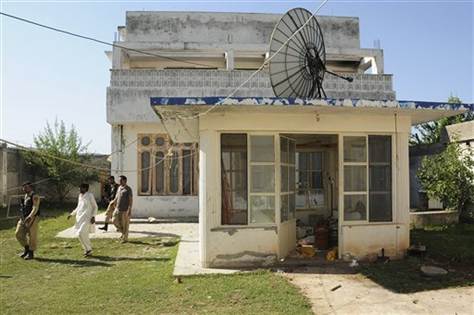
It’s an ornate but not lavish two-story house tucked away at the end of a mud clogged street. This is where Pakistan’s intelligence agency believes Osama bin Laden lived for nearly a year until he moved into the villa in which he was eventually killed.

The residence in the frontier town of Haripur was one of five safe houses used by the slain Al Qaeda leader while on the run in Pakistan according to information revealed by his youngest wife, who has been detained.

Retired Pakistani Brig. Shaukat Qadir, who has spent the last eight months tracking bin Laden’s movements, told The Associated Press that he was taken to the Haripur house last November by intelligence agents who located it from a description they got from Amal Ahmed Abdel-Fatah al-Sada.

Al-Sada, a 30-year-old Yemeni, has been in Pakistani custody since May 2 when US Navy SEALs overran the Abbottabad compound, killing bin Laden and four other people inside. Since then, Pakistan’s intelligence agency, known as the ISI, has been trying to uncover the trail that brought him to Abbottabad villa in the summer of 2005.

The best information appears to have come from al-Sada, who was believed to be his favorite and who traveled with bin Laden since his escape from Afghanistan’s eastern Tora Bora mountain range in 2001.

Qadir, a 35-year army veteran who is now a security consultant, was given rare access to transcripts of Pakistani intelligence’s interrogation of al-Sada and access to other documents on bin-Laden’s movements. He provided the AP with details in a recent interview.

The details of bin Laden’s life as a fugitive — which were first published by the Pakistani newspaper Dawn — raise fresh questions over how bin Laden was able to remain undetected for so long in Pakistan after the Sept. 11, 2001 attacks, despite being the subject of a massive international manhunt.

Yet a senior US official, who is familiar with the contents recovered in bin Laden’s Abbottabad house, said there was no evidence that Pakistani officials were aware of bin Laden’s presence. “There was no smoking gun. We didn’t find anything,” he said on condition of anonymity because he was not authorized to speak about the contents of the Abbottabad house

According to the interrogation report, bin Laden lived in five safe houses and fathered four children — the two youngest born in a public hospital in Abbotabad. But investigators have only located the houses in Abbottabad and Haripur.

Al-Sada’s descriptions of the homes have been vague and the Haripur house was found only after a series of hits and misses.

She knew only that it was located on the edge of Haripur, it was two stories and it had a basement. It apparently was used by bin Laden while he waited for construction crews to finish his new home Abbottabad, a garrison town just 20 miles away.

Investigators scoured the area looking for properties until they found the Haripur house in Naseem Town, a chaotic suburb where relatively affluent houses bump up against sun-baked mud huts that belong to nomadic Afghans.

Like the CIA, the Pakistani agency also tracked the movements of bin Laden’s Pakistani courier who used the pseudonym Abu Ahmed al-Kuwaiti and his brother. The two were ethnic Pashtuns from Pakistan’s Khyber Pukhtunkhwa province on the border with Afghanistan. They were bin Laden’s front men.

The ISI discovered that the Haripur house, like the land on which bin Laden’s Abbottabad villa was built, was rented by two Pashtun brothers claiming to be from Charsadda, a Pashtun dominated town about 80 miles away.

The AP located the Haripur house that Qadir said ISI agents had taken him to last November and found the real estate broker, Pir Mohammed, who rented the four-bedroom house to the two brothers, Salim and Javed Khan from Charsadda, for $150 a month.

At the time Pir Mohammed ran a small real estate firm called Mashallah. He said his meeting with the brothers was random.

“They must have seen my sign and come in,” Mohammed said, adding that he had met the brothers only three times — when they signed the contract, when they moved into the house, and when they moved out 11 months later.

Two months ago several ISI agents took all the records of the house and its tenants since its construction in 2000, said Qasi Anis Rahman, the brother of the widow who owns the house.

“All they said was that it was for ‘security purposes,'” said Rahman.

Al-Sada is currently in Pakistani custody, along with bin Laden’s two other wives and several children. They were arrested after the raid. The US Navy SEALs shot al-Sada in the leg during the operation.

Mohammed Amir Khalil, a lawyer for the three widows, said the women would be formally charged for illegally staying in Pakistan on April 2. That charge carries a maximum five-year prison sentence.
Pakistan’s Deputy Attorney General Works Off Taliban’s Sins at Gurdwaras and Shrines

By Rakhi Chakrabarty for Aman Ki Asha

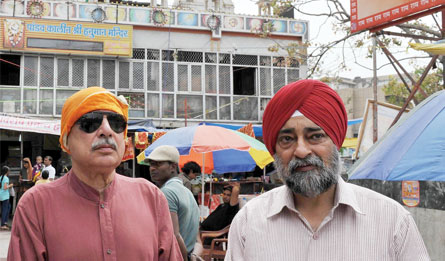
A man in a maroon kurta sits hunched on the floor on Sunday afternoon,polishing the shoes of devotees at a room in Delhi’s Gurdwara Rakabganj.
It’s a common sight in gurdwaras, except that this man is Pakistan’s deputy attorney general, Muhammad Khurshid Khan, who had requested he be allowed to perform seva (community service) at the shrine.

Khan, 62, is an eminent lawyer and a devout Muslim from Pakistan’s Peshawar province. He was recently in Delhi for a judicial conference. “I have been very keen to visit various places of worship here to promote harmony between India and Pakistan,” says Khan.
Khan’s tryst with temples and gurdwaras began in 2010 to “heal the wounds of minorities in Pakistan by becoming their sevadar (performer of service)”.

For him, it was a “penance” for crimes committed by the Taliban. In February that year, the Taliban had kidnapped three Sikhs from Peshawar and demanded a $235,000 ransom. Pakistan army rescued two of them, but the third, Jaspal Singh, was beheaded by the captors. It was after the killing, that Khan first performed service at a gurdwara in Peshawar. “I seek harmony among all religions,” says Khan, citing Pakistan’s pluralistic heritage.

“I am a Muslim, not a terrorist; I am a Khan, not a terrorist; I am from Pakistan, but not a terrorist.” This is Pakistani deputy attorney general Muhammad Khurshid Khan’s humble submission as he visits gurdwaras across New Delhi and performs seva (community service).
The Taliban, he says, has plundered Pakistan’s pluralistic heritage. “But I want to tell the world it’s unfair to tarnish a whole community for the sins of a few,” says the Pakhtoon who ran for Pakistan’s National Assembly twice.

In Delhi for a conference (along with some 200 members of the Supreme Court Bar Association of Pakistan), Khan, accompanied by Surinder Singh, a Delhi-based businessman whose father was a comrade of Subhas Chandra Bose, polished shoes at Gurdwara Sisganj and visited Birla Temple and Hanuman Mandir.

Khan told TOI that he turned to other faiths after the Taliban beheaded Jaspal Singh in Peshawar in February 2010. “When I visited the house of Jaspal, I was filled with remorse.” The killing weighed on his conscience.

He was perturbed that violence in the name of Islam brought a bad name not only to Muslims and Pakistan but also to his people, the Pakhtoons.
The next day, he went to Gurdwara Bhai Joga Singh in Peshawar and sat on the steps. He could hear the chants wafting out of the shrine. “I felt peace,” he says.The lawyer started reading about Guru Nanak and approached a member of the gurdwara management committee to allow him the opportunity for seva. After discussions, the gurdwara management committee allowed to perform seva.

“For two months, I went to the gurdwara daily before the maghrib azaan (call to prayer at sunset) and polished shoes of devotees. Sevadari is ibaadat (worship),” he says.In Delhi, Khan also went to Jantar Mantar in the hope of meeting Anna. He sent his visiting card and waited for close to an hour but could not meet Anna. But he left the place “charmed”. “It is amazing. This is democracy,” he said.
On his way back to Pakistan, he will visit the Golden Temple at Amritsar for the ‘Jora Ghar Seva (polishing shoes of devotees). He had written to PM Manmohan Singh last year to allow him a chance to perform seva at Amritsar.

“I am yet to get a reply,” he said.He has performed similar service at Hindu temples and joins church prayers every Sunday in Pakistan. “I live in a rigid society. But the ulema have never criticised me. The Hadees says anything good must be spread all around,” said Khan.
His gesture has been appreciated by Muslims and as well as religious minorities in Pakistan.

U.S. and Pakistan Take Step to Mend Relations

By Salman Masood and Declan Walsh for The New York Times

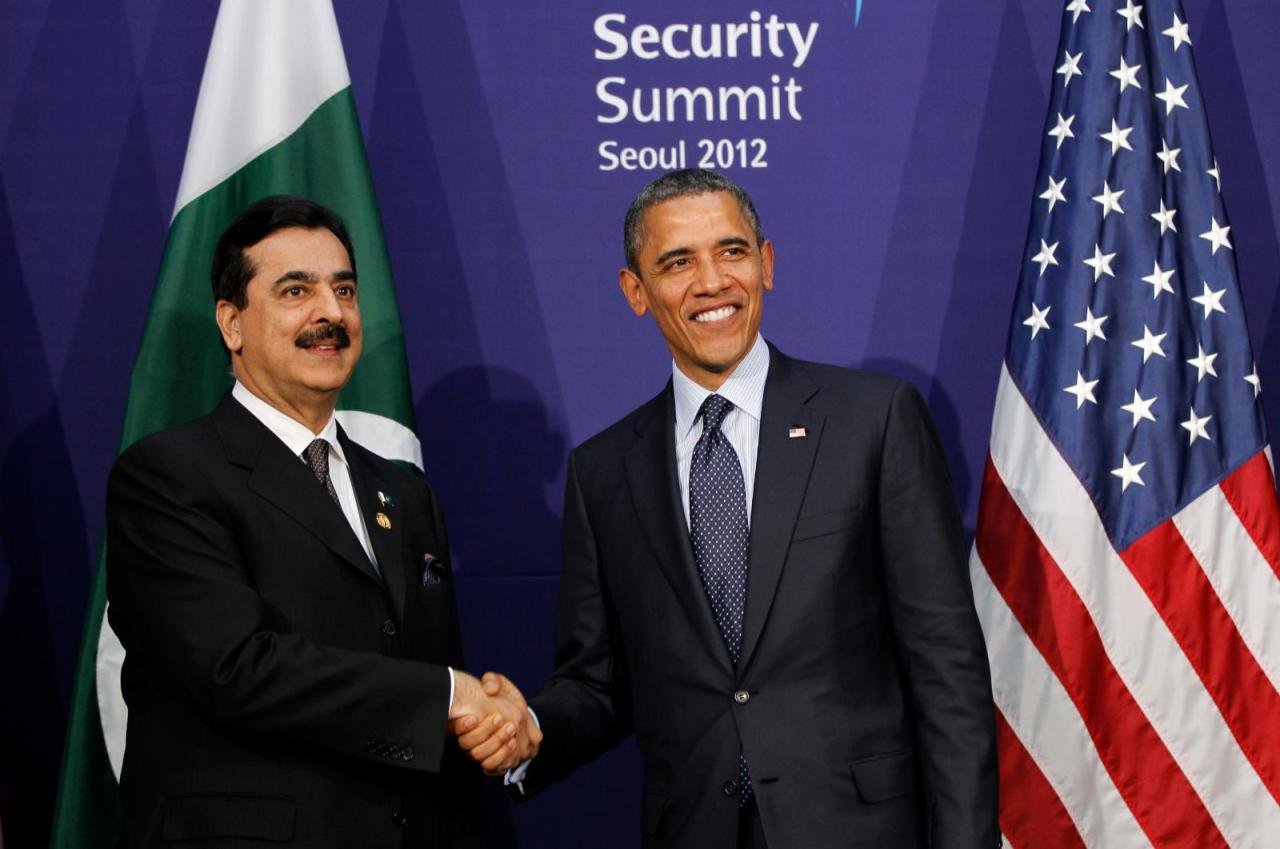
President Obama took a symbolic step toward improving ties with Pakistan on Tuesday when he met with Prime Minister Yousaf Raza Gilani on the sidelines of a nuclear summit meeting in South Korea.

But even as the two leaders made polite, if freighted, comments about improved cooperation, harsh debate in Pakistan’s Parliament on Tuesday made clear that there may be very little political upside for any Pakistani warming toward Washington.

Speaking in Seoul, President Obama acknowledged “strains” in the relationship and voiced his support for a parliamentary review process in Pakistan that aims to get the relationship back on its feet. “I think it’s important for us to get it right,” he said at a joint news conference.

But Mr. Obama added that Pakistan must also respect pressing American security concerns centered on “national security and our needs to battle terrorists who have targeted us in the past.”

Mr. Gilani replied that he would help work with Mr. Obama “to have all the peace, prosperity and progress of the whole world.”

Relations between the two countries plunged steeply after the American commando raid that killed Osama bin Laden last May, then worsened further after American warplanes fired airstrikes that killed 24 Pakistani soldiers along the border with Afghanistan in November.

The border strikes caused Pakistan to close NATO supply routes into Afghanistan and expel American officials from a remote air based used by the C.I.A. to launch drone strikes against militants from Al Qaeda and the Taliban in the northwestern Pakistani tribal belt. More recently, a Pakistani parliamentary committee on national security demanded an end to drone strikes and an unconditional American apology for the airstrikes.

In Islamabad on Tuesday, Parliament was supposed to start a long-awaited debate that would pave the way toward re-engaging diplomatically with the United States. But the opposition stalled the debate, with some lawmakers expressing fury at news reports that the government had already promised to reopen the NATO supply lines.

Ayaz Amir, an influential lawmaker with the opposition Pakistan Muslim League-N party, questioned why Pakistan even bothered blocking the supply routes if it was assumed they would start right back up again. “We are fooling ourselves, and we are also fooling the Pakistani people,” he said.

The most scathing criticism came from Maulana Fazalur Rehman, an influential religious politician, who warned that if the government failed to win broad political backing for its review of American ties, he would take his protests onto the streets.

“We will not let such a decision to be implemented in the field,” he said.

Mr. Rehman asserted that given urgent efforts by the Americans to start negotiations with the Taliban in Afghanistan, American weapons transported through NATO supply lines could ultimately be turned back on Pakistan, earning loud applause from fellow lawmakers. And he asked how the government intended to bring covert American operations in Pakistan under the law of the land.

Raza Rabbani, a senior government lawmaker, responded that the parliamentary committee’s recommendations on American policy were “broad policy guidelines” and not a final decision.

The session was adjourned until Wednesday evening, when the formal debate is due to begin. Meanwhile, outside Parliament, a newly formed alliance of religious parties and extremist groups, the Defense of Pakistan Council, held a large street rally against the reopening of the supply routes.

“If Parliament compromises on the security and sovereignty of the country, then we cannot guarantee the security of the lawmakers,” said Maulana Sami ul-Haq, head of the alliance, as hundreds of protesters chanted anti-American slogans.

A touch of Inspiration Runs Both Ways as Sean Penn Visits Shrine and Edhi Home

By Saba Imtiaz for The Express Tribune

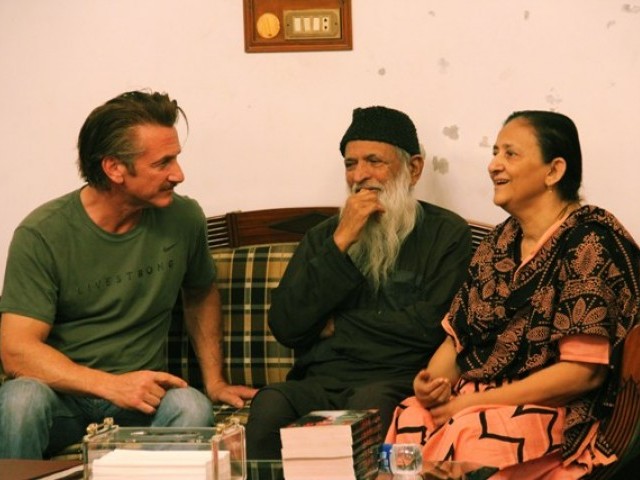
In a t-shirt, jeans and sneakers, the rather unassuming actor Sean Penn stepped out of his car to meet Pakistan’s iconic humanitarian worker Abdul Sattar Edhi and his wife, Bilquis Edhi, at their home for children on Saturday morning.

While the Academy Award-winning star of Dead Man Walking is instantly recognisable to film buffs, the Edhis were unaware of who their visitor was.
Penn, who was accompanied by US Consul General William J Martin and a slew of consular staff, told Edhi that it was a “great honour” to meet him. “Your name is brought up with reverential appreciation,” Penn said. In return, the Edhis were told about Penn’s philanthropic efforts to help the survivors of the earthquake in Haiti in 2010.

Penn toured the Bilquis Edhi Female Child Home in Clifton, dipping into classrooms where Montessori students sang the nursery rhyme ‘Are you Sleeping, Brother John?’ eliciting smiles from him and Martin. The school at the home has 250 students and offers classes till Matric or tenth grade.

“What are they working on?” he asked Ali Edhi, who was showing him around the eighth graders in the computer lab. “Word, PowerPoint, Excel,” a teacher responded. Penn was also told about the number of Edhi centres nationwide and how the organisation is open for ‘everyone – regardless of faith, class, identity.’

As the aroma of food being prepared for lunch wafted in from the kitchen, Penn stepped into a separate room to chat with the Edhis. Bilquis later told the media that Penn said he had wanted to meet them, and there had been no talk of donations or offers of help. “We get enough from Pakistanis, we do not take money from abroad,” Bilquis said. She said Penn had told them that he was happy to be there and that Pakistan was not as bad as people had made it out to be.

Consul General Martin explained: “On the Pakistan Day weekend, we brought Penn to meet Edhi, a great Pakistani who can inspire us all with his big heart and generosity.”

Penn’s first visit to Pakistan included travel to Badin and Karachi and he was expected to leave on Saturday. Before arriving at the Edhi centre, he also visited the nearby Abdullah Shah Ghazi shrine where he paid his respects.

Say Hello! to Pakistan’s Glamour Side

As Reported by The Associated Press

Pakistan is better known for bombs than bombshells, militant compounds than opulent estates. A few enterprising Pakistanis hope to alter that perception with the launch of a local version of the well-known celebrity magazine Hello!.

They plan to profile Pakistan’s rich and famous: the dashing cricket players, voluptuous Bollywood stars and powerful politicians who dominate conversation in the country’s ritziest private clubs and lowliest tea stalls. They also hope to discover musicians, fashion designers and other new talents who have yet to become household names.

“The side of Pakistan that is projected time and time again is negative,” said Zahraa Saifullah, CEO of Hello! Pakistan. “There is a glamorous side of Pakistan, and we want to tap into that.”

But celebrating the lives of Pakistan’s most prosperous citizens is not without its critics in a country where much of the population lives in poverty. Advertising one’s prosperity could be risky as well since kidnappings for ransom are on the rise and attracting attention from Islamist militants can mean death.

Wajahat Khan, a consulting editor at Hello! Pakistan, said they were cognizant of the sensitivity of publishing a glamour magazine in a conservative Muslim country where many people are struggling and planned to be “socially responsible and culturally aware.”

“We are trying to be happy in a war zone,” Khan said Saturday at a news conference with Saifullah and other members of the magazine’s editorial staff. “We are trying to celebrate what is still alive in a difficult country.”

Khan said they would do everything they could to protect the security of the people they profile, but he wasn’t overly concerned.

“I don’t think terrorist networks are going to be reading Hello! anytime soon,” he said.

Pakistan already has a series of local publications that chronicle the lives of the wellheeled in major cities like Islamabad, Lahore and Karachi, especially as they hop between lavish parties. But the producers of Hello! Pakistan hope the magazine’s international brand and greater depth will attract followers.

Hello! was launched in 1988 by the publisher of Spain’s Hola! magazine and is now published in 150 countries. It’s well-known for its extensive coverage of Britain’s royal family and once paid $14 million in a joint deal with People magazine for exclusive pictures of Brad Pitt and Angelina Jolie’s newborn twins.

The market for English-language publications in Pakistan is fairly small. Most monthly and weekly magazines sell no more than 3,000 copies, said Khan, the consulting editor. But they hope to tap into the large Pakistani expatriate markets in the United Kingdom and the Middle East as well.

Hello! Pakistan will be published once a month and will cost about $5.50, twice as much as what many poor Pakistanis earn in a day. The first issue will be published in mid-April and will focus on the Pakistani fashion scene.

Saifullah, who grew up watching her mother and grandmother read Hello! as she hopped between London and Karachi, said it took her two years to convince the magazine to publish a local version in Pakistan.

“They were concerned about whether Pakistan was ready for a magazine like this,” she said.

But Saifullah thinks the timing is perfect to showcase Pakistan’s too often hidden treasures, citing Sharmeen Obaid-Chinoy, who recently became the first Pakistani filmmaker to win an Oscar for a documentary about the plight of female victims of acid attacks in the country.

“We want to tap into the aesthetically beautiful, the athletic, the fashionable,” said Saifullah. “There is so much going on on a daily basis that nobody ever covers. It’s totally unexplored.”

Pakistanis for Peace Editor’s Note– Pakistan is much more than bombings, extremism, and terror. The launch of this magazine in Pakistan not only helps illustrate to the outside world of a modern 21st century Pakistan but also stands as a bulwark to the Talibanization of Pakistan by the extremists.

Pakistani Panel Demands End to US Drone Attacks, Apology for NATO Air Strike

As Reported By The Voice Of America

A Pakistani parliamentary committee — tasked with laying out new terms of engagement with the United States and NATO — on Tuesday demanded an end to U.S. drone strikes and an apology from Washington for a NATO strike last year that mistakenly killed 24 Pakistani troops.

The report, read to a joint session of both houses of parliament by committee chairman Mian Raza Rabbani, calls on the United States to review its activities and cease all drone attacks inside Pakistan.

Rabbani said that “drone strikes are counterproductive, cause loss of valuable lives and property, radicalize the local population, create support for terrorists and fuel anti-American sentiments.”

U.S. lawmakers, however, are rejecting those calls. Independent Senator Joe Lieberman told VOA the drone strikes are critically important to America’s national security, adding he does not believe they should stop.

Democratic Senator Dianne Feinstein, chairwoman of the Senate Intelligence Committee, said the drones are needed due to the lack of a more aggressive effort by Pakistan to root out terrorists and radical militants along its border with Afghanistan.

Republican Senator Lindsey Graham said that although sovereignty is a big issue for any country, he would like to see Pakistan embrace the idea that extremism has no welcome home in Pakistan. He said drone strikes have been effective and that, in his words, “it is not in Pakistan’s long-term interest to be seen by the world-at-large as a safe haven for terrorists.”

Rabbani also demanded an unconditional U.S. apology for the NATO airstrike in November that killed the 24 Pakistani soldiers. He said “the condemnable and unprovoked NATO/ISAF attack” represents “a breach of international law and constitutes a blatant violation of Pakistan’s sovereignty and territorial integrity.”

Washington has expressed regret for the loss of life and accepted partial responsibility for the airstrike, but has so far refused to apologize, saying NATO forces acted in self-defense.

Pakistani lawmakers are expected to eventually approve the panel’s recommendations. But, ultimately, Pakistan’s government and powerful army have the final say in the U.S.-Pakistani relationship.

U.S. State Department spokeswoman Victoria Nuland Tuesday said she would not comment on the issue until the process is completed.
Pakistani Foreign Minister Hina Rabbani Khar told reporters outside of Parliament that Pakistan needs to balance good diplomatic relations with its own interests.

Pakistan Salute Record-Setting Tendulkar’s Achievement

As Reported by The AFP

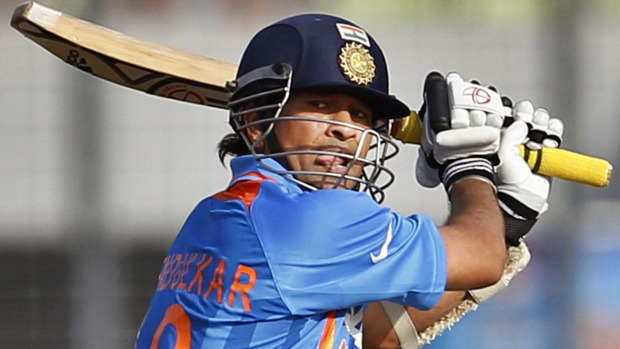
Former cricketing greats and fans in Pakistan paid tribute to Indian batting superstar Sachin Tendulkar after he became the first player ever to score 100 international centuries.

“It is a great achievement which other players of his era and those who come after him will not even think of achieving,” said former Pakistan captain Javed Miandad.

“When he played against us in 1989 he showed glimpses of what was in store for world cricket and the kind of sincerity he has shown with the game has only made him immortal and prolonged his career to 23 years and he can still go on.”

Miandad hailed the father of two, known variously as the “Little Master” or “Bombay Blaster“, as a role model for the cricketing world.

Another former Pakistan captain Moin Khan, who played against Tendulkar from 1992-2004, also joined the chorus of praise.

“He has achieved something which will be tough to match. He has been a trend–setter and if players emulate him we will get more great players.

“Tendulkar’s speciality is that he is very professional, loves the game and lusts for runs. With no controversy in his career he has been a role model for future cricketers,” said Moin.

“Great players are not those who do great achievements but those who, with their great character on and off the field, become role models.”

Fans in the street also acknowledged Tendulkar’s feat.

“Tendulkar is adored in Pakistan and we are happy at his achievement. We are happy that he has not hit his 100th hundred against Pakistan,” said Babar Khan, a local resident