Posts Tagged ‘ Pakistan ’

The Pornification of New India

By Damayanti Datta for India Today

On February 7, three Karnataka ministers were captured on television poring over a phone screen, watching a woman in a petticoat gyrating wildly. They lost their jobs for watching pornography in the sacred precincts of the Legislative Assembly. The incident is a high-profile sample of a definitive reality: porn is pervasive through the Internet across India, easily and freely available, not just to leery politicians but to children and adults in millions of ordinary homes.

It is a sign of the times that the most famous international porn star has Indian roots and was on Indian television. Sunny Leone, 30, appeared on the reality show Big Boss 5 and has now launched a clothes-on Bollywood career. Her fake breasts, that won the 2010 fame Award for Favourite Breasts in Los Angeles, have brought her the honour of being named among the 50 Most Desirable Women by the nation’s biggest daily this month.

The organised $12 billion (Rs.60,000 crore) American adult entertainment industry, to which Leone belongs, has bred explicit images beyond the limits of imagination. And they are free. Fuelled by the Internet and facilitated by high-speed data service, pornography, born in dozens of studio lofts around the world, has entered teenagers’ mobile phones with the force and sweep of a dangerous flood. It threatens to swamp conventional notions of morality, raise tensions in bedrooms, lure children into a world they do not understand, and initiate a culture that threatens the mores of family life as we know it.

The writing is on the wall. Google Trends show the search volume index for the word ‘porn’ has doubled in India between 2010 and 2012. With instant Net connectivity and flexible payment options, online porn is increasingly affordable, accessible and acceptable. Seven Indian cities are among the top 10 in the world on porn search, reports Google Trends, 2011. One out of five mobile users in India wants adult content on his 3G-enabled phone, according to an 2011 IMRB Survey. Over 47 per cent students discuss porn every day, says a public school survey by Max Hospital in Delhi. Porn tops the list of cyber crimes in India, according to the National Crime Records Bureau.

Rape, penetration, oral, anal, lesbian, gay or group porn are yesterday’s news. There is now a hectic crossover of porn subcultures on the World Wide Web. Consider MILF (or Mothers I Like to F***) porn. “Check out the most notorious hot, mature moms going crazy and getting f****d by young studs,” invites one of the 40,600,000 MILF websites. “A hot and sexy bride is getting raped brutally,” says a ‘ravished bride’ porn site. There is ‘pregnant porn’ (“Are you ready to see these moms-to-be in action?). There is ‘incest porn’ that welcomes you to sites with “xxx videos full of mother and son, dad and daughter”. Child porn blends with ‘teen porn’, promising “fascinating porn actions starring our young models”.

New jargon and innovative formats, borrowed from foreign cultures, are trendy on the web. For the uninitiated, chikan (“to grope” in Japanese) porn is all about public molestation in trains. ‘Bukkake’ parties involve repeated ejaculation on a woman by several men. Shemale and futanari porn mean “live action” with transsexuals. Anime and manga refer to Japanese formats of sexually-explicit comics and animation. A new focus is the service sector, with “shy massage girls” seducing clients, doctors and “hot babes in nurse uniforms” getting wild. In ‘corporate porn’ “busty secretaries” go down on their knees to pleasure their boss.

Sunny Leone (or Karen Malhotra) takes credit for the ‘pornification’ of India. “My presence on Bigg Boss has empowered a lot of people to be open about their sexuality,” she tells India Today. One of the richest adult actresses in the industry, with her SunLust Pictures in Los Angeles reporting a top line of over $1 million (Rs.5 crore), she is now getting ready to debut in filmmaker Mahesh Bhatt’s Jism 2, playing a professional body double. The most-searched Google celebrity-powered by India, Bangladesh and Pakistan-she has 1,47,326 Twitter followers.

Leone’s success indicates the greater acceptability of porn in daily life. Internet is the new tool, exploding every embarrassing sexual adventure of public personalities and making every lurid detail an item of private consumption. Coming after the midwife Bhanwri Devi’s sex cds with Rajasthan politician Mahipal Maderna in November 2011, public reaction to the Karnataka fiasco has ranged from indignation to amusement, but not shock: if political parties engaged in a morality-in-politics war, social activist Anna Hazare demanded the ministers be sent to jail and media professional Pritish Nandy summed up Bollywood’s reaction by calling them the “3 idiots”.

“A porn star doesn’t automatically mean prostitute,” says Leone, now seeking respectability. She talks about her parents’ initial shock turning into respect, how they taught her to be a “good person”, years of hard work, restrained personal life, professionalism and lack of regrets. Like the girl-next-door, she tweets how she is learning Hindi, cooking sabzi and massaging hair oil. Her endeavour will not be too difficult. Young adults, who grew up with cable TV, DVD players and the Internet, have been exposed to much more adult material than their parents. As filmmaker Pooja Bhatt points out, “Young people don’t respond negatively to Sunny because they have already logged on to her website.”

She is not wrong. Even school students discuss porn. Dr Samir Parikh, chief psychiatrist, Max Healthcare, calls it “risky indulgences”. In a survey on 1,000 children from top public schools in Delhi in 2010, he found 47 per cent boys and 29 per cent girls visiting porn sites and talking about it in school. “I understand sexual inquisitiveness and peer pressure around sexuality, but pornography on the Internet is fake, unreal, often violent and downright perverted,” he says. “Moreover, a new technology in young hands could lead to irresponsible behaviour and ruin their lives.” He obviously has in mind the stream of MMS scandals that have hit campuses across the country since 2004, when two Class XI students of a school in Delhi created a sensation. In many of these cases, either one partner was not aware of being filmed or did not anticipate the videos would get circulated-as in May 2011 when JNU student Janardan Kumar, 22, made a video of the girl he was intimate with and used it to blackmail her after being rejected.

Campus porn is a thriving subterranean culture. Try talking to students in various campuses of Delhi: “Have you ever heard of MMS videos of students being circulated on the campus?”

Diksha Singh, 20: “Every couple of months there is a fresh case. It’s so common, I don’t even blink.”

Raghav Verma, 19: “All the time. It’s shocking to see a classmate’s intimate details on video camera.”

Mehak Suri, 18: “My ex-boyfriend tried that with me, and when it didn’t work he sent me threatening emails and messages.”

Amaira Kapoor, 20: “You will be surprised to know how many cases go unreported and unaccounted for.”

Sakshi Wakhlu, 21: “A year ago, one girl got high, went with a group of boys and had sex with them. The men came back and talked.”

The arrival of smartphones is changing the country’s porn landscape further. India has the lowest penetration of smartphones, 10 per cent, among the youth globally. But with email, social networking, chatting, messaging and gaming, it is a device every youth craves for. And now there are even porn applications. Imagine a ‘pocket’ girlfriend or boyfriend, who can strip, talk dirty, make sexual noises. “These are some of the ‘apps’ that can be downloaded on smartphones,” says Pranesh Prakash, programme manager with Bangalore-based think-tank Centre for Internet and Society. “App download data shows the popularity of sex-themed apps on smartphones, apart from the adults-only stores,” he says. Age restrictions for applications? Mostly a pop-up asking if one is over 17. With over 50 per cent of all Internet users in the country accessing the web via mobile phones already, as estimated by TRAI, smartphones are the future of anytime-anywhere porn.

The threshold of what can be called ‘pornography’ is shifting. Mainstream and hardcore entertainment are coming closer. The Dirty Picture, biopic of south siren Silk Smitha, raked in Rs.50 crore in its very first week in December 2011, with its noisy orgasms, titillating cleavage and fiery dialogues. It’s also hard to draw the line between porn and art in raunchy item numbers, from Sheila ki Jawani to Munni Badnam Hui. “What heroines do in films today is what vamps did yesterday,” says filmmaker Mahesh Bhatt. Some item numbers are more obscene than nudity, he feels. “People tell me, how can someone who made Saaransh, Arth and Zakhm, make films like Jism and Murder” he adds. “I say, get off the high horse.”

Kolkata certainly is getting off the high horse. A city with the least taste for pornography, going by India Today Sex Surveys, is also one of the top seekers of porn online, reports Google Trends. Leone’s CDs are bestsellers here. Teenage boys creep up and ask, “Sunny Leone ka CD chahiye?” (Want Sunny Leone’s CDs?), at Chandni Chowk market in central Kolkata, the city’s piracy hub. Step inside the dingy alleys between shops selling electronic goods, and piles of pirated blue film come out of hiding-Rs.120 for just a CD and Rs.250 for one with Leone on the cover. Ask too many questions and they show you the door. The police are their friends, although motorcycles stand ready for sudden crackdowns. “Sunny’s CD is selling like hot cakes, 200 a day,” says one. Leone is not pleased. “If you are stealing my movies in Kolkata, that is flipping horrible,” she has tweeted. But who cares? A 33-year-old customer puts away her CD in his plastic bag with quiet satisfaction. “I will have to watch when the wife is not looking,” he grins.

If a married man watches porn,is it considered cheating??

My husband secretly watches porn. Why are men like this? He knows I hate porn.

My husband watches porn alone. He refuses to watch it with me.

My husband watches porn very often. Should I be worried?

I feel insulted whenever my boyfriend watches porn.

There are 2,690,000 such postings on Google, from wives and girlfriends globally, on a range of sites on the web-health, marriage, empowerment, agony.

Watching porn alone is a rising trend among men, thanks to the Internet. Check out India Today Sex Surveys: in 2009, with video as the most popular porn format, just 10 per cent men out of 2,661 watched porn alone. This year, with smarter access and gadgets, it zoomed to 44 per cent. “It is usually a sign of cybersex addiction,” says Dr Vijay Nagaswami, Chennai-based expert on sexual psychotherapy. “Compulsive pornwatchers often become dysfunctional. They stay up late for online porn to get active on instant messengers, webcams, demand more private time, neglect family, work and normal sexual activity.”

Even five years back, it was difficult to get locals to dub foreign porn films in Gujarati. But now, mobile shop owners in Ahmedabad do brisk business in porn, supplying primarily to youngsters. They download content on hard discs and then transfer those to the memory cards of eager youngsters-Rs.100 to Rs.200 for a 30-minute film. “It’s good business. Sometimes I get more than six customers, all boys,” says Rajesh Patel, a porn-provider.

It’s good business in Chennai, too. In a small shop opposite the high court in Burma Bazaar, the hub of pirated movies in Chennai, Ramu is doing his puja. He throws flowers at the gods, and looks at his customer. “English, Tamil also.” His voice goes an octave lower, “Triple.” Who cares for storylines? Many of these films are shot in the city or taken off the Net. Ramu sells at least 100 discs a day, mostly to distributors. The CDs are mostly of Indian couples having sex, sometimes verging on rape. “This business can’t be hit by recession,” Ramu says. “People will always buy porn.”

The buzz is, although the Karnataka ministers claimed they were watching clips of a real-life gang-rape at a rave party, they were either watching Indonesian hardcore ‘abik’ porn or model Poonam Pandey’s YouTube video, Bathroom Secrets. But what do most Indians watch? Google Trends indicates that the average Indian pornwatcher opts for more tame keywords, ‘sex’ and ‘how to kiss’, the most. New research by computational neuroscientists Ogi Ogas and Sai Gaddam from Boston University, US, on a billion porn and erotic web searches across the world, shows that the five most popular porn sites for men are webcam or video sites featuring anonymous graphic sex, with a monthly traffic of 7-16 million visitors. For women, the most popular is the “erotic” site fanfiction.net, which gets over 1.5 million visitors a month and has more than two million stories, 50 per cent being “romance”.

How big is pornography in India? Of the 500 top Indian websites this month ranked by the leading global web information company Alexa, at least 24 are porn sites. Nearly a dozen porn sites are more popular than some leading news sites and that of the Bombay Stock Exchange. Leone, one of the top five global porn stars, says 80 per cent of her web traffic and 60 per cent of her “high six figures” revenue come from India. The content, she says, is “everything and above”. “I can sell anything you want as long as you have a credit card.”

The only other major-league porn actor of Indian origin in the US, Priya Anjali Rai, also says she has a lot of fans in India, but not many paying customers. Adopted from New Delhi by American parents and brought up in Arizona, Rai keeps her Indian name for her work: “That’s what makes me different from everybody else.” Both Leone and Rai insist they only do “vanilla” porn, “boy-girl stuff”. The US, specifically the Los Angeles area, has the biggest porn industry in the world, followed by London and Budapest, estimated between $4 billion (Rs.20,000 crore) and $15 billion (Rs.75,000 crore) annually. Top porn stars easily earn a quarter of a million dollars annually.

Those who think production and distribution of pornography in India are not allowed, think again. “A lot of amateur videos are being produced,” says Namita Malhotra, author of Porn: Law, Video and Technology. “They have been there for long. But now from print they have gone digital. Amateur videos are a new phenomenon,” says a lawyer associated with Alternative Law Forum in Bangalore. “It’s unorganised,” says a Bangalore-based photographer involved with the porn industry. There are a few big houses who run multi-crore businesses. The small players use small video cameras so that they can be seen on mobile phones. “Ever since the mms scandal, we make false scandal videos, called kaand,” the photographer says. “It’s normal sex. Not like those foreign videos where they use horses and 10 men at the same time.” Do they go online? Sometimes they are sold, but always with the permission of the model, “No force,” he insists. “The money is good, so that we don’t tell anyone.” His best moment? When a model asked him to shoot her in different ways, to try to create a scandal and get noticed.

Has the battle against porn been lost? Anti-porn feminists in the US have admitted defeat. India is not quite there. Despite the hyper-sexualised climate, ministers do get thrown out over porn. To cyber law expert and senior associate of SNG & Partners Rahul Sud, India is on the right track. “Personal consumption of porn has never been an offence,” he points out. “Child pornography, publishing and transmitting are.” Press Council of India Chairperson Justice Markandey Katju has rolled out the red carpet for Leone, but not before comparing her to history’s “fallen women”, Amrapali or Mary Magdalene.

Does Leone care? She is busy stretching, bending and sweating. Not in a girl-boy-girl orgy online but on a Bikram Yoga mat in Hollywood. “OMG, I’m so tired,” she tweets. She has the same vital statistics as Marilyn Monroe, 36-24-34, and she is determined to look her best for those semi-nude scenes in Jism 2. “We Indians are proud of you!,” tweets one of her admirers. “Thank you,” she tweets back. She has every reason to be grateful.

– With Indira Kannan, Nishat Bari, Kiran Tare, Gunjeet Sra, Shravya Jain, Avantika Sharma, Lakshmi Kumaraswami, Uday Mahurkar and Tithi Sarkar contributing.

Pakistanis for Peace Editor’s Note– The porn phenomena is not isolated to just India in the subcontinent. Across the border, Pakistan was recently ranked as first in the world in terms of pornographic Google searches. This is a result of two conservative societies where sex is a taboo. One can only hope that these ancient and slow changing cultures can adapt to the new realities regarding sex.
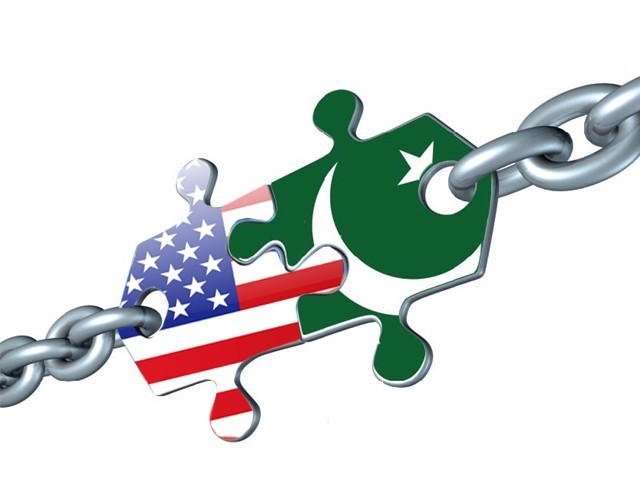
Pakistan is a Nation at Odds With Itself, U.S.

By Stephen Magagnini for The Sacremento Bee

KARACHI, Pakistan — On a moonlit Thursday night in February, a television network executive hosted an elegant affair for journalists and diplomats at his villa above the Arabian Sea.

Karachi’s privileged dined on lamb, shrimp, chicken, mutton and fettuccine in mushroom sauce, and were surprised by a quartet of wandering minstrels, soulful Sufi poets who serenade for their supper, uncorking ballads about love.

On the south side of this city of 18 million, a group of Afghan refugees, who scrape out a living collecting cardboard and other recyclables in a slum straddling a swamp of open sewage, were mopping up gravy with roti – Pakistani bread.

About 900 Afghans live in this fetid slum, down the street from poor Pakistanis and water buffalo. They earn about $60 a month and survive on bottled water, chewing tobacco and roti.

“We’re happy in Pakistan,” said 33-year-old Shaezhad, leader of a cardboard collection station. “We get food and respect.”

At the party across town, talk-show hosts and other Pakistani elites blew cigarette smoke into the faces of U.S. journalists, criticizing U.S. foreign policy and the toll the war in Afghanistan has taken on their country.

Many Pakistanis resent American aggression in the region and want more respect from U.S. policymakers, but they don’t hold individual Americans responsible. Yet everywhere we went, we were held to answer for U.S. wars and Americans’ deep misunderstanding of Pakistan.

“You are arrogant, playing video games with our lives,” Abdul Moiz Jaferii, political analyst for CNBC Pakistan, said over lunch one day in Karachi. He was referring to U.S. drone attacks that have killed Pakistani and Afghan civilians.

“And we hate America because the U.S. has always been the biggest, closest ally of the military dictators. You have done nothing to help democracy.”

The impact of the war in Afghanistan has permeated nearly every pore of this country of 180 million. More than 2 million Afghan refugees have fled to Pakistan, and some have brought a culture of violence. Since 9/11, 35,000 Pakistanis have been killed in terrorist attacks by suicide bombers and other war-related violence, according to Pakistan’s intelligence agency. The victims include 6,000 soldiers and 29,000 civilians.

The unpredictable violence and the kidnapping of foreign workers have created a climate of fear in this country. We weren’t allowed to visit villages outside urban areas, where 40 percent of Pakistanis live. Two shotgun-wielding security guards protected our buses in Islamabad, Lahore and Karachi. We entered our hotels through metal detectors and were rarely allowed to interact with average citizens in public places.

Pakistan – strategically located between Afghanistan, India, China and Iran and influenced by Saudi Arabia – remains an enigma to many Americans, who aren’t sure whether it’s friend or foe, democracy or military dictatorship.

Pakistan has provided critical support to NATO troops in the Afghan war – drones are launched from here, NATO supplies are sent through this country, and Pakistani troops have helped recapture terrorist strongholds along the volatile Afghan border.

But distrust of the United States in the wake of deadly drone attacks and the deaths of 24 Pakistani soldiers in a cross-border battle in November is such that rather than calling for more U.S. aid to build needed power plants, schools and hospitals, a growing number of Pakistanis want nothing to do with the United States. The government of Punjab – Pakistan’s most powerful state with about 90 million people – has decided to reject U.S. aid.

The killing of Osama bin Laden by U.S. Navy SEALs in Abbottabad in the heart of this country embarrassed and angered the Pakistan military and made Americans question why bin Laden was allowed to live in essentially a resort town. Some U.S. politicians have called for an end to the $18 billion in financial aid pledged since 9/11.

An Islamic republic?

Some of the world’s largest, most beautiful mosques are here, and to celebrate the Prophet Muhammad’s birthday on Feb. 4, 10,000 people named Muhammad gathered in prayer in Karachi.

We saw few women wearing hijabs, or head coverings, except those at Islamabad’s Faisal Mosque, which can hold 10,000 people for Juma, or Friday prayer.

Professional women drive cars, dress like their counterparts in U.S. cities and run government ministries, clinics and newsrooms. Women, who constitute 52 percent of the population, are increasingly getting advanced degrees. There’s a Pakistani proverb: “Every girl who goes to university gets a husband.”

Despite Islam’s ban on liquor, at a party in Islamabad guests of both sexes repaired to a speakeasy in the basement to drink wine or Johnny Walker Black and smoke cigars.

Though most marriages are still arranged, as many as 20 percent are “love marriages,” said Samina Parvez, director general of the government’s external publicity agency. “The divorce rate is also increasing – it’s about 10 or 15 percent,” Parvez said. “The majority of us are not practicing Muslims.”

Kamoran Sani, sales and marketing director for the Sheraton Hotel in Karachi, declared, “What you’ve heard about the Islamic Republic of Pakistan’s a big farce. There are orgies, voyeurs’ lounges, raves.”

A diverse nation

Pakistan didn’t become a nation until the British sliced India into Muslim and Hindu majority states in 1947. Pakistan – an Urdu acronym for Punjab, Afghania, Kashmir, Sindh province and Baluchistan (“stan” means nation) – varies wildly from region to region.

“There is no such thing as Pakistan,” Jaferii said. “First comes your family, then your clan, third your region, fourth your province – the nation comes a distant fifth.”

Much of rural Pakistan is a feudal society dating back to the 13th century. Mullahs, or religious leaders, still invoke blasphemy laws exacting punishment against those accused of insulting Islam. Last year, the governor of Punjab was killed by his bodyguard for criticizing the law as he sought a pardon for a Christian woman sentenced to death.

But Pakistan has tremendous religious and ethnic diversity. Muslims include Sunnis, Shiites, Ismaelis, Ahmadis and Sufis – each practicing their own brand of Islam. At Lahore University of Management Sciences, I chatted with Muslims, Hindus and Christians who were all friends.

From the Sufi love poems to Pashtun folk songs about social justice, music plays a key role in Pakistani identity.

In the center of Karachi there’s a Catholic church – St. Patrick’s Cathedral, built by the Jesuits in 1931. There’s a Jewish cemetery. Sikhs worship throughout Pakistan. The ancient city of Taxila was occupied by Alexander the Great and reflects Persian, Moghul, Buddhist and Christian traditions.

Pakistan’s future

Sixty percent of Pakistan’s population is under age 30; half is under age 20. Half the kids haven’t been to school, and fifth-grade students are reading at a second-grade level, said Nadeem ul-Haq, deputy chairman of the government’s planning commission.

“We have 2 million kids a year entering the labor force. What are these kids going to do?” ul-Haq said. There is no building boom to provide jobs, and foreign investments have been scared away by terrorism.

“Entrepreneurship is the key thing we need to focus on,” he said. “Overseas Pakistanis have been very entrepreneurial, sending back $13 billion a year to their poorer relatives.”

From 7-Elevens to Silicon Valley firms and venture capital funds, ex-pat Pakistanis are thriving in the United States. The 500,000 Pakistanis in the United States, including 100,000 in California, send $100 million a year to charities in Pakistan, said Ahson Rabbani, CEO of I-Care, which connects donors with 30 nonprofits.

In Northern California, Pakistanis raised more than $100,000 for Pakistani flood relief efforts spearheaded by cricket star Imran Khan, who may lead the country if his party wins the next election. Khan has gained credibility by building a cancer hospital for the poor in honor of his late mother. His party includes a women’s wing that has direct access to him.

Philanthropy is playing a growing role in Pakistan, financing schools in poor villages and slums. The Citizens Foundation is educating 100,000 students.

“I mentored six girls,” said Karachi journalist Samia Saleem. “One was 13 and said she didn’t want to get married – she wants to be a teacher.”

Ali Shah Haider, 17, wants to be a commercial pilot. “I sleep from 2 p.m. until 4:30 p.m., then go to work at the textile factory from 8 p.m. to 5 a.m. to support my family – there are 12 of us. I do my homework between shifts.”

A nation’s dreams

Though life seems cheap in Pakistan, the people are upbeat survivors who often describe life as bo hat acha, which means “great!” in Urdu, their main language.

Last year 1,575 people were killed in Karachi, where 2 million weapons are in circulation, said Francisco Quinones of Arcis International Security. A doctor was killed in Karachi the day before we landed. Violence has been blamed on the Taliban, rival political gangs, Sunni and Shia militants, rogue security forces, and Afghan refugees.

Some refugees have been recruited by the Taliban. Others like Shaezhad, who collects recyclables in the slums of Karachi, are glad to be alive under the green and white crescent flag of this country.

Still, he wants to go home to Afghanistan. “We want our land back, we want to live with respect and we want employment.”

Azhar Abbas, the managing director of Geo TV news who hosted the party in Karachi, said that “democracy is taking hold” in his Pakistan despite the violence many here believe followed the U.S. war on terror.

The business editor of daily newspaper the News, Amir Zia, said the United States can still play a positive role in Pakistan. “If Americans pull out without getting the job done, the Islamic extremists will say it’s a victory and will become much more organized.”

But at the National Defense University, business and technology expert Bilal Munshi called Pakistan “a psychologically scarred nation suffering from a mass form of PTSD (post-traumatic stress disorder).”

If the 4 million young people entering the workforce each year get jobs, “we will be a power … but if they don’t see a future they’re going to pick up the gun, and you’re going to be in real trouble.”

The U.S. can help develop Pakistani schools, Bilal said, “but don’t interfere in our internal affairs – let us do things our way.”

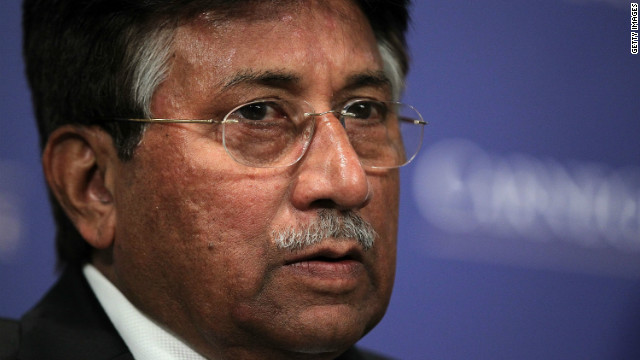
Pakistan Vows to Arrest Musharraf for Bhutto Assassination

By Reza Sayah for CNN

Pakistani authorities vowed Tuesday to use the international police agency Interpol to arrest former Pakistani President Pervez Musharraf in connection with the assassination of former Prime Minister Benazir Bhutto.

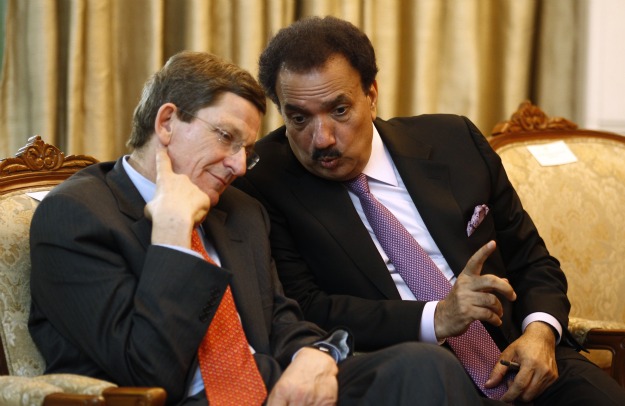
“The government is moving for his (Musharraf’s) red notice,” Interior Minister Rehman Malik said, referring to the Interpol’s international arrest warrant.

“We will get him through Interpol to Pakistan.”

Malik made the announcement as part of a progress report of the four-year-long assassination probe that was presented to provincial lawmakers Tuesday in Bhutto’s home province of Sindh. The briefing lasted several hours and was broadcast live on Pakistani TV.

Bhutto was assassinated in a gun-suicide attack in December 2007, shortly after she came back to Pakistan from self imposed exile to take part in the 2008 general elections.

Malik and the head of the investigation team said former Pakistani Taliban leader Baitullah Mehsud plotted the assassination and paid the equivalent of about $4,500 to a network of Islamist militants to carry out the killing.

Using a Power Point presentation, pictures and video to outline the evidence they had gathered, authorities said Mehsud had Bhutto killed because she supported the west’s war against Islamist militants. Investigators said they collected much of their evidence from the accused plotters’ cell phone records before and after the killing.

Last November a Pakistani court charged five alleged Islamist militants with aiding the suicide attacker and two senior police officers for failing to provide adequate security.

Musharraf has also been accused of failing to protect Bhutto. In February 2011 a judge issued an arrest warrant for Musharraf after he didn’t show up to court for questioning.

Musharraf has been in self-imposed exile ever since he left Paksitan in 2008. Last August authorities confiscated his property in Pakistan and froze his bank account. The former military ruler has denied having anything to do with Bhutto’s killing.

In Tuesday’s briefing Malik and investigators said Musharraf rejected Bhutto’s request to use a western private security contractor for protection when she returned to Pakistan. They suggested Musharraf intentionally left Bhutto vulnerable because he felt politically threatened by her return.

“It was the duty of the government to provide the prime minister with protection,” Malik yelled at one point. “Why did you not give security? What was the problem?”

Pakistan’s Sesame Street: Can an Urdu Elmo Aid a Blighted Nation?

By Aryn Baker for Time

For a 3-year-old who has yet to master the use of the personal pronoun, Elmo is a whiz at foreign languages. Already fluent in Chinese, German, Hindi, Spanish and Arabic, among others, the fluffy red icon has just picked up Urdu, the most common language in Pakistan. At a time when the U.S.-Pakistani relationship is at its worst in more than a decade, Sesame Street — the quintessential American children’s television program — has burst onto the Pakistani scene in a flurry of fake fur, feathers and infectious ditties about the letter alef, or A.

With its background of ripening wheat, banyan trees and a center stage that features a village snack shop overflowing with exotic fruits and vegetables, the set of Sim Sim Hamara, as it is called in Pakistan, may seem far removed from the urban street scene familiar to most Americans. But the lovable Muppets, child actors and messages of tolerance are pure Sesame. And they have all been brought to life in Pakistan with the help of a $20 million, five-year grant from USAID.

Developed in 1969 by TV producer and early-childhood-education advocate Joan Cooney, Sesame Street was designed to tap the addictive qualities of television to bring early literacy education to American preschoolers. The “quaint” American streetscape, as Cooney then called it, has since grown into the “longest street in the world,” with more than 20 unique programs worldwide, according to Sesame Workshop’s senior vice president of global education Charlotte Frances Cole. Some features dubbed segments lifted from the American version; others, like Sim Sim Hamara, which means Our Sesame, are created in partnership with local production teams to reflect native culture. In Pakistan, Big Bird and Oscar have been replaced by a self-involved crocodile and a donkey with rock-star ambitions. “Children have to be able to recognize their environment and their friends if they are going to learn,” says Faizaan Peerzada, who directs Sim Sim Hamara from a studio just outside the city of Lahore. “So we had to give Elmo Pakistani citizenship.”

On a tour of the workshop where the show’s Muppets are made, Peerzada, a master puppeteer with more than 40 years of experience directing educational puppet shows for Pakistani children for the Rafi Peer Theatre Workshop, slips his hand into a limp, feathered pocket of gray felt. Even without eyes, the unfinished puppet springs to life with the mannerisms of an owl, swiveling its head to listen as Peerzada expounds on Sim Sim’s potential with evangelical zeal. Underfunded and neglected for more than 30 years, Pakistan’s education system is in a parlous state. The recently released Annual Status of Education report in Pakistan reveals that nearly 60% of school-age children can’t read, or even do basic, two-digit subtraction problems. For a country where 35% of the population is under the age of 14, the consequences are enormous.

“As a nation, Pakistan has failed its children,” says Peerzada. If Sesame Street brought the joy of learning to generations of American preschoolers, why can’t it help teach Pakistan’s 66 million children under the age of 14 how to read? he asks. “Our children deserve this. All children deserve this,” he says. Obviously a television program that airs twice a week can’t compensate for missing teachers and limited school access, but it’s a start. “To me, Sim Sim Hamara is a gift to Pakistani children, and a window into homes that might think their children are better employed in the fields than at school,” says Peerzada.

Like the original, Sim Sim Hamara is a half-hour-long program divided into skits, song segments and celebrity appearances designed to appeal to a wide spectrum of Pakistani society. The Muppets caper with live actors on a set that combines features recognizable across the country, a kind of Pakistani Main Street that doesn’t stand out as belonging to any particular region. A dhaba, the ubiquitous snack-and-grocery shop that is the center of any Pakistani community, stands in for Mr. Hooper’s store, and is manned (or womanned) by a heavily made up Muppet auntie who anchors the show with amusing lessons about manners, safety and healthy eating. In an effort to promote tolerance in a country marked by ethnic divisions, the Muppets’ skin colors range from brown to pale orange.

Most striking, however, considering Pakistan’s male-dominated society, is the lead character, Rani, a 6-year-old female Muppet who captains the cricket team and who is passionate about science and reading. In a country where only 22% of Pakistani girls complete primary school, Rani is a model of female empowerment. But it doesn’t stop there. The rest of the show’s characters encourage Rani’s quest for knowledge — “Where does the sun go every evening?” was a recent one — modeling acceptance of women’s progress for a wider society. “You are not just teaching little girls that they can have dreams,” says Sesame Workshop executive vice president Sherrie Westin. “You are also teaching boys that it’s O.K. for girls to have those dreams.”

Of course progressive values in one culture can be interpreted as transgressive in another. Sim Sim Hamara has the added burden of being sponsored by the U.S. in a country where American meddling is viewed with increasing hostility. For that reason, the program’s authors have had to broach sensitive issues with subtle creativity. One recent segment opened with a despondent Baily, the would-be rock-star donkey, who decided he would never sing again because someone told him it would make him grow horns. “This is how we get at the idea of mullahs who are against singing,” explained one of the producers. The skit ended with the appearance of one of Pakistan’s most famous rock stars leading the whole cast in an uplifting song about believing in your self, entitled, fittingly, “Faith.”

Teachers who see it as a way to promote literacy at home have praised Sim Sim Hamara, as do children who have never really had a program to call their own. “I find that those who regularly watch Sim Sim Hamara know more about health and body parts and their functions,” says Islamabad school principal Masart Sadiq. “They get lots of ideas about careers, which they discuss with their teachers too.” Aniqa Khan, a 12-year-old from Rawalpindi, says she now wants to be a pilot, like Munna, Rani’s 5-year-old Muppet co-star. “He is excellent at math, which inspires me to spend more time on math.”

So far, and against fears in a country where the assassination of a governor accused of blasphemy was celebrated in the streets, there has been no negative response to Sim Sim Hamara. “I think my biggest fear was that the program would be misunderstood before it even aired,” says Peerzada. “People might have thought it was some kind of brain-washing project. But at the end of the day, all we are doing is teaching a child to count.”

The same could not be said of reactions to the program in the U.S., where Fox News in October dubbed Sim Sim Hamara a boondoggle for Elmo and conservative commentators quickly took up the cause. But as Sesame Workshop’s Westin points out, $20 million pays for a lot more than Elmo’s Urdu lessons and a plane ticket to Pakistan. It covers a state-of-the-art studio, high-definition digital-video equipment that won’t be obsolete in a few years, and the foundations of an educational institution that, if all goes to plan, will provide Pakistani children with the basic-literacy building blocks that have been the mainstay of early-childhood education in America for more than four decades. Current estimates say that Sim Sim Hamara is reaching more than 3.5 million Pakistani children who have no other access to preschool education. “This is a smart investment,” says Westin. “Early-childhood education is one of the most effective ways to build stability in any country. An investment like this is not only going to benefit Pakistan, but our children as well. If we can help to create a more peaceful world, that is a benefit to all of our children.” And that sounds like something Elmo would love, in any language.

Pakistanis for Peace Editor’s Note– We commend this great project by the United States government and the USAID program. The $20 million grant and this educational program will not only help the children of Pakistan who are not provided an adequate educational system by their own government but a program like this goes a long ways in the betterment of ties between the United States and Pakistan and leaves a lasting legacy for the area’s children for years to come.

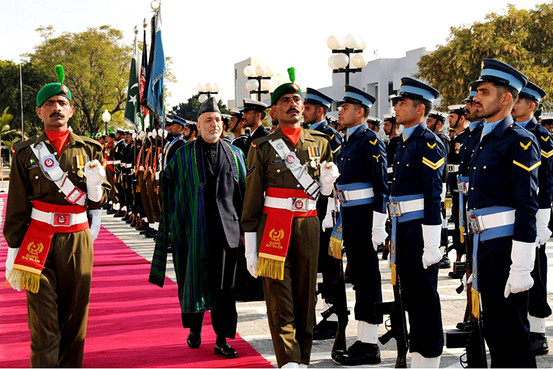
Peace Effort Takes Karzai to Pakistan .

By Yaroslav Trofimov, Tom Wright and Adam Entous for The Wall Street Journal

Afghan President Hamid Karzai on Thursday met with Pakistan’s leaders, trying to gain Islamabad’s support for his peace outreach to the Taliban, as U.S. officials worked to keep expectations in check about the strategy’s prospects for yielding direct peace talks with the Islamic militant group.

The Taliban, meanwhile, denied Mr. Karzai’s claim that they have been negotiating with the Afghan government.On the first day of his three-day visit to Pakistan, Mr. Karzai met with Pakistani Prime Minister Yousuf Raza Gilani, who promised Pakistani cooperation in investigating the September assassination of the chief Afghan peace negotiator and voiced support for an Afghan-led peace process. Pakistan’s Army Chief of Staff Gen. Ashfaq Kayani, who wields considerable influence over the country’s foreign policy, also took part in the talks.

In Islamabad, Mr. Karzai reiterated that respect for the Afghan constitution and for women’s rights remain his “crucial conditions” for any future deal with the Taliban.

Defense Secretary Leon Panetta, who has been skeptical of reconciliation efforts in the past, at a Thursday news conference lauded Mr. Karzai’s remarks—made in a Wall Street Journal interview—about Kabul’s willingness to engage with the Taliban.

“What President Karzai’s statement confirmed is that Afghanistan is very much involved in the process of reconciliation and that is extremely helpful and important to determining whether or not we are ultimately going to be able to succeed with reconciliation or not,” Mr. Panetta said. “The news that Afghanistan has joined those reconciliation discussions is important.”

Mr. Panetta said he didn’t know whether additional three-way sessions between the U.S., the Afghan government and the Taliban have been planned.

Another senior Obama administration official remained cautious about whether such confidence-building contacts would translate into direct peace talks, calling the process “complicated and precarious.”

A day after Mr. Karzai told the Journal that Afghan government representatives have had contacts with U.S. and Taliban officials in an attempt to end the 10-year war, the Taliban said they had no intention of negotiating with “the powerless Kabul administration.”

“If someone met the Karzai administration representing the Islamic Emirate, he is an impostor,” said a statement by the Taliban leadership, which calls itself the Islamic Emirate of Afghanistan. The Taliban in the past denied reports of peace talks with the U.S., only to confirm them in recent months.

U.S. officials have confirmed Mr. Karzai’s remarks, saying at least one three-way negotiating session occurred in recent weeks.

Admitting negotiations with Kabul would be fraught will political risks for the insurgent leadership, possibly undermining the morale of Taliban fighters, and weakening the militants’ resolve amid coalition offensives.

The intensity of the conflict already declined dramatically in recent months, Afghan and coalition officials say, though it is unclear whether this drop is due to the spreading news about peace talks, unusually harsh winter weather, or a strategic decision by the Taliban to hold their fire as foreign forces withdraw.

Pakistan, which U.S. officials say provides shelter and support to the Taliban leadership, plays a crucial role in Afghanistan’s peace outreach.

Mr. Karzai’s relations with Pakistan neared a rupture point after the September assassination of former President Burhanuddin Rabbani, the peace negotiator, by purported Taliban peace emissaries. At the time, Afghan officials blamed the killing on Pakistan, something that Pakistani officials denied. Two suspects have since been arrested in Pakistan.

The White House wants to show progress on the reconciliation track before a May summit of North Atlantic Treaty Organization leaders in Chicago. There, NATO leaders are expected to announce plans to shift to a train-and-assist mission in Afghanistan in 2013, giving Mr. Karzai’s security forces the lead role in combat operations before most U.S. and NATO troops pull out at the end of 2014.

Where Pakistan fits into tentative peace talks with the Taliban remains unclear. The U.S. has not kept Islamabad informed about developments in the peace process, Pakistan civilian and military leaders claim.

U.S. and Afghan officials say they are concerned Pakistan might try to undermine peace talks. In January 2010, Pakistan detained a senior Taliban leader, Mullah Abdul Ghani Baradar. Afghan and U.S. officials claim Pakistan arrested him for contacting the U.S. and Mr. Karzai’s government without Pakistan’s knowledge, a claim denied by Pakistan.

Afghanistan has asked for Pakistan to transfer Mr. Baradar to Kabul, but this hasn’t happened so far. Pakistani officials deny they back the Taliban.

Pakistan will stay on the sidelines in the tentative peace process as long as the U.S. remains distrustful of Islamabad, said Imtiaz Gul, director of the Islamabad-based Center for Research and Security Studies.

“We’re not sure to what extent the U.S. wants Pakistan to play a role,” Mr. Gul said. “The Pakistani role at this moment seems very limited.”

Pakistan’s ability to play a meaningful part in talks has further been hampered by a deterioration in relations with U.S. after an American helicopter strike in November mistakenly killed 26 Pakistani soldiers along the Afghan border.

U.S. officials say they are still trying to hammer out an agreement with Taliban representatives on a sequence of confidence-building measures aimed at laying the ground for any future direct negotiations on ending the war.

In addition to the establishment of a political office for the Taliban in Qatar, the U.S. wants the Taliban to issue a statement distancing itself from international terrorism and to agree to stop fighting in certain areas of the country.

The U.S., in turn, would transfer of up to five Taliban militants held at the U.S. military prison in Guantanamo Bay, Cuba, to Qatar. Key U.S. lawmakers have raised objections to the prospective prisoner transfers.

Officials have identified the five Guantanamo detainees who may be transferred to Qatar as Muhammad Fazl, a former senior Taliban defense official; two former local governors, Khairullah Khairkhwa and Noorullah Nori; former Taliban intelligence official Abdul Haq Wasiq; and top Taliban financier Muhammad Nabi.

Messrs. Haq Wasiq, Fazl and Nori were among the first 20 detainees who arrived at Guantanamo Bay 10 years ago, when the prison was opened on Jan. 11, 2002.

The U.S. has received assurances from Qatar that the five militants, if transferred, won’t be released by the government or handed over to the Taliban. But officials said the men could be freed later as part of a future Afghan-Taliban peace deal.

Jeremy Lin: Where’s The Indian Version?

By Palash R Ghosh for International Business Times

I am as excited and thrilled with the sudden meteoric climb of New York Knicks point guard Jeremy Lin as anyone else. I am completely immersed in ‘Linsanity’ and hope he becomes a dominant superstar in the NBA over a nice long career.

Jeremy Lin is the greatest sports story I’ve seen in years, perhaps decades. As an Asian-American, Lin’s brilliant play has special meaning and significance to me.

However, I must admit, since I am neither Chinese nor Taiwanese, my appreciation of Lin is somewhat as an “outsider.” That is, I can’t quite reach the same level of excitement about No. 17 as my Chinese and Taiwanese friends have.

I have waited many years for an Indian boy in the United States to become a professional sports superstar. Thus far, such a thing hasn’t happened, and, sadly, I doubt it will in my lifetime.

The term “Asian-American” is impossibly vague, broad and diverse, encompassing everyone who claims descent from the Philippines to Afghanistan. Indeed, it’s a rather meaningless phrase, but, for the sake of simplicity, it really means Americans whose parents or ancestors immigrated from a handful of major Asian nations.

According to the 2010 U.S. Census, there were 17.3-million Americans of “Asian” descent, representing about 5.6 percent of the total population.

I found a breakdown of that population for 2008, which indicated that the Chinese formed the largest group among Asian-Americans at 3.6 million, followed by Filipinos (3.1 million), East Indians (2.7 million), Vietnamese (1.7 million), Koreans (1.6 million) and Japanese (1.3 million).

In the popular vernacular, Indians are sometimes not even considered “Asian” since they are sometimes more associated with Middle Eastern peoples, especially since 9-11.

No matter, I consider the people of India, Pakistan, Bangladesh, Sri Lanka, Nepal and Afghanistan as “Asians.”

So, with these large numbers, why are there no Indian star athletes in the United States?

To the best of my knowledge, no Indian lad has ever reached the NBA or Major League Baseball.

Sanjay Beach had a brief career as a wide receiver for the San Francisco 49ers and the Green Bay Packers; Brandon Chillar (whose father is Indian) played linebacker for the Green Bay Packers; and Manny Malhotra (an Indo-Canadian), plays for the Vancouver Canucks in NHL.

And that’s it — and none of them are exactly ‘household names’ or superstars.

Part of the problem is that Indian parents pressure their children to succeed in academics and to shun ‘frivolous’ pursuits like sports, arts and music. Hence, the large number of Indian-American doctors, engineers, accountants, mathematicians, scientists, corporate executives, and, uh, underpaid journalists.

Indeed, Indians (like Chinese and Koreans) are among the highest-earning, best-educated people in the U.S. The residue of being a dreaded “model minority.”

This is all fine and dandy… but, frankly, I’m rather tired of Indians in America being pigeonholed into dull, safe careers. I would be much happier if an Indian boy could pitch a 95-mile-an-hour fast-ball, or slam dunk a basketball or throw a football with pinpoint accuracy for 60 yards.

Realistically, an Indian reaching the NBA and NFL is probably beyond the realm of reality. But what about America’s grand old pastime, baseball?

After all, Indians have excelled at cricket – a sport that requires skills similar to baseball.

If Sachin Tendulkar had grown up in California, perhaps he would now be the starting centerfielder for the Los Angeles Dodgers. If Muttiah Muralitharan were raised in New Jersey, maybe he’d be a 20-game winning pitcher for the Philadelphia Phillies. They certainly have the ability to excel in baseball.

What about U.S. football? Indians are pretty good at soccer — surely some NFL club could find place for an Indian placekicker or punter, no? NFL teams have, over the years, employed a number of former European soccer players for such humble (non-violent) duties.

Will we see an Indian-American athletic superstar in my lifetime (I probably have about 30 years left on this earth)? My guess is no.

Most Indian parents compel their children to study subjects in school that will lead to good, solid, stable high-paying jobs. Sports are fine as long as they don’t become an obsession or, worse, a career goal.

Indian parents likely tell their children that becoming a professional athlete is the longest of long shots (even if one has great talent) — and indeed, they are right. Consider that in the NBA there are 30 teams with a roster of 12 players each.

That’s just 360 players.

Thus, for every NBA player, there are about 850,000 people in the United States.

It makes no logical sense to pursue a career in sports – unless your name is Jeremy Lin, of course.

And let me add that if a young Indian man rose to the top of any American sports leagues, he would likely become the number one celebrity on the planet, especially if he is telegenic.

He would not only enjoy the fame and wealth that is bestowed upon those lucky few that reach the zenith of pro sports in the western world, but he would also have about one-billion people on the Indian subcontinent as rabid, devoted followers. He would be like a combination of Michael Jordan, Tom Brady, Joe DiMaggio, Elvis Presley, John Wayne and Salman Khan.

It would be utterly incredible… but highly unlikely.

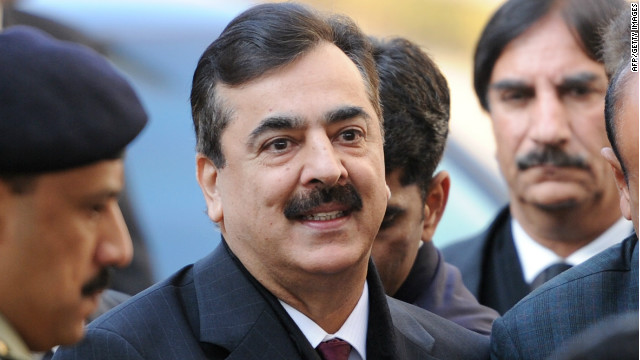
Pakistani Prime Minister Due in Court For Contempt Hearing

As Reported by CNN

Prime Minister Yousuf Raza Gilani of Pakistan is due to appear Monday before the country’s Supreme Court, which plans to charge him with contempt in relation to a long-running struggle over old corruption cases.

Gilani is locked in a standoff with the Supreme Court justices, who are demanding that he ask the Swiss authorities to revive corruption charges from the previous decade against President Asif Ali Zardari and others.

Gilani has refused the court’s demands and could be jailed for six months if the justices find him in contempt. The court on Friday rejected an appeal by Gilani’s lawyers against the summons to face the contempt charge.

The lawyers have argued that the prime minister has not followed the court’s order because Zardari enjoys immunity in Pakistan and abroad as a president in office.

Gilani said in an interview over the weekend with the satellite news network Al Jazeera that he had an “extremely capable” lawyer and didn’t believe the court would jail him on the contempt charges.

If found guilty of contempt, the prime minister could be forced from office. But his lawyers have said he would keep his position unless electoral officials disqualified him.

Gilani served more than five years in prison between 2001 and 2006 on corruption charges brought by the previous military regime of Gen. Pervez Musharraf — counts he said were also politically motivated.

The corruption cases that the Supreme Court now wants reopened stem from money-laundering charges against Zardari and his late wife, former Prime Minister Benazir Bhutto. A Swiss court convicted them in absentia in 2003 of laundering millions of dollars.

After Musharraf granted a controversial amnesty in 2007 to Zardari, Bhutto, and thousands of other politicians and bureaucrats, Pakistan asked the Swiss authorities to drop the case. In 2009, the Pakistani Supreme Court ruled the amnesty was unconstitutional and called on the government to take steps to have the cases reopened.

The government has not done so, and the court apparently lost patience. Since Gilani is the head of the government, the court justices view him as responsible.

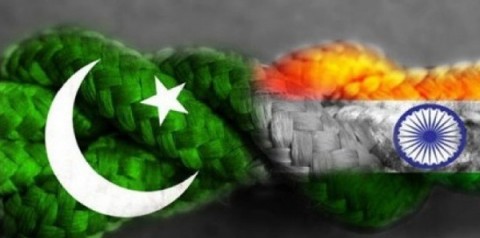
Made in India’ Show in Pakistan as Both Talk to Boost Trade

By Surojit Gupta for The Times of India

Trade ties between India and Pakistan are expected to get a boost as New Delhi reaches out to the business community across the border, starting Monday to assure them about the positive impact of normal trade ties. Commerce minister Anand Sharma will undertake a rare journey to Pakistan, leading a large delegation of senior officials and top businessmen as the two hostile neighbours take baby steps to normalise trade and economic relations.

The private sector led by industry chambers has put up an “India show”, in Lahore and Karachi – the first ever trade exhibitions from India where over 100 exhibitors are participating. Firms representing pharmaceuticals, textile, gems and jewellery, chemicals and petro-chemicals are showcasing products.

The move is a follow up to the efforts to normalise trade ties. The Pakistan government announced granting of Most Favoured Nation (MFN) status to India in November last year. But, criticism from a section of industry in Pakistan has forced Islamabad to take measured steps on the issue. But, officials said they were optimistic that by the end of 2012, the transition to full MFN status would be complete.

Officials said they will launch outreach programme to assure businessmen in Pakistan that Indian goods will not swamp the Pakistan market if trade is normalised. “We will tell them that there are enough trade safeguards measures to ensure that Indian goods do not flood the Pakistani market. Let us first liberalise trade and see the impact,” said a senior government official.

Pakistan allows exports to India but has a positive list of 1,938 items which are officially allowed to be imported from India. Latest data shows that formal trade between India and Pakistan rose to $2.7 billion in 2010-11 from $144 million in 2001, while informal trade including third country trade is estimated at $10 billion, according to a Ficci status paper. “I have no doubt in my mind that bilateral trade, which currently stands at $3 billion, can be raised to $10 billion if trade through third countries (Dubai, Singapore and Central Asian countries) is channelised into direct exchange between the two countries,” said R V Kanoria, president, Ficci.

The government has undertaken a series of measures to increase bilateral trade. There is a move to open a second gate at the Attari-Wagah border, which is expected to increase the number of trucks crossing the border to 500-600 daily from 150-200 at present. Pakistan has agreed to remove restrictions on the number of commodities traded by the land route once the infrastructure in Wagah is ready, while both countries have agreed to avoid arbitrary stoppage of goods at ports. Suggestions have been made for opening up of an additional land route at Monabao-Khokhara Par on the Sindh border for faster movement of goods.

“We are taking significant steps to improve the border infrastructure. India has invested nearly Rs 150 crore to develop infrastructure at the Integrated Check post near Attari,” said a senior government official. He said the visa regime for business travel is also expected to be liberalised soon with multiple entry visas for 10 Indian cities, along with exemptions for police reporting. The formal announcement is expected to be made soon. Talks to expand trade in petroleum products are progressing, while efforts are also on to start negotiations for trade in electricity between the two nuclear-armed neighbours. Both sides have agreed on grid-connectivity between Amritsar and Lahore, which would pave the way for trade of up to 500 MW of power.

Trade experts said they were optimistic about the latest moves and said the effort will go a long way in helping faster regional integration. “The positive spin off for normalisation of trade is enormous. Pakistan has given signals and India now needs to take the initiative. Normalisation of bilateral trade relations will help in putting much of the political bickering on the backburner,” said Biswajit Dhar, director-general at Research and Information System for Developing Countries, an economic and trade thinktank. Experts said there was huge potential for forging joint ventures between Indian and Pakistani companies in sectors such as information technology, fish-processing, drugs and pharmaceuticals, agro chemicals, chemicals, automobile ancillary and light engineering.

Pakistanis for Peace Editor’s Note– The best chance of peace between India and Pakistan can only be achieved through trade and normalization of ties. The India Show at the Lahore International Expo Centre Feb 11-13 will go a long ways to bridging the gap and move us closer to achieving peace one day, which is the best scenario for both nations long term.

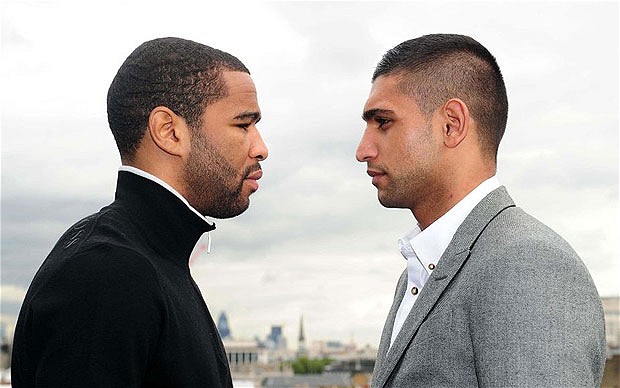
Lamont Peterson, Amir Khan Set Fight

By Dan Rafael for Espn

Unified junior welterweight titlist Lamont Peterson and former titleholder Amir Khan will meet in a rematch at Mandalay Bay in Las Vegas on May 19, a little more than five months to the day after their all-action first fight went down as one of the most controversial bouts of 2011.

“Everyone is very pleased that this is Lamont’s next fight,” attorney Jeff Fried, who represents Peterson and Barry Hunter, Peterson’s trainer/manager and father figure, told ESPN.com on Thursday after the deal had been signed. “It was challenging for a variety of reasons, including some of the post-fight antics undertaken by Khan. But at the end of the day, Lamont and Barry had a singular focus on what is in the best interest in Lamont Peterson and his family, and that is what drove this deal getting done.”

England’s Khan (26-2, 18 KOs) came to Peterson’s native Washington, D.C., to defend his belts Dec. 10 and lost a split decision in a fight filled with great action but marred by questionable officiating, issues over the scorecards and an unauthorized figure at ringside.

“Both sides are signed, but this has been one of the most difficult negotiations I have had for any fight I have ever been involved with,” said Golden Boy promoter Richard Schaefer, who has negotiated dozens of major fights. “There was a lot of back and forth, but it all ended good in getting this fight done. I think it’s one of the most anticipated rematches. It’s the right fight for Lamont and the right fight for Amir, and I’m really excited both parties agreed to do this fight.”

Peterson accepted the deal from Golden Boy, which handles Khan, for the rematch even though Top Rank’s Bob Arum had been wooing Peterson, a promotional free agent, for a fight with Juan Manuel Marquez, which he hoped to put on at Cowboys Stadium in Arlington, Texas.

Peterson, who earned $650,000 for the first fight and rejected a $1 million offer for the rematch shortly after the first fight, will make “substantially more than $1 million,” Fried said, although he did not divulge the terms.

Khan, who has a contract with HBO in the United States and Sky in England, brings substantial money to the fight but wanted the rematch so badly that he gave 50 percent of the worldwide revenue that the fight will generate to Peterson.

“We offered 50-50 because that was how much Amir wanted this fight,” Schaefer said. “There were times where it looked like we were close to getting it done, but it was a drawn out process. But in the end it was not a sanctioning organization, a TV network, the media or fans who made this rematch. It’s the fighters who wanted to get the fight done. It was Lamont Peterson saying he didn’t want to fight anybody else except Amir Khan and it was Amir Khan saying he wanted to fight only Lamont Peterson. That is what makes fights.

“The truth is both fighters had other options. But it really came down to what they wanted most. For both guys, other options might have been more lucrative, but it was not really only about the money. They realized the right thing to do was to fight each other again.”

The refereeing was the most controversial aspect of the December fight. Khan had two points deducted for pushing — an almost unheard of foul call — in the seventh and 12th rounds by Washington-area referee Joe Cooper. Without the deductions, Khan would have retained the belts via unanimous decision.

Khan complained that while he was docked points for pushing, Peterson (30-1-1, 15 KOs) was never warned for leading with his head. Golden Boy also raised questions about judge George Hill’s scoring of the seventh round, which appeared to read 10-10 but was crossed out to read 10-8 in Peterson’s favor.

Then there was the much-publicized issue of the so-called ringside “mystery man,” who turned out to be Mustafa Ameen, who is affiliated with the IBF and had a credential arranged as a courtesy from the organization, but was not at the fight in an official capacity. However, he was seen on video at ringside apparently touching the scoring slips, which is against the rules, and distracting a judge. He was later seen in the ring apparently celebrating with the Peterson team after the fight.

It all led to Khan protesting the decision to the sanctioning bodies and harsh words were exchanged between the camps. But now all of that should only add to the interest surrounding the rematch, which will headline HBO’s “World Championship Boxing.”

“May the better man win,” Schaefer said. “It will be one of the most talked-about fights of the year. This is one of those fights people wanted to see and I am happy we can deliver it to the fight fans. I will say this, Jeff Fried deserves a lot of credit for helping us get this done.”

Schaefer said he is close to finalizing the co-featured bout for the card, which would also take place in the 140-pound division: Lucas Matthysse (29-2, 27 KOs), the hard punching contender from Argentina, against former lightweight titleholder Humberto Soto (57-7-2, 34 KOs) of Mexico, who is now fighting as a junior welterweight.

“I am almost done with that fight and HBO is licking their chops on this fight,” Schaefer said. “Those two fights as a doubleheader is probably the best 1-2 punch HBO boxing has delivered in a long time.”

The Stars of Pakistan’s Resurgence

By Jamie Alter for Cricket Next

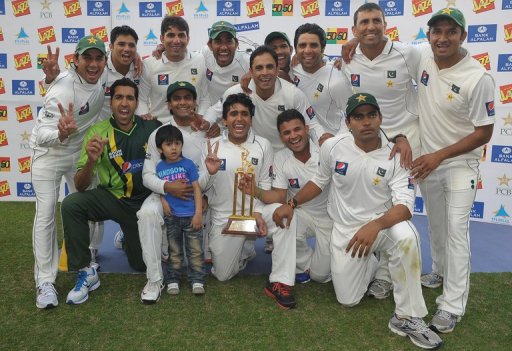
Pakistan’s 3-0 sweep of England, the No. 1 Test team, in the UAE was the most glittering result for a team that has managed to hold its own on the field despite facing a mountain of problems off it. Here’s a look at the key players in Pakistan’s resurgence as a Test team.

Misbah-ul-Haq

Ten months ago, Misbah-ul-Haq was a condemned man whose time as an international cricketer seemed over after he was made the scapegoat for Pakistan’s defeat to India in the World Cup semi-final in Mohali. Today, he is being heralded as an astute leader of a team bristling with pride and rightful claims to being a top-level Test side. Handed the captaincy ahead of Pakistan’s series against South Africa in the UAE in 2010, the soft-spoken, almost laidback Misbah has been hugely influential in steering Pakistan from a host of troubles and to series wins over New Zealand, Zimbabwe, Sri Lanka, Bangladesh and England – not to forget a draw with South Africa – and just the anomaly of a 1-1 scoreline against West Indies.

He hasn’t always been a proactive captain – his reluctance to push for a win against Sri Lanka in Sharjah last November attracted criticism – but his numbers as leader have been highly impressive: 15 matches, 1165 runs, average 64.72, with one century and 12 fifties. That one century – an unbeaten 102 in the second innings at Basseterre – played a big role in Pakistan leveling the two-Test series in the West Indies in May 2011. Innings of 99 and 70 not out earned him the Man-of-the-Match award in Wellington in January 2011, and those were clutch innings in a draw that gave Pakistan their first series victory outside the subcontinent since a triumph in New Zealand in 2003-04, and their first anywhere since 2006-07. In the first innings of the second Test against England in Abu Dhabi, Misbah top-scored with 84 on day in which the opposition dominated, and what a key innings it proved.

Saeed Ajmal

If there is one player who personifies Pakistan’s new-found aggression and fluency, it is the leader of their immensely proficient spin attack. Ajmal, 34, has been a constant threat to opposing teams with his accurate, nagging and attacking offspin, with his doosra causing batsmen much strife. His role as a strike bowler – he has bowled 696 overs in those 12 Tests, the most for any Pakistan bowler – has taken pressure off Umar Gul and meant he has been relied on to consistently take wickets. His success is staggering.

In 12 Tests under Misbah, Ajmal has reaped 77 wickets an average of 22.63 and strike-rate of 54.20 – significantly lower than career figures of 26.70 and 61.20. Along the way he picked up Man-of-the-Match awards for eight wickets in a nine-wicket win over Sri Lanka and in Dubai and 10 – including a career-best 7 for 55 – in a 10-wicket win over England at the same venue. He was the leading Test wicket-taker in 2011, and so far this year he has grabbed 24 wickets in three Tests against England.

In this recent series, the England batsmen were largely baffled by Ajmal’s variety. In the second Test, he became the fastest Pakistan bowler to 100 Tests, and to make his achievement more remarkable, he has not played a single of his 20 Tests at home.

Abdur Rehman

If Ajmal has been an expected success during Pakistan’s run under Misbah, then the 31-year-old Abdur Rehman has been a surprise package. In 13 Tests, this canny left-arm spinner – enjoying unexpected success in his late-blooming career – has been a constant threat with 64 wickets at an average of 26.57. With an almost immaculate line and length he has attained turn and dip while convincing batsmen to play back when they should have been forward. Nothing summed this up better than the series against England, when he made several reputed batsmen appear hapless against spin, none more so than Eoin Morgan.

However, it was Rehman’s Man-of-the-Match performance against New Zealand at Hamilton in January 2011 that really made him a certainty in the playing XI. His three wickets in each innings and a crucial innings of 28 helped propel Pakistan to victory in the first Test. This year, a career-best 6 for 25 routed England for 72 as Pakistan grabbed the series in Abu Dhabi, and in the final Test his 5 for 40 was decisive in Pakistan reducing England’s lead to 42. His 19 wickets in the series played a huge role in a 3-0 scoreline, and highlighted what a key ingredient Rehman has been for Pakistan.

Like Ajmal, he has bowled a lot of overs – 683.4 – while rarely allowing the batsmen to dominate. Rehman’s batting has been handy too, with an average of 13.s8 and a half-century offering some stability to the lower order.

Umar Gul

The only fast bowler to play consistently under Misbah, Umar Gul has carried himself with discipline all throughout. Ajmal and Rehman have hogged the wickets, but Gul’s 49 victims at 29.79 have been every bit as crucial in the team’s success.
The reliance on spin has eased Gul’s workload – he has bowled 452.5 overs in 13 matches – and this has undoubtedly led to the tall fast bowler not breaking down from injury, as he was prone to do so earlier in his career. His eight-wicket haul at Wellington was a stand-out effort in overseas conditions, and even on tracks in the UAE he has plugged away relentlessly, as 29 wickets from eight matches show.

In the first Test in Abu Dhabi, Gul responded to a flat surface with a hostile spell on the third day – during which he surpassed 150 Test wickets – as his new-ball incursions bagged him four wickets before Ajmal and Rehman wrapped up the rest. In the third Test in Abu Dhabi, Gul’s four wickets on the final day set the course of the match categorically towards Pakistan. The spinners have been the talking point of Pakistan’s success, but Gul’s role cannot he underestimated.

Mohammad Hafeez

At last looking like he belongs at Test-match level, Mohammad Hafeez has flourished in his latest avatar as opener and key ingredient in Pakistan’s spin-heavy bowling attack.

With the bat, he has offered solidity to a top order that has for too long been shaky, scoring 967 runs in 15 Tests at an average of 38.68, including two centuries and four fifties. With Taufeeq Umar – another cricketer enjoying a new lease on his international career – Hafeez has stitched together three century stands and four of 50 or more. For a side that used to regularly chop and change openers during the last decade, Hafeez’s pairing with Taufeeq over 15 Tests has been nothing short of solid.

Relied on heavily with the ball – he has bowled 250 overs – Hafeez has repaid the faith with 51 wickets at 26.36. His brisk offspin has helped Ajmal and Rehman take much-needed breaks in the field, and when tossed the new ball in Guyana he responded with wickets. The highlight of Hafeez’s run over these 15 Tests was a fine all-round performance against Zimbabwe in Bulawayo, where Hafeez followed a quick-fire 119 with four wickets and a brisk 38 in a successful chase.

Taufeeq Umar

Given an extended run as opener after a four-year hiatus, the 30-year-old Taufeeq has scored 1055 runs in 15 Tests under Misbah while averaging 39.07. His batting hasn’t always been attractive, as a strike-rate of 43.18 indicates, but the fact that he has been able to deliver platforms has been immense. Two fifties in New Zealand helped blunt the threat of the home team’s pace bowlers in seam-friendly conditions, and his 135 in the second innings against West Indies at Basseterre helped Pakistan level the series.

A career-best 236 followed against Sri Lanka in Abu Dhabi, as Pakistan drew the first Test. It was a marathon effort that helped grind Sri Lanka patiently through the second day, and Taufeeq was just pipped by Kumar Sangakkara for the Man-of-the-Match award. A seventh Test hundred would come against Bangladesh soon after.

Taufeeq’s form trailed off after a fifty in the first innings of the series against England, but his success in Pakistan’s resurgence merits further persistence.

Younis Khan

The former Pakistan captain has come back excellently from a ban imposed by the PCB after allegations that he had been partially responsible for infighting within the team. His 1138 runs at 66.94, including four centuries and four fifties, have been invaluable to Pakistan.
His presence in the middle order has steadied the team numerous times, not least when he scored centuries against South Africa and Sri Lanka to go with twin fifties against New Zealand at Wellington. But his most responsible innings came in the second innings of the third Test against England, as an out of form Younis took the game away from the opposition with a superbly crafted century. Yet again, he had summoned the resolve to produce a century when his detractors were gunning for him.

Azhar Ali

Of the younger players that have flourished under Misbah, 26-year-old Azhar Ali has been the most successful. His 1220 runs from 15 matches at 50.83 include two centuries and 11 fifties, and he has been a consistent performer at No. 3. Three consecutive half-centuries against South Africa got him going after an indifferent start to his career, and from there he ploughed on with fifties against each of the teams he played. His two centuries – 100 against Sri Lanka and 157 against England – were proof that Azhar has a long career ahead of him.

Punishing Pakistan Is Not The Way To Go

By Nancy Birdall for Foreign Policy

In the January/February 2012 issue of Foreign Affairs, Stanford political scientist Stephen Krasner claims that “current U.S. policy toward Pakistan has failed” and recommends that the United States take a radically different approach: credibly threaten to sever all forms of cooperation, including all U.S. aid – military and civilian – to force Pakistan into cooperating with the United States on security matters. Center for Global Development President Nancy Birdsall responds.

Stephen Krasner (“Talk Tough to Pakistan: How to End Islamabad’s Defiance,” Jan/Feb 2012) wants to change the Pakistani government’s behavior. He argues that its failure to cooperate with the United States on Afghanistan and on terrorism is not due to its weakness as a state. Instead, it is a rational response of Pakistan’s military leadership, whose priority is to defend itself against India – with a nuclear deterrent and support for terrorists and the Afghan Taliban. Therefore, the only way the United States can win cooperation from Pakistan is to threaten “malign neglect”- cut off military and civilian assistance, sever intelligence cooperation, maintain and possibly escalate drone strikes and initiate unilateral cross-border raids. If that isn’t enough, then the U.S. could move on to “active isolation” — declare Pakistan a state sponsor of terrorism, making it a pariah, and impose sanctions.

If only it were this easy. Krasner fails to mention that the U.S. has tried this approach before. In the 1990s it cut off military and civilian assistance to Pakistan and imposed sanctions in an effort to dissuade Pakistan from developing a nuclear capability. We all know how that story ended. But let’s suppose this time the threats or the follow-through worked and brought the military and intelligence establishment to heel in Pakistan. Let’s suppose the United States got what it wanted on the security front – helping assure a timely U.S and NATO withdrawal from Afghanistan. Would that solve the problem Pakistan poses for America’s security in the long run? No.

What Krasner doesn’t say is that the U.S. wants something more than compliance from Pakistan’s military and intelligence communities with its immediate security needs. The U.S. wants a capable and stable civilian government that plays by the rules of the international community. It wants a democratic state that would not abuse and misuse its nuclear capability and that would find its way to peaceful relations with India.

In other words the U.S. has a long-run vision for Pakistan, very much in its own interests, as well as a set of short-term demands. In the 2009 Enhanced Partnership with Pakistan Act (known as Kerry-Lugar Berman, or KLB) Congress recognized the resulting need for a two-track approach. That legislation made U.S. security assistance (not actually authorized in the legislation) conditional on Pakistani cooperation on security matters. But its fundamental purpose, and the money it authorized for civilian aid, was the rebuilding of a serious partnership with the civilian government and the people of Pakistan. With KLB as the framework, since 2009 the Obama Administration has engaged fully with the civilian government and with civil society and private sector leaders in Pakistan on a range of issues — energy, water, agriculture, macroeconomic issues, private investment and trade.

In short, the purpose of U.S. civilian aid to Pakistan is to help build a better state. It is not to bribe or reward the “government” (neither the military nor the civilian leadership). Withholding military aid would likely not punish the military anyway. It would, however, reduce the resources available to the civilian government, since the evidence is that the military can get what it wants from the government’s overall available resources. And withholding civilian aid obviously would not punish the military. It would, however, take away a modest tool of America – investing to educate kids, create jobs, and strengthen civil society and representative institutions and thus give Pakistan a better shot at becoming a stable, prosperous and democratic country in the long term.

There are of course real questions about the effectiveness of U.S engagement with the civilian government – with aid and dialogue – given the prevailing suspicion there of U.S. motives, the inherent difficulties of operating in a complex and insecure environment, and the bureaucratic shortcomings of the U.S. aid system itself. But then those are reasons to put relatively more emphasis on other forms of engagement: trade, investment, and encouraging the normalization of relations with India. They do not warrant bullying the weak civilian government that the U.S. wants to strengthen.

Krasner begins and ends his article by invoking the testimony of former chairman of the Joint Chiefs of Staff Admiral Mike Mullen during his last appearance before the Senate Armed Services Committee. Krasner is right in pointing out that Mullen was critical of Pakistan’s role in supporting extremist organizations and the need to get tough with Pakistan. Yet, Krasner fails to mention the conclusion Mullen reached in his statement. Mullen recognized that the U.S. has a variety of objectives in Pakistan and the region, and that by focusing too intensely on short term interests, the U.S. will end up short-changing itself over the long haul: “We must also move beyond counter-terrorism to address long-term foundations of Pakistan’s success – to help the Pakistanis find realistic and productive ways to achieve their aspirations of prosperity and security.” Mullen concludes, “Isolating the people of Pakistan from the world right now would be counter-productive.”

Nancy Birdsall is the founding president of the Center for Global Development, a Washington, DC based think tank.

Pakistani Surgeon Lands in Guinness Book

By Majid Mirza for The Good News

Dr Naeem Taj, a surgeon of the Capital Hospital CDA, has earned fame and prestige for the nation by gaining entry into the Guinness Book of World Record by removing 25.5 cm long gallbladder through 1 cm incision.

Dr Naeem after operating 70-year-old patient Rasheeda Bibi at CDA hospital removed 25.5cm long gallbladder from her body. This is the longest ever gallbladder removed laparoscopically in medical history. Guinness Book of World record has awarded Dr Naeem Taj of CDA with the certificate of “world’s longest gallbladder removed through laparoscopy”.

Executive Director Capital Hospital, Dr Saddique Akbar Satti on the occasion said that he was proud of his surgeon Dr Naeem Taj and expected much more on his credit due to his sheer talent.

Pakistan is Helping Afghan Taliban, Says Nato Report

As Reported by The BBC

The Taliban in Afghanistan are being directly assisted by Pakistani security services, according to a secret Nato report seen by the BBC.
The leaked report, derived from thousands of interrogations, claims the Taliban remain defiant and have wide support among the Afghan people. It alleges that Pakistan knows the locations of senior Taliban leaders.

A BBC correspondent says the report is painful reading for international forces and the Afghan government. Pakistan has strenuously denied any links with the Taliban on previous occasions.

“We have long been concerned about ties between elements of the ISI and some extremist networks,” said US Pentagon spokesman Captain John Kirby, adding that the US Defence Department had not seen the report.

The BBC’s Quentin Sommerville in Kabul says the report – on the state of the Taliban – fully exposes for the first time the relationship between the Pakistani intelligence service (ISI) and the Taliban.

The report is based on material from 27,000 interrogations with more than 4,000 captured Taliban, al-Qaeda and other foreign fighters and civilians.
It notes: “Pakistan’s manipulation of the Taliban senior leadership continues unabatedly”. It says that Pakistan is aware of the locations of senior Taliban leaders.

The report states: “As this document is derived directly from insurgents it should be considered informational and not necessarily analytical.”
Despite Nato’s strategy to secure the country with Afghan forces, the secret document details widespread collaboration between the insurgents and Afghan police and military.

Lt Col Jimmie Cummings, a spokesman for Nato’s International Security Assistance Force (Isaf) in Afghanistan, said the document was “a classified internal document that is not meant to be released to the public”.

“It is a matter of policy that documents that are classified are not discussed under any circumstances,” he said.
The report also depicts the depth of continuing support among the Afghan population for the Taliban, our correspondent says.
It paints a picture of al-Qaeda’s influence diminishing but the Taliban’s influence increasing, he adds.

In a damning conclusion, the document says that in the last year there has been unprecedented interest, even from members of the Afghan government, in joining the Taliban cause. It adds: “Afghan civilians frequently prefer Taliban governance over the Afghan government, usually as a result of government corruption.”

The report has evidence that the Taliban are purposely hastening Nato’s withdrawal by deliberately reducing their attacks in some areas and then initiating a comprehensive hearts-and-minds campaign.

It says that in areas where Isaf has withdrawn, Taliban influence has increased, often with little or no resistance from government security forces. And in many cases, with the active help of the Afghan police and army.

When foreign soldiers leave, Afghan security forces are expected to take control. However according to the report, rifles, pistols and heavy weapons have been sold by Afghan security forces in bazaars in Pakistan.

Pakistani and Indian Chefs Compete on Reality TV

By Sebastian Abbot for The Associated Press

For decades, archenemies Pakistan and India have engaged in a dangerous nuclear arms race. Now they’re also competing in a more cheerful forum. The outcome will be mouthwatering curries and soothing Sufi ballads, not violent conflict.

The fractious neighbors are going head-to-head in a pair of reality TV shows that pit chefs and musicians against each other. Producers hope the contests will help bridge the gulf between two nations that were born from the same womb and have been at each other’s throats ever since.

But so far it hasn’t completely worked out that way. The top Pakistani chef on the cooking show, which is called Foodistan, quit the contest early. He accused the judges of bias toward India and is threatening to sue. The producers denied the allegations.

Pakistan and India were founded in 1947 following the breakup of the British empire. They have fought three major wars, two of them over the disputed territory of Kashmir.

The TV shows do not try to hide or brush over this painful history. They make light of it.

“Now the world’s greatest rivalry is going to get spicier,” said co-host Ira Dubey during one of the early episodes of Foodistan, which first aired in India on Jan. 23 and will be shown in Pakistan starting in mid-February.

Her counterpart, Aly Khan, said the aim of the two teams “would be to grind the opposition into chutney, to make them eat humble pie, to dice them, slice them and fry them on their way to culinary glory.”

Eight chefs from each country were scheduled for individual and team competitions over 26 one-hour episodes, with the winner authoring the first Foodistan cookbook and receiving a trip to three cities of his or her choice anywhere in the world.

There is significant overlap in the cuisines of both countries, as there is in language, music and culture. Pakistanis and Indians both love curry, kebab and biryani – a spiced rice dish. But they often use different ingredients, and dishes can also vary from one region to another within the same country.

Pakistani dishes often include beef, which is not eaten by many people in majority Hindu India for religious reasons. India has more vegetarian dishes, and the food is often cooked with ingredients like coconut milk that are rarely found in Pakistan.

Many Pakistanis and Indians have missed out on enjoying the varied tastes of the other country because mutual enmity has made cross-border travel difficult.

“Even though they are neighbors, Indians don’t know what Pakistani food is like and vice versa,” said Mirza Fahad, a production assistant at India’s NDTV, which developed Foodistan. “It was long overdue to get to know each other’s foods.”

During the first cook-off on the show, filmed in New Delhi, the judges gave four chefs from each side two hours to prepare a biryani, curry, kebab and dessert. Each of the three judges gave the team’s meal a score out of 10.

The judges loved the Iranian-inspired fish biryani cooked by the Pakistanis, their chicken kebab stuffed with figs, olives, bread and mango chutney, and their shahi tukda – a dessert of fried bread soaked in hot milk with spices. They scored 21 out of a possible 30, losing points because a dish of chicken in shalimar curry was a tad chewy.

The Indians ended up winning the first contest by one point with a menu that included chicken tikka with truffle cream, cheese kofta in a tomato and water chestnut curry, lamb biryani and phirni – a sweet rice pudding that they topped with strawberry granita.

The captain of the Pakistani team, Mohammed Naeem, executive chef at the Park Plaza Hotel in Lahore, alleged the judges didn’t have enough knowledge of Pakistani food and were destined from the beginning to pick an Indian to win.

The judges included a British chef, an Indian food critic and a Bollywood actress of Pakistani and French descent.

Another member of the team, Akhtar Rehman, a chef at the Marriott Hotel in Islamabad, said concerns about the judges were fairly widespread on the Pakistani side, but Naeem was the only one to quit.

It remains to be seen whether the music competition – Sur Kshetra, or Musical Battlefield – also will spark ill will.

The contest, which is being filmed in Dubai, is scheduled to air in Pakistan and India starting in mid-February, said Mohammed Zeeshan Khan, a general manager at Pakistan’s Geo TV, which is developing the show.

“Music can unite people across borders and bring them closer together,” said Khan.

The competition will include teams of six musicians from each country between the ages of 18 and 27. The teams will be mentored by two well-known pop singers and actors, Pakistani Atif Aslam and Indian Himesh Reshammiya. They will compete across a range of genres, including jazz, pop, rock and qawwali – traditional Sufi Muslim ballads that are popular in both countries, said Khan.

The grand prize is still being worked out, but Khan said the winner can claim to be “the new musical icon for the subcontinent.”

Husain Haqqani, former Pakistan envoy to US, allowed to travel abroad

By Richard Leiby for The Washington Post

Husain Haqqani, Pakistan’s former ambassador to the United States, was permitted to travel abroad Monday by the nation’s Supreme Court after two months of fending off treason allegations over his purported involvement in a mysterious memo that sought Washington’s help to neuter Pakistan’s powerful military.

The court ruling indicated that authorities seem to have lost interest in continuing to probe Haqqani’s role in the scandal, known here as Memogate, which at one point threatened to bring down the civilian leadership of this coup-prone country.

Haqqani, a confidant of President Asif Ali Zardari, was forced to resign, recalled to Islamabad and ordered not to travel abroad after a Pakistani American tycoon, Mansoor Ijaz, alleged that the diplomat engineered an unsigned missive to the Pentagon hoping to block a coup in the turbulent days after the killing of Osama bin Laden.

Haqqani denied involvement and said Ijaz, a onetime acquaintance, cooked up the memo.

In an e-mail to Agence France-Presse, Haqqani said: “I am glad that the Supreme Court has restored my right to travel, which had been rescinded without any charges being filed against me.” He added that he planned to join his family in the United States.

Memogate prompted a showdown between the army and the civilian leadership, which technically oversees the military, and brought an already shaky government to the verge of collapse. The fissures between the two sides now seem to have been repaired, and the incessant political and media interest in the scandal has waned in recent days.

One reason seemed to be the dwindling credibility of Ijaz, who has yet to appear to testify about his role in the memo, saying he fears for his safety. The bulk of evidence has come from Ijaz, who released logs of what he says are BlackBerry message conversations between him and Haqqani.

Since his return to Islamabad, Haqqani has stayed within the walls of the official government residence, saying he feared for his life.

Earlier this month, U.S. Sens. John McCain (R-Ariz.), Mark Kirk (R-Ill.) and Joseph I. Lieberman (I-Conn.) issued a statement condemning the “harassment” of Haqqani, a former journalist and Boston University professor. They called him a “principled advocate” for Pakistan.

Despite allowing the erstwhile diplomat to travel, the Supreme Court did not drop the matter entirely: It granted a two-month extension to the judicial commission that is probing Memogate. And Haqqani’s lawyer had to guarantee that the former envoy would appear before the court if called, on four days’ notice.

A separate parliamentary investigation is also underway.