Posts Tagged ‘ Pakistanis ’

The Problem with Pakistan’s Democracy

By Farahnaz Ispahani for Foreign Policy
Image

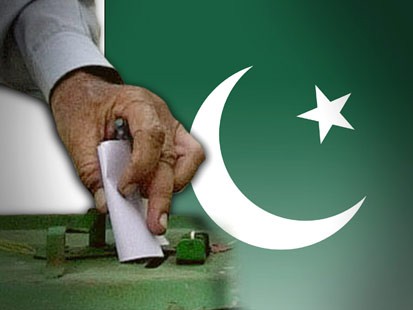
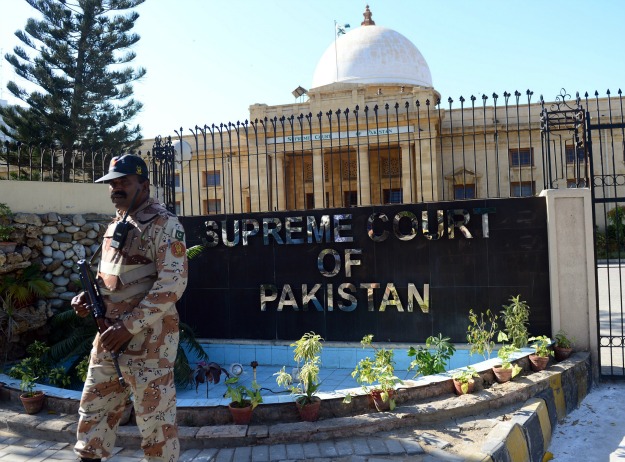
On Sunday, former military dictator Pervez Musharraf was at last given permission to run in the parliamentary elections scheduled for May 11, but only in the northern district of Chitral. Two other districts rejected his nomination papers, and his application in Islamabad is still pending. Elections officials in Pakistan, acting under directives of the country’s Supreme Court, have excluded several candidates — among them Musharraf — from running in the elections. This pre-selection of candidates is based on controversial Articles 62 and 63 of the Constitution, decreed by military ruler General Zia ul-Haq in 1985 as part of his Islamization agenda. These articles forbid anyone who does not meet the test of being a good Muslim or patriotic Pakistani from becoming members of Pakistan’s parliament. Until now, the highly subjective criteria of these provisions have never been implemented in practice.

This time around, the Election Commission of Pakistan has allowed officials in each parliamentary district to vet candidates. The result is a mish-mash of arbitrary decisions. Almost 100 members of the out-going legislatures, many of them deemed popular enough to win re-election, have been disqualified for producing fake college degrees at the last poll, when the generals mandated the possession of one as a pre-condition for membership in parliament. The law was changed by parliament in 2008 and it is questionable why, after serving for five years, these politicians are being challenged now.

Former Prime Minister Raja Pervez Ashraf was disqualified on grounds of unproven corruption allegations. Musharraf was barred from running in two districts while being found sufficiently sagacious in another. The leader of the opposition in the outgoing parliament, Chaudhry Nisar Ali, was similarly found to be lacking in the criteria in one district where he filed his nomination papers, while being allowed to run in another.

The last few days have witnessed the spectacle of Election Officers asking candidates to recite specific verses from the Quran, prove that they pray five times a day, and in the case of a female candidate, even respond to the question “How can you be a good mother if you serve in parliament and are too busy to be fulfill your religious duties as a wife and mother?”

The pre-qualification conditions have adversely affected liberal candidates while favoring Islamist ones. Columnist Ayaz Amir, who is part of former Prime Minister Nawaz Sharif’s Pakistan Muslim League, has been disqualified from running as a candidate because he wrote articles that were “disparaging” about the ‘ideology’ of Pakistan. Militant and terrorist leaders have had no problem in meeting the litmus test of religiosity and commitment to Pakistan’s ideology. Nomination papers for Maulana Mohammad Ahmad Ludhianvi, who heads Ahle Sunnat Wal Jamaat, a reincarnation of a banned terrorist organization, were cleared even though he has publicly acknowledged his role in the killing of Shias in the country.

In addition to facing discrimination from election officials, liberal politicians must also contend with threats from terrorists – threats that have not persuaded the judiciary or the permanent state apparatus to enhance security for these politicians. Tehrik-e-Taliban Pakistan (TTP) has warned that candidates and rallies of ‘secular’ parties like the Pakistan People’s Party (PPP), Muttahida Qaumi Movement, and Awami National Party (ANP) would be targeted, and the targeting has already begun. The ANP lost one of its finest leaders, Bashir Ahmed Bilour, a few months ago. The TTP took credit for the murder.

The elimination of liberal political figures must be seen as part of the process of creeping Islamization, as well as the permanent militarization of Pakistan, which began during Zia ul-Haq’s military dictatorship. Using Islam and a narrow definition of patriotism to limit the options available to voters is nothing new. It is a direct outcome of Pakistan’s long history of dominance by unelected institutions of state, euphemistically referred to as the ‘establishment.’ In addition to existing under direct military rule for half its life as an independent country, Pakistan has always lived in the shadow of the ubiquitous influence of generals, judges, and civil servants.

No elected parliament was ever allowed to complete its full term until this year. But instead of allowing voters to choose the new government in a free and fair election, the establishment wants to make sure that the voters have only limited choice at the polls. A direct military coup is no longer feasible. The politicians, led by President Asif Zardari, have foiled bids by the judiciary to virtually become the executive. The battle between elected leaders and unelected judges has come at great cost to several outspoken individuals in the country’s politics. Now, an election with pre-qualification could ensure the establishment’s supremacy without overtly pulling back the democratic façade.

From the establishment’s perspective, Pakistan’s politicians cannot be trusted to lead or run the country even if they manage to get elected by popular vote. The political system must somehow be controlled, guided, or managed by the unelected institutions who deem themselves morally superior and even more patriotic than those supported by the electorate. This patrician approach is reflected in the assertions of Generals Ayub Khan (1958-69), Yahya Khan (1969-71), Zia ul-Haq (1977-1988) and Musharraf (1999-2008) at the time they took power in coups d’Ă©tat. It can also be found in the constant efforts by Supreme Court judges and civil servants to second-guess the people by deciding who is and who is not eligible to run in elections.

General Zia ul-Haq created structures for limiting democracy that would outlast him. He drastically changed the constitution and legal regime in ways that have proved difficult to reverse, even a quarter century after his death. The outgoing Pakistani parliament completed its term and amended the constitution to make it closer to what it was originally intended to be. But the Islamic provisions introduced by Zia ul-Haq persist, enabling the establishment to use Islam as an instrument of control and influence over the body politic.

Article 62 demands that a candidate for parliament demonstrate that “he is of good character and is not commonly known as one who violates Islamic Injunctions; he has adequate knowledge of Islamic teachings and practices obligatory duties prescribed by Islam as well as abstains from major sins; he is sagacious, righteous and non-profligate, honest and ameen, there being no declaration to the contrary by a court of law; and that he has not, after the establishment of Pakistan, worked against the integrity of the country or opposed the ideology of Pakistan.”

Article 63 disqualifies a Pakistani from becoming an MP if “he has been convicted by a court of competent jurisdiction for propagating any opinion, or acting in any manner, prejudicial to the ideology of Pakistan, or the sovereignty, integrity or security of Pakistan, or morality, or the maintenance of public order, or the integrity or independence of the judiciary of Pakistan, or which defames or brings into ridicule the judiciary or the Armed Forces of Pakistan.”

Both constitutional provisions provide considerable leeway to an ideological judiciary to influence the electoral process and exclude critics of the establishment from the next legislature. The recent celebration and positive commentary over parliament completing its term should not distract us from an ugly reality. Pakistan’s establishment may have refrained from another direct coup, but it is still far from accepting the basic premise of democracy – the supremacy of parliament among institutions and the right of the people to vote for whomever they choose.

Farahnaz Ispahani is a former member of the Pakistani parliament and former Media Advisor to President Asif Ali Zardari, as well as a writer and minority rights advocate.

Obscuring a Muslim Name, and an American’s Sacrifice

As Reported by Sharon Otterman for The New York Times

Image

He was buried after the Sept. 11 attacks with full honors from the New York Police Department, and proclaimed a hero by the city’s police commissioner. He is cited by name in the Patriot Act as an example of Muslim-American valor.

And Representative Keith Ellison of Minnesota, one of two Muslim members of Congress, was brought to tears during a Congressional hearing in March while describing how the man, a Pakistani-American from Queens, had wrongly been suspected of involvement in the attacks, before he was lionized as a young police cadet who had died trying to save lives.

Despite this history, Mohammad Salman Hamdani is nowhere to be found in the long list of fallen first responders at the National September 11 Memorial in Lower Manhattan.

Nor can his name be found among those of victims whose bodies were found in the wreckage of the north tower, where his body was finally discovered in 34 parts.

Instead, his name appears on the memorial’s last panel for World Trade Center victims, next to a blank space along the south tower perimeter, with the names of others who did not fit into the rubrics the memorial created to give placements meaning. That section is for those who had only a loose connection, or none, to the World Trade Center.

The placement of Mr. Hamdani’s name has fueled the continuing concern and anger about how his legacy was treated soon after the Sept. 11 attacks, when, apparently because of his Pakistani roots, Muslim religion and background as a biochemistry major at Queens College, he fell under suspicion.

His name appeared on a flier faxed to police stations; newspaper headlines amplified his status as a person wanted for questioning.

“They do not want anyone with a Muslim name to be acknowledged at ground zero with such high honors,” his mother, Talat Hamdani, 60, said last week at her home in Lake Grove on Long Island, her voice filled with pain. “They don’t want someone with the name Mohammad to be up there.”

To Mrs. Hamdani, that her son would not be recognized at the memorial as an official first responder was the latest in a series of injustices that began with a knock on her door from two police officers in October 2001. She, her husband and two other sons had been searching morgues and hospitals for his body. But the officers wanted to ask questions, and they asked for a picture from the refrigerator that showed Mr. Hamdani, 23 when he died, at his Queens College graduation next to a friend who Mrs. Hamdani had told them was from Afghanistan.

It was around the same time that Mr. Hamdani’s official police cadet picture was circulating through police stations on a flier with the handwritten words “Hold and detain. Notify: major case squad,” The New York Times later reported. Investigators visited Mr. Hamdani’s dentist and confiscated his dental records, his mother learned.

It was not until March 2002, when the family was finally informed that Mr. Hamdani’s remains had been found in the wreckage more than five months earlier, that the public cloud over his name cleared.

It turned out his was a classic New York story. His family had immigrated from Pakistan when he was 13 months old, his father opening a candy store, his mother becoming a middle school teacher. Mr. Hamdani attended Catholic school in Greenpoint, Brooklyn, until the eighth grade, and then played football for Bayside High School in Queens.

He became a certified emergency medical technician and spent a year volunteering for MetroCare, a private ambulance company. He was a police cadet for three years and had taken the test to enter the academy, but was waiting to see if he was accepted to medical school.

On the morning of Sept. 11, 2001, his family and friends believed, Mr. Hamdani, traveling to work at a DNA analysis lab at Rockefeller University, must have seen the burning towers from the elevated subway tracks in Queens and gone down to help.

“We have an example of how one can make the world better,” Mayor Michael R. Bloomberg said of Mr. Hamdani. The mayor was one of the dignitaries who appeared at Mr. Hamdani’s funeral, which was held with full police honors at a mosque off East 96th Street in April 2002.

“Salman stood up when most people would have gone in the other direction,” Mr. Bloomberg said.

For years, Mrs. Hamdani believed that the police had fully acknowledged her son’s sacrifice. She cherished the weighty brass police cadet badge that the police commissioner, Raymond W. Kelly, had given her, to dispel any doubts about who her son had been.

So it was with shock that she received a notification from the Sept. 11 memorial in 2009 that Mr. Hamdani’s name would be listed among those with “loose connections” to the World Trade Center where they died.

She tried calling politicians, even writing a letter to President Obama, from whom she received a respectful but vague hand-signed reply. Her son’s placement had fallen through bureaucratic cracks.

There is no section at the memorial for informal rescue workers, first responders in the literal sense, who were believed to have voluntarily gone to the towers to help but who were not yet full-fledged members of an approved first-responder agency.

Organized groups of victims’ family members settled on the concept of “meaningful adjacency” to guide the placement of names, allowing them to place victims’ names next to those of people they worked with or knew. That was no help in the case of Mr. Hamdani, who had apparently not known anyone there.

“That’s where the model falls down,” said Thomas H. RogĂ©r, a member of the memorial foundation’s board who was deeply involved in those discussions. “That was the sad part about it. If you weren’t affiliated with one of the groups that had a constituency that was at the table, when we were carrying out all these negotiations, then nobody was representing your cause.”

Meanwhile, the Police Department did not include Mr. Hamdani’s name on its own list of the fallen because “he was still a student,” said Paul J. Browne, a department spokesman. A police cadet is the equivalent of a paid college intern with the department, Mr. Browne said, and is not a full-fledged police officer or a recruit enrolled at the academy.

“But that did not take away from Mohammad’s actions that day,” Mr. Browne said in an e-mail. “If anything, it magnified them. He didn’t have to respond. It wasn’t his job, but he did anyway.”

Linda Sarsour, the director of the Arab American Association of New York City, said acknowledging Mr. Hamdani as a first responder “would be a great gesture to say to the community that we recognize that we have Muslim-Americans who risked their lives or lost their lives on that day, and for that we thank you.”

Mr. RogĂ©r, of the memorial foundation, wondered if Mr. Hamdani’s name could appear in the Police Department’s section of the memorial with an asterisk noting that he was a police cadet. The Rev. Chloe Breyer, the executive director of the Interfaith Center of New York, also suggested some compromise.

“It shows an enormous lack of imagination on the part of the N.Y.P.D. and museum not to figure out a way to acknowledge adequately the special sacrifice he made and that his mother endures daily,” she said in an e-mail.

Mrs. Hamdani, who has started a Queens College scholarship in her son’s name, is still unsure of how much she wants to press the issue. Pride, in the end, is the overwhelming feeling she has for her son.

“You are equal no matter where you are buried, whether your name is there or not,” Mrs. Hamdani recalled saying as she stood before his name and the memorial’s pouring waterfalls on the 10th anniversary of the attacks. “By your actions the world remembers you.”

Pakistan’s Dangerous Elections

As Reported by Fasih Ahmed for The Daily Spin

Image

A self-confessed peddler of nuclear weapons, a sport star turned messiah, a Saudi proxy who once wished to declare himself the Shadow of God on Earth—these are just some of the candidates in Pakistan’s upcoming national elections.

Much rides on the May elections, which, if they take place as planned, will mark the first-ever transition in Pakistan’s history from a fully civilian elected government to another. The path to revival or ruin for this nuclear-armed nation of some 180 million will depend on the results of what is shaping up to be a highly contentious—and dangerous—race. At stake is how Pakistan will deal with the looming withdrawal of U.S.-led forces from Afghanistan, where Pakistani generals fear India will establish a foothold. Then there is the issue of the state’s inchoate policy toward the al Qaeda and Taliban terror franchises that has cost Pakistan some 49,000 lives since the 9/11 attacks. Add to that the economic mess—food and fuel shortages, unemployment, inflation, mounting costs from the war on terror, running deficits from voter-pleasing social welfare and development schemes—and the electorate’s not surprising loss of faith in Parliament.

And terrorists, especially the Pakistani Taliban, have threatened to disrupt the elections through intimidation and assassinations. Among their avowed targets: President Asif Ali Zardari and his Pakistan Peoples Party (and their political allies, which are also deemed liberal and pro-American) as well as former president and Army chief Pervez Musharraf, who recently ended his four-year self-exile and returned to Pakistan.

The Election Commission has pleaded with the Army to help keep the peace on May 11. But already, the violence is taking its toll. On Sunday, a bomb disrupted the campaign office belonging to a Zardari ally in northwestern Pakistan. Two were killed, and at least five injured. The Pashtun-dominated party is also being bloodied by drive-by bombings in Karachi. Earlier this month, the district election commissioner of Quetta was shot dead, and pamphlets warning citizens against voting have been menacingly strewn across Baluchistan province.

At the same time, terrorists have promised not to disrupt the prospects of cricket legend Imran Khan or the Pakistan Muslim League (NAWAZ), a party strategically allied with sectarian and terrorist groups for electoral muscle.

Pundits have speculated that threats from the Taliban as well as the weight of incumbency will suppress turnout and that the goal of “free, fair, and peaceful” elections mostly will remain an unfulfilled aspiration. But the 85-year-old chief election commissioner of the country, Fakhruddin G. Ebrahim, thinks otherwise. During the last election, voter turnout hovered around 40 percent. But Ebrahim says several factors–including a vibrant media culture, a generation of young idealistic voters, and an empowered civil society—could bring a surprising turnout as high as 60 percent of the electorate. “When I see the enthusiasm of the people, I am inclined to think it is possible,” he told The Daily Beast. “No one can promise that the democratic exercise will be completely free and fair,” he says. “But I am confident the 2013 elections will be different.”

This time, 86.1 million Pakistanis—more than a third of them between the ages of 18 and 30—are registered to vote at polling stations across the country. The Election Commission has allowed some 148 political parties to run, allotting symbols to each party to help voters who cannot read. Nuclear salesman A.Q. Khan’s party, for example, has been given a missile; Imran Khan’s, a cricket bat.

With more than 10,000 candidates nationwide, the polls will present Pakistanis with a range of options to choose from. The left—which wants social freedom and liberties, peace with India, a laissez-faire approach to Afghanistan, continued strong relations with the U.S., and curbs on the Army’s power—is led by the Pakistan Peoples Party and its allies. The right—anti-India, anti-America, and preaching the importance of religion in political life—is represented by Imran Khan and his party, the Pakistan Tehreek-e-Insaf; Saudi-backed former prime minister Nawaz Sharif and his Pakistan Muslim League, as well as smaller religious parties. The fringe is occupied by Musharraf, A.Q. Khan, and the political divisions of militant groups that have also been allowed to run.

According to the most recent polls, if elections were held today, they would yield a hung Parliament, and thus require expert coalition building. That in turn would mean that candidates spearheading smaller parties—candidates such as Imran Khan—will become kingmakers, handed disproportionate power to decide Pakistan’s future. 

Fasih Ahmed is the editor of Newsweek Pakistan. He won a New York Press Club award for Newsweek’s coverage of Benazir Bhutto’s assassination. Ahmed was also the inaugural Daniel Pearl fellow and worked at The Wall Street Journal’s Washington, D.C., bureau in 2003. He graduated from Columbia University and lives in Lahore.

Return of an Erstwhile King

As Reported By The Economist

Image

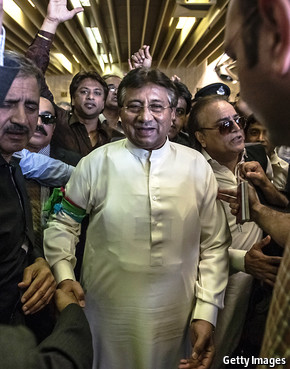
PERVEZ MUSHARRAF, a former army dictator and president of Pakistan, returned from London on March 24th to the country he once commanded, after an absence of more than four years. He finds not a trace of the power and significance he once wielded.

He came, he said, to contest elections, scheduled for May 11th, and “to save Pakistan”. Though the country could certainly do with rescuing, Mr Musharraf faces stiff competition among those offering themselves as saviour. They include a former prime minister and his bitter enemy, Nawaz Sharif, and a notable cricketer-turned-politician, Imran Khan. Meanwhile, the outgoing government of the Pakistan Peoples Party achieved little, but its re-election is not out of the question.

A small crowd of supporters gathered at Karachi airport to welcome Mr Musharraf. “I cry when I see the state of Pakistan today,” he blustered. The rally his people had planned that evening had to be cancelled, apparently for security reasons. That may have been just as well: participants looked likely to be few.

Mr Musharraf lacks popularity and a political base. He also faces threats from the Pakistani Taliban and allied extremist groups. In office, he survived two well-planned assassination attempts. He will now have nowhere near the level of security that saved his life then. The Pakistani Taliban threatens a special squad that will “send Musharraf to hell”. When Benazir Bhutto returned from exile to Pakistan in October 2007, extremists bombed her motorcade after it left Karachi airport, killing around 140 people. She was unhurt in that attack. But a suicide bomber at a rally assassinated her two months later.

Mr Musharraf seized power in 1999 after the prime minister at that time, Mr Sharif, tried to sack him as army chief. He ruled Pakistan, first just as a general and later as president, until 2008, when rising unpopularity forced him to hold elections that his party lost.

He also faces a series of court cases in Pakistan and was careful to arrange pre-arrest bail before arriving. He is accused in the Bhutto murder case (though no direct evidence implicating him has emerged), as well as over the killing of a tribal leader, Akbar Bugti. And then he faces charges of treason, too, for staging his coup in 1999.

It was under Mr Musharraf that extremists turned on the state, after the attacks of September 11th 2001 led him to forge an alliance with America. Yet Mr Musharraf never turned on all militant groups, some of which operated with a degree of latitude. The Pakistani Taliban even seized a territory in the heart of the country, Swat.

Pakistan enjoyed a period of rapid economic growth during his time in office, but it was a bubbly time for Pakistan, and the bubbles burst as Mr Musharraf was leaving office. At least he managed to keep prices under control, especially for food.

Mr Musharraf is a big name internationally, but within Pakistan he now seems an irrelevance. His presence may become a sideshow in this election season.

More watched now will be the campaign of Imran Khan, who staged a huge rally on March 23rd in Lahore, Pakistan’s second city. After suddenly growing wildly popular in late 2011, with a promise of a new politics to break the established and corrupt two-party system, Mr Khan has lost much momentum in recent months. His showing in Lahore was an attempt to regain the initiative—and it proved that he can still pull a crowd. Mr Khan will win votes across the country but, with Pakistan’s first-past-the-post system, it may not translate into many seats.

This election, assuming it takes place, will mark the first time that one elected government completes a full term and hands power over to another. That is something, but the job of saving Pakistan remains, as ever, up for grabs.

Pakistan Prepares For Election

By Farhan Bokhari in Lahore and Victor Mallet in New Delhi for The Financial Times

Image

Pakistan’s government stepped down at the weekend after a full five-year term, paving the way for an election and change of administration that would be the country’s first constitutional democratic handover since independence and partition from India in 1947.

“It is true that in the past five years we have not been able to make rivers of milk and honey flow in the country,” said Raja Pervez Ashraf, prime minister in the Pakistan People’s party (PPP) government of President Asif Ali Zardari, in a televised farewell speech.

“We have used all our resources to strengthen the foundations of democracy and – by the grace of God – today democracy is so strong that no one will dare to dislodge it in the future.”

The PPP and its leader Mr Zardari, who was elected after his wife Benazir Bhutto was assassinated, claim credit for strengthening democracy in a country that has been ruled for long periods by the armed forces – most recently under General Pervez Musharraf in the decade up to 2008.

But the government’s popularity has collapsed during its time in office, undermined by bombings and the killing of civilians by the Pakistan Taliban, and by power shortages and other economic problems.

Even the process leading to a change of government is deadlocked, with mainstream politicians so far unable to agree on a caretaker prime minister to run the country for up to 90 days, and to oversee the general election. Among the possible candidates for the position are Ishrat Hussain, a former central bank governor and World Bank official, and Nasir Aslam Zahid, a former judge.

“The immaturity of our democracy is nowhere more evident than in the failure to agree on a way forward,” said one politician from the opposition Pakistan Muslim League-Nawaz (PML-N). “This decision should have been made weeks ago and we still seem to be haggling over it.”

Pakistanis mostly welcomed the completion of the government’s term – a feat that had sometimes seemed in doubt – but criticised Mr Zardari’s inability to curb extremist violence or to start restoring the economy to health.

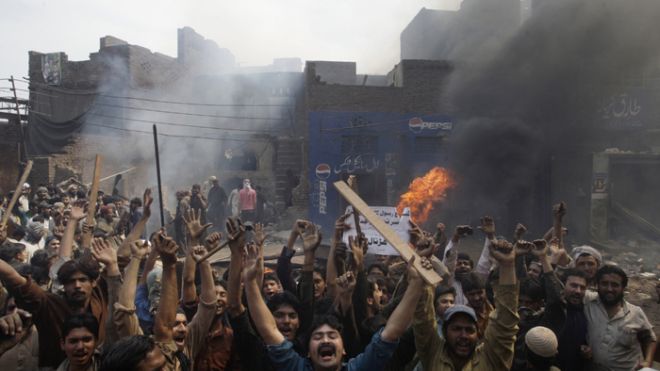
In a recent incident on March 9, Muslim zealots in Lahore burnt down 178 homes belonging to Christians – a tiny and poverty-stricken minority in Pakistan – following the arrest of a young Christian man on blasphemy charges. More than 250 Shia Muslims have been killed this year in attacks blamed on militant Sunnis.

Senior officials have also been murdered during the government’s term. They include Salman Taseer, governor of the populous Punjab province, killed by one of his police guards after Mr Taseer publicly defended Aasia Bibi, a Christian woman arrested in another blasphemy case.

“It would be utterly crazy to celebrate this coming of age of democracy,” said Nadeem Masih, a Christian office worker in Lahore. “The government has left more Pakistanis insecure than when it came to office.”

Investors are equally sceptical, noting the fall in the value of the Pakistani rupee and the state of most of the country’s infrastructure. “The economy is in shambles, there is more corruption and cronyism,” said one businessman from Karachi, who asked not to be named. “Should we still celebrate this democracy?”

Western diplomats say one reason why Pakistan might be able to keep its democracy alive is the refusal thus far by General Ashfaq Pervez Kayani, the army chief, to seize power in response to calls from some of the government’s opponents.

“General Kayani has played a very sobering role,” said one diplomat in Islamabad. “He has remained true to his promise of letting democracy flourish in Pakistan.”

Hasan Askari Rizvi, a political commentator, said it was a success for the government to have lasted five years. “But the government has left behind more problems for Pakistan than they inherited. Maybe the hope is that we will evolve into a more stable democracy in the long term, but that’s still on the distant horizon.”

Pakistani mobs use blasphemy as excuse to persecute, say Christians

By Sib Kaifee for Fox News

PakistanLahore

In Pakistan, the mere accusation of blasphemy is enough to spur angry mobs to violence, and human rights advocates say the victims are usually Christians.

Last weekend, some 3,000 Muslims stormed Christian churches, torched hundreds of homes and burned hundreds of Bibles in a Christian neighborhood of Lahore, the country’s second largest city.  It apparently began as an argument between two men, but once the accusation of blasphemy was invoked, it exploded into violence and mayhem.

“The attackers were given a free hand when they were torching the belongings and our homes,” a witness told FoxNews on condition of anonymity. “The attackers were Pashtuns and workers of different steel factories and warehouses.”

The violence came two days after Sawan Masih, a Christian sanitation worker , and Shahid Imran, a Muslim barber, scuffled.  When Imran accused Masih of blasphemy, police and a local mosque got involved and the situation spiraled out of control. Remarkably, no one was killed.

“I was beaten by the mob despite the fact I had nothing to do with what happened,” said a shaken up Chaman Masih, father of the suspect, “but I know one thing that my son is innocent.’’ Masih accused the Police of prior knowledge of the attack.

In Pakistan, where Christians make up about 1.6 percent of the population of 180 million, a blasphemy conviction can bring a sentence of life in prison or even death. And a religious political party also made attempts to urged the Islamic nation’s courts to ban the Christian bible altogether, arguing that “it contains blasphemous passages that are a cause of humiliation for Muslims”.  Although the nation has so far not taken that step, the sentiment provides cover for vigilante attacks on minorities, according to Christians.

Salamat Akhtar, founding chairman of the All Pakistan Christians League, told FoxNews.com it was the mob that committed blasphemy in the latest case, by burning two churches and destroying the bibles.

“We request the government to register the same blasphemy case against the perpetrators,” said Akhtar.

Nearly 200 houses were burned in the Christian neighborhood, called, Joseph Colony. The destruction has left about 300 poor Christian families homeless and wondering why police, instead of providing protection, told them to evacuate ahead of the mob backlash.

A senior police official from Lahore told FoxNews.com that the Christian residential colony comprises a quarter of an otherwise industrial area, and noted the factory owners have long been trying to dislodge them so they could expand their operations.

After hundreds of Christians took to the streets to protest the day after the violence, Pakistan’s Supreme Court criticized local police on Monday. A hearing has been adjourned for Wednesday, but Asif Aqeel, director of Center for Law and Justice, said the courts were not likely to be able to do much.

“Judicial inquiries into such incidents mostly remain useless as the administration influenced by [the] powerful government does not provide facts and dodges the judges,” Aqeel said.

Though Pakistani President Asif Ali Zardari and Prime Minister Raja Pervaiz Ashraf both have ordered an investigation in to the attack and condemned it, Christian activists are skeptical.

“The government, courts and institutions are not serious about our plight and after so many incidents, our confidence level is decreasing,’’ Naila Diyal, chairperson of Christian Progressive Movement, told FoxNews.com.


The Massacre of Shias in Shia founder Jinnah’s Pakistan

By Manzer Munir for Pakistanis for Peace

Image

Another day brings news of a yet a new massacre on the Shia community in Pakistan. By last count, at least 47 people have been killed in a bomb attack in the Shia enclave inKarachi Pakistan by the name of Abbas Town with many other injured.

I’m ashamed of this brutality and for the 3rd consecutive large scale attack on the Shia people in Pakistan. The founder of the nation, Jinnah and his sister Fatima Jinnah were Shia Pakistanis. My wife’s family is Shia. Now for the first time, today I am also a Shia Pakistani.

I feel for the fear that this Shia community across Pakistan must be feeling for the last several weeks. Earlier this year, nearly 200 people had been killed in two separate attacks targeting the Shia community in the south-western city of Quetta in January and February. And for what? For having a different view on certain events in Islam’s history? For that these murderous theologically ‘purists’ would want us to believe? Are they not Muslim? And if you answered no to that, then are they not at least human?

These are your fellow Pakistani who cheer for the same cricket team, sing the same anthem, love the same green and white crescent star flag, they read the same history books, and eat the samechaat. Do they not also face Mecca when praying? Did Allah not also create them? Stop killing everyone that does not see the Qu’ran with your Salafist and Wahaabi eyes. No matter what Islamic school of thought you may follow, one thing is certain, bombing and killing scores of innocent women and children is not something God, any God would ever condone, certainly not in his name. Certainly, this is not Prophet Muhammad’s Islam.

I wish the people of Pakistan somehow would put a stop to this weekly targeting of this community throughout Pakistan. Obviously this is the job of a competent government to arrest and dismantle the network throughout the country so that there are no more perpetrator left. This is not the job of the populace. Sadly, the most inept administration in Pakistan’s history is still in power. Zardari’s government is highly incompetent in running a country effectively. With elections a few weeks away, the desperate general population of the country is hopeful for a good change.

The current sad and alarming nation in the country is not what the father of the nation, Mohammed Ali Jinnah envisioned. Jinnah was a “was an Ismaili by birth and according to Vali Nasr, a noted expert on Shia Islam, he believed that Jinnah was a Twelver Shia by confession, although not a religiously observant man. He wanted a tolerant and secular Pakistan, a nation of majority Muslims, but one that also respected all religions and their right to exist freely within its borders. What we have is the opposite of that and not the Islam nor the country that neither the prophet nor the leader had preached about. Pakistan needs to stop this insanity. Stop killing Shias, stop imprisoning Christians for allegedly ‘blaspheming’, stop desecrating the graves of Ismailis and most of all I want these criminals to stop destroying this already fractured country by carrying attacks on helpless citizens.

A nation unable to protect its minorities is not in the end much different than Germany during the Holocaust. The standing by of the majority Sunni population will mean that they have blood on their hands also. This time its Shia blood. Tomorrow it will be Christian or Sufi blood, or perhaps that of a soldier or policeman targeted by these militants and terror outfits. Arrest and grant death penalty to those who are responsible.

Pakistan needs to get rid of all the militant groups for the safety of the common citizen and make peace with its neighbor India instead of cultivating many of these terror groups for proxy wars in Kashmir. The same dog bites you back and is not controllable. It should have never been raised for attacking. Best to put it to sleep, make peace with India, solve the problems of its own people and develop the economy and provide safety and security for a hungry population.

Of course for this to all happen, Pakistan needs to have a fair and free election later this year where the best person should win, one who is a patriot and wants to better the nation and not enrich their pockets from it. I am not sure there is anyone in the bunch running that qualifies.Imran Khan comes pretty close, although not a candidate without his own fallacies. All I can say week after week after hearing the news that comes from Pakistan is that may God help this nation, the most precarious country in the world.

Suicide bomber devastates Shiite enclave in Pakistan, killing 83

By Nasir Habib and Holly Yan for The CNN

Image

Pakistani police have revised the cause of a blast that killed 83 people on Saturday, saying a suicide bomber was behind the attack that pulverized a busy marketplace.

The explosion targeted Shiite Muslims in Hazara, on the outskirts of the southwestern city of Quetta, authorities said.

Police now say a suicide bomber, driving an explosive-laden water tanker, rammed the vehicle into buildings at the crowded marketplace.

The water tanker carried between 800 and 1,000 kilograms (1,760 to 2,200 pounds) of explosive material, Quetta police official Wazir Khan Nasir said.

Previously, police said explosives were packed in a parked water tanker and were remotely detonated.

The blast demolished four buildings of the marketplace, leaving dozens dead and 180 injured.

The banned Sunni militant group Lashkar-e-Jhangvi claimed responsibility for the attack, spokesman Abu Bakar Sadeeq told CNN Sunday.

The assault left some wondering what could stop the bloodshed in Quetta.

Zulfiqar Ali Magsi, the governor and chief executive of Balochistan province, told reporters Saturday that law enforcement agencies were incapable of stopping such attacks and had failed to maintain law and order in Quetta.

Pakistan, which is overwhelmingly Sunni, has been plagued by sectarian strife and attacks for years.

Last month, two deadly suicide bombings in a predominantly Shiite neighborhood of Quetta known as Alamdar Road killed 85 Shiite Muslims.

Police described that double bombing as one of the worst attacks on the Shiite minority.

Lashkar-e-Jhangvi also claimed responsibility for that dual attack.

According to its interpretation of Islam, Lashkar-e-Jhangvi believes that Shiites are not Muslims. The group believes Shiites insult close companions of Muslim’s prophet Muhammad. Therefore, the militant group believes killing Shiites is a justified in Islam.

Families of victims from Alamdar Road protested for several days bylaying their relatives’ bodies on a road in Quetta until the federal government dissolved the provincial government and imposed governor rule.

Although Balochistan is the largest Pakistani province in Pakistan, analysts and some locals have criticized the federal government for neglecting it, leading to instability.

The Shiite community has repeatedly asked for more protection but to no avail.

During the Alamdar Road protest, Pakistani Prime Minister Raja Pervez Ashraf met with Shiites in Quetta, Pakistani media reported. He agreed to toss out the provincial government and putting a governor in charge.

All administrative powers of the provincial government were given to the governor, who deployed paramilitary forces to maintain law and order in Quetta.


Pakistanis for Peace Editor’s Note- This attack and the continued attacks on Shiites, Christians and other minorities in Pakistan completely goes against the teachings of the prophet and civilized society in general. We are deeply saddened by this and past attacks and condemn all violent attacks in the name of religion and any other ideology. May God help Pakistan and soon.

In Sign of Normalization, Pentagon to Reimburse Pakistan $688 Million

By ERIC SCHMITT and DAVID E. SANGER for The New York Times

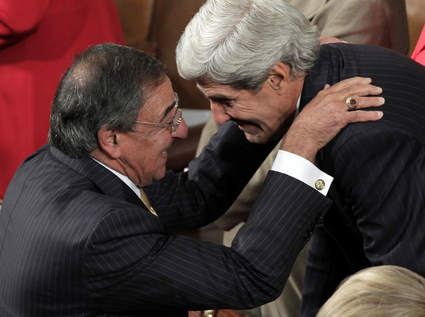
Kerry Panetta

The Pentagon quietly notified Congress this month that it would reimburse Pakistan nearly $700 million for the cost of stationing 140,000 troops on the border with Afghanistan, an effort to normalize support for the Pakistani military after nearly two years of crises and mutual retaliation.

The biggest proponent of putting foreign aid and military reimbursements to Pakistan on a steady footing is the man President Barack Obama is leaning toward naming as secretary of state: Senator John Kerry, Democrat of Massachusetts. Mr. Kerry, the chairman of the Senate Foreign Relations Committee, has frequently served as an envoy to Pakistan, including after the killing of Osama bin Laden, and was a co-author of a law that authorized five years and about $7.5 billion of nonmilitary assistance to Pakistan.

The United States also provides about $2 billion in annual security assistance, roughly half of which goes to reimburse Pakistan for conducting military operations to fight terrorism.

Until now, many of these reimbursements, called coalition support funds, have been held up, in part because of disputes with Pakistan over the Bin Laden raid, the operations of the C.I.A., and its decision to block supply lines into Afghanistan last year.

The $688 million payment — the first since this summer, covering food, ammunition and other expenses from June through November 2011 — has caused barely a ripple of protest since it was sent to Capitol Hill on Dec. 7.

The absence of a reaction, American and Pakistani officials say, underscores how relations between the two countries have been gradually thawing since Pakistan reopened the NATO supply routes in July after an apology from the Obama administration for an errant American airstrike that killed 24 Pakistani soldiers in November 2011.

Mr. Kerry’s nomination would be welcomed in Pakistan, where he is seen as perhaps the most sympathetic to Pakistani concerns of any senior lawmaker. He has nurtured relationships with top civilian and military officials, as well as the I.S.I., Pakistan’s most powerful intelligence agency.

But if he becomes secretary of state, Mr. Kerry will inherit one of the hardest diplomatic tasks in South Asia: helping Pakistan find a role in steering Afghanistan toward a political agreement with the Taliban. As the United States, which tried and failed to broker such an agreement, begins to step back, Pakistan’s role is increasing.

For a relationship rocked in the past two years by a C.I.A. contractor’s shooting of two Pakistanis, the Navy SEAL raid that killed Bin Laden and the accidental airstrike, perhaps the most remarkable event in recent months has been relative calm. A senior American official dealing with Pakistan said recently that “this is the longest we’ve gone in a while without a crisis.”

Sherry Rehman, Pakistan’s ambassador to the United States, said, “Pakistan-United States relations are settling down to a more stable trajectory.”

The interlude has allowed the United States to reduce the huge backlog of NATO supplies at the border — down to about 3,000 containers from 7,000 when the border crossings reopened — and to conduct dry runs for the tons of equipment that will flow out of Afghanistan to Pakistani ports when the American drawdown steps up early next year.

Moreover, the two sides have resumed a series of high-level meetings — capped by Secretary of State Hillary Rodham Clinton’s meeting this month with top Pakistani officials in Brussels — on a range of topics including counterterrorism, economic cooperation, energy and the security of Pakistan’s growing nuclear arsenal.

Maleeha Lodhi, a former Pakistani ambassador to Washington, concurred. “There’s greater convergence between the two countries than there has been in eight years,” she said. “It’s been a fairly quick kiss and make up, but it’s been driven by the approaching urgency of 2014, and by their shared desire for a stable outcome in the region.”

The one exception to the state of calm has been a tense set of discussions about Pakistan’s nuclear arsenal. United States officials have told their Pakistani colleagues that Islamabad’s move to smaller, more portable weapons creates a greater risk that one could be stolen or diverted. A delegation of American nuclear experts was in Pakistan last week, but found that the two countries had fundamentally divergent views about whether Pakistan’s changes to its arsenal pose a danger.

The greatest progress, officials say, has been in the relationship between Pakistan and Afghanistan, after years of mutual recrimination. A high-level Afghan delegation visited Pakistan in November, resulting in the release of several midlevel Taliban commanders from Pakistani jails as a sign of good will in restarting the peace process.

The United States, which was quietly in the background of those meetings, approved of the release of the prisoners, but has still held back on releasing five militants from GuantĂĄnamo Bay, Cuba, a key Taliban demand.

One American official said there was a “big push” to move the talks process forward during the current winter lull in fighting. The United States is quietly seeking to revive a peace channel in Qatar, which was frozen earlier this year after the Taliban refused to participate.

Despite the easing of tensions in recent months, there are still plenty of sore spots in the relationship.

Lt. Gen. Michael D. Barbero, who heads the Pentagon agency responsible for combating roadside bombs, known as improvised explosive devices, or I.E.D.’s, told a Senate hearing last week that Pakistan’s efforts to stem the flow of a common agricultural fertilizer, calcium ammonium nitrate, that Taliban insurgents use to make roadside bombs had fallen woefully short.

“Our Pakistani partners can and must do more,” General Barbero told a Senate Foreign Relations subcommittee hearing.

American officials have also all but given up on Pakistan’s carrying out a clearing operation in North Waziristan, a major militant safe haven.

“Pakistan’s continued acceptance of sanctuaries for Afghan-focused insurgents and failure to interdict I.E.D. materials and components continue to undermine the security of Afghanistan and pose an enduring threat to U.S., coalition and Afghan forces,” a Pentagon report, mandated by Congress, concluded last week.

Declan Walsh contributed reporting from Islamabad, Pakistan.

Pakistanis for Peace Editor’s Note– Kerry for Secretary is a great choice now that Susan Rice did not work out. We love Hillary Clinton and as a Democrat and Liberal through and through, as much as we wish Secretary Clinton a speedy recovery and look forward to voting for her as the first woman President of the United States, it is high time to have a man in there as a Secretary working together with Secretary Panetta. John Kerry is a good and honorable soldier who is a patriot and will uphold American interests but will be a person who is very familiar with Pakistan and the need to have a dialogue with the men who man the barracks in Rawalpindi, regardless who happens to be the Prime Minister in Islamabad. We hope he has a speedy confirmation and no obstructionism by the Do Nothing GOP~

The Brazen, Beautiful Humanity of Malala Yousafzai

By Karen Angela Ellis for Urban Faith

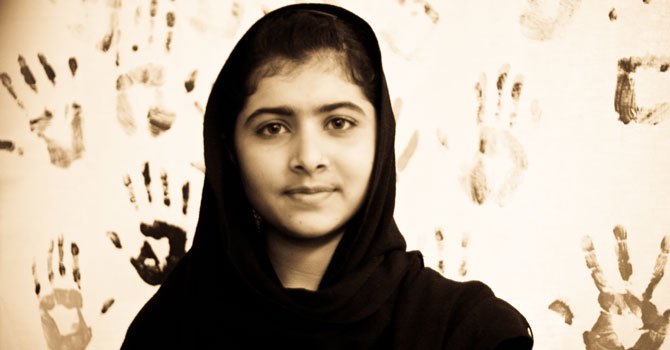
Malala 1

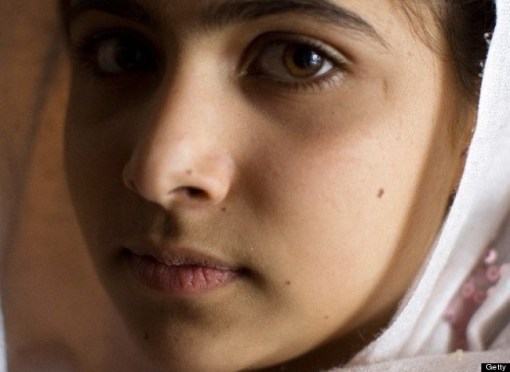
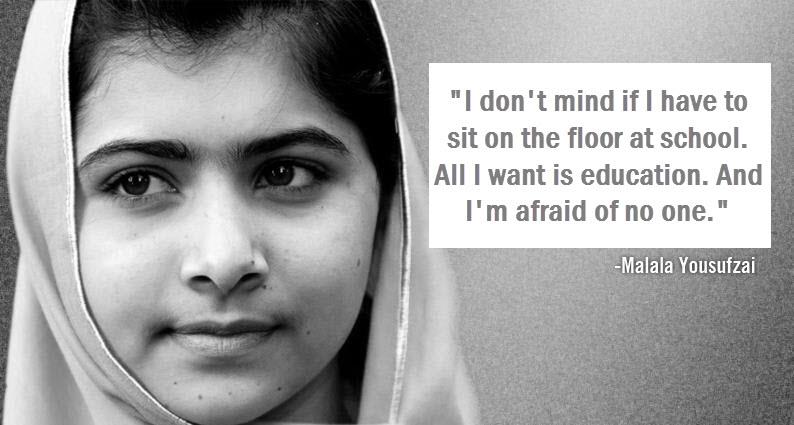
It is easy to imagine Malala Yousafzai gracing the cover of TIME magazine as its Person of the Year . Her soft brown eyes peek at us from pictures that have surfaced from the ripples of a sudden plunge into the spotlight. Her story is so dramatic, so much the essence of the human rights struggle that the it continues to fascinate and inspire worldwide. Her hair, side-parted and modestly covered, Miss Yousafzai demonstrates a hunger for peace well beyond her 14 years. In 2011, she was awarded the National Peace Award by the Government of Pakistan for her courage in seeking restoration of peace and education services. In a short span of time, this tiny girl has become a towering figure in her pursuit of justice for herself and 50,000 other schoolgirls who lost the right to education in their Pakistani communities.

Millions more are now familiar with Miss Yousafzai, who was forced off of her school bus, shot in the head, and critically wounded along with two other young schoolgirls at the hands of the Taliban. She continues to heal in the safety of a UK hospital, the government and the world watching over her as if she were the little sister of us all.

Since 2009, when Miss Yousafzai was a mere tween in the Swat Valley of Pakistan, the hope for education has burned in her heart. While other girls in freer societies tweeted their obsessions with fashion and musical heart throbs, Miss Yousafzai dodged daily threats to become internationally known for her blog that promoted the restoration of the education stolen from her and her classmates.

Her opponents brazenly confessed planning her demise for at least a year. This time they were mercifully denied satisfaction, though they threaten further attempts will be made until her voice is silenced. With ironic justice, the public magnification of her courage has likewise magnified her opponent’s cowardice, exposing grown men who will go to such lengths to snuff out any beacon of light that pierces the darkness of their own souls.

Nothing New Under the Sun
As a Christian woman, when I think of the social conditions that were in place when Christ walked the earth, I am forced to see how little a young girl’s plight has changed in many areas of the world. Centuries may have passed, but the fundamental flaws in our human character remain the same, and they are often unavoidably woven into the fabric of our societies, both free and restricted.

Knowing this, Christ’s counter-cultural treatment of women stands out in relief. In the first-century Roman Empire, a woman held very little sway on matters political or civil; their social plight two thousand years ago foreshadows the Taliban’s restrictions on a woman’s movements today, be they physical, psychological, political or intellectual.

Converse to these gaping holes in our societal fabric, the Bible’s high esteem for women and girls is recorded throughout its narrative. Indeed, many accounts in the Gospels tell us that Christ’s constant consideration of women was radical indeed for its day — His high view of women is perhaps best displayed and recorded in Luke 24 in the first witness of His resurrection and victory over hell, death and the grave; His greatest triumph was first revealed to a group of women (Luke 24:1-12).

These women gathered at his empty tomb were entrusted with the first knowledge of the risen Savior; an affirmation of God’s high estimation of the word, witness and worth of a woman (Mark 16:1-8, Matthew 28:1-10). There is one sole Entity who could first assess, and then restore a woman’s social worth properly as beings who bear the very image of God ; that is the Creator of that image, God, Himself (Genesis 1:26-31). These women were divinely commissioned to tell His disciples that Christ had risen, and the news of Hope for all humanity began to spread. “Go, tell the others what you have seen
.” What a humbling honor, indeed, to be charged with bearing what has become a life-altering message for so many — including myself.

Salute
Today, Miss Yousafzai’s story is known worldwide; it was a proverbial “shot heard ’round the world.” It’s doubtful that life for this young woman will ever be the same, yet she and her family have accomplished more as ordinary citizens than many politicians have been able to do collectively. From her tormentor’s perspective, she must seem as one of the foolish things of the world that has confounded the self-proclaimed “wise.” In her courage, she has shown wisdom that they cannot comprehend. A mere and simple girl, who should have been easily silenced, now heals from her wounds with the protection of the world. She stands defiant in her innocence, large in the power of her perceived weakness.

I salute the courage of Miss Yousafzai and her classmates; they have stirred a passion in the world, and made us consider and confront our own humanity. May they be victorious in their quest not only for education and a just society, but also in their larger quest for recognition and in understanding the fullness of their humanity. May they also receive the full dignity and significance that is their right by the Creator and Sustainer of the universe, and may they come to know the One in whose majestic image they are made.

Mumbai Attacks: Four Years Later

By Bruce Riedel for The Daily Beast

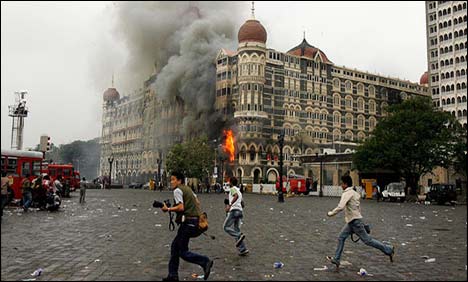
Four years ago Monday, the Pakistani terror gang Lashkar-e-Tayyiba attacked Mumbai, killing more than 160, including six Americans, in the deadliest and most brazen terror attack since 9/11. Then and now, LeT enjoyed the support of Pakistani intelligence and al Qaeda. Today, LeT is a ticking time bomb ready to explode again.

Ajmal Kasab, the only one of the 10 LeT terrorists who survived the attack, was hung for his crimes in India this week. He had confessed to joining the organization and to being trained in its camps in Pakistan for the operation. He implicated the senior LeT leadership in the plot. LeT’s founder and leader Hafez Saeed is not only still free and at large in Pakistan, he routinely speaks at large rallies attacking India, America, and Israel. He denounces the drones and demands Pakistan break ties with America. He eulogized Osama bin Laden as a “hero” of Islam after the SEALs delivered justice to al Qaeda’s amir last year.

Saeed’s patrons include the Pakistani army and its intelligence service, the ISI, which works closely with LeT. Kasab also implicated the ISI directly in the Mumbai operation, saying it assisted with his training and helped select the targets. Two Pakistani emigres, David Headley (an American) and Tahawwur Rana (a Canadian), have also confessed in American courts that they helped LeT plan the massacre in Mumbai and that the ISI was deeply involved in it. Both were found guilty. The ISI helped bankroll their reconnaissance trips to Mumbai to set up the attack.

In researching my forthcoming book, Avoiding Armageddon: America, India and Pakistan to the Brink and Back, it became apparent that there was a third party behind the scenes in the Mumbai plot: al Qaeda. Al Qaeda deliberately kept a very low profile, but helped the LeT plan and select the targets. Al Qaeda and LeT have long been close. Bin Laden helped fund its set-up, and LeT routinely helps hide al Qaeda terrorists at its bases in Pakistan. Al Qaeda had big hopes for the 2008 plot—a war between India and Pakistan that would disrupt NATO operations in Afghanistan and the drone attacks on al Qaeda. Instead, India chose to use diplomacy and avoid a military response. We all dodged a bullet.

Since 2008 LeT has continued to enjoy a free hand in Pakistan and plot more attacks. In 2010 it planned a major attack on the 19th Commonwealth Games held in New Delhi. The plot was thwarted by good intelligence work, especially by the British intelligence services. This summer the Indians arrested a major LeT terrorist, Sayeed Zabiuddin Ansari, a.k.a. Abu Jindal, who was plotting another terror attack from a hideout in Saudi Arabia. Abu Jindal was also involved in the Mumbai operation in 2008—he was in the LeT-ISI control room in Karachi from which the orders were given by cellphone to the terrorists to kill hostages, including the Americans.

The Mumbai attack took place just after Barack Obama’s election. It was his first crisis as president-elect. In the last four years his administration has tried to rein in LeT. This year a $10 million reward was offered for information leading to Hafez Saeed’s capture, and the U.S. helped capture Abu Jindal. But the group is free to plot and plan in Pakistan and it has cells in the Persian Gulf, Bangladesh, England, and elsewhere. It will strike again sooner or later. When it does, al Qaeda and the ISI will probably be co-conspirators again.

Pakistanis for Peace Editor’s Note– It has been 4 years since the tragic days of November 26, 2008 and the alleged masterminds of the attacks, the leadership of LeT has still not been brought to justice. We at Pakistanis for Peace believe that in a good faith measure towards a lasting peace between India and Pakistan, the Pakistani government needs to apprehend the LeT leadership and extradite those remaining terrorists responsible for this tragedy to India to face their trial and punishment there. Only then, can Pakistan and India start a dialouge about peace.

Pakistan leader’s mangrove-to-metropolis dream

By Alex Rodriguez for The LA Times

20121104-142719.jpg

SHAH BANDAR, Pakistan — In his dreams, Pakistani President Asif Ali Zardari sees a spectacular metropolis rising up from the vast stretches of mangrove swamp and sea-salted wasteland along the mighty Indus River Delta.

High-speed rail zips people from place to place. Vacationers soak up the South Asian sun at seaside resorts. Universities, factories and a new seaport pump vitality into the region. Miles of bike lanes crisscross the city, whose population would eventually reach 10 million.

Zardari wants to call his jewel Zulfikarabad, after Zulfikar Ali Bhutto, the founder of the country’s ruling party, a prime minister and president, and the father of Zardari’s slain wife, former premier Benazir Bhutto.

That’s a lot of dreaming for a country struggling with a dizzying array of afflictions: Millions of Pakistanis are dirt poor, struggling to find clean water, contending with unreliable electricity and living in fear of violent extremists. In addition, the president has continued jousting with Pakistan’s Supreme Court over long-standing graft allegations lodged years ago by Swiss authorities.

Such realities have put Zardari’s popularity in a tailspin.

Many observers suspect that the president’s enthusiasm for Zulfikarabad may be rooted in a burning desire to leave a legacy for this country of 180 million people. He’s seeking an enduring achievement, they say, by an administration widely viewed as rife with failure.

Government officials won’t place a price tag on the president’s lofty vision, which is bound to cost tens of millions of dollars. They say only that the government’s share would be limited to the construction of roads, bridges and other infrastructure, with the rest shouldered by investors.

Officials also say they consider the proposed city a desperately needed engine for jobs and economic growth.

Karachi, the country’s largest city with a population of 18 million, is bloated with overcrowding and traffic jams, and needs a nearby city that can serve as a relief valve, they say.

“Karachi is getting choked,” said Iftikhar Hussain Shah, managing director of the Zulfikarabad Development Authority. “It’s going to suffer paralysis because there’s no more room. So the people who are trying to look for setting up industries, they are looking for space.

“You give opportunity to entrepreneurs, you lay down the infrastructure, you have a good clean administration and clear-cut laws, and people will come,” Shah said. “People will come if they see there is a good opportunity to make money.”

Officials said building on tidal flats along the Arabian Sea coastline would also help combat a burgeoning problem: the encroachment of the sea at a rate of 18 acres a day.

The goal makes sense, but the strategy remains a bit fuzzy. A splashy brochure touting the project suggests that a sea wall 100 feet high could keep Zulfikarabad dry. Even Shah, however, wonders whether building a sea wall in an area routinely flooded by monsoons will work.

“If you build a wall, what will happen to all that [flood] water?” Shah said. “Maybe we’ll go to [other] countries for that expertise.”

For inspiration, Zulfikarabad proponents look to Shenzhen, a city of 10 million in China’s Pearl River Delta region. Once a small fishing village, Shenzhen’s transformation began in the early 1980s after Chinese leader Deng Xiaoping designated it as one of that country’s special economic zones, a status that seeded growth through tax exemptions and other measures aimed at attracting foreign investors.

Today, Shenzhen is hailed as one of the world’s fastest growing cities, an economic powerhouse with its own stock exchange, a bustling port, and a gleaming glass-and-steel skyline.

“Within a span of four years, it went from a fishermen’s town to earning $2 billion a year,” said Shah, who along with other Pakistani officials has toured Shenzhen. “In another 10 years, they were earning $150 billion a year.”

Critics say Pakistan’s reliance on Shenzhen as a template is misguided because China is an economic juggernaut with a gross domestic product 23 times the size of Pakistan’s. The impoverished Indus Delta isn’t likely to have the same pull as Shenzhen, and, sure enough, no Pakistani magnate has committed to making the Zulfikarabad dream a reality.

Officials expect Chinese companies to play a crucial, if not dominant, role in Zulfikarabad. They said one Chinese firm, Sichuan Huantong Holding Investment, signed a nonbinding memorandum of understanding with Pakistan this summer to help develop the city. Investors from the Czech Republic, Turkey and even Pakistan’s nuclear-armed archrival, India, also showed preliminary interest by talking with Pakistani officials about the possibility of building wind-power farms in Zulfikarabad, said Mumtaz Ali, planning director at the Zulfikarabad Development Authority.

Skeptics who doubt Zulfikarabad’s prospects cite Pakistan’s troubled record with another urban planning mega-project, the port city of Gwadar in the volatile province of Baluchistan.

Nearly a decade ago, Pakistan enlisted China’s help in transforming Gwadar into a major deep sea port on the Arabian Sea. Since then, Gwadar has been largely dormant, with cranes along piers rusting from inactivity. Opposition by Baluch nationalists, who worry that the Baluch people would be marginalized by Gwadar’s evolution into a modern city, has played a role in the project’s stagnancy, as has the dearth of roads and rail lines connecting the port to the rest of Pakistan.

Nusrat Javed, a columnist and talk show host for Pakistan’s Aaj TV, said the Zulfikarabad project “reminds all of us of Gwadar.”

“When Gwadar was being developed, the Baloch nationalists and the local population thought that, even though Pakistan and China were investing $248 million there was no possibility or promise of any kind of economic uplift for the Baluch community,” Javed said.

“Our president is extremely excited about [Zulfikarabad]. But to my mind, it seems more like a pipe dream.”

Many of those opposing the Zulfikarabad idea are nationalist parties and movements championing the cause of Sindhis, the indigenous population of Sindh province. Sindhi nationalist leaders acknowledge that if Zulfikarabad produces what it promises many local Sindhis will prosper. But they worry that a healthy, vibrant Zulfikarabad would attract hundreds of thousands of migrants from other parts of Pakistan, turning Sindhis into a distinct minority in their own land.

“After Pakistan came into being, the population of Karachi was 400,000,” said Jalal Mehmood Shah, leader of the Sindh United Party, a Sindhi political movement. “Then migrants came into Karachi and we, local Sindhis, became the minority. So we don’t want another place where we will become a minority. And we don’t want another situation where we aren’t allowed to take part in the development.”

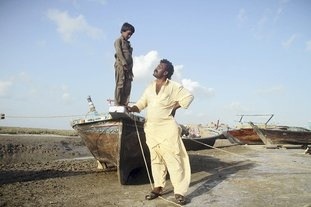
On a recent afternoon in Shah Bandar, a fishing village not far from where ground was broken this summer for a $39-million Zulfikarabad bridge, a group of sweat-soaked fishermen thumbed through a brochure promoting the city. They weren’t too ruffled because they remembered a similar idea laid out by Bhutto’s administration years ago to turn a nearby fishing hamlet, Keti Bandar, into a major sea port.

“Bhutto said it would happen,” said Wali Mohammed, a 30-year-old Shah Bandar fisherman, “but years passed and nothing was built.”

Malala Attack Fuels Pakistani Conspiracy Theories

As Reported By The Daily Times

It’s a well-known fact in Pakistan that Osama bin Laden died in 2006 and that the US commando raid on his compound in May 2011 was merely a “drama” orchestrated by US President Obama to help win re-election, according to a report in The Washington Post.

Of course, if that were true, Obama might have waited until after the first presidential debate of the campaign season to fake the al Qaeda leader’s killing. But no matter. Pakistanis love a good conspiracy theory.

According to the report, some national newspapers and TV cable outlets routinely report the US is behind terrorist attacks and supports the war the Pakistani Taliban are waging against Pakistan’s government and military. The US Embassy in Islamabad has to regularly churn out “Corrections for the Record” that take Pakistani media to task for carrying outrageous claims.

Now, the latest conspiracy theory to gain traction is the notion the US was behind the Taliban attack this month on Malala Yousufzai, the student from Swat who criticised the extremist group for denying girls access to education. The purported purpose of the ruse: to make the Taliban look really bad and, thus, generate public sympathy for drone strikes – and whip up support for a Pakistan Army invasion of North Waziristan to rout Haqqani network based there.

A Taliban spokesman was quick to assert responsibility for the attack on the schoolgirl and her two classmates. Yet, the idea of US involvement has spread widely, even generating its own meme on Facebook. The Washington Post says a photo of Obama sharing a hearty laugh with members of his staff is making the rounds, being circulated and “liked” by thousands on social media sites. Its caption reads, “Sir, they still believe that Taliban attacked Malala.”

The newspaper states to many Pakistanis, Malala is a national hero. But others say she is a spy because she once met with then-US envoy Richard Holbrooke – another photo shared on the Internet.

Part of the reason there’s so much conspiracy thinking is because Pakistanis live in a security state many believe is controlled by the shadowy spy apparatus known as the Inter-Services Intelligence agency. It is widely seen – and feared – as a hidden force capable of steering domestic and foreign affairs.

AZ Hilali, chairman of the University of Peshawar Political Science Department, said politics is also behind much of the conspiracy mongering. “When the incident happened with Malala, the people thought the security establishment might be involved because there is pressure from the USthat they have to take action against the Haqqani network,” Hilali said. “That perception was already existing in Pakistan. Right-wing parties just exploited the situation.”

But now, WP quotes Hilali as saying, “right-wing parties are in a great crisis because Malala has deep sympathies from the common people
 they believe the Taliban have crossed a boundary. Malala has become this symbol, and the right wing is losing support”.

Nasreen Ghufran, an international relations professor at the university, said a common sentiment in Peshawar is the horrendous deed had to serve other agendas. “They think that Taliban on their own would not do anything unless the ISI and the army are behind it,” she said.

The paper says as for the theories that besmirch Malala as an agent of the West, they will ultimately come to naught and even enhance her stature, Hilali said. The Islamists “were already against that girl, but there is not just one Malala, there are many Malalas”.

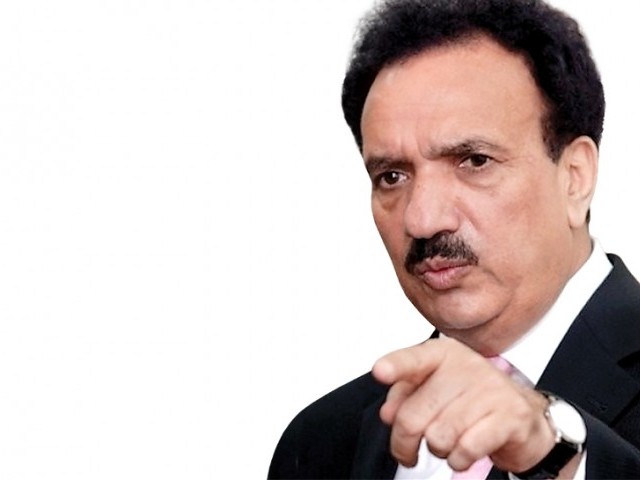
Rehman Malik Escapes Disqualification

By Irfan Ghauri for The Express Tribune

In a move that raises a number of questions, and possibly a number of ramifications, election authorities announced on Tuesday that they have decided not to disqualify Interior Minister Rehman Malik.

The Election Commission of Pakistan (ECP) said that it had endorsed the stand of Senate authorities that no question of disqualification had arisen in the case of Senator Malik – who was under scrutiny for submitting false statements to the Supreme Court in the dual nationality case.
The deputy chair of the Senate, Sabir Baloch, who is currently the acting chairman, rejected two separate references against Senator Malik that sought his disqualification.

Earlier, on September 20, the Supreme Court had taken note of a conflict between Senator Malik’s statements and the evidence provided by him in a
case probing dual national parliamentarians. Eleven federal and provincial lawmakers found to have dual nationality were held to be disqualified by the Supreme Court, given that Pakistani citizens holding foreign nationalities are not eligible to be parliamentarians, according the Constitution of Pakistan.

However, Senator Malik’s case was unique, and the court did not issue a direct verdict on his matter, and only raised the question of disqualification.

During the course of the case, Senator Malik had told the court that he had renounced his British citizenship before being elected to the Senate in 2008. However, when his documents were scrutinized, a blatant conflict emerged: The evidence suggested that his renunciation had taken place on May 29, 2012 – that is, when the court had taken notice of the matter.
As the matter was being heard in court, and his status as Senator was suspended, Malik resigned from the Senate on July 11, 2012 – and was then reelected within two weeks. Ostensibly, this would have given the interior minister cover – given that he had actually renounced his citizenship before resigning and being reelected. But the issue of perjury (lying under oath) came to the fore.

“Mr. A. Rahman Malik, in view of the false declaration filed by him at the time of contesting the election to the Senate held in the year 2008, wherein he was elected, cannot be considered sagacious, righteous, honest and ameen within the contemplation of section 99(1)(f) of the Act of 1976. Therefore, for such purposes Article 63(p) is to be adhered to because the disqualification incurred by him is envisaged under the law, referred to hereinabove in view of his own statement that he had renounced his citizenship of UK whereas the fact remains that such renunciation along with declaration can only be seen as having been made on 29.05.2012,” reads a portion of the court order regarding Senator Malik.
Two references had been pending with the Senate chairman regarding Senator Malik’s disqualification: One by a citizen Asif Ezdi, and another similar one by lawyer Maulvi Iqbal Haider, who had relied on the observations of the Supreme Court.
But the two were dismissed.

“Reference Supreme Court short order dated 20-09-2012, detailed judgment dated 16-10-2011, reference of Mr. Asif Azdi dated 26-08-2012 and reference of Malik Iqbal Haider dated 22-09-2012 I have held that no question of disqualification has arisen in respect of senator A. Rehman Malik. Resultantly the Election Commission of Pakistan is being informed accordingly,” wrote Sabir Baloch in his letter to the ECP.
Notably, the ECP did not issue any formal statement on the matter on Tuesday. Instead, it was verbally conveyed by officials of the commission to the media. They said the reference regarding Malik is disposed of and no further action can be taken against the minister.
Deadline passed?

Under the process, the Senate chairman has 30 days to decide on the matter and forward it to the ECP. The ECP has 60 days to take action on the matter. If no decision comes on the part of the Senate chairman in the stipulated 30 days, the case is deemed to have automatically been forwarded to the ECP.

Following the September 20 court orders, the Senate chairman had until October 20th to forward the matter to the ECP.
Interestingly, the letter by the Senate’s (acting) chairman to ECP was disclosed on Tuesday (October 23). In fact, Chief Election Commissioner Justice (retd) Fakhruddin G Ebrahim had himself told the media on Monday that the ECP was yet to receive a letter from the Senate regarding Senator Malik’s case. Though the date mentioned in the letter disclosed on Tuesday is “October 20th” sources said it was actually received by the ECP on October 22nd.

The ECP’s meeting regarding this matter was scheduled for Monday, but was postponed due to a meeting between the chief election commissioner and Chief Justice Iftikhar Muhammad Chaudhry.

Respite?

While the decision seems to have brought the interior minister some respite, the move could yet be challenged in court.
Earlier this year, the National Assembly Speaker Fehmida had held that no question of disqualification had arisen in the case of the then prime minister Yousaf Raza Gilani, and did not forward the matter to the ECP. Later, her decision was challenged, and the apex court ultimately overruled her. Gilani was disqualified from premiership as well as his National Assembly seat.

Dr Asim resigns
Senator Dr Asim Hussain, who holds the portfolio of advisor to the prime minister on petroleum, resigned from his Senate seat on Tuesday. He was part of the next batch of parliamentarians faced with court proceedings on their nationality status.
However, he will continue in his capacity as ‘advisor,’ which does not require him to be a member of Parliament.

Why Our Pampered Teens Need A Role Model Like Malala

By Sinead Moriarty for The Independent

Most teenagers getting the bus home from school chat to each other, play on their phones or try to get some of their homework done. Not so for Malala Yousafzai.

This Pakistani teenager was shot in the head on her way home from school. A man boarded her bus and shot her at point blank range for daring to stand up for her basic human right of an education.

A friend recently told me of her teenage daughter’s refusal to go to school, apparently she wasn’t “in the mood”. What are you going to do? I asked. “What can I do,” she said. “She’s two feet taller than me. I can’t drag her there.”

Perhaps she should tell her daughter the story of this Pakistani heroine who risked her life for an education. Perhaps we need to take down the posters of Cheryl Cole and Rihanna from our teenagers’ bedrooms and replace them with posters of Malala Yousafzai.

Our children’s role models now fall into two categories — sports stars or popstars (with the occasional WAG thrown in).

They watch talentless wannabes on reality TV, selling their souls to the devil for fame. Ask teenagers what they want to be when they grow up and the majority will say “famous”. Nobody seems to remember all the people who won the ‘X Factor’ and are now back working in their local fish shop.

In this post-feminist world, girls have become commodities. Where are the young women who want to shatter glass ceilings?

Where are the girls who want to change the world, not the size of their breasts? Where are the teenagers who want to grow up and rule the world, not the tabloids?

Nowadays teenage girls look at footballers’ wives and think, ‘I want that’. I want to live in a big house, drive a flashy car and shop in designer boutiques.

But what about the fact that so many of these husbands sleep with other women, prostitutes and even sometimes their brothers’ wives? None of the teenage girls ever seems to notice that side of the equation. If he provides you with a plush lifestyle, diamonds and furs, then he can do whatever he wants. And these young wives grin and bear it. They say nothing and they do nothing. No divorce is called for, because they know that once they’re dumped their ‘life’ is over. The limelight will shift to the new Mrs X. They’ll be ‘normal’. Who the hell wants to be ‘normal’ when you can be a famous doormat?

Just when you despair for young women, just when you wonder if your teenager will ever find a decent role model, a girl like Malala comes along and puts us all to shame. Her shooting was not the action of a random gunman. It was a carefully planned assassination attempt on a young lady the Taliban found threatening.

Malala’s crime was to be a female who wanted an education. In 2009, when the Taliban seized control of the area she lived in, the women were forced to wear burquas and banned from going to the market and girls were banned from going to school. But Malala spoke out.

In an anonymous blog for the BBC’s Urdu service, she said the ban on going to school was choking her and so she: “decided to stand against the force of backwardness.”

As she continued to blog, complaining of the terrible plight of women under the Taliban, fellow students recognised her and her anonymity was blown. But she still continued to speak out and now she lies in a hospital in Birmingham that was built to deal with injured service personnel. It is fitting that this young woman will lie side by side with injured soldiers as she begins her long road to recovery. After all, Malala is the heroine of a war, the war on human rights.

We in the West take for granted the rights for which Malala almost died. We need to tell our children her story. We need to show them that life is not about being on TV or having the latest phone, boots or bag . . .

We all want to protect our children from the difficulties that life will throw at them, but stories of courage like Malala’s will surely inspire them.

Her story might actually make our teenagers stop texting for five seconds and think about how lucky they are. They may still dread being ridiculed by fellow classmates for having the ‘wrong’ bag, but at least they know they won’t get shot in the head for it.