Posts Tagged ‘ Pakistanis ’

Her ‘Crime’ Was Loving Schools

By Nicholas D. Kristof for The New York Times

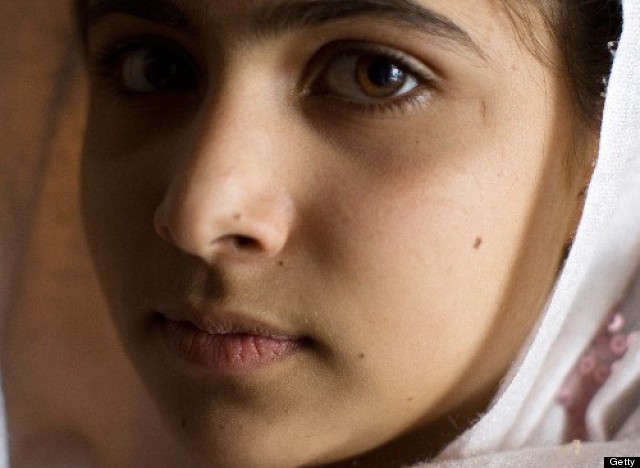
Twice the Taliban threw warning letters into the home of Malala Yousafzai, a 14-year-old Pakistan girl who is one of the world’s most persuasive advocates for girls’ education. They told her to stop her advocacy — or else.

She refused to back down, stepped up her campaign and even started a fund to help impoverished Pakistani girls get an education. So, on Tuesday, masked gunmen approached her school bus and asked for her by name. Then they shot her in the head and neck.

“Let this be a lesson,” a spokesman for the Pakistani Taliban, Ehsanullah Ehsan, said afterward. He added that if she survives, the Taliban would again try to kill her.

Surgeons have removed a bullet from Malala, and she remains unconscious in critical condition in a hospital in Peshawar. A close family friend, Fazal Moula Zahid, told me that doctors are hopeful that there has been no brain damage and that she will ultimately return to school.

“After recovery, she will continue to get an education,” Fazal said. “She will never, never drop out of school. She will go to the last.”

“Please thank all your people who are supporting us and who stand with us in this war,” he added. “You energize us.”

The day before Malala was shot, far away in Indonesia, another 14-year-old girl seeking an education suffered from a different kind of misogyny. Sex traffickers had reached out to this girl through Facebook, then detained her and raped her for a week. They released her after her disappearance made the local news.

When her private junior high school got wind of what happened, it told her she had “tarnished the school’s image,” according to an account from Indonesia’s National Commission for Protection of Child Rights. The school publicly expelled her — in front of hundreds of classmates — for having been raped.

These events coincide with the first international Day of the Girl on Thursday, and they remind us that the global struggle for gender equality is the paramount moral struggle of this century, equivalent to the campaigns against slavery in the 19th century and against totalitarianism in the 20th century.

Here in the United States, it’s easy to dismiss such incidents as distant barbarities, but we have a blind spot for our own injustices — like sex trafficking. Across America, teenage girls are trafficked by pimps on Web sites like Backpage.com, and then far too often they are treated by police as criminals rather than victims. These girls aren’t just expelled from school; they’re arrested.

Jerry Sandusky’s sex abuse of boys provoked outrage. But similar abuse is routine for trafficked girls across America, and local authorities often shrug with indifference in the same way some people at Penn State evidently did.

We also don’t appreciate the way incidents like the attack on Tuesday in Pakistan represent a broad argument about whether girls deserve human rights and equality of education. Malala was a leader of the camp that said “yes.” After earlier aspiring to be a doctor, more recently she said she wanted to be a politician — modeled on President Obama, one of her heroes — to advance the cause of girls’ education.

Pakistan is a country that has historically suffered from timid and ineffectual leadership, unwilling to stand up to militants. Instead, true leadership emerged from a courageous 14-year-old girl.

On the other side are the Taliban, who understand the stakes perfectly. They shot Malala because girls’ education threatens everything that they stand for. The greatest risk for violent extremists in Pakistan isn’t American drones. It’s educated girls.

“This is not just Malala’s war,” a 19-year-old female student in Peshawar told me. “It is a war between two ideologies, between the light of education and darkness.”

She said she was happy to be quoted by name. But after what happened to Malala, I don’t dare put her at risk.

For those wanting to honor Malala’s courage, there are excellent organizations building schools in Pakistan, such as Developments in Literacy (dil.org) and The Citizens Foundation (tcfusa.org). I’ve seen their schools and how they transform girls — and communities.

One of my greatest frustrations when I travel to Pakistan is that I routinely spot extremist madrassas, or schools, financed by medieval misogynists from Saudi Arabia or elsewhere. They provide meals, free tuition and sometimes scholarships to lure boys — because their donors understand perfectly that education shapes countries.

In contrast, American aid is mainly about supporting the Pakistani Army. We have tripled aid to Pakistani education to $170 million annually, and that’s terrific. But that’s less than one-tenth of our security aid to Pakistan.

In Malala’s most recent e-mail to a Times colleague, Adam Ellick, she wrote: “I want an access to the world of knowledge.” The Taliban clearly understands the transformative power of girls’ education.

Do we?

More Than 300 Killed in Pakistani Factory Fires

By Zia ur-Rehman and Salman Masood for The New York Times

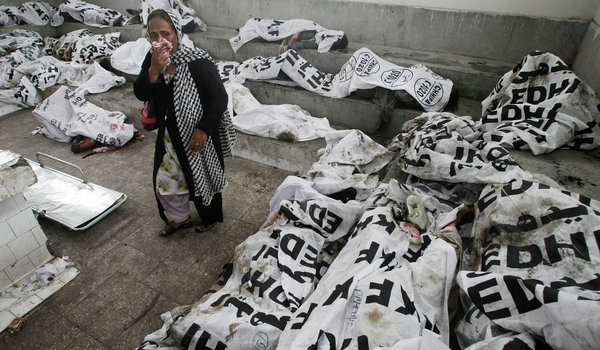
Fire ravaged a textile factory complex in the commercial hub of Karachi early Wednesday, killing almost 300 workers trapped behind locked doors and raising questions about the woeful lack of regulation in a vital sector of Pakistan’s faltering economy.

It was Pakistan’s worst industrial accident, officials said, and it came just hours after another fire, at a shoe factory in the eastern city of Lahore, had killed at least 25.

Flames and smoke swept the cramped textile factory in Baldia Town, a northwestern industrial suburb, creating panic among the hundreds of poorly paid workers who had been making undergarments and plastic tools.

They had few options of escape — every exit but one had been locked, officials said, and the windows were mostly barred. In desperation, some flung themselves from the top floors of the four-story building, sustaining serious injuries or worse, witnesses said. But many others failed to make it that far, trapped by an inferno that advanced mercilessly through a building that officials later described as a death trap.

Rescue workers said most of the victims died of smoke inhalation, and many of the survivors sustained third-degree burns. As firefighters advanced into the wreckage during the day, battling back flames, they found dozens of bodies clumped together on the lower floors.

One survivor, Muhammad Aslam, said he heard two loud blasts before the factory filled first with smoke, then with the desperate screams of his fellow workers. “Only one entrance was open. All the others were closed,” he said at a hospital, describing scenes of panic and chaos.

Mr. Aslam, who was being treated for a broken leg, said he saved himself by leaping from a third-floor window.

Hundreds of anguished relatives gathered at the site, many of them sobbing as they sought news. Some impeded the rescue operation, and baton-wielding police officers tried to disperse the crowd but failed.

“If my son does not return, I will commit suicide in front of the factory,” one woman shouted before news cameras as relatives tried to console her.

The death toll rose quickly. By evening, the Karachi commissioner, Roshan Ali Sheikh, said that 289 people had died, most of them men. The provincial health minister, Sagheer Ahmed, put the toll at 248, which he said was the number of bodies accounted for at major hospitals. The number was expected to rise further.

In the shoe factory fire in Lahore, 25 people were reported killed and dozens wounded. Officials said that blaze had been set off by a generator that caught fire and ignited chemicals stored nearby in the factory, illegally located in a residential neighborhood. Most of the victims were men under 25.

The fires immediately revived long-running questions about the regulation of Pakistan’s manufacturing sector, centered in Karachi, and of the vital textiles industry in particular.

Textiles are a major source of foreign currency for Pakistan, accounting for 7.4 percent of its gross domestic product in 2011 and employing 38 percent of the manufacturing work force. Pakistani cotton products are highly sought in neighboring India and form the backbone of a burgeoning fashion industry that caters to the elite. President Asif Ali Zardari’s government has often called on the United States to drop tariff barriers to Pakistani textile imports, which it says would be preferable to traditional aid.

But the industry suffers from weak regulation, characterized by lax oversight and corruption. Business owners often put profits over safety, workers’ rights advocates say.

On Wednesday evening the police raided the home of the owner of the Karachi factory, Abdul Aziz, who appeared to have gone into hiding. According to an online business information service, his company, Ali Enterprises, manufactured denim, knitted garments and hosiery and had capital of between $10 million and $50 million.

His nephew, Shahid Bhaila, the chief executive officer of the company, was also being sought for questioning. The police said both men had been placed on the exit control list, barring them from leaving the country.

The Muttahida Qaumi Movement, the most powerful political party in Karachi, announced three days of mourning. The city electricity company said it would cancel all outstanding bills for the families of those affected as a good will gesture.

The cause of the fire remained unclear. Geo News, the largest news channel, speculated that it had been started by extortionists, reporting that Mr. Aziz had previously faced a demand for a shakedown payment of more than $100,000, which he refused.

But others said an electrical fire was more likely. Wali Muhammad, a former electrical inspector, said that most accidental fires are caused by short circuits in equipment. But since 2003, he said, inspectors had been forbidden by law from visiting factories in Karachi and Punjab; it was not immediately clear why.

“This is criminal negligence,” he told Geo News, referring to the ban.

Another mystery surrounded the locked factory doors. Some survivors said the exits had been shuttered to prevent workers from slipping out early; others said it was the consequence of a recent break-in.

A majority of the garment workers came from Orangi Town, a poor working-class neighborhood in Karachi. Seventeen of the victims came from the same street, local news media reported.

The factory building suffered severe structural damage in the blaze, and officials feared it would collapse on rescue workers during the day.

While many distraught family members set up camp near the factory, others moved between city hospitals, seeking news of loved ones. One man said he was looking for his cousin, who earned $70 a month as a cashier. “He’s still missing. I’m afraid he may have been working in the basement,” the man said.

The Human Rights Commission of Pakistan called on the government to mount an immediate investigation. “The head of the firefighting operations in Karachi has noted that the factory was dangerous, flimsily built and had no emergency exits,” said Zohra Yusuf, chairwoman of the rights group. “Why did all of that escape official attention earlier?”

Workplace safety is guaranteed under Pakistan’s Constitution, but labor leaders say that government oversight has crumbled rapidly in recent years, along with a general decline in governance.

Sharafat Ali of the Pakistan Institute of Labor Education and Research, a labor rights group, said that 151 workers died in accidents in 2011. The state was partly responsible for the deaths, he said, because its civil servants “silently and criminally allow violation of laws and regulations established to ensure health and safety provisions at work.”

Pakistan Police Arrest Christian Girl After Angry Neighbors Accuse Her of Burning the Quran

By Munir Ahmed, Zarar Khan and Matthew Lee for The Associated Press

A Christian girl was sent to a Pakistani prison after being accused by her furious Muslim neighbors of burning pages of the Islamic holy book, the Quran, in violation of the country’s strict blasphemy laws.

A police official said Monday there was little evidence that pages of the book had been burned and that the case would likely be dropped. But hundreds of angry neighbors gathered outside the girl’s home last week demanding action in a case raising new concerns about religious extremism in this conservative Muslim country.

Some human rights officials and media reports said the girl was mentally handicapped. Police gave conflicting reports of her age as 11 and 16.

Under Pakistan’s blasphemy laws, anyone found guilty of insulting Islam’s Prophet Muhammad or defiling the holy book, or Quran, can face life in prison or even execution. Critics say the laws are often misused to harass non-Muslims or target individuals.

Police put the girl in jail for 14 days on Thursday after neighbors said they believed a Christian girl had burned pages of a Quran, gathering outside her house in a poor outlying district of Islamabad, said police officer Zabi Ullah. He suggested she was being held for her protection.

“About 500 to 600 people had gathered outside her house in Islamabad and they were very emotional, angry and they might have harmed her if we had not quickly reacted,” Ullah said.

Almost everyone in the girl’s neighborhood insisted she had burned the Quran’s pages, even though police said they had found no evidence of it. One police official, Qasim Niazi, said when the girl was brought to the police station, she had a shopping bag that contained various religious and Arabic-language papers that had been partly burned, but there was no Quran.

Some residents claimed they actually saw burnt pages of Quran — either at the local mosque or at the girl’s house. Few people in Pakistan actually speak or read Arabic, so often assume that anything they see with Arabic script is believed to be from the Quran, sometimes the only Arabic-language book people have seen.

But one police officer familiar with the girl’s case said the matter would likely be dropped once the investigation is completed and the atmosphere is defused, saying there was “nothing much to the case.” He did not want to be identified due to the sensitivity of the case.

A spokesperson for Pakistani President Asif Ali Zardari, Farhatullah Babar, said the president has taken “serious note” of reports of the girl’s arrest and has asked the Interior Ministry to look into the case.

In Washington, State Department spokeswoman Victoria Nuland called the case “deeply disturbing”.

“We urge the government of Pakistan to protect not just its religious minority citizens but also women and girls,” she said.

The Associated Press is withholding the girl’s name; the AP does not generally identify juveniles under 18 who are accused of crimes.

The case demonstrates the deep emotion that suspected blasphemy cases can evoke in a country where religion Many critics say the blasphemy laws are often abused.

“It has been exploited by individuals to settle personal scores, to grab land, to violate the rights of non-Muslims, to basically harass them,” said the head of the Human Rights Commission of Pakistan, Zora Yusuf.

Those convicted of blasphemy can spend years in prison and often face mob justice by extremists when they finally do get out. In July, thousands of people dragged a man accused of desecrating the Quran from a police station in the central city of Bahawalpur, beat him to death and then set his body on fire.

Attempts to revoke or alter the blasphemy laws have been met with violent opposition. Last year, two prominent political figures who spoke out against the laws were killed in attacks that basically ended any attempts at reform.

The girl’s jailing terrified her Christian neighbors, many of whom left their homes in fear after the incident. One resident said Muslims used to object to the noise when Christians sang songs during their services. After the girl was accused he said senior members of the Muslim community pressured landlords to evict Christian tenants.

But Muslim residents insisted they treated their neighbors with respect, and said Christians needed to respect Islamic traditions and culture.

“Their priest should tell them that they should respect the call for prayer. They should respect the mosque and the Quran,” said Haji Pervez, one of several Muslims gathered at the local mosque less than 100 yards (meters) from the grey concrete house where the Christian girl lived.

“This is what should have happened. We are standing in the house of God. This incident has happened and it is true. It was not good.”

“Even a 3-year-old, 4-year-old child knows: “This is Muslim. This is Christian. This is our religion,” said shopkeeper Mohammed Ilyas.

Pakistanis for Peace Editor’s Note– The case of this young Christian girl is reminiscent of the case of Aasia Bibi and many other lesser known unfortunate people who have been arrested under Pakistan’s ridiculous blasphemy laws. These laws are draconian and have no place in the country’s judicial system serving only to intimidate Pakistan’s religious minorities and giving the zealots an official tool to harass the country’s Christians, Hindus and other minorities. As we have done before, we call on the government of Pakistan to do the right thing and strike these absurd laws from the books and free the individuals who have been imprisoned under these laws.

Pakistan Should Open Itself Up to India

By Aakar Patel for Firstpost

India and Pakistan have a reciprocal relationship. If one does something to the other, send back a spying diplomat for instance, the other imitates this and also sends one back. One country’s visa regime mirrors the other’s. We would rather harm ourselves by an act that is imitative than let the other side get away.

The world sees this behaviour as childish, perhaps rightly.

India acted maturely in opening up trade unilaterally a few years ago. This is why the shelves of Thom’s Cafe and Bakery, where I shop for groceries in Bangalore, are filled with Shan Masala boxes.

Now an opportunity exists for Pakistan to take the lead.

Islamabad should open up its borders and give Indian tourists visas on arrival. The same conditions under which Indians are allowed into Sri Lanka and Nepal and Bhutan. A quick stamp on the passport and that’s it.

Vast crowds of Indians will come to Pakistan.

Sikhs on pilgrimage to Nankana Sahib and to see Ranjit Singh’s masoleum (totally empty when I went there 10 years ago) next to Lahore fort.

Hindus who want to see the Indus, after which their country is named, and their faith. Muslims and Hindus who want to visit Pak Pattan, Data Saheb, and the shrines of Rukn-e-Alam and Bahauddin Zakariya.

Pakistanis will be amazed by how many Hindus worship at Muslim shrines. Punjabis will come and see the cities of Lahore and Pindi, of which they have only heard about from their grandparents. India’s wealthy Sindhi community will come to Sukkur, Hyderabad and Karachi.

Three Muslim communities – Memons, Bohras and Khojas – have their headquarters in India. They have family ties to Karachi and also business interests that will benefit from regular visits.

Deoband and Nadwa scholars can exchange views with Pakistan’s ulema.

The package tour business, which is big in India, will bring in large numbers who might see a Pakistan different from the one in their imagination. College and school excursions, which are also big in India, will find new venues to take their students to.

Bollywood will be interested in new settings to shoot, and access to the cities will open up plot-lines.

As an intelligent piece in The Friday Times a few years ago noted, Indian tourists will blend in, dress modestly, not expect too much, be at home with the food and do shopping on a healthy scale.

The exchange rate of the Pakistani Rupee, whose value is a little over half that of the Indian Rupee, will give them a bigger budget than they have at home.

The Hindu middle class, especially Bengali and Gujarati, are adventurous travellers and will not be easily put off by a couple of bomb blasts as westerners will. Because Indian women are not secluded, whole families will come, especially if non-airplane routes such as road and rail are opened. Pakistanis will not be threatened by middle aged Indian men and women with squealing kids about them.

It will not be possible, given the mischief in Mumbai and in Parliament, for India to freely let Pakistanis enter. So reciprocality must not be expected immediately. But that shouldn’t be seen as a problem.

Pakistan has already accepted a break in the tit-for-tat relationship. Pakistan’s cricket team is likely to play in India while there’s no chance that India’s players will come to Pakistan. No other cricketing nation is willing either and so it’s not about Indian obstinacy in this case. Just the circumstances, which can be altered by a little wisdom.

It’s a profitable opportunity for Pakistan to benefit economically, improve its image as a safe place and normalise relations with India. Three things gained while nothing is lost.

Pakistan should open itself up to Indians without waiting for reciprocity. And it should do this in self interest.

Pakistan Wedding Rush to Beat New UK Visa Laws

By Bob Crilly for The Telegraph

In the first week of July, wedding halls, English classes and immigration consultants said they had all seen a surge in people preparing for new lives in the UK.

They were trying to beat rules which came into force on July 9 setting a minimum income of £18,600 a year for anyone hoping to bring a foreign spouse into the country from outside Europe – an increase of about £5000 for most applicants.
The spike in applications has seen visa processing times double in some cases – from 12 to 24 weeks – as the UK Border Agency struggles to cope with the numbers, according to its website.
Nowhere has seen more intense activity than Mirpur, a Kashmiri town which supplied hundreds of thousands of migrants to work in the UK during the 1960s.

Zahra, who asked that her name be changed for fear it might prejudice her visa application, said her family had no choice but to bring wedding plans forward from the autumn.

“My parents wanted me to marry a good man in Manchester with a good job but even he doesn’t earn enough,” she said.
“We knew these rules were coming so we had to get organised. It meant getting married in the heat of summer but it will be worth it if it means I can move to England.”

Arshad Hussein Shah said his eight wedding halls had seen a 75 per cent increase in activity in the month leading up to July 9.
“These were mostly couples who said they wanted to get married in time to be able to go to UK,” he told The Daily Telegraph.
The Office of National Statistics says net migration to the UK is at a record high of 250,000 people each year, a figure ministers have promised to cut to below 100,00 by the next election.

From October next year, applicants from outside the European Economic Area will also have to pass a “life in the UK” test and present an English language qualification.

Prominent British Pakistanis have spoken out about the new rules, complaining they will disrupt life for families split between the two countries.
More than a million people of Pakistani origin already live in the UK.

Sohail Sajid, a lawyer and immigration consultant in Islamabad, said many Britons with roots in Pakistan were finding their intended husbands and wives would struggle with the new language and salary requirements.

“They felt it has become next to impossible,” he said. “People are very concerned about this.”
The squeeze will be felt in many towns in the region and in Kashmir, where entire generations upped and left for a better life in the UK. Many family homes in towns such as Mirpur are built with wage packets sent from the UK and shops even display prices in Sterling.
Ali Raza, managing director of the UK College of English Language, said 35 students had enrolled for courses in June – 50 per cent more than usual.
“Everybody wanted to complete a quick English course and obtain certificates to file immigration papers,” he said.

The Unsolicited Symbolism of Amir Khan

By Shahan Mufti for Grantland
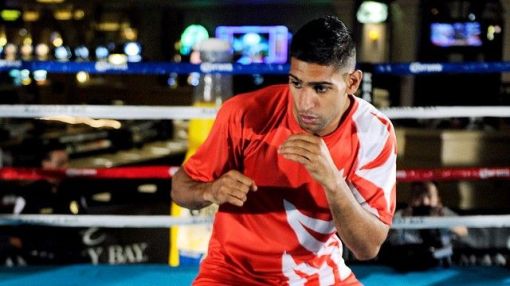
British, Pakistani, Muslim — how fans from Islamabad to London to New York process the champion boxer.

Since the very beginning of his career, Amir Khan has been more than just a boxer. He has been a symbol — well, more like symbols. One fighter, whose ethnic background, birthplace, and blinding hand speed mean very different things to different groups of fans. Khan himself has little control over how the people watching him choose to interpret his success.

It started early, when Khan was 17 years old and won a silver medal in the 2004 Athens Olympics. He became not only the “pride of Bolton,” his hometown, but also “the great young hope of British Boxing.” Khan decided to turn professional soon after, but days before his debut, the mood around Khan’s celebrity changed. The coordinated bombings on London’s transport system in July 2005 were the largest terrorist attack in British history. Three of the four bombers were, like Khan, of Pakistani origin, and all of them hailed from within a hundred miles of Khan’s home in Northern England. Khan, whose Olympic run established him as the country’s most prominent homegrown Muslim athlete, had no choice but to speak up. “I hope, by stepping into a ring, I can show all young kids in Britain, whether they are white, Muslims, or whatever, that there are better things to do than sitting around on street corners getting into trouble and mixing with bad people.” Ten days after the attacks, Khan proudly held the Union Flag when he walked to the ring. It was embroidered with the word “London” in black ribbons to mourn the victims. Moments after Khan wrapped up a first-round TKO victory, the police issued a red alert for a bomb scare and evacuated the arena.

At the ripe age of 18, Khan was not only a professional fighter, but also an unofficial spokesperson for Muslims and Asians in the U.K. Like it or not, he was a role model for underprivileged children caught at the crossroads of drugs, poverty, and now international terrorism. He also became “the best thing to happen for race relations in Britain.” All this translated into tremendous box office appeal. Before his London debut, for example, Khan visited Brick Lane, a large South Asian neighborhood on London’s East End, to promote the fight. “We brought him to the heart of the Asian community and we hope they will turn out and support him,” promoter Frank Warren said. They did. His next fight, against Belarussian Vitali Martynov, sold 10,000 tickets. It was Khan’s fifth professional fight.

Seven years later, it’s more of the same. Wherever Khan goes, he seems to carry the aspirations and insecurities of fans from all over the world. At the time of his last fight, on December 10, 2011, I was in Pakistan, a few miles away from Khan’s ancestral home, near Rawalpindi. Pakistanis aren’t die-hard boxing fans, but the sport isn’t completely unknown on the national scene. Of the two Olympic medals Pakistan has won in individual events, one is in boxing. Before every Khan fight, highlights from his previous bouts and flashy promos amped with heavy metal soundtracks start running on a loop on Pakistani television. Local governments set up big screens in public markets, and dense crowds arrive to cheer for Khan. Everything from his ring entrance to his punches to his post-match interviews are parsed and analyzed for how they reflect on Pakistan and its people.

In Pakistan, the buildup to Khan’s December bout with Lamont Peterson was feverish even by the local media’s distorted standards. Exactly two Saturdays before the fight, a swarm of American jet fighters and attack helicopters swooped into Pakistani territory from bases in neighboring Afghanistan and let loose a barrage of missiles targeting two Pakistani military posts. When the smoke cleared, 24 Pakistani soldiers were dead. The reaction was something like what it might have been if a Pakistani helicopter had flown into American territory and killed two dozen American soldiers: People cried bloody murder. America refused to apologize for the attack and instead blamed Pakistan for provoking it. In response, Pakistan cut off the American military supply routes that run through its territory to deprive U.S. forces in Afghanistan of equipment and food. The resulting standoff was the closest the two countries had come to all-out war after a decade of complex military rivalry.

While the world watched the diplomatic stare-down between two nuclear states, Pakistanis looked to Khan’s fight for a taste of vengeance. Khan’s opponent wasn’t just a real-life American — he was a real-life American from Washington, D.C. And in Pakistan, Washington is not just the name of another American city (never mind that the Washington from which Peterson hails bears little resemblance to the government monoliths that most Pakistanis associate with the city). Vashing-tone is the dark lair from which Obama orders the drone strikes that hit Pakistani villages every week. Vashing-tone is the Pentagon that drops American Special Forces into Pakistan in the dark of night to take out Osama. It’s akin to what the Kremlin meant to Americans during the Cold War. Actually, it’s not unlike what the word “PACK-istan” conjures up in many Americans’ minds today.

The Peterson fight would be Khan’s fourth in the United States, and this time he would enter the ring accompanied not only by the Union Jack, but also by the green flag of Pakistan with its white crescent. Unlike the battlefield, the American was the underdog in this fight, which ended up being one of 2011’s best. At the end, two questionable point deductions by the referee cost Khan the bout, and he lost on the scorecards. Khan let the alarm bells ring before he’d even left the ring. “It was like I was against two people in there, Lamont and the ref himself,” he said. Golden Boy Promotions appealed the decision a week later and the IBF began an investigation into the scoring of the fight.

Two weeks later, Khan flew to Pakistan. He travels there every so often to visit his parents’ homeland, but this time he visited to lend some star power to a Pakistani boxing tournament. When Khan arrived in the country, this is what you might have found while flipping through the dozen-odd local news channels: a steaming-mad middle-aged man calling for war against America; a montage from the Khan-Peterson fight showing Khan’s best combinations and Peterson hitting the mat again and again and again; an elaborate computer-generated graphic re-creating the American attack on the border posts; a field of caskets draped in Pakistani flags; Khan at a press conference calling the judges’ decision “disgusting” or saying something like “let’s take the fight somewhere neutral and I’ll see if he’s the same man.” The TV channels almost didn’t need different talking heads to discuss the two conflicts. The narrative was essentially the same: Americans play dirty, and when they feel like they’re losing, they cheat.

It was in the middle of such channel flipping that I found Amir Khan on my screen, being interviewed on Khyber News, a regional outfit that telecasts in the Pashto language to the Pashtuns, most of whom live along Pakistan’s western border with Afghanistan, including in the troubled tribal areas. Khan was seated on a plush, bright orange-and-yellow sofa, watching the tournament at ringside. The interviewer threw questions at him in Urdu and Khan answered in English, but that was no problem — Khan demonstrated a solid understanding of the questions in Urdu. It was the substance of the questions, which were less interested in Khan’s boxing career than in exploring the prospects of an interviewer, a TV channel, an ethnic group, and a nation’s hopes for itself on the global stage. Here are excerpts:

[“Khyber” is what Pakistanis call the northwest Afghan border regions. Inshallah means, “If Allah wills it.”]

INTERVIEWER: Does Amir Khan like the international popularity more or the love he gets from Pakistanis?
KHAN: Ummmm … it’s the same, you know. It’s the same in England. And in Pakistan, very same. You know? I’d say it’s the same everywhere we go. The two places where we get a lot of love is in England and also in Pakistan …

INTERVIEWER: Khyber News wants to show your fights live. I just talked to your father about this as well, but in the future do you think you will have a relationship with Khyber News?
KHAN: Yeah, definitely, I think it’s a good idea. We’re happy to work with anybody. To work with Khyber News will be, maybe good, you know. Let me speak to my team and inshallah the next fight for me will be in April or May against Lamont Peterson — I want a rematch — so maybe it can be on Khyber News. Let’s see what happens. I will try and speak to my team also …
INTERVIEWER: Wouldn’t it be nice if there were a ‘Khyber’ logo next to the ‘Khan’?
KHAN: Khyber Khan? Yeah, you know, maybe … [Laughs uncomfortably.]

INTERVIEWER: One more question, we’ve heard you have found your life partner and she lives in USA, I think. Is she Pakistani or is she from there?
KHAN: No, no. She’s Pakistani.
INTERVIEWER: Where from in Pakistan?
KHAN: Her father’s from Multan and her mother’s from Lahore.
INTERVIEWER: So she’s Punjabi?
KHAN: Yeah, I think so.
INTERVIEWER: When are you going to get married?
KHAN: Oh, not for a long time. I’m getting engaged next month so inshallah I’ll let the engagement happen first. Step at a time, brother.
INTERVIEWER: Will you keep fighting after the marriage?
KHAN: Yeah, yeah, it’s my job. It’s my job. I love boxing.
Any final thoughts? “To everybody in Pakistan, I want to say I hope they watch my next fight. Inshallah I’ll win for them. I’ll do it for my people in Pakistan.”

Khan seems to have understood what’s expected of him.

Where is Amir Khan from? The question follows Khan wherever he goes. Without a doubt that same question was asked when he arrived in New York to defend his WBA light welterweight title against Paulie Malignaggi in 2010. At the weigh-in, a group of 40 or so Pakistani-British fans who call themselves “Khan’s Army” caused pandemonium. Their fervent support for Khan was reminiscent of British football supporters, but with a Muslim twist. “If anyone can, Khan can,” they bellowed. “Amir, Amir, Amir.” This was punctuated several times with the loudest call of all: “Allah-o-Akbar.” While Khan and Malignaggi engaged in a stare-down for the flashing cameras, their supporters were in the throes of a full-fledged brawl.

Khan’s Army is no jihadi outfit. This is just how they show love for their fighter. But America was understandably tone-deaf to Khan’s Army when the latter first arrived in the country. How many times in the previous decade had a large group of brown men chanted “Allah-o-Akbar” with such confrontational zeal in New York City? You could probably ask any Pakistani immigrant — a taxi driver in New York or a heart surgeon in Chicago — or even a Pakistani in Pakistan and they would all tell you with equal certainty: It is not a good idea to gather in large groups with other men who look like you and scream “Allah-o-Akbar” for any reason whatsoever, especially in New York. But then, Khan’s Army is not Pakistani; nor is it Pakistani American. They are British Pakistanis and they are part of a different culture, one in which “Allah-o-Akbar” often has more to do with ethnic pride than with Allah.

Khan was born in a town called Bolton, on the outskirts of Manchester in northern England, a fact he demonstrates by failing to pronounce the letter t when it comes in the middle of a word. Long before Manchester became famous for its football clubs, the city was an engine of the industrial revolution. The region’s textile mills attracted thousands of immigrants from the former British colonies in South Asia. Khan’s family arrived in the 1970s from the northern Punjab region of Pakistan.

Today, “Asians” — that’s what the British call South Asian immigrants from Pakistan, India, and Bangladesh — make up about 5 percent of the population of England, and together they are the country’s largest minority group. A large majority of British Asians are Muslim, and a vast majority of Muslims are Pakistani immigrants. Khan’s father did well as a scrap metal merchant, and although Khan grew up in a comfortable home, his family still lived in a depressed part of Bolton. In general, Pakistani immigrants are some of the poorest people in Britain, living in some of the more violent and drug-ridden neighborhoods in London and the big cities of the North.

Amir “King” Khan was arguably the best thing that ever happened to this community. So when Khan left his English promoter to join Oscar de la Hoya’s Golden Boy Promotions in 2010, some in Britain saw the move as more than just a desire for big money. Maybe Amir was trying to get away, to base his career in a country where every business decision he makes and every punch he throws is not fraught with ethnic, religious, and class symbolism. And how did that reflect on Britain itself? Kevin Mitchell, the Guardian’s boxing correspondent, blamed “the small crew of British bigots who have taken against Khan” and driven him out of the country. “Over there, living quietly and comfortably in the Californian sunshine,” Mitchell lamented, “he is accepted without question by the fans — black and white Americans, Filipinos, Mexicans, all of them.”

Khan’s other British fans didn’t seem to mind the move as much. They just started traveling en masse to the United States for his fights. Khan’s Army remains as die-hard as ever, but it seems that they’ve toned down the “Allah-o-Akbar” — at least in America.

Amir Khan will step into the ring Saturday night with undefeated light welterweight champion Danny Garcia. The bout has been a long time coming for Khan — the seven-month layoff since his December loss to Peterson is as long an inactive period as he has had in his career. He was scheduled to fight Peterson in a May rematch that was canceled after Peterson tested positive for performance-enhancing drugs. Peterson also admitted to having the banned substance in his system before the first Khan fight, and that led the WBA to reinstate Khan as its 140-pound champion earlier this week. The Pakistani press had a ball with the news about Peterson’s failed drug test, but it sent Khan scrambling to find a new opponent. The Islamic holy month of Ramadan was coming up in mid-July, and Khan, as always, planned to fast. After that, he probably wouldn’t be in fighting shape until winter. Khan has already fought almost every credible opponent in the 140-pound weight class and so Garcia, the current WBC champion, seemed like the best option, even if Khan would be a heavy favorite in the fight.

Ever since the match was set up, Angel Garcia, Danny’s father and trainer, has been calling Khan an “overrated” fighter. But that’s not all he’s saying. He proclaimed that he has “never, ever, ever in my lifetime, that I’ve been living 49 years, I ain’t never met a Pakistani that could fight.” Then, somewhat nonsensically, he dismissed Khan as a “European fighter from Europe.” Finally, for good measure, he went after Khan’s religion: “I know Khan’s god already. His god is a punishing god. And my god is a loving god.” At the press conference in Los Angeles to announce the fight, Garcia senior cut off everyone from team Khan and began ranting about “magic carpets” and a “genie.” Boxers and their camps always play up their mutual dislike to promote fights, but Angel Garcia seems genuinely perturbed by Khan. It was at the end of the presser, when Angel was practically spitting with rage, that the elder Garcia yelled what he was really getting at this whole time: “Where you from, man? Europe? America? Where you from?”

California has been good to Khan. Since relocating to Los Angeles to train at Freddie Roach’s Wild Card gym, he’s been spotted sitting courtside at Laker games, he’s been featured in a GQ fashion spread, and he’s been photographed on the red carpet for the L.A. Spider-Man premiere. He even got to throw the first pitch at a Dodgers game this month, and it reportedly zipped right over home plate. With the exception of Angel Garcia, America and Amir Khan seem to be getting along just fine.

Islam, Pakistani, Muslim, European — none of those are necessarily flattering descriptions in America these days, but Khan continues to hold together the various strands of his identity and carry the dreams of people halfway across the world, and perhaps that’s what’s most appealing about him. Which flag is he going to carry into the ring this weekend? Will he someday add the Stars and Stripes to his collection? At the end of the day it doesn’t really matter. What matters is that there will be people spread across a dozen time zones, all of whom will root for Khan, all for their very own personal and selfish reasons. And as long as he keeps delivering, Khan’s Army will be there, too, in ever-growing numbers. Khan said once about his fans that “they might not be boxing fans, but they might be Amir Khan fans, y’ge’ me?” It’s a figure like this who can transcend boxing’s current status as a niche sport and grow from a prizefighter to a global sports figure.

Shahan Mufti is a freelance journalist whose work has been published in Harper’s Magazine, Wired, The New York Times Magazine, Bloomberg Businessweek, and The Atlantic, among other places. He is at work on a book about Muslim identity in Pakistan that comes out next year. This is his first piece in Grantland.
Pakistan Shuns Physicist Linked to ‘God Particle’

By Sebastian Abbot for Bloomberg Businessweek News

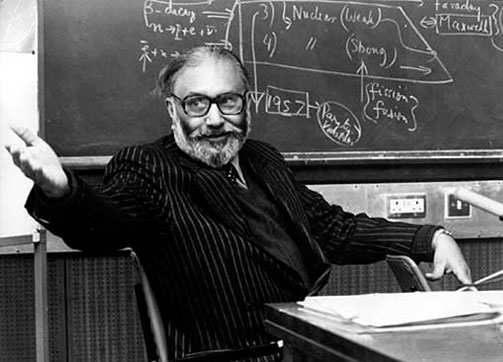
The pioneering work of Abdus Salam, Pakistan’s only Nobel laureate, helped lead to the apparent discovery of the subatomic “God particle” last week. But the late physicist is no hero at home, where his name has been stricken from school textbooks.

Praise within Pakistan for Salam, who also guided the early stages of the country’s nuclear program, faded decades ago as Muslim fundamentalists gained power. He belonged to the Ahmadi sect, which has been persecuted by the government and targeted by Taliban militants who view its members as heretics.

Their plight — along with that of Pakistan’s other religious minorities, such as Shiite Muslims, Christians and Hindus — has deepened in recent years as hardline interpretations of Islam have gained ground and militants have stepped up attacks against groups they oppose. Most Pakistanis are Sunni Muslims.

Salam, a child prodigy born in 1926 in what was to become Pakistan after the partition of British-controlled India, won more than a dozen international prizes and honors. In 1979, he was co-winner of the Nobel Prize for his work on the so-called Standard Model of particle physics, which theorizes how fundamental forces govern the overall dynamics of the universe. He died in 1996.

Salam and Steven Weinberg, with whom he shared the Nobel Prize, independently predicted the existence of a subatomic particle now called the Higgs boson, named after a British physicist who theorized that it endowed other particles with mass, said Pervez Hoodbhoy, a Pakistani physicist who once worked with Salam. It is also known as the “God particle” because its existence is vitally important toward understanding the early evolution of the universe.

Physicists in Switzerland stoked worldwide excitement Wednesday when they announced they have all but proven the particle’s existence. This was done using the world’s largest atom smasher at the European Organization for Nuclear Research, or CERN, near Geneva.

“This would be a great vindication of Salam’s work and the Standard Model as a whole,” said Khurshid Hasanain, chairman of the physics department at Quaid-i-Azam University in Islamabad.

In the 1960s and early 1970s, Salam wielded significant influence in Pakistan as the chief scientific adviser to the president, helping to set up the country’s space agency and institute for nuclear science and technology. Salam also assisted in the early stages of Pakistan’s effort to build a nuclear bomb, which it eventually tested in 1998.

Salam’s life, along with the fate of the 3 million other Ahmadis in Pakistan, drastically changed in 1974 when parliament amended the constitution to declare that members of the sect were not considered Muslims under Pakistani law.

Ahmadis believe their spiritual leader, Hadrat Mirza Ghulam Ahmad, who died in 1908, was a prophet of God — a position rejected by the government in response to a mass movement led by Pakistan’s major Islamic parties. Islam considers Muhammad the last prophet and those who subsequently declared themselves prophets as heretics.

All Pakistani passport applicants must sign a section saying the Ahmadi faith’s founder was an “impostor” and his followers are “non-Muslims.” Ahmadis are prevented by law in Pakistan to “pose” as Muslims, declare their faith publicly, call their places of worship mosques or perform the Muslim call to prayer. They can be punished with prison and even death.

Salam resigned from his government post in protest following the 1974 constitutional amendment and eventually moved to Europe to pursue his work. In Italy, he created a center for theoretical physics to help physicists from the developing world.

Although Pakistan’s then-president, Gen. Zia ul-Haq, presented Salam with Pakistan’s highest civilian honor after he won the Nobel Prize, the general response in the country was muted. The physicist was celebrated more enthusiastically by other nations, including Pakistan’s archenemy, India.

Despite his achievements, Salam’s name appears in few textbooks and is rarely mentioned by Pakistani leaders or the media. By contrast, fellow Pakistani physicist A.Q. Khan, who played a key role in developing the country’s nuclear bomb and later confessed to spreading nuclear technology to Iran, North Korea and Libya, is considered a national hero. Khan is a Muslim.

Officials at Quaid-i-Azam University had to cancel plans for Salam to lecture about his Nobel-winning theory when Islamist student activists threatened to break the physicist’s legs, said his colleague Hoodbhoy.

“The way he has been treated is such a tragedy,” said Hoodbhoy. “He went from someone who was revered in Pakistan, a national celebrity, to someone who could not set foot in Pakistan. If he came, he would be insulted and could be hurt or even killed.”

The president who honored Salam would later go on to intensify persecution of Ahmadis, for whom life in Pakistan has grown even more precarious. Taliban militants attacked two mosques packed with Ahmadis in Lahore in 2010, killing at least 80 people.

“Many Ahmadis have received letters from fundamentalists since the 2010 attacks threatening to target them again, and the government isn’t doing anything,” said Qamar Suleiman, a spokesman for the Ahmadi community.

For Salam, not even death saved him from being targeted.

Hoodbhoy said his body was returned to Pakistan in 1996 after he died in Oxford, England, and was buried under a gravestone that read “First Muslim Nobel Laureate.” A local magistrate ordered that the word “Muslim” be erased.

Imran Khan’s Strategy: End Corruption

By Azeem Ibrahim for The Express Tribune

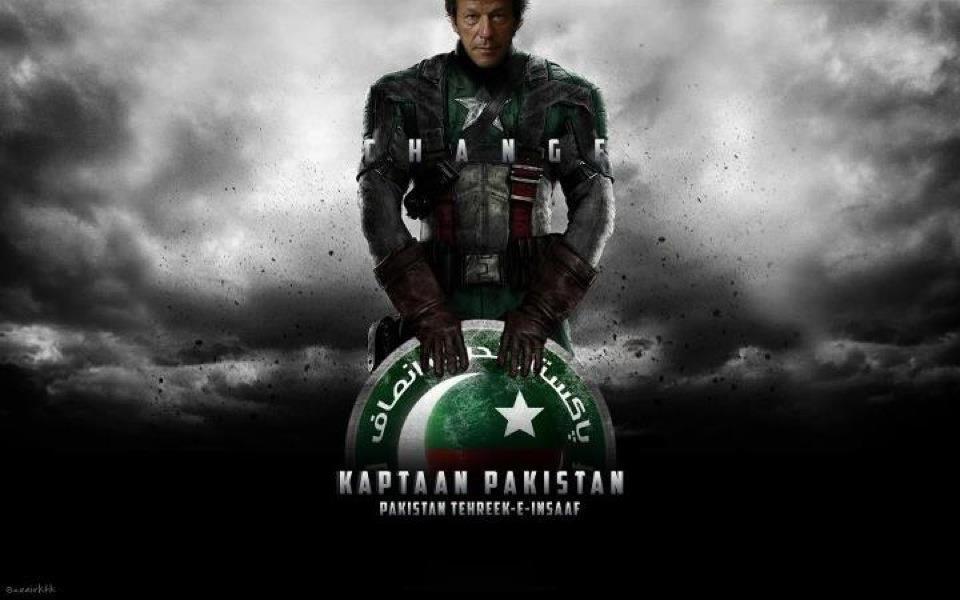
Pakistan Tehreek-i-Insaf leader Imran Khan has pledged in his political manifesto to eliminate major corruption in Pakistan within his first 90 days as prime minister. This is a tall order and was being derided by Nawaz Sharif yesterday as impractical and naive.

Despite his tenure in office, Sharif has failed to understand the different modes and echelons of corruption in Pakistan. Khan intends to target specific government level corruption which is most damaging in a series of enforceable reforms based on forceful transparency and assertive accountability.

Imran Khan is right to see the fight against corruption as a priority and instead of criticism he should be receiving national support for the huge task ahead. Corruption in Pakistan is widespread, systemic and deeply entrenched at all levels of society and government and is a substantial obstacle to the country’s development.

With losses due to corruption in Pakistan being estimated at Rs8500 billion, it has been described as “plunder” in a country where people still lack the most basic needs. Pakistan’s main anti-corruption body, the National Anti-Corruption Bureau (NAB) admitted in 2008 that Rs200 billion are wasted through corrupt practices at higher government levels with more billions locally. Petty corruption in the form of bribery is prevalent in law enforcement, procurement and the provision of public services; widespread financial and political corruption, nepotism and the misuse of power are rife.

Transparency International (TI), a Berlin-based organisation that puts out an annual Corruptions Perception Index (CPI), attributes corruption to autocratic governments, sprawling government bureaucracies of under-paid, under-trained civil servants and a lack of media freedom to keep track of fat government contracts and easy money. TI ranked Pakistan 139th among 180 countries in its 2009 CPI.

Pakistan has undertaken anti-corruption proceedings over the years but has avoided scrutiny of senior officials. The National Reconciliation Ordinance (NRO) issued by the former President of Pakistan, General Pervez Musharraf, on October 5, 2009, granted amnesty to politicians, political workers and bureaucrats who were accused of corruption, embezzlement, money laundering and even murder. A list of 8041 individuals who benefited from NRO included 34 politicians, further reducing public trust in leadership and encouraging the spread of corrupt practice at federal, provincial and local government level. It was declared unconstitutional by the Supreme Court of Pakistan on December 16, 2009, throwing the country into a continuing political crisis.

Pakistan’s citizens expect to pay bribes to obtain services such as electricity, health care and education and in dealings with the police. In the absence of a democratic and effective taxation authority, bribery can be seen as a form of illegal taxation in a country where the national budget is inadequate for the delivery of social services. This is damaging to the social fabric of society but it is low-level petty corruption nevertheless.

It is the illegal use of power by politicians and bureaucrats that deserves immediate attention and urgent scrutiny in Pakistan and Imran Khan recognises the need to put an end to these predatory practices that waste resources that should be invested for the good of the country.

Just one example of the direct impact of increased corruption is the rise in the prices of food commodities which according to the latest official data of Federal Bureau of Statistics, have increased up to 120 per cent in one year.

Lack of transparency and accountability have allowed the awarding of government contracts and licenses to one’s family, relatives or to corporations where one is a shareholder, allowing for private greed to overrule the public good. This type of corruption at a governmental level can be tackled relatively easily by enacting conflict of interest and transparency legislation – and enforcing it aggressively.

Imran Khan has already set an example and proposed that all politicians should also declare their assets.

A short blog like this is not the most effective medium to convey Imran Khan’s strategy in its entirety, but I can assure the naysayers that a comprehensive and effective policy is being developed alongside a strategic implementation plan. This is a powerful first step in clearing up corruption in Pakistan, vital for Pakistan’s survival as a democracy and hopefully the shape of government to come.

Pakistanis for Peace Editor’s Note– Although we do not agree with all the policies and proposals put forward by Imran Khan, we believe he represents the best hope for Pakistan and its world leading corrupt crony style feudal system of psudo-democratic and hyper military state. All other contenders are either too corrupt or too untrustworthy, unlike Khan, a hero for winning the 1992 Cricket World Cup as well as singlehandedly establishing a free state of the art cancer hospital for the country thru own money and largely through donations from the nation.

Let’s hope regardless of the outcome in the next elections, Pakistan finally gains a leader worthy of fixing all the ills of this nation and perhaps Kaptaan Imran Khan is the only hope.

Pakistan and its Image Problem

By Eric Schmidt for Google

Pakistan, a Muslim country, has spent about half of its independent life under military governments. Today, Pakistani leadership celebrates the ruling coalitions success in almost finishing the first five year term in history (previous leaders indicted by the courts, assassinated by extremists or brushed aside by the generals.) In meetings last week with the senior General, Prime Minister and the Foreign Minister, they made the case for a new and updated image of Pakistan: one of the largest democracies in the world, with a vibrant and open press, an upcoming demographic dividend of hardworking young people, and a highly educated elite leadership of the country. Islamabad and Lahore, where we visited, were relatively safe and certainly safer than Afghanistan. It was clear to us that Pakistan has an image problem.

Pakistan also has a power problem, as in electric power. Power is now off two hours out of three all day and all night. Estimates are that the country has enough generation capacity (hydro and oil based) to handle all the load, but corruption, power stealing, poor payment rates and the classic mistake of underpricing power compared to its real generation cost means that industrial production is threatened. Everyone of means has a UPS, and the air-conditioning seldom works on a 45 Celcius day. Our meetings often were literally in the dark, a common enough occurrence that people did not even remark about it.

Pakistanis are on their way to full mobile penetration with more than 110 million users, and all effective political communication programs now rely on SMS. 3G licenses are underway and the start of a real software industry can be seen.

Against this backdrop, another side of Pakistan emerges. The consensus is that the military drives the foreign policy of the country with unforeseen consequences. Alleged use of extremist groups to fight in Kashmir enables a criminal element to flourish, and the hosting of the Taliban in the autonomous regions (called FATA) to the north and west in the mountains turned an ungoverned area into a very dangerous area. The Army Generals explained the difference between fundamentalism (which they support) and extremism (which they fight), and the political leadership explained that the extremism now comes from “seminaries” where youth are indoctrinated, housed and fed in the rural areas where there are no opportunities at all.

Until recently a strong US ally, Pakistan is now on very good terms with China, and has improving relations with India (with whom they have had three wars.) The development of a nuclear stalemate between India and Pakistan seems to have forced them to pursue accommodation and trade is now increasing rapidly. The press are generally hyper-critical of the United States policies in the region and take the view that the India-US relationship is driving much of our countries behavior. The drone strikes are universally condemned as a violation of sovereignty and their constitution and are subject to much negotiation between the two countries. The bin Laden raid is viewed with strikingly different perspectives in the two countries.

The son of the chief of the Supreme Court is under investigation for corruption, and the media in turmoil after the appearance of staged interviews. In return, the Supreme Court has ruled that the Prime Minister is unable to govern after he was sentenced to a 30 second (yes, that’s right) detention for failing to investigate a corruption case against the President. The Prime Minister, so proud of the stability of the political system in his comments a week ago, is now the former-Prime Minister. The lack of trust within the society weakens both the real and perceived effectiveness of the government on security, corruption and good government matters.

We met a number of impressive Pakistanis, none more so than Masarrat Misbah of Smile Again. Every year, hundreds of young rural women have acid thrown on their faces by men as punishment for some dishonor, including being raped by the men who pour acid on her. This horrific crime, which often leads to death or blindness, requires painful rehabilitation and rebuilding of the woman’s life. Masarrat Misbah’s home in Lahore provides a temporary safe house. The perpetrators, most often direct family members, are seldom prosecuted and almost never convicted of anything. I will never forget the faces of these shy, young women so grievously injured in such an evil way.

Much of what people say and think about Pakistan is absolutely true for most of the FATA provinces (autonomous areas) and for Baluchistan. Pakistan’s image problem results from the fact that people outside the country believe the realities of North and South Waziristan and Quetta are reflective of what the larger country looks like. Islamabad and Lahore are certainly safer than people realize, unless you are a politician (many prominent politicians still suffer assassination attempts and threats inside these cities).

Pakistan’s major security challenge comes from having two many fronts. FATA represents a Haqqani network and Taliban problem, threatening the establishment in Islamabad. Baluchistan is a persistent separatist movement. Afghanistan is a threat because Pashtuns are allowed to go back and forth undocumented. All of this, including India, is simply too much for a government like Pakistan to take on right now.

We ultimately see three Pakistans: 1) The places where the security issues are true (FATA, Baluchistan, parts of SWAT Valley, and Kashmir); 2) the rest of Pakistan for the average citizen, much larger than the first and which is reasonably misunderstood and relatively safe; 3) The politician’s and military’s Pakistan, which whether in FATA or Islamabad, is turbulent, unsafe, and complex.

There is a good case for optimism about Pakistan, simply because of the large emergent middle class (#2). The country, vast, tribal and complicated, can follow the more successful model of India. Connectivity changes the rural experience completely.. illiteracy at 43% can be overcome relatively quickly, and providing information alternatives can dissuade young males from a life of terrorism. The well educated elite can decide to further reform the countries institutions to increase confidence in the government. The war in Afghanistan, destabilizing to Pakistan in many ways, winds down after 2014 and buys time for Pakistan to address its real and continuing internal terrorism threat (more than 30,000 civilian terror deaths in the decade.)

Technology can help in other ways as well. The power problem is mostly a tracking problem (tracing corruption and mis-distribution). The problem of extreme crimes (like acid, or stoning) in poorly policed regions can be mitigated with videos and exposes that shame authorities into prosecution. The corruption problem can be tracked and traced using mobile money and transparent government finances. We met with clever Pakistani entrepreneurs who will build large, new businesses in Pakistan in the next few years and global multinational will locate sales and eventually manufacturing in the country.

The emergent middle class of Pakistan won’t settle for a corrupt system with constant terrorism and will push for reforms in a burgeoning democracy. Here’s to the new civil society of Pakistan, who will use connectivity, information and the Internet, to drive a peaceful revolution that brings Pakistan up to its true potential.

Pakistan Elects ‘Rental Raja’ as Prime Minister

By Ben Doherty for The Sydney Morning Herald

A turbulent week in Pakistani politics has ended with the election of a new prime minister, but one who appears unlikely to stay long in the top job.

The past seven days have seen a long-serving prime minister sacked by the Supreme Court for contempt, his putative replacement felled by an arrest warrant for drugs importation and, finally, a stopgap candidate elected, with the country now almost certainly headed for early elections within months.

The new prime minister is Raja Pervez Ashraf, a 61-year-old from Sindh, who was water and power minister in the previous government. That job made him unpopular in a country stricken by chronic power shortages that only worsened on his watch. Some parts of the country are blacked out 22 hours a day. Mr Ashraf has also been accused of corruption over the importation of short-term power stations. Known as ”rental power” projects, they were costly and produced little power.

He is accused of making millions on the side from the deals and his derogatory nickname ”Rental Raja” was shouted by opponents in Parliament yesterday even as he was showered in rose petals on his election. Mr Ashraf won the parliamentary vote for prime minister 211 votes to 89.
In his first speech to Parliament, Mr Ashraf called on Pakistani Taliban militants to lay down their arms. ”The irresponsible behaviour of religious extremists has ruined Islam and Pakistan. I, as prime minister of Pakistan, appeal to them to lay down arms and join the mainstream of life.”

And he said his government would look to rebuild its relationship with key ally and aid donor, the US. ”We will develop cordial relations with the United States and international community on the basis of equal rights and dignity,” he said. Relations between the countries have rarely been worse, and show little scope for improvement.

Pakistan is refusing to reopen its border to Afghanistan to American trucks, after a botched US attack killed 24 Pakistani soldiers. And the US will not countenance abandoning its drone attack program in Pakistan’s north-west.

Regardless, few in Pakistan believe Mr Ashraf will have time to deliver even a fraction of what he promised in his maiden address. His government has, at most, nine months before elections are due, but they are expected now before the end of the year. ”This year will be the year of new elections, and we are going for the elections,” senior Pakistani People’s Party member Khursheed Shah said.
Raza Rumi, director of the Islamabad-based Jinnah Institute, said Mr Ashraf was a ”cynical choice” for PM. ”Whoever takes over as prime minister will be in for a very short time. Obviously the Pakistan People’s Party will not choose its best for this stint. They will choose people who can be dispensed with.”

On Tuesday, the former prime minister Yusuf Raza Gilani, was dismissed by the Supreme Court for refusing a direction to write a letter allowing Swiss authorities to investigate corruption allegations against Pakistani President Asif Ali Zardari (the same demand is likely to be made of Mr Ashraf). Then, the man tipped to fill the PM’s post, Makhdoom Shahabuddin, had an arrest warrant issued for him over the illegal importation of the chemical ephedrine, used to make methamphetamine.

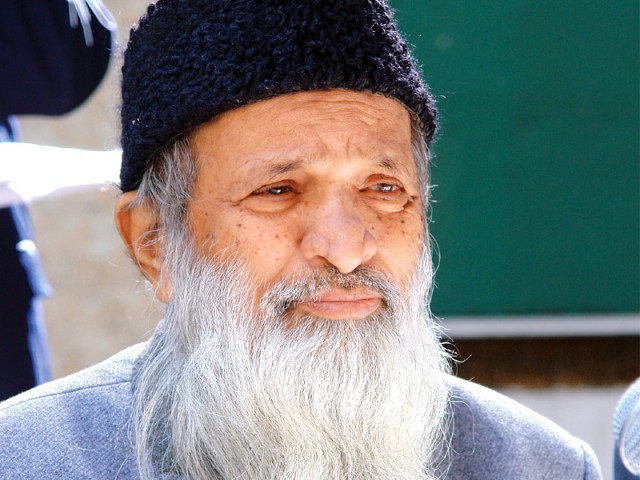
Edhi Faces Abduction Threat, Authorities Reveal

As Reported By Salman Siddiqui for The Express Tribune

Leading humanitarian worker Abdul Sattar Edhi is in danger of being taken hostage by a militant group in exchange for prisoners that it wants sprung free, authorities have revealed.
Edhi, while talking to The Express Tribune, stated that he was informed by the authorities a few weeks back that his life was in danger. “I was told that the ‘fauj’ (Pakistan Army) had intercepted a conversation of militants where it was being discussed that I may come to be harmed,” he said.
Edhi Foundation spokesperson Anwar Kazmi elaborated that the nation’s most recognisable charity worker was warned that he could be taken hostage in exchange for some prisoners that the ‘Taliban’ wanted to get released —

an allegation the militant group has denied.

Crime Investigation Department (CID) Senior Superintendent Police (SSP) Chaudhry Aslam confirmed that the intelligence reports they had received sometime back indicated that Edhi may be kidnapped by militants in exchange for either “some of their men in custody” or a “large ransom amount”.

“There was a letter in which there were three names, which included my name, Malir SSP Rao Anwar’s and Edhi’s,” he said.

This is the first time that Edhi’s name has been mentioned in a militant group’s hit list. After SSP Anwar was attacked in a suicide bomb in April, it was decided that Edhi’s security would be beefed up as a precautionary measure.

Security provisions

Despite the threat to his life, Edhi remains unfazed and calm in light of this development. “Only God knows what the truth is,” he says. “I don’t have enmity with anyone or any group. I do humanitarian work for everybody without any prejudice.”

Since the threats surfaced, Edhi is being provided with round-the-clock police security — with two official guards escorting him everywhere he goes. “Never before in his life had Edhi ever asked or given security by the state,” the spokesperson said.

Currently, two policemen from the Kharadar police station have been deployed for his security who work in two shifts of 12-hours each, according to Station House Officer (SHO) Agha Asadullah. “We can increase the number of policemen, if need be,” he said.

Edhi himself appears irritated by the presence of policemen near him at all times — especially given that he has to keep the Kharadar police station informed about his movements constantly. “I don’t want any of this security. I really feel there’s no need for it,” he said modestly. Although he is being asked to restrict his movements as a precaution, Edhi said he won’t allow anything to stop him. “I am going to Hyderabad next to do some relief work there,” he said.

TTP reaction

His son Faisal revealed that a three-member delegation of the local chapter of the Tehreek-e-Taliban Pakistan (TTP) recently came to the Edhi office to clarify their position about the alleged threats.

“They said to us that this is all government propaganda to malign the Taliban movement,” he said. “They also added that they respected Edhi for his humanitarian work and could not even think of doing him any harm.”

SSP Aslam said that the good news was that according to recent reports, Edhi’s name had not been mentioned again. “We receive a number of intelligence reports which mention a lot of famous personalities on the hit list on a weekly basis. So hopefully all will remain well.”

Reacting to the development, Edhi said: “I don’t know who [wants to harm me] or why. “I only know that I have to continue to do my work — no matter what.”

Pakistanis for Peace Editor’s Note– The Taliban have once again showed their true colors by threatening a man of Mr Edhi’s caliber. To threaten a person who is akin to Mother Teresa for Pakistan, a living saint, shows us how far off the cuckoo’s nest they really are. Just another reason for us here at Pakistanis for Peace to have great disdain for this group of people.

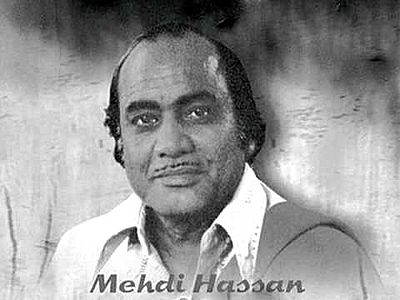
Legendary Ghazal Singing Legend Mehdi Hassan Dies

As Reported by Maimoona Shoaib and Mohammad Ashraf for The Gulf News

He worked in a bicycle shop. He repaired cars. And when he would sing a ghazal, he would mesmerise a continent.

Pakistani ghazal legend Mehdi Hassan, who suffered from lung, chest and urinary tract ailments for ten years, died of breathing complications at a Karachi hospital on Wednesday at the age of 84.

His famous ghazals (ballads) include “Patta patta boota boota,” “Abke bicchde khwaabon mein mile”, “Zindagi mein sabhi pyar kiya kartein hain,” “Dekh tu dil ki jaan se uthta hai,” and “Ranjish hi Sahi”.

“My father’s funeral will take place Friday in Karachi,” son Arif Mehdi said, adding that the family was yet to finalise the burial location. “We have asked for the permission from the government to bury him at Quaid-e-Azam mazar [near the mausoleum of Mohammad Ali Jinnah, the founding father of Pakistan] in Karachi, but we are waiting for approval,” he said.

Born into a family of musicians in Loona village in undivided India (now in the Indian state of Rajasthan) in July 1927, Hassan had a modest beginning, mirroring the situation of the new country he migrated to at age 20 after the partition of India in 1947.

The family sank into penury after moving to Pakistan, and eking out a living was difficult. Young Hassan worked in a bicycle shop and later became a car mechanic, even as he was initiated into music by father Ustad Azeem Khan and uncle Ustad Esmail Khan, who were dhrupad (Indian classical) musicians.

In his book “Mehdi Hasan: The Man & his Music”, Pakistani author Asif Noorani writes that his humility during this phase stood tall against the fame and greatness he had achieved later.

“He had earned his living by repairing automobiles during his younger days. During his years of stardom, his harmonium broke and he started repairing it himself, wittingly replying to the people surrounding him that this was a piece of cake compared to the number of engines that he had repaired in the past,” Noorani writes.

Eventually, Hassan found his real vocation in the ghazal.

Mehdi is said to have given his first performance when he was eight, in sync with tradition where musicians started early and were paced through various levels of public performance before they graduated as accomplished vocalists.

The hardships of life notwithstanding, Hassan stuck to his music and continued with his rigorous practice, relying on the extreme discipline he lent to his style of constricted-throat singing as opposed to the full-throated version.

He was well into his twenties when he was first noticed as a singer of some merit. The break came when he was invited to sing for Radio Pakistan in Karachi in 1957 — first as a thumri singer and then as a ghazal exponent.

Hassan had to work harder than many of his younger colleagues but his innovative approach earned him fame.

Traditionally, ghazals were sung in a thumri-like manner. They were set to Indian classical ragas such as Khamaj, Piloo and Desh. The classical format stymied the scope of the compositions — preventing it from innovating. However, Hassan pioneered a ghazal “gayaki” (manner of singing) that played upon the mood of the music rather than on the classical nuances. A composer of rare brilliance, his style combined classical and Rajasthani folk music to create a new realm of ghazals whose magic spread beyond Pakistan to India and the rest of the world.

He was one of the first Pakistani ghazal singers who charmed Indian audiences and won impressive fan followings — former Indian prime minister Atal Bihari Vajpayee invited him for a private performance at his residence.

But many more years were to pass after 1957 for Hassan to get his opportunity to sing for films.

As Hassan arrived, the ghazal stage was dominated by greats as Khan Sahib Barkat Ali Khan, Mukhtar Begum and Begum Akhtar. Among Hassan’s contemporaries were Farida Khanum, Iqbal Bano and Ustad Amanat Ali Khan, with Gulam Ali and Jagjit Singh followed not too far behind.

According to an estimate by Arif, Hassan sang more than 20,000 songs and apart from Urdu, also sang in Bengali, Punjabi and Pashto.

It’s not uncommon for a singer whose career spanned over 50 years to churn up 20,000 songs. But given the quality and the unfailing discipline which were the hallmarks of Hassan’s songs, it will go down in the history of music as a gigantic superhuman effort. And the way Hassan sustained himself until health issues made it impossible for him to carry on, is a remarkable story that parallels the struggles of his homeland.

After shining on the musical firmament from the 1960s to 1980s, Hassan’s career started fading as frequent illnesses took their toll. The death of his first wife in 1998 followed by an attack of paralysis restricted Hassan to bed and he lost the power of speech. His health deteriorated further over the past 12 years.

His home country honoured Hassan with several awards and honours — from Tamgha-e-Imtiaz to Pride of Performance and Hilal-e-Imtiaz — while India honoured him with the Sehgal Award in 1979. The Nepal government too honoured him with the Gorkha Dakshina Bahu.

Hassan, who married twice, is survived by 14 children — nine sons and five daughters. His second wife also died before him.

His death brings the curtains down on a journey in music that lasted more than 50 years and crafted a new era of lyricism, melody and poetry in ghazals.

Pakistanis for Peace Editor’s Note– Pakistan has had a few stars that transform their industry across all borders. One of them was surely Mehdi Hassan, a supernova so bright that he was considered living legend for the last several decades. His passing has dimmed the night sky over Pakistan and indeed over the entire Indian subcontinent as many in the neighboring country are mourning his loss as of one of their own. RIP Hassan sahib, thank you for all your songs and ghazals, through which you will live on forver.

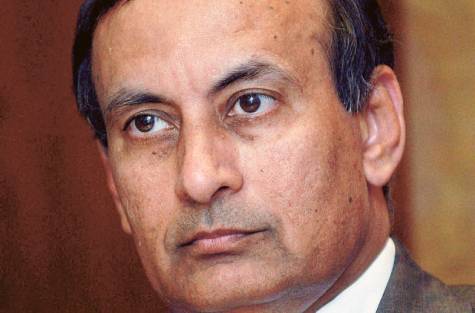
Pakistan Probe Says Ex-Envoy to US Wrote ‘Treasonous’ Memo to Washington

By Asif Shahzad for The Associated Press

A judicial investigation has concluded Pakistan’s former ambassador to the U.S. did write a secret letter to American officials requesting their help in reining in the powerful army last year, a lawmaker and state media said Tuesday. The finding could lead to treason charges against the envoy.

The former envoy Husain Haqqani was a close aide to President Asif Ali Zardari and a member of his party. Zardari himself could be threatened if any evidence surfaces showing he ordered, or knew of, the memo.

Haqqani, who resigned from his post after the scandal broke and currently lives in America, has denied he wrote the memo and said the commission’s report was “political and one-sided.” Many independent observers have also concluded that the probe was politicized.

The commission was investigating politically explosive allegations that Haqqani sought U.S. assistance last year in warding off an alleged army coup in the aftermath of the U.S raid that killed Osama bin Laden in May. The scandal pitted the weak civilian government against the army, and drew in other the feuding power brokers in Pakistan — the Supreme Court, the opposition and the media.

The dispute over the letter and other politically driven clashes between Pakistani state institutions, as well as an increasingly hostile relationship with Washington, have intensified strains on the shaky elected government as it struggles against Islamist militancy and economic stagnation. Some analysts have predicted events could end in a destabilizing stalemate, conditions that in the past have led to coups and other military interventions.

Allegations of collusion between Washington and Pakistani officials may also complicate American efforts to rebuild security cooperation with Pakistan, thrown into disarray in November by U.S. airstrikes that accidentally targeted Pakistani soldiers along the Afghan border and killed 24 of them.

The United States wants Pakistan to resolve its political turmoil and focus on fighting militancy and helping in its campaign in neighboring Afghanistan. But anti-Americanism is rife in Pakistan, and few politicians are willing to publicly help Washington. Pakistan has yet to reopen supply lines for NATO and US troops that it blocked after the November airstrikes. On Monday, US officials said a negotiating team in Pakistan seeking to get the supply lines reopened was returning home, the latest sign of stalled relations between the two countries. Britain’s Foreign Secretary William Hague, on a visit to Pakistan, said his government wanted to see the supply lines reopened.

“Those lines of communication affect us as well,” he told reporters, but added it was an issue for Islamabad and Washington to resolve.

The commission called witnesses and sought telephone records from Haqqani, who did not appear before the probe. Many other Pakistani observers have been skeptical of the investigation. Haqqani’s chief accuser in the case was an American-Pakistani businessman with a history of making unsubstantiated allegations and who once appeared in a music video featuring naked female mud wrestlers.

The commission read out its finding in the Supreme Court. Opposition lawmaker Khwaja Asif, who was present, said it concluded Haqqani tried to undermine Pakistan’s constitution and was not “loyal to the state.” The court ordered Haqqani to appear before it after two weeks.

Retired Justice Nasira Javed said the commission was working on orders from the Supreme Court and criminal proceedings against Haqqani on treason charges could now begin.

The release of the findings came just hours before the Supreme Court heard testimony from a billionaire property developer who claimed that the son of Supreme Court Chief Justice Iftikhar Chaudhry accepted $3.5 million worth of shopping and foreign trips to influence judges at the court. The case is embarrassing for Chaudhry, and is seen by some as part of a campaign by supporters of Zardari’s government to tarnish his image. Chaudhry recently convicted Prime Minister Yousuf Reza Gilani, an ally of Zardari, of contempt of court for not opening corruption charges against the president.

Alluding to that case, ex-envoy Haqqani said the “commission’s report has been released to distract attention from other more embarrassing developments.”

Supporters of Haqqani and the government accuse the Supreme Court and the army of working against Zardari and the political party he heads. His movement claims a long history of persecution by the army in Pakistan

Quips a Sign That U.S.-Pakistan Bond Soured

By Sebastian Abbot and Rebecca Santana for The Associated Press

You know a friendship has gone sour when you start making mean jokes about your friend in front of his most bitter nemesis.

So it was a bad sign last week when the U.S. Defense Secretary Leon Panetta joshed in front of an audience of Indians about how Washington kept Pakistan in the dark about the raid that killed al-Qaida leader Osama bin Laden a year ago.

“They didn’t know about our operation. That was the whole idea,” Panetta said with a chuckle at a Q&A session after a speech in New Delhi, raising laughs from the audience. The bin Laden raid by U.S. commandos in a Pakistani town infuriated Islamabad because it had no advance notice, and it was seen by Pakistan’s powerful military as a humiliation.

The U.S. and Pakistan are starting to look more like enemies than allies, threatening the U.S. fight against Taliban and al-Qaida militants based in the country and efforts to stabilize neighboring Afghanistan before American troops withdraw.
Long plagued by frustration and mistrust, the relationship has plunged to its lowest level since the 9/11 attacks forced the countries into a tight but awkward embrace over a decade ago. The United States has lost its patience with Pakistan and taken the gloves off to make its anger clear.

“It has taken on attributes and characteristics now of a near adversarial relationship, even though neither side wants it to be that way,” said Maleeha Lodhi, who was serving as Pakistan’s ambassador to the U.S. on Sept. 11, 2001, and was key in hurriedly assembling the two countries’ alliance after the terror attacks.

The latest irritant is Pakistan’s refusal to end its six-month blockade of NATO troop supplies meant for Afghanistan. Even if that issue is resolved, however, the relationship may be on an irreversible downward slide. The main source of U.S. anger is Pakistan’s unwillingness to go after militants using its territory to launch attacks against American troops in Afghanistan.

On the Pakistani side, officials are fed up with Washington’s constant demands for more without addressing Islamabad’s concerns or sufficiently appreciating the country’s sacrifice. Pakistan has lost thousands of troops fighting a domestic Taliban insurgency fueled partly by resentment of the U.S. alliance.

Panetta’s comments about the bin Laden raid may have been unscripted, but others he made while in India and Afghanistan seemed calculated to step up pressure on Pakistan. He stressed Washington’s strong relationship with India — which Islamabad considers its main, historic enemy — and defended unpopular American drone attacks in Pakistan.

He also said in unusually sharp terms that the U.S. was running out of patience with Islamabad’s failure to go after the Pakistan-based Haqqani network, considered the most dangerous militant group fighting in Afghanistan.

Many analysts believe Pakistan is reluctant to target the Haqqanis and other Afghan militants based on its soil because they could be useful allies in Afghanistan after foreign forces withdraw, especially in countering the influence of India. Over the past 18 months, the relationship between the U.S. and Pakistan has suffered repeated crises.

In January 2011, a CIA contractor sparked outrage when he shot to death two Pakistanis in the city of Lahore who he claimed were trying to rob him.
In November, American airstrikes killed 24 Pakistani troops at two Afghan border posts. The U.S. has said it was an accident, but the Pakistani army claims it was deliberate.

Pakistan retaliated by kicking the U.S. out of a base used by American drones and closing its border to NATO supplies meant for troops in Afghanistan. Negotiations to reopen the supply route are slow but under way.
But Pakistani officials have said the route will not reopen without some kind of apology. The U.S. has expressed its regret over the incident but has refused to apologize for fear it could open the Obama administration to GOP criticism.

Afridi Sentence Pushes U.S.-Pakistan Relations From Bad to Worse

As Compiled by Araminta Wordsworth for The National Post

Full Comment’s Araminta Wordsworth brings you a daily round-up of quality punditry from across the globe. Today: One country’s freedom fighter is another nation’s traitor, from Benedict Arnold on down.

That’s the fate of Shakil Afridi. The Pakistani doctor is now behind bars, serving a 33-year sentence for treason and excoriated by fellow citizens.

His crime: helping the Americans track down the world’s most wanted terrorist, Osama bin Laden.

The physician organized a fake vaccination drive in Abbottabad, a leafy town about an hour north of Islamabad where the al-Qaeda chief had been bunked down, apparently for years. Nurses went from house to house, taking DNA samples. Among the doors they knocked on was that of bin Laden.

The sentence has been greeted by outrage in Washington, where relations with Islamabad are going from bad to worse. Americans believe they should at least get co-operation for the $1-billion in aid they dish out to Pakistan each year.

Pakistanis meanwhile are affronted by perceived infringements of their sovereignty — chiefly the US Navy SEALs’ raid that killed bin Laden, which was carried out without notifying Islamabad; but also U.S. drone attacks, a friendly fire accident that killed about 30 government troops, and the CIA’s continuing clandestine operations.

Reporting from Islamabad for The Guardian, Jon Boone explains the Pakistani position.

For some Americans the Pakistani doctor who worked on a clandestine operation to track down one of the U.S.’s greatest enemies is a hero who should be given citizenship. But for Pakistan’s security agencies Dr. Shakil Afridi, a 48-year-old physician who once led campaigns to vaccinate children against polio on the Afghan frontier, is a villain.

On Wednesday a representative of the country’s main spy agency said Afridi had got what he deserved when he was sentenced to 33 years in prison for conspiring against the state, for his role in trying to help the CIA track Osama bin Laden to his hideout in the garrison town of Abbottabad.
American lawmakers quickly responded, hitting Pakistan in the pocketbook, writes David Rogers at Politico.

Angered by the prosecution of a Pakistani doctor for helping the CIA locate Osama bin Laden, the Senate Appropriations Committee voted Thursday to cut another $33-million from an already much-reduced military aid package: $1-million for each of the physician’s 33-year prison sentence.
The 30-0 roll call followed a brief but often bitter discussion that underscored the deteriorating relationship between Washington and the Islamabad government, which remains an important ally in the war in Afghanistan.

“We need Pakistan. Pakistan needs us,” said Senator Lindsey Graham, who helped to craft the amendment. “But we don’t need a Pakistan that is just double dealing.” Judson Berger at Fox News believes the Obama administration was caught flat-footed by Afridi’s conviction.

Former U.S. intelligence officers accused the Obama administration of dropping the ball … — with one openly challenging the State Department’s claim that it pressed his case “regularly” with Islamabad.

Officials are now raising a slew of concerns with how the U.S. government has handled the case.
Peter Brookes, a former analyst and adviser with several intelligence agencies who is now a senior fellow with the Heritage Foundation, told Fox News on Thursday that the U.S. should have had a plan to get him out of Pakistan immediately following the raid.

But CNN’s national security contributor Fran Townsend told the program Starting Point Afridi probably thought he was “safe enough” in Pakistan and didn’t want to leave, especially without his extended family.

The United States is working to secure Afridi’s release, and Townsend confirms that [U.S. Secretary of ] State Hillary Clinton has intervened on the doctor’s behalf. Although she believes that Afridi may face some jail time, Townsend says that she ultimately thinks he’ll be released through negations between the U.S. and Pakistan.

“Pakistan will use it as a leverage point,” Townsend explains. “They’re going to want some concession, some commitment from the United States that there will be no use of Pakistani citizens inside their own territory by American intelligence.”

Her view of Afridi as a bargaining chip is confirmed by the BBC’s M. Ilyas Khan, who explains the significance of trying Afridi under Khyber Pakhtunkhwa tribal law .

A trial by a regular court could have gone on for months, involving a proper indictment, witnesses and lawyers, all under the glare of television cameras.

But the political officer in Khyber has made sure that it stays secret and swift … Analysts say the Pakistani establishment has done this not only to defy the Americans but also to send a message to all Pakistani contacts of American diplomatic missions to desist from repeating Dr Afridi’s “mistake.”

They also point to an enduring feeling in Pakistan that at some point it has to mend fences with its Western allies, in which case the release of r Afridi could be one of the bargaining chips.

As and when that happens, the governor of Khyber Pakhtunkhwa province can legally order his release.

Pakistanis for Peace Editor’s Note- The jailing of Dr Afridi is not only another stain in the US-Pakistani relations, such as the hiding of OBL, but rather it is another carriage of injustice in a nation that is guilty of it daily with its population. From the lack of providing rights and freedoms to many of its citizens to the downright shameful behavior towards its religious minorities and women, it regularly is guilty of miscarriage of justice.

Please don’t even get us started on failing miserably to provide basics such as power, clean water, security from home grown terrorists or even a remotely functioning democracy. This action, as well as others in the last thirteen months illustrate, in our view, simply no reason other than, we are sad to say, that Pakistan has essentially told the Americans that we are not with you.