Posts Tagged ‘ Peace ’

Muslims for Peace- A Public Service Announcement

This is an amazing Public Service Announcement by my friend Ani Zonneveld, founder of Muslims for Progressive Values, a peace activist and an award winning singer/songwriter as well as a great ambassador for moderate Muslims everywhere and a voice of reason within Islam during these difficult times. This video is a must watch for Muslims and non-Muslims alike for helping build bridges and understanding between moderate voices of Islam within and outside the Muslim world.

For more information, please visit http://www.mpvusa.org

No Change Seen in Pakistan’s View of India Threat

By Myra MacDonald for Reuters

The Pakistan army is unlikely to change its assessment of the threat from India despite heavy demands on its troops to provide flood relief while also fighting Islamist militants, a senior security official said.

The Wall Street Journal said this month Pakistan’s Inter-Services Intelligence (ISI) agency had decided — for the first time in the country’s history — that Islamist militants had overtaken India as the greatest threat to national security.

But the security official suggested this was a misinterpretation of the stance of the Pakistan army, which views the threat from militants and India in very different ways, rather than comparing them against each other.

“These are two mutually exclusive threats. The magnitude, the type, is quite different. One is an internal threat which is insidious, difficult to quantify. It is a clear and present danger. This is a very serious threat,” he said. “The other is a conventional threat. What has India done, politically and militarily, for this threat to have been reduced?”

Another official said the threat from India had if anything increased into both a conventional and unconventional threat, as it used its presence in Afghanistan to support those fighting against the Pakistani state in its western border regions.

India denies accusations by Islamabad that it backs separatists in Baluchistan province, which borders Afghanistan, saying it is interested only in promoting Afghan development.

With flooding which has uprooted some 6 million people further destabilizing a country already battling militants, the WSJ report raised the possibility the Pakistan army might revise its assessment of the threat from its much bigger neighbor.

It keeps the bulk of its troops on the Indian border.

INDIAN FLOOD RELIEF

India has promised Pakistan $5 million in flood relief and analysts there see no chance of it exploiting its nuclear rival’s current vulnerability by raising tensions on the border.

“At this time no one is thinking of anything other than how to help them get over the suffering and the damage,” said retired Brigadier Gurmeet Kanwal at the Center for Land Warfare Studies.

“The Pakistanis should feel free to pull out their troops for flood relief as and when they want. The Indian Army obviously cannot give any written guarantees but our DGMO (Director General of Military Operations) could reassure his counterpart that we have no intention of attacking them at such a time.”

The DGMO’s of the two countries talk by phone once a week, mainly to clear up misunderstandings over any ceasefire violations on the Line of Control dividing disputed Kashmir.

But the security official said that Pakistan’s military deployment was based on its assessment of India’s potential offensive strength. “The configuration of any defense force is based on enemy’s capabilities and not intentions,” he said.

Pakistan has taken more casualties in its battle with Islamist militants than in all its wars against India combined — the two countries have fought three full-scale wars since independence in 1947 along with other smaller conflicts.

Yet for Pakistan to drop its guard against India would require progress on political disputes, including over Kashmir, officials say.

India broke off a peace process with Pakistan after the 2008 attack on Mumbai by Pakistan-based militants and despite several attempts the two countries have been unable to get their talks back on track again.

And even while Pakistan fights militants on its western border with Afghanistan, it remains wary of sudden Indian retaliation should there be another Mumbai-style attack on India.

“This enforced attention to the western border has made the Pakistan army reassess its priorities,” said western military analyst Brian Cloughley, an expert on the Pakistan army.

“But it still does not wish to drop its guard to the east, especially as the there is still the threat of a swift and dramatic attack if a terrorist outrage in India is determined by India to have been planned in Pakistan.”

Pakistan has said it cannot guarantee there will be no more attacks on India, arguing that it too is a victim of bombings.

Crisis in Kashmir

By Ashok K Metha for The Wall Street Journal

A few months ago, Pakistan was virtually begging India to restart the dialogue process between the two governments, suspended after the 2008 Mumbai terrorist attack. Now Pakistani spokesman Abdul Basit asserts that Pakistan will not agree to “any preconditions for resuming the dialogue process.” Why did Islamabad’s attitude change?

The answer lies in two cities: Srinagar and Kabul.

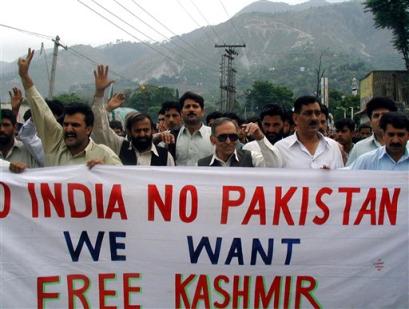
With 62 civilian deaths in the ongoing rioting in the capital city Srinagar and two districts, over the past couple months Kashmir has witnessed a fresh uprising against the symbols of the state. Kashmiris are using every avenue they have—from stones to the Internet—to demand azaadi, or freedom. The mostly spontaneous upheaval involves young men, women and even children. Kashmiris want freedom from corruption, bad governance and the overbearing presence of soldiers.

For decades Pakistan has been trying to wrest Kashmir away from India by sponsoring insurgency. But today, thanks to the ineffective administration in Srinagar, Pakistan doesn’t have to try very hard. After the security forces managed to restore law and order three years ago, India failed to take the political initiative, and frittered away its gains. The result is widespread disillusionment. At a ceremony commemorating India’s Independence Day this month, a local policeman threw a shoe at Omar Abdullah, chief minister of Jammu and Kashmir, whose grandfather Sheikh Abdullah ratified the state’s accession to India.

Up until 2008, the state had a lot going for it: several round-table meetings for self rule and confidence-building measures, periodic release of economic packages, annual visits by Prime Minister Manmohan Singh, conferences connecting the people and quiet dialogue with moderate and hardline separatist leaders. The ceasefire on the Line of Control was holding, and a four-point formula for resolving the Kashmir dispute hammered out with Pakistan through back channels seemed as good as done.

Indian security personnel beat detained Kashmiri Muslim protesters in Srinagar, India.
Mysteriously, the peace process then ground to a halt. The India-Pakistan dialogue began unraveling soon after Gen. Pervez Musharraf left the scene. The new Pakistani Army Chief, Gen. Ashfaq Kayani, a Fort Leavenworth graduate and favorite of the U.S. establishment, reversed the process of reconciliation. The ceasefire has become shaky, and the Pakistani government’s rhetoric on Kashmir has returned to the rights of the people to self determination and “diplomatic and moral support to Kashmir in their legitimate struggle no matter how brutally Indian forces try to suppress it.”

The reason Gen. Kayani feels emboldened to take a harder line is easy to discern. Tensions deepened after the U.S. elevated Pakistan from “major non-NATO ally” to the linchpin of its Afghan exit strategy, and excluded India from a political solution in Afghanistan. Despite the denials of U.S. Af-Pak point man Richard Holbrooke, the Afghanistan-Pakistan free trade agreement has only underscored India’s irrelevance to Kabul.

Civilian strife in the Kashmir Valley will only strengthen Pakistan’s case that resumption of a dialogue on Kashmir alone will enable a more focused fight against the Taliban on the Western frontier. This is not entirely true, as the Pakistan Army has already redeployed to the west 52% of its offensive and 45% of its defensive forces previously devoted to facing down India.

The priority for Delhi is to stop the stone-throwing in Kashmir. Every death—one recent fatality was a child of eight years old—is fresh cause for protests. On an hour’s notice, 10,000 people will come out on the streets to join the funeral procession of someone they don’t know. Further, Kashmir’s moderate Islam is being radicalized by the hardline Jamaat-e-Islami, which has made even separatist leaders irrelevant. No one is willing to talk unconditionally anymore.

Delhi will have to start from scratch in rolling back alienation by reaching out to youth. Yet Rahul Gandhi, India’s prime-minister-in-waiting and supposedly its youth leader, has not reached out to his favorite constituency in Kashmir. Neither has Congress President Sonia Gandhi or Prime Minister Manmohan Singh visited Srinagar since the troubles began in June. Until a few months back, Kashmir was the most violence-free state in India, as security forces had significantly marginalized insurgent and terrorist groups over the last three years.

Islamabad is not about to take over Kashmir—according to a survey by London-based think tank Chatham House last month, just 2% of the population favors joining Pakistan. But as the cry for azaadi grows louder, no one has a clue when this uprising is going to stop. Even as the faithful observe Ramadan, Delhi needs to do something before U.S. President Barack Obama’s scheduled visit in November.

India, Pakistan Peaceniks Hold Candlelight Vigil on Wagah Border

By Sawinder Singh for ANI

Several intellectuals and peace activists from India and Pakistan held a candlelight vigil at Wagah border crossing in on the eve of Independence Day.

The objective of this annual event is to spread the message of peace and brotherhood on the occasion of the Independence Day celebrations of the two neighbouring countries-India and Pakistan.

The midnight vigil on August 14-15 was held on the 63rd Independence Day celebrations of both the countries.

Bollywood Film Producer-Director Mahesh Bhatt, veteran Indian journalist-writer Kuldeep Nayar, Aitzaz Ahsan, former Pakistan Supreme Court Bar Association President and many social activists participated in the midnight vigil.

The participants carrying candlelights and torches marched to the Wagah Border raising slogans of Long Live India-Pakistan Friendship.

“Borders should be open and it should be soft and let people meet from both the countries. Because when people of both the countries will meet then governments will come under pressure and the situation will improve,” said Kuldeep Nayyar.

“Both countries can prosper only if there is a good relationship between them, we have to remove the poverty. Both countries are stricken with acute poverty, unemployment and hunger. Both the countries need to reduce their expenditure on weapons and then only we can reduce poverty and for that it is necessary to have peace, friendship and brotherhood,” added Aitzaz Ahsan, former Pakistan Supreme Court Bar Association President.

On this occasion, a music concert was also held.

India and Pakistan achieved independence from Britain on the midnight of August 14, 1947. While Pakistan celebrates its Independence Day on August 14, India marks its Independence Day on August 15.

This year Pakistan did not celebrate its independence day as a tribut to victims of recent floods in the country.

India, Pakistan and the Musical Gurus of Peace

By Varun Soni for The Huffington Post

In July, India and Pakistan will begin a new round of talks in hopes of reviving their diplomatic efforts and renewing their peace process. While there are many pressing political issues to discuss, these talks could also be a remarkable opportunity for an innovative public diplomacy initiative between the nuclear neighbors. Although public diplomacy is often thought of as a form of state-to-state engagement, it also has the power to engage populations on a person-to-person level as well, especially in the age of social media and networking. Given the fact that many Indians and Pakistanis sing the same songs and listen to the same music, there is a unique opportunity now to promote popular music as a form of public diplomacy.

Although India and Pakistan are politically divided, their cultural roots still bind them together. Nowhere is this more apparent than Punjab — a region that was partitioned to create the modern nation-states of India and Pakistan in 1947, and further divided into the Indian states of Haryana and Himachal Pradesh in the 1960s. Despite these geopolitical divisions, Punjabis in both India and Pakistan remain united by “Punjabiyat,” a shared cultural heritage that has developed over millennia.

The historical Punjab is the only region in South Asia where Hindus, Muslims, and Sikhs are all represented in large numbers. Even as Punjab’s history is one of conflict and communalism, it is also one of overlapping musical and religious traditions. For example, the Guru Granth Sahib, the Sikh canonical text, contains within it not only the devotional compositions of Guru Nanak and his Sikh successors, but also verses from poets now considered Hindu and Muslim, such as Namdev and Baba Farid. Likewise, the Sikh devotional music of kirtan draws from similar lyrical sources and employs a similar instrumentation as Hindu bhajan music and Sufi qawwali music. For contemporary musicians, the devotional syncretism of Punjab remains a powerful model for how music can provide an encompassing framework for both unity and diversity.

Earlier this year, I interviewed the Sufi rock star Salman Ahmad as part of a USC book launch series focused on religion, popular culture, and diplomacy. As the founder of Junoon, Pakistan’s most popular rock band, Ahmad discussed his experiences performing in both India and Pakistan and explained how rock and roll empowers and connects the youth in both countries. In the name of rock-and-roll diplomacy, Ahmad organized last year’s Concert for Pakistan at the UN General Assembly Hall as a way of raising money and awareness for the three million internally displaced people of the Swat Valley in Pakistan. Inspired by George Harrison and Ravi Shankar’s famous Concert for Bangladesh, the Concert for Pakistan brought together prominent Indian and Pakistani musicians, diplomats, and entrepreneurs in solidarity and support for Swat.

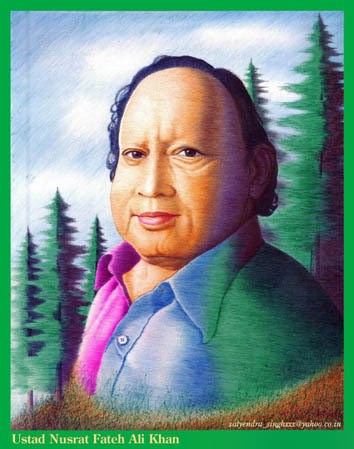
Another powerful moment in India-Pakistan musical diplomacy occurred in August of 1997, when India and Pakistan celebrated their fiftieth anniversaries of independence as nation-states. In order to commemorate this occasion, the virtuoso Indian music composer A.R. Rahman recorded with the late great Pakistani qawwali singer Nusrat Fateh Ali Khan. Together, the most famous musician from India and the most famous musician from Pakistan composed “Gurus of Peace,” an impassioned plea for peace between India and Pakistan. “Gurus of Peace” proved prescient, as the following year both India and Pakistan tested nuclear weapons, prompting President Clinton to call the India-Pakistan border the world’s most dangerous region. But A.R. Rahman and Nusrat Fateh Ali Khan had reminded the region the year earlier that India and Pakistan could unite through musical fusion instead of divide over nuclear fusion.

In the 1950s, the US State Department began sponsoring jazz luminaries, such as Duke Ellington and Dizzy Gillespie, to perform concerts overseas and serve as American cultural ambassadors. This public diplomacy initiative was aimed at winning the hearts and minds of potential allies in the Cold War, but the concerts also connected communities and ideas at a person-to-person level, and inspired artistic movements throughout the world. Likewise, India and Pakistan should sponsor and promote a series of musical concerts, workshops, and exchanges as a way of creating connections and engaging communities on a non-state level. Musical diplomacy certainly has its limits and should only be one part of a broader public diplomacy strategy, but after more than 60 years of missed public diplomacy opportunities, it’s time for India and Pakistan to follow the lead of A.R. Rahman and Nusrat Fateh Ali Khan and give music a chance.

Indian PM Manmohan Singh Renews Kashmir Talks Offer

As reported by BBC

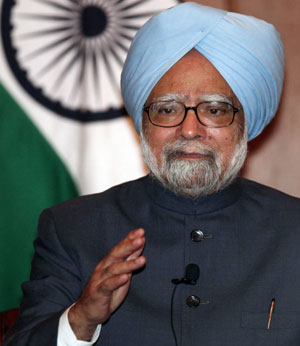
Indian Prime Minister Manmohan Singh has renewed an offer of talks with Kashmiri separatists who shun violence. He made the comments during a visit to a university in Indian-administered Kashmir. He is on a two-day trip to the state to review development schemes. Separatists have called a shutdown. The PM has disappointed those who expected him to announce a political package, the BBC’s Altaf Hussain in Srinagar says.

“We felt that the people of the state are not only interested in financial assistance and development projects, but also desire a political process that meets their aspirations,” Mr Singh told gathering at the agricultural university in Srinagar.

“We want to take the dialogue process forward. We are ready to talk to representatives of all sections who are opposed to terrorism and violence,” he said. ‘Strict instruction’  The prime minister repeated his government’s policy of “zero tolerance” for human rights violations.

“The security forces in Jammu and Kashmir have been strictly instructed to respect the rights of the civilians. We’ll act to remove any deficiency in the implementation of these instructions,” he said. The PM’s visit was greeted by protests against human rights violations  The prime minister’s visit came a day after the Indian army suspended a senior officer accused of killing three civilians in a staged gun battle.

The incident happened at Machhil near the Line of Control, the de facto border which separates Indian-administered Kashmir from Pakistani-administered Kashmir, in April. The Muslim-majority Kashmir Valley staged a total shutdown to protest against the prime minister’s visit. The strike was called by a hardline separatist leader Syed Ali Shah Geelani.

Mr Singh’s visit has also disappointed the moderate faction of the separatist Hurriyat Conference, headed by Mirwaiz Umar Farooq, our correspondent says. Mr Farooq had urged the prime minister to announce a political package during his visit.

He had demanded withdrawal of troops from cities and towns and release of political prisoners to facilitate talks between the separatist leadership and the government, our correspondent adds. Violence has declined in Kashmir in recent years, but analysts say militants opposed to Indian rule are now trying to regroup. There has been a spate of clashes in recent months along the LoC. Hundreds of thousands of Indian troops are based in Kashmir, where there has been a two decade-old insurgey against Indian rule.

Time to end the impasse with Pakistan

By Siggharth Varadarajan for The Hindu.com

Forget Kashmir and terrorism or even Afghanistan and water, the current stalemate between India and Pakistan is all down to one word. Both countries publicly say that Dialogue is the only way forward. Yet each is paralysed by the name Composite’. New Delhi is so allergic to it that it will not accept its use, while Islamabad has become so attached to the C word that it insists there can be nothing else.

This Indian allergy and Pakistani attachment is paradoxical, since the composite dialogue approach has suited India more than it has Pakistan. Under the guise of moving ahead simultaneously on all issues, the framework has allowed progress on trade and other subjects considered important by New Delhi, even as the status quo on major disputes like Kashmir and Siachen key concerns for Islamabad has held. Of course, the dialogue did not end cross-border terrorism or extinguish the links between the Pakistani security agencies and violent extremism as some on the Indian side might have hoped. But that was always an improbable shot given the DNA of the Pakistani establishment. Over time, India has realised the best way to deal with the threat of terror is by strengthening its internal capabilities while utilising engagement as a lever for influencing Pakistan’s behaviour over the long run.

The two most important issues for the Pakistani side today going by its public statements are Kashmir and water. But here’s the paradox: the composite dialogue, from its point of view, has produced no forward movement whatsoever on these two fronts. In four and a half rounds of talks within that framework, the total amount of time spent by the two foreign secretaries in discussing the Kashmir dispute has perhaps been 10 hours. During which neither side did anything beyond restating its national positions. As for water, it does not even figure as a separate head under this format. The only water-related dispute covered by the composite dialogue is the Tulbul navigation project, also known as the Wullar barrage. There, too, progress has been insignificant.

In contrast to the composite dialogue framework, the back channel between Satinder Lambah and Tariq Aziz was far more effective and productive. Between 2004 and 2007, the two special envoys, who reported directly to Prime Minister Manmohan Singh and General Pervez Musharraf respectively, discussed Kashmir for hundreds of hours. More significantly, their exertions produced a framework solution that was cleared on the Indian side by the Cabinet Committee on Security and on the Pakistani side by the Corps Commanders conference, before domestic political difficulties triggered by his dismissal of the chief justice forced Musharraf to back off. As for water, the Indus Water Commissioners have been meeting continuously for more than 40 years and their forum represents the best platform for Pakistan because all the Indian projects it opposes on the Indus, Chenab and Jhelum rivers can be referred to an outside arbitrator whose decisions are final and binding. Compared to such a powerful dispute resolution mechanism, the existing dialogue framework is surely inferior. And yet, even though Islamabad’s best shot at making progress on water and Kashmir lies outside the composite dialogue, it has got locked into a situation where it is refusing any form of engagement or talks other than that.

Now let’s consider India. The Indian position has been in a state of flux since it suspended the composite dialogue following the terrorist attacks on Mumbai in November 2008. Broadly speaking, however, India has maintained that there can be no resumption of the composite dialogue till Pakistan moves to punish the Mumbai conspirators and dismantles the infrastructure of terror on its soil. In September last year, Prime Minister Manmohan Singh made a distinction between meaningful dialogue on disputes, which would have to await Pakistani action on terrorism, and talks on humanitarian and other issues. Since then, the Indian position has evolved further. When Pakistan’s Foreign Secretary, Salman Bashir, was invited to Delhi in February 2010, India clarified that while its own priority was terrorism, it was ready to discuss all issues with Pakistan. That is still the official Indian position. At a press conference on April 22, Foreign Secretary Nirupama Rao said dialogue represents a concrete method to move forward in our relationship It is always useful. It helps clear the atmosphere and especially between neighbors, such as India and Pakistan. Dialogue is really the only way forward.

But if India believes dialogue is really the way forward, why is it unable to accept Pakistan’s call for the composite dialogue to be resumed? The paradox here is that from the traditional Indian perspective, the composite dialogue has worked pretty well. Discussions on Kashmir have not led to any change in the territorial status quo but have provided a cover for India to move ahead with other parts of the bilateral agenda that suit it more, like trade and cross-border confidence-building measures. And if the Indian side is opposed to talks on the water issue’, the composite framework of dialogue is ideal because water does not figure as a standalone topic under any of the subject heads. Despite this, India is the one saying no to composite’ dialogue.

India suspended the composite dialogue in order to get Pakistan to take action against terrorism. Some action has been taken but the Manmohan Singh government rightly believes that Pakistan can and must do more. It also knows the continued absence of dialogue is unlikely to produce greater action on the terrorism front and might even be counter-productive. Yet it fears the resumption of the suspended dialogue will be seen as a sign of weakness by the Opposition.

India’s options have been further complicated by the hardening of the Pakistani position on cooperation and dialogue since November 2009, when Barack Obama’s new AfPak policy dealt the military establishment in Rawalpindi a stronger hand in the Afghan endgame. Even as the Pakistan army has stepped up its offensive against the Tehreek-e-Taliban and, to a lesser extent, anti-American extremists on its border with Afghanistan, it has played up the India threat’ card to balance the perception that it is too subservient to the U.S. The rhetoric on water, the Azm-e-Nau III exercises, the loosening of the leash on Lashkar-e-Taiba chief Hafiz Saeed and the increase in infiltration across the Line of Control are all evidence of the hardening of the Pakistani military’s attitude. At the same time, the domestic political situation in Pakistan is fluid. The 18th amendment to the constitution has opened up the possibility of the civilian government and the provinces strengthening themselves vis-a-vis the military. The revival of the Benazir Bhutto assassination case in the wake of the recent U.N. report could also provide political ammunition against the establishment.

In the run up to this week’s Saarc summit in Bhutan, where Prime Minister Manmohan Singh will meet Yusuf Raza Gilani on the sidelines, Indian officials are resigned to keeping the bilateral relationship in a holding pattern.’ Their logic is that if relations cannot improve, then they should not be allowed to deteriorate either. As a short-term strategy, the holding pattern strategy works fine. There are always small things that can be done at that level too. But an aeroplane cannot circle the runway endlessly. The longer it is up in the air, the greater is the likelihood of a disastrous descent. That is why planning for an orderly landing is a much better strategy.

In Thimphu, Dr. Singh must try and find a way of doing that. One possibility is for the two prime ministers to task their foreign secretaries with reviewing what has been accomplished on the terrorism front as well as in the last few rounds of the composite dialogue, with a view to expediting the resolution of existing problems and disputes. Such a mandate would foreground the necessity of a dialogue addressing all outstanding issues while sidestepping, for the moment, any nomenclatural disagreement. It would accomplish the stated Indian objective while allowing Mr. Gilani to return without having surrendered Islamabad’s stand on the resumption of the composite dialogue.

Parallel to this process, the Prime Minister should meet with the leaders of all major political parties in order to explain the reasons why India and Pakistan need to end the current stalemate. Finally, a strict moratorium on grandstanding and posturing, finger-pointing and name-calling is necessary. When the Prime Minister is directly crafting India’s approach to Pakistan, ministers, officials and anonymous sources’ must not confuse the public with contradictory messages and statements.

Behind the Scenes of a Pakistani Suicide Bombing

By Chris Brummit and Asif Shahzad for The Associated Press
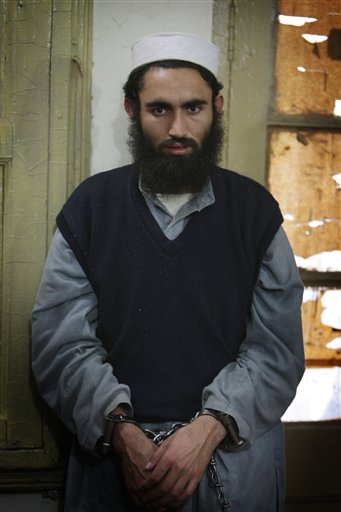
Abdul Baseer sent the grenades and explosive vest ahead, then boarded a bus that would take him to his target, accompanied by the 14-year-old boy he had groomed as his suicide bomber.

But before they could blow up their target, a luxury hotel in Lahore where they believed Americans would be staying, the two were arrested and are now in jail — Baseer unrepentant about having plotted to send a boy to his death, and the boy saying he never knew what was in store for him.

The story that unfolded in an interview with The Associated Press offers a rare insight into the world of a Pakistani militant, from his education at hard-line Islamic schools, through his professed participation in an attack on a U.S. patrol in Afghanistan, up to his arrest by Pakistani police along with the the boy, Mohi-ud-Din. His tale shares much with that of the thousands of other foot soldiers who make up the Taliban-led insurgency that is ravaging Pakistan, experts say. It also shows how the wars here and in neighboring Afghanistan bleed into each other.

The Associated Press, after several requests, was allowed to interview the two detainees, with police present for most of the meeting at a police interrogation center in Lahore, a political and military power center in eastern Pakistan. Baseer was born in 1985 close to the Swat Valley, which last year was overrun by Taliban and recaptured by the Pakistanis. The eldest of seven children, his father was a wheat farmer and earned barely enough to feed the family. Meat was reserved for guests, he recalled.

Like many who cannot afford a regular education, Baseer attended three Islamic boarding schools where children learn the Quran by heart and spend little time on secular subjects. The religious schools provide free board and lodging, but are widely criticized for indoctrinating students with an extreme version of Islam. At least one of the schools Baseer attended, Jamia Faridia in the capital, Islamabad, has been linked to terror.

“Through my studies, I became aware that this is the time for jihad and fighting the infidels, and I saw that a jihad was going on in Afghanistan,” said Basser, a rail-thin man speaking just louder than whisper. “I looked for a way to get there.” “A trip to Afghanistan is considered part of the profession for a militant,” said Imtiaz Gul, director of the Center for Research and Security Studies in Islamabad. “It is almost like you need to do it for graduation. “The American troops are there, and it’s a cause of resentment.”

Baseer said he spent three summer vacation periods in Kunar, an Afghan province just across the border from northwest Pakistan, which he reached through a network of sympathetic clerics. On his first trip, in his mid-teens, he cooked for around 30 or 40 other militants, most of them Afghans, who were living in a large cave complex. On his second stay he had military training and learned to make suicide jackets. On the final trip he took part in the ambush of a U.S. patrol after he and other fighters had lain in wait in the snow for two days.”I was happy to be in place where I could kill unbelievers,” he said. “I thank God that we all returned safely and had a successful mission.”

He said he was in the rear of the attack, in which automatic weapons and rocket-propelled grenades were fired. He said the vehicles were left smoldering and that later the assailants were told two U.S. soldiers were killed, but there was no way of confirming that.

Back in Pakistan, Baseer worked as a mosque preacher in the Khyber region, not far from the northwestern capital, Peshawar. He said it was there that he hooked up with a man named Nazir, a commander in the Pakistani Taliban, who was plotting the attack in Lahore. Baseer said he made 10 suicide vests for Nazir.

Lahore, a city of around 9 million, has suffered scores of attacks by gunmen and suicide bombers over the last 1 1/2 years. Last month, two suicide bombers killed 43 people in near-simultaneous blasts. Baseer boarded a passenger bus along with the boy, Mohi-ud-Din, heading down the smooth highway to Lahore, where they were supposed to pick up the bomb and grenades.

Police officer Waris Bharawan, as well as Baseer, said the plan was to hook up with other militants and storm the PC International, one of Lahore’s grandest hotels. They said the suicide vest for the attack was sent to the city before the strike. Baseeer gave only a rough outline of the plan: He and others were to hurl the grenades around the lobby or entrance gate of the hotel, and then Mohid-ud-Din was to run in and detonate his explosive belt. Did he feel any guilt about what lay in store for his traveling companion? No, he said. “I was feeling good because he was going to be used against Americans.”

As he sat in Bharawan’s office, handcuffed and dressed in robe and baggy pants, an officer brought in the vest, dropping it on the floor with a thud. The explosive pads studded with ballbearings looked like slices of honeycomb. Also in the evidence bag were 26 grenades. Baseer obliged with a demonstration, miming the yanking of a white cable that would detonate the vest. “My instructors used to say this was the most important weapon in the fight against the enemy,” he said. In the same lockup, a crumbling building built when Britain ruled the Indian subcontinent, police also briefly presented Mohi-ud-Din to the AP. He seemed nervous and tongue-tied, claiming only that he knew nothing about the alleged attack.

The pair were arrested as they arrived at the house of another suspect, just days before the attack was due to have taken place, said Bharawan, who led the arresting officers. He said they acted on surveillance work in Lahore, but declined to give details. Torture and beatings are common inside Pakistani jails, according to rights groups. During a short time when no police were present, Baseer was asked how he was treated. He said he was beaten, but by members of Pakistan’s shadowy and powerful intelligence agencies soon after his arrest, not by the police. Police said Baseer and the boy would be tried for terrorist offenses behind closed doors and without a jury, as is customary in Pakistan
India and Pakistan’s Leaders Meet

As reported by BBC.com

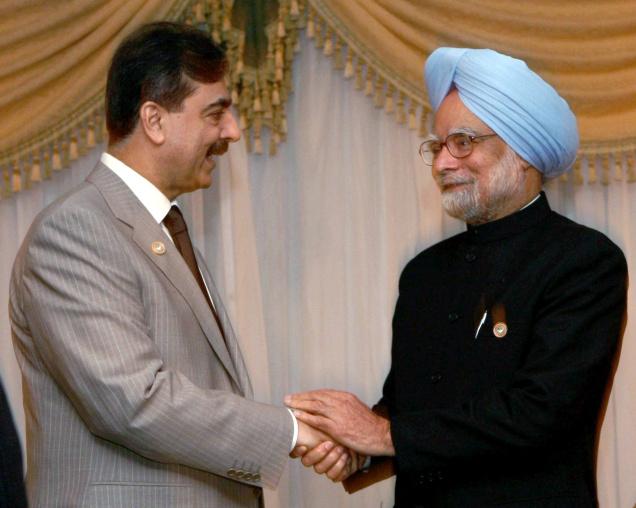
Pakistan PM Yousuf Raza Gilani spoke to his Indian counterpart Manmohan Singh at a reception hosted by the US President Barack Obama, reports said. The prime ministers of India and Pakistan met briefly during a nuclear summit attended by 47 world leaders in Washington DC.

A Pakistani embassy spokesman said it was “not a formal meeting”. cIt comes a day after Mr Singh told Mr Obama that Pakistan’s government lacked the will to punish those responsible for the Mumbai attacks. The November 2008 attacks left 174 people dead, including nine gunmen, and soured ties between India and Pakistan. Late last year, Pakistan charged seven people in connection with the attacks.

They include the suspected mastermind Zaki-ur-Rehman Lakhvi, who is allegedly the leader of the Pakistan-based militant group Lashkar-e-Taiba. Mr Singh and Mr Gilani spoke to each other at a reception hosted by Mr Obama, Pakistani embassy spokesman Nadeem Kiani said.

“Both leaders were present at the same place and so they shook hands and talked,” he said. A spokesman for India’s foreign ministry, Vishnu Prakash, told The Hindu newspaper that the two leaders “exchanged pleasantries”.
‘State elements’

India put peace talks on hold after the attacks, blaming them on Pakistan-based militants. Pakistan admitted they had been partly planned on its soil. India has also suggested what it calls “state elements” were involved. Both Pakistan and Lashkar-e-Taiba have denied any involvement.

In February, the two sides held their first formal talks since the 2008 attacks and agreed to “remain in touch”. Leaders from 40 states are attending the meeting in Washington which is expected to focus on how to secure nuclear material.

Hamid Karzai Is Losing All His Marbles and His Credibility

By Manzer Munir for Pakistanis for Peace

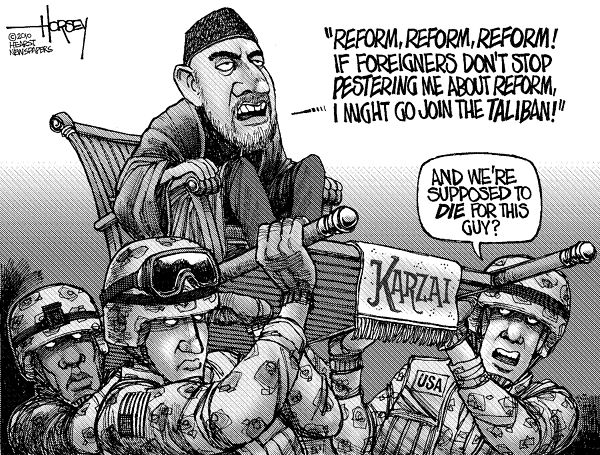
Kabul, Afghanistan- President Hamid Karzai’s troubling remarks this past Saturday that he would join the Taliban if he continues to come under pressure to reform by the United States and other “outsiders” has caused a stir in Washington DC.  Karzai’s comments came a week after President Obama’s surprise visit to Afghanistan at the end of March to pressure Karzai’s government to reform the political system, end corruption, and do a better job of fighting the Taliban.

Instead, what Karza delivered was a threat of the worse kind and quite possibly the most offensive and troubling thing one can say to a country that is risking countless soldiers lives daily to secure the country from the Taliban and other militant warlords in Afghanistan. In 8 short years, Hamid Karzai has gone from being the special guest of honor at George Bush’s State of the Union address to a leader who threatened to join our worst enemy. All because he feels that the US needs to stop badgering him to be a more responsible, fair, and an equitable leader as well as an effective partner in fighting the Taliban.

Karzai apparently made these unusual comments at a closed door meeting of lawmakers on Saturday, just days after accusing “foreigners” presumably the Unites States of being behind the fraud of the disputed elections of 2009. “He said that if I come under foreign pressure, I might join the Taliban”, said Farooq Marenai, a lawmaker from the eastern province of Nangarhar.  Mareni also stated that Karzai appeared nervous and demanded to know why parliament last week rejected legal reforms that would have strengthened Karzai’s authority over the country’s electoral institutions. Several other lawmakers confirmed that Karzai twice threatened to join the insurgency and the Taliban.

Karzai’s comments are troubling on many levels. First and foremost, he gives legitimacy and strength to the Taliban as his comments present the Taliban as an alternative option to American support or view on the situation. Karzai’s statement will no doubt have traveled the length and breadth of Afghanistan as word will spread that there is a weakness in the American-Afghan coalition that has been fighting and hunting the Taliban since October of 2001, post 9-11. The remarks by Karzai also puts every American, NATO, and Pakistani soldier at risk as instead of liberators, the foreign armies would be thought of as invaders, literally overnight. Lastly, Karzai’s remarks prove to the fact that Karzai is no longer an ally nor a credible partner for the US , NATO, and Pakistani army that have been fighting the Taliban with all their might.

There are reports of widespread nepotism, corruption, fraud, looting of the treasuries, and even drug trafficking, as Karzai’s brother, Ahmed Wali Karzai, has been alleged to be a prominent figure in Afghanistan’s world leading illegal heroin production, cultivation and its global distribution. These facts along with his inability to rule effectively and assist the United States in its exit strategy out of Afghanistan by end of 2011 has made the Obama administration weary of dealing with Karzai. Also his typically slow response in instituting political and social freedoms along with a renewed focus in fighting the Taliban, has also been a factor in displeasure from Washington.

The Obama administration has refocused on the Afghan war with 30,000 additional troops to help with the war effort and that initial surge has helped the commanders on the ground in running the Taliban out of certain areas. There have also been great recent victories by the Pakistani army to go after the Taliban militants on its side of the border and in helping cut down the bases of support for the Afghan Taliban from the Pakistani tribal areas sympathetic to their cause. So these comments come at the worst possible time when the Taliban are on the run both in Afghanistan and Pakistan and a strong coalition of US-Afghan-Pakistan resistance against them could help eliminate or destroy the militants for good. But instead, the US and its allies are left wondering what to do with Karzai and how much he could be trusted in this tenuous partnership against the Taliban.

Taliban 201- The Rise of The Pakistani Taliban

By Manzer Munir for Pakistanis for Peace

Peshawar, Pakistan- Taliban militants attacked the U.S. consulate in the Pakistani city of Peshawar on Monday, using  powerful bombs and rocket launchers in a sophisticated and daring attack killing 8 people, just hours after a suicide bomber killed 48 people elsewhere in the Swat valley. The attacks came as the United States has increased its airstrikes on targets both inside Afghanistan and Pakistan. The nearly decade long war waged against the Taliban in neighboring Afghanistan since 9-11 has created safe areas inside Pakistan for these militants to regroup and band with Pakistani militants sympathetic to their cause. Often, the militants on the Pakistani side and the Afghani Taliban share the Pashtun tribal and ethnic links among the border areas of both countries.
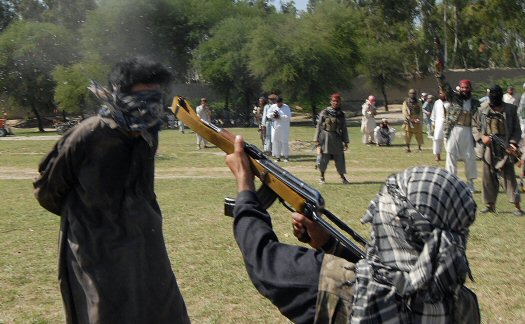
The US bombing of Afghanistan since late 2001 had pushed the Taliban and Al Qaeda militants to the mountains near the border with Pakistan. With help from sympathetic militant tribal warriors from the Pakistani side, the Taliban were able to dig in and have been able to fight the American forces for nearly a decade now. The onslaught by US and NATO forces continues in Afghanistan, but now for most of last year and certainly this year, the war has shifted to the streets and cities of Pakistan.

Now, much like Afghanistan, Pakistan too is a country that finds itself engulfed in the flames of religious extremism at the hands of determined and highly disciplined thugs. It used to be back during the Soviet-Afghan War, the only place perhaps not entirely safe inside Pakistan was Peshawar. Now, not one city or town of Pakistan has been spared from the violence by the Taliban. Back then, Peshawar was a city where attacks would happen frequently and often. During the 1980’s, the city became a haven for both jihadi militants fighting against the godless system of communism, and a base for spies as both the United States and Saudi Arabia funded a mujahedeen guerrilla war to defeat the Soviet troops from Afghanistan. President Reagan and General Zia of Pakistan used the fervor of religion to incite able bodied boys and men of Afghanistan and their distant cousins from the border area in Pakistan, along with thousands of volunteer Muslim fighters from across the Arab and Muslim world, to come and fight the Soviet Red Army. It was seen as a duty to come defend a Muslim land from occupation by a regime that would not allow the worship of Allah as communism discourages religion and encourages a sectarian society.

That strategy by General Zia ul Haq to promote the fight against the Russians as a holy war or jihad was brilliant at first. It mobilized not just every Muslim male in Afghanistan to stand and fight for his faith and their way of life, while also defending the country from invaders, but it also garnered the sympathy and enlistment of thousands upon thousands of Pakistani and Arab Muslim fighters to join the cause of these mujahedeen, as one who engages in jihad is called. The riling up of religious fervor and militant Islam was deemed necessary by both Reagan and Zia at the time as they sought to defeat the communists at all costs from succeeding in Afghanistan. It would not seem likely at the time, that this very same entity would become enemy number one of both the US and Pakistan a decade later.

It was monumental, it was historic,” retired Pakistani general Hamid Gul, who headed the ISI military spy agency from 1987-1989, said of Reagan’s role in defeating the Soviets. “We were receiving arms and logistics from the CIA, we were partners in this struggle,” Gul said, estimating the CIA spent up to $7bn in supplying arms and logistics to Islamic fighters or “jihadis.” “The jihadis he supported. It was their resistance against the forces of occupation and repression – that’s what jihad is – that Reagan identified himself with,” Gul said. “His greatest achievement was that he stood behind the Islamic world when it was arrayed against the Soviet empire.”

Pakistani analyst Hasan Askari Rivzi stated that “Al-Qaeda and the Taliban took shape later on, but they grew from this period of jihadism against the Soviets and with the initial help of Pakistan, Saudi Arabia along with the military and economic assistance from the United States to fight the Soviets during the ‘80’s. Rizvi sees the roots of the militancy that now ravages Pakistan and Afghanistan as having its beginnings from this period of war against the Soviets army.

That war with the Russians lasted almost 10 years. By the time the USSR pulled out all its troops from Afghanistan in 1989, the country had been completely destroyed. What was left of any government or authority of any sort was now held in the hands of a few militias and various warriors who commanded thousands of tribal and other ethnic fighters under them. These militias immediately started warring amongst themselves for more and more control of the country. The already weak, nonexistent central government of Afghanistan, post Soviet pullout was not able to cope and quickly capitulated. During the power vacuum that resulted, Pakistan’s spy agency, the ISI, realized the chance to wield power inside Afghanistan and threw its support behind a religious student movement based out of Kandahar. The ISI had previously assisted the cause to fight the Soviets by helping gather and organize radical Muslims from around the world to come and assist the Afghani mujahedeen in fighting the Soviets and had therefore developed good contacts with various religious groups including the young Taliban students and the fast growing movement.

The Afghani population initially welcomed the Taliban as they represented fairness and a rule of law over the notorious corruption, brutality and constant infighting of the warlord militias. Soon, with popular citizen support, along with Pakistan’s help, the Taliban became the dominant group within the country and soon held the seat of power in Kabul. Its leader Mullah Omar, was a friend of Osama Bin Laden and when the US forces came to Afghanistan in the hunt for Bin Laden, he gave the Al Qaeda leader refuge and in essence, became a fugitive of the US in the process for harboring America’s Most Wanted.

Fast forward to nearly nine years later as the war in Afghanistan continues against the Taliban and remnants of Al Qaeda responsible for the 9-11 attacks. However, the Taliban have grown and laid roots inside Pakistan also now as the nearly decade long war at the border with Afghanistan has ratcheted up sympathy by locals Pakistani Pashtun tribes for their brethren being bombed by both Pakistani and American forces. The Tehrik-i-Taliban Pakistan known as the Pakistani Taliban formed soon after the US invasion of Afghanistan and the Pakistani army’s offensive at the tribal areas near the border to combat the militants. The Pakistani Taliban led by the recently killed Baitullah Mehsud, has been largely responsible for hundreds of attacks in all major cities of Pakistan including Monday’s bombing of the American consulate in Peshawar.

The war in Afghanistan by the US against the Taliban that harbored and sheltered Bin Laden and the 9-11 killers of Al Qaeda is much the same as the war between the Pakistani army and the Pakistani Taliban in the Swat valley and the North West Frontier Province as well as in various cities of the country. This war has been brought home to the citizens of Pakistan. Over the last few months, bomb blasts in Lahore, Karachi, Islamabad and various other cities have now personalized this conflict for the average Pakistani as no longer a battle or skirmish at the border far away in the northwest of Pakistan near its border with Afghanistan.

No, the nearly daily attacks all over the country by the militants on government installations, public institutions like universities, factories and residential areas as well as markets and restaurants has made the country much less safer than at any time in its 63 year history. Many Pakistanis now are beginning to realize that the Taliban, operating with impunity all over Pakistan, pose a much bigger threat to the sovereignty and republic of Pakistan than any threat from anywhere else, including from that eternal archrival to the east, India. It is now well understood by both partners in this fight that only a sustained and vigorous fight taken to the militants inside both countries by the US and Pakistan over a long period of time can hope to defeat this disease known as the Taliban.

For an earlier report titled Taliban 101- Origins and History, Please click on this link:

https://pakistanisforpeace.wordpress.com/2009/05/25/taliban-101-origins-and-history/

U.S. Aims to Ease India-Pakistan Tension

By Peter Spiegel and Matthew Rosenberg for The Wall Street Journal

President Barack Obama issued a secret directive in December to intensify American diplomacy aimed at easing tensions between India and Pakistan, asserting that without détente between the two rivals, the administration’s efforts to win Pakistani cooperation in Afghanistan would suffer.

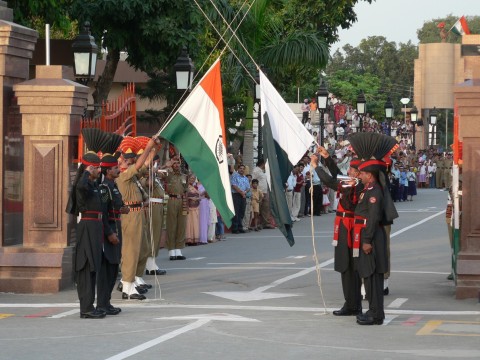
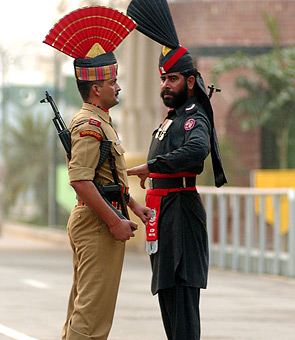
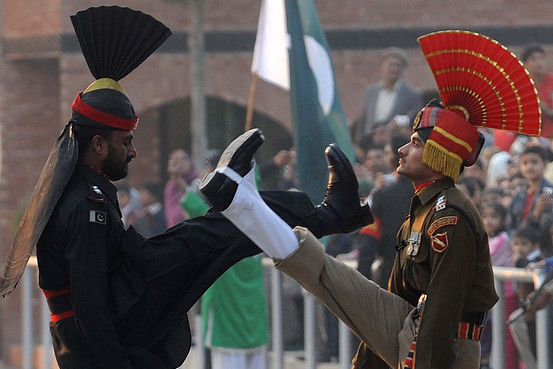
Pakistani Rangers (L) and Indian Border Security Force (BSF) personnel perform the daily retreat ceremony at the India-Pakistan Border at Wagah on December 26, 2009. The directive concluded that India must make resolving its tensions with Pakistan a priority for progress to be made on U.S. goals in the region, according to people familiar with its contents.

The U.S. has invested heavily in its own relations with Pakistan in recent months, agreeing to a $7.5 billion aid package and sending top military and diplomatic officials to Islamabad on repeated visits. The public embrace, which reached a high point last month in high-profile talks in Washington, reflects the Obama administration’s belief that Pakistan must be convinced to change its strategic calculus and take a more assertive stance against militants based in its western tribal regions over the course of the next year in order to turn the tide in Afghanistan.

A debate continues within the administration over how hard to push India, which has long resisted outside intervention in the conflict with its neighbor. The Pentagon, in particular, has sought more pressure on New Delhi, according to U.S. and Indian officials. Current and former U.S. officials said the discussion in Washington over how to approach India has intensified as Pakistan ratchets up requests that the U.S. intercede in a series of continuing disputes.

Pakistan has long regarded Afghanistan as providing “strategic depth”—essentially, a buffer zone—in a potential conflict with India. Some U.S. officials believe Islamabad will remain reluctant to wholeheartedly fight the Islamic militants based on its Afghan border unless the sense of threat from India is reduced.

Indian Prime Minister Manmohan Singh has already taken the political risk of pursuing peace talks with Pakistan, but faces significant domestic opposition to any additional outreach without Pakistani moves to further clamp down on Islamic militants who have targeted India.

U.S. and Indian officials say the Obama administration has so far made few concrete demands of New Delhi. According to U.S. officials, the only specific request has been to discourage India from getting more involved in training the Afghan military, to ease Pakistani concerns about getting squeezed by India on two borders.

“This is an administration that’s deeply divided about the wisdom of leaning on India to solve U.S. problems with Pakistan,” said Ashley Tellis, an analyst at the Carnegie Endowment for International Peace who has discussed the issue with senior officials in the U.S. and India. “There are still important constituencies within the administration that have not given up hope that India represents the answer.”

India has long resisted outside involvement in its differences with Pakistan, particularly over the disputed region of Kashmir. But, according to a U.S. government official, a 56-page dossier presented by the Pakistani government to the Obama administration ahead of high-level talks in Washington last month contained a litany of accusations against the Indian government, and suggestions the U.S. intercede on Pakistan’s behalf.

The official said the document alleges that India has never accepted Pakistan’s sovereignty as an independent state, and accuses India of diverting water from the Indus River and fomenting separatism in the southwestern Pakistani province of Baluchistan.

Secretary of State Hillary Clinton has signaled that Washington isn’t interested in mediating on water issues, which are covered by a bilateral treaty.

The White House declined to comment on Mr. Obama’s directive or on the debate within the administration over India policy. The directive to top foreign-policy and national-security officials was summarized in a memo written by National Security Adviser James Jones at the end of the White House’s three-month review of Afghan war policy in December.

An Indian government official said the U.S.’s increasing attention to Pakistani concerns hasn’t hurt bilateral relations overall. “Our relationship is mature—of course we have disagreements, but we’re trying not to have knee-jerk reactions,” the Indian official said.

According to U.S. and Indian officials, the Pentagon has emerged in internal Obama administration debates as an active lobbyist for more pressure on India, with some officials already informally pressing Indian officials to take Pakistan’s concerns more seriously. Adm. Mike Mullen, chairman of the Joint Chiefs of Staff and the U.S. government’s prime interlocutor with the powerful head of the Pakistani army, Gen. Ashfaq Kayani, has been among the more vocal advocates of a greater Indian role, according to a U.S. military official, encouraging New Delhi to be more “transparent” about its activities along the countries’ shared border and to cooperate more with Pakistan.

In interviews, U.S. military officials were circumspect about what specific moves they would like to see from New Delhi. But according to people who have discussed India policy with Pentagon officials, the ideas discussed in internal debates include reducing the number of Indian troops in Kashmir or pulling back forces along the border.

“They say, ‘The Pakistanis have this perception and you have to deal with the perception’,” said one foreign diplomat who has discussed India’s role with Pentagon officials. An Indian defense ministry spokesman said his country’s army has already moved about 30,000 troops out of Kashmir in recent years.

The State Department has resisted such moves to pressure India, according to current and former U.S. officials, insisting they could backfire. These officials have argued that the most recent promising peace effort—secret reconciliation talks several years ago between Indian Prime Minster Singh and then-Pakistani President Pervez Musharraf—occurred without U.S. involvement.

Progress, For a Price, in Pakistan

By Doyle McManus for The Los Angeles Times

In 2001, on the eve of the U.S. invasion of Afghanistan, President George W. Bush gave Pakistan’s then-leader, Gen. Pervez Musharraf, a choice: He was either with us or against us. Musharraf chose to become an ally, but the question ever since has been whether that shotgun marriage can mature into a healthy adult relationship. At times, the prospect has seemed far from reach.

The world’s second-most-populous Muslim country is caught in a brutal internal struggle between extremism and moderation. Most of its people tell pollsters they don’t like the United States and wish we’d go away. The tribesmen of its western frontier shelter Osama bin Laden and the leaders of Afghanistan’s Taliban. And the United States can’t forget how, in the 1980s, Pakistan built nuclear weapons — and then later exported nuclear technology to North Korea and Iran.

But in recent months, there has been progress in the relationship. Military and intelligence cooperation between the United States and Pakistan has increased significantly. Pakistan has allowed the CIA to increase its missile strikes against Al Qaeda and Taliban targets in Pakistani territory. Pakistani authorities have arrested several Taliban leaders and allowed U.S. intelligence officers to question them. And now Pakistan is offering to increase its own military operations in North Waziristan, the presumed lair of Bin Laden. All that cooperation came at a price, of course: a flood of U.S. military and economic aid.

And last week, the Pakistanis came to Washington to press for more. The academic criticism of the U.S.-Pakistani relationship is that it is “transactional” — nothing more than a series of bargains between buyers and sellers who don’t trust each other much. That’s still mostly true. Pakistan’s delegation arrived with a 56-page shopping list covering everything from military equipment to education and cultural exchanges. And one Pakistani official, asked during the visit whether his government was truly willing to act against the havens that allow the Taliban to maintain bases in Pakistan, replied frankly: “Yes — but at a price.”

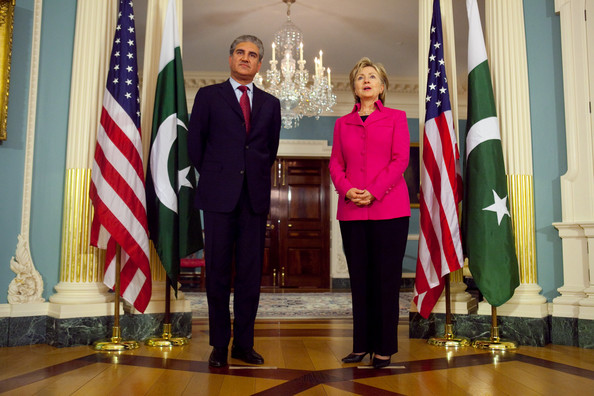
After a series of meetings with Secretary of State Hillary Rodham Clinton, Pakistan’s ebullient foreign minister, Shah Mehmood Qureshi, declared: “I think we are going to move from a relationship to a partnership.” But he used the future tense. In the meantime, there are things to work out. Pakistan is clearly worried about what happens when the United States begins pulling troops out of Afghanistan in 2011.

Although Obama administration officials have tried to reassure Pakistan that Washington’s commitment to the region is for the long haul, uncertainty remains. “Our fear is . . . that we get into a fight with these guys [the Taliban], and you walk away, and we’re still there,” a Pakistani official said. Pakistan’s powerful army chief of staff, Gen. Ashfaq Kayani, spent part of his time in Washington visiting Congress with PowerPoint slides to show that Pakistan has committed more troops to its fight against insurgents than the United States has on the ground in Afghanistan, and that it has suffered almost 30,000 killed and wounded in the process.

According to U.S. officials, Kayani made a strong case that Pakistan can do more if it gets more modern military equipment from the United States, especially helicopters to ferry troops into the rugged badlands where Al Qaeda and the Taliban hide. The United States has helped Pakistan acquire some helicopters, but not as many and not as quickly as the Pakistanis would like. U.S. officials said they would try to speed the delivery of more. In the past, U.S. officials complained that Pakistan used much of its U.S. military aid to bolster its eastern front with India instead of its fight with internal insurgents; but since Pakistan’s 2009 offensive in the Swat Valley, that criticism has been stilled.

The delegation also added a new item to Islamabad’s wish list: a nuclear agreement under which the United States would help Pakistan develop its civilian nuclear energy industry — to mirror a similar U.S. agreement with India, Pakistan’s longtime enemy. The United States told the Pakistanis that would have to wait. The memory of having to clamp sanctions on Pakistan for its nuclear weapons program is still too fresh. But it was a sign of improving relations that the idea wasn’t rejected completely.

 In 2001, the United States sought a new relationship with Pakistan mostly because it was next to Afghanistan — and thus a country we would need for moving military supplies and basing drones. But that thinking has slowly evolved. In the long run, with its population of 170 million people — not to mention its cache of nuclear weapons — Pakistan is more important than Afghanistan.

“We’re engaging with Pakistan because we’re afraid of it,” says Christine Fair, a Pakistan expert at Georgetown University. “It’s the scariest country in the region. Because of Afghanistan, it’s been treated as if it were a subsidiary issue. But Pakistan should be the primary issue.” The Americans are working hard to convince the Pakistanis that they are interested in Pakistan’s stability for its own sake, not just because it’s next door to Afghanistan. The Pakistanis are working hard to convince the Americans that they are committed to defeating the extremists in their midst. It’s not a strategic relationship yet. If it’s a partnership, it’s still a wary one. But that’s progress.

Obama Pledges To Work With ‘Peace-Loving’ Pakistanis On Occasion of 70th Pakistan Day 3/23

By Lalit K Jha for The Press Trust of India  

Greeting people of Pakistan on the occasion of its National Day, US President Barack Obama today pledged to remain a partner of all Pakistanis who “seek to build a future of peace and prosperity”.

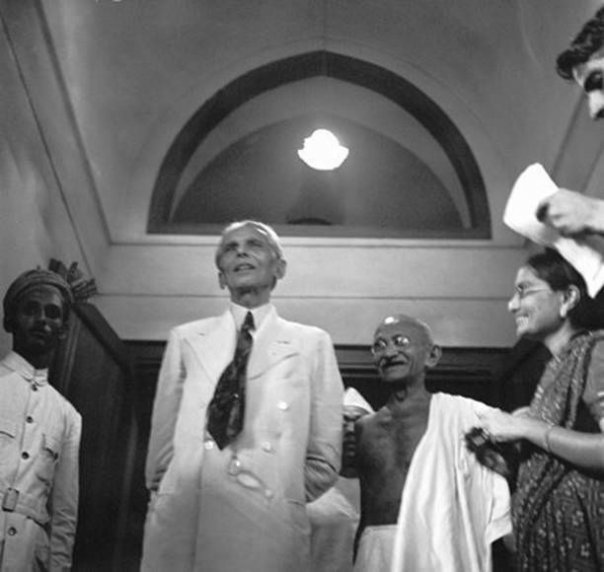
Sending his best wishes to the people of Pakistan and all those of Pakistani descent in America and around the world observing Pakistan National Day, Obama said: “Seventy years ago, Muhammad Ali Jinnah and those of the independence generation declared their dreams of self-determination and democracy.

“Today, the people of Pakistan are carrying on the great work of Quaid-e Azam,” Obama said in his message issued on the occasion of Pakistan National Day, being marked on March 23.

“Here in the United States, our country is enriched by the many Pakistani Americans who excel as doctors, small business owners, students, members of our armed forces and in many other fields. On this National Day, we give thanks for the contributions of these fellow Americans, and the United States pledges to remain a partner of all Pakistanis who seek to build a future of peace and prosperity.”

“In these efforts, the American people are proud to join in the education, health and economic partnerships that can improve the daily lives of Pakistanis and their families,” he said.

US-Pakistan Talks Mark ‘Intensification’ of Partnership

By Suzanne Presto for Voice of America News

The United States and Pakistan will hold their first strategic dialogue at the ministerial level in Washington next Wednesday (March 24). U.S. Special Representative for Afghanistan and Pakistan Richard Holbrooke told reporters at the State Department Friday that these talks mark a “major intensification” of the U.S.-Pakistan partnership. Wednesday’s talks will be co-chaired by Secretary of State Hillary Clinton and Pakistani Foreign Minister Shah Mehmood Qureshi.

Holbrooke says delegations from both sides will include senior officials of their nation’s defense, diplomacy, finance and agriculture departments. The U.S. delegation will also include aid and trade officials, and Pakistan’s will include officials who handle water, power and social issues.
“This is a partnership that goes far beyond security, but security is an important part of it,” he said. Holbrooke told reporters Friday that U.S. officials want to see aid money for Pakistan distributed more quickly.

“We are doing more. We will announce more. We want to do as much as the Congress will support,” Holbrooke said. The Obama administration has made improving and broadening relations with Pakistan a top priority, but U.S. policies and drone strikes targeting militants in the region remain unpopular. Holbrooke said the U.S. supports Pakistan as it seeks to strengthen democratic institutions and economic development, handle energy and water problems, as well as defeat extremists. “Everyone is aware of the popular public-opinion polls, and we think that our support for Pakistan deserves more recognition among the people,” he added.

Speaking to reporters in Islamabad Thursday, Foreign Minister Qureshi said Pakistani and U.S. officials have been talking a lot, and in his words, “the time has come to walk the talk.” Holbrooke responded to Qureshi’s statement that next week’s talks would be a good opportunity to rebuild confidence and trust on both sides. “The first time I went to Pakistan, Foreign Minister Qureshi introduced me to the phrase “trust deficit,” and so I have heard it many times,” he said. “The last time I was there, we both said in a press conference that we thought we had made huge advances in that,” Holbrooke added. Secretary of State Clinton last visited Pakistan in October, where she spoke with officials and students alike.

Holbrooke said there are plans to hold the next set of strategic talks in Pakistan, likely within the next six months. He underscored that these bilateral talks do not replace the trilateral talks among the U.S., Pakistan and Afghanistan which he said are expected to resume later this year.