Posts Tagged ‘ Peace ’

India and Pakistan, Talking

As reported by The New York Times

With a relationship as combustible as that between India and Pakistan, it’s progress just to get the two sides in a room. Last week’s meeting was better. Their foreign ministers announced modest, but very welcome, agreements concerning the bitterly disputed region of Kashmir.

They promised to double the number of days when cross-border trade between the two parts of Kashmir — one controlled by India, the other by Pakistan — is allowed and to expand and expedite travel permits for Kashmiris who want to cross the border for family visits, tourism and religious purposes. India and Pakistan have fought three wars since 1947, two over Kashmir. Even these small steps could help chip away at their visceral mistrust.

Three weeks ago, some doubted the meeting would even happen after three explosions ripped through Mumbai, killing 24 people. The Mumbai attacks in 2008 that killed 160 people were blamed on Pakistani terrorists and sent relations with India into the deep freeze. So far, suspicion for the recent attacks has fallen on Indian terrorists.

Prime Minister Manmohan Singh of India deserves huge credit for staying engaged despite Pakistan’s failure to prosecute those responsible for the 2008 horrors. And he deserves credit for not shooting first and asking questions later after the recent attacks.

We wish we could say the same of Pakistan’s leaders. Before there can be a true reconciliation, and stability in the region, Pakistan’s Army must realize that using militants to try to counter Indian influence in Kashmir and Afghanistan is self-destructive — and that homegrown extremism, not India, is the real threat to Pakistan’s survival.

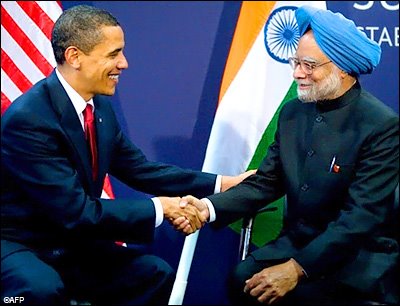
India and Pakistan have more to talk about, including cooperation on water, expanded trade and their joint stake in a stable Afghanistan. President Obama’s drawdown of American troops will go easier if India and Pakistan are part of the solution, not fighting over the spoils. New Delhi insists that it will accept no outside mediation. Washington needs to keep pressing the two to work together.

The United States and its allies are planning a conference in Bonn in December and hope to rally international support for a broad regional strategy that includes a peace deal for Afghanistan, trade agreements and ambitious energy projects. India and Pakistan need to be full participants. The payoff could be huge if their leaders muster the courage to resolve their differences.

John Lennon- Imagine

India Continues to Dominate Pakistan’s Strategic Thinking: US

As Reoported By The Times of India

Pakistan’s efforts to launch a comprehensive fight against terrorism are greatly hampered by its perceived threat perception against India, US President Barack Obama has said in a new report to Congress.

“As India continues to dominate their strategic threat perception, large elements of Pakistan’s military remain committed to maintaining a ratio of Pakistani to Indian forces along the eastern border,” Obama said in the third-quarterly report to the Congress on Afghanistan and Pakistan sent yesterday.

“This deprives the Pakistani COIN (counter-insurgency) fight of sufficient forces to achieve its ‘clear’ objectives and support the ‘hold’ efforts and causing available Army forces to be bogged down with ‘hold’ activities because there are insufficient trained civilian law enforcement personnel to assume that responsibility,” Obama said in his 38-page unclassified (rpt) unclassified version of the report.

Due to flood in Pakistan last year the offensive military operations Pakistan had envisioned for KP (Khaibar Pakhtoonwah) and the Federally Administered Tribal Areas (FATA) in the second half of 2010 were overtaken by events, he said.

“Militants were impacted by the floods as well, so we did not observe significant offensive actions on their side, but as Pakistani forces ceased offensive operations, extremists extended their control to areas without sufficient Pakistani central government-provided security and governance,” he wrote.

Between October 1 and December 31, 2010, Obama said Pakistani security forces remained largely static, generally focusing on maintaining the security of previously cleared areas in the FATA and KP and continuing to support flood relief operations.

There were small but notable security operations in November and December in Orakzai Agency and Dir District, but no major operations.

National attention during the reporting period focused on the need for continued flood relief and the start of early recovery efforts, he said.

“The military served as a force of stability during the monsoons, ensuring that Pakistani and international emergency resources were available for rescue and relief operations. The Pakistan Army, Air Force, and Navy committed large numbers of personnel and resources to the flood relief operations throughout October and November,” he said.

The civilian government’s response suffered from a lack of coordination and reflected broader shortcomings in the government’s ability to execute the civilian “hold” and “build” phases of COIN.

The last quarter of 2010 saw no progress on effectively executing the COIN cycle in KP and the FATA.

India, Pakistan back to bickering after Mohali bonhomie

As Reported by IBN Live

India and Pakistan had a brief bout of acrimony with both complaining that a staffer each posted at their diplomatic missions in Islamabad and New Delhi respectively were detained by the host country and later let off.

While Pakistan today claimed that a driver of its mission in New Delhi was “arrested” for unspecified reasons on Wednesday, the Ministry of External Affairs took up the matter of a ‘missing’ Indian High Commission official in Islamabad. “A driver from the High Commission was arrested. (He) has been released. We have protested,” Pakistan Foreign Office spokesperson Tehmina Janjua told PTI in Islamabad, without giving details.

However, sources in New Delhi said that on Wednesday evening a Pakistani High Commission driver was seen near the Chandigarh cantonment area and when confronted, he tried to escape. “In the process, he sustained some bruises/injury on his knee and back. He was questioned and thereafter released.Before being released, a medical check-up was conducted which showed him in good health,” sources told PTI.

Just hours after the incident, an official in Indian High Commission went ‘missing’ in Islamabad, sources said, adding there was no immediate official confirmation on his whereabouts from the Pakistan side. However, the media reported detention of the Indian official, prompting Foreign Secretary Nirupama Rao to take up the matter with her Pakistani counterpart Salman Bashir. “Apart from Indian High Commission raising the issue with Pakistan Foreign Ministry in Islamabad, the Ministry of External Affairs in New Delhi took up the issue with Pakistan High Commission seeking the safety, security and well-being of the Indian official,” sources said.

The official was later handed over to the Indian High Commission in Islamabad, sources said. Though the sources did not divulge the name of the Indian official, some reports identified him as Anand Sharma, working in the consular section of the High Commission.

The incident involving the Pakistani driver occurred at a time when the Prime Ministers of India and Pakistan were in Mohali, holding “extremely positive” conversation on the sidelines of the pulsating cricket World Cup semi-final between the two countries. The incident of the Indian official was being seen as a tit-for-tat to the Chandigarh incident.

Dialogue Key to Peace with Pakistan, Says India

By Anjana Pasricha for The Voice of America

As India and Pakistan get ready to restart peace talks after more than two years, Prime Minister Manmohan Singh says dialogue is the only way to resolve their differences.  The embattled Indian leader is also vowing to tackle inflation and punish those guilty of corruption — two issues which have put his government on the ropes at home.

Speaking to parliament Thursday, Prime Minister Singh said South Asia will not realize its potential unless India-Pakistan relations are normalized. India is willing to discuss all outstanding issues with Pakistan, he said.

But, striking a cautious note, he expressed hope that Islamabad will give up allowing its territory to be used for terrorist activity directed at India.

“I sincerely hope and believe that the new ruling classes of Pakistan would grasp the hands of our friendship and recognize that whatever our differences, terror as an instrument of state policy, is something no civilized society ought to be using,” he said. “I am not saying that we have today an atmosphere in which negotiations can go forward, but there are hopeful signs.”

Earlier this month, both countries decided to restart a peace process, which New Delhi had put on hold after blaming Pakistan-based Islamic militants for mounting the 2008 terror attacks in Mumbai. The foreign secretaries of the two countries will meet in the Indian capital in March. Their foreign ministers are to meet by July.

Singh’s comments on the peace talks with Pakistan came during an address to parliament, in which he outlined the priorities facing his government.

He pledged to lower inflation from 10 percent to seven percent by the end of the year. Food inflation is even higher and has emerged as a major worry in a country with millions of poor people.

Singh has promised to bring a new food security bill in parliament to ensure that poor people are protected from rising food prices.

Inflation has to be tackled in a manner that it does not hurt the economy, which the prime minister says is growing well.

“If we had a ham-handed [heavy] approach, we could have killed the growth process which is the only source of providing jobs for our youth. So, this delicate balance has to be preserved between control of inflation and protection of employment,” he said.

The Indian leader also vowed to crack down on those guilty of corruption in connection with sale of telecom spectrum, in 2008, and the organization of the Commonwealth Games in New Delhi, last year. Allegations that officials siphoned off billions of dollars have put the spotlight on corrupt practices in government contracts.

With the two corruption scandals dominating headlines in recent months, Singh expressed fears that the wrong impression may be going out.

“The message should not go out that India is adrift, that India has lost its way, that the enthusiasm for getting this country moving forward is something that is no longer in evidence,” he said.

The Congress-led government was voted back to power in 2009, but is facing a rising wave of discontent both becauseof high food prices and the high-profile graft scandals.

India to Invite Pakistan Home Secretary for March Talks, 26/11 on Agenda

As Reported by The Times of India

With India and Pakistan deciding to resume comprehensive dialogue over various issues, New Delhi will soon extend an invitation to Islamabad for home secretary-level talks on counterterrorism, including progress in the 26/11 Mumbai terror attack trial, here in March.

Home secretary Gopal K Pillai said, “I will call my Pakistani counterpart this week inviting him to New Delhi for talks. I will propose two sets of dates to him for a meeting in the second-half of next month.”

This will be the first structured home secretary-level meeting between India and Pakistan on counterterrorism after November 2008. The last such meeting between home secretaries had, incidentally, concluded in Islamabad on November 26, 2008 — the day Lashkar gunmen attacked Mumbai. India had suspended composite dialogue with Pakistan in the wake of the 26/11 attacks.

Home secretaries of both countries had also met on the sidelines of Saarc interior ministers’ conference in Islamabad in June last year.

On the issues to be taken up during the meeting with Pakistani interior secretary Chaudhry Qamar Zaman, Pillai told a news agency, “We will ask for voice transcripts (of perpetrators of 26/11) even though the trial court has said no. We will ask them why they have not gone and appealed. I am sure the high court or the Supreme Court may have said that the voice transcripts can be given.”

Referring to lack of action on the part of Pakistan, the home secretary said, “So far most of the people they have caught are all chaps who have sold outboard engines or… driven a taxi and not any of the main people whose voice has been identified by Pakistani-American terrorist David Headley.”

He added, “I think by now, if they wanted, they could have arrested the main persons behind it (26/11 attacks). No use catching people on the streets… and not the real controllers and those who are behind it (attacks).”

Asked what prevented Pakistan from taking strong action against those responsible for the attack, Pillai said Headley’s own evidence clearly showed that there was support of certain elements in the Pakistan state. So, to that extent, anything which leads back to them, there is “total deniability”, Pillai said.

He rejected the view that investigations into the Samjhauta Express blast, indicating involvement of right-wing extremism, will put pressure on India while talking to Pakistan on terrorism. “It will not put pressure on us. We are open about it. The investigations are open. Our courts are free. We are investigating the same. We had told them in June that the investigations are on and as something crystalizes, we shall share it with them. And now, we have said that as soon as the chargesheet is filed, we will share full details with them because a very large number of Pakistani citizens were killed,” he said.

Pakistan Observes Kashmir Solidarity Day Today

As Reported on Sify News, India

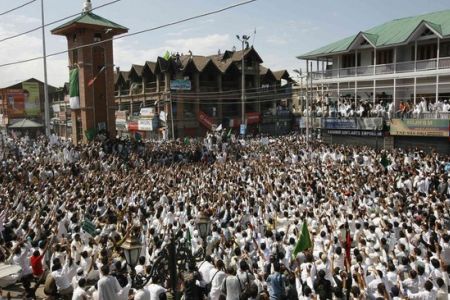
Pakistan is observing the Kashmir Solidarity Day on Saturday (today) to renew its pledge to provide full moral, political and diplomatic support to the Kashmiri people.

“We would not rest unless the people of Kashmir get their right to self-determination and win freedom from the Indian domination. We regard the Quaid-i-Azam’s dictum as our ideal wherein he said, “Kashmir is our jugular vein”. The day is not far when the Kashmiris would determine their own future,” The Nation quoted Prime Minister Syed Yousuf Raza Gilani, as saying in his message on the occasion.

The government and the people of Pakistan join their Kashmiri brothers and sisters in observing the Kashmir Solidarity Day, said Gilani, adding that the whole nation stands united in seeking a just and peaceful solution to the Jammu and Kashmir dispute in accordance with the legitimate aspirations of the Kashmiris as enshrined in relevant UN resolutions.

It will be a public holiday throughout Pakistan today, and special programmes will be broadcasted on television in this regard.

Apart from mass rallies, symposia, conventions meetings and speech declamations, a unique ceremony will be held at all six bridges linking Pakistan and PoK, where Pakistani and Kashmiri people will form a human chain.

It may be mentioned here that the day is observed every year in Pakistan, in continuation of the first call given by the then Prime Minister Zulfiqar Ali Bhutto in 1975.

A Prayer for Peace

Reported by Ghazi Salahuddin for The News International

We, in Pakistan, have rang out 2010 with a general strike and noisy rallies by religious elements in defence of the blasphemy law. We also rang out the year with a massive increase in petroleum products. And these spiritually and economically debilitating influences were certainly a distraction in our celebration of the biggest night of the year.

Today, on Sunday, the New Year is more than a day old. After spending the last few days of the departed year in taking stock of 2010, we are more inclined to look ahead and wonder what the coming year is going to be like. The general mood, certainly, is depressing. The past year was the year of floods, and Wikileaks, and drone attacks and social as well as political disarray. At the same time, it was also a year of hope – of Aman ki Asha – and of some intimations of how we, as a nation, still possess a conspicuous potential for survival.

In a sense, the attempt that so many ordinary citizens desperately made to celebrate the New Year in a communal spirit of joy was a genuine reflection of the life-force of a society that yearns for peace and happiness. In Karachi, the authorities made a concerted effort to subvert the inherent desire of the people to have a good time, as they always do. Roads leading to the Sea View promenade were blocked and eating places in the area were not allowed to do business.

It is besides the point that the young were still able to put up their show and the New Year was greeted with song and dance. Yes, the more privileged were able to celebrate the occasion in their private premises. But the point here is that public expression of any social or cultural vitality is increasingly being suppressed at the same time that the obscurantist elements are openly able to project their narrow outlook. What makes this dereliction more ominous is the government’s policy of appeasement and, even, surrender when it comes to dealing with the rise of intolerance and prejudice in our society.

It would be instructive to compare the rallies that were taken out in the late afternoon on Friday and the celebrations that were held a few hours later. I had an occasion to see the main procession that was taken out in Karachi and let me confess that it left me in a depressed state of mind. I simply could not identify with that crowd and the slogans it was raising. When I returned home at six, Sydney was greeting the New Year with its spectacular fireworks.

So, where do we, as a nation, belong in this world that is forever changing and embracing new technologies and new ideas? And it is in this context that I would like to return to the inspiration that we may draw from Aman ki Asha, the campaign launched by The Times of India Group and the Jang Group one year ago to promote peace between India and Pakistan.

Since yesterday was the first anniversary of this remarkable initiative, this newspaper has already underlined its main features and the success that it has achieved in the face of the raw winds of suspicion and animosity that have for long been blowing across this region. There was an editorial on this subject and a special edition. It was very encouraging to see the piece especially written for Aman ki Asha by Karen Armstrong, the celebrated religious historian.

Hence, I would not want to replicate the points that have been made. Still, I think that the public opinion poll conducted on the first anniversary of the project deserves to be carefully analysed. Here is a message that should not be overlooked when we interpret the social and political character of our society. It is true that the results of the survey are not at all surprising for those of us who have always believed in the overwhelming imperative of peace in not just our relations with India but also in a domestic context.

Now, the survey that was independently conducted by credible professionals, has certified that 70 per cent of Pakistanis and 74 per cent of Indians want peaceful relations between the two countries. What is crucial and meaningful here is that there has been a marked increase in the popular support for peace during the year that the largest media groups in India and Pakistan had conducted their varied and well-designed programmes under the umbrella of Aman ki Asha.

At a time when there is so much confusion about the role and the impact of the media, particularly the broadcast media, here is evidence that it can make a positive difference in shaping popular opinion when its message is in harmony with the natural aspirations of the people. This should make us realise that the media also has the power to sabotage the interests of the people when it is allowed to be manipulated by vested interests and when its expression is suppressed through intolerance and mindless chauvinism.

In many ways, the rise of extremism and militancy can be attributed to conflicts that are allowed to fester, distracting the attention and the resources of the nation from attending to the economic, social, and cultural needs of the people. Nothing undermines our national security more than rampant poverty and injustice and other deprivations of our people.

Indeed, the logic for normalisation of relations between India and Pakistan is rooted in the immortal desire of the people of both countries for social justice and for progress. In fact, Aman ki Asha should be seen in a larger context. Our need for peace transcends the otherwise fundamental issue of how our national security policies have remained India-centric.

Take, for instance, the official response to the rise of religious extremism in the country. Even when there is growing awareness that the threats we confront internally are very severe and could even jeopardise the very survival of the nation, the rulers do not seem to have the time or the intellectual ability to rethink and revise their national security formulations.

Meanwhile, of course, the people are ready and eager for what may be described as a paradigm shift. Initiatives like Aman ki Asha are necessary to set the stage for change and promote an environment in which an honorable and durable peace is possible.

When Aman ki Asha was launched one year ago, it affirmed that “peace between Pakistan and India is an idea whose time has come”. It also said that “it is daybreak for the people of the two countries who have languished in the twilight of mutual animosity and distrust for over six decades”. How long would it take for the rulers in the two countries to accept this self-evident truth?

The writer is a staff member. Email: ghazi_salahuddin@hotmail .com

Dr. Mahbub ul-Haq Reflects on Working Toward Peace

By Dr. Mahbub ul-Haq for Architects of Peace

Simply put, our challenge is this-can we make the twenty-first century a century of human development, when all people enjoy access to education and health, when each individual is enabled to utilize her or his full human potential, when all people have developed their basic capabilities and enjoy equal access to the opportunities of life? Now let us be clear. This is a vision of human competition, not state welfare. It is a vision of access to opportunities, not access to charity. It is a vision of the enrichment of human lives, not just the enrichment of national income or wealth, and the investment required to realize this vision is fairly modest.

We wish to move over the next fifteen years toward a society where there is universal basic education, primary health care for all, safe drinking water for all, adequate nutrition for all malnourished children, and family planning services for all willing couples. In other words, we wish to move toward a world society where basic social services are available to everyone, both men and women, and women before men; where the worst human deprivations curbing the potential of more than 1.3 billion people today have been finally overcome; where all essential ingredients for the full flowering of human potential are available in the form of adequate education, health, and nutrition. We wish to achieve all this.

What is the financial cost of achieving such a society? According to the best available estimates, the cost will be around an additional $34 billion a year-34 billion dollars. This cost is less than 1 percent of the total income if the poor nations bear all the burden themselves and this cost will be reduced to less than one-seventh of 1 percent of global income if the international community decides to share the cost along with the poor nations. That is the cost.

The question we face today is this: Can we persuade the leaders of the world to accept such a global compact for human development for the twenty-first century?

Let us again be very clear. Such a global compact is not yet another treaty requiring the formal approval of the governments of the world. It is, in fact, a shared vision of what the world can and must achieve. It requires global understanding, not a global treaty, because in the last analysis most action must begin at the national level, and often at the grassroots level, and such action must begin in the developing world itself.

These countries do not lack financial resources. What they lack is political courage. We need to ask the leaders of the Third World, and ask them bluntly, why they insist on spending $130 billion each year on the military when even a quarter of this expenditure can finance their entire essential social agenda. And we must ask them why they insist on having six soldiers for every one doctor when their people are dying of ordinary diseases, from internal disintegration, not from external aggression, from many threats to human security, not any threats to territorial security.

And we must also ask them why they are not convinced that everything they buy costs the immunization of four million children and every jet fighter they purchase costs the schooling of three million children and every submarine they store away in the waters denies safe drinking water to sixty million people. Why do we let them argue poverty of resources for human development when they have well-fed armies but unfed people and when many of these nations spend more on their armies every year than their total education and health budgets?

And at the same time, we must ask the leaders of the rich nations, why do you keep subsidizing your arms exports to poor lands when you argue against even food subsidies in these poor nations? Why is it that you refuse to close down your military bases, phase out your military assistance, and restrict the export of the sophisticated military weapons even now when the Cold War is over? What is your excuse? And why do you make such handsome profits on your exports of arms to poor, starved, disintegrating countries while giving them lectures all the time on respect for basic human rights? And we need to ask these leaders, why do they not invest in human development and instead make profits out of the future prosperity of poor lands and not out of the current state of human deprivation?

I believe, my friends, what we need to change is the mindset of our leaders in developing countries as well as in rich nations, because changes in policies will then follow and adequate resources for priority human development agendas will then be mobilized.

Let us spread the message to all world leaders that such a compact is not only desirable-it is eminently doable, it is feasible. And many years from now, we can look our grandchildren right in the eye and tell them quite proudly: “Yes, we tried.”


-Described as “the most articulate and persuasive spokesman” for the developing world, and as one of the most brilliant economists the world has ever known, Pakistan born Dr. Mahbub ul-Haq pioneered many economic policies to help the poor. He served as chief economist of Pakistan’s National Planning Commission during the 1960s, director of the World Bank’s Policy Planning Department in the 1970s, and in various Pakistani cabinet posts during the 1980s. As special advisor to the United Nations Development Program, he created the Human Development Index, which measures development by people’s well-being, rather than by their income alone. Haq was the author of six books on poverty and development. He died in 1998 in New York.

India, Pak Almost Agreed on K-deal: Musharraf

 As Reported by The Press Trust of India

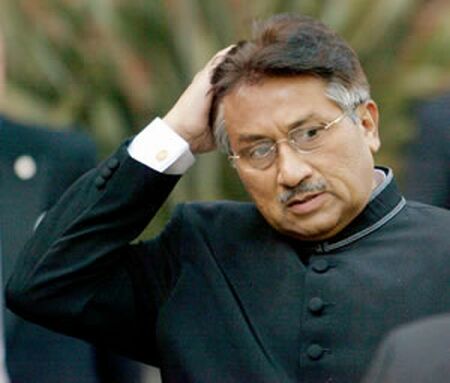
Former military ruler Pervez Musharraf on Friday said India and Pakistan were “moving forward towards drafting an agreement” on Kashmir during his tenure and that Prime Minister Manmohan Singh was genuinely committed to peace in the region. “I was certainly trying for it (peace).

And we were reaching success. I have always praised Prime Minister (of India) for his sincerity to reach peace,” said Musharraf, in an interview with NPR. Manmohan Singh and we almost reached peace on all the three issues…the third one, Kashmir, we had made some certain parameters and we were moving forward towards drafting an agreement,” he added. “Unfortunately, that was not to be, but I tried my best.”

Noting that peace is the only way forward, Musharraf noted that the deadlock on Kashmir was rendering the South Asian Association for Regional Cooperation (SAARC) useless.

“And I think the way forward is peace for the sake of world, which thinks that this is a nuclear flash point; for the sake of SAARC, which is impotent because of the conflict because of India and Pakistan,” said the former president.

“And for the sake of bilateral Pakistan-India advantages socio-economic advantages which will flow from peace between the two countries,” he noted.

Musharraf is in the US to drum up support for his comeback, which he announced earlier this year by launching a new political party — the All Pakistan Muslim League that would contest elections in 2013. Earlier this week, he accused India of trying to create an “anti-Pakistan Afghanistan.” “If I’m allowed to be very, very frank, India’s role in Afghanistan is to create an anti-Pakistan Afghanistan, said Musharraf, speaking at the Council on Foreign Relations on Tuesday.

Today, he characterised the narrative of the Indo-Pak dispute as “impartial”. “So, unfortunate reality, why I have to be so emotional about it, is every time it is Pakistan who is a rogue,” he said.

“Indian bomb is not a Hindu bomb. Pakistan bomb is a Islamic bomb. I think we are being very impartial, we are being very unfair to Pakistan…”

The Nexus of US-India-Pakistan Relations

By Manzer Munir for Pakistanis for Peace

As President Obama wraps up his visit to India in the next day, a couple of things are important to point out about relations between the United States and India as well as how Pakistan fits into the equation.

The balance of power between India and the US still lies with the United States, however, India is set to make more and more gains in becoming more influential as its economy grows and as the United States looks to it to counter China in Asia.

The strategic partnership between the two countries and the importance of India for the United States is going to become vital as America uses India to contain China’s influence in the region and around the world.

We do believe that President Obama is correct in stating that relations between the two countries warrant being called the defining relationship of the century as there is no other country that compliments the United States presently in the world as does India. Not only do both countries share democratic ideals and a multiethnic population, but both countries are also increasingly dependent on each other’s economies. Add to this the nuclear cooperation as well as America’s support for India to get a permanent seat on the UN Security Council, and it becomes evident that this relationship will continue to grow over time.

President Obama has offered criticism on Pakistan already but is careful in trying to walk the tight rope act that is India-Pakistan relations. There are certainly more behind the scene steps taking place that will chide Pakistan into doing more. But in our view, the single most important thing that the US and the Obama administration can do is to help India and Pakistan come back to the table to get the peace process moving along. There is widespread agreement with the President’s assessment that a prosperous and stable Pakistan is in the best interests of India, Afghanistan and the region. In this effort, we believe there needs to be done more by all parties involved.

India’s argument has always been that the terrorist infrastructure and support for some anti-India militant groups needs to end before New Delhi will resume the peace process with Pakistan.

India should not refuse extensive trade relationships with the US due to American support of Pakistan as it does not do anything to help India. India realizes the situation both inside Pakistan and America’s dependency of the Pakistan Army’s support in flushing out the Taliban. It would go against India’s interests if it put its relationship and advancement with the United States as being dependent on American support for Pakistan and its vital assistance in the war in Afghanistan and on terror.

Peace between India and Pakistan and in the Kashmir valley is the only solution to both the conflict between the two nations as well as it is in America’s interests for both countries and the region. Furthermore, peace between the two countries will allow both Pakistan’s full focus on the Afghan border in helping American troops against the Taliban as well as the elimination of anti-India militant groups within Pakistan, many of whom are alleged to still be receiving support from elements within Pakistan’s ISI spy agency, much to India’s chagrin.

Obama Will Try to Avoid the K Word

By Paul Beckett for The Wall Street Journal

To some U.S. officials, it is known simply as the “K-word.” Kashmir. It’s a topic we expect U.S. President Barack Obama to try his level best to avoid during his three-day trip to India that starts next week.

The issue got the former British foreign secretary in hot water when he was here last year. And when Richard Holbrooke, Mr. Obama’s special representative on Afghanistan and Pakistan at one point suggested he tackle Kashmir too, the idea received a furious rebuff from the Indians.

If the topic does come up, Mr. Obama will likely follow the same tack taken by his advisers earlier this week in a briefing with reporters. When asked, “Will the President talk publicly or privately about Kashmir and the tensions between India and Pakistan?” this was the response from Ben Rhodes, deputy national security advisor for strategic communication.

“The President believes that the U.S. relationship with India and the U.S. relationship with Pakistan does not take place within any kind of zero-sum dynamic.  It’s often been viewed that way in the past, that if we become closer to one it’s at the expense of the other. And we’ve tried to send the signal that it’s the opposite with this administration; that, in fact, actually you see that borne out in the fact that we had a very successful strategic dialogue here, with the Pakistanis in town last week, discussing greater security cooperation in governance and economic issues.

And as a part of that, the President met with the Pakistani delegation and ended up speaking to President Zardari yesterday to discuss that strategic dialogue and said that he’d very much like to visit Pakistan next year and is planning to visit Pakistan next year.”

If you’re counting, that almost 150 words – and not one of them is “Kashmir.”

William Burns, undersecretary of state for political affairs, added his own non-Kashmir Kashmir response. “We have always welcomed dialogue between India and Pakistan and certainly encouraged efforts to improve relations between those two very important countries.  Obviously, the pace, scope and character of that dialogue is something that Indians and Pakistanis have to shape.  But we’ll continue to both welcome and encourage it.”

White House reporters being an intrepid bunch, another questioner brought up the topic again, using the K-word specifically.

“Just to follow Steven’s question on Kashmir. Will the President be making some public remarks explaining the U.S. position on Kashmir?  And will he also be addressing — explaining the U.S. relationship with Pakistan publicly?”

This time Mr. Rhodes was even more eloquent, going for a full 286 words, not a single one of them Kashmir.

Arundhati’s Statement From Srinagar: Full Text

By Arundhati Roy
October 26, 2010
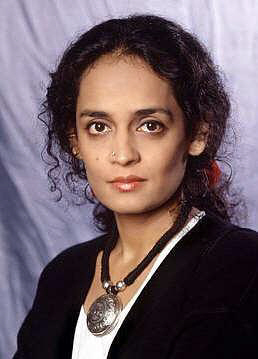
Noted Indian Hindu writer Arundhati Roy Tuesday said her speeches supporting the call for azadi were what “millions” in Kashmir say every day and were “fundamentally a call for justice”. Following is the full text of the statement that she has issued.
 
“I write this from Srinagar, Kashmir. This morning’s papers say that I may be arrested on charges of sedition for what I have said at recent public meetings on Kashmir. I said what millions of people here say every day. I said what I, as well as other commentators have written and said for years. Anybody who cares to read the transcripts of my speeches will see that they were fundamentally a call for justice. I spoke about justice for the people of Kashmir who live under one of the most brutal military occupations in the world; for Kashmiri Pandits who live out the tragedy of having been driven out of their homeland; for Dalit soldiers killed in Kashmir whose graves I visited on garbage heaps in their villags in Cuddalore; for the Indian poor who pay the price of this occupation in material ways and who are now learning to live in the terror of what is becoming a police state.  

“Yesterday I traveled to Shopian, the apple-town in South Kashmir which had remained closed for 47 days last year in protest against the brutal rape and murder of Asiya and Nilofer, the young women whose bodies were found in a shallow stream near their homes and whose murderers have still not been brought to justice. I met Shakeel, who is Nilofer’s husband and Asiya’s brother. We sat in a circle of people crazed with grief and anger who had lost hope that they would ever get ‘insaf’—justice—from India, and now believed that Azadi—freedom— was their only hope. I met young stone pelters who had been shot through their eyes. I traveled with a young man who told me how three of his friends, teenagers in Anantnag district, had been taken into custody and had their finger-nails pulled out as punishment for throwing stones.

“In the papers some have accused me of giving ‘hate-speeches’, of wanting India to break up. On the contrary, what I say comes from love and pride. It comes from not wanting people to be killed, raped, imprisoned or have their finger-nails pulled out in order to force them to say they are Indians. It comes from wanting to live in a society that is striving to be a just one. Pity the nation that has to silence its writers for speaking their minds. Pity the nation that needs to jail those who ask for justice, while communal killers, mass murderers, corporate scamsters, looters, rapists, and those who prey on the poorest of the poor, roam free.”

Arundhati Roy is a novelist, essayist and human rights activist. She won a Booker Prize in 1997 for her novel, The God of Small Things. For more on her read http://en.wikipedia.org/wiki/Arundhati_Roy

Pakistanis for Peace Editor’s Note– Arundhati Roy’s courageous plea to her country is to be lauded. Although branded a traitor by many in India and within the government, she knows that she stands for peace, justice and fairness for all humanity. She wants self determination for all Kashmiris, be they Muslim, Hindu, Buddhist or Christian.

We at Pakistanis for Peace want nothing more than peace between India and Pakistan and therefore understand that Kashmir is the one and single most important issue between the two countries. Solve it and you do not have the threat of cross border attacks, friction, animosity, perpetual war and a tense border between two neighbors of nearly 2,000 miles. If we continue to ignore it then it will eventually be the crisis that starts a 4th and possibly nuclear war between the two neighbors. A war that neither the neighborhood nor the world can afford.

Happy 70th Birthday to you John Lennon. RIP.

“Imagine no possessions I wonder if you can No need for greed or hunger A brotherhood of man Imagine all the people Sharing all the world… You may say I’m a dreamer But I’m not the only one I hope someday you’ll join us And the world will live as one!”

You were an incredible musician, a compassionate pacifist, and a great human being and Pakistanis for Peace salutes you.

A Muslim’s Prayer for Peace and Religious Tolerance

Merciful God, You made all of the people of the world in Your own image and placed before us the pathway of salvation through different Preachers who claimed to have been Your Saints and Prophets. But, the contradictions in their teachings and interpretations of them have resulted in creating divisions, hatreds and bloodshed in the world community. Millions of innocent men, women and children have so far been brutally killed by the militants of several religions who have been committing horrifying crimes against humanity, and millions more would be butchered by them in the future, if You do not help us find ways to reunite peacefully.

In the name of God, The Compassionate, The Merciful, look with compassion on the whole human family; take away the controversial teachings of arrogance, divisions and hatreds which have badly infected our hearts; break down the walls that separate us; reunite us in bonds of love; and work through our struggle and confusion to accomplish Your purposes on earth; that, in Your good time, all nations and races may jointly serve You in justice, peace and harmony. (Amen)

-Pakistanis for Peace, September 11, 2010