Posts Tagged ‘ Peace ’

A Victory For Obama, From An Unlikely Quarter-Pakistan

By Fareed Zakaria for Newsweek
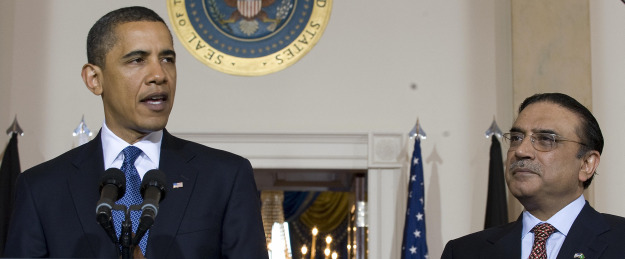
President Obama gets much credit for changing America’s image in the world—he was probably awarded the Nobel Prize for doing so. But if you asked even devoted fans to cite a specific foreign-policy achievement, they would probably hesitate. “It’s too soon for that,” they would say. But in fact, there is a place where Barack Obama’s foreign policy is working, and one that is crucial to U.S. national security—Pakistan.

There has been a spate of good news coming out of that complicated country, which has long promised to take action against Islamic militants but rarely done so. (The reason: Pakistan has used many of these same militants to destabilize its traditional foe, India, and to gain influence in Afghanistan.) Over the past few months, the Pakistani military has engaged in serious and successful operations in the militant havens of Swat, Malakand, South Waziristan, and Bajaur. Some of these areas are badlands where no Pakistani government has been able to establish its writ, so the achievement is all the more important. The Pakistanis have also ramped up their intelligence sharing with the U.S. This latter process led to the arrest a month ago of Mullah Abdul Ghani Baradar, the deputy leader of the Afghan Taliban, among other Taliban figures.

Some caveats: most of the Taliban who have been captured are small fish, and the Pakistani military has a history of “catching and releasing” terrorists so that they can impress Americans but still maintain their ties with the militants. But there does seem to be a shift in Pakistani behavior. Why it’s taken place and how it might continue is a case study in the nature and limits of foreign-policy successes.

First, the Obama administration de-fined the problem correctly. Senior ad-ministration officials stopped referring to America’s efforts in Afghanistan and instead spoke constantly of “AfPak,” to emphasize the notion that success in Afghanistan depended on actions taken in Pakistan. This dismayed the Pakistanis but they got the message. They were on notice to show they were part of the solution, not the problem.

Second, the administration used both sticks and carrots. For his first state dinner, Obama pointedly invited Indian Prime Minister Manmohan Singh—clearly not Pakistan’s first choice. Obama made clear that America would continue to pursue the special relationship forged with India under the Bush administration, including a far-reaching deal on nuclear cooperation. But at the same time, the White House insisted it wanted a deep, long-term, and positive relationship with Pakistan. Sens. John Kerry and Dick Lugar put together the largest nonmilitary package of U.S. assistance for the country ever. Aid to the Pakistani military is also growing rapidly.

Third, it put in time and effort. The administration has adopted what Central Command’s Gen. David Petraeus calls a “whole of government” approach to Pakistan. All elements of U.S. power and diplomacy have been deployed. Pakistan has received more than 25 visits by senior administration officials in the past year, all pushing the Pakistani military to deliver on commitments to fight the militants.

Finally, as always, luck and timing have played a key role. The militants in Pakistan, like those associated with Al Qaeda almost everywhere, went too far, brutally killing civilians, shutting down girls’ schools, and creating an atmosphere of medievalism. Pakistan’s public, which had tended to downplay the problem of terrorism, now saw it as “Pakistan’s war.” The Army, reading the street, felt it had to show results.

These results are still tentative. Pakistan’s military retains its obsession with India—how else to justify a vast budget in a small, poor nation? It has still not acted seriously against any of the major militant groups active against Afghanistan, India, or the United States. The Afghan Taliban, the Haqqani group, Gulbuddin Hekmatyar, Lashkar-e-Taiba, and many smaller groups all operate with impunity within Pakistan. But the Pakistani military is doing more than it has before, and that counts as success in the world of foreign policy.

Such success will endure only if the Obama administration keeps at it. There are some who believe that Pakistan has changed its basic strategy and now understands that it should cut its ties to these groups altogether. Strangely this naive view is held by the U.S. military, whose top brass have spent so many hours with their counterparts in Islamabad that they’ve gone native. It’s up to Obama and his team to remind the generals that pressing Pakistan is a lot like running on a treadmill. If you stop, you move backward, and, most likely, you fall down.
Lahore bombing is Pakistan’s bloodiest this year

By Saeed Shah for The Guardian

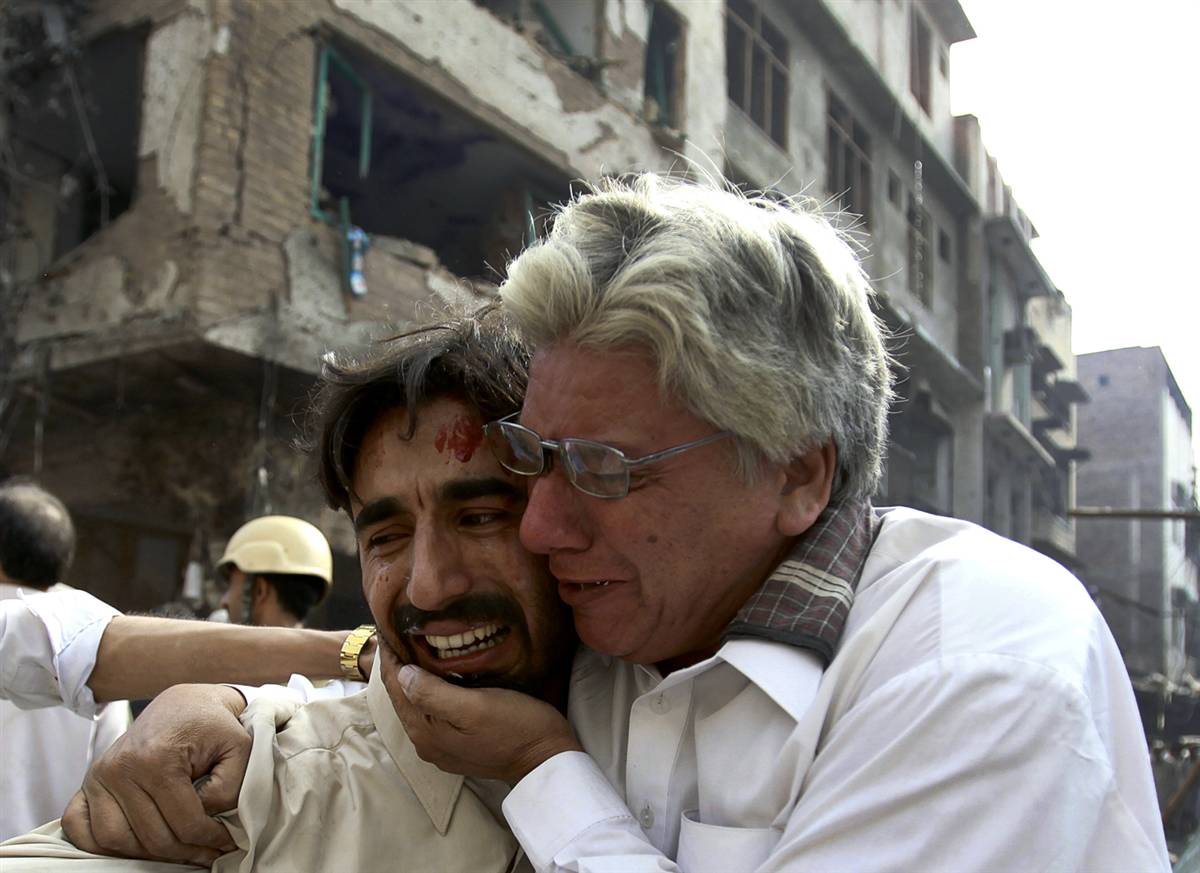
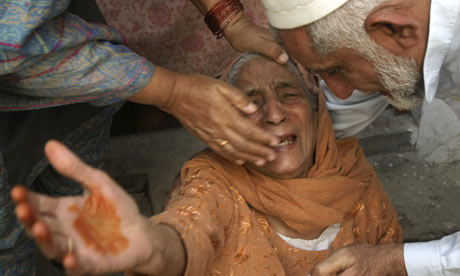
A bombing in the eastern city of Lahore has killed at least 43 people – the fifth terrorist attack this week as extremists in Pakistan demonstrate their continued ability to strike.

The bloodiest terrorist strike in Pakistan this year was carried out by two attackers wearing suicide jackets who walked into a busy market in a high security military district and blew themselves up. The target appeared to be passing military vehicles but most of the victims were civilians. Shops in the market were ripped apart, with children crossing the road and people waiting at a bus stop among the victims. About 10 soldiers were killed and 100 injured, said the Lahore police chief, Parvaiz Rathore.

“There were about 10 to 15 seconds between the blasts. Both were suicide attacks,” a senior local government official, Sajjad Bhutta, said at the site. “The maximum preventative measures were being taken but these people find support from somewhere.” The bombers struck at 1pm, around the time of Friday prayers, in the cantonment area, home to the local army garrison and one of Lahore’s most upmarket residential districts.

Lahore is the bustling cultural hub of Pakistan and had enjoyed several weeks of relative peace. It is the capital of the eastern Punjab province, Pakistan’s most densely populated area and its political heartland. The suicide bombings were followed in the evening by three smaller blasts in a residential area across town. They caused panic but damage was reported to be minor. The authorities repeated their regular assertion that the Taliban and other extremist groups have been defeated. The provincial law minister, Rana Sanaullah , said: “We broke their networks. That’s why they have not been able to strike for a considerable time.”

But it was the second bombing this week in Lahore. A car bombing on Monday at a police interrogation centre killed 14 people. Other attacks this week included a gun and grenade assault on a US Christian aid agency’s office in the north-west, killing six of its staff, all Pakistani nationals. “They (the extremists) are trying to project their power, telling the government that they are still alive,” said analyst Imtiaz Gul, author of The al-Qaida Connection. “They are still far from broken. It’s going to be a long haul.”

In 2009 that Lahore was dragged into the bloody insurgency in Pakistan, which claimed around 3,000 lives last year, with a series of spectacular attacks including a gun assault on the visiting Sri Lankan cricket team. The last major attack in Lahore was in December when a market was bombed, killing at least 49 people. The launch of a military offensive in South Waziristan, on the Afghan border, the base of the Pakistani Taliban, in October last year was accompanied by a vicious spate of terrorist reprisals but the country had been relatively peaceful this year.

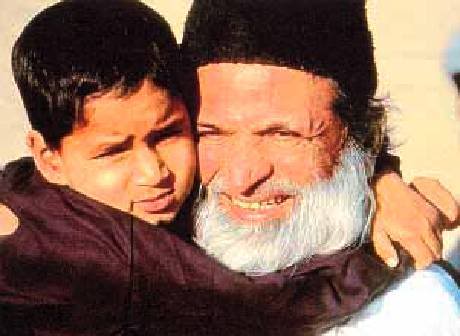
Tribute to a Pakistani Icon

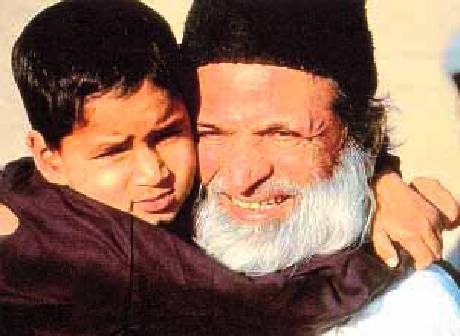
The story of Abdul Sattar Edhi is an awe inspiring one. Amidst the daily materialism, frenetic rat race, ambition and angst which envelops one, here is a man who only thinks of others and their suffering.

Edhi single-handedly set up the Edhi Foundation in 1957, and continued to operate it as a non-profit social welfare organisation. Over 300 centres of the Edhi Foundation span the length and breadth of Pakistan, and provide the needy with medical aid, family planning, emergency assistance and education. There are also maternity homes, mental asylums, homes for the physically handicapped, blood banks and orphanages, among other services.

The remarkable Abdul Sattar Edhi has no qualms about going where others fear to tread, and for taking a stand against extremism. He went to Tank, the gateway to the tribal areas, although he was advised against travelling to such a volatile and dangerous place.

There were fears that he might be killed by the Taliban, but instead they welcomed him with open arms. Edhi tried to reason with the Taliban and told them bluntly that they should renounce their violent way of life, which is against the teachings of Islam. The Taliban called him a ‘’Khudai Faqir’’ and listened to him with great respect, and provided him with safe passage.

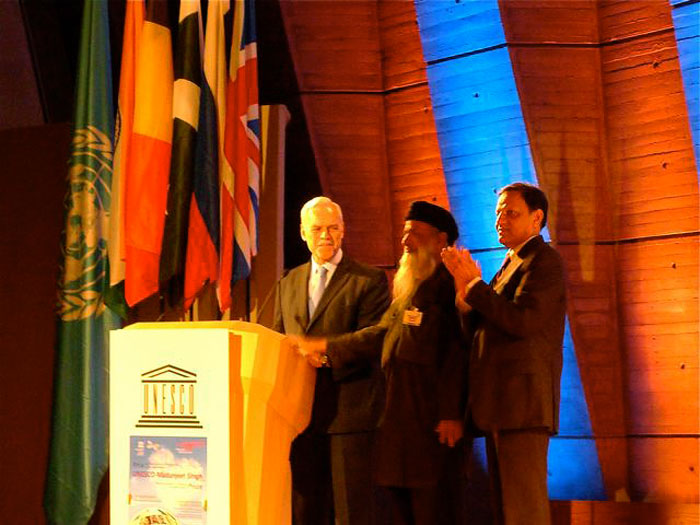
Edhi was recently awarded the UNESCO Madanjit Singh Prize for the Promotion of Tolerance and Non Violence. He was conferred the award in recognition of his life long efforts to ameliorate the condition of the most disadvantaged groups in Pakistan and South Asia, and for promoting the ideals of human dignity, human rights, mutual respect and tolerance.

The prize giving ceremony was held on November 16, the International Day for Tolerance, at the sprawling United Nations edifice in Paris. Amidst all the fancy suits, designer coats and gleaming shoes, Abdul Sattar Edhi stood out in his simple Shalwar Kameez and worn slippers. A documentary was also screened, which showed Edhi and Bilquis Edhi, his wife and companion of 50 years, engaged in their charity work amidst the poor, disadvantaged and outcasts of society.

As Edhi rose with difficulty to receive the UNESCO award, there was prolonged applause for this great Pakistani. Many Europeans remarked on how privileged they felt to have the opportunity of meeting such a great man. An Indian couple postponed their flight home, and came to the UN to pay homage to Edhi, saying that they only wanted his blessings.

As soon as the impressive ceremony was over, Abdul Sattar Edhi was surrounded by a bevy of delighted Pakistanis. Their stimulating interaction with Edhi and the countless photo opportunities went on and on, until some UN officials started glancing at their watches, and it was obvious that it was time to leave the hall. But then the dinner invitations started rolling in.

At times, Edhi looked a trifle tired, but he never lost his composure. At 88, and grappling with diabetes, life could not be easy for him, but he always seems to think of others. Accustomed to sleeping at 7pm and waking up at 4 am, jet lag and the constant socialising must have been draining. When asked how he was feeling, Edhi admitted that he was exhausted, but said that he did not want to turn down the opportunity of meeting with Pakistanis.

Many Pakistanis sought his blessings and said they were willing to contribute to his organisation. Despite all the hero worship, Edhi remained calm and focused, displaying none of the whims and attitude which signifies the behaviour of many Pakistanis who have not achieved even an iota of what he has.

Notwithstanding his lack of formal schooling, Edhi came across as alert, witty, mature and savvy. Talking to him is an enriching experience indeed. He refuses to espouse any political party, because he likes to steer clear of politics.

What motivates this octogenarian to work for such long and punishing hours. and refuse to take time off? When he was still a child, Edhi’s mother became very ill and he nursed her for years until she passed away.

“I had accepted at the outset that charity was distorted and unrelated to its original concept. Another major obstacle in the promotion of welfare was the disgust of man towards mankind. There was only one reaction from everyone ñ cringing. From the grimacing faces of my colleagues, I understood that I was the only one not disgusted. They washed their hands vigorously, smelt their clothes repeatedly and complained incessantly of the stench having seeped under their skins.

Then they rushed home to bathe, scrubbed their clothes and disinfected them, sometimes gave them away saying, ‘The very weave was stricken.’ We could not reduce suffering unless we rose above our senses”

Abdul Sattar Edhi has devoted his life to a thorny field where hardly any one can match his dedication, focus, common sense and sagacity. Being in his presence gives one hope for the future, because it is his belief that there are no people more generous than Pakistanis in giving aid, and there is no place in the world as great as Pakistan.

Originally Printed December 14, 2009
By Maheen Usmani
The News, Karachi

Attacks By the Taliban Illustrate their Growing Strength in the Region

Peshawar, Pakistan- A suicide bomber detonated his vehicle packed with explosives on New Year’s Day in a crowd of people watching a volleyball tournament killing at least 75 people, wounding another 60, of which 13 are in critical condition. Police stated that they believed that the attack was directed towards anti-Taliban leaders of local groups made up of ordinary residents of the area who had recently formed armed local militias to help the government fight the Taliban. The blasts demonstrate the capabilities of the Taliban who also were responsible for the killing of seven American CIA employees at an agency base in Khost, Afghanistan the same day.

The targeting and the killing of both the anti-Taliban civilians as well as the CIA employees is an alarming start to a new year in the region as the Taliban have stepped up their efforts against American troops, Pakistani security forces, civilians and anyone else that challenges them.

Analysts believe that the Afghani Taliban has agreed to bury its differences with the Pakistani Taliban and join forces after President Obama announced plans to increase troop levels in Afghanistan and hunker down for the foreseeable future in a protracted conflict with the armed group. The Pakistani Taliban is an offshoot of the Afghani Taliban and is led by veterans of the fighting in Afghanistan who come from the border regions with Pakistan. Although they have always supported the fight against foreign forces in Afghanistan by supplying fighters, training and logistical aid, they have concentrated on battling the Pakistani government. Many believe that the Pakistani Taliban provides an essential rear base to for the Taliban insurgency in Afghanistan.

This new Taliban alliance has raised concerns for the US and NATO forces where generals are forecasting that the conflict will only worsen this year as Friday’s attacks are proving the grave assessment correct. The attack was not far from South Waziristan, where the Pakistan army is waging an offensive against the Pakistan Taliban. Western intelligence agencies believe that time is running out in the fight to eradicate the Taliban from Afghanistan as they are evolving, adapting and getting better organized and resilient as the nearly decade long conflict rages on.

The insurgency is organized, increasingly effective and growing more cohesive, said a senior intelligence officer with NATO’s International Security Assistance Force (ISAF). “The insurgent strength is enabled by the weakness of the Afghan government,” the officer told reporters on condition of anonymity.

The Taliban is funding its operations, which he estimated to cost between 100 million to 200 million dollars a year, through “Al-Qaeda, drugs and taxing the people. “Its goal is to “establish Al-Qaeda as a global entity”, ridding the region of foreign forces and establishing a caliphate, or Islamic state, and the Taliban in Afghanistan and Pakistan work together to those ends stated the officer.

It is apparent that the stepped up offensive on the security forces and civilians by both the Pakistani and the Afghani Taliban on both sides of the border is an illustration of both their strength and resolve in the fighting the government forces. Pakistan, Afghanistan, the US and NATO forces must redouble their efforts and provide increased financial, military and logistical support if this formidable enemy is to be defeated, let alone eradicated from the region.

 Reported by Manzer Munir for www.PakistanisforPeace.com

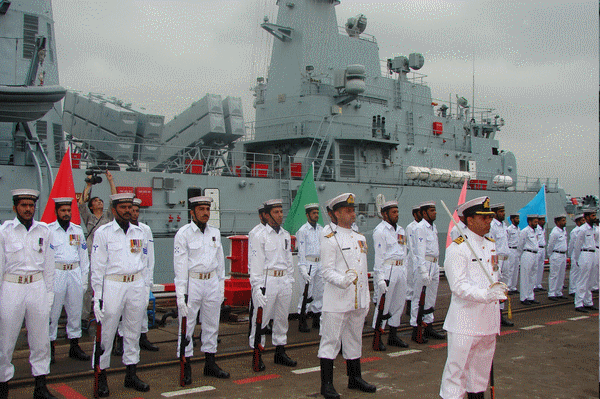
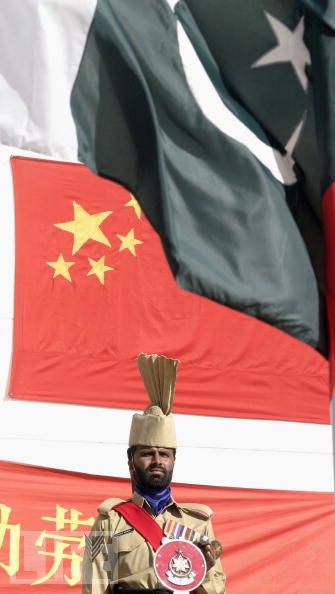
Pakistan and China increase military spending and cooperation as India shows concern

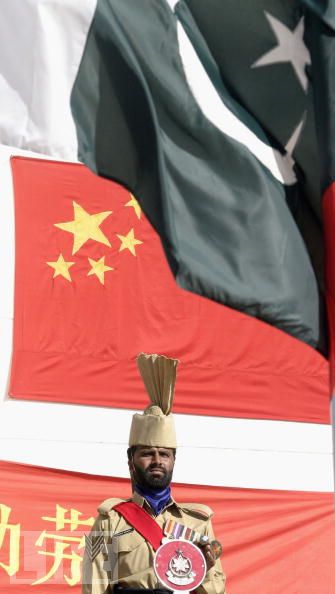
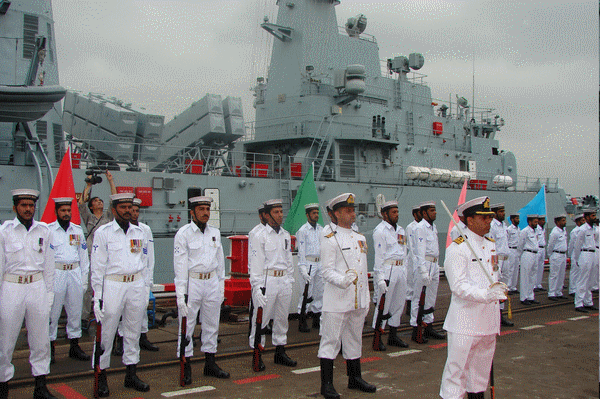
Beijing, China- A senior Chinese defense official has justified Chinese sales of warships and submarines to Pakistan on the grounds that Russia and the United States were selling similar systems to India.

The defense official also indicated that China was aware of the fact that India may not be happy with its deal with Pakistan. “The initiative may invite concerns from its neighboring countries. But the doubts are unnecessary,” Zhai Dequan, deputy director of China Arms Control and Disarmament Association , was quoted as saying by the official media.

Pakistan’s chief of naval staff, Norman Bashir, also made a push to persuade China to sell higher capacity ships compared to the F22P frigates that China began delivering in June.  Chinese official Zhai said that Pakistan’s   desire for higher capacity ships is normal for an independent nation seeking to bolster its security. “India has also entered into deals for military hardware from the Unites States and Russia. India’s aircraft carrier has already cost it billions of dollars”, said Zhai.

Bashir also met with the Chinese defense minister, Liang Guanglie, and discussed with him Pakistan’s needs in terms of modernizing their armed forces to try and keep up with the torrid pace of rival India’s defense spending. “The Chinese armed forces would like to improve friendly and cooperative relations with the Pakistani armed forces,” defense minister Liang Guangile said, according to China’s state-run Xinhua press agency.” China attached great importance to its traditional friendship with Pakistan, Liang said, adding that the two countries had conducted comprehensive and multi-level military exchanges and cooperation in various areas.”

“The Pakistani armed forces and people cherished their friendship with the Chinese armed forces and people”, Noman Bashir said, noting that “Pakistan would like to work with China to promote the comprehensive and cooperative partnership.” Bashir also stated that Pakistan was keen on buying bigger ships and more JF-17 fighter planes from China in addition to submarines and that Pakistan will be buying more weapons from China, including missiles. 

“These growing military ties between China and Pakistan are a serious concern to India,” stated Defense Minister A K Antony. India worries about China’s rising influence in South Asia and the Indian Ocean region, a neighborhood traditionally considered as its sphere of influence.

India’s relations with Pakistan, never easy after three wars since 1947, went downhill fast after last November’s Mumbai attacks blamed on Pakistani originated militants. Meanwhile, Chinese and Pakistani cooperation on military and economic projects has increased in the last few years. “The increasing nexus between China and Pakistan in military sphere remains an area of serious concern,” Antony said in a speech. “We have to carry out continuous appraisals of Chinese military capabilities and shape our responses accordingly. At the same time, we need to be vigilant at all times.” Tensions between India and China, who fought a brief war in 1962, flared again in recent months, especially with the re-emergence of a long-standing border dispute made worse by a visit by the Dalai Lama, the Tibetan spiritual leader, to Indian territory claimed by Beijing.

India increased defense spending by 24% for this year’s budget to $28.4 billion a year dwarfing Pakistan’s budget of $4.2 billion for the same period. Meanwhile, China and India are together set to make Asia the highest regional spender on defense in the next seven years replacing North America as their economies continue to fund their weapons appetite.

Pakistan cannot compete with the likes of India and China militarily. Just as Taiwan could not compete with China militarily, but went on to become an economic powerhouse and used its influence economically,  so too must Pakistan focus on growing its economy rather than growing militarily. Even though Pakistan possesses the nuclear bomb, and that very well may end up being a strong deterrent against India in the likelihood of a war, it still is loathe to use it, for the consequences from India would be similar and far worse due to their increased warheads and military might.

Also, although Pakistan’s military and previous leadership have articulated the right to a preemptive nuclear strike or a nuclear first use option in the event of hostilities with India, this choice is often seen as a losing option by the military due to the aftermath of a nuclear exchange between the two countries. India’s budget and its technological advancements make it impossible for Pakistan to ever win a conventional war with India. And a nuclear exchange between these two neighbors will leave neither side feeling as the winner.  

Pakistan’s most beneficial strategy must consist of directing its full armed forces against the Taliban and militant groups within its territory and re-engaging India back to the peace table in hopes of resolving the long disputed Kashmir region because war with India will certainly not leave Pakistan the victor. However a peace treaty can open the long border between India and Pakistan for trade, goods, ideas, money and people to move freely across the border and allowing much needed investments and flow of technology to Pakistan that will go a long ways in helping the country and its people catch up with the rest of the world.

Reported by Manzer Munir for www.PakistanisforPeace.com

Happy Birthday Pakistan! May You Reach Your Full Potential~

 Islamabad, Pakistan- 62 years ago, Pakistan and India gained their independence from Britain after a long struggle for freedom and self determination. For centuries, the Hindus and Muslims of India had lived together as part of one country under multiple rulers, from Hindu princes to Muslim emperors. But once the British came and colonized the country, religious differences became more evident as oppressed Indians of Muslim and Hindu backgrounds became keenly aware of their differences.

Mahatma Gandhi was opposed to the division of India into two countries. However that is exactly what happened as Pakistan was the country designated for the Muslims of India.

One of the oldest civilizations in the world with more than 9,000 years of history, became newly independent modern day states of Pakistan and India on August 14 and 15 1947, respectively. Although other countries in history have been founded on freedom of religion, most notably the United States, only Pakistan has been specifically created as a nation for Muslims, carved out of India.

Even though he advocated for a homeland for the Muslims of India, the founder of Pakistan, Mohammed Ali Jinnah, was a secularist and wanted a nation that was democratic, moderate and a model for other Muslim nations. However the last 62 years of the country’s turbulent history has shown that true religious freedom and democracy is still a concept that is trying to get a solid foothold in the country as over half its existence has been dominated by military dictatorships and coups as well as allegations of corruption by the elected leaders.

A country founded on religious freedom for the Muslims of India also finds itself struggling with religious espressions between Muslims as routine violence between Shiites and Sunnis as well as violence against the minority Christian population is not uncommon.

One of the most populous yet poorest countries of the world, Pakistan is an enigmatic and perplexing country for many analysts and observers. A country that has a literacy rate of just 49.9% according to the CIA fact book also happens to have the 7th most engineers in the world! A nation that does not possess abdundant clean water for all its citizens, yet is one of only a handful of nations that possesses nuclear weapons and technology. One of the few nations of the world  to have elected a female as a leader of the country, only to watch in despair as she was tragically gunned down in December of 2007 as she ran for the top spot in the elections of 2008.

Pakistan has tremendous potential that has not been and is not being realized. A surplus of manpower, vast quantities of resources such as natural gas, coal, hydroelectric power, iron, copper and fertile land for crops. It is also situated in a very strategic location of the world at the mouth of the Persian Gulf in the Indian Ocean near the oil rich countries of the Middle East and busy shipping lanes between Asia and Europe and Africa.

What Pakistan is missing is strong and competent leadership that needs to focus on eliminating corruption, disbanding terror groups and militias, and fostering a long term peace process with its neighbor and arch rival India. Once that is done, the rest of the issues will be easier to solve such as illiteracy, health improvement of the people, economy and security.

One more important ingredient Pakistan is not lacking is a strong sense of patriotism and pride among its citizens throughout the country and around the world. Pakistanis have high hopes and aspirations for their homeland and on this independence day they look forward to better days ahead in achieving the kind of state that the founding father Jinnah had hoped for when the country became independent from Britain on August 14, 1947. Let us hope that this dream lives on and becomes a reality as a stable and prosperous Pakistan is vital for the region, the Muslim world and global security and prosperity.

Reporting by Manzer Munir for www.PakistanisforPeace.com

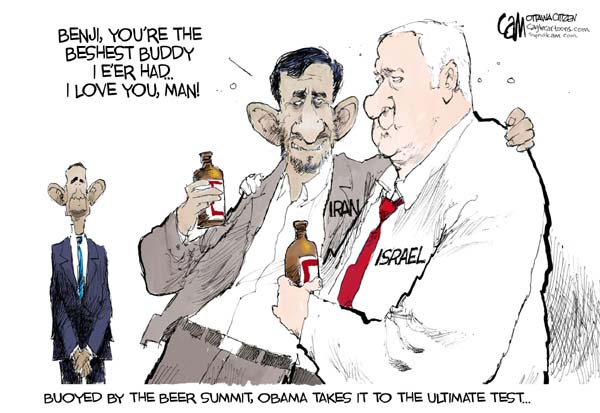
If Only the Beer Summit Would Work for the Middle East Peace Process

Cartoon Israel and Iran

Lone Surviving Mumbai Attacker Pleads Guilty

Mumbai, India- The only surviving gunman from last year’s Mumbai attacks in India’s financial and entertainment capital which killed at least 173 people and wounded more than 300, pleaded guilty today in an Indian court. The confession of guilt from Pakistani citizen Mohammad Ajmal Kasab, 21 years of age, took many in the court by surprise including the lead prosecutor, Ujjwal Nikam.

“He pleaded guilty in court today “a senior police officer told the Associated Press reporter. “He has confessed to his role and the fact that he was involved in the attacks that killed so many people during the attacks. He admitted to both being a part of the planning as well as the execution of the attacks”, stated the officer who was present in court.

Kasab, had earlier pleaded not guilty in May prior to the start of the trial, now faces a  possible death sentence as the court can proceed to the sentencing portion rather than continue with the trial in bringing about a guilty verdict.  During a routine interrogation of the witnesses in his trial, Kasab got up and told the court he had something to say and proceeded to confess his involvement in the attacks.  He also admitted that the closed-circuit video was of him, and he narrated the entire of sequence of events in detail to corroborate his involvement in the crime.

Analysts believe the guilty plea will help Pakistan’s President Asif Ali Zardari’s stance that the country must confront the truth about its militant ties and organizations that operate within its borders. Zardari himself is a victim of such terrorist attacks as his wife, the former Prime Minister Benazir Bhutto too was killed by suspected militants in December of 2007 while campaigning for office and running on a platform of wiping out the militant threat inside Pakistan.

This admission of guilt on the part of Kasab also should allow Pakistan to press the individuals in its custody that are believed to have been a part of Kasab’s network to be brought to justice as well. One hopes that Pakistan is able to secure guilty pleas against the individuals in its custody and brings some justice to the hundreds of families who have lost loved ones or who were seriously injured by the cowardly attackers preying on innocent civilians. A just and fair trial with guilty pleas and full cooperation is needed on the part of the Pakistani government before India would agree to move ahead with the now stalled peace process between the two nuclear armed hostile nations.

 by Manzer Munir for www.PakistanisforPeace.com

India and Pakistan to discuss relations at NAM meeting in Egypt

Sharm El-Sheikh, Egypt- The prime ministers of India and Pakistan are scheduled to meet on the sidelines of the Non-Aligned Movement Summit (NAM) in Egypt this week inviting hopes of a resumption of peace talks between the two nuclear armed neighbors.

The NAM consists of 118 member countries of developing countries from Afghanistan to Zimbabwe and make up almost 60% of the world population.  NAM countries consider themselves not formally aligned with or against any major country or power bloc such as NATO.

The importance of this meeting between the Indian Prime Minister Manmohan Singh and Pakistani PM Yousuf Raza Gilani is that this is only the second high level meeting between the Indian and Pakistani leaders since the Mumbai attacks of November 2008.  At least 173 people were killed and more than 300 wounded by terrorist attacks blamed on Pakistan based militant group Lashkar-e-Taiba.

Since the attacks, the relations between India and Pakistan worsened dramatically as India demanded Pakistan take action against the responsible parties. This week Pakistan announced that it will “probably” put the five accused attackers in its custody on trial next week. This is welcome news for the Indian government which has predictably  tied any improvement in relations with Pakistan on the prosecution of the accused for the attacks as well as curbing of violence on Indian soil from the Pakistan based militants.

Unfortunately, Pakistan has its hands full on its own soil when it comes to stopping the militants let alone preventing violence from groups inside its terroritory from carrying out attacks in India. But a willingness to fully prosecute any individuals or groups apprehended as well as dismantling the infrastructure of these organizations will go a long way in showing good faith to India in resuming a comprehensive peace agreement with its fellow nuclear armed neighbor.  Similarly India must be willing to consider Pakistan’s disputes with India over Kashmir from all sides and be able to negotiate a lasting and long term peace deal that is so desperately needed in the most dangerous neighborhood of the world and one that has been elusive for over 60 years.


Reported by Manzer Munir for http://www.PakistanisforPeace.com

Pakistanis for Peace

A little over two weeks have passed since the attacks in Mumbai, India. Since then there has been new information presented to Pakistani authorities providing evidence that militant extremist groups inside Pakistan were involved in planning and carrying out the attacks. Although at this time it is unlikely that a full scale war will break out between India and Pakistan, It is assumed that India may be considering several options including strategic attacks inside Pakistan where these groups are operating and have their camps. Combined with the American bombings inside Pakistan’s border with Afghanistan, this is exactly the sort of thing the army has feared. Having two borders to worry about in addition to unrest within the country due to the lack of safety and security for citizens and foreigners alike makes it a very difficult time to be the head of the army as is General Kiyani.

From the attacks that happened in India 2 weeks ago, arose a small but determined movement within the Pakistani community inside Pakistan and abroad where 3-6 million people of Pakistani origin live around the world. Pakistanis for Peace stared as a group on Facebook into an idea for a global forum for Pakistani and non Pakistani people to come together and demand a change for peace with India. We are tired of seeing Muslims killing Muslims because one is Shia and one is Sunni. We are tired seeing death and destruction brought to every corner of our beautiful country. First it was Peshawer during the Afghan-Russian war. Then the bombs and attacks happened frequently in Karachi. Finally Lahore and other cities were engulfed in constant violence. And now finally even Islamabad is not left untouched with the recent violence at the Lal Masjid and more recently with the horrific destruction of the Islamabad Marriott. Most importantly, decent and law abiding Pakistanis and Overseas Pakistanis are sick and tired of having to feel embarassed when we now have to tell someone when we first meet them about where we are from. A sample conversation goes like this: “Hi, nice to meet you. I am So and so.” “Where am I from?” “I am originally from Pakistan. Oh and by the way, no I am not a terrorist, I am one of the nice guys from Pakistan you never hear about”

Honestly, it should never come to that in real life. But it really has. Many Pakistanis who have never left the country do not know what it is like to go outside Pakistan. Especially to Europe or North America. We are looked upon with more suspicion now than ever. In a recent survey done in the United Kingdom, the average person assumed that Pakistan was either the country most responsible for terrorism around the world or was in the top 5 of countries listed by the survey respondant. It is a damn shame and I for one as a Pakistani American am going to do everything I can to get people inside and outside Pakistan to join us in our quest to bring a normalization of relations between India and Pakistan. Over 60 years of hostility has now only made things that much more dangerous for the neighborhood. We are both nuclear armed nations and with rampant corruption in both countries, poverty and extremist groups and terrorists makes it a very volatile situation with a very dangerous outcome. It is time for peace. Unconditional and uncontested. The people of both nations are demanding it. Now there is a momement within Pakistan and the Pakistani community. The silent majority is standing up and demanding peace. India and the world need to know that there are Pakistanis who are as determined about peace as the terrorists are about terror. The nations needs to understand that Pakistanis for Peace because Pakistan is for Peace.

This blog started as an idea on Facebook and is set up so that we can discuss the current situation from a peaceful Pakistani prespective. Keep checking for daily updates. And Please also join us on Facebook for a vibrant discussion as a group member and help support peace between India and Pakistan as well as in the Middle East and around the world!