Posts Tagged ‘ Raza Haider ’

Sectarianism Infects Hospital Wards

As Reported by IrinNews.org
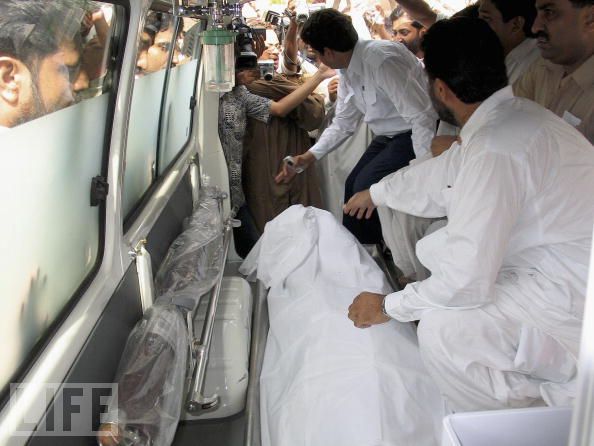
Religious, political and ethnic divisions have claimed hundreds of lives in Karachi, Pakistan’s largest city, but also influence the chances of survival for the injured.

A doctor in the emergency ward of Civil Hospital Karachi, one of the city’s largest public hospitals, told IRIN: “After a terrorism incident, we are under intense pressure. Earlier, we had the activists of various political parties threatening us in the emergency department to not treat the patients of their rival groups. They use all sorts of delay tactics, be it blocking the entrance to pounding on the doors and abusing the staff. Now, we also get calls [from the militants].”

The doctor, who asked not to be identified, added: “One ethnic-based party is so strong that it makes sure that the duty doctors are unable to carry out their work once the injured start arriving. We have doctors and other staff who are from that party within the premises. Time and again we have been told not to treat Pushtun injured, who are very easy to identify due to their language and beards. We already face a shortage of staff, medicines and medical equipment… It’s just a mess here. [But] all professionalism and ethics aside, how can you expect me to save someone when my life is in danger?”

According to a Human Rights Commission of Pakistan report released in July, 260 people have been killed in targeted killings since January 2010. The number continues to rise with 50 people killed so far in the latest wave of violence following a shooting rampage in Shershah Market on 19 October.

Turf war

The nub of the problem in Karachi is the ongoing turf war between the Muttahida Quami Movement (MQM) and the Awami National Party (ANP) for control of the coastal city. Both parties draw support from rival ethnic groups; the MQM’s vote bank is among largely Urdu speakers who migrated to Karachi after partition from India in 1947, while the ANP mainly represents Pushtuns.

Habib ur Rehman Soomro, secretary-general of the Pakistan Medical Association, acknowledged that sectarianism was rife in the health services. “I will not deny this occurrence. I live in this city and I know how things work. Refusing and delaying treatment in cases of emergency, especially after incidents of ethnic violence and terrorism, is a crime but all this is happening… Now the situation is such that all public hospitals in the city have the offices of MQM, PPP [the ruling Pakistan Peoples Party] and if it’s a Pashtun-dominated area, ANP.”

Shams Khan was injured on 3 August in the violence that erupted after the killing of MQM leader Raza Haider, which claimed 45 lives.

“I was shot in the leg by these boys near Lalo Khait. I made my way to Abassi Shaheed Hospital but they refused to treat me. I was practically thrown out of the facility by my beard as one of the doctors called me a Taliban. Bleeding, I made my way to JPMC [Jinnah Postgraduate Medical Centre]. I lost so much blood by the time the doctors attended to me. I now limp around and need a crutch to walk. The doctor told me that had I been treated earlier, it would not have happened.”

Soomro told IRIN that doctors were under constant threat. “Since the 1990s, there have been plenty of incidents of targeted killings of doctors killed on the basis of sect and ethnicity. Over 85 doctors have been murdered. First it was the Shia-Sunni issue, then the Pushtun-Mohajir issue, now it’s about sects. It’s just insane. Political affiliations need to be removed.”

A doctor at the JPMC, who asked not to be named, said: “We have seen days where doctors were beaten by angry political activists as well as the family members of the victims after a bomb blast… This cycle of madness will not end.”

Pakistanis for Peace Editor’s Note– We are unsure which is sadder, the inability of doctors in Pakistan’s biggest city to save lives without threat and or intimidation and violence against them, or that the very people giving these threats to the doctors are in fact linked to members of the two ruling political parties, who have been charged with being “leaders” of the country.
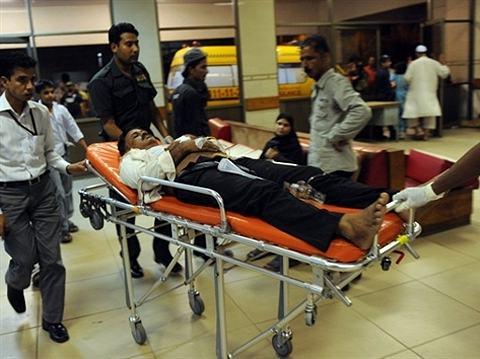
Suspected Political Violence Kills 25 in Pakistan

By Ashraf Khan for the Associated Press

KARACHI, Pakistan – Gunmen have killed at least 25 people in Karachi in the past 24 hours, raising tensions in Pakistan’s largest city as voters cast ballots Sunday to replace a provincial lawmaker murdered in August.

Police said they were still investigating the motives behind the shootings, but many so-called “target killings” in Karachi have been linked to gangs controlled by the city’s main political parties, which have been feuding for much of the last 20 years.

“We cannot say whether all the killings were politically motivated or some gangs were involved because the killings took place in different parts of the city and were not confined to the area where the elections were being held,” Karachi police Chief Fayyza Leghari said.

The two parties most linked to violence in Karachi — the Muttahida Quami Movement and the Awami National Party_ have their electoral bases in different ethnic groups that make up a large chunk of the city’s population.

The MQM claims to represent the Urdu-speaking descendants of those people who came to Karachi from India soon after the birth of Pakistan in 1947. It is secular and likes to speak out against the so-called Talibanization of the city, a jab at the Awami National Party, which represents the ethnic Pashtuns from the Taliban heartland in the northwest.

Raza Haider, the member of the provincial assembly who was gunned down in August, was a senior member of the MQM. In the wake of the shooting, the MQM accused the ANP of supporting Islamist militants suspected of being behind the murder — an allegation denied by the ANP.

Both parties were competing for Haider’s vacant seat, but the ANP announced Saturday evening that it would boycott the election, saying the MQM would rig the vote. The shootings began around the time the ANP made its announcement.

At least 25 people have been gunned down in Karachi since Saturday evening, said Zulfiqar Mirza, the home minister of Sindh province, where Karachi is the capital. He called on party leaders to come forward to “help us turn Karachi back into the city of light and peace.”

“If someone has a complaint, it should not be settled on the street,” Mirza told a news conference. “It is disappointing that we are shedding our priceless blood with our own hands.”

The dead include members of a broad range of ethnic groups in the city, he said.

Haider Abbas Rizvi, a senior MQM leader and member of Parliament, accused the ANP of being behind the shootings, saying “19 of our workers and supporters have been killed so far.”

Senior ANP member Amin Khattak denied the accusation, saying, “we are not involved in killings, and I think that this blame game should be stopped.”

Leghari, the police chief, said at least three of the killings did not seem to be politically motivated and were carried out during “other criminal offenses.”

The killings were reminiscent of the violence that followed Haider’s murder. At least 45 people died in the days following his killing.

Police have arrested at least 60 people in connection with the most recent shootings, Mirza said. But few killers in such cases have ever been brought to justice, and motives for the attacks have not been revealed.

The rising tension between the MQM and the ANP represents a serious danger to stability in Karachi, a city of some 16 million people and Pakistan’s commercial hub.

Pashtuns have been arriving in the city in greater numbers in recent years, fleeing Pakistan army offensives against the Taliban. An estimated 4 million Pashtuns are now in Karachi and many live in sprawling slums on the outskirts that are “no-go” areas for authorities.

Violence has surged in Karachi this year with hundreds of people slain in target killings. This increase has echoes of the city’s bloody past.

In the 1980s and 1990s, Karachi was regularly convulsed by violence in which hundreds were killed. MQM leader Altaf Hussain fled to London in 1992 as a result of that bloodshed and was granted asylum. He regularly addresses large gatherings of supporters by telephone link.

Prominent Pakistani Politician Murdered Outside His London Home

By Laura Roberts and Heidi Blake for The Telegraph

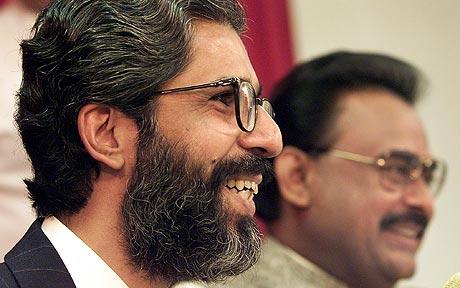
Imran Farooq, a prominent Pakistani politician, has been murdered outside his home in London. Dr Farooq, 50, was repeatedly stabbed in the head and neck during the assault in Edgware, north London.

He was a leading member of the Muttahida Quami Movement (MQM) party, which is one of the largest in Pakistan.

There were suggestions from Pakistan that he may have known his killer. When police arrived at the scene, they found Dr Farooq’s body outside his house.

A spokesman for the Metropolitan Police said officers attended an address in Green Lane, Edgware, shortly before 5.30pm after reports of a serious assault. “On arrival, officers found a single Asian man aged 50 with multiple stab wounds and head injuries,” the spokesman said.

“Paramedics attended the man but he was pronounced dead at the scene.”

Next of kin have been informed and no arrests have been made.

Dr Farooq was expected to attend a birthday celebration at the MQM headquarters on London’s Edgware Road on Thursday night but the event was cancelled at the last minute. Police said it was too early to know if the murder was politically motivated.

The politician claimed asylum in Britain after spending seven years on the run as one of Pakistan’s most wanted fugitives. He was accused of a range of charges, including murder and torture.

He has not returned to Pakistan since his arrival in England in 1992.

He claimed that year that he was wanted “dead or alive”.

“This gave licence and impunity to every individual in Pakistan to assassinate me,” he said.

Dr Farooq said he spent more than seven years in hiding in Karachi, southern Pakistan. He continued: “It was impossible for me to remain in Pakistan due to the continued threat on my life and liberty.”

He insisted the claims against him in Pakistan were politically motivated and continued his involvement with the party from Britain.

Last month Raza Haider, another MQM member, was gunned down with his guard as he attended a funeral near the centre of Karachi. The killing triggered violence in which dozens of people were killed and at least 100 wounded.

Azeem Tariq, the former chairman, was murdered in Karachi 13 years ago. Intruders entered his home and shot him as he slept.

MQM, based in Karachi, is the fourth largest party in Pakistan and is part of the ruling coalition government. It has a strong anti-Taliban stance, although rivals accuse it of exaggerating the threat of the Taliban.

The party represents mainly descendants of Urdu-speaking migrants from India who settled in Pakistan when it was created in 1947.

A statement on the MQM website said the party had declared a ten-day period of mourning in Pakistan and around the world.

London has played host to many of Pakistan’s exiled politicians. Gen Pervez Musharraf, the former president, lives in self-imposed exile in London.