Posts Tagged ‘ Taliban ’

Pakistan’s New U.S. Envoy Faces Tough Task Ahead

As Reported by Xinhuanet

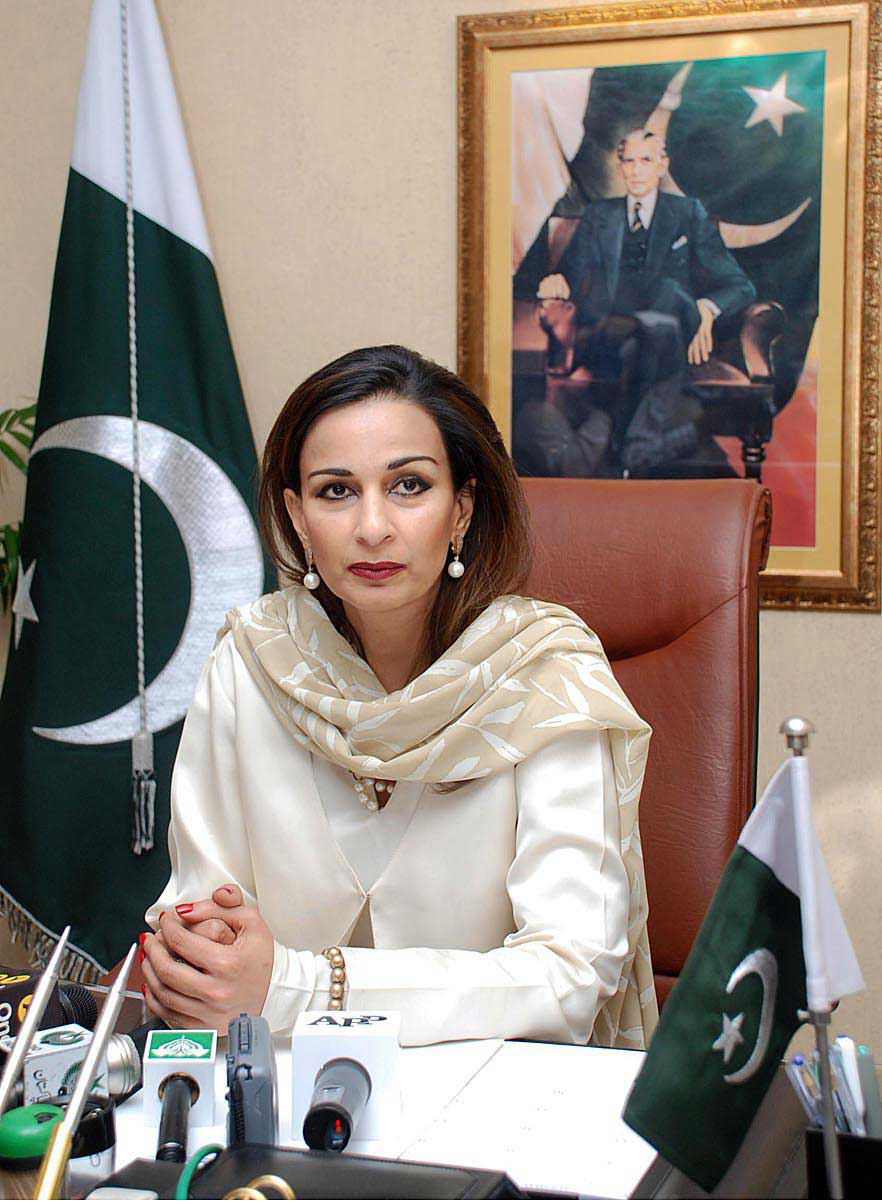
A journalist-turned politician, Ms. Sherry Rehman, will soon proceed to Washington to assume responsibility as Pakistan’s new ambassador where she would face tough task as how to bridge the trust gap with the United States.

Prime Minister Yusuf Raza Gilani appointed Sherry Rehman as Pakistan’s new ambassador in Washington a day after her predecessor Hussain Haqqani resigned over a recent claim by a Pakistani-American business tycoon that he had been asked by Haqqani to deliver the alleged President Asif Ali Zardari’s memo to the former U.S. Chairman of the Joint Chiefs of Staff Mike Mullen, seeking Washington’s help to rein in the powerful army.

Haqqani, who was summoned to Pakistan this week after the memo controversy dragged the country into crisis, was asked by the Prime Minister to quit during a meeting attended by the President, the Army Chief General Ashaq Pervaiz Kayani and Intelligence Chief, Lt. Gen. Ahmad Shuja Pasha in Islamabad on Tuesday.

Sherry Rehman, a former Information Minister and current member of the National Assembly or Lower House of the parliament, is also a central leader of the ruling Pakistan Peoples Party. She was chosen for the key post only because of her association with the ruling party as she has no diplomatic career. Islamabad routinely appoints ambassadors to the United States on a political basis. Several retired military men have also served as the country’s ambassadors to the U.S..

The Pakistani government has designated a political loyalist and the woman ambassador to the U.S at a time when mistrust between the two key allies in the so-called war on terror is at peak. Pakistan and the U.S. cooperation is considered a key to stability in Afghanistan as Washington is mounting pressure on Islamabad to take measures in “days and weeks” to encourage the Taliban, the dreaded Haqqani network and other Afghan armed groups to join the peace and reconciliation process in the war-ravaged Afghanistan.

“It’s like that old story – you can’t keep snakes in your backyard and expect them only to bite your neighbors. Eventually those snakes are going to turn on whoever has them in the backyard, ” US Secretary of State Hillary Clinton said while standing along with her Pakistani counterpart in Islamabad last month in a blunt message to Pakistan.

The first major challenge the Pakistan new ambassador will have to face is how to address to the U.S. concern about the Afghan Taliban and Haqqani network, which the U.S. officials say are operating from Pakistan’s tribal region. Washington seemed to be in haste on the Afghan peace process in view of its troops’ withdrawal, which already began in July and will be completed by 2014.

The Pakistani Taliban is also an issue for the U.S. as the CIA says that they are sheltering Afghan armed militants in the country’s lawless tribal regions bordering Afghanistan. In view of its frustration, the U.S. routinely uses its spy aircraft to hit targets in Pakistan tribal regions, which is also a source of tension in bilateral relationship and the U.S. is in no mood to stop drone strikes despite Pakistan’s criticism.

The new Pakistani ambassador will also have to convince the U.S. administration to unblock the suspended military aid to Pakistan. The U.S. withheld some 800 million US dollars in assistance to the country’s armed forces in July just two months after Osama bin Laden was killed in a U.S. military raid, the U.S. unilateral action had itself worsened relationship. The U.S. has also attached tough conditions with the civilian aid for Pakistan.

Pakistan is nowadays under fire during the Presidential nomination campaign in the U.S. and even on Tuesday Republican presidential candidates attacked Pakistan in their foreign policy debate. The Republican presidential hopefuls ganged up on Pakistan and questioned whether the United States could trust it. Texas Governor Rick Perry called Pakistan unworthy of U.S. aid because it had not done enough to help fight al-Qaida.

Criticism at Pakistan by the Republican hopefuls shows how much tough environment she would face after she assumes the office of ambassador in the coming days. She vowed on Wednesday, a day when she was designated as ambassador, to work for improvement of ties with the U.S..

The United States on Wednesday acknowledged the impending change of guard at the Pakistani embassy in Washington as they praised deposed Ambassador Husain Haqqani for his services and announced their anticipation of working with Pakistan’s new Ambassador Sherry Rehman to continue strengthening bilateral ties between the two countries. In Washington too, the State Department spokesman on Wednesday said the U.S. looks forward to working together with her as both countries “continue to build a strong, cooperative relationship between our two countries.”

The former Pakistani ambassador to the U.S. had also good ties with the U.S. administration and his role was praised by the State Department spokesman, Mark Toner, but even then the relationship had been worst during his tenure. Now Sherry Rehman will not only have to address to the U.S. concern but also to serve the interests of Pakistan where a majority of the people are against the U.S. policies.

Pakistan: More To Offer Than Bombs And Beards

By Asim Haneef for Al Jazeera

If you did not know anything about Pakistan and happened to pick up a newspaper or turn on the evening news, you might be forgiven for assuming that it is possibly the most broken, troubled and violent country on the face of the earth – a basket case just moments from imploding.

In the all-important arena of international public perception, Pakistan has taken an unprecedented battering in recent years, accumulating more bad headlines than nearly any other country and making places like Afghanistan and Iraq look relatively stable by comparison.

The list of challenges it faces is seemingly unending: terrorism, corruption, drone attacks, natural disasters, poverty, a deficit in leadership, discrimination against minorities, mistreatment of women, attacks on freedom of speech, mass tax evasion, match fixing, the murder of judges, politicians, union organisers and journalists – and that is just the tip of the iceberg.

So pervasive are the headlines pointing to a crisis in Pakistan that after a while they seem to blur into one another. Whether it is “hostages held in Karachi”, “al-Qaeda hideout discovered in Swat”, “floods bring pain to millions”, “suicide bomber explodes in market square”, “senior judge in blasphemy case shot dead” or “Pakistan’s ISI actively supporting Taliban in Afghan war” the message is uniformly bad news. The result is that for many the image of Pakistan is one of bombers, beards, shaking fists, distressed women and utter hopelessness. It makes for a pretty depressing picture.

I guess that is why the work of Syed Ali Abbas and his Pakistan Youth Alliance (PYA) featured in this week’s Activate, Pakistan: The New Radicals, is so refreshing. A courageous young social activist, Ali founded the PYA together with Maryam Kanwer when he was just 21 years old. It was born in the midst of severe political turmoil, as then-President Pervez Musharraf imposed emergency rule and fired the chief justice on national television, while the security forces brutally cracked down on dissenting lawyers.

Fed up with watching their country’s problems on the television, the PYA initially organised protests and rallies but quickly became more active. Its core premise and mission statement is to take a stand, to get as practically involved on the ground as possible and to exemplify the change they seek through their actions rather than merely proposing it on paper.

Their main goal is to create political and social awareness among the youth of Pakistan and to unite them irrespective of their religion, ethnicity, caste, race or language on an unbiased platform through which they can engage with one another and contribute practically to building a more progressive society in Pakistan – whether through protest, social and relief work or the arts.

Earlier this year, Ali was among a small group instrumental in organising counter protests to the hate filled ones celebrating and glorifying Mumtaz Qadri, the killer of Salman Taseer, the governor of Punjab who was murdered in January over his stance on Pakistan’s blasphemy laws and his ardent defence of religious minorities like Christians and Ahmadis. Ali says he did this because: “This is not what the founder of Pakistan and ‘Father of the Nation’ Quaid-i-Azam Muhammad Ali Jinnah would have wanted for this country today, especially as he repeatedly stressed the importance of inter-faith unity and religious harmony.”

Stories like these and others bring about something much needed in international news these days – a positive, hopeful narrative against the odds, showcasing some of the good news stories coming out of places like Pakistan, which often go unreported and deserve a spotlight too. So although we appear to have an extraordinary capacity to become fixated on negative headlines, there are also good things happening too and though progress and development is not as ‘sexy’ as a suicide bomber or a train-wreck, perhaps a little balance is in order, so that we do not become as, Ali says at the close of the film, “filled with dread, being hopeless about the future”.

So do good stories actually emanate from Pakistan? And, if so, where are they? Well an initiative by brothers and social entrepreneurs Majid and Mahmood Mirza aims to answer this. They set up a website simply titled Good News (www.goodnews.pk) , which focuses solely on positive developments coming out of the country. They describe the idea behind the website via Skype as being “to highlight amazing, awesome and inspirational news stories coming from Pakistan, as opposed to the usual negativities that steal the headlines”.

And they have plenty of examples ready. For instance, did you know that Pakistan has become only the sixth country in the world to map the human genome, joining the ranks of the US, the UK, China, Japan and India, which have all successfully sequenced it. Or, how about the fact that Pakistan has the largest volunteer ambulance organisation in the world started by “living saint” Abdul Sattar Edhi in 1948. Today, the radio-linked network includes 600 ambulances that work in every corner of the country. Or how about the recent news that Dr Umar Saif, an associate professor at the School of Science and Engineering in Lahore, has been recognised by MIT Technology Review as one of the top 35 innovators in the world – joining an elite group of researchers and entrepreneurs selected over the last decade, which includes Larry Page and Sergey Brin, the co-founders of Google, Mark Zuckerberg, the founder of Facebook, and Jonathan Ive, the chief designer at Apple. Now who has heard of those stories?

Then there are serial entrepreneurs like Monis Rahman, who just four years ago set-up Rozee.pk, which is now Pakistan’s largest jobs website, with 500,000 unique visitors a month; or Karachi-born freelance designer Vakas Siddiqui laying to rest the myth that Pakistani students are limited to excellence in science and the humanities by being selected as one of the top 28 designers in the world; or filmmaker Sharmeen Obaid Chinoy who has just been shortlisted for an Oscar in the ‘best documentary short’ category for her film Saving Face. Whether it be in music, fashion, academia, activism, technology, sports or science these are stories that people do not usually associate with Pakistan and which might just show that there is more to the country than just bombs and beards.

Some of these unreported positive stories, along with the courage and creativity shown by people like Syed Ali Abbas and the Pakistan Youth Alliance in challenging these problems, reflect a surprising shift in the country’s growing and increasingly switched-on, globally-minded youth. They are using outlets like social media platforms and blogs to become more aware, educated and informed about their rights and more savvy to the different methods they must perfect in order to stop their country peddling even further backwards than it already has and to lead it to a brighter day, free from the same old headlines we’re all universally tired of reading and hearing about.

Asim Haneef worked extensively on Activate, a new eight part series featuring grass-roots activists from across the globe who are challenging the status quo and bringing about a change in their society. You can follow him on Twitter @asimhaneef

Pakistan Leans Toward Talks With Taliban, Not Battle

By Karin Brulliard and Haq Nawaz Khan for The Washington Post

ISLAMABAD — Amid growing American frustration with Pakistan’s handling of Islamic militancy, the government here appears less willing than ever to challenge insurgent groups and is more inclined to make peace with them.

In a series of recent statements, Pakistani officials have rejected the notion of robust military action against insurgents based in its tribal belt and instead called for truces. At a recent summit, political leaders issued a resolution that did not condemn terrorism but said their policy is dialogue. The decree was widely viewed as having been rubber-stamped by the powerful military, whose top two figures briefed the conference.

The approach has puzzled U.S. officials and renewed debate in Pakistan about how to handle insurgents who have killed thousands in attacks nationwide.

Much remains unclear about the potential for peacemaking, including which militant groups would be included or willing. But some analysts say Pakistan has lost the resolve to battle homegrown insurgents who many here view as disgruntled brethren.

“Everyone went along with what the army wanted” at the recent political summit, said Rahimullah Yousafzai, a Pakistani journalist and expert on militancy in the northwest. “It became obvious that the military has no appetite for military operations.”

Many here express skepticism about talks, arguing that such efforts had failed in the past. But the idea is backed by Islamic parties and other political leaders.

In interviews, politicians and security officials said Pakistan views the Pakistani Taliban, an umbrella insurgent group that is an offshoot of the Afghan movement, as splintered enough to be open to peace deals mediated through tribal elders or clerics. And the United States, they note, is supporting a similar approach in Afghanistan.

“If by giving a chance to peace, any terror is eliminated, it’s the best option,” Interior Minister Rehman Malik, a leading ruling party figure, said in an interview. He added that he had received armistice offers from militants: “They want to talk.”

Pakistan’s fragile civilian government regularly condemns terrorism, and the army has executed several operations in the country’s northwest, including against Pakistani Taliban factions in the Swat Valley and South Waziristan. The battles have scattered some militant leaders, leaving the organization weakened but still capable of carrying out deadly attacks. But there is little public enthusiasm for large-scale military action, which could displace millions of people.

Meanwhile, Pakistan is jockeying for inclusion in any Afghan political settlement, which security officials here believe will bring Afghan Taliban representatives into the government. The army therefore sees little incentive to antagonize Pakistan insurgents, who commingle with their Afghan counterparts, security analysts said.

‘A focus on peace’

Pakistani Prime Minister Yousuf Raza Gilani called last month’s political conference as tensions with the United States soared over American allegations of Pakistani state support for the Haqqani network, an Afghan group based in the Pakistani tribal area of North Waziristan. Participants, in a rare show of unity, unanimously rejected the U.S. claims and called for a “new direction and policy with a focus on peace and reconciliation” with “our own people in the tribal areas.”

Two days later, Gilani told local media that a parliamentary committee would monitor talks that could include all Taliban factions, including the Haqqani network, but warned that failure could prompt military action. Army chief Gen. Ashfaq Parvez Kayani, however, suggested otherwise to reporters, saying: “Military operation is not a solution to every problem. We’re done with those operations where we had to.”

An American official said the United States was unsure what to make of the resolution. “We’ll be watching, of course, and asking through military channels what the [Pakistanis] have in mind,” said the official, who spoke on the condition of anonymity to discuss a sensitive relationship.

The United States has stepped up a campaign of drone strikes against the Haqqani network, targeting the group with several strikes in recent days.

Taliban reaction to the Pakistani overture has been wary. One top commander, Faqir Mohammed, was quoted by local media as saying he welcomed talks — but that they must lead to the establishment of Islamic law. Mohammed later denied willingness to talk.

“There have been contacts between the government and militants through indirect channels,” said a tribal elder from the Waziristan region. “Both sides are seeking guarantees before starting.”

A Pakistani intelligence official pointed to the recent defection of one Pakistani Taliban commander, Fazal Saeed Haqqani, as an argument for truces, which he said exploit insurgent infighting. Pakistan, the official said, “met Haqqani’s demands,” including by releasing some of Haqqani’s imprisoned relatives.

Others bemoan the idea of talks as surrender, though many critics remain enthusiastic about reconciliation in Afghanistan. Javed Ashraf Qazi, a senator and former intelligence chief, said the Afghan Taliban is fighting a foreign occupation, while the Pakistani Taliban seeks to create an Islamic caliphate.

“These are our own citizens who have revolted against the state . . . and therefore they should be subjected to the law,” Qazi said. “They have the blood of innocent people on their hands.”

Pakistan’s numerous past attempts at peacemaking with domestic insurgent groups provide ample reason for doubt. Some analysts say a 2006 deal in North Waziristan helped create a haven in the area, from which the Haqqani network and other fighters now operate freely.

The Pakistani army has maintained truces with a few factions, including one led by Hafiz Gul Bahadur, whose North Waziristan-based forces attack U.S. troops in Afghanistan and are closely allied with the Haqqani network. Some analysts speculate that the army has struck other secret deals that it wants to avoid jeopardizing.

The military and the Taliban are “ happy nowadays because there are fewer attacks — on both sides,” Yousafzai said.

Special correspondent Khan reported from Peshawar, Pakistan.

Gunmen Attack Shiite Muslims in Pakistan, 12 Dead

As Reported By USA Today

Suspected Sunni extremists opened fire on Shiite Muslims traveling through southwestern Pakistan on Tuesday, killing 12 people and wounding six others in the latest apparent sectarian attack to plague the country, police said.

Sunni militants with ideological and operational links to al-Qaida and the Taliban have carried out scores of bombings and shootings against minority Shiites in recent years, but the past couple weeks have been particularly bloody.

The gunmen who attacked Tuesday were riding on motorbikes and stopped a bus carrying mostly Shiite Muslims who were headed to work at a vegetable market on the outskirts of Quetta, the capital of Baluchistan province, said police official Hamid Shakeel.

The attackers forced the people off the bus, made them stand in a line and then opened fire, said Shakeel. The dead included 11 Shiites and one Sunni, he said. The wounded included four Shiites and two Sunnis.

Sunni extremists carried out a similar attack on Shiite pilgrims traveling through Baluchistan about two weeks ago, killing 26 people. Pakistan is a majority Sunni Muslim state, with around 15 percent Shiite.

Most Sunnis and Shiites live together peacefully in Pakistan, though tensions have existed for decades. In the 1980s and 1990s, Pakistan became the scene of a proxy war between mostly Shiite Iran and Sunni Saudi Arabia, with both sides funneling money to sectarian groups that regularly targeted each other.

The level of sectarian violence has declined somewhat since then, but attacks continue. In recent years, Sunni attacks on Shiites have been far more common.

The groups have been energized by al-Qaida and the Taliban, which are also Sunni and share the belief that Shiites are infidels and it is permissible to kill them. The Sunni-Shiite schism over the true heir to Islam’s Prophet Muhammad dates back to the seventh century.

Lashkar-e-Jhangvi, one of the country’s most ruthless Sunni militant groups, claimed responsibility for the attack in Baluchistan two weeks ago. One of its alleged leaders, Malik Ishaq, was released from prison on bail in July after being held for 14 years on charges, never proven, of killing Shiites.

Ishaq was re-arrested about a week ago after making inflammatory speeches against Shiites in the country. He was not charged but detained under a public order act, which means he can be held for three months.

It’s not clear if Ishaq’s speeches have been connected to the recent wave of sectarian attacks.

Analysis: Pakistan’s Double-Game: Treachery or Strategy?

By John Chalmers for Reuters

Washington has just about had it withPakistan.

“Turns out they are disloyal, deceptive and a danger to the United States,” fumed Republican Representative Ted Poe last week. “We pay them to hate us. Now we pay them to bomb us. Let’s not pay them at all.”

For many in America, Islamabad has been nothing short of perfidious since joining a strategic alliance with Washington 10 years ago: selectively cooperating in the war on extremist violence and taking billions of dollars in aid to do the job, while all the time sheltering and supporting Islamist militant groups that fight NATO troops in Afghanistan.

Pakistan has angrily denied the charges, but if its critics are right, what could the explanation be for such duplicity? What strategic agendas might be hidden behind this puzzling statecraft?

The answer is that Pakistan wants to guarantee for itself a stake in Afghanistan’s political future.

It knows that, as U.S. forces gradually withdraw from Afghanistan, ethnic groups will be competing for ascendancy there and other regional powers – from India to China and Iran – will be jostling for a foot in the door.

Islamabad’s support for the Taliban movement in the 1990s gives it an outsized influence among Afghanistan’s Pashtuns, who make up about 42 percent of the total population and who maintain close ties with their Pakistani fellow tribesmen.

In particular, Pakistan’s powerful military is determined there should be no vacuum in Afghanistan that could be filled by its arch-foe, India.

INDIA FOCUS

Pakistan has fought three wars with its neighbor since the bloody partition of the subcontinent that led to the creation of the country in 1947, and mutual suspicion still hobbles relations between the two nuclear-armed powers today.

“They still think India is their primary policy,” said Talat Masood, a retired Pakistani general and prominent political analyst. “India is always in the back of their minds.”

In an interview with Reuters on Tuesday, Pakistani Prime Minister Yusuf Raza Gilani – unprompted – complained that Washington’s failure to deal even-handedly with New Delhi and Islamabad was a source of regional instability.

Aqil Shah, a South Asia security expert at the Harvard Society of Fellows, said Islamabad’s worst-case scenario would be an Afghanistan controlled or dominated by groups with ties to India, such as the Tajik-dominated Northern Alliance, which it fears would pursue activities hostile to Pakistan.

“Ideally, the military would like Afghanistan to become a relatively stable satellite dominated by Islamist Pashtuns,” Shah wrote in a Foreign Affairs article this week.

Although Pakistan, an Islamic state, officially abandoned support for the predominantly Pashtun Taliban after the 9/11 attacks on the United States in 2001, elements of the military never made the doctrinal shift.

Few doubt that the shadowy intelligence directorate, the Inter-Services Intelligence (ISI), has maintained links to the Taliban that emerged from its support for the Afghan mujahideen during the 1979-1989 Soviet occupation of Afghanistan.

Until recently, there appeared to be a grudging acceptance from Washington that this was the inevitable status quo.

That was until it emerged in May that al Qaeda leader Osama bin Laden – who was killed in a U.S. Navy SEALs raid – had been hiding out in a Pakistani garrison town just two hours up the road from Islamabad, by some accounts for up to five years.

Relations between Pakistan and the United States have been stormy ever since, culminating in a tirade by the outgoing U.S. joint chiefs of staff, Mike Mullen, last week.

Mullen described the Haqqani network, the most feared faction among Taliban militants in Afghanistan, as a “veritable arm” of the ISI and accused Islamabad of providing support for the group’s September 13 attack on the U.S. embassy in Kabul.

The reaction in Islamabad has been one of stunned outrage.

Washington has not gone public with evidence to back its accusation, and Pakistani officials say that contacts with the Haqqani group do not amount to actual support.

However, Imran Khan, a Pakistani cricketer-turned-populist-politician, said this week that it was too much to expect that old friends could have become enemies overnight.

He told Reuters that, instead of demanding that Pakistan attack the Haqqanis in the mountainous border region of North Waziristan, the United States should use Islamabad’s leverage with the group to bring the Afghan Taliban into negotiations.

“Haqqani could be your ticket to getting them on the negotiating table, which at the moment they are refusing,” Khan said. “So I think that is a much saner policy than to ask Pakistan to try to take them on.”

REGIONAL GAME

The big risk for the United States in berating Islamabad is that it will exacerbate anti-American sentiment, which already runs deep in Pakistan, and perhaps embolden it further.

C. Raja Mohan, senior fellow at New Delhi’s Center for Policy Research, said Pakistan was probably gambling that the United States’ economic crisis and upcoming presidential elections would distract Washington.

“The real game is unfolding on the ground with the Americans. The Pakistan army is betting that the United States does not have too many choices and more broadly that the U.S. is on the decline, he said.

It is also becoming clear that as Pakistan’s relations with Washington deteriorate, it can fall back into the arms of its “all-weather friend,” China, the energy-hungry giant that is the biggest investor in Afghanistan’s nascent resources sector.

Pakistani officials heaped praise on Beijing this week as a Chinese minister visited Islamabad. Among them was army chief General Ashfaq Kayani, arguably the country’s most powerful man, who spoke of China’s “unwavering support.”

In addition, Pakistan has extended a cordial hand to Iran, which also shares a border with Afghanistan.

Teheran has been mostly opposed to the Taliban, which is dominated by Sunni Muslims while Iran is predominantly Shi’ite. But Iran’s anti-Americanism is more deep-seated.

“My reading is the Iranians want to see the Americans go,” said Raja Mohan, the Indian analyst. “They have a problem with the Taliban, but any American retreat will suit them. Iran in the short term is looking at the Americans being humiliated.”

ARMY CALLS THE SHOTS

The supremacy of the military in Pakistan means that Washington has little to gain little from wagging its finger about ties with the Taliban at the civilian government, which is regularly lashed for its incompetence and corruption.

“The state has become so soft and powerless it can’t make any difference,” said Masood, the Pakistani retired general. “Any change will have to come from the military.”

Daniel Markey, a senior fellow for South Asia at the U.S. Council on Foreign Relations, said the problem lies with a security establishment that continues to believe that arming and working – actively and passively – with militant groups serves its purposes.

“Until … soul-searching takes place within the Pakistani military and the ISI, you’re not likely to see an end to these U.S. demands, and a real shift in terms of the relationship,” Markey said in an online discussion this week. “This is the most significant shift that has to take place.”

Bacha Khan, Anti-Partition Hero Who Can Help Pakistan Today

By Mauro Vaiani for Pakistanis for Peace
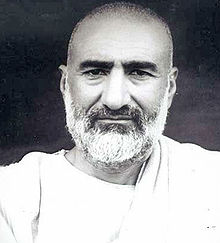
A person once stigmatized as an enemy of Pakistan, has something important to say in the contemporary public discourse in the second Islamic country in the world. His name is Abdul Ghaffar Khan (in the picture), a Pakhtun patriot, social reformer, charismatic leader. He was a lifelong activist in favour of his fellows Pathans living North and South the frontier Durand Line. He became a very close friend of the Mahatma and he himself was called the “Frontier Gandhi”.

Anti-Partition apostle of nonviolence
He was born on 1890 in Utmanzai, a town in Charsadda District, in the North-West Frontier Province, today Khyber Pakhtunkhwa Province in Pakistan. He was an apostle of nonviolence, that he considered a form of spiritual jihad for his time and for the future of his people. He founded a nonviolent movement which arrived to count 100,000 members. As he wrote in his 1969 autobiography, “My life and struggle”, “in 1929 we were able to found the kind of organisation we wanted. We decided to call it the Khudai Khidmatgar movement (Servants of God movement). Our motive for choosing that name was that we wanted to awaken in the Pathans the idea of service and the desire to serve their country and their people in the name of God, an idea and a desire which was sadly lacking among them”. The Khudai Khidmatgars were also known, for the color of their uniforms, “Red Shirts”. The founder was called by his followers, as a mark of esteem, Badshah Khan, also spelled Baacha Khan, or more commonly Bacha Khan, that means “king of our nobles”.

Baacha Khan fostered free education for all, women rights, religious freedom, judicial reform. He also was a pioneer of ecology and sustainable development. He believed in self-government for both the settled and the tribal Pakhtuns. He strongly opposed the Partition of India, proposing autonomous provinces in a unified Indian federal framework. When the Partition became inevitable, he renounce to oppose it with riots or violence. He and his Khidmatgars accepted, reluctantly, Pakistan as their new country and decided to be loyal. They hoped the new regime would have given the Pakhtuns a chance to live united in their territory, free to self-govern their own province. The autonomy of the federal units in Pakistan was instead nipped in the bud and their movement was declared illegal.
For the freedom fighter, a new cycle of imprisonment started. Baacha Khan spent one-third of his life in prison, but, more precisely, he spent more time, about 15 years, in Pakistani prisons than he had spent in the prisons of the British Raj, “only” 12.

He also went in exile in Afghanistan, where he supported local Pashtun cultural, social and economical development, fighting backwardness, clanism, family feuds. He gave in Afghanistan many speeches in favor of “Pakhtunistan”, which were free of every kind of chauvinism, fostering freedom and self-government of his people, within the Pakistani federation, firmly anchored to a commitment for peace in all South Asia, all over the world.
“I am looking forward to the time when free, general elections will be possible again in Pakistan. – he wrote in his 1969’s autobiography – For only then will the world know which way my people are going and whom do they follow. This is the main conflict between me and the rulers of Pakistan.”. This champion of Pakhtun patriotism remained unheeded. He won’t see general and local fair election either under the dictatorship of Ayub Khan, nor under Yahya Khan, nor under the civil but still authoritarian rule of Zulfiqar Ali Bhutto, nor under Zia Ul-Haq.
He couldn’t see the general elections of December 1988, when Benazir Bhutto, daughter of Zulfiqar Ali, became Prime Minister, for he died in Peshawar on January 20.

He had requested to be buried in Jalalabad, Afghanistan. He hoped this way to witness the need of friendship, and mutual understanding, among all Pakhtuns, between Afghanistan and Pakistan. His last wish succeeded in leaving a footprint in the heart of many throughout South Asia. As one can read in Rajmohan Gandhi’s biography of Bacha Khan (New Delhi, 2004) his funeral resulted a mammoth rally: “Though the Afghan struggle was not yet over, the Kabul government and the mujahedin both announced a ceasefire for the event. Tens of thousands of the Frontier’s mourning Pakhtuns accompanied the coffin and crossed the Durand Line. Pakistan’s military ruler, Zia-ul Haq (who would be killed in a plane crash later in the year), and India’s Prime Minister, Rajiv Gandhi (also destined for a violent death), were present for the last rites.” (see Gandhi R., Ghaffar Khan, 2004, p. 263).

Political heritage

After decades of oblivion, his political heritage are now again gaining momentum among Pakhtuns. An important political player in the re-established Pakistani democracy, the Awami National Party (ANP), wrote in its manifesto that it “draws its inspiration from the example and teachings of Khan Abdul Ghaffar Khan, affectionately known to his people as Baacha Khan. He spent his entire life in the struggle for freedom and justice. He and his Khudai Khidmatgars offered great sacrifices in the fight against colonialism, imperialism and all other forms of oppression. In a broader sense, Baacha Khan saw politics as the highest form of public service and often described himself as only a social worker. His objective was to liberate the masses of South Asia and, particularly, his own people, the Pakhtuns, from the shackles of ignorance and poverty, so that they could rise to their full potential.” (cf http://awaminationalparty.org/).
The ANP was led in the past by Bacha Khan’s son, Abdul Wali Khan, and today the most prominent figure is his grandson, Asfandyar Wali Khan. In the 2008 elections, the Awami National Party won the majority in Khyber Pakhtunkhwa and elected its first Chief Minister since the independence, in coalition with the Pakistan People’s Party. ANP is allied with PPP also in other provinces and at the federal level.
The parable of the Taliban regime and the political violence that still sets fire through the area, has been a terrifying experience for everybody but especially for Pakhtuns. Baacha Khan is being rediscovered, as a source of inspiration for a better future. He was a devout Muslim believer, but he refused terror and was also alien from any bigotry. His political action was centered on peace and social reformation. He sacrificed as a satyagrahi in nonviolent campaign of civil disobedience, firstly against the British Raj, but later also against Pakistan authoritarianism and military rule.
His spiritual heritage helped ANP to defeat the Muttahida Majlis-e-Amal, the Islamist coalition, which was in power in Pakhtunkhwa before 2008. It was a highly symbolic victory. In the name of Baacha Khan, the modern ANP defeated the Islamists, as well as the ancient Khudai Khidmatgars had always defeated the Muslim League in both the elections hold in the province, under the British rule, on 1936 and 1946. Many hope that this political change could represent the end of a cycle, dominated by a tangle of Islamist and nationalist ideologies, which have painfully marked the history of the Frontier, of all Pakistan, Afghanistan.

Several notable cultural foundations and charities are working in South Asia to promote peace and human rights through the rediscover of Badshah Khan’s life, thought and action. We must nominate the Baacha Khan Trust (see http://www.baachakhantrust.org/), whose chief aim is propagation of Ghaffar Khan’s philosophy, his vision of renaissance for the oppressed and marginalized Pakhtuns communities, and for peace in Pakistan, Afghanistan, the whole South Asia.
Nowadays efforts to make the public opinion and new generations aware of the figure and the teachings of Baacha Khan would certainly help the stabilization of the so called Afpak area. After 60 years of political authoritarianism and violence in Pakistan and 40 years of civil war in Afghanistan, it’s probably time to know something more about Bacha Khan.

Self-government

His Red Shirts were able to provide “local leadership for education and development, and stood up for the dignity and rights of their community. They balanced affirmations of the rights and dignity of all people with teachings about responsibility and sacrifices needed to serve those same communities.” – Ali Gohar, founder and guide at the Just Peace International center, in Peshawar, recently wrote, adding that the beauty of this kind of nonviolent struggle is again alive in 2011 Arab Spring heroes cf http://www.khyberwatch.com/index.php?mod=article&cat=MediaWatch&article=391).

“You all know that I believe in the principles of non•violence. – he said on August 31, 1966, talking in Afghanistan on the Pakhtunistan Day, as reported in his 1969’s autobiography – I am convinced that there will be no peace in the world till the problem of the Pakhtuns has been solved. I am telling both the Russians and the Americans the same thing: if they really want peace, they should solve the problem of the Pakhtuns. What do we want? We keep on telling Pakistan to consider us their brothers and not to make us their slaves. We were never the slaves of the British and you should not expect us to be your slaves.”. Heared today, these words are somehow prophetic and should encourage a serious reflection.

The Pathans, both in Afghanistan and in Pakistan, still need an accountable local self-government, in order to take on full responsibility of their own territories. They can hardly be governed from Kabul, or from Islamabad. May be they can resolve their own way their problems, included terror-related and security’s ones.

The recent Pakistani devolution can be seen as a historical accomplishment on the way indicated by Baacha Khan. This is what many political leaders, not only ANP’s ones, strongly believe. Federalism was part of the independence struggle and the only way to make the idea of Pakistan into a lasting reality.

Unfortunately, the centralized, bigoted and corrupt, republic chosen by Afghani Pashtun leadership, after the fall of the Taliban regime, is much farer from Baacha Khan’s ideal of decentralized responsible and accountable self-government. The present solution resembles too much like the 1973 republic. It may be not reveal the right solution for the future of such a vast, diverse, and bitterly divided, country.

Don’t let anybody deceive you in the name of Islam

Abdul Ghaffar Khan, along all his existence, advocated for reforms, social justice, change through education, and, last but not least, peaceful coexistence of all communities, without any kind of ethnic, religious, caste, clan, social discrimination.
He strongly demanded his fellow Pakhtuns, to strive against ignorance, bigotry, prejudices, family feud and political violence. His message, which follows the furrow of modern nonviolent revolutions, which have already brought down more than an empire, can drive the Islamist factions and wider Muslim public opinion to a radical rethinking.

His teaching was prescient and it is today more relevant than ever: “And you, misguided Pathans, you do not even stop to think whether this is Islam or not, you just swallow anything you are told… I want you to promise me that you will never let anybody deceive you in the name of Islam.” (from Baacha Khan’s speech in Afghanistan, on Pakhtunistan Day, 31 August 1967, as reported in Baacha Khan’s autobiography, 1969).

-Mauro Vaiani is a Geopolitics PhD Candidate at the University of Pisa in Italy and is a Facebook group member and contributor of Pakistanis for Peace. His page at the university is at http://www.sp.unipi.it/hp/vaiani and he can be reached via email at mauro.vaiani@sp.unipi.it
US Links Militant Group to Pakistan Government

As Reported by ABC News

The United States says there is evidence linking the Pakistani government to the militant group that carried out last week’s attack on the US embassy in Kabul.

The US ambassador to Pakistan, Cameron Munter, claims there are links between the Pakistani government and high-profile terrorist group the Haqqani network.

In blunt comments broadcast by state-run Radio Pakistan, Mr Munter said: “Let me tell you that the attack that took place in Kabul a few days ago that was the work of the Haqqani network,” he said, referring to a deadly miltant attack in on Tuesday.

“There is evidence linking the Haqqani network to the Pakistan government. This is something that must stop.

“We have to make sure that we work together to fight terrorism.”

Asked to provide evidence of the link with the Pakistani government, Mr Munter said only “we believe that to be the case”.

The Haqqani network, which is closely allied to the Taliban, has been blamed for several high-profile attacks against Western, Indian and government targets in Afghanistan.

The group is believed to be based in Pakistan but Islamabad has consistently denied links with militant groups.

The US has long urged Pakistan to take action against the Haqqani network and suspected the group had support within the Islamabad administration.

Strained ties
Acknowledging that the past year had been tough, Mr Munter urged joint action against terrorism and said that the United States and Pakistan were “fundamentally on the same side”.

But the public comments are a mark of strained ties between the fragile anti-terrorism allies, with relations fractious since the US raid on Pakistani soil that killed Al Qaeda leader Osama bin Laden in May.

The Haqqani network is thought to have been behind a number of attacks in Afghanistan, where NATO plans a gradual withdrawal of troops after a gruelling 10-year war.

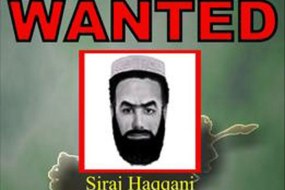
Jalaluddin Haqqani, founder of the network, and his son Sirajuddin, who now runs the group, have both been designated “global terrorists” by Washington.

Mr Munter’s remarks follow a warning by US defence secretary Leon Panetta, who said after the Kabul attack that the US would retaliate against Pakistan-based insurgents.

“Time and again we’ve urged the Pakistanis to exercise their influence over these kinds of attacks from the Haqqanis and we’ve made very little progress in that area,” Mr Panetta said Wednesday, a day after the Kabul siege.

“I’m not going to talk about how we’re going to respond. I’ll just let you know that we’re not going to allow these kinds of attacks to go on,” he said.

Pakistan’s foreign ministry condemned those remarks as “out of line”, saying that “terrorism and militancy is a complex issue”.

Pakistan WSJ Ad Unlikely to Change Narrative

By Tom Wright for The Wall Street Journal

Pakistan has taken out a half-page advertisement in The Wall Street Journal to coincide with the 10th anniversary of the Sept. 11 attacks in an attempt to shift what Islamabad feels is an anti-Pakistan narrative in the American media.

“Which country can do more for your peace?” the ad asks, sitting below a story on page A10 of the U.S. Journal’s Saturday/Sunday edition titled “When the Towers Came Down.”

“Since 2001 a nation of 180 million has been fighting for the future of world’s 7 billion!” it continues.”Can any other country do so? Only Pakistan…Promising peace to the world.”

Pakistani army and civilian officials complain that in the U.S. their country is often portrayed in the media and by members of Congress as a double-dealing ally that takes billions of dollars in U.S. aid but secretly helps the Taliban kill U.S. soldiers.

Pakistan’s leaders have been publicly trying to promote a competing narrative, but with almost no success.

In their telling, Pakistan did foster Islamist militant groups, first to fight Soviet troops in Afghanistan and then Indian soldiers in Kashmir. Pakistan military and civilian officials point out the U.S. was all for the Mujahideen war against Moscow in the 1980s. But in the past decade, Pakistan’s army has severed its links with militants, who have unleashed a bloody war against Pakistan’s army and government, according to Islamabad’s narrative.

Pakistani officials regularly tell this version of events in public speechs and to visiting U.S. officials and journalists. The military has even made a local TV drama featuring real soldiers to publicize its sacrifices in the war against militants.

The advert in the Journal seeks to give the message to a wider audience.

To underline its point, the ad carries a picture of Benazir Bhutto, Pakistan’s former prime minister who was assassinated by Islamist militants in 2007, next to the slogan, “The promise of our martyrs lives on…”

The ad cites a series of statistics. Almost 22,000 Pakistani civilians have died or been seriously injured in the fight against terrorism, the ad said. The army has lost almost 3,000 soldiers. More than 3.5 million people have been displaced by the fighting and the damage to the economy over the past decade is estimated at $68 billion, it added.

People will quibble with these statistics from a country where reporters often find it difficult to get basic data.

It was not clear whether the ad was carried in other U.S. publications. Pakistan’s government also tried to place it in the New York Times. The Times asked for “more clarity in the ad about who was placing it,” according to a spokeswoman for the newspaper. The Times did not hear back from the government and so has not yet run the ad, she said.

The ad as printed in the Journal carries a line at the bottom in small font saying “Government of Pakistan” next to a web address for the government. A spokeswoman for the Journal declined to comment.

Will the advertisement be effective in shifting the narrative? It’s unlikely.

The points raised are all fair enough. Pakistan has been hammered by suicide bombings by Islamist militants against civilian and army targets. It’s perhaps fair to say that many in the U.S. have failed to recognize the changes in Pakistan, especially in the past few years, that have led to its domestic war against militancy.

Still, many in the U.S. and elsewhere are likely to shrug their shoulders. In the U.S. and India, where Pakistani-based militants are viewed as a daily threat to security, many politicians, analysts and ordinary citizens blame Pakistan for failing to stop the export of terrorism and being selective in which Islamist militant groups they go after.

Pakistan has waged a war against homegrown Pakistan Taliban militants for the past three years, suffering large casualties. But U.S. defense officials say publicly they are concerned that the country continues to protect Afghan Taliban fighters that don’t attack inside Pakistan. It’s these fighters who use Pakistan soil as a base from which to launch attacks on U.S. forces in Afghanistan, they say.

Some U.S. officials say they believe Pakistan’s argument that it’s too stretched fighting the Pakistan Taliban to open new fronts in its war against militants. But many members of Congress and U.S. defense officials say Islamabad wants to keep ties strong with the Afghan Taliban so it can influence politics over the border once the U.S. pulls out its troops by 2014.

India blames Pakistan for failing to crack down on Lashkar-e-Taiba, the militant group which carried out the attacks on Mumbai in 2008, killing over 160 people, and has hit Indian targets in Afghanistan. LET has not carried out any attacks against the Pakistan state.

Ten Years After 9/11, We’re Still in the Dark

By Omar S. Ashmawy for The Washington Post

I joined the U.S. military after law school to help my country defend itself against the threat of Islamic extremism. My final assignment in my eight years in the Air Forcewas as a war crimes prosecutor in Guantanamo Bay, Cuba. With access to our nation’s most intimate secrets, I shuttled between Guantanamo and the Pentagon from the summer of 2007 to the winter of 2009. I learned many lessons, but on the anniversary of the Sept. 11 attacks, the most important lesson I can share is the most alarming: After so many years and so much sacrifice, nothing has changed.

Our greatest weakness remains today what it was 10 years ago, and what it was eight years before that, when the World Trade Center was bombed in 1993. We don’t understand Islam or Arab culture, and that ignorance prevents us from accurately predicting our relationship with Arab and Muslim countries and identifying our enemies.

From our government to the front lines, individuals are making decisions based on inaccurate, biased information. The White House’s August announcement on combating radical Islam acknowledged this reality. Our soldiers, agents and analysts don’t have the facts they need to make informed decisions about whom to trust, what to believe and how to keep the threat at bay.

Whether it’s the FBI recommending its agents read books by a known anti-Muslim author, misplaced anxiety over “sharia law,” the near absence of linguistic and cultural training in the military, or our government’s collective surprise at the Arab Spring, the effect of what we don’t know reverberates through U.S. policy. But the result is the same: We are caught off guard by events we should have anticipated or, worse, we confuse our enemy’s propaganda with knowledge.

As an American Muslim born and raised in New Jersey, I am frustrated that America still struggles with the basics: We don’t understand the difference between Islam and Islamic extremism, or that Arab culture is not the same as the religion. We divide Muslims into secularists and extremists and can’t tell the devout from the radical, the sympathizer from the opportunist.

Two of the most enduring examples are the military commissions and Guantanamo Bay — intractable problems that will never be resolved to anyone’s satisfaction. They’re once and future disasters built by people who should have known better — people America trusted to know more. Both were operated and sustained by individuals so uninformed of our enemy’s religion, language and culture that they could not accurately process the information available to them. Attorneys couldn’t tell good cases from bad ones, and the agents assigned to the commissions didn’t know what questions to ask detainees.

I saw it firsthand. From lawyers to interrogators, the vacuum was enormous. It filled Guantanamo Bay with men who did not need to be there and barred their release. It was fuel on a fire set by a legal process that initially conflated the mutually exclusive missions of intelligence-gathering and the rendering of justice. The absence of knowledge and leadership permitted the worst of what happened — reports of the abuse of prisoners, the desecration of holy books, the legal pantomimes — and continues to prevent a resolution to the human drama playing out on that island.

We cannot close Guantanamo because the trials of the detainees who remain would be tainted by evidence from botched interrogations and because the men there are now radicalized — the result of decisions based in an ignorance tantamount to racism.

This ignorance is a degenerative disease that debilitates our efforts to protect our nation. It was tempting to think that with Osama bin Laden’s death we could end this conflict, if only we could end the wars in Iraq and Afghanistan. While those wars must be concluded, neither their end nor the death of any individual terrorist will secure us against another attack by Islamic extremists. We’re not fighting a single enemy but a decentralized patchwork of groups that adhere to the same twisted, bankrupt ideology. Whether it is Jemaah Islamiah in Southeast Asia or al-Shabab in Somalia, our enemies are motivated and wait — patiently — until we forget.

As we honor the past, we must also commit to the future. This commitment must include an expectation that all Americans responsible for protecting us possess the education and knowledge to do so and be committed to accuracy and learning. A good place to start would be language and culture training for our soldiers, and training in Islam and Arab culture and history for policymakers. Similar education should be made available to local law enforcement and community leaders. At the height of the Cold War, we encouraged our best and brightest to study Russian language and history. Ten years after Sept. 11, this is a basic but necessary step. Ignorance is our vulnerability, and we must begin somewhere. Those individuals we remember Sunday deserve better. We all do.

The writer is a former Air Force officer and war crimes prosecutor. He prosecuted U.S. v. Hamdan and U.S. v. Al Bahlul, the first two litigated cases to be brought before a military tribunal since the Nuremberg trials after World War II.

Decade After 9/11, Afghans Languish in Pakistan

By Qasim Nauman and Rebecca Conway for Reuters

When Ghulum Nabi’s father heard U.S.-backed troops toppled Afghanistan’s Taliban after the September 11, 2001, attacks, he rushed to their family home in an Afghan refugee camp in Pakistan to spread the news.

Perhaps, one day they could all return to a peaceful and prosperous Afghanistan supported by a Western superpower.

After 10 years of U.S.-led efforts to pacify one of the world’s most turbulent countries, Afghan refugees in Pakistan have little hope for stability in their homeland.

“I grew up here and Pakistan is my country. When my father pushes me to go back to visit, I end up having a fight with him. I’m never going to live there. I want to get Pakistani nationality. This is my home,” said Nabi, 22, who runs a crockery shop.

“It doesn’t matter if it is America or anyone else trying to watch over Afghanistan. I will still be looking around to see if anyone is pointing a gun at me.”

Afghan President Hamid Karzai would welcome a return of the millions of Afghans living in Pakistan.

It would be a vote of confidence in his administration, which faces many problems, from widespread allegations of state corruption, to a resilient Taliban.

SOVIET INVASION TRIGGERED LIFE OF UNCERTAINTY

Many of the refugees are skilled labourers who could boost reconstruction and help revive a weak economy if they return. But it’s unlikely to happen.

Most of the refugees in Pakistan arrived after the Soviet invasion of Afghanistan in 1979. The conflict that followed consumed their homeland. After the mujahideen warriors defeated the Russians, warlords turned on each other and tore Afghanistan apart.

Many refugees fear a repeat of that chaos as a U.S. troop withdrawal looms.

Some would like to go home but feel they can’t. Others regard Pakistan as home despite its many disadvantages. Without proper Pakistani identification cards, Afghans can’t open bank accounts or buy or lease property.

Many are openly mistreated by Pakistanis who have little fear of being held to account.

On August 14, the anniversary of Pakistan’s independence, Saeed Anwar’s landlord showed up with three men armed with AK-47 assault rifles at his clothing shop at a busy bazaar in the city of Haripur, home to 80,000 Afghan refugees who live in camps.

“They threw around my merchandise and said I need to pay them a 300,000 Pakistani rupees ($3,450) advance on the rent. I had already paid the rent,” said Anwar, wearing traditional, loose Pakistani trousers.

“I went to the police to register a case. But when they see a dispute between a Pakistani and an Afghan, they automatically assume the Afghan has done something wrong.”

Still, many Afghans believe its wiser, and safer, to just accept the frequent humiliation than return to a homeland still shattered, despite a long U.S.-led military campaign against militancy and billions of dollars in Western aid.

Afghans — from elders who vividly remember the first Soviet gunship helicopters in Afghanistan, to teenagers who have only visited a few times — work for Pakistanis as welders or carpenters and tailors in Haripur and other cities.

Most of them prefer to run their own small businesses, from food carts to car dealerships. It’s the only sense of independence they have in the camps which consist of small cement and mud housing units near a reservoir.

The elders have set up a jirga, or tribal gathering, to settle internal disputes, as is done in much of Afghanistan. Cricket games are the only form of entertainment and leisure activity for most youths.

Two years ago Pakistan agreed to let displaced Afghans stay until the end of 2012, after a resurgence of militant violence along the Pakistan-Afghanistan border hindered repatriation.

Still, people like Sherullah, whose nine children were born in Pakistan, feel vulnerable. What if Pakistan asks them to leave one day?

“There is a lot of confusion. If there’s one thing I want, it’s for this confusion to go away, for us to know if we will be staying or not,” said Sherullah, who was cutting women’s clothing in his tailor shop.

“There are many people living here that can afford to build a proper house but don’t want to. They think ‘what if next year we are told to leave?’. So they continue to live in mud houses.”

Aside from 1.7 million officially registered Afghans in Pakistan, there are an additional 800,000 with no documentation.

According to the United Nations, Pakistan is home to the world’s largest refugee population, mostly Afghans, who strain the country’s troubled economy.

Pakistan would like to repatriate them.

There are, however, few incentives for refugees to head back to Afghanistan. So life in camps may drag on for many years.

Even though the U.S. disengagement is gradual, it brings back painful memories of what was widely seen as American abandonment of Afghanistan after the Soviet exit in 1989. Warlords soon took over and bloodshed returned.

Haji Aslam, 65, an elder in one of the camps, has seen conflict in Afghanistan over the last 30 years — from the battlefields where he fought the Soviets to what he sees today on his television screen. He is betting on the Taliban to prevail once the Americans leave.

“Even if just 10 Taliban show up, the Afghan government will flee Kabul,” said Aslam, a man with a white beard wearing a traditional flat Afghan cap. “In Pakistan, I am at peace. I know my children are safe.”

Pakistan’s 10 Years of Chaos

As Reported by Jennie Matthew for AFP

The 9/11 attacks that thrust Pakistan into the war on terror have brought the nuclear-armed state to its knees, fighting Islamist radicals at home and risking pariah status abroad.

It was already evening in Pakistan when television channels, recently deregulated by then president General Pervez Musharraf, began broadcasting the terrifying scenes from the twin towers in New York.

Few slept that night, realising immediately that the world had changed forever and that Pakistan was in the eye of the storm after spending years fostering extremist movements for its own ends.

“My immediate thought was ‘oh my God, more trouble coming onto Pakistan’,” said author Imtiaz Gul, who has written extensively about the subsequent war and its fallout at home.

“My fears have been borne out… The 9/11 events shocked Pakistan into an unprecedented crisis of insecurity,” he said.
It didn’t take long for Musharraf to weigh up conditions imposed by Washington and announce on September 19 that Pakistan would offer its airspace, territory and capabilities to help the United States defeat terrorism.

But as America put the finishing touches to its war plans, Pakistan desperately tried to persuade its Taliban allies in Afghanistan to give up Osama bin Laden and avert catastrophic military action, to no avail.

Within weeks, bin Laden, his future successor Ayman al-Zawahiri and Taliban leaders had fled the American invasion into Pakistan.

And there in the northwestern tribal belt, which no government has been able to subjugate, they found refuge among an extremist support network dating back to the 1990s jihad against the Soviets in Afghanistan.

They regrouped, forming bases used by the Taliban to direct the insurgency in Afghanistan and training camps for Al-Qaeda to brainwash young extremists from all over the world into carrying out terror attacks.

As a result, the last decade has made the only Muslim nuclear power more unstable than ever before in its bloody and chaotic 64-year existence.

The watershed came in July 2007 when government troops cleared out extremists preaching hate from the Red mosque in the heart of the capital Islamabad.

The militants declared war and in the past four years, around 500 bomb attacks have killed 4,600 people, according to an AFP tally.
Just when it appeared things couldn’t get worse, this year the US discovered bin Laden living close to Pakistan’s equivalent of West Point, sending in Navy SEALs to kill him and sinking already fractured US-Pakistani relations.

“No doubt that this is absolutely the worst time for the country,” said Pakistani journalist Ahmed Rashid, whose book “Taliban” became an international bestseller after 9/11.

Rashid describes Pakistan as “completely isolated” by a war that “brought terrorism, sectarianism, a weakening of the state (and) much greater ethnic insurgencies” within the country.

But the blame — he says — is Pakistan’s for frittering away American aid money and refusing to realign its national security priorities.
“Politically, the most far-reaching mistake was the hosting and relaunching of the Afghan Taliban by the military and the intelligence agencies. That was enormously detrimental and led to the growth of the Pakistani Taliban.” Pakistan routinely proclaims to have sacrificed the most of any country fighting terror.

The government claims that 35,000 people have been killed. The army confirms the deaths of 3,019 soldiers since 2001 — more than the 2,684 Western soldiers to have died in Afghanistan.

More than three million people have been displaced by violence and counter-terrorism activities in Pakistan since 9/11, according to International Crisis Group figures released in 2010.

The army says 147,000 troops are deployed in the northwest compared to 35,000 in October 2001, a drastic reversal from the previous concentration along the Indian border in the east.

Yet extremism has increased. An average of one US drone strike every four days against militants in the tribal belt is raising fears that the campaign is recruiting a new generation of insurgents and suicide bombers.

Jihadist groups — fostered by Pakistan’s security establishment to fight India in Kashmir and maintain Afghanistan as a strategic asset — have splintered, and increasingly turned the guns on their old allies in the state.

“Pakistan is a lot less secure country now than 10 years ago, because it has become a battleground, an extension of the Afghan war. Pakistan is now facing a serious threat for its stability,” said journalist Zahid Hussain.

Yet the public discourse concentrates less on how to defeat militancy than debating the merits of the hugely unpopular US alliance.
Trust between Islamabad and Washington is at an all-time low. Cooperation between the CIA and Pakistan’s ISI spy agency is poor. Blame games on both sides are played out in the media.

Compounding the sense of crisis is the country’s economic meltdown. Pakistan says losses related to the war are $68 billion. Critics say the country has squandered up to $20 billion in aid given by the United States. “The biggest mistake was the failure to really address strategic issues in the economy. Pakistan could have changed its very weak economic structure at that point in time,” said Rashid.

Instead crippling inflation, rampant unemployment and an energy crisis with power cuts of up to 16 hours a day have left millions wondering how to fill the void.

Kidnapped US National Was Doing Humanitarian Work in Pakistan

By Hussain Kashif

The abducted US expert Warren Weinstein was doing large scale humanitarian work in different public sectors including small and medium industries, agriculture and infrastructure development, which was responsible for bringing significant foreign investment and development in Pakistan.

He was a country director of JE Austin Associates Incorporation, Arlington, Virginia, US, which is a development contractor that works with the aid arm of the US government. Weinstein had also worked on a dairy project in Pakistan and imported dairy chillers to boost the productivity of rural farms in the country, resulting in $63 million in new investment to Pakistan, at least 2,150 new jobs, and a 25 percent boost in producer productivity.

His company is working here on US Agency for International Development (USAID) projects, including one to set up small businesses and create jobs in the restive Tribal Areas in Pakistan. Warren Weinstein was recognised by his company as an expert in international development of industries but they have removed his profile from their website after his kidnapping. The company also worked on helping small businesses in the gem and marble trade in the lower districts of the Federally Administered Tribal Areas (FATA).

According to Daily Times sources, he had worked on a multimillion-dollar USAID project to improve dairy, horticulture and mining in Pakistan, including the terrorist-infiltrated Tribal Areas. Sources said that his projects had finished here in Pakistan and that his contract with his Virginia-based company, JE Austin Associates Incorporation, ended on August 15 and that he was planning to return his home in the US.

A California-based website states, “Warren had been managing an office in Pakistan for over four years, building a strategic reputation in the dairy, furniture, marble and leather sectors, which led to projects for the Pakistani government. He was granted an African Affairs Certificate from Columbia University and he is also a Fulbright Scholar. A former political science associate professor, Weinstein is an expert on international development, experienced in bilateral and multilateral organisations, as well as NGOs. Highly experienced in designing and implementing training programmes, and fluent in seven languages, Dr Warren Weinstein is well known within international banking and finance circles.”

According to media reports, Dr Warren Weinstein celebrated his 70th birthday last month at his US residence in Rockville, Maryland. Weinstein was linked with the global community through the Internet on the social media website ‘LinkedIn’, where a complete profile of him was available, along with some personal and professional data.

According to his profile, he is a Jewish American and his full name is Dr Warren Weinstein, which was confirmed by the US Embassy in Pakistan. A PhD in International Law and Economics and a Masters of International Relations, Warren is also fluent in at least seven languages, including Urdu, and has authored and edited around 13 books on African development since 1966. His wife’s name is Elaine who is living at Weinstein’s home in Rockville with other family members. According to his friends and colleagues, “He’s a short, funny man with a quick wit”. A local journalist who last saw Weinstein about a year ago said he could speak a fair amount of Urdu and was a laid-back guy not too worried about security issues.

Weinstein has lived in Pakistan for seven years and maintains a principal residence in Islamabad, but also has a home in Lahore where he was living alone. Warren Weinstein was living in a rental residence in Model Town. His double-storey house has two gates and walls that are about 1.8 metres high. The street on which his house is situated contains private security checkpoints, which are usually unmanned during the day. At night, watchmen hired by neighbours are on duty from dusk till dawn. There are around five security cameras installed in his house, but they have been inactive for a year. He was kidnapped by unidentified armed men late on last Saturday. Police have taken his security guards and a driver into custody for questioning, but no clue has been found as to the identity of his captors and the motive behind his kidnapping.

He had eight servants in his Lahore residence, including five guards from a Defence-based security company who were retired commandos of the army’s Special Services Group and a driver, a cook and a housekeeper who was responsible for maintenance of the house and ironing his cloths. One of his security guards named Muhammad Aurangzeb from Sargodha was court-martialled from the army. The second guard, Muhammad Abbas, belonged to Chichawatni, the third, Muhammad Sarwar was from Sheikhupura, while the fourth guard, Fazal Elahi, was from Charsadda and ran away from his military service. Police sources further said that his company had requested local police to provide security to Warren Weinstein, but that he personally refused, saying that he did not want to stand out. About Weinstein’s driver, sources said that his name is Israr and he belonged to Swabi district of Khyber Pukhtunkhwa and had been working with JE Austin Associates for the last four years, while his cook was also from FATA.

The FBI is also investigating the case along with local police investigators. According to sources, investigators were informed by Weinstein’s employees that he never received any threat from any side in Pakistan as far as they knew.

It is worth mentioning that the security guards’ mobile phones, which the kidnappers snatched, remained active for around 45 minutes after the kidnapping and that the last connectivity was detected on the motorway. Kidnappers later switched off the phones. No one has yet claimed responsibility for the kidnapping. The police, with the help of the guards and the driver, have developed sketches of the suspects, who were wearing shirts and trousers and were speaking Urdu. Sources said that a laptop, cellphones and other items found in the victim’s room were being thoroughly examined.

Karachi Attack: Pakistan Officers Face Court-Martial

As reported by the BBC

Three Pakistani naval officers are to face a court martial on charges of negligence after a militant attack on a naval air base in Karachi in May.

Ten soldiers died and 15 were wounded in the attack which took place at the Mehran naval aviation base on 22 May. It took the security forces some 17 hours to secure the base.

A naval official said the three officers were facing trial because they held positions of responsibility, not because of a connection to the attack.

The accused are Cmdr Raja Tahir, base commander at the time of the attack, and two officials beneath him, at the rank of captain and commander, according to naval sources quoted by several news agencies.

Daring attack

Cmdr Tahir was replaced two days after the attack during which several foreigners were taken hostage before being rescued.

“They face charges of negligence during the attack on PNS Mehran in May,” an unnamed official told Agence France Presse.

No date was given for the start of the court martial.

“They are being tried because they were at a responsible position, and were responsible for the security and other affairs of the base,” an unnamed official was quoted as telling Reuters.

The Pakistan Taliban said the raid was to avenge Osama Bin Laden’s killing by US special forces in the Pakistani town of Abbottabad on 2 May.

The attack at the heart of Karachi, the country’s economic hub and Pakistan’s largest city, underlined the military’s vulnerability.

Two attackers were killed and a third blew himself up during the attack when militants disguised as naval officials stormed three hangars housing aircraft at the naval base.

During the daring raid, they used rocket-propelled grenades to damage and destroy several warplanes, including two multi-million dollar anti-submarine and marine surveillance aircraft – the US-made P-3C Orion.

The planes were believed to be crucial for Pakistan’s maritime surveillance capabilities. A former Pakistani navy commando, Kamran Ahmed, has been detained along with his brother in connection with the attack.

Killing of infants on the rise in Pakistan

By Raza Sayah for CNN

At a morgue in Pakistan’s largest city, five linen pouches — each the size of a loaf of bread — line the shelf of a walk-in freezer.
Wrapped inside each small sack is the corpse of an infant.

The babies are victims of what one relief agency calls Pakistan’s worst unfolding tragedy: the killing and dumping of newborns.
“Sometimes they hang them, and sometimes they kill by the knife, and sometimes we find bodies which have been burned,” said Anwar Kazmi, a manager at Edhi Foundation, Pakistan’s largest privately run social service and relief agency.

Records at Edhi Foundation show that more than 1,200 newborns were killed and dumped in Pakistan last year, an increase of about 200 from the previous year.

Families view many of these children as illegitimate in a culture that condemns those born outside of marriage.
Statistics show that roughly nine out of 10 are baby girls, which families may consider too costly to keep in a country where women frequently are not allowed to work.

The babies are usually just days old. Their corpses are often dumped in Karachi’s sprawling garbage dumps, where they’re sometimes mutilated by street animals, Kazmi said. He estimates that hundreds of baby corpses are never found.

The head of Edhi Foundation, 83-year-old Abdul Sattar Edhi, blames Pakistan’s crippling poverty and a government that, for decades, has failed to educate the masses, generate jobs and provide citizens with the most basic needs.

“The distribution of resources by the government is wrong,” Edhi said. “Many people don’t pay taxes; there’s no charity, and what you get from the government is all based on your wealth.”

The Pakistani government has said it’s improving education, but 55 million Pakistanis remain illiterate, according to the United Nations. And the government is billions of dollars in debt while entangled in a costly fight against the Taliban and other Islamic militant groups. The killing of newborns gets little attention in Pakistan, and rarely are they investigated by a police force that’s often poorly trained, lacks resources and stays focused on what’s perceived to be more important crimes.

In many parts of the world, female infanticide is still practiced through direct violence but also by intentional neglect, according to the World Health Organization.

In some Asian countries, infanticide of girls is enough to skew the population figures in favor of males. The United Nations found, for example, that there are 130 boys to 100 girls in parts of Asia, especially in countries with extreme poverty and overpopulation such as China and India.
“Girls are seen as a burden, seen as a property which belongs to somebody else so people see that as a waste of money and the wasting of an education of a girl,” said Bhagyashri Dengle, executive director of Plan India, a nonprofit for children. “Then when the girl gets married, the families have a big, heavy dowry. So that is one of the reasons here.”

Dengle said awareness and education at the grass-roots level are ways to combat this practice. “I think we really need to reach out to young people (to) create an awareness, to change attitudes and dispel the notion that having a boy is better than a girl,” she said. “We launched this program ‘Let Girls Be Born’ — that campaign is reaching out to masses using televisions, through newspapers and through (the) Internet. What we are trying to do is positive messaging on the girls. That girls aren’t a sect; they are as good as boys.”

In Pakistan, until things improve, the Edhi Foundation said, it will keep more than 300 cradles in front of its offices throughout Pakistan where families can drop off unwanted newborns. The foundation cares for them and puts them up for adoption, no questions asked.
“It’s for awareness — that please don’t kill your innocent babies,” Kazmi said.

Pakistan threatens to withdraw troops from Afghan border over US aid reduction

By Rob Crilly for The Telegraph

Pakistan has warned it will withdraw troops from the Afghan border where they are fighting Taliban and al-Qaeda-linked insurgents if the US does not reinstate $800m in military assistance which has been suspended amid a worsening diplomatic row.

The cash includes $300m to reimburse the Pakistan military for deploying troops in the mountainous tribal areas close to Afghanistan.

Chaudhry Ahmad Mukhtar, the country’s defence minister, said without it Pakistan could not afford to keep troops at 1,100 checkpoints near the mountainous border.

“The next step would be that the government or the armed forces will pull back the forces from the border areas,” he told the Express 24/7 news channel. “We cannot afford to keep military out in the mountains for such a long period.”

Officials say 147,000 troops are deployed in the tribal areas, where they are engaged in operations against Taliban and al-Qaeda cells.

Relations between the two countries have been fraught ever since they were forced into an awkward alliance in the aftermath of 9/11. This year they have plunged to new depths.

You might like:Prince Harry’s new girlfriend is his cousin (eight times removed)29 Jun 2011(Telegraph News)
News of the World final crossword has a message for ‘ catastrophe’ Rebekah Brooks10 Jul 2011(Telegraph News)
As Gordon and Sarah Brown learnt of son’s illness, The Sun editor Rebekah Brooks called to say she knew11 Jul 2011(Telegraph News)

Pakistan’s military officers are furious that the Pentagon did not inform them of a covert raid to kill or capture Osama bin Laden in May in the town of Abbottabad, only 30 miles from the capital Islamabad.

Since then they have stepped up condemnation of CIA drone strikes against terror suspects and expelled American military trainers, as they try noisily to distract domestic attention from their own failure to find bin Laden or spot the American helicopters as they flew through Pakistani air space.

In return, US officials have questioned Pakistan’s commitment to tackling militants and accused the government of assassinating a troublesome journalist.

At the weekend it emerged that the Pentagon was to end a third of its annual $2.7bn assistance to the Pakistan military.

In Washington, Colonel David Lapan, Pentagon spokesman, said the military aid could be resumed if Pakistan increased the number of visas for US personnel and reinstated the training missions.

However, analysts in Islamabad said such threats would be counterproductive and warned of an anti-American backlash.

“The US needs to treat Pakistan as a country it’s not trying to bully into submission,” said Cyril Almeida, a columnist with Dawn newspaper.

In the meantime, the US has begun using land routes through Central Asia to resupply troops in Afghanistan in case Pakistan shuts the Khyber Pass to convoys carrying food and fuel.

A fresh wave of drone attacks may also exacerbate tension. At least 45 suspected militants were killed by missiles in Pakistan’s northwest, according to local intelligence officials on Tuesday, one of the largest death tolls to date in the controversial air bombing campaign.