Posts Tagged ‘ Taliban ’

War in Afghanistan is Destabilising Pakistan, Says President

By Simon Tisdall for The Guardian
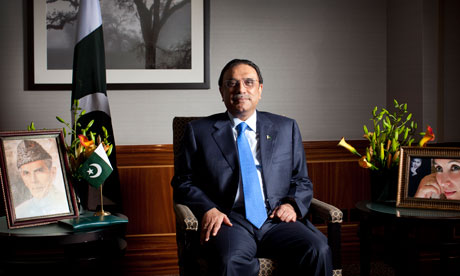
The war in Afghanistan is destabilising Pakistan and seriously undermining efforts to restore its democratic institutions and economic prosperity after a decade of military dictatorship, Pakistan’s president, Asif Ali Zardari, has told the Guardian.

Speaking during an exclusive interview in the imposing presidential residence in Islamabad, Zardari also pointed to widespread concern in Pakistan at the slow pace of efforts to end the Afghan conflict, and said some US politicians showed limited understanding of the impact of American policies.

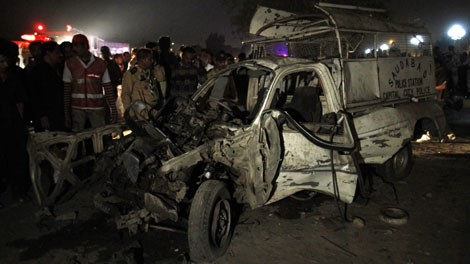
“Just as the Mexican drug war on US borders makes a difference to Texas and American society, we are talking about a war on our border which is obviously having a huge effect. Only today a suicide bomber has attacked a police compound in Baluchistan. I think it [the Afghan war] has an effect on the entire region, and specially our country,” Zardari said.

Asked about harsh criticism of Pakistan’s co-operation in the “war on terror” published in a White House report last week, Zardari said Pakistan always listened to Washington’s views. But he suggested some members of Congress and the US media did not know what they were talking about when it came to Pakistan.

“The United States has been an ally of Pakistan for the last 60 years. We respect and appreciate their political system. So every time a new parliament comes in, new boys come in, new representatives come in, it takes them time to understand the international situation. Not Obama, but the Congress, interest groups and the media get affected by ‘deadline-itis’ [over ending the Afghan war],” Zardari said.

“I think it is maybe 12 years since America has become engaged in Afghanistan and obviously everybody’s patience is on edge, especially the American public, which is looking for answers. There are no short-term answers and it is very difficult to make the American taxpayer understand.”

With less than three months left before Barack Obama has promised to begin withdrawing US troops from Afghanistan, the White House recriminations reflected the growing pressures on all three governments to agree a workable, long-term strategy. The report complained bitterly that after years of US funding of the Pakistani military, “there remains no clear path towards defeating the insurgency” inside Pakistan.

It criticised as ineffectual Pakistani army operations in some areas of the western tribal belt bordering Afghanistan, which are believed to be used as safe havens by Afghan Taliban and al-Qaida elements.

A congressional panel also weighed in this week, urging the Obama administration to abandon Pakistan in favour of India. “Pakistan is about to go broke or collapse,” said Gary Ackerman, a New York Democrat.

Zardari suggested that if that assertion were true, the interventionist policies of the US and other foreign governments in south Asia would be a significant contributory factor. Pakistan had been in a state of “security alert” for several decades, he said.

“Our emphasis has been on security rather than our commerce and we need commerce for our survival.

“We have all the gas in the world waiting to go through to markets in India and the Red Sea but it cannot be brought in until Afghanistan is settled. So Afghanistan is a growth issue for us. I think most of the time, the quantification of the effect of the war is not calculated [by the US].

“Prices are going up, obviously we are a high fuel-importing country, and fuel prices are going up. Because of the war situation, the industry in one of our provinces has practically closed down … When one whole sector is not working, there is an effect on the other sectors.”

According to senior intelligence officials, the “war on terror” has cost the Pakistani economy approximately $68bn (£42bn) since 2001.

More than 33,300 Pakistani civilians and military personnel have been killed or seriously injured. Last year’s record-breaking floods added to the strain on the economy.

Zardari said the security situation was also undercutting efforts to strengthen democratic institutions bypassed or overturned during the military rule of his predecessor, General Pervez Musharraf. “Democracy is evolving. It’s a new democracy. It takes time to bring institutions back. Destroying institutions during a decade of dictatorial regime is easy … So there is a political impact as well as an economic impact.”

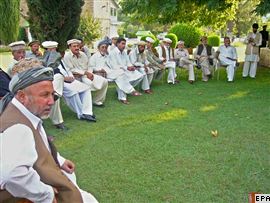
Pakistani officials say relations with the US reached a “low ebb” following the recent row over Raymond Davis, a CIA contractor who shot dead two Pakistanis; a CIA drone attack in Pakistan’s tribal areas last month that accidentally killed dozens of civilian elders meeting in a jirga (council), and Pakistan’s suspicions that it is being excluded from discussions about an Afghan peace deal.

Zardari, who is expected to visit Washington next month, said he would ask Obama to share drone technology with Pakistan so future attacks could be planned and directed under a “Pakistani flag”. Although this request had been turned down in the past, he said he was hopeful the Americans would be more receptive this time, given the huge anger and rising anti-American feeling that the drone attacks were causing.

Zardari and other senior government officials said all parties felt a sense of growing urgency about forging an inclusive peace settlement in Afghanistan, but the process must be “Afghan-led”. Pakistan was ready to play its part, consistent with its national interest, they said.

Salman Bashir, Pakistan’s foreign secretary, said: “Everybody is gradually coming round to our point of view that this requires greater diplomatic pressure. There is no military solution in Afghanistan.”
Teen says 400 Pakistan suicide bombers in training

As Reported by The Deccan Chronicle

A teenager arrested as an accomplice to Pakistan’s deadliest suicide bombing of the year has said that up to 400 suicide bombers are being groomed to wage carnage in the nuclear-armed nation.

Umar Fidayee, 14, said the would-be bombers were being trained in North Waziristan, the premier Al-Qaeda and Taliban fortress in Pakistan’s tribal belt where US officials want Pakistan to flush out militant strongholds.

He made the remarks in an interview aired Friday from his hospital bedside, where he is being treated after detonating a hand grenade in the April 4 attack that killed 50 people at a 13th-century Sufi shrine.

It was Pakistan’s deadliest bomb attack since November.

Police arrested Fidayee as an alleged accomplice and said they removed his own suicide vest, which he failed to detonate in a crowd of hundreds in Dera Ghazi Khan just minutes after two other bombers blew themselves up.

Shown covered in tubes and bandages, the teen appeared to express remorse and lifted the lid on harrowing details of his training at the camp in the Mir Ali district of North Waziristan, which lies on the border with Afghanistan.

“Three hundred and fifty to 400 would-be suicide bombers are getting training in Mir Ali in North Waziristan,” he said in the interview broadcast by Pakistani television channels Samaa, Express, ARY and Geo.

“I was trained for two months and saw many boys being trained there,” he said, going on to appeal on Pakistanis to “please forgive me”.

“God has given me a new life but I am sad that we killed innocent people, innocent children,” he said.

Fidayee said he was initially recruited on the understanding that he would be smuggled into Afghanistan to kill non-Muslims.

“But they brought me here to Dera Ghazi Khan. I told them ‘there is no kafir (non-believer) here’,” he said.

“They told me these people are worse than kafirs,” Fidayee said.

Exposing an apparently disturbing recruitment at the gates of an ordinary school in North Waziristan, the teenager claimed a man he identified as Qari Zafar convinced him to begin a life of militancy.

“He told me that all this education is useless and said ‘become a fighter and you will go to heaven’,” Umar told the reporters.

He said he was told to attack the shrine 30 minutes after the other two detonated their bombs, in order to cause maximum carnage among those rushing to aid casualties of the first two blasts.

In a message to other potential suicide bombers he said: “Please refuse to carry suicide attacks. Such attacks are forbidden in Islam.”

Islamist militants have increasingly targeted Sufi worshippers, who follow a mystical strain of Islam, in Muslim-majority Pakistan.

Dera Ghazi Khan is close to Pakistan’s tribal belt which is described by Washington as the most dangerous place on Earth and an Al-Qaeda headquarters.

More than 4,200 people have been killed across Pakistan in attacks blamed on homegrown Taliban and other Islamist extremist networks since government troops stormed a radical mosque in Islamabad in July 2007.

A Nation Overloaded with Religion

By Tanzeel for Tanzeelism

Frequent assassinations of Pakistan People’s Party leaders have not only shaken the ideology of this country but left a clear cut message for Government to avoid any confrontation against strengthening religious lobby in Pakistan.

The Tehreek e Taliban and Al Qaeda backed groups in Pakistan especially in Punjab are after the ruling party and eradicating its moderate forces one by one. As a result the PPP systematically takes back seat, and gets blackmailed by the religious forces.
Government’s evident policy shift from the party manifesto of ensuring religious harmony among all faiths in the wake of doctrine of necessity further pushes nation in the hands of extremists.

From the assassination of Benazir Bhutto to Shehbaz Bhatti, the message is clear. Let Taleban pursuit their agenda of violent Islam and whoever comes in between will become history.

In such horrific circumstances when even the ruling party leaders are not safe how unarmed liberal forces would dare voice their opinion seems to be a big ask. As a result the clouds of insanity steadily prevailing and a common man is reluctant to counter them not because of being blithe but for his own safety resulting mass surrender of journalists, civil society, liberal political forces and minority rights groups against religious forces.

A common Pakistani despite wanting to express deep displeasure is suppressed by the bearded gun totted black sheep who are gelled up in the society to take necessary ‘religious measures’ against those who prefer humanity over religion.

Salman Taseer’s assassination by his own security guard Mumtaz Qadri and the subsequent showering of rose petals by lawyers’ community is one of the shocking examples of deep rooted religious fanaticism within our society. Be it media, armed forces, politics (not to mention the historical speech of Punjab Chief Minister Shehbaz Shareef during which he proudly endorsed the agenda of Taleban), judiciary, education or even sports.

In my view the traces of religious terrorism can be found back during partition campaign when the voices of independent ‘Muslim Land’ were on rise.

At that time some of the Muslims might had opted the idea of migrating to separate land due to vested interests but by and large it was the dominating religious sentiment that caused division with the objective of turning Pakistan into the “Fort of Islam” comprised by majority of Muslims.

Two- Nation Theory which clearly rejects any of idea co existence of Muslims with Hindus is a true depiction of Pakistan’s current situation where Muslims are unable to coexist with other sects let alone religions and ethnicities.

Today, I being a moderate Muslim who is deeply concerned about his country’s image foresee not only the bleak future of Pakistan but raises the doubts whether creation of Pakistan was really an apt approach.

Bombing kills 25 Near Intelligence Office in Eastern Pakistan

By Karen Brulliard for The Washington Post

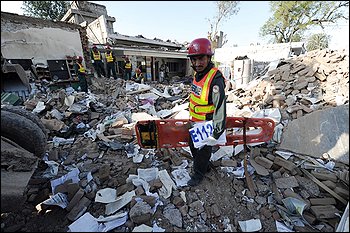
ISLAMABAD, PAKISTAN – A car bomb exploded near an office of Pakistan’s main intelligence agency in the eastern city of Faisalabad on Tuesday, killing 25 people in the type of militant attack that is growing more common in the country’s populous heartland.

A spokesman for the Pakistani Taliban asserted responsibility for the attack and said it was aimed at the intelligence office, the Associated Press reported.

Police said the bomb, which was detonated at a gas station, sparked additional explosions of natural gas cylinders, compounding the damage. The blast destroyed parts of several businesses, including an office of the national airline, and wounded at least 100 people.

Sectarian violence is common in Faisalabad, Pakistan’s third-largest city and a textile-producing hub, but Tuesday’s blast was the first major militant attack there. Militants have often carried out bombings in other large cities, including Lahore, about 80 miles to the east. The attacks regularly target Pakistan’s security forces, who in recent years have mounted counterterrorism offensives against insurgent hideouts in the mountainous northwest.

Now, Pakistani authorities and analysts say, violent extremist organizations are spreading across Punjab province, of which Lahore is the capital.

Southern Punjab is home to militant groups that traditionally focused attacks on Indian targets but are now thought to be deepening ties to Taliban factions in Pakistan and Afghanistan.

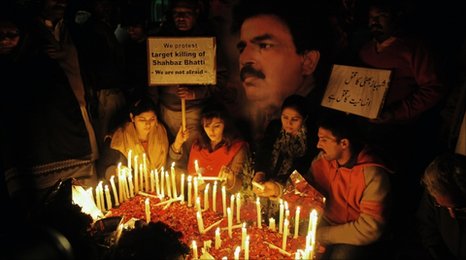
The car bombing occurred nearly a week after the assassination of federal cabinet minister Shahbaz Bhatti, which a group calling itself the Punjabi Taliban said it had carried out.

Bhatti, a Christian, had spoken out against Pakistan’s anti-blasphemy laws, which are enforced most stringently in Punjab. The laws are defended by religious groups, which say that violators of the statutes – and supporters of the violators – deserve death.

Not much Islamic about Islamic Pakistan

By Haroon Siddiqui for The Toronto Star

In the failing state of Pakistan, a junior cabinet minister is killed. Shahbaz Bhatti was a member of the Christian minority. He had taken up the cause of a poor Christian woman condemned to death for allegedly defaming Islam. He knew he was a marked man. But on a recent visit to Canada, where his brother lives, he said he was determined to carry on.

Eight weeks ago, a veteran politician was gunned down for the same sin. He, too, had championed the woman’s cause and condemned the blasphemy law that imposes the death penalty for insulting Islam or the Prophet Muhammad. Salman Taseer was the governor of Punjab, the most populous and prosperous province, and an influential billionaire tycoon, a socialite and an unrepentant liberal in a society that’s becoming militantly conservative. He was a Muslim.

Bhatti was gunned down by unknown assailants. Taseer was assassinated by a member of the elite security unit assigned to guard him. More shockingly, the assassin was hailed a hero. Hundreds turned up at his house, chanting “we salute your bravery.” About 500 clerics signed a statement calling him “a true soldier of Islam.” When he appeared in court, young lawyers showered rose petals and kissed him. At a rally in cosmopolitan Karachi, marchers waved his portrait.

This is a sick society. There’s little Islamic about the Islamic Republic of Pakistan.

The blasphemy law may have been enacted by the British colonials in 1860. But it was toughened by the Muslim rulers of Pakistan in the name of Islam. And both in its wording and implementation, the law violates the most basic principles of Islamic jurisprudence. In allowing hearsay evidence and innuendo, it ignores the necessity of incontrovertible proof for a finding of guilt.

The act is allowed to be abused in personal and property disputes. (A majority of those charged have been Muslims, according to the Human Rights Commission of Pakistan, a voluntary organization). Or it is wielded as a weapon in political and religious vendettas. In one particularly horrific case, two Christian brothers were framed with a handwritten note defaming the Prophet, found in a marketplace with their home address and phone number.

Yet local police and magistrates dare not toss out such trumped-up charges. Cases have to be taken to higher courts to be overturned. Not a single person has been executed under the act. Yet more than 30 people charged or acquitted have been killed.

Under Islamic law, such jungle justice constitutes a greater crime than the alleged original one. It is deemed particularly egregious when the innocents prosecuted are poor and powerless.

The blasphemy law is just one of many flashpoints.

Christian churches have been bombed. So have been mosques belonging to the minority Ahmadi sect, deemed heretic. So also mosques of the minority Shiite Muslim sect. So also Sufi shrines, along with the devotees who turn up for the anniversary festivals of dance and music dedicated to those saints.

Not just that.

Pakistani Taliban and other militants have been killing fellow Muslims who won’t side with them. Such attacks were once restricted to the remote Afghan-Pakistan border but now they are routine in the populated south. Tens of thousands have been killed, including Benazir Bhutto, assassinated in December of 2007.

Yet the government is too weak to provide basic security and too corrupt to care — both egregious Islamic crimes. The politicians and the bureaucrats are not the only ones on the take. Too many clerics are also money-grabbing machines.

Several reasons are proffered for this sad state of affairs.

One is that Pakistan has had too many military dictators, and that the longest-serving one, Zia ul-Haq (1977-88) Islamized Pakistan, which he did. But he did so in tandem with the American-led effort to Islamize the war against the Soviet occupation of Afghanistan. Another inconvenient truth is that while the military used jihadist proxy militias against India and Afghanistan, political parties use them as vote banks and to flex street muscle.

The secular-Islamic divide is also cited. Yet both religious and secular elites have pandered to extremists. It was the wine-sipping prime minister Zulfiqar Ali Bhutto who in the 1970s restricted liquor and declared the Ahmadi sect non-Muslim. It is his People’s Party, once again in power, that abandoned backbencher Sherry Rahman after she proposed amendments to the blasphemy law.

Meanwhile, the economy is in ruins. Inflation is rampant, the currency is losing value and the central bank is printing more rupees.

Don’t be surprised if Pakistanis begin clamouring, yet again, for the return of the military to power.

Haroon Siddiqui is the Star’s editorial page editor emeritus. His column appears on Thursday and Sunday. hsiddiqui@thestar.ca

Assassinations are a blemish on Pakistan’s soul

By Shahina Siddiqui for The Montreal Gazette

The assassination by terrorists of Pakistan’s federal minister for minorities, Shahbaz Bhatti, follows the brutal killing of Punjab Governor Salman Taseer a couple of months ago. Both were targeted by extremists because they called for the reformation of Pakistan’s controversial blasphemy laws. These and other attacks on Christians and Muslims in the name of blasphemy laws is a blemish on the national soul of Pakistan that cannot be washed away by empty rhetoric and the muted cowardly condemnations by the political and religious leadership in Pakistan.

There is no place for laws in Muslim countries that are the very antithesis of the spirit, soul, and letter of Islamic law. Prophet Muhammad in his lifetime was insulted, ridiculed and physically hurt, and yet he never ordered, condoned or recommended the killing or even harming of these individuals. There are documented cases where the prophet intervened to save the perpetrators from the wrath of his companions. We do not honour the prophet by murdering the innocent in his name. We honour him by practising compassion and dealing with mercy toward all of God’s creation, yes, even those who hurt us.

There is no justification for the blasphemy laws in the form they exist in Pakistan. The misuse and abuse of these laws have caused the security of religious minorities to deteriorate and be exploited, and it has become a licence to kill people, to destroy property and to create havoc for personal and political interests.

The terrorists are using this law to paralyze an entire nation into submitting to their whims through fear and trauma. The inept political leaders of Pakistan are more interested in maintaining their power and control on the country’s wealth then in actually working for the betterment of their country. The few who dare to stand up to this injustice find themselves isolated and without support.

The genuine religious leaders, on the other hand, are afraid to be labelled by these pseudo-religious terrorists as supporters of blasphemers, and thereby fear losing their own support base, their lives and their reputations. The socalled religious political parties are supporting these laws unconditionally, manipulating the love the masses have for their faith and their prophet, to ensure their own popularity and political gains.

In such a vacuum of moral, religious and human courage the terrorists thrive, the extremists dance in the streets and the ordinary Pakistanis struggle to survive. This ugly situation in Pakistan calls for an uprising of the silent majority. But the disconnect between rural and urban, rich and poor, and the excruciating poverty and illiteracy are barriers that make this an unlikely scenario.

Pakistanis, unlike their coreligionists in the Middle East, face brutality on many fronts: the war on terror that is consuming the country’s resources, the drone attacks that are killing hundreds of innocent civilians, the Talibanbacked terrorists who kidnap, torture, brainwash and blackmail poor rural youth into becoming suicide bombers who target fellow Pakistanis on an alarmingly frequent basis.

The indifference of the ruling elite – political and feudal – and the tyrannical pseudoreligious extremists seem to have paralyzed this nation into a pathological resignation to its “fate.” There is no credible leadership at the national level that is nurturing national pride, identity and vision. The people are adrift, holding on to any straw, no matter how fragile, that will keep them afloat.

In spite of these many challenges, however, I am confident – having observed firsthand the courage, resilience and moral strength of non-governmental organizations, selfless philanthropy by the affluent, and the development and growth of civil society – that Pakistanis will rise and can defend their nation. They must, however, break the chains of fear that are choking their conscience, and stand up for justice.

My prayer is for Pakistan to realize the vision of its founder, Mohammad Ali Jinnah: a vision in which all Pakistanis are granted freedom and security to practise their religions and maintain their places of worship, and where all Pakistanis thrive together, as equals under the law, regardless of ethnicity, gender and religion.

Peace In One Pakistani Tribal Valley Offers Hope

Reported by Abubakar Siddique for Radio Free Europe Radio Liberty
A fragile peace is taking root in Pakistan’s western Kurram tribal region after nearly four years of sectarian warfare between Shi’ite and Sunni Muslims.

Some have criticized a recent peace pact by saying that it is less about forging a lasting peace than about facilitating insurgents’ infiltration into neighboring Afghanistan. But the local population appears committed to making it work.

Success could have far-reaching implications. If peace is possible in a hotbed like Kurram, then it could serve as a model for millions suffering from war in other tribal areas.

‘Many People Were Injured’

Resident Noor Janan’s situation is typical. He lost his budding business in 2007 when clashes broke out between Shi’a and Sunnis in Parachinar. Rioting in the small border city, which serves as the headquarters of Kurram, soon devolved into sectarian war.

As the Sunni population of Parachinar was forced out, the city’s mostly Shi’a population was hemmed in — trapped by retreating Sunnis who blocked the main road to the outside and set siege on the city.

Janan’s priorities changed remarkably. For the past four years his main obligation has not been to look after his wife and four children, but to man frontline trenches and care for the sick and the injured.

Children displaced by fighting stand in line and wait for handouts in 2010.

“Many people were injured and many houses were destroyed,” he said. “I did all in my power to help my people.”

Janan is Turi — a tribe of 500,000 whose adherence to Shi’ite Islam makes it unique among Pashtuns. The Turis occupy a sliver of tribal territory known as the Parrot’s Beak that extends westward across Afghanistan’s eastern border. On the Pakistani side, Parachinar is positioned within striking distance of Kabul, which is just 100 kilometers to its east.

For the most part, the Turis lived in harmony with neighboring Sunni tribes for centuries, with a handful of exceptions. In the 1980s, predominantly Sunni Afghan Islamist guerillas attempted to overrun the strategically important region.

In 2007, a fierce sectarian war broke out when the Sunni Taliban attempted to conquer the Parachinar. More than 3,000 people have died and thousands more injured in the ensuing fighting. Some Sunnis blame Iran for the development, claiming the clerical regime supported and radicalized their Shi’a neighbors.

Both Sides Committed

Animosity remains high, but a cease-fire worked out in early February and backed by Islamabad offers proof that Shi’a and Sunni alike are committed to peace.

Middle-aged businessman Munir Khan Orakzai, who represents the Sunni population of the lower half of Kurram in Pakistan’s parliament, said that both sects realize that they have fought a useless cause that killed many innocent people. “There can be no logical end to this [sectarian violence],” he said. “That’s why people concluded this agreement.”

Tribal elders and government representatives attend a peace conference in Parachinar in 2008.

A peace agreement was signed before, in 2008, but it lacked government support and rival factions had one eye on possible military gains.

Under the new agreement, Islamabad is promising rehabilitation for the thousands of displaced families, and the deployment of additional troops to guard key routes.

Work Of The Haqqanis?

Skeptics abound. Pakistani pundits suggested that the deal was worked out by the Haqqanis — a large Pashtun family from Afghanistan whose elderly patriarch Jalaluddin Haqqani emerged as one of the most effective guerilla commanders in the 1980s.

His son, Sirajuddin Haqqani, now controls thousands of fighters and facilitates relations between Al-Qaeda Arabs, extremist Afghans, Pakistanis, and Central Asians out of his sanctuary in North Waziristan, which adjoins Kurram to the south. Considering the Haqqanis anti-Shi’ite bent and outsider status, any role in an agreement would be rejected by Kurram’s Shi’a.

Sajid Hussain Turi, a young lawmaker representing the region’s Shi’ite population in the Pakistani parliament, adamantly rejected any Haqqani role. “We, the Turis, have lost 1,200 people and more than 5,000 of our people were injured in this,” he said. “There is no question of involving people in this process that would ultimately harm us.”

Turi said that the weakened position of the Taliban, in disarray after years of military operations, opened the door to peace. He said that even local Sunni allies of the Taliban now see the futility of their military campaign.

Key intermediaries have high hopes for sustainable peace in Kurram. Waris Khan Afridi, a respected tribal leader from the neighboring Khyber tribal district, was among the mediators who put in countless hours bringing the two sides together.

Unforgettable Scene

On February 5, Afridi led the first civilian convoy of hundreds of vehicles to mark the break of Parachinar’s siege. He described an unforgettable scene of thousands of Sunni and Shi’ite villagers welcoming his entourage. “It was like they all were freed from prison that day,” he said.

Now, Afridi said, Pashtun tribes in neighboring tribal valleys are poised to follow the Kurram example. “We have always said that force is not a solution for anything and that the military operations will not solve our problems,” he said.

“Peace in Kurram,” Afridi said, “will positively affect all the tribal areas, the [neighboring] province of Khyber Pakhtunkhwa, and the whole country.”

Bombers target Shiites in Pakistan, killing 12

As reported by The Associated Press

Suicide bombers attacked police protecting marches by minority Shiite Muslims in Pakistan’s two largest cities Tuesday, killing 12 people and wounding dozens, officials said.

The first and most deadly attack occurred in the eastern city of Lahore, where the bomber detonated his explosives as police tried to search him, killing 10 people. About an hour later, a second bomber struck in the southern port city of Karachi, killing at least two people.

The attacks laid bare the challenges facing Pakistani officials trying to secure cities far from the northwest, where militants fighting Pakistan’s U.S.-allied government and American forces in neighboring Afghanistan have long thrived. Many recent attacks have targeted minority Muslim and other religious groups.

The Taliban claimed responsibility for the attack in Lahore, where thousands of Shiite worshippers were marking the end of a 40-day mourning period for the Islamic sect’s most beloved saint when the blast hit their procession early Tuesday evening.

The bomber is believed to have been a young teenage boy who was wearing a suicide bomb jacket and also carrying a bag full of explosives, said senior police official Aslam Tareen. He detonated his explosives when police tried to search him, he said.

“It is a great sacrifice by the police officers who laid down their lives to protect innocent people,” said Tareen.

Footage from the scene showed ambulances racing to the area and men carrying away victims. One young man whose arm was apparently hurt screamed as he was placed on a stretcher. A white car caught up in the explosion was largely destroyed, its hood twisted upward. A man lay wounded on the ground with two women and a child weeping beside him.

Dr. Zahid Pervaiz at the city’s Mayo Hospital told reporters that 10 dead bodies had come in, while another 52 people were wounded.

Shakirullah Shakir, a spokesman for the Fidayeen-e-Islam wing of the Pakistani Taliban, told The Associated Press in a phone call that the militant group had dispatched the bomber and warned of more bombings.

Later Tuesday evening, a suicide bomber struck police protecting a group of people returning from a Shiite march in the Malir neighborhood of Karachi, Pakistan’s largest city.

Three people were killed and three wounded in the attack, said Hamid Paryar, a doctor at Karachi’s largest hospital. Two of those killed and one wounded were policemen, he said.

The third person killed is believed to be the suicide bomber, who was riding a motorcycle and carrying his explosives in a bag, said senior police official Shaukat Shah.

The blast occurred near a police van protecting the Shiite marchers, said Akbar Jaffry, who witnessed the bombing.

Attacks roughly tripled last year in Lahore and Karachi, according to a recent report by the Islamabad-based Pak Institute for Peace Studies.

The trend is a sign that militants are having greater success exporting the fight far from their northwest heartland along the Afghan border. The Pakistani army, under U.S. pressure, has carried out several offensives against militants in its northwest, but violence persists.

Thou Shalt not Mock or It May Cost You Your Life!

By Manzer Munir for Pakistanis for Peace

In the wake of the murder of Salmaan Taseer, the Governor of Punjab a couple weeks back, I did a great deal of contemplation about the situation in Pakistan and the current state of affairs of Pakistan and indeed in much of the Muslim world.

The current situation, especially in Pakistan and when it concerns the rights of the non-Muslims, is apparently the worst of anywhere in the Muslim world. Indeed, the plight of Asia Bibi, (also known as Aasia, Ayesa Noreen) Islam and Islamic Blasphemy laws have come under rightful scrutiny as of late.

One question that tugs at the heart of the debate for me is why is it that Muslims seem to get so very offended to the point they want to KILL you over a remark or something that comes out of your mouth? As Americans, we wonder to ourselves, “Haven’t they ever heard of sticks and stones may break my bones, but words don’t hurt me?!

Sadly, what the fundamentalist preachers at all the podiums of their Friday sermon or khutbah, nor any of their brethren on the run and in caves like the Taliban and Al Qaeda fail to realize that we are all God’s children. And God, Allah, Yahweh, Jesus, or whatever name you assign him, he is One and the same God of all religions. He is too big to fit into just one religion, concept, version or story of him.

And we all are his creations. Not one of us is superior over the other in his eyes and he judges us all equally. To him, the children of these three religions and its offspring’s are all related to each other. Adam being the first man, then Eve, and then all the Biblical figures and names such as Noah, Abraham, Moses, Jesus, yes especially Jesus. He is their Messiah too!

Jesus, in fact is mentioned some 28 times in the Muslim holy book, Qu’ran whereas their own prophet Muhammad is mentioned only 4 times. And the fact that Jesus is also considered by Muslims to be the Messiah, it is sad that his followers should get such abject treatment in Pakistan and sadly, many Muslim countries.

If only the bad guys realized the connections between Christians and Jesus only then would a Pakistani Christian woman, suffering needlessly in a cell tonight going on 2 years away from her children in solitude, and constantly fearful for her life, would see her horrific ordeal come to an end.

These people are incapable of understanding basic rights, freedoms and even the unhindered concept of free will. No, they are primitive minded in their their spiritual and daily lives. They fail to see that a Christian’s God and a Muslim’s God are the one and the same. And he never would agree to laws like Pakistan’s Blasphemy laws at all. Why? Well because the Muslim God is known first and foremost as a Gracious, Merciful, Compassionate God.

In fact, the Arabic phrase Bismillah ir-Rahman ir-Rahim is a beautifully poetic phrase which offers both deep insight and brilliant inspiration to the average Muslim who says it countless times as he or she starts each day and till they rest their head to sleep. “ It has often been said that the phrase Bismillah ir-Rahman ir-Rahim contains the true essence of the entire Qur’an, as well as the true essence of all religions. Muslims often say this phrase when embarking on any significant endeavor and the phrase is considered by some to be a major pillar of Islam. This expression is so magnificent and so concise that all except one chapter of the Qur’an begins with the words Bismillah ir-Rahman ir-Rahim.”

The common translation:”In the name of God, most Gracious, most Compassionate” essentially is saying that God is compassionate, and full of grace. So how would this God punish Asia Bibi? What would he do if he is so full of compassion and mercy? Would he even punish her? And if he is such a gracious and a compassionate God, then wouldn’t he feel that nearly a two year jail sentence in solitary is already far more than her crime not to mention being away from husband and children and being worried about mob vengeance on her or the death penalty?

That God may act in a multitude of ways and we cannot ever know till said Judgment Day. That is what Judgment Day is all about after all. In fact, this is probably one day when the man upstairs works overtime judging all of us mankind, from the beginning with Adam to the last standing comes till Tribulation and the End of Days. It is only he, the Creator who will do the judging and this is something that the men with the loudspeakers who climb to the top of the minaret five times a day to call the faithful to prayers, just do not really understand, in my opinion. They apparently constantly seem to forget and pass judgment from the pulpit and this in turn helps set the “popular” opinion amongst the ultra-religious faithful of Pakistan’s society.

My only prayer to this Creator is that may he keep Asia Bibi safe tonight and continue to give her strength. And if God should call her home and have her die a death at the hands of the real savages those that not only kill but shockingly, in your name, then please Allah grant her heaven just as you should governor Salmaan Taseer, a man who was only defending the rights of all your children, including those of other faiths. He was being compassionate and gracious towards a fellow human being God, as he was only trying to emulate his creator, You Lord. Ameen.

And while you are at it Lord, will you also please let the imam at the microphone know that “Thou shall not mock, should not cost you your life.” Afterall, “Thou shall not kill is one of your top 10 commandments, whereas mocking prophets or religious figures does not make the list!

Manzer Munir, a proud Pakistani American and peace activist, is a Sufi Muslim who is also the founder of Pakistanis for Peace and blogs at www.PakistanisforPeace.com and at other websites such as www.DigitalJournal.com, www.Allvoices.com, www.Examiner.com and www.open.salon.com as a freelance journalist and writer. He asks that you like the Official Facebook Page of Pakistanis for Peace to get the latest articles as they publish here: http://www.facebook.com/home.php#!/pages/Pakistanis-for-Peace/141071882613054

Pakistan Army Propaganda Drama Set for TV

By Khurram hahzad for The Associated Press

Pakistan’s Taliban-fighting soldiers are set for celebrity status with the launch of a multi-million-dollar glossy television drama hailing army victories over militants.

Emotive tales of 11 “brave Pakistanis” battling an Islamist insurgency that is plaguing Pakistan and neighbouring Afghanistan, will air on the small screen in an army-funded drama that casts the anti-terror fight in a positive light.

Focused on the heroism of soldiers fighting a key air and ground offensive in the northwestern Swat valley in 2009, one tale looks at the deeds of soldier Hawaldar Naeem Asghar who died fighting an insurgent checkpoint.

Asghar, portrayed as a hardworking soldier from peasant roots, sacrifices his life to overcome Taliban dug in to a hilltop, during operations in the town of Mingora to flush militants from the picturesque valley.

Throwing grenades from his bunker without success, Asghar is depicted abandoning cover and climbing the hill, tossing more explosives on his way as bullets rain down from the rebels’ post.

The checkpoint is destroyed, but Asghar is killed.

“Hawaldar Asghar’s story is a common man’s story. It’s a message to the public that everybody can play a role in the fight against extremism,” says Sajjad Saji, one of the drama serial’s writers.

“It is filmed to encourage the common people in this war,” he adds.

Urged by its key but critical ally the United States to launch further operations in the lawless tribal areas bordering Afghanistan, the army wants to show the sacrifices it has already endured in the war on terror.

“The basic purpose is to reveal the deeds of bravery of our soldiers, officers and civilians who are at the front of this war…. This drama shows the human face of the war,” says Major General Athar Abbas, head of the army’s publicity wing.

“The nation should own these stories of bravery and sacrifice, they should be proud of our sons and daughters of the land who created these true stories with their blood and defended the motherland.”

One of the filmmakers, who would not be named, said the high-end production was a “multi-million-dollar” effort, but refused to put a precise figure on costs.

The production, peppered with special effects, was filmed amid rugged verdant hills and forests close to the Swat valley — scene of major operations by Pakistan’s military in 2009 to rid the area of rampant militancy.

“We travelled extensively to film this serial. A crew of more than 35 people with trucks of luggage roamed in the forests and hills for months to show the reality,” said Khawar Azhar, the show’s executive producer.

The former tourism hotspot of Swat slipped out of government control after a radical cleric led an uprising in July 2007, beheading opponents, burning schools and fighting to enforce a harsh brand of Islamic law.

Pakistan launched a blistering air and ground offensive in the valley after militants marched out of Swat and advanced to within 100 kilometres (60 miles) of the capital Islamabad in April 2009.

After heavy fighting that displaced an estimated two million people, the military declared the region back under army control last summer and efforts have begun to revive the local economy amid sporadic outbreaks of violence.

Television productions are one of the tools adopted by the military’s publicity wing to polish its image and boost recruitment and morale at a key juncture in anti-Taliban efforts and with religious conservatism on the rise.

Accused by US-based Human Rights Watch of carrying out collective punishments on relatives of militants since it re-established control over the Swat valley, the army knows the importance of securing local hearts and minds.

More than 4,000 people have been killed in Taliban and Al Qaeda-linked attacks since government forces launched an attack against militants in a mosque in Islamabad in 2007.

The television drama depicts the bitter divide between Pakistan’s opposing cultures as the moderate middle class fights religious extremism in a country fractured by deep regional political divided.

In other episodes the film makers show the victims of Taliban power — one girl is subject to brutal gang rape by militants, while in another a young boy is brain-washed into becoming a suicide bomber.

Pakistan Confronts Deepening Radicalism in Wake of Assassination

By Sarah A Topol for AOL News

ISLAMABAD, Pakistan — When Vice President Joe Biden made his surprise visit to Pakistan this week to shore up the battle against the Taliban and al-Qaida, he warned against the implications of increasing radicalism in Pakistani society in light of the assassination of a liberal governor by his bodyguard.

“The governor was killed simply because he was a voice of tolerance and understanding,” Biden said at a news conference Wednesday. “As you know all too well … societies that tolerate such actions end up being consumed by those actions.”

But when President Barack Obama meets Pakistani President Asif Ali Zardari later today in Washington to discuss counter-terrorism in Pakistan’s lawless frontier, he greets a president facing a new fight against radicalism deep in the heart of Pakistan’s urban centers.

Since Mumtaz Qadri unloaded over two-dozen bullets into Salmaan Taseer’s back because the outspoken liberal called the country’s blasphemy laws a “black law,” ecstatic crowds have flocked to shower Qadri with rose petals at his court appearances. Facebook fan pages and a fawning YouTube video cropped up within hours of the murder.

The glorification of a confessed killer by the masses has shocked the country’s small liberal minority. But most troubling has been the reaction of Pakistan’s urban middle class, whose support the United States needs in its war against terror and against the Taliban in neighboring Afghanistan.

From lawyers to tech-savvy Web users, the reaction of the educated middle class has most clearly illuminated the toehold that Islamic extremists have found when it comes to religious issues in Pakistan, even as the country continues to resist the allure of Islamic militants. Some see the reaction of the middle class as the expression of latent social outrage over how Islam is treated by the West, combined with a growing confusion over how to follow their faith in the modern world. This dormant indignation has found an outlet in the murder of a liberal governor.

“Taseer is a victim of religious extremism, but this religious extremism is wrapped up in a class and culture war, between the have-nots and the have, between the socially disposed and the possessors of society, between the globally connected and the globally disconnected,” Mosharraf Zaidi, a political analyst and policy development adviser in Islamabad, told AOL News.

Zaidi sees the convergence of educated Muslims around Qadri as a sign of confusion among the middle class over how to rationalize their modern lifestyle with Islamic tenets, prompting them to defer to radical right-wing mullahs when it comes to certain religious issues, like blasphemy.

“The Islamic narrative in Pakistan is dominated by a small religious establishment who has no viability electorally and who has limited social appeal. But on a number of specific issues they’re able to tap into something much deeper than what’s apparent in a day-to-day situation that awakens the inner radical,” Zaidi said. “The middle class is increasingly susceptible to the symbolism of the little guy taking on the big guy.”

Among Qadri’s most stalwart supporters are some of the same jurists who staged months of protests against Pakistan’s military dictator in 2007 and 2008, when Gen. Pervez Musharraf removed the country’s chief justice.

“We were supporting rule of law, the supremacy of the constitution and the independence of the judiciary,” said Mohammad Faisal Malik, who notes he was an active participant in the movement. “It was the most memorable year of my life.”

Dressed in a dapper black suit, Malik has a neat mustache and carefully styled sideburns that don’t suggest a picture of extremism taking root in Pakistan’s judicial system. But today he is among the group of lawyers who have been throwing garlands and chanting slogans in support of Qadri outside the district courthouse in Rawalpindi, and he is also one of the 500 lawyers signed on to represent Qadri.

Malik does not see a contradiction in supporting both the rule of law and a man who took the law into his own hands.

“Mr. Qadri reacted under certain provocation, feeling hurt from the remarks of the deceased governor. He acted like any Muslim will act when anyone uses filthy language against our prophet. … We were chanting and raising slogans against all those sectors that are using objectionable language against Muslims, against our holy prophet and against our religion. That was our message,” Malik explains in nearly flawless English, expressing a sense of global victimhood common among his compatriots.

In Pakistan, the day-to-day injustices in an impoverished society find no legal outlet. Corruption here is rife, and the rich can bribe their way out of anything. The lawyers supporting Qadri express an understanding of why the security guard picked up a gun.

“He took the law into his own hands when he thought he was helpless. He’s not in a position to initiate criminal proceedings against Mr. Taseer, so he reacted in this manner,” Malik said.

But some say the passivity of the educated class toward radical strains is not merely a product of a class and culture struggle but part of a larger generational gap in Pakistani society. Under the rule of Gen. Mohammad Zia ul-Haq in the 1980s, Pakistan underwent an Islamization campaign as the military dictator sought to unify the country and encourage jihadists to fight against Indian control of Kashmir and the Soviet occupation of Afghanistan. Today, some suggest, the younger generation is the product of state-sponsored radicalization.

“The state as a machinery is supporting and promoting religious extremism, and it happens through various means. It happens through media messages, it happens through textbooks,” said Marvi Sirmed, a human rights activist and blogger.

“The literate, quasi-educated urban population is the most vulnerable to these extremist propagandas, because they are exposed to electronic media and the outside world through social networking,” Sirmed said. “And I see a lot of stuff coming out through these sources that if you are naive, they can make you a suicide bomber very easily.”

It is this middle class, struggling with its faith in an age of global media and inter-connectivity, that the U.S. needs to win over, and it is precisely this sector it appears to be losing.

Pakistan’s middle class sees the United States not as a model of liberal values to be followed but rather as a country that inflicts repeated indignities upon Pakistanis’ culture and sense of worth with its military forays into the region in the past 10 years.

“We have to pay attention to the narrative of indignity, because it’s fueling things that start only as rhetorical and verbal but could very well link to Faisal Shahzad’s Nissan Pathfinder,” said Zaidi, referring to the failed Times Square bomber, an educated Pakistani who knew the United States only too well.

Salman Taseer Assassination Points to Pakistani Extremists’ Mounting Power

By Karin Brulliard for The Washington Post

One of Pakistan’s most openly progressive politicians was gunned down Tuesday in an act that violently highlighted extremists’ tightening grip on the country even as the beleaguered government struggled to stay in power.

The killing of Salman Taseer, apparently at the hands of one of his own guards, marked the most prominent political assassination in Pakistan since former prime minister Benazir Bhutto’s death three years ago.

The razor-tongued governor of Pakistan’s most populous province was known for speaking out on behalf of women and religious minorities, and his slaying stunned the nation and alarmed U.S. officials. It also further rocked Taseer’s ruling Pakistan People’s Party, which is desperately trying to keep its government afloat following a key ally’s defection to the opposition Sunday.

The secular PPP condemned the killing and promised a swift investigation, but its weakened position undermines its ability to crack down on religious extremists.

In timing that underscored those limitations, Taseer was shot in an upscale area of Islamabad as Pakistan’s main opposition party was across town demanding that the government agree within three days to implement a list of reforms, or risk collapse.

After the killing, the party of former prime minister Nawaz Sharif said it would allow three additional days for the changes, including a slash in government spending and the reversal of unpopular fuel price increases.

Taseer was a chief ally of President Asif Ali Zardari, who in 2008 appointed him governor of Punjab, Pakistan’s wealthiest province. But Sharif’s party rules the province, making Taseer’s assassination a blow to the federal government’s influence there.

Secretary of State Hillary Rodham Clinton condemned the killing in a statement Tuesday, saying she had met Taseer and “admired his work to promote tolerance and the education of Pakistan’s future generations.”

Taseer’s apparent killer cited his boss’s stance against a controversial anti-blasphemy law in justifying his actions. As the embattled, pro-U.S. PPP sought in recent days to win back defecting allies that also include a small Islamic party, it had already said it would not support a proposal to change the blasphemy statutes. That left Taseer one of the few vocal champions of the move, which hard-line religious organizations had labeled a Western conspiracy.

The laws have drawn scrutiny since a Christian woman was sentenced to death in November for allegedly criticizing the Muslim prophet Muhammad. Taseer had called for her pardon, leading religious groups to denounce him as an “apostate” and burn effigies of him during a nationwide strike last week in support of the law. One Muslim cleric has offered $6,000 to anyone who kills the woman, who remains in jail.

Even as Pakistani television stations were dominated Tuesday by commentators condemning rising religious intolerance, supporters of Taseer’s arrested guard, Mumtaz Qadri, 26, created a page for him on Facebook. Page visitors called him a “hero” and praised his “awesome job.” No major unrest over the killing was reported, but authorities said they were on high alert.

“This shows how the religious extremists want to impose their agenda to terrorize the society,” Shahbaz Bhatti, the federal minister for minorities affairs and also a proponent of changing the laws, said in an interview. “This cowardly act cannot stop us who are raising our voice.”

Yet in a country where Taliban militants increasingly flex their muscles through bombings, religious hard-liners have great power to intimidate even though polls show that their views are not widely shared. Last week’s strike by Islamic organizations drew few supporters to the streets, but shops in major cities closed – and many merchants said they did so under threat.

Human rights activists say the blasphemy laws are also abused by extremists, who use them as a tool to persecute minorities or opponents by bullying police and courts into arrests and convictions. The laws were strengthened during the 1980s rule of Islamist military dictator Gen. Zia ul-Haq.

Taseer lamented the power of the religious mob in an interview last summer following bombings of mosques belonging to the Ahmadi sect, whose members identify themselves as Muslims but are barred by the constitution from “posing” as such. Taseer – whose appointed position gave him little direct power in Punjab – condemned the provincial government of Sharif’s center-right PML-N for what he called its tolerance of radical religious groups.

“Extremist people are not in the majority,” Taseer said at the time. “This is a very narrow minority, but . . . they are always prepared to do and die. That is their strength.”

On Dec. 24, he had posted on his Twitter account: “My observation on minorities: A man/nation is judged by how they support those weaker than them not how they lean on those stronger.”

Authorities said Taseer’s guard, a member of an elite Punjab provincial police force that provides VIP security, shot the governor multiple times outside the Kohsar market in Islamabad, a small shopping plaza near his residence that is frequented by foreigners. The guard proudly surrendered to police afterward, according to local news reports.

Most political parties condemned the killing, and the government announced a three-day mourning period, during which political activity would be suspended. Zardari, to whom Taseer was close, called the assassination “ghastly.”

“The governor of Punjab was the bravest person in our government, and the stands he took for women, minorities and on the blasphemy law were incredibly brave and will never be forgotten,” Farahnaz Ispahani, a Zardari spokeswoman, said in an interview.

Taseer, who began his political career as a PPP student activist, was a successful businessman who played polo and smoked heavily. With his flashy sunglasses and frequent Twitter dispatches, Taseer, 66, cut a rather shocking figure in a country dominated by conservative social mores.

Critics assailed him for fathering a child with an Indian journalist while he was still married to the mother of his other children. In 2008, minor scandals broke out when opponents published photos online of him holding wine glasses at parties and of one of his daughters wearing shorts and dancing.

Despite the alleged gunman’s confession, Taseer’s killing was sure to be swept up in the conspiracy theories that permeate Pakistani politics, particularly in times of turmoil. Interior Minister Rehman Malik said investigators would seek to determine whether the suspect acted alone or was “asked” to carry out the attack.

In the hours after the killing, some criticism centered on the PML-N-led Punjab government, which provided Taseer’s police guard. There was no indication Tuesday night that the party played a role.

But the PML-N might yet bring down the PPP, whose government faces growing criticism over corruption, a floundering economy and a ham-handed response to last year’s devastating floods. The ruling party’s coalition partner, the Muttahida Qaumi Movement, withdrew from the government Sunday, weakening its mandate by depriving it of a parliamentary majority.

A united opposition could pass a vote of no confidence in Prime Minister Yousaf Raza Gillani, leading to his ouster and potentially triggering early elections. That has appeared unlikely, because of divisions among opposition parties. But Sharif threatened Tuesday to “ask the opposition parties to come forward and we will give them our full support” if the government does not show progress on reforms within 45 days, according to the Associated Press.

Like many in the PPP, Taseer often criticized opposition parties for stoking political instability in a country that has been ruled by the military for half its 63-year history and where an elected government has never completed its term.

Religious extremism, Taseer said last summer, would be quashed only by the “continuous, functional position of a democratic system.”

UN Halts Aid After Female Suicide Bomber Kills 46 in Pakistan

By Anwar Shaikh for Businessweek

A female suicide bomber carried out a Christmas Day attack in northwest Pakistan that killed 46 people, a local official said, as the UN food agency caught up in the blast closed centers that had fed 41,000 families.

The burqa-clad woman aged between 18 and 22 lobbed grenades and detonated an explosive vest near a World Food Programme distribution center after being stopped by security personnel, Mustaqeem Khan, a government official in the tribal region of Bajaur, said by phone today. At least 96 people were injured in what Dawn newspaper said was Pakistan’s first suicide bombing known to have been carried out by a woman.

The device was detonated at about 8:30 a.m. local time on Dec. 25 as officials were handing out food to victims of this year’s floods, said Gull Rehman, a spokesman for the government of the area. Khan said officials had collected body parts of the female attacker, who had attempted to join a line of men queuing for aid.

Prime Minister Yousuf Raza Gilani condemned the attack and said his government’s fight against militants will “continue till their complete elimination,” according to an e-mailed statement issued by the Information Ministry in the capital, Islamabad. Operations at four WFP centers in the region will likely restart this week once security improves, program spokesman Amjad Jamal said by phone from Islamabad.

The death toll eclipsed the 43 people killed Dec. 6 in a suicide bombing outside a government office in the northwest tribal region of Mohmand. Four days later, 25 people died in a similar attack in the town of Hangu.

U.S. President Barack Obama condemned what he called the “outrageous attack” in Bajaur. “Killing innocent civilians outside a World Food Program distribution point is an affront to the people of Pakistan, and to all humanity,” Obama said in a written statement. “The United States stands with the people of Pakistan in this difficult time, and will strongly support Pakistan’s efforts to ensure greater peace, security and justice for its people.”

UN Secretary General Ban Ki-moon condemned an “abhorrent act of terrorism aimed at innocent people.”

Pakistan’s government blames Taliban militants based in the country’s tribal region for terrorist attacks in the country. The army last year began offensives in the Taliban stronghold of South Waziristan, after a similar operation against guerrillas in the Swat Valley.

Militants have stepped up attacks as the government is struggling to rehabilitate 17 million people who lost homes and livelihoods during floods in August. The deluge threatened to cripple Pakistan’s economy with a surge in unemployment, an increase in inflation and damage to billions

The Illiteracy of Hate

A News and Opinion Special Report by Manzer Munir for Paksitanis for Peace

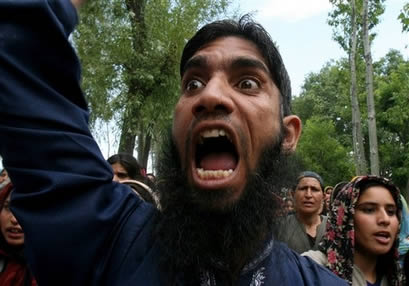
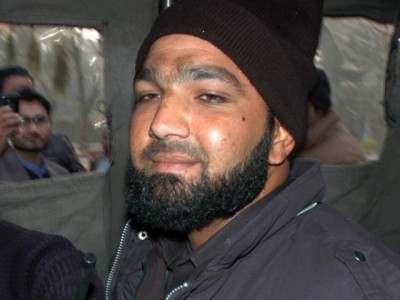
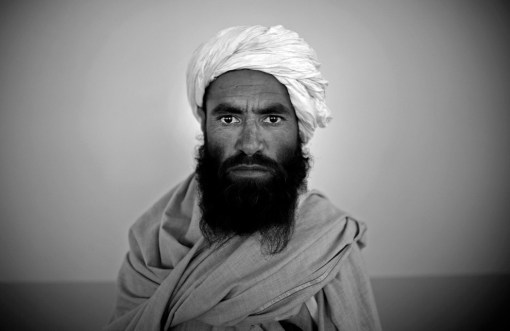
Alleged Taliban Member pic courtsey of Boston Globe

The Taliban are not just simply a bunch of illiterate thugs and bullies for they too often prove to be even worse than animals and barbarians.

Nowhere else in the world has a country experienced a more tragic and callous attack as the one on Christmas day, the birth day of Jesus, the Prince of Peace, than the one Pakistan experienced. In an attack described by President Obama as an “affront on humanity”, the cowards attacked helpless women, children and men while they queued up in food and aid distribution site such as the WFP depot, people who mind you are already suffering from the ongoing war, once in a lifetime floods, and the poverty and radicalism of a generation of desperate, hopeless and increasingly uneducated young men brainwashed by the Taliban and other radical Muslim extremists.

I am still disturbed by the disdain for basic human life that this new attack proves about this radical and extreme enemy. I imagine another one of their brain washed ‘walking zombies’, this time purportedly a woman suicide bomber, a first, even for Pakistan, killed in excess of 43 people in Bajur Pakistan at a World Food Program rations and aid storage and distribution center.

The Pakistani authorities and several domestic and foreign NGO’s who provide food aid at various centers in the area are temporarily closing these centers in order to have increased security. This means that aid distribution will come to a crawl and up to several hundred thousand people will now have to suffer at the hands of the attacker and their backers, the Taliban who have claimed responsibility. The authorities will have to ensure the safety of aid organizations and their personnel for both Pakistani and non Pakistanis relief workers involved in getting food, water and medicine to many people who are either suffering from the war or from the floods.

This catastrophe, although not of near Biblical proportions, does present both a security and humanitarian problem to both the government of Pakistan as well the suffering citizens in the northwest areas of the country where; Taliban fighters take sanctuary from the war in Afghanistan to regroup and return to the fight in warmer weather after the winter months as we have seen in years past. In fact, the reach of the Taliban in Pakistan is now not only reputed to be in the headquartered areas such as in Quetta Pakistan among the restive Baluchi population, now they are so often found to be in major cities like Karachi, Lahore, Rawalpindi, Peshawar and many points in between as they use their religious cover to endear themselves to certain impressionable, weakened or illiterate individuals that are so commonly found in throughout the country. 

Here are the some of the depressing facts. Pakistan, a nation approaching 180 million people at current estimates, perhaps only boasts to having about 60-65% of the male population at a literate level and at best, the females to be only at 40-45% of the total female population. Sadly, what this means is that 4 out of 10 Pakistani males are completely illiterate while up to as many as 6 out of 10 women are not able to read or write. Poverty breeds extremism since there is no support from any government programs or hope for any solution.

Time and time again throughout history and not just of Pakistan’s, we can see that the role of the church, synagogue or mosque in building the community is deeper than that of any government initiatives or other measures. The poverty for these young men along with the lack of jobs like for those individuals who are either very poorly paid construction site workers, household labor or servants, or beggars and sewer workers, a job sadly almost seems to have been reserved for Pakistan’s Christian community members as many can attest in Pakistan of their unfortunate and depressing state. One does not need to remind the reader of the plight of Asia Bibi (also Aasia and Ayesa), the Christian Pakistani woman who is still awaiting her fate in Pakistani courts after more than a year and a half since first being accused of a BS blasphemy charge and being in jail ever since. 

The medieval mentality of these radical extremists is not something that needs to be described as the evidence is here in this latest attack . Certainly anyone alive in any part of the world outside Pakistan and Afghanistan with eyes, TV, radio or newspaper within their reach can see plenty of near daily reminders of the carnage that many natives of these lands see, and to what they have painfully become accustomed.

 The Pakistani and Afghani Talibans have by all the various reports in newspapers and media sources over the last several years have pointed out to the fact that these groups all have too often similar goals. Not only that, these groups all share the same characteristics. The anti-Americanism, the pro-Wahaabi or Orthodox version of Islam, the need for justice for the ‘suffering of the Palestinian people’ , and the anti-colonial and often times anti western sentiment amongst these groups. The radicalization of certain Muslim groups be they Hamas and Hezbollah in the Mideast or Lashkar e taiba, or any other militant outfit operating in this part of the world as mentioned in this quote a few days before he passed, the late Richard Holbrooke of the US State department said that there are a range of militant groups such as the Afghan Taliban, the Pakistani Taliban, the Haqqani Network, Lashkar-e-Taiba, and that “an expert could add another 30.” His exact words are in quotations. 

The radical Muslim groups who take prey of the weaker, cannot think for themselves because they are scions of those abjectly illiterate segments of the society who are only educated in the madrassahs of Pakistan. This is the de facto way of educating Pakistan’s poorer children in little mosque schools which consist of nothing but Qu’ranic surahs and words of ‘wisdom’ or ‘interpretation’ by the local mullah of the said mosque/school. Most probably these children in many Pakistani madrassahs, especially the ones who live near the border areas within the NWFP or North West Frontier Province of Pakistan as this is the part of the country most affected by its close proximity to Afghanistan.

The people in this area of Pakistan, as well as their cousins in Afghanistan have been fighting one enemy or another for the better part of 100 years now. Whether to them the enemy be the British, during the height of the British Raj rule in India, or to the Soviets and the Red army and the Cold War, then in chronological order came the infighting after the Russian withdrawal as various Tajik, Afghani, Uzbek, Pakistani warlords came in to try and consolidate power to now us Americans and the Pakistanis who are our allies in this war.

Granted we do often hear that the Pakistanis can be doing more. By all accounts, the Pakistani government can do more in terms of fighting this war on terror. Numerous western reports and articles in respected dailies have alleged that small elements within both Pakistan’s Army as well as the spy agency, the ISI, have sympathizers to either the Taliban’s cause or they want to be on favorable terms with a powerful entity that most in Pakistan’s establishment believes that Pakistan will be dealing with and not a weakened Karzai once the US begins to draw down troops and end the war by 2014. If this is indeed true, then these ‘officers’ and supposed ‘leaders’ of Pakistan should realize that the colluding with the enemy, which in this case is the Taliban, is tantamount to treason, and the members of the armed forces of Pakistan as well as the intelligence community should not be assisting the enemies of all concerned: Afghanistan, Pakistan and the United States. 

Of course we must not kid ourselves and assume that only alleviating the illiteracy and poverty of the Pakistani youth will and bettering the education system of the Pakistani poor, particularly that of the refugees and residents of the northwest areas near the Afghan border. No there needs to be a study and introspection by the people of these two countries where this hatred breeds. To to get out of this darkness, the population needs be provided not only safety when delivering food aid and or medicine but aldo most importantly give them a book, a pen, and a paper. And teach them how to fish for knowledge with basic comprehension and deductive reasoning skills that can reject a radical and violent view of Islam too often manipulated by the clergy. This is the only way we can come to end this illiteracy of hate.

–Manzer Munir, is a proud and patriotic Pakistani American, an author, who plans to write a book on Pakistan, who is also a blogger and journalist, and as the Founder of Pakistanis for Peace  can be found at www.PakistanisforPeace.com, www.DigitalJournal.com ,www.Open.Salon.com, www.Examiner.com, as well at other websites as a freelance journalist and writer.

‘Attack in Pakistan Affront to Humanity’ says President Obama

As Reported by Hindustan Times from the Indo-Asian News Service

US President Barack Obama condemned a suicide bombing in Pakistan that left at least 44 people dead at a UN World Food Programme distribution point on Saturday. “Killing innocent civilians outside a World Food Programme distribution point is an affront to the people of Pakistan, and to all

humanity,” Obama said that in a statement issued from Hawaii, where he is spending Christmas with his family.
“The United States stands with the people of Pakistan in this difficult time, and will strongly support Pakistan’s efforts to ensure greater peace, security and justice for its people.”

A female suicide bomber targeted the crowd collecting food at the distribution centre in Khar. Seventy others were injured in the attack in the Bajaur tribal district, where government forces are fighting Taliban and Al Qaeda militants.

Saturday’s bombing targeted the Salarzai tribe, which has joined forces with the government against the Taliban and raised a tribal militia to drive them out of their area. The Taliban took responsibility for the attack in a message sent to various news organizations.