Posts Tagged ‘ United States ’

Panetta to Confront Pakistan at NATO Summit on Transport Costs

By David Cloud for New York Daily News

Defense Secretary Leon E. Panetta heads to this weekend’s NATO summit prepared to confront Pakistan over what he considers price-gouging for transport of supplies to Afghanistan and hoping for a “consensus” among allies over the war effort.

In an interview before his arrival in Chicago, where the summit is scheduled to begin Sunday, Panetta all but ruled out paying Pakistan $5,000 for each truck carrying supplies across its territory for NATO troops waging the Afghanistan war. Pakistani officials have demanded that amount as a condition for reopening supply routes that have been closed to the alliance since fall.

“Considering the financial challenges that we’re facing, that’s not likely,” Panetta said of the demand.

Before the supply routes were closed in November after a mistaken U.S. attack on two remote Pakistani border posts that killed two dozen Pakistani troops, NATO convoys were paying an average of about $250 a truck, a senior U.S. official said.

U.S. officials say they remain hopeful they can resolve the dispute, perhaps at the summit. Pakistani President Asif Ali Zardari accepted a last-minute invitation to attend the meetings, although he is not expected to meet one-on-one with President Obama, officials said.

Thousands of trucks a day carrying supplies would go through multiple border crossings from Pakistan to Afghanistan, making the fees a potentially massive source of revenue for the cash-strapped government in Islamabad.

The U.S. has shifted deliveries to different routes through Russia and other countries to Afghanistan’s north. But the massive withdrawals of equipment due to unfold over the next 21/2 years as troops leave the country will be “significantly” more difficult if routes in Pakistan aren’t used, the Pentagon acknowledged in a report last month.

The Obama administration hopes the two-day summit will highlight what Panetta called a “consensus” within NATO about how to disengage militarily by the end of 2014. Exhausted after more than a decade of war, the U.S. and its allies want to hand off responsibility for fighting the Taliban to Afghan President Hamid Karzai’s government, even though its army and police remain well short of being able to stand on their own.

“Everybody in the alliance recognizes that for this to work, we can’t pick up and leave. We’ve got to remain there to provide support and to assist them in that effort with training, with assistance, with advice,” Panetta said.

But he acknowledged that there would be difficulties, both on the battlefield and within the alliance. Those splits are exemplified by the new French president, Francois Hollande, the Socialist Party leader who campaigned on a vow to withdraw all 3,300 French troops by the end of this year. Hollande met with Obama at the White House on Friday.

Panetta, who plans to meet the new French defense minister, Jean-Yves Le Drian, in Chicago, indicated that the U.S. hopes France will agree to keep some forces in a noncombat role in Afghanistan for the next 2 1/2 years, even if they withdraw all combat troops early.

Yet a more rapid exit by France than planned could lead other allies to speed up their own troop withdrawals.

“There are some countries — Canada, France — that want to bring their combat operations to an end on a faster time track, but that doesn’t have to mean they won’t accept the responsibility to continue to provide the needed support,” Panetta said.

Panetta acknowledged that U.S. efforts to persuade other countries to make long-term financial pledges to fund Afghanistan’s army and police, a key objective of the two-day Chicago summit, is running into difficulties.

“Of course, it’s not easy considering the financial difficulties that a lot of these countries are going through,” he said. “Many of them have come forward and said they would be willing to make a commitment, and I really do think we will be able to achieve the support levels we need.”

In an effort to secure more pledges, the U.S. is asking other countries to commit to providing aid for only three years, though Afghanistan’s armed forces are expected to need foreign assistance for at least a decade, a Western diplomat in Washington said.

A year ago, the Obama administration was hopeful it could draw the Taliban into peace negotiations with Karzai’s government, but Panetta acknowledged that he didn’t see a deal to end the conflict happening “any time soon.”

NATO Summit May Pose Few Political Risks For Obama

By Lynn Sweet for The Chicago Sun Times

With the American public — and presumptive GOP nominee Mitt Romney — focused on the economy, President Barack Obama may not have much at stake politically if there are diplomatic flaps at the NATO Summit in Chicago.

And since Obama already signed a “Strategic Partnership Agreement” with Afghanistan to have most U.S. troops out in 2014 — he flew to Kabul for the May 1 signing — there may not be much of a price to pay domestically if pressure comes from the new president of France and other NATO partners in Afghanistan to shorten the timetable.

And if all heck breaks loose in Obama’s hometown from protesters? Well, a riot in a president’s hometown at a global summit is obviously not good. But the ramifications may not be far reaching. As political time goes, the presidential election is light-years away.

“Nobody in November will remember what happened,” an Obama team source told me. It will be a short news cycle on the cable outlets “and a month in the [Chicago] papers.”

Romney’s team headquartered in Boston is hardly paying attention to the NATO gathering and was not, when I visited on Friday, sizing it up as an obvious political opportunity for them because they want an almost exclusive focus on the economy.

The rapidly expanding Romney operation (overlooking the Charles River) on Friday was ramping up the “message of the week” theme for this week — on government spending. Romney hits the Chicago area on Tuesday for a fund-raiser at the Winnetka home of Pat Ryan — the insurance mogul and civic activist — and his wife, Shirley.

The Romney campaign could mull commenting on some policy difference that emerges — but that would depend on the specifics and if strategically it paid for them to go off message. Same goes if protests get ugly or it there is some serious security incident. It all depends on the situation, I’m told.

Obama’s biggest diplomatic stake

The biggest diplomatic stakes for Obama are the package of issues surrounding Afghanistan, made more complex because of the election of a new French president.

Three announcements are expected at the Chicago NATO Summit: When in 2013 the combat mission in Afghanistan shifts to supporting the Afghan National Security Forces; how much support, financial and otherwise the “ANSF” will get from NATO partners; and agreement on a “roadmap” for NATO’s post-2014 role in Afghanistan.

France’s new president, Francois Hollande — a Socialist — will be sworn in on Monday. He campaigned on a platform to pull out French combat troops by the end of 2012.

During a Senate Foreign Relations Committee hearing on the Chicago NATO Summit on Thursday, Assistant Secretary of State Philip Gordon was asked by committee chair Sen. John Kerry (D-Mass.) about Hollande.

Obama at the last NATO Summit — in Lisbon, Portugal, in 2010 — got the Afghanistan partners to agree to the 2014 timetable, Gordon noted.

“The French assure us that they are committed to our common success in Afghanistan, and I’m sure we’ll find a way forward that ensures that common success. All I can do is speak to our own view, which is that this principle of ‘in together, out together’ remains critical,” Gordon said.

Mayor Rahm Emanuel has much more at stake in the summit — as Obama’s former chief of staff, he grabbed the Summit, seeing it as a terrific opportunity to showcase Chicago. But he neglected to get buy-in from rank-and-file Chicagoans who see the inconveniences more than the advantages.

Emanuel has just one portfolio for the NATO Summit as host mayor. Though he once did while in the White House, Emanuel this week doesn’t have to worry about the future of NATO, transatlantic security, ballistic missiles, Russia, free and fair elections in Afghanistan and how to make NATO allies take on their fair share of financial responsibilities and spend two percent of their gross domestic product on defense.

Obama wanted the summit to be in Chicago in part because he wanted to show off for foreign leaders a city that relishes it diversity — with almost every ethnic group that is part of NATO and its partners.

The last U.S. NATO Summit was in 1999; this is the first outside of Washington.

“In addition to the opportunity to showcase one of our nation’s great cities, our hosting of the summit in Chicago is a tangible symbol of the importance of NATO to the United States. It is also an opportunity to underscore to the American people the continued value of this alliance to security challenges we face today,” Gordon said at the Senate hearing.

Emanuel, on the other hand, wanted the summit to drum up business for Chicago.

My thought is Emanuel far more than Obama owns the summit if things go wrong — and will likely bear the brunt even though the Secret Service is taking the lead coordinating security.

Emanuel will find it harder to change the subject if there are horrible demonstrations. Obama, working off a national and global stage — will be able to move on if all that goes wrong are protests.

“Foreign policy in the minds of the American people right now is not nearly as important as it has been in past elections,” Brookings Institution scholar William Galston told me. “… They are focused almost exclusively on the economy.”

Former White House Chief of Staff Bill Daley noted when we talked that demonstrations at world summits “are not unique to Barack Obama or to America today.

“Demonstrations happen every time there is a big gathering now of any leaders of the world anywhere,” Daley said.

I asked Daley if the fact the summit is in hometown Chicago raises the stakes for Obama.

He said no. “Just cause it was his hometown people would say, ‘boy, he could not control his home therefore we are not going to vote for him as president.’ … I don’t see it. … Obviously, it wouldn’t help. But I don’t see the American people holding him responsible for what may or may not happen by demonstrators who come from all over the country and all over the world to the city.”

Taliban Commander Turns Self in… For Reward on ‘Wanted’ Poster

As Reported by Kevin Sieff for The Washington Post

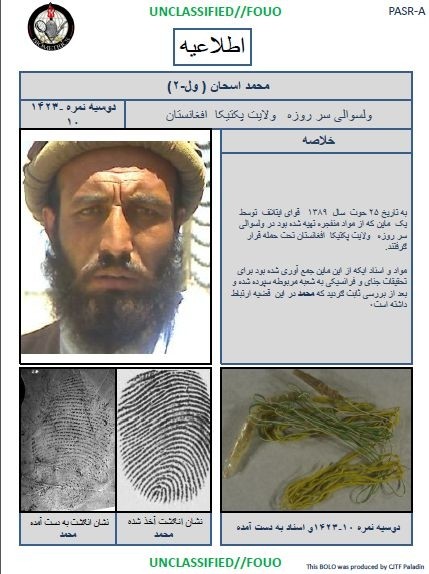
Mohammad Ashan, a mid-level Taliban commander in Paktika province, strolled toward a police checkpoint in the district of Sar Howza with a wanted poster bearing his own face. He demanded the finder’s fee referenced on the poster: $100.

Afghan officials, perplexed by the man’s misguided motives, arrested him on the spot. Ashan is suspected of plotting at least two attacks on Afghan security forces. His misdeeds prompted officials to plaster the district with hundreds of so-called “Be on the Lookout” posters emblazoned with his name and likeness.

When U.S. troops went to confirm that Ashan had in fact come forward to claim the finder’s fee, they were initially incredulous.

“We asked him, ‘Is this you?’ Mohammad Ashan answered with an incredible amount of enthusiasm, ‘Yes, yes, that’s me! Can I get my award now?’” recalled SPC Matthew Baker.

A biometric scan confirmed that the man in Afghan custody was the insurgent they had been looking for.

“This guy is the Taliban equivalent of the ‘Home Alone” burglars,” one U.S. official said.

Wanted posters are often distributed by NATO forces, but rarely have such a direct impact on the apprehension of an insurgent. In restive Paktika province, civilians are typically afraid to pass on intelligence that might lead to an arrest. And insurgents tend to shy away from the urban centers where they’re being hunted, particularly while carrying evidence of their own transgressions.

Officials have guessed at what the unusual details of Ashan’s arrest might tell us about the state of the insurgency — its desperation, its lack of resources, its defiance of law and order.

But, for now, the consensus has landed on the singularity of Ashan’s act, and the intellectual calculus that led to it.

Pakistani Parliament Approves Proposals on US Ties

As Reported By The Associated Press

Pakistan’s parliament on Thursday unanimously approved new guidelines for the country in its troubled relationship with the United States, a decision that could pave the way for the reopening of supply lines to NATO troops in neighboring Afghanistan.

The guidelines allow for the blockade on U.S. and NATO supplies to be lifted, but also call for an immediate end to American drone strikes against militants on Pakistani soil.

However, the lawmakers did not make a halt in the CIA-led missile attacks a prerequisite to reopening the supply lines, as some lawmakers had been demanding. The government and the army will use the recommendations as the basis for re-engaging with Washington.

Ties between the U.S. and Pakistan all but collapsed in November after U.S. airstrikes inadvertently killed 24 Pakistani soldiers on the Afghan border, after which Islamabad blocked the supply lines in protest. Washington wants the relationship back on track.

The U.S. State Department expressed respect for the Pakistani parliament’s decision. “We respect the seriousness with which parliament’s review of U.S.-Pakistan relations has been conducted,” said State Department spokeswoman Victoria Nuland. “We seek a relationship with Pakistan that is enduring, strategic, and more clearly defined. We look forward to discussing these policy recommendations with the Government of Pakistan and continuing to engage with it on our shared interests.”

About 30 percent of supplies used by NATO and U.S. troops in landlocked Afghanistan are transported through Pakistan. Washington also needs Islamabad’s cooperation to negotiate an end to the Afghan war because many insurgent leaders are based on Pakistani soil.

The drones are a source of popular outrage in the country and have fueled anti-U.S. sentiment, although Pakistan’s powerful army has tacitly aided the missile attacks in the past, weakening Islamabad’s official stance that they are a violation of sovereignty.

Washington has ignored previous entreaties by the parliament to end the strikes, and is seen as unlikely to change its policy now.

Despite calls by Islamists for a permanent supply line blockade, few inside the Pakistani government or the army believed this was desirable, given that Pakistan relies on the U.S. and other NATO countries for its economic survival and diplomatic and military support.

Soon after the deadly airstrikes on the border, the Pakistani government called on parliament to draw up new guidelines for Islamabad’s relations with the U.S. The government’s move was widely seen as way to give it political cover for reopening the routes.

The national security committee presented a first set of proposals last month but opposition parties riding a wave of anti-American sentiment rejected them, seemingly unwilling to share any fallout ahead of elections this year or early next.

But on Thursday the opposition voted with government lawmakers to approve a revised set of guidelines, which differed little from the original ones. Opposition lawmakers didn’t explain why they had dropped earlier objections, but they could have come under pressure from the army or extracted other, unrelated concessions from the government.

The guidelines call for NATO and the U.S. to pay Pakistan more for the right to ship supplies across its soil and stipulate that no arms or ammunitions be transported. Western forces have only ever trucked fuel and other nonfatal supplies across Pakistan because of the risk they could fall into the hands of insurgents.

“We believe that the world has heard the voice of the people of Pakistan,” Prime Minister Yousuf Raza Gilani told parliament. “I would like to assure the house that our government will implement the recommendations that have been made in both letter and spirit.” Gilani did not say when the supply lines would reopen.

Western officials have said Pakistan would come under intense criticism if routes remained blocked during a NATO conference in Chicago on May 20-21 where more than 50 heads of state will discuss progress on ending the war.

Washington’s public line has been that it is waiting for the parliament to finish its review before calling for Pakistan to reopen the routes. It has refused to apologize for the border incident in November, and last week put a $10 million bounty on the head of a militant leader believed close to Pakistan’s security forces.

Behind the scenes, however, negotiations have been going on between the U.S. and Pakistan over the supply line issue and drone strikes. It was unclear whether there has been any new agreement on the strikes, which Washington believes are key to keeping al-Qaida on its back foot.

U.S. officials had said they had offered Pakistan notice about impending strikes and new limits on which militants are being targeted. For most of the Afghan war, 90 percent of the supplies came through Pakistan, but NATO has increased its reliance on an alternate, so-called “northern” route, through Central Asia in recent years.

Increased use of the northern route has removed some of the leverage Islamabad had over the West, but at a cost to the coalition.

Pentagon officials now say it costs about $17,000 per container to go through the north, compared with about $7,000 per container to go through Pakistan.

Pakistani militant taunts US: ‘I will be in Lahore tomorrow’

By Sebastian Abbot for The Associated Press

One of Pakistan’s most notorious extremists mocked the United States during a defiant media conference close to the country’s military headquarters Wednesday, a day after the US slapped a $10 million bounty on him.

“I am here, I am visible. America should give that reward money to me,” said Hafiz Mohammad Saeed, referring to the fact that the bounty was given to a man whose whereabouts are not a mystery. “I will be in Lahore tomorrow. America can contact me whenever it wants to.”

Analysts have said Pakistan is unlikely to arrest Saeed, founder of the militant group Lashkar-e-Taiba, because of his alleged links with the country’s intelligence agency and the political danger of doing Washington’s bidding in a country where anti-American sentiment is rampant.

Saeed, 61, has been accused of orchestrating the 2008 attacks in the Indian city of Mumbai that killed 166 people, including six American citizens. But he operates openly in Pakistan, giving public speeches and appearing on TV talk shows.

He has used his high-profile status in recent months to lead a protest movement against US drone strikes and the resumption of NATO supplies for troops in Afghanistan sent through Pakistan. The supplies were suspended in November in retaliation for American airstrikes that accidentally killed 24 Pakistani soldiers.

Hours before Saeed spoke, US Deputy Secretary of State Thomas Nides met Pakistani Foreign Minister Hina Rabbani Khar in the nearby capital, Islamabad, for talks about rebuilding the two nation’s relationship. In a brief statement, Nides did not mention the bounty offer but reaffirmed America’s commitment to “work through” the challenges bedeviling ties.

Increasingly ‘brazen’ appearances
The US said Tuesday it issued the bounty for information leading to Saeed’s arrest and conviction in response to his increasingly “brazen” appearances. It also offered up to $2 million for Lashkar-e-Taiba’s deputy leader, Hafiz Abdul Rahman Makki, who is Saeed’s brother-in-law.

The rewards marked a shift in the long-standing US calculation that going after the leadership of an organization used as a proxy by the Pakistani military against archenemy India would cause too much friction with the Pakistani government.

This shift has occurred as the US-Pakistani relationship steadily deteriorated over the last year, and as the perception of Lashkar-e-Taiba’s potential threat to the West increased.

Bounty backfire?
The US may be hoping the bounty will force Pakistan to curb Saeed’s activities, even if it isn’t willing to arrest him. But the press conference he called at a hotel in the garrison city of Rawalpindi on Wednesday was an indication that is unlikely, and the bounty may even help him by boosting his visibility.

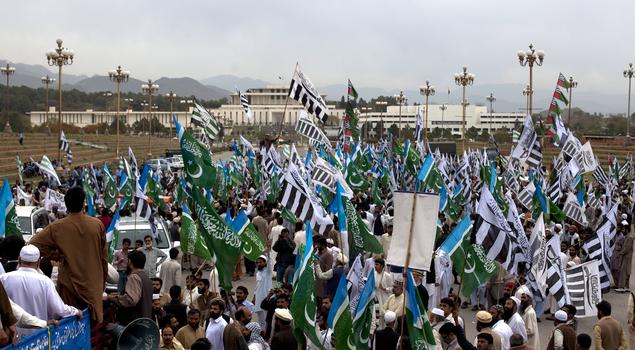
At the hotel, located near the Pakistani army’s main base and only a half hour drive from the US Embassy in Islamabad, Saeed was flanked by more than a dozen right-wing politicians and hardline Islamists who make up the leadership of the Difa-e-Pakistan, or Defense of Pakistan, Council. The group has held a series of large demonstrations against the US and India in recent months.

Some in the media have speculated the movement has the tacit support of the Pakistani military, possibly to put pressure on Washington.

“I want to tell America we will continue our peaceful struggle,” said Saeed. “Life and death is in the hands of God, not in the hands of America.”

Denies involvement in Mumbai massacre
He denied involvement in the Mumbai attacks and said he had been exonerated by Pakistani courts.

Pakistan kept Saeed under house arrest for several months after the attacks but released him after he challenged his detention in court. It has also resisted Indian demands to do more, saying there isn’t sufficient evidence.

The bounty offers could complicate US efforts to get the NATO supply line reopened. Pakistan’s parliament is currently debating a revised framework for ties with the US that Washington hopes will get supplies moving again. But the bounties could be seen by lawmakers and the country’s powerful army as a provocation and an attempt to gain favor with India.

Origins in the Kashmir dispute
Saeed founded Lashkar-e-Taiba in the 1980s allegedly with ISI support to pressure India over the disputed territory of Kashmir. The two countries have fought three major wars since they were carved out of the British empire in 1947, two of them over Kashmir.

Pakistan banned the group in 2002 under US pressure, but it operates with relative freedom under the name of its social welfare wing Jamaat-ud-Dawwa — even doing charity work using government money.

The US has designated both groups foreign terrorist organizations. Intelligence officials and terrorism experts say Lashkar-e-Taiba has expanded its focus beyond India in recent years and has plotted attacks in Europe and Australia. Some have called it “the next Al Qaeda” and fear it could set its sights on the US

* Associated Press writer Asif Shahzad contributed to this report from Islamabad.

U.S. and Pakistan Take Step to Mend Relations

By Salman Masood and Declan Walsh for The New York Times

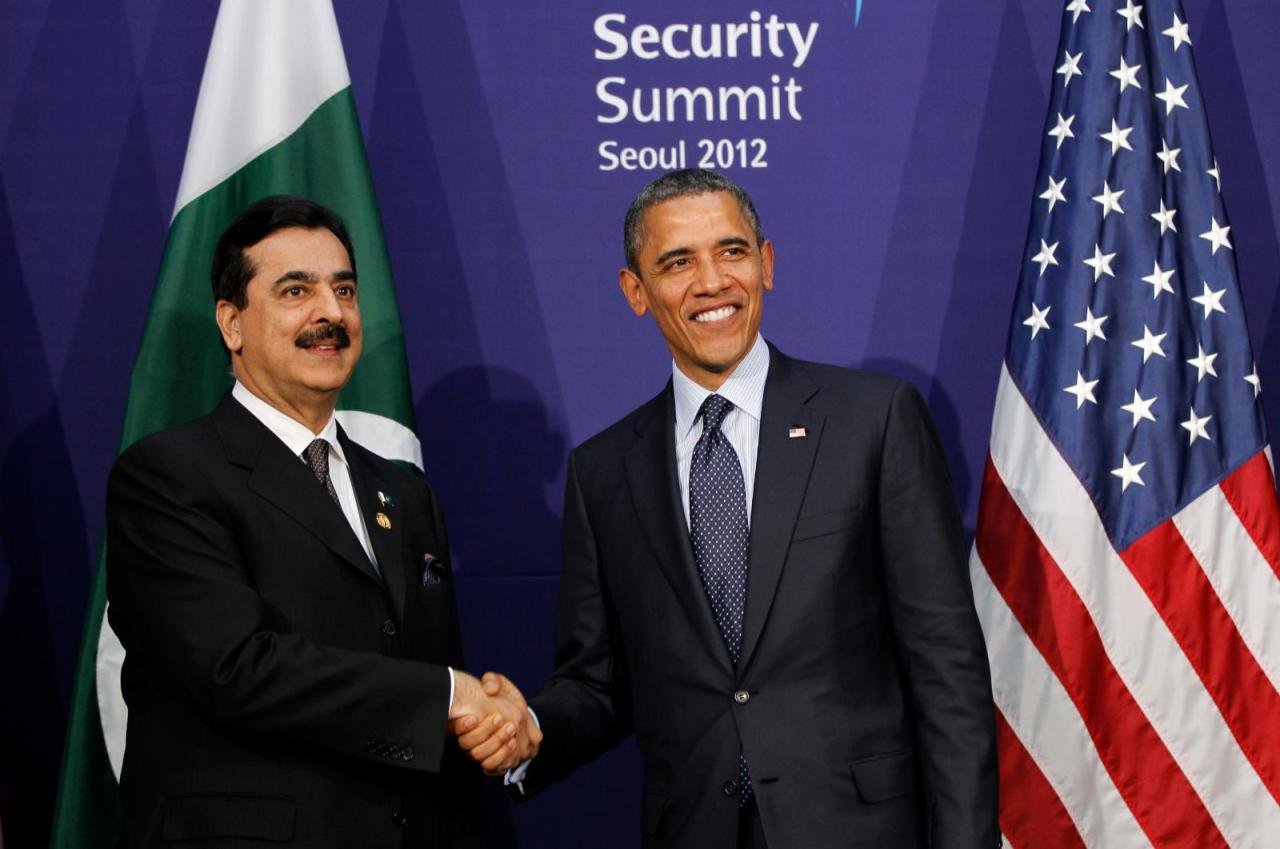
President Obama took a symbolic step toward improving ties with Pakistan on Tuesday when he met with Prime Minister Yousaf Raza Gilani on the sidelines of a nuclear summit meeting in South Korea.

But even as the two leaders made polite, if freighted, comments about improved cooperation, harsh debate in Pakistan’s Parliament on Tuesday made clear that there may be very little political upside for any Pakistani warming toward Washington.

Speaking in Seoul, President Obama acknowledged “strains” in the relationship and voiced his support for a parliamentary review process in Pakistan that aims to get the relationship back on its feet. “I think it’s important for us to get it right,” he said at a joint news conference.

But Mr. Obama added that Pakistan must also respect pressing American security concerns centered on “national security and our needs to battle terrorists who have targeted us in the past.”

Mr. Gilani replied that he would help work with Mr. Obama “to have all the peace, prosperity and progress of the whole world.”

Relations between the two countries plunged steeply after the American commando raid that killed Osama bin Laden last May, then worsened further after American warplanes fired airstrikes that killed 24 Pakistani soldiers along the border with Afghanistan in November.

The border strikes caused Pakistan to close NATO supply routes into Afghanistan and expel American officials from a remote air based used by the C.I.A. to launch drone strikes against militants from Al Qaeda and the Taliban in the northwestern Pakistani tribal belt. More recently, a Pakistani parliamentary committee on national security demanded an end to drone strikes and an unconditional American apology for the airstrikes.

In Islamabad on Tuesday, Parliament was supposed to start a long-awaited debate that would pave the way toward re-engaging diplomatically with the United States. But the opposition stalled the debate, with some lawmakers expressing fury at news reports that the government had already promised to reopen the NATO supply lines.

Ayaz Amir, an influential lawmaker with the opposition Pakistan Muslim League-N party, questioned why Pakistan even bothered blocking the supply routes if it was assumed they would start right back up again. “We are fooling ourselves, and we are also fooling the Pakistani people,” he said.

The most scathing criticism came from Maulana Fazalur Rehman, an influential religious politician, who warned that if the government failed to win broad political backing for its review of American ties, he would take his protests onto the streets.

“We will not let such a decision to be implemented in the field,” he said.

Mr. Rehman asserted that given urgent efforts by the Americans to start negotiations with the Taliban in Afghanistan, American weapons transported through NATO supply lines could ultimately be turned back on Pakistan, earning loud applause from fellow lawmakers. And he asked how the government intended to bring covert American operations in Pakistan under the law of the land.

Raza Rabbani, a senior government lawmaker, responded that the parliamentary committee’s recommendations on American policy were “broad policy guidelines” and not a final decision.

The session was adjourned until Wednesday evening, when the formal debate is due to begin. Meanwhile, outside Parliament, a newly formed alliance of religious parties and extremist groups, the Defense of Pakistan Council, held a large street rally against the reopening of the supply routes.

“If Parliament compromises on the security and sovereignty of the country, then we cannot guarantee the security of the lawmakers,” said Maulana Sami ul-Haq, head of the alliance, as hundreds of protesters chanted anti-American slogans.

Pakistan is a Nation at Odds With Itself, U.S.

By Stephen Magagnini for The Sacremento Bee
KARACHI, Pakistan — On a moonlit Thursday night in February, a television network executive hosted an elegant affair for journalists and diplomats at his villa above the Arabian Sea.

Karachi’s privileged dined on lamb, shrimp, chicken, mutton and fettuccine in mushroom sauce, and were surprised by a quartet of wandering minstrels, soulful Sufi poets who serenade for their supper, uncorking ballads about love.

On the south side of this city of 18 million, a group of Afghan refugees, who scrape out a living collecting cardboard and other recyclables in a slum straddling a swamp of open sewage, were mopping up gravy with roti – Pakistani bread.

About 900 Afghans live in this fetid slum, down the street from poor Pakistanis and water buffalo. They earn about $60 a month and survive on bottled water, chewing tobacco and roti.

“We’re happy in Pakistan,” said 33-year-old Shaezhad, leader of a cardboard collection station. “We get food and respect.”

At the party across town, talk-show hosts and other Pakistani elites blew cigarette smoke into the faces of U.S. journalists, criticizing U.S. foreign policy and the toll the war in Afghanistan has taken on their country.

Many Pakistanis resent American aggression in the region and want more respect from U.S. policymakers, but they don’t hold individual Americans responsible. Yet everywhere we went, we were held to answer for U.S. wars and Americans’ deep misunderstanding of Pakistan.

“You are arrogant, playing video games with our lives,” Abdul Moiz Jaferii, political analyst for CNBC Pakistan, said over lunch one day in Karachi. He was referring to U.S. drone attacks that have killed Pakistani and Afghan civilians.

“And we hate America because the U.S. has always been the biggest, closest ally of the military dictators. You have done nothing to help democracy.”

The impact of the war in Afghanistan has permeated nearly every pore of this country of 180 million. More than 2 million Afghan refugees have fled to Pakistan, and some have brought a culture of violence. Since 9/11, 35,000 Pakistanis have been killed in terrorist attacks by suicide bombers and other war-related violence, according to Pakistan’s intelligence agency. The victims include 6,000 soldiers and 29,000 civilians.

The unpredictable violence and the kidnapping of foreign workers have created a climate of fear in this country. We weren’t allowed to visit villages outside urban areas, where 40 percent of Pakistanis live. Two shotgun-wielding security guards protected our buses in Islamabad, Lahore and Karachi. We entered our hotels through metal detectors and were rarely allowed to interact with average citizens in public places.

Pakistan – strategically located between Afghanistan, India, China and Iran and influenced by Saudi Arabia – remains an enigma to many Americans, who aren’t sure whether it’s friend or foe, democracy or military dictatorship.

Pakistan has provided critical support to NATO troops in the Afghan war – drones are launched from here, NATO supplies are sent through this country, and Pakistani troops have helped recapture terrorist strongholds along the volatile Afghan border.

But distrust of the United States in the wake of deadly drone attacks and the deaths of 24 Pakistani soldiers in a cross-border battle in November is such that rather than calling for more U.S. aid to build needed power plants, schools and hospitals, a growing number of Pakistanis want nothing to do with the United States. The government of Punjab – Pakistan’s most powerful state with about 90 million people – has decided to reject U.S. aid.

The killing of Osama bin Laden by U.S. Navy SEALs in Abbottabad in the heart of this country embarrassed and angered the Pakistan military and made Americans question why bin Laden was allowed to live in essentially a resort town. Some U.S. politicians have called for an end to the $18 billion in financial aid pledged since 9/11.

An Islamic republic?

Some of the world’s largest, most beautiful mosques are here, and to celebrate the Prophet Muhammad’s birthday on Feb. 4, 10,000 people named Muhammad gathered in prayer in Karachi.

We saw few women wearing hijabs, or head coverings, except those at Islamabad’s Faisal Mosque, which can hold 10,000 people for Juma, or Friday prayer.

Professional women drive cars, dress like their counterparts in U.S. cities and run government ministries, clinics and newsrooms. Women, who constitute 52 percent of the population, are increasingly getting advanced degrees. There’s a Pakistani proverb: “Every girl who goes to university gets a husband.”

Despite Islam’s ban on liquor, at a party in Islamabad guests of both sexes repaired to a speakeasy in the basement to drink wine or Johnny Walker Black and smoke cigars.

Though most marriages are still arranged, as many as 20 percent are “love marriages,” said Samina Parvez, director general of the government’s external publicity agency. “The divorce rate is also increasing – it’s about 10 or 15 percent,” Parvez said. “The majority of us are not practicing Muslims.”

Kamoran Sani, sales and marketing director for the Sheraton Hotel in Karachi, declared, “What you’ve heard about the Islamic Republic of Pakistan’s a big farce. There are orgies, voyeurs’ lounges, raves.”

A diverse nation

Pakistan didn’t become a nation until the British sliced India into Muslim and Hindu majority states in 1947. Pakistan – an Urdu acronym for Punjab, Afghania, Kashmir, Sindh province and Baluchistan (“stan” means nation) – varies wildly from region to region.

“There is no such thing as Pakistan,” Jaferii said. “First comes your family, then your clan, third your region, fourth your province – the nation comes a distant fifth.”

Much of rural Pakistan is a feudal society dating back to the 13th century. Mullahs, or religious leaders, still invoke blasphemy laws exacting punishment against those accused of insulting Islam. Last year, the governor of Punjab was killed by his bodyguard for criticizing the law as he sought a pardon for a Christian woman sentenced to death.

But Pakistan has tremendous religious and ethnic diversity. Muslims include Sunnis, Shiites, Ismaelis, Ahmadis and Sufis – each practicing their own brand of Islam. At Lahore University of Management Sciences, I chatted with Muslims, Hindus and Christians who were all friends.

From the Sufi love poems to Pashtun folk songs about social justice, music plays a key role in Pakistani identity.

In the center of Karachi there’s a Catholic church – St. Patrick’s Cathedral, built by the Jesuits in 1931. There’s a Jewish cemetery. Sikhs worship throughout Pakistan. The ancient city of Taxila was occupied by Alexander the Great and reflects Persian, Moghul, Buddhist and Christian traditions.

Pakistan’s future

Sixty percent of Pakistan’s population is under age 30; half is under age 20. Half the kids haven’t been to school, and fifth-grade students are reading at a second-grade level, said Nadeem ul-Haq, deputy chairman of the government’s planning commission.

“We have 2 million kids a year entering the labor force. What are these kids going to do?” ul-Haq said. There is no building boom to provide jobs, and foreign investments have been scared away by terrorism.

“Entrepreneurship is the key thing we need to focus on,” he said. “Overseas Pakistanis have been very entrepreneurial, sending back $13 billion a year to their poorer relatives.”

From 7-Elevens to Silicon Valley firms and venture capital funds, ex-pat Pakistanis are thriving in the United States. The 500,000 Pakistanis in the United States, including 100,000 in California, send $100 million a year to charities in Pakistan, said Ahson Rabbani, CEO of I-Care, which connects donors with 30 nonprofits.

In Northern California, Pakistanis raised more than $100,000 for Pakistani flood relief efforts spearheaded by cricket star Imran Khan, who may lead the country if his party wins the next election. Khan has gained credibility by building a cancer hospital for the poor in honor of his late mother. His party includes a women’s wing that has direct access to him.

Philanthropy is playing a growing role in Pakistan, financing schools in poor villages and slums. The Citizens Foundation is educating 100,000 students.

“I mentored six girls,” said Karachi journalist Samia Saleem. “One was 13 and said she didn’t want to get married – she wants to be a teacher.”

Ali Shah Haider, 17, wants to be a commercial pilot. “I sleep from 2 p.m. until 4:30 p.m., then go to work at the textile factory from 8 p.m. to 5 a.m. to support my family – there are 12 of us. I do my homework between shifts.”

A nation’s dreams

Though life seems cheap in Pakistan, the people are upbeat survivors who often describe life as bo hat acha, which means “great!” in Urdu, their main language.

Last year 1,575 people were killed in Karachi, where 2 million weapons are in circulation, said Francisco Quinones of Arcis International Security. A doctor was killed in Karachi the day before we landed. Violence has been blamed on the Taliban, rival political gangs, Sunni and Shia militants, rogue security forces, and Afghan refugees.

Some refugees have been recruited by the Taliban. Others like Shaezhad, who collects recyclables in the slums of Karachi, are glad to be alive under the green and white crescent flag of this country.

Still, he wants to go home to Afghanistan. “We want our land back, we want to live with respect and we want employment.”

Azhar Abbas, the managing director of Geo TV news who hosted the party in Karachi, said that “democracy is taking hold” in his Pakistan despite the violence many here believe followed the U.S. war on terror.

The business editor of daily newspaper the News, Amir Zia, said the United States can still play a positive role in Pakistan. “If Americans pull out without getting the job done, the Islamic extremists will say it’s a victory and will become much more organized.”

But at the National Defense University, business and technology expert Bilal Munshi called Pakistan “a psychologically scarred nation suffering from a mass form of PTSD (post-traumatic stress disorder).”

If the 4 million young people entering the workforce each year get jobs, “we will be a power … but if they don’t see a future they’re going to pick up the gun, and you’re going to be in real trouble.”

The U.S. can help develop Pakistani schools, Bilal said, “but don’t interfere in our internal affairs – let us do things our way.”
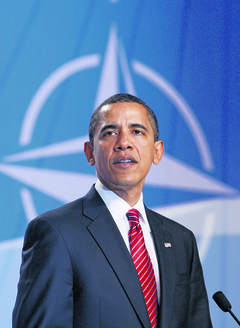
Peace Effort Takes Karzai to Pakistan .

By Yaroslav Trofimov, Tom Wright and Adam Entous for The Wall Street Journal

Afghan President Hamid Karzai on Thursday met with Pakistan’s leaders, trying to gain Islamabad’s support for his peace outreach to the Taliban, as U.S. officials worked to keep expectations in check about the strategy’s prospects for yielding direct peace talks with the Islamic militant group.

The Taliban, meanwhile, denied Mr. Karzai’s claim that they have been negotiating with the Afghan government.On the first day of his three-day visit to Pakistan, Mr. Karzai met with Pakistani Prime Minister Yousuf Raza Gilani, who promised Pakistani cooperation in investigating the September assassination of the chief Afghan peace negotiator and voiced support for an Afghan-led peace process. Pakistan’s Army Chief of Staff Gen. Ashfaq Kayani, who wields considerable influence over the country’s foreign policy, also took part in the talks.

In Islamabad, Mr. Karzai reiterated that respect for the Afghan constitution and for women’s rights remain his “crucial conditions” for any future deal with the Taliban.

Defense Secretary Leon Panetta, who has been skeptical of reconciliation efforts in the past, at a Thursday news conference lauded Mr. Karzai’s remarks—made in a Wall Street Journal interview—about Kabul’s willingness to engage with the Taliban.

“What President Karzai’s statement confirmed is that Afghanistan is very much involved in the process of reconciliation and that is extremely helpful and important to determining whether or not we are ultimately going to be able to succeed with reconciliation or not,” Mr. Panetta said. “The news that Afghanistan has joined those reconciliation discussions is important.”

Mr. Panetta said he didn’t know whether additional three-way sessions between the U.S., the Afghan government and the Taliban have been planned.

Another senior Obama administration official remained cautious about whether such confidence-building contacts would translate into direct peace talks, calling the process “complicated and precarious.”

A day after Mr. Karzai told the Journal that Afghan government representatives have had contacts with U.S. and Taliban officials in an attempt to end the 10-year war, the Taliban said they had no intention of negotiating with “the powerless Kabul administration.”

“If someone met the Karzai administration representing the Islamic Emirate, he is an impostor,” said a statement by the Taliban leadership, which calls itself the Islamic Emirate of Afghanistan. The Taliban in the past denied reports of peace talks with the U.S., only to confirm them in recent months.

U.S. officials have confirmed Mr. Karzai’s remarks, saying at least one three-way negotiating session occurred in recent weeks.

Admitting negotiations with Kabul would be fraught will political risks for the insurgent leadership, possibly undermining the morale of Taliban fighters, and weakening the militants’ resolve amid coalition offensives.

The intensity of the conflict already declined dramatically in recent months, Afghan and coalition officials say, though it is unclear whether this drop is due to the spreading news about peace talks, unusually harsh winter weather, or a strategic decision by the Taliban to hold their fire as foreign forces withdraw.

Pakistan, which U.S. officials say provides shelter and support to the Taliban leadership, plays a crucial role in Afghanistan’s peace outreach.

Mr. Karzai’s relations with Pakistan neared a rupture point after the September assassination of former President Burhanuddin Rabbani, the peace negotiator, by purported Taliban peace emissaries. At the time, Afghan officials blamed the killing on Pakistan, something that Pakistani officials denied. Two suspects have since been arrested in Pakistan.

The White House wants to show progress on the reconciliation track before a May summit of North Atlantic Treaty Organization leaders in Chicago. There, NATO leaders are expected to announce plans to shift to a train-and-assist mission in Afghanistan in 2013, giving Mr. Karzai’s security forces the lead role in combat operations before most U.S. and NATO troops pull out at the end of 2014.

Where Pakistan fits into tentative peace talks with the Taliban remains unclear. The U.S. has not kept Islamabad informed about developments in the peace process, Pakistan civilian and military leaders claim.

U.S. and Afghan officials say they are concerned Pakistan might try to undermine peace talks. In January 2010, Pakistan detained a senior Taliban leader, Mullah Abdul Ghani Baradar. Afghan and U.S. officials claim Pakistan arrested him for contacting the U.S. and Mr. Karzai’s government without Pakistan’s knowledge, a claim denied by Pakistan.

Afghanistan has asked for Pakistan to transfer Mr. Baradar to Kabul, but this hasn’t happened so far. Pakistani officials deny they back the Taliban.

Pakistan will stay on the sidelines in the tentative peace process as long as the U.S. remains distrustful of Islamabad, said Imtiaz Gul, director of the Islamabad-based Center for Research and Security Studies.

“We’re not sure to what extent the U.S. wants Pakistan to play a role,” Mr. Gul said. “The Pakistani role at this moment seems very limited.”

Pakistan’s ability to play a meaningful part in talks has further been hampered by a deterioration in relations with U.S. after an American helicopter strike in November mistakenly killed 26 Pakistani soldiers along the Afghan border.

U.S. officials say they are still trying to hammer out an agreement with Taliban representatives on a sequence of confidence-building measures aimed at laying the ground for any future direct negotiations on ending the war.

In addition to the establishment of a political office for the Taliban in Qatar, the U.S. wants the Taliban to issue a statement distancing itself from international terrorism and to agree to stop fighting in certain areas of the country.

The U.S., in turn, would transfer of up to five Taliban militants held at the U.S. military prison in Guantanamo Bay, Cuba, to Qatar. Key U.S. lawmakers have raised objections to the prospective prisoner transfers.

Officials have identified the five Guantanamo detainees who may be transferred to Qatar as Muhammad Fazl, a former senior Taliban defense official; two former local governors, Khairullah Khairkhwa and Noorullah Nori; former Taliban intelligence official Abdul Haq Wasiq; and top Taliban financier Muhammad Nabi.

Messrs. Haq Wasiq, Fazl and Nori were among the first 20 detainees who arrived at Guantanamo Bay 10 years ago, when the prison was opened on Jan. 11, 2002.

The U.S. has received assurances from Qatar that the five militants, if transferred, won’t be released by the government or handed over to the Taliban. But officials said the men could be freed later as part of a future Afghan-Taliban peace deal.

Lamont Peterson, Amir Khan Set Fight

By Dan Rafael for Espn

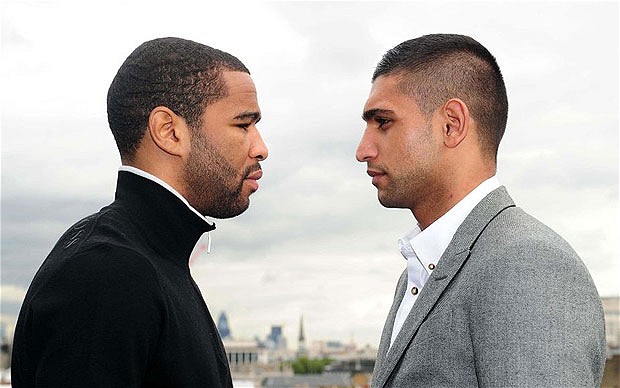
Unified junior welterweight titlist Lamont Peterson and former titleholder Amir Khan will meet in a rematch at Mandalay Bay in Las Vegas on May 19, a little more than five months to the day after their all-action first fight went down as one of the most controversial bouts of 2011.

“Everyone is very pleased that this is Lamont’s next fight,” attorney Jeff Fried, who represents Peterson and Barry Hunter, Peterson’s trainer/manager and father figure, told ESPN.com on Thursday after the deal had been signed. “It was challenging for a variety of reasons, including some of the post-fight antics undertaken by Khan. But at the end of the day, Lamont and Barry had a singular focus on what is in the best interest in Lamont Peterson and his family, and that is what drove this deal getting done.”

England’s Khan (26-2, 18 KOs) came to Peterson’s native Washington, D.C., to defend his belts Dec. 10 and lost a split decision in a fight filled with great action but marred by questionable officiating, issues over the scorecards and an unauthorized figure at ringside.

“Both sides are signed, but this has been one of the most difficult negotiations I have had for any fight I have ever been involved with,” said Golden Boy promoter Richard Schaefer, who has negotiated dozens of major fights. “There was a lot of back and forth, but it all ended good in getting this fight done. I think it’s one of the most anticipated rematches. It’s the right fight for Lamont and the right fight for Amir, and I’m really excited both parties agreed to do this fight.”

Peterson accepted the deal from Golden Boy, which handles Khan, for the rematch even though Top Rank’s Bob Arum had been wooing Peterson, a promotional free agent, for a fight with Juan Manuel Marquez, which he hoped to put on at Cowboys Stadium in Arlington, Texas.

Peterson, who earned $650,000 for the first fight and rejected a $1 million offer for the rematch shortly after the first fight, will make “substantially more than $1 million,” Fried said, although he did not divulge the terms.

Khan, who has a contract with HBO in the United States and Sky in England, brings substantial money to the fight but wanted the rematch so badly that he gave 50 percent of the worldwide revenue that the fight will generate to Peterson.

“We offered 50-50 because that was how much Amir wanted this fight,” Schaefer said. “There were times where it looked like we were close to getting it done, but it was a drawn out process. But in the end it was not a sanctioning organization, a TV network, the media or fans who made this rematch. It’s the fighters who wanted to get the fight done. It was Lamont Peterson saying he didn’t want to fight anybody else except Amir Khan and it was Amir Khan saying he wanted to fight only Lamont Peterson. That is what makes fights.

“The truth is both fighters had other options. But it really came down to what they wanted most. For both guys, other options might have been more lucrative, but it was not really only about the money. They realized the right thing to do was to fight each other again.”

The refereeing was the most controversial aspect of the December fight. Khan had two points deducted for pushing — an almost unheard of foul call — in the seventh and 12th rounds by Washington-area referee Joe Cooper. Without the deductions, Khan would have retained the belts via unanimous decision.

Khan complained that while he was docked points for pushing, Peterson (30-1-1, 15 KOs) was never warned for leading with his head. Golden Boy also raised questions about judge George Hill’s scoring of the seventh round, which appeared to read 10-10 but was crossed out to read 10-8 in Peterson’s favor.

Then there was the much-publicized issue of the so-called ringside “mystery man,” who turned out to be Mustafa Ameen, who is affiliated with the IBF and had a credential arranged as a courtesy from the organization, but was not at the fight in an official capacity. However, he was seen on video at ringside apparently touching the scoring slips, which is against the rules, and distracting a judge. He was later seen in the ring apparently celebrating with the Peterson team after the fight.

It all led to Khan protesting the decision to the sanctioning bodies and harsh words were exchanged between the camps. But now all of that should only add to the interest surrounding the rematch, which will headline HBO’s “World Championship Boxing.”

“May the better man win,” Schaefer said. “It will be one of the most talked-about fights of the year. This is one of those fights people wanted to see and I am happy we can deliver it to the fight fans. I will say this, Jeff Fried deserves a lot of credit for helping us get this done.”

Schaefer said he is close to finalizing the co-featured bout for the card, which would also take place in the 140-pound division: Lucas Matthysse (29-2, 27 KOs), the hard punching contender from Argentina, against former lightweight titleholder Humberto Soto (57-7-2, 34 KOs) of Mexico, who is now fighting as a junior welterweight.

“I am almost done with that fight and HBO is licking their chops on this fight,” Schaefer said. “Those two fights as a doubleheader is probably the best 1-2 punch HBO boxing has delivered in a long time.”

Study: US Muslims Don’t Want Shariah, Either

By Omar Sacirbey for The Houston Chronicle

North American Muslims are more than satisfied with the secular legal system and do not want a set of parallel courts for Islamic law, according to a new study of U.S. and Canadian Muslims by a Washington-based think tank.

The study, by University of Windsor law professor Judy Macfarlane for the Institute for Social Policy and Understanding, refutes critics’ claims that American Muslims want to impose Shariah, or Islamic law.

In fact, the study indicates that Muslims are just as unwilling to accept Islamic law as non-Muslims.

Macfarlane interviewed 212 Muslim Americans, including 41 imams and 70 community leaders who used aspects of Shariah in their daily lives. The other 101 interviewees were divorced Muslim men and women. About a quarter of the interviewees were from Canada, and the rest from the United States.

“Aside from formal religious observance, American Muslims relate to their Shariah responsibilities primarily through rituals of marriage and divorce,” Macfarlane wrote.

“They see these as compatible with the civil law – almost all the respondents in this study married and divorced twice, once in Islam and once in law – and will use the courts where they cannot agree outcomes, just like any other couple.”

When asked whether they thought American courts should apply Shariah to non-Muslims in the legal system, all of the respondents answered no. Just three of the 41 imams said they wanted parallel Shariah tribunals where Muslims could handle civil issues like marriage, divorce, and inheritance.

Macfarlane began her research after a Muslim group in Ontario petitioned the provincial government in 2003 to establish a separate Islamic family tribunal where Muslims could get binding legal decisions on family law issues. The Ontario government denied the request, and later that year abolished similar tribunals for Catholic and Jewish citizens that had been allowed in 1991.ˇ

The study follows a Jan. 10 decision by a federal appeals court that upheld a lower court’s ruling to overturn a 2010 Oklahoma constitutional amendment to prohibit judges from using Shariah in their deliberations.

Tennessee and Louisiana have passed similar laws, while 20 other states are considering such legislation.

Punishing Pakistan Is Not The Way To Go

By Nancy Birdall for Foreign Policy

In the January/February 2012 issue of Foreign Affairs, Stanford political scientist Stephen Krasner claims that “current U.S. policy toward Pakistan has failed” and recommends that the United States take a radically different approach: credibly threaten to sever all forms of cooperation, including all U.S. aid – military and civilian – to force Pakistan into cooperating with the United States on security matters. Center for Global Development President Nancy Birdsall responds.

Stephen Krasner (“Talk Tough to Pakistan: How to End Islamabad’s Defiance,” Jan/Feb 2012) wants to change the Pakistani government’s behavior. He argues that its failure to cooperate with the United States on Afghanistan and on terrorism is not due to its weakness as a state. Instead, it is a rational response of Pakistan’s military leadership, whose priority is to defend itself against India – with a nuclear deterrent and support for terrorists and the Afghan Taliban. Therefore, the only way the United States can win cooperation from Pakistan is to threaten “malign neglect”- cut off military and civilian assistance, sever intelligence cooperation, maintain and possibly escalate drone strikes and initiate unilateral cross-border raids. If that isn’t enough, then the U.S. could move on to “active isolation” — declare Pakistan a state sponsor of terrorism, making it a pariah, and impose sanctions.

If only it were this easy. Krasner fails to mention that the U.S. has tried this approach before. In the 1990s it cut off military and civilian assistance to Pakistan and imposed sanctions in an effort to dissuade Pakistan from developing a nuclear capability. We all know how that story ended. But let’s suppose this time the threats or the follow-through worked and brought the military and intelligence establishment to heel in Pakistan. Let’s suppose the United States got what it wanted on the security front – helping assure a timely U.S and NATO withdrawal from Afghanistan. Would that solve the problem Pakistan poses for America’s security in the long run? No.

What Krasner doesn’t say is that the U.S. wants something more than compliance from Pakistan’s military and intelligence communities with its immediate security needs. The U.S. wants a capable and stable civilian government that plays by the rules of the international community. It wants a democratic state that would not abuse and misuse its nuclear capability and that would find its way to peaceful relations with India.

In other words the U.S. has a long-run vision for Pakistan, very much in its own interests, as well as a set of short-term demands. In the 2009 Enhanced Partnership with Pakistan Act (known as Kerry-Lugar Berman, or KLB) Congress recognized the resulting need for a two-track approach. That legislation made U.S. security assistance (not actually authorized in the legislation) conditional on Pakistani cooperation on security matters. But its fundamental purpose, and the money it authorized for civilian aid, was the rebuilding of a serious partnership with the civilian government and the people of Pakistan. With KLB as the framework, since 2009 the Obama Administration has engaged fully with the civilian government and with civil society and private sector leaders in Pakistan on a range of issues — energy, water, agriculture, macroeconomic issues, private investment and trade.

In short, the purpose of U.S. civilian aid to Pakistan is to help build a better state. It is not to bribe or reward the “government” (neither the military nor the civilian leadership). Withholding military aid would likely not punish the military anyway. It would, however, reduce the resources available to the civilian government, since the evidence is that the military can get what it wants from the government’s overall available resources. And withholding civilian aid obviously would not punish the military. It would, however, take away a modest tool of America – investing to educate kids, create jobs, and strengthen civil society and representative institutions and thus give Pakistan a better shot at becoming a stable, prosperous and democratic country in the long term.

There are of course real questions about the effectiveness of U.S engagement with the civilian government – with aid and dialogue – given the prevailing suspicion there of U.S. motives, the inherent difficulties of operating in a complex and insecure environment, and the bureaucratic shortcomings of the U.S. aid system itself. But then those are reasons to put relatively more emphasis on other forms of engagement: trade, investment, and encouraging the normalization of relations with India. They do not warrant bullying the weak civilian government that the U.S. wants to strengthen.

Krasner begins and ends his article by invoking the testimony of former chairman of the Joint Chiefs of Staff Admiral Mike Mullen during his last appearance before the Senate Armed Services Committee. Krasner is right in pointing out that Mullen was critical of Pakistan’s role in supporting extremist organizations and the need to get tough with Pakistan. Yet, Krasner fails to mention the conclusion Mullen reached in his statement. Mullen recognized that the U.S. has a variety of objectives in Pakistan and the region, and that by focusing too intensely on short term interests, the U.S. will end up short-changing itself over the long haul: “We must also move beyond counter-terrorism to address long-term foundations of Pakistan’s success – to help the Pakistanis find realistic and productive ways to achieve their aspirations of prosperity and security.” Mullen concludes, “Isolating the people of Pakistan from the world right now would be counter-productive.”

Nancy Birdsall is the founding president of the Center for Global Development, a Washington, DC based think tank.

Pakistani Doctor Helped U.S. Track Bin Laden, Panetta says

By Saeed Shah for McClatchy Newspapers

A senior American official has for the first time admitted that a Pakistani doctor played a key role in tracking Osama bin Laden to his hideout in northern Pakistan, and called for his release.

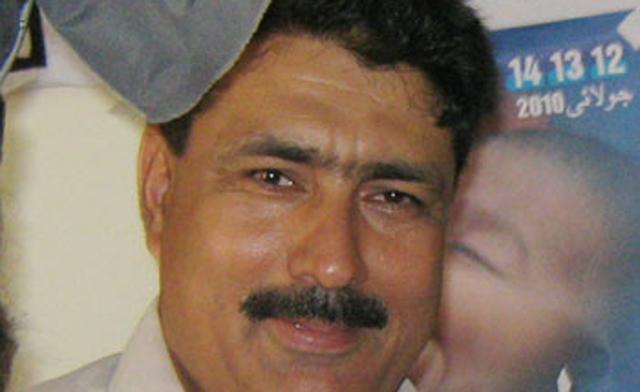
The comments by U.S. Defense Secretary Leon Panetta were the first public confirmation of a part of the bin Laden operation reported by McClatchy Newspapers in July, about how the CIA used Shakil Afridi to try to establish whether the al-Qaida leader was really living in a large house in Abbottabad, northern Pakistan.

This morning in Islamabad, Pakistan’s Inquiry Commission on the Abbottabad Operation issued an order to charge Afridi with treason, local media reported. The timing makes it appear that Pakistan is rebuking Panetta for his public acknowledgement of Afridi’s role. Afridi has been in Pakistani custody since the country’s own spy agency, Inter Services Intelligence (ISI), learned of the secret task performed by the doctor, who set up a fake vaccination program in Abbottabad to get DNA samples from those staying at the compound.

The CIA was never certain that bin Laden was present in the house. Afridi worked for the American intelligence agency in the weeks leading up to the Navy SEALs raid on May 2, setting up an elaborate scheme that was supposedly going house to house to vaccinate residents in Abbottabad.

Panetta told CBS’ “60 Minutes” “I am very concerned about what the Pakistanis did with this individual (Afridi). This was an individual who, in fact, helped provide intelligence that was very helpful with regard to this operation.” Panetta also voiced his belief that elements within Pakistan must have known that bin Laden, or at least someone significant, was present inside the compound. The interview was posted on the “60 Minutes” website. However, it was not included in the segment telecast on Sunday night. The McClatchy investigation discovered that Afridi was arrested by the ISI in late May and was tortured. It is believed that he remains in the custody of the intelligence agency, which is part of the military.

The whereabouts of Afridi’s family, including his American wife of Pakistani origin, is still unknown. The fate of the doctor has become another source of tension between Islamabad and Washington, with American officials pressing Pakistan to free him so he and his family can be resettled in the United States.

The military, which will decide what happens to Afridi, is furious that the CIA recruited Pakistani citizens for clandestine operations inside the country. Privately, officials point out that it is a crime to work for a foreign intelligence agency.
The doctor has turned into a bargaining chip in the failing U.S-Pakistan alliance. It is thought that Pakistan will let him go after public attention on the case wanes and it gets something in return from the U.S. “He was not in any way treasonous towards Pakistan. He was not in any way doing anything that would have undermined Pakistan,” Panetta told “60 Minutes.”

“Pakistan and the U.S. have a common cause here against terrorism,” he said. “And for them to take this kind of action against somebody who was helping to go after terrorism, I just think it is a real mistake on their part.”
Panetta, who was in charge of the CIA at the time of the bin Laden raid, also said that while there was no evidence of Pakistani complicity in keeping the al-Qaida chief, suspicions must have been raised about his hideout. “I personally have always felt that somebody must have had some sense of what was happening at this compound. Don’t forget, this compound had 18-foot walls. … It was the largest compound in the area.

“So you would have thought that somebody would have asked the question, ‘What the hell’s going on there?'” Panetta said.
But asked whether he knew for sure that Pakistan was aware of bin Laden’s presence, he said: “I don’t have any hard evidence, so I can’t say it for a fact.”

Peace Pipeline Moves Closer To Fruition

By Mohammed Aasim Saleem for Deutsche Welle

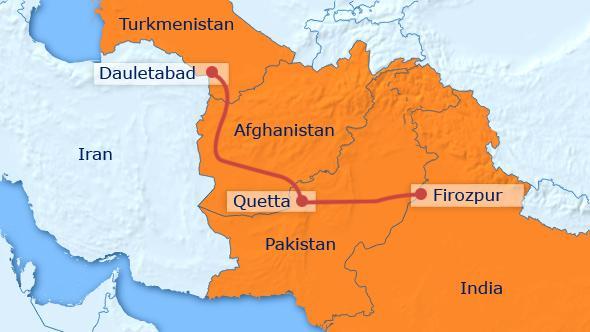
Officials from India and Pakistan have announced they are moving closer to inking a deal to import gas from Turkmenistan via a pipeline through Afghanistan. The 1,700-kilometer “TAPI” duct will transport over 30 billion cubic meters of gas annually from fields in Dauletabad in southeastern Turkmenistan.

In high-level talks in New Delhi this week, Indian Oil Minister S. Jaipal Reddy said “considerable progress” has been made on the project. His Pakistani counterpart, Asim Hussain, added at the meeting that “the issue of transit fees is being discussed with Afghanistan. A joint strategy is also being created between India and Pakistan.”

When the four countries signed a framework agreement back in 2008, the Asian Development Bank estimated the cost of the TAPI pipeline project at around $7.6 billion.

After the talks in New Delhi, the Indian oil minister emphasized that the pipeline would help address the energy needs of the region. Reddy also clarified that security concerns were discussed with Afghan officials, who themselves sought to provide reassurance that necessary measures would be taken to protect the TAPI project.

“We consider it a pipeline of peace,” Reddy said. “Everyone needs gas.”

Improving cooperation between the nuclear armed and traditionally hostile neighbors is seen as a positive development towards establishing long term stability in South Asia.

Pakistan gave India a “Most Favored Nation” trading status when the countries’ commerce secretaries met in New Delhi in November last year to discuss energy and bilateral trade. Indian commerce chief Rahul Khullar expressed his desire to boost bilateral trade to $6 billion within the next three years. Currently, total trade amounts to $2.7 billion.

Reddy said that Pakistan had pledged to also consider a proposal to import Indian petroleum products, highlighting the cost advantages for Pakistan. India, meanwhile, offered electricity to Pakistan through its power plants in Punjab and Gujrat.

The Indian oil minister went on to express disappointment over a failed Iran-Pakistan-India gas pipeline project. With the US leaving no stone unturned in trying to corner Iran over its nuclear ambitions, any possibility of India, Afghanistan or Pakistan going against the Obama administration is somewhat remote. India imports 12 to 14 percent of its oil from Iran, making the Islamic Republic India’s second largest source of oil after Saudi Arabia.

There was significant domestic pressure in India as the analysts and masses called for a stern stand against the US in determining trade relations with Iran. With other regional countries, including China, also refusing to follow US directions, India is still continuing with the import of oil from Iran. In this regard, Reddy said that New Delhi would continue importing oil from Iran and was not bound by new sanctions imposed by the European Union on the Islamic Republic earlier this week.

“We, as a member of the UN, are obliged to follow UN sanctions. Other sanctions imposed by big blocs of countries, we can have some freedom there,” he added further.

Improving relations and cooperation in the energy sector between India and Pakistan will go a long way to establishing harmony and stability in the region. Pakistan is experiencing a severe energy crisis whilst India needs to feed its rapidly developing economy. Mutual dependency and cooperation in this sector with projects such as the TAPI pipeline can also ensure smoother political ties.

Pakistanis for Peace Editor’s Note– A Peace pipe was often used between the Native American tribes when they ended their wars and called a truce. A different sort of peace pipe between Turkmenistan and India via Pakistan can do great wonders for the bilateral relations of the two feuding neighbors and must be encouraged to fruition.

The End of a Geopolitical Affair

By Pramit Pal Chaudhri for The Hindustan Times

In Pakistan’s current crisis, why is its military is so reluctant to consider simply seizing power? One reason is that General Ashfaq Pervez Kayani cannot count on the US looking the other way. At a minimum, Washington would have to slap sanctions on an economically faltering country. At a maximum, it would be the last straw in a bilateral relationship at its lowest ebb since it was first woven in the 1950s.

Pakistan’s establishment claims it has been used and abused by the US, the most serious violation being that country’s stealth attack on Abbottabad that led to Osama bin Laden’s death. There has been the Raymond Davies affair, the endless drone attacks and the increasingly public accusation of double-dealing by senior US officials – the most notable being Admiral Mike Mullen’s linking of the Inter-Services Intelligence with terrorist groups.

There is some satisfaction for India in all this. It has been persistently claiming the existence of a military-terrorist nexus. Many in Washington agree. After Abbottabad, there is no one in Washington who doesn’t. The US-Pakistan relationship, says Daniel Twining of the German Marshall Fund, “was really at a historic high for the past decade but is diminishing.” But it might not matter as much to the US if relations fall apart, he says.

Other events are undermining the basis of the US-Pakistani bond. Islamabad had expected the US to totally retreat from Afghanistan, leaving Pakistan’s Taliban allies in charge. Instead, the US will leave a substantial force behind along with many drone bases. The US is talking with the Taliban, but only desultorily with groups that Islamabad patronises.

With the US Congress also pulling the plug on aid to Pakistan, what is left? The answer is nukes. “If Pakistan didn’t have nuclear weapons, with Al Qaeda almost gone, no one would care a fig about that country,” said one ex-US ambassador to the region. As they realise this, Islamabad is getting more paranoid about the security of its “strategic assets.” The more unstable they look, the more willing the US will be to try and do something risky to salvage Pakistan’s nuclear weapons.

US officials are talking about a “new normal” in their Pakistan relations. This would cut ties to the bare bones: counterterrorism cooperation, limited military transit requirements, Afghan talks, narcotics and some humanitarian assistance. “We’ll have to work with the Pakistan military on a limited basis while negotiations with the Taliban proceed,” says John Schlosser, a former state department South Asia hand.

There seems to be no real understanding among Pakistanis that their leverage is dwindling or how much Abbottabad vapourised their credibility in the US. A parliamentary committee report on how to change the US relationship bizarrely demanded, for example, a civilian nuclear agreement.

It could get worse. “The relationship will fall further if the US finds [Al Qaeda chief] Zawahiri in Pakistan. Or there are terror strikes on India or the US,” says Bruce Riedel, former AfPak advisor to Barack Obama.

The worst thing is that Washington is decoupling just at a time when Pakistan, economically and otherwise, can least afford to lose their most generous international partner.

Sold Into Slavery As a Girl, Shyima Hall Becomes a U.S. Citizen

By Phil Willon, Los Angeles Times

A decade ago, Shyima Hall was smuggled into the United States as a 10-year-old slave, forced to cook and clean inside the home of a wealthy Irvine family and, at night, sleep on a squalid mattress in a windowless garage.

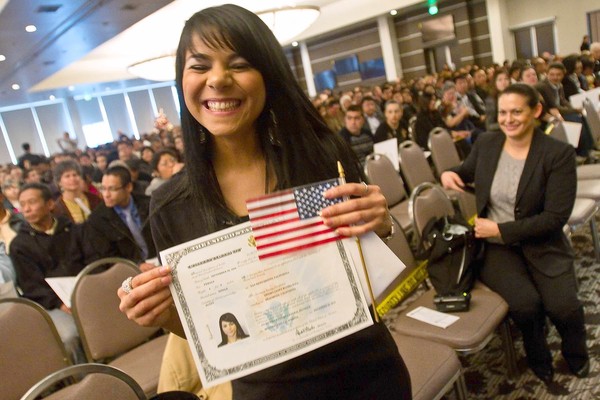
On Thursday, the Egyptian-born 22-year-old stood before a federal judge in Montebello with nearly 900 others and was sworn in as naturalized U.S. citizen. The ceremony capped a hard-scrabble journey that began with Hall’s rescue, wound through the foster care system and ended with her living on her own, working, and with ambitions to become a federal agent.

“I went through something terrible, but right now I’m in a great place,” Hall said after Thursday’s citizenship ceremony at the Quiet Cannon Country Club. “I can’t imagine anything greater than having my own life.”

Hall’s Egyptian parents sold her into slavery when she was 8 for $30 a month, according to authorities. The Cairo couple who bought her moved to Irvine two years later, smuggling Hall into the U.S. where she toiled for them and their five children until she was 13.

Hall said she worked 16 hour days, scrubbing floors, cooking meals and cleaning house, and was rarely allowed outside the spacious home. She was forced to wash her own clothes in a bucket and was forbidden from going to school. She never visited a doctor or dentist and didn’t speak a word of English.

Her captors, Abdel Nasser Eid Youssef Ibrahim and his former wife, Amal Ahmed Ewis-abd Motelib, berated her and occasionally slapped her around, authorities said.

“I didn’t know anything about what America was about. My only hope was to go back home and live a normal life with my family, my brothers and sisters,” she said. “That’s all I wanted.”

In 2002, acting on a tip from a concerned neighbor, child welfare authorities rescued her from the house. Her case was investigated by U.S. Immigration and Customs Enforcement, leading to the prosecution, federal imprisonment and, later, deportation of Ibrahim and Motelib.

Hall formed a tight bond with one of the lead federal agents, Mark Abend of ICE’s Homeland Security Investigations, who has served as a friend and mentor. He was at Hall’s citizenship ceremony Thursday.

“I’m really proud of her. Think of everything she’s been through. Being sold into slavery at an early age. Coming over here. Not having a family,” Abend said. “The resiliency she has is just amazing. The fortitude. Not falling apart. Not being a destroyed soul.”

Abend remembers interviewing Hall, then 13, with the help of an Arabic interpreter for the first time when she was being cared for at the Orangewood Children’s Home in Orange. Her captors told her to never speak to police, that officers would beat her. She stayed tight-lipped until she was allowed to call her parents in Egypt, and her father ordered her to go back with her captors.

“That’s when I saw a spark,” Abend said. “She stood up to her dad. She said, ‘No! This is not right. What they did to me was not right. You sold me into slavery.'”

At 13, Hall decided that she wanted to stay in the U.S. She hasn’t returned to Egypt or seen her family.

In recent years, Hall has spoken to groups across the country about combating human trafficking. She’s briefed ICE agents about the emotional and physical trauma victims face.

In 2010-11, federal immigration officials launched 651 investigations into human trafficking, arresting 300 people. According to the U.S. State Department, there are more than 12 million people entrapped in some form of slavery worldwide.

Hall said her dream now is to become a federal agent for ICE to help crack down on human trafficking and free the enslaved.

“That’s my top goal,” Hall said. “I’ve been through it. I know I can help.”

Los Angeles immigration attorney Angelo Paparelli, who represented Hall pro bono, said that her citizenship application was filed under a special provision for juvenile immigrants and that county officials from the outset supported her decision to stay in the U.S.

“She has literally gone through a living hell, and now she wants to give back,” said Paparelli, of the national law firm Seyfarth Shaw. “She’s there to give other people courage.”

For now, Hall is living in Beaumont in Riverside County and working at the Cabazon outlets as a store supervisor. She’s deciding whether to go back to college to finish a degree or to apply for the local police force.

“I’m very excited. I can start my career now,” she said. “I can start my life.”