Archive for September, 2010

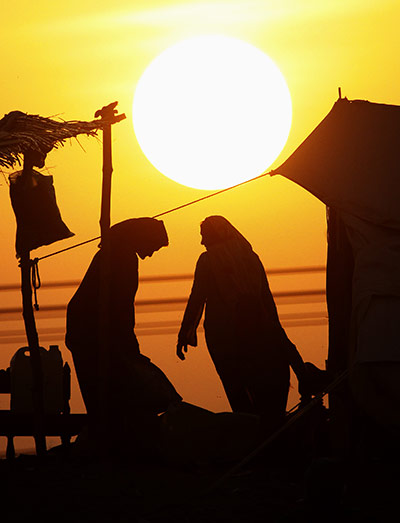
Angelina Jolie Meets Flood Victims in Pakistan

By Inamur Rehman for The Associated Press

American movie star Angelina Jolie met flood victims in northwestern Pakistan on Tuesday and appealed to the international community to provide aid needed to help the country recover from its worst natural disaster.

The flow of aid money has stalled in recent days, and officials expressed hope the two-day visit by Jolie โ€” who serves as a “goodwill ambassador” for the U.N.’s refugee agency โ€” will convince foreign countries and individuals to open their wallets.

The 35-year-old actress said she met with many people whose lives have been devastated by the floods, including mothers who lost their children and an elderly Pakistani couple who feared they would never be able to rebuild the home they lost.

“I am very moved by them and I hope that I am able to, today and tomorrow, be able to do something to help bring attention to the situation for all of the people in need in Pakistan,” Jolie told reporters after visiting a refugee camp in the Jalozai area.

She toured the area wearing a long black robe and a black headscarf adorned with a thin red stripe โ€” the kind of conservative clothing worn by many Muslim women in Pakistan.

The floods began in the northwest at the end of July after extremely heavy monsoon rains and slowly surged south along the Indus River, swallowing up hundreds of villages and towns and killing more than 1,700 people. Another 17 million have been affected by the floods, and many will need emergency assistance to survive.

The United Nations issued an appeal for $460 million in emergency funds on Aug. 11, but only $294 million, or 64 percent, has been received so far, and donations have more or less dried up in recent days.

Ajay Chhibber, a U.N. assistant secretary general, said he hopes Jolie’s visit will have “a very big impact” on the inflow of aid money and will keep people focused on the crisis.

“We need more … well-known figures who can keep the spotlight and focus because people tend to forget internationally,” said Chhibber, who is also the U.N. development agency’s regional director for Asia. He spoke to reporters during a visit to Islamabad.

Suicide Attack in NW Pakistan Kills 17 People

By Uaz Mohammad for The Associated Press

A Taliban suicide bomber detonated a car in an alley behind a police station in a strategically important town in northwestern Pakistan on Monday, killing at least 17 police and civilians in an explosion that shattered the station and neighboring homes.

About 40 people were wounded in the attack in Lakki Marwat, which sits on the main road between Punjab province, Pakistan’s largest and most prosperous, and the North and South Waziristan tribal regions.

A Pakistani army offensive pushed many militants out of South Waziristan in October. The militants still control much of North Waziristan, where U.S. drone aircraft have been conducting a campaign of targeted killings.

Hours after the attack, officials said a suspected U.S. missile strike had killed three alleged militants in North Waziristan, home to the Haqqani network, a militant group battling U.S. and NATO forces in Afghanistan.

Two Pakistani intelligence officials told The Associated Press that a missile hit a vehicle in the Datta Khel area on the Afghan border Monday evening. The officials spoke on condition of anonymity because they were not authorized to release the information

In Lakki Marwat, rescue workers and police officials were digging through rubble at the station, police official Ghulam Mohammad Khan said. Nine police officers, four adult civilians and four children going to school were slain in the attack.

Police official Liaquat Ali said 45 police were in the building when the bomber struck.

“I said my morning prayers and we went to sleep, then suddenly there was a big bang. All the debris fell on us,” police official Ikramullah Khan told The Associated Press from a bed in a nearby hospital, where many of the wounded lay wailing in pain as relatives comforted each other.

Emergency workers and local residents used cranes to move the rubble of the mostly destroyed police station. Books and a schoolbag could be seen in the wreckage and the twisted frames of a motorcycle and a car sat nearby. A neighborhood shop and mosque also were partly destroyed.

The Pakistani Taliban claimed responsibility for the attack, saying they targeted the police for encouraging residents to set up militias to fight the militants – known locally as lashkars. The group pledged to carry out additional attacks unless the militias disbanded.

“After the police, we will attack those active in forming anti-Taliban lashkars if they have not given up their activities,” Taliban spokesman Ahsanullah Ahsan told The Associated Press by telephone from an undisclosed location.

The police chief of Lakki Marwat district was killed in a suicide bombing several months ago and militants have carried out a string of attacks in the area since then.

In recent days, militants have launched attacks across the nation aimed at destabilizing the country and weakening a civilian government already struggling with a massive flooding that has displaced millions and caused widespread destruction.

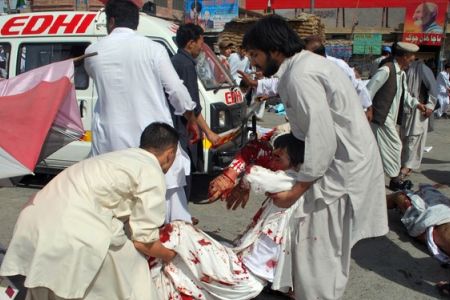
The deadliest have targeted minority Shiite Muslims. A suicide bombing killed at least 43 Shiite Muslims at a procession in the southwestern city of Quetta on Friday. Two days earlier, a triple suicide attack killed 35 people at a Shiite ceremony in the eastern city of Lahore.

Both were claimed by the Pakistani Taliban, whose commander Qari Hussain Mehsud threatened Friday that his group would wage imminent attacks in the U.S. and Europe.

On the same day, Pakistani intelligence officials said two suspected U.S. missile strikes had killed at least seven people in North Waziristan, which is largely controlled by the Haqqani network, one of the main groups battling Americans in neighboring Afghanistan.

How Pakistanโ€™s Floods Have Made Women Dangerously Visible

By Rania Abouzeid for TIME

Nagina drew her modest light-green cotton dupatta, the scarf that Pakistani women drape over their arms, head and chest, up over her face as she cautiously peered out from a muddy white tent to watch her youngest child, a barefoot, trouserless four-year-old boy in a navy blue shirt streaked with mud. The timid Pathan woman has four other children, three older girls and a boy, but her daughters are not with her in this overcrowded cluster of tents known as the Khandar relief camp in Nowshera, a flood-devastated northwestern district some 90 miles west of the capital Islamabad in the insurgency-plagued, religiously conservative Khyber Pakhtunkwa province. “We are trying to keep the girls away,” Nagina says, “because parda is impossible now.”

Parda, which is also spelled “purdah” and means “curtain” in Urdu, is the practice of shielding women from men they are not directly related to, both through physical segregation and through the custom of modesty, that is, with the women wearing clothing to conceal their shape. It is observed by many women in rural areas of Pakistan, including in the majority-Pathan northern belt bordering Afghanistan. In these parts, a family’s honor is often tied to the chastity and obedience of its women โ€” and protecting and defending the honor of women from verbal and physical harm is part of an ancient code of honor and revenge. But the code is all too often taken to extremes. Barely a week goes by without stories appearing in the Pakistani media about an enraged male โ€” from across Pakistan’s multiethnic spectrum โ€” who has killed his female relative or relatives for some perceived infringement of “honor.” For women adhering to Parda, it’s usually easier and safer for them to simply remain secluded in their homes. ย 

The floods have made that option unavailable in many places. Desperation has driven women to vigorously jostle with men for limited relief goods at distribution points. Overcrowding and densely pitched tents have forced them into close quarters with men they don’t know, the flimsy canvas coverings providing little privacy from prying eyes. In the camp at Nowsherra, Adiba nods in gloomy agreement as her sister-in-law Nagina discusses the limits of parda amid the calamity . Her tribal tattoos โ€” a green dot on her forehead and another on her chin โ€” mark her as a member of a conservative tribe from the Taliban-infested town of Bajaur. Both women say their husbands are understanding of the conditions but they fear that their men’s patience will run out. “My husband is very upset,” says Adiba, a mother of six. “This is why we’re just sitting in our tents during the day and the night, like in a cage.” ย 

Pakistan’s northwest, the first region to be hit by the floods and the most devastated, “is an extremely conservative society,” says Imtiaz Gul, author of The Most Dangerous Place, a book about the Pakistan’s northwestern tribal belt bordering Afghanistan. “You hardly see women outside and they hardly have any role except for cooking and cleaning the house and that’s about it.” ย 

Nagina, like many of the women in Nowsherra’s camps and other places the Pathan have sought refuge from the waters, has sent her unmarried daughters away to live with relatives whose homes were not washed away by the deluge. She hasn’t seen them for a month. “We have no choice,” she says sullenly. “This situation is forced on us.”

Gul says that the longer it takes to get people back to their homes, the greater the possibility of social unrest between men from different conservative towns who have been thrown together. The situation “is pregnant with the possibility of social friction,” he says. “Frustrations will start boiling over. People are saying the worst is over, but I would say that the worst has just started.”

Akbar Ali, a 27-year-old driver who has been in the Khandar camp for 18 days now with his wife and two-year-old daughter, is simmering. He is desperately trying to rent a house at any price he says, to get his family indoors, but there’s little left on the market. He has been offered work, but turned it down because he did not want to leave his wife, who used to be in parda, alone in the camp. “We are all Pathan but we are still very different from each other. The men move around the camp. I’m just afraid that one day if they say something to my wife, it will cause a problem, a fight because I will have to respond, it’s my duty.”

As relative newcomers to the camp, Ali and his small family had missed out on securing a tent on the grounds of the Government College of Technology, or a space inside the school’s two-storey brick structure. The classrooms were already brimming with evacuees, packed four or five families per room, by the time he arrived. And so, he has had to make do with a slab of concrete outside the college cafeteria open to the elements. “We have become like dogs,” he says bitterly from behind dark sunglasses. “Wherever we hear that relief supplies have arrived, we just run after them.”

To avoid violence, he and the several other men whose families are also squatting along the cafeteria wall, have banded together to try and prevent strangers from approaching them. “Some people have tried to come around here, but they only try once,” Ali says. “They know not to come around again.”

Who is a Pakistani?

By Saleem H Ali for The Express Tribune

The recent exchange of polarised articles, following the Sialkot tragedy, have left me perplexed. Both sides have exhibited tremendous scorn for each other and questioned the authenticity of the โ€˜otherโ€™sโ€™ commitment to Pakistan. The existential conflict which these articles exhibited remind me of a painting by the famous French artist Paul Gauguin which hangs in the Museum of Fine Arts in Boston titled: Dโ€™oรน Venons Nous? Que Sommes Nous? Oรน Allons Nous? Which translates as Where Do We Come From? What Are We? Where Are We Going? Gauguin painted this huge canvas in 1897 while living as a French expatriate in Tahiti.ย  He questioned his own identity in this colonial.

The crises that are befalling Pakistan are also leading the country to ask such similar questions. So what exactly does it mean to be a Pakistani? First, let us be clear that nationalism is an inherently synthetic phenomenon and there is nothing โ€˜naturalโ€™ about any form of nationalism. Those who suggest that somehow a larger Indian subcontinent was โ€œnatural nationalismโ€ following colonial departure forget the motley assemblage of bitterly divided princely states that existed during much of the subcontinentโ€™s history.

Human rights laws and international norms are increasingly critical of nationalism along ethnic lines. At a practical level, the most defining โ€œnaturalโ€ element of nationalism is language โ€” because communication is the most essential element of human relations. We can look different and overcome our prejudices if we can communicate effectively.

Language is clearly a fracturing factor in Pakistani perceptions of their identity. Most of the readers of Pakistanโ€™s English newspapers rarely read an Urdu daily. Gone are the days when poets like Faiz could be professors of English but write poetry in Urdu, allowing for an exchange of ideas across social strata that had been defined by language. A few veteran journalists such as Khaled Ahmed have to translate Urdu articles for the โ€˜Angraizi-walasโ€™ who stumble through an occasional headline in the vernacular press. We are further divided by supremacist views about provincial languages. The only way out is for more Pakistanis to become multilingual at levels of proficiency that allow us to interact with the popular culture of communities across the nation.

Another fracture that is apparent regarding Pakistani identity is connection to the physical land and residence within the country. Often resident Pakistanis dismiss those of us who live abroad as being unauthentic โ€œsell-outsโ€ and somehow lesser citizens. Yet in a world of structural inequality, diaspora communities are a seminal way of development. Consider the citizens of Lebanon โ€” 70 per cent of whom reside outside their country but share a passion for their homeland. No doubt empathy and connection are important and getting a good dose of load shedding and local angst is often needed for an expatriateโ€™s reality check. However, we should not question each otherโ€™s commitment and sincerity in this regard.

Perhaps the most potent fracture in Pakistanโ€™s identity crisis remains religion. Pakistan, Israel, and East Timor are the only three countries to have been formed in modern times on the primary basis of religious nationalism. This is where we need to exert the most effort in peace-building. Such action does not mean we disparage religion, but rather that embrace a more pluralistic understanding of our dominant faith.

Going back to Gauguinโ€™s painting, we should move beyond his first two questions and spend more time in considering his third question: Where are we going? Letโ€™s quell the cynicism, sarcasm and innuendo and work on clear solutions for the problems that will define the future of Pakistan.

-Saleem H Ali is aย professor of environmental planning at the University of Vermont, USA

Republican Accuses Indian American Challenger of Playing Race Card

Asย Reported By The Hindu

A Democratic Indian American Congressional candidate for the November elections to the US House of Representatives has been accused by his rival of playing the race card.

โ€œThe only one who has played the race card here is him, by going to Indian-American groups to raise money,โ€ Mark Campbell, spokesman of sitting Republican Congressman Jim Gerlach, told Congressional newspaper โ€˜The Hillโ€™ in an interview.

As per latest news reports, Geralch is facing a tough challenge from Democrat Manan Tridevi in his Pennsylvania 6th District. Democratic National Committee Chairman Tim Kaine is headed to Philadelphia to raise money for him.

Cutting across party lines, the community, which has one of the highest per capita incomes across all the ethnic groups in the US, are contributing significantly for all the six Indian American candidates who are running for a record number of Congressional seats this year.

โ€œDr Manan Trivedi is running a campaign focused on the Pennsylvania families and businesses struggling in this economy. Gerlach, on the other hand, is making these ethnic charges to distract voters from his record of supporting the economic policies that created this recession,โ€ Kathy Kulkarni, president of the Indian American Leadership Initiative (IALI), said in a statement.

Noting that Trivedi is now one of the Democratic Partyโ€™s top Congressional candidates, IALI said: โ€œLetโ€™s make Jim Gerlach regret the day his campaign attacked the Indian American community.โ€

It also urged the community to make a generous contribution to Trivediโ€™s campaign.

Terming it as an incredible accusation to make in an American political campaign where it is quite common for candidates from both parties to seek support from ethnic organisations, IALI said: โ€œYou would never see Gerlach attack an Italian American, Jewish American or Greek American candidate for raising money from their ethnic communities.โ€

It is ludicrous for Gerlach to say an Indian American candidate should live by different rules, Kulkarni said.

โ€œHis campaign statement shows disdain for the Indian American community and the Congressman should apologise immediately,โ€ Kulkarni demanded.

In an election which has seen the largest number of Indian Americans running for office, this is not the first time that a candidate has experienced an attack by his/her political opponent in racial or ethnic lines.

Last month in Kansas, Republican Mike Pompeo apologised to his main rival Democrat Raj Goyle after his campaign tweeted a link to a blog post that included a racial slur aimed at Goyle and labelled President Obama as a Muslim.

The Pompeo campaign said the link to the post was sent in an error. โ€œThe statements of the blogger in no way reflect my views,โ€ the Republican said in a statement. โ€œThere is no place in campaigns or in public discourse for language of this nature,โ€ he added.

In California, Democratic nominee and Indian American Ami Bera returned the USD 250 received from a donor affiliated with the Council on American Islamic Relations (CARI), a group whom his Republican rivals alleged is linked with terrorists.

CARI, however, has denied these charges.

Bera has alleged that his rival Republican Congressman Dan Lungrenโ€™s campaign has been using the diversionary tactics of โ€œfear and raceโ€ in order to deflect from jobs, the economy and healthcare โ€” what his campaign is all about.

Lungernโ€™s campaign denies such an allegation.

โ€œWas it race-baiting when Barbara Boxer withdrew an award from the very same CAIR executive director? Bera is a rookie candidate making rookie mistakes,โ€ a spokesman of Lungern told โ€™The Hillโ€™

The other three Indian Americans running for the Congress are Reshma Saujani, who is giving a tough primary challenge to Congressman Carolyn Maloney in New York; Ravi Sangisetty, running for the seat left open by Congressman Charlie Melancon and Surya Yalamanchili who is challenging Republican Congressman Jean Schmidt in Ohio.

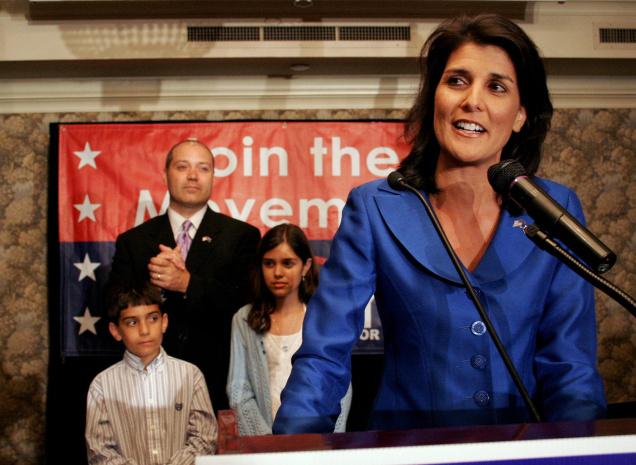
While all the six Indian American candidates running for the seats in US House of Representative are Democrats, leading the community is the Republican Nikki Haley who is running for the gubernatorial race.

What Are Chinese Troops Doing in Kashmir?

By Randeep Ramesh for The Guardian

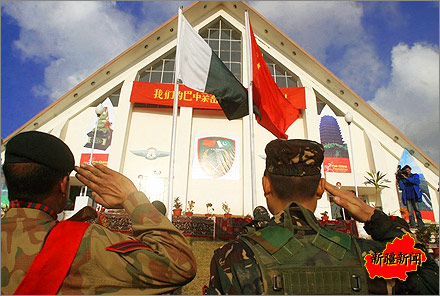
The claim that more than 7,000 Chinese troops have been handed “de facto control” of Gilgit-Baltistan, a northern part of Kashmir, by Islamabad, has set alarm bells ringing in Delhi. India โ€“ which, like its nuclear-armed rival Pakistan, claims the entire state โ€“ has long been worried that the People’s Liberation Army was working on roads and railway projects in the Karakoram mountains.

What is true is that China plans a massive highway linking western China to the port it is building at Gwadar, Pakistan, on the shore of the Arabian Sea. The benefits are obvious: the journey time from factory gate in, say, China’s wild west, to container ships bound for the Gulf will be cut from weeks to a few days. Eventually it may even become a key energy supply route.

All of this troubles Delhi, which has long asked for China to keep its nose out of Kashmiri affairs. However, the rise of the Middle Kingdom and its need to secure passage through its own troublesome provinces of Xinjiang and Tibet through to Pakistan make this unlikely. But India suspects, too, that China is intent on becoming the hegemon of much of the eastern hemisphere โ€“ able to dictate to smaller powers the rules of the game.

In Kashmir this had led to a round of tit-for-tat diplomatic incidents. So when India refuses to allow a Chinese diplomat to visit its troubled north-eastern state of Manipur for a talk, China responds by blocking the visa of a top Indian general because it appears his command includes Kashmir.

The Himalayan state is a piece of real estate whose sovereignty has long been contested. With its demography as varied as its topography, its various peoples have long been imbued with a stubborn streak of independence.

So it may be unsurprising that when heavy rains washed away villages in the Pakistan’s “Northern Areas” and Islamabad’s response was to sit on its hands, the simmering revolt against Pakistani rule flared again. In response Pakistan, so the claim goes, turned to its all-weather friend China, which was more than happy to send boots flying.

All this is dismissed in Beijing but only after referring to Gilgit as a “northern part of Pakistan”, which simply angered Delhi further. While Pakistan’s problem in its part of Kashmir has been of too little government action, India’s rule in its portion of the state has been heavy-handed and self-defeating.

Faced with a largely nonviolent revolt which began in 2008, the Indian authorities have provoked a much larger crisis with a regime of curfews and the killings of teenagers shot dead with nothing but slogans in their mouths and rocks in their hands. It is time for India to admit that its political and military strategy has failed to stabilise Kashmir.

The actions of both Pakistan and India vitiate claims that somehow either could keep the entire state happy. China has little sympathy with separatist claims โ€“ and holds sway over large chunks of the former Kashmiri kingdom.

The only way out of this mess is for Islamabad and Delhi to start rebuilding a peace process that will eventually lead to self-governance on both sides of the de facto border and a withdrawal of substantial numbers of Indian, Pakistani and, yes, even Chinese troops from Kashmir.

Grandsons of Mahatma Gandhi and Sir Abdullah Haroon Appeal for Pakistan Flood Relief

As reported by The United Nations

Miseries of millions unleashed by unprecedented floods in Pakistan brought together grandsons of two famous men in the Indian sub-continent to raise money for the sufferers.

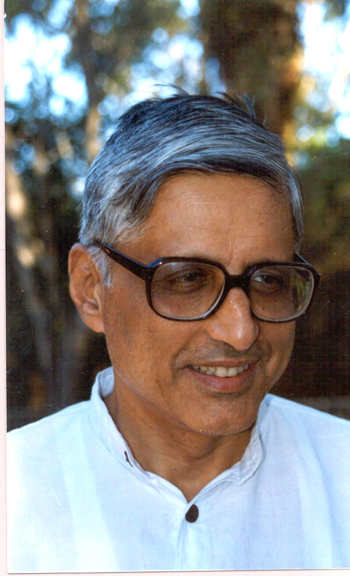
Rajmohan Gandhi, grandson of Mahatma Gandhi and Abdullah Hussain Haroon, Pakistani ambassador to the UN, reached across the lines of history to make a joint appeal here to people to open their wallets to help the flood devastated people of Pakistan.

Acknowledging the gesture of Gandhi’s grandson, Hussain Haroon said Mahatma Gandhi was not only the father of nation to Indians, but also for Pakistanis and the people of entire sub-continent.

Appearing in a joint appeal at the UN headquarters, the Pakistani ambassador introduced Rajmohan saying “Mahatma Gandhi had a very special relationship with all of the Indian sub-continent and also the Muslims” and noted that their grandfathers were very personal friends.

Hussain’s grandfather Sir Abdullah Haroon was a close associate of Mohammad Ali Jinnah, whom the founder of Pakistan described as one of the strongest pillars of Muslim League.

But Haroon acknowledged that though Gandhi and his grandfather were on opposite side of the political spectrum, yet they had immense strength and respect for each other.

“My grandfather Sir Abdullah Haroon was a very personal friend of his (Gandhi), and when my grandfather passed away, we still have Gandhi’s letter where he said to my grandmother, I would have trusted your husband with a blank check,” Haroon said, making reference to the history.

And many a time Mahatma Gandhi proved his selflessness, he asserted.

“When I remember the fledgling Pakistani state did not receive its share from the then newly formed Indian government, the Mahatma went on a fast unto death in Delhi, and the Indian government had to buckle down and pay Pakistan its share,” the Pakistani ambassador acknowledged.

“When the Hindu-Muslim riots took place in Calcutta, he not only went there with Huseyn Shaheed Suhrawardy, he brought together both elements, and the rioting stopped in the city because he was fasting until it would stop. And people realised that it had to stop,” he said, adding it was because of one of these very reasons that he was assassinated.

Adding his voice to the appeal for generous support for the people of Pakistan, Rajmohan Gandhi said, “Now, in this catastrophe, as in all wars and conflicts, the poorest are once more the prime sufferers, losing not a portion of what they had, but all they had. Their sorrows are unrecorded, their heroism unsung, their pain unremembered. I pray that this flood will help us in South Asia to reorder our priorities.”

Pakistan is Nursing an Injured National Pride

By David Nelson by The Telegraph

The questioning of eight senior Pakistan military officers as terrorist suspects as they arrived in the United States has all the makings of a good gag. Theyโ€™d just boarded a flight from Washington DC to Tampa, Florida when a female passenger heard one of the delegation, which included a Navy rear admiral, ask a colleague if this was โ€œthe final plane to the destinationโ€.

They were hauled off the plane and questioned, as they were on their way to a meeting at the U.S. militaryโ€™s Central Command. All were subsequently cleared by security, but the officers decided to abandon their trip in protest at their treatment. Given the importance of military ties between the United States and Pakistan in the fight against terrorism, the officersโ€™ treatment is beyond a joke, and their exasperation entirely understandable.

Pakistan is one of only two states I can think of which wages a war on its own people to meet the demands of third party countries. Earlier this week, it launched an air raid on militants in its tribal areas, killing an estimated 50 Taliban suspects.

It allows American Predator drones to strike at Pakistani militant groups Islamabad believes can only be pacified through political dialogue. It has turned its highways from Karachi to the Khyber Pass into a supply route for NATO troops in Afghanistan, and has paid a high price for it. Suicide bombers and fidayeen commando gunmen have struck every major city in the country including the training bases of its elite police and the headquarters of the Army itself.

So its officers have good reason to expect a degree of courtesy and protocol when they travel halfway around the world to offer further help in fighting terrorists on their own turf. The incident tells us a lot about the real nature of the relationship between Pakistan and the United States. The fact that they were traveling without protocol reveals a lack of respect, compounded by the time it took for the authorities to realise their error and apologise. The reaction of the anxious passenger who heard a piece of a conversation and let terror get the better of her reveals the psychological frailty of the American public and their default panic in the face of a โ€œPakistaniโ€.

It must be blind panic, because on appearance alone, it would be impossible to mistake a Pakistan Army officer. Their ramrod posture, crisply ironed polo T shirts, or blazers and ties mark them out as military men, and often Sandhurst at that.

I first met Pakistani Army officers in 1990 when I stayed at an old colonial cottage belonging to the North West Frontier Provinceโ€™s Public Workโ€™s Department in Thandiani, in the Himalayan foothills. They were staying in the adjoining cottage, drinking whisky and firing Kalashnikovs at the empties in the garden. They were, despite their seniorsโ€™ propensity to overthrow elected governments, great fun.

They spoke perfect English in clipped accents and spoke about their polo triumphs while their regimental bagpipe band entertained them. That they could have been mistaken for terrorists in the United States is explained in Mohsin Hamidโ€™s The Reluctant Fundamentalist which tells the story of a chance encounter of a once westernised Pakistani explaining to a fearful American how his experience of Islamaphobia after 9/11 had turned his love for the United States into hate.

The airport incident also reveals a disconnect in the battle for hearts and minds. America has given vast sums for flood relief in Pakistan and hopes it is seen as an act of friendship. But in incidents like these, the treatment suffered by individuals has, I think, a greater impact.

They heighten suspicions that acts of military and humanitarian generosity are transactional and that the real feelings of Americans are revealed in humiliating incidents at airports.

Britain is in similar territory. David Cameronโ€™s claim that Pakistan supports terrorist attacks in neighbouring countries during his recent trip to its old enemy India reinforced the views of those in Pakistan who say โ€œthey need us, but donโ€™t like us, and are not our true friends.โ€

This was seen last month when senior Pakistan intelligence officers pulled out of a trip to Britain, and urged President Zardari to follow suit, in protest at Mr Cameronโ€™s comments. There was further evidence of this suspicion and resentment when Pakistan declined British military aid โ€“ logistics support and medical assistance โ€“ for flood victims.

Our relationship with Pakistan is complicated. Suspicion of President Zardariโ€™s governance is widespread, Pakistan is wary of attacking some Taliban factions with whom it has had close ties. It doesnโ€™t believe it can fight all the militant groups we urge it to attack at the same time without disastrous consequences.

Iโ€™m not arguing for naivety or blind faith, but simple respect and human courtesy would be more cost-effective in our battle for hearts and minds in Pakistan than any amount of military aid.

Bomb Strikes Shiite March in Pakistan

As Reported by The Associated Press

Three bombs ripped through a Shiite Muslim religious procession in the eastern Pakistani city of Lahore on Wednesday, killing 25 people and wounding about 150 others, officials said.

The explosions appeared to be the latest in a string of attacks by Sunni extremists against the minority Shiites they consider infidels. Allied with al-Qaida and the Taliban, the bombers are also seeking to destabilize Pakistan’s U.S.-backed government.

The blasts were the first major attacks since Pakistan was hit by devastating floods more than a month ago. Lahore, the country’s political capital and home to much of its military elite, has been regularly targeted by militants over the past two years.

The bombs exploded at three separate sites Wednesday evening as 35,000 Shiites marched through the streets of Lahore in their traditional mourning procession for the caliph Ali, one of Shiite Islam’s most respected holy men.

Prime Minister Yousuf Raza Gilani condemned the blasts in a statement and said the attackers would not escape justice.

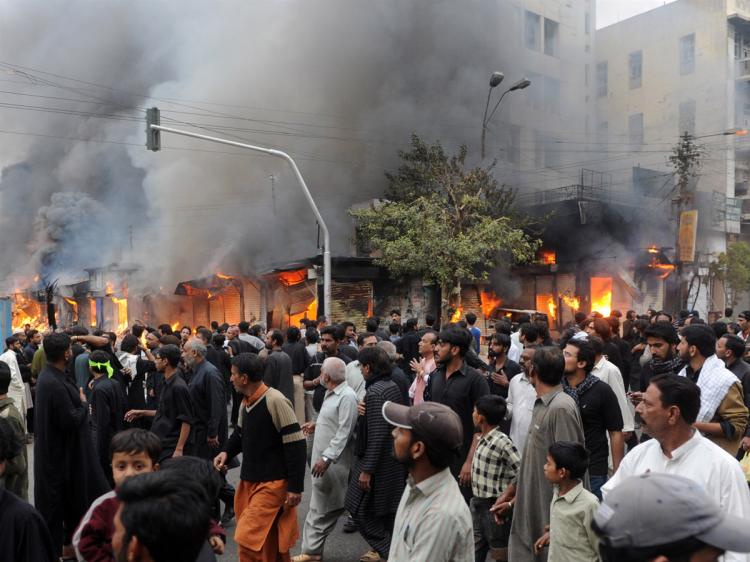
After the blasts, the marchers erupted in fury, setting fire to a police station, another police facility, two police cars and three motorcycles, said Zulfiqar Hameed, a senior police officer. Police lobbed tear gas canisters at the crowd and fired shots in the air to disperse the assailants, he said.

The first blast was a time bomb that exploded in the street near a well-known Shiite building, Hameed said. Footage of that explosion shown on Geo television showed a small blast erupting amid a crowd of people on the street followed by a large plume of smoke. Hundreds of people fled from the blast, while others rushed to carry the wounded to safety.

Minutes later, with the streets in chaos, a male suicide bomber who appeared about 18 years old tried to force his way into an area where food was being prepared for the marchers to break the traditional Ramadan fast and exploded, Hameed said. Soon after, another suicide bomber detonated himself at an intersection near the end of the procession.

Abbas Kumaili, a prominent Shiite scholar as well as a senator, called for three days of mourning over the attack and lashed out at the bombers.

”They are our enemies, both Shiites and Sunnis should remain united and foil their evil designs,” he said.

The blasts killed 25 people and wounded about 150 others, said Sajjad Bhutta, a top local government official.

Hours earlier, three people were wounded in a shooting near a similar Shiite procession in the southern city of Karachi, but senior police officer Iqbal Mahmood said the incident did not target the march.

Islamist extremists have a history of attacking Shiites, non-Muslims and others they deem unacceptable.

In July, twin suicide attacks at Pakistan’s most popular Sufi shrine killed 42 people. Another suicide bomber wounded eight worshippers at a Shiite mosque in eastern Pakistan.

Meanwhile, a bomb exploded near a police vehicle in the town of Shabqadar in northwest Pakistan, killing one passer-by and wounding 15 people including one police officer, police officer Nisar Khan said.

The bombings came after Pakistan army jets and helicopters targeted militant hide-outs near the Afghan border, killing 60 people identified as insurgents or their family members, including children, said security officials and a witness.

The attacks occurred Tuesday and Wednesday in different parts of the region.

There was no independent confirmation of the casualty figures because the area is too dangerous for outsiders to visit.

The raids Tuesday took place in several villages in Teerah Valley in the Khyber region and killed 45 people, the officials said. One official said some vehicles rigged with explosives had also been destroyed. He could not say how many.

He described the dead as insurgents, but said it was possible that people living with them could also have been killed. Separately, an intelligence officer said some women and children had been killed in the attacks.

Jihad Gul, who lives near one of the villages, said he had seen the bodies of at least 20 women and children.

Army spokesman Maj. Gen. Athar Abbas said reports of civilian casualties were unconfirmed.

The security officials spoke on condition of anonymity because they were not authorized to speak to the media.

An air attack Wednesday in the adjoining district of Orakzai killed 15 suspected militants and wounded 10 others, according to local government official Jamil Khan and a brief army statement.

Pakistan’s army has been fighting Islamist militants in different parts of the northwest for more than two years.

Militants who fled major operations in the South Waziristan and Orakzai tribal regions are believed to have set up new bases in Khyber, about 60 miles (100 kilometers) northwest of the main city in the region, Peshawar.

Muslims for Peace- A Public Service Announcement

This is an amazing Public Service Announcement by my friend Ani Zonneveld, founder of Muslims for Progressive Values, a peace activist and an award winning singer/songwriter as well as a great ambassador for moderate Muslims everywhere and a voice of reason within Islam during these difficult times. This video is a must watch for Muslims and non-Muslims alike for helping build bridges and understanding between moderate voices of Islam within and outside the Muslim world.

For more information, please visit http://www.mpvusa.org

Give White House Credit for Mideast Peace Efforts

By Peter A Joseph for The Huffington Post

Skeptics have had a field day criticizing the direct negotiations between Israelis and Palestinians to be launched this week in Washington. To be sure, the obstacles to concluding an agreement are significant, the stakes are high and expectations are low.

But it is time to give the Obama Administration some credit. The White House is launching direct talks on Thursday with tools that previous administrations did not have or were unwilling to employ in past negotiation efforts. Despite the rampant skepticism, there are indeed reasons to be hopeful without being naรฏve.

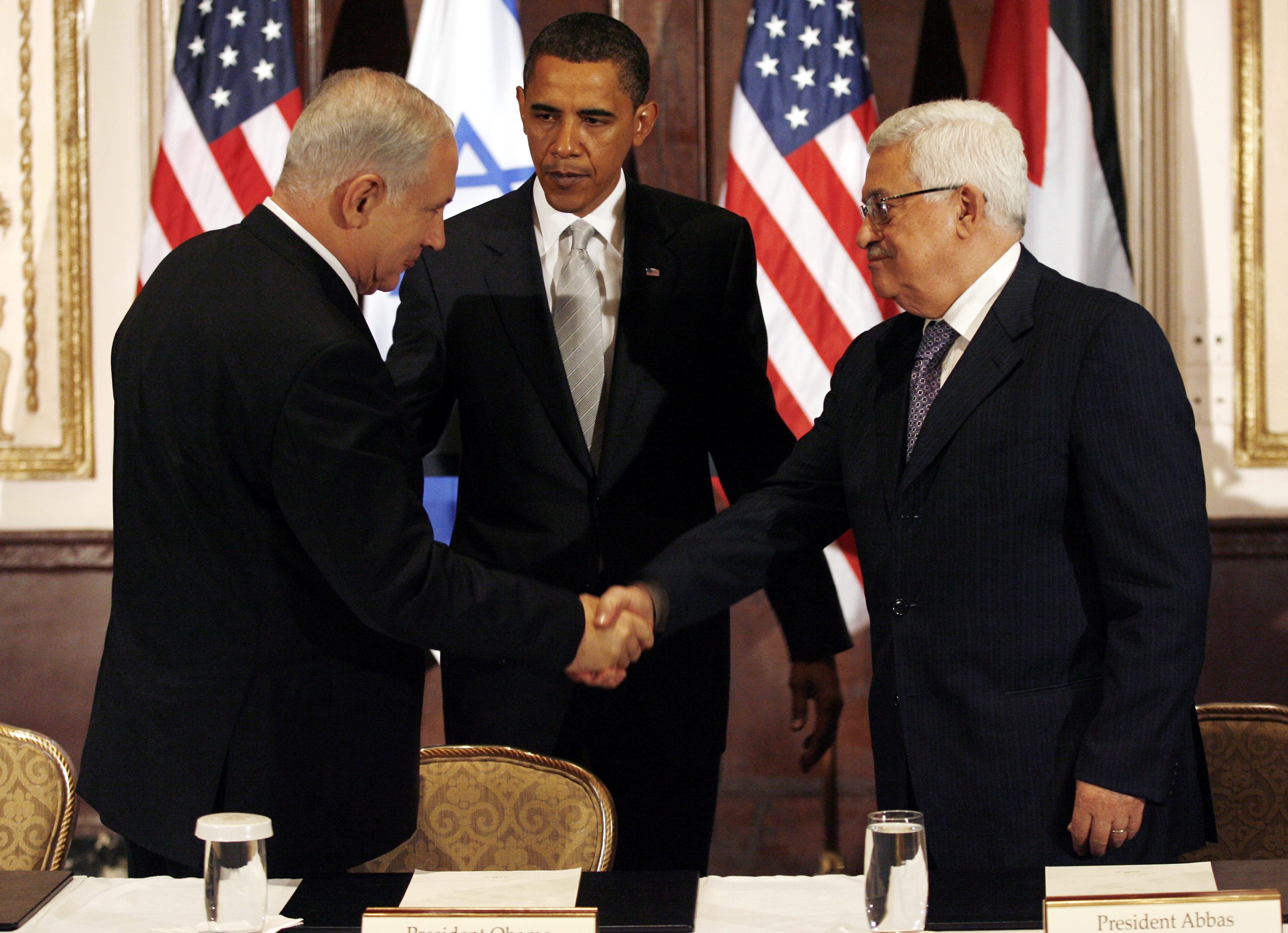
The Obama Administration has come a long way to get to this point. The year-long tussle with Israel over West Bank settlement construction, a botched photo-op between the Israeli and Palestinian leadership in New York one year ago, and painstaking attempts to bring the parties to direct talks in recent months have eroded the optimism and expectations that came with the election of President Obama.

However, there are a number of essential ingredients that the Administration has got right as it launches direct talks. Martin Indyk mentioned four of them last week in the New York Times: 1) there is very little violence between the parties today; 2) settlement activity has been limited; 3) the majority on both sides support a two-state solution; and 4) the contours of an agreement are largely already known. Here are four more:

First, violence is down because security cooperation between Israel and the Palestinians is at an all-time high. Palestinian security forces trained with the direct support and supervision of the United States, Israel and Jordan have significantly secured the West Bank and created an atmosphere conducive to economic growth. The success of the burgeoning Palestinian security force is providing Israelis with much needed confidence. Security is – and always has been – Israel’s number one concern. With such cooperation already in place, these talks will have a distinct advantage over all other previous efforts.

Second, the Arab states have endorsed President Mahmoud Abbas’ negotiating with Israel and pledged to be part of the effort. The inclusion of Egypt and Jordan in the launch next week is vital. As co-chairs of the Arab League’s Arab Peace Initiative follow-up committee, Egypt and Jordan bring with them the promise of normal relations for Israel with 22 Arab states following a successfully negotiated agreement on the final status issues.

Regardless of whether Yasser Arafat truly intended to achieve peace with Israel, he never enjoyed the mobilized support of the Arab states, let alone the United States and Israel. Mahmoud Abbas does. The Arab states are providing Abbas with the kind of backing and legitimacy to negotiate with Israel on all of the sensitive final status issues that he will need in order to conclude a historic agreement. This is particularly significant given the political split of the Palestinians between the West Bank and Gaza.

Third, the Palestinians are invested in building the foundation for a Palestinian state. The Palestinians have been plagued in previous negotiation efforts by poor governance and widespread corruption. While concerning issues remain, the progress of Prime Minister Salaam Fayyad to establish the infrastructure for a future state – like the aforementioned security advancements – distinguishes these negotiations from previous ones. The success of the state-building effort to this point and the growth of the West Bank economy lends credibility to the moderate leadership of Abbas and Fayyad and their ability to govern a viable, contiguous state, should the political process enable one to be established. Their efforts should also give Israelis added confidence that they would be establishing a conflict-ending agreement with a responsible neighbor.

Fourth, the Netanyahu government has been calling for negotiations for months, repeatedly stating that an agreement could be reached quickly if negotiated in good faith. The Administration now has a chance to test them on their word.

The make-up of the Israeli government presents both a challenge and an advantage to the renewed talks. The fact that this is a largely right-wing government intended to provide Israel with essential guarantees on security could bolster confidence among the Israeli public for an agreement, should one be achieved. This would remain true even if the government were at some point to replace Avigdor Lieberman’s Yisrael Beiteinu party with Tzipi Livni’s Kadima party. Just as the Likud Prime Minister Menachem Begin secured a peace agreement with Egypt, so too might the current Likud Prime Minister secure the elusive peace agreement with the Palestinians.

Finally, the White House has pledged to be actively engaged and bridge the gaps when necessary. The failed Annapolis process proved that Israelis and Palestinians need the United States to be at the negotiating table in order to help the parties bridge the gaps.

Active engagement by the United States does not just require bridging proposals, but also reminding the parties of the interests at stake. To Israelis, concluding an agreement with the Palestinians would certainly help amplify efforts to mobilize the international community to counter the threat from Iran. To Palestinians, a viable and secure state can only come about through negotiations.

However, even with these various important ingredients in place, there remains a missing one that is vital to the success of direct talks: trust. Without trust between the parties – or in the United States’ leadership – the current effort will undoubtedly fail. Building this trust, beginning with navigating the parties past the September 26th deadline of Israel’s settlement moratorium, is clearly the United States’ most pressing challenge in the weeks ahead. But the foundation to succeed in doing so is beginning to be put into place. The Administration deserves some credit for laying it.

– Peter A Joseph is the president of the Israel Policy Forum