Archive for August, 2011

Google Celebrates Pakistan’s Independence Day

By Sanain for Allvoices

For the very first time in the history of Google, a Google Doodle has been especially designed for Pakistan, on their 64th Independence Day. Google has put a green-colored doodle representing the color of Pakistan’s national flag on the Pakistani Google homepage.

The doodle is an absolute eye-catcher. The “l” of Google is replaced by “Minar-e-Pakistan”, which is the National Tower of Pakistan in Lahore. The upper half of the “g” is replaced by “A Crescent and a Star”, which represents an important part of Pakistan’s national flag. There can also be seen small-colored stars around the logo.

Pakistan’s Independence Day is observed every year on August 14, the day Pakistan was made an independent country based on borderlines created by the British towards the end of their rule of India. On this special day, Pakistan, in 1947, became an independent country and also the largest Muslim country of Asia.

The day is a national holiday in Pakistan. Main events of the day include flag raising ceremonies, tributes to national heroes, fireworks taking place in Islamabad, the capital of the country, changing of the guards at the mausoleum of Mohammed Ali Jinnah (Mazar-e-Quaid), Wagah Border ceremonies, patriotic fashion shows and musical concerts.

On its Independence Day, Pakistan also releases some prisoners who were arrested for illegally crossing into Pakistan from the neighboring and archrival country, India.

The main celebrations take place in Islamabad, where the president and prime minister raise the national flag at the presidential and parliament buildings and deliver speeches to the people of Pakistan. These speeches basically highlight the achievements of the government, goals set for the future and in the words of the father of the nation, Quaid-e-Azam Muhammad Ali Jinnah, bring “Unity, Faith and Discipline” to its people.
The credit for Pakistan’s independence goes to their famous leader, Muhammad Ali Jinnah, also known as the Quaid-e-Azam. His unparallel struggle and endeavors made it possible for Muslims of the Indian subcontinent to get a country for themselves.

The struggle for Pakistan’s independence has a background behind it. Pakistan was achieved to establish a Muslim country, which would prove as an example of piety, fair play and unity for the rest of the Muslim brotherhood.

It should be noted that last year, Pakistani government did not celebrate the Independence Day to show solidarity and moral support with the people affected by floods in 2010.

Pakistan May Be Standing in Way of Polio’s Eradication

By Uri Friedman for The Atlantic Wire

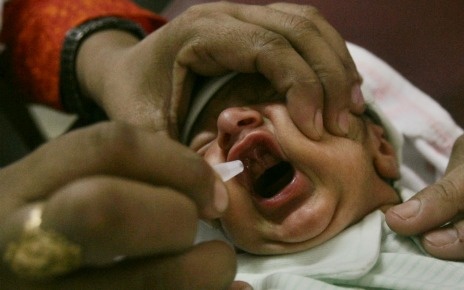
Several Pakistani news outlets today are dissecting a troubling finding from the U.N. Children’s Fund: the 63 cases of polio diagnosed in the country so far this year are nearly double the 36 detected during the same period last year. The highly contagious viral disease, which attacks the nervous system and can cause paralysis or even death, is most evident in the province of Balochistan and has now spread to other areas that haven’t been infected for the past five years. The U.N., which is trying to eradicate the disease by delivering oral vaccines to children, says that these findings suggest Pakistan could be the “last polio reservoir worldwide”–the country standing in the way of eliminating only the second global epidemic disease after smallpox.

This isn’t the first time Unicef has made the claim. In a 2003 report, for example, the organization called Pakistan “polio’s last frontier.” But what’s particularly troubling now is that while the number of cases is dropping in India, Nigeria, and Afghanistan–which, along with Pakistan account for over 90 percent of cases–the disease is spreading in Pakistan (in fact Pakistani President Asif Ali Zardari has declared polio a national emergency). Pakistan’s Express-Tribune cites administrative blunders, resistance of local populations, security challenges for vaccination teams, and Pakistan’s proximity to polio-infected Afghanistan as reasons why the country appears to be losing a battle against polio that “we can simply not afford to lose.” Other reports say anti-vaccine messages from radical clerics and the absence of a national ministry of health are also to blame. The recent revelation that the CIA set up a fake vaccination program in Pakistan to collect DNA from Osama bin Laden’s family members, Reuters notes, may only make immunization drives more difficult.

All that being said, Pakistan isn’t the only obstacle preventing the international community from finally eradicating polio. In an April report, the Global Polio Eradication Initiative announced that the project, which was launched by Unicef and other organizations, didn’t have the funding necessary to reach its goal of stamping out the last remnants of the disease by 2012. The report also noted that polio had reappeared in four disease-free countries–Chad, Angola, Democratic Republic of Congo and South Sudan–and called the state of Kano in northern Nigeria, where rumors were circulating that the polio vaccine would sterilize children, “a smouldering risk that could yet undermine the whole eradication effort.”

Poetry Soothes the Pain in Pakistan

By Nahal Toosi for The Associated Press

The outrage was swift after Pakistani security forces shot dead an unarmed young man in the southern city of Karachi, an incident caught on videotape and broadcast widely. Editorial writers demanded justice. Television talking heads decried the brutality of the men in uniform.

And then, a few poets got to work.

“No regard of life! No fear of Allah! Animals in jungle are better than you,” one English-language poem posted on YouTube rails at the culprits in the June incident. Another, in Urdu and circulated on Facebook, mourned victim Sarfraz Shah, who had “told his mom he will return home early.”

Pakistan is a country that reveres poetry, gently weaving it into daily life, and the last decade has provided no shortage of material. The rise and fall of a military ruler, the demands of a foreign superpower, the devastation of Taliban bombs — these themes and more have crept into Pakistani poems.

Some of the resulting verses carry overt messages about specific events. Often, though, the approach is more subtle, and occasionally, it’s tinged with humor.

“Of course, everything which is happening around a poet, it has an effect,” said Shahzad Nayyar, a published poet based in the eastern city of Lahore. “Such … events, which are causing destruction, which are causing loss to man, material and property, they are affecting poets a lot.”

Although Pakistan is just 64 years old, its people’s poetic tradition is centuries old and is intertwined with that of the rest of South Asia, while also influenced by the Persians. Urdu is the most widely used language, but even regional languages, such as Pashto and Sindhi, have notable poetic histories.

Today in Pakistan, one can find poetic verses on the back windows of taxis, on the sides of delivery trucks and atop gravestones. Newspapers regularly publish poetry, while Pakistani politicians, such as the country’s ambassador to the U.S., post verses on their Twitter feeds or use them in speeches.

Poetry recitals — known as “mushairas” — can draw thousands of spectators and last deep into the night, with audiences shouting encouragement to the men and women onstage. Sometimes, mushairas are part of larger gatherings, such as weddings or trade conferences; others are intimate affairs.

The country even has a national holiday dedicated to a poet-philosopher, Allama Muhammad Iqbal. Iqbal’s writings were seen as an inspirational force toward the creation of Pakistan as a Muslim homeland in 1947, though he died in 1938.

Of the 1,000 books published each year in Pakistan, there are some 50 books of poetry, said Saleem Malik, vice chairman of the Pakistan Publishers and Booksellers Association. While a handful of poets may earn enough to live on writing alone, at least for a while, most are engaged in other professions.

Many of the poetry books are self-published and distributed for free among friends. Still, that doesn’t account for the poetry that appears in other forums, such as magazines or websites such as Facebook, a popular setting for younger poets who can’t afford to publish their own books.

Perhaps the most popular form of poetry in Pakistan is the ghazal, which is made up of five or more units of two lines each and often sung.

Some of the most well-known Pakistani poets say that despite the material provided by the turmoil of recent years, they are careful about how they word their poems and often prefer to use indirect language and symbolism. This is in part to avoid being labeled a “propagandist.”

“It loses your emotional power when you are direct — it becomes like a slogan,” said Farhat Abbas Shah, a poet especially popular with younger Pakistanis.

Iftikhar Arif — a poet so famed in Pakistan that one section of his many, teeming bookshelves is devoted just to academic tracts written about him — said poets should aspire to write in a universal manner that can be appreciated beyond national borders and withstand the test of time.

There are poems written from other periods of turmoil in Pakistani history that are still relevant today because of this approach. “There is a history, perhaps more honest, more correct, more sincere, written by poets,” Arif said.

The line between direct and indirect is a fine one, however, and over the decades, some of Pakistan’s most popular poets have gone back and forth.

The late Habib Jalib, often described as a “revolutionary” or “the People’s Poet” raged against political tyranny, and even referred specifically to former U.S. president Jimmy Carter in his famed collection called “Ten Poems.”

Kishwar Naheed, a spry 71-year-old who is considered one of Pakistan’s pre-eminent feminist poets, is among those who occasionally embraces the direct approaches. In “A Mourning Poem for Bajaur,” Naheed decries the violence gripping Pakistan’s northwest regions bordering Afghanistan:

“Coffins have become so numerous, That the city is shrinking,” the poem begins.

A later verse: “We have the same court-yards, the same threshers. But bullets jump through them, Riddle holes in my fields, and in the bodies of my children.”

Naheed, who has published more than a dozen books of poetry, says every couple of months she receives threats because of her poems.

“They may say, ‘If you continue like this, you may have an accident in your car,'” she said, with a grin. “But I don’t mind having such reaction. If you don’t have a reaction, that means you have no appeal.”

Pakistani poets insist that their community is largely a peace-loving, liberal bunch — though many point out that they may feel just as much ire for U.S. actions toward Pakistan as they do for religious extremists.

Still, militant movements and their sympathizers also use poetry as a tool. After the U.S. killed Osama bin Laden in a nighttime raid in May, a group at Punjab University in Lahore advertised a poem and essay contest dedicated to glorifying the al-Qaida chief.

Taliban operating on both sides of the Pakistan-Afghan border, where the Pashtun ethnic group dominates, often use poems and chants, shared by way of CDs and cell phone recordings, to reach out to a largely illiterate population and persuade ordinary citizens to resist foreign troops.

Much of the poetry of Pakistan is not high art, but rather street-level verses exchanged by text messages, often with anonymous authors. Much of it is laced with the bitter, resigned humor of a people beset by poverty and downtrodden by corrupt elitists.

One popular Punjabi-language poem chastised former military ruler Pervez Musharraf, who was eventually ousted in 2008.

“You rush to Washington all the time, and please Bush again and again,” it says. “Beg at his feet all the time, and threaten the oppressed. Why don’t you confront the oppressors?”

Pakistan to Hand Back Bali Bombing Suspect to Indonesia

Xinua News Agency

Pakistani authorities will hand back the alleged mastermind of Bali bombing Umar Patek to Indonesia later on Wednesday, reported local Urdu TV channel Geo.

Patek, 41, is suspected as the field coordinator and planner of the suicide bombings in two nightclubs in Bali in 2002 that killed 202 people, most of whom are Australian holiday makers.

He was arrested in January 2011 at the city of Abbottabad where the U.S. army killed Osama bin Laden on May 2. There is no official confirmation about the extradition of Omar Patek yet.

Indonesian authorities had reportedly sought extradition of the suspect to uncover Patek’s network in the country. Pakistan had reportedly invited Indonesian investigators to identify and question the suspect days after his arrest was confirmed.

Patek, alias Abu Syeikh or Umar Arab, escaped from Indonesia in 2003. The U.S. government had put one million U.S. dollars bounty on his head. He has also been included in the United Nations’ consolidated list.

He was captured by the Pakistani security authorities after a decade of escape. Since his arrest the Indonesian police had reportedly been negotiating with the government of Pakistan for bringing back one of the most wanted militants in Southeast Asia.

Indonesian officials said that they had been involved in discussions with Pakistani authorities for extradition of Patek over the past few months. Patek is a suspected member of al-Qaida-linked Southeast Asian network Jemaah Islamiyah (JI).

JI has been accused of carrying out a series of major terrorist strikes in Indonesia that killed over 250 people from 2000 to 2009.

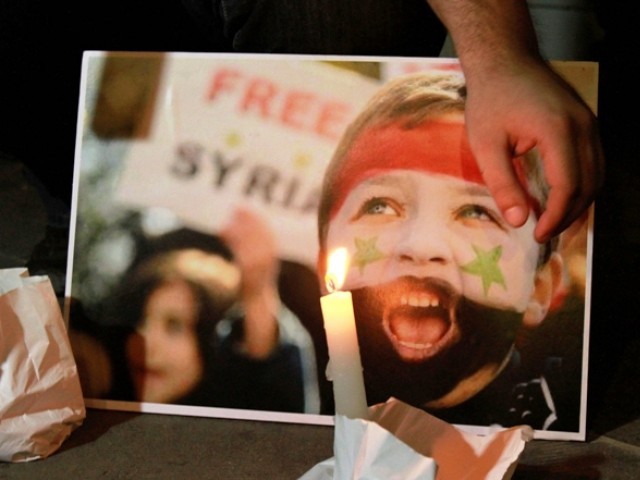
Rights Violations: Pakistan Maintains Discreet Silence Over Syria Protest

By Saba Imtiaz for The Express Tribune

As the chorus against the Syrian government grows louder, Pakistan remains silent on the issue of human rights abuses in Syria. According to Amnesty International, over 1,500 people have been killed since March in the protests against Syrian President Bashar alAssad’s regime. Pressure against Syria appeared to grow over the weekend from Arab states, as the Gulf Cooperation Council asked for an immediate end to bloodshed.

On Monday, Saudi Arabia’s King Abdullah issued a written statement on the situation. “What is happening in Syria is not acceptable for Saudi Arabia. Syria should think wisely before it is too late and issue and enact reforms that are not merely promises but actual reforms. Either it chooses wisdom on its own or it will be pulled down into the depths of turmoil and loss.” Soon enough, Saudi Arabia, Kuwait and Bahrain had recalled their ambassadors from Damascus for ‘consultations’.

In April, Pakistan joined China and Russia in voting against a resolution by the UN Human Rights Council condemning the violence in Syria. Pakistan’s ambassador to the UN Zamir Akram was quoted as saying, “My country has always believed that ‘naming and shaming’ is an approach which is counterproductive.”

Three months and over a thousand dead bodies later, no public statement has yet to be made on the situation in Syria. The Foreign Office spokesperson did not respond to a query till the filing of this report.
According to former foreign minister Khurshid Mahmud Kasuri, Pakistan’s silence is a product of “historical links between the Bhutto and alAssad families”.

President Bashar’s father, the late president Hafez alAssad, was believed to be a close ally of former prime minister Zulfikar Ali Bhutto. Murtaza and Shahnawaz Bhutto travelled to Syria in 1979 to seek support for their campaign to save Bhutto and were offered asylum by the elder alAssad. Murtaza spent several years in Syria before returning to Pakistan in 1993. In 1981, a Pakistan International Airlines flight was hijacked and forced to land in Kabul, and then Damascus. The hijacking is widely believed to be the work of the Al Zulfikar Organisation.
Kasuri said that given the high death toll, “the government of Pakistan needs to make its position clear [and say] that it stands with the people of Syria.”

Pakistan’s silence, according to former foreign secretary Shamshad Ahmad, shows lack of a foreign policy. “Foreign policy is a reflection of a country’s internal state of affairs. If the state is in disorder, it has no foreign policy. Forget Syria or any other Arab country – Pakistan has enough problems at home and has no time to focus on international issues. No one is going to pay any attention to what Pakistan says because it has no credibility. No country is looking to Pakistan for support.”

Pakistanis for Peace Editor’s Note– The writer makes some valid points about Pakistan’s foreign policy or lack thereof. Being complicit also in the suppression of the civilians in Bahrain by providing troops as illustrated in this article shows that the country is often found on the wrong side of terrorism, women and religious minorities rights, and democratic and human rights. Not a good equation and no excuse for any of it any way one looks at it.

Pakistan Attractive as Growth Outweighs Violence, Atlas Says

By Naween A Mangi for Bloomberg

Atlas Asset Management Ltd., manager of Pakistan’s best-performing equity fund, said Asia’s cheapest stock market offers “attractive returns” as the economy grows even with mounting terrorist attacks and political violence.

“I really don’t spend any time worrying about law and order,” said Muhammad Abdul Samad, 40, who oversees $77 million in Pakistani stocks and bonds as chief investment officer at Atlas Asset in Karachi. “If you want to make returns, you have to look at the positives: we have a huge market of 180 million people and the economy is still growing.”

Gains in National Refinery Ltd. (NRL), the second-biggest oil processor, and Attock Petroleum Ltd. (APL), a fuel retailer, boosted Atlas’s top fund in the year ended June, Samad said. For the fiscal year starting July, it’s seeking investments in banks, oil and gas, and fertilizer industries, he said.

Pakistan’s benchmark stock index, which trades at 6.4 times estimated earnings, the lowest in Asia, has fallen 9 percent since the end of June as escalating violence hurt business confidence. Prime Minister Yousuf Raza Gilani’s government aims to boost economic growth to 4.2 percent in the year to June 30, 2012, from 2.4 percent in the previous 12 months.

Turmoil on global stock markets may prompt the fund to change its asset allocation, increasing cash holdings or preferring defensive stocks with higher dividend yields, Samad said on Aug. 5, when the MSCI Asia Pacific Index tumbled more than 4 percent to cap its worst week since October 2008.

“Selling from foreign portfolio investors is affecting the local market,” Samad said.
Last year, global funds bought $344 million worth of Pakistani stocks compared with net sales of $65 million, according to central bank data. More than 35,000 Pakistanis have been killed in terrorist attacks since 2006 as Taliban militants retaliate against military offensives in the northwest, according to the government.

Samad’s 650 million rupee ($7.5 million) Atlas Stock Market Fund outperformed all Pakistan’s 30 equity funds, according to Invest Capital Markets Ltd. The fund returned 40 percent in the 12 months ended June 30 and beat the 29 percent return of the benchmark Karachi Stock Exchange 100 Index.
His top five holdings as of June 30 were Nishat Mills Ltd., MCB Bank Ltd., Pakistan Oilfields Ltd., United Bank Ltd. and Allied Bank Ltd.

“Banks are going to post attractive earnings because if interest rates come down, they will lend more to the private sector and if they don’t, they will invest in high-yielding government securities,” said Samad, adding that the three banks are among his top picks this fiscal year. “Banks are in a comfortable position either way.” Pakistan’s central bank unexpectedly cut the benchmark interest rate to 13.5 percent on July 30, after holding it at 14 percent, one of the world’s highest, for four straight reviews.

In the oil and gas sector, Samad likes Pakistan Oilfields, Pakistan Petroleum Ltd., and Attock Petroleum. Pakistan, which imports 80 percent of its fuel needs, is increasing production to reduce reliance on shipments from overseas. He also favors Fauji Fertilizer Ltd., the biggest urea maker, and Fauji Fertilizer Bin Qasim Ltd. (FFBL), a fertilizer producer.

Samad said investors who “select carefully” can make a return of as much as 30 percent this year because Pakistani stocks are “heavily undervalued.” Samad said he keeps about 4 percent of his fund “active” and may sell if a stock rises by 10 percent to 15 percent.
“We don’t go for speculation or price momentum and we don’t churn the mix too much,” said Samad, who has an MBA from Southeastern University in London and has been at the fund management firm since 2005. “If the company is fundamentally strong, it will definitely outperform the market.”

There are 137 funds in Pakistan overseeing 250 billion rupees as of June 30, up 25 percent from a year ago, according to Invest Capital, equivalent to 4 percent of the 5.9 trillion rupees sitting in the nation’s bank deposits.
“Active fund management, timely investment and divestment, as well as the performance of some stocks like Attock Petroleum were main reasons for Atlas’s outperformance,” said Mazhar Sabir, an analyst at Invest Capital Markets in Karachi.
Samad said Atlas may introduce a government bond fund this year targeting investments of three to five years and is considering a dividend-yield equity fund and a sector-specific stock fund next year.
“In the short run, law and order problems definitely hurt investors,” Samad said. “But in the long run, there’s no impact. And we’re here for the long run.”

How Many Sufis Are There in Islam?

By Stephen Schwartz for The Huffington Post

Devotees of Sufism, the spiritual interpretation of Islam, face problems wherever they are found. In the West, many self-styled Sufis have never become Muslim, know little of the religious background of the Sufi way, and give Sufism a reputation as simply another flavor of New-Age, “weekend” mysticism. In Muslim lands, especially in the Arab core countries, classic Sufi authors may be praised while living Sufi teachers are derided as un-Islamic charlatans. And in some places, Sufis are imprisoned and murdered.

As a Muslim Sufi adherent, however, I am troubled especially by another expression of contempt very widely cast against Sufism by Islam-hating amateur experts in the West. That is the claim of Sufi irrelevance. Since the horror of Sept. 11, now almost a decade past, the identification of a moderate and contemplative form of Islam, which can oppose radical and fundamentalist doctrines, has seemed of considerable importance both for the moral health of Muslim believers and for the security of non-Muslims and Muslims alike. But the Sufi alternative to Islamist extremism is neglected or even disparaged, typically, by Muslim and non-Muslim commentators.

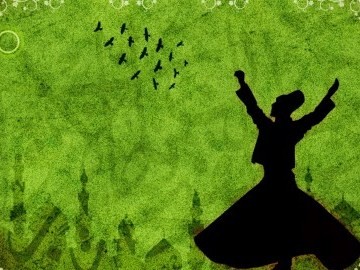
Western misperception of the importance of Sufis in Islamic life is complicated by lack of clarity as to who and what Sufis are. Sufis often enjoy great prestige with the mass of Muslims, based on Sufi examples of personal humility in fervor for God and Sufi preaching of love for humanity. But Sufis are not, mainly, other-worldly, exotic individuals or groups that spend all their time absorbed in semah (ecstatic turning on one foot and other forms of dance).

Some Sufis withdraw from the daily affairs of society, but others pursue satisfaction of the Creator by seeking social justice through improvement of popular education and services to the needy, such as housing of the homeless and free distribution of food. Rather than disappearing in a misty aura of meditation, numerous Sufis around the Muslim world contribute actively to defense of the victims of oppression.

Sufis may also take on the risky challenge of overt political engagement. This has been seen most strikingly in Turkish developments over the past two decades. Turkish Sufis were suppressed by the secularist regime established in the 1920s, but flourished in clandestinity, and have now emerged to lead Islamist parties and to assume positions in government. How the relations between Turkish Islamist politicians and Turkish and Kurdish Sufis will evolve remains to be seen.

Essential principles shared by most Muslim Sufis include emphasis on commonalities with other faiths and traditions, which has contributed to improved relations between Muslims and Jews, Christians, Buddhists and other non-Islamic believers. Commentators concerned to denigrate Islam altogether have asserted that Sufis, even if they embody moderation and mutual respect among people of religion, comprise no more than 5 percent of the world’s Muslims. Since the importance of Sufism stands, in the minds of many Westerners, on demographic measurement, let us therefore ask: How many Sufis are found in the Muslim world?

I would first observe that Sufis are present, persistently, in every Muslim population, including those where they were persecuted the longest: Saudi Arabia. Although the Saudi kingdom prohibited and punished possession of Sufi books and the practice of Sufi observances, the country always possessed a thriving Sufi underground with access to the heights of power. Before his elevation to the throne in 2005, then-Saudi Crown Prince, and now King Abdullah, who favored Sufis, gained them the right to hold zikr (remembrance of God by vocal or silent chanting, singing and bodily movements) in their homes.

In some countries Sufism is praised as an item of a proud heritage while it is repressed in daily life. The most obvious such example is that of Iran. The clerical regime established by Ayatollah Ruhollah Khomeini could not act easily against Sufis, since so many famous Sufis — such as Jalaladdin Rumi, the 13th century author believed by many to be, currently, the most widely read poet in the West — wrote in Persian, and Sufi texts became the national literature of the Iranians.

But while the Tehran clerics honor the Sufis of the past, they repress Sufis in the present. Sufis have most often functioned as an alternative to clerical authority in Islam, and widely represented Iranian Sufi bodies like the Nimatullahi-Gonabadi dervish order and the “hidden,” Kurdish-speaking Ahl-e Haqq or “people of truth” have sustained a difficult challenge to the Iranian authorities. Iranian Sufis have been arrested and disappeared into the obscurity of the prisons, with some doubtless dealt a fatal destiny.

As certain Islamic countries are ambivalent about Sufism, in other Muslim societies we see variations in the intensity of Sufi “activism.” Analyzing Islamic Sufism, I have generally divided Muslim territories between those in which Sufism has a deep but informal influence in local Islam, in contrast with those where it has a well-established institutional presence.

In the great Eurasian expanses, Islam is widely permeated by Sufi teachings and customs. From my travels, observation and participation in Muslim life, I have seen and experienced that Sufi-oriented Islam is prevalent among Slavic and Russian Turkic Muslims, dominant in Central Asia, and widely-represented in South Asia and in Southeast Asia. Across this heartland, Sufi authors are studied and throngs of pilgrims visit Sufi shrines or otherwise commemorate the lives of Sufi saints.

Elsewhere the spiritual heritage is maintained by powerful, organized orders, sometimes called “brotherhoods” although they typically include female disciples. These are prominent in North Africa, French-speaking West Africa, East Africa, the Albanian lands, plus Syria, Iraq, Kurdistan and Iran.

In Turkey, most Muslims are Sufi either by identification with the normative Sunnism subsidized by the state, which exalted Sufis and places the works of Rumi in all Turkish mosques, or by participation in Sufi orders as well as widespread, part-time study circles and other voluntary communities that teach an esoteric Islam. Others are involved in more singular phenomena like the Turkish-Kurdish, Shia-Sufi-shamanist Alevi movement. As a different variant in the Sufi continuum, Indonesia possesses a Sufi civic movement of national scope — the Nahdatul Ulama (NU) organization. Returning to South Asia, organized Sufism there is enacted with a backdrop of a broader, “cultural” Sufism and is under bloody attack by radicals.

Aggregating Sufi-influenced Muslims with active Muslim Sufis from Senegal to Singapore, I believe it is realistic to claim a large plurality, at least, of the world’s 1.3-plus billion Muslims. This should be a source of optimism for those who seek conciliation, rather than confrontation, between the world’s religions, affecting positively both the direction of Islam and the image of Islam among non-Muslims. For these reasons, more concentrated attention on the Sufis by social-science investigators and other experts would be welcome.

Karachi Attack: Pakistan Officers Face Court-Martial

As reported by the BBC

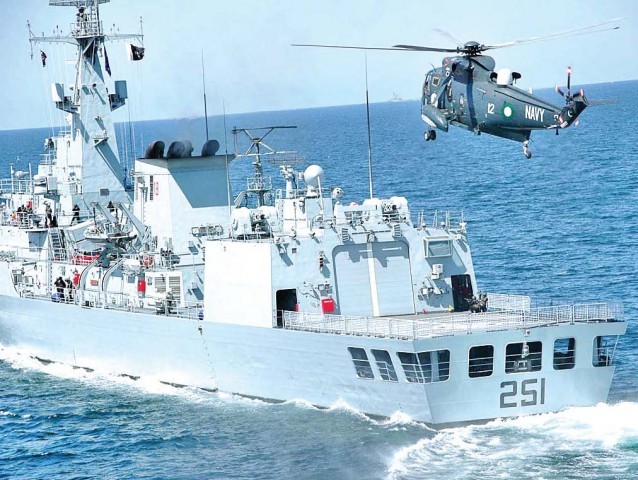
Three Pakistani naval officers are to face a court martial on charges of negligence after a militant attack on a naval air base in Karachi in May.

Ten soldiers died and 15 were wounded in the attack which took place at the Mehran naval aviation base on 22 May. It took the security forces some 17 hours to secure the base.

A naval official said the three officers were facing trial because they held positions of responsibility, not because of a connection to the attack.

The accused are Cmdr Raja Tahir, base commander at the time of the attack, and two officials beneath him, at the rank of captain and commander, according to naval sources quoted by several news agencies.

Daring attack

Cmdr Tahir was replaced two days after the attack during which several foreigners were taken hostage before being rescued.

“They face charges of negligence during the attack on PNS Mehran in May,” an unnamed official told Agence France Presse.

No date was given for the start of the court martial.

“They are being tried because they were at a responsible position, and were responsible for the security and other affairs of the base,” an unnamed official was quoted as telling Reuters.

The Pakistan Taliban said the raid was to avenge Osama Bin Laden’s killing by US special forces in the Pakistani town of Abbottabad on 2 May.

The attack at the heart of Karachi, the country’s economic hub and Pakistan’s largest city, underlined the military’s vulnerability.

Two attackers were killed and a third blew himself up during the attack when militants disguised as naval officials stormed three hangars housing aircraft at the naval base.

During the daring raid, they used rocket-propelled grenades to damage and destroy several warplanes, including two multi-million dollar anti-submarine and marine surveillance aircraft – the US-made P-3C Orion.

The planes were believed to be crucial for Pakistan’s maritime surveillance capabilities. A former Pakistani navy commando, Kamran Ahmed, has been detained along with his brother in connection with the attack.

Muslims Are the Most Loyal American Religious Group, New Poll Says

As reported by The Christian Science Monitor

After the 9/11 attacks, Muslim Americans faced intense scrutiny, both individually and from federal agencies such as the Federal Bureau of Investigation. Obama is credited with helping smooth tensions through his outreach to the US Muslim community and his effort to end the Iraq war responsibly. The poll shows that 83 percent of Muslim Americans – more than any other religious group – say the war was a “mistake.”

Despite the positive signs, “there are still obstacles” for Muslim Americans, Ms. Mogahed says. “They embrace American values and democratic principles but aren’t sure if the rest of American embraces them,” she says.

Some 56 percent of Protestants said American Muslims had no sympathy for Al Qaeda, the lowest number of any faith group. By comparison, 63 percent of Catholics and 70 percent of Jews thought Muslim Americans had no sympathies for Al Qaeda.

“That’s certainly a challenge for the [US Muslim] community – to have their loyalty questioned by such a large number of their fellow Americans,” Mogahed says.

Those challenges, however, have not led Muslim Americans to try to affect change at the ballot box. They are the least likely religious group to vote, with just 65 percent of Muslims in America are registered. One reason is age: The average age of a Muslim-American is 35, while the average American Protestant is 55. Younger people tend to be less politically active, Mogahed says.

Another reason is affiliation: Poll findings show that the majority of Muslim Americans say that none of the leading Muslim organizations in the US, such as the Council on American-Islamic Relations or the Islamic Society of North America, represents their interests.

With the 2012 election around the corner, Mogahed says political parties that want to reach out to Muslim-American voters might be better off establishing partnerships with local mosques than focusing on winning endorsements from national advocacy organizations. This is especially relevant considering that Muslim Americans who attend a religious service once a week are two times more likely to be politically active than those who attend less frequently, the poll found.

“The mosque should be more the mobilization engine” for get-out-the-vote drives than it has been in the past, she says.bThe poll surveyed 2,482 adults, 475 of whom were Muslim. For Muslims, there was a margin of sampling error of plus or minus 7 percentage points.

India and Pakistan, Talking

As reported by The New York Times

With a relationship as combustible as that between India and Pakistan, it’s progress just to get the two sides in a room. Last week’s meeting was better. Their foreign ministers announced modest, but very welcome, agreements concerning the bitterly disputed region of Kashmir.

They promised to double the number of days when cross-border trade between the two parts of Kashmir — one controlled by India, the other by Pakistan — is allowed and to expand and expedite travel permits for Kashmiris who want to cross the border for family visits, tourism and religious purposes. India and Pakistan have fought three wars since 1947, two over Kashmir. Even these small steps could help chip away at their visceral mistrust.

Three weeks ago, some doubted the meeting would even happen after three explosions ripped through Mumbai, killing 24 people. The Mumbai attacks in 2008 that killed 160 people were blamed on Pakistani terrorists and sent relations with India into the deep freeze. So far, suspicion for the recent attacks has fallen on Indian terrorists.

Prime Minister Manmohan Singh of India deserves huge credit for staying engaged despite Pakistan’s failure to prosecute those responsible for the 2008 horrors. And he deserves credit for not shooting first and asking questions later after the recent attacks.

We wish we could say the same of Pakistan’s leaders. Before there can be a true reconciliation, and stability in the region, Pakistan’s Army must realize that using militants to try to counter Indian influence in Kashmir and Afghanistan is self-destructive — and that homegrown extremism, not India, is the real threat to Pakistan’s survival.

India and Pakistan have more to talk about, including cooperation on water, expanded trade and their joint stake in a stable Afghanistan. President Obama’s drawdown of American troops will go easier if India and Pakistan are part of the solution, not fighting over the spoils. New Delhi insists that it will accept no outside mediation. Washington needs to keep pressing the two to work together.

The United States and its allies are planning a conference in Bonn in December and hope to rally international support for a broad regional strategy that includes a peace deal for Afghanistan, trade agreements and ambitious energy projects. India and Pakistan need to be full participants. The payoff could be huge if their leaders muster the courage to resolve their differences.

30 Mosques in 30 Days: An American Ramadan Roadtrip

By Bassam Tariq and Aman Ali for The Huffington Post

It was an impulsive and half-baked idea that changed our lives forever. During Ramadan 2010, Islam’s holy month of fasting and reflection, we hopped in a car and drove across America, stopping each evening to break our fast at a different mosque in a different state. We drove over 13,000 miles during the trip and blogged about it daily on our site, http://www.30mosques.com. We prayed in the infamous “Ground Zero Mosque,” got pulled over by a cop in Mississipi and stumbled upon one of the first mosques ever built in the United States when our car broke down. Along the way we also met the protagonist of Dave Eggers’ bestselling book Zeitoun, Cambodian Muslim victims of the Khmer Rouge, a Pakistani-Mormon couple, and many, many others, all of whom are part of the diverse Muslim-American community.

Our journey explored what it means to be Muslim in America today and served as a powerful counter-narrative to the media’s image of a monolithic Islam.

The project gained widespread coverage on several national media outlets including CNN, ABC News, NPR and even the Huffington Post, but the success really should be credited to our thousands of readers using Facebook and Twitter to buzz about the trip. Thanks to them, we were able to finance the entire project on individual contributions instead of large corporate sponsors.

Outside of this project, we are both respected in our professions as storytellers – Bassam as a cultivated filmmaker and an award-winning ad writer and Aman as an animated writer and standup comedian. When we came together as friends for this project, we told stories about Muslims in ways that nobody ever could. We spent time rolling down slides with kids in Jacksonville, laughing with Bosnians in Idaho – all in hopes of sharing intimate moments with Muslims in America that is seldom seen.

This year’s Ramadan, we’re finishing what we started. We will be back on the road visiting the 20 states we didn’t get a chance to visit – including Alaska and Hawaii. The remaining 10 days will have us revisiting some of the most compelling communities from last year. We felt we’ve only scratched the surface when it came to telling compelling stories about Muslims in this country and it is a no brainer for us to continue this journey.