Archive for the ‘ blasphemy laws ’ Category

Aasia Bibi and Impurities in the Land of the Pure

By Manzer Munir for Pakistanis for Peace

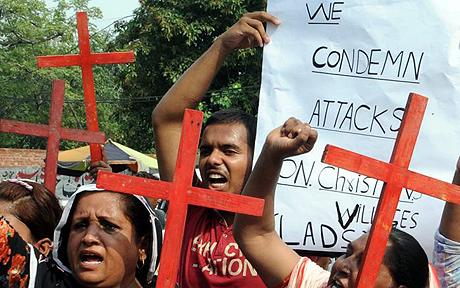
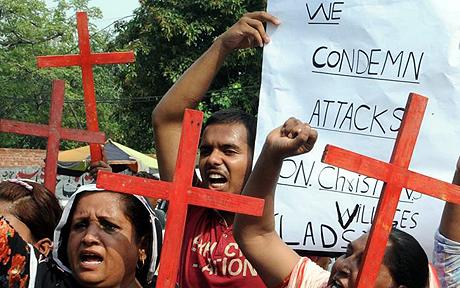
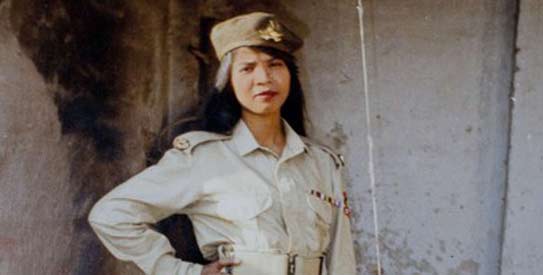
The case of Aasia Noreen aka Aasia Bibi illustrates how far Pakistan has to go to secure freedoms for its religious minorities. Christians and Hindus are not the only minorities who are persecuted for their beliefs but it is also Muslim minorities such as the Ismailis, Ahmadis, and Shiites who are routinely harassed, discriminated and also killed. Sadly, it is the case of Aasia Bibi that has brought some much needed attention to Pakistan’s sad state of affairs towards the treatment of its religious minorities.

Several sections of Pakistan’s Criminal Code consist of its blasphemy laws and of all the Muslim countries of the world that have anti-blasphemy laws, Pakistan’s anti-blasphemy laws are by far the strictest. There is section 295 that forbids damaging or defiling a place of worship or a sacred object. Then there is section 295-A that “forbids outraging religious feelings.” There is also 295-B which prohibits defiling the Qu’ran and was originally punishable by life imprisonment but has since been amended to up to three years imprisonment.

No section of the blasphemy law is more controversial or harder to prove than Article 295-C, the law that Aasia Bibi is allegedly charged with having broken. In respect to prophet Muhammad, this statute states that ” Whoever by words, either spoken or written, or by visible representation, or by any imputation, innuendo, or insinuation, directly or indirectly defiles the sacred name of the Holy Prophet Muhammad shall be punished with death, or imprisonment for life and shall also be liable to a fine.”

Aasia’s case and charges against her started almost a year and a half ago when there was a quarrel over a bowl of water in a dusty village in the heart of Pakistan’s Punjab province. A group of women were working the fields in the heat of the Pakistani sun when one of them, Aasia Bibi, dipped her glass in the communal bucket of drinking water to fetch herself and others a glass of water to drink and immediately was rebuffed by the other women who claimed that the water was now unclean as it had been touched by a non-Muslim. According to witnesses, instead of quietly bowing her head and taking the indignities, Aasia’s crime was that she mounted a strong defense of her faith and remained steadfast in her demeanor that she did nothing wrong. Too often in Pakistan, the blasphemy laws are used against religious minorities to settle personal vendettas and old scores according to Pakistan’s Human Rights Watch, a watchdog group monitoring the case.

The news traveled fast in Aasia’s village of Ittan Wali, in Punjab’s Sheikhupura district that a Christian woman had insulted the prophet. The local mullah got on the mosque loudspeakers, urging the “faithful” to take action against Aasia Bibi. In sad but familiar pattern, her defense of her faith was somehow twisted into an accusation of blasphemy, according to her family and others familiar with the case. Soon as a mob gathered outside her home ready to take the law into their own hands and handing out vigilante justice, the police moved in and took her into custody. But instead of protecting her, they charged her with insulting Islam and its prophet under the blasphemy laws.

And then on Nov. 8, after suffering 18 months in prison, Aasia Bibi was sentenced to death by a district court, making her the first person to be handed the death penalty in Pakistan under the blasphemy laws. Many before her over the years have been charged, but punishment had been commuted to lesser penalties than the death sentence imposed on Aasia Bibi. No concrete evidence was ever presented against Aasia, according to Pakistan’s Human Rights Watch. Instead, the district judge relied on the testimonies of three other women, all of whom were hostile towards her.

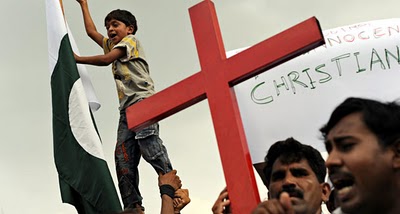
Unfortunately this is a common insult hurled at many of Pakistan’s 2 million Christians who make up just 1.59% of the total population. Often, Christians in Pakistan are discriminated and persecuted and many times only get the lowest of the low jobs such as street sweepers, janitorial and sanitation workers. In fact, in Pakistan, the term ‘Chura‘ has become synonym with the Christian community as it relates to an unclean person akin to how the untouchables or Dalit community is seen in India. In India however, the Dalits are not subjected to arcane state blasphemy laws geared towards religious minorities as in Pakistan or are threatened with their lives at the hands of the Hindu majority.

As discussed in a couple of my previous articles, Taliban 1o1, History and Origins and Taliban 201, The Rise of the Pakistani Taliban, the Islamization of Pakistan started under the late General Zia ul Haq of Pakistan who took over the leadership of the country through a military coup in 1977 when he hung the deposed and democratically elected Prime Minister Zulfiqar Ali Bhutto. Earlier in 1973, the 1973 Constitution of Pakistan had declared that “Islam shall be the religion of the Pakistan” and had systematically begun the process of restricting the participation of religious minorities in government and politics.

Before General Zia, there were only two reported cases of blasphemy. Since the death sentence was inserted in 1986 into the Penal Code for the blasphemy laws, this number has now reached 962 — including 340 members of the Ahmadi Muslim community, 119 Christians, and 14 Hindus. A close examination of the cases reveals the blasphemy laws are often invoked to settle personal scores, or they are used by Islamist extremists as cover to persecute religious minorities, sadly with the help of the state under these laws.

General Zia began this policy of Islamization of Pakistan in conjunction with his support for the war against the Russians and assistance to the Afghan Mujahedeen as well as the building of thousands of madrassahs or religious schools across Afghanistan and Pakistan which nurtured the young men into what later became the Taliban. Many of these blasphemy laws fully came into being under his reign, although some were around since as early as more than 100 years prior when the British drew up the Indian Penal Code of 1860 which was initially an ill foreseen aim at keeping the peace among the many fractured faiths of the subcontinent. For instance, section 295-A, which “forbids outraging religious feelings”, could have been applied against a Muslim who insulted a Hindu or a Hindu who taunted a Sikh or Christian or vice versa. However under Zia, the blasphemy laws were expanded and almost exclusively applied against Muslim minorities such as the Ahmadis, Islamilis and Shiites as well as against the Christian and Hindu populations.

Recently, a religious ‘leader’ came out and has offered over $6000 to anyone who can kill Aasia Bibi while she awaits her punishment in police custody. Outrage and denunciations on this case are coming from across the world as many people are appalled at the sad state of rights for religious minorities in Pakistan. The Pope has intervened also asking for clemency for Aasia Bibi from Pakistan’s President Asif Ali Zardari. Against all manner of reason and justice, Lahore’s High Court recently issued an order on November 29, 2o1o, preventing Zardari from exercising his constitutional authority to pardon Aasia Bibi.

In a country rife with violence and chaos and one that has become synonymous with terror the world over, the case of Aasia Bibi is yet another dark stain on the country’s image around the world. The Taliban and the extremist groups ravaging Pakistan can be explained as being a violent minority and do not and should not reflect on the nation as a whole as the majority of people in Pakistan are opposed to them and their views of Islam. But the blasphemy laws, for as long as they have stayed on the books in Pakistan and in the constitution, cannot and should not be excused in any shape or form. These laws need to be repealed and the constitution needs to be amended in an emergency manner so that Aasia Bibi and other religious minority citizens of Pakistan are not subjected to cruel and subjective laws that are almost exclusively used against minorities to settle scores, personal vendettas, and instill terror in less than 3 percent of the country that is not part of the religious majority of Sunni Muslims.

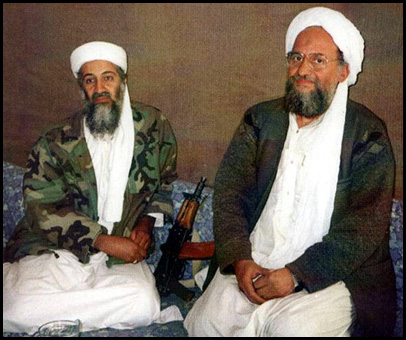
There needs to be international pressure placed on Pakistan from the United Nations, the United States, Europe and others to modify the constitution immediately and to pardon this 45 year old mother of five children. It is ironic that in a country where many people sympathize with Osama’s Al Qaeda and profess to hate the west with one hand, they decry with the other why not enough western aid has came to their country when it recently saw the worst flooding in its history. Can you blame the American citizens, the Europeans or citizens of any other Christian nation from hesitating to give aid to a country that not only plays a duplicitous game when it comes to terrorists and terror havens but also treats Christians and other religious minorities in the manner as in the case of Aasia Bibi?

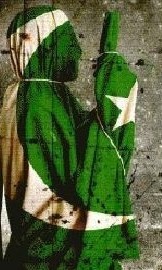
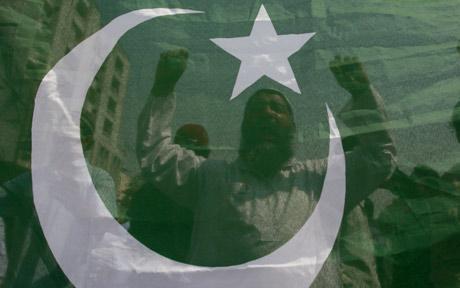
The name Pakistan literally translates into “The Land of the Pure”. And as a child growing up I was told that the meaning of Pakistan’s flag is this: “The green is a traditional Islamic color and the crescent moon and star are also Islamic symbols. The white stripe represents the non-Muslim minority and religious groups of Pakistan and there place in the country.” In my view, as long as the nation sanctions and tolerates these utterly unjust and biased blasphemy laws, the religious minorities of Pakistan clearly have no place in this land of the ‘pure’.

-Manzer Munir, a proud Pakistani American and peace activist, is the founder of Pakistanis for Peace and blogs at www.PakistanisforPeace.com as well at other websites as a freelance journalist and writer.
Pakistani-Americans, Human Rights Groups Seek Blasphemy Laws Review

As reported by Dawn

Pakistanis living in the United States have joined human rights groups in urging the government to release Aasia Bibi and reconsider the laws that discriminate against minorities.

“We condemn the abuse of the blasphemy law and request President Asif Ali Zardari not to accede to the threats made by certain religious groups and award imminent clemency to Aasia Bibi,” said the Pakistani-American Public Affairs Committee, an umbrella organisation representing a dozen groups. In a recent meeting of its executive board, the Christian League of Pakistan in America also “strongly condemned the victimisation of innocent people under the blasphemy law”, reminding the government that “the entire world is awaiting a sane decision in the Aasia Bibi case”.

The organisation noted that President Zardari, Prime Minister Yousuf Raza Gilani, Human rights activist Asma Jehanghir and Punjab Governor Salman Taseer have all concluded that Aasia Bibi is innocent.

These and other Pakistani leaders also have realised that the blasphemy law discriminates against religious minorities, said a statement issued by the Christian League in Philadelphia.

“This law encourages certain elements which institutionalise intolerance in the name of religion and spread social persecution and legal discrimination,” observed the Pakistani American Public Affairs Committee. “As it stands, this law with its ambiguity
harms Pakistan and its’ citizens.”

The group warned that such news emanating from Pakistan “hinders its stature in rest of the world, which in turn negatively impacts its economic stability and trade practices”. The committee referred to a study by the National Commission for Justice and Peace, which reported that a total of 964 people had been charged under these laws from 1986 to 2009. Out of them, 479 were Muslims, 340 Qadianis, 119 Christians, 14 Hindus, and 10 of other religions.

The report also noted that although none of those charged under the laws has been executed; 32 people charged with blasphemy have been extra-judicially killed.

PAPAC noted that last July, Lahore High Court Chief Justice Khawaja Sharif while overturning a blasphemy case, said that “the treatment meted out to the woman was an insult to humanity and the government; and that civil organisations should be vigilant enough to help such people”.

The group urged the larger society in Pakistan to educate the masses of the virtue of tolerance.

“Pakistanis must start a meaningful and focused dialogue to look at how the blasphemy laws are being abused and thus violating the basic premise of their creation – to protect minorities.”

PAPAC also asked Pakistan’s legislators to amend and remove ambiguity and legal discrimination from Section 295 and 298 of the Pakistan Penal Code which covers the blasphemy provisions.

Meanwhile, a leading US human rights group called on Pakistan’s government to abolish the blasphemy law and other discriminatory legislation.

The government should also take legal action against militant groups responsible for threats and violence against minorities and other vulnerable groups, the New York-based Human Rights Watch said.

Referring to Aasia Bibi’s conviction, the group noted that she had already “suffered greatly and should never have been put behind bars”.

Amnesty International, USA, also issued a statement on Friday, seeking Aasia Bibi’s release and revision of the law under which this mother of five was convicted this month.

“Critics say that Pakistan’s blasphemy laws are used to persecute Christian and other minorities,” the group observed.

Time to Repeal the Blasphemy Law

By Nasim Zehra for The Express Tribune

In June 2008, Asiya Bibi, a Pakistani farm worker and mother of five, fetched water for others working on the farm. Many refused the water because Asiya was Christian. The situation got ugly. Reports indicate Asiya was harassed because of her religion and the matter turned violent. Asiya, alone in a hostile environment, naturally would have attempted to defend herself but was put in police custody for her protection against a crowd that was harming her.

However, that protection move turned into one that was to earn Asiya a death sentence. A case was filed against her under sections 295-B and C of the Pakistan Penal Code, claiming that Asiya was a blasphemer. Her family will appeal against the judgment in the Lahore High Court.

The Asiya case raises the fundamental question of how Pakistan’s minorities have been left unprotected since the passage of the blasphemy law. There may have been no hangings on account of the law but it has facilitated the spread of intolerance and populist rage against minorities, often leading to deaths. There is also a direct link between the Zia-ist state’s intolerance against minorities and the rise of criminal treatment of Ahmadis.

Cases have ranged from the Kasur case to the more recent Gojra case, from the mind-boggling row of cases between 1988-1992 against 80-year-old development guru Dr Akhtar Hameed Khan, to the case of the son of an alleged blasphemer, an illiterate brick kiln worker who was beaten to death by a frenzied mob.

Although doctor sahib faced prolonged mental torture, he was saved from the maddening rage that has sent to prison, and in some cases devoured, many innocent, poor and hence unprotected Pakistanis.

There is a long list, prepared by the Human Rights Commission of Pakistan, of unjust punishments handed down to Pakistani citizens whose fundamental rights the state is obliged to protect. Beyond punishments, minorities live in constant fear of being lethally blackmailed by those who want to settle other scores.

Yet most political parties have refrained from calling for the law’s repeal or improvement in its implementation mechanism. When, in the early 90s, I asked Nawaz Sharif sahib to criticise the hounding of Dr Khan, his response was a detailed recall of the story in which Prophet Muhammad (pbuh) went to ask after the health of a non-Muslim woman who repeatedly threw garbage over him. He condemned what was happening but said politics prevented him from doing so publicly. Later, General Musharraf, advised by other generals, reversed his announcement of changing the law’s implementation mechanism. Small crowds protested against it. Among politicians, very few exceptions include the PPP parliamentarian Sherry Rehman and, more recently, the ANP’s Bushra Gohar, who asked for its amendment and repeal.

Already sections of the judiciary have been critical of flawed judgements passed by lower courts in alleged blasphemy cases. Recently in July, Lahore High Court Chief Justice Khawaja Sharif quashed a blasphemy case against 60-year-old Zaibunnisa and ordered her release after almost 14 years in custody. According to the judgment, the “treatment meted out to the woman was an insult to humanity and the government and the civil organisations should be vigilant enough to help such people.” Surely the Bench should know the plethora of abuses that Pakistan’s minorities have suffered because of an evidently flawed law.

A message more appropriate, perhaps, would be to repeal the black law that grossly undermines the Constitution of Pakistan and indeed the teachings of Prophet Muhammad, one of the most tolerant and humane law-givers humankind has known. This environment of populist rage, fed by the distorted yet self-serving interpretation of religion principally by Zia and a populist mixing of religion and politics by a politically besieged Zulfikar Ali Bhutto, must be emphatically challenged. A collective effort to roll back these laws must come from parliament, the lawyers’ forums, the judiciary, civil society groups and the media.

2 Pakistani Christians Killed At Courthouse

By Chris Brummitt for The Associated Press

Gunmen killed two Pakistani Christian brothers accused of blasphemy against Islam as they left court on Monday, a government minister and police said.

The men were chained together when the attack took place in the eastern city of Faislabad as they were being taken back into custody after their court appearance.

They were arrested a month ago after leaflets allegedly bearing their names and featuring derogatory remarks against the Prophet Muhammad were found in the town, said Shahbaz Bhatti, the minister for minority affairs. He said mosques in Faislabad had called for the men to be attacked.

Bhatti said he suspected the men were falsely accused of blasphemy by people with a grudge against them. Their families had maintained their innocence, he said.

The brothers were killed by two gunmen as they left court, said police officer Rana Ahmed Hasan. A police officer accompanying the men was wounded, he said, adding the killers escaped.

Pakistan’s blasphemy laws have been often criticized by religious minorities and human rights activists.

In its latest report on religious freedom in Pakistan, the U.S. State Department said the laws are often abused to settle local disputes and discriminate against minorities.

Muslims make up an estimated 97 percent of Pakistan’s 180 million people, most of them Sunni.

Bhatti said he believed the brothers were innocent.

“I personally don’t think that anyone who wrote derogatory things against Muhammad would put their names on the bottom,” he said. “This was just to settle a personal issue.”

Bhatti has long campaigned against the blasphemy laws, which were introduced President Gen. Zia ul-Haq in the 1980s to win the support of hard-line religious groups.

Repealing them now would likely meet opposition from the same groups, something that could cause unrest.

3 Arrested in Norway al-Qaida Bombing Plot

By Ian Macdougall, Matt Apuzzo, and Adam Goldman for The Associated Press

Three suspected al-Qaida members were arrested Thursday for what Norwegian and U.S. officials said was a terrorist plot linked to similar plans to bomb New York’s subway and blow up a shopping mall in England.

Officials believe the men were planning attacks with portable but powerful bombs like the ones at the heart of last year’s failed suicide attack in the New York City subway, an attack U.S. Attorney General Eric Holder has called one of the most serious plots since 9/11. On Wednesday, U.S. prosecutors revealed the existence of a related plot in Manchester, England.

The plots underscore al-Qaida’s interest in smaller-level attacks that don’t require the intricate planning and coordination of the Sept. 11, 2001 attacks in which airplanes were hijacked and flown into the World Trade Center towers in New York City and the Pentagon in Arlington, Va. And they follow a trend in which the terrorist group has used operatives inside potential target countries, rather than trying to sneak people across increasingly secure borders.

The three men, whose names were not released, had been under surveillance for more than a year. Two were arrested in Norway and one in Germany. Officials would not say what country or site was the target of the latest terror threat, or even whether they believed the men had selected a target.

Those arrested in Norway included a 39-year-old Norwegian of Uighur origin who has lived in the country since 1999 and a 31-year-old citizen of Uzbekistan who had a permanent Norwegian residency permit, said Janne Kristiansen, head of Norway’s Police Security Service. The man arrested in Germany was a 37-year-old Iraqi with a Norwegian residency permit, Kristiansen said.

She did not say exactly where the arrests took place but said all three men “had connections to Oslo.”

Norwegian and U.S. officials believe the Norway plan was organized by Salah al-Somali, al-Qaida’s former chief of external operations who is in charge of plotting attacks worldwide. Al-Qaida usually keeps its plots compartmentalized, and officials do not believe the suspects in Norway knew about the other plots. The officials spoke on condition of anonymity because they were not authorized to discuss the case.

Al-Somali, who was killed in a CIA drone airstrike last year, has been identified in U.S. court documents as one of the masterminds of the New York subway plot. Two men have pleaded guilty in that case, admitting they planned to detonate explosives during rush hour. A third man awaits trial.

Officials said the men were attempting to make peroxide bombs, the powerful homemade explosives that prosecutors say were attempted in both New York and England. Norwegian and U.S. officials said it was unclear whether the men ever perfected the recipe for the bomb and said investigators had contained the plot.

“According to our evaluation, the public has never been at risk,” Kristiansen said.

The Associated Press learned of the investigation in recent weeks and approached U.S. and Norwegian officials. Authorities told the AP that reporting on the case could jeopardize public safety and allow dangerous suspects to go free. The AP agreed not to report on the investigation until arrests were made.

“AP’s knowledge of the case was only one of several factors that was taken into consideration when deciding on the timing of the arrests,” Police Security Service spokesman Trond Hugubakken said. “It was not the decisive factor.”

U.S. and Norwegian counterterrorism officials worked closely together to unravel the Norwegian plot, officials said. Kristiansen traveled to the U.S. this spring to discuss the closely held intelligence gathered in the case.

Norwegian Prime Minister Jens Stoltenberg urged Norwegians not to judge large groups of people because of the arrests.

“These are separate individuals that are responsible for criminal acts,” Stoltenberg said. “It is always bad to judge a whole group of people from what individuals are doing and that is independently of what group these people belong to.”

Even though it was not clear if Norway was a target, Al-Qaida’s No. 2 leader, Ayman al-Zawahri, has called for attacks on Norway, among other countries.

Magnus Norell, a terrorism expert at the Swedish Defense Research Agency, said Norway’s 500 troops in Afghanistan could be a factor, as could the 2006 controversy sparked by a Danish newspaper’s publication of 12 cartoons depicting the Prophet Muhammad.

Norell said the controversy has extended to neighboring Norway and Sweden after newspapers there republished the cartoons and later published similar cartoons. Images of Muhammad, even favorable ones, are considered blasphemous by many Muslims.

British police and security officials have never provided details of the alleged target of the purported English plot, but said it was likely focused on a major shopping center in northern England. Media speculation centered on Manchester’s Arndale shopping center.

A judge said last year the gang was plotting a “mass casualty” attack in northern England.

Sectarianism Has Poisoned Pakistan

By Basim Usmani for The Guardian

The recent attacks on a prominent shrine in Lahore demonstrate how the unrest in Pakistan is caused by a minority of few who cannot tolerate the plurality of beliefs in Pakistan. The Tehrik-e-Taliban are lying through their teeth when they claim that they do not attack public places. It’s becoming more and more apparent that these militants aren’t resisting American hegemony; this a war to determine Pakistan’s future and, by proxy, the future of Islam.

Whether the Tehrik-e-Taliban actually arranged the bombers’ suicide belts is irrelevant; they have created a domino effect that’s likely to spread from commercial capitals such as Lahore to cities with historic shrines and Pakistani historical sites, such as Multan, or Taxila.

Unlike Baghdad, where violence between Islamic sects is a product of the war America is waging, the onus of last Thursday’s blasts falls squarely on us, the citizens of Pakistan. We have been complacent about sectarianism for too long.

A good friend who works for a transportation company told me in 2007 that in villages along the highways to Waziristan where the Taliban had seized control were the bodies of butchered Shia Muslims. That year, Lahore’s public was too busy mobilising about the judiciary and President Musharraf to pay the violence any mind.

Sectarianism has a brutal history in Pakistan that existed long before militants in Afghanistan began calling themselves the Taliban. I remember as a child in Lahore the broadcasts of gun violence outside Shia houses of worship during the early 1990s.

Many Pakistanis feel that the attacks on two Ahmadiyya mosques last May, where gunmen unloaded bullets and grenades on Friday prayer-goers, were unprecedented. Certainly the Ahmadiyya community doesn’t think they are.

To have a Pakistani passport requires citizens to assert that they are not part of the Ahmadiyya community. In a sense, holding that passport also makes you complicit in the blasts that killed dozens in Lahore’s most famous Sufi shrine last week. Our inability to understand that this war is about national identity is rooted in the same complacency.

We are OK with the state deciding for us who is or isn’t Muslim. In this regard, the Pakistani government has the weakest moral fibre in taking on this growing strand of extremism. It is hypocritical to fight the Taliban in Waziristan if we are okay about denying citizenship to millions of Muslims born in Pakistan.

It may sound extreme of me, but we should be jailing clerics in Pakistan that give edicts declaring believers to be non-Muslim or anti-Pakistani. It may seem extreme to an American that writers who deny the Holocaust are imprisoned in Europe, but extreme contexts call for extreme measures.

Pakistanis must stress how being born or raised in their country is enough to be Pakistani; laws preventing Ahmadis from referring to themselves as Muslims were amended to the constitution by Zulfikar Ali Bhutto in the 1970s.

I remember being uneasy at my desk in middle school when I was studying at Aitchison College in Lahore, and some of my classmates were getting bullied for having marks on them after returning from Shia processions during Muharram. Pakistanis themselves are the only ones capable of stamping out this discriminatory culture.

Some proactiveness is necessary on our part to make it clear that mystics, Shias, Ahmadis and Christians are all fellow Pakistanis. When you are pulled over by street police in any major Pakistani city, the first bit of information the police ask for is your family name. From one name your caste, religious beliefs and affluence is determined.

This came as a shock to all of my family who have emigrated away: that collectively our stock in our own nationhood has plummeted so. In a sense, these problems are all accrued debt we’ve accumulated for being so complacent. In the light of our bigoted constitution and deterministic culture we have to – for ourselves – decide that being Pakistani is enough to make us all countrymen. Otherwise, we might as well just refer to ourselves as Taliban, Muslim extremists, Islamic militants, and so forth.

A Pakistani American Celebrates July 4

By Manzer Munir for Pakistanis for Peace

Thousands of Pakistani Americans celebrate the July 4 Independence Day holiday with their friends and families across the United States today. As different as Pakistan and the United States may be as countries and societies, one thing they both have in common is that both countries were founded on religious reasons. Unfortunately, that is where their similiarites end as the religious freedom experience in these present day countries varies greatly.

The earliest settlers of these United States were in fact Europeans who felt persecuted in the old countries of Europe for their religious beliefs. Many of these Puritans came to America in search of religious freedom.  Their hope was to escape the religious persecution they were facing in their countries and so the United States was founded on religious grounds.

Pakistan too is a country that sees the basis of its founding for a religious purpose. The nationalist movement for an independent India from British rule also caused communal conflicts between the Hindus and Muslims as there were calls by many Muslim leaders for a separate country for the Muslims of India since many felt being a minority in a Hindu dominated country would come at the expense of their rights. So a separate country for the Muslims of India and for their right to practice their religion gained momentum and indeed on August 14, 1947, the Islamic Republic of Pakistan became independent, a country founded on religious freedom for the Muslims of India.

This is not to deny the fact that Muslims still exist in India and are free to practice their religion under a Hindu dominated country. In fact, there are more Muslims in India than there are in present day Pakistan. However, many Muslims at the time of partition felt that they would be freer to practice Islam in a Muslim country rather than a Hindu one. It is an open debate whether people in Pakistan today have more freedom to practice their religion. If you are a member of either a minority Muslim group as Shiite or if you happen to be a Christian, Hindu, Sikh or Jew In Pakistan today, you have far less freedom of religion than a comparable religious group in present day India. There is absolutely a very low level of tolerance in Pakistan today for other religions or ways of life different than the majority group.

The promise of religious freedom that saw the founding of both Pakistan and the United States has seen the two countries go separate ways in realizing the dream of each countries forefathers. While the American Founding Fathers dream of a nation that respects freedom of religion and honors a separation between church and state held true, Pakistan unfortunately  has become a country that has become intolerant of other religions. Many religious minorities such as Christians, Hindus, and even Muslim Ahmadis are routinely persecuted or attacked by Muslims who see these groups as infidels and heathens and not merely as human beings with different religious beliefs. The influx of Taliban and religious extremists inside Pakistan has further made life difficult for anyone who is not a devout Sunni Muslim. On many occasions, the police does not investigate or prosecute attacks on religious minorities by various extremist groups leading to a constant fear of their lives and properties.

As Pakistani as well as Muslim Americans across the United States today celebrate the the July 4 holiday, they are keenly aware  that their brethren back in their original countries are not as free to practice their religion, speak their minds, and or protest peacefully as they are able to do in the United States. For this nation indeed guarantees freedom and liberty for all and not just a certain religious or ethnic group.

That is why Pakistani Americans such as myself and Muslim Americans across the US are appreciative of the fact that in this, our adopted country, our religious and civic freedoms are safe guarded in that greatest of living documents, the US Constitution. I have long felt that after the three great religious books of the Torah, the Bible, and the Koran, the US Constitution is the next best thing that man ever wrote down on paper. The Founding Fathers of America were indeed some of the greatest minds in history for crafting a document that continues to make the United States the freest country in the world and one that stayed true to its founding of liberty and freedom for all. Happy Birthday America, May you have many more!

–Manzer Munir, a proud Pakistani American plans to celebrate the July 4 Independence Day with family and friends at a picnic with fireworks and by watching a parade.

Deadly blasts hit Sufi shrine in Lahore

By Syed Shoaib Hasan for The BBC

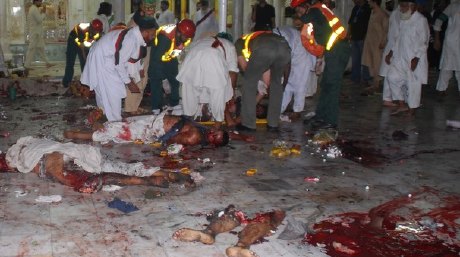
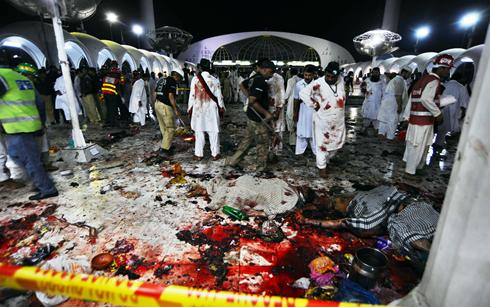
Suicide bombers have launched a deadly attack on a Sufi shrine in the eastern Pakistani city of Lahore. At least 35 people died in the blasts at the popular Data Darbar shrine late on Thursday evening, officials say. At least 175 other people were hurt in the blasts, believed to be the first targeting a shrine in Lahore. Thousands of people were visiting the shrine at the time, officials say. It holds the remains of a Persian Sufi saint, Abul Hassan Ali Hajvery.

Although no-one has yet said they carried out the attack, Taliban militants and their Punjabi jihadi allies have been involved in several such bombings in the northern Khyber Pakhtoonkhwa province. The shrine is largely frequented by members of the majority Barelvi sect, who are seen as heretics by the Taliban. Most of the Taliban belong to the rival Deoband Sunni sect, which strongly disapproves of worship at shrines. Many are also allied to the Sipah-e-Sahaba, and its armed splinter group, Lashkar-e-Jhangvi, which seeks to turn Pakistan into a Deoband Sunni state.

The shrine is visited by hundreds of thousands of people each year from both Sunni and Shia traditions of Islam. At least two attackers were involved, although police initially said three explosions had been heard.  The impact of the blasts ripped open the courtyard of the shrine. Rescue workers could be seen clambering over the rubble as they carried out the victims. Khusro Pervez, commissioner of Lahore, said two of the attacks took place in the main courtyard and one in the lower level of the shrine.

The first attacker struck in the underground area where visitors sleep and prepare themselves for prayer, he said. As people fled, a second bomber detonated his explosives in the upstairs area. Officials say they believe the bombers used devices packed with ball-bearings to maximise the impact of their attack.  A volunteer security guard at the shrine described scenes of devastation.

“It was a horrible scene,” said Mohammed Nasir. “There were dead bodies all around with blood and people were crying.” The attack is the biggest on a Sufi shrine in Pakistan since militant attacks began in 2001.  No group has said it carried out the attack, but correspondents say the attacks continue a growing trend among militants to target members of other sects as well as minorities.

Lahore has been hit by a series of bomb attacks, including a suicide blast at anti-terrorist offices in March, when at least 13 people died. In May, more than 90 people were killed in a double attack on the minority Ahmadi sect in the city.

Earlier, security chiefs had been congratulating themselves after what was the first month in two years in which there had been no suicide bombings in Pakistan, the BBC’s Aleem Maqbool reports from Islamabad.

They said it was proof the militant networks had been disrupted. Most Pakistanis knew the battle against militancy in this country was far from over, he adds. Last year Pakistan launched a major military offensive against militant strongholds in South Waziristan.  In December the military said they had achieved victory, but subsequent reports have suggested the militants remain active in the region.

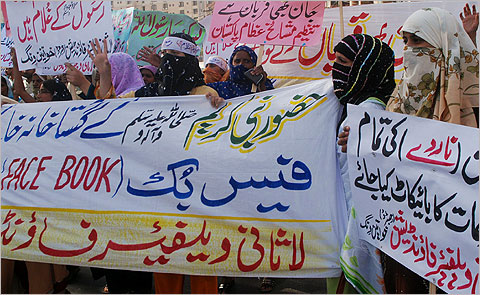
Pakistan Set to Ban More Web Blasphemy and Monitor Yahoo!, Google, Amazon, Bing…

By Rik Myslewski for The Register

Pakistan announced Friday that it will monitor Yahoo, Google, MSN, Hotmail, YouTube, Amazon, and Bing, and will block links and content that it deems anti-Islamic.

“If any particular link with offensive content appears on these websites, the [link] shall be blocked immediately without disturbing the main website,” Pakistan Telecommunication Authority spokesman Khurram Mehran told the Associated Press.

In addition to the link-blockage of the seven named high-traffic sites, Pakistan web-watchers have also completely blocked 17 lesser sites, including, for example, Islam Exposed, which includes links to blaspheming articles such as “Muhammad, A Symbol Of Terrorism” along with over-the-top posts such as “Joe Lieberman Spews Excrement!”.

The monitoring and blockage comes in response to a court order, as did Pakistan’s recent ban on Facebook due to its hosting of an “Everybody Draw Mohammed Day” page — a page that was subsequently taken down, although Facebook officials claimed to have had no part in its removal.

The complete banning of Facebook was lifted after censorship official Najibullah Malik was satisfied that the site had lifted all all “sacrilegious material”.

In addition to the Facebook ban, Pakistan last month blocked, then unblocked YouTube for depictions of the prophet Muhammad, a practice that many Muslims find blasphemous.

“We decided that this kind of information was going to hurt people’s feelings. We have directed the [Pakistan Telecommunications Authority] to block all and any sites that display those caricatures,” Malik told The Guardian at the time of the YouTube ban.

The Guardian, reporting on internal controversy surrounding the YouTube ban, quoted one Pakistani tweeter as tweeting: “Way to go assholes. Why don’t you just cut us off from the internet and get it over and done with.”

Despite lifting the Facebook and YouTube bans, Pakistan hasn’t given up its censorship efforts. “At least 800 individual web pages and URLs have been blocked since the government’s orders to shut Facebook and YouTube,” Wahaj us Siraj, a spokesman for the Internet Service Providers Association of Pakistan (ISPAK), told AFP.

In perhaps the most bizarre development in the country’s campaign to remove blasphemy from its interwebs, Pakistan’s Deputy Attorney General recently launched a criminal investigation against Facebook founder and CEO Mark Zuckerberg for his role in the “Everybody Draw Mohammed Day” dust-up.

Although no charges have been filed in the case, the Pakistani newspaper The News International reports that the law that prompted the Zuckerberg investigation, Section 295-C of the penal code, carries with it penalties of “death, or imprisonment for life”.

Not all Pakistanis, of course, are in support of their government’s draconian crackdown on what Section 295-C refers to as “Use of derogatory remark etc, in respect of the Holy Prophet … either spoken or written, or by visible representation, or by any imputation, innuendo, or insinuation, directly or indirectly.”

“It’s absurd,” journalist and filmmaker Hasan Zaidi told The Guardian. “They haven’t thought this through. The logical conclusion is that we should shut our eyes, stick our fingers in our ears and ban the entire internet, even email.”

Nadeem Paracha of Pakistan’s Dawn news service wrote in his “Smokers’ Corner” column: “By continuing to tolerate a psychotic faith-based fringe for so long, we have actually helped it metamorphose into an unrestrained monster that has zero tolerance for what we think or do.” The problem, Paracha told The Guardian, is that “Anything to do with Allah, or the prophet, and everyone keeps quiet.”

And it must also be noted that the more extreme members of the Muslim world aren’t alone in taking angry offense at what they perceive as “blasphemy”. Remember, for example, the hue-and-cry that resulted from artist Chris Ofili’s elephant dung–encrusted The Holy Virgin Mary, or the attacks on the US National Endowment for the Arts over works such as Andres Serrano’s photograph, Piss Christ. But, to be fair, we must also note that neither Ofili nor Serrano were subject to a possible government-sanctioned death sentence.

–Editor’s note for Pakistanis for Peace- A true  democracy should  protect freedom of speech, no matter how hateful and unpleasant. Banning and censoring content on the interent is the action of communist states, dictatorships, monarchies or theocratic nations like Iran, not a democracy that Pakistan aims to be. There are certainly bigger problems in Pakistan than people visiting websites that are disparaging to Islam.  This is a clear indication of the power in the society still held by the mullahs~

Why Pakistan’s Ahmadi Community is Officially Detested

By Mohammed Hanif  for BBC

By Mohammed Hanif for BBC

When a Pakistani Muslim applies for a passport or national ID card, they are asked to sign an oath that no Muslim anywhere in the world is asked to sign. The oath goes like this: “I consider Mirza Ghulam Ahmad an impostor prophet. And also consider his followers, whether belonging to the Lahori or Qadiani group, to be non-Muslims.”

Like millions of other Pakistanis, I have signed this oath several times without giving much thought to exactly what Mr Ahmad stands for, or what the technical difference between Lahoris or Qadianis is. I want my passport, and if I have to sign up to a fatwa to get it, so be it.

But like millions of people from my generation I also remember that when I was growing up, the minority Ahmadi sect were considered just another Muslim sect.

When a Pakistani Muslim applies for a passport or national ID card, they are asked to sign an oath that no Muslim anywhere in the world is asked to sign. The oath goes like this: “I consider Mirza Ghulam Ahmad an impostor prophet. And also consider his followers, whether belonging to the Lahori or Qadiani group, to be non-Muslims.

Like millions of other Pakistanis, I have signed this oath several times without giving much thought to exactly what Mr Ahmad stands for, or what the technical difference between Lahoris or Qadianis is. I want my passport, and if I have to sign up to a fatwa to get it, so be it.  But like millions of people from my generation I also remember that when I was growing up, the minority Ahmadi sect were considered just another Muslim sect.

Like scores of others I had friends who were Ahmadis. We played cricket together, and sometimes, when our parents ordered us off to the mosque, we even prayed side by side.

Last month, when more than 90 Ahmadis were massacred in two mosques in Lahore, I remembered the precise moment in 1974 when it all began to change.  There were street protests by religious parties against Ahmadis demanding that they should be declared non-Muslims.

One day I saw some bearded activists standing outside a clothes merchant’s shop in our town, chanting anti-Ahmadi slogans and turning customers away, telling them that buying clothes from Ahmadis was haram – forbidden. At the time I was learning to memorise the Koran from a very kind, mild-mannered teacher. I asked him what exactly was wrong with the Ahmadis.  He explained to me that they didn’t believe that the Prophet Muhammad was the last and the final messenger.

I said OK, maybe that makes them kafirs, infidels, but who says that kafirs can’t sell cloth?  My teacher’s response was a full-handed slap, so sudden, so unexpected that it rang in my ears for days to come. That same year Pakistan’s first elected parliament declared Ahmadis non-Muslims.  Then in 1984 Pakistan’s military dictator and self-appointed guardian of the faith General Zia-ul-Haq inserted that oath in the constitution that we are all required to sign.  Because of the new laws, Ahmadis have been sent to prison simply for using the Muslim greeting Assalamu alaikum, or putting a Koranic verse in a greeting card.

Over the last three decades the hatred against Ahmadis has become so widespread that Pakistan is now embarrassed by the only Nobel laureate it has ever produced.

Dr Abdus Salam Khan won the Nobel Prize for physics and, as a proud Pakistani, accepted his award in national dress.  But he was an Ahmadi so there is no monument to celebrate him, no universities named after him.

The word “Muslim” on his gravestone has been erased. Even the town he is buried in has been renamed in an attempt to erase our collective memory. This hatred was evident in the reactions to the massacre. TV channels were more obsessed with making sure that in their broadcasts Ahmadi mosques were called “places of worship”.

When you refuse to call a place of worship by its proper name, you are implying that it’s not a mosque, it’s not a church, it’s not a synagogue, it’s a place where godless people do godless things. And all the various Islamic political parties, whose leaders often refuse to pray together, are united on this.

When Pakistan’s main opposition leader Nawaz Sharif used the phrase “our brothers” for the murdered Ahmadis, leaders from 11 political parties came together to condemn him and threatened to issue a fatwa declaring him a heretic.  Over the last three decades the siege has been so palpable that those Ahmadis who couldn’t afford to emigrate have taken to hiding their identity.

If you want to destroy someone in public life it’s enough to drop a hint that they are Ahmadi. In the 1980s, the former chief minister of Punjab and current federal minister didn’t attend his own mother’s funeral because there were rumors that she was an Ahmadi.  When the funerals of the massacred Ahmadis took place there were no officials, no politicians present 

Pakistan’s liberal bloggers and some English-language columnists did write along the lines that Ahmadi blood is on our hands.  Others were adamant that it was yet another Friday, yet another massacre by the Pakistani Taliban, and we should just fight this sort of terrorism and leave the sectarian debates alone.

Two incidents in the past week made me realize how pathological our response was. At a vigil to mark the massacre, where a handful of people had turned up, a passer-by asked me “Are you an Ahmadi?” My own loud and aggressive denial surprised me.

Then an Ahmadi friend whose father survived the Lahore massacre wrote to me saying: “You know we have been living like this for decades. Did something like this have to happen for you to speak up?”

–Editor’s Note- It is high time that this law be repealed and the Ahmadi community of Pakistan be given all the basic human rights and privileges enjoyed by all Pakistanis.

Pakistan’s Mosques, Media and Intolerance

By Zeeshan Haider for Reuters

Pakistan has been fighting Islamist militants for years, but tough measures are needed to overturn a system breeding religious intolerance after the long failure of authorities to confront mullahs and hardline groups.

Analysts say the notion of religious mistrust is deeply entrenched in the predominatly Muslim country — even in the school system — and it is now up to leaders to mobilise public.

Last week’s massacre in the city of Lahore of more than 80 Ahmadis – a minority religious sect deemed non-Muslim and heretical by the constitution – has generated a heated debate in Pakistan, a U.S. ally, on how to tackle the issue.

In a sign of how hatred is propagated, The News newspaper said one of the two surviving gunmen caught by security forces said he had been persuaded that Ahmadis were “blaspheming” Islam.

Identified as Abdullah, he told investigators that his mentors had him believe that Ahmadis were drawing caricatures of Prophet Mohammad during a recent online contest and “so their bloodshed was a great service to Islam”, the newspaper said. That raised alarm bells in a country combatting militancy.

“The nagging feeling that the government has already lost the battle against extremism has now acquired the force of conviction,” Zafar Hilaly, a former ambassador, wrote in The News last week.

After joining the U.S.-led war on terrorism after the September 11, 2001 attacks on the United States, Pakistan mounted a crackdown on militancy, outlawing several groups, arresting hundreds of suspects and warning hardline mullahs against delivering hate speeches and distributing hate literature.

The government also vowed to reform tens of thousands of Islamic seminaries, known as madrassas, many of which are considered as breeding grounds for militancy. Almost none of these measures, however, has been implemented.

Most outlawed groups have re-emerged under new names. Radical clerics still deliver fiery speeches against sects. The U.S. Embassy acknowledged the difficulties, given the importance placed on Pakistan helping Washington battle al Qaeda and its extremist allies.

“We recognise this is a problem,” an embassy official said, adding that the embassy encouraged Pakistanis to take part in exchange programmes to see a multi-faith United States.

Analysts say Pakistani leaders dating back to the 1970s, however popular, took no action to counter radicals. Hasan Askari Rizvi, a Lahore-based political and security analyst said governments have lacked the stomach to implement reforms, particularly in school curricula.

“In textbooks used in government schools, Pakistan is equated with Muslims…They teach Pakistan is a country only for Muslims. They don’t teach that non-Muslims also live here,” he said.

Journalist and analyst Ahmed Rashid described school programmes as “the most sensitive issue. But it is an issue in which any attempt to change the curriculum would have a whole host of fundamentalist groups oppose you.”

In 1974, Pakistan’s first popularly elected Prime Minister, Zulfikar Ali Bhutto, bowed to Islamic groups and won approval of a constitutional amendment declaring Ahmadis as non-Muslims. He also switched the weekly day off from Sunday to Friday.

But much of the upsurge in militancy occurred in the late 1970s and 1980s during the “Islamisation drive” by late military leader General Mohammad Zia-ul-Haq and Pakistan’s support for the U.S.-baked Afghan jihad or holy war against the Soviet invasion which saw a rapid growth of radical groups and madrasas.

Haq introduced several laws, such as the notorious blasphemy law, which are deemed discriminatory against non-Muslim minorities and fuelled tensions between different Muslim sects. Subsequent governments did nothing to reverse the laws.

Military dictators, who ruled Pakistan for more than half of its existence, have also used militant groups to further policy objectives in Afghanistan and India and marginalise liberals.

“In earlier years, in order to pursue its foreign policy using the instrument of jihad, the state actively sought to create a religiously charged citizenry,” said Pervez Hoodbhoy, a physicist and analyst. “But, now that the Pakistani military and political establishments have become a victim of extremism, they are foundering in confusion.”

Former President Pervez Musharraf, a military ruler, though he espoused a modern and liberal version of Islam, repeatedly failed to get the laws reviewed while in office from 1999-2008.

Former Prime Minister Benazir Bhutto, a pro-West politician and a vocal opponent of the militants, was killed in December 2007 in a suicide attack blamed on militants linked to al Qaeda. Civilian leaders are made even more cautious now in tackling radical groups by the tremendous fear of militants who have unleashed bomb and suicide attacks across the country.

“Religious intolerance is getting worse in Pakistan because the political leadership lacks the will to fight this,” said analyst Rizvi. “They don’t want to face the wrath of mullahs.”

Facebook in Pakistan: Islamists vs. Liberals

By Adam B Ellick and Ahmad Ziadi for The New York Times

When Facebook was recently banned in Pakistan for hosting a “Draw Muhammad Day” fan page, one thing became very clear: Islamists here operate with organized precision, able to mobilize the masses in an instant, while the liberal voice remains paralyzed by fear and passivity.

Some media experts predicted that the ban – which a Pakistani court has now ordered the government to lift – might motivate the nation’s deeply disconnected liberal elite to take on the Islamists. After all, while members of the urban elite have been largely immune to the recent rise of violent militant attacks, the Facebook ban presented them with a personal vendetta.

In a nation without bars, and where entertainment options such as music concerts are rare, Facebook serves as a precious tool for the elite to organize discreet private events with music, drugs and alcohol. It has also helped mobilize social movements, including the lawyers’ march in 2009.

But the fervor that has followed the Facebook ban has been entirely one-sided in favor of the Islamists.

As the rest of Muslim world remains largely indifferent, tens of thousands of anti-Facebook Pakistanis protested in urban centers by burning American flags. A poll conducted by an IT portal called ProPakistani showed 73 percent out of about 8,000 voters favor a permanent ban on Facebook.

How did it get to this? There has been a widespread SMS campaign perpetuating a false narrative that Pakistan’s ban has brought a behemoth anti-Muslim company to its knees. One SMS attributes the recent fall in the Euro to the ban. Here’s another SMS I received:

THE BOYCOTT MADE BY MUSLIMS AGAINST FACEBOOK SINCE LAST 2 DAYS

CHARGE DEM A LOSS OF 2 BILLION EUROS..AND IF ITS CONTINUED AFTER 7 DAYS IT WOULD

REACH AROUND 40 BILLION EURO…. PLZ SPREAD AS MUCH AS U CAN.

Facts suggest otherwise. Facebook is not a publicly traded company, therefore, its earnings are not published. Still, some venture capitalists have valued Facebook at about $8 billion. Its annual revenue is estimated between $500 to $800 million.

In addition to the SMS campaign, this week, two new Muslim-friendly alternatives to Facebook have been launched. One of them, www.millatfacebook.com, was inaugurated by the bar association of the same Lahore court that banned Facebook. Millat means “Nation” in Urdu.

The site wooed more than 20,000 users with its slogan: “A site for Muslims by Muslims where sweet people of other religions are also welcome!!” Members are asked to specify if they drink alcohol. The founders are enraged at Facebook for curtailing Nazi-related hate speech while refusing to curb the Muhammad cartoons.

Their website says “Let’s prove to the world that if we can generate revenue for Facebook.com then we can also run our own website. Prove to the world that we are independent Muslims…” The other alternative site, www.Buddyflick.com , aims to “create/build/run our own network.” But where are Pakistan’s liberal and moderate voices?

Speaking out against the ban can be as hazardous as the forbidden cartoons. When those against the ban held a small news conference, the press mostly ignored it. After the press conference, several anti-ban activists were aggressively confronted by a large crowd of opposing activists as they left the venue. As tensions escalated, the anti-ban activists retreated into the building and waited for the crowd to dissipate.

One friend who is especially furious about the ban wouldn’t dare to speak out. “Nobody has the guts to go out and do something about it. The issue of Muhammad is so sensitive that you just never know.”

Instead, liberals are hashing out their frustrations in the low-traffic comment sections of liberal blogs and leftist newspapers, and, ironically enough, on their actual Facebook pages. Some have hacked into the banned site from the confines of their gated homes. Among the comment section in one newspaper is the latest joke: What’s the difference between Facebook and Lashkar  e Taiba? Answer: Facebook is banned!

Pakistani minister promises to revise blasphemy law despite death threats

PD*30407144

 Islamabad, Pakistan- The minister for minority affairs of Pakistan, Shahbaz Bhatti,  promised to work to amend the blasphemy laws used to target non-Muslims in Pakistan such as Christians and Hindus and said he was ready to die fighting for this cause.

A Member of Parliament and head of the All Pakistan Minorities Alliance (APMA), Shahbaz Bhatti was visiting Washington DC at the invitation of the US Commission on International Religious Freedom, which awarded him a first-of-a-kind medal for championing the rights of minorities in Islamic Pakistan.

A Catholic member of President Asif Ali Zardari’s administration as a federal minister for minority affairs, he took over the job last year when it was made a cabinet level position in Zardari’s cabinet.

Bhatti said he has received threats for his work on numerous occasions. Earlier this month, Pakistan’s religious affairs minister was wounded in an assassination attempt in Islamabad that left his driver dead.

“I personally stand for religious freedom, even if I will pay the price of my life,” Bhatti said. “I live for this principle and I want to die for this principle.”

Pakistan’s law against blaspheming Islam carries the death penalty. While no one has ever been sent to the executed for the crime, activists say the law is used to exploit others out of personal vendettas by some in the Muslim community against Christians, Hindus, Sikhs, and Buddhist minorities in Pakistan.

A 25-year-old Christian jailed on blasphemy allegations earlier this week died in prison. Authorities said he committed suicide but civil rights activists suspect that he was tortured by the police.

The death came several weeks after an angry mob killed seven Christians in an arson attack that destroyed about 40 houses in the town of Gojra in central Punjab province.

Christians and other religious minorities have a long history of persecution and discrimination in all walks of life in Pakistan by the Muslim majority. This is a sad reality and a country such as Pakistan that was founded for religious freedoms for the Muslims of India in 1947, has to do a much better job at protecting the 3 to 5% of the population that does not share the Islamic faith.

Unfair, subjective and antiquated laws such as Pakistan’s blasphemy laws need to be urgently amended so that the non-Muslim minorities in Pakistan do not live in fear of an upset neighbor calling the authorities and falsely claiming an individual blasphemed the religion of Islam. Furthermore, if an individual is indeed ever guilty of blasphemy, the death penalty is a rather harsh punishment for simply stating one’s opinions, no matter how offensive to the faithful.

Although he may face strong resistance by some of the extremist and ultra religious members of Parliament in Pakistan, many moderate and enlightened Pakistanis support the minister for minority affairs and hope that he is successful in amending this archaic law.

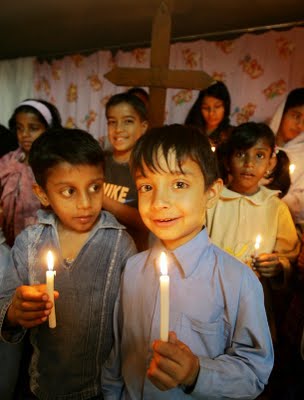
Christian Pakistani Children


Reported by Manzer Munir for www.PakistanisforPeace.com