Archive for the ‘ Desi ’ Category

Made in Indiaโ€™ Show in Pakistan as Both Talk to Boost Trade

By Surojit Gupta for The Times of India

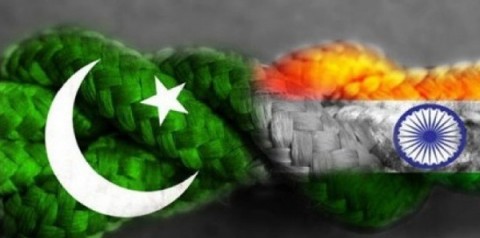
Trade ties between India and Pakistan are expected to get a boost as New Delhi reaches out to the business community across the border, starting Monday to assure them about the positive impact of normal trade ties. Commerce minister Anand Sharma will undertake a rare journey to Pakistan, leading a large delegation of senior officials and top businessmen as the two hostile neighbours take baby steps to normalise trade and economic relations.

The private sector led by industry chambers has put up an “India show”, in Lahore and Karachi – the first ever trade exhibitions from India where over 100 exhibitors are participating. Firms representing pharmaceuticals, textile, gems and jewellery, chemicals and petro-chemicals are showcasing products.

The move is a follow up to the efforts to normalise trade ties. The Pakistan government announced granting of Most Favoured Nation (MFN) status to India in November last year. But, criticism from a section of industry in Pakistan has forced Islamabad to take measured steps on the issue. But, officials said they were optimistic that by the end of 2012, the transition to full MFN status would be complete.

Officials said they will launch outreach programme to assure businessmen in Pakistan that Indian goods will not swamp the Pakistan market if trade is normalised. “We will tell them that there are enough trade safeguards measures to ensure that Indian goods do not flood the Pakistani market. Let us first liberalise trade and see the impact,” said a senior government official.

Pakistan allows exports to India but has a positive list of 1,938 items which are officially allowed to be imported from India. Latest data shows that formal trade between India and Pakistan rose to $2.7 billion in 2010-11 from $144 million in 2001, while informal trade including third country trade is estimated at $10 billion, according to a Ficci status paper. “I have no doubt in my mind that bilateral trade, which currently stands at $3 billion, can be raised to $10 billion if trade through third countries (Dubai, Singapore and Central Asian countries) is channelised into direct exchange between the two countries,” said R V Kanoria, president, Ficci.

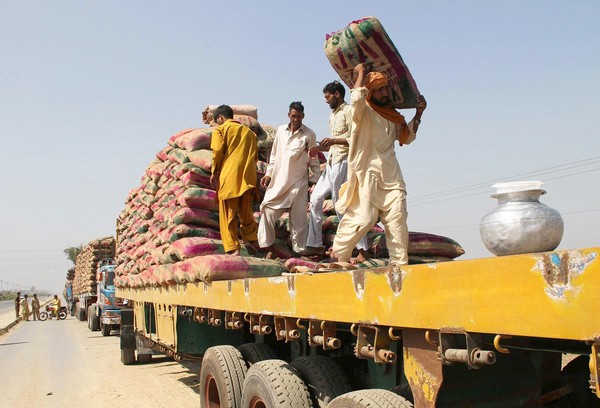
The government has undertaken a series of measures to increase bilateral trade. There is a move to open a second gate at the Attari-Wagah border, which is expected to increase the number of trucks crossing the border to 500-600 daily from 150-200 at present. Pakistan has agreed to remove restrictions on the number of commodities traded by the land route once the infrastructure in Wagah is ready, while both countries have agreed to avoid arbitrary stoppage of goods at ports. Suggestions have been made for opening up of an additional land route at Monabao-Khokhara Par on the Sindh border for faster movement of goods.

“We are taking significant steps to improve the border infrastructure. India has invested nearly Rs 150 crore to develop infrastructure at the Integrated Check post near Attari,” said a senior government official. He said the visa regime for business travel is also expected to be liberalised soon with multiple entry visas for 10 Indian cities, along with exemptions for police reporting. The formal announcement is expected to be made soon. Talks to expand trade in petroleum products are progressing, while efforts are also on to start negotiations for trade in electricity between the two nuclear-armed neighbours. Both sides have agreed on grid-connectivity between Amritsar and Lahore, which would pave the way for trade of up to 500 MW of power.

Trade experts said they were optimistic about the latest moves and said the effort will go a long way in helping faster regional integration. “The positive spin off for normalisation of trade is enormous. Pakistan has given signals and India now needs to take the initiative. Normalisation of bilateral trade relations will help in putting much of the political bickering on the backburner,” said Biswajit Dhar, director-general at Research and Information System for Developing Countries, an economic and trade thinktank. Experts said there was huge potential for forging joint ventures between Indian and Pakistani companies in sectors such as information technology, fish-processing, drugs and pharmaceuticals, agro chemicals, chemicals, automobile ancillary and light engineering.

Pakistanis for Peace Editor’s Note– The best chance of peace between India and Pakistan can only be achieved through trade and normalization of ties. The India Show at the Lahore International Expo Centre Feb 11-13 will go a long ways to bridging the gap and move us closer to achieving peace one day, which is the best scenario for both nations long term.

Lamont Peterson, Amir Khan Set Fight

By Dan Rafael for Espn

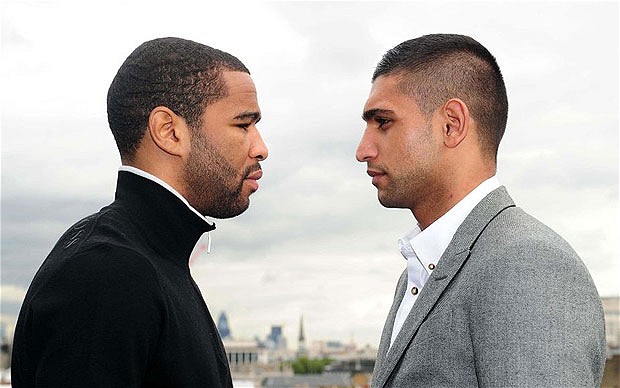
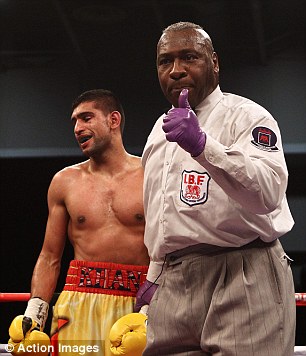
Unified junior welterweight titlist Lamont Peterson and former titleholder Amir Khan will meet in a rematch at Mandalay Bay in Las Vegas on May 19, a little more than five months to the day after their all-action first fight went down as one of the most controversial bouts of 2011.

“Everyone is very pleased that this is Lamont’s next fight,” attorney Jeff Fried, who represents Peterson and Barry Hunter, Peterson’s trainer/manager and father figure, told ESPN.com on Thursday after the deal had been signed. “It was challenging for a variety of reasons, including some of the post-fight antics undertaken by Khan. But at the end of the day, Lamont and Barry had a singular focus on what is in the best interest in Lamont Peterson and his family, and that is what drove this deal getting done.”

England’s Khan (26-2, 18 KOs) came to Peterson’s native Washington, D.C., to defend his belts Dec. 10 and lost a split decision in a fight filled with great action but marred by questionable officiating, issues over the scorecards and an unauthorized figure at ringside.

“Both sides are signed, but this has been one of the most difficult negotiations I have had for any fight I have ever been involved with,” said Golden Boy promoter Richard Schaefer, who has negotiated dozens of major fights. “There was a lot of back and forth, but it all ended good in getting this fight done. I think it’s one of the most anticipated rematches. It’s the right fight for Lamont and the right fight for Amir, and I’m really excited both parties agreed to do this fight.”

Peterson accepted the deal from Golden Boy, which handles Khan, for the rematch even though Top Rank’s Bob Arum had been wooing Peterson, a promotional free agent, for a fight with Juan Manuel Marquez, which he hoped to put on at Cowboys Stadium in Arlington, Texas.

Peterson, who earned $650,000 for the first fight and rejected a $1 million offer for the rematch shortly after the first fight, will make “substantially more than $1 million,” Fried said, although he did not divulge the terms.

Khan, who has a contract with HBO in the United States and Sky in England, brings substantial money to the fight but wanted the rematch so badly that he gave 50 percent of the worldwide revenue that the fight will generate to Peterson.

“We offered 50-50 because that was how much Amir wanted this fight,” Schaefer said. “There were times where it looked like we were close to getting it done, but it was a drawn out process. But in the end it was not a sanctioning organization, a TV network, the media or fans who made this rematch. It’s the fighters who wanted to get the fight done. It was Lamont Peterson saying he didn’t want to fight anybody else except Amir Khan and it was Amir Khan saying he wanted to fight only Lamont Peterson. That is what makes fights.

“The truth is both fighters had other options. But it really came down to what they wanted most. For both guys, other options might have been more lucrative, but it was not really only about the money. They realized the right thing to do was to fight each other again.”

The refereeing was the most controversial aspect of the December fight. Khan had two points deducted for pushing — an almost unheard of foul call — in the seventh and 12th rounds by Washington-area referee Joe Cooper. Without the deductions, Khan would have retained the belts via unanimous decision.

Khan complained that while he was docked points for pushing, Peterson (30-1-1, 15 KOs) was never warned for leading with his head. Golden Boy also raised questions about judge George Hill’s scoring of the seventh round, which appeared to read 10-10 but was crossed out to read 10-8 in Peterson’s favor.

Then there was the much-publicized issue of the so-called ringside “mystery man,” who turned out to be Mustafa Ameen, who is affiliated with the IBF and had a credential arranged as a courtesy from the organization, but was not at the fight in an official capacity. However, he was seen on video at ringside apparently touching the scoring slips, which is against the rules, and distracting a judge. He was later seen in the ring apparently celebrating with the Peterson team after the fight.

It all led to Khan protesting the decision to the sanctioning bodies and harsh words were exchanged between the camps. But now all of that should only add to the interest surrounding the rematch, which will headline HBO’s “World Championship Boxing.”

“May the better man win,” Schaefer said. “It will be one of the most talked-about fights of the year. This is one of those fights people wanted to see and I am happy we can deliver it to the fight fans. I will say this, Jeff Fried deserves a lot of credit for helping us get this done.”

Schaefer said he is close to finalizing the co-featured bout for the card, which would also take place in the 140-pound division: Lucas Matthysse (29-2, 27 KOs), the hard punching contender from Argentina, against former lightweight titleholder Humberto Soto (57-7-2, 34 KOs) of Mexico, who is now fighting as a junior welterweight.

“I am almost done with that fight and HBO is licking their chops on this fight,” Schaefer said. “Those two fights as a doubleheader is probably the best 1-2 punch HBO boxing has delivered in a long time.”

Pakistani and Indian Chefs Compete on Reality TV

By Sebastian Abbot for The Associated Press

For decades, archenemies Pakistan and India have engaged in a dangerous nuclear arms race. Now they’re also competing in a more cheerful forum. The outcome will be mouthwatering curries and soothing Sufi ballads, not violent conflict.

The fractious neighbors are going head-to-head in a pair of reality TV shows that pit chefs and musicians against each other. Producers hope the contests will help bridge the gulf between two nations that were born from the same womb and have been at each other’s throats ever since.

But so far it hasn’t completely worked out that way. The top Pakistani chef on the cooking show, which is called Foodistan, quit the contest early. He accused the judges of bias toward India and is threatening to sue. The producers denied the allegations.

Pakistan and India were founded in 1947 following the breakup of the British empire. They have fought three major wars, two of them over the disputed territory of Kashmir.

The TV shows do not try to hide or brush over this painful history. They make light of it.

“Now the world’s greatest rivalry is going to get spicier,” said co-host Ira Dubey during one of the early episodes of Foodistan, which first aired in India on Jan. 23 and will be shown in Pakistan starting in mid-February.

Her counterpart, Aly Khan, said the aim of the two teams “would be to grind the opposition into chutney, to make them eat humble pie, to dice them, slice them and fry them on their way to culinary glory.”

Eight chefs from each country were scheduled for individual and team competitions over 26 one-hour episodes, with the winner authoring the first Foodistan cookbook and receiving a trip to three cities of his or her choice anywhere in the world.

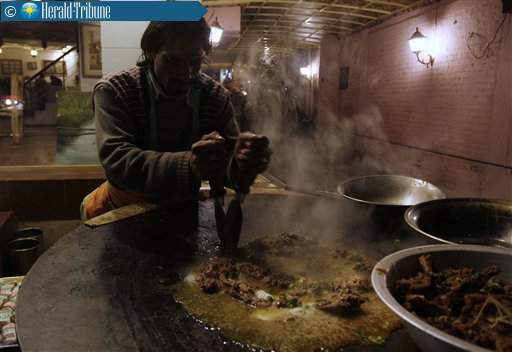
There is significant overlap in the cuisines of both countries, as there is in language, music and culture. Pakistanis and Indians both love curry, kebab and biryani – a spiced rice dish. But they often use different ingredients, and dishes can also vary from one region to another within the same country.

Pakistani dishes often include beef, which is not eaten by many people in majority Hindu India for religious reasons. India has more vegetarian dishes, and the food is often cooked with ingredients like coconut milk that are rarely found in Pakistan.

Many Pakistanis and Indians have missed out on enjoying the varied tastes of the other country because mutual enmity has made cross-border travel difficult.

“Even though they are neighbors, Indians don’t know what Pakistani food is like and vice versa,” said Mirza Fahad, a production assistant at India’s NDTV, which developed Foodistan. “It was long overdue to get to know each other’s foods.”

During the first cook-off on the show, filmed in New Delhi, the judges gave four chefs from each side two hours to prepare a biryani, curry, kebab and dessert. Each of the three judges gave the team’s meal a score out of 10.

The judges loved the Iranian-inspired fish biryani cooked by the Pakistanis, their chicken kebab stuffed with figs, olives, bread and mango chutney, and their shahi tukda – a dessert of fried bread soaked in hot milk with spices. They scored 21 out of a possible 30, losing points because a dish of chicken in shalimar curry was a tad chewy.

The Indians ended up winning the first contest by one point with a menu that included chicken tikka with truffle cream, cheese kofta in a tomato and water chestnut curry, lamb biryani and phirni – a sweet rice pudding that they topped with strawberry granita.

The captain of the Pakistani team, Mohammed Naeem, executive chef at the Park Plaza Hotel in Lahore, alleged the judges didn’t have enough knowledge of Pakistani food and were destined from the beginning to pick an Indian to win.

The judges included a British chef, an Indian food critic and a Bollywood actress of Pakistani and French descent.

Another member of the team, Akhtar Rehman, a chef at the Marriott Hotel in Islamabad, said concerns about the judges were fairly widespread on the Pakistani side, but Naeem was the only one to quit.

It remains to be seen whether the music competition – Sur Kshetra, or Musical Battlefield – also will spark ill will.

The contest, which is being filmed in Dubai, is scheduled to air in Pakistan and India starting in mid-February, said Mohammed Zeeshan Khan, a general manager at Pakistan’s Geo TV, which is developing the show.

“Music can unite people across borders and bring them closer together,” said Khan.

The competition will include teams of six musicians from each country between the ages of 18 and 27. The teams will be mentored by two well-known pop singers and actors, Pakistani Atif Aslam and Indian Himesh Reshammiya. They will compete across a range of genres, including jazz, pop, rock and qawwali – traditional Sufi Muslim ballads that are popular in both countries, said Khan.

The grand prize is still being worked out, but Khan said the winner can claim to be “the new musical icon for the subcontinent.”

Peace Pipeline Moves Closer To Fruition

By Mohammed Aasim Saleem for Deutsche Welle

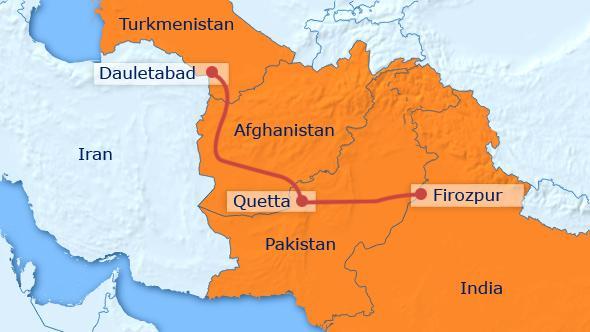
Officials from India and Pakistan have announced they are moving closer to inking a deal to import gas from Turkmenistan via a pipeline through Afghanistan. The 1,700-kilometer “TAPI” duct will transport over 30 billion cubic meters of gas annually from fields in Dauletabad in southeastern Turkmenistan.

In high-level talks in New Delhi this week, Indian Oil Minister S. Jaipal Reddy said “considerable progress” has been made on the project. His Pakistani counterpart, Asim Hussain, added at the meeting that “the issue of transit fees is being discussed with Afghanistan. A joint strategy is also being created between India and Pakistan.”

When the four countries signed a framework agreement back in 2008, the Asian Development Bank estimated the cost of the TAPI pipeline project at around $7.6 billion.

After the talks in New Delhi, the Indian oil minister emphasized that the pipeline would help address the energy needs of the region. Reddy also clarified that security concerns were discussed with Afghan officials, who themselves sought to provide reassurance that necessary measures would be taken to protect the TAPI project.

“We consider it a pipeline of peace,” Reddy said. “Everyone needs gas.”

Improving cooperation between the nuclear armed and traditionally hostile neighbors is seen as a positive development towards establishing long term stability in South Asia.

Pakistan gave India a “Most Favored Nation” trading status when the countries’ commerce secretaries met in New Delhi in November last year to discuss energy and bilateral trade. Indian commerce chief Rahul Khullar expressed his desire to boost bilateral trade to $6 billion within the next three years. Currently, total trade amounts to $2.7 billion.

Reddy said that Pakistan had pledged to also consider a proposal to import Indian petroleum products, highlighting the cost advantages for Pakistan. India, meanwhile, offered electricity to Pakistan through its power plants in Punjab and Gujrat.

The Indian oil minister went on to express disappointment over a failed Iran-Pakistan-India gas pipeline project. With the US leaving no stone unturned in trying to corner Iran over its nuclear ambitions, any possibility of India, Afghanistan or Pakistan going against the Obama administration is somewhat remote. India imports 12 to 14 percent of its oil from Iran, making the Islamic Republic India’s second largest source of oil after Saudi Arabia.

There was significant domestic pressure in India as the analysts and masses called for a stern stand against the US in determining trade relations with Iran. With other regional countries, including China, also refusing to follow US directions, India is still continuing with the import of oil from Iran. In this regard, Reddy said that New Delhi would continue importing oil from Iran and was not bound by new sanctions imposed by the European Union on the Islamic Republic earlier this week.

“We, as a member of the UN, are obliged to follow UN sanctions. Other sanctions imposed by big blocs of countries, we can have some freedom there,” he added further.

Improving relations and cooperation in the energy sector between India and Pakistan will go a long way to establishing harmony and stability in the region. Pakistan is experiencing a severe energy crisis whilst India needs to feed its rapidly developing economy. Mutual dependency and cooperation in this sector with projects such as the TAPI pipeline can also ensure smoother political ties.

Pakistanis for Peace Editor’s Note– A Peace pipe was often used between the Native American tribes when they ended their wars and called a truce. A different sort of peace pipe between Turkmenistan and India via Pakistan can do great wonders for the bilateral relations of the two feuding neighbors and must be encouraged to fruition.

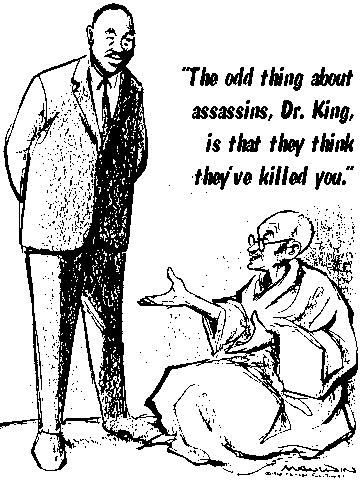
Gandhi and King- Two Martyrs Who Will Never Die

By Manzer Munir for Pakistanis for Peace
Today is MLK Day in the United States where it is a federal holiday commemorating the life and legacy of the Rev Dr Martin Luther King Jr, an icon who would have been 83 years old on January 15.

MLK was a great believer in the teachings of non-violence if Mohandas K Gandhi, the leader of Indiaโ€™s independence movement from Britain. King saw that Gandhiโ€™s peaceful civil disobedience and non-violent methods of protest were very effective in bringing down the British Empire in India and as a result Pakistan and the rest of the Indian Subcontinent after some 300 years of direct and indirect rule. Gandhi had believed that people could resist immoral government action by simply refusing to cooperate. Gandhi adopted many peaceful resistance techniques in developing his concept of Satyagraha, which was a philosophy and practice of passive nonviolent resistance.

Gandhi had earlier used this resistance technique in his struggles for freedom and equality for blacks and Indians in South Africa where both minorities were subjected to second and third class citizenry. His methods and refusal to bow down to the injustices that Indians faced in colonial South Africa inspired Nelson Mandela several years later to start his own peaceful struggle that eventually led to the end of Apartheid in South Africa in 1990.

While at Morehouse College, King learned about Gandhi and became very excited about his ideas. He wanted to further educate himself and read many books on Gandhi and his life and beliefs. In his book, Stride Toward Freedom, King states that โ€œGandhi was probably the first person in history to lift the love ethic of Jesus above mere interaction between individuals to a powerful and effective social force on a large scale. He further writes in his book that โ€œIt was in this Gandhian emphasis on love and nonviolence that I discovered the method for social reform that I had been seeking. I came to feel that this was the only morally and practically sound method open to oppressed people in their struggle for freedom.โ€

King felt that he had finally found a way to where oppressed people could successfully unlock social protest through Jesusโ€™ teachings of love. In fact Gandhi himself had said โ€œWhat does Jesus mean to me? To me, he was one of the greatest teachers humanity has ever had.โ€ He also once mentioned Jesus as the โ€œmost active resister known perhaps to history. His was non-violence par excellenceโ€ Therefore to the Christian minister living in the pre-civil rights era in the South in America, Gandhi appeared to King as a follower of Christ, someone who preached peace and love even at the expense of suffering. Martin Luther King once said of Gandhi โ€œIt is ironic yet inescapably true that the greatest Christian of the modern world was a man who never embraced Christianity.โ€

In 1959, King visited India and became fully convinced that Satyagraha could be effectively applied to the struggle by blacks in the United States for racial integration. He came back to the United States where he continued the struggle for freedom and equality for all Americans. Like Gandhi, King also talked about suffering as a path to self purification and spiritual growth. He not only experienced this suffering by being jailed, beaten and harassed by the authorities of the day, but he eventually ended up paying for this cause for freedom for all with his life.

Today there is a black man that sits in the White House, minorities are on the Supreme Court bench, and black heads of Fortune 500 companies who have reached the proverbial mountaintop in every possible endeavor. Yet there is little doubt that despite how far we have come as a nation, we still have a ways to go to achieve equality for minorities and women. Without Dr Kingโ€™s struggle, leadership and personal sacrifice, the United States, and indeed the world, would be in far worse shape.

Mohandas K Gandhi and Martin Luther King Jr were arguably two of the greatest men of the last century. Both men believed that โ€œinjustice anywhere was a threat to justice everywhere.โ€ They both led their people and millions of others out of slavery and servitude against seemingly insurmountable odds to freedom and salvation. On what would have been his 83rd birthday, let us recognize that in the greatest democracy in the history of the world, and despite an assassinโ€™s bullet, the spirit and dream of a King still lives on.

Manzer Munir, a proud American of Pakistani descent, is a practicing Sufi Muslim and member of Muslims for Progressive Values, he is also the founder of Pakistanis for Peace and blogs at http://www.PakistanisforPeace.com as well at other websites as a freelance journalist and writer.

Amir Khan Was Mugged By Dubious Judging

By Jeff Powell for The Daily Mail

Not only the politics stink here. Amir Khan must have felt like going out to join the Occupy Washington protesters in their tents after his grand design for global supremacy was set back for at least a year by some of the most controversial officiating decisions the sport has witnessed.
The only consolation for Britainโ€™s unseated world champion, after he was mugged in the darkness near Capitol Hill, is that he will be given an immediate chance to regain his unified light-welterweight title from Lamont Peterson โ€” the local hero who benefited from the latest of the charitable donations which are another feature of life in this power-crazed city.

A referee who deducted two points from Khan for the obscure infringement of pushing off his opponent and a pair of judges who couldnโ€™t โ€” or wouldnโ€™t โ€” see straight have also put on hold the mega-millions of dollars Khan is hoping to bank from a super-fight with Floyd Mayweather Jnr.
Now, instead of challenging Manny Pacquiaoโ€™s rival as the best pound-for-pound fighter on earth next May, he can expect to face Peterson for a second time on March 31, probably in more neutral Las Vegas.

And Mayweather can now conveniently ignore Khan, at least until he regains his WBA and IBF belts from Peterson and then goes on to beat one or two more world-class boxers.

Khanโ€™s plans have been knocked so badly awry by this split-decision defeat in a real thriller โ€” the excitement of which has been lost in the controversy of yet another of the injustices which have plagued boxing of late โ€” that his career may have to be prolonged beyond his nominated retirement age of 28. Khan reached his 25th birthday last Thursday and is unlikely to land his bonanza fight before 2013, at the earliest.
Trainer Freddie Roach insists: โ€˜Yes, Amir can get back on track by beating Peterson and still become the next pound-for-pound king.โ€™

But the road to that summit is even steeper now.
Instead of going straight to Mayweather or easing himself up to welterweight against a manageable British opponent like Matthew Hatton, Khan is obliged to stay at 10 stones and strive to regain โ€” and then defend โ€” his light-welter titles.

That may be a blessing in disguise. Although Khanโ€™s courage and relish for battle contributed to another Fight of the Year candidate, he does not look as ready for Mayweather just yet as he and Roach had imagined. Not that Floyd Jnr will be willing to accommodate him for a while now.

This defeat, however unfair, moves Khan back in the queue for glory. It also puts more testing obstacles in his path.
Although my scoring was within a point of the one judge, Nelson Vasquez, who voted 115-110 in favour of Khan on Saturday, he must expect another tough night against Peterson.

And although he says โ€˜I hope Lamont has the nerve for coming to England that I showed in giving him this chance in his home town,โ€™ the reality is that the rematch will go to Las Vegas, not least on economic grounds. This first fight was a real barn-burner and HBO will be as keen as Sky in Britain to do it all over again. That is a somewhat enriching consolation for Khan as he nurses his wounds and his grievances.

But then, assuming he beats Peterson, the most logical fight will be against Timothy Bradley in a bid to become the undisputed world champion at light-welter. And it was Bradley who stamped the only loss on Petersonโ€™s record, with a hefty points victory two years ago.
Bradley is like Peterson โ€” albeit a superior version. He is a hungry street-fighter who uses his head as a third fist and Khan reasoned how that tactic obliged him to push Peterson back โ€˜to avoid a head coming in lower and lowerโ€™.

That does not explain local referee Joe Cooperโ€™s decision to penalise a professional prize-fighter for pushing, something rarely if ever witnessed outside the amateur ranks. Nor does it excuse judges George Hill and Valerie Dorsett giving Peterson the verdict by a single point, 113-112, following the deductions.

Although Peterson was mightily persistent, there were periods when Khan boxed his ears off. Even as he intensified the ring-quartering pressure in the middle rounds, there were spells when Khan boxed almost as beautifully as Muhammad Ali to stay away from trouble and land his combinations.
And when Khan was caught by Petersonโ€™s big shots, he proved once again that his supposedly suspect chin is as punch-resistant as any in this hard old game. Scoring a fight is a subjective business but there is a growing need for boxing to take steps to make judging and refereeing as fair and impartial as possible.

It was a mistake by Team Khan to accept the hometown referee who not only gave Peterson his two-point advantage, but who ruled that the local homeless boy made good was knocked down only once, not twice, in the first round.
Every little point counts in fights like this.

Neutral, scrupulous officials have to be the first part of a solution to the decisions which are not only cheating honest fighters like Khan, but are damaging boxingโ€™s credibility in the eyes of the public. From Watergate to Khangate, Washington has much to answer for in the political and sporting arenas.

Pakistani Actress Veena Malik Sues FHM Magazine Over Nude Cover Photo

A nude shot of a sultry Pakistani starlet on the cover of an Indian lad mag has sparked an uproar between the two nuclear rivals.

Pakistani actress Veena Malik appears on the cover of FHM India’s December issue wearing nothing but a steamy gaze and the initials of Pakistan’s fearsome intelligence agency, ISI, tattooed across her arm.

Conservative Muslim clerics in her home country slammed the shot as an insult to Islam, while Pakistan’s government has promised to investigate whether the image was doctored, London’s The Telegraph reported.

Malik, meanwhile, has filed a lawsuit against the magazine, saying that she agreed to pose topless — along with a cheeky dig at her home country’s spy service — but the editors digitally altered the shot to make her appear totally nude.

“I agreed to a photo shoot and having an ISI tattoo in a humorous way but I did not have any nude photos. My pictures have been morphed,” she told a Pakistani television station.

The suit is seeking $2 million in damages. FHM India editor Kabeer Sharma insists the cover is legit.

“Maybe she is facing some kind of backlash, so maybe that’s why she is denying it,” Sharma told Agence France-Presse.

“We have not photoshopped or faked the cover. This is what she looks like, she has an amazing body.” Sharma says a video from the cover shoot would prove the photos are real.

An alternate cover that has surfaced online shows Malik clad in a dinky military cargo belt while nibbling on the pin of a grenade.

The 33-year-old Muslim actress and model was best known as a Pakistani TV star before hitting it big in India in 2010 as a contestant on the fourth season of the reality show “Bigg Boss,” a version of “Big Brother.”

In January, she got in a much-publicized verbal spat with a conservative Muslim cleric, who called her an insult to Pakistan and Islam for cozying up with a dashing Indian actor on the show.

We Are Free to Choose Peace

By Ethan Casey for Dawn.com

I was planning to devote this column to Memogate and Ambassador Husain Haqqaniโ€™s resignation, then I woke up one morning to learn that the topic had been rendered quaint by a Nato cross-border attack killing two dozen Pakistani soldiers and bringing the already fragile (not to say ostensible or notional) alliance between Pakistan and the United States very close to the breaking point. Then I realised that the two topics are aspects of a larger one, indeed of the twin elephants in both societiesโ€™ living rooms: the damage done when a military establishment becomes too powerful and unaccountable.

The only time Iโ€™ve ever met Husain Haqqani was at a seminar at Harvard University in 2006, organised by the journalist and activist Beena Sarwar. He wasnโ€™t yet Ambassador to the US; Musharraf was still president. Most of the discussion was, I felt, preaching to the converted among elite-class Pakistani liberals about how the military was the problem and the solution was democracy in the form of elections and civilian rule. Iโ€™m not Pakistani, but I was an invited panelist at the seminar, so I took the liberty of challenging that consensus. Recall, I said, the sorry tit-for-tat excuse for democracy that Benazir Bhutto and Nawaz Sharif and their undemocratic parties inflicted on the country throughout the 1990s. That rivalryโ€™s personal vindictiveness and pettiness, I asserted, did a lot of damage to the credibility of civilian leadership. Was it really clear that civilian rule was preferable to military rule under Musharraf?

For my pains I was, as I remember it, ganged up on by Husain Haqqani, the stern and formidable historian Ayesha Jalal, and Ayesha Siddiqa, whose book Military Inc. was about to be published. Haqqani in particular accused me of being โ€œmerely anecdotal,โ€ meaning that the foibles of civilian politicians were incidental, whereas the military was a problem institutionally and structurally.

I still believe that my point was well taken, because thereโ€™s much that elected leaders can and should do to claim political space and assert their own authority, even โ€“ especially โ€“ if theyโ€™re being besieged or undermined by the military. If youโ€™re elected to lead, you must accept the responsibility to do just that, and you must demonstrate courage and personal character in disdaining consequences to yourself when necessary. And Iโ€™m a reporter; merely anecdotal is what I do. But Haqqani was all too right โ€“ wasnโ€™t he?

Iโ€™m aware that conspiracy theories have been flying about the notorious memoโ€™s provenance. Like most conspiracy theories, theyโ€™re beside the point. It doesnโ€™t matter whether Haqqani wrote the memo himself or was framed by the ISI; the result is the same. And the question to ask is Leninโ€™s: Who benefits?

A.J.P. Taylor (among many others) was right to point out that the armed forces are a fundamental institution of any state. But if the state is going to serve the interests of anyone else, the armed forces must be subject โ€“ and obedient โ€“ to civilian authority. This is what the authors of the US constitution understood in the 18th century, when they made the president the commander-in-chief of the armed forces. And itโ€™s what President Truman understood when he fired the insubordinate General Douglas MacArthur in 1951, even though MacArthur was more popular with the American public at the time than Truman himself.

But Americans should be anything but self-congratulatory about such things. President Eisenhower, himself a retired general, was not only prescient but brave and patriotic when he took the occasion of his leaving office in 1961 to warn, in a rightly famous nationally televised speech, that a โ€œmilitary-industrial complexโ€ (he coined the phrase) was poised to dominate Americaโ€™s public life and economy. Half a century later America is hip-deep in the muck of Afghanistan, and โ€“ in addition to the death and destruction in Afghanistan itself and in Pakistan โ€“ the only Americans who are benefiting are the military itself and the shareholders of the companies that supply the war effort with everything from โ€œcontractorsโ€ (mercenaries) to drones to cheeseburgers for the troops. Military Inc., indeed.

Which brings us to the cross-border attack. Maybe Nato mistakenly or aggressively attacked over the border; maybe Pakistani troops fired first. Who knows? The New York Times has published a de rigueur, pro formaย editorialย urging an inquiry. Whatever the truth, it doesnโ€™t matter, because the only people who gain from such an incident are the people who gain from war, and thatโ€™s not you or me. Itโ€™s also not the soldiers on all sides who are being killed. If I were Pakistani I would be furious, as I know many Pakistanis are, at the contempt for sovereignty that the attack shows. At the same time, we know that the Pakistani establishment is duplicitous. So where does that leave you and me? Does it help anyone if I claim your establishment is more duplicitous than mine, and vice versa?

Our two countries have arrived at a depressing and discouraging pass, both in relation to each other and internally. The exigencies of โ€œdefense,โ€ which is a euphemism for war, have brought us here. As individuals, we feel (because we are) largely powerless to affect the course of events. As human communities thereโ€™s more we can do, as the Occupy Wall Street movement has been showing in America, and as the lawyersโ€™ movement showed in Pakistan.

Weโ€™re in this together โ€“ and by โ€œweโ€ I mean Americans and Pakistanis. Weโ€™re not on opposing sides; weโ€™re on the same side, against the warmongers of both states. And we are free to choose both our actions and our attitudes. As an American, Ken Williams, commented just this week onย my Facebook page: โ€œWe can live with generosity and trust OR greed and fear. Each choice has outcomes.โ€

-Pakistanis for Peace group memberย Ethan Casey is the author of Alive and Well in Pakistan and Overtaken By Events: A Pakistan Road Trip. He can be reached atย www.facebook.com/ethancaseyfansandย www.ethancasey.com

Jacksonville Jaguars- Allah’s NFL Team?

By Manzer Munir for Pakistanis for Peace

The last few days have not been easy ones for me. I have had to watch as my adopted homeland, the United States, is accused by Pakistan, the nation of my forefathers, for being responsible for the deaths of 24 Pakistani soldiers by โ€œfriendlyโ€ fire.

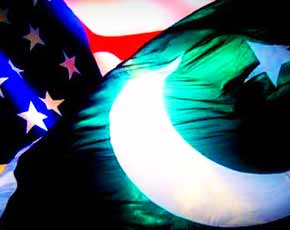
So it wasn’t hard to imagine that once again I would be hurting for being both American and Muslim as I was on 9/11, and now I am once again feeling the pinch of being both Pakistani and American as well. Believe it or not, you can love two countries; just ask Italian or Irish Americans. I am sure you know that this is not the first time and certainly will not be the last time that as a Pakistani American I will be reeling from news concerning Pakistan. Yet the covert attack and neutralization of Osama Bin Laden in May of this year in Pakistan, a country long suspected to be his hiding place, have all but shattered any remaining doubts to the American public regarding which side of the fence Pakistan finds itself. As President Bush so famously said โ€œYouโ€™re either with us, or against usโ€ to President Pervez Musharraf immediately following the attacks of September 11, 2011.

At least since Bin Ladenโ€™s killing on May 2, 2011, as far as the average American, John Q Public is concerned, it appears that Pakistan was against us all along, and merely only was paying lip service the last 10 years. However staffers at the US State Department, all the way up to Secretary Hillary Clinton and President Obama will rightly admit, that this simply is not the case. Pakistan has been a difficult ally to be sure, but the country has been an ally nonetheless and has proven time and time again to be invaluable not just in this current fight for the strategic direction of Afghanistan, but also was critical in the last great fight involving this land against the former USSR in the โ€˜80โ€™s.

One can go even further back and talk about the historically strong US and Pakistan relations that go all the way back to at least President Eisenhower and the Southeast Asia Treaty Organization (SEATO), a security pact similar to NATO, but for Asia and parts of the Pacific, it was an organization of which Pakistan and the US comprised membership, along with six other nations namely Australia, France, Great Britain, New Zealand, the Philippines, and Thailand. This was an eclectic bunch of nations to be sure, but a defense pact tying Pakistan and the US, this once brought the two together in a treaty of mutual defense and cooperation going back as early as 1954.

One would also be remiss if we forget that the famous US Air force pilot Gary Powers flew on a U-2 secret mission from Pakistanโ€™s Peshawar airbase at the request of Eisenhower and at Pakistanโ€™s acquiescence. He had been doing a reconnaissance mission against the Soviets at the height of the Cold War when his plane was shot down causing the then famous 1960 U-2 incident. Amazingly, it was less than just a couple generations ago when President Dwight D. Eisenhower famously called Pakistan Americaโ€™s โ€œmost allied ally in Asia. Wow, as the old Virginia Slimโ€™s cigarette ad tagline used to go โ€œ Youโ€™ve come a long way baby!โ€ Havenโ€™t you, Pakistan?

I suppose before we get lost on another few paragraphs on US-Pakistan alliances of old and their longstanding history of cooperation and friendship, whether from the days of the Cold War or the far more recent war on terror, let me get back to the original purpose of this article. So, there I was, in my now seemingly regular funk, on account of all the rapidly downward spiraling US-Pak relations, and then, there it was, a glimmer of hope for a bit of positive news. Maybe a chance for something unrelated to terror, bombs, Taliban, Shiite-Sunni violence, blasphemy laws, honor killings or anyone of the myriad of utterly negative topics that so easily and regularly grace the top of the headline news on any cable news channel on any given day regarding Pakistan.

So here finally was some positive news regarding this nation. Initially I wondered if perhaps this feel good story would be along the lines of the usual sports filled beacons of hope for the otherwise unfortunate Pakistani masses such as in the form of when an Amir Khan gains world boxing glory or when an Imran Khan led cricket team of old wins a Cricket World Cup or maybe it was similar to the legend of the Khan boys, Jahanghir and Jansher Khan who were busy conquering the world of squash (racquetball) for decades. Perhaps this news I so eagerly awaited to get me out of this rut was related to a scientific or professional endeavor that highlighted Pakistani achievements and success stories such as that of Pakistani born neurologist Dr Malik M Hasan, the man who single-handedly helped change the medical industry in the US for the better, when over the course of a few years through a process of mergers and acquisitions, he helped eventually form HSI, a multi-billion dollar healthcare provider that in 1993, which was an organization with about 1.4 million members, 40,000 doctors, and nearly 400 member hospitals! His innovative and entrepreneurial management style led to the very first modern Health Management Organization (HMO) in the United States, and thereby brought more affordable healthcare to the vast majority of Americans in the 1980โ€™s. Dr Hasan eventually grew the business to be worth more than $10 billion dollars and countless thousands jobs for professionals through many midwestern and western states.

Maybe a boldly similar idea or solution in todayโ€™s rapidly increasing costs of healthcare and lack of insurance for over 40 million Americans can come, if not from a Pakistani American like Dr Hasan, then perhaps from another of the worldโ€™s brightest who still yearn to come to these shores with their dreams and aspirations for success and achieving a piece of the American Dream that millions of their countryman from Europe had done years before them. Along the way, people like Dr Hasan employed hundreds and thousands of Americans and become a mega job creator, kind of like the ones that Republicans say they love.

It could be that the Pakistani American feel good story bringing much needed good news to the Pakistani global diaspora, and indeed by that realization, at the very least, to a Pakistani American like myself was going to be similar to a fellow Lahore born compatriot like Tariq Farid, the founder of the wildly popular Edible Arrangements, a US based international franchise that specializes in fresh fruit arrangements for special occasions and gifts. With nearly a 1000 locations in the US and a few countries abroad, I am sure many a Congressman from both Red and Blue states would love to attract job creators like him to their state and lure his growing and profitable company, during these economically depressed times, to their state from their Headquarters in Connecticut.

I suppose I could go on and on at the long list of distinguished Pakistani Americans from the renowned NASA physicist, Dr Bashir A Syed, to Gibran Latif Hamdan, the first person of Pakistani descent to play in the NFL. Other major contributions not in the field of science, sports or business, yet still as inspirational to Pakistani Americans could have been the story of the American hero of Pakistani descent, Sgt. Wasim Khan, the first Purple Heart winner from that nation who won the award for valor during Operation Iraqi Freedom, costing him numerous injuries while fighting for our freedoms.

Certainly no one to date has better demonstrated a greater sacrifice to this nation than the story of Cpl. Kareem R Khan, another Pakistani American, one who gave the ultimate sacrifice for his beloved country, the United States, when he gave his life for American freedom, liberty and ideals dying on Iraqi soil during combat there. He also earned the Purple Heart and has the honor of being buried at the resting place of fallen American heroes, the venerated Arlington National Cemetery. One can do their own Google search for a list of Pakistani Americans to find out that this list comprises far more accomplished and good citizens of Pakistani descent than the occasional delusional individual like Faisal Shahzad, of the Times Square bomb fame.

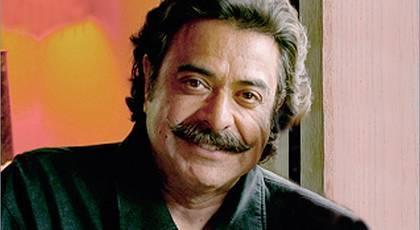
So you bet it was good news for me to hear a few days ago that a successful and hard working American businessman and multi-millionaire from the midwest, Shahid Khan, a Pakistani American owner of a large automobile parts manufacturer, Flex-N-Gate, had just bought an NFL team, the Jacksonville Jaguars! My rare good optimism however seems to perhaps been ill placed though because it seems that even a positive and notable news story like this can quickly turn into something far more twisted and sinister as witnessed by the scores of Islamophobic and racial comments being left on the Jacksonville Jaguars Facebook page and other sports blogs and boards, hours since the sale and the origins and national background of the new owner became public. The deal which still has to go to an NFL ownerโ€™s vote would only then be complete and final. Whether the NFL ownerโ€™s vote affirmatively on the deal or not, the rancid and clearly Un-American comments on the teamโ€™s fan page demonstrate that a majority of the local fans of this NFL team seem only to care about his Pakistani background and not of the fact that he is committed to staying and keeping the team in the small Jacksonville market and that he is a genuine fan of football and by all accounts would make a great manager/owner of the franchise.

The sad fact remains that there is a possibility that despite all the countless contributions to this great nation made by Pakistani Americans, many of these die hard football fans have no problem with risking losing their team to a different owner who would take the team out possibly west to the vacant Los Angeles market than to have a โ€œPakiโ€ keep the team in Floridaโ€™s small Jacksonville market and try and build a contender there.

Maybe its his IRS troubles that Shahid had a few years ago that prevented him from buying the St Louis Ramโ€™s majority ownership stake last year or maybe it really is his very interesting moustache that scares people away. Regardless, I will gladly take either reason for his bid not being approved than anything that points to his national origin or racial makeup. Afterall, us Americans should never forget the words of the late great Rev. Dr. Martin Luther King, Jr when he said that we should โ€not judge a man by the color of his skin, but rather by the content of his character.โ€ All I know is that this Pakistani American still keeps alive Dr Kingโ€™s dream. So no amount of paranoia should let the die-hard Jaguar fans fear that Muslims and Allah are on their way to taking over their beloved NFL franchise. Now gentlemen, letโ€™s play ball!

–Manzer Munir, a proud American of Pakistani descent, is a former US State Department Foreign Service Officer Management Selectee, and the founder of Pakistanis for Peace. He is also an oftenย tormentedย fan of the Kansas City Chiefs of the NFL as well as having the good fortune of being a lifelong fan of Kansasย Jayhawkย Basketball.

In the Name of โ€˜Honourโ€™: Brazen Shikarpur Killings Shake Hindu Community

By Sarfaraz Memon for The Express Tribune

Most shops in Taluka Chak in Shikarpur were open on Wednesday but there was an uneasy calm. Three Hindu men are dead and no one knows the whereabouts of Seema Bhayo, the girl at the centre of the storm. Residents fear that she may also have been killed. The police have no clue.

It is a simple tale of a love affair that turned tragic. The president has ordered an inquiry into the matter. Not to be outdone, the Sindh home minister has suspended the SHO of the area but neither of these moves brought any comfort to the families who lost their loved ones.

Theย brutal attack took place on Monday, the first day of Eid, when four armed men on two motorcycles barged into the house of one Naresh Kumar, where he and his friends Dr Ajeet Kumar, Dr Satya Pal and Ashok Kumar were present. The intruders opened fire and killed Ashok and Naresh on the spot, injuringย  Dr Ajeet Kumar and Dr Satya Pal.

Dr Ajeet Kumar later died of his wounds at a Sukkur Hospital, more so because no one was willing to take him to the hospital. The policemen who were supposed to guard the house were nowhere to be seen. They did not turn up that day, despite the fact that they had been stationed on fear that such an attack was imminent.

The โ€œcrimeโ€ that these four men apparently committed was that they intervened on behalf of two young men of their community who had been apprehended two weeks earlier and charged with criminally assaulting a Muslim girl. The real story, as told by area residents, was that Seema and Sandeep Kumar fell in love and were caught while they were meeting at the house of Sandeepโ€™s friend, Nakash Kumar.

This correspondent also visited Qazi mohalla where Seemaโ€™s home is situated on the right side of the road and the shops of Sandeep and Nakash were on the left side. A neighbour said that Seema and Sandeep used to meet at Nakashโ€™s house. On that fateful day, area residents saw them going in and raided the house and thus the affair was revealed.

It was the promise of a better life which attracted Seema towards Sandeep, said another resident, adding that Seemaโ€™s father Nazir Ahmed Bhayo was a mason by profession. When the couple was caught, the Hindu community intervened to settle the matter. President of the Hindu Panchayat in Chak, Prem Kumar, said โ€œWe went to the Bhayo elders and told them that we are ready to pay any fine to reconcile the matter.โ€

Area resident Moulvi Allah Bux confirmed that the Hindu community were trying to reconcile with the Bhayo clansmen and for this they had met Sardar Babul Bhayo, who gave them a positive response and told them that the date of the reconciliatory meeting would be announced on the second day of Eid. But before the meeting could be held, the murders were committed.

While Babul Khan Bhayo was not available, clan chieftan Sardar Wahid Bux Bhayoย  said that it was the Hindu community which had resorted to aggression by sexually assaulting a Bhayo girl. According to him, the three Hindus were killed in retaliation for that incident. But he added that he condemned both incidents.

On Tuesday, hundreds participated in the last rites of the three men. The rituals were performed near the Sadhu Bela temple in Sukkur.

Following the notice by the president, theย Chak police has swung into action. During raids in different localities, they have apprehended more than 25 people. DIG Larkana Sain Rakhiyo Mirani said that the murder was an act of terrorism. But the Hindu community maintains that the real perpetrators of the crime have so far not been arrested.

Indo-Pak Tennis Duo Lifts Paris Crown

By Khalid Hussain for The Arab News

The Indo-Pak Express of Pakistanโ€™s Aisam-ul-Haq Qureshi and Indiaโ€™s Rohan Bopanna claimed their first ever ATP Masters crown when they crushed Franceโ€™s Julien Benneteau and Nicolas Mahut in a one-sided final in Paris on Sunday.

Aisam and Bopanna were in full flow in a final that jusxt lasted for 65 minutes as they raced to a 6-2, 6-4 triumph in the Paris Masters final in the French capital to bag their third title of the season.

Before Sundayโ€™s title-winning triumph, the Aisam-Bopanna duo had won the Gerry Weber Open at Halle and the Stockholm Open. Ranked seventh in the world doubles rankings, Aisam and Bopanna had already qualified for the year-ending ATP Masters finale to be played in London later this month. The Paris win gave the pair 1000 ranking points and a prize purse of 134,500 euros.

Aisam and Bopanna were on the attack right from the word go and broke their rivals in the third and fifth games to open up a comprehensive 4-1 lead in the opening set within 20 minutes into the final. Twice they were down 0-30 but did not lose control over the set as they bounced back to win it with ease.

Benneteau and Mahut, who had shocked top seeds Mike and Bob Bryan en route to the final, managed to put up a better show in the second set but failed to stop their rampaging opponents from winning the title.

Both the pairs were locked in a close battle in second set and at one stage were locked at 4-4. But the Indo-Pak team broke Mahut when the Frenchman committed his second double fault in the ninth game, sixth overall, to offer a break chance. Aisam and Bopanna then served out the match in the next game after facing a few anxious moments.

The result should come as a huge morale-booster for Aisam and Bopanna in the lead up to the London finale where the duo will be competing for the first time.

โ€œWeโ€™ve been working hard and hopefully will produce more positive results in the future,โ€ said Aisam, who together with Bopanna, reached the final of the US Open menโ€™s doubles event last year.

The Aisam-Bopanna duo has been making headlines for all the right reasons in recent times. And itโ€™s not just their exploits on the international tennis circuit thatโ€™s keeping them in the spotlight. Aisam and Bopanna โ€“ regarded among leading sport stars in the sub-continent – are also campaigning for peace between Pakistan and India, two neighboring countries, which have been at loggerheads for the best part of the last six decades.

Pakistanis for Peace Editor’s Note
– Congratulations to the Indo-Pak Express for winning their first major ATP Championship! Clearly, together India and Pakistan can conquer the world!

India, Pakistan PMs Vow to Start ‘New Chapter’

As Reported by The Economic Times

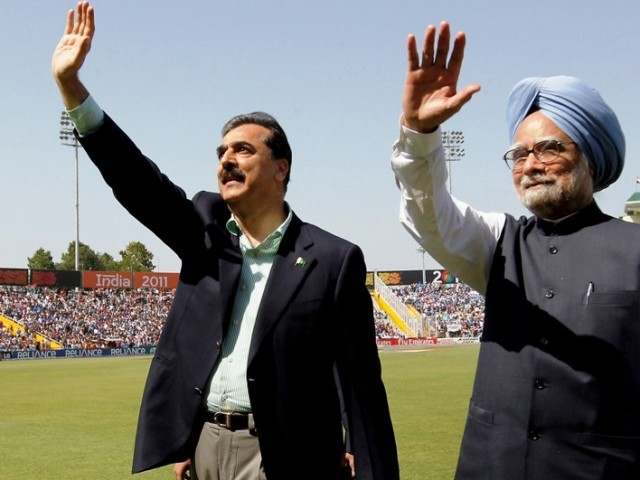
The prime ministers of India and Pakistan said Thursday they expected to open a “new chapter” at future talks between the rival nations after they met at a regional summit in the Maldives.

India’s Manmohan Singh and his Pakistani counterpart Yousuf Raza Gilani said their often strained ties were improving, but they declined to give a date for their next meeting.

“The time has come to write a new chapter in the history of our countries,” Singh told reporters. “The next round of talks should be far more productive and far more practical-orientated in bringing the two countries closer.”

Gilani said that “all issues” had been discussed during their one-hour meeting including the contentious subject of Kashmir, a Muslim-majority region divided between the two nuclear rivals and claimed in its entirety by both.

“I am ready to discuss each and every issue,” Gilani said. “I think that the next round of the talks would be more constructive, more positive, and will open a new chapter in the history of both the countries.”

The leaders did not give further details of their discussions on the sidelines of the South Asian Association for Regional Cooperation (SAARC) gathering in the Maldives.

However Singh added that the two sides should push to make real progress as they had “wasted lot of time in the past in acrimonious debates”.

The two men emphasised their warm friendship and shook hands twice to oblige photographers at the start of closed-door talks at the luxury Shangri-La Villingili island resort.

After the meeting, the two men headed for the opening of the SAARC summit, where their host, Maldivian President Mohamed Nasheed, hailed their dialogue.

“These developments are extremely welcome,” he said. “I hope this summit will be enthused with optimism.”

The two prime ministers last met in March when Gilani accepted Singh’s invitation to watch the India-Pakistan cricket World Cup semi-final. Their previous talks were at the April 2010 SAARC summit in Bhutan.

Both countries, who have fought three wars since independence in 1947, struck an upbeat note ahead of the Maldives summit, with officials describing the cross-border atmosphere as “considerably improved”.

However the vexed subject of Kashmir and the threat of Pakistan-based extremism remain major obstacles to their ongoing peace process.

A full peace dialogue — suspended by India after the 2008 Mumbai attacks blamed on Pakistan-based militants — was resumed in February this year.

The process remains tentative with only incremental progress on issues such as trade.

Last week, Pakistan’s cabinet announced it had approved a proposal giving India the status of “most favoured nation” but there has been confusion about when it will be implemented.

Efforts to reduce tensions have been complicated by concern over Afghanistan’s prospects as international troops begin departing after ten years of fighting the Taliban.

Indian involvement in Afghanistan is sensitive, with Pakistan vehemently opposed to its arch foe meddling in what it considers its backyard.

Islamabad’s suspicions were fuelled when Afghanistan and India signed a strategic partnership pact last month.

Afghan President Hamid Karzai is also attending the SAARC summit, along with the leaders of other member nations Bangladesh, Bhutan, the Maldives, Nepal and Sri Lanka.

Trust Deficit with Pakistan Shrinking: Singh

As Reported by The Express-Tribune via AFP


The leaders of India and Pakistan will meet on the sidelines of a regional summit this week, as the nuclear-armed rivals seek to push a tentative rapprochement in their fractious relationship.

Talks between Indian Prime Minister Manmohan Singh and Pakistani counterpart Yousuf Raza Gilani will take place at the summit of South Asian Association for Regional Cooperation (SAARC) nations that opens Thursday in the Maldives.

Indiaโ€™s foreign minister said Wednesday that a โ€œtrust deficitโ€ with Pakistan was shrinking as he headed for a regional summit, in a clear sign of warming relations between the neighbours.

โ€œThe trust deficit with Pakistan is shrinking,โ€ S.M. Krishna said on board his flight to the South Asian Association for Regional Cooperation (SAARC) summit in the Maldives, the Press Trust of India news agency reported.

He also said that it was necessary for Pakistan and India to develop a joint strategy to fight terror in the region, the agency reported.

Their meeting follows what Indian Foreign Secretary Ranjan Mathai described as โ€œpositive indicatorsโ€ from Pakistan in recent weeks that it is serious about reducing tensions.

An Indian military helicopter which strayed into Pakistani territory last month was promptly released along with its crew and returned to India, avoiding what in the past could easily have escalated into a diplomatic row.

And last week the Pakistani cabinet approved a proposal to grant India the status of โ€œmost favoured nationโ€ in a move towards normalising trade relations.

โ€œThese are I would say indications of forward movement,โ€ Mathai said, adding that โ€œall aspectsโ€ of the India-Pakistan relationship would be discussed during the Singh-Gilani talks.

The two prime ministers last met in March when Gilani accepted Singhโ€™s invitation to watch the India-Pakistan cricket World Cup semi-final. They last held formal talks at the 2010 SAARC summit in Bhutan.

Talks between the neighboursโ€™ foreign ministers in July failed to produce a major breakthrough, but both sides signalled a warming of ties, with Pakistanโ€™s Foreign Minister Hina Rabbani speaking of a โ€œnew era of cooperation.โ€

But efforts to reduce tensions have been complicated by the increasing influence of Afghanistan in the bilateral equation.

Indian involvement in Afghanistan is sensitive, with Pakistan vehemently opposed to its arch foe meddling in what it considers its backyard. Islamabadโ€™s suspicions were fuelled when Afghanistan and India signed a strategic partnership pact last month.

Afghan President Hamid Karzai will also attend the SAARC summit, along with the leaders of other member nations Bangladesh, Bhutan, the Maldives, Nepal and Sri Lanka.ย Previous summits of the regional body have been largely overshadowed by the India-Pakistan dynamic โ€” a fact that Mathai acknowledged with regret.

โ€œWe would like the focus to remain essentially on the common business of SAARC โ€ฆ and hope that the focus will not be diverted to one single event,โ€ he said.ย The summit is being held in Addu, on the southern Maldivesโ€™ island of Gan.

Satirical Song, a YouTube Hit, Challenges Extremism in Pakistan

By Salman Masood for The New York Times


A satirical song that takes a tongue-in-cheek swipe at religious extremism, militancy and contradictions in Pakistani society has become an instant hit here, drawing widespread attention as a rare voice of the countryโ€™s embattled liberals.

The song, โ€œAalu Anday,โ€ which means โ€œPotatoes and Eggs,โ€ comes from a group of three young men who call themselves Beygairat Brigade, or A Brigade Without Honor, openly mocking the military, religious conservatives, nationalist politicians and conspiracy theorists.

Theirย YouTube videoย has been viewed more than 350,000 times since it was uploaded in mid-October. The song is getting glowing reviews in the news media here and is widely talked about โ€” and shared โ€” on social networking sites like Twitter and Facebook.

The name of the band is itself a satire of Pakistanโ€™s nationalists and conservatives, who are often described in the local news media as the Ghairat Brigade, or Honor Brigade.

Local musicians have produced work in the past vilifying the West, especially the United States, but rarely do they ridicule the military or religious extremists, and none have had Beygairat Brigadeโ€™s kind of success.

Sung in Punjabi, the language of the most populous and prosperous province, the song delivers biting commentary on the current socio-political milieu of the country, in which religious radicalism and militancy have steadily risen over the years and tolerance for religious minorities is waning.

Just this year, a governor whoย opposed Pakistanโ€™s contentious blasphemy law was killedย by one of his guards. The assassin was thenย celebrated by manyย in the country, including lawyers who greeted him with rose petals and garlands.

The song rues the fact that killers and religious extremists are hailed as heroes in Pakistan, while someone likeย Abdus Salam, the nationโ€™s only Nobel Prize-winning scientist, is often ignored because he belonged to the minority Ahmadi sect.

โ€œQadri is treated like a royal,โ€ wonders the goofy-looking lead vocalist in the song, referring to Malik Mumtaz Qadri, the elite police guard who killed the governor of Punjab, Salman Taseer, in January after he challenged the blasphemy law.

Another line in the song, โ€œwhere Ajmal Kasab is a hero,โ€ makes a reference to the only surviving Pakistani gunman involved in the 2008 terrorist attacks in Mumbai, India. Still another line, โ€œcleric tried to escape in a veil,โ€ alludes to the head cleric of Islamabadโ€™s Red Mosque โ€”ย which was the target of a siege in 2007 by the Pakistani governmentย against Islamic militants โ€” who tried unsuccessfully to break the security cordon by wearing a veil.

The song even makes fun of the powerful army chief, Gen. Ashfaq Parvez Kayani, for extending his role for another three years.

Potatoes and eggs โ€œnever tasted so good,โ€ย wroteย Fahd Husain in a commentary on Tuesday in The Daily Times, a newspaper based in Lahore. โ€œThey will always be credited for being politically incorrect when most needed, and giving voice to all those Pakistanis who live in fear.โ€

The popularity of the song on the Internet has made it a sensation across the border in India as well, surprising the band members, who have been incessantly asked whether they feel they have put their lives in danger by ridiculing the mighty.

There are certainly enough provocations to rile nationalists and conservatives. At one point in the music video, the lead singer holds a placard that reads, in English: โ€œThis video is sponsored by Zionists.โ€

The band members chose to upload the song on YouTube instead of handing it to television networks because they said the work was too offbeat and might be censored. Not surprisingly, some have criticized the song and its taunts as pedestrian and in bad taste.

โ€œWe were not expecting such a huge response,โ€ said Ali Aftab Saeed, 27, the lead vocalist, who lives in Lahore, a city that is often considered the countryโ€™s cultural capital.

He said the assassination of Mr. Taseer was the inspiration for the song and its lyrics.

Resistance poetry and literature are not new to Pakistan, and they raised spirits during the somber years of military dictatorships.

During the protest rallies of the seminal lawyers movement in 2007, when they led the campaign to oust the president, Pervez Musharraf, the lawyersย would sing and dance to a poemย written by Faiz Ahmad Faiz, considered a giant of Urdu literature. Habib Jalib, another famous Pakistani poet, wrote several poems against Gen. Mohammad Zia ul-Haq, the military dictator in the 1980s.

But โ€œJalib is irrelevant to the generation of urban, young, middle-class kids that Beygairat Brigade is addressing,โ€ said Nadeem Farooq Paracha, a culture critic based in Karachi.

โ€œThis band is offering an alternative narrative to the one this generation has grown up on, and provides a counternarrative to establishmentarian and conservative notions of politics, history and society advocated by televangelists, conspiracy theorists and, of course, the right-wing electronic media,โ€ Mr. Paracha added. โ€œAnd what better and more effective way to do this than by using satire and pop music.โ€

The band members, on the other hand, have no pretensions of being revolutionaries, activists or intellectuals, though they do feel that the song represents those who do not believe in extremism and want to live peacefully.

โ€œAt the end of the day,โ€ said Mr. Saeed, the lead vocalist, โ€œwe are just musicians who raised some questions.โ€

Pakistan, India take Another Cautious Step Forward

By Alex Rodriguez and Mark Magnier for The Los Angeles Times


In cautious increments, nuclear archrivalsย Pakistanย andย Indiahave been easing the pall of tension that has overshadowed the two nations in recent years, asย Islamabadย increasingly worries about another neighbor: volatileย Afghanistan.

The latest move toward rapprochement came last week, when the Pakistani Cabinet announced it would normalize trade relations with India by granting its longtime foe “most favored nation” status.

The designation has practical ramifications, including the elimination of discriminatory pricing and mutual imposition of lower tariffs and high import quotas. More important, however, it marks the latest in a series of decisions and events that signals a warming in relations between two countries that have fought three wars since their independence after the 1947 partition of British India.

Driving the move toward improved relations with India is Pakistan’s belief that strained ties with traditional allies such as the U.S. and Afghanistan are leaving it increasingly isolated, analysts say. India and Afghanistan signed a strategic partnership pact last month that included the training of Afghan troops byย Indianย forces โ€” a move that rankled Islamabad.

The steps between the two South Asian neighbors have been small yet striking.

After an Indian military helicopter flying in bad weather strayed into Pakistani-controlled territory Oct. 23, Pakistani troops promptly released the aircraft and its crew and returned them to India, averting a crisis. Earlier this year, the two countries also resumed peace talks scuttled by the 2008 attacks in Mumbai that killed 166 people. Pakistani militants carried out the attacks, and India has accused Pakistan’sย ISIย spy agency of involvement in the assault.

Both countries are also discussing a deal that would allow Pakistan to import electricity from India to relieve massive power shortages crippling the Muslim nation’s economy. In addition, India didn’t oppose Pakistan’s nonpermanent seat on theย United Nationsย Security Council last month, which passed by a single vote. And, earlier this year, New Delhi didn’t fight aย European Unionย bid to allow duty-free imports of Pakistani textiles, even though it would cost competing Indian textile makers an estimated $1 billion a year in lost sales.

Experts warn that major roadblocks still loom. At the top of that list is the divided Himalayan region of Kashmir, claimed by both countries and the cause of two wars since 1947. A dispute over water rights remains unresolved, and New Delhi continues to accuse the ISI of backing militant groups that target India.

Still, bolstering trade relations between the two countries, said Zafar Hilaly, a former Pakistani ambassador to the U.S., “is a good first step. It shows a genuine feeling within Pakistan that the relationship should be normalized.”

Particularly significant is the Pakistani military’s decision to endorse granting MFN status to India. Foreign policy remains the purview of Pakistan’s security establishment, especially when it comes to the country historically regarded by the military as its chief enemy.

“All the stakeholders, including the military โ€ฆ are on board,” Pakistani Information Minister Firdous Ashiq Awan said in announcing the decision. “Such a big step could not be taken alone.”

The military’s backing of MFN status for India, Hilaly said, likely represents a realization that an easing of tensions with New Delhi may now be in Pakistan’s best interests, particularly at a time when relations with Washington and Kabul have soured. Both the U.S. and Afghanistan assert that their efforts to battle Afghan Taliban insurgents have been hampered by Pakistan’s backing of the insurgency there, a charge that Islamabad denies.

“What has happened is that, with respect to issues that the military faces, the priorities have changed,” Hilaly said. “India is still the main culprit as far as security is concerned, but the eastern front is much less active than the one developing in Afghanistan.”

Officials in Washington have been encouraged by the movement toward trade normalization between Islamabad and New Delhi, especially because economic interdependence is seen as an ideal path toward stability in South Asia. Testifying before theย House Foreign Affairs Committeeย last month, Secretary of Stateย Hillary Rodham Clintonย called the Pakistan-India relationship “the real game-changer in the region.”

“We have in Pakistan today a leadership, both civilian and military, that wants to see progress with India, and we have the same on the Indian side,” Clinton told lawmakers. “I firmly believe greater regional economic integration would revolutionize the economy in Pakistan.”

Though India extended MFN status to Pakistan in 1996, Pakistan had not reciprocated until now. Observers in India wondered why it took Islamabad so long to see the value in the move. “Not allowing MFN status hurt Pakistan more than India and was shortsighted,” said Satish Chandra, an analyst and former Indian ambassador to Pakistan. “It was an exercise in cutting your nose to spite your face.”

With trade normalization, experts estimate two-way trade could triple to $8 billion within five years. Official trade flows currently run nearly 7 to 1 in New Delhi’s favor, with Indian exports to Pakistan totaling about $2.33 billion versus $332 million in the other direction.

“When trade picks up, there’s more and more confidence to ease political and other differences,” said Shaqeel Qalander, a furniture maker and former president of a business group on the Indian-held portion of Kashmir. “It’s a very good decision.”