Archive for the ‘ Desi ’ Category

Why My Father Hated India

By Aatish Taseer for The Wall Street Journal

Ten days before he was assassinated in January, my father, Salman Taseer, sent out a tweet about an Indian rocket that had come down over the Bay of Bengal: “Why does India make fools of themselves messing in space technology? Stick 2 bollywood my advice.”

My father was the governor of Punjab, Pakistan’s largest province, and his tweet, with its taunt at India’s misfortune, would have delighted his many thousands of followers. It fed straight into Pakistan’s unhealthy obsession with India, the country from which it was carved in 1947.

Though my father’s attitude went down well in Pakistan, it had caused considerable tension between us. I am half-Indian, raised in Delhi by my Indian mother: India is a country that I consider my own. When my father was killed by one of his own bodyguards for defending a Christian woman accused of blasphemy, we had not spoken for three years.

To understand the Pakistani obsession with India, to get a sense of its special edge—its hysteria—it is necessary to understand the rejection of India, its culture and past, that lies at the heart of the idea of Pakistan. This is not merely an academic question. Pakistan’s animus toward India is the cause of both its unwillingness to fight Islamic extremism and its active complicity in undermining the aims of its ostensible ally, the United States.

The idea of Pakistan was first seriously formulated by neither a cleric nor a politician but by a poet. In 1930, Muhammad Iqbal, addressing the All-India Muslim league, made the case for a state in which India’s Muslims would realize their “political and ethical essence.” Though he was always vague about what the new state would be, he was quite clear about what it would not be: the old pluralistic society of India, with its composite culture.

Iqbal’s vision took concrete shape in August 1947. Despite the partition of British India, it had seemed at first that there would be no transfer of populations. But violence erupted, and it quickly became clear that in the new homeland for India’s Muslims, there would be no place for its non-Muslim communities. Pakistan and India came into being at the cost of a million lives and the largest migration in history.

This shared experience of carnage and loss is the foundation of the modern relationship between the two countries. In human terms, it meant that each of my parents, my father in Pakistan and my mother in India, grew up around symmetrically violent stories of uprooting and homelessness.

But in Pakistan, the partition had another, deeper meaning. It raised big questions, in cultural and civilizational terms, about what its separation from India would mean.

In the absence of a true national identity, Pakistan defined itself by its opposition to India. It turned its back on all that had been common between Muslims and non-Muslims in the era before partition. Everything came under suspicion, from dress to customs to festivals, marriage rituals and literature. The new country set itself the task of erasing its association with the subcontinent, an association that many came to view as a contamination.

Had this assertion of national identity meant the casting out of something alien or foreign in favor of an organic or homegrown identity, it might have had an empowering effect. What made it self-wounding, even nihilistic, was that Pakistan, by asserting a new Arabized Islamic identity, rejected its own local and regional culture. In trying to turn its back on its shared past with India, Pakistan turned its back on itself.

But there was one problem: India was just across the border, and it was still its composite, pluralistic self, a place where nearly as many Muslims lived as in Pakistan. It was a daily reminder of the past that Pakistan had tried to erase.

Pakistan’s existential confusion made itself apparent in the political turmoil of the decades after partition. The state failed to perform a single legal transfer of power; coups were commonplace. And yet, in 1980, my father would still have felt that the partition had not been a mistake, for one critical reason: India, for all its democracy and pluralism, was an economic disaster.

Pakistan had better roads, better cars; Pakistani businesses were thriving; its citizens could take foreign currency abroad. Compared with starving, socialist India, they were on much surer ground. So what if India had democracy? It had brought nothing but drought and famine.

But in the early 1990s, a reversal began to occur in the fortunes of the two countries. The advantage that Pakistan had seemed to enjoy in the years after independence evaporated, as it became clear that the quest to rid itself of its Indian identity had come at a price: the emergence of a new and dangerous brand of Islam.

As India rose, thanks to economic liberalization, Pakistan withered. The country that had begun as a poet’s utopia was reduced to ruin and insolvency.

The primary agent of this decline has been the Pakistani army. The beneficiary of vast amounts of American assistance and money—$11 billion since 9/11—the military has diverted a significant amount of these resources to arming itself against India. In Afghanistan, it has sought neither security nor stability but rather a backyard, which—once the Americans leave—might provide Pakistan with “strategic depth” against India.

In order to realize these objectives, the Pakistani army has led the U.S. in a dance, in which it had to be seen to be fighting the war on terror, but never so much as to actually win it, for its extension meant the continuing flow of American money. All this time the army kept alive a double game, in which some terror was fought and some—such as Laskhar-e-Tayyba’s 2008 attack on Mumbai—actively supported.

The army’s duplicity was exposed decisively this May, with the killing of Osama bin Laden in the garrison town of Abbottabad. It was only the last and most incriminating charge against an institution whose activities over the years have included the creation of the Taliban, the financing of international terrorism and the running of a lucrative trade in nuclear secrets.

This army, whose might has always been justified by the imaginary threat from India, has been more harmful to Pakistan than to anybody else. It has consumed annually a quarter of the country’s wealth, undermined one civilian government after another and enriched itself through a range of economic interests, from bakeries and shopping malls to huge property holdings.

The reversal in the fortunes of the two countries—India’s sudden prosperity and cultural power, seen next to the calamity of Muhammad Iqbal’s unrealized utopia—is what explains the bitterness of my father’s tweet just days before he died. It captures the rage of being forced to reject a culture of which you feel effortlessly a part—a culture that Pakistanis, via Bollywood, experience daily in their homes.

This rage is what makes it impossible to reduce Pakistan’s obsession with India to matters of security or a land dispute in Kashmir. It can heal only when the wounds of 1947 are healed. And it should provoke no triumphalism in India, for behind the bluster and the bravado, there is arid pain and sadness.

—Mr. Taseer is the author of “Stranger to History: A Son’s Journey Through Islamic Lands.” His second novel, “Noon,” will be published in the U.S. in September

-Pakistanis for Peace Editor’s Note– Aatish Taseer’s brutally honest and forthright column is one of the best articles I have read in a long time.  As a Pakistani American, I find a lot of truth in what he is saying, no matter how ill received it may be back in Pakistan, I feel that Aatish does make some good points and it was well worth sharing with you readers.

Pakistan’s Glamorous New Foreign Minister Wows India

By Robert Zeliger for Foreign Policy

She’s young, stylish, sharp and pretty, and Indians are falling for her. Yep, it seems that Pakistan’s new 34-year-old foreign minister, Hina Rabbani Khar, has accomplished what years of tense diplomacy haven’t been able to — create some genuine goodwill between the two constantly sparring nations. In her first official visit today to India since taking over the foreign ministry last week, Khar met with her Indian counterpart, S.M. Krishna. The two agreed to boost security, trade, transportation, travel, and cultural links between the countries — in what analysts called some of the most productive talks between the two sides since Pakistani militants killed 166 people in Mumbai three years ago. But it’s her youth and glamour that are credited with creating a “fresh start atmosphere.” She later met with India’s Prime Minister Manmohan Singh.

But who really cares what happened behind closed doors. More importantly: she got high marks for wearing Roberto Cavalli sunglasses, classic pearl and diamond jewelry, a blue designer dress, and toting an Hermes Birkin bag. And thus ladies and gentleman, a glamour icon is born. We give it three months before Vogue comes calling… wait, maybe two.

Indian papers and news programs today gushed over Khar, praising her beauty and style. The Times of India headlined their front page story: “Pak Puts On Its Best Face.” The Navbharat Times said the country was “sweating over model-like minister.” The Mail Today said she had brought a “Glam touch to Indo-Pak talks” and asked, “Who says politicians can’t be chic?” These are not the usual superlatives Pakistani diplomats are used to getting in the Indian press.

Of course, not everything was picture perfect. The Indian press did attack her for meeting with a Kashmiri separatist group later in the day.

But overall, it was hard not to sense the generational shift as Khar spoke about “a new generation of Indians and Pakistanis [who] will see a relationship that will hopefully be much different from the one that has been experienced in the last two decades” after meeting with the Indian foreign minister who — through no fault of his own, save for his misfortune of being born 79 years ago — did totally look like her grandfather.

As Seema Goswami, a leading Indian social commentator, put it, “She’s incredibly young pretty, glamorous and has no fear of appearing flash. She wore pearls when she arrived and diamonds for the talks. We’re so obsessed with her designer bag and clothes that we forget she first held talks with the Hurriyat [Kashmiri separatists]. She could be Pakistan’s new weapon of mass destruction.”

Amir Khan, A Son of Pakistan

By Manzer Munir for Pakistanis for Peace

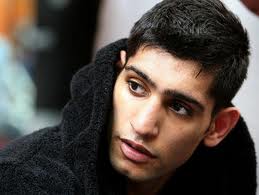
Amir Khan is a British boxer. Let’s first get that straight. He represented Britain in the 2004 Olympics in Athens, Greece where he was the only British boxer in the contingent. In those Olympics, the British flag was raised and a medal counted towards their overall tally due to Amir’s performance. At the age of 17, he brought home the silver in his lightweight boxing class and became the youngest British boxer to represent the United Kingdom since Colin Jones in 1976.

Since then, an impressive professional career has blossomed to where presently Khan is the current WBA Super Lightweight champion of the world. He has a record of 26 wins and only one loss with 17 of those wins coming by way of a knockout. That sole loss to Briedis Prescott, where Khan was knocked out in the first round, is the only blemish in his otherwise stellar career. Since that bout in 2008 against Prescott, Khan has gone on to defeat such notable fighters as Marcos Antonio Barrera, Marcos Maidana and Paul McCloskey. Today he is considered one of the best pound for pound British fighters in the world.

Standing in his way to even bigger fame and glory was tonight’s fight against Zab Judah, the IBF light welterweight champion of the world and a fighter who had won five world titles in different weight classes. The fight was thought to be very interesting as Judah is considered a very experienced fighter and someone who was capable of knocking out the lightening quick Khan. The winner of tonight’s fight also would go on to unify the Light Welterweight titles as he would be the IBF and WBA Light Welterweight champion of the world.

In the boxing circles there was also a lot of talk of a potential fight in the near future with the undefeated Floyd Mayweather Jr. prior to Kans’s fight against Judah. Mayweather is considered as one of the best boxers in history due to his impressive undefeated fighting record of 41 wins and 0 losses. In an interesting note, Amir Khan is trained by Freddie Roach who also happens to be the trainer for Manny Pacquiao, the seven division world champion and also arguably one of the best fighters of all time. Pacquiao is the only boxer that Mayweather has refused to fight due to one reason or another. A fight that boxing fans around the world have been salivating at for several years now. A potential fight between Khan and Mayweather will need to suffice the fight fans until and if the Mayweather vs Pacquiao fight ever materializes. Therefore saying that the ramifications of tonight’s fight are big would be an understatement in the boxing community.

As for me, my love for boxing must have started at an early age when I learned that my father, on a training trip to the United States, met and had a lengthy meeting with the greatest of all time, Muhammad Ali. At that time my dad had gone to America in the 70’s on a training course on behalf of his company. While staying at the Hilton hotel in Memphis, Tennessee, he ran into the world heavyweight champion Ali in the lobby where a crowd was hounding the champion.

Instantly recognizing Ali, who surely must be one of the most famous people the world has ever known, my dad reached out to shake his hand and at the same time uttered “Asalaam-alikum” to Ali. Grabbing my father’s hand, Ali replied with “Walikum Asalaam” and asked where my father was from, to which he replied Pakistan.

Intrigued with meeting a Muslim from the East as he later stated to my father, Ali invited him to his penthouse suite where my dad proceeded to spend close to two hours with Ali and his entourage during which time the champ asked him many questions about Pakistan and Islam. In particular, he was interested in how the religion was practiced as compared to the way practiced by the Muslims of the Nation of Islam in America, an organization that Ali was influenced by.

Having heard numerous accounts of his story growing up along with seeing countless pictures of my dad and Ali during their encounter so many years ago, not only endeared me to the champ but also to the sport of boxing. Since then I have always followed boxing and seen many great fights and boxers. But for the first time, my interests in boxing along with many people of Pakistani origins has piqued further by the arrival on the world stage of Amir Khan.

Although he is known as the pride of Bolton in England where he was born, his Pakistani origins are never far away as they are a big part of his life and spirituality since his family hails from Kahuta in Rawalpindi, Pakistan. Kahuta which was previously famous for being the site of Pakistan’s main nuclear facility is now also known as the area of Pakistan where Amir’s family originates.

This nation of Pakistan has in the last few years perhaps become synonymous with terrorism, instability, bombings, religious intolerance and extremism. But for one night, the Pakistani people can raise their head with pride and claim Amir as one of their own. He is a product of their soil who is making the country proud during a difficult time in their history. It is also a credit to his native England that promoted an environment for him to train and succeed. There is no limit to the amount of other talent in Pakistan that would have a chance to succeed if only there were such facilities and opportunities in Pakistan or even stability and security that was provided to Khan in England.

There is no doubt that to many people both inside and outside the nation of his forefathers, Amir Khan represents the best of every Pakistani. To these people. whether they are Pakistani Canadians in Toronto, or a youth in the inner streets of Birmingham, UK or a Pakistani American eating paan on Devon St in Chicago, Amir Khan is one of their own.

As he fought and defeated Judah in Las Vegas Saturday night, Amir Khan looked up and saw the thousands of British fans in attendance who had traveled from the UK and were proudly waiving the Union Jack. Deep inside, he must have known that many more millions in Pakistan and across the world were praying and hoping for even greater future success for him as the hopes and dreams of an entire nation are squarely on his able shoulders.

–Manzer Munir, a proud American of Pakistani descent, is the founder of Pakistanis for Peace and blogs at www.PakistanisforPeace.com as well at other websites as a freelance journalist and writer.

Clinton Says US Encouraged by India-Pakistan Talks

By Matthew Lee and Ravi Nessman for The Associated Press

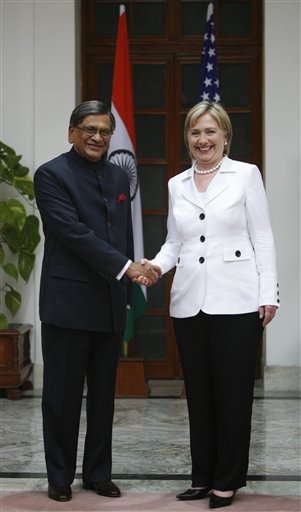
U.S. Secretary of State Hillary Rodham Clinton said Tuesday that the United States was “encouraged” by the ongoing talks between nuclear-armed rivals India and Pakistan and promised to give full support to Indian efforts to protect itself from terror.

Clinton’s visit to India came less than a week after a triple bombing killed 20 people in India’s financial capital of Mumbai, the worst terror strike in the country since 10 Pakistan-based gunmen rampaged through the city in 2008.

Her meetings with top Indian officials Tuesday focused on fighting terror, the U.S. withdrawal plans from Afghanistan and ways to broaden economic and security ties between the United States and India.

She also called for a swift resolution to their dispute over investments in nuclear energy, calling on India to ratify by the end of the year the Convention on Supplementary Compensation for Nuclear Damage and to adapt its liability laws to conform with the treaty.

The U.S. views India’s new nuclear liability law as too stringent on nuclear plant suppliers, making it difficult for private U.S. companies to compete against state-owned companies in India’s multibillion dollar nuclear reactor market.

Clinton’s trip here is part of a new round of U.S.-India strategic dialogue established last year to deepen ties between the world’s oldest and largest democracies.

S.M. Krishna, India’s foreign minister, expressed concerns that the planned U.S. troop withdrawal from Afghanistan that began this month could lead to a resurgence in Islamic extremism.

“It is in the larger interests of the region that it is necessary for the United States to work very closely with (Afghan) President (Hamid) Karzai and the government of Afghanistan and thereby create conditions where terrorists do not take any more advantage in Afghanistan,” Krishna said after 2 1/2 hours of talks with Clinton.

Clinton said she had outlined the drawdown strategy and stressed that the United States will not support Afghan reconciliation with insurgents unless it is inclusive and protects the rights of minority groups, religions and women.

Clinton also assured India of U.S. support in the fight against terror.

“We are allies in the fight against violent extremist networks. And homeland security is a high priority and a source of increasing partnership,” Clinton said.

While the U.S. and India have already signed agreements to cooperate in counterterrorism efforts, “the events in Mumbai have driven home how important it is that we get results,” she said.

Though India has not blamed Pakistan for last week’s attack, it has accused its neighbor of harboring violent extremist groups responsible for other attacks in India and of not doing enough to crack down on those responsible for the 2008 Mumbai siege.

For its part, U.S. officials fear Pakistan is not fully committed to combatting radical plots, such as the failed 2010 Times Square bombing in New York.

“We have made it clear to the Pakistani government that confronting violent extremists of all sorts is in its interest,” Clinton said.

India recently resumed peace talks with Pakistan that broke off following the 2008 Mumbai siege, and the two countries’ foreign ministers are expected to meet next week.

The U.S. is eager for the fragile talks to pick up steam, in part to allow Pakistan to focus its forces on the chaotic Afghan border.

“We are encouraged by the dialogue between India and Pakistan,” Clinton said, calling talks “the most promising approach” to build more confidence between them.

During the meeting Tuesday, Clinton and Krishna agreed to strengthen their countries’ ties in energy, security, education, the economy, science and promoting stability across the region. The two countries also signed an agreement promoting closer cooperation in cybersecurity.

Once frosty relations between India and the United States have warmed considerably in recent years as Washington has looked to India as stable ally in the turbulent South Asia region and its growing economy as a valuable market for U.S. goods.

President Barack Obama hosted Prime Minister Manmohan Singh at his first state dinner and visited India for three days last year, praising it as a new regional power. Clinton was to meet with Singh later Tuesday.

Growing business ties were among the top issues in the talks.

Western officials have looked to India’s rising economy and its 1.2 billion people as a coveted market to help stimulate growth in their own troubled economies.

“Each of our countries can do more to reduce barriers, open our markets, and find new opportunities for economic partnership,” Clinton said. “Taking these steps is in our mutual interest. We can improve millions of lives and increase both of our nations’ economic competitiveness.”

She praised India’s fight against piracy, and pushed for greater sales of U.S. arms to India — the world’s largest arms importer —as a way of deepening security cooperation between the two nations.

U.S. officials were annoyed earlier this year when Indian officials chose two European companies as finalists for an $11 billion order for 126 fighter jets. However, last month India signed an agreement to buy 10 Boeing C-17 cargo and troop-carrying aircraft for more than $4 billion.

From New Delhi, Clinton on Wednesday will move on to the southeastern port of Chennai, where she plans to deliver a speech on the importance of U.S.-Indian relations, the benefits of enhanced bilateral commercial ties and India’s role in South Asia and the greater Asia-Pacific region.

Clinton is in India on the third leg of a 12-day, around-the-world diplomatic tour that has already taken her to Turkey and Greece. After India, she will visit Indonesia, Hong Kong and southern mainland China before returning home July 25.

‘Bol’ set for an Eid Release in India

By the Editors of BollySpice

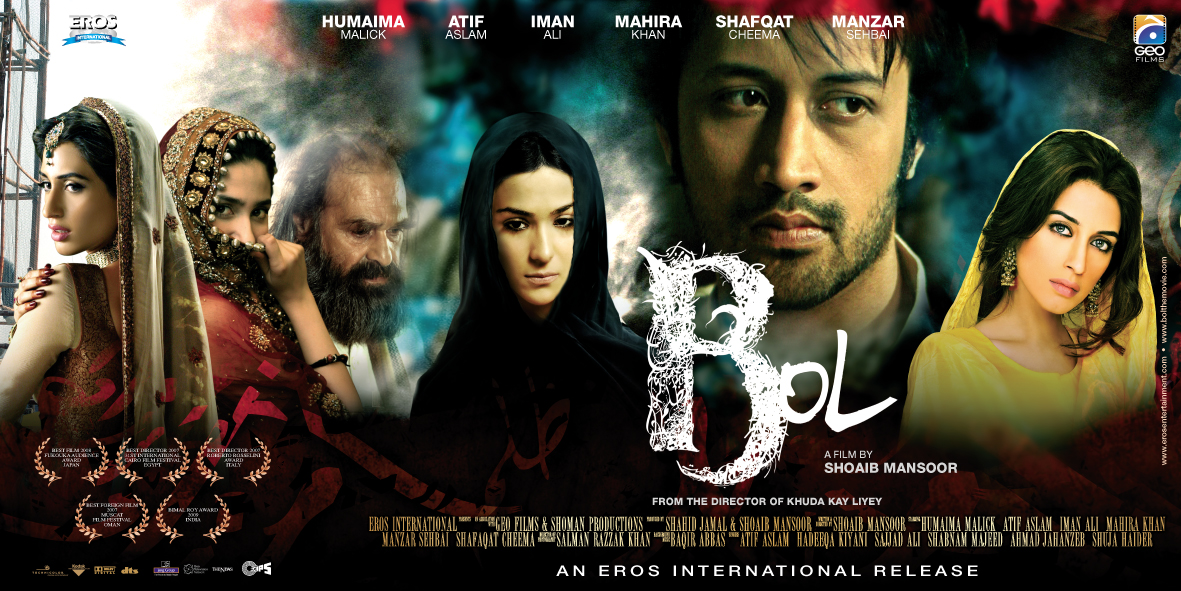
Talented director Shoaib Mansoor is back with a hard hitting social drama tittled ‘Bol’ after his critically acclaimed and award winning ‘Khuda Kay Liye’.

Eros International’s ‘Bol’, in association with Geo Films and Shoman Productions is the story of a girl, a daughter who stands up and challenges the age old societal norms of treating women as lesser beings.

The movie stars renowned Pakistani actress Humaima Malick in the lead and singing sensation Atif Aslam and Iman Ali along with many other renowned Pakistani actors.

The movie which released in Pakistan on 24th June along with Double Dhamaal has been declared a super hit as it has received a tremendous opening and grossed about 49 lacs on the first day beating many high grossers like Ready and My Name Is Khan. (Ready’s first day grossing was 40 lacs).

The movie has received outstanding reviews that talk about how the director Shoaib Mansoor who explores the rights of women and treads no-go areas like homosexuality and the life of eunuchs besides Shia-Sunni dynamics in a nation dominated by Sunnis.

Produced by Shahid Jamal and Shoaib Mansoor, ‘Bol’ is based in Lahore & aims at highlighting the sorry plight of women who are treated as a worthless burden to a family in most parts of the society.

‘Bol’ is slated for an Eid release on 31st August in India and rest of the world.

In Pakistan, Truck Decoration a High-Octane Art Movement

By James Parchman for The New York Times

MURIDKE, Pakistan — Here on the historic Grand Trunk Road, some 40 miles north of Lahore and a few hours south of the former bin Laden hideout of Abbottabad, a mosque’s call to Friday afternoon prayers was overwhelmed by Pakistani pop music spilling from open-air markets. The barks of bus conductors calling out destinations added to the din.

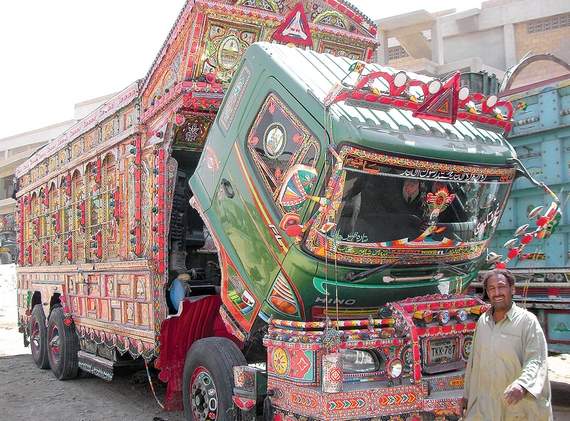
The passing parade of motorized rickshaws, farm tractors, buses and highway cargo trucks looked as if a re-enactment of ’60s peaceniks making the pilgrimage to Woodstock might be under way. A panorama of red, yellow and green, mixed with plastic whirligigs, polished mahogany doors and gleaming stainless steel cover plates, was a magical sight for a visitor with a love for anything on wheels.

It was not only the variety of vehicles — all are common across South Asia — that elicited this reaction, or even their Partridge-Family-meets-Ken-Kesey color schemes. Rather, it was the fascinating quantity and surrealistic detail of their decoration, unlike anything I’d seen in my travels around the world.

A deeper understanding of the origins and meanings of the decoration craft was gained over days of mingling with the truck drivers and the owners of decorating shops in Karachi, Lahore and Peshawar.

Karachi, situated on the Arabian Sea, is Pakistan’s major seaport. It is also the cargo hub of the country, and with 13 million people has a great many local and intercity buses. As such, the city supports a considerable customizing industry: When Saudi Aramco World magazine published an article about the trade in 2005, more than 50,000 people in Karachi were said to be employed decorating buses and trucks.

What I found at the Pakistani workshops was a pride of design and a willingness to answer questions — and to show off their creations to a former long-haul trucker.

Sparing no expense

At a driver’s cafe near Karachi’s 3-mile-long International Truck Yard (where I turned down an offer of boiled camel meat and cow-leg soup) workers took me by the hand to the shop of Masallah the truck decorator. My Dockers and Rockports were as out of place as their long-shirted, working-class shalwar kameez outfits and leather sandals, called chappals, would have been in one of New York City’s outer boroughs.

But my full beard may have helped in gaining their confidence and a look inside their truck cabs. Government safety agencies equivalent to OSHA were nowhere to be seen in the truck yards, and workers, many of whom were children of the owners, were being showered with sparks from their grinders and cutting torches.

Many of the trucks being outfitted at Masallah’s carried identification plates from Balochistan province. Their owners were prospering thanks to a steady demand for hauling loaded sea containers from Karachi’s port to landlocked Afghanistan. Their cargo, typically including supplies for U.S. and NATO military operations, make a trip of 500 miles by the southern route to Kandahar or 1,200 miles by a northern route to Kabul.

Pakistani truck owners can easily spend more on their trucks than on their homes. One driver from the Gwadar area of Balochistan told me he had just bought a Hino truck chassis for the equivalent of $35,000 and brought it straight to Masallah’s workshop. There he might spend another $25,000 for its body, paint and decoration. During the several weeks required to complete the work, he would sleep inside or under the truck, on his bedroll.

Adding decorative touches like ribbons, spinners, flags and polished steel cutouts in the shape of animals to a small bus costs an owner at least $800. This is considered an advertising expense; a highly decorated bus is usually the first choice of customers when there are several options.

Nissan and Hino tandem-axle trucks of the flat-front cabover design, many assembled in Pakistan, are the popular choices for cargo-haulers today, replacing the revered Vauxhall Bedford, a British model with a traditional cab. The Bedford was the mainstay of Pakistan’s cargo network since the early days of Pakistan’s independence.

The Bedford is still prized for its sturdy chassis and ability to continuously haul outsize loads. Many have bodywork with a high-crowned front prow, which lends itself to decoration and gives the truck the look of a sailing ship.

As is the case in the United States, offering a sharply decorated truck can be a powerful incentive for recruiting drivers. Pakistani bus and truck owners usually allow their drivers, whose average wages are about $75 a month, to work out their own designs in conjunction with the owner of the decoration shop.

Big business

Predictably, mass production has changed the business over the years. Adornments are no longer exclusively handmade.

“Pakistani buses were originally decorated using carved woodwork and individual paintings,” said Kurram Awan, the owner of a small shop of truck-decorating supplies in Lahore.

“Now, my shop sells over 1,000 different items, including braids, reflectors, flashing lights and antennas,” he said.

He added that the Pashtun drivers (Pashto speakers from the border region between Afghanistan and Pakistan) spent the most on decorations.

Durriya Kazi, an artist and teacher in Karachi, has long been a proponent of Pakistan’s folk art. She sees bus and truck decorating as an integral part of that tradition, noting the importance of distinguishing between sculpture as defined by the art gallery and the rich activity of actually making things that exists all over Pakistan.

In 2006, Kazi was instrumental in a program intended to spread Pakistan’s bus decoration skills to Melbourne, Australia, where a tram was transformed into a replica of a minibus used on Karachi’s W-11 route, resplendent in all its finery.

Another Pakistani with expertise in the subject is Jamal Elias of the University of Pennsylvania, a professor and the author of “On Wings of Diesel: Trucks, Identity and Culture in Pakistan” (Oneworld, 2011). His book explores the tradition of Pakistani truck decoration, and looks deeper into the “nature of response to religious imagery in popular Islamic culture.”

In an e-mail, Elias said that the creative inputs of decorators included several major themes, which could be combined across the cab and body of the truck or bus. These include Islamic religious images like the horse of Muhammad and depictions of the mosques at Mecca.

Other possibilities include images of a fish, representing good fortune, or the elegant eyes of a woman, representing beauty.

In This Country, Religious Freedom Is Real

By Imran Hayee for The StarTribune

My childhood memories of celebrating Independence Day are no different than those of my fellow citizens — except that it was on Aug. 14th instead of July 4th.

I grew up in Pakistan, which obtained its independence from British rule on Aug. 14, 1947.

As a child, I marked Independence Day year after year without having a clue about what independence really meant. As I grew older, I read from a speech of Muhammad Ali Jinnah, Pakistan’s founder, which he had delivered immediately after the nation’s independence was announced.

“You are free; you are free to go to your temples,” he said. “You are free to go to your mosques or to any other places of worship in this State of Pakistan. You may belong to any religion or cast or creed — that has nothing to do with the business of the State.”

This was Jinnah’s dream, the founding principle behind the independence of Pakistan as he himself stated in the same landmark speech: “We are all citizens and equal citizens of one State. We should keep that in front of us as our ideal and you will find that in due course, Hindus would cease to be Hindus and Muslims would cease to be Muslims, not in the religious sense, because that is the personal faith of each individual, but in the political sense as citizens of the State.”

Growing up in Pakistan, as a Muslim, I never saw Jinnah’s dream materializing. The constitution of Pakistan defines who is a Muslim — any “impersonator” is subject to imprisonment or death. Temples, churches and mosques not ascribing to a single distorted version of Islam are routinely attacked.

What caused the secular ideology of Jinnah to take this U-turn?

Soon after the nation’s creation in 1947, and Jinnah’s demise a year later, Pakistan’s rulers succumbed to the demands of religious extremists who wanted to convert Pakistan into a puritanical fundamentalist state.

Gradually, the monster of religious fundamentalism grew large enough to devour Jinnah’s philosophy of spreading freedom and equality.

I never experienced independence until I came to America 18 years ago. For the first time — when Independence Day was being celebrated on July 4th instead of Aug. 14th — I wanted to rejoice once again.

I was unaware of the history behind America’s Independence Day, but still, I saw freedom and equality prevail all around me. I could freely go to my mosque without having to fear the state’s interference.

As I learned more about the history behind July 4th, it reminded me of the same philosophy of freedom and equality that Jinnah dreamed for Pakistan. What made the difference in America was that its rulers never succumbed to extremists’ demands.

Rather, its forefathers risked their wealth and lives to uphold the principles of freedom and equality. Their sacrifices paved the way for a Muslim like me to emigrate from a Muslim country and practice Islam the way I wanted to but could not do in the country of my birth.

More recently, while some European countries have banned building minarets on mosques and the wearing of veils by Muslim women, U.S. courts have struck down any such attempted restrictions as unconstitutional.

Addressing the Muslim world in Cairo, President Obama proudly announced, “Freedom in America is indivisible from the freedom to practice one’s religion. That is why there is a mosque in every state of our union, and over 1,200 mosques within our borders. That is why the U.S. government has gone to court to protect the right of women and girls to wear hijab, and to punish those who would deny it.”

As a Muslim-American, I feel proud and honored to be in America and find many reasons to celebrate Independence Day on July 4th. Among others, let me add that the founding principles of America’s Constitution are in perfect harmony with the Qur’an.

The Qur’an (2:257) proclaims, “There is no compulsion in religion. Surely, the right way has become distinct from error.” It further declares fundamental human equality: “O mankind, We have created you from male and female; and We have made you into tribes and sub-tribes that you may recognize one another” (Qur’an 49:14).

These golden principles of freedom and equality have been implemented — in America. In fact, I find the American Constitution to be more Islamic than the constitution of Pakistan or of any other Muslim country in the world today.

Imran Hayee is a professor of engineering at the University of Minnesota Duluth.

Amir Khan Can’t Get Floyd Mayweather Out Of His Head

By David Anderson for The Daily Mirror

HE may have taken a couple of wrong turn here and there, but Amir Khan insists he is on track for a 2012 showdown with Floyd Mayweather Junior. Just as Ricky Hatton became obsessed with Pretty Boy, so Khan can’t get him out of his head.

Freddie Roach may have floated the idea of a possible clash between Khan and his pal and gym-mate Manny Pacquiao, but Mayweather is the one he wants.

Khan’s plan was to unify the light-welterweight division against Timothy Bradley in his July 23 date before stepping up to face Mayweather at welterweight next year.

His plan took a hit when Bradley refused to honour their agreement to meet and instead the Bolton fighter will take on IBF champ Zab Judah at Las Vegas’ Mandalay Bay.

Khan says fighting Judah is not too much of a detour from his path towards Mayweather and reckons they could still meet next year.

His new plan is to beat Judah, have one more fight in the autumn before taking on the winner of Mayweather v WBC welterweight champ Victor Ortiz in 2012.

Khan is convinced Mayweather will beat Ortiz on September 17 in what will be his first fight for nearly 18 months and then their paths will finally meet.

“I’m hoping to get Zab Judah out of the way and look good against him, then get one more fight at the end of the year,” Khan said. “Then I’d like to fight the winner of Ortiz-Mayweather, maybe next year.”

Khan could get his wish and Mayweather is currently with his US promoter Golden Boy, which removes one massive hurdle from the negotiations.

As ever with Mayweather, it all comes down to money and if he feels he would get enough from fighting Khan, he will take on the Athens silver medallist.

Khan will have to get in line, though, and there is the small matter of Mayweather v Pacquaio which is still unresolved.

Some of the bitterness between the two camps has gone and that megafight is looking more likely than it has done for 18 months. Khan may have to wait his turn and Pacquiao would love a showdown with Pretty Boy to be his swansong.

Khan can wait and as we keep having to remind ourselves, he’s still only 24.

He’s still developing under Roach’s tutelage at the Wild Card gym and maybe it wouldn’t be a bad thing if he had time to improve even more before facing Mayweather.

Of Babra and other Sharifs

By Asif Noorani for Dawn

Way back in 1915, when M F Hussain (Maqbool Fida Hussain) was born his mother named him Maqbool (which means popular). She had no idea that her son, born in a modest household, would become the most well known South Asian painter of the late 20th and early 21st century.

But not all names bring good luck to those who have to live with them. I had a clerk working for me, whose name was Raees (rich) but the man led a difficult life in the monetary sense. So was a man called Akhtar Nawab. He had neither the finances nor the mindset of a nawab. Haseena is a common name among the fair sex, but most girls with that name are anything but. Haseena Moin was charming in her salad years and is still quite pleasant to look at.

What is true of names is also true of surnames. The one Sharif (noble) who really deserved the surname was Babra Sharif. Even when she was at the peak of her career, the model turned actress (the unisex term actor was not used in her heyday for a female of the species) was on the dot for her shooting. She never threw tantrums like some popular film stars do. She never spoke ill of anybody including those who, out of sheer jealousy, lost no opportunity to make snide remarks about her. When the time came for her to call it a day, she retired gracefully, unlike our politicians in power who are forced to leave disgracefully from their offices.

But not all Sharifs are noble like her. In fact I have yet to come across anyone with that name or surname who could live up to it. Babara used no unkind words for her rivals, but this person (shh! no names please, make your own guess) left no opportunity to pass disparaging remarks about a lady with whom he once played a game of musical chairs. One afternoon he came to the Karachi Press Club, where he went on and on, speaking ungallantly against the first and so far the only woman prime minister in the country. The speech over, a callow journalist not known to be a good judge of human beings, invited the guest to visit the book fair in the club’s backyard. “I am sorry I have an important meeting to attend,” he said and took off in one of the four limos that were parked outside the club.

The same journalist, out of sheer curiosity, followed the fleet of cars on his humble motorbike and you know where did our favourite Sharif go to? “It’s elementary, my dear Watson,” Sherlock Holmes would have said. Our friend was seen downing a large glass at the Punjab Lassi House at Burnes Road. In those days mobile phones, with cameras, were not available otherwise the young journo would have had a prize photograph.

While on Sharifs, I must refer to the news item that appeared in the June 17 issue of a respected English daily. It had a screaming headline: “Shahbaz richest member of Punjab assembly”. In the introductory paragraph, the report said that the Punjab chief minister has assets of Rs 489.64 million in the country and abroad. The details are mind-boggling. But the question remains, is it merely a tip of the iceberg? Those who follow him, in the list of declarations made in 2010, also fall into the category of filthy rich. These were the figures submitted to the Election Commission by the members of the Punjab Assembly. What would have been no less relevant was the figure of the taxes that they pay. Sadly, those figures which should be abysmally low are not mentioned. Don’t you think such declaration should come from the head of the state and the head of the government also?

Perhaps, mine is a case of jealousy. I still move around in my old and but reliable Suzuki Khyber. I paid more income tax than what the chief executive of the country paid. The tax figures paid by him and some other bigwig were revealed in a report, published in the newspapers according to the NAB, when Gen Pervez Musharraf elbowed him out of his office. I have no bungalow. I live in an apartment. The fault is mine. I was always more interested in books than in lassi. So, why crib?

Asif Noorani, a seasoned journalist, is the writer of three best-selling books including ‘Boom, Boom Shahid Afridi’.

The views expressed by this blogger and in the following reader comments do not necessarily reflect the views and policies of the Dawn Media Group.

Pak Sailors Thank India, On Way Home

Mateen Hafeez for The Times of India

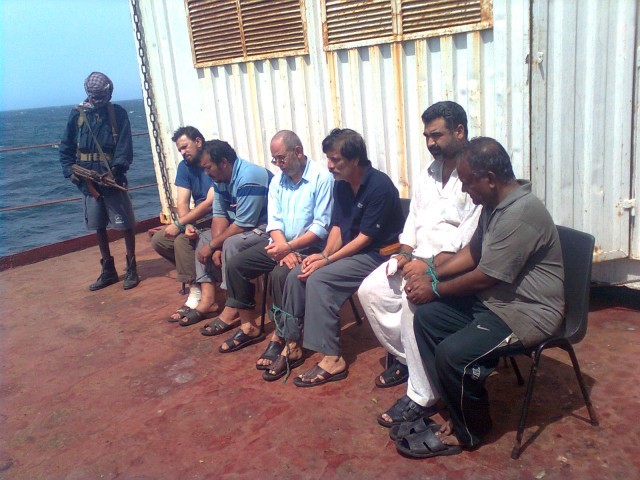
Five Pakistani hostages, who were held captive by Somali pirates for five months and rescued by the Indian Navy, will finally leave for Pakistan on Monday. The hostages had been languishing at Yellow Gate police station after their ‘consular access’ process got stuck in diplomatic channels of the two countries.

TOI was the first to report about the hostages’ plight and the problems in the consular access programmme. A team from the Pakistani High Commission then landed up at the Yellow Gate police station and completed the formalities. Earlier, this was scheduled to be done at Tihar jail in Delhi as the hostages were wrongly labeled ‘prisoners’. The men are Aurangzeb Balloch, his brother Sajjad, Farhad Aalam Khan, Mohammed Umair and Lal Bakhsh.

“We are excited to go home. There were some problems in our travel to Pakistan but the Yellow Gate police took care of us properly. We have no words to thank the Indian police and those who helped make our journey to Pakistan easy,” said Aurangzeb, a resident of Karachi. The other hostages were also jubilant when asked about their return to Pakistan. “In the last three months we saw the lanes and bylanes of this city. It’s very similar to Karachi. The people, places, food and roads here are similar to Karachi. Initially, we were afraid that we may be kept in India, but now we have a positive feeling about this country and its people who loved us,” said Sajjad, another hostage. “We watched the World Cup matches between India and Pakistan in the police station. When India won the final against Sri Lanka, we were happy. We never faced any discrimination here,” added Lal Bakhsh.

The hostages were part of an Iranian fishing trawler, Al-Murtuza. The ship was hijacked by AK-47 borne Somali pirates from the Ballochistan sea in November. “We would get insufficient food after we were captured by the pirates,” added Farhad.

The five men were provided food, chai and clothes. Sometimes they managed to get cigarettes. The policemen even gave their phones to the hostages so they could speak to their families in Pakistan. To speed up the process to send them home, Ansar Burny, former human rights minister in Pakistan, filmmaker Mahesh Bhatt and Abraham Mathai, state minorities commission vice-chairperson, worked together. “We spoke to Gurudas Kamat, the Union minister of state for home and he arranged consular access. The process was speeded up due to his efforts,” said Bhatt.

On the ground: For border village, peace is a beautiful dream

By Taha Siddiqui for The Express Tribune

We left behind everything when we came to this side, but not for such living conditions. Some of our family that stayed behind in India now mock us about our migration,” says Haji Shahzad.

Shahzad, in his early 70s, is a resident of Bhanoo Chak, a village located on the Indo-Pak border.
“The border force here has made our lives miserable. We live not under the threat of India but this force. Day and night, we have to live by their rules,” Shahzad says.

Bhanoo Chak, a village occupied by Sikhs who fled at the time of partition, is an hour’s drive from central Lahore and is closest in distance to the border.

“We just want peace so that there is relaxation on the border and we can have normal lives again,” adds Shahzad.
Mostly farmers, these men are not allowed to roam around freely after 6pm and need to acquire no-objection certificates before constructing anything on their property.

Many of these villagers have families that were divided in the partition in 1947 and wish to go meet them.
“We have family in Rajasthan. They want to come visit us and we want to go and visit them too. But we have to go through bureaucratic hurdles that we have stopped making the effort,” says Shahzad.

Pakistan Rangers Colonel Osman Siddiqui, who is in charge of the Wagah Border area, says that without checks and balances, he cannot trust anyone in the area. “The border is a sensitive spot, and to stop smuggling and unwanted people from crossing over, we have devised a system where we allow men to roam in these areas only between 6am and 6pm,” he says.

When asked if he will ease the policy in case the Pakistan-India dialogue is successful, he replied that national policy and local policy are different subjects. “When a change happens in the national policy, we can see. But for now, the policy will stay the same since the force needs to be vigilant,” he said.

Many villagers believe that if Pakistani and Indian leaders sincerely wanted peace, an accord could be reached today. They also do not fear another war with India.

“In 1965, Indian forces destroyed our homes. There were planes overhead and even the Pakistan Army had little idea what was going on,” says Mohammad Tayyab, who was barely seven years old at the time. “But today, we cannot expect the same as we are now a nuclear state.”
Still, the villagers are always on their toes. “Every time Pakistan Army increases its presence on the border area, I fear I may have to leave home again,” says Tayyab, who moved his family out of the village during a standoff in 2002.

For some, however, peace is just a far-fetched but beautiful dream. “Peace is not possible, even though it will be good for both our countries. We will [finally] be living with no fear,” says Azeem impatiently, during a short break from a cricket match.

Slain Pakistani’s Daughter Takes Up His Cause

By Nahal Toosi for The Associated Press

A day after her father was gunned down by an Islamist extremist, a grieving Shehrbano Taseer wrote on Twitter, “A light has gone out in our home today.” It wasn’t long before the 22-year-old realized something else: Her father’s death had lit a fire in her.

In the months since, the daughter of the late Punjab province Gov. Salmaan Taseer has emerged as one of Pakistan’s most outspoken voices for tolerance. Through her writing and speaking, she warns any audience who will listen of the threat of Islamist extremism, and impatiently waits for her father’s killer to be brought to justice.

And yes, sometimes she gets scared. She’s received threats from militants, who’ve warned her to remember her father’s fate.

“These extremists, they want to tell you how to think, how to feel, how to act,” says Taseer, a slim, elegant young woman with intense brown eyes. “It has made me more resolute that these people should never win.”

Salmaan Taseer was assassinated on Jan. 4 at a market in Islamabad by one of his own bodyguards. The confessed killer, Mumtaz Qadri, boasted that he’d carried out the slaying because the outspoken politician — a liberal in Pakistani terms — wanted to change blasphemy laws that impose the death sentence for insulting Islam.

To the horror of Taseer’s supporters, many Pakistanis praised the assassin. Islamist lawyers showered Qadri with rose petals, and major Muslim groups, even ones considered relatively moderate, said Taseer deserved to die because, in their view, speaking out against the blasphemy laws was tantamount to blasphemy itself.

Two months after Taseer’s killing, gunmen killed Shahbaz Bhatti, the sole Christian minister in the government and another opponent of the blasphemy laws, which have often been used against Pakistan’s Christian minority. Bhatti’s killers left a note promising to target others who pushed to change the laws.

Shehrbano Taseer still has trouble remembering those first moments and days after her father’s death — her brother telling her their father was gone, the rush of grief, the hundreds of people flooding her family’s home in the eastern city of Lahore. Mostly, it’s a blur.

“I’d never lost anyone in my life, not a friend or anyone,” she says. “For everyone else it was the governor and their leader and this man, and it was this big, sexy story and it was so sensationalist. But for me, it was my father.”

Taseer majored in government and film at Smith College in Northampton, Massachusetts, and is by profession a journalist. She spends much of her time now writing columns and traveling in and beyond Pakistan to speak about Islamist extremism.

Salmaan Taseer, a father of seven, was not afraid to be blunt — a trait that attracted both enmity and grudging respect. On Twitter, Salmaan Taseer openly taunted and trashed extremists, once tweeting that he’d never back down on the blasphemy issue, “even if I’m the last man standing.”

His daughter, who tweets under the handle shehrbanotaseer, is more gentle but just as firm. Her more than 9,000 followers on Twitter often receive notes that criticize Pakistan’s discriminatory laws, especially blasphemy claims that have reached the courts since her father’s death.

When she singles out a politically marginalized community, either on Twitter or her other outreach, Taseer recalls how well her father treated that group, how he was often the only public official to visit their homes after an attack or publicly speak on their behalf.

Once, Salmaan Taseer took his daughter along on a visit to meet Mukhtar Mai, a Pakistani woman whose case attracted international attention because of allegations that she was gang-raped on the orders of a village council. The governor asked Mai to put her hand on his daughter’s head, so that Shehrbano Taseer could gain the same courage to stand up for her rights.

Like her father and Bhatti, the Christian leader, Taseer wants the blasphemy laws amended to prevent their misuse.

The laws are vaguely written, and often used to persecute minorities or settle rivalries, rights activists say. The state has not executed anyone under the law, but the accused may spend years in custody. Some defendants have been killed by extremists after being freed by the courts.

But Taseer has found that many Muslims, even moderate, liberal ones, are extremely sensitive about blasphemy.

She recalls giving a speech in England when a woman in the audience suggested that her father deserved what he got because he was so blunt about the topic.

“I said, ‘I don’t care what he said, and I don’t care how he said it. He didn’t deserve to be shot and killed for it,'” Taseer says.

She’s dismayed at the toll extremism is taking on Pakistan by spawning violence or an intolerant mindset. She’s also disappointed at how few Pakistani leaders are willing to take a public stand against extremism or how many find some reason to excuse it.

She bemoans how for decades moderate or liberal leaders in Pakistan have appeased the religious right for short-lived political gains — whether it was by banning alcohol and nightclubs or passing laws that discriminate against certain religious sects.

Unlike many Pakistani politicians, she’s willing to criticize the role Saudi Arabia has played in funding numerous hardline Islamist schools in Pakistan. And she’s quick to note that the United States as well as Pakistan says little about it — after all, it needs Saudi Arabia’s oil.

Pakistan has a tradition of dynastic politics. The most famous political family has been that of the Bhuttos, which spawned former Prime Minister Benazir Bhutto, also assassinated by Islamist extremists. Salmaan Taseer was a member of the Bhutto-led Pakistan People’s Party.

Shehrbano Taseer says she views Pakistan as an enticing challenge akin to a Rubik’s Cube because of its many, convoluted problems. But she says she has no plans to run for office. “It’s such a dirty profession,” she says, laughing.

Sherry Rehman, a People’s Party lawmaker who also has been threatened for speaking out against the blasphemy laws, says Shehrbano Taseer will “chart her own future.”

“She’s found a torch to carry, and she will do it,” Rehman says. “It’s what her father would have wanted.”

Taseer is frustrated with the Pakistani justice system’s delays in processing the case of Qadri, her father’s confessed killer.

Pakistan’s courts have very low conviction rates, even in terrorism cases. Qadri’s confession may not be enough to persuade a court to punish him, considering the threats facing any judge who dares pass such a judgment.

Taseer wants the former bodyguard to spend his life in prison, in solitary confinement. A death sentence is “too easy,” and a conviction would send a warning to other would-be assassins, she says.

“In Pakistan, we have very few brave and honest leaders,” she says. “We need our heroes alive.”

Anthony Weiner: Sex, Lies, and the Pakistan Connection

By Manzer Munir for Pakistanis for Peace

On Monday night’s Daily Show with Jon Stewart, the host, a former roommate of the congressman, confessed that Weinergate and the entire episode involving pictures of his friend Rep. Anthony Weiner of NY, was “killing” him.

Jon Stewart was clearly not sure how to react to his friend’s confession that he had indeed himself been responsible for sending sexually suggestive photos of himself via Twitter.“I don’t know what to do anymore! It’s killing me, “he said on last night’s “Daily Show”, which was taped in New York after the congressman had already given his press conference earlier in the day admitting to the indiscretions after having denied them for a week.

I must admit, I am also deeply saddened by this story as it too is killing me. No I didn’t room with Anthony Weiner in a summer house in Delaware in the 1980s as did Stewart. However I was a fan of the representative from New York who was the first Democrat in a long time that seemed to have balls in Congress when it came to speaking his mind and standing up to the other guys across the aisle. He didn’t have to go and practically show them to prove it though.

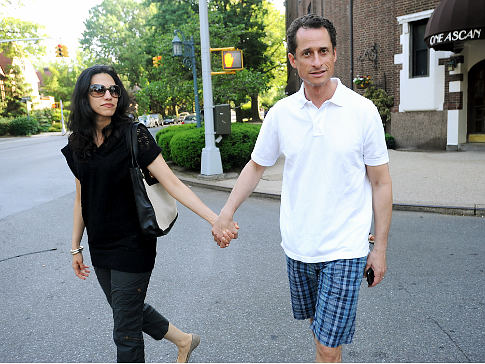
Sending salacious pictures of yourself to strange women across the country while being married, in itself, is not a crime. But had he fessed up to his martial indiscretions and not gone about for a whole week giving interviews to the national media denying everything and claiming to have had his twitter account hacked, might have been enough for him to be forgiven by many of his constituents. Perhaps he would not have been so easily forgiven by his American born Pakistani wife, Huma Abedin. Needless to say, the congressman would surely have saved himself a great amount of grief and further humiliation.

Instead after a week of denials, and as new pictures and allegations surfaced regarding other women, Rep. Weiner finally came clean and called a press conference on Monday afternoon and confessed to having sent the pictures himself.

Congressman Weiner is not the first politician to have been involved in a sex scandal and God knows he certainly will not be the last. And yet, of all the politicians I have followed over the years, Anthony Weiner of New York seemed like the only Democrat who had the wits to match the guts when it came to fighting for his party’s principles in Washington. A few months ago when he showed great anger on the House floor arguing for healthcare benefits and a fund for the 911 First Responders, he further cemented my belief in him as an outstanding up and coming member of the House of Representatives.

Weiner’s chutzpah and boldness in many interviews and House sessions had indeed endeared many Democrats across the country of all faiths and backgrounds who have been clamoring for a Democrat with a backbone. Rep. Weiner seemed to fit the bill. His recent marriage to long time top aide to Secretary of State Hillary Clinton, Huma Abedin, a Muslim American of Pakistani decent, only further solidified him in my eyes as one of “our own”. The marriage of an up and coming Jewish Congressman from NY and a Muslim American top aid to, arguably one of the most powerful women in the world, in Hillary Clinton, certainly seemed like an odd pairing.

By all accounts the couple was in love and a long happy union seemed destined for them as President Bill Clinton officiated their wedding almost a year ago last July. Now one of the brightest stars of the Democratic party is facing a House investigation into ethical violations as well as a tremendous fallout from his lies and infidelity.

To many people, including myself, I am not only upset that we have lost one of the stars of the Democratic party to this scandal, but I am also upset for Huma, as she is the one who is suffering the worst end of the entire situation. For her to be dragged into this mess like this will surely test their nascent marriage. As a one time supporter of Rep Weiner, I hope that his career, and more importantly, his marriage survive this entire ordeal.

However, as has been the case with other scandals, there is usually more information that will come out that will be damning to Rep. Weiner. I only hope that at some point the representative from the great state of New York realizes that it is foolish to further humiliate his spouse and all his former supporters by resigning from his office immediately.

–Manzer Munir, a proud American of Pakistani descent, is the founder of Pakistanis for Peace and blogs at www.PakistanisforPeace.com as well at other websites as a freelance journalist and writer.

Soldier cited for holding off up to 30 Taliban by himself

As reported by CNN

Britain’s newest hero is a Nepali.

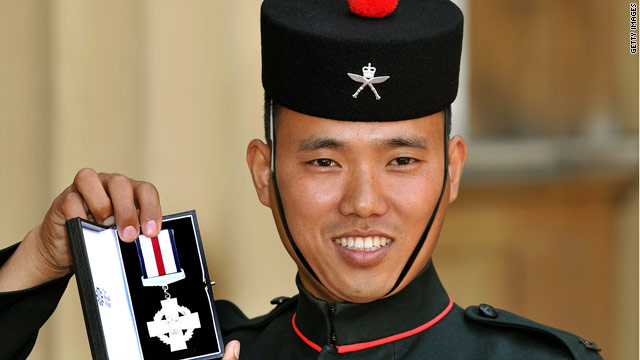
Queen Elizabeth II on Wednesday awarded Britain’s second-highest award for bravery, the Conspicuous Gallantry Cross, to Acting Sgt. Dipprasad Pun of the Royal Gurkha Rifles.

While stationed as a lone sentry at a checkpoint in Afghanistan’s Helmand province on September 17, Pun fended off an attack by up to 30 Taliban fighters.

“There were many Taliban around me,” Pun said in an interview with British Forces News. “I thought they are definitely going to kill me. … I thought before they kill me I have to kill some of them.”

During the 15-minute battle, Pun fired more than 400 rounds of ammunition, detonated 17 grenades and a mine and even threw his gun tripod at a Taliban fighter climbing toward his position, according to British Forces News.

“He was just about to climb up there and I hit (him) with my tripod and he fell down again,” Pun told British Forces News.

Pun’s actions saved the lives of three fellow soldiers at the checkpoint and were the “bravest seen in his battalion over two hard tours in Afghanistan,” according to his medal citation.

Pun was not wounded in the firefight.

“That he survived unscathed is simply incredible,” his medal citation says. “Throughout Dip’s actions he was under almost constant intense fire. Dip’s courage and gallantry were simply astonishing.”

Pun, 31, joined the British military in 2000 and also has served in Bosnia and Kosovo.

Like other Gurkhas, Pun is from Nepal. The Gurkhas were incorporated into British forces after their fighting skill impressed the opposition British during the Nepal Wars of 1814 to 1816. As part of the peace treaty ending that conflict, Gurkhas were admitted into East India Company’s army and then into the British military.

Gurkhas recruited solely in Nepal remain Nepalese citizens during their service. Gurkha unit officers are British.

–Pakistanis for Peace Editor’s Note– Congratulations to Sgt. Dipprasad Pun for his amazing feat of bravery and determination in his battle with the Taliban. We salute him for his gallantry and wish there were thousands more like him in the allied forces fighting the Taliban menace. If that were the case, these barbarians would be already defeated.

U.S. Attorney Sends a Message to Wall Street

By Benjamin Weiser and Peter Lattman for The New York Times

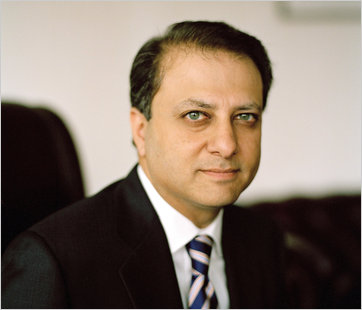
Every few days during the trial of Raj Rajaratnam, the Galleon Group’s co-founder, Preet Bharara, the United States attorney for the Southern District of New York, would quietly enter the courtroom and take a seat in the last row of the gallery.

From that unassuming vantage point, Mr. Bharara watched his colleagues try to persuade a jury to convict the former hedge fund titan of securities fraud and conspiracy.

The consistent presence of Mr. Bharara at the largest insider trading case in a generation — and the office’s resounding victory on Wednesday — signaled that the chief federal prosecutor in Manhattan was back as the sheriff of Wall Street.

Over the last decade, the New York attorney general, federal prosecutors in Brooklyn, the Manhattan district attorney and even the Justice Department in Washington angled for their share of financial fraud cases, an area traditionally dominated by the Southern District. For example, Eliot Spitzer grabbed headlines when he was New York attorney general by focusing on malfeasance at investment banks.

But Mr. Bharara has not-so-quietly reaffirmed his office’s leading role in pursuing corporate crime with this landmark insider trading case, which relied on aggressive prosecutorial methods and unprecedented tactics. For the first time, federal authorities used wiretaps to listen in on stock traders swapping illegal tips.

“What this case has done,” said Neil M. Barofsky, a former Southern District prosecutor who recently served as the special inspector general for the government’s Troubled Asset Relief Program, “goes well beyond simply putting a billionaire hedge fund manager behind bars.”

“The case will impact an entire industry,” Mr. Barofsky said. He said that Mr. Bharara “did more than just oversee and support the prosecution — he made sure that the target audience, traders on Wall Street, fully understood the extraordinary lengths that his office will go to discover these crimes, and that justice will be served.”

It has been 21 months since Mr. Bharara, 42, was appointed United States attorney by President Obama.

In that short tenure, his staff has ventured far beyond Wall Street, prosecuting some of the nation’s — and the world’s — most prominent defendants. Among them: Faisal Shahzad in the Times Square bomb plot; agents in a Russian spy ring; Ahmed Khalfan Ghailani, the first Guantánamo Bay detainee to be tried in the civilian system; Viktor Bout, a Russian accused of being an arms trafficker; a Somali man charged with piracy; and four men charged in a plot to bomb synagogues in the Bronx.

Not every case has gone smoothly. In Mr. Ghailani’s trial, the jury acquitted him of more than 280 counts of murder and conspiracy and convicting him of a single count of conspiracy to destroy government buildings and property. Nonetheless, Mr. Ghailani received a life sentence.

Some academics and newspaper columnists have also criticized Mr. Bharara for not filing criminal charges against senior executives at the center of the financial crisis. Last week, when his office filed a civil mortgage-fraud lawsuit against Deutsche Bank, he said there was not enough evidence to justify a criminal complaint.

Mr. Bharara was an infant in 1970 when he came to the United States from India with his parents. He grew up in Eatontown, N.J., and earned degrees from Harvard and Columbia Law School.

After several years in private practice, including a stint at Gibson Dunn & Crutcher in New York, Mr. Bharara became a federal prosecutor in Manhattan, handling organized crime, narcotics and securities fraud cases. In 2005, he became chief counsel to Senator Charles E. Schumer of New York, leading a Congressional inquiry into the firings of United States attorneys.

Some lawyers have wondered aloud whether Mr. Bharara may have political aspirations like his predecessors, including former New York Mayor Rudolph W. Giuliani, who filled the post in the 1980s. As with Mr. Giuliani, Mr. Bharara is a charismatic figure who is comfortable in front of cameras, can talk tough and has a knack for the witty sound bite. At a news conference announcing Mr. Rajaratnam’s arrest, Mr. Bharara riffed off a famous line from the movie “Wall Street.”

“Greed, sometimes, is not good,” he said.

Unlike Mr. Giuliani, whose political ambitions seemed barely hidden while he led the prosecutor’s office, Mr. Bharara has told friends he has no interest in elected office.

“Everything about Preet’s record suggests that he’s a federal prosecutor for all the right reasons,” said Randy Mastro, a lawyer at Gibson Dunn and a former top deputy under Mayor Giuliani. “The best prosecutors are often those who don’t have political ambitions.”

Mr. Mastro, who overlapped for a time with Mr. Bharara at Gibson Dunn, added, “But that doesn’t mean he shouldn’t be drafted into running.” Ellen Davis, Mr. Bharara’s spokeswoman, said in a statement on Thursday: “Preet loves his job and has no desire to run for public office now or ever.”

Mr. Bharara has not commented publicly on the Rajaratnam verdict, other than a short statement in a news release. But in a series of speeches, he has explained his aggressive approach to corporate crime.

“When sophisticated business people begin to adopt the methods of common criminals, we have no choice but to treat them as such,” Mr. Bharara said weeks after revealing the use of wiretaps in building a case against Mr. Rajaratnam. “To use tough tactics in these circumstances is not being heavy-handed; it is being even-handed.” He has taken that approach in other areas of financial crime.

His office secured convictions in two high-profile criminal cases against bank executives accused of stealing proprietary computer code related to high-frequency trading businesses, including a case against a former programmer at Goldman Sachs. More recently, Mr. Bharara’s prosecutors charged the operators of three popular online poker sites with fraud and money laundering.

And Mr. Bharara continues to pursue insider trading cases. Over the last 18 months, his office has charged 47 individuals with insider trading crimes, 36 of whom have pleaded guilty or been convicted. At a recent news conference, he indicated there was more to come.

“I wish I could say we were just about finished, but sadly we are not.”