Archive for the ‘ Desi ’ Category

Pakistan: More To Offer Than Bombs And Beards

By Asim Haneef for Al Jazeera

If you did not know anything about Pakistan and happened to pick up a newspaper or turn on the evening news, you might be forgiven for assuming that it is possibly the most broken, troubled and violent country on the face of the earth – a basket case just moments from imploding.

In the all-important arena of international public perception, Pakistan has taken an unprecedented battering in recent years, accumulating more bad headlines than nearly any other country and making places like Afghanistan and Iraq look relatively stable by comparison.

The list of challenges it faces is seemingly unending: terrorism, corruption, drone attacks, natural disasters, poverty, a deficit in leadership, discrimination against minorities, mistreatment of women, attacks on freedom of speech, mass tax evasion, match fixing, the murder of judges, politicians, union organisers and journalists – and that is just the tip of the iceberg.

So pervasive are the headlines pointing to a crisis in Pakistan that after a while they seem to blur into one another. Whether it is “hostages held in Karachi”, “al-Qaeda hideout discovered in Swat”, “floods bring pain to millions”, “suicide bomber explodes in market square”, “senior judge in blasphemy case shot dead” or “Pakistan’s ISI actively supporting Taliban in Afghan war” the message is uniformly bad news. The result is that for many the image of Pakistan is one of bombers, beards, shaking fists, distressed women and utter hopelessness. It makes for a pretty depressing picture.

I guess that is why the work of Syed Ali Abbas and his Pakistan Youth Alliance (PYA) featured in this week’s Activate, Pakistan: The New Radicals, is so refreshing. A courageous young social activist, Ali founded the PYA together with Maryam Kanwer when he was just 21 years old. It was born in the midst of severe political turmoil, as then-President Pervez Musharraf imposed emergency rule and fired the chief justice on national television, while the security forces brutally cracked down on dissenting lawyers.

Fed up with watching their country’s problems on the television, the PYA initially organised protests and rallies but quickly became more active. Its core premise and mission statement is to take a stand, to get as practically involved on the ground as possible and to exemplify the change they seek through their actions rather than merely proposing it on paper.

Their main goal is to create political and social awareness among the youth of Pakistan and to unite them irrespective of their religion, ethnicity, caste, race or language on an unbiased platform through which they can engage with one another and contribute practically to building a more progressive society in Pakistan – whether through protest, social and relief work or the arts.

Earlier this year, Ali was among a small group instrumental in organising counter protests to the hate filled ones celebrating and glorifying Mumtaz Qadri, the killer of Salman Taseer, the governor of Punjab who was murdered in January over his stance on Pakistan’s blasphemy laws and his ardent defence of religious minorities like Christians and Ahmadis. Ali says he did this because: “This is not what the founder of Pakistan and ‘Father of the Nation’ Quaid-i-Azam Muhammad Ali Jinnah would have wanted for this country today, especially as he repeatedly stressed the importance of inter-faith unity and religious harmony.”

Stories like these and others bring about something much needed in international news these days – a positive, hopeful narrative against the odds, showcasing some of the good news stories coming out of places like Pakistan, which often go unreported and deserve a spotlight too. So although we appear to have an extraordinary capacity to become fixated on negative headlines, there are also good things happening too and though progress and development is not as ‘sexy’ as a suicide bomber or a train-wreck, perhaps a little balance is in order, so that we do not become as, Ali says at the close of the film, “filled with dread, being hopeless about the future”.

So do good stories actually emanate from Pakistan? And, if so, where are they? Well an initiative by brothers and social entrepreneurs Majid and Mahmood Mirza aims to answer this. They set up a website simply titled Good News (www.goodnews.pk) , which focuses solely on positive developments coming out of the country. They describe the idea behind the website via Skype as being “to highlight amazing, awesome and inspirational news stories coming from Pakistan, as opposed to the usual negativities that steal the headlines”.

And they have plenty of examples ready. For instance, did you know that Pakistan has become only the sixth country in the world to map the human genome, joining the ranks of the US, the UK, China, Japan and India, which have all successfully sequenced it. Or, how about the fact that Pakistan has the largest volunteer ambulance organisation in the world started by “living saint” Abdul Sattar Edhi in 1948. Today, the radio-linked network includes 600 ambulances that work in every corner of the country. Or how about the recent news that Dr Umar Saif, an associate professor at the School of Science and Engineering in Lahore, has been recognised by MIT Technology Review as one of the top 35 innovators in the world – joining an elite group of researchers and entrepreneurs selected over the last decade, which includes Larry Page and Sergey Brin, the co-founders of Google, Mark Zuckerberg, the founder of Facebook, and Jonathan Ive, the chief designer at Apple. Now who has heard of those stories?

Then there are serial entrepreneurs like Monis Rahman, who just four years ago set-up Rozee.pk, which is now Pakistan’s largest jobs website, with 500,000 unique visitors a month; or Karachi-born freelance designer Vakas Siddiqui laying to rest the myth that Pakistani students are limited to excellence in science and the humanities by being selected as one of the top 28 designers in the world; or filmmaker Sharmeen Obaid Chinoy who has just been shortlisted for an Oscar in the ‘best documentary short’ category for her film Saving Face. Whether it be in music, fashion, academia, activism, technology, sports or science these are stories that people do not usually associate with Pakistan and which might just show that there is more to the country than just bombs and beards.

Some of these unreported positive stories, along with the courage and creativity shown by people like Syed Ali Abbas and the Pakistan Youth Alliance in challenging these problems, reflect a surprising shift in the country’s growing and increasingly switched-on, globally-minded youth. They are using outlets like social media platforms and blogs to become more aware, educated and informed about their rights and more savvy to the different methods they must perfect in order to stop their country peddling even further backwards than it already has and to lead it to a brighter day, free from the same old headlines we’re all universally tired of reading and hearing about.

Asim Haneef worked extensively on Activate, a new eight part series featuring grass-roots activists from across the globe who are challenging the status quo and bringing about a change in their society. You can follow him on Twitter @asimhaneef
Pakistan Takes Giant Step With Trade Move

By James Lamont for The Financial Times

The move to grant Most Favoured Nation status to India by Pakistan marks a small step for the world trading system. But it is a giant step for Pakistan.

For decades, these two nuclear-armed rivals have strangled trade along what in centuries past was a commercial highway between the subcontinent and central Asia. Today bilateral trade totals a paltry $2.7bn – a fraction of its potential.

The obstacle is ideology. Pakistan’s leadership insisted that trade ties were conditional on progress in resolving a bitter dispute over the territory of Kashmir, a Muslim majority region claimed by both countries after the end of British rule in 1947.

India’s leadership was obligingly intransigent.

The ā€œin principleā€ granting of MFN and easing of business visas, responding to Indian signals of goodwill, are courageous moves by Pakistan’s civilian and military leaders.

They have immediately attracted criticism from domestic industrial sectors which fear greater competition. Executives in Pakistan’s pharmaceuticals industry were quick to warn that their companies would be hurt by market access for India’s generic drugs companies.

Other sceptics hold up the example of India’s Bollywood film industry, already swamping the Pakistani entertainment market, as a sign of worse to come.

More menacingly, Kashmiri groups have condemned the decision as a betrayal. The United Jihad Council called trade liberalisation a ā€œdirect contraventionā€ of Islamabad’s fight for Kashmir. It threatened ā€œgrave consequencesā€ of going soft on Hindu-majority India.

Many fear that militant attacks on India will ensue in a bid to sap Delhi’s confidence in peace with Pakistan, and derail negotiations. Such attacks already rain down almost daily across Pakistan.

Most of all, the move reflects a mighty shift in opinion in Rawalpindi, the headquarters of the powerful Pakistani army, at a time when the local economy is weakening.

A section of the army’s leadership is deeply worried about a mismanaged economy and anxious to put Pakistan, growing at 3 per cent, on a higher trajectory similar to the economies of India and China. With good reason. Railway workers go unpaid, industrialists are starved of power for their factories, and foreign investors, alongside Pakistani talent, are being frightened away by security risks.

More long term, some generals view the hostile position against India as unsustainable, and see incentives to normalise ties. They also say that Pakistan’s long-term military expenditure, supported by assistance from the US, cannot be borne by a broken economy.

Many of Pakistan’s most powerful industrialists are encouraging this change of heart. They see opportunity for cement, agriculture, banking and engineering in more access to the Indian market. More broadly, they say that the benefits of opening up more to China will only bear fruit when India too can compete in the local market.

From their offices in Karachi and Lahore, they dream of Pakistan forming a regional trade grouping with fast-growing China and India akin to that formed between Canada, Mexico and the US by the North American Free Trade Agreement.

That is of course a long way off thanks to one of the most intractable of world conflicts.

Some diplomats in Islamabad are highly sceptical of regional integration so long as the disputes fester over Kashmir and a security menace pours out of the border regions with Afghanistan.

They say that security still dominates the strategic debate in Pakistan. Any bilateral relationship is hamstrung by failure to find agreement on Kashmir.

Earthmovers are already busy at the Wagha border, the principal land crossing between the two countries, preparing a new freight handling facility for rising commerce.

The current limitations are plain to see. A delegation of Pakistani traders crossed the post on Tuesday on their way to a fair in Chandigarh, the capital of India’s Punjab state. The existing facilities, usually catering to about 20 foot passengers a day, were entirely overwhelmed.

Both sides need to capitalise on what are baby steps towards more open markets. The first thing they can do is improve the infrastructure linking the two countries. The second is to ease other obstacles like quantitative restrictions, customs procedures and formidable non-tariff barriers.

The far bigger task is to resist efforts to blow up reconciliation through commercial ties, and to proceed equally purposefully on some of the thornier issues that make the region one of the world’s most dangerous.

Growing Hope for Trade Ties Between India and Pakistan

By Shahzeb Jillani

Business leaders from India and Pakistan say there’s new optimism about the efforts their governments are making to improve trade ties. But critics warn that overcoming decades of mistrust may not be that easy.

For the first time in 35 years, a Pakistani commerce minister led a business delegation to India last week. The entourage included nearly 80 leading industrialists, traders and high-ranking officials.

Peace talks between the two nuclear-armed neighbours broke down in 2008 after the attacks in the Indian city of Mumbai, which India blamed on Pakistan-based militants.

Nearly three years on, as if to emphasise a sense of normalcy, the Pakistani Commerce Minister, Makhdoom Amin Fahim, stayed at the city’s Taj Mahal Hotel – which was one of the main targets of the 2008 attacks.

There, leading Pakistani traders got a chance to mingle with their equally eager-for-business Indian counterparts.

Between them, they spoke not just of the profits their individual businesses could make if their governments removed the long standing hurdles in their way. But also of how much the people of their two countries, and indeed the wider region, stand to benefit from freer movement of goods, money and commodities.

The only way I see realisation of trade potential between our two countries is for India to remove its non-tariff trade barriers and for Pakistan to reciprocate by granting the MFN status to Indiaā€

Vijay Kalantri, president of All India Association of Industries, said traders on both sides feel business between India and Pakistan is a win-win situation for everyone.

“Why are Indians and Pakistanis forced to trade unofficially via third countries like Dubai or Sri Lanka?” he tells the BBC from Mumbai.

“All we are asking is, let there be direct business-to-business contact between us.”

After the talks in Delhi, ministers from the two sides announced their agreement to boost their annual bilateral trade from current $2.7bn (Ā£1.7bn) to $6bn by 2015.

They also pledged to ease business travel and promote bilateral trade through the land route.

For Pakistan, a significant announcement was a pledge by India to drop its opposition to the European Union’s plan to grant Pakistan tariff waiver on select commodities to help it recover from the devastation of 2010 floods.

There was hope that Pakistan might reciprocate and grant India the Most Favoured Nation status (India granted Pakistan MFN status way back in the 1990s).

Even though no such announcement came, Pakistan committed itself to a road map to implement preferential trade ties with India, as prescribed under the South Asia Free Trade Agreement (Safta).

Trade barriers
There are a number of explanations why Pakistan has so far withheld the MFN status from India.

At present there are a number of barriers to prevent trade between Indian and Pakistan
First is political. Pakistani leaders have often linked it to the resolution of the core issue of Kashmir.

It’s a stance which has long been propagated for mainly domestic consumption.

But there is a sense in Pakistan that while the country should continue to push for a negotiated settlement of the Kashmir issue, trade and commerce should not be held hostage to resolution of political disputes.

The second is protectionism. For years, domestic industry in Pakistan has feared it would be swamped by imports from India. But even there, the mood appears to have shifted.

Senator Haji Ghulam Ali, president of Federation of Pakistan Chambers of Commerce and Industry, says there’s a consensus that Pakistan should open up to Indian business.

“Everyone now recognises it will be beneficial for both sides. It’s just a matter of time before it’s done,” he tells the BBC from Delhi.

Business leaders say that less trade barriers would benefit firms in both countries, However, the last, and more plausible, obstacle is the issue of non-tariff barriers.

“In my experience, India has one of the most restrictive trade regimes in the region,” asserts Dr Ashfaq Hasan Khan, a former advisor to Pakistan’s Ministry of Finance. His view matters, given has decades of dealings with South Asian governments on trade liberalization.

He explains that despite granting Pakistan the MFN status, India has a variety of non-tariff barriers in place – such as, stringent certification codes, customs rules, security clearances and movement restrictions – which make it virtually impossible for Pakistani traders to do business in India.

“The only way I see realisation of trade potential between our two countries is for India to remove its non-tariff trade barriers and for Pakistan to reciprocate by granting the MFN status to India,” says Mr Khan.

He adds: “Unless there’s political will to do that, everything else is just talk and photo op.”

Bacha Khan, Anti-Partition Hero Who Can Help Pakistan Today

By Mauro Vaiani for Pakistanis for Peace

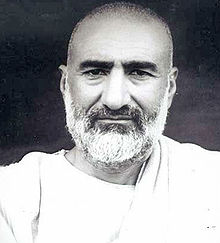
A person once stigmatized as an enemy of Pakistan, has something important to say in the contemporary public discourse in the second Islamic country in the world. His name is Abdul Ghaffar Khan (in the picture), a Pakhtun patriot, social reformer, charismatic leader. He was a lifelong activist in favour of his fellows Pathans living North and South the frontier Durand Line. He became a very close friend of the Mahatma and he himself was called the ā€œFrontier Gandhiā€.

Anti-Partition apostle of nonviolence
He was born on 1890 in Utmanzai, a town in Charsadda District, in the North-West Frontier Province, today Khyber Pakhtunkhwa Province in Pakistan. He was an apostle of nonviolence, that he considered a form of spiritual jihad for his time and for the future of his people. He founded a nonviolent movement which arrived to count 100,000 members. As he wrote in his 1969 autobiography, ā€œMy life and struggleā€, ā€œin 1929 we were able to found the kind of organisation we wanted. We decided to call it the Khudai Khidmatgar movement (Servants of God movement). Our motive for choosing that name was that we wanted to awaken in the Pathans the idea of service and the desire to serve their country and their people in the name of God, an idea and a desire which was sadly lacking among themā€. The Khudai Khidmatgars were also known, for the color of their uniforms, ā€œRed Shirtsā€. The founder was called by his followers, as a mark of esteem, Badshah Khan, also spelled Baacha Khan, or more commonly Bacha Khan, that means ā€œking of our noblesā€.

Baacha Khan fostered free education for all, women rights, religious freedom, judicial reform. He also was a pioneer of ecology and sustainable development. He believed in self-government for both the settled and the tribal Pakhtuns. He strongly opposed the Partition of India, proposing autonomous provinces in a unified Indian federal framework. When the Partition became inevitable, he renounce to oppose it with riots or violence. He and his Khidmatgars accepted, reluctantly, Pakistan as their new country and decided to be loyal. They hoped the new regime would have given the Pakhtuns a chance to live united in their territory, free to self-govern their own province. The autonomy of the federal units in Pakistan was instead nipped in the bud and their movement was declared illegal.
For the freedom fighter, a new cycle of imprisonment started. Baacha Khan spent one-third of his life in prison, but, more precisely, he spent more time, about 15 years, in Pakistani prisons than he had spent in the prisons of the British Raj, ā€œonlyā€ 12.

He also went in exile in Afghanistan, where he supported local Pashtun cultural, social and economical development, fighting backwardness, clanism, family feuds. He gave in Afghanistan many speeches in favor of ā€œPakhtunistanā€, which were free of every kind of chauvinism, fostering freedom and self-government of his people, within the Pakistani federation, firmly anchored to a commitment for peace in all South Asia, all over the world.
ā€œI am looking forward to the time when free, general elections will be possible again in Pakistan. – he wrote in his 1969’s autobiography – For only then will the world know which way my people are going and whom do they follow. This is the main conflict between me and the rulers of Pakistan.ā€. This champion of Pakhtun patriotism remained unheeded. He won’t see general and local fair election either under the dictatorship of Ayub Khan, nor under Yahya Khan, nor under the civil but still authoritarian rule of Zulfiqar Ali Bhutto, nor under Zia Ul-Haq.
He couldn’t see the general elections of December 1988, when Benazir Bhutto, daughter of Zulfiqar Ali, became Prime Minister, for he died in Peshawar on January 20.

He had requested to be buried in Jalalabad, Afghanistan. He hoped this way to witness the need of friendship, and mutual understanding, among all Pakhtuns, between Afghanistan and Pakistan. His last wish succeeded in leaving a footprint in the heart of many throughout South Asia. As one can read in Rajmohan Gandhi’s biography of Bacha Khan (New Delhi, 2004) his funeral resulted a mammoth rally: ā€œThough the Afghan struggle was not yet over, the Kabul government and the mujahedin both announced a ceasefire for the event. Tens of thousands of the Frontier’s mourning Pakhtuns accompanied the coffin and crossed the Durand Line. Pakistan’s military ruler, Zia-ul Haq (who would be killed in a plane crash later in the year), and India’s Prime Minister, Rajiv Gandhi (also destined for a violent death), were present for the last rites.ā€ (see Gandhi R., Ghaffar Khan, 2004, p. 263).

Political heritage

After decades of oblivion, his political heritage are now again gaining momentum among Pakhtuns. An important political player in the re-established Pakistani democracy, the Awami National Party (ANP), wrote in its manifesto that it ā€œdraws its inspiration from the example and teachings of Khan Abdul Ghaffar Khan, affectionately known to his people as Baacha Khan. He spent his entire life in the struggle for freedom and justice. He and his Khudai Khidmatgars offered great sacrifices in the fight against colonialism, imperialism and all other forms of oppression. In a broader sense, Baacha Khan saw politics as the highest form of public service and often described himself as only a social worker. His objective was to liberate the masses of South Asia and, particularly, his own people, the Pakhtuns, from the shackles of ignorance and poverty, so that they could rise to their full potential.ā€ (cf http://awaminationalparty.org/).
The ANP was led in the past by Bacha Khan’s son, Abdul Wali Khan, and today the most prominent figure is his grandson, Asfandyar Wali Khan. In the 2008 elections, the Awami National Party won the majority in Khyber Pakhtunkhwa and elected its first Chief Minister since the independence, in coalition with the Pakistan People’s Party. ANP is allied with PPP also in other provinces and at the federal level.
The parable of the Taliban regime and the political violence that still sets fire through the area, has been a terrifying experience for everybody but especially for Pakhtuns. Baacha Khan is being rediscovered, as a source of inspiration for a better future. He was a devout Muslim believer, but he refused terror and was also alien from any bigotry. His political action was centered on peace and social reformation. He sacrificed as a satyagrahi in nonviolent campaign of civil disobedience, firstly against the British Raj, but later also against Pakistan authoritarianism and military rule.
His spiritual heritage helped ANP to defeat the Muttahida Majlis-e-Amal, the Islamist coalition, which was in power in Pakhtunkhwa before 2008. It was a highly symbolic victory. In the name of Baacha Khan, the modern ANP defeated the Islamists, as well as the ancient Khudai Khidmatgars had always defeated the Muslim League in both the elections hold in the province, under the British rule, on 1936 and 1946. Many hope that this political change could represent the end of a cycle, dominated by a tangle of Islamist and nationalist ideologies, which have painfully marked the history of the Frontier, of all Pakistan, Afghanistan.

Several notable cultural foundations and charities are working in South Asia to promote peace and human rights through the rediscover of Badshah Khan’s life, thought and action. We must nominate the Baacha Khan Trust (see http://www.baachakhantrust.org/), whose chief aim is propagation of Ghaffar Khan’s philosophy, his vision of renaissance for the oppressed and marginalized Pakhtuns communities, and for peace in Pakistan, Afghanistan, the whole South Asia.
Nowadays efforts to make the public opinion and new generations aware of the figure and the teachings of Baacha Khan would certainly help the stabilization of the so called Afpak area. After 60 years of political authoritarianism and violence in Pakistan and 40 years of civil war in Afghanistan, it’s probably time to know something more about Bacha Khan.

Self-government

His Red Shirts were able to provide ā€œlocal leadership for education and development, and stood up for the dignity and rights of their community. They balanced affirmations of the rights and dignity of all people with teachings about responsibility and sacrifices needed to serve those same communities.ā€ – Ali Gohar, founder and guide at the Just Peace International center, in Peshawar, recently wrote, adding that the beauty of this kind of nonviolent struggle is again alive in 2011 Arab Spring heroes cf http://www.khyberwatch.com/index.php?mod=article&cat=MediaWatch&article=391).

ā€œYou all know that I believe in the principles of non•violence. – he said on August 31, 1966, talking in Afghanistan on the Pakhtunistan Day, as reported in his 1969’s autobiography – I am convinced that there will be no peace in the world till the problem of the Pakhtuns has been solved. I am telling both the Russians and the Americans the same thing: if they really want peace, they should solve the problem of the Pakhtuns. What do we want? We keep on telling Pakistan to consider us their brothers and not to make us their slaves. We were never the slaves of the British and you should not expect us to be your slaves.ā€. Heared today, these words are somehow prophetic and should encourage a serious reflection.

The Pathans, both in Afghanistan and in Pakistan, still need an accountable local self-government, in order to take on full responsibility of their own territories. They can hardly be governed from Kabul, or from Islamabad. May be they can resolve their own way their problems, included terror-related and security’s ones.

The recent Pakistani devolution can be seen as a historical accomplishment on the way indicated by Baacha Khan. This is what many political leaders, not only ANP’s ones, strongly believe. Federalism was part of the independence struggle and the only way to make the idea of Pakistan into a lasting reality.

Unfortunately, the centralized, bigoted and corrupt, republic chosen by Afghani Pashtun leadership, after the fall of the Taliban regime, is much farer from Baacha Khan’s ideal of decentralized responsible and accountable self-government. The present solution resembles too much like the 1973 republic. It may be not reveal the right solution for the future of such a vast, diverse, and bitterly divided, country.

Don’t let anybody deceive you in the name of Islam

Abdul Ghaffar Khan, along all his existence, advocated for reforms, social justice, change through education, and, last but not least, peaceful coexistence of all communities, without any kind of ethnic, religious, caste, clan, social discrimination.
He strongly demanded his fellow Pakhtuns, to strive against ignorance, bigotry, prejudices, family feud and political violence. His message, which follows the furrow of modern nonviolent revolutions, which have already brought down more than an empire, can drive the Islamist factions and wider Muslim public opinion to a radical rethinking.

His teaching was prescient and it is today more relevant than ever: ā€œAnd you, misguided Pathans, you do not even stop to think whether this is Islam or not, you just swallow anything you are told… I want you to promise me that you will never let anybody deceive you in the name of Islam.ā€ (from Baacha Khan’s speech in Afghanistan, on Pakhtunistan Day, 31 August 1967, as reported in Baacha Khan’s autobiography, 1969).

-Mauro Vaiani is a Geopolitics PhD CandidateĀ at theĀ University of Pisa in Italy and is a Facebook group member and contributor of Pakistanis for Peace. His page at the university is at http://www.sp.unipi.it/hp/vaianiĀ and he can be reached via email at mauro.vaiani@sp.unipi.it

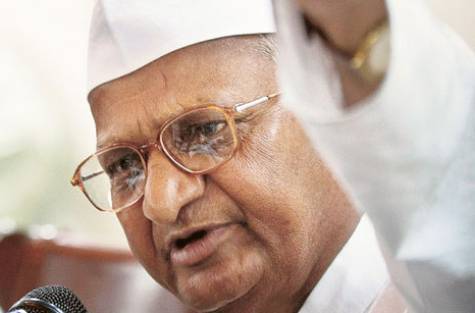
Anna’s Trip to Pakistan: Should He Or Shouldn’t He

By Akshaya Mishra for Firstpost

Should he or shouldn’t he?

The supporters of Anna Hazare are in a bind. Two days after the Gandhian accepted the invitation of a human rights delegation from Pakistan to visit that country, the public opinion in India stands divided.

The Shiv Sena was first off the block opposing Anna’s move. Its argument follows the usual political theme. Islamabad must stop sponsoring terrorist activities in India first. The anti-corruption crusader should have taken cognisance of the sentiments of people before even considering such an invitation, it said.

Others are likely follow the Sena’s line soon. The hard line Hindutva followers, who have been silent so far, may erupt in anger, putting a communal spin to the visit.

Anna might just have put his feet in uncharted territory, and a minefield of potential controversies. Pakistan is not an easy proposition even for seasoned politicians to handle. He could be risking his reputation.

So, should he or should not he? There are no easy answers.

Anna is not just an individual, he is a phenomenon. He is an idea that easily transcends boundaries. The massive support to his anti-corruption movement across the social spectrum was a pointer to the fact.

ā€œI will go to Pakistan. In fact, I will go anywhere for the sake of peace and poor people,ā€ he said while meeting the Pakistani delegation, which included former judge of Supreme Court of Pakistan Nasir Aslam Zahid and founder of Pakistan India Forum for Peace and Democracy Karamat Ali.

Anna might just have put his feet in uncharted territory, and a minefield of potential controversies. PTI
ā€œI believe in the religion of humanity, and humanity should begin with your neighbour. Like Indians, Pakistanis too are suffering due to widespread corruption in their country,ā€ he added.

The statements reflect the man as he is — simple, honest and innocent of concerns that bother others so much. It’s possible he would not have given a serious thought to the troubled India-Pakistan equations. It is possible he would be worried about people and their happiness only, not issues or borders.

Isn’t corruption a big issue in Pakistan too? Don’t people suffer because of that? That would be his line of thinking. He would be oblivious to the fact that any movement there guided by him would amount to challenging the rulers in Islamabad and that any intention to help the country would inflame passions in India.

Sena chief Bal Thackeray has sounded the warning note. ā€œBe it Anna or anyone else, they should first speak to kin of those killed in the Mumbai and Delhi blasts, before anointing themselves Nishan-e-Pakistan (Pakistan’s highest civilian award),ā€ he wrote in the party mouthpiece Saamna today.

ā€œWhether Anna goes to Pakistan or not is another matter, but it would have been better had he given a thought to the country’s sentiments on the issue,ā€ he added.

Earlier, the party’s spokesperson Sanjay Raut had made his disapproval clear. ā€œAnna should have told the visiting delegation to go back to Pakistan and create awareness among the people about the Pak-sponsored terrorism in India. The entire world may have praised the anti-corruption movement in India, but Anna cannot ignore sentiments of the people in his own country vis-a vis Pakistan,ā€ he had said.

Anna is likely to lose most of his following in India if he goes ahead with his Pakistan trip, which for all practical purposes would be a symbolic one. Worse, notwithstanding the nature of his visit he would turn a political entity, without intending to be so.

His biggest achievement so far has been that he has managed to stay apolitical despite the desperate efforts from parties to align with him. He represents the common Indian and the other India, which stays out of the power circle that rules the country.

But the other India hates Pakistan too. This is where Anna is likely to run into a problem. Questions could be raised about his intention — the ordinary follower is not expected to understand and appreciate the nuances of his high thinking. The adulation for him is likely to shrink.

Anna should not let that happen. Pakistan can wait.

Park 51 Photo Exhibit Features American Children From All Over The World

BY Jessica Jenkins for Groundswell

NYChildren, a new photo exhibit at the Park51 community center in downtown Manhattan highlights the diversity of American identity by featuring New York City children from all parts of the world. A slideshow in the New York Times highlights a dozen portraits from the NYChildren exhibit. The photographer, Danny Goldfield, says he was inspired by a 2004 encounter with the brother of Balbir Singh Sodhi, the Sikh man who was murdered at his Mesa, Arizona gas station on September 15, 2001. That encounter led Mr. Goldstein to think about what constitutes American identity, and his project to photograph a child from each country of the world. So far Mr. Goldstein has photographed children from 171 different countries, all living in New York City.

It’s been a year since the Park51 community center was besieged by Islamophobic attacks from across the nation for its proximity to Ground Zero. Park51 has since scaled back its plans to build a new community center and mosque in Lower Manhattan but nevertheless has continued to offer events and faith services to the local community in its existing building. On its website, Park51 says about the exhibition: “We live in a world with far too much fear and misunderstanding. This exhibition is about finding the courage to meet and get to know neighbors to build trust and friendship.” We can’t think of a better way to set a tone of resilience, tolerance and hope.

Jinnah’s Pakistan

By Ziyad Faisal for The Friday Times

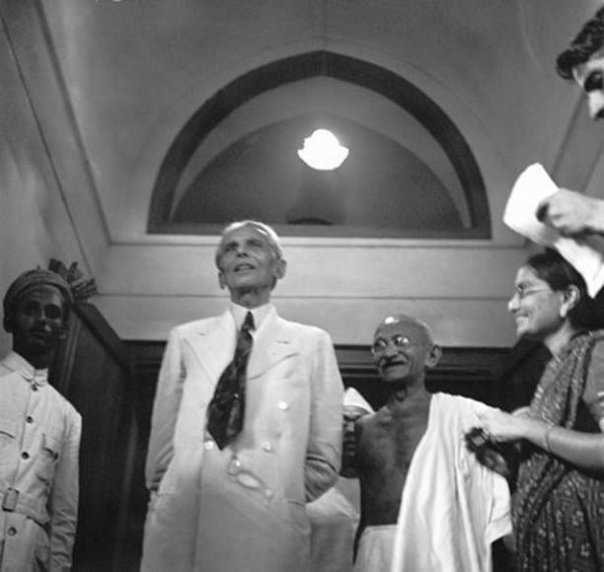
When a suicide-bomber targets a market-place, a rabid Islamist kills a figure who is not pious enough or Independence Day comes, we are reminded of the psychosis of the Pakistani state. We are reminded that in addition to shaky material foundations, the Pakistani state rests upon highly flimsy and contested ideological grounds. At such times, there is almost always a chorus from the literate urban middle-classes of the country: they want “Jinnah’s Pakistan”. For the more conservative sections of our urban middle-class, the Pakistan they long for is the “laboratory” which Jinnah claimed he sought, to implement Islamic values. For the more liberal sections of the urban middle-class, the Pakistan they want was described by a secular Jinnah in his speech on August 11, 1947. The more perceptive reader will already realize that while every historical figure can be interpreted in a wide variety of ways, if a single leader can be held up by secularists, conservatives, nationalists and Islamists alike, perhaps the leader himself was not so sure about certain things.

But what exactly was Mr Jinnah’s own vision for Pakistan, and how did it interact with the nature of the Pakistan Movement and the realities of post-1947 Pakistan? To understand the yearning for “Quaid-e-Azam ka Pakistan”, one must look at the founding myths of Pakistan and Jinnah’s place therein.

Almost any child who goes to school in Pakistan learns a certain story. The story involves a young man, burning the proverbial midnight oil as he studied at night, trying to shield the light he was using with cardboard sheets, so as not to disturb his siblings. When asked by his sister as to why he would not simply go to bed, he said something along the lines of how important this hard work was, for him to become a great man. The Pakistani reader will recognize immediately the young man we are talking about: the Quaid-e-Azam, Muhammad Ali Jinnah.

Most modern nation-states actively propagate their foundational myths: based on a kernel of truth but embellished greatly with fantasy, exaggeration and historical omissions. It is only natural that such myths centre around the integrity, heroism or ambition of one or more “founding fathers” who were instrumental in creating the state it in its modern, institutional form. So, for instance, Israel has its Bar Kochba and its Ben Gurion. Turkey has its Attaturk leading the fight for independence from barren Anatolia. The United States has its George Washington, who supposedly would not lie to his father about cutting a cherry tree, even as a boy. Latin American countries have their Simon Bolivar, Italy has its Garibaldi, Ireland has its Michael Collins. The Indian state has its own pantheon of founding fathers, from Asoka to the Rani of Jhansi, all the way down to Gandhi and Subhas Chandra Bose. Even Saudi Arabia has its epic tale of Bedouin raiders from the sand-dunes of Najd turning into majestic kings and defenders of the Holy Kaabah.

As for the foundational myths of Pakistan, let us bear in mind the following: every modern nation-state is ultimately a very artificial social construct, and the more artificial a state, the more artificial its founding myths.

And what is the Pakistani child taught about the founding fathers of the country? Well, if we put aside the valuable nation-building efforts of Muhammad bin Qasim and Mahmud of Ghazni, what we are left with is essentially Allama Muhammad Iqbal and, of course, the Quaid-e-Azam. Iqbal, as a brilliant poet and an aspiring philosopher, who dreamt of Pakistan. Mr Jinnah, the great political leader who brought this vision to fruition. Such is the clichƩd narrative we are given.

In that famous story about the hard-working youthful Jinnah, the Pakistani student is being taught that a boy in his mid-to-late teens had already within him a young Quaid-e-Azam: the Great Leader. He would go on to study the legal system of the British colonialists, gain the respect of the British and the adulation of the Muslim masses of South Asia and eventually this epic tale culminates in the heroic Muslim League’s achievements of Partition and its accompanying bloodbath.

The historical record suggests that the budding Leader was not exactly convinced about the need for communal Muslim politics until at least the early 1920s. He was, after all, the chief architect of the Lucknow Pact of 1916: the “ambassador of Hindu-Muslim unity” as Sarojni Naidu famously described him. Even as late as 1946, Jinnah as a practical politician could entertain the possibility of some sort of compromise with the Congress leadership and the British. The Muslim League leadership would have been satisfied with adequate guarantees of limited autonomy for Muslim-majority regions of Punjab, Sindh and Bengal. The Pashtun leaders of the north-western Frontier, of course, were not to be taken on board, because their loyalty to the Congress amounted to some sort of treachery. As for the Baloch, one imagines, it was assumed that they need not be considered in any calculations: they would somehow automatically be convinced to join the new nation-state and forget centuries of distinct history.

The Muslim League itself, founded in 1905-06 by disinherited and disgruntled members of the former Muslim elite of South Asia, was not committed to mass politics or independence from British rule – and certainly not an independent Pakistan. Unlike the populist appeals of Congress leaders like Gandhi, Nehru and others, the Muslim League’s political programme was for a long time directed towards the Aligarh-educated ex-nobility among Muslims. In the 1940s, were it not for a last-minute alliance with Muslim feudal lords in Punjab and some urban elements from Sindh, the Muslim League could never have mustered the political resources to make their demand for an independent Pakistan into a reality.

Conservative nationalists and Islamists in Pakistan are likely to be disappointed by the real Mr Jinnah. He was an intelligent, British-educated barrister, and had little time for the discourse of village mullahs. Steeped in the traditions of British liberalism, Jinnah could bring only a tiny minority of the Muslim clergy to his side even in the 1940s. It is obvious that he was looking for some form of constitutional liberal democracy, no matter how inspiring the pan-Islamic yearnings of Allama Iqbal might have been.

But perhaps our secular liberals are even more likely to be disappointed, notwithstanding the fact that Mr Jinnah laid out a set of principles for a secular Pakistani state in his speech to our first Constituent Assembly, on the 11th of August, 1947. To quote his memorable words on that occasion:

“You are free; you are free to go to your temples, you are free to go to your mosques or to any other place or worship in this State of Pakistan. You may belong to any religion or caste or creed that has nothing to do with the business of the State. ”

While these are admirable sentiments, perhaps we can be forgiven for pointing out the glaring contradiction here. If a citizen’s religion is not the business of the state, how does one explain the creation of Pakistan as a separate state? If it were not differences in religion with the Hindus and other religious communities of India, what else was it that motivated the Muslim League to demand Pakistan?

Allow me go one step further and remind the reader of the many occasions on which Mr Jinnah invoked Islamic rhetoric in his various speeches to justify the idea of Pakistan. With apologies beforehand, allow me to recall that it was the same Mr Jinnah who would not accept his daughter marrying a non-Muslim man, even though he himself had married a non-Muslim woman. One is reminded of the typical mindset of the contemporary Pakistani Muslim father or brother.

For years, Mr Jinnah brilliantly argued for federal autonomy in Muslim-majority provinces…until Partition happened and the Pashtuns, Bengalis, Baloch and other nationalities within Pakistan demanded the same autonomy. For years, Mr Jinnah pointed out the distinct cultural identity of South Asian Muslims…until Partition happened and Bengalis asked for their language to be given the status of a national language. Urdu and Urdu alone, Mr Jinnah firmly reminded them.

I understand that quite a few readers ought to be exasperated by now. What am I trying to say? What exactly was Muhammad Ali Jinnah? Was he socially liberal or conservative? Was he secular or not? What future did he envision for Pakistan?

The historical record shows that Mr Jinnah was himself has given us adequate arguments for just about any side we choose. Despite the personal integrity, intelligence and political skill of Mr Jinnah, it has to be recognized that the Muslim League was not exactly what it claimed to be. It was supposed to speak for the Muslims of South Asia, but its actual representative credentials were not very credible, even in the “moth-eaten and truncated” (to quote Mr Jinnah) Pakistan of 1947.

To limit ourselves to an imagined version of what Mr Jinnah wanted would mean limiting our political vision and perhaps the very frontiers of our political morality.

What sort of Pakistan does the hari from Sindh want? What sort of Pakistan does the silenced rape victim want? What sort of Pakistan does the tortured body of the young Baloch student want? What sort of Pakistan does the textile worker from Faisalabad want, considering he is paid some 6000 rupees a month? What sort of Pakistan does the terrified Ahmadi want? What sort of Pakistan do you want? What sort of Pakistan do I want?

You see, perhaps the real question is not what our founding father(s) wanted, but what today’s unfortunate Pakistanis want.

Perhaps it is time to consider a possibility: that the laboratory for implementing Islamic teachings was created, and the experiment went horribly wrong. And perhaps it is time to consider another possibility: given the many different interpretations which Mr Jinnah left himself open to, might we be forgiven for concluding that this is it? That this, where we live today, is Jinnah’s Pakistan in all its glory?

Amir Khan Gets Invited to The White House

By Araiz Baqi for Sportspulse

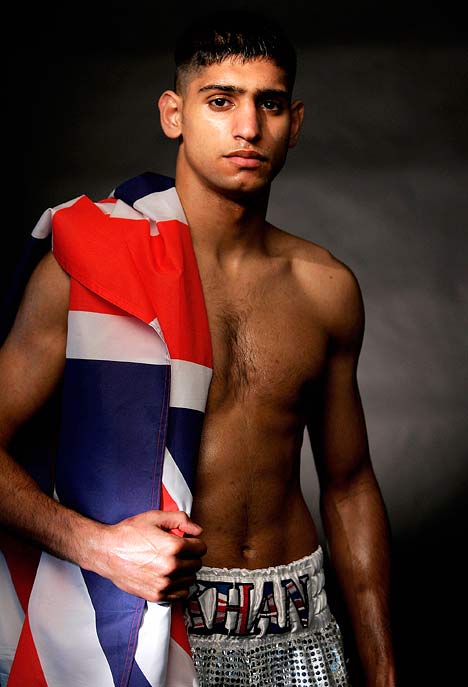
Amir Khan, the British professional boxer of Pakistani descent, has been invited to the official residence and principal workplace of the President of the United States, also known as the White house, for a dinner, along with other Muslim sportsmen, on the eve of the tenth anniversary of the 9/11 atrocities in New York.

The currently unified IBF and WBA World Light Welterweight Champion was invited to attend the dinner by the United States Secretary of State Hilary Clinton. The event will take place on September 10. “Amir was invited there by Mrs Clinton,” a source revealed. “He will be among a group of the most prominent Muslim sportsmen in America, and as Amir is now based in the US, that offer was extended to him.”

The Irony is that IBF and WBA champion have become frustrated with the lengthy delays he has to face whenever he travels to the States. There are seven levels of security at the, with seven being the highest, and Amir comes in at full seven.

When on vacation, Amir almost everytime visits Pakistan, and most recently, he visited Egypt and Saudi Arabia (All Muslim Countries). ā€˜All these things are taken into account by US Homeland Security. The Khan family are kept in a holding area until the green light is given from Washington DC, as all the checks that are made.’ – reports dailymail.

The Organizers of the event have yet to confirm whether President Barack Obama will be present at the event or not. If the President attends the ceremony, Amir might find a smoother passage on future entries to the United States.

Khan, Currently rated as the best boxer in the Light Welterweight division, has made his fans, especially Pakistanis, proud after getting the invitation for the dinner. After all, in this world of racism, hatred, and diversity, who eould expect a Pakistani to get invited to the White house…

After returning from pilgrimage last week in the holy month of Ramadan, Khan will fight in the United States most likely against Mexican legend Erik Morales. He will leave the White House on Sept 11 and go on to Las Vegas, where one of his rivals, Victor Ortiz, defends the World Boxing Council welterweight title against Floyd Mayweather Jnr.

Pakistan Power Shortages Keep Growth Prospects Dim

By Alex Rodriguez The Los Angeles Times

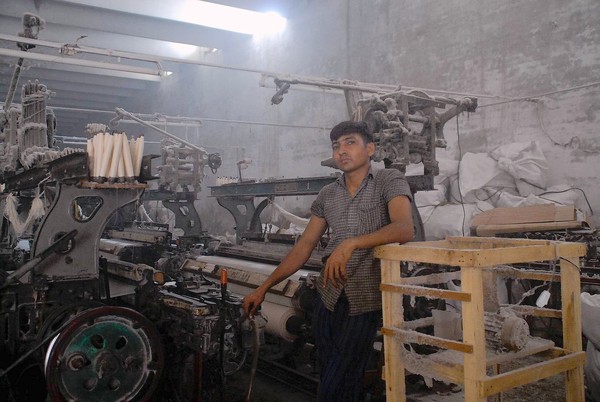
The machine operators lean back lazily on rolls of cotton fabric, shooing flies from their sweat-soaked tunics as their boss, Abdul Latif, paces between rows of silent electric looms covered in lint.

The textile plant owner knows it’s just one of several rolling blackouts that will darken his plant today, as they have every day for four years. Along his street, other textile plants have either closed or begun selling their looms for scrap. Latif scrapes by, but the outages have cut his plant’s output in half.

“The situation is very bad,” Latif says. “We’re losing contracts because of these outages. We can’t deliver on time. If it continues like this, we may have to shut down.”

One of Pakistan’s biggest scourges has nothing to do with suicide bombers or militants wielding Kalashnikov assault rifles. Because the country cannot produce the electricity needed to support a population of 177 million, the government intentionally shuts down power in staggered intervals, often for hours at a time.

The rolling blackouts are most frequent during the summer, when the whir of air conditioners in 100-plus-degree heat boosts demand for power. Apart from districts with top government and military offices, virtually every neighborhood and village suffers.

The stopgap policy prevents the country’s moribund economy from getting off the ground. And as long as the economy sputters, millions of Pakistanis remain mired in poverty and joblessness, leaving the country’s disaffected youth vulnerable to recruitment by Islamist militant groups.

President Asif Ali Zardari’s government has given Pakistanis little reason to hope for a solution anytime soon. This summer, government officials said that it would take at least seven years to build up the electricity generation capacity needed to eliminate the blackouts.

Various factors explain Pakistan’s power woes. During Gen. Pervez Musharraf’s rule from 1999 to 2008, strong economic growth fueled an upsurge in consumer spending that had Pakistanis flocking to stores to buy air conditioners, refrigerators and other appliances. But Musharraf failed to pump money into boosting generation capacity to keep up with demand and the country’s booming population.

Zardari inherited the massive gap between supply and demand, but his cash-strapped administration hasn’t moved fast enough on hydroelectric dam projects and has yet to shore up the country’s aging distribution network.

Other factors make the situation even worse. About 15% of the electricity generated is lost to theft, says Ejaz Qureshi, a spokesman for the state-owned Pakistan Electric Power Co. In addition, the government often fails to pay its bills to private power producers, which means those companies can’t buy sufficient fuel for their plants. At times, they cut off electricity to the offices of government agencies that owe them money.

The havoc wrought by the shortfall is particularly acute in the country’s textile industry, a pillar of Pakistan’s fragile economy.

Faisalabad, Pakistan’s third-largest city and home to its textile sector, has seen 200 of its 4,000 textile plants close in the last three years because of the blackouts, says Wahid Raamay, chairman of the city’s Council of Loom Owners and a plant owner.

During that period, 100,000 workers have been laid off, about 10% of the city’s textile work force, Raamay says.

Plant owners forced out of business face a grim future. In a country where many people distrust banks, many plant owners sell their personal property — gold, jewelry, cars — to buy the machinery needed to start the business. If their plants close, they may find themselves at rock bottom.

“They all used to have good cars, good homes, and now everything has disappeared,” Raamay says. “Now they ride motorcycles to get around.”

Five months ago, Malik Mohammed Kashif was forced to shut down his plant, lay off 80 workers and sell his 66 looms to scrap dealers.

On a sun-baked afternoon, Kashif strolls through his darkened, empty building and winces as he speaks of the future.

“As for me, I’m finished,” says Kashif, a 30-year-old father of four. “With the shutdown, we lost $350,000, nearly everything we had. We’re at the bottom now because of this.”

This summer, public anger over ceaseless power outages boiled over. In Mianwali, in Punjab province, throngs of demonstrators calling for a stop to the outages clashed with baton-wielding police in early July. Two people were killed and 22 were injured. In Karachi, four people were killed during protests and work stoppages in early June that brought sections of Pakistan’s largest city to a standstill.

In Faisalabad, the extent of blackout-induced layoffs in the textile industry has reached the point that plant owners often work the looms alongside their laborers.

At Latif’s plant, workers paid by the hour say the outages cut their already meager wages in half. Machine operator Mehmood Hussain makes $4.65 a day when the blackouts don’t occur and $2.32 when they do. For a family of seven reliant on his income, the difference is huge.

“It’s a critical situation now,” Hussain says. “We can’t buy decent food or buy clothes for ourselves. And there’s no way out. Looms are all we know.”

One group, however, prospers from the textile industry’s misery: the scrap dealers. Their stalls on the edge of the city are filled with grease-covered gears and flywheels stacked next to piles of wooden rollers and spool holders.

Dealer Mohammed Sharif says he sometimes buys up to 100 looms a day, paying just $290 for machines that cost plant owners $1,500.

“When the textile plants suffer, our business booms,” Sharif says. At the same time, he knows the scavenging can’t last indefinitely.

“If looms continue to shut down at this rate, a day will come when we won’t have any business at all. What will we do then?”

Noting that three in four terror suspects are acquitted in Pakistan, the United States has doubts its key ally would make any headway in prosecuting key plotters of 2008 Mumbai terror attacks.

“The accused in numerous high-profile terrorism incidents involving US victims had all been acquitted by the Pakistani legal system,” US State Department noted in its 2010 Country Reports on Terrorism, published last week.

“The Federal Bureau of Investigation has assisted with the respective prosecutions,” the report said. FBI had assisted India in the investigation of the Mumbai terrorist attack as six Americans were among the 166 victims.

The report found that while Pakistan maintained it was committed to prosecuting those accused of terrorism, a study of its Anti-Terrorism Court’s rulings last year disclosed “that Pakistan remained plagued by an acquittal rate of approximately 75 per cent”, and a legal system “almost incapable of prosecuting suspected terrorists”.

It complained that a new anti-terror bill, which would allow its security agencies to hold suspects for 90 days before bringing them to court and give them a freer hand to use electronic surveillance had not progressed in the country’s National Assembly.

Although Islamabad had increased pressure on money-launders and unofficial ‘hawala’ money transfer agents, “deficiencies remained,” the report found.

“Notably, the criminalisation of the financing of terrorist acts committed against foreign governments and international organisations was ambiguous, as was the criminalisation of financing groups that have not been explicitly banned by the government or designated by the UN,” it stated.

Pakistan’s “weak implementation” of a UN Security Council resolution which lists banned terrorist organisations remained a concern.

The report also criticises Islamabad’s failure to outlaw militant Islamic terror groups which escape bans by changing their names.

Eid ul-Fitr 2011

Eid al Fitr To Be Celebrated Tomorrow in US: Fiqh Council Clarifies Eid Dates Controversy

As Reported by The Northern Voices Online

The biggest Muslim festival celebrated across the world, Eid al Fitr, is set to be held tomorrow in US and many other nations. Though in South Asia it will probably be celebrated on Wednesday.

There were some questions about the announcement of Eid in advance by the Fiqh Council of North America. Now the council has announced clarifications on the issue.

Doubts have been raised by some about the decision of the Fiqh Council of North America and the European Council of Fatwa and Research about the date of Eidul Fitr this year on August 30, 2011. Following are some clarifications from the Fiqh Council of North America.

The Fiqh Council of North America recognizes astronomical calculation as an acceptable Shar’i method for determining the beginning of Lunar months including the months of Ramadan and Shawwal. FCNA uses Makkah al-Mukarram as a conventional point and takes the position that the conjunction must take place before sunset in Makkah and moon must set after sunset in Makkah.

The Astronomical New Moon is on August 29, 2011 (Monday) at 3:04 Universal Time (6:04 a.m. Makkah time). On Monday, August 29, sunset at Makkah is 6:40 p.m. local time, while moonset is at 6:44 pm local time.

It is claimed that the new moon will not be visible on August 29 anywhere in the world. This information is not correct.

In United States the birth of Astronomical new moon is on August 28, 2011 (Sunday) at 11:04 p.m. (New York), at 8:04 p.m. (California) and 5:04 p.m. (Hawaii).

On Monday, August 29, the Crescent will set 13 minutes after sunset in San Diego, California and 28 minutes after sunset in Honolulu, Hawaii.

On Monday, August 29 the Crescent should be visible in Hawaii by binoculars and telescope and in South America by naked eye.

The Shawwal Crescent of Monday, August 29 is acceptable according to Shari’ah for those who recognize the Global sighting as it is also acceptable according to the criteria adopted by the Fiqh Council of North America.

Eidul Fitr is on Tuesday, August 30, 2011. Eid Mubarak and best wishes for a blessed Eid with peace and harmony among all.

Edible Arrangements–A Pakistani-American’s Success Story

By Riaz Haq for RiazHaq.com

Tariq Farid is the founder and CEO of Edible Arrangements, a successful international franchise business that specializes in delivering gifts of beautifully arranged bouquets of edibles like fruits and candy on holidays and various other special occasions.

Currently in its 11th year of operation, the company boasts 883 franchise locations in the United States, the United Kingdom and Kuwait. The company earned $300 million in revenue last year, according to published reports.

Born near Sahiwal in Pakistan, Tariq Farid has founded several other companies. One is Frutation by Edible Arrangements, which includes salads and fruit drinks. They’re sold in Edible Arrangements stores and stand-alone stores. He also created Netsolace, which provides software for the franchise industry. Another, BerryDirect, offers containers, vases and other products to our Edible Arrangements franchisees and other companies. His latest start-up is Farid Capital Corporation, a financing company that helps franchisees buy equipment.

The key to Farid’s success, he says, has come from paying attention to often overlooked details such as the website, order tracking and follow-up customer service, the logo and branding, and employee training.

The economy may need more entrepreneurs like Farid – according to the International Franchise Association, every $1 million lent to franchise small businesses creates 34 jobs and $3.6 million in annual economic output, cited Reuters.

Here is Farid in his own words describing his journey:

I was born in Pakistan and came to the United States in 1981, when I was 11. My grandfather owned a farm in Pakistan and we had been fairly well-to-do. We started at the bottom when we came here. My father found a job as a machinist during the day and worked at McDonald’s and Burger King at night.

All five of my siblings pitched in. I delivered newspapers to 300 houses. Instead of putting the paper into the mailbox, I’d deliver it to the door. I got great tips. When I was 13, a flower shop hired me to water the flowers. Soon I was taking care of orders. By 16, I had learned a lot.

One day my father found a flower shop for sale in the paper. The owner wanted $6,000. My dad asked me if I could run the shop, and I said sure. We got a cash advance and a loan from a friend. I thought I’d negotiate, and asked the owner what terms he was offering. He looked at me as if to say, ā€œWhat can this kid possibly know?ā€

We opened a week before Easter and earned about $50 a day. I stayed open until 7 p.m., seven days a week, because few other flower shops did. I thought $350 a week was wonderful. Soon, sales doubled, and I was shocked. Five years later, we had three shops and were making close to $1 million a year. I said we needed to make more, about $5,000 a day. My mother asked me if I remembered when I was making $50 a day and she suggested that I relax. I told her that it never really ends, and that I could achieve that goal.

It was a lot of work. I didn’t really have a social life. We stayed open on holidays. On my way to high school, I’d drop off my mother at the shop. She spoke no English, so I told her what to do to supervise the two employees. After school I’d make flower arrangements and deliver them myself until I could hire a driver.

I attended college part-time, but I started weighing the benefit against what I was making. I decided to put off school, and I never finished. I was so young when I started a career that I blindly jumped into it.

Edible Arrangements, which I started in 1999 with my brother, Kamran, goes back to our roots. In Pakistan, my father always brought home tons of fruit for us. When we started the company, we created basic fruit arrangements that included fresh pineapple, strawberries, cantaloupe and more, and later added extras like chocolate and cinnamon toppings.

We got 30 orders the first day. We had learned from our flower stores, so this time did everything right. A stranger asked about opening a store, which gave us the idea to franchise them. I knew nothing about the franchise industry, so I contacted an association for the names of experts and found Michael Seid. He gave great advice.

I’ve started several other companies. One is Frutation by Edible Arrangements, which includes salads and fruit drinks. They’re sold in Edible Arrangements stores and stand-alone stores. I also started Netsolace, which provides software for the franchise industry. Another, BerryDirect, offers containers, vases and other products to our Edible Arrangements franchisees and other companies. I just started the Farid Capital Corporation, a financing company that helps franchisees buy equipment.

When I was starting out, I used to give my mother $50 a week. When I wanted to buy a building for our second Edible Arrangements location, I needed $40,000 more than I had. My mother had saved the money I gave her over the years and handed it back to me. She asked only that I do something in her name someday and give her $20,000 for my sister’s wedding.

When my mother passed away in 2000, I started a foundation in her memory. The organization built a hospital in Pakistan for needy people and an Islamic school in the United States.

Originally published in The New York Times as told to Patricia R. Olsen
.

Pakistan Yearns For a ā€˜Hazare’ Too

By Farhan Bokhati for Gulf News

The crisis unleashed by anti-corruption protests targeting India’s graft-tainted government offers many lessons for Pakistan. While public rallies in India have lifted the credentials of the 74-year-old veteran campaigner, Anna Hazare, Pakistanis have watched the situation across the border with much interest.

Pakistan is no stranger to corruption in high places. Scandal after scandal involving senior politicians, high-ranking officials and other prominent individuals have become public, underlining the nature of the beast. While there have been high-profile arrests in the past, Pakistan tragically has a poor history when it comes to successful prosecution and sentencing.

Across the country, however, there is widespread popular lament over graft being more than just a mere fact of life. Calls for a revolution come frequently from ordinary Pakistanis, notably those who consider themselves disempowered and marginalised.
In recent days, TV coverage in Pakistan of the anti-graft campaign in India appears to have vividly illustrated the way that events in Delhi have struck a chord across the border. For long, Pakistanis have waited for a messiah but to no avail. Today, the yearning for such a deliverer from corruption appears to be much stronger than ever before.

To make matters worse for the country, Pakistan’s ruling class appears to show no signs of responding to the challenge posed by corruption in high places. Unlike India where a veteran campaigner in his 70s has become the lightning rod for popular opinion and has inspired the public at large to take the cue from him, there is no similar individual who has become a comparable figure in Pakistan.

But like India, Pakistan’s ruling politicians including members of the country’s parliament have seldom considered corruption an important enough issue to be vigorously discussed and debated in parliament. Ironically, for a country where politicians are keen to note the importance of strengthening the evolving democratic framework, it is important to recognise the equal if not greater significance of aggressively battling corruption.

Politicians in Pakistan appear to give no heed to corruption as an issue of vital significance. But what is even more disturbing is indeed the fact that questions raised on the conduct of politicians in relation to impropriety are quickly shoved under the carpet as if they were an attack on democratic values.

In this background, the time has now come for Pakistan to recognise the overwhelming significance of fighting corruption, not just for the country’s overall well-being but also for its ability to sustain its still young democratic order.

Abject poverty
If Pakistan continues to become an even more tainted country where values related to clean governance remain subservient to so-called discussions on democracy and civilian rule, sustaining the latter may remain an uphill task. While reverting to military rule as has been the case in Pakistan’s history may not be an option, it can be stated with a significant degree of certainty that chaos will increasingly become a fact of life going forward. The popular yearning for an end to corruption coincides with what appear to be difficult economic times for Pakistan. The country’s elite have neglected the poorest of the poor for too long.

At least a third of Pakistan’s population, or by some accounts even a higher proportion, continues to live below the poverty line. This essentially means that a large segment of the country’s population, which on its own may be larger than the entire population of many countries, lives in extreme and abject poverty, facing conditions that can simply not be imagined by the ruling elite.

The missing element for now may indeed be that Pakistan has yet to discover a prominent individual like India’s Hazare who becomes the hope for the country’s downtrodden and those in need. Given the desperation felt by many Pakistanis, it is possible that such an individual may be found sooner or later, who then leads calls for a long-overdue change.

The consequences of such an eventuality may be difficult to comprehend at the moment. But given the popular yearning for an abrupt change, it is more than likely that such a change could be tumultuous and even possibly bloody. The easier option for Pakistan’s complacency-driven ruling elite which they are unlikely to embrace going by past precedent, is simply that of learning a lesson from events across the border. The ā€˜Hazare factor’ in India’s landscape is a breath of fresh air.

Farhan Bokhari is a Pakistan-based commentator who writes on political and economic matters.

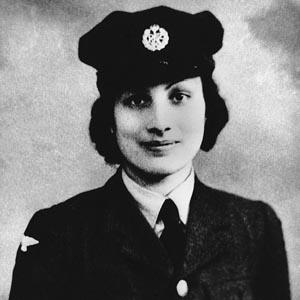
Memorial for Noor Inayat Khan, SOE Agent and Daughter of Sufi teacher Hazrat Inayat Khan

As Reported by The Sufi Times

This past New Years Day would have marked the 96th birthday of Noor-un-Nisa Inayat Khan, an Indian muslim woman who was shot dead in a Nazi concentration camp in September 1944, after being the first female radio operator to infiltrate occupied France.

Her courage and self-sacrifice during World War II are to be honoured by a memorial which has been proposed to be raised in London’s Bloomsbury area next year. It will be the first war memorial in Britain either for a Muslim or an Asian woman.

The project has the support of 34 Members of Parliament and a number of prominent British Asians, including human rights activist Shami Chakrabarti and film director Gurinder Chadha, OBE. Permission has been granted by London University and the local authority to build a sculpture in Gordon Square. A sculptor has already been commissioned and the organisers now need to raise £60,000 to complete the project, of which about £25,000 has already been raised.

Noor Inayat Khan was the daughter of acclaimed Sufi teacher and musician, Hazrat Inayat Khan (1882 – 1927), who was one of the first people to bring Sufi teachings to the modern Western world. He established the ā€œSufi Order in the Westā€, which survives in various forms to this day and has followers around the world.

Hazrat Inayat Khan’s great-grandfather was Tipu Sultan, a king of Mysore who ruled during the time of the East India compay and who had died in battle against the Duke of Wellington in 1799. Hazrat Inayat Khan had been initiated into the Suhrawardiyya, Qadiriyya and Naqshbandi tariqas, but his primary initiation was from Shaykh Muhammed Abu Hashim Madani into the Nizamiya branch of the Chishti order (named after Shaykh Nizamuddin Auliya, died 1325).

Being an accomplished musician, Hazrat Inayat Khan went to America to tour with a group of musicians, playing mainly traditional court music on his veena and singing. During this time, he attracted a number of students to Sufism and met his wife, Ora Meena Ray Baker, an American from New Mexico who was of English-Irish-Scottish descent. They had their first child, Noor, in Moscow (1914), where Inayat Khan had gone to perform. Three more children were to follow: Vilayat (1916), Hidayat (1917) and Khair-un-Nisa (1919).

When Noor was four years old the family moved to Paris. Noor grew up in an environment steeped in Sufi teachings. Her father established a Sufi centre and regularly held Sufi meditation meetings with a growing number of students, lectured widely and authored a number of books.

Noor went on to study at the Sorbonne, and in her mid-20’s became an author of children’s stories. At the outbreak of war Noor’s family returned to her motherland and they moved into rooms in Bloomsbury Square in London. The site of the memorial which is to built in her name is, therefore, very appropriate.

Both Noor and her brother Vilayat decided they would do something to help the Allied Forces in their efforts against the Nazi threat. Vilayat joined the RAF (Royal Air Force) and trained as a pilot, whilst Noor joined the WAAF (Women’s Auxiliary Air Force). Because of her fluent French, she was given a position in the new Special Operations Executive (SOE) of the British Secret Service. The SOE was desperately looking for radio operators who could be positioned in enemy territory to send back intelligence by wireless.

Her recruiters were not at first convinced of her suitability for the role. One of them noted, ā€œNot overburdened with brains but has worked hard and shown keenness, apart from some dislike of [the] security side of the course. She has an unstable and temperamental personality and it is very doubtful whether she is really suited to work in the field.ā€

But in June 1943, she became the first female SOE agent to be parachuted into enemy occupied territory in France. According to Sir Colin Gubbins, head of the SOE, she had “occupied the principal and most dangerous post in France”. As a radio operator she was on the front line of intelligence operations, a dangerous role not for the faint-hearted. She was once stopped by the Gestapo whilst cycling with her radio equipment, but managed to convince them that it was a cinema projector.

However, it eventually transpired that the French resistance group she had been sent to help had already been infiltrated by Nazi agents and within weeks of her arrival hundreds of operatives had been arrested and shot.

Noor turned down the opportunity to return to Britain, choosing to remain behind as the SOE’s only radio contact in or near Paris. She was given a life-expectancy of three weeks, but survived for three months.

But then she was betrayed by RenĆ©e Garry, the sister of one of her French Resistance colleagues. The reason for this betrayal is not clear. Some reports say Garry was jealous of Noor’s role as an SOE agent, others say she was jealous of her beauty. In any case, she was seized by the German Gestapo and taken to a concentration camp in Pflozheim. Here she was routinely tortured for weeks, but refused to give up any information to her interrogators.

On 11 September 1944, Noor, together with three other female SOE colleagues, were taken by cars to the concentration camp in Dachau, arriving in the dark. During the night, they were tortured again. Early on the morning of September 12, they were marched out to the dog kennels, forced to kneel two by two and each was shot in the back of the head. Their bodies were incinerated in Dachau’s infamous ovens. Her last words before she died were ā€˜liberte’.

Shrabani Basu is Noor Inayat Khan’s biographer and founder of the Noor Inayat Khan Memorial Trust. She spent eight years researching Noor’s life from war archives and family records, and has more recently been involved in the planning of the new memorial. Basu remarked, “I feel it is very important that what she did should not be allowed to fade from memory, particularly living in the times that we do. Here was a young Muslim woman who gave her life for this country and for the fight against those who wanted to destroy the Jewish race. She was an icon for the bond that exists between Britain and India but also between people who fought for what they believed to be right.”

Of the SOE’s 55 female agents, 13 died in action or at the hands of the Nazis. One of those killed (Violette Szabo) and one who survived (Odette Hallowes) have had popular movies made about their lives.

The initial unfavourable assessment made by Noor’s recruiters was in stark contrast to the note that her commander and head the SOE’s French section, Maurice Buckmaster, later made of her: ā€œA most brave and touchingly keen girl. She was determined to do her bit to hit the Germans and, poor girl, she has.ā€

In France, Noor is already widely recognized as a war hero. There are two memorials for her, and a ceremony is held each year.

In 1975, a commemoration plaque was installed at the Dachau Concentration Camp Memorial Site, by the State of Massachusetts. It displays Noor’s name and the names of the three others who were executed with her on September 12th 1944.

To this day, nothing has been built in Britain to commemorate the life of this Indian Sufi Muslim woman who courageously sacrificed her life for freedom and the British contribution to the war against Fascism. It is hoped that the proposed memorial will be built to redress this oversight.

India and Pakistan, Talking

As reported by The New York Times

With a relationship as combustible as that between India and Pakistan, it’s progress just to get the two sides in a room. Last week’s meeting was better. Their foreign ministers announced modest, but very welcome, agreements concerning the bitterly disputed region of Kashmir.

They promised to double the number of days when cross-border trade between the two parts of Kashmir — one controlled by India, the other by Pakistan — is allowed and to expand and expedite travel permits for Kashmiris who want to cross the border for family visits, tourism and religious purposes. India and Pakistan have fought three wars since 1947, two over Kashmir. Even these small steps could help chip away at their visceral mistrust.

Three weeks ago, some doubted the meeting would even happen after three explosions ripped through Mumbai, killing 24 people. The Mumbai attacks in 2008 that killed 160 people were blamed on Pakistani terrorists and sent relations with India into the deep freeze. So far, suspicion for the recent attacks has fallen on Indian terrorists.

Prime Minister Manmohan Singh of India deserves huge credit for staying engaged despite Pakistan’s failure to prosecute those responsible for the 2008 horrors. And he deserves credit for not shooting first and asking questions later after the recent attacks.

We wish we could say the same of Pakistan’s leaders. Before there can be a true reconciliation, and stability in the region, Pakistan’s Army must realize that using militants to try to counter Indian influence in Kashmir and Afghanistan is self-destructive — and that homegrown extremism, not India, is the real threat to Pakistan’s survival.

India and Pakistan have more to talk about, including cooperation on water, expanded trade and their joint stake in a stable Afghanistan. President Obama’s drawdown of American troops will go easier if India and Pakistan are part of the solution, not fighting over the spoils. New Delhi insists that it will accept no outside mediation. Washington needs to keep pressing the two to work together.

The United States and its allies are planning a conference in Bonn in December and hope to rally international support for a broad regional strategy that includes a peace deal for Afghanistan, trade agreements and ambitious energy projects. India and Pakistan need to be full participants. The payoff could be huge if their leaders muster the courage to resolve their differences.