Archive for the ‘ Hate Crime ’ Category

In Pakistan, Another Assassination and the Lessons Unlearned

By Natasha Fatah for Canadian Broadcasting Corporation
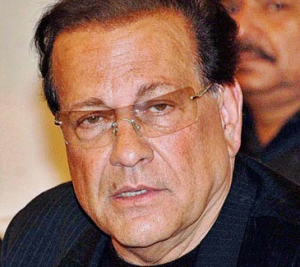
The Lion of Punjab is dead. Salman Taseer, the governor of Punjab in Pakistan, was assassinated in Islamabad on Tuesday by one of his own security guards.

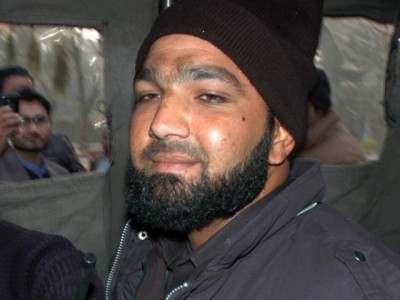
When the guard later turned himself in to the police, he said that he killed the man he was supposed to be protecting because he considered Taseer’s campaign against Pakistan’s blasphemy laws an insult to Prophet Muhammad.

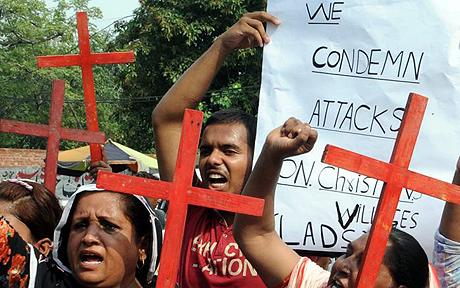
The blasphemy laws, which have been around since the 1980s, have been at the heart of a huge religious debate in Pakistan recently after a 45-year-old Christian woman was sentenced to death, allegedly in a dispute over drinking water among farm hands.

Most human rights observers say that the woman did nothing wrong, did not break any blasphemy law, and that the law is just being used to make some kind of example out of her.

Taseer stood by the side of this Christian woman, Asia Bibi, both literally and figuratively.

He stood next to her in the courtroom, which was a brave and dangerous move for any Muslim in Pakistan, but particularly so when you are a member of government and have a profile.

He had also waged an attack on those who wanted her dead by constantly criticizing the mullahs and hard-liners on his very active Twitter account these past weeks.

In response, Islamic fundamentalist politicians and imams were constantly attacking Taseer, even going as far as to say that criticizing the blasphemy law is an act of blasphemy itself, thus making Taseer an apostate.

A member of the Pakistan People’s Party and closely tied to President Asif Ali Zardari, Taseer had dedicated his life to social and political liberalism and to taking on the fundamentalists. But now that bravery has cost him everything.

According to witnesses, the guard who killed Taseer jumped out of a car, pointed his Kalashnikov and blasted away. He then continued his rampage, shooting the governor at least nine times.

Dropping his weapon, the man then gave himself up to police, saying later he was “proud” that he killed the blasphemer.

Another disturbing aspect to this story is that the assassin had managed to get himself into the police force and then, barely four months into the job, was transferred to the unit assigned to protect the governor.

It makes you wonder who was doing the vetting and whether some other even more devious plan was afoot. But how deep and powerful this doctrine of hate must be when someone who is paid to protect you ends up being the one to take your life?

Still, while it was the guard who pulled the trigger, it was the culture of hatred, ignorance and bigotry that put the idea in his head in the first place.

And it will no doubt be the disease of apathy among the majority of Pakistan’s comfortable middle class that will ensure nothing changes, which means more good men and women who want to reform Pakistan’s society will lose their lives.

After all, it was only three years ago that the world lost Benazir Bhutto, the former prime minister and leader of the Pakistan People’s Party, for the same reasons.

She, too, was an advocate on behalf of liberalism and democracy and an enemy of religious extremists and she, too, paid for it with her life. If her death could not motivate the wealthy, powerful and influential in Pakistan to stand up and change things, then I’m not sure what will.

There is strange culture in Pakistan of blaming the victim. When Benazir Bhutto was murdered, many middle-class Pakistanis, in effect blamed her for her own assassination.

They criticized her for knowing the risks and continuing to speak out. Some said that as a mother she was being selfish for putting herself in the public eye.

And now, with Taseer’s murder, there are murmurs about him bringing this on because he provoked the Islamists through his criticism of their agenda. These are the risks you take when you stand behind a Christian blasphemer, some are saying.

It is only in an upside-down world like Pakistan’s self-absorbed middle class where those who die for being brave are considered irresponsible.

And it’s not like these moderate politicians such as Taseer don’t represent the values of the ordinary Pakistani.

Overwhelmingly, whenever given the election opportunity, the people of Pakistan vote in liberal, moderate and middle-of-the-road parties. Hardline Islamist parties do not win majorities in any of the country’s provinces.

Still, there seems to be a disconnect between what the Pakistani middle class say they want — stability and democracy — and what they are willing to work for.

Yes, in the case of Taseer, they will mourn the loss of another great leader. But Pakistan has lost far too many moderate leaders like this while everything goes on as before.

Wealthy Pakistanis will continue to go to their luxurious parties at fancy hotels, where the poor and their servants are not even allowed to enter. They will continue to justify the economic divide that keeps so many of their fellow citizens in squalor. And they will continue to argue that the Islamist militants are just a creation of the Western media.

Fortunately, there are still a handful of journalists, lawyers and politicians in Pakistan who are fighting the good fight and putting their lives on the line to try to push back against the extremists who think that violence is the only way to get their ideas across.

But unless Pakistan’s elites joins this fight, nothing will change.

For Pakistan, with the current government coalition in danger of crumbling and its Taliban launched on a terror campaign in the capital Islamabad itself, Taseer’s murder is a horrible start to a new year.

Yes, there will be vigils throughout Pakistan and around the world this week for this fallen hero. But vigils are temporary and the underlying problem that Taseer was taking on will likely still be around long after the vigils have wrapped up.
The Real Blasphemers

As Reported by Cafe Pyala

“Mera azm itna buland hai ke paraye shaulon ka dar nahin

Mujhe khauf aatish-e-gul se hai, ye kaheen chaman ko jala ne de”

[My resolve is so strong that I do not fear the flames from without

I fear only the radiance of the flowers, that it might burn my garden down] 

— Shakeel Badayuni couplet referenced by Salmaan Taseer on Twitter, 8 hours before his assassination 

I had been hoping that I could post something light-hearted, more entertaining at the start to the new year, but today’s Pakistan it seems is not the place for these sort of things any more. Four days into January and we already have yet another tragedy that has evoked not only pain and sadness but also immense amounts of disgust at the depths to which we, the unfortunate inhabitants of this blighted country, have sunk.

Punjab Governor Salmaan Taseer‘s brutal and senseless murder in Islamabad today (Tuesday) is not only an intensely heavy blow for his family and friends – to whom our thoughts go out to – but also to the hopes for a saner public discourse about issues that certain people endeavour to keep out of the conversation altogether. He often said things that many think but are unwilling to say in public out of fear or aversion to stoking argument. Whatever anyone may have thought about Taseer’s personal life (not that it’s any of anyone’s concern) or his business practices, there is absolutely no doubt that he was a brave and outspoken man who did not compromise his personal beliefs for the sake of cowardly politics. Along with barely a couple of other politicians on the national level (Sherry Rehman being one), his was a rare voice that was willing to take on the rightist mullah mindset in the public domain.

And contrary to what his detractors claimed, he did so with full awareness of the moral responsibilities of a public figure. In a recent interview, he was asked why he chose to raise the issue of the unjust blasphemy laws when he knew that he would receive brickbats from the rightist parties and become the target of the extremists. He replied: “Because if even I don’t, how will others get over their fears?” On December 31, he tweeted: “I was under huge pressure sure 2 cow down b4 rightest pressure on blasphemy.Refused. Even if I’m the last man standing”

In Salmaan Taseer’s untimely death we have all lost a truly courageous individual. Those within his party who opposed his just stand on the abhorrent misuse of blasphemy laws, moral pygmies such as Babar Awan, should hang their heads in shame.

At the same time, one must also feel disgust at those who have either valourized Taseer’s self-confessed lunatic murderer Malik Mumtaz Hussain Qadri, or used their weasely arguments to somehow try and justify the outrage. So-called-intellectuals like Irfan Siddiqui and bigots like Jamaat-e-Islami‘s oily Fareed Parachaand the ever-slimy Ansar Abbasi tried their best to claim (on Geo) that Taseer was somehow himself responsible for his fate because he had raised a “sensitive” issue.

I am not of the opinion that one should not speak ill of the dead only because he or she is dead, curse Zia ul Haq with every breath as far as I am concerned. But these gentlemen’s basic argument was this: even expressing your opinion about a warped law made by a warped dictator and endorsed by his warped proteges is enough to condemn you to death, so everyone should keep quiet about the misuse of religion and leave it all up to the mullah brigade. It’s time to tell them to shut the hell up themselves.

But the disgust does not end with a couple of morons trying to silence all discussion about religion to and other fanatics praising a criminal. The bigger issue, as we have been saying all along, is the refusal of society to see the inter-linkages of such acts of terrorism with the mindset that has been cultivated through the military establishment’s promotion of jihadi outfits, the propping up of so-called religious parties whose only agenda is bigotry, the pusillanimous and opportunistic silence over the treatment of minorities such as Ahmadis, Shias, Hindus and Christians and indeed all dissenters (religious scholar Javed Ghamdi being one), the valourization of criminals such as the illiterate Ilm Deen (dubbedshaheed [martyr] because he was hanged in 1929 for murdering a publisher), the rejection of rationality and logic, the marginalization of the arts and cultural traditions as something alien to our society, and the tolerance for hate-speech and incitements to violence such as that of this monkey.

It is this mindset, which has been cultivated by the state looking the other way at – if not directly promoting – acts of radicalization, that allows an entire police squad to see nothing wrong in one of their own planning to commit the murder of someone they are assigned to protect. (We now hear via Geo that Qadri had in fact confided to his colleagues in the Punjab ‘Elite Force’ about his plans and had even requested them not to shoot at him, a request they honoured.)

Our real disgust should be directed at all those parts of society that cannot put two and two together despite the evidence staring them in the face. We will inevitably hear a lot in the media about security lapses and administrative efficiency lapses that led to a criminal being part of a protective force (incidentally, Geo is also reporting through its sources that Qadri had been sacked from the Punjab Police’s Special Branch a few months ago because he was dubbed a ‘security risk’). But the only void that I think we really need to focus on is the one in our society’s collective brain.

So how do we deal with all this? I have heard a lot of dismay and hopelessness today and I can completely understand the feeling. For many people, this is another nail in the coffin of the idea of a viable future for Pakistan. The only option to counter this feeling of despondency, in my opinion, is to become more assertive and louder and to shame those who would stifle dissent.

The problem of course is that wishy-washy liberalism cannot fight fanaticism. Sometimes you have to fight fire with fire. Simply put, we can either shut up, resign ourselves to our fate and disconnect from this country and society or we can fight back and refuse to cede the space that the bastards want us to. Nobody ever said it would be easy.

As a start, let us declare Qadri, all those who support Qadri and murderers like him, the Khatm-e-Nabuwatmovement and its ilk as outside the pale of Islam. Let’s see how they like being referred to as blasphemers andmurtids. 

Nobody said this fight would not be dirty.

Salman Taseer Assassination Points to Pakistani Extremists’ Mounting Power

By Karin Brulliard for The Washington Post

One of Pakistan’s most openly progressive politicians was gunned down Tuesday in an act that violently highlighted extremists’ tightening grip on the country even as the beleaguered government struggled to stay in power.

The killing of Salman Taseer, apparently at the hands of one of his own guards, marked the most prominent political assassination in Pakistan since former prime minister Benazir Bhutto’s death three years ago.

The razor-tongued governor of Pakistan’s most populous province was known for speaking out on behalf of women and religious minorities, and his slaying stunned the nation and alarmed U.S. officials. It also further rocked Taseer’s ruling Pakistan People’s Party, which is desperately trying to keep its government afloat following a key ally’s defection to the opposition Sunday.

The secular PPP condemned the killing and promised a swift investigation, but its weakened position undermines its ability to crack down on religious extremists.

In timing that underscored those limitations, Taseer was shot in an upscale area of Islamabad as Pakistan’s main opposition party was across town demanding that the government agree within three days to implement a list of reforms, or risk collapse.

After the killing, the party of former prime minister Nawaz Sharif said it would allow three additional days for the changes, including a slash in government spending and the reversal of unpopular fuel price increases.

Taseer was a chief ally of President Asif Ali Zardari, who in 2008 appointed him governor of Punjab, Pakistan’s wealthiest province. But Sharif’s party rules the province, making Taseer’s assassination a blow to the federal government’s influence there.

Secretary of State Hillary Rodham Clinton condemned the killing in a statement Tuesday, saying she had met Taseer and “admired his work to promote tolerance and the education of Pakistan’s future generations.”

Taseer’s apparent killer cited his boss’s stance against a controversial anti-blasphemy law in justifying his actions. As the embattled, pro-U.S. PPP sought in recent days to win back defecting allies that also include a small Islamic party, it had already said it would not support a proposal to change the blasphemy statutes. That left Taseer one of the few vocal champions of the move, which hard-line religious organizations had labeled a Western conspiracy.

The laws have drawn scrutiny since a Christian woman was sentenced to death in November for allegedly criticizing the Muslim prophet Muhammad. Taseer had called for her pardon, leading religious groups to denounce him as an “apostate” and burn effigies of him during a nationwide strike last week in support of the law. One Muslim cleric has offered $6,000 to anyone who kills the woman, who remains in jail.

Even as Pakistani television stations were dominated Tuesday by commentators condemning rising religious intolerance, supporters of Taseer’s arrested guard, Mumtaz Qadri, 26, created a page for him on Facebook. Page visitors called him a “hero” and praised his “awesome job.” No major unrest over the killing was reported, but authorities said they were on high alert.

“This shows how the religious extremists want to impose their agenda to terrorize the society,” Shahbaz Bhatti, the federal minister for minorities affairs and also a proponent of changing the laws, said in an interview. “This cowardly act cannot stop us who are raising our voice.”

Yet in a country where Taliban militants increasingly flex their muscles through bombings, religious hard-liners have great power to intimidate even though polls show that their views are not widely shared. Last week’s strike by Islamic organizations drew few supporters to the streets, but shops in major cities closed – and many merchants said they did so under threat.

Human rights activists say the blasphemy laws are also abused by extremists, who use them as a tool to persecute minorities or opponents by bullying police and courts into arrests and convictions. The laws were strengthened during the 1980s rule of Islamist military dictator Gen. Zia ul-Haq.

Taseer lamented the power of the religious mob in an interview last summer following bombings of mosques belonging to the Ahmadi sect, whose members identify themselves as Muslims but are barred by the constitution from “posing” as such. Taseer – whose appointed position gave him little direct power in Punjab – condemned the provincial government of Sharif’s center-right PML-N for what he called its tolerance of radical religious groups.

“Extremist people are not in the majority,” Taseer said at the time. “This is a very narrow minority, but . . . they are always prepared to do and die. That is their strength.”

On Dec. 24, he had posted on his Twitter account: “My observation on minorities: A man/nation is judged by how they support those weaker than them not how they lean on those stronger.”

Authorities said Taseer’s guard, a member of an elite Punjab provincial police force that provides VIP security, shot the governor multiple times outside the Kohsar market in Islamabad, a small shopping plaza near his residence that is frequented by foreigners. The guard proudly surrendered to police afterward, according to local news reports.

Most political parties condemned the killing, and the government announced a three-day mourning period, during which political activity would be suspended. Zardari, to whom Taseer was close, called the assassination “ghastly.”

“The governor of Punjab was the bravest person in our government, and the stands he took for women, minorities and on the blasphemy law were incredibly brave and will never be forgotten,” Farahnaz Ispahani, a Zardari spokeswoman, said in an interview.

Taseer, who began his political career as a PPP student activist, was a successful businessman who played polo and smoked heavily. With his flashy sunglasses and frequent Twitter dispatches, Taseer, 66, cut a rather shocking figure in a country dominated by conservative social mores.

Critics assailed him for fathering a child with an Indian journalist while he was still married to the mother of his other children. In 2008, minor scandals broke out when opponents published photos online of him holding wine glasses at parties and of one of his daughters wearing shorts and dancing.

Despite the alleged gunman’s confession, Taseer’s killing was sure to be swept up in the conspiracy theories that permeate Pakistani politics, particularly in times of turmoil. Interior Minister Rehman Malik said investigators would seek to determine whether the suspect acted alone or was “asked” to carry out the attack.

In the hours after the killing, some criticism centered on the PML-N-led Punjab government, which provided Taseer’s police guard. There was no indication Tuesday night that the party played a role.

But the PML-N might yet bring down the PPP, whose government faces growing criticism over corruption, a floundering economy and a ham-handed response to last year’s devastating floods. The ruling party’s coalition partner, the Muttahida Qaumi Movement, withdrew from the government Sunday, weakening its mandate by depriving it of a parliamentary majority.

A united opposition could pass a vote of no confidence in Prime Minister Yousaf Raza Gillani, leading to his ouster and potentially triggering early elections. That has appeared unlikely, because of divisions among opposition parties. But Sharif threatened Tuesday to “ask the opposition parties to come forward and we will give them our full support” if the government does not show progress on reforms within 45 days, according to the Associated Press.

Like many in the PPP, Taseer often criticized opposition parties for stoking political instability in a country that has been ruled by the military for half its 63-year history and where an elected government has never completed its term.

Religious extremism, Taseer said last summer, would be quashed only by the “continuous, functional position of a democratic system.”

The Illiteracy of Hate

A News and Opinion Special Report by Manzer Munir for Paksitanis for Peace

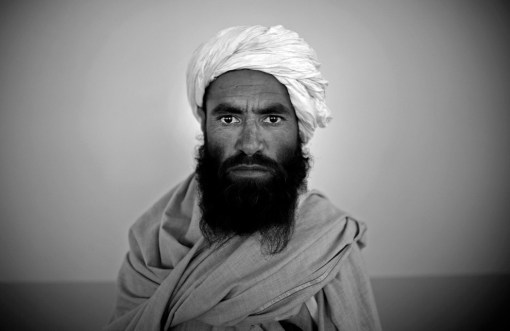
Alleged Taliban Member pic courtsey of Boston Globe

The Taliban are not just simply a bunch of illiterate thugs and bullies for they too often prove to be even worse than animals and barbarians.

Nowhere else in the world has a country experienced a more tragic and callous attack as the one on Christmas day, the birth day of Jesus, the Prince of Peace, than the one Pakistan experienced. In an attack described by President Obama as an “affront on humanity”, the cowards attacked helpless women, children and men while they queued up in food and aid distribution site such as the WFP depot, people who mind you are already suffering from the ongoing war, once in a lifetime floods, and the poverty and radicalism of a generation of desperate, hopeless and increasingly uneducated young men brainwashed by the Taliban and other radical Muslim extremists.

I am still disturbed by the disdain for basic human life that this new attack proves about this radical and extreme enemy. I imagine another one of their brain washed ‘walking zombies’, this time purportedly a woman suicide bomber, a first, even for Pakistan, killed in excess of 43 people in Bajur Pakistan at a World Food Program rations and aid storage and distribution center.

The Pakistani authorities and several domestic and foreign NGO’s who provide food aid at various centers in the area are temporarily closing these centers in order to have increased security. This means that aid distribution will come to a crawl and up to several hundred thousand people will now have to suffer at the hands of the attacker and their backers, the Taliban who have claimed responsibility. The authorities will have to ensure the safety of aid organizations and their personnel for both Pakistani and non Pakistanis relief workers involved in getting food, water and medicine to many people who are either suffering from the war or from the floods.

This catastrophe, although not of near Biblical proportions, does present both a security and humanitarian problem to both the government of Pakistan as well the suffering citizens in the northwest areas of the country where; Taliban fighters take sanctuary from the war in Afghanistan to regroup and return to the fight in warmer weather after the winter months as we have seen in years past. In fact, the reach of the Taliban in Pakistan is now not only reputed to be in the headquartered areas such as in Quetta Pakistan among the restive Baluchi population, now they are so often found to be in major cities like Karachi, Lahore, Rawalpindi, Peshawar and many points in between as they use their religious cover to endear themselves to certain impressionable, weakened or illiterate individuals that are so commonly found in throughout the country. 

Here are the some of the depressing facts. Pakistan, a nation approaching 180 million people at current estimates, perhaps only boasts to having about 60-65% of the male population at a literate level and at best, the females to be only at 40-45% of the total female population. Sadly, what this means is that 4 out of 10 Pakistani males are completely illiterate while up to as many as 6 out of 10 women are not able to read or write. Poverty breeds extremism since there is no support from any government programs or hope for any solution.

Time and time again throughout history and not just of Pakistan’s, we can see that the role of the church, synagogue or mosque in building the community is deeper than that of any government initiatives or other measures. The poverty for these young men along with the lack of jobs like for those individuals who are either very poorly paid construction site workers, household labor or servants, or beggars and sewer workers, a job sadly almost seems to have been reserved for Pakistan’s Christian community members as many can attest in Pakistan of their unfortunate and depressing state. One does not need to remind the reader of the plight of Asia Bibi (also Aasia and Ayesa), the Christian Pakistani woman who is still awaiting her fate in Pakistani courts after more than a year and a half since first being accused of a BS blasphemy charge and being in jail ever since. 

The medieval mentality of these radical extremists is not something that needs to be described as the evidence is here in this latest attack . Certainly anyone alive in any part of the world outside Pakistan and Afghanistan with eyes, TV, radio or newspaper within their reach can see plenty of near daily reminders of the carnage that many natives of these lands see, and to what they have painfully become accustomed.

 The Pakistani and Afghani Talibans have by all the various reports in newspapers and media sources over the last several years have pointed out to the fact that these groups all have too often similar goals. Not only that, these groups all share the same characteristics. The anti-Americanism, the pro-Wahaabi or Orthodox version of Islam, the need for justice for the ‘suffering of the Palestinian people’ , and the anti-colonial and often times anti western sentiment amongst these groups. The radicalization of certain Muslim groups be they Hamas and Hezbollah in the Mideast or Lashkar e taiba, or any other militant outfit operating in this part of the world as mentioned in this quote a few days before he passed, the late Richard Holbrooke of the US State department said that there are a range of militant groups such as the Afghan Taliban, the Pakistani Taliban, the Haqqani Network, Lashkar-e-Taiba, and that “an expert could add another 30.” His exact words are in quotations. 

The radical Muslim groups who take prey of the weaker, cannot think for themselves because they are scions of those abjectly illiterate segments of the society who are only educated in the madrassahs of Pakistan. This is the de facto way of educating Pakistan’s poorer children in little mosque schools which consist of nothing but Qu’ranic surahs and words of ‘wisdom’ or ‘interpretation’ by the local mullah of the said mosque/school. Most probably these children in many Pakistani madrassahs, especially the ones who live near the border areas within the NWFP or North West Frontier Province of Pakistan as this is the part of the country most affected by its close proximity to Afghanistan.

The people in this area of Pakistan, as well as their cousins in Afghanistan have been fighting one enemy or another for the better part of 100 years now. Whether to them the enemy be the British, during the height of the British Raj rule in India, or to the Soviets and the Red army and the Cold War, then in chronological order came the infighting after the Russian withdrawal as various Tajik, Afghani, Uzbek, Pakistani warlords came in to try and consolidate power to now us Americans and the Pakistanis who are our allies in this war.

Granted we do often hear that the Pakistanis can be doing more. By all accounts, the Pakistani government can do more in terms of fighting this war on terror. Numerous western reports and articles in respected dailies have alleged that small elements within both Pakistan’s Army as well as the spy agency, the ISI, have sympathizers to either the Taliban’s cause or they want to be on favorable terms with a powerful entity that most in Pakistan’s establishment believes that Pakistan will be dealing with and not a weakened Karzai once the US begins to draw down troops and end the war by 2014. If this is indeed true, then these ‘officers’ and supposed ‘leaders’ of Pakistan should realize that the colluding with the enemy, which in this case is the Taliban, is tantamount to treason, and the members of the armed forces of Pakistan as well as the intelligence community should not be assisting the enemies of all concerned: Afghanistan, Pakistan and the United States. 

Of course we must not kid ourselves and assume that only alleviating the illiteracy and poverty of the Pakistani youth will and bettering the education system of the Pakistani poor, particularly that of the refugees and residents of the northwest areas near the Afghan border. No there needs to be a study and introspection by the people of these two countries where this hatred breeds. To to get out of this darkness, the population needs be provided not only safety when delivering food aid and or medicine but aldo most importantly give them a book, a pen, and a paper. And teach them how to fish for knowledge with basic comprehension and deductive reasoning skills that can reject a radical and violent view of Islam too often manipulated by the clergy. This is the only way we can come to end this illiteracy of hate.

–Manzer Munir, is a proud and patriotic Pakistani American, an author, who plans to write a book on Pakistan, who is also a blogger and journalist, and as the Founder of Pakistanis for Peace  can be found at www.PakistanisforPeace.com, www.DigitalJournal.com ,www.Open.Salon.com, www.Examiner.com, as well at other websites as a freelance journalist and writer.

Aasia Bibi and Impurities in the Land of the Pure

By Manzer Munir for Pakistanis for Peace

The case of Aasia Noreen aka Aasia Bibi illustrates how far Pakistan has to go to secure freedoms for its religious minorities. Christians and Hindus are not the only minorities who are persecuted for their beliefs but it is also Muslim minorities such as the Ismailis, Ahmadis, and Shiites who are routinely harassed, discriminated and also killed. Sadly, it is the case of Aasia Bibi that has brought some much needed attention to Pakistan’s sad state of affairs towards the treatment of its religious minorities.

Several sections of Pakistan’s Criminal Code consist of its blasphemy laws and of all the Muslim countries of the world that have anti-blasphemy laws, Pakistan’s anti-blasphemy laws are by far the strictest. There is section 295 that forbids damaging or defiling a place of worship or a sacred object. Then there is section 295-A that “forbids outraging religious feelings.” There is also 295-B which prohibits defiling the Qu’ran and was originally punishable by life imprisonment but has since been amended to up to three years imprisonment.

No section of the blasphemy law is more controversial or harder to prove than Article 295-C, the law that Aasia Bibi is allegedly charged with having broken. In respect to prophet Muhammad, this statute states that ” Whoever by words, either spoken or written, or by visible representation, or by any imputation, innuendo, or insinuation, directly or indirectly defiles the sacred name of the Holy Prophet Muhammad shall be punished with death, or imprisonment for life and shall also be liable to a fine.”

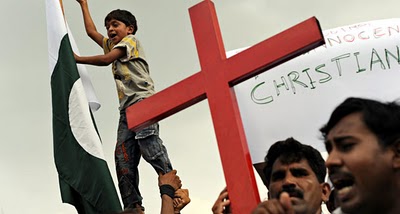
Aasia’s case and charges against her started almost a year and a half ago when there was a quarrel over a bowl of water in a dusty village in the heart of Pakistan’s Punjab province. A group of women were working the fields in the heat of the Pakistani sun when one of them, Aasia Bibi, dipped her glass in the communal bucket of drinking water to fetch herself and others a glass of water to drink and immediately was rebuffed by the other women who claimed that the water was now unclean as it had been touched by a non-Muslim. According to witnesses, instead of quietly bowing her head and taking the indignities, Aasia’s crime was that she mounted a strong defense of her faith and remained steadfast in her demeanor that she did nothing wrong. Too often in Pakistan, the blasphemy laws are used against religious minorities to settle personal vendettas and old scores according to Pakistan’s Human Rights Watch, a watchdog group monitoring the case.

The news traveled fast in Aasia’s village of Ittan Wali, in Punjab’s Sheikhupura district that a Christian woman had insulted the prophet. The local mullah got on the mosque loudspeakers, urging the “faithful” to take action against Aasia Bibi. In sad but familiar pattern, her defense of her faith was somehow twisted into an accusation of blasphemy, according to her family and others familiar with the case. Soon as a mob gathered outside her home ready to take the law into their own hands and handing out vigilante justice, the police moved in and took her into custody. But instead of protecting her, they charged her with insulting Islam and its prophet under the blasphemy laws.

And then on Nov. 8, after suffering 18 months in prison, Aasia Bibi was sentenced to death by a district court, making her the first person to be handed the death penalty in Pakistan under the blasphemy laws. Many before her over the years have been charged, but punishment had been commuted to lesser penalties than the death sentence imposed on Aasia Bibi. No concrete evidence was ever presented against Aasia, according to Pakistan’s Human Rights Watch. Instead, the district judge relied on the testimonies of three other women, all of whom were hostile towards her.

Unfortunately this is a common insult hurled at many of Pakistan’s 2 million Christians who make up just 1.59% of the total population. Often, Christians in Pakistan are discriminated and persecuted and many times only get the lowest of the low jobs such as street sweepers, janitorial and sanitation workers. In fact, in Pakistan, the term ‘Chura‘ has become synonym with the Christian community as it relates to an unclean person akin to how the untouchables or Dalit community is seen in India. In India however, the Dalits are not subjected to arcane state blasphemy laws geared towards religious minorities as in Pakistan or are threatened with their lives at the hands of the Hindu majority.

As discussed in a couple of my previous articles, Taliban 1o1, History and Origins and Taliban 201, The Rise of the Pakistani Taliban, the Islamization of Pakistan started under the late General Zia ul Haq of Pakistan who took over the leadership of the country through a military coup in 1977 when he hung the deposed and democratically elected Prime Minister Zulfiqar Ali Bhutto. Earlier in 1973, the 1973 Constitution of Pakistan had declared that “Islam shall be the religion of the Pakistan” and had systematically begun the process of restricting the participation of religious minorities in government and politics.

Before General Zia, there were only two reported cases of blasphemy. Since the death sentence was inserted in 1986 into the Penal Code for the blasphemy laws, this number has now reached 962 — including 340 members of the Ahmadi Muslim community, 119 Christians, and 14 Hindus. A close examination of the cases reveals the blasphemy laws are often invoked to settle personal scores, or they are used by Islamist extremists as cover to persecute religious minorities, sadly with the help of the state under these laws.

General Zia began this policy of Islamization of Pakistan in conjunction with his support for the war against the Russians and assistance to the Afghan Mujahedeen as well as the building of thousands of madrassahs or religious schools across Afghanistan and Pakistan which nurtured the young men into what later became the Taliban. Many of these blasphemy laws fully came into being under his reign, although some were around since as early as more than 100 years prior when the British drew up the Indian Penal Code of 1860 which was initially an ill foreseen aim at keeping the peace among the many fractured faiths of the subcontinent. For instance, section 295-A, which “forbids outraging religious feelings”, could have been applied against a Muslim who insulted a Hindu or a Hindu who taunted a Sikh or Christian or vice versa. However under Zia, the blasphemy laws were expanded and almost exclusively applied against Muslim minorities such as the Ahmadis, Islamilis and Shiites as well as against the Christian and Hindu populations.

Recently, a religious ‘leader’ came out and has offered over $6000 to anyone who can kill Aasia Bibi while she awaits her punishment in police custody. Outrage and denunciations on this case are coming from across the world as many people are appalled at the sad state of rights for religious minorities in Pakistan. The Pope has intervened also asking for clemency for Aasia Bibi from Pakistan’s President Asif Ali Zardari. Against all manner of reason and justice, Lahore’s High Court recently issued an order on November 29, 2o1o, preventing Zardari from exercising his constitutional authority to pardon Aasia Bibi.

In a country rife with violence and chaos and one that has become synonymous with terror the world over, the case of Aasia Bibi is yet another dark stain on the country’s image around the world. The Taliban and the extremist groups ravaging Pakistan can be explained as being a violent minority and do not and should not reflect on the nation as a whole as the majority of people in Pakistan are opposed to them and their views of Islam. But the blasphemy laws, for as long as they have stayed on the books in Pakistan and in the constitution, cannot and should not be excused in any shape or form. These laws need to be repealed and the constitution needs to be amended in an emergency manner so that Aasia Bibi and other religious minority citizens of Pakistan are not subjected to cruel and subjective laws that are almost exclusively used against minorities to settle scores, personal vendettas, and instill terror in less than 3 percent of the country that is not part of the religious majority of Sunni Muslims.

There needs to be international pressure placed on Pakistan from the United Nations, the United States, Europe and others to modify the constitution immediately and to pardon this 45 year old mother of five children. It is ironic that in a country where many people sympathize with Osama’s Al Qaeda and profess to hate the west with one hand, they decry with the other why not enough western aid has came to their country when it recently saw the worst flooding in its history. Can you blame the American citizens, the Europeans or citizens of any other Christian nation from hesitating to give aid to a country that not only plays a duplicitous game when it comes to terrorists and terror havens but also treats Christians and other religious minorities in the manner as in the case of Aasia Bibi?

The name Pakistan literally translates into “The Land of the Pure”. And as a child growing up I was told that the meaning of Pakistan’s flag is this: “The green is a traditional Islamic color and the crescent moon and star are also Islamic symbols. The white stripe represents the non-Muslim minority and religious groups of Pakistan and there place in the country.” In my view, as long as the nation sanctions and tolerates these utterly unjust and biased blasphemy laws, the religious minorities of Pakistan clearly have no place in this land of the ‘pure’.

-Manzer Munir, a proud Pakistani American and peace activist, is the founder of Pakistanis for Peace and blogs at www.PakistanisforPeace.com as well at other websites as a freelance journalist and writer.

Teen Held in Alleged Portland Bomb Plot

By Bob Drogin and April Choi for The Los Angeles Times

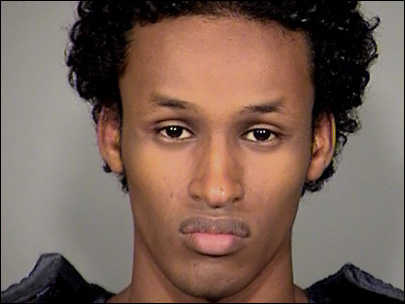
Reporting from Washington and Corvallis, Ore. — In August, the FBI says, 19-year-old Mohamed Osman Mohamud told two men who claimed to be Al Qaeda operatives that he had considered violent jihad since he was 15, and that he now was ready to commit mass slaughter.

Mohamud, a naturalized U.S. citizen from Somalia, said he wanted to set off a bomb during the lighting of a giant Christmas tree the day after Thanksgiving in an outdoor plaza in downtown Portland, Ore. The festive ceremony on the busiest shopping day of the year normally draws thousands of people.

“You know, the streets are packed,” said Mohamud, at the time a student at Oregon State University in Corvallis. When one of the men responded that “a lot of children” would attend, according to an FBI affidavit, he replied, “Yeah, I mean, that’s what I’m looking for.”

Mohamud — tall, thin and known for enjoying rap music and pickup basketball — reportedly shrugged off concerns about security at the event, explaining: “They don’t see it as a place where anything will happen…. It’s on the West Coast, it’s in Oregon, and Oregon’s like you know, nobody ever thinks about it.”

But the two men were undercover FBI agents, and audio and video recorders captured that conversation and many others like it. Mohamud now sits in federal custody — the latest alleged domestic terrorist to fall for an elaborate FBI sting — after months of secret surveillance and a grisly plot worthy of Jack Bauer.

A 38-page FBI affidavit released Saturday paints Mohamud as highly determined and deadly serious. He is charged with attempted use of a weapon of mass destruction, which carries a maximum sentence of life in prison. He is due in court Monday.

“The threat was very real,” said Arthur Balizan, special agent in charge of the FBI in Oregon. “Our investigation shows that Mohamud was absolutely committed to carrying out an attack on a very grand scale.”

According to the FBI, they arrested Mohamud after he dialed a cellphone that he thought would detonate a huge bomb — six 55-gallon drums, diesel fuel and a large box of screws — in a large white van parked near the tree lighting.

But the bomb was a fake built by the FBI, and the packed crowds who enjoyed a youth choir and a symphony orchestra at Friday’s holiday celebration at Pioneer Courthouse Square were never in danger, authorities said.

Mohamud appears to have joined a growing list of amateurs who have shown more fervor than smarts in their apparent plots against America. His alleged operation unfolded under the careful supervision, and with the direct assistance, of undercover FBI agents.

Aided by good luck and good intelligence, U.S. authorities have disrupted or uncovered at least 15 homegrown terrorist conspiracies over the last two years, often by penetrating the scheme at an early stage and carefully orchestrating the results.

Two domestic attacks have produced casualties — the shooting deaths of 13 people at Ft. Hood, Texas, and the slaying of an Army recruiter in Little Rock, Ark., both last year. Another plot, involving a failed car bomb in New York’s Times Square in May, was traced to a Pakistani-born U.S. citizen, who was arrested and pleaded guilty.

The alleged plot in Portland also would have carried the potential for mass slaughter.

According to the affidavit:

The FBI began tracking Mohamud in August 2009 when they discovered he was e-mailing a former Oregon student who was living in Pakistan’s lawless northwest region, where Al Qaeda has a stronghold. The Associated Press reported that the bureau was led to Mohamud by a tip from someone concerned about him.

By December, Mohamud was trying to visit the area. His friend, who was not named in court documents, urged him to contact an associate named Abdulhadi to arrange the trip. But Mohamud repeatedly mixed up the Hotmail address with the password, and the e-mails bounced back.

Apparently frustrated, Mohamud tried to fly to Kodiak, Alaska, on June 10. He already was on a no-fly list, however, and was stopped from boarding at Portland International Airport. He told the FBI that he had hoped to go to Yemen, but couldn’t obtain a visa or ticket, so had gotten a summer fishing job in Alaska instead.

Two weeks later, an FBI undercover agent contacted Mohamud and pretended to be Abdulhadi, providing an e-mail address that the FBI controlled. Mohamud and the agent met for the first time on July 30 in downtown Portland.

Mohamud boasted that he had written in support of violent jihad for an online, English-language propaganda magazine called Jihad Recollections, using the pen name Ibnul Mubarak.

The FBI later recovered the three articles, including one titled “Getting in shape without weights.” It seeks to introduce Pilates training to those preparing “physically for jihad.”

Mohamud also submitted an article to Inspire, an extremist magazine published by the media arm of the Al Qaeda affiliate in Yemen. Samir Khan, a Pakistani-American, allegedly ran Jihad Recollections from his parents’ home in Charlotte, N.C. He moved to Yemen last year and now is believed to edit Inspire.

Mohamud told “Abdulhadi” that he “initially wanted to wage war in the U.S.” The FBI agent told Mohamud he could not tell him what to do, but suggested several options, including going “operational” or becoming a shaheed, or martyr. Mohamud said he wanted to build a car bomb, but would need help.

At Oregon State, about 80 miles south of Portland, Mohamud had a benign profile. “He wasn’t the most social person, but he wasn’t anti-social,” said Omar Mohamed, president of the Muslim Student Assn. “He seemed like a pretty normal guy.”

Mohamud also was not known for being particularly pious. “From what I understand, he wasn’t the most religious person,” Mohamed said. “He didn’t regularly go to mosque.”

And unlike some Muslim students, he was known to attend college parties where alcohol was served, though it was unclear whether Mohamud actually drank.

On Aug. 19, Mohamud and “Abdulhadi” met again — in a bugged hotel room — and “Abdulhadi” brought another undercover FBI agent, who claimed to be an expert in explosives. Mohamud told them that he had begun thinking of jihad when he was 15.

The FBI affidavit then goes on to say how he described his plan to bomb the Nov. 26 event.

“They have a Christmas lighting and some 25,000 people that come,” he said. They should “be attacked in their own element with their families celebrating the holidays,” he added, quoting Osama bin Laden.

He said he had scouted where Black Friday shoppers streaming from nearby stores would likely gather in the busy outdoor square. The tree lighting was scheduled for 5:30 p.m., “so I was thinking that would be the perfect time.”

The trio met again Sept. 7. This time, the undercover agents asked Mohamud to buy the bomb components. They gave him $2,700 in cash to rent an apartment where they could all hide, and $110 to cover the cost of the bomb parts.

Over the next few weeks, the affidavit says, Mohamud mailed them a Utiliteck programmable timer, two Nokia cellphones, stereo phone jacks, a toggle switch and other gear, mostly from Radio Shack. One package also had a pack of gum and a scrawled note: “Good Luck with ur stereo system Sweetie. Enjoy the Gum.”

They held more meetings in early October in Corvallis, and Mohamud gave them a computer thumb drive with Google street-view photographs of his preferred parking spot, the attack site and escape routes. And he enthused again about his plan.

“It’s going to be a fireworks show… a spectacular show… New York Times will give it two thumbs up.”

According to the university, Mohamud stopped attending the school that month.

On Nov. 4, Mohamud and the two agents drove to a remote location near the coast west of Corvallis, supposedly to test the homemade bomb design. In reality, federal agents remotely detonated a device.

On the way home, he recalled the Sept. 11 attacks. “Do you remember when 9/11 happened, when those people were jumping from skyscrapers? … I thought that was awesome.” He said he hoped people attending the tree lighting would “leave either dead or injured.”

That afternoon, the undercover agents helped Mohamud record a video statement. Explaining that he wanted to dress “Sheik Osama style,” he donned a white robe and camouflage jacket. He then read a lengthy testimonial to jihad on camera. According to an FBI transcript of the statement, Mohamud, who was born in Mogadishu, briefly mentions his parents and suggests they had tried to steer him on another path in life. Arabic phrases are set off in brackets:

“To my parents, who held me back from jihad in the cause of Allah. I say to them [by Allah] if you — if you make allies with the enemy, then Allah’s power [the glorified and exalted] will ask you about that on the day of judgment, and nothing you can do can hold me back.”

In a follow-up meeting, their seventh, he gave the FBI agents hard hats, safety glasses, and reflective vests and gloves. He said they would wear the gear before the attack as a disguise, and put traffic markers around the parked van.

Abdulhadi, the first FBI agent, picked up Mohamud at about noon Friday, and they went to inspect the bomb. Built by FBI technicians, it appeared impressive. But the explosives, the detonation cord and the blasting caps all were inert.

“Beautiful,” Mohamud said.

At 4:45 p.m., they drove the van to Yamhill and Sixth Street and parked. Police had secretly kept the space open. Mohamud attached the blasting cap and flipped the toggle switch to arm the bomb, then put on his hard hat.

They walked several blocks, got in another car and drove to a pre-selected parking lot. Mohamud quickly dialed the number to detonate the bomb. When they didn’t hear anything, he got out of the car to look for a better signal, and FBI agents swarmed in for the arrest.

An Oregon State student directory listed an apartment address for Mohamud in the Portland suburb of Beaverton. A woman who answered the apartment door declined to speak with a reporter. Hanging to the right of the door was a heart-shaped sign with the words “Bless this home.”

When Mohamud attended Oregon State, he was not a member of the Muslim Student Assn. and rarely attended events held by the group. But Mohamed, the association president, recalls that Mohamud had recently attended “Night of the Crescent: Understanding Muslims,” a program aimed at showing that “Muslims in general are not scary people. They are neighbors, your best friends. We’re not all scary men with beards.”

That was Nov. 17. The next day, Mohamud met with the undercover agents to continue planning the attack.

Pakistanis for Peace Editor’s Note– We are thankful on this Thanksgiving Day weekend that the FBI folied this terror attack in Oregon and averted the loss of countless innocent lives. Both the authorities and Muslim Americans as a whole must keep vigilant about others like Mohamud in their midst who have extremist views and want to do us harm.

Time to Repeal the Blasphemy Law

By Nasim Zehra for The Express Tribune

In June 2008, Asiya Bibi, a Pakistani farm worker and mother of five, fetched water for others working on the farm. Many refused the water because Asiya was Christian. The situation got ugly. Reports indicate Asiya was harassed because of her religion and the matter turned violent. Asiya, alone in a hostile environment, naturally would have attempted to defend herself but was put in police custody for her protection against a crowd that was harming her.

However, that protection move turned into one that was to earn Asiya a death sentence. A case was filed against her under sections 295-B and C of the Pakistan Penal Code, claiming that Asiya was a blasphemer. Her family will appeal against the judgment in the Lahore High Court.

The Asiya case raises the fundamental question of how Pakistan’s minorities have been left unprotected since the passage of the blasphemy law. There may have been no hangings on account of the law but it has facilitated the spread of intolerance and populist rage against minorities, often leading to deaths. There is also a direct link between the Zia-ist state’s intolerance against minorities and the rise of criminal treatment of Ahmadis.

Cases have ranged from the Kasur case to the more recent Gojra case, from the mind-boggling row of cases between 1988-1992 against 80-year-old development guru Dr Akhtar Hameed Khan, to the case of the son of an alleged blasphemer, an illiterate brick kiln worker who was beaten to death by a frenzied mob.

Although doctor sahib faced prolonged mental torture, he was saved from the maddening rage that has sent to prison, and in some cases devoured, many innocent, poor and hence unprotected Pakistanis.

There is a long list, prepared by the Human Rights Commission of Pakistan, of unjust punishments handed down to Pakistani citizens whose fundamental rights the state is obliged to protect. Beyond punishments, minorities live in constant fear of being lethally blackmailed by those who want to settle other scores.

Yet most political parties have refrained from calling for the law’s repeal or improvement in its implementation mechanism. When, in the early 90s, I asked Nawaz Sharif sahib to criticise the hounding of Dr Khan, his response was a detailed recall of the story in which Prophet Muhammad (pbuh) went to ask after the health of a non-Muslim woman who repeatedly threw garbage over him. He condemned what was happening but said politics prevented him from doing so publicly. Later, General Musharraf, advised by other generals, reversed his announcement of changing the law’s implementation mechanism. Small crowds protested against it. Among politicians, very few exceptions include the PPP parliamentarian Sherry Rehman and, more recently, the ANP’s Bushra Gohar, who asked for its amendment and repeal.

Already sections of the judiciary have been critical of flawed judgements passed by lower courts in alleged blasphemy cases. Recently in July, Lahore High Court Chief Justice Khawaja Sharif quashed a blasphemy case against 60-year-old Zaibunnisa and ordered her release after almost 14 years in custody. According to the judgment, the “treatment meted out to the woman was an insult to humanity and the government and the civil organisations should be vigilant enough to help such people.” Surely the Bench should know the plethora of abuses that Pakistan’s minorities have suffered because of an evidently flawed law.

A message more appropriate, perhaps, would be to repeal the black law that grossly undermines the Constitution of Pakistan and indeed the teachings of Prophet Muhammad, one of the most tolerant and humane law-givers humankind has known. This environment of populist rage, fed by the distorted yet self-serving interpretation of religion principally by Zia and a populist mixing of religion and politics by a politically besieged Zulfikar Ali Bhutto, must be emphatically challenged. A collective effort to roll back these laws must come from parliament, the lawyers’ forums, the judiciary, civil society groups and the media.

Religious Leaders Denounce Anti-Muslim ‘Bigotry’ in US

By Carla Babb for The Voice of America

As a pastor from a small church in the U.S. state of Florida plans to burn Korans on September 11, Christian, Jewish and Muslim leaders stood side by side at the National Press Club in Washington Tuesday to show their solidarity against anti-Muslim acts of discrimination in the U.S.

A group of religious leaders from Christian and Jewish faiths joined together with the Islamic Society of North America for an emergency meeting to discuss a recent increase in anti-Muslim rhetoric and intolerance.

Baptist Pastor Gerald Durley spoke for the group. “As religious leaders in this great country, we have come together in our nation’s capital to denounce categorically the derision, misinformation and outright bigotry being directed against America’s Muslim community,” he said.

The group said people around the world have seen non-Muslim Americans show fear and contempt toward their Muslim neighbors–emotions that have generated from a national debate about a planned Islamic Center near the site of the September 11, 2001 terrorist attacks in New York City.

Catholic Cardinal Theadore McCarrick, Archbishop of Washington, said he wants the international community to understand that the U.S was built on the principle of valuing one another.

 “I have a great fear that the story of bigotry, the story of hatred, the story of animosity to others is going to be taken by some to be the story of the real America and it’s not. This is not our country and we have to make sure our country is known around the world as a place where liberty of religion, where respect for your neighbor, where love for your neighbor, where these things are the most prominent in our society,” he said.

A Christian pastor in Florida says his church will burn Korans on Saturday, the ninth anniversary of the terrorist attacks on the United States. He says the act serves as a protest against violent Islamist extremists. The local government has denied the church a permit to conduct the public burning. But the pastor of the Dove World Outreach Center has vowed to go ahead with his plan.

Rabbi Nancy Fuchs-Kreimer says the interfaith group strongly condemns the desecration of a sacred text. “We stand by the principle that to attack any religion in the United States is to do violence to the religious freedom of all Americans,” she said. Farhana Khera, president of the organization Muslim Advocates, was part of a separate group of religious leaders that met with U.S. Attorney General Eric Holder at the Justice Department. She said Holder also condemned the plan. “To quote the attorney general, he called the Gainesville plans, burning of Korans, idiotic and dangerous,” Khera said.

The plan has sparked protests in Indonesia and Afghanistan. Demonstrators in the Afghan capital burned the American flag and shouted “Death to America.” Islamic Society of North America President Ingrid Mattson says American Muslims must show the world that the U.S. is a place where all religions can live together in peace. “American Muslims have a unique ability to be this bridge and to show the Muslims who do not live in this kind of freedom that an open, pluralistic atmosphere where there are diverse religions together can really be good for everyone,” she said.

Tensions have heightened in America as the anniversary of the attacks approaches. In 2001, Islamist extremists killed nearly 3,000 people by ramming passenger planes into the twin towers of the World Trade Center in New York and the Pentagon.

For US Muslims, a 9/11 Anniversary Like No Other

By Rachel Zoll for The Associated Press

American Muslims are boosting security at mosques, seeking help from leaders of other faiths and airing ads underscoring their loyalty to the United States — all ahead of a 9/11 anniversary they fear could bring more trouble for their communities.

Their goal is not only to protect Muslims, but also to prevent them from retaliating if provoked. One Sept. 11 protest in New York against the proposed mosque near ground zero is expected to feature Geert Wilders, the aggressively anti-Islam Dutch lawmaker. The same day in Gainesville, Fla., the Dove World Outreach Center plans to burn copies of the Quran.

“We can expect crazy people out there will do things, but we don’t want to create a hysteria,” among Muslims, said Victor Begg of the Council of Islamic Organizations of Michigan. “Americans, in general, they support pluralism. It’s just that there’s a lot of misinformation out there that has created confusion.”

On Tuesday, the Islamic Society of North America will hold a summit of Christian, Muslim and Jewish leaders in Washington “to address the growing tide of fear and intolerance” in the furor over the planned New York mosque.

Islamic centers in many cities are intensifying surveillance and keeping closer contact with law enforcement. Adding to Muslim concern is a fluke of the lunar calendar: Eid al-Fitr, a joyous holiday marking the end of Ramadan, will fall around Sept. 11 this year. Muslim leaders fear festivities could be misinterpreted as celebrating the 2001 terror strikes.

“We’re telling everyone to keep their eyes open and report anything suspicious to authorities and call us,” said Ramzy Kilic of the Tampa, Fla., chapter of the Council on American Islamic Relations.

Other efforts around 9/11 aim to fight bigotry. Muslims will clean parks, feed the homeless, and give toys to sick children as part of Muslim Serve, a national campaign to demonstrate Islamic commitment to serving humanity.

Separately, groups are distributing ads to combat persistent suspicions about Islam. One spot, called “My Faith, My Voice,” features American Muslims saying, “I don’t want to take over this country.”

Sept. 11 anniversaries have always been challenging for U.S. Muslims, who have been under scrutiny since the attacks. This year, the commemoration follows a stunning summer in which opposition to a planned Islamic community center near the World Trade Center site escalated into a national uproar over Islam, extremism and religious freedom.

Islamic centers as far away as Tennessee and California faced protests and vandalism. In western New York, police said a group of teenagers recently yelled obscenities, set off a car alarm and fired a shotgun during two nights of drive-by harassment at a small-town mosque near Lake Ontario.

Usama Shami, board chairman for the Islamic Community Center of Phoenix, said a new mosque the congregation has been building for years drew little attention until recently, when some resistance emerged in the neighborhood and from some in city government. Recently, vandals broke into the new building, spilled paint on the floor and broke expensive windows.

Shami believes the ground zero dispute is partly to blame for the trouble, along with passions unleashed by Arizona’s strict new law that would require police to question people about their immigration status if there is reason to suspect they are in the country illegally.

“All of these issues came at the same time,” Shami said. “When things like that happen, I think they bring out the worst in some people.”

On Sept. 11 in Chicago, Zeenat Rahman, a 34-year-old native of the city, will visit a local nursing home with Muslim and non-Muslim friends to spend time with residents and help serve a meal.

“This is when people are going to look at our community, and when they do, what are they going to see?” said Rahman, a policy director for the Interfaith Youth Core, which promotes pluralism. “Sometimes, saying `Islam means peace,’ feels a little defensive and apologetic, whereas service is really core to our faith.”

Unity Productions Foundation, a Washington-area group that specializes in films about Islam and Muslim Americans, will hold an interfaith talk on Sept. 11 at the Washington Jewish Community Center.

Speakers include Monem Salam, the subject of a Unity Productions film titled, “On a Wing and a Prayer: An American Muslim Learns to Fly.” Unity recently launched groundzerodialogue.org, where visitors can view films and use them for community discussion about Islam in the U.S.

Salam, 38, of Bellingham, Wash., usually spends the Eid weekend with his wife and three young children, but said he persuaded his wife he had to participate in the event.

“I have to leave them and go across the country to answer questions about Islam,” said Salam, a portfolio manager who was 4 years old when his family left Pakistan for the U.S. “It’s unfortunate. It’s the time that we live in.”

Ground Zero Mosque Controversy Helps Give Rise to Islamophobia Across the US

By Manzer Munir for Pakistanis for Peace

A man was accused of attempted murder for his vicious knife attack on a Muslim New York City Cab driver Tuesday evening in what is being described as a hate crime by the authorities.

Michael Enright, a college student who also did some volunteer work in Afghanistan, was being held without bail on charges of assault and attempted murder as hate crimes.

In a criminal complaint filed by the New York Police Department, Michael Enright allegedly asked the driver if he was a Muslim. The cab driver, Ahmed H Sharif, an immigrant from Bangladesh, replied that yes he was indeed a Muslim. At this point, Mr. Enright is alleged to have uttered the customary Arabic greeting of “Aslaam-a-laikum” (Peace be with you) and brutally attacked the cab driver with a knife, slashing him badly on the face, hands and neck. During the attack, Mr Enright also uttered “Consider this a checkpoint” to the cab driver, all the while brutally attacking him with his knife.

 Besides a serious neck wound, the cab driver, Mr Sharif, suffered cuts on his forearms, face, and hands while trying to defend himself from the attacker.

Inexplicably, Einright had volunteered with Intersections International, a group that promotes interfaith dialogue between religions and an organization that has also supported the plans for the Islamic center and mosque 2 blocks from Ground Zero. He had also recently returned from Afghanistan where he volunteered to be embedded with a combat battalion so that he could document their experiences as soldiers that Einright wanted to showcase in an upcoming documentary.

Police stated that Einright was drunk and intoxicated at the time of the attack on Mr Sharif and it is not clear what his motive was for perpetrating the violence on the cab driver. There is growing speculation however amongst members of the American Muslim community as well as several civil rights organizations such as the ACLU and CAIR that the attack is a result of the growing Islamophobia and fear amongst the American public as a direct result of the Ground Zero Mosque controversy that has been brewing for weeks and has been front and center in the media and the American public for some time now.

The plan to build an Islamic community center and mosque two blocks from the 9/11 tragedy and the site of the World Trade Center towers became controversial as right wing groups seized on what they believed to be “an insensitive provocation towards the American public”. Muslim groups demanded their First Amendment rights of freedom of religion and pointed to the New York City council vote allowing them the permit to build as reasons for what they are doing as legal and in fact an effort to build bridges between Islam and other faiths following the events of September 11. However, the issue became nationally prominent and controversial by then as fanned by right wing blogs and ad campaigns, the majority of the American public became against the building of the mosque, according to recent polls.

Thankfully, the voice of reason in this whole debate has been none other than the billionaire Jewish mayor of New York, Mayor Michael Bloomberg. His stance and views in support of the mosque as a constitutionally protected right has been welcomed by Muslims as well as civil rights organizations and he should be commended for standing up for what is constitutionally the right thing to do. Briefly, President Obama also came out in support of the group’s right to build the mosque as being a constitutional right, before making statements the next day that “questioned the wisdom” of building it there.

Nonetheless, a link has been made by the right wing, no matter how unfairly, that Islam promotes terror and violence. This can be seen in the fact that the vast majority of Americans now have a negative and unfavorable view of Muslims. For the country to be even having a debate whether a group of Americans can build a house of worship is a testament to how far things have regressed.

No one would ever have thought that a constitutionally protected right such as that of freedom of religion would ever seem controversial. Many have argued that only the area around Ground Zero is off limits to Muslims and they are free to build their mosques elsewhere. This does not appear to be the case as mosques thousands of miles away from Ground Zero in California, Tennessee, Ohio and elsewhere across the country have now come under heavy opposition by local zoning boards and people in those communities. The fear and hatred of Muslims is becoming a growing problem as the Ground Zero Mosque controversy has began to fuel acts of violence against Muslims as seen in the attack on the NYC cab driver. It is a message that is being sent to the American public that Muslims in the United States do not deserve the same rights and privileges enjoyed by all others. In fact, there is an attempt to link all mosques to terror somehow, which is very offensive to millions of peaceful Muslims who abhor violence and who live decent hard working lives in their communities.

At first I was not happy to learn that Muslims planned to build a mosque near Ground Zero as I knew that this would become controversial. But as the opposition to mosques has grown across the nation, and not just for building near Ground Zero, but hundreds and thousands of miles away, it has become clear that this anti-mosque movement is not just about that hallowed area near the World Trade Center site but is in fact becoming an opposition to the religion of Islam as a whole.

This idea by the opponents of the mosque and the right wingers that somehow it is perverted and insensitive to build a mosque several blocks from Ground Zero is in reality only true if we buy into the belief that Muslims and Islam brought down the towers and not a handful of radical extremists of the religion of Islam. If we believe that mainstream Islam itself was responsible for all those deaths on American soil and not Osama Bin Laden and his Al-Qaida network, only then would building the mosque there be insensitive. But for us to somehow associate the whole religion of Islam of over 1.5 billion people by the actions of 19 terrorists is ridiculous.

It is my fear that attacks similar to the one a few days ago on the NYC cab driver will continue to grow as we allow an environment of hate to perpetuate and grow against a group of people. At the very least, this opposition to mosques across the country will certainly grow and continue to spread the notion that ALL Muslims are violent and terrorists. This is simply not true as the 5-7 million American Muslims and the 1.5 billion Muslims around the world will attest.

We must remember that we have a war on terror and not a war on Islam. Far away from Ground Zero in cities across the US as more and more mosques come under opposition in their communities, we must hold steadfast to our ideals, principles and to the US Constitution. As the best nation in the world, we have to defend our ideal and the basis of what makes us the best and that is the US Constitution. Speaking as an American and not even as a Muslim, I know that if we stop defending it for fear of being distasteful, insensitive, or inconsiderate, then we lose what makes us who we are as the freest nation in the world and we must not ever let that happen!

-Manzer Munir, a peace activist, and the founder of Pakistanis for Peace, is a freelance journalist who writes for www.PakistanisforPeace.com and other online journals.

Church Plans Quran-Burning Event

By Lauren Russell for CNN

In protest of what it calls a religion “of the devil,” a nondenominational church in Gainesville, Florida, plans to host an “International Burn a Quran Day” on the ninth anniversary of the September 11, 2001, attacks. 

The Dove World Outreach Center says it is hosting the event to remember 9/11 victims and take a stand against Islam. With promotions on its website and Facebook page, it invites Christians to burn the Muslim holy book at the church from 6 p.m. to 9 p.m.

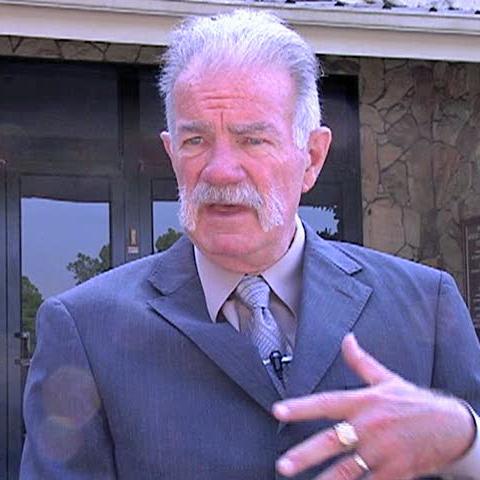
“We believe that Islam is of the devil, that it’s causing billions of people to go to hell, it is a deceptive religion, it is a violent religion and that is proven many, many times,” Pastor Terry Jones told CNN’s Rick Sanchez earlier this week.

Jones wrote a book titled “Islam is of the Devil,” and the church sells coffee mugs and shirts featuring the phrase.  Muslims and many other Christians — including some evangelicals — are fighting the initiative. The church launched a YouTube channel to disseminate its messages.

“I mean ask yourself, have you ever really seen a really happy Muslim? As they’re on the way to Mecca? As they gather together in the mosque on the floor? Does it look like a real religion of joy?” Jones asks in one of his YouTube posts.

“No, to me it looks like a religion of the devil.”

The Islamic advocacy group Council on American-Islamic Relations called on Muslims and others to host “Share the Quran” dinners to educate the public during the month long fast of Ramadan beginning in August. In a news release, the group announced a campaign to give out 100,000 copies of the Quran to local, state and national leaders. “American Muslims and other people of conscience should support positive educational efforts to prevent the spread of Islamophobia,” said CAIR spokesman Ibrahim Hooper in the release.

The National Association of Evangelicals, the nation’s largest umbrella evangelical group, issued a statement urging the church to cancel the event, warning it could cause worldwide tension between the two religions. “The NAE calls on its members to cultivate relationships of trust and respect with our neighbors of other faiths. God created human beings in his image, and therefore all should be treated with dignity and respect,” it said in the statement. Dove’s Facebook page, set up for the September event, has more than 1,600 fans. “Eternal fire is the only destination the Quran can lead people to, so we want to put the Quran in it’s [sic] place — the fire!” the page says.

But another Facebook group with more than 3,100 fans says it stands “against the disrespect and intolerance that these people have for the Muslim people” and encourages people to report Dove’s page to Facebook. Targeting another group it calls “godless,” the Dove center is also hosting a protest against Gainesville Mayor Craig Lowe, who is openly gay, on Monday at Gainesville’s City Hall. The group previously fought — unsuccessfully — to derail Lowe’s election campaign.

“We protest sexual perversion because the Bible protests it. What is acceptable to today’s leadership becomes acceptable to tomorrow’s society,” the church says in its blog entry about the event. Lowe and other government figures and media outlets received e-mails from the church about the event, The Gainesville Sun reported. Lowe isn’t concerned with Monday’s event.

“I’ve got other things to do,” he said, The Sun reports.

On the outreach center’s front lawn, alongside a sign reading “Aug. 2 Protest, No Homo Mayor, City Hall,” stands not just one, but three signs bearing the slogan “Islam is of the Devil.”  One of the signs — one reading “Islam” on one side, “Devil” on the other — was vandalized. On its blog last week, the church said the sign will be replaced. “This is private property and vandalism is a crime here in America,” the blog says. “In Islam, many actions that we consider to be crimes are encouraged, condoned or sheltered under Islamic teaching and practice, though. Another reason to burn a Quran.”

2 Pakistani Christians Killed At Courthouse

By Chris Brummitt for The Associated Press

Gunmen killed two Pakistani Christian brothers accused of blasphemy against Islam as they left court on Monday, a government minister and police said.

The men were chained together when the attack took place in the eastern city of Faislabad as they were being taken back into custody after their court appearance.

They were arrested a month ago after leaflets allegedly bearing their names and featuring derogatory remarks against the Prophet Muhammad were found in the town, said Shahbaz Bhatti, the minister for minority affairs. He said mosques in Faislabad had called for the men to be attacked.

Bhatti said he suspected the men were falsely accused of blasphemy by people with a grudge against them. Their families had maintained their innocence, he said.

The brothers were killed by two gunmen as they left court, said police officer Rana Ahmed Hasan. A police officer accompanying the men was wounded, he said, adding the killers escaped.

Pakistan’s blasphemy laws have been often criticized by religious minorities and human rights activists.

In its latest report on religious freedom in Pakistan, the U.S. State Department said the laws are often abused to settle local disputes and discriminate against minorities.

Muslims make up an estimated 97 percent of Pakistan’s 180 million people, most of them Sunni.

Bhatti said he believed the brothers were innocent.

“I personally don’t think that anyone who wrote derogatory things against Muhammad would put their names on the bottom,” he said. “This was just to settle a personal issue.”

Bhatti has long campaigned against the blasphemy laws, which were introduced President Gen. Zia ul-Haq in the 1980s to win the support of hard-line religious groups.

Repealing them now would likely meet opposition from the same groups, something that could cause unrest.

Breaking Pakistan’s Sufi Heart

By Mira Sethi for The Wall Street Journal

The two suicide bombers chose midnight on July 1, when the throng of worshipers in the ancient Data Darbar shrine in Lahore, Pakistan, was at its peak, to blow themselves up. Forty-five people were killed and 175 were injured. The attack on the 1,000-year-old center of Sufi Islam—the religion’s mystical, unorthodox face—was the first Taliban attack of its kind in Punjab province, the heartland of the country’s moderate, majority Barelvi sect.

The day after the attack on the shrine, Lahore’s students, politicians, traders and housewives took to the streets in loud, visceral protest. Major commercial centers were shut down, and in a rare show of sympathy, students from religious seminaries blocked roads and burned a few tires.

Pakistanis are now asking themselves: Is this America’s war or is it ours too? How can we fight it? Why did our military nurture these warriors for three decades and why has it turned against them now? How and when are we going to be at peace with our neighbors, especially India with which the military is obsessed and for whom these non-state actors were originally spawned?

To understand why this attack is so shocking, one must first look at Pakistan’s religious history. The majority of Pakistanis are Barelvis, who respect the inclusive traditions of the Sufis who brought Islam to the Indian Subcontinent. This is completely unlike the harsh version of Islam imported from Wahabi Saudi Arabia after the petro-dollar boom in the Middle East in the 1970s.

So the bombing of the Sufi shrine has symbolic resonance: Sufism has always thrived as a reaction to the politics of the state. In modern Turkey Sufism grew as a response to Ataturk’s secularism; in the Soviet Union, it grew as resistance to the state’s official policy of promoting atheism; in Algeria, it was a reaction to French colonialism. In Pakistan, Sufism has thrived as an alternative to the state-sponsored Wahabi Islam of the Deobandi jihadi sect.

If there’s one thing that Pakistanis are proud of, it’s their Sufi heritage. The shrine attacked in Lahore housed the tomb of one of the most famous Sufis to have ever lived, Ali Hajwiri, affectionately known by Lahoris as Data—one who facilitates the fulfillment of aspirations. Hajwiri wrote a seminal text in Sufi thought, the Kashf-al-Mahjub or “Unveiling of the Hidden.” An early example of Sufi doctrine, the book’s importance has grown over the centuries.

Although not a native of Lahore, Hajwiri decided to settle in the city for the last 34 years of his life at the end of the 11th century. Even then, Lahore’s fame as a center of culture was widespread. It was known for its old fortified city, a nourishing river, and a collection of free-spirited artists, artisans, and musicians. During his 34 years of residence, Hajwiri became a revered dervish, offering an inclusive mystical path to Lahore’s non-Muslim population, many of whom were subject to a punishing caste hierarchy.

Hajwiri’s shrine remained protected through centuries of rising and falling empires in the Punjab. Even the Sikh marauder Maharaja Ranjit Singh left the shrine untouched as he plundered many of Lahore’s riches.

In attacking Hajwiri’s shrine, the Taliban have grossly miscalculated. They had hoped to provoke anger at the Pakistani government for fighting America’s war. Instead they have managed to convince more and more Pakistanis that this is now their war, not just America’s.

Government in Pakistan Calls Meeting on Terrorism

By Jane Perlez for The New York Times

In an unusual sign of accord between the two major political parties, Prime Minister Yousaf Raza Gilani announced over the weekend that the government and the opposition would hold a national conference on ways to combat terrorism.

The announcement came days after 42 people were killed and hundreds were wounded when two suicide bombers struck the famed Sufi shrine Data Darbar on Thursday night in Lahore, the capital of Punjab Province.

The attack incited street protests in Lahore on Saturday, and it provoked complaints that law enforcement was not doing enough to protect holy sites from sectarian militant groups.

Nawaz Sharif, the leader of the main opposition party, Pakistan Muslim League-N,  deplored the attack at a news conference on Saturday. It is time, he said, for the government to hold a national conference on terrorism and open talks with the Pakistani Taliban, “who are ready to talk and ready to listen.”

Mr. Sharif, whose brother Shahbaz Sharif  is the chief minister of Punjab, did not specify which Taliban figures such talks should include.

Prime Minister Gilani agreed late Saturday to the proposal for a national conference, though it appeared unlikely that it would involve representatives of any militant groups. The conference will discuss how to better fight back against the militants, and show concern for the problem, politicians said.

The creation of such a conference was interpreted as an encouraging step by politicians who have called for greater leadership by the civilian government against terrorism. Until now the army has mostly led the effort against the Pakistani Taliban, fighting the militants in the tribal areas adjacent to Afghanistan.

The Pakistani Taliban denied responsibility for the Data Darbar attack. The shrine, one of the most popular in Lahore, is considered un-Islamic by followers of the Wahhabi and Salafi schools of Islamic thought that Taliban fighters generally adhere to.

Some religious scholars were so outraged by the attack on the shrine that they called for the resignations of Chief Minister Sharif and the Punjab law minister, Rana Sanaullah.

Earlier this year, Chief Minister Sharif was criticized by the national government, led by the more secular Pakistan Peoples Party, when he appealed to the Taliban to stop attacking Punjab on the grounds that the Muslim League and the Taliban had a common enemy in the United States. Since then, he has been accused of not doing enough to crack down on militant groups that have coalesced under the umbrella of the Punjabi Taliban.

The federal Interior Ministry said after the assault on the shrine that it had warned Punjab authorities of a possible terrorist attack in Lahore last week.

A rare joint statement by the prime minister and Nawaz Sharif on Sunday said now was “not the time for blame games.”

A similar conference on terrorism by the two main political parties was held in Islamabad two years ago, but those talks petered out and responsibility for tackling terrorism was handed to the army.

An effective national strategy by the civilian government would need stronger and more cohesive leadership and more money for the poorly financed police forces in the major cities, according to law enforcement officials.

Sectarianism Has Poisoned Pakistan

By Basim Usmani for The Guardian

The recent attacks on a prominent shrine in Lahore demonstrate how the unrest in Pakistan is caused by a minority of few who cannot tolerate the plurality of beliefs in Pakistan. The Tehrik-e-Taliban are lying through their teeth when they claim that they do not attack public places. It’s becoming more and more apparent that these militants aren’t resisting American hegemony; this a war to determine Pakistan’s future and, by proxy, the future of Islam.

Whether the Tehrik-e-Taliban actually arranged the bombers’ suicide belts is irrelevant; they have created a domino effect that’s likely to spread from commercial capitals such as Lahore to cities with historic shrines and Pakistani historical sites, such as Multan, or Taxila.

Unlike Baghdad, where violence between Islamic sects is a product of the war America is waging, the onus of last Thursday’s blasts falls squarely on us, the citizens of Pakistan. We have been complacent about sectarianism for too long.

A good friend who works for a transportation company told me in 2007 that in villages along the highways to Waziristan where the Taliban had seized control were the bodies of butchered Shia Muslims. That year, Lahore’s public was too busy mobilising about the judiciary and President Musharraf to pay the violence any mind.

Sectarianism has a brutal history in Pakistan that existed long before militants in Afghanistan began calling themselves the Taliban. I remember as a child in Lahore the broadcasts of gun violence outside Shia houses of worship during the early 1990s.

Many Pakistanis feel that the attacks on two Ahmadiyya mosques last May, where gunmen unloaded bullets and grenades on Friday prayer-goers, were unprecedented. Certainly the Ahmadiyya community doesn’t think they are.

To have a Pakistani passport requires citizens to assert that they are not part of the Ahmadiyya community. In a sense, holding that passport also makes you complicit in the blasts that killed dozens in Lahore’s most famous Sufi shrine last week. Our inability to understand that this war is about national identity is rooted in the same complacency.

We are OK with the state deciding for us who is or isn’t Muslim. In this regard, the Pakistani government has the weakest moral fibre in taking on this growing strand of extremism. It is hypocritical to fight the Taliban in Waziristan if we are okay about denying citizenship to millions of Muslims born in Pakistan.

It may sound extreme of me, but we should be jailing clerics in Pakistan that give edicts declaring believers to be non-Muslim or anti-Pakistani. It may seem extreme to an American that writers who deny the Holocaust are imprisoned in Europe, but extreme contexts call for extreme measures.

Pakistanis must stress how being born or raised in their country is enough to be Pakistani; laws preventing Ahmadis from referring to themselves as Muslims were amended to the constitution by Zulfikar Ali Bhutto in the 1970s.

I remember being uneasy at my desk in middle school when I was studying at Aitchison College in Lahore, and some of my classmates were getting bullied for having marks on them after returning from Shia processions during Muharram. Pakistanis themselves are the only ones capable of stamping out this discriminatory culture.

Some proactiveness is necessary on our part to make it clear that mystics, Shias, Ahmadis and Christians are all fellow Pakistanis. When you are pulled over by street police in any major Pakistani city, the first bit of information the police ask for is your family name. From one name your caste, religious beliefs and affluence is determined.

This came as a shock to all of my family who have emigrated away: that collectively our stock in our own nationhood has plummeted so. In a sense, these problems are all accrued debt we’ve accumulated for being so complacent. In the light of our bigoted constitution and deterministic culture we have to – for ourselves – decide that being Pakistani is enough to make us all countrymen. Otherwise, we might as well just refer to ourselves as Taliban, Muslim extremists, Islamic militants, and so forth.