Archive for the ‘ Hate Crime ’ Category

Unhappy Anniversary, Guantanamo!

By Carlos Harrison for The Huffington Post
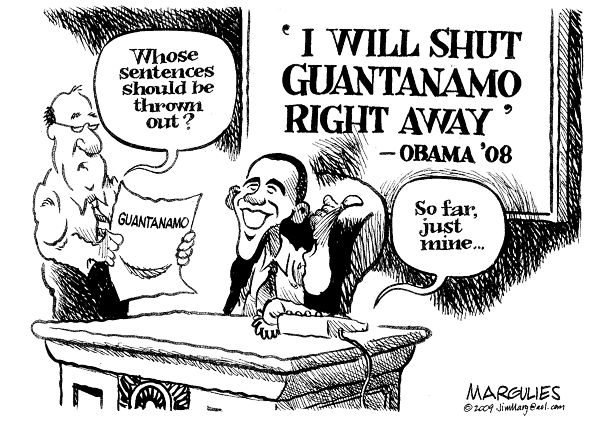
It’s been a troubled – some might say, tragic – 10 years for the detention camps at the Guantánamo Naval Base in Cuba. And as they slouch into their 11th year on January 11, there’s no end in sight.

“We say to ourselves, in sort of gallows humor: Guantánamo will close when the last detainee there dies of natural causes,” Jeremy Varon, an organizer with Witness Against Torture, told the Huffington Post on Wednesday.

Franz Kafka himself would have been hard-pressed to concoct a more bewildering and brutal contradictory reality. Allegations over the years have included sexual humiliation, waterboarding, and the use of dogs to scare detainees. Released detainees reported being locked in in sensory deprivation cells, beaten repeatedly, and forced to race while wearing leg shackles. If they fell, they were punished.

If it sounds like Abu Ghraib, it should. The U.S. Senate Armed Services Committee found that intelligence teams transported the “aggressive” interrogation techniques perfected at Guantánamo to Afghanistan and Iraq.

The link between Cuba and the war zones, the New York Times reported, was Maj. Gen. Geoffrey D. Miller, then the head of detention operations at Guantánamo. At his insistence, the Times wrote, the Defense Department sent training teams on 90-day tours in Iraq, showing the soldiers there the techniques utilized on the island. The timing, Amnesty International points out, happened to coincide with when the worst abuses occurred at Abu Ghraib.

Thanks to reports like those, the detention camps have become an international symbol of what democracy and justice are not. They’ve been plagued by suicide attempts by desperate detainees and condemned by the United Nations, human rights groups, even former U.S. Secretary of State Colin Powell, who called for the immediate closing of the camps in 2006.
“The value of holding prisoners there was unclear, but the price we were paying around the world for doing so was obvious,” Powell said.

The camps were created in 2002 as a deliberately “extraterritorial” place to extract information from captives in the “War on Terror.” By putting them at Guantanamo, the United States, meant to be beyond the jurisdiction of both the Geneva Conventions and U.S. courts.

That didn’t put them outside the range of public opinion. The camps sparked outrage on day one. Pictures flew around the world of shackled and handcuffed detainees on their knees on the ground with black hoods over their heads and mittens on their hands.

The indignation grew as the first 20 captives went into wire cages at Camp X-Ray, described by critics as “kennels.” Soon, though, the detainees were transferred to permanent cells, and Camp X-Ray was closed.

But the human rights complaints continued, even from some of America’s closest allies.
In 2006, speaking on BBC radio, British Foreign Secretary Jack Straw said:

“I am absolutely clear that the U.S. has no intention of maintaining a Gulag in Guantanamo Bay. They want to see the situation resolved and they would like it other than it is. However, that is the situation that they have.”

In all 779 detainees have been held in the camps. Eight have died there, including six suicides. One man died of colon cancer, another after an apparent heart attack.

And, in the 10 years since it opened, only six detainees have been convicted of war crimes.
The last 171 still there are caught at the conflicting conjunction where bureaucracy, politics, and military regulations collide – offering little chance, at least for the foreseeable future, of gaining their release.

Forty-six are classified as “indefinite detainees,” held without charges, but considered too dangerous to be released; 89 are eligible for release or transfer but in perpetual custody because there is no place to send them. Five more have been convicted of war crimes; and six face trial – perhaps this year – for the 9/11 attacks and the October 2000 U.S.S. Cole bombing.
That makes Guantanamo, as Carol Rosenberg of the Miami Herald described it in a piece for Foreign Affairs, “arguably the most expensive prison camp on earth, with a staff of 1,850 U.S. troops and civilians managing a compound that contains 171 captives, at a cost of $800,000 a year per detainee.”

But even the budget conscious Congress resists closing the base. In fact, it has used its spending oversight powers to thwart the president’s efforts to do just that. It has used that authority to prevent the trial of detainees on U.S. soil and to block the purchase of a dedicated prison facility in Illinois to house transferred detainees.
And no one wants to risk having a released captive later become involved in an act of terrorism or insurgency, which happened with at least one-fourth of the 500 detainees set free under President George W. Bush.

So, the captives remain in Guantanamo. Until when no one knows.
As Marc Thiessen, a fellow at the American Enterprise Institute, told CNN:

“We have the right to continue to hold them as long as al Qaeda is at war with us.”

Having the right, though, doesn’t make it right, said Geneve Mantri, government relations director for national security, Amnesty International.

Speaking to The Huffington Post on Wednesday, he said the 89 cleared for release by both the Bush administration and a review ordered by President Obama, “represent little or no threat.”

“This has always been sold as a question of the worst of the worst and the reality is that a large number of the people that have been picked up, I hate to say it are in the insignificant and rather pathetically sad story category,” he said.

“There is a minority of people (in the camps) that no one doubts are truly dangerous. That minority of people should be placed in front of a US court. Because we have the most efficient system, the fastest and cheapest and best system for looking at all the evidence. You produce it all in a court of law. Have a real defense — an internationally recognized defense. And then put them away forever.”

Moment Terror Suspect, 25, Arrested Over ‘Bomb Plot’ in Florida Was Caught on Camera Brawling With Christian Protesters

As Reported by The Daily Mail

A Muslim accused of plotting to bomb locations in the U.S. has apparently been identified as the same man assaulting Christian protesters in a video posted online.

Sami Osmakac, 25, an immigrant from Kosovo, was said to have been planning an attack in Tampa, Florida using a car bomb, machine guns and other explosives.

In the first video clip, a man who appears to be Osmakac, confronted Christian protesters and assaulted one outside the Tampa Bay Times Forum – leaving the man bleeding from the mouth. He was later arrested by police.

In the second video with the title ‘Convert to Islam NOW! To all Atheist Christian (Non-Muslims)’ a man who looks and sounds like Osmakac threatened members of other religions.

The message from Abdul Samia, believed to be one of Osmakac’s aliases, warns viewers to convert to Islam ‘before it is too late’.  The YouTube videos were posted in December 2010 and in April last year.

Sami Osmakac, a naturalized U.S. citizen, was charged yesterday with one count of attempted use of a weapon of mass destruction.

Osmakac, of Pinellas County, Florida, allegedly bought explosives and guns from an undercover FBI agent, which had been made unusable. He allegedly told the officer that he wanted to ‘die the Islamic way’ in attacks at locations in Ybor City and South Tampa.

After being tipped off in September, the five-month investigation culminated with a sting operation at the weekend. Shortly before his arrest he made a video of himself explaining his motives for carrying out the planned attack, authorities said.

In the eight-minute video he is seen cross-legged on the floor with a pistol in his hand and an AK-47 gun behind him. He said in the video that Muslim blood was more valuable than that of people who do not believe in Islam, according to a criminal complaint.

Osmakac allegedly added that he wanted ‘payback’ for wrong that was done to Muslims and bring terror to his ‘victims’ hearts’ in Tampa.

A confidential source allegedly told federal officials in September 2011 that Osmakac wanted Al Qaeda flags. Two months later he talked with the source and ‘discussed and identified potential targets in Tampa’ that he wanted to attack, authorities said.

Osmakac allegedly wanted help getting the firearms and explosives for the attacks, and was put in touch with an undercover FBI employee.

Last month Osmakac met with the agent and allegedly told him that he wanted to buy weapons including an AK-47-style machine gun. He also allegedly wanted Uzi submachine guns, high capacity magazines, grenades and explosive belt.

Osmakac gave the agent a $500 down payment for the items in a later meeting and outlined his intentions to build bombs, authorities said.

Osmakac allegedly said at another meeting earlier this month that he wanted to bomb night clubs, a business and the Operations Center of the Hillsborough County Sheriff’s Office. It is also believed he wanted to blow up an Irish pub and Starbucks coffee shop.

-Pakistanis for Peace Editor’s Note– We are glad that the authorities apprehended Sami Osmakac before he was able to allegedly carryout any of the attacks that he is accused of planning. Congratulations to the Hillsborough Police Department in Tampa along with the federal authorities. Loss of any life and certainly innocent loss of life goes against the fundamental nature of our being at Pakistanis for Peace. Bring a Pakistani American as well as a Muslim American, attacks attempted or carried out by other American Muslims such as Faisal Shahzad or even Maj. Nidal Hasan, and now Sam Osmakc, hits at the heart of our peaceful American dreams. As a result of the whacked out few, we as a whole are marginalized. But until these terrorists and wanna be terrorists are all taken off the street, the war on terror must go on~

America’s Dark Age of Islamophobia

By Tony Norman for Philly.com

Muslims really thought they were doing the world a favor by pulling Europe and its mostly illiterate Christians out of the Dark Ages. But just because they foisted algebra, trigonometry, optics, astronomical charts, the classics, Arabic numerals, advanced surgical techniques, perspective in art, the lute, and artichokes on the world – while the Christian kings of Europe were smothering free inquiry – we’re not about to give them any credit a thousand years later.

Particularly in America, we remain ignorant of Islamic contributions to Western life. We suffer from a profound cultural amnesia when it comes to remembering our millennia-long debt to our Muslim brethren. But as the song goes, what has Averroes done for us lately?

Americans are so used to thinking of Muslims as an exotic “other” that many fail to realize they’re an inextricable part of who we are and have been since the nation’s earliest days. Unfortunately, too many non-Muslims see them as Manchurian candidates crouching in the shadows with explosive vests, waiting for the signal to wage terror on America’s malls. If you ask the average American citizen about Islam’s role as an incubator of Western ideas, expect stares of incomprehension.

If this ignorance were restricted to the margins of society, it wouldn’t be half as embarrassing. But Islamophobia, like its twin brother, anti-Semitism, has a way of injecting itself into the cultural discourse. Contempt for Muslims remains an acceptable prejudice for millions who continue to equate the religion with terrorism.

Recently, TLC began running an innocuous reality show called All-American Muslim. It documents the lives of five Muslim families in a Detroit suburb that boasts the highest concentration of Arabs and Muslims in America. The 99 percent of Americans who don’t share their faith are invited to explore the possibility that these very misunderstood Americans don’t have horns or drink the blood of infant Christians and Jews.

It didn’t take long for a conservative group calling itself the Florida Family Association to complain that the TLC series is “propaganda that riskily [sic] hides the Islamic agenda’s clear and present danger to American liberties and traditional values.”

Of course, there’s nothing on the show to indicate a subversive religious agenda, other than its blatant attempt to portray Muslims as humans.

Lowe’s Home Improvement couldn’t be bothered with such nuances. It pulled its ads from the show and issued the wimpiest justification of corporate cowardice ever: “Individuals and groups have strong political and societal views on this topic, and this program became a lightning rod for many of those views.”

Ted Lieu, a state senator in California, called Lowe’s capitulation to intolerance “un-American” and is considering calling for a boycott of the retailer. Lowe’s isn’t worried about a boycott from America’s Muslims, who number fewer than two million, but a sympathy boycott by fair-minded Americans of all faiths and political persuasions would be a nightmare for the company.

Crawling out of this depressing sequel to the Dark Ages won’t be easy.

Pak Bans Dirty Texting: Just Say No To Monkey Crotch

By Shivam Vij for FirstPost

You cannot SMS ullu chod in Pakistan anymore. Nor can you SMS monkey crotch if you had any reason to do so.

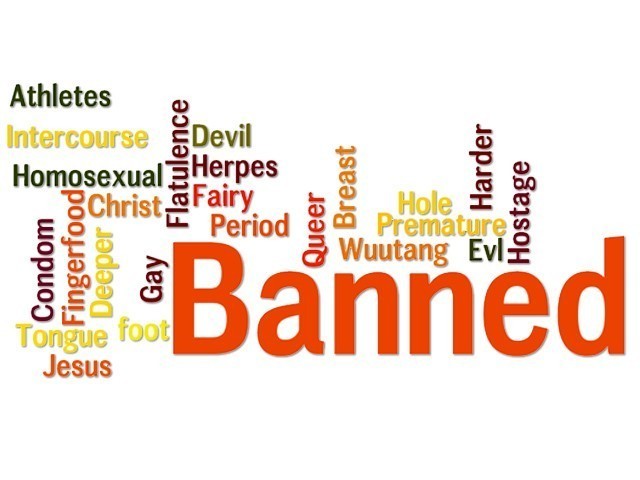
The Pakistan Telecommunication Authority (PTA) has banned 1,795 expletives on SMS, ordering telecom companies to filter out SMS-es containing these offending words with effect from 21 November 2011. The letter includes a list of 1,109 English words, more pornographic terms than expletives, and another 586 Urdu words which are more colourful sexual expletives of the standard South Asian kind rather than the plain garden variety pornography.

A letter from the PTA, dated 14 November and signed by its Director General (Services), Muhammed Talib Doger invokes the “Protection from Spam, Unsolicited, Fraudulent and Obnoxious Communication Regulations, 2009″ to pass the order.

The Pakistan Telecommunication Authority (PTA) has banned 1,795 expletives on SMS, ordering telecom companies to filter out SMS-es containing these offending words with effect from 21 November 2011. Vivek Prakash/Reuters
The Pakistani Twitterverse was on fire last night as the two lists make for hilarious reading. The English list begins with A.S.S. and ends with yellowman. Some words sound harmless (crap and crappy), others bizarre (Jesus Christ, flatulence, murder, monkey crotch). Many are commonly used obscene words (“FUCK YOU”) and care has been taken to account for alternative spellings (biatch, muthafucka). While many spelling variations of ‘masturbation’ are on it, the correct spelling is not. Most words seem to be designed to prevent ‘sexting’ or sending sexually explicit texts (sexy, lick me, do me, S&M, lotion and porn). The list comes down on anal sex as much as vaginal sex. But it isn’t just sex. By banning drunken they perhaps hope to reduce alcoholism.

The Express Tribune points out, “While much of the list contains expletives, a number of words to be banned include medical terms, terms used by particular minority groups, common words from the English language and rap group, Wu Tang Clan.” The ‘medical terms’ include athelete’s foot, breast, intercourse, condom and period. The ‘daily use’ terms include hole, hostage and harder. Words like gay and homosexual don’t surprise but it’s curious why wuutang raised the censor’s hackles.

In fact, thanks to this helpful compendium many Pakistanis are finding their expletive vocabulary enhanced. @UroojZia asked what bumblefuck and ladyboog meant.

@Zakoota said the lists should be required reading in schools to give children the vocabulary to describe politicians and cricketers. With the amount of phrases that include the word “BUTT”, @KhaLeak wondered if Aijaz Butt was banned as well.

The Urdu list has standard gaalis also popular in north India, but many of them may not be familiar to Indians (such as “dani mani fudi chus“). Some are unfamiliar even to Pakistanis. @FurhanHussain said the presence of Punjabi gaalis in the Urdu list amounted to cheating, but others noted that there is no list of Sindhi and Punjabi language expletives, a grievous omission given that the Punjabi language is particularly full of colourful expletives.

“Padosi ki aulaad” doesn’t sound very obscene. There are some 15 spelling and gender variations of ‘kanjar’, a popular Pakistani expletive meaning dancing girls, often also used to describe cross-dressing or men dancing like women. Some of the Urdu ones are quite creative. There are four variations of “Chipkali ke gaand ke pasine” and some are inexplicable (“Nimbu sharbat“, “carrom board”) and some are zoologically bizarre (“ullu chod” or owl fucker). Some are rather vanilla everyday terms like “Buckwaas” (nonsense) and “Bewakoof” (foolish).

There were so many oddball terms in there at first people though it was a spoof. However, Shahzad Ahmad, an internet rights activist who tweets as @bytesforall, said he confirmed with a source at the PTA that the list was real. The Express Tribune story referred to above has been updated to quote a PTA spokesperson who denied knowledge of any letter and said that the PTA “does not take such decisions and only passes on the instructions to licensees once a decision is taken by a ministerial committee.” The PTA, which is also in the news for directing ISPs to block access to 1,71,261 pornographic sites, is said to have convened a meeting this morning to discuss the uproar.

It’s unclear how telecom companies who cannot even filter out commercial spam will be able to handle this new morality burden. But Pakistanis, used to growing online censorship administered by the PTA, took little time to come up with the obvious workaround to the SMS censorship. The offending words are numbered on the blacklist. Many including @SamadK came up with the idea, “Now instead of typing the whole gaali you just need to send the number. Thank you PTA for making is even lazier.”

Many have already started testing it: @KhanDanish tweeted “I hope Imran Farhat 143 doesn’t do 471 in Friday’s match. #Urdu.”

The Urdu list is here and the English list here.

In the Name of ‘Honour’: Brazen Shikarpur Killings Shake Hindu Community

By Sarfaraz Memon for The Express Tribune

Most shops in Taluka Chak in Shikarpur were open on Wednesday but there was an uneasy calm. Three Hindu men are dead and no one knows the whereabouts of Seema Bhayo, the girl at the centre of the storm. Residents fear that she may also have been killed. The police have no clue.

It is a simple tale of a love affair that turned tragic. The president has ordered an inquiry into the matter. Not to be outdone, the Sindh home minister has suspended the SHO of the area but neither of these moves brought any comfort to the families who lost their loved ones.

The brutal attack took place on Monday, the first day of Eid, when four armed men on two motorcycles barged into the house of one Naresh Kumar, where he and his friends Dr Ajeet Kumar, Dr Satya Pal and Ashok Kumar were present. The intruders opened fire and killed Ashok and Naresh on the spot, injuring  Dr Ajeet Kumar and Dr Satya Pal.

Dr Ajeet Kumar later died of his wounds at a Sukkur Hospital, more so because no one was willing to take him to the hospital. The policemen who were supposed to guard the house were nowhere to be seen. They did not turn up that day, despite the fact that they had been stationed on fear that such an attack was imminent.

The “crime” that these four men apparently committed was that they intervened on behalf of two young men of their community who had been apprehended two weeks earlier and charged with criminally assaulting a Muslim girl. The real story, as told by area residents, was that Seema and Sandeep Kumar fell in love and were caught while they were meeting at the house of Sandeep’s friend, Nakash Kumar.

This correspondent also visited Qazi mohalla where Seema’s home is situated on the right side of the road and the shops of Sandeep and Nakash were on the left side. A neighbour said that Seema and Sandeep used to meet at Nakash’s house. On that fateful day, area residents saw them going in and raided the house and thus the affair was revealed.

It was the promise of a better life which attracted Seema towards Sandeep, said another resident, adding that Seema’s father Nazir Ahmed Bhayo was a mason by profession. When the couple was caught, the Hindu community intervened to settle the matter. President of the Hindu Panchayat in Chak, Prem Kumar, said “We went to the Bhayo elders and told them that we are ready to pay any fine to reconcile the matter.”

Area resident Moulvi Allah Bux confirmed that the Hindu community were trying to reconcile with the Bhayo clansmen and for this they had met Sardar Babul Bhayo, who gave them a positive response and told them that the date of the reconciliatory meeting would be announced on the second day of Eid. But before the meeting could be held, the murders were committed.

While Babul Khan Bhayo was not available, clan chieftan Sardar Wahid Bux Bhayo  said that it was the Hindu community which had resorted to aggression by sexually assaulting a Bhayo girl. According to him, the three Hindus were killed in retaliation for that incident. But he added that he condemned both incidents.

On Tuesday, hundreds participated in the last rites of the three men. The rituals were performed near the Sadhu Bela temple in Sukkur.

Following the notice by the president, the Chak police has swung into action. During raids in different localities, they have apprehended more than 25 people. DIG Larkana Sain Rakhiyo Mirani said that the murder was an act of terrorism. But the Hindu community maintains that the real perpetrators of the crime have so far not been arrested.

Satirical Song, a YouTube Hit, Challenges Extremism in Pakistan

By Salman Masood for The New York Times


A satirical song that takes a tongue-in-cheek swipe at religious extremism, militancy and contradictions in Pakistani society has become an instant hit here, drawing widespread attention as a rare voice of the country’s embattled liberals.

The song, “Aalu Anday,” which means “Potatoes and Eggs,” comes from a group of three young men who call themselves Beygairat Brigade, or A Brigade Without Honor, openly mocking the military, religious conservatives, nationalist politicians and conspiracy theorists.

Their YouTube video has been viewed more than 350,000 times since it was uploaded in mid-October. The song is getting glowing reviews in the news media here and is widely talked about — and shared — on social networking sites like Twitter and Facebook.

The name of the band is itself a satire of Pakistan’s nationalists and conservatives, who are often described in the local news media as the Ghairat Brigade, or Honor Brigade.

Local musicians have produced work in the past vilifying the West, especially the United States, but rarely do they ridicule the military or religious extremists, and none have had Beygairat Brigade’s kind of success.

Sung in Punjabi, the language of the most populous and prosperous province, the song delivers biting commentary on the current socio-political milieu of the country, in which religious radicalism and militancy have steadily risen over the years and tolerance for religious minorities is waning.

Just this year, a governor who opposed Pakistan’s contentious blasphemy law was killed by one of his guards. The assassin was then celebrated by many in the country, including lawyers who greeted him with rose petals and garlands.

The song rues the fact that killers and religious extremists are hailed as heroes in Pakistan, while someone like Abdus Salam, the nation’s only Nobel Prize-winning scientist, is often ignored because he belonged to the minority Ahmadi sect.

“Qadri is treated like a royal,” wonders the goofy-looking lead vocalist in the song, referring to Malik Mumtaz Qadri, the elite police guard who killed the governor of Punjab, Salman Taseer, in January after he challenged the blasphemy law.

Another line in the song, “where Ajmal Kasab is a hero,” makes a reference to the only surviving Pakistani gunman involved in the 2008 terrorist attacks in Mumbai, India. Still another line, “cleric tried to escape in a veil,” alludes to the head cleric of Islamabad’s Red Mosque — which was the target of a siege in 2007 by the Pakistani government against Islamic militants — who tried unsuccessfully to break the security cordon by wearing a veil.

The song even makes fun of the powerful army chief, Gen. Ashfaq Parvez Kayani, for extending his role for another three years.

Potatoes and eggs “never tasted so good,” wrote Fahd Husain in a commentary on Tuesday in The Daily Times, a newspaper based in Lahore. “They will always be credited for being politically incorrect when most needed, and giving voice to all those Pakistanis who live in fear.”

The popularity of the song on the Internet has made it a sensation across the border in India as well, surprising the band members, who have been incessantly asked whether they feel they have put their lives in danger by ridiculing the mighty.

There are certainly enough provocations to rile nationalists and conservatives. At one point in the music video, the lead singer holds a placard that reads, in English: “This video is sponsored by Zionists.”

The band members chose to upload the song on YouTube instead of handing it to television networks because they said the work was too offbeat and might be censored. Not surprisingly, some have criticized the song and its taunts as pedestrian and in bad taste.

“We were not expecting such a huge response,” said Ali Aftab Saeed, 27, the lead vocalist, who lives in Lahore, a city that is often considered the country’s cultural capital.

He said the assassination of Mr. Taseer was the inspiration for the song and its lyrics.

Resistance poetry and literature are not new to Pakistan, and they raised spirits during the somber years of military dictatorships.

During the protest rallies of the seminal lawyers movement in 2007, when they led the campaign to oust the president, Pervez Musharraf, the lawyers would sing and dance to a poem written by Faiz Ahmad Faiz, considered a giant of Urdu literature. Habib Jalib, another famous Pakistani poet, wrote several poems against Gen. Mohammad Zia ul-Haq, the military dictator in the 1980s.

But “Jalib is irrelevant to the generation of urban, young, middle-class kids that Beygairat Brigade is addressing,” said Nadeem Farooq Paracha, a culture critic based in Karachi.

“This band is offering an alternative narrative to the one this generation has grown up on, and provides a counternarrative to establishmentarian and conservative notions of politics, history and society advocated by televangelists, conspiracy theorists and, of course, the right-wing electronic media,” Mr. Paracha added. “And what better and more effective way to do this than by using satire and pop music.”

The band members, on the other hand, have no pretensions of being revolutionaries, activists or intellectuals, though they do feel that the song represents those who do not believe in extremism and want to live peacefully.

“At the end of the day,” said Mr. Saeed, the lead vocalist, “we are just musicians who raised some questions.”

Pakistan: More To Offer Than Bombs And Beards

By Asim Haneef for Al Jazeera

If you did not know anything about Pakistan and happened to pick up a newspaper or turn on the evening news, you might be forgiven for assuming that it is possibly the most broken, troubled and violent country on the face of the earth – a basket case just moments from imploding.

In the all-important arena of international public perception, Pakistan has taken an unprecedented battering in recent years, accumulating more bad headlines than nearly any other country and making places like Afghanistan and Iraq look relatively stable by comparison.

The list of challenges it faces is seemingly unending: terrorism, corruption, drone attacks, natural disasters, poverty, a deficit in leadership, discrimination against minorities, mistreatment of women, attacks on freedom of speech, mass tax evasion, match fixing, the murder of judges, politicians, union organisers and journalists – and that is just the tip of the iceberg.

So pervasive are the headlines pointing to a crisis in Pakistan that after a while they seem to blur into one another. Whether it is “hostages held in Karachi”, “al-Qaeda hideout discovered in Swat”, “floods bring pain to millions”, “suicide bomber explodes in market square”, “senior judge in blasphemy case shot dead” or “Pakistan’s ISI actively supporting Taliban in Afghan war” the message is uniformly bad news. The result is that for many the image of Pakistan is one of bombers, beards, shaking fists, distressed women and utter hopelessness. It makes for a pretty depressing picture.

I guess that is why the work of Syed Ali Abbas and his Pakistan Youth Alliance (PYA) featured in this week’s Activate, Pakistan: The New Radicals, is so refreshing. A courageous young social activist, Ali founded the PYA together with Maryam Kanwer when he was just 21 years old. It was born in the midst of severe political turmoil, as then-President Pervez Musharraf imposed emergency rule and fired the chief justice on national television, while the security forces brutally cracked down on dissenting lawyers.

Fed up with watching their country’s problems on the television, the PYA initially organised protests and rallies but quickly became more active. Its core premise and mission statement is to take a stand, to get as practically involved on the ground as possible and to exemplify the change they seek through their actions rather than merely proposing it on paper.

Their main goal is to create political and social awareness among the youth of Pakistan and to unite them irrespective of their religion, ethnicity, caste, race or language on an unbiased platform through which they can engage with one another and contribute practically to building a more progressive society in Pakistan – whether through protest, social and relief work or the arts.

Earlier this year, Ali was among a small group instrumental in organising counter protests to the hate filled ones celebrating and glorifying Mumtaz Qadri, the killer of Salman Taseer, the governor of Punjab who was murdered in January over his stance on Pakistan’s blasphemy laws and his ardent defence of religious minorities like Christians and Ahmadis. Ali says he did this because: “This is not what the founder of Pakistan and ‘Father of the Nation’ Quaid-i-Azam Muhammad Ali Jinnah would have wanted for this country today, especially as he repeatedly stressed the importance of inter-faith unity and religious harmony.”

Stories like these and others bring about something much needed in international news these days – a positive, hopeful narrative against the odds, showcasing some of the good news stories coming out of places like Pakistan, which often go unreported and deserve a spotlight too. So although we appear to have an extraordinary capacity to become fixated on negative headlines, there are also good things happening too and though progress and development is not as ‘sexy’ as a suicide bomber or a train-wreck, perhaps a little balance is in order, so that we do not become as, Ali says at the close of the film, “filled with dread, being hopeless about the future”.

So do good stories actually emanate from Pakistan? And, if so, where are they? Well an initiative by brothers and social entrepreneurs Majid and Mahmood Mirza aims to answer this. They set up a website simply titled Good News (www.goodnews.pk) , which focuses solely on positive developments coming out of the country. They describe the idea behind the website via Skype as being “to highlight amazing, awesome and inspirational news stories coming from Pakistan, as opposed to the usual negativities that steal the headlines”.

And they have plenty of examples ready. For instance, did you know that Pakistan has become only the sixth country in the world to map the human genome, joining the ranks of the US, the UK, China, Japan and India, which have all successfully sequenced it. Or, how about the fact that Pakistan has the largest volunteer ambulance organisation in the world started by “living saint” Abdul Sattar Edhi in 1948. Today, the radio-linked network includes 600 ambulances that work in every corner of the country. Or how about the recent news that Dr Umar Saif, an associate professor at the School of Science and Engineering in Lahore, has been recognised by MIT Technology Review as one of the top 35 innovators in the world – joining an elite group of researchers and entrepreneurs selected over the last decade, which includes Larry Page and Sergey Brin, the co-founders of Google, Mark Zuckerberg, the founder of Facebook, and Jonathan Ive, the chief designer at Apple. Now who has heard of those stories?

Then there are serial entrepreneurs like Monis Rahman, who just four years ago set-up Rozee.pk, which is now Pakistan’s largest jobs website, with 500,000 unique visitors a month; or Karachi-born freelance designer Vakas Siddiqui laying to rest the myth that Pakistani students are limited to excellence in science and the humanities by being selected as one of the top 28 designers in the world; or filmmaker Sharmeen Obaid Chinoy who has just been shortlisted for an Oscar in the ‘best documentary short’ category for her film Saving Face. Whether it be in music, fashion, academia, activism, technology, sports or science these are stories that people do not usually associate with Pakistan and which might just show that there is more to the country than just bombs and beards.

Some of these unreported positive stories, along with the courage and creativity shown by people like Syed Ali Abbas and the Pakistan Youth Alliance in challenging these problems, reflect a surprising shift in the country’s growing and increasingly switched-on, globally-minded youth. They are using outlets like social media platforms and blogs to become more aware, educated and informed about their rights and more savvy to the different methods they must perfect in order to stop their country peddling even further backwards than it already has and to lead it to a brighter day, free from the same old headlines we’re all universally tired of reading and hearing about.

Asim Haneef worked extensively on Activate, a new eight part series featuring grass-roots activists from across the globe who are challenging the status quo and bringing about a change in their society. You can follow him on Twitter @asimhaneef

Pakistan, Islam & Radicalism

By Syed Ali Abbas Zaidi for The Huffington Post

I was in Kasur, a small town near Lahore, Pakistan, where the celebrated mystic poet Bulleh Shah is buried. Thousands gathered for the 254th anniversary of his death. Slogans chanted on that occasion would be branded ‘blasphemous’ by extremist organisations in Pakistan.

Neither Hindu nor Muslim,
Sacrificing pride, let us sit together.
Neither Sunni nor Shia,
Let us walk the road of peace.

Bulleh Shah penned these verses challenging religious extremism and orthodoxy that plagued Muslim society hundreds of years ago. He was exiled from his home town and, history has it, he was denied a burial in Muslim cemetery. His advice has clearly gone unheeded as my country is still yet to find peace. Not even the founder of Pakistan, Muhammad Ali Jinnah has been spared being labelled ‘the great infidel’.

Incidentally, the same ilk of religio-political parties who now manipulate public discourse were at the forefront of using religious narrative for political point scoring before Pakistan came into being.

4 January 2011 is a day I cannot forget. Salmaan Taseer, the Governor of Pakistan’s biggest province Punjab, was gunned down by his bodyguard. He was killed for supporting a Christian woman accused of insulting the Prophet Muhammad. He was shot twenty six times.

For the entire week after the killing, I was scared. I don’t remember being in that state of mind since Benazir Bhutto was assassinated. It’s not a very heartening sight to see fellow ‘educated’ countrymen glorifying a murderer and justifying his actions based on ignorant rhetoric. Scores of fan pages popped up on Facebook, many of my friends changed their profile pictures to one of the killer, Mumtaz Qadri, exalting a murderer as hero.

Very few turned out to pay homage to the slain governor in days to come, as ‘liberals’ arranged vigils in his remembrance. Yet thousands poured on to the streets to defend Mumtaz Qadri, his assassin. The media, which has been a primary tool in fanning conspiracy theories in public, had again played a pivotal role in enticing ‘religious’ emotions on this issue.

The killer of Salman Taseer had confessed proudly. The brave judge who sentenced him to death has gone into hiding and will not be re-appearing anytime soon.

7 March 2011. The start of another week of gloom and, if I’m honest, I was ashamed to be a Pakistani. We had arranged a protest to condemn the killing of Shahbaz Bhatti, the Federal Minister for Minorities who was brutally assassinated on 2 March. He was an outspoken critic of Pakistan’s blasphemy laws and the only Christian in the cabinet. Only a few youngsters turned up.

When it comes to numbers, we can gather thousands but the ’cause’ has to be against India, Israel or America. Not many will show up if the demonstration is against radical organisations, or asking for introspection within.

Many who rallied for Gaza in early 2009 were not seen in protests condemning Taliban atrocities in Swat at the same time. Many who burnt down shops in anger at the Danish cartoons of the Prophet Muhammad never stood up for Parachinar, a small town near the border of Afghanistan where thousands have been killed in sectarian violence between Sunni’s and Shia’s.

9 October 2011. I was stuck on the Islamabad Highway, the main road that connects Islamabad with Rawalpindi as it was blocked by flash mobs protesting for the release of Mumtaz Qadri.

Two decades and 40,000 deaths later which includes top politicians, generals and clerics – not many things have changed when it comes to checking radicalism within Islam.

Many attacks on places of worship of minority sects within Islam, recurring violent brawls between followers of different schools of thought, reaction to the murder of Salman Taseer and Shahbaz Bhatti, recent acts of violence in Baluchistan and the tale of Parachinar are chapters in recent history which expose the extent of radicalisation in Pakistani society.

Soon, we as citizens of a country founded because a minority felt discriminated against and followers of the great religion of Islam, need to face up to the challenge of the radical minded and their extremist ideology.

This is a war of ideologies and is inevitably a war that must be fought with opinions and ideas; it must encourage discourse and exchange of reason. It is a war that must form the basic pillar of a new and improved national paradigm for Pakistan

We as a society cannot ignore an emerging threat from radicalism within our ranks, because if it gets too late, there might be no ‘music’ left to face.

Sharia Law Surprise for Secular-Minded Libyans

By Mary Fitzgerald for The Irish Times

ANALYSIS: The role of Islam could prove to be a contentious issue in the new Libya

LIBYA’S INTERIM authorities formally declared liberation yesterday with soaring speeches that praised their revolution’s victory over tyranny, paid tribute to the fallen and offered clues as to what kind of state might emerge from the ashes of Muammar Gadafy’s idiosyncratic rule.

The long-awaited declaration, made in front of tens of thousands of jubilant Libyans gathered in Benghazi, the eastern city where the uprising against Gadafy began in February, came more than two months after Tripoli fell to revolutionary forces, allowing them to seized control of most of the country.

It ushers in a process agreed by the interim body known as the National Transitional Council which will see the NTC move its headquarters from Benghazi to Tripoli and form a transitional government within 30 days. A 200-member national assembly is to be elected within 240 days, and this will appoint a prime minister a month later who will then nominate a cabinet. The national assembly will also be given deadlines to oversee the drafting of a new constitution – none existed under Gadafy – and the holding of parliamentary and presidential elections.

Already the process of forming a united and representative government promises to be fraught. With Gadafy dead, the fissures that always existed within the revolution, whether along regional or tribal lines or between Islamists and secular liberals, threaten to widen.

Even the fact that liberation was declared in Benghazi, rather than Tripoli, points to friction between leadership figures in the two cities – many of the NTC’s members, especially those from eastern Libya, have remained in Benghazi, the second-biggest city.

The question of who did what, whether during the war of the last eight months or during the four decades Gadafy was in power, will also determine much in the new order.

On Saturday, the de facto prime minister Mahmoud Jibril said progress would hinge on two things. “First what kind of resolve the NTC will show in the next few days, and the other thing depends mainly on the Libyan people – whether they differentiate between the past and the future,” he said. “I am counting on them to look ahead and remember the kind of agony they went through in the last 42 years.” Jibril also warned that Libya needed to swiftly find another source of income because the country had already consumed 62 per cent of its oil under Gadafy.

Those seeking hints as to what the new Libya may look like seized on particular sections of NTC head Mustafa Abdel Jalil’s speech in Benghazi yesterday, in which he went into some detail about the place of Islam in the post-Gadafy scenario.

“This revolution was blessed by God to achieve victory,” Jalil, who is considered devout but moderate, told the crowd. “And we must go on the right path.”

Libya, he said, would be a state where Sharia law would be the “fundamental source” of legislation and any existing legislation that contradicted Islamic principles would be immediately annulled.

It was not the first time Jalil had made such statements, and many other Arab countries have similar constitutional provisions, but Libyans of a more liberal bent may have baulked at what came next.

The new state “will not disallow polygamy” Jalil said, and charging interest will be forbidden. Some Libyans point out that polygamy was practised discreetly under Gadafy, while others interpreted Jalil’s remarks as a practical measure to address the issue of the thousands of women left widowed during the war.

These declarations, though met with cheers from the crowd, will have raised eyebrows among more secular-minded Libyans who would prefer to have such matters decided through a democratic process rather than presented almost as a fait accompli at such an early stage.

The Islamist tint to Jalil’s speech could be interpreted in different ways: it may have been an attempt to undercut the influence of more hardline elements while Libya finds its feet after Gadafy, or a bid to keep the grassroots on board as one of North Africa’s most conservative societies enters what will be a challenging period.

Either way, it shows that questions over what role Islam should play promise to be among the most pressing in the new Libya.

Pakistanis for Peace Editor’s Note– We are happy for the Libyan people for overthrowing a brutal and oppressive dictator. We condemn however his killing and not being brought to justice and the treatment of his corpse to not be treated to Islamic last rites and custom. We are also concerned by the announcement by the revolution’s leadership that Sharia Law will be the new form of law in Libya. This is not acceptable as a secular democracy is the form of government similar to Turkey that must be the model. We urge the US and other NATO benefactors that made the overthrow of Gaddafi possible to insist on a secular democratic government in Libya, otherwise all is for naught.

Pakistan Court Suspends Death Sentence of Governor’s Killer

By Shaan Khan For CNN

A Pakistani court has suspended the death sentence of Mumtaz Qadri, a security guard who killed a liberal politician over the latter’s remarks on the nation’s controversial blasphemy law.

“Qadri was provoked by the governor and should therefore be tried for murder, not an act of terror which is what he was tried for earlier” said his attorney Raja Shuja Ur Rehman in confirming the judge’s decision.

Earlier this month, a terror court in the garrison city of Rawalpindi, near Pakistan’s capital, sentenced Qadri to death. The Islamabad High Court suspended the sentence Tuesday until the appeals process is complete. The court did not say when it will meet again to consider the case.

Police said Qadri, a policeman serving as a security guard for Punjab Gov. Salman Taseer, fatally shot him in a market in Islamabad on January 4 because of Taseer’s remarks on Pakistan’s controversial blasphemy law. Police said Qadri confessed to gunning down the man he was supposed to be protecting. Qadri’s lawyer appealed the sentence imposed by the Anti-Terrorist Court, saying the court did not have the jurisdiction to make the death penalty decision.

Taseer, a successful businessman as well as politician, had said Pakistan’s controversial blasphemy law is too harsh. The law makes it a crime punishable by death to insult Islam, the Quran or the Prophet Mohammed. The legislation has been criticized by some as being used to entrap minorities.

Gunmen Attack Shiite Muslims in Pakistan, 12 Dead

As Reported By USA Today

Suspected Sunni extremists opened fire on Shiite Muslims traveling through southwestern Pakistan on Tuesday, killing 12 people and wounding six others in the latest apparent sectarian attack to plague the country, police said.

Sunni militants with ideological and operational links to al-Qaida and the Taliban have carried out scores of bombings and shootings against minority Shiites in recent years, but the past couple weeks have been particularly bloody.

The gunmen who attacked Tuesday were riding on motorbikes and stopped a bus carrying mostly Shiite Muslims who were headed to work at a vegetable market on the outskirts of Quetta, the capital of Baluchistan province, said police official Hamid Shakeel.

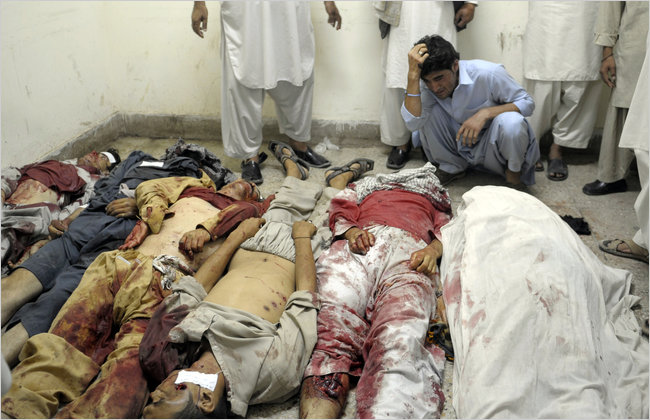
The attackers forced the people off the bus, made them stand in a line and then opened fire, said Shakeel. The dead included 11 Shiites and one Sunni, he said. The wounded included four Shiites and two Sunnis.

Sunni extremists carried out a similar attack on Shiite pilgrims traveling through Baluchistan about two weeks ago, killing 26 people. Pakistan is a majority Sunni Muslim state, with around 15 percent Shiite.

Most Sunnis and Shiites live together peacefully in Pakistan, though tensions have existed for decades. In the 1980s and 1990s, Pakistan became the scene of a proxy war between mostly Shiite Iran and Sunni Saudi Arabia, with both sides funneling money to sectarian groups that regularly targeted each other.

The level of sectarian violence has declined somewhat since then, but attacks continue. In recent years, Sunni attacks on Shiites have been far more common.

The groups have been energized by al-Qaida and the Taliban, which are also Sunni and share the belief that Shiites are infidels and it is permissible to kill them. The Sunni-Shiite schism over the true heir to Islam’s Prophet Muhammad dates back to the seventh century.

Lashkar-e-Jhangvi, one of the country’s most ruthless Sunni militant groups, claimed responsibility for the attack in Baluchistan two weeks ago. One of its alleged leaders, Malik Ishaq, was released from prison on bail in July after being held for 14 years on charges, never proven, of killing Shiites.

Ishaq was re-arrested about a week ago after making inflammatory speeches against Shiites in the country. He was not charged but detained under a public order act, which means he can be held for three months.

It’s not clear if Ishaq’s speeches have been connected to the recent wave of sectarian attacks.

Decade After 9/11, Afghans Languish in Pakistan

By Qasim Nauman and Rebecca Conway for Reuters

When Ghulum Nabi’s father heard U.S.-backed troops toppled Afghanistan’s Taliban after the September 11, 2001, attacks, he rushed to their family home in an Afghan refugee camp in Pakistan to spread the news.

Perhaps, one day they could all return to a peaceful and prosperous Afghanistan supported by a Western superpower.

After 10 years of U.S.-led efforts to pacify one of the world’s most turbulent countries, Afghan refugees in Pakistan have little hope for stability in their homeland.

“I grew up here and Pakistan is my country. When my father pushes me to go back to visit, I end up having a fight with him. I’m never going to live there. I want to get Pakistani nationality. This is my home,” said Nabi, 22, who runs a crockery shop.

“It doesn’t matter if it is America or anyone else trying to watch over Afghanistan. I will still be looking around to see if anyone is pointing a gun at me.”

Afghan President Hamid Karzai would welcome a return of the millions of Afghans living in Pakistan.

It would be a vote of confidence in his administration, which faces many problems, from widespread allegations of state corruption, to a resilient Taliban.

SOVIET INVASION TRIGGERED LIFE OF UNCERTAINTY

Many of the refugees are skilled labourers who could boost reconstruction and help revive a weak economy if they return. But it’s unlikely to happen.

Most of the refugees in Pakistan arrived after the Soviet invasion of Afghanistan in 1979. The conflict that followed consumed their homeland. After the mujahideen warriors defeated the Russians, warlords turned on each other and tore Afghanistan apart.

Many refugees fear a repeat of that chaos as a U.S. troop withdrawal looms.

Some would like to go home but feel they can’t. Others regard Pakistan as home despite its many disadvantages. Without proper Pakistani identification cards, Afghans can’t open bank accounts or buy or lease property.

Many are openly mistreated by Pakistanis who have little fear of being held to account.

On August 14, the anniversary of Pakistan’s independence, Saeed Anwar’s landlord showed up with three men armed with AK-47 assault rifles at his clothing shop at a busy bazaar in the city of Haripur, home to 80,000 Afghan refugees who live in camps.

“They threw around my merchandise and said I need to pay them a 300,000 Pakistani rupees ($3,450) advance on the rent. I had already paid the rent,” said Anwar, wearing traditional, loose Pakistani trousers.

“I went to the police to register a case. But when they see a dispute between a Pakistani and an Afghan, they automatically assume the Afghan has done something wrong.”

Still, many Afghans believe its wiser, and safer, to just accept the frequent humiliation than return to a homeland still shattered, despite a long U.S.-led military campaign against militancy and billions of dollars in Western aid.

Afghans — from elders who vividly remember the first Soviet gunship helicopters in Afghanistan, to teenagers who have only visited a few times — work for Pakistanis as welders or carpenters and tailors in Haripur and other cities.

Most of them prefer to run their own small businesses, from food carts to car dealerships. It’s the only sense of independence they have in the camps which consist of small cement and mud housing units near a reservoir.

The elders have set up a jirga, or tribal gathering, to settle internal disputes, as is done in much of Afghanistan. Cricket games are the only form of entertainment and leisure activity for most youths.

Two years ago Pakistan agreed to let displaced Afghans stay until the end of 2012, after a resurgence of militant violence along the Pakistan-Afghanistan border hindered repatriation.

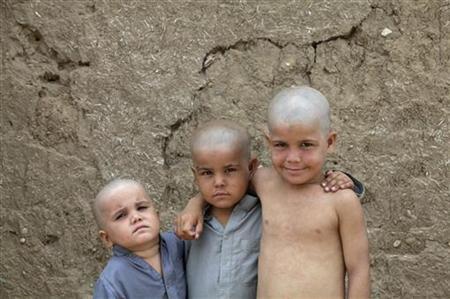
Still, people like Sherullah, whose nine children were born in Pakistan, feel vulnerable. What if Pakistan asks them to leave one day?

“There is a lot of confusion. If there’s one thing I want, it’s for this confusion to go away, for us to know if we will be staying or not,” said Sherullah, who was cutting women’s clothing in his tailor shop.

“There are many people living here that can afford to build a proper house but don’t want to. They think ‘what if next year we are told to leave?’. So they continue to live in mud houses.”

Aside from 1.7 million officially registered Afghans in Pakistan, there are an additional 800,000 with no documentation.

According to the United Nations, Pakistan is home to the world’s largest refugee population, mostly Afghans, who strain the country’s troubled economy.

Pakistan would like to repatriate them.

There are, however, few incentives for refugees to head back to Afghanistan. So life in camps may drag on for many years.

Even though the U.S. disengagement is gradual, it brings back painful memories of what was widely seen as American abandonment of Afghanistan after the Soviet exit in 1989. Warlords soon took over and bloodshed returned.

Haji Aslam, 65, an elder in one of the camps, has seen conflict in Afghanistan over the last 30 years — from the battlefields where he fought the Soviets to what he sees today on his television screen. He is betting on the Taliban to prevail once the Americans leave.

“Even if just 10 Taliban show up, the Afghan government will flee Kabul,” said Aslam, a man with a white beard wearing a traditional flat Afghan cap. “In Pakistan, I am at peace. I know my children are safe.”

Pakistan to Hand Back Bali Bombing Suspect to Indonesia

Xinua News Agency

Pakistani authorities will hand back the alleged mastermind of Bali bombing Umar Patek to Indonesia later on Wednesday, reported local Urdu TV channel Geo.

Patek, 41, is suspected as the field coordinator and planner of the suicide bombings in two nightclubs in Bali in 2002 that killed 202 people, most of whom are Australian holiday makers.

He was arrested in January 2011 at the city of Abbottabad where the U.S. army killed Osama bin Laden on May 2. There is no official confirmation about the extradition of Omar Patek yet.

Indonesian authorities had reportedly sought extradition of the suspect to uncover Patek’s network in the country. Pakistan had reportedly invited Indonesian investigators to identify and question the suspect days after his arrest was confirmed.

Patek, alias Abu Syeikh or Umar Arab, escaped from Indonesia in 2003. The U.S. government had put one million U.S. dollars bounty on his head. He has also been included in the United Nations’ consolidated list.

He was captured by the Pakistani security authorities after a decade of escape. Since his arrest the Indonesian police had reportedly been negotiating with the government of Pakistan for bringing back one of the most wanted militants in Southeast Asia.

Indonesian officials said that they had been involved in discussions with Pakistani authorities for extradition of Patek over the past few months. Patek is a suspected member of al-Qaida-linked Southeast Asian network Jemaah Islamiyah (JI).

JI has been accused of carrying out a series of major terrorist strikes in Indonesia that killed over 250 people from 2000 to 2009.

The Norway Tragedy

By Farooq Sulehria for The News International

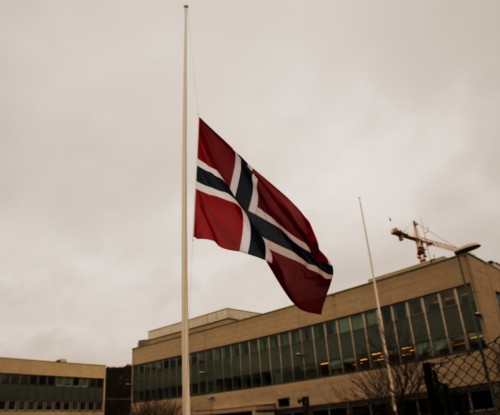
One does not expect funeral processions in paradise. The horrific events in Norway on July 22 – the bomb blast outside the office of Prime Minister Jens Stoltenberg in Oslo, followed by a shooting spree in the holiday island of Utoya, which together claimed 92 lives – were this kind of tragedy, because they happened in a country which is a haven of peace.

The Oslo massacre has taken away its innocence from Norway. In the same way as the murder of Prime Minister Olof Palme in February 1986 marked the end of the fond myth of an eternally peaceful Sweden. He was shot as he walked home with his wife from a cinema in Stockholm.

As Pakistani-born activist Toni Usman notes in an email to his friends, Norwegian democracy is unique in that the prime minister and other ministers can go about their daily lives without security by their side. King Harald V “can travel by public transport without anyone batting an eyelid, and it is this democracy which is under attack.” A successful TV and stage actor, Usman himself is a shining example of tolerance in Norway, a country where royals, elite politicians and celebrities freely mix with commoners. Ordinary citizens live a life unheard-of in much of Europe, without violence or fear of theft. The Norwegian lifestyle may appear naive even to Europeans.

Secret addresses or telephone numbers are rare. Online, Yellow Pages will offer aerial shots of people’s homes, maps of areas where they live, even their email addresses. The press runs details on celebrities’ incomes and fortunes. “To them, living in an open society has been not just a privilege, but also a statement to the rest of the world; a display of how it is possible to live together in peace,” as a BBC correspondent commented.

After another assassination there in September 2003, when Foreign Minister Anna Lindh was stabbed in Stockholm, Sweden drew a security wedge between top politicians and ordinary Swedes. But Norway still resisted calls for greater home security.

Since July 22, all public places such as clubs and restaurants have been closed as these lines are being written on July 24. Parliament House is surrounded by troops. The Oslo city centre looks like a war zone.

Anders Behring Breivik, apparently the lone director and scriptwriter of the tragedy, has confessed to his crime. Norwegian and Swedish media are rife with reports about his extreme Islamophobic and anti-left views. It is not coincidence that Breivik unleashed his terror on activists of the Labour Youth Club, the youth wing of the Norwegian Labour Party.

Both the Labour Party and the AUF have been campaigning against racism. Ever since the 1950s, a summer camp at the island of Utoya has been a regular feature of AUF activities. (Most Scandinavian left parties, big or small, hold summer schools for the political education of their cadres.)

The Norwegian Labour Party, perhaps the most radical wing of social democracy in Europe, has a unique history. Once a member of Lenin’s Third International, the Norwegian Labour Party is staunchly pro-immigrant, in a country that has seen the phenomenal growth of the anti-Muslim Fremskritts Party (Progress Party). Breivik had been a member of the Fremskritts Party between 1999 and 2006.

In Norway, “Muslim” has become synonymous with the word “Pakistanien.” The carnage is therefore extremely significant for Pakistan because Pakistanis constitute Norway’s biggest immigrant community.

Until Breveik’s identity was revealed, Pakistani Norwegians remained behind closed doors, hoping against hope that no Pakistani link was found to the atrocity.

Ironically, when Breveik’s identity had been established, the Pakistani community began to invoke victimhood. Whitewashing even the crimes for which Al-Qaeda & Co. have claimed responsibility, some community leaders were heard saying, “Look! We are always implicated for nothing.”

In terms of proportion, Norway hosts the largest immigrant population of Pakistani origin in any European country. Yet the Pakistani media downplayed the tragedy, out of ignorance perhaps. An Al-Qaeda signature on the tragedy would have proved fatal not merely for Norwegian Pakistanis but also for the sizable Pakistani-Danish and the small Pakistani-Swedish populations.

The Norwegian leadership, as well as the media especially the daily Dagbladet, played a praiseworthy role in the immediate aftermath of twin tragedy. No knee-jerk response.

However, refusing to learn any lessons from the News of the World scandal, the Murdoch press was quick to discover Al-Qaeda footprints in Utoya. The Sun, the flagship of Rupert Murdoch’s media empire in Britain, described the tragedy as “Norway’s 9/11.” The headline screamed: “AL-QAEDA MASSACRE.” (Yes, in capital letters.)

Qatar’s Al-Jazeera, as if in a bid to outdo even the Murdoch media, attributed the tragedy to Mullah Krekar, a Kurd from northern Iraq living in Norway. Mullah Krekar is a controversial character. When his asylum plea was rejected, he appealed to the courts to reconsider his case. However, he keeps declaring that his mission is to annihilate Western civilisation.

But such lucky escapes do not offer any respite from the growing fascism and religious fanaticism in Europe. Norwegian police seems to have been monitoring extremist Muslim outfits too closely to keep an eye on their Christian counterparts. The tragedy demonstrates yet again the dangers inherent in the “othering” of Muslims on the continent.

One hopes that the Norwegian paradise has been lost only temporarily, not forever. Prime Minister Stoltenberg has advised Norwegians to stay optimistic despite the tragedy. “The answer to violence is even more democracy. Even more humanity,” he says.

In Ahmadis’s Desert City, Pakistan Closes In

By Myra MacDonald for Reuters

At the office of what claims to be one of Pakistan’s oldest newspapers, workers scan copy for words it is not allowed to use — words like Muslim and Islam.

“The government is constantly monitoring this publication to make sure none of these words are published,” explains our guide during a visit to the offices of al Fazl, the newspaper of the Ahmadiyya sect in Pakistan.

This is Rabwah, the town the Ahmadis built when they fled the killings of Muslims in India at Partition in 1947, and believing themselves guided by God, chose a barren stretch of land where they hoped to make the Punjab desert bloom.

Affluent and well-educated, they started out camping in tents and mud huts near the river and the railway line.

Now they have a town of some 60,000 people, a jumble of one- and two-storey buildings, along with an Olympic size swimming pool, a fire service and a world class heart institute.

Yet declared by the state in the 1970s to be non-Muslims, they face increasing threats of violence across Pakistan as the country strained by a weakening economy, an Islamist insurgency and internecine political feuds, fractures down sectarian and ethnic lines.

“The situation is getting worse and worse,” says Mirza Khurshid Ahmed, amir of the Ahmadi community in Pakistan. “The level of religious intolerance has increased considerably during the last 10 years.”

The town, renamed Chenabnagar by the state government since “Rabwah” comes from a verse in the Koran, is now retreating behind high walls and razor wire, awaiting the suicide bombers and fedayeen gunmen who police tell them are plotting attacks.

Last May, 86 people were killed in two Ahmadi mosques in Lahore, capital of Punjab; others were attacked elsewhere in the province. Many fled to Rabwah where the community gives them cheap housing and financial support.

Among them is 15-year-old Iqra from Narewal, whose shopkeeper father was stabbed to death last year as the family slept. “I was sleeping in another room when my father was attacked,” she begins in a small voice, pulling a black scarf across her face to cover her mouth in the style of Ahmadi women.

“The attacker wanted to kill all the Ahmadis in Narewal,” her brother Zeeshan continues. “My elder brother tried to help my father and he was stabbed and wounded too.”

Later police found the attacker hiding in a mosque. He had believed the mullahs when they told him that all Ahmadis were “wajib ul qatl”, or deserving of death.

BATTLEGROUND FOR POWER
The Ahmadis follow the teachings of Mirza Ghulam Ahmad, who in the town of Qadian in late 19th century British India called for a revival of a “true Islam” of peace and justice. His teachings were controversial with Muslims and Christians alike.

He argued that Jesus did not die on the cross but escaped and travelled to India and was buried in Kashmir. And he claimed to be the metaphorical second coming of Jesus, destined to put Muslims back on the true path.

Many Muslims were offended by the suggestion he had come as a prophet, breaching a basic tenet of Islam that there can be no prophet after Mohammad, whose teachings are believed to be based literally on the word of God, perfect and therefore final.

Yet his call for peace, hard work, temperance, education and strong community bonds resonated, and over the years the proselytizing movement acquired millions of followers worldwide.

At home, however, their history has been intimately bound up in Pakistan’s own descent from its relatively optimistic birth.

Lacking a coherent national identity, it has become a battleground for competing political, religious and ethnic groups seeking power by attacking others.

“The mistake of the Ahmadis was that they showed their political strength,” said an Ahmadi businessman in Lahore.

Better education he said, meant they obtained good positions in the army and civil service at first; strong community bonds made them an influential force in politics up to the 1970s.

But they also made an easy target for the religious right who could whip up anti-Ahmadi sentiment for political gain.

Ahmadis follow two different schools of thinking, but will argue, often with detailed references to the Koran in both Arabic and English, that they do not dispute the finality of the Prophet Mohammad. Their erudite theological arguments, however, had little chance against the power of the street.

After anti-Ahmadi violence, they were declared non-Muslims in 1974. In the 1980s, their humiliation was completed when legal provisions barred them from associating themselves with Islam, for example by using the call to prayer or naming their place of worship a “masjid” or mosque.

“You can say you don’t consider me to be a Muslim but you can’t force me to also say I am not a Muslim,” complains Ahmed, the amir, the pain clear in his voice.

Yet in the newspaper office in Rabwah, a white board displays the words they are not allowed to use — they could be accused of blasphemy, which carries the death penalty.

SPREADING TO OTHER SECTS
Many Pakistanis, if you ask about treatment of the Ahmadis, shrug it off — it’s an old story, they say, dredged up by westerners who do not appreciate the importance of the finality of the Prophet.

Yet there are signs the attitudes first directed toward Ahmadis are spreading to other sects. In a country which is majority Sunni, and where insurgents follow Sunni Islam, Shi’ites and even Sufi shrines have been bombed.

A 2010 study by Pakistani analyst Ayesha Siddiqa of students in elite colleges found that while 60 percent said the government was right to declare Ahmadis non-Muslims, a sizeable 18 percent believed Shi’ites were also non-Muslims.

These and other findings led her to conclude that radicalism was growing even among the educated youth — it is often, wrongly, blamed on poverty — which in its extreme form could lead people into violence.

Their tendency, she wrote, to see different groups with an unquestioned bias, she wrote, “especially coated with religious overtones or padded with religious belief prepares the mind to accept the message from militant organizations.”

In the nearest town to Rabwah, the central square as been renamed “Khatme Nubuwwat” Chowk, meaning the finality of the Prophet. Beyond, low jagged hills spike up above the dusty land, the summits of much bigger rock formations below the surface.

Many of the Ahmadis had been active supporters of the movement which created Pakistan and when they first came here they were inspired by a verse in the Koran, describing “an elevated land of green valleys and springs of running water.”

Now they are surrounded by a very different country.

Rabwah itself is open to the outside world — despite the high walls guarding individual houses, it is not a walled town.

“Under the circumstances we try to take the best measures we can to protect ourselves,” says the amir. “But what we can do is very limited. We don’t have a mindset or training for that.

And in any case, he adds, “How many people can leave Pakistan or Rabwah?”