Archive for the ‘ Muslims ’ Category

World To Valentine’s Day: I Love You, I Love You Not

By Kristin Deasy for Radio Free Europe Radio Liberty
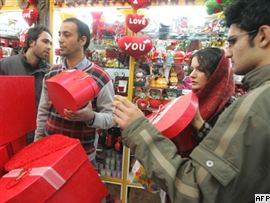
The East is coy when it comes to celebrating Valentine’s Day, with some countries banning it as a Western imposition, while activists in other countries use the traditional day of love to play politics.

In Iraq, three youth groups have called for a Valentine’s Day rally in Baghdad’s Tahrir (Liberation) Square, which like many regional capitals bears the same name as the Egyptian square that made headlines recently during the country’s uprising.

Following the lead of countries like Egypt and Tunisia, where protesters took to the streets demanding political reform, these young Iraqis are using Facebook to call for an end to the political deadlock and rampant corruption in the country. The corruption watchdog Transparency International lists Iraq as the fourth-most corrupt country in the world.

“We chose February 14, Valentine’s Day, to prove to the world that we have made the Valentine’s Day of Iraq. We are here today to express our love for Iraq. Iraqi protester Nawf al-Falahi told Reuters today.

“Our demand is not a difficult one, we demand reform of the situation,” Falahi added. “There has been no tangible change since 2003 and until now, there is no development. We want [the government] to fulfill the promises they made before the election, their promises were rosy. We want them on the ground. This is the only thing we want.”

For these protesters, any thought of celebration is cut short by the condition in the country. “We are so upset. We can’t celebrate Valentine’s Day, because we have a lot of problems,” one woman tells RFE/RL’s Radio Free Iraq, “like the shortage of items on our monthly ration card, a lack of electricity, and poverty.”

Iraq’s protests come as an opposition demonstration is set for today in neighboring Iran, where the opposition Green Movement has defied a government ban to call for a march in solidarity with protesters in Egypt and Tunisia.

Supporters of the Iranian rally have been posting a “V” on their personal Facebook profile pages in a nod to the “V for victory” sign used by the opposition during the country’s 2009 antigovernment protests and, perhaps, also in recognition of the coinciding holiday.

Valentine’s Day is generally seen as a Christian holiday, but it is actually pagan in origin, arising out of the ancient Roman Lupercalia festival. Early efforts by Christian leaders to “Christianize” the pagan feast led to its observance as a feast day honoring a legendary third-century Roman priest allegedly named Valentine.

Over time, however, the celebration of St. Valentine’s Day moved from a day of Christian piety to a more all-embracing celebration of love, particularly the love between couples.

This is a point of concern for authorities in many Islamic countries, who cleave to traditional moral values not typically associated with the modern celebration of Valentine’s Day.

The Uzbek newspaper “Turkiston” wrote on February 12 that “forces with evil goals” were behind “making the ‘lovers’ day popular,” while in Kazakhstan last week a youth group symbolically destroyed Valentine’s Day cards for local media to protest the attempt to introduce a “foreign” holiday.

Over in Russia’s Belgorod region, officials banned St. Valentine’s festivities for the sake of the people’s “spiritual safety,” with one local government spokesman telling reporters that “we could just as well have introduced a Vodka Day.”

Updating The Language Of Love

Iran, meanwhile, forbids unmarried couples from socializing publicly, a policy that tends to have a chilling effect on most Valentine’s Day plans.

But the policy is difficult to enforce on the country’s swelling — and often defiant — younger generation. For example, a Tehran-based author who wishes to remain anonymous is currently at work on a book, “The Persian Dating Glossary,” which includes the explanation of various Persian slang words used to circumvent Iran’s dating restrictions, including “doostmamooli,” a word that roughly translates to “regular friend” and is used to refer to someone with whom there is absolutely no romantic involvement.

The word evolved from the more ambiguous “doost,” which literally means friend but also serves as the basis of weightier words like boyfriend, girlfriend, and best friend.

So this year, Iranian authorities issued a particularly strict warning against “producing any products related to Valentine’s Day, including posters, brochures, advertising cards, boxes with the symbols of hearts, half-hearts, or red roses.”

The Islamic authorities’ worst fear is being realized in Thailand, where 14 couples from around the world are set to compete in a marathon kissing contest to see who can keep their lips locked the longest.

The event is to challenge a German couple, who last year set the world record of the longest continuous kiss, which lasted over one full day.

“We successfully broke the world’s record with seven couples still kissing after 32 hours, 7 minutes, 14 seconds,” contest organizer Somporn Naksuetrong told Reuters. “Anyhow, the contest is still continuing, as only one couple will be named as the new record holder. We still don’t know how long the contest will last.”

A Pakistani Take

Meanwhile, in Pakistan, Valentine’s Day draws a mixed reaction. Young women browse in a shop decorated with Valentine’s Day gifts in Peshawar.
“If we look at it from the religious point of view, then it should not be celebrated because this is based on a Christian celebration,” says Ajab Khan, a young student at Peshawar’s Institute of Management Sciences. “But if you look at it from a different perspective, then I think there is no harm in it because people are happy to go out and give each other presents.

Khan points out that in the English city of Southall, commonly known as “Little India, where many South Asian festivals are held, whether its Eid, the Hindu festival of Holi, or a Christian celebration, “the whole Asian community is happy with it. So why shouldn’t we be a part of it as well in Pakistan? I don’t think it can harm anyone or will affect our religion.

“In my opinion, it’s good to celebrate it and it’s not only for couples. You can give presents to your friends, or even give a rose to your mother.”

The holiday brings back memories for Maskeen Aka, who lives in the Pakistani city of Karachi. He associates it with an ancient Pashtun custom called “rebaar,” in which a messenger would be sent — usually a child — with affectionate greetings or to share news between loved ones.

The practice has slowly disappeared in Pakistan thanks to the growing availability of telephones and Internet technology, but Aka sees a hint of it in the observance of Valentine’s Day.

“I am almost 50 years old now,” he says. “I have also done [rebaar] for some time. Rebaar means to ask about one’s health. In old times, life was very simple and there were no letters or telephones. So it was used to find information, and there would occasionally be messages sent back from the other side, and that was how it came into being.”

‘No Life Without Love’

In Central Asia, Valentine’s Day is a new holiday there because it was not observed under the former Soviet Union.

These countries tend to take a more pragmatic approach, with flower shops and candy stores upping their prices today in Kyrgyzstan and Tajikistan.

A Kyrgyz student, Ermek, explains his reasons for observing the holiday while buying flowers for his girlfriend at a Bishkek market, saying, “We need such a holiday, a day of love.”

“If people don’t love each other, how will they get married? There is no life without love,” Ermek says. “I know my girlfriend loves roses, and that’s why I’m buying them.”

It seems that regardless of what countries celebrate the controversial Valentine’s Day, love is what makes the world go ’round.

Why Noor Inayat Khan, the Indian Princess and Decorated British Spy Who Was Shot By The Nazis, Deserves A Statue

by Gurinder Chadha and Shrabani Basu, Daily Mirror

On September 13, 1944, a beautiful Indian princess lay dead on the floor at Dachau concentration camp. She had been brutally tortured by the Nazis then shot in the head. Her name was Noor Inayat Khan. The Germans knew her only as Nora Baker, a British spy.

The first female radio operator to infiltrate occupied Paris, she was posthumously awarded the Croix de Guerre and the George Cross – one of only three women from the Special Operations Executive to receive the latter medal.

But while Odette Hallowes and Violette Szabo have had Hollywood films made of their lives and blue plaques put up in their honour, Noor has been largely overlooked.

The gentle Indian woman who sacrificed her life for Britain, has become a footnote in history. A memorial to her has long been overdue.

And when a bust of Noor goes up in London’s Gordon Square in 2012, it will be the first statue to an Indian woman in Britain – and the first to any Muslim.

Given the contribution of Asian women in this country to arts, music, literature, law, human rights and education, it is a gap that is crying to out be filled.

Noor’s journey from her birthplace in Moscow to London was in many ways part of her exotic upbringing.

A descendant of Tipu Sultan – the famous 18th century ruler of South India, known as the Tiger of Mysore – she was brought up a fierce nationalist by her father, Hazrat Inayat Khan, a Sufi preacher and musician.

Inayat Khan left his hometown of Baroda in western India to take Sufism to the West. Deeply spiritual, he gave concerts and lecture tours in America where he met Noor’s mother, Ora Ray Baker. Soon the two moved to London where they were married, Ora taking the name of Ameena Begum.

In 1914, Inayat Khan was invited to Moscow and it was there that Noor-un-nisa Inayat Khan was born. She had the title of Pirzadi, daughter of the Pir.

Moscow at the time was rife with political discontent and Inayat Khan soon moved back to London. The family spent the next six years in a house on Gordon Square.

But the British government was suspicious of Inayat Khan, who was a friend of Nehru and Gandhi and a strong nationalist, so the family went to France. They began life again on the outskirts of Paris in a house called Fazal Manzil or House of Blessing. It was here Noor spent most of her life.

Educated and genteel, she went to the Sorbonne to study child psychology.

She started writing stories for children and in 1939 her first book, Twenty Jataka Tales, was published. But war clouds were gathering. And as England declared war on Germany, Noor and her brother Vilayat decided it was a crime to stand by and watch, even though as Sufis they believed in non-violence.

They went to London to be a part of the war effort. In November 1940, Noor volunteered for the Women’s Auxiliary Air Force.

Officers of the Special Operations Executive, Churchill’s secret army, were looking for people with language skills. Noor – fluent in French and now a trained wireless operator – fitted the bill. At an interview, she was told she would be sent as an agent to Paris – and shot if she was caught. She took the job.

Over the next few months, the gentle harp-playing Noor was trained as a secret agent, given arms training, taught to shoot and kill, and finally flown to Paris under the code name of Madeleine, carrying only a false passport, a clutch of French francs and a pistol. Despite her spy network collapsing around her, Noor stayed in France for three months, until she was betrayed. What followed in October 1943 was arrest, imprisonment in chains, torture and interrogation.

Noor bore it all. She revealed nothing to her captors, not even her real name. When the end came on September 13, 1944, it was not swift or painless.

All night long an SS officer kicked and tortured Noor. Defiant till the last, she shouted “Liberte” as she went down to a bullet fired at the back of her head. Then Britain gradually forgot about her brave sacrifice. Bringing Noor back to Gordon Square, near the house from where she left on her last mission, will be a worthy gesture by her adopted country.

Gurinder Chadha has directed Bend It Like Beckham, and Bhaji on the Beach. Shrabani Basu, author of Spy Princess, The Life of Noor Inayat Khan, is founder of the Noor Inayat Khan Memorial Trust. Contribute at www.noormemorial.org, or email noor.memorial@gmail.com.

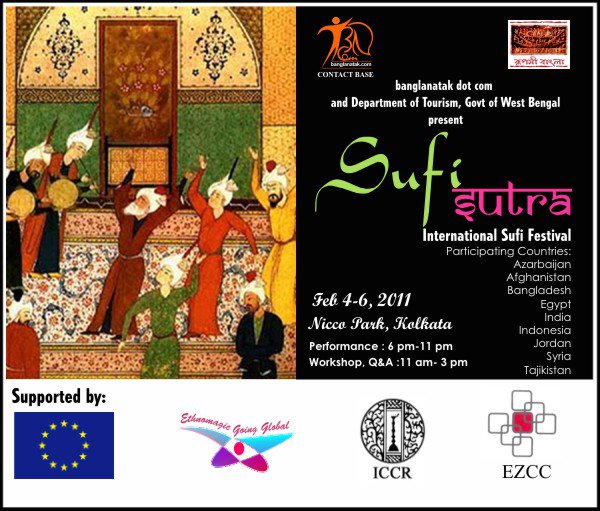
Global Sufi Fest Attracts Thousands

As Reported by the Times of India

Soulful renderings of Sufi music by wandering minstrels from different parts of the world left the listeners spellbound here at the three-day ‘Sufi Sutra’ which ended on Sunday.

Besides Indians, Sufi singers and musicians from Afghanistan, Bangladesh, Egypt, Iran, Syria and Tajikistan presented mystic Islam through songs, dance and poetry.

Notwithstanding the current political turmoil back home, an eight-member Egyptian Mawlawyiah troupe enthralled the audience by an audio-visual of music and circular dervish dance whirling around singers in a circle.

A Bangladeshi team, led by Anusheh Anadil, sang the household songs of the famous 18th century poet-philosopher Fakir Lalon Shah, on whom based the recent Golden Peacock winning Bengali film ‘Moner Manush’.

The ‘bauls’ and ‘fakirs’ of West Bengal’s Nadia and Murshidabad districts were huge hits by their spontaneous, simple and meaningful lyrics.

Another Bengal team led by Armaan Fakir presented the little-known ‘Bangla Qawwali’. Traditionally performed at the Dargahs, the devotional songs had ‘Dhol’ and ‘Khol’ as percussions replacing Tabla.

The first Sufi ensemble also included the ‘Warsi Brothers’ from Hyderabad, Delhi’s ‘Druv Sangari’ and team, ‘Mirs’ from Bikaner and ‘Haji Md Ahmed Khan Warsi’s team from Uttar Pradesh.

“It is a peace concert in times of violence. We want to bring a convergence of ideas about truth, harmony, self-belief and peace through music. It is a celebration of the quest for the divine through love,” organiser Amitava Bhattacharya said.

Besides musical performances, the festival included workshops and exhibitions to showcase the traditional culture, beliefs and music of the Sufi mystics.

“We had more than 10,000 people at the open-air concert, while more than 700 people, including young students, learnt about Sufism at the pre-concert workshops,” Bhattacharya said.

The event would also help the poor musicians, most of whom were from the rural areas, to earn a livelihood, he said.  The festival was organised by Banglanatak.com in collaboration.

Pakistanis for Peace Editor’s Note– It’s a sad reality that singers from a  country rich in Sufi history and traditions like Pakistan, are  unable to attend this festival due to the 60+ year friction between the two brothers India and Pakistan. They are two halves of one nation.

Cultural exchanges like these, billions in cross border trade, Bollywood and Lollywood collaborations, sports matches, etc are just some of the things the two are missing out on due to their relations. We hope one day peace can finally come to this ancient and holy land that is the subcontinent.

Who is behind the war on Sufism?

By Dr Ehsan Azari Stanizi for Eurasia Review News & Analysis

On October 25, 2010 an al-Qaida affiliated militant group turned a majestic Sufi shrine into a bloodbath in the Punjab province of Pakistan, by detonating bombs hidden in milk cans, killing and wounding scores of innocent people. This was the latest of a spate of gruesome attacks on Sufism and dead Sufi saints this year alone, leaving hundreds of innocent people killed or wounded. Such violence has brought a new upheaval to Islam, shaking its ethical and moral foundations and reducing it to a merely a radical political ideology.

The ideological driving force behind this violence is religious extremism which considers everyone outside its ideological league, Muslim or non Muslim, dead or alive, as an enemy and an infidel deserving to be killed. The fanatics blow up ancient relics, Sufi heritage, Sufi shrines and the Sufi way of life everywhere they can. They want to micromanage social, cultural and individual life. They condemn gatherings and ceremonies in Sufi saints’ graves, shaving beards, wearing charms, music and painting as heresy. All this is like the Chinese Cultural Revolution of the 1960s.

The history of Islam is not alien to violence against Sufism. The root of the current upheaval lies in Wahhabism, which has been gradually institutionalised from a tiny band of theologians into a political ideology by the Saudi ruling dynasty. The Wahhabi religious movement was originated by Mohammad Ibn Abdul Wahhab (1703-1792), essentially to challenge the influence of the Ottoman Empire in the Arabian Peninsula. The Saudi petrodollars and Pakistani military ruling elite have helped the spread of this fanatical form of Islam.

In addition, the vision of this ideology was empowered in the Middle East and South Asia by another extremist movement known as the Muslim Brotherhood which originally emerged in Egypt in the 1920s. The Brotherhood copied much of its ideological agenda, political structure, revolutionary features and a violent persuasion from Marxism. Like the latter during the Cold War era, the Brotherhood’s ultimate objective has been to topple the state by violent means and extend a radical ideology to the West. The Iranian revolution of late 1970s gave further impetus to this ideology, which began to justify the export of Islamic revolution as an Islamic obligation everywhere in the world.

Like Saudi rulers, the secular Pakistani cunning and sly generals began to use the most lethal religious radicals for domestic security and as a tool to promote its foreign policy in Afghanistan and India. Pakistan served also as a gateway for the spread of Wahhabism in the region. At present they are pinching American coins in return for carrying out the Pashtun genocide.

As it was hinted, war on Sufism is not a new phenomenon. Hussein Al-Halaj, a great Sufi poet and teacher was condemned for heresy when in a state of mystical trance he exclaimed, “I am the Truth”. He was cut to pieces and his remains were burnt by a mob in Baghdad in 922 AD. He was the first Sufi martyr.

During the 17th-century Persian Safavid Empire, Sufis were suppressed, during the Indian Moguls, it flourished but in the twentieth-century the die-hard Turkish secular leader Kamal Atatürk banned Sufi monasteries and Sufi rituals in Turkey.

Sufism (comes from Arabic noun, suf, literary meaning course wool and the Sufi is the one wearing woolen garments) is the name of Islamic mysticism. The word Sufism was coined in the West for the first time by the German scholar August Tholuck in 1821. It has been divided into two practical and theoretical parts: To those who practice it, Sufism means a quick spiritual foray into a space where the presence of the divine could be experienced. To those who are concerned with its theory, it is a mystical and spiritual theology, a body of knowledge and an epistemology interwoven with Islamic metaphysical texts.

The Sufi philosophy was developed and promoted by the medieval Muslim philosophers such as Ibn-Arabi, Averroës (known in Islamic world as Ibn-i-Rushd), Avicenna and Farabi, who, for their Islamic Aristotelianism, were often referred to as the Oriental Peripatetics. This school of thought was greatly saturated with Plato and Aristotelian metaphysics. The Sufis also have created a vast body of a literary and poetic heritage.

As an elixir of wisdom and an intellectual Yoga, Sufism has been known, cherished and even practised in the West since time immemorial. It is hard to find a single great Western poet or thinker who has not been inspired by Sufism. Dr Johnson loved Sufi Oneness and pantheism; Voltaire in Candid saw Sufi philosophy as an antidote to religious extremism of his time. Goethe loved Sufi poetry, Richard Burton and Robert Graves were keen on practicing Sufism.

Sufism was cherished by Australia’s greatest poet professor Alec Derwent Hope. Hegel draws on Sufi thought in his works. Danish fairy-tale writer Hans Christian Andersen was the first who brought the news about the Sufi music and dance known as “Whirling Dervishes” to Europe.

Nobel laureate, Doris Lessing is the doyen of contemporary Sufis in the West. She identifies Western admiration of Sufism since the 1960s as ‘a Sufi craze,’ and ‘Sufi bandwagon’. For Lessing, Sufism was a kind of universal feeling, emotion, a quick fix and an access with no intermediary. “Sufism is something one experiences on one’s own,” she would say. In my own lectures in Australia and Europe, I came across with an enormous interest in Sufi philosophy and literature.

The al-Qaida zealots and the Pakistani militants will never win over Sufism. They might destroy their tombs on earth but cannot steal away Sufism from the hearts of people in the East and the West.

The 13th-century great Sufi poet and the founder of the Whirling Dervishes, Rumi knew this. He believed that fanatics will never extinguish the Sufi torch or destroy Sufi tombs as he says “when we are dead, see not our tombs in the earth, but find it in the hearts of the people.” And the 17th-century Pashtun Sufi poet Rahman Baba, known in the West as the Nightingale-of-Peshawar to the vandals:

We are all one body, whoever tortures another, wounds himself.

Last spring (2010), his mausoleum was bombed by the Punjabi Taliban. Rumi declared the Sufi manifesto of universal love, tolerance of nonbelievers, pluralism and interfaith harmony in one of his quatrains:

Come, come whoever you are, An unbeliever, a fire or idol-worshiper, come, Our convent is not of desperation, Even if you have broken your vows a hundred time,
Come, come again.

U.S. Companies Urged to Tap Into $170 Billion Muslim Consumer Market

By Brittany Hutson for The Atlanta Post

U.S. companies are loosing out by neglecting a rather attractive and overlooked consumer: American Muslims.

There is an estimate number of six to eight million Muslims in this country that possess an annual spending power between $170 and $200 billion. It is believed that two-thirds of Muslim households make more than $50,000 a year and a quarter earn over $100,000. Miles Young, chief executive officer of Ogilvy & Mather Worldwide, an international advertising, marketing and public relations agency, said in a speech at this past December’s second annual American Muslim Consumer Conference that Muslims are the best-educated religious group in America and over 40% have bachelors’ degrees. Clearly, this is a consumer that companies cannot afford to not attract.

According to the Associated Press, corporations in Europe have long been catering to Muslim communities there. Nestle has about 20 factories with halal-certified production lines and advertises to Western Muslims through its marketing campaign called “Taste of Home.”

So why is it that companies in Europe have been able to successfully attract and retain the interest of their Muslim consumers?

Part of it has to do with Muslims in Europe having lived there for multiple generations, said Ponn Sabra, founder and owner of the online blog community for American Muslim Moms, AmericanMuslimMom.com.  Also, “European Muslims are extremely strong in faith, very vocal, [and] much more confident in their practice of our faith than the majority of Muslims living in America.”

It also helps that Muslims in Europe are not stereotyped like Muslims in America, added Sabra. It’s only been recent that businesses in the U.S. have started to tap into the Muslim consumer market. McDonald’s and Wal-Mart have entered the halal arena and last August, Whole Foods began selling its first nationally distributed halal food product—frozen Indian entrees called Saffron Road. But because there is still intensified anti-Muslim feeling throughout the country, this is causing companies to worry that they will be attacked for going after this consumer.

But Muslims do not necessarily want companies to be their advocates against opposition, more so as they would appreciate that companies get to understand their values. Mohammed Abdullah, director of the 2009 Conference, said in a press release, “Muslims want to be acknowledged in mainstream media. You don’t need to change your product of show Muslims in your ads. Instead, consider advertising in a Muslim media outlet. Say Eid Mubarak or Ramadan Kareem during the holidays. The Muslim community will respond. When we see an ad we like we send it to our friends and share it with each other,” he said.

Of course, the worldwide market for Islamically permitted goods, also known as halal, is the best option for companies interested in attracting the American Muslim. The industry includes foods and seasoning that omit alcohol, pork products, cosmetics, finance and clothing. According to Young, the global halal market is worth $2.1 trillion dollars and it is growing at $500 billion dollars a year.

Muslims as entrepreneurs shouldn’t be underestimated either. For example, Tariq Farid developed and launched one of today’s successful and international companies in the floral industry that many know and love as Edible Arrangements.

“The American Muslim Consumer is extremely loyal, wealthy, educated and well-connected on and offline,” said Sabra. “Companies who jump at the opportunity have the potential for life-long happy customers who willfully recommend their products and services.”

Thou Shalt not Mock or It May Cost You Your Life!

By Manzer Munir for Pakistanis for Peace

In the wake of the murder of Salmaan Taseer, the Governor of Punjab a couple weeks back, I did a great deal of contemplation about the situation in Pakistan and the current state of affairs of Pakistan and indeed in much of the Muslim world.

The current situation, especially in Pakistan and when it concerns the rights of the non-Muslims, is apparently the worst of anywhere in the Muslim world. Indeed, the plight of Asia Bibi, (also known as Aasia, Ayesa Noreen) Islam and Islamic Blasphemy laws have come under rightful scrutiny as of late.

One question that tugs at the heart of the debate for me is why is it that Muslims seem to get so very offended to the point they want to KILL you over a remark or something that comes out of your mouth? As Americans, we wonder to ourselves, “Haven’t they ever heard of sticks and stones may break my bones, but words don’t hurt me?!

Sadly, what the fundamentalist preachers at all the podiums of their Friday sermon or khutbah, nor any of their brethren on the run and in caves like the Taliban and Al Qaeda fail to realize that we are all God’s children. And God, Allah, Yahweh, Jesus, or whatever name you assign him, he is One and the same God of all religions. He is too big to fit into just one religion, concept, version or story of him.

And we all are his creations. Not one of us is superior over the other in his eyes and he judges us all equally. To him, the children of these three religions and its offspring’s are all related to each other. Adam being the first man, then Eve, and then all the Biblical figures and names such as Noah, Abraham, Moses, Jesus, yes especially Jesus. He is their Messiah too!

Jesus, in fact is mentioned some 28 times in the Muslim holy book, Qu’ran whereas their own prophet Muhammad is mentioned only 4 times. And the fact that Jesus is also considered by Muslims to be the Messiah, it is sad that his followers should get such abject treatment in Pakistan and sadly, many Muslim countries.

If only the bad guys realized the connections between Christians and Jesus only then would a Pakistani Christian woman, suffering needlessly in a cell tonight going on 2 years away from her children in solitude, and constantly fearful for her life, would see her horrific ordeal come to an end.

These people are incapable of understanding basic rights, freedoms and even the unhindered concept of free will. No, they are primitive minded in their their spiritual and daily lives. They fail to see that a Christian’s God and a Muslim’s God are the one and the same. And he never would agree to laws like Pakistan’s Blasphemy laws at all. Why? Well because the Muslim God is known first and foremost as a Gracious, Merciful, Compassionate God.

In fact, the Arabic phrase Bismillah ir-Rahman ir-Rahim is a beautifully poetic phrase which offers both deep insight and brilliant inspiration to the average Muslim who says it countless times as he or she starts each day and till they rest their head to sleep. “ It has often been said that the phrase Bismillah ir-Rahman ir-Rahim contains the true essence of the entire Qur’an, as well as the true essence of all religions. Muslims often say this phrase when embarking on any significant endeavor and the phrase is considered by some to be a major pillar of Islam. This expression is so magnificent and so concise that all except one chapter of the Qur’an begins with the words Bismillah ir-Rahman ir-Rahim.”

The common translation:”In the name of God, most Gracious, most Compassionate” essentially is saying that God is compassionate, and full of grace. So how would this God punish Asia Bibi? What would he do if he is so full of compassion and mercy? Would he even punish her? And if he is such a gracious and a compassionate God, then wouldn’t he feel that nearly a two year jail sentence in solitary is already far more than her crime not to mention being away from husband and children and being worried about mob vengeance on her or the death penalty?

That God may act in a multitude of ways and we cannot ever know till said Judgment Day. That is what Judgment Day is all about after all. In fact, this is probably one day when the man upstairs works overtime judging all of us mankind, from the beginning with Adam to the last standing comes till Tribulation and the End of Days. It is only he, the Creator who will do the judging and this is something that the men with the loudspeakers who climb to the top of the minaret five times a day to call the faithful to prayers, just do not really understand, in my opinion. They apparently constantly seem to forget and pass judgment from the pulpit and this in turn helps set the “popular” opinion amongst the ultra-religious faithful of Pakistan’s society.

My only prayer to this Creator is that may he keep Asia Bibi safe tonight and continue to give her strength. And if God should call her home and have her die a death at the hands of the real savages those that not only kill but shockingly, in your name, then please Allah grant her heaven just as you should governor Salmaan Taseer, a man who was only defending the rights of all your children, including those of other faiths. He was being compassionate and gracious towards a fellow human being God, as he was only trying to emulate his creator, You Lord. Ameen.

And while you are at it Lord, will you also please let the imam at the microphone know that “Thou shall not mock, should not cost you your life.” Afterall, “Thou shall not kill is one of your top 10 commandments, whereas mocking prophets or religious figures does not make the list!

Manzer Munir, a proud Pakistani American and peace activist, is a Sufi Muslim who is also the founder of Pakistanis for Peace and blogs at www.PakistanisforPeace.com and at other websites such as www.DigitalJournal.com, www.Allvoices.com, www.Examiner.com and www.open.salon.com as a freelance journalist and writer. He asks that you like the Official Facebook Page of Pakistanis for Peace to get the latest articles as they publish here: http://www.facebook.com/home.php#!/pages/Pakistanis-for-Peace/141071882613054

Killings of Newborn Babies on the Rise in Pakistan

By Hasan Mansoor for The Associated Press

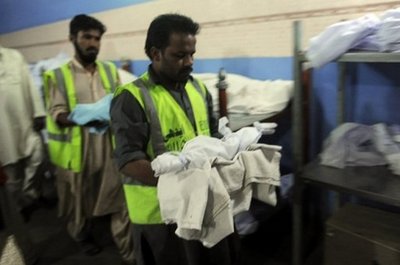
The lifeless bodies of two tiny babies are being given their final bath before burial in Karachi, after they were left to die in the southern Pakistani city’s garbage dumps.

“They can only have been one or two days old,” says volunteer worker Mohammad Saleem, pointing at the two small corpses being gently washed by his colleagues at a charity’s morgue.

In the conservative Muslim nation, where the birth of children outside of marriage is condemned and adultery is a crime punishable by death under strict interpretations of Islamic law, infanticide is a crime on the rise.

More than 1,000 infants — most of them girls — were killed or abandoned to die in Pakistan last year according to conservative estimates by the Edhi Foundation, a charity working to reverse the grim trend.

The infanticide figures are collected only from Pakistan’s main cities, leaving out huge swathes of the largely rural nation, and the charity says that in December alone it found 40 dead babies left in garbage dumps and sewers.

The number of dead infants found last year — 1,210 — was up from 890 in 2008 and 999 in 2009, says the Edhi Foundation manager in Karachi, Anwar Kazmi.

Tragic tales abound.

Kazmi recounts the discovery of the burnt body of a six-day-old infant who had been strangled. Another child was found on the steps of a mosque having been stoned to death on the orders of an extremist imam who has since disappeared, he says.

“Do not murder, lay them here,” reads a sign hanging outside the charity’s Karachi base where it has left cradles in the hope that parents will abandon their unwanted children there, instead of leaving them to die.

“People leave these children mostly because they think they are illegitimate, but they are as innocent and loveable as all human beings,” says the charity’s founder, well-known humanitarian Abdul Sattar Edhi.

Most children found are less than a week old. Khair Mohammad, 65, works as a watchman in the charity’s vast graveyard in the city outskirts. It is dotted with tiny unnamed graves.

“We acquired this land to bury children after another plot was filled with hundreds of bodies,” he says. The death toll is far worse among girls, says manager Kazmi, with nine out of ten dead babies the charity finds being female.

“The number of infanticides of girls has substantially increased,” Kazmi says, a rise attributed to increased poverty across the country.

Girls are seen by many Pakistanis as a greater economic burden as most women are not permitted to work and are considered to be the financial responsibilty of their fathers, and later their husbands.

A Pakistani family can be forced to raise more than one million rupees (11,700 dollars) to marry their daughter off. Edhi says that up to 200 babies are left in its 400 cradles nationwide each year and that it handles thousands of requests for adoption by childless couples.

Abortion is prohibited in Pakistan, except when the mother’s life is at risk from her pregnancy, but advocates say that legalisation would reduce infanticide and save mothers from potentially fatal back-street terminations.

According to Pakistani law, anyone found to have abandoned an infant can be jailed for seven years, while anyone guilty of secretly burying a child can be imprisoned for two years. Murder is punishable with life imprisonment.

But crimes of infanticide are rarely prosecuted. “The majority of police stations do not register cases of infanticide, let alone launch investigations into them,” said lawyer Abdul Rasheed.

Pakistanis for Peace Editor’s Note– The killing of innocent babies is utterly reprehensible in conservative Pakistan. If one does not want the baby, we urge the parents to drop off the unwanted babies at any Edhi Foundation center to be raised as an orphan. Islam does not condone killing of any life at any age under any circumstances. We are saddened by these stories and hope that this trend comes to an end soon.

Pakistan: The Voices of Reason Must not be Silenced by Fear

By Sadiq Khan for The Independent

The news that Salman Taseer, the powerful governor of Pakistan’s most populous province, had been gunned down by his own security guard for standing up against the country’s draconian blasphemy laws, came as a bleak reminder of political fissures that divide the country.

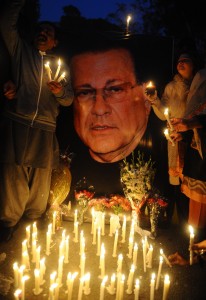
The sickening scenes of Taseer’s murderer, Mumtaz Qadri, being showered by rose petals as he entered court to lodge his guilty plea were starkly juxtaposed with images of candlelit vigils at the spot where he was shot 27 times in the back.  These contrasting responses to Taseer’s assassination are illustrative of a fundamental split between those who want to see Pakistan fulfill her potential as a thriving, liberal and tolerant democracy and those that want to terrorize and isolate Pakistani citizens under a misguided and perverted interpretation of Islam.

While denouncement of last week’s criminal act was muted amongst Pakistan’s clerics and politicians – including those from the Pakistan Peoples Party, to which Taseer belonged – British citizens of Pakistani descent have been vocal in our condemnation and our mantra is clear – this death due to terrorism, as with the 25,000 others in Pakistan in recent years, is not in our name. It is not in the name of Islam and it is not in the name of Pakistan.  And while saddened by this loss, the real tragedy of Salman Taseer’s murder would be if it stopped other progressive, liberal people in Pakistan speaking up for fear of violent repercussions.

Qadri, though responsible for his own deplorable actions, was spurred on by inflammatory rhetoric from extremists preaching hatred and inciting violence against all those who stand up for the pluralist founding ideals of Pakistan. It is not only in Pakistan where irresponsible political language has repercussions beyond the boundaries of discourse and spill over into violence, but in Pakistan there is a danger that the voices of reason will be drowned out by the increasing clamor of hate, or silenced in fear.

Moderation and liberalism in Pakistan must not be allowed to die with Governor Taseer. Right-minded politicians and religious leaders must speak up, knowing that the UK as well as Muslims and non-Muslims around the world, are behind them.  Addressing a distinguished audience at the memorial meeting for Taseer at the Pakistani High Commission in London this week, MPs from all major British political parties spoke in solidarity with Pakistan and I was encouraged by the various Pakistani leaders who attacked those who corrupt Islam’s peaceful message and sought to assure Christians and other minority groups that they will be defended and protected.

If a society is ultimately judged by how it treats its most vulnerable and marginalized, then Pakistan is at a crossroads. Those, like Salman Taseer, who believe in a modern, peaceful Pakistan, governed by the rule of law, under which all people are equal and all faiths are free to worship, need to speak out in defense of it and in condemnation of the alternative.

After being struck by a natural disaster that swept away the lives, crops and livelihoods of hundreds of thousands of people in Pakistan last year, there is the potential that Pakistan could slip into a political disaster of its own making. Salman Taseer paid the ultimate price in trying to ensure this didn’t happen, but let that not be in vain.

Pakistan Elite Silent After Taseer Assassination

By Mosharraf Zaidi for CNN

The assassination of Punjab Gov. Salman Taseer by his bodyguard last week seems to confirm the prejudices about Pakistan as a country where moderate voices face danger, where violent extremism is widespread and where investors aren’t very safe.

Taseer, ever the entrepreneur, the tycoon and the irrepressible Pakistani patriot would resist vociferously. If he could tweet his thoughts from heaven, the prejudiced would have hell to pay. His plain-spoken manner and blunt were often a political liability. But for all his political faults, Taseer’s was a rare courageous voice.

He was murdered for speaking out in defense of a poor, defenseless Christian woman in a village — something few dared to do. It was Taseer’s unambiguous morality in his speaking out for the weak that captured imaginations of those neutral Pakistanis keen to see reason as a dominant force in their country.

Taseer was unique in life and stands virtually alone in death. The deafening silence among the pygmies that make up the rank-and-file of the Pakistani elite is the sound of fear and moral confusion.

The fear is genuine and real. More than the assassination itself, the mainstream reaction to Taseer’s murder exposes the cancerous immunity to reason in Pakistan’s Islamic discourse. Without expressing anything resembling blasphemy, educated and articulate Pakistanis chided Taseer, even in death, for writing his own death warrant. His crime? Asking for changes to the Pakistan Penal Code, whose blasphemy clauses have been regularly abused for social, political and economic gain.

The irrational right-wing Pakistani “Tea Party” is really no party at all. It is a lynch mob. And it isn’t tea that fanatics in Pakistan have been drinking for years. Instead, the Pakistani establishment has fed them a steady diet of nationalism, pan-Islamism and Takfirism [accusing a Muslim of apostasy.]

Unable to win elections, or compel social transformation on its own, the Pakistani right has always required the patronage of secret services and their financiers; American, Saudi or otherwise. It simply cannot survive without this patronage. The Machiavellian establishment, fueled by the clumsy intellect of military men and the dangerous cunning of civilian bureaucratic and political hatchet men, knows this. It is the only power base in the country that can truly respond to Taseer’s assassination.

In the heart of the most dynamic and exciting economic region in the world, Pakistan can still be a force for good. To do so, the Pakistani establishment has to take two sets of actions. The first and immediate is to mobilize the state machinery, swiftly and firmly, against those that openly call for violence.

This isn’t unprecedented. The Pakistani state has a long record of using busloads of cash, the British legacy administrative system of magisterial power, and a police force not entirely familiar with Miranda rights to obliterate dissent.

The second, the more complex and much longer-term task is the deradicalization of Pakistani Muslims. The religiously illiterate fanatic is a dangerous creature.

His blind rage is expressed in all kinds of wars that go far beyond religion. Pakistan’s class and caste wars are as old as the Indus River. Religious authority is merely an instrument of social mobility. Slaying members of the elite, even if it is not openly acknowledged, is seen as striking a blow for one’s oppressed class and caste sensibilities.

The 24-hour news media also feeds the rage, airing long and tortuous narratives that stimulate the indignities of being Pakistani in the 21st century. The U.S. war in Afghanistan and in Pakistan’s tribal areas is at the top of the list of these indignities.

Deradicalizing Pakistani fanatics is not going to be easy, but it may not be as impossible as it seems. In essence, it needs to be seen as rerationalism. Too often, critics view deradicalization as an attempt to strip Muslims of their identity or as an attack on the fundamentals of a Muslim’s faith. On the contrary, fundamental Islamic values of reason, knowledge and mercy need to be included in the mainstream Islamic narrative. These qualities are facets of Islam that have become subservient to blind rage.

Luckily, there are glimmers of light. Civil voices across the country demonstrate the establishment will not be batting alone if it begins to take steps to fix its own mess. More than 60 organizations have signed up to a call for resistance by the Citizens for Democracy.

Recently, activists in Karachi, including one of Taseer’s six children, registered criminal charges against a mosque leader who was openly inciting violence against Sherry Rehman, a former journalist and now member of Parliament who has submitted a bill for an amendment to the blasphemy laws. These are reasonable people asking for reasonable actions.

Bringing reason into Pakistan’s public discourse is a critical prerequisite for a society based on the rule of law and a political process that enhances the dignity of people, rather than undermines it.

Pakistan is teetering on the brink of economic collapse and political failure. For decades, Pakistanis have rightly spoken with pride of their society’s strength and resilience. Now is the time for Pakistan to prove its resilience once more.

Civil society can take the brave first few steps, but this struggle is one that requires the assets and resources of the state. Taseer’s assassination is a test of the Pakistani state.

Mosharraf Zaidi has advised governments and international organizations, including the U.N. and the EU, on international aid and development. He writes a weekly column for Pakistan’s The News, and other publications.

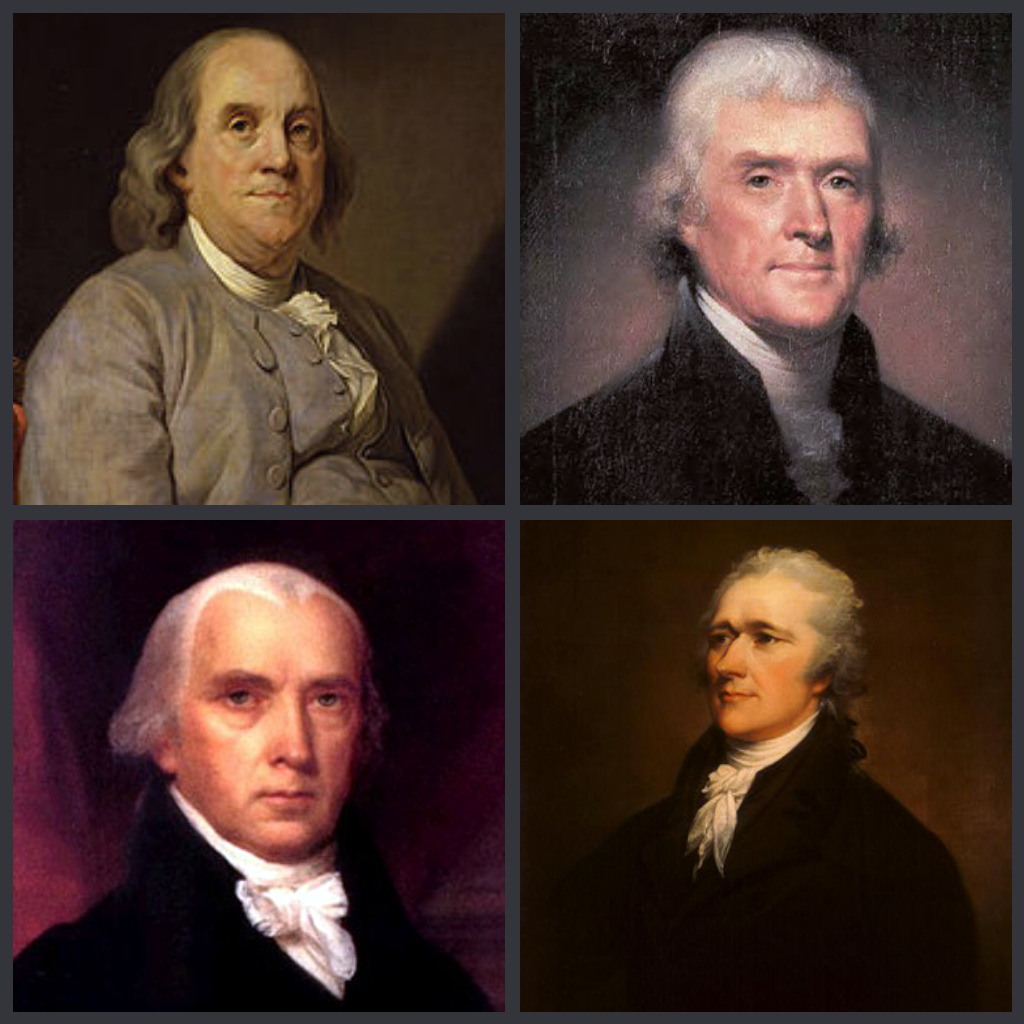
The Founding Fathers and Islam

By James H Hutson for The Library of Congress

With more than 55 million items, the Library’s Manuscript Division contains the papers of 23 presidents, from George Washington to Calvin Coolidge. In this article, Manuscript Division Chief James Hutson draws upon the papers of Washington, Thomas Jefferson and other primary documents to discuss the relationship of Islam to the new nation.

Many Muslims feel unwelcome in the United States in the aftermath of September 11, according to newspaper reports. Anecdotal evidence suggests that substantial numbers of Americans view their Muslim neighbors as an alien presence outside the limits of American life and history. While other minorities—African Americans, Hispanics and Native Americans—were living within the boundaries of the present United States from the earliest days of the nation, Muslims are perceived to have had no part in the American experience.

Readers may be surprised to learn that there may have been hundreds, perhaps thousands, of Muslims in the United States in 1776—imported as slaves from areas of Africa where Islam flourished. Although there is no evidence that the Founders were aware of the religious convictions of their bondsmen, it is clear that the Founding Fathers thought about the relationship of Islam to the new nation and were prepared to make a place for it in the republic.

In his seminal Letter on Toleration (1689), John Locke insisted that Muslims and all others who believed in God be tolerated in England. Campaigning for religious freedom in Virginia, Jefferson followed Locke, his idol, in demanding recognition of the religious rights of the “Mahamdan,” the Jew and the “pagan.” Supporting Jefferson was his old ally, Richard Henry Lee, who had made a motion in Congress on June 7, 1776, that the American colonies declare independence. “True freedom,” Lee asserted, “embraces the Mahomitan and the Gentoo (Hindu) as well as the Christian religion.”

In his autobiography, Jefferson recounted with satisfaction that in the struggle to pass his landmark Bill for Establishing Religious Freedom (1786), the Virginia legislature “rejected by a great majority” an effort to limit the bill’s scope “in proof that they meant to comprehend, within the mantle of its protection, the Jew and the Gentile, the Christian and Mahometan.” George Washington suggested a way for Muslims to “obtain proper relief” from a proposed Virginia bill, laying taxes to support Christian worship. On another occasion, the first president declared that he would welcome “Mohometans” to Mount Vernon if they were “good workmen” (see page 96). Officials in Massachusetts were equally insistent that their influential Constitution of 1780 afforded “the most ample liberty of conscience … to Deists, Mahometans, Jews and Christians,” a point that Chief Justice Theophilus Parsons resoundingly affirmed in 1810.

Toward Islam itself the Founding generation held differing views. An evangelical Baptist spokesman denounced “Mahomet” as a “hateful” figure who, unlike the meek and gentle Jesus, spread his religion at the point of a sword. A Presbyterian preacher in rural South Carolina dusted off Grotius’ 17th century reproach that the “religion of Mahomet originated in arms, breathes nothing but arms, is propagated by arms.” Other, more influential observers had a different view of Muslims. In 1783, the president of Yale College, Ezra Stiles, cited a study showing that “Mohammadan” morals were “far superior to the Christian.” Another New Englander believed that the “moral principles that were inculcated by their teachers had a happy tendency to render them good members of society.” The reference here, as other commentators made clear, was to Islam’s belief, which it shared with Christianity, in a “future state of rewards and punishments,” a system of celestial carrots and sticks which the Founding generation considered necessary to guarantee good social conduct.

“A Mahometan,” wrote a Boston newspaper columnist, “is excited to the practice of good morals in hopes that after the resurrection he shall enjoy the beautiful girls of paradise to all eternity; he is afraid to commit murder, adultery and theft, lest he should be cast into hell, where he must drink scalding water and the scum of the damned.” Benjamin Rush, the Pennsylvania signer of the Declaration of Independence and friend of Adams and Jefferson, applauded this feature of Islam, asserting that he had “rather see the opinions of Confucius or Mohammed inculcated upon our youth than see them grow up wholly devoid of a system of religious principles.”

That ordinary citizens shared these positive views is demonstrated by a petition of a group of citizens of Chesterfield County, Va., to the state assembly, Nov. 14, 1785: “Let Jews, Mehometans and Christians of every denomination enjoy religious liberty…thrust them not out now by establishing the Christian religion lest thereby we become our own enemys and weaken this infant state. It is mens labour in our Manufactories, their services by sea and land that aggrandize our Country and not their creeds. Chain your citizens to the state by their Interest. Let Jews, Mehometans, and Christians of every denomination find their advantage in living under your laws.”

The Founders of this nation explicitly included Islam in their vision of the future of the republic. Freedom of religion, as they conceived it, encompassed it. Adherents of the faith were, with some exceptions, regarded as men and women who would make law-abiding, productive citizens. Far from fearing Islam, the Founders would have incorporated it into the fabric of American life.

James H. Hutson is chief of the Manuscript Division and the author of many books, including, most recently, “Religion and the Founding of the American Republic,” 1998.

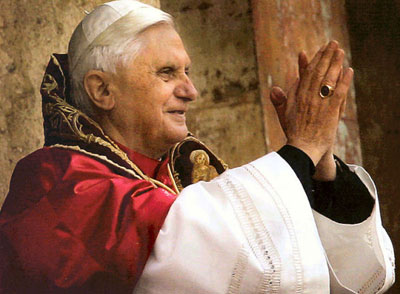
Pope Benedict Urges Pakistan to Repeal Blasphemy Law

By Elisabetta Povoledo for The New York Times

In a forceful appeal for religious freedom, Pope Benedict XVI urged Pakistan on Monday to repeal contentious blasphemy laws as he called on governments around the world to do more to enable Christians to practice their faith without violence, intolerance or restriction.

The pope was speaking in an annual address to diplomats accredited to the Vatican, a long-scheduled event. But this year, his words came after bomb attacks in Iraq and Egypt — the most recent in the Egyptian city of Alexandria less than two week ago — and the assassination last week of a leading Pakistani politician who had opposed his country’s law that makes blasphemy against Islam punishable by death.

The politician, Salman Taseer, had campaigned vigorously against the law and had petitioned the Pakistani government to re-examine the case of Asia Bibi, a Christian woman who last November was sentenced to death under the legislation.

Mr. Taseer’s “tragic murder,” the pope said, “shows the urgent need to make progress in this direction: the worship of God furthers fraternity and love, not hatred and division.”

Referring to the attacks on Christians in Iraq and Egypt, Benedict called on the governments of those predominantly Muslim countries to adopt “effective measures” to better protect religious minorities. Urging Pakistan to repeal its blasphemy law, the pope said the legislation was being used “as a pretext for acts of injustice and violence against religious minorities.”

The pope has often spoken out against religious intolerance, but his condemnations have increased after recent attacks on Christian communities in several countries, including Nigeria and the Philippines, where churches were bombed during the recent holidays.

The plight of Christians in the Middle East has been of particular concern to the Vatican, which hosted a meeting of bishops in October to address the issue.

The concerns have deepened in recent months in the face of what clerics see as sustained violence. At a New Year’s Mass at a Coptic church in Alexandria, a suicide bomber killed 23 people and wounded nearly 100. Last October, a siege at a Baghdad church killed 53 people, prompting yet another exodus of Christians from the country.

On Monday, the pope cited a message to Christians in the Middle East that he delivered during the bishop’s synod in October. “It is natural,” he said, that “they should enjoy all the rights of citizenship, freedom of conscience, freedom of worship and freedom in education, teaching and the use of the mass media.”

The pope also took Western nations to task for marginalizing religion and minimizing its role in contemporary society and called for dialogue between faiths to promote “a common commitment to recognizing and promoting the religious freedom of each person and community.”


Islamists Rally for Pakistan’s Blasphemy Laws

By Zahid Hussain for The Washington Post

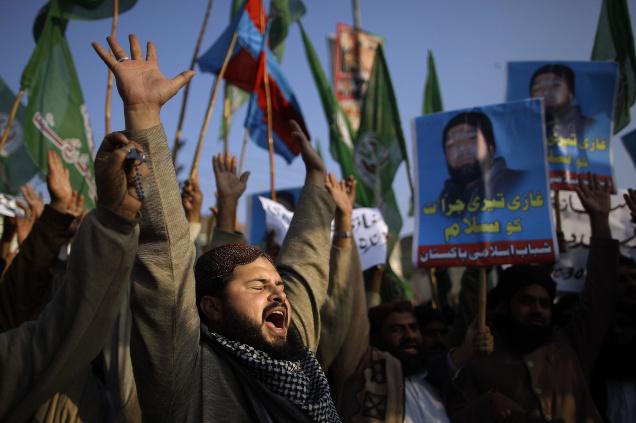
Tens of thousands of Islamists rallied Sunday in Pakistan’s southern port city of Karachi in support of the nation’s controversial blasphemy laws, and clerics threatened to kill anyone who challenged them.

Security was tightened around the house of Sherry Rehman, a former federal minister, who was threatened with death by radical clerics for moving a bill in the parliament last month to amend the blasphemy laws, which currently sentence to death anyone found guilty of insulting Islam.

The blasphemy laws have been in the spotlight since the murder last week of Salmaan Taseer, governor of Punjab province and a critic of the laws, who was shot by a member of his security detail. The shooter, Mumtaz Qadri, later said he killed Mr. Taseer because of the politician’s opposition to the laws. Mr. Taseer was a member of the Pakistan People’s Party, which runs the governing coalition, and was close to President Asif Ali Zardari.

The killing highlighted the extent to which extremist Islam has permeated Pakistan’s middle class and those close to the political elite even as the country grapples with an insurgency from the Pakistan Taliban and other violent Islamist groups. And it has deepened the polarization between moderate and radical Muslims throughout Pakistan. Radical clerics have seized the opportunity to whip up a campaign against moderate and progressive politicians, intellectuals and journalists.

Speakers at the Karachi rally sought to justify Mr. Taseer’s assassination, saying the killer fulfilled his obligation as a Muslim. “We will defend the assassin in the court,” declared Fazalur Rehman, the leader of Jamiat-e-Ulema Islam, a radical Islamic group that recently quit the coalition government after one of its ministers was sacked after publicly accusing a cabinet colleague of corruption.

The rally was organized by an alliance of hard-line Islamic groups including Jamaat-ud-Dawa, which the United Nations has said acts as a front for the outlawed terror group Lashkar-e-Taiba. Lashkar-e-Taiba is accused of masterminding the November 2008 terrorist attacks on Mumbai, which left more than 160 dead. Many demonstrators Sunday carried portraits of Mr. Qadri, who killed Mr. Taseer in a fashionable shopping district of Islamabad. Mr. Qadri has been hailed by Islamists as a great Islamic warrior.

Mr. Taseer had provoked the ire of radical clerics for publicly supporting a Christian woman who has been sentenced to death by a Pakistani court for allegedly making derogatory remarks against Islam’s prophet. The controversial laws have often been used against Christians and other non-Muslim communities, something that Ms. Rehman is seeking to prevent with a private bill she introduced last month.

A cleric of the Sultan Mosque in Karachi in his sermon on Friday called Ms. Rehman an “infidel” for suggesting changes in the blasphemy laws. A pamphlet signed by several Islamic clerics named her for supporting blasphemy. And some hard-line clerics have issued a “fatwa” demanding death to Ms. Rehman, a senior member of parliament of the Pakistan People’s Party.

Ms. Rehman said she is under pressure from the administration to leave the country until the situation calms down. “I am not going anywhere and [will] face the threat,” she said in a telephone interview.

In Pakistan, Another Assassination and the Lessons Unlearned

By Natasha Fatah for Canadian Broadcasting Corporation

The Lion of Punjab is dead. Salman Taseer, the governor of Punjab in Pakistan, was assassinated in Islamabad on Tuesday by one of his own security guards.

When the guard later turned himself in to the police, he said that he killed the man he was supposed to be protecting because he considered Taseer’s campaign against Pakistan’s blasphemy laws an insult to Prophet Muhammad.

The blasphemy laws, which have been around since the 1980s, have been at the heart of a huge religious debate in Pakistan recently after a 45-year-old Christian woman was sentenced to death, allegedly in a dispute over drinking water among farm hands.

Most human rights observers say that the woman did nothing wrong, did not break any blasphemy law, and that the law is just being used to make some kind of example out of her.

Taseer stood by the side of this Christian woman, Asia Bibi, both literally and figuratively.

He stood next to her in the courtroom, which was a brave and dangerous move for any Muslim in Pakistan, but particularly so when you are a member of government and have a profile.

He had also waged an attack on those who wanted her dead by constantly criticizing the mullahs and hard-liners on his very active Twitter account these past weeks.

In response, Islamic fundamentalist politicians and imams were constantly attacking Taseer, even going as far as to say that criticizing the blasphemy law is an act of blasphemy itself, thus making Taseer an apostate.

A member of the Pakistan People’s Party and closely tied to President Asif Ali Zardari, Taseer had dedicated his life to social and political liberalism and to taking on the fundamentalists. But now that bravery has cost him everything.

According to witnesses, the guard who killed Taseer jumped out of a car, pointed his Kalashnikov and blasted away. He then continued his rampage, shooting the governor at least nine times.

Dropping his weapon, the man then gave himself up to police, saying later he was “proud” that he killed the blasphemer.

Another disturbing aspect to this story is that the assassin had managed to get himself into the police force and then, barely four months into the job, was transferred to the unit assigned to protect the governor.

It makes you wonder who was doing the vetting and whether some other even more devious plan was afoot. But how deep and powerful this doctrine of hate must be when someone who is paid to protect you ends up being the one to take your life?

Still, while it was the guard who pulled the trigger, it was the culture of hatred, ignorance and bigotry that put the idea in his head in the first place.

And it will no doubt be the disease of apathy among the majority of Pakistan’s comfortable middle class that will ensure nothing changes, which means more good men and women who want to reform Pakistan’s society will lose their lives.

After all, it was only three years ago that the world lost Benazir Bhutto, the former prime minister and leader of the Pakistan People’s Party, for the same reasons.

She, too, was an advocate on behalf of liberalism and democracy and an enemy of religious extremists and she, too, paid for it with her life. If her death could not motivate the wealthy, powerful and influential in Pakistan to stand up and change things, then I’m not sure what will.

There is strange culture in Pakistan of blaming the victim. When Benazir Bhutto was murdered, many middle-class Pakistanis, in effect blamed her for her own assassination.

They criticized her for knowing the risks and continuing to speak out. Some said that as a mother she was being selfish for putting herself in the public eye.

And now, with Taseer’s murder, there are murmurs about him bringing this on because he provoked the Islamists through his criticism of their agenda. These are the risks you take when you stand behind a Christian blasphemer, some are saying.

It is only in an upside-down world like Pakistan’s self-absorbed middle class where those who die for being brave are considered irresponsible.

And it’s not like these moderate politicians such as Taseer don’t represent the values of the ordinary Pakistani.

Overwhelmingly, whenever given the election opportunity, the people of Pakistan vote in liberal, moderate and middle-of-the-road parties. Hardline Islamist parties do not win majorities in any of the country’s provinces.

Still, there seems to be a disconnect between what the Pakistani middle class say they want — stability and democracy — and what they are willing to work for.

Yes, in the case of Taseer, they will mourn the loss of another great leader. But Pakistan has lost far too many moderate leaders like this while everything goes on as before.

Wealthy Pakistanis will continue to go to their luxurious parties at fancy hotels, where the poor and their servants are not even allowed to enter. They will continue to justify the economic divide that keeps so many of their fellow citizens in squalor. And they will continue to argue that the Islamist militants are just a creation of the Western media.

Fortunately, there are still a handful of journalists, lawyers and politicians in Pakistan who are fighting the good fight and putting their lives on the line to try to push back against the extremists who think that violence is the only way to get their ideas across.

But unless Pakistan’s elites joins this fight, nothing will change.

For Pakistan, with the current government coalition in danger of crumbling and its Taliban launched on a terror campaign in the capital Islamabad itself, Taseer’s murder is a horrible start to a new year.

Yes, there will be vigils throughout Pakistan and around the world this week for this fallen hero. But vigils are temporary and the underlying problem that Taseer was taking on will likely still be around long after the vigils have wrapped up.

The Real Blasphemers

As Reported by Cafe Pyala

“Mera azm itna buland hai ke paraye shaulon ka dar nahin

Mujhe khauf aatish-e-gul se hai, ye kaheen chaman ko jala ne de”

[My resolve is so strong that I do not fear the flames from without

I fear only the radiance of the flowers, that it might burn my garden down] 

— Shakeel Badayuni couplet referenced by Salmaan Taseer on Twitter, 8 hours before his assassination 

I had been hoping that I could post something light-hearted, more entertaining at the start to the new year, but today’s Pakistan it seems is not the place for these sort of things any more. Four days into January and we already have yet another tragedy that has evoked not only pain and sadness but also immense amounts of disgust at the depths to which we, the unfortunate inhabitants of this blighted country, have sunk.

Punjab Governor Salmaan Taseer‘s brutal and senseless murder in Islamabad today (Tuesday) is not only an intensely heavy blow for his family and friends – to whom our thoughts go out to – but also to the hopes for a saner public discourse about issues that certain people endeavour to keep out of the conversation altogether. He often said things that many think but are unwilling to say in public out of fear or aversion to stoking argument. Whatever anyone may have thought about Taseer’s personal life (not that it’s any of anyone’s concern) or his business practices, there is absolutely no doubt that he was a brave and outspoken man who did not compromise his personal beliefs for the sake of cowardly politics. Along with barely a couple of other politicians on the national level (Sherry Rehman being one), his was a rare voice that was willing to take on the rightist mullah mindset in the public domain.

And contrary to what his detractors claimed, he did so with full awareness of the moral responsibilities of a public figure. In a recent interview, he was asked why he chose to raise the issue of the unjust blasphemy laws when he knew that he would receive brickbats from the rightist parties and become the target of the extremists. He replied: “Because if even I don’t, how will others get over their fears?” On December 31, he tweeted: “I was under huge pressure sure 2 cow down b4 rightest pressure on blasphemy.Refused. Even if I’m the last man standing”

In Salmaan Taseer’s untimely death we have all lost a truly courageous individual. Those within his party who opposed his just stand on the abhorrent misuse of blasphemy laws, moral pygmies such as Babar Awan, should hang their heads in shame.

At the same time, one must also feel disgust at those who have either valourized Taseer’s self-confessed lunatic murderer Malik Mumtaz Hussain Qadri, or used their weasely arguments to somehow try and justify the outrage. So-called-intellectuals like Irfan Siddiqui and bigots like Jamaat-e-Islami‘s oily Fareed Parachaand the ever-slimy Ansar Abbasi tried their best to claim (on Geo) that Taseer was somehow himself responsible for his fate because he had raised a “sensitive” issue.

I am not of the opinion that one should not speak ill of the dead only because he or she is dead, curse Zia ul Haq with every breath as far as I am concerned. But these gentlemen’s basic argument was this: even expressing your opinion about a warped law made by a warped dictator and endorsed by his warped proteges is enough to condemn you to death, so everyone should keep quiet about the misuse of religion and leave it all up to the mullah brigade. It’s time to tell them to shut the hell up themselves.

But the disgust does not end with a couple of morons trying to silence all discussion about religion to and other fanatics praising a criminal. The bigger issue, as we have been saying all along, is the refusal of society to see the inter-linkages of such acts of terrorism with the mindset that has been cultivated through the military establishment’s promotion of jihadi outfits, the propping up of so-called religious parties whose only agenda is bigotry, the pusillanimous and opportunistic silence over the treatment of minorities such as Ahmadis, Shias, Hindus and Christians and indeed all dissenters (religious scholar Javed Ghamdi being one), the valourization of criminals such as the illiterate Ilm Deen (dubbedshaheed [martyr] because he was hanged in 1929 for murdering a publisher), the rejection of rationality and logic, the marginalization of the arts and cultural traditions as something alien to our society, and the tolerance for hate-speech and incitements to violence such as that of this monkey.

It is this mindset, which has been cultivated by the state looking the other way at – if not directly promoting – acts of radicalization, that allows an entire police squad to see nothing wrong in one of their own planning to commit the murder of someone they are assigned to protect. (We now hear via Geo that Qadri had in fact confided to his colleagues in the Punjab ‘Elite Force’ about his plans and had even requested them not to shoot at him, a request they honoured.)

Our real disgust should be directed at all those parts of society that cannot put two and two together despite the evidence staring them in the face. We will inevitably hear a lot in the media about security lapses and administrative efficiency lapses that led to a criminal being part of a protective force (incidentally, Geo is also reporting through its sources that Qadri had been sacked from the Punjab Police’s Special Branch a few months ago because he was dubbed a ‘security risk’). But the only void that I think we really need to focus on is the one in our society’s collective brain.

So how do we deal with all this? I have heard a lot of dismay and hopelessness today and I can completely understand the feeling. For many people, this is another nail in the coffin of the idea of a viable future for Pakistan. The only option to counter this feeling of despondency, in my opinion, is to become more assertive and louder and to shame those who would stifle dissent.

The problem of course is that wishy-washy liberalism cannot fight fanaticism. Sometimes you have to fight fire with fire. Simply put, we can either shut up, resign ourselves to our fate and disconnect from this country and society or we can fight back and refuse to cede the space that the bastards want us to. Nobody ever said it would be easy.

As a start, let us declare Qadri, all those who support Qadri and murderers like him, the Khatm-e-Nabuwatmovement and its ilk as outside the pale of Islam. Let’s see how they like being referred to as blasphemers andmurtids. 

Nobody said this fight would not be dirty.

Salman Taseer Assassination Points to Pakistani Extremists’ Mounting Power

By Karin Brulliard for The Washington Post

One of Pakistan’s most openly progressive politicians was gunned down Tuesday in an act that violently highlighted extremists’ tightening grip on the country even as the beleaguered government struggled to stay in power.

The killing of Salman Taseer, apparently at the hands of one of his own guards, marked the most prominent political assassination in Pakistan since former prime minister Benazir Bhutto’s death three years ago.

The razor-tongued governor of Pakistan’s most populous province was known for speaking out on behalf of women and religious minorities, and his slaying stunned the nation and alarmed U.S. officials. It also further rocked Taseer’s ruling Pakistan People’s Party, which is desperately trying to keep its government afloat following a key ally’s defection to the opposition Sunday.

The secular PPP condemned the killing and promised a swift investigation, but its weakened position undermines its ability to crack down on religious extremists.

In timing that underscored those limitations, Taseer was shot in an upscale area of Islamabad as Pakistan’s main opposition party was across town demanding that the government agree within three days to implement a list of reforms, or risk collapse.

After the killing, the party of former prime minister Nawaz Sharif said it would allow three additional days for the changes, including a slash in government spending and the reversal of unpopular fuel price increases.

Taseer was a chief ally of President Asif Ali Zardari, who in 2008 appointed him governor of Punjab, Pakistan’s wealthiest province. But Sharif’s party rules the province, making Taseer’s assassination a blow to the federal government’s influence there.

Secretary of State Hillary Rodham Clinton condemned the killing in a statement Tuesday, saying she had met Taseer and “admired his work to promote tolerance and the education of Pakistan’s future generations.”

Taseer’s apparent killer cited his boss’s stance against a controversial anti-blasphemy law in justifying his actions. As the embattled, pro-U.S. PPP sought in recent days to win back defecting allies that also include a small Islamic party, it had already said it would not support a proposal to change the blasphemy statutes. That left Taseer one of the few vocal champions of the move, which hard-line religious organizations had labeled a Western conspiracy.

The laws have drawn scrutiny since a Christian woman was sentenced to death in November for allegedly criticizing the Muslim prophet Muhammad. Taseer had called for her pardon, leading religious groups to denounce him as an “apostate” and burn effigies of him during a nationwide strike last week in support of the law. One Muslim cleric has offered $6,000 to anyone who kills the woman, who remains in jail.

Even as Pakistani television stations were dominated Tuesday by commentators condemning rising religious intolerance, supporters of Taseer’s arrested guard, Mumtaz Qadri, 26, created a page for him on Facebook. Page visitors called him a “hero” and praised his “awesome job.” No major unrest over the killing was reported, but authorities said they were on high alert.

“This shows how the religious extremists want to impose their agenda to terrorize the society,” Shahbaz Bhatti, the federal minister for minorities affairs and also a proponent of changing the laws, said in an interview. “This cowardly act cannot stop us who are raising our voice.”

Yet in a country where Taliban militants increasingly flex their muscles through bombings, religious hard-liners have great power to intimidate even though polls show that their views are not widely shared. Last week’s strike by Islamic organizations drew few supporters to the streets, but shops in major cities closed – and many merchants said they did so under threat.

Human rights activists say the blasphemy laws are also abused by extremists, who use them as a tool to persecute minorities or opponents by bullying police and courts into arrests and convictions. The laws were strengthened during the 1980s rule of Islamist military dictator Gen. Zia ul-Haq.

Taseer lamented the power of the religious mob in an interview last summer following bombings of mosques belonging to the Ahmadi sect, whose members identify themselves as Muslims but are barred by the constitution from “posing” as such. Taseer – whose appointed position gave him little direct power in Punjab – condemned the provincial government of Sharif’s center-right PML-N for what he called its tolerance of radical religious groups.

“Extremist people are not in the majority,” Taseer said at the time. “This is a very narrow minority, but . . . they are always prepared to do and die. That is their strength.”

On Dec. 24, he had posted on his Twitter account: “My observation on minorities: A man/nation is judged by how they support those weaker than them not how they lean on those stronger.”

Authorities said Taseer’s guard, a member of an elite Punjab provincial police force that provides VIP security, shot the governor multiple times outside the Kohsar market in Islamabad, a small shopping plaza near his residence that is frequented by foreigners. The guard proudly surrendered to police afterward, according to local news reports.

Most political parties condemned the killing, and the government announced a three-day mourning period, during which political activity would be suspended. Zardari, to whom Taseer was close, called the assassination “ghastly.”

“The governor of Punjab was the bravest person in our government, and the stands he took for women, minorities and on the blasphemy law were incredibly brave and will never be forgotten,” Farahnaz Ispahani, a Zardari spokeswoman, said in an interview.

Taseer, who began his political career as a PPP student activist, was a successful businessman who played polo and smoked heavily. With his flashy sunglasses and frequent Twitter dispatches, Taseer, 66, cut a rather shocking figure in a country dominated by conservative social mores.

Critics assailed him for fathering a child with an Indian journalist while he was still married to the mother of his other children. In 2008, minor scandals broke out when opponents published photos online of him holding wine glasses at parties and of one of his daughters wearing shorts and dancing.

Despite the alleged gunman’s confession, Taseer’s killing was sure to be swept up in the conspiracy theories that permeate Pakistani politics, particularly in times of turmoil. Interior Minister Rehman Malik said investigators would seek to determine whether the suspect acted alone or was “asked” to carry out the attack.

In the hours after the killing, some criticism centered on the PML-N-led Punjab government, which provided Taseer’s police guard. There was no indication Tuesday night that the party played a role.

But the PML-N might yet bring down the PPP, whose government faces growing criticism over corruption, a floundering economy and a ham-handed response to last year’s devastating floods. The ruling party’s coalition partner, the Muttahida Qaumi Movement, withdrew from the government Sunday, weakening its mandate by depriving it of a parliamentary majority.

A united opposition could pass a vote of no confidence in Prime Minister Yousaf Raza Gillani, leading to his ouster and potentially triggering early elections. That has appeared unlikely, because of divisions among opposition parties. But Sharif threatened Tuesday to “ask the opposition parties to come forward and we will give them our full support” if the government does not show progress on reforms within 45 days, according to the Associated Press.

Like many in the PPP, Taseer often criticized opposition parties for stoking political instability in a country that has been ruled by the military for half its 63-year history and where an elected government has never completed its term.

Religious extremism, Taseer said last summer, would be quashed only by the “continuous, functional position of a democratic system.”