Archive for the ‘ Muslims ’ Category

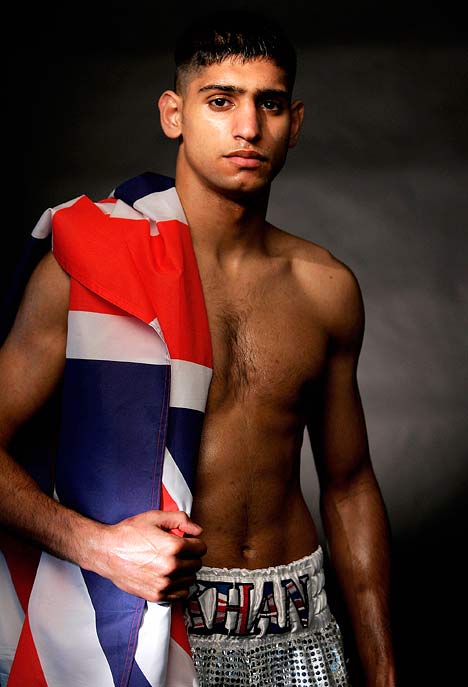
Amir Khan Gets Invited to The White House

By Araiz Baqi for Sportspulse

Amir Khan, the British professional boxer of Pakistani descent, has been invited to the official residence and principal workplace of the President of the United States, also known as the White house, for a dinner, along with other Muslim sportsmen, on the eve of the tenth anniversary of the 9/11 atrocities in New York.

The currently unified IBF and WBA World Light Welterweight Champion was invited to attend the dinner by the United States Secretary of State Hilary Clinton. The event will take place on September 10. “Amir was invited there by Mrs Clinton,” a source revealed. “He will be among a group of the most prominent Muslim sportsmen in America, and as Amir is now based in the US, that offer was extended to him.”

The Irony is that IBF and WBA champion have become frustrated with the lengthy delays he has to face whenever he travels to the States. There are seven levels of security at the, with seven being the highest, and Amir comes in at full seven.

When on vacation, Amir almost everytime visits Pakistan, and most recently, he visited Egypt and Saudi Arabia (All Muslim Countries). ‘All these things are taken into account by US Homeland Security. The Khan family are kept in a holding area until the green light is given from Washington DC, as all the checks that are made.’ – reports dailymail.

The Organizers of the event have yet to confirm whether President Barack Obama will be present at the event or not. If the President attends the ceremony, Amir might find a smoother passage on future entries to the United States.

Khan, Currently rated as the best boxer in the Light Welterweight division, has made his fans, especially Pakistanis, proud after getting the invitation for the dinner. After all, in this world of racism, hatred, and diversity, who eould expect a Pakistani to get invited to the White house…

After returning from pilgrimage last week in the holy month of Ramadan, Khan will fight in the United States most likely against Mexican legend Erik Morales. He will leave the White House on Sept 11 and go on to Las Vegas, where one of his rivals, Victor Ortiz, defends the World Boxing Council welterweight title against Floyd Mayweather Jnr.

Eid ul-Fitr 2011

Eid al Fitr To Be Celebrated Tomorrow in US: Fiqh Council Clarifies Eid Dates Controversy

As Reported by The Northern Voices Online

The biggest Muslim festival celebrated across the world, Eid al Fitr, is set to be held tomorrow in US and many other nations. Though in South Asia it will probably be celebrated on Wednesday.

There were some questions about the announcement of Eid in advance by the Fiqh Council of North America. Now the council has announced clarifications on the issue.

Doubts have been raised by some about the decision of the Fiqh Council of North America and the European Council of Fatwa and Research about the date of Eidul Fitr this year on August 30, 2011. Following are some clarifications from the Fiqh Council of North America.

The Fiqh Council of North America recognizes astronomical calculation as an acceptable Shar’i method for determining the beginning of Lunar months including the months of Ramadan and Shawwal. FCNA uses Makkah al-Mukarram as a conventional point and takes the position that the conjunction must take place before sunset in Makkah and moon must set after sunset in Makkah.

The Astronomical New Moon is on August 29, 2011 (Monday) at 3:04 Universal Time (6:04 a.m. Makkah time). On Monday, August 29, sunset at Makkah is 6:40 p.m. local time, while moonset is at 6:44 pm local time.

It is claimed that the new moon will not be visible on August 29 anywhere in the world. This information is not correct.

In United States the birth of Astronomical new moon is on August 28, 2011 (Sunday) at 11:04 p.m. (New York), at 8:04 p.m. (California) and 5:04 p.m. (Hawaii).

On Monday, August 29, the Crescent will set 13 minutes after sunset in San Diego, California and 28 minutes after sunset in Honolulu, Hawaii.

On Monday, August 29 the Crescent should be visible in Hawaii by binoculars and telescope and in South America by naked eye.

The Shawwal Crescent of Monday, August 29 is acceptable according to Shari’ah for those who recognize the Global sighting as it is also acceptable according to the criteria adopted by the Fiqh Council of North America.

Eidul Fitr is on Tuesday, August 30, 2011. Eid Mubarak and best wishes for a blessed Eid with peace and harmony among all.

How Many Sufis Are There in Islam?

By Stephen Schwartz for The Huffington Post

Devotees of Sufism, the spiritual interpretation of Islam, face problems wherever they are found. In the West, many self-styled Sufis have never become Muslim, know little of the religious background of the Sufi way, and give Sufism a reputation as simply another flavor of New-Age, “weekend” mysticism. In Muslim lands, especially in the Arab core countries, classic Sufi authors may be praised while living Sufi teachers are derided as un-Islamic charlatans. And in some places, Sufis are imprisoned and murdered.

As a Muslim Sufi adherent, however, I am troubled especially by another expression of contempt very widely cast against Sufism by Islam-hating amateur experts in the West. That is the claim of Sufi irrelevance. Since the horror of Sept. 11, now almost a decade past, the identification of a moderate and contemplative form of Islam, which can oppose radical and fundamentalist doctrines, has seemed of considerable importance both for the moral health of Muslim believers and for the security of non-Muslims and Muslims alike. But the Sufi alternative to Islamist extremism is neglected or even disparaged, typically, by Muslim and non-Muslim commentators.

Western misperception of the importance of Sufis in Islamic life is complicated by lack of clarity as to who and what Sufis are. Sufis often enjoy great prestige with the mass of Muslims, based on Sufi examples of personal humility in fervor for God and Sufi preaching of love for humanity. But Sufis are not, mainly, other-worldly, exotic individuals or groups that spend all their time absorbed in semah (ecstatic turning on one foot and other forms of dance).

Some Sufis withdraw from the daily affairs of society, but others pursue satisfaction of the Creator by seeking social justice through improvement of popular education and services to the needy, such as housing of the homeless and free distribution of food. Rather than disappearing in a misty aura of meditation, numerous Sufis around the Muslim world contribute actively to defense of the victims of oppression.

Sufis may also take on the risky challenge of overt political engagement. This has been seen most strikingly in Turkish developments over the past two decades. Turkish Sufis were suppressed by the secularist regime established in the 1920s, but flourished in clandestinity, and have now emerged to lead Islamist parties and to assume positions in government. How the relations between Turkish Islamist politicians and Turkish and Kurdish Sufis will evolve remains to be seen.

Essential principles shared by most Muslim Sufis include emphasis on commonalities with other faiths and traditions, which has contributed to improved relations between Muslims and Jews, Christians, Buddhists and other non-Islamic believers. Commentators concerned to denigrate Islam altogether have asserted that Sufis, even if they embody moderation and mutual respect among people of religion, comprise no more than 5 percent of the world’s Muslims. Since the importance of Sufism stands, in the minds of many Westerners, on demographic measurement, let us therefore ask: How many Sufis are found in the Muslim world?

I would first observe that Sufis are present, persistently, in every Muslim population, including those where they were persecuted the longest: Saudi Arabia. Although the Saudi kingdom prohibited and punished possession of Sufi books and the practice of Sufi observances, the country always possessed a thriving Sufi underground with access to the heights of power. Before his elevation to the throne in 2005, then-Saudi Crown Prince, and now King Abdullah, who favored Sufis, gained them the right to hold zikr (remembrance of God by vocal or silent chanting, singing and bodily movements) in their homes.

In some countries Sufism is praised as an item of a proud heritage while it is repressed in daily life. The most obvious such example is that of Iran. The clerical regime established by Ayatollah Ruhollah Khomeini could not act easily against Sufis, since so many famous Sufis — such as Jalaladdin Rumi, the 13th century author believed by many to be, currently, the most widely read poet in the West — wrote in Persian, and Sufi texts became the national literature of the Iranians.

But while the Tehran clerics honor the Sufis of the past, they repress Sufis in the present. Sufis have most often functioned as an alternative to clerical authority in Islam, and widely represented Iranian Sufi bodies like the Nimatullahi-Gonabadi dervish order and the “hidden,” Kurdish-speaking Ahl-e Haqq or “people of truth” have sustained a difficult challenge to the Iranian authorities. Iranian Sufis have been arrested and disappeared into the obscurity of the prisons, with some doubtless dealt a fatal destiny.

As certain Islamic countries are ambivalent about Sufism, in other Muslim societies we see variations in the intensity of Sufi “activism.” Analyzing Islamic Sufism, I have generally divided Muslim territories between those in which Sufism has a deep but informal influence in local Islam, in contrast with those where it has a well-established institutional presence.

In the great Eurasian expanses, Islam is widely permeated by Sufi teachings and customs. From my travels, observation and participation in Muslim life, I have seen and experienced that Sufi-oriented Islam is prevalent among Slavic and Russian Turkic Muslims, dominant in Central Asia, and widely-represented in South Asia and in Southeast Asia. Across this heartland, Sufi authors are studied and throngs of pilgrims visit Sufi shrines or otherwise commemorate the lives of Sufi saints.

Elsewhere the spiritual heritage is maintained by powerful, organized orders, sometimes called “brotherhoods” although they typically include female disciples. These are prominent in North Africa, French-speaking West Africa, East Africa, the Albanian lands, plus Syria, Iraq, Kurdistan and Iran.

In Turkey, most Muslims are Sufi either by identification with the normative Sunnism subsidized by the state, which exalted Sufis and places the works of Rumi in all Turkish mosques, or by participation in Sufi orders as well as widespread, part-time study circles and other voluntary communities that teach an esoteric Islam. Others are involved in more singular phenomena like the Turkish-Kurdish, Shia-Sufi-shamanist Alevi movement. As a different variant in the Sufi continuum, Indonesia possesses a Sufi civic movement of national scope — the Nahdatul Ulama (NU) organization. Returning to South Asia, organized Sufism there is enacted with a backdrop of a broader, “cultural” Sufism and is under bloody attack by radicals.

Aggregating Sufi-influenced Muslims with active Muslim Sufis from Senegal to Singapore, I believe it is realistic to claim a large plurality, at least, of the world’s 1.3-plus billion Muslims. This should be a source of optimism for those who seek conciliation, rather than confrontation, between the world’s religions, affecting positively both the direction of Islam and the image of Islam among non-Muslims. For these reasons, more concentrated attention on the Sufis by social-science investigators and other experts would be welcome.

Muslims Are the Most Loyal American Religious Group, New Poll Says

As reported by The Christian Science Monitor

After the 9/11 attacks, Muslim Americans faced intense scrutiny, both individually and from federal agencies such as the Federal Bureau of Investigation. Obama is credited with helping smooth tensions through his outreach to the US Muslim community and his effort to end the Iraq war responsibly. The poll shows that 83 percent of Muslim Americans – more than any other religious group – say the war was a “mistake.”

Despite the positive signs, “there are still obstacles” for Muslim Americans, Ms. Mogahed says. “They embrace American values and democratic principles but aren’t sure if the rest of American embraces them,” she says.

Some 56 percent of Protestants said American Muslims had no sympathy for Al Qaeda, the lowest number of any faith group. By comparison, 63 percent of Catholics and 70 percent of Jews thought Muslim Americans had no sympathies for Al Qaeda.

“That’s certainly a challenge for the [US Muslim] community – to have their loyalty questioned by such a large number of their fellow Americans,” Mogahed says.

Those challenges, however, have not led Muslim Americans to try to affect change at the ballot box. They are the least likely religious group to vote, with just 65 percent of Muslims in America are registered. One reason is age: The average age of a Muslim-American is 35, while the average American Protestant is 55. Younger people tend to be less politically active, Mogahed says.

Another reason is affiliation: Poll findings show that the majority of Muslim Americans say that none of the leading Muslim organizations in the US, such as the Council on American-Islamic Relations or the Islamic Society of North America, represents their interests.

With the 2012 election around the corner, Mogahed says political parties that want to reach out to Muslim-American voters might be better off establishing partnerships with local mosques than focusing on winning endorsements from national advocacy organizations. This is especially relevant considering that Muslim Americans who attend a religious service once a week are two times more likely to be politically active than those who attend less frequently, the poll found.

“The mosque should be more the mobilization engine” for get-out-the-vote drives than it has been in the past, she says.bThe poll surveyed 2,482 adults, 475 of whom were Muslim. For Muslims, there was a margin of sampling error of plus or minus 7 percentage points.

30 Mosques in 30 Days: An American Ramadan Roadtrip

By Bassam Tariq and Aman Ali for The Huffington Post

It was an impulsive and half-baked idea that changed our lives forever. During Ramadan 2010, Islam’s holy month of fasting and reflection, we hopped in a car and drove across America, stopping each evening to break our fast at a different mosque in a different state. We drove over 13,000 miles during the trip and blogged about it daily on our site, http://www.30mosques.com. We prayed in the infamous “Ground Zero Mosque,” got pulled over by a cop in Mississipi and stumbled upon one of the first mosques ever built in the United States when our car broke down. Along the way we also met the protagonist of Dave Eggers’ bestselling book Zeitoun, Cambodian Muslim victims of the Khmer Rouge, a Pakistani-Mormon couple, and many, many others, all of whom are part of the diverse Muslim-American community.

Our journey explored what it means to be Muslim in America today and served as a powerful counter-narrative to the media’s image of a monolithic Islam.

The project gained widespread coverage on several national media outlets including CNN, ABC News, NPR and even the Huffington Post, but the success really should be credited to our thousands of readers using Facebook and Twitter to buzz about the trip. Thanks to them, we were able to finance the entire project on individual contributions instead of large corporate sponsors.

Outside of this project, we are both respected in our professions as storytellers – Bassam as a cultivated filmmaker and an award-winning ad writer and Aman as an animated writer and standup comedian. When we came together as friends for this project, we told stories about Muslims in ways that nobody ever could. We spent time rolling down slides with kids in Jacksonville, laughing with Bosnians in Idaho – all in hopes of sharing intimate moments with Muslims in America that is seldom seen.

This year’s Ramadan, we’re finishing what we started. We will be back on the road visiting the 20 states we didn’t get a chance to visit – including Alaska and Hawaii. The remaining 10 days will have us revisiting some of the most compelling communities from last year. We felt we’ve only scratched the surface when it came to telling compelling stories about Muslims in this country and it is a no brainer for us to continue this journey.

Why My Father Hated India

By Aatish Taseer for The Wall Street Journal

Ten days before he was assassinated in January, my father, Salman Taseer, sent out a tweet about an Indian rocket that had come down over the Bay of Bengal: “Why does India make fools of themselves messing in space technology? Stick 2 bollywood my advice.”

My father was the governor of Punjab, Pakistan’s largest province, and his tweet, with its taunt at India’s misfortune, would have delighted his many thousands of followers. It fed straight into Pakistan’s unhealthy obsession with India, the country from which it was carved in 1947.

Though my father’s attitude went down well in Pakistan, it had caused considerable tension between us. I am half-Indian, raised in Delhi by my Indian mother: India is a country that I consider my own. When my father was killed by one of his own bodyguards for defending a Christian woman accused of blasphemy, we had not spoken for three years.

To understand the Pakistani obsession with India, to get a sense of its special edge—its hysteria—it is necessary to understand the rejection of India, its culture and past, that lies at the heart of the idea of Pakistan. This is not merely an academic question. Pakistan’s animus toward India is the cause of both its unwillingness to fight Islamic extremism and its active complicity in undermining the aims of its ostensible ally, the United States.

The idea of Pakistan was first seriously formulated by neither a cleric nor a politician but by a poet. In 1930, Muhammad Iqbal, addressing the All-India Muslim league, made the case for a state in which India’s Muslims would realize their “political and ethical essence.” Though he was always vague about what the new state would be, he was quite clear about what it would not be: the old pluralistic society of India, with its composite culture.

Iqbal’s vision took concrete shape in August 1947. Despite the partition of British India, it had seemed at first that there would be no transfer of populations. But violence erupted, and it quickly became clear that in the new homeland for India’s Muslims, there would be no place for its non-Muslim communities. Pakistan and India came into being at the cost of a million lives and the largest migration in history.

This shared experience of carnage and loss is the foundation of the modern relationship between the two countries. In human terms, it meant that each of my parents, my father in Pakistan and my mother in India, grew up around symmetrically violent stories of uprooting and homelessness.

But in Pakistan, the partition had another, deeper meaning. It raised big questions, in cultural and civilizational terms, about what its separation from India would mean.

In the absence of a true national identity, Pakistan defined itself by its opposition to India. It turned its back on all that had been common between Muslims and non-Muslims in the era before partition. Everything came under suspicion, from dress to customs to festivals, marriage rituals and literature. The new country set itself the task of erasing its association with the subcontinent, an association that many came to view as a contamination.

Had this assertion of national identity meant the casting out of something alien or foreign in favor of an organic or homegrown identity, it might have had an empowering effect. What made it self-wounding, even nihilistic, was that Pakistan, by asserting a new Arabized Islamic identity, rejected its own local and regional culture. In trying to turn its back on its shared past with India, Pakistan turned its back on itself.

But there was one problem: India was just across the border, and it was still its composite, pluralistic self, a place where nearly as many Muslims lived as in Pakistan. It was a daily reminder of the past that Pakistan had tried to erase.

Pakistan’s existential confusion made itself apparent in the political turmoil of the decades after partition. The state failed to perform a single legal transfer of power; coups were commonplace. And yet, in 1980, my father would still have felt that the partition had not been a mistake, for one critical reason: India, for all its democracy and pluralism, was an economic disaster.

Pakistan had better roads, better cars; Pakistani businesses were thriving; its citizens could take foreign currency abroad. Compared with starving, socialist India, they were on much surer ground. So what if India had democracy? It had brought nothing but drought and famine.

But in the early 1990s, a reversal began to occur in the fortunes of the two countries. The advantage that Pakistan had seemed to enjoy in the years after independence evaporated, as it became clear that the quest to rid itself of its Indian identity had come at a price: the emergence of a new and dangerous brand of Islam.

As India rose, thanks to economic liberalization, Pakistan withered. The country that had begun as a poet’s utopia was reduced to ruin and insolvency.

The primary agent of this decline has been the Pakistani army. The beneficiary of vast amounts of American assistance and money—$11 billion since 9/11—the military has diverted a significant amount of these resources to arming itself against India. In Afghanistan, it has sought neither security nor stability but rather a backyard, which—once the Americans leave—might provide Pakistan with “strategic depth” against India.

In order to realize these objectives, the Pakistani army has led the U.S. in a dance, in which it had to be seen to be fighting the war on terror, but never so much as to actually win it, for its extension meant the continuing flow of American money. All this time the army kept alive a double game, in which some terror was fought and some—such as Laskhar-e-Tayyba’s 2008 attack on Mumbai—actively supported.

The army’s duplicity was exposed decisively this May, with the killing of Osama bin Laden in the garrison town of Abbottabad. It was only the last and most incriminating charge against an institution whose activities over the years have included the creation of the Taliban, the financing of international terrorism and the running of a lucrative trade in nuclear secrets.

This army, whose might has always been justified by the imaginary threat from India, has been more harmful to Pakistan than to anybody else. It has consumed annually a quarter of the country’s wealth, undermined one civilian government after another and enriched itself through a range of economic interests, from bakeries and shopping malls to huge property holdings.

The reversal in the fortunes of the two countries—India’s sudden prosperity and cultural power, seen next to the calamity of Muhammad Iqbal’s unrealized utopia—is what explains the bitterness of my father’s tweet just days before he died. It captures the rage of being forced to reject a culture of which you feel effortlessly a part—a culture that Pakistanis, via Bollywood, experience daily in their homes.

This rage is what makes it impossible to reduce Pakistan’s obsession with India to matters of security or a land dispute in Kashmir. It can heal only when the wounds of 1947 are healed. And it should provoke no triumphalism in India, for behind the bluster and the bravado, there is arid pain and sadness.

—Mr. Taseer is the author of “Stranger to History: A Son’s Journey Through Islamic Lands.” His second novel, “Noon,” will be published in the U.S. in September

-Pakistanis for Peace Editor’s Note– Aatish Taseer’s brutally honest and forthright column is one of the best articles I have read in a long time.  As a Pakistani American, I find a lot of truth in what he is saying, no matter how ill received it may be back in Pakistan, I feel that Aatish does make some good points and it was well worth sharing with you readers.

The Norway Tragedy

By Farooq Sulehria for The News International

One does not expect funeral processions in paradise. The horrific events in Norway on July 22 – the bomb blast outside the office of Prime Minister Jens Stoltenberg in Oslo, followed by a shooting spree in the holiday island of Utoya, which together claimed 92 lives – were this kind of tragedy, because they happened in a country which is a haven of peace.

The Oslo massacre has taken away its innocence from Norway. In the same way as the murder of Prime Minister Olof Palme in February 1986 marked the end of the fond myth of an eternally peaceful Sweden. He was shot as he walked home with his wife from a cinema in Stockholm.

As Pakistani-born activist Toni Usman notes in an email to his friends, Norwegian democracy is unique in that the prime minister and other ministers can go about their daily lives without security by their side. King Harald V “can travel by public transport without anyone batting an eyelid, and it is this democracy which is under attack.” A successful TV and stage actor, Usman himself is a shining example of tolerance in Norway, a country where royals, elite politicians and celebrities freely mix with commoners. Ordinary citizens live a life unheard-of in much of Europe, without violence or fear of theft. The Norwegian lifestyle may appear naive even to Europeans.

Secret addresses or telephone numbers are rare. Online, Yellow Pages will offer aerial shots of people’s homes, maps of areas where they live, even their email addresses. The press runs details on celebrities’ incomes and fortunes. “To them, living in an open society has been not just a privilege, but also a statement to the rest of the world; a display of how it is possible to live together in peace,” as a BBC correspondent commented.

After another assassination there in September 2003, when Foreign Minister Anna Lindh was stabbed in Stockholm, Sweden drew a security wedge between top politicians and ordinary Swedes. But Norway still resisted calls for greater home security.

Since July 22, all public places such as clubs and restaurants have been closed as these lines are being written on July 24. Parliament House is surrounded by troops. The Oslo city centre looks like a war zone.

Anders Behring Breivik, apparently the lone director and scriptwriter of the tragedy, has confessed to his crime. Norwegian and Swedish media are rife with reports about his extreme Islamophobic and anti-left views. It is not coincidence that Breivik unleashed his terror on activists of the Labour Youth Club, the youth wing of the Norwegian Labour Party.

Both the Labour Party and the AUF have been campaigning against racism. Ever since the 1950s, a summer camp at the island of Utoya has been a regular feature of AUF activities. (Most Scandinavian left parties, big or small, hold summer schools for the political education of their cadres.)

The Norwegian Labour Party, perhaps the most radical wing of social democracy in Europe, has a unique history. Once a member of Lenin’s Third International, the Norwegian Labour Party is staunchly pro-immigrant, in a country that has seen the phenomenal growth of the anti-Muslim Fremskritts Party (Progress Party). Breivik had been a member of the Fremskritts Party between 1999 and 2006.

In Norway, “Muslim” has become synonymous with the word “Pakistanien.” The carnage is therefore extremely significant for Pakistan because Pakistanis constitute Norway’s biggest immigrant community.

Until Breveik’s identity was revealed, Pakistani Norwegians remained behind closed doors, hoping against hope that no Pakistani link was found to the atrocity.

Ironically, when Breveik’s identity had been established, the Pakistani community began to invoke victimhood. Whitewashing even the crimes for which Al-Qaeda & Co. have claimed responsibility, some community leaders were heard saying, “Look! We are always implicated for nothing.”

In terms of proportion, Norway hosts the largest immigrant population of Pakistani origin in any European country. Yet the Pakistani media downplayed the tragedy, out of ignorance perhaps. An Al-Qaeda signature on the tragedy would have proved fatal not merely for Norwegian Pakistanis but also for the sizable Pakistani-Danish and the small Pakistani-Swedish populations.

The Norwegian leadership, as well as the media especially the daily Dagbladet, played a praiseworthy role in the immediate aftermath of twin tragedy. No knee-jerk response.

However, refusing to learn any lessons from the News of the World scandal, the Murdoch press was quick to discover Al-Qaeda footprints in Utoya. The Sun, the flagship of Rupert Murdoch’s media empire in Britain, described the tragedy as “Norway’s 9/11.” The headline screamed: “AL-QAEDA MASSACRE.” (Yes, in capital letters.)

Qatar’s Al-Jazeera, as if in a bid to outdo even the Murdoch media, attributed the tragedy to Mullah Krekar, a Kurd from northern Iraq living in Norway. Mullah Krekar is a controversial character. When his asylum plea was rejected, he appealed to the courts to reconsider his case. However, he keeps declaring that his mission is to annihilate Western civilisation.

But such lucky escapes do not offer any respite from the growing fascism and religious fanaticism in Europe. Norwegian police seems to have been monitoring extremist Muslim outfits too closely to keep an eye on their Christian counterparts. The tragedy demonstrates yet again the dangers inherent in the “othering” of Muslims on the continent.

One hopes that the Norwegian paradise has been lost only temporarily, not forever. Prime Minister Stoltenberg has advised Norwegians to stay optimistic despite the tragedy. “The answer to violence is even more democracy. Even more humanity,” he says.

Norway Suspect Wanted European Anti-Muslim Crusade

As Reported by The Associated Press

The man blamed for killing at least 93 people during terrorist attacks on Norway’s government headquarters and an island retreat for young people wanted to trigger an anti-Muslim revolution in Norwegian society, his lawyer said Sunday.

A chief surgeon treating the wounded from Friday’s mass shooting, meanwhile, said he believes the attacker used special “dum-dum” bullets that cause massive internal injuries. The doctor told The Associated Press that the killer’s chosen ammo “exploded inside the body.”

The manifesto that 32-year-old suspect Anders Behring Breivik published online ranted against Muslim immigration to Europe and vowed revenge on those “indigenous Europeans” whom he deemed had betrayed their heritage. The document said they would be punished for their “treasonous acts.”

Police said they were analyzing the approximately 1,500-page document. They said it was published Friday shortly before the back-to-back bomb and gun attacks.

Breivik’s lawyer, Geir Lippestad, said his client wrote the document alone. While police said they were investigating reports of a second assailant on the island, the lawyer said Breivik claims no one helped him.

The treatise detailed plans to acquire firearms and explosives, and even appeared to describe a test explosion: “BOOM! The detonation was successful!!!” It ends with a note dated 12:51 p.m. on July 22: “I believe this will be my last entry.”

That day, a bomb killed seven people in downtown Oslo and, about 90 minutes later, a gunman began opening fire on about 600 young people at a retreat on Utoya Island. Police said the death toll in the shooting rose by one Sunday to 86.

That brings total fatalities to 93, with more than 90 wounded. People remain missing at both scenes. Police have not released the names of any victims.

Authorities revealed Sunday that one of the attacker’s first victims on the island was an off-duty police officer who had been hired by the camp directors to provide private security in his spare time. Oslo Police Union Chairman Sigve Bolstad declined to identify the victim.

That detail sheds new light on the confusion many survivors described during the 90-minute massacre. The attacker arrived dressed as a policeman, and some campers were killed when they approached the killer thinking he was there to save them.

Dr. Colin Poole, head of surgery at Ringriket Hospital in Honefoss northwest of Oslo, told The Associated Press the gunman used special bullets designed to disintegrate inside the body and cause maximum internal damage. Poole said surgeons treating 16 gunshot victims have recovered no full bullets.

“These bullets more or less exploded inside the body,” Poole said. “It’s caused us all kinds of extra problems in dealing with the wounds they cause, with very strange trajectories.”

Ballistics experts say the so-called “dum-dum” bullets also are lighter in weight and can be fired with greater accuracy over varying distances. They commonly are used by air marshals and hunters of small animals. Such characteristics potentially would have allowed the gunman to carry more ammunition and fire his weapons at varying targets without adjusting his sights.

Officials at the lakeside scene of the island shooting spent Sunday continuing to account for the dead.

Six hearses pulled up at the shoreline as orange-jacketed Red Cross searchers on small boats slowly explored the extensive shoreline.

Body parts remain inside the Oslo building, which housed the prime minister’s office. In a chilling allusion to the fact that the tragedy could have even been greater, police said Sunday that Breivik still had “a considerable amount” of ammunition for both his guns — a pistol and an automatic rifle — when he surrendered.

Police and his lawyer have said that Breivik confessed to the twin attacks, but denied criminal responsibility for a day that shook peaceful Norway to its core and was the deadliest ever in peacetime. Breivik has been charged with terrorism and will be arraigned Monday.

Lippestad said his client has asked for an open court hearing “because he wants to explain himself.”

Police Chief Sveinung Sponheim said a forensics expert from Interpol was joining the investigation Sunday.

European security officials said they were aware of increased Internet chatter from individuals claiming they belonged to the Knights Templar group that Breivik describes, in fantastical terms, in the manifesto. They said they were still investigating claims that Breivik, and other far-right individuals, attended a London meeting of the group in 2002. The two officials spoke on condition of anonymity because they were not authorized to speak about the investigation.

The officials would not confirm whether they had identified Breivik as a potential threat.

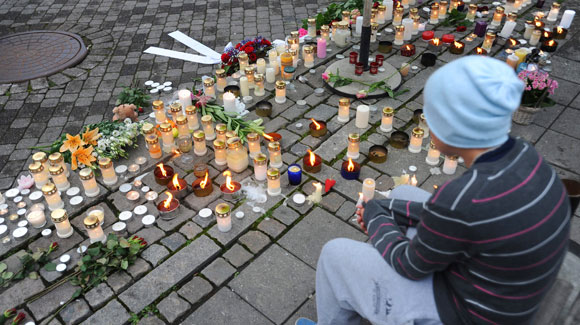
As authorities pursued the suspect’s motives, Oslo mourned the victims. Norway’s King Harald V and his wife Queen Sonja and Prime Minister Jens Stoltenberg crowded into Oslo Cathedral, where the pews were packed, and people spilled into the plaza outside. The area was strewn with flowers and candles, and people who could not fit inside the grand church huddled under umbrellas amid drizzling rain.

The king and queen both wiped tears from their eyes during the service themed on “sorrow and hope.”

Afterward, people sobbed and hugged one another in the streets. Many lingered over the flowers and candles. The royal couple and prime minister later visited the site of the bombing in Oslo. The royals then visited shooting survivors at Ringriket Hospital.

The attacker picked targets linked to Norway’s left-wing Labor Party. Breivik’s manifesto pilloried the political correctness of liberals and warned that their work would end in the colonization of Europe by Muslims.

Such fears may derive, at least in part, from the fact that Norway has grown increasingly multicultural in recent years as the prosperous Nordic nation has opened its arms to thousands of conflict refugees from Pakistan, Iraq and Somalia. The annual Labor Party retreat — which the prime minister, Stoltenberg, fondly remembers attending in his own youth — reflected the country’s changing demographics as the children of immigrants have grown increasingly involved in Labor politics.

The assaults have rattled Norway, home to the Nobel Prize for Peace and where the average policeman patrolling in the streets doesn’t carry a firearm. Norwegians pride themselves on the openness of their society and cherish the idea of free expression.

“He wanted a change in society and, from his perspective, he needed to force through a revolution,” Lippestad, the lawyer, told public broadcaster NRK. “He wished to attack society and the structure of society.”

Lippestad said Breivik spent years writing the manifesto titled “2083 – A European Declaration of Independence.” It was signed “Andrew Berwick.” The document later explained that 2083 was to be the year when European government would be overthrown en masse.

Sponheim, the police chief, said there was no indication whether Breivik had selected his targets or fired randomly on the island. The manifesto vowed revenge on those it accused of betraying Europe.

“We, the free indigenous peoples of Europe, hereby declare a pre-emptive war on all cultural Marxist/multiculturalist elites of Western Europe. … We know who you are, where you live and we are coming for you,” the document said. “We are in the process of flagging every single multculturalist traitor in Western Europe. You will be punished for your treasonous acts against Europe and Europeans.”

The use of an anglicized pseudonym could be explained by a passage in the manifesto describing the founding, in April 2002 in London, of a group he calls a new Knights Templar. The Knights Templar was a medieval order created to protect Christian pilgrims in the Holy Land after the First Crusade in the 11th century.

A 12-minute video clip posted on YouTube with the same title as the manifesto featured symbolic imagery of the Knights Templar and crusader kings as well as slides suggesting Europe is being overrun by Muslims.

Police could not confirm whether Breivik posted the video, which also featured photographs of him dressed in a formal military uniform and in a wet suit pointing an assault rifle.

The video contained a series of slides that accused left-wing politicians in Europe of allowing Muslims to overrun the continent. One image showed the BBC’s logo with the “C” changed into an Islamic crescent. Another referenced the former Soviet Union, declaring that the end result of the left’s actions would be an “EUSSR.”

In London, the leader of Ramadhan Foundation, one of Britain’s largest Muslim groups, said mosques are being extra vigilant in the wake of the attacks. Mohammed Shafiq told The AP he was talking to European Muslim leaders and British police about the need to increase security.

The last 100 pages of the manifesto apparently lay out details of Breivik’s social and personal life, including his steroid use and an intention to solicit prostitutes in the days before the attack.

Also Sunday, police carried out raids in an Oslo neighborhood seeking explosives. Police spokesman Henning Holtaas said no explosives were found and no one was arrested.

Police said the bomb used in the Oslo blast was a mixture of fertilizer and fuel similar to what home-grown U.S. terrorists used to blow up a federal building in Oklahoma City in 1995.

A farm supply store said Saturday they had alerted police that Breivik bought six metric tons of fertilizer, a popular terrorist component for car bombs.

Norway Attacks Shatter a Nation’s Innocence

By Edmund Sanders for The Los Angeles Times

After a bombing and a shooting rampage that left 93 people dead, some believe the open and trusting attitude that’s been a hallmark of the Norwegian psyche is forever lost. The prime minister tells mourners, ‘Our answer is more democracy, more openness, more humanity, but never naivete.’

Norwegians have always taken pride in their open, trusting society.

It’s a country where you might encounter the prime minister at the grocery store and offer a hug. Many police don’t carry guns and most government buildings are unprotected. Homicide is rare, with only a handful of gun-related deaths a year.

But as Otto Lovik stood Sunday on a muddy lakeshore overlooking Utoya Island and recalled how he rescued about 60 people fleeing Friday’s massacre by a gunman, the 56-year-old prison guard, still shaking from the experience, said his country must change.

“We can’t go back to being open and trusting after this,” said Lovik, who loaded his boat with so many terrified, bleeding victims that he feared it would capsize. “This is the price we must pay.”

As Norway recovers from the initial shock of the shooting rampage and earlier Oslo bombing and begins the mourning process for 93 people who were slain, many predict the nation will never be the same.

“It’s going to have a deep, long-lasting impact,” said Atle Dyregrov, director of Norway’s Center for Crisis Psychology, which has helped other countries recover from disasters such as the 2008 China earthquake and this year’s Japanese tsunami.

“Our innocence is lost,” he said. “We used to think that these things only happened in other countries, not here. Now that illusion is shattered forever.”

He predicted that Norway’s relaxed security policies and reluctance to impinge of civil rights will give way to familiar restrictions already in place in other Western nations, including limited access to government facilities and increased surveillance of suspected extremist groups. He likened the changes to Sweden’s security tightening after the 1986 assassination of Prime Minister Olof Palme.

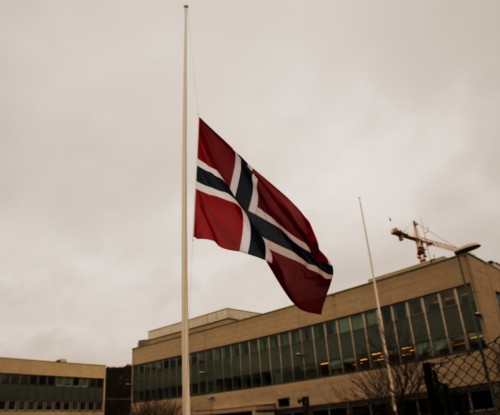
On Sunday, however, the nation’s focus was on grieving and healing. National flags throughout the capital flew at half staff.

At the ornate Oslo Domkirken cathedral in the heart of the capital, hundreds participated in a national mourning ceremony attended by the prime minister, King Harald, Queen Sonja and some of the young people who escaped the island attack. The suspect, Anders Behring Breivik, is expected to be formally charged Monday.

“A heavy darkness is now clouding our lives,” Bishop Helga Haugland Byfuglien told tearful mourners, urging them to maintain their faith in the goodness of Norway’s people and commitment toward an open society.

In an emotional address, Norwegian Prime Minister Jens Stoltenberg said Norway would not be cowed. “Our answer is more democracy, more openness, more humanity, but never naivete,” he said.

Outside the cathedral, just blocks from the site of the Friday bomb blast that killed at least eight people, well-wishers laid flowers and candles in a makeshift memorial that by nightfall was spreading into the streets.

Waiting in line to enter the cathedral to pay her respects, Oslo resident Christine Arnese, a 47-year-old nurse, stood alone with tears streaming down her cheeks.

“I think this might bring us all closer together,” she said. “It’s important that we keep our country free and open.”

But as the scale of the tragedy sunk in, fears about possible future attacks were already leading some Norwegians to call on the government to bolster security. Some said that police guards who were dispatched to government facilities in the hours after the attacks should become permanent fixtures.

Others called for tougher punishments for terrorists, complaining that estimates Breivik that would face only 21 years in prison if convicted underscores the inadequacy of current law.

“We have to do more to protect ourselves,” said Julie Groseth, who works at a small market overlooking Utoya Island in the community of Hole. She said she worried about copy-cat attacks.

“Maybe that means not being as open to other countries,” she said. “This has showed us how weak Norway is in the war against terrorism. We are not prepared.”

At one of Oslo’s main mosques, many Pakistan-born immigrants expressed apprehension about how the attacks may affect Norwegian society and its tolerance of foreigners.

“When we first heard about the attacks, we all gathered together and prayed,” said mosque official Mohamed Sulieman, who moved to Norway 35 years ago. First they prayed for the victims, he said. Then they prayed that the perpetrators would not turn out to be Islamic extremists. The country has reason enough to fear retribution from overseas extremists: Its troops serve in Afghanistan, where 10 Norwegian soldiers have been killed.

Though he said they were relieved to hear authorities describe Breivik as a home-grown terrorist who acted alone, some remain concerned that any tighter security rules or rising public anxieties might nevertheless trigger a backlash against them. At times in the past, the increasing presence of immigrants and foreigners in Norway has come under criticism from conservative parties.

“We’ve never really had a problem before,” Sulieman said. “But still, it’s in the back of our minds.”

Like Jesus, the Hidden Imam Will Come Again

By Fatima Kermalli, Special to The Morning Call

On Sunday, Muslims will be celebrating the birth anniversary of Muhammad al Mahdi. He is the Twelfth Imam or leader after the Holy Prophet Muhammad as well as being from among his descendents.

He is also known as the Hidden Imam because he is unknown among the masses. He will make himself known when the Lord decrees. Therefore, Al Mahdi is according to the Muslims the coming Messiah and Savior. The Holy Prophet mentioned, “I bring you glad tidings of al-Mahdi, God shall send him to my nation, in a time different from your own, and after a series of earthquakes, and he shall fill the earth with justice and equity as it was filled with injustice and oppression. He shall distribute the wealth equitably among the inhabitants of the earth.”

Consequently, while Christians look for Jesus’ second coming, the Jews await the Messiah, Muslims are waiting for the 12th Imam. However, one striking difference is that whilest the Muslims await for the Mahdi, the believers are not left alone without his guidance. The Mahdi is a guide as well as a Savior as his title al Mahdi indicates, which means “The Guide.” Therefore, the Twelfth Imam is ever ready to assist his followers when they need him by one method or another. Imam Mahdi is aware of the state of his followers and is prepared to assist when he is called upon. This has been confirmed by the Imam himself when he said, “As to the way of benefiting from my presence during my disappearance, it is similar to the profit we gain from the sun while it is hidden from sight by the clouds.”

According to Islamic beliefs, there must always be a Prophet or Imam existing on earth to guide the people. It is believed that God has not created anyone without sending a leader for instruction and direction. From the time of Adam till the end of time, no person will be left without a divine teacher sent by God. The Holy Qur’an states in Chapter 17, verse 71, “(Remember) the day when We will call every people with their imam.”

According to this verse, everyone will be summoned on the Day of Judgment with their leader who was existing during their time and the people will be questioned whether they obeyed the tenants and guidance delivered by their specific leader.

Therefore, it is important for the believers to recognize the Imam of their time and to follow them.

Furthermore, Muslims believe Al Mahdi is the last of the divine teachers who was sent for all people. Likewise his assistance is for all as well because Islam is a universal faith. Islam is not confined to any particular ethnic group or class of people. It is a message open to the whole of mankind to accept and practice. The Mahdi’s existence is paramount in order for believers to be led on the correct path and not sway to any extremes in the faith. If individuals do so, then they have not followed the true teachings of Islam.

Everyday Muslims recite the chapter from the Quran ‘The Opening’ in each one of their prayers which seeks guidance from the Lord. With this prayer and one’s own effort, Muslims strive towards receiving blessings from the Almighty.

In the name of the most Beneficiant, most Merciful. All praise and thanks be to God, the Lord of existence. The Most Gracious, the Most Merciful. The Owner of the Day of Recompense. You (alone) we worship, and You (alone) we ask for help. Guide us to the straight path. The way of those on whom You have granted Your grace, not (the way) of those who earned Your anger, nor of those who went astray.”

Fatima Kermalli is a member of and a Sunday school teacher at Shia Ithna-Asheri Jamaat of Pennsylvania in Allentown.

John Lennon- Imagine

The Prime of Ms. Irshad Manji

By Leslie Scrivener for The Toronto Star
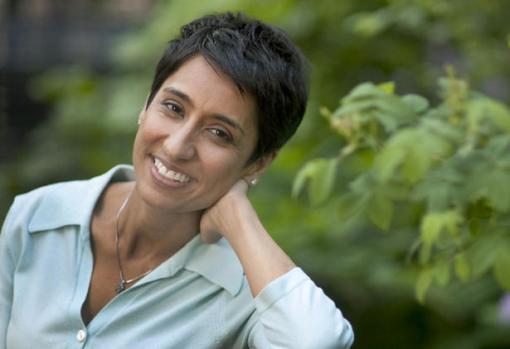
Has Irshad Manji, one of Canada’s most controversial Mulims, mellowed out? So it would seem. The renowned Canadian firebrand writes in her new work, Allah, Liberty & Love, that she has moved from “anger to aspiration.”

A rallying cry to readers to question orthodoxy without fear, the book concludes with the suggestion they get together to trade ideas. Manji even includes a recipe for chai tea to fuel such discussions.

Anger was at the centre of The Trouble with Islam, her 2003 worldwide bestseller decrying her own religion’s entrenched prejudice against Jews and injustice toward women. The book earned her many fans but also hate mail, pinched-face cranks calling her the daughter of Satan, and even a smiling man who leaned in to shake her hand but instead spat in her face.

Manji still gets death threats, but she’s now on a mission of reconciliation.

She has even made up with conservative Michael Coren, with whom she argued weekly — and ferociously — on a TVO current affairs show in the early ’90s. “We absolutely hated each other, very unpleasant,” he says of that time. They were developing their public personalities, he recalls. “She was prickly and very defensive, and I’m sure I was too.”

But when they last met, some years ago, “She hugged me and said, ‘I think we’ve done quite a lot of growing up.’ ”

In Toronto this week promoting her new book, Manji looks less edgy than she used to. Gone are the tinted spikes in her hair. At 42, she’s sleek, polished and very thin.

At the old Citytv building on Queen St. W., Manji greets a crew of cameramen she’d worked with on City’s Queer Television in the late ’90s. They throw their arms around her and burble enthusiastically. They say they loved the way, as producer and host, she’d made stories about gay and lesbian issues provocative and interesting to mainstream viewers.

At another Toronto gathering, in the offices of her publisher, Random House, Manji basks in the affection of adoring booksellers. She quizzes them about what kept them watching her 2007 Emmy-nominated film, Faith without Fear, in which she travels the world exploring how people live within the constraints of Islam.

She seems truly delighted by the booksellers’ engagement with her and her work. “Did I blush?” she asks.

Manji now lives in a book-filled apartment — she calls it her Manji cave — in New York’s Greenwich Village, where she moved in 2008 to launch the Moral Courage Project at New York University’s Robert F. Wagner Graduate School of Public Service. In the course, she encourages students to “challenge intellectual conformity and self-censorship.”

A regular on Bill Maher’s late-night HBO show — the audience cheers when she comes on the set — and on the networks MSNBC, CNN, Al Jazeera, Al Arabyia and, occasionally, FOX, she’s seen all over America and around the world. Manji writes twice monthly for The Globe and Mail, and contributes to The New York Times op-ed page and The Wall Street Journal.

The Trouble with Islam, her second book, was published in more than 30 countries and led to invitations to lecture around the world. Translated on her website into Arabic, Urdu and Farsi, the book has been downloaded two million times.

After its publication she walked around for a few months with a muscular bodyguard and installed bulletproof glass in her Riverdale house.

But Manji realized that by having a bodyguard, she was sending the wrong message to young Muslims. She was encouraging them to be bold and to advocate for change in their religion while giving the impression that they would need protection if they dared to speak out.

Manji still has to be careful. She’s been trained to check under cars for bombs. Not every car and not cabs, just those driven by people she doesn’t know. She won’t use a cellphone for fear of being tracked.

Still, her intensity has not diminished. Conversation with Manji is like being on an express train that careers wildly down the track, but in which everything has been neatly tied up once it has reached its destination.

Bill Maher tried to interrupt her on his talk show a few weeks ago, and her hand went up: she had a bit more to say about the killing of Osama bin Laden.

Her confidence would be unnerving if she weren’t so affable and polite. “I don’t see that as confidence,” she says. “I see that as embracing your freedom so sincerely and seriously, that it’s a natural part of the conversation, to say, ‘Let me finish the thought — I am getting there.’

“It could also be a moral clarity. I know what my values are — individual liberty, freedom of conscience, pluralism, peaceful ideas — and they all combine in me every single day to make for a love of engagement.”

She wants to apply the principles of the U.S. civil rights movement to reform in Islam and, at the same time, to convince people of all walks that they should not be caged by dogma from another era, another culture. She calls for moral courage, a phrase borrowed from Robert F. Kennedy. Ordinary folk can make change, she argues, while people in positions of influence — the well-educated and well-connected, including journalists and politicians — must “develop backbone” and use their privilege for social purpose.

Despite Manji’s wide audience in the U.S., her work has not resonated in parts of Canada’s mainstream Muslim community. “I don’t know why, but there seems to be little mention of Irshad in Muslim circles in Canada,” says Alia Hogben, executive director of the Canadian Council of Muslim Women.

“Most of the people who tell me they love her are not Muslim,” says El-Farouk Khaki, a Toronto lawyer and gay activist. “What crowd is she outreaching to? Moral courage is when you put yourself on the front lines.”

“We give her due credit for having stood up to the bullies in the community, but we feel she is too self-centred,” says Tarek Fatah, author and founder of the progressive Muslim Canadian Congress. “She refuses to be associated with any organization or be accountable to anyone but herself.”

In response, Manji refers to her new “Guidance Council” (at irshadmanji.com). The council is made up of volunteers who address readers’ issues, such as marriage between Muslims and non-Muslims. She encourages these unions. (Manji, who is a lesbian, has never been married.)

“It’s front-line, in-the-trenches work,” she says of the council. “This time, though, it is more than me responding to young people, as I’ve been doing for years; it’s a network of wise and compassionate individuals who are free of organizational agendas and group think.”

Group think has never been her practice. Born of political refugees who fled Idi Amin’s Uganda and settled in Richmond, B.C. when she was four, she displayed a precocious intelligence and self-assuredness early on.

She had a violent father who stayed in the family home until Manji, the middle of three daughters, was 17. Today she has no contact with him.

Her mother, Mumtaz, to whom she is devoted, worked as a cleaner for airline carriers. Mumtaz, still living in Richmond, recalls a classic Irshad-as-outsider moment. “She was a little girl, and we were at a family gathering. She wouldn’t mix with the others, but she’d go on her tricycle, reading her book, riding round and round. She was kind of a loner who liked to do her own thing.”

At 14, Manji was booted out of her Saturday Islamic school for questioning a teacher’s assertion that Jews were the enemy.

In junior high, running for class representative, she was beaten by one vote by a boy who said he “didn’t want a Paki representing” him. The next year, she became student body president. She went on to graduate with scholarships and as class valedictorian.

When speaking of her mother, the well-spoken writer cracks a little. Manji says the situation in her family spurred her activist spirit. She recalls once saying to her mother, “Ma, I saw what you are made of, but I didn’t understand why you couldn’t be more independent as a woman.”

One thing the two do share is a profound faith.

Over the eight years since The Trouble with Islam was published, Manji has had a spiritual awakening. Here’s where a certain vagueness and gentleness creeps into her otherwise crystalline analysis. “By coming to know yourself, you come to know the source that created you,” she says.

It’s easy to picture Manji as an atheist, like the Somali-born intellectual Ayaan Hirsi Ali, author of the autobiographical Infidel. Friends have teased Manji that she is a “closet non-believer.”

“For a while I challenged myself to be still and interrogate myself about whether I truly believed in God,” she says. “With the greatest certitude of belief I cannot shake my love of God. It is the central relationship in my life.”

She points to her gold ring, brought from Mecca by her grandmother and inscribed with the word “Allah.” Manji wears it on her wedding-ring finger, a symbol of mutual devotion. In her mind, it says, “This is my beloved.”
Anthony Weiner: Sex, Lies, and the Pakistan Connection

By Manzer Munir for Pakistanis for Peace

On Monday night’s Daily Show with Jon Stewart, the host, a former roommate of the congressman, confessed that Weinergate and the entire episode involving pictures of his friend Rep. Anthony Weiner of NY, was “killing” him.

Jon Stewart was clearly not sure how to react to his friend’s confession that he had indeed himself been responsible for sending sexually suggestive photos of himself via Twitter.“I don’t know what to do anymore! It’s killing me, “he said on last night’s “Daily Show”, which was taped in New York after the congressman had already given his press conference earlier in the day admitting to the indiscretions after having denied them for a week.

I must admit, I am also deeply saddened by this story as it too is killing me. No I didn’t room with Anthony Weiner in a summer house in Delaware in the 1980s as did Stewart. However I was a fan of the representative from New York who was the first Democrat in a long time that seemed to have balls in Congress when it came to speaking his mind and standing up to the other guys across the aisle. He didn’t have to go and practically show them to prove it though.

Sending salacious pictures of yourself to strange women across the country while being married, in itself, is not a crime. But had he fessed up to his martial indiscretions and not gone about for a whole week giving interviews to the national media denying everything and claiming to have had his twitter account hacked, might have been enough for him to be forgiven by many of his constituents. Perhaps he would not have been so easily forgiven by his American born Pakistani wife, Huma Abedin. Needless to say, the congressman would surely have saved himself a great amount of grief and further humiliation.

Instead after a week of denials, and as new pictures and allegations surfaced regarding other women, Rep. Weiner finally came clean and called a press conference on Monday afternoon and confessed to having sent the pictures himself.

Congressman Weiner is not the first politician to have been involved in a sex scandal and God knows he certainly will not be the last. And yet, of all the politicians I have followed over the years, Anthony Weiner of New York seemed like the only Democrat who had the wits to match the guts when it came to fighting for his party’s principles in Washington. A few months ago when he showed great anger on the House floor arguing for healthcare benefits and a fund for the 911 First Responders, he further cemented my belief in him as an outstanding up and coming member of the House of Representatives.

Weiner’s chutzpah and boldness in many interviews and House sessions had indeed endeared many Democrats across the country of all faiths and backgrounds who have been clamoring for a Democrat with a backbone. Rep. Weiner seemed to fit the bill. His recent marriage to long time top aide to Secretary of State Hillary Clinton, Huma Abedin, a Muslim American of Pakistani decent, only further solidified him in my eyes as one of “our own”. The marriage of an up and coming Jewish Congressman from NY and a Muslim American top aid to, arguably one of the most powerful women in the world, in Hillary Clinton, certainly seemed like an odd pairing.

By all accounts the couple was in love and a long happy union seemed destined for them as President Bill Clinton officiated their wedding almost a year ago last July. Now one of the brightest stars of the Democratic party is facing a House investigation into ethical violations as well as a tremendous fallout from his lies and infidelity.

To many people, including myself, I am not only upset that we have lost one of the stars of the Democratic party to this scandal, but I am also upset for Huma, as she is the one who is suffering the worst end of the entire situation. For her to be dragged into this mess like this will surely test their nascent marriage. As a one time supporter of Rep Weiner, I hope that his career, and more importantly, his marriage survive this entire ordeal.

However, as has been the case with other scandals, there is usually more information that will come out that will be damning to Rep. Weiner. I only hope that at some point the representative from the great state of New York realizes that it is foolish to further humiliate his spouse and all his former supporters by resigning from his office immediately.

–Manzer Munir, a proud American of Pakistani descent, is the founder of Pakistanis for Peace and blogs at www.PakistanisforPeace.com as well at other websites as a freelance journalist and writer.

Florida Men Accused of Aiding Pakistani Taliban

By Gardiner Harris for The New York Times

The F.B.I. on Saturday arrested three Pakistani-Americans, including father and son imams from South Florida mosques, charging them with providing financing and other material support to the Pakistani Taliban.
Related

Three people living in Pakistan were also charged in the indictment, which was made public by Wilfredo A. Ferrer, the United States attorney for the Southern District of Florida. The F.B.I. said that the indictment grew out of a review of suspicious financial transactions and other evidence and not from an undercover sting operation. The arrests seem to be unrelated to the raid that killed Osama bin Laden a week ago.

The four-count indictment charges that the six sought to aid the Pakistani Taliban’s fight against the Pakistani government and its allies, including the United States, by supporting acts of murder, kidnapping and maiming in Pakistan and elsewhere in order to displace the government and establish strict Islamic law known as Shariah.

“Today, terrorists have lost another funding source to use against innocent people and U.S. interests,” said John V. Gillies, the special agent in charge of the F.B.I.’s Miami office.

Five of the six people charged are related. Arrested in the United States were Hafiz Muhammed Sher Ali Khan, 76, of Miami; and two of his sons, Izhar Khan, 24, of Miami; and Irfan Khan, 37, of North Lauderdale.

Hafiz Khan is the imam at the Miami Mosque, also known as the Flagler Mosque. Izhar Khan is an imam at the Jamaat Al-Mu’mineen Mosque in Margate, Fla. Hafiz and Izhar Khan were arrested Saturday in South Florida, while Irfan Khan was arrested in Los Angeles. All three are originally from Pakistan.

The three people residing in Pakistan who were charged were Amina Khan, Hafiz Khan’s daughter, and Alam Zeb, her son, as well as Ali Rehman, also known as Faisal Ali Rehman. A statement from prosecutors said that the defendants were assisted “by others in the United States and Pakistan.”

The indictment said that the six transferred money to the Pakistani Taliban that was intended to buy guns and sustain militants and their families. Hafiz Khan is also accused of supporting the Pakistani Taliban through a madrasa, or Islamic school, that he founded and controlled in the Swat Valley region of Pakistan. He was charged with using the madrasa to provide shelter and other support for the Pakistani Taliban and sending children from his madrasa to learn to kill Americans in Afghanistan.

The indictment does not charge the mosques with any wrongdoing. The Muslim Communities Association of South Florida announced that that Hafiz Khan had been suspended indefinitely from his mosque.

“Our organizations, together through the Coalition of South Florida Muslim Organizations, has been working with the U.S. Attorney’s Office and the Miami F.B.I. office,” the association said in a statement released Saturday afternoon, “and appreciate the efforts of law enforcement to root out potential sources and supporters of terrorism.”

“We stand together with the U.S. attorney, Wilfredo Ferrer, and the men and women of the F.B.I., and have been and will be cooperating with law enforcement to our fullest ability,” it added.

The F.B.I. news release took pains to describe the charges as reflecting only the actions of the defendants, not of their mosques or Islam. “Let me be clear that this is not an indictment against a particular community or religion,” Mr. Ferrer said. “Instead, today’s indictment charges six individuals for promoting terror and violence through their financial and other support of the Pakistani Taliban. Radical extremists know no boundaries; they come in all shapes and sizes and are not limited by religion, age or geography.”

“The indictment does not charge the mosques themselves with any wrongdoing,” it continued, “and the individual defendants are charged based on their provision of material support to terrorism, not on their religious beliefs or teachings.”

The inclusion of those statements were “well appreciated” by the Muslim community in South Florida, said Asad Ba-Yunus, who is a legal adviser to the Muslim Communities Association of South Florida.

“We have been working with the U.S. attorney’s office over last few months” to improve relations, Mr. Ba-Yunus said, adding that he had spoken with the office Saturday morning before the indictment was announced.

The charges against the Florida men accusing them of supporting the Pakistani Taliban but not actually carrying out operations themselves are the most common types of terrorism prosecutions that United States authorities have pursued since the attacks of Sept. 11, 2001. Of the 50 leading terrorism cases since those attacks, about 70 percent have involved financing or other support to terrorist groups, according to the Center on Law and Security at the New York University School of Law.

The Pakistani Taliban were officially designated as a terrorist organization by the State Department on Aug. 12, 2010.

The Pakistani Taliban are closely allied with Al Qaeda, and is responsible for a series of attacks against Pakistani police and military targets in recent years. Pakistani authorities believe a splinter group of the Pakistani Taliban was responsible for the suicide attack in northwestern Pakistan on Friday that killed more than 80 cadets from a government paramilitary force. According to American officials, the Pakistani Taliban have been involved in or claimed responsibility for attacks on United States interests, including an attack on a military base in Khost, Afghanistan, along the border with Pakistan, and a suicide bombing against the consulate in Peshawar, Pakistan.

American officials say the failed attempt to detonate a car bomb in Times Square last May was developed and financed by the Pakistani Taliban. The convicted bomb plotter, Faisal Shahzad, contacted the Pakistani Taliban via computer to confer with handlers over what he had done, the government wrote in court papers in September.

Pakistanis for Peace Editor’s Note– As peace loving Americans of Pakistani descent, we are upset to hear that some members of the US Muslim community would want to do the great nation of the Unites States harm. If found guilty, we hope that they are severly punished and a message is sent to anyone else intending to do us harm. We commend the FBI and the Department of Justice in these arrests and in keeping the American homeland safe.